Ukrainian bots want the BBC to endorse war crimes
Social media trolling takes a new and sinister turn
Ian Proud, Jul 23, 2025, https://thepeacemonger.substack.com/p/ukrainian-bots-want-the-bbc-to-endorse?utm_source=post-email-title&publication_id=3221990&post_id=168976248&utm_campaign=email-post-title&isFreemail=true&r=1ise1&triedRedirect=true&utm_medium=email
On 18 July I made a post on social media platform X in response to a BBC report entitled ‘Kill Russians, win points: is Ukraine’s new drone scheme gamifying war?’ It produced a spectacularly dark backlash from the Ukrainian bot community.
The BBC report explored a Ukrainian military scheme in which its soldiers could claim points for kills by First Person View (FPV) drones and use those points to buy the most preferred military technology in an ‘Amazon for war’.
While Paul Adams, the BBC diplomatic correspondent, touches briefly on the moral challenges that this scheme presents, he was clearly impressed.
‘The e-points scheme is typical of the way Ukraine has fought this war: creative, out-of-the-box thinking designed to make the most of the country’s innovative skills and minimise the effect of its numerical disadvantage.’
‘Points for kills. Amazon for war. To some ears, it might all sound brutal, even callous. But this is war and Ukraine is determined to hold on. By fighting as effectively, and efficiently as it can.’
Every day, military personnel on both sides of the conflict are killed by drones and other military technologies. That is why I have consistently called for the war in Ukraine to be ended through diplomatic means and is why I continue to do so.
The problem I had with the article was its heading – about killing Russian soldiers using drones – was accompanied by a photograph of a soldier (one might presume, Russian) with his back turned to the First Person View on screen with his hands in the air, suggesting surrender. I found this juxtaposition, on UK state-owned media, deeply troubling.
One might easily gain the impression by the headline and the photograph combined that the soldier’s fate was death. And if that was so, then that would constitute a war crime.
Under the Statute of the International Criminal Court, “killing or wounding a combatant who, having laid down his arms or having no longer means of defence, has surrendered at discretion” is a war crime in international armed conflicts
One cannot know the fate of the soldier and whether he is killed or taken prisoner. And the article goes on to point out that Ukrainian soldiers can claim higher points for encouraging a Russian soldier to surrender, though does not point out how this would be possible with an armed drone.
It is certainly the habit of the western media to churn out clickbait headlines in a bid to maintain waning public appetite for a war that Ukraine is losing and which Europe is funding at enormous expense.
However, it sets a dangerous precedent if the UK state-owned broadcaster is producing articles that infer war crimes are taking place and implicitly endorse the means of that happening.
I therefore included in my post a poll which asked people to vote on:
Do you want the BBC through its reporting implicitly to endorse war crimes and show images purporting to or giving the impression of the circumstances leading up to a war crime taking place?
I don’t have a huge X following, but my post garnered 20,000 votes over three days with over 90% of those who voted responding ‘no’, specifically that appearing to endorse war crimes in media reporting was wrong.
As I didn’t mention a specific country, some people argued that the allegation might also be levelled at BBC reporting of IDF atrocities in Gaza.
However, on 21 July my post was seized on by very-obviously-Ukrainian bots flinging all sorts of insults in my direction, such that I spent several hours blocking and reporting offensive content on my feed.
In a very short space of time, my account was swarmed by a blizzard of insults and false accusations, including of being an asset of the KGB (sic!).. being a Putin apologist, sucking Russian dicks and being a paedophile who uses teenage Russian prostitutes.
I was added to hate ‘Lists’ that x members keep, such as ‘nazi whore cowards’ and ‘vatniks’ (Russian propagandists).
All very annoying and intended to discredit me en-masse. But as Glenn Diesen joked when we spent some time together in Tblisi, in early June, ‘if you wanted to be popular, you should have sold ice creams’.
When one expresses a personal view on such an emotive topic as this pointless war in Ukraine, you are likely to get attacked from one direction or the other, or even both. However, some made more disturbing comments that can only be interpreted as threats of causing me physical harm.
Many made generalised comments about how any Russian solider in Ukraine should deserve such a fate (to die while surrendering) and so on. However, this was not the most sinister aspect of the response to my post.
In addition to voting that the BBC should not implicitly endorse war crimes, the other option was to vote for: ‘Please endorse war crimes’.
353 people voted in the poll before I closed my post to public comments. 213 people voted in favour of the BBC endorsing war crimes through its reporting of Ukraine. That’s right, just over 60% of, one assumes, mostly Ukrainian or Ukraine-supporting voters, endorses the BBC endorsing war crimes, in this context committed by Ukraine.
Herein the central truth of this and all wars; that they generate intense hatred of the other. That hatred fires the bloodlust that drives war crimes in any theatre of conflict. No war is free of war crimes. British, French, American, Russian and, yes, Ukrainian, service personnel have been documented as having committed war crimes, together with those of many other countries.
War reduces humanity to the darkest depths of depravity in which the most unconscionable acts are justified on the basis of defeating the hated other. Forgive me for believing that the BBC should not be glorifying that, even if implicitly, or encouraging others to do so.
I would far sooner they were pushing for a negotiated settlement to this terrible war.
Remembering the radical anti-nuclear Greenham Women’s Peace Camp
Huck Mag 18th July 2025, https://www.huckmag.com/article/anti-nuclear-greenham-womens-peace-camp-life-fence-janine-wiedel
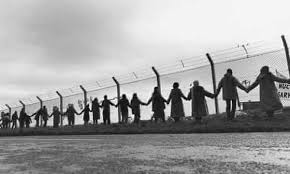
Life at the Fence — In the early ’80s, a women’s only camp at an RAF site in Berkshire was formed to protest the threat of nuclear arms. Janine Wiedel’s new photobook revisits its anti-establishment setup and people.
Coming of age in the shadow of the 1962 Cuban Missile Crisis, Janine Wiedel remembers the “duck and cover drills” of her childhood years, where students hid under school desks, head in hands, practicing quiet surrender to nuclear Armageddon.
By the ’80s, Wiedel was living and working as a photographer, documenting working-class life in the UK. With Ronald Reagan in the White House, Cold War tensions reached a fevered pitch. Across the pond, Margaret Thatcher, Reagan’s “comrade-in-arms”, welcomed the NATO bequest of 96 US-manufactured, nuclear “cruise missiles”, which were to begin arriving at RAF Greenham Common in 1983.
As NATO and the USSR ran up their arsenals, a grassroots resistance movement sprouted in Greenham, in the English county of Berkshire, taking the shape of a “women’s only” peace camp in 1982. Despite evictions, fences, and spies organised to bring them down, the resistance stayed the course until the American forces packed up their weapons and went home following the collapse of the Soviet Union in 1991.
Their struggle made headlines, with even the Soviet premier Mikhail Gorbachev paying homage to the ‘Greenham women and the peace movement of Europe’ at the signing of the 1987 Intermediate-range Nuclear Forces (INF) Treaty. But those initial media reports, Wiedel remembers, were ultimately disparaging of the women, so she decided to visit the camp for herself in 1983.
“I was fascinated by the community that had evolved as a result of it being ‘all women’ – there were no leaders,” Wiedel says. “The women built homes out of wood they collected, and they lit and tended the fires. They attended and spoke at conferences. They represented themselves in court when they were arrested. Everyone had an equal voice. Confidence grew. The actions were spontaneous and flexible; the authorities and police never knew what they would do next.”
The lesson became clear: don’t stop until the job is done. Now, Wiedel revisits this historic chapter of protest history with Life at the Fence: Greenham Women’s Peace Camp 1983 – 84 (Image & Reality). Through transportive imagery and interviews conducted at the time, the book brings together Wiedel’s masterful reportage as she takes us through the camps, which were built along the nine-mile perimeter of the RAF base, while paratroopers perched in lookout towers, binoculars in hand. Against the backdrop of gnarly barbed wire, the women sorted themselves out among different camp sites, each named for a different colour of the rainbow. It was a world of striking contrasts.
Drawn to women who had given up everything to live in primitive, volatile conditions, Wiedel listened to the women, recording their testimonies, songs, and remembrances which she weaves alongside documentary, portraits, landscape, still life, and reportage of non-violent direct actions.
“At the time, as a ‘women only’ protest, it was subjected to every form of abuse and ridicule by the media,” says Wiedel. “Its presence at the base also became an embarrassment to the Thatcher government. The women, however, managed to remain at the base for 19 years. Everyone I spoke with said it had transformed their lives.”
Life at the Fence: Greenham Women’s Peace Camp 1983 – 84 by Janine Wiedel is published by Image & Reality.
The New York Times Finally Stops Avoiding The G-Word

Caitlin Johnstone, Jul 16, 2025, https://www.caitlinjohnst.one/p/the-new-york-times-finally-stops?utm_source=post-email-title&publication_id=82124&post_id=168435877&utm_campaign=email-post-title&isFreemail=true&r=1ise1&triedRedirect=true&utm_medium=email
The New York Times has published an op-ed by a genocide scholar who says that he resisted acknowledging the truth of what Israel is doing in Gaza for as long as he could, but can no longer deny the obvious.
It’s an admission that may as well have come from The New York Times itself.
In an article titled “I’m a Genocide Scholar. I Know It When I See It.”, a Brown University professor of Holocaust and genocide studies named Omer Bartov argues that “Israel is literally trying to wipe out Palestinian existence in Gaza,” and denounces his fellow Holocaust scholars for failing to acknowledge reality.
“My inescapable conclusion has become that Israel is committing genocide against the Palestinian people,” Bartov writes. “Having grown up in a Zionist home, lived the first half of my life in Israel, served in the I.D.F. as a soldier and officer and spent most of my career researching and writing on war crimes and the Holocaust, this was a painful conclusion to reach, and one that I resisted as long as I could. But I have been teaching classes on genocide for a quarter of a century. I can recognize one when I see one.”
And resist he did. In November 2023, Bartov wrote another op-ed for The New York Times saying “As a historian of genocide, I believe that there is no proof that genocide is currently taking place in Gaza, although it is very likely that war crimes, and even crimes against humanity, are happening.”
Apparently he is seeing the proof now and has stopped resisting what’s been clear from the very beginning. And it would seem the editors of the Gray Lady have ceased resisting as well.
The New York Times, which has an extensively documented pro-Israel bias, has frenetically avoided the use of the g-word on its pages from the very beginning of the Gaza onslaught. Even in its opinion and analysis pieces the NYT Overton window has cut off at framing the issue as a complex matter of rigorous debate, with headlines like “Accused of Genocide, Israelis See Reversal of Reality. Palestinians See Justice.” and “The Bitter Fight Over the Meaning of ‘Genocide’” representing the closest thing to the pro-Palestinian side of the debate you’d see. During the same time we’ve seen headlines like “From the Embers of an Old Genocide, a New One May Be Emerging” used in reference to Sudan.
In an internal memo obtained by The Intercept last year, New York Times reporters were explicitly told to avoid the use of the word “genocide”, as well as terms like “ethnic cleansing” and “occupied territory”.
“‘Genocide’ has a specific definition in international law,” the memo reads. “In our own voice, we should generally use it only in the context of those legal parameters. We should also set a high bar for allowing others to use it as an accusation, whether in quotations or not, unless they are making a substantive argument based on the legal definition.”
Earlier this year the American Friends Service Committee cancelled its paid advertisement in The New York Times calling for an end to the genocide in Gaza, saying the outlet had wanted them to change the word “genocide” to “war” in order for their ad to be published.
So there has been a significant change.
To be clear, this analysis by Omer Bartov is not significant in and of itself. He is only joining the chorus of what has already been said by human rights organizations like Amnesty International, Human Rights Watch, United Nations human rights experts, and the overwhelming majority of leading authorities on the subject of genocide.
What is significant is that even experts who’ve been resisting acknowledging the reality of the genocide in Gaza because of their bias toward Israel have stopped doing so, and that even the imperial media outlets most fiendishly devoted to running propaganda cover for that genocide have run out of room to hide.
The Israel apologists have lost the argument. They might not know it yet, but they have. Public sentiment has turned irreversibly against them as people’s eyes are opened to the truth of what’s happening in Gaza, and more and more propagandists are choosing to rescue what’s left of their tattered credibility instead of going down with the sinking ship.
Truth is slowly beginning to get a word in edgewise.
Keep pushing. Keep fighting. Keep resisting.
It’s working.
“Return to Fukushima”

by beyondnuclearinternational, https://beyondnuclearinternational.org/2025/07/06/return-to-fukushima-2/
Cindy Folkers reviews Thomas Bass’s excellent new book that is both a personal journey and a stark warning
Thomas A. Bass’s “Return to Fukushima” is a poignant blend of investigative journalism, environmental critique, and personal reflection that revisits the 2011 Fukushima Daiichi nuclear power disaster. Bass brings poetic prose, incisive analysis, and a deeply ethical lens to a subject often buried under technical jargon and political spin. This book is not just a recounting of catastrophe, but a stark reminder that, even in the face of individual and community resilience, science and policy fall short for those haunted by the permanence of radioactive contamination.
At the heart of the book lies a powerful question: What does it mean to live in a nuclear exclusion zone? Bass uses this inquiry to explore the “slow violence of radiation,” the enduring trauma of environmental contamination, the cultural amnesia that allows such disasters to fade from global consciousness, and the political and corporate machinery that enables this erasure. Rather than focusing on abstract debates, he humanizes the crisis by highlighting the lived experiences of those navigating the radioactive ruins of northeastern Japan. He remarks, “The process [of decontamination] is more about managing people’s perception of radiation than it is a solution.”
Rooting the book in personal and historical context, Bass recalls the surreal normalcy of growing up in a home adorned with photographs of mushroom clouds, reflecting his father’s involvement in fabricating both hydrogen (tritium) bombs and atomic bombs. Starting from this context, Bass links Fukushima to other sites of radioactive trauma—Chernobyl, Hanford, Bikini Atoll—framing them as part of a global pattern of technological arrogance, and recognizing the long-standing connection between civilian energy and military power.
Bass first visited Fukushima in 2018 and returned in 2022. His first trip revealed a superficial recovery, what he calls a “Potemkin” reconstruction aimed at showcasing Japan’s readiness for the Tokyo Olympics. By 2022, however, a more genuine—albeit cautious—resettlement was underway, with some people returning and farms being tentatively revived. Yet, even as the physical infrastructure was repaired, the psychic and ecological wounds lingered. Bass captures this tension with journalistic clarity and literary finesse.
Bass specifically relates his own encounter with radioactivity in a contaminated town in Japan — Namie: “As I get out of the car to photograph the bowling alley with the boat leaned against it, there is a metallic taste in my mouth, a lick of gunmetal.” Such moments remind readers that radiation, while invisible, is palpably real to those living with it daily.
Throughout the book, Bass offers a scathing critique of what he terms nuclear power’s “greenwashing.” Drawing from scientists, environmentalists, and historical evidence, he dissects the industry’s claims that nuclear energy is a safe, carbon-free solution to climate change. His tone is neither hysterical nor ideological; instead, it is sharply analytical and grounded. On the empty rhetoric of clean energy, he wryly notes, “Yes, plutonium is carbon-free. It will also kill you.”
Bass goes further by examining the systemic forces that allow nuclear risk to persist without accountability, laying bare the many attempts at covering over the severity of the ongoing nuclear catastrophe, including official lies about radioisotope content of contaminated water released into the Pacific, official allowable increases in the exposure limit to the public, and government gag orders placed on scientists. He delves into misinformation, regulatory failure, and public relations strategies that obscure the true costs—human and ecological—of nuclear energy.
In one of the book’s most disturbing passages, he highlights the Japanese government’s refusal to acknowledge radiation-related illnesses: “Doctors have left the area because the government refuses to reimburse them when they list radiation sickness as the cause for nose bleeds, spontaneous abortions, and other ailments resulting from ionizing radiation. (The only acceptable diagnoses are ‘radio-phobia,’ nervousness, and stress.)”
However, “Return to Fukushima” is not merely a catalog of policy failures or even a polemic against nuclear energy. It is above all an ethical and human-centered work. The personal stories Bass shares—such as those of the Kobayashis, who collaborate with Chernobyl survivors, or citizen scientists using homemade Geiger counters—bring dignity and agency to people often ignored by mainstream narratives. “‘You measure everything and keep measuring,’ says Takenori Kobayashi… ‘That’s the most important lesson we have learned from Chernobyl.’”
Despite these attempts at self-determination, Bass’s takeaway is a chilling question: “Is this what our future looks like? A daycare center full of radiation maps and equipment for monitoring our contaminated Earth?” The line encapsulates the book’s quiet horror and urgent relevance. As nations look to nuclear power as a climate solution, Bass reminds us that technological fixes without ethical grounding can cause irreversible harm.
“Return to Fukushima” is far more than a chronicle of disaster. It is a searing indictment of technological arrogance, a meditation on environmental justice, and a terrifying look into a future we can still largely avoid. With eloquence, empathy, and unflinching honesty, Thomas A. Bass confronts the radioactive legacy of our times. As Noam Chomsky aptly states, this is a book “so crucial that it bears on the survival of the earth.” Anyone interested in energy policy, environmental ethics, or the future of our planet should read it.
Why BBC editors must one day stand trial for colluding in Israel’s genocide
20 June 2025, https://www.jonathan-cook.net/blog/2025-06-20/bbc-editors-trial-israel-genocide/
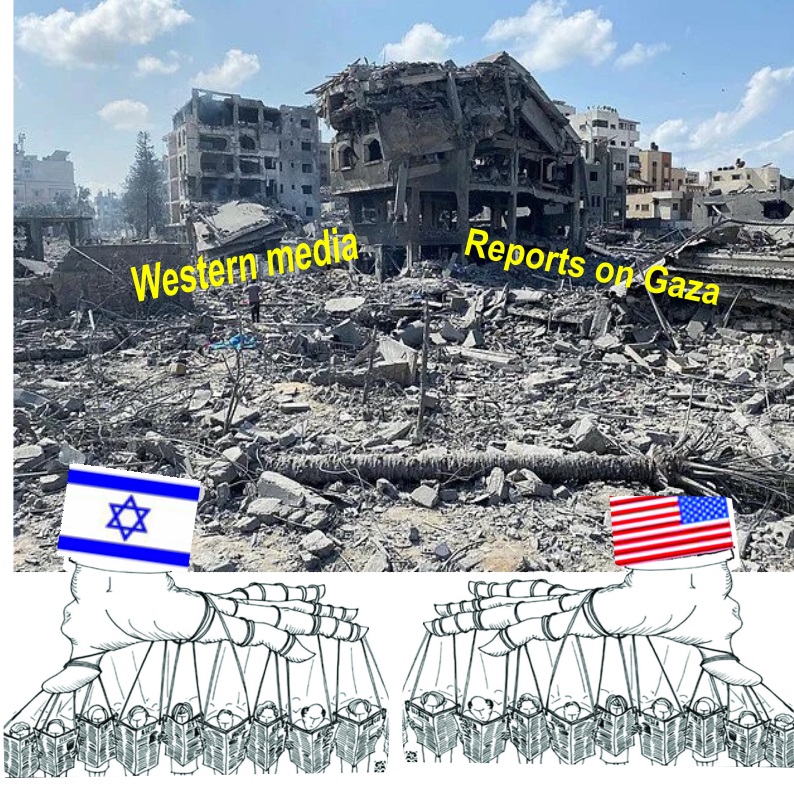
In a confrontation with BBC news chief Richard Burgess, journalist Peter Oborne sets out six ways the state broadcaster has wilfully misled audiences on Israel’s destruction of Gaza
Veteran journalist Peter Oborne eviscerated the BBC this week over its shameful reporting of Gaza – and unusually, he managed to do so face-to-face with the BBC’s executive news editor, Richard Burgess, during a parliamentary meeting.
Oborne’s remarks relate to a new and damning report by the Centre for Media Monitoring, which analysed in detail the BBC’s Gaza coverage in the year following Hamas’ one-day attack on 7 October 2023. The report found a “pattern of bias, double standards and silencing of Palestinian voices.” These aren’t editorial slip-ups. They reveal a systematic, long-term skewing of editorial coverage in Israel’s favour.
Oborne was one of several journalists to confront Burgess. His comments, filmed by someone at the meeting, can be watched below [on original]
Oborne makes a series of important points that illustrate why the BBC’s slanted, Israel-friendly news agenda amounts to genocide denial, and means executives like Burgess are directly complicit in Israeli war crimes:
1. The BBC has never mentioned the Hannibal directive, invoked by Israel on 7 October 2023, that green-lit the murder of Israeli soldiers and civilians, often by Apache helicopter fire, to prevent them being taken captive by Hamas. The Israeli media has extensively reported on the role of the Hannibal directive in the Israeli military’s response on 7 October, but that coverage has been completely ignored by the BBC and most UK media outlets.
Israel’s invocation of the Hannibal directive – essential context for understanding what happened on 7 October – explains much of the destruction that day in Israel usually attributed to Hamas “barbarism”, such as the graveyard of burnt-out, crumpled cars and the charred, crumbling remains of houses in communities near Gaza.
Hamas, with its light weapons, did not have the ability to inflict this kind of damage on Israel, and we know from Israeli witnesses, video footage and admissions from Israeli military officers that Israel was responsible for at least a share of the carnage that day. How much we will apparently never know because Israel is not willing to investigate itself, and media like the BBC are not doing any investigations themselves, or putting any pressure on Israel to do so.
2. The BBC has never mentioned Israel’s Dahiya doctrine, the basis of its “mowing the lawn” approach to Gaza over the past two decades, in which the Israeli military has intermittently destroyed large swaths of the tiny enclave. The official aim has been to push the population, in the words of Israeli generals, back to the “Stone Age”. The assumption is that, forced into survival mode, Palestinians will not have the energy or will to resist their brutal and illegal subjugation by Israel and that it will be easier for Israel to ethnically cleanse them from their homeland.
Because Israel has been implementing this military doctrine – a form of collective punishment and therefore indisputably a war crime – for at least 20 years, it is critically important in any analysis of the events that led up to 7 October, or of the genocidal campaign of destruction Israel launched subsequently.
The BBC’s refusal even to acknowledge the doctrine’s existence leaves audiences gravely misinformed about Israel’s historical abuses of Gaza, and deprived of context to interpret the campaign of destruction by Israel over the past 20 months.
3. The BBC has utterly failed to report the many dozens of genocidal statements from Israeli officials since 7 October – again vital context for audiences to understand Israel’s goals in Gaza.
Perhaps most egregiously, the BBC has not reported Israeli prime minister Benjamin Netanyahu’s biblically-inspired comparison of the Palestinians to “Amalek” – a people the Jews were instructed by God to wipe from the face of the earth. Netanyahu knew this clearly genocidal statement would have especial resonance with what now amounts to a majority of the combat soldiers in Gaza who belong to extreme religious communities that view the Bible as the literal truth.
The hardest thing to prove in genocide is intent. And yet the reason Israel’s violence in Gaza is so clearly genocidal is that every senior official from the prime minister down has repeatedly told us that genocide is their intent. The decision not to inform audiences of these public statements is not journalism. It is pro-Israel disinformation and genocide denial.
4. By contrast, as Oborne notes, on more than 100 occasions when guests have tried to refer to what is happening in Gaza as a genocide, BBC staff have immediately shut them down on air. As other investigations have shown, the BBC has strictly enforced a policy not only of banning the use of the term “genocide” by its own journalists in reference to Gaza but of depriving others – from Palestinians to western medical volunteers and international law experts – of the right to use the term as well. Again, this is pure genocide denial.
5. Oborne also points to the fact that the BBC has largely ignored Israel’s campaign of murdering Palestinian journalists in Gaza. A greater number have been killed by Israel in its war on the tiny enclave than the total number of journalists killed in all other major conflicts of the past 160 years combined.
The BBC has reported just 6 per cent of the more than 225 journalists killed by Israel in Gaza, compared to 62 per cent of the far smaller number of journalists killed in Ukraine. This is once again vital context for understanding that Israel’s goals are genocidal. It hopes to exterminate the main witnesses to its crimes.
6. Oborne adds a point of his own. He notes that the distinguished Israeli historian Avi Shlaim lives in the UK and teaches at Oxford University. Unlike the Israeli spokespeople familiar to BBC audiences, who are paid to muddy the waters and deny Israel’s genocide, Shlaim is both knowledgeable about the history of Israeli colonisation of Palestine and truly independent. He is in a position to dispassionately provide the context BBC audiences need to make judgments about what is going on and who is responsible for it.
And yet extraordinarily, Shlaim has never been invited on by the BBC. He is only too ready to do interviews. He has done them for Al Jazeera, for example. But he isn’t invited on because, it seems, he is “the wrong sort of Jew”. His research has led him to a series of highly critical conclusions about Israel’s historical and current treatment of the Palestinians. He calls what Israel is doing in Gaza a genocide. He is one of the prominent Israelis we are never allowed to hear from, because they are likely to make more credible and mainstream a narrative the BBC wishes to present as fringe, loopy and antisemitic. Again, what the BBC is doing – paid for by British taxpayers – isn’t journalism. It is propaganda for a foreign state.
Watch the video above [on original] to see how Burgess responds. His answer is a long-winded shrugging of the shoulders, a BBC executive’s way of acting clueless – an equivalent of Manuel, the dim-witted Spanish waiter in the classic comedy show Fawlty Towers, saying: “I know nothing.”
Other lowlights from Burgess include his responding to a pointed question from Declassified journalist Hamza Yusuf on why the BBC has not given attention to British spy planes operating over Gaza from RAF base Akrotiri on Cyprus. “I don’t think we should overplay the UK’s contribution to what’s happening in Israel,” Burgess answers.
So the British state broadcaster has decided that its duty is not to investigate the nature of British state assistance to Israel in Gaza, even though most experts agree what Israel is doing there amounts to genocide. Burgess thinks scrutiny of British state complicity would be “overplaying” British collusion, even though the BBC has not actually investigated the extent or nature of that collusion to have reached a conclusion. This is the very antithesis of what journalism is there to do: monitor the centres of power, not exonerate such power-centres before they have even been scrutinised.
Labour MP Andy McDonald responded to Burgess: “To underplay the role of the UK is an error.”
It is more than that. It is journalistic complicity in British and Israeli state war crimes.
Here are a few key statistical findings from the Centre for Media Monitoring’s report on BBC coverage of Gaza over the year following 7 October 2023:
- The BBC ran more than 30 times more victim profiles of Israelis than Palestinians.
- The BBC interviewed more than twice as many Israelis as Palestinians.
- The BBC asked 38 of its guests to condemn Hamas. It asked no one to condemn Israel’s mass killing of civilians, or its attacks on hospitals and schools.
- Only 0.5% of BBC articles mentioned Israel’s illegal occupation of Palestine.The BBC mentioned “occupation” – the essential context for understanding the relationship between Israel and Palestinians – only 14 times in news articles when providing context to the events of 7 October 2023. That amounted to 0.3% of articles. Additional context – decades of Israeli apartheid rule and Israel’s 17-year blockade of Gaza — were entirely missing from the coverage.
- The BBC described Israeli captives as “hostages”, while Palestinian detainees, including children held without charge, were called “prisoners”. During one major hostage exchange in which 90 Palestinians were swapped for three Israelis, 70% of BBC articles focused on those three Israelis.
- The BBC covered Ukraine with twice as many articles as Gaza in the time period, even though the Gaza story was newer and Israeli crimes even graver than Russia ones. The corporation was twice as likely to use sympathetic language for Ukrainian victims than it was for Palestinian victims.
- In coverage, Palestinians were usually described as having “died” or been “killed” in air strikes, without mention of who launched those strikes. Israeli victims, on the other hand, were “massacred”, “slaughtered” and “butchered” – and the author of the violence was named, even though, as we have seen, the Hannibal directive clouded the picture in at least some of those cases.
As is only too evident watching Burgess respond, he is not there to learn from the state broadcaster’s glaring mistakes – because systematic BBC pro-Israel bias isn’t a mistake. It’s precisely what the BBC is there to do.
New York Times Gave Green Light to Trump’s Iran Attack by Treating It as a Question of When
Bryce Greene, June 23, 2025, Research assistance: Emma Llano, https://fair.org/home/nyt-gave-green-light-to-trumps-iran-attack-by-treating-it-as-a-question-of-when/
In the wake of the US-supported Israeli attack on Iran, and days before the direct US bombing that followed, the New York Times editorial board (6/18/25) argued that “America Must Not Rush Into a War Against Iran.”
This language was as shifty as it was deliberate. Rather than oppose a policy of unprovoked aggression and mass murder, the Times editorialists suggested such a campaign was happening too hastily, and it should be preceded by more debate.
The opinion writers at the most important paper in the world were fully in favor of attacking Iran; they only worried that Trump would go about it the wrong way. In fact, the Times’ justification for war was identical to that of the Trump administration’s explanation after the fact. It laid it out in the first paragraph:
A nuclear-armed Iran would make the world less safe. It would destabilize the already volatile Middle East. It could imperil Israel’s existence. It would encourage other nations to acquire their own nuclear weapons, with far-reaching geopolitical consequences.
The New York Times‘ echo of the standard Israeli and US propaganda line offers an opportunity to critically examine this most recent justification for aggressive war.
‘Iran is not building a nuclear weapon’
The premise here was that Iran is working to build a nuclear weapon, something that forms the backbone of the Israeli propaganda campaign justifying their actions. The only problem is that there is no evidence whatsoever for this position. Not only is there no evidence that Iran is building a nuclear weapon, there is no reason to think that if they did, they would be anything other than defensive weapons.
Nowhere in the Times analysis was there any reference to the fact that neither US intelligence agencies nor international monitoring organizations have found evidence of any Iranian intention to build a nuclear weapon. As recently as March 25, 2025, Tulsi Gabbard, the Trump administration’s director of national intelligence, told the Senate Select Committee on Intelligence that the US intelligence community “continues to assess that Iran is not building a nuclear weapon and Supreme Leader Khamenei has not authorized the nuclear weapons program that he suspended in 2003.”
While the International Atomic Energy Agency has been critical of steps Iran has taken to make its nuclear power program less transparent in the context of continual threats from Israel and the US to bomb that program, IAEA director Rafael Grossi emphasized in an interview with CNN (6/17/25; cited in Al Jazeera, 6/18/25), after those threats had become reality, “We did not have any proof of a systematic effort to move into a nuclear weapon.”
Unilaterally scrapped
While the Times editorial did make brief mention of the US’s Obama-era anti-nuclear treaty with Iran, it offered no analysis as to why the Trump administration unilaterally scrapped the deal, despite no violation on Iran’s part. Nor did the paper mention the Biden administration refusal to negotiate a return to the deal. There was no mention of the fact that as Israel launched its first strike against Iran, the Iranians had made it clear that they wished to make a deal with the Trump administration on its nuclear energy program, and were actively negotiating toward that end.
But the fact is that every country in the Middle East, including Iran, has been in favor of a nuclear weapons–free Middle East. Every country, that is, with the exception of Israel, whose illegal, undeclared and often unacknowledged stockpile of nuclear weapons are currently in the hands of a genocidal and messianic regime, hell-bent on attacking its neighbors and thwarting any opportunities for peace.
Despite all of the fearmongering about Iran’s alleged aggressive intent and destabilizing potential, the Times ignored ample analysis and evidence to the contrary. As eminent political scientist John Mearsheimer (PBS, 7/9/12) has argued, a nuclear armed Iran could make the region more stable, because of the deterrent power of nuclear weapons.
A 2009 US military–funded study from the RAND corporation (4/14/09) examined Iranian ”press statements, writings in military journals, and other glimpses into Iranian thinking,” and found that it was extremely unlikely that Iran would use nuclear weapons offensively against Israel. Contrary to the Times’ image of Iran as fanatical theocrats bent on Israel’s destruction at all costs, military planners in Iran are well aware of the danger of being wiped off the map by retaliatory US strikes, and plan accordingly. If the Islamic Republic was to get nuclear weapons, predicts RAND, they would be used to deter exactly the kind of unprovoked attack that the US and Israel have launched over the past several days. They would be defensive, not offensive, weapons.
‘A malevolent force in the world’
The editorial board explicitly avoided the question of what Congress should do on the question of war with Iran: “The separate question of whether the United States should join the conflict is not one that we are addressing here.” But they had no problem presenting their pros list:
We know the arguments in favor of doing so—namely, that Iran’s government is a malevolent force in the world, and that it has made substantial progress toward acquiring a nuclear weapon. Last week the International Atomic Energy Agency, which is part of the United Nations, declared that Iran was violating its nonproliferation obligations and apparently hiding evidence of its efforts.
And their cons list:
Given how much weaker Iran is today than it was then, thanks partly to Israel’s humbling of Iranian proxies like Hamas and Hezbollah, the Trump administration might well be able to achieve a stricter [Iran nuclear deal] today.
While the Times correctly pointed out that the IAEA found Iran to be in “noncompliance” with the nonproliferation treaty (NPT), the Times failed to point out that this came after an intense lobbying effort from Western officials just hours before Israeli strikes. They also ignore Iran’s detailed criticism of the IAEA finding, including its allegations that the findings were based in part on forged documents—a credible allegation, given Israel’s history of fabricating and forging evidence to justify aggression. Iran also noted that some of the “nonproliferation obligations” it had allegedly violated were not codified in the NPT, but instead were part of the agreement that the US unilaterally withdrew from. Nor did the Times make reference to the IAEA chief’s explicit insistence that the agency did not have proof Iran was trying to build a nuclear weapon.
‘Let this vital debate begin’
Instead of explaining this, the Times went straight to name-calling. One does not have to scrape the annals of the New York Times to predict that the phrase “malevolent force” has never been used to describe any of Washington’s ultra-violent allies, even the ones who have actually built and maintained an illegal stockpile of nuclear weapons. Certainly not Israel, the nation that has put an entire population under military apartheid for decades, and has slaughtered tens of thousands as part of what international rights organizations have labeled a genocide.
The US and Israel have made Iran the target of propaganda campaigns, terrorism, cyber attacks, assassinations, regime change operations and unprovoked attacks on its personnel and home soil. If the Times had included these facts, it would have inhibited the ultimate goal of the editorial: to promote the idea that war with Iran could potentially be desirable—and certainly justifiable. The Times seemed keen to act as a loyal opposition to Trump, while distancing themselves from the manner in which he might enact such a war.
Including the facts of America’s aggressive and provocative behavior against Iran would force them to conclude that the primary force destabilizing the region is not Iran, but the US and Israel. It isn’t Iran whose top papers are weighing the benefits of whether or not to launch a war of aggression against yet another nation. That honor goes to the New York Times, which said of this national discussion of mass murder policy: “Let this vital debate begin.”
After the strikes on Iran, the Trump administration and Israel have not announced full scale regime change war just yet, though there is every indication that such plans are in the works. As with Iraq in 2003, we have seen how easily false claims of weapons of mass destruction, and propaganda about a need to act, can morph into a years-long quagmire of senseless killing in the name of rebuilding a nation according to Washington’s designs. If such a war should be launched against Iran, the Times will have been one of its key supporters.
BBC chief downplays Britain’s military support for Israel
The broadcaster’s director of news just let slip why his journalists are turning a blind eye to UK spy flights over Gaza.
HAMZA YUSUF, Declassified UK, 18 June 2025
A senior figure at the BBC has defended the broadcaster’s failure to investigate Royal Air Force (RAF) surveillance flights over Gaza by trying to minimise their significance.
Richard Burgess, director of news content at the BBC, told Declassified last night: “I don’t think we should overplay the UK’s contribution to what’s happening in Israel”.
Burgess’ comment came as he was being grilled over the corporation’s patchy reporting of RAF intelligence sharing with Israel.
The RAF has sent more than 500 spy flights over Gaza since December 2023, which the BBC news website has mentioned just four times.
This is despite the flights taking place on days when Israel committed major massacres of Palestinians as well as British aid workers.
Intelligence from these flights is shared with Israel, whose prime minister is wanted by the International Criminal Court for war crimes in Gaza.
While the BBC has barely reported on the spy flights, Declassified’s small team has repeatedly investigated them.
We shot the only footage of the spy plane taking off from a UK base on Cyprus and made freedom of information requests for data from the flights………………………………….
When challenged further on why the BBC had not investigated the British spy flight over Gaza on the day Israel killed UK aid workers, Burgess said: “I agree with you that there are important issues to discuss but my point was that we shouldn’t – we need to see it in the context of the overall arming of Israel.”
Labour MP Andy McDonald, who was watching the exchange, told Burgess: “To underplay the role of the UK is an error.” https://www.declassifieduk.org/bbc-chief-downplays-britains-military-support-for-israel/
The real threat to Israel is Netanyahu
23 June 2025 AIMN Editorial, By Walt Zlotow, https://theaimn.net/the-real-threat-to-israel-is-netanyahu/
Steven Katz misunderstands the real existential fight occurring in Israel and its performance in its unprovoked attack on Iran.
In his Chicago Tribune op-ed, ‘Israel’s war against Iran is just’ Katz begins with; “Israel is waging an existential fight for its survival as a Jewish state. And it is winning and fighting well.”
While Israel is waging an existential fight for its survival as a Jewish state, it’s not from Iran. Iran never was, is not now and won’t in the future be an existential threat to Israel. It has neither the will nor the means to do that.
Israeli leadership under Prime Minister Benjamin Netanyahu and his even more extreme cabinet are doing that quite well without any help from Iran or any of its other neighbors. Netanyahu’s genocidal campaign of ethnically cleansing all 2,300,000 Palestinians in Gaza has made Israel a pariah state being shunned by much of the world.
Tourism is down 90%, inflicting a $3.4 billion drop in tourist revenue. Almost 470,000 Israelis have emigrated since the genocide began October 8, 2023, a day after the Hamas attack. Israel’s economy has been battered. Bank of Israel estimates war costs since October, 2023 will amount to $55.6 billion costing Israel 10% of its economy. Israeli GDP dropped to 2% since the Gaza genocide from 6.5% before. Consumer spending declined 27%, imports dropped 42% and exports fell 18%.
Instead of ending the bleeding in Gaza and the Israeli economy, Netanyahu launched another murderous misadventure sure to make all these demographic and economic declines worse. The existential threat to Israel lies not in Tehran but in the Israeli Prime Minister’s office
Regarding Katz’s take on Israel’s war performance, it’s neither winning nor fighting well. Israel cannot destroy Iran’s nuclear capability by itself nor topple the Iranian regime. Only massive US military involvement can possibly do that and with no certainty of success.
Israel knows this which is why it has goaded the US to attack Iran for decades, beginning with their cheering on America’s illegal, immoral, criminal war on Iraq 22 years ago. That war was designed then to end up toppling the Iranian regime in Tehran. Instead it backfired and didn’t.
Israel’s sneak attack enabled by duplicitous US diplomacy to lull Iran into complacency, has caused retaliatory strikes never before experienced in Israel’s 77 year existence. And they will get worse as Israel runs out of weapons to shoot down incoming missiles.
Steven Katz certainly knows all of this. But in the service of US and Israeli exceptionalism promoting world/regional dominance, he turns a blind eye. The Tribune’s readership deserves better.
Why won’t the BBC report on Israel’s nuclear weapons?

DOES Israel have nuclear weapons? Yes. Will the BBC report that fact?
Apparently not. The broadcaster has quietly updated a story which wrongly
claims the “real answer is we do not know” if Israel has nuclear
weapons.
However, the BBC claim – which relies on the fact that the
Israeli government has not officially acknowledged its nuclear capabilities
– remains even in the updated version of a story purported to offer
answers to readers’ questions on the Iran-Israel conflict.
The National 19th June 2025, https://www.thenational.scot/news/25251643.wont-bbc-report-israels-nuclear-weapons/
Working Hard to Justify Israel’s Unprovoked Attack on Iran
Belén Fernández, https://fair.org/home/working-hard-to-justify-israels-unprovoked-attack-on-iran/ 18 June 25
Imagine for a moment that Country A launched an illegal and unprovoked attack on Country B. In any sort of objective world, you might expect media coverage of the episode to go something along the lines of: “Country A Launches Illegal and Unprovoked Attack on Country B.”
Not so in the case of Israel, whose special relationship with the United States means it gets special coverage in the US corporate media. When Israel attacked Iran early last Friday, killing numerous civilians along with military officials and scientists, the press was standing by to present the assault as fundamentally justified—no surprise coming from the outlets that have for more than 20 months refused to describe Israel’s genocide of Palestinians in the Gaza Strip as genocide.
‘Preemptive strike’
From the get-go, the corporate media narrative was that Israel had targeted Iranian military and nuclear facilities in a “preemptive strike” (ABC, 6/13/25), with civilian casualties presented either as an afterthought or not at all (e.g., AP, 6/18/25). (As the Israeli attack on Iran has continued unabated for the past week in tandem with retaliatory Iranian strikes on Israel, the Iranian civilian death toll has become harder to ignore—as, for example, in the Washington Post’s recent profile of 23-year-old poet Parnia Abbasi, killed along with her family as they slept in their Tehran apartment building.)
On Monday, June 16, the fourth day of the assault, the Associated Press reported that Israeli strikes had “killed at least 224 people since Friday.” This figure appeared in the eighth paragraph of the 34-paragraph article; the first reference to Iranian civilians appeared in paragraph 33, which informed readers that “rights groups” had suggested that the number was a “significant undercount,” and that 197 civilians were thus far among the upwards of 400 dead.
Back in paragraph 8, meanwhile, came the typical implicit validation of Israeli actions:
Israel says its sweeping assault on Iran’s top military leaders, uranium enrichment sites and nuclear scientists, is necessary to prevent its longtime adversary from getting any closer to building an atomic weapon.
That Israel’s “preventive” efforts happened to occur smack in the middle of a US push for a diplomatic resolution to the Iranian nuclear issue has not proved to be a detail that is overly of interest to the US media; nor have corporate outlets found it necessary to dwell too deeply on the matter of the personal convenience of war on Iran for Israeli prime minister Benjamin Netanyahu—both as a distraction from the genocide in Gaza, and from his domestic embroilment in assorted corruption charges.
In its own coverage, NBC News (6/14/25) highlighted that Netanyahu had “said the operation targeted Iran’s nuclear program and ‘will continue for as many days as it takes to remove this threat.’” Somehow, it is never deemed worth mentioning in such reports that it is not in fact up to Israel—the only state in the region with an (undeclared) nuclear arsenal, and a non-signatory to the Nuclear Non-Proliferation Treaty—to be policing any perceived nuclear “threat.” Instead, Israeli officials are given ample space, time and again, to present their supposed cause as entirely legitimate, while getting away with murder—not to mention genocide.
‘Potential salvation’
Its profile of the young poet Abbasi notwithstanding, the Washington Post has been particularly aggressive in toeing the Israeli line. Following Netanyahu’s English-language appeal to Iranians to “stand up” against the “common enemy: the murderous regime that both oppresses you and impoverishes you”—a pretty rich accusation, coming from the man currently presiding over mass murder and all manner of other oppression—Post reporter Yeganeh Torbati (6/14/25) undertook to detail how some Iranians “see potential salvation in Israel’s attack despite risk of a wider war.”
In her dispatch, Torbati explained that in spite of reports of civilian deaths, “ordinary Iranians” had “expressed satisfaction” at Israel’s attacks on Iran’s “oppressive government.” As usual, there was no room for any potentially relevant historical details regarding “oppressive” governance in Iran—like, say, the 1953 CIA-orchestrated coup d’état against the democratically elected Mohammad Mossadegh, which paved the way for the extended rule-by-terror of the torture-happy Iranian shah, whose oppression was aided by manic acquisition of US weaponry.
On Monday, Torbati was back with another report on how, amid Israel’s attacks on Iran, the Iranian population had “lamented the lack of adequate safety instructions and evacuation orders” from its government, “turning to social media for answers.” The article quotes a Tehran resident named Alireza as complaining that “we have nothing, not even a government that would bother giving safety suggestions to people”—although it’s anyone’s guess as to what sort of suggestions the government is supposed to offer given the circumstances. Try not to be sleeping in your apartment when Israel decides to bomb it?
We thus end up with an entire article in a top US newspaper suggesting that the issue at hand is not that Israel is conducting illegal and unprovoked attacks on Iran, but rather that the Iranian government has not publicized proper safety recommendations for dealing with said attacks. At one point, Torbati concedes that “the government did provide some broad safety instructions,” and that “a government spokeswoman, Fatemeh Mohajerani, recommended that Iranians take shelter in metros, mosques and schools.”
Refusing to leave it at that, Torbati goes on to object that “it was unclear why mosques and schools would be safer than other buildings, given that Israel had already targeted residential and other civilian structures”—which again magically transforms the issue into a critique of the Iranian government for lack of clarity, as opposed to a critique of Israel for, you know, committing war crimes.
‘It’s all targeted’
Which brings us to the New York Times, never one to miss a chance to cheerlead on behalf of Israeli atrocities—like that time in 2009 that the paper’s resident foreign affairs columnist literally advocated for targeting civilians in Gaza (FAIR.org, 1/30/25), invoking Israel’s targeting of civilians in Lebanon in 2006 as a positive precedent. Now, a Times article (6/15/25) headlined “Israel’s Attack in Iran Echoes Its Strategy Against Hezbollah” wonders if another Lebanese precedent might prove successful: “Israel decimated the group’s leadership last fall and degraded its military capabilities. Can the same strategy work against a far more powerful foe?”
After reminiscing about “repeated Israeli attacks on apartment buildings, bunkers and speeding vehicles” in Lebanon in 2024—which produced “more than 15 senior Hezbollah military commanders eliminated in total”—the piece speculates that Israel’s ongoing attacks on Iran and assassinations of top Iranian officers seem “to be following the script from last fall” in Lebanon. Swift confirmation comes from Randa Slim at the Middle East Institute in Washington: “It’s all targeted, the assassination of their senior officials in their homes.”
Never mind that Israel’s activity in Lebanon last fall amounted to straight-up terrorism—or that somehow these “targeted assassinations” managed to kill some 4,000 people in Lebanon between October 2023 and November 2024 alone. In unceasingly providing a platform to justify Israeli aggression and mass civilian slaughter throughout the region, the US corporate media at least appears to be following its own script to a T.
Fox News Just Helped Netanyahu Spread The Lie That Iran Tried To Assassinate Trump
Caitlin Johnstone, Jun 16, 2025
Benjamin Netanyahu was given a platform to spout lies and war propaganda on Fox News in an interview with a groveling Bret Baier, who not only allowed the Israeli prime minister’s lies to cruise by unchecked but actually invited him to expand upon them.
Netanyahu promoted countless incendiary falsehoods and unsubstantiated claims throughout the interview, including the assertion that Iran was working on producing nuclear weapons and intended to give them to Yemen’s Houthis to facilitate global terrorism, and that Iran was working on intercontinental ballistic missiles to nuke the east coast of the United States as well.
Perhaps the most ridiculous and brazenly propagandistic claim advanced by Netanyahu was that Iran had twice attempted to assassinate the president of the United States.
“These are people who chant ‘Death to America.’ They’ve tried to assassinate President Trump twice,” said the prime minister.
Rather than push back on this claim or point out that there’s been no reported evidence that any such thing has occurred, Baier instead offered Netanyahu the opportunity to drive the narrative home further with claims of secret intelligence about these alleged assassination plots.
“You just said Iran tried to assassinate President Trump twice,” Baier said. “Do you have intel that the assassination attempts on President Trump were directly from Iran?”
“Through proxies, yes, through their intel, yes, they want to kill him,” Netanyahu asserted.
Netanyahu had previously made this claim on his own platform in a statement on Friday wishing President Trump a happy birthday, and now he’s carrying it into the mainstream news media of the United States.
Netanyahu’s claim has already been repeated in outlets like The New York Post, Washington Examiner, Breitbart, and The Independent. So it’s in the blood stream now. The information ecosystem of US politics has already been infected with the virus.
It says so much about how comfortable Israel is with lying and how eager the western media are to help promote those lies that Netanyahu could go on Fox News and just casually assert that Iran “tried to assassinate President Trump twice,” only to have the Murdoch muppet host invite him to expound upon this assertion rather than challenging the Israeli prime minister’s evidence-free claim.
Netanyahu was fully aware that he was lying, and Baier was fully aware that Netanyahu was lying. They collaborated to push this lie before Fox News’ aging audience without the faintest whisper of journalistic ethics anywhere to be heard, knowing that this one baseless assertion would help turn their Trump-sympathizing viewers toward supporting a US attack on Iran.
If you weren’t around for the lead-up to the invasion of Iraq, this is what it was like. Brazen lies with a fully complicit media, with the most frenetic war propaganda circulated by the Murdoch press.
Rupert Murdoch is intimately intertwined with Israel’s political elite and has a financial stake in Israeli energy which depends on Israel’s ongoing military occupation of the Golan Heights. Murdoch largely has the assistance of the US government to thank for his mass media empire. He personally funded the political career of Benjamin Netanyahu, who in 2002 told the US Congress that “There is no question whatsoever that Saddam [Hussein] is seeking, is working, is advancing towards to the development of nuclear weapons,” and that “If you take out Saddam, Saddam’s regime, I guarantee you that it will have enormous positive reverberations on the region.”
The US does not have a free press, and neither do any of its allies in the western world. Under the western power alliance the mass media operate as the propaganda services of the US-centralized empire, and the public is fed whatever narratives serve the information interests of that empire.
The lies about Iran are just getting started. There will be more. Don’t buy into any part of this scam. https://www.caitlinjohnst.one/p/fox-news-just-helped-netanyahu-spread?utm_source=post-email-title&publication_id=82124&post_id=166039398&utm_campaign=email-post-title&isFreemail=true&r=1ise1&triedRedirect=true&utm_medium=email
From Media Darling to Persona Non Grata: Greta Thunberg’s Journey
Alan Macleod, 7 June 25, https://www.mintpressnews.com/greta-thunberg-canceled-capitalism-israel/289936/
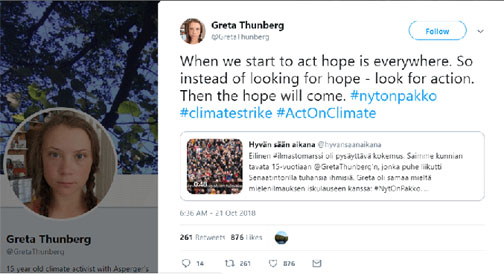
Once the favored child of the establishment, Greta Thunberg has been dropped by the global elite. A MintPress News study finds that coverage of Thunberg in The New York Times and Washington Post has dwindled from hundreds of articles per year to barely a handful, precisely as she widens her focus from the environment to the capitalist system that is causing climate breakdown, and the Israeli attack on Gaza, which the Swedish activist has labeled a “genocide.”
Her message of the urgent need to address the impending climate crisis was one that was palatable to authorities, who attempted to co-opt her with access and accolades. In 2019, despite being only 16 years old, she won the Swedish Woman of the Year award and was named by Forbes magazine as one of the world’s 100 most powerful women. Time magazine even awarded her its prestigious Person of the Year, for, in their words, “sounding the alarm about humanity’s predatory relationship with the only home we have,” “bringing to a fragmented world a voice that transcends backgrounds and borders,” and for “showing us all what it might look like when a new generation leads.”
While conservatives were hostile to her from the start, more liberal institutions showered her with attention and praise. The New York Times, for example, described her as “a modern-day Cassandra for the age of climate change,” and noted that her work had “inspired huge children’s demonstrations” across the planet.
Yet Thunberg refused to be turned into a mascot for the elites, and the co-optation failed. As a result, coverage of her in elite media outlets has plummeted to almost nothing, even as she continues to fight for global causes and risks her life trying to break the illegal blockade of Gaza.
This phenomenon can be seen by studying the coverage of Thunberg in The New York Times and The Washington Post. Shooting to public attention in 2018, Thunberg and her activities were, at first, given copious coverage in both newspapers, amounting to hundreds of articles per year in each outlet. Yet this has dwindled to virtually nothing by 2025, with only three Times and two Post articles even mentioning Thunberg, and only one in each covering her in any detail beyond a passing reference.
The data was compiled by searching for the term “Greta Thunberg” in the New York Times archive and Dow Jones Factiva news database, a tool that records the content from more than 32,000 U.S. and international media outlets.
Dr. Jill Stein, a three-time presidential candidate for the United States Green Party, was not surprised by the findings. “It comes with the territory when you go from inside the box to outside the box, and it is a real sign of integrity when the media stops covering you,” she told MintPress; “Greta has been canceled, like many of the best activists I know of.”
The precipitous drop in corporate media interest closely correlates with Thunberg’s increasingly radical stances. In 2022, she identified capitalism as a prime cause of climate collapse and explained the need for a comprehensive global revolution, stating that:
What we refer to as ‘normal’ is an extreme system built on the exploitation of people and the planet. It is a system defined by colonialism, imperialism, oppression, and genocide by the so-called global North to accumulate wealth that still shapes our current world order.”
At the same public event, she dismissed the United Nations Climate Change Conferences as a waste of time, and merely an opportunity for “people in power… to [use] greenwashing, lying and cheating.”
She has also gone out of her way to support workers’ struggles against their bosses. Last year, she visited the GKN auto parts factory in Florence, Italy, a site that striking workers have occupied. “Climate justice = workers’ rights,” she explained, noting that,
[E]very necessity to choose between the struggle for labour and the struggle for climate justice is abolished. The territory defends the factory, the factory defends the territory. The fight to get to the end of the month is the same fight against the end of the world.”
She has spoken out against the Moroccan occupation of Western Sahara, in support of striking Indian farmers, and against the Russian invasion of Ukraine. Undoubtedly, however, it is her solidarity with the Palestinian people and their cause that has earned her the most flak. In 2021, she shared a social media post accusing Israel of carrying out war crimes, adding that it was “Devastating to follow the developments in Jerusalem and Gaza,” adding the hashtag #SaveSheikhJarrah to her post. In the wake of the October 7 attack and the Israeli bombardment that followed it, she called for an immediate ceasefire and for freedom and justice for Palestine. And last year, she was arrested while protesting Israel’s inclusion in the Eurovision Song Contest.
For these actions, she has been vocally condemned by many of the same outlets that, only a few years previously, had celebrated and promoted her. Just days after her calls for a ceasefire, Forbes magazine ran a story headlined “Greta Thunberg’s stand with Gaza is a problem for the climate change movement,” which claimed that sharing “controversial opinions that only serve to alienate entire demographics” does not “advance an environmental cause,” and “only weakens her ability to advocate and harms the overall climate change movement.” Another Forbes article described her career arc as a “tragedy” and claimed that she was driven by an all-encompassing “hatred of Israel” and a determination to “destroy the Jewish state.” Meanwhile, influential German publication Der Spiegel, which had awarded her its “Person of the Year” in 2019, branded her an “antisemite.”
For Stein, Thunberg’s media excommunication cannot simply be explained by the notion that the exploits of a 22-year-old organizer are less newsworthy than those of a precocious teenager. Rather, it was her public stances against capitalism, imperialism, and Israel’s actions in Gaza that angered them.
“Each of those [stances] were a step-down in the eyes of mainstream media and the oligarchy they defend,” she said. “You could see the pushback against her starting when she began to speak about climate, social and economic justice. But when she began to take a stand on Gaza, that was the last straw, and you didn’t see her getting mainstream media coverage after that,” she added.
Thunberg sees the fight for a greener world as inseparable from the struggle for political and economic freedom. “For me, there is no way of distinguishing the two,” she said, adding:
We cannot have climate justice without social justice. The reason why I am a climate activist is not because I want to protect trees. I’m a climate activist because I care about human and planetary well-being, and those are extremely interlinked.”
Dimitri Lascaris, a lawyer and former Green Party of Canada leadership candidate who has sailed on multiple “freedom flotillas” attempting to break the Gaza blockade, said that the shunning of Thunberg also represents “an indictment of the environmental movement.” As Lascaris told MintPress:
Before Greta took an incredibly courageous stand for the victims of Israel’s genocidal regime, she was the darling of the movement, but many of those same ‘environmentalists’ who lionized her have fallen silent as she risks her life to draw attention to the suffering of Palestinians. Environmental justice and human rights are inextricably linked. If you will not stand with Greta now, then you have no right to call yourself an ‘environmental activist.’”
Dangerous Waters
In addition to her political trajectory, Thunberg is currently on a physical journey, sailing on an aid ship to Gaza in an attempt to break the Israeli blockade. She is one of 12 public figures to board the Madleen at the Sicilian port of Catania, which is scheduled to reach the densely populated strip on June 7. Others include “Game of Thrones” actor Liam Cunningham and French politician Rima Hassan.
The ship is carrying urgently-needed supplies, including flour, rice, and other staples, as well as baby formula, feminine hygiene products, medical supplies, crutches, prosthetic limbs, and water desalination kits. The Madleen is a small vessel, and the aid is but a drop in the ocean of what authorities say is needed. Organizers, however, emphasize the symbolic importance of breaking the blockade from the outside. “We are doing this because no matter what odds we are against, we have to keep trying, because the moment we stop trying is when we lose our humanity,” Thunberg explained. The volunteers and crew are sailing unarmed and have been trained in non-violence.
Corporate media have largely ignored the Madleen’s voyage. The New York Times, for example, has not covered it at all, while the Washington Post has dedicated a single article to it. Other outlets, however, have bitterly denounced the operation. “Greta Thunberg’s narcissism has escalated to terrifying levels,” ran the headline in Britain’s daily, The Telegraph, which labeled it a “self-serving stunt masquerading as a daring act of charity.”
Some commentators have displayed even more hostility to the mission. U.S. Senator Lindsey Graham, for instance, stated that the hopes “Greta and her friends can swim,” openly suggesting the aid ship should be attacked.
Israel has stated it will block the Madleen from entering Gazan waters, and its drones are already circling the ship. In May, the Israeli military attacked another boat attempting to deliver lifesaving aid to Palestine, firing missiles at the vessel just outside Maltese waters. The incident was largely ignored in the Western press.
Stein was impressed by Thunberg’s bravery, telling MintPress:
It is heroic, it is inspirational, and it is galvanizing to have this example of her and the others on the Freedom Flotilla. Their incredibly courageous, compassionate humanitarian example is the polar opposite of this horrific genocide. They are risking their lives and they know it… But they refuse to accept a genocide, or to be powerless in the face of it.”
The lack of press attention likely does not surprise Thunberg, who identified Western corporate media as active participants in the slaughter. “Our governments, our institutions, our companies are supporting this genocide… It is our tax money. It is our media who are continuing to dehumanize Palestinians,” she said. “On behalf of the international community, the so-called Western world, I am so sorry that we have betrayed you by not supporting you enough,” she added.
The manner in which the ruling class has collectively dumped Thunberg is far from an isolated incident. Elite liberal forces have historically attempted to defang and dilute radical challenges to the status quo, such as Black Lives Matter, the LGBT liberation movement, and the Occupy Wall Street protests, offering their leaders access and privileges. If this strategy fails, figures and movements are shunned, rebuked, or attacked. While Martin Luther King focused his attention on racist Southern sheriffs, he was treated with respect. But after his anti-war “Beyond Vietnam” speech, where he trained his guns on the “triple evils of racism, extreme materialism and militarism,” he became public enemy number one, and was ignored, denounced, and, ultimately, assassinated.
Thunberg shows no sign of backing down. “We are standing up for justice, sustainability, liberation for everyone. There can be no climate justice without social justice,” she said. That is precisely the kind of talk that got her ejected from elite polite society in the first place.
NYT Goes Silent on Greta Thunberg’s Gaza Voyage
this is all part of the Palestine exception, where liberal groups and outlets might show concern for humanitarian crises around the world, but lower their outrage or stay completely silent on the subject of Palestine.
Ari Paul, 6 June 25
When Swedish activist Greta Thunberg was fighting for climate justice in her home country and the world stage, the New York Times gave her top billing. She co-authored an op-ed (8/19/21), and was the subject of a long interview (10/30/20).
Acclaimed film director Darren Aronofsky wrote a piece for the Times (12/2/19) headlined “Greta Thunberg Is the Icon the Planet Desperately Needs.” Seeing a photo of her at 15, staging her first environmental protest, he said: “Here was the image—one of hope, commitment and action—I needed to see. An image that could spark a movement.” Her work was highlighted constantly in the Paper of Record (e.g., New York Times, 2/18/19, 8/29/19, 9/18/19, 1/21/20, 4/9/21, 11/4/21, 6/30/23).
Now Thunberg is sailing to Gaza with a group of 11 other activists in what AP (6/2/25) called an “effort to bring in some aid and raise ‘international awareness’ over the ongoing humanitarian crisis.” The Israeli blockade of Gaza and the ongoing military strikes on the devastated territory is leading to a massive starvation crisis (UN News, 6/1/25; FAIR.org, 4/25/25).
No fawning coverage of Thunberg’s activism from the Times this time. No Hollywood big shot saying that he hoped her trip would “spark a movement.”
‘Professional tantrum-thrower’
The right-wing press is upset about Thunberg’s voyage and Palestine advocacy, of course. The Israeli military “says it is ‘prepared’ to raid the ship, as it has done with previous freedom flotilla efforts,” reported the Daily Mail (6/4/25), adding IDF spokesperson Gen. Effie Defrin’s remark: “We have gained experience in recent years, and we will act accordingly.” Israeli security sources have reportedly vowed to stop the vessel before it gets to Gaza (Jerusalem Post, 6/4/25, 6/5/25).
The British Spectator‘s Julie Burchill (6/4/25) said:
When we consider child stars through the ages, the girls generally age better than the boys; Judy Garland, Elizabeth Taylor, Billie Piper all made the seamless switch from winsome cuties to gifted entertainers. The same cannot be said of Greta Thunberg, though she’s certainly remained consistently irritating. Neither a singer nor a thespian, she is a professional tantrum-thrower, more comparable to the fictional horrors Violet Elizabeth Bott and Veruca Salt than the trio of troupers listed above.
“Hope Greta and her friends can swim!” said Republican Sen. Lindsey Graham of South Carolina (X, 6/1/25), a ghoulish statement suggesting that an attack on the ship was imminent. The Council on American-Islamic Relations (6/2/25) called the message a “grotesque social media post suggesting a possible Israeli state terrorism attack on peaceful international activists aboard a humanitarian aid ship bound for Gaza.”
The pro-Israel media criticism website HonestReporting (6/4/25) called Thunberg’s participation in the aid mission an “anti-Israel publicity stunt.” “Greta Thunberg’s beliefs are as shallow as her need for attention,” said Fox News host Greg Gutfeld (6/3/25). Rita Panahi of Australia’s Sky News (6/4/25) called Thunberg a “doom goblin.”
These comments aren’t just mean-spirited but ominous, considering that the group’s previous mission was aborted when their ship suffered a drone attack (Reuters, 5/6/25), and an aid flotilla to Gaza 15 years ago ended up with Israeli special forces killing ten activists (Al Jazeera, 5/30/20).
From star to nonentity
And yet while the New York Times (5/2/25) covered the aborted mission and Thunberg’s involvement, it has not yet reported on the current mission and Thunberg’s role. As noted earlier, AP (6/2/25) covered the launch of the current mission, with Thunberg aboard, which was re-run in the Washington Post (6/2/25). She has done interviews with other media from the boat (Democracy Now!, 6/4/25).
How could she have gone from a star in the Times‘ pages to such a nonentity? Given how much attention she received in the Times for leading a movement for climate justice, one might think that her dedication to the strife in Gaza might warrant some attention, too.
For activists and journalists who have covered the press response to the crisis in Gaza, this is all part of the Palestine exception, where liberal groups and outlets might show concern for humanitarian crises around the world, but lower their outrage or stay completely silent on the subject of Palestine.
FAIR (5/22/25) recently noted another example of this phenomenon at the Times. An op-ed by its publisher, A.G. Sulzberger (5/13/25), decried attacks on the freedom of the press around the world, but omitted that the biggest killer of journalists in the world today is the Israeli government……………………………………………………………………………………….
Accurso and Thunberg’s advocacy for Palestinian civilians is dangerous to those cheerleading the slaughter in Gaza, because their status as clear-eyed and big-hearted people give public legitimacy to the Palestinian cause. The Times invoking the Palestinian exception against them is a part of a larger effort to keep public opinion from turning against Israeli militarism. https://fair.org/home/nyt-goes-silent-on-greta-thunbergs-gaza-voyage/
The Hidden Story: Israeli ‘Aid’ Is Part of Genocide Plan
Western corporate media have somehow found it difficult to report in straightforward fashion that the food-distribution massacres have left Palestinians with a rather bleak choice: either die of starvation or die trying to obtain food aid.
Belén Fernández, June 6, 2025
Israeli tanks opened fire last Sunday on a crowd of thousands of starving Palestinians at an aid distribution center in the city of Rafah in the southern Gaza Strip. The victims had gathered in hopes of finding food for themselves and their families, following a nearly three-month total Israeli blockade of the territory. At least 31 people were killed; one Palestinian was also killed by Israeli fire the same day at another distribution site in central Gaza.
On Monday, June 2, three more Palestinians lost their lives to Israeli projectiles while trying to procure food, and on Tuesday there were 27 fatalities at the aid hub in Rafah. This brought the total number of Palestinian deaths at the newly implemented hubs to more than 100 in just a week.
‘Not possible to implement’
Mass killing in the guise of food distribution is occurring under the supervision of the so-called Gaza Humanitarian Foundation (GHF), a sketchy-as-hell organization registered in Switzerland and Delaware. It boasts the participation of former US military and intelligence officers, as well as solid Israeli endorsement and armed US security contractors escorting food deliveries.
Jake Wood—the ex-US Marine sniper who had taken up the post of GHF executive director—recently resigned after reasoning that “it is not possible to implement this plan while also strictly adhering to the humanitarian principles of humanity, neutrality, impartiality and independence.”
Indeed, the GHF, which has temporarily suspended operations to conduct damage control, has managed to align its activities entirely with the genocidal vision of the state of Israel, whose military has killed more than 54,600 Palestinians in Gaza since October 2023. In May, Israeli Prime Minister Benjamin Netanyahu determined that “minimal” aid should be let into Gaza, lest mass starvation force the US to scale back its support for genocide (which is somehow less problematic than enforced famine).
By entrusting the delivery of this “minimal” aid to the brand-new GHF, rather than the United Nations and other groups that have decades of experience doing such things, the Israelis have in fact been able to call the shots in terms of strategic placement of the aid hubs. Only four are currently in place for a starving population of 2 million, requiring many Palestinians to walk long distances—those that are able to walk, that is—across Israeli military lines.
The hubs are mainly in southern Gaza, which is conveniently where Israel has schemed to concentrate the surviving Palestinian population, in order to then expel them in accordance with US President Donald Trump’s dream of a brand-new Palestinian-free “Riviera of the Middle East” in the Gaza Strip. Even as he authorized the resumption of aid, Netanyahu reiterated his vow to “take control” of all of Gaza. As UNRWA Commissioner-General Philippe Lazzarini has observed, “Aid distribution has become a death trap.”
Leading with denials
And yet despite all of this, Western corporate media have somehow found it difficult to report in straightforward fashion that the food-distribution massacres have left Palestinians with a rather bleak choice: either die of starvation or die trying to obtain food aid.
So it is that we end up with, for example, the Washington Post’s Tuesday dispatch (6/2/25) from Jerusalem, headlined “Israel Says It Fired ‘Warning Shots’ Near Aid Site; Health Officials Say 27 Dead,” which charitably gave Israel the privilege of refuting what the health officials have said before they even say it. The article quoted the Israeli army as claiming that its soldiers had fired at suspects “who advanced toward the troops in such a way that posed a threat.” It also quoted the following statement from the GHF:
While the aid distribution was conducted safely and without incident at our site today, we understand that [Israeli army] is investigating whether a number of civilians were injured after moving beyond the designated safe corridor and into a closed military zone.
Anyway, that’s what happens when you put your aid distribution site in the middle of an Israeli military zone.
Then there was the BBC report (5/31/25) on Sunday’s massacre, headlined “Israel Denies Firing at Civilians After Hamas-Run Ministry Says 31 Killed in Gaza Aid Center Attack,” which went on to underscore that the ministry in question was the “Hamas-run health ministry.” Given Hamas’s role as the governing authority in the Gaza Strip, this is sort of like specifying that the US Department of Health & Human Services is “run by the US government”—except that, in Gaza’s case, the “Hamas-run” qualifier is meant to cast doubt on the ministry’s claims. Never mind that said ministry’s death counts have over time consistently “held up to UN scrutiny, independent investigations and even Israel’s tallies,” as the Associated Press (11/6/23) has previously acknowledged.
On Tuesday, though, the AP (6/3/25) chimed in with its own headline, “Gaza Officials Say Israeli Forces Killed 27 Heading to Aid Site. Israel Says It Fired Near Suspects.” The text of the article details how Gaza’s Health Ministry, which is “led by medical professionals but reports to the Hamas-run government,” has calculated that the majority of the more than 54,000 Palestinian fatalities in Israel’s current war on Gaza are women and children, but hasn’t said “how many of the dead were civilians or combatants.”
Meanwhile, Reuters (6/1/25) reported that an Israeli attack near a GHF-run aid distribution point had “killed at least 30 people in Rafah, Palestinian news agency WAFA and Hamas-affiliated media said on Sunday.” In a separate article on Sunday’s massacre, the news wire (6/1/25) wrote that
the Hamas-controlled Gaza health ministry said 31 people were killed with a single gunshot wound to the head or chest from Israeli fire as they were gathered in the Al-Alam district aid distribution area in Rafah.
The latter dispatch was headlined “Gaza Ministry Says Israel Kills More Than 30 Aid Seekers, Israel Denies.”
‘No shortage’
There is pretty much no end to the crafty sidelining by Western corporate media of truthful assertions by “Hamas-run” entities—and the simultaneous provision of ample space to the Israeli military to continue its established tradition of propagating outright lies. Recall that time not so long ago that Israeli officials insisted that there was “no shortage” of aid in the Gaza Strip, despite a full-blown blockade, and the glee directly expressed by various Israeli ministers about not letting an iota of food, or anything else necessary for survival, into the besieged enclave (FAIR.org, 4/25/25)
It is furthermore perplexing why there is even a perceived need to cast doubt on massacres of 31 or 27 or three individuals, in the context of a genocide that has killed more than 54,600 people in 20 months—a war in which Israel has exhibited no qualms in slaughtering starving people, as in the February 2024 incident when at least 112 Palestinians were massacred while queuing for flour southwest of Gaza City (FAIR.org, 3/22/24). Against a backdrop of such wanton slaughter, what are 100 more Palestinian deaths to Israel? Indiscriminate mass killing is, after all, the objective here.
Just as GHF is now engaged in micro-level damage control operations vis-à-vis their militarized distribution of food in Gaza, Israel, too, appears to be in a similar mode, since it’s a whole lot simpler—and helpfully distracting—to bicker over dozens of casualties rather than, you know, a whole genocide.
And the Western establishment media are, as ever, standing by to lend a helping hand. Perhaps we should start calling them the “Israel-affiliated media.”
Nuclear Power will ruin France

Nuclear power will ruin France , by Laure Nouahlat, published by Seuil , May 16, 2025, 224 p., 13.50 euros.
Neither the French population, nor any parliamentarian or senator had their say, as if nuclear power were democratically held above ground.
Reporterre 16th May 2025,
https://reporterre.net/Le-nucleaire-va-ruiner-la-France
Despite the staggering cost of all-nuclear power, France is stuck in this impasse. Here are the excerpts from the investigative book ”
Nuclear Power Will Ruin France
.” Laure Noualhat dissects the mechanisms of this waste.
Is nuclear revival reasonable ? According to Emmanuel Macron and many others, the nuclear ” holy grail “ would be the only solution to slow climate change and preserve our comfort. While the government is making savings at every turn, the sector seems to benefit from an unlimited budget.
It was announced Monday that the Cigéo nuclear waste disposal facility in Bure will cost up to €37.5 billion. To revive the industry, the bill will climb to at least €80 billion. As delays mount, these amounts are continually revised upwards. All this while EDF is already heavily in debt.
Where will the tens of billions of euros for these new EPRs be found ? And the necessary investments in the existing fleet ? It will be the State, that is, the taxpayer, who will pay.
This is what journalist Laure Noualhat demonstrates in her relentless investigative book, Nuclear Power Will Ruin France . The result of six months of investigation, it is published today in the Seuil- Reporterre collection and will be accompanied by a documentary broadcast on YouTube in early June. Through this extensive work, Reporterre is tackling a crucial issue for the future of the country, largely absent from public debate. Because these choices are made in total secrecy, Reporterre is shedding light on a subject that concerns us all.
Here are the previews of “ Nuclear Power Will Ruin France ”:
What were you doing on February 10, 2022 ? For the small world of energy, it was a memorable day. On that day, presidential candidate Emmanuel Macron stood behind a lectern under the immense tin roof of the General Electric plant in Belfort. His voice echoed like a cathedral. Behind him, GE teams had positioned a gigantic Arabelle turbine, 300 tons of gleaming steel lit as if it were an industrial museum piece.
A group of masked employees, all wearing the same electric blue construction jackets, listens learnedly to the president. Four years earlier, these women and men were part of Alstom’s energy division, the industrial flagship that former Economy Minister Emmanuel Macron had conscientiously dismantled during his time at the Ministry of Finance.
No matter, on this Thursday, February 10, the now President has just announced the ” rebirth “ of French nuclear power, boasted of national ” sovereignty “ and praised the merits of ” planning “ to address the challenges of the moment: reducing our CO2 emissions by 55 % by 2050, ensuring France’s industrial development, and controlling the French people’s energy bill.
No law regulates presidential will
Regardless of the background—environmental, energy, nuclear, activist, industrial, or political—this speech hit the mark and is historic. With its delivery, President-candidate Macron has just rescued France from decades of uncertainty by relaunching the mass construction of nuclear reactors. Since its approval in 2003 by the National Assembly, the Flamanville EPR project has been mired in endless setbacks. In 2012, President Hollande chose a contrary path by enshrining in law the reduction of nuclear power’s share to 50 % of the electricity mix by 2025 (compared to 65-70 %) and to 30 % by 2030. In short, the socialist planned a slow phase-out of nuclear power, allowing for the preparation of the decommissioning of the oldest reactors, the ramp-up of renewables, and an unprecedented effort toward energy efficiency.
In February 2017, candidate Macron – a former minister under Hollande – took up this promise.
”
I will maintain the framework of the energy transition law. I am therefore maintaining the 50
% target,
“ he confided to the
WWF during a Facebook Live broadcast watched by 170,000 people and interviewed by… Pascal Canfin, who will join the President’s list for the 2019 European elections.
Five years later, facing General Electric employees, the Jupiterian president performed an about-face. Six
EPR2s will emerge, he promises, built in pairs on three sites: in Penly in Normandy, in Gravelines in the North, and in Bugey in the Ain. And eight more will be under consideration. Neither the French population, nor any parliamentarian or senator had their say, as if nuclear power were democratically held above ground. Since this announcement, the program of the six EPR2s
has still not been validated by any legal decision, much less by an ”
energy and climate programming law
” (
PPE ), which should have been revised for the occasion.
To date, in 2025, no law governs the presidential will shaped by long years of lobbying (by associations such as Xavier Moreno’s Cérémé or Bernard Accoyer’s Nuclear Heritage & Climate, but also Voies du nucléaire or the French Nuclear Energy Society) since his arrival in power.
A colossal cost
Knocking down walls or hiding the misery, insulating here or repainting there, moving the pipes, changing the door… it’s difficult to ask a tradesman for a quote for work if you don’t know what you’re going to do. It’s the same with nuclear reactors.
As these lines are being written, in March 2025, three years after the Belfort speech, no one knows how much the EPR2 will cost . This is normal: their detailed design has not been completed despite the 10.5 million hours of engineering already devoted to the project.
In February 2022, the government had put forward a construction cost of 51.7 billion (2020 euros). In 2023,
EDF made two updates to the costing, noted by the Court of Auditors in its report on the
EPR sector in January 2025:
”
The overnight construction cost [as if the reactor were completed in a single night] of three pairs of
EPR2s rose from 51.7 to 67.4 billion euros [2020 euros], an increase of 30
% under unchanged economic conditions and excluding the effect of inflation.
“ In 2023 euros, the bill reaches 80 billion. For comparison, this figure of 80 billion already represents four times the annual deficit of the Social Security…
1 This Month
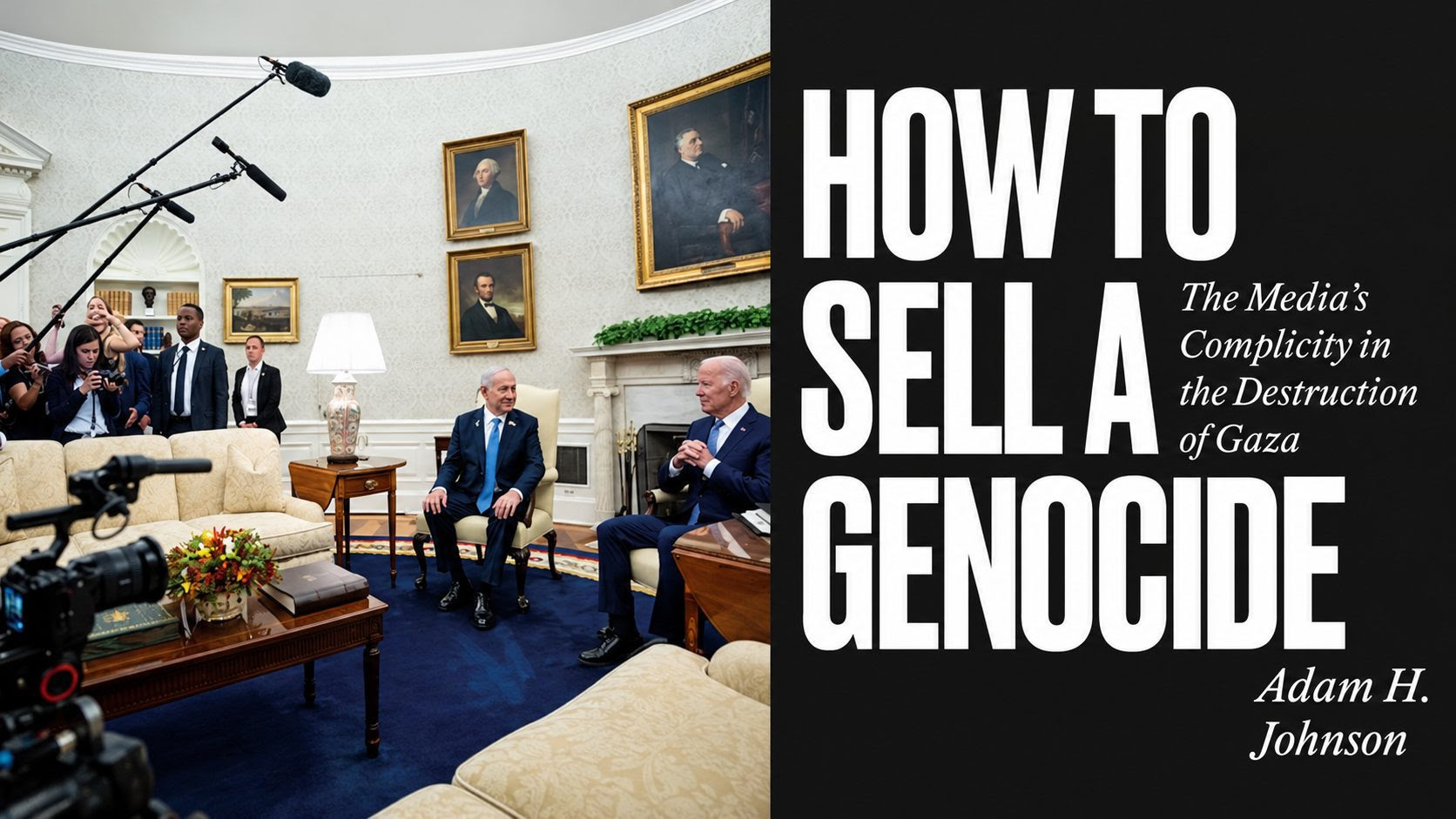


Shut down the radiation-damaged Heysham nuclear reactors now
To see nuclear-related stories in greater depth and intensity – go to https://nuclearinformation.wordpress.com

Say No to NASA’s Reckless Nuclear Reactor on the Moon
Say No to NASA’s Reckless Nuclear Reactor on the Moon
-
Archives
- October 2026 (247)
- September 2026 (339)
- August 2026 (330)
- July 2026 (355)
- June 2026 (287)
- May 2026 (306)
- April 2026 (356)
- March 2026 (251)
- February 2026 (267)
- January 2026 (308)
- December 2025 (358)
- November 2025 (359)
-
Categories
- 1
- 1 NUCLEAR ISSUES
- business and costs
- climate change
- culture and arts
- ENERGY
- environment
- health
- history
- indigenous issues
- Legal
- marketing of nuclear
- media
- opposition to nuclear
- PERSONAL STORIES
- politics
- politics international
- Religion and ethics
- safety
- secrets,lies and civil liberties
- spinbuster
- technology
- Uranium
- wastes
- weapons and war
- Women
- 2 WORLD
- ACTION
- AFRICA
- Atrocities
- AUSTRALIA
- Christina's notes
- Christina's themes
- culture and arts
- Events
- Fuk 2022
- Fuk 2023
- Fukushima 2017
- Fukushima 2018
- fukushima 2019
- Fukushima 2020
- Fukushima 2021
- general
- global warming
- Humour (God we need it)
- Nuclear
- RARE EARTHS
- Reference
- resources – print
- Resources -audiovicual
- Weekly Newsletter
- World
- World Nuclear
- YouTube
-
RSS
Entries RSS
Comments RSS

