John Hersey
Did you know John Hersey had to circumvent military restrictions just to step foot in post-atomic Hiroshima? The young journalist’s 1946 pilgrimage to the still-smoldering city would become one of the most consequential acts of subterfuge in journalism history – and forever change how the world understood nuclear war.
As American occupation forces tightly controlled access to the decimated city, Hersey navigated checkpoints and bureaucracy with quiet determination. The rubble was still warm when he arrived, the air thick with the scent of charred wood and something more sinister – what survivors called “the atomic smell.” While military reports focused on blast radii and structural damage, Hersey carried no measuring tools. His instruments were a notebook, boundless empathy, and an unshakable belief that history should be recorded in human heartbeats rather than casualty counts.
What he found defied comprehension. A watchmaker’s shop where dozens of timepieces all stopped at 8:15. Shadows of vaporized office workers permanently etched onto concrete walls. A group of schoolgirls whose patterned kimonos had burned into their skin, the fabric’s flower designs now grotesque scars. Hersey moved through this nightmare landscape like a ghost, collecting stories with revolutionary patience. He would sit for hours with survivors in their makeshift lean-tos, letting long silences coax out memories too terrible to voice.
The genius of his approach lay in the ordinary details: a clerk who survived because he’d bent down to tie his shoe; a doctor who mistook the mushroom cloud for “a magnesium flare”; a mother who recognized her drowned child only by the yarn of a handmade sweater. These weren’t the sweeping narratives of generals or politicians – they were fragile human moments that made the unimaginable real.
Hersey’s reporting methods were as radical as his mission. He physically retraced survivors’ steps through the ruins, noting where each had been standing when the world ended. He recorded not just their words but their trembling hands, the way their voices broke decades later describing the taste of radioactive rain. Most astonishingly, he did it all while American soldiers played baseball nearby, their casual normalcy a surreal counterpoint to the surrounding devastation.
The result, of course, was Hiroshima – a work that stripped war reporting of its abstractions and forced readers to confront nuclear destruction one agonizing personal story at a time. But behind its publication lies this extraordinary truth: that one stubborn reporter’s unauthorized pilgrimage gave voice to history’s first atomic survivors when their own government preferred silence. Hersey proved that sometimes the most powerful journalism requires not just bearing witness, but first having the courage to slip past the guards.
The Western Media Brought Gaza To This Point
Caitlin Johnstone, May 22, 2025, https://www.caitlinjohnst.one/p/the-western-media-brought-gaza-to?utm_source=post-email-title&publication_id=82124&post_id=164129601&utm_campaign=email-post-title&isFreemail=true&token=eyJ1c2VyX2lkIjoyNTU2MjE3LCJwb3N0X2lkIjoxNjQxMjk2MDEsImlhdCI6MTc0Nzg3OTg5NywiZXhwIjoxNzUwNDcxODk3LCJpc3MiOiJwdWItODIxMjQiLCJzdWIiOiJwb3N0LXJlYWN0aW9uIn0.1yOnX9gkFtJ60ygxFyWvcUWnljfPG0wyJfU6MjZ5nLU&r=1ise1&triedRedirect=true&utm_medium=email
Benjamin Netanyahu is now explicitly saying that the complete ethnic cleansing of Gaza is a precondition to ending the slaughter in the besieged Palestinian territory.
“Responding to those who are pushing for an end to war in Gaza, Netanyahu says he ‘is ready to end the war, under clear conditions that will ensure the safety of Israel — all the hostages come home, Hamas lays down its arms, steps down from power, its leadership is exiled from the Strip… Gaza is totally disarmed, and we carry out the Trump plan. A plan that is so correct and so revolutionary.’
“This represents the first time the US president’s plan for moving Gaza civilians out of the Strip has been presented as an Israeli demand for ending the war.”
Trump’s stated plan for Gaza is to remove “all” Palestinians from the enclave and never allow them to return. Netanyahu is here saying that the ethnic cleansing of Gaza is Israel’s ultimate military objective.
Which has been obvious from the very beginning. On the 20th of October 2023, a mere 13 days after October 7, I myself posted the following:
“Israel’s being so obvious about wanting to do another land grab. The solution to every problem is to move Gazans off the land they’re on to somewhere else. It’s like a guy at a nightclub pushing you and pushing you to drink a drink he handed you; at a certain point you realize he’s probably not really interested in making sure you have enough to drink.”
It’s been so transparently obvious this entire time that Israel’s entire objective is to remove Palestinians from a Palestinian territory so their land can be used for Israel’s own purposes — but you’d never have known it from looking at the western press.
For the last year and a half the western media have been brazenly lying to the public by framing this as a “war with Hamas” instead of the naked ethnic cleansing operation it clearly is. They’ve been manufacturing consent for this murderous land grab by babbling about hostages, terrorism and October 7 when Israel’s mass atrocity in Gaza has never, ever been about any of those things. It has only ever been about taking Palestinian land away from Palestinians — an agenda Israel has been pursuing for decades.
If the western press had been doing actual journalism, Israel would never have been able to bring Gaza to this point. Because the western press have instead been administering propaganda this entire time, Gaza is now an uninhabitable pile of rubble full of desperate, starving people, allowing Israel and the Trump administration to argue that the humanitarian thing to do is to evacuate them all immediately.
The western media’s refusal to acknowledge this — combined with a year and a half of wildly biased headlines, indisputably slanted coverage, and extensively documented top-down pressure in mass media institutions to cover Israel’s onslaught in a positive light — stifled much of the public opposition to this genocidal land grab that we would likely have seen otherwise. This journalistic malpractice allowed Israel’s western backers to support this mass atrocity with impunity, which in turn allowed Israel to act with impunity.
None of this would be possible if the west had an actual free press whose job is to create an informed populace. But we do not have an actual free press whose job is to create an informed populace — we have imperial propaganda services disguised as news.
Now that Israel has pulled back the curtain and acknowledged what we are looking at here, some in the western press have begun pivoting to wag their fingers at Netanyahu in order to preserve their image. And fine, whatever, we need as much help as we can get. But never forget what these monsters did to help create this nightmare in Gaza.
We’re all pretending to be mad at Israel now that 14,000 babies are starving to death
At least we’re proving we’re serious about our opposition to genocide though. So serious, in fact, that the RAF is conducting surveillance flights and helping Israel select targets to bomb with the F-35s we helped build. Makes you proud to be British, doesn’t it?
This is about saving our reputations and avoiding arrest…
Laura and Normal Island News, May 21, 2025, https://www.normalisland.co.uk/p/were-all-pretending-to-be-mad-at?utm_source=post-email-title&publication_id=1407757&post_id=164073303&utm_campaign=email-post-title&isFreemail=true&r=ln98x&triedRedirect=true&utm_medium=email
As a journalist in the mainstream media, I have proudly defended Israel for the last 19 months, but now that everyone is realising how bad they are (and more ICC arrest warrants are coming), I would like to express my genuine anger at the killers I encouraged.
While I took no issue with the bombing of apartment buildings and hospitals and schools and universities and food distribution centres and aid vehicles and tents and even my fellow journalists, I have suddenly my found my conscience, which is a real thing that definitely exists.
The mass murder of civilians was fine while we could get away with blaming everything on Hamas, but now that Israel is starving 14,000 babies to death and openly boasting about it and saying not even the west can stop us, I’m shitting myself to be honest. I’m worried the International Criminal Court might see Normal Island News in the same light as Radio Rwanda.
I feel particularly bad for you, my obsessed readers, who face the real prospect of no more Normal Island News unless I act. If anyone knows a quick way to purge the internet of everything I’ve ever written it would be most appreciated.
I’m not alone in shitting myself because not only is almost every western journalist finding their conscience at the very last moment, but we’ve even seen Lammy and Starmer pretend to be mad at Israel in parliament. I say “pretend”, but they genuinely are mad, just not about the babies. They’re mad that Israel is making them look really fucking bad.
The foreign secretary has shrewdly noticed Israel has been blocking food for 11 weeks and Gaza’s babies look like skeletons. He has even noticed the genocidal words of Israeli ministers like Smotrich and Ben Gvir, but I’m unclear if he has noticed all the buildings have been destroyed and Gaza has the largest cohort of child amputees in history.
When discussing Netanyahu’s plans to take over Gaza and minimise food distribution, Lammy told MPs: “We must call this what it is. It is extremism… It is monstrous. I condemn it in the strongest possible terms.” He insisted the extremists have a right to defend themselves though and said he believes in their cause. Warms your heart, doesn’t it?
Sadly, Lammy’s olive branch was not enough to appease Israel whose spokesperson insisted Britain has an “anti-Israel obsession” and still thinks it is a colonial power. Obviously, Israel is the only colonial power in this equation.
Sadly, we’re all getting smeared now, apart from Priti Patel who is the only person in parliament still backing Israel. Turns out, Priti is as stupid as she is evil because she said she didn’t want to let Hamas win by feeding babies. She seemed blissfully unaware she could end up in jail for this. When the time comes, I will be more than happy to throw Priti under a bus to save my own skin.
As you can imagine, the Westminster WhatsApp group has been in panic mode so we’ve knocked together a cover story. The short version is that everything is Jeremy Corbyn’s fault. The long version is that we were so ashamed by the Labour antisemitism scandal (that we fabricated) that we felt the need to support Israel, no matter what. Our genocide support was our way of saying sorry about all those lefties who knew Israel was genocidal before it was cool.
Since 2015, the Corbynistas had accused Israel of being a genocidal state that would not stop until all the Palestinians were gone. It was antisemitic of them to be correct about Israel, every step of the way, long before the rest of us caught up.
Please understand it was our sense of national shame (combined with generous lobbying and threats from Mossad) that made us cheer for genocide for 19 straight months. Why did the Corbynistas make us do this? Why?
Thankfully, the prime minister is taking a principled stand against Israel by suspending trade talks. You know how we spent forever insisting BDS was antisemitic? Well, we’re now threatening Israel with sanctions which is a bit embarrassing, isn’t it? It’s gonna be so awkward if taking a stand works now when we’ve spent 19 months insisting nothing we could do would make a difference.
At least we’re proving we’re serious about our opposition to genocide though. So serious, in fact, that the RAF is conducting surveillance flights and helping Israel select targets to bomb with the F-35s we helped build. Makes you proud to be British, doesn’t it?
The prime minister said the suffering in Gaza is “utterly intolerable” which is quite the U-turn on that time he said Israel has the right to withhold food, water and medicine. I’m unclear if we’re supposed to be using the “G” word in public so I messaged Starmzy for an update, but I’m not getting a read receipt, presumably because his phone might explode for no apparent reason.
By the way, Spain’s mobile network coincidentally went down right after its government criticised Israel, just like that time its power grid went down right after it criticised Israel, so if the same happens to us, please remember to blame Jeremy Corbyn. If anyone blows up Starmer’s phone it will be him
The media, scientific consensus, and toxic nuclear waste
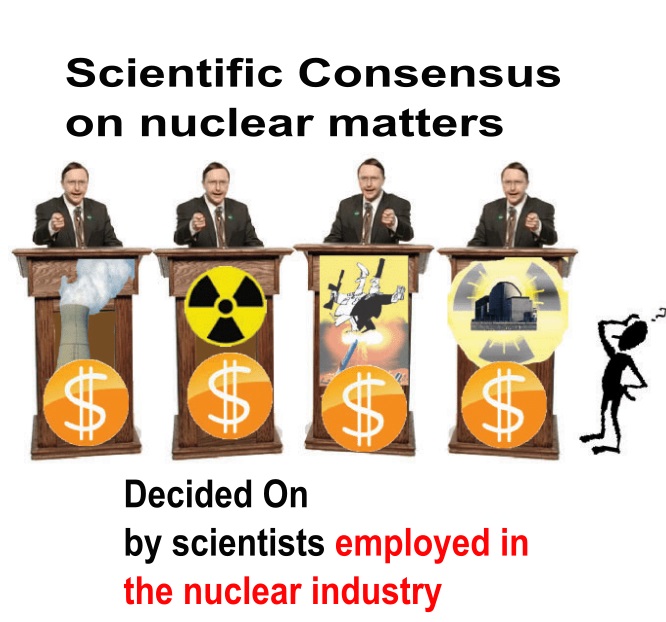
Not to be outdone by more modern means of propaganda, Nuclear Waste Services has continued the tradition of only providing the audience with the information that suits their argument.
The only way to reduce waste is to reduce the activities that cause it.
There is no other logical way.
News media tends to use ‘scientific consensus’ as if it is the end point of the discussion.
The implication that ‘this is the only way’ serves to quash dissenting voices and validate the overall message of the article.
When government agencies are hard to trust, who do we look to? Scientists. But what job is the concept of scientific consensus doing in the marketing of the GDF?
A Quiet Resistance, 8 May 2025
‘Scientific consensus’ carries a lot of weight in news media discussing the proposed Geological Disposal Facilities (GDFs) (nuclear waste dumps) in West Cumbria.
This consensus is also being used as a persuasion tool in the official literature handed out to communities by Nuclear Waste Services (NWS).
Since most of us aren’t scientists in either the nuclear industry or geodisposal, we have to turn to those who are if we’re to understand what’s going to happen to our community. Alongside the regular newsletters and other marketing from NWS, we usually access those people through articles in the news and on the internet.
But it’s important to keep asking questions about what we’re reading.
‘Scientific consensus’ doesn’t mean the science is settled; articles can contain facts and still be biased.
Biases in news media
The news media are paid for by advertisers. If they publish articles that make arguments against their advertisers’ interests, they lose advertising money. Their advertisers’ interests may not be clear. For example, they may be companies that have money invested in hedge funds, which in turn invest in nuclear power.
News media also come up against political pressure, as The Guardian found out a few years ago, to its long-term detriment.
There’s also the question of audience. News media write to a specific audience, one already sold on the ideas they are promoting, or at the very least, suggestible. Most people are aware of ‘climate change’. If someone authoritative tells them it’s important for us to have a GDF because nuclear energy will help us ‘beat climate change’, they are likely to accept that, unless they have some wider knowledge.
Bias can be edited into an article by keeping the facts, but leaving out certain contexts. They can also cherry pick facts, so that the only ones they use are those which suit their argument.
Biases and misinformation across the internet
Misinformation across the web is an endemic problem now, brought on by too little regulatory oversight, too late. A bitter combination of an advertising free-for-all, empty content for the sake of it, and algorithmic twists that feed on themselves has come together to make an internet that doesn’t run the kind of useful searches it did just 12 years ago.
On top of this, a type of information warfare has been raging, hidden in plain sight from the eyes of everyday people, and the proliferation of GenAI has made the situation much worse. Social media, news media, every place we get our information from has been seeded with doubt.
All of this means that when we read information anywhere, from both respectable and dubious sources, we have to take time to process what we’ve read before we lead with our emotions.
Bias and messaging in public information
Not to be outdone by more modern means of propaganda, Nuclear Waste Services has continued the tradition of only providing the audience with the information that suits their argument.
In the case of the Community Partnership newsletter this month, this includes a soothing word salad introduction from the outgoing Community Partnership Chair explaining that he has resigned, and our local Town Council has withdrawn from the group. There are then several pages on how the Community Investment Fund money has been spent recently.
From that messaging, it is clear they’re seeking to reassure the community – talk quietly, you don’t want them to startle – and remind us that we’re getting plenty of money for the deal.
So, what’s the problem with the scientific consensus on the idea of a geological disposal facility (GDF), more prosaically known as a nuclear waste dump?
What is ‘scientific consensus’?
Scientific consensus refers to an agreement amongst scientists in a specific, very narrow field of study.
In the consideration of a GDF, that field would be geology, and most likely a particular area of geology, such as geodisposal.
Why do we need ‘scientific consensus’?
For most of us, despite our education and our wide understanding of the world, we don’t have intensive scientific training. Even if we do, it may not be in the narrow field in question.
Ethan Siegel at Forbes.com explained this really clearly:
… Unlike in most cases, unless you are a scientist working in the particular field in question, you are probably not even capable of discerning between a conclusion that’s scientifically valid and viable and one that isn’t. Even if you’re a scientist in a somewhat related field! Why? This is mostly due to the fact that a non-expert cannot tell the difference between a robust scientific idea and a caricature of that idea.
Why should we believe ‘scientific consensus’?
Although a consensus is an impossible number to quantify, the argument for a consensus is that a lot of related research is borne out by the agreement, so if it isn’t correct – e.g. if a GDF isn’t a safe and complete solution for nuclear waste – then a lot of other research is also wrong.
That sounds reassuring, but there’s more to it.
What do we have to consider behind the messaging of ‘scientific consensus’?
News media tends to use ‘scientific consensus’ as if it is the end point of the discussion.
The implication that ‘this is the only way’ serves to quash dissenting voices and validate the overall message of the article.
This is also how Nuclear Waste Services is using ‘scientific consensus’. The inference is that there is only one solution, and a GDF is it.
But scientific consensus is not the end position of the science. It’s the starting position from which further investigation can arise.
While that future studying may not set out to prove early scientific reasoning wrong, it should seek to improve or refine our understanding of the science.
And the main problem with scientific investigation?
Take a look at this quote. It’s from the article Development in Progress, from the Consilience Project.
It is also important to consider how existing biases and values ‘prime’ us towards certain starting points when we seek to understand the world through science. Before we formulate questions of design experiments, we often have preconceived notions as to what we imagine as likely to be important to the question at hand.
You’ve got to ask what their starting point is, before you can evaluate the idea.
Or, to put it another way: if you ask a geodisposal specialist what the best way is to deal with a higher activity nuclear waste problem, they’re going to tell you to bury it underground.
What’s the motivation for a GDF? Why the bias? Where’s the starting point of the plan?
Waste is a massive issue for modern Western societies. Everything we do, everything we buy creates waste. The only way to reduce waste is to reduce the activities that cause it.
There is no other logical way.
Government and the nuclear industry are motivated towards using a geological disposal facility to store higher activity nuclear waste because:
- There’s almost seventy years’ worth of higher activity nuclear waste to store
- Nuclear appears to offer a solution to the legal requirements of Net Zero.
The more we use nuclear technology, the more toxic waste we will produce. It’s inevitable without social, political, and industrial change.
The nuclear industry
The nuclear industry’s back is against the wall. It urgently has to put the accruing waste somewhere permanently safe.
Nuclear waste is produced in solid, aqueous, and gaseous forms. If the industry reduces some of the gaseous waste, that means that it increases it in another form, e.g. aqueous. There is no escaping the waste issue without stopping the industry.
There’s a lot of money in nuclear.
The UK Government
The government has to enable the production of electricity, but having effectively phased out coal-fired power stations, it has brought in gas-fuelled hydrogen plants which are arguably just as greenhouse-gas-intensive as coal. Natural gas is still a fossil fuel, it still causes huge emissions, and it still presents supply problems.
For the government, nuclear represents a lower carbon option, with political expediencies, such as being free of Russian fossil fuel pressures (Russian uranium is still unsanctioned and likely part of the ‘diversified’ fuel mixes used in the UK).
There is also a disturbing link between civil nuclear skills and military nuclear skills which doesn’t get much media time:
Other countries tend to be more open about it, with the interdependence acknowledged at presidential level in the US for instance. French president Emmanuel Macron summarises: “without civil nuclear power, no military nuclear power, without military nuclear, no civil nuclear”.
This is largely why nuclear-armed France is pressing the European Union to support nuclear power. This is why non-nuclear-armed Germany has phased out the nuclear technologies it once lead the world in. This is why other nuclear-armed states are so disproportionately fixated by nuclear power.
In 2022, the Nuclear Decommissioning Authority (NDA) published a Radioactivity Waste Inventory with a timeline for the phasing out of nuclear power by 2136. But in early 2025, the Labour government announced it was keen to rapidly start up the building of Small Modular Reactors (SMRs) across the UK. Going forward from this year, nuclear waste will continue to be produced in the UK beyond the 100-year lifetime of the current GDF project. Waste is inevitable.
Waste isn’t the only issue for nuclear power, either. There is the question of what happens to nuclear power plants in the face of climate catastrophe. Fukushima wasn’t an anomaly, and it wasn’t avoidable. It could be seen as a foreshadowing of future possibilities.
Back to scientific consensus
So, when Nuclear Waste Services and other media proponents talk about scientific consensus being in agreement that a GDF is the best solution available for toxic nuclear waste, what they mean is:
- there is an inexorable accumulation of nuclear waste, both historical and into the future
- there are going to be more GDFs in the future
- they aren’t looking for other methods of storage
- they absolutely will not consider a non-nuclear future
- and they don’t want to argue about it.
And, for some reason, despite a GDF apparently being the safest possible housing for nuclear waste – and despite there being many geologically suitable locations – they don’t want to locate it under Westminster.
Ultimately, despite the focus given to the science, this isn’t about the science.
It’s about burying a waste product that they have no other solution for. Sweeping it under the carpet. And calling it common sense!
Common sense as a message, in an area of study called Semiotics, is a problematic idea. Although it is dressed up as the common, standard, everyday way of thinking, it is often used in marketing and media to promote the ideas of those in power.
As the future beckons, common sense should be saying no to nuclear. Just like with plastic, nuclear has no end and no sure way of getting rid of its byproducts.
For communities that ‘host’ a nuclear waste dump, the GDF solution represents a forever risk with inter-generational risks and costs along the way.
Somehow, West Cumbria always seems to be saddled with nuclear detritus.
The potential collateral damage, seen already across the United States and South America, is similar to that experienced around mining and climate solution industries.
It starts with
- environmental destruction,
- contamination of water sources and land,
- loss of biodiversity,
- loss of human rights,
- loss of health, and
- upheaval of established communities.
These may be experienced just in the construction of a GDF.
Who knows where it ends?
Further information on the proposed GDFs in West Cumbria:
US mainstream media still censoring US enabled Israeli genocide in Gaza

May 18, 2025 AIMN Editorial, By Walt Zlotow, https://theaimn.net/us-mainstream-media-still-censoring-us-enabled-israeli-genocide-in-gaza/
For the past 586 days US mainstream media refuses to condemn US enabling Israeli genocide of 2,300,000 Palestinians in Gaza.
The word genocide never appears in their print or pixels. They barely cover the genocide. But when they do make oblique references to it, simply calling it ‘Israel’s war on Hamas.’
US enabling of Israel’s genocide is bipartisan, with not a single pushback from the 535 congresspersons who, like the genocide enabling Biden and Trump administrations, betray their oath to protect life by promoting peace.
Special Trump Middle East envoy Steve Witkoff brushed off inquiries when the US will stop supporting Israeli genocide saying:
“We’re not the Israeli government. We don’t disagree. The Israeli government is a sovereign government. They can’t tell us what to do, and we can’t tell them what to do.”
Witkoff conveniently omitted that without America’s $20 billion providing over 50,000 tons of genocide weapons, Israel would be powerless to carry out 586 days of genocidal ethnic cleansing of Gaza with no end in sight.
Trump is even more ghoulish in promoting Israel’s genocide. On his Middle East trip Trump said.
“I’d be proud to have the United States have it (Gaza), take it, make it a freedom zone, let see good things happen. Put people in homes where they can be safe.”
Those people in safe homes won’t be Palestinians whom Trump has been lobbying African countries to take in so they don’t have to all be killed off.
With their bombs, planes and drones, Biden and Trump have made the Israeli genocide possible. It is no different than if FDR was supplying the Nazis with Zyklon B gas to complete their genocide 80 years ago.
With mainstream media compliance, the US enabled genocide will continue to its completion so Trump can build his ultimate real estate development on the bodies and destroyed homes of 2,300,000 Palestinians.
But if mainstream media began the first story of every day condemning America and Israel’s genocide body count from bombs and forced starvation, it might just galvanize the 535 congresspersons to acknowledge and resist the genocide they’re ignoring. It might even force the grotesque Trump administration to turn back from inflicting the worst horror on helpless people ever inflicted by the self-proclaimed greatest nation on earth.
Tomorrow is Day 587 of mainstream media genocide denial. Unless they pivot to peace in Gaza, mainstream media moguls will follow the Biden Trump administrations and Congress down the rabbit hole of genocide infamy.
Want to know how the world really ends? Look to TV show Families Like Ours
John Harris, 1 May 25
The Danish drama is piercing in its ordinariness. In the real world, the climate crisis worsens and authoritarians take charge as we calmly look awaySun 11 May 2025 21.35 AESTShare649
The climate crisis has taken a new and frightening turn, and in the expectation of disastrous flooding, the entire landmass of Denmark is about to be evacuated. Effectively, the country will be shutting itself down and sending its 6 million people abroad, where they will have to cope as best they can. Huge numbers of northern Europeans are therefore being turned into refugees: a few might have the wealth and connections to ease their passage from one life to another, but most are about to face the kind of precarious, nightmarish future they always thought of as other people’s burden.
Don’t panic: this is not a news story – or not yet, anyway. It’s the premise of an addictive new drama series titled Families Like Ours, acquired by the BBC and available on iPlayer. I have seen two episodes so far, and been struck by the very incisive way it satirises European attitudes to the politics of asylum. But what has also hit me is its portrayal of something just as modern: how it shows disaster unfolding in the midst of everyday life. At first, watching it brings on a sense of impatience. Why are most of the characters so calm? Where are the apocalyptic floods, wildfires and mass social breakdown? At times, it verges on boring. But then you realise the very clever conceit that defines every moment: it is really a story about how we all live, and what might happen tomorrow, or the day after.
The writer and journalist Dorian Lynskey’s brilliant book Everything Must Go is about the various ways that human beings have imagined the end of the world. “Compared to nuclear war,” he writes, “the climate emergency deprives popular storytellers of their usual toolkit. Global warming may move too fast for the planet but it is too slow for catastrophe fiction.” Even when the worst finally happens, most of us may respond with the kind of quiet mental contortions that are probably better suited to literature than the screen. Making that point, Lynskey quotes a character in Margaret Atwood’s novel The Year of the Flood: “Nobody admitted to knowing. If other people began to discuss it, you tuned them out, because what they were saying was both so obvious and so unthinkable.”
These days, that kind of thinking reflects how people deal with just about every aspect of our ever-more troubled world: if we can avert our eyes from ecological breakdown, then everything else can be either underestimated or ignored. There is a kind of moment, I would wager, that now happens to all of us. We glance at our phones or switch on the radio and are assailed by the awful gravity of everything, and then somehow manage to instantly find our way back to calm and normality. This, of course, is how human beings have always managed to cope, as a matter of basic mental wiring. But in its 21st-century form, it also has very modern elements. Our news feeds reduce everything to white noise and trivia: the result is that developments that ought to be vivid and alarming become so dulled that they look unremarkable.
Where this is leading politically is now as clear as day. In the New Yorker, Andrew Marantz wrote, in the wake of Trump’s re-election, about how democracies slide into authoritarianism. “In a Hollywood disaster movie,” he writes, “when the big one arrives, the characters don’t have to waste time debating whether it’s happening. There is an abrupt, cataclysmic tremor, a deafening roar … In the real world, though, the cataclysm can come in on little cat feet. The tremors can be so muffled and distant that people continually adapt, explaining away the anomalies.” That is true of how we normalise the climate crisis; it also applies to the way that Trump and his fellow authoritarians have successfully normalised their politics.
Marantz goes to Budapest, and meets a Hungarian academic, who marvels at the political feats pulled off by the country’s prime minister, Viktor Orbán. “Before it starts, you say to yourself: ‘I will leave this country immediately if they ever do this or that horrible thing,’” he says. “And then they do that thing, and you stay. Things that would have seemed impossible 10 years ago, five years ago, you may not even notice.” The fact that populists are usually climate deniers is perfect: just as searingly hot summers become mundane, so do the increasingly ambitious plans of would-be dictators – particularly in the absence of jackboots, goose-stepping and so many other old-fashioned accoutrements. Put simply, Orbán/Trump politics is purposely designed to fit with its time – and to most of its supporters (and plenty of onlookers), it looks a lot less terrifying than it actually is.
Much the same story is starting to happen in the UK. On the night of last week’s local elections, I found myself in the thoroughly ordinary environs of Grimsby town hall, watching the victory speech given by Reform UK’s Andrea Jenkyns, who had just been elected as the first mayor of Greater Lincolnshire. For some reason, she wore a spangly outfit that made her look as if she was on her way to a 1970s-themed fancy dress party, which raised a few mirthless laughs. She said it was time for an end to “soft-touch Britain”, and suddenly called for asylum seekers to be forced to live in tents. That is the kind of thing that only fascists used to say, but it now lands in our political discourse with not much more than a faint thump.
Meanwhile, life has to go on. About 20 years ago, I went to an exhibition of works by the French photographer Henri Cartier-Bresson – one of which was of a family of four adults picnicking by the Marne, with their food and wine scattered around them, and a rowing-boat moored to the riverbank. When I first looked at it, I wondered what its significance was. But then I saw the date on the adjacent plaque: “1936-38.” We break bread, get drunk and tune out the noise until carrying on like that ceases to be an option: as Families Like Ours suggests, that point may arrive sooner than we think.
Multiple Western Press Outlets Have Suddenly Pivoted Hard Against Israel
So if you’re still supporting Israel after all this time, my advice to you is to make a change while you still can.
Caitlin Johnstone, May 12, 2025, https://www.caitlinjohnst.one/p/multiple-western-press-outlets-have?utm_source=post-email-title&publication_id=82124&post_id=163390896&utm_campaign=email-post-title&isFreemail=true&r=1ise1&triedRedirect=true&utm_medium=email
After a year and a half of genocidal atrocities, the editorial boards of numerous British press outlets have suddenly come out hard against Israel’s onslaught in Gaza.
The first drop of rain came last week from The Financial Times in a piece by the editorial board titled “The west’s shameful silence on Gaza,” which denounces the US and Europe for having “issued barely a word of condemnation” of their ally’s criminality, saying they “should be ashamed of their silence, and stop enabling Netanyahu to act with impunity.”
Then came The Economist with a piece titled “The war in Gaza must end,” which argues that Trump should pressure the Netanyahu regime for a ceasefire, saying that “The only people who benefit from continuing the war are Mr Netanyahu, who keeps his coalition intact, and his far-right allies, who dream of emptying Gaza and rebuilding Jewish settlements there.”
On Saturday came an editorial from The Independent titled “End the deafening silence on Gaza — it is time to speak up,” arguing that British PM Keir Starmer “should be ashamed that he said nothing, especially since Mr Netanyahu has now announced new plans to expand the already devastating bombardment of Gaza,” and saying that “It is time for the world to wake up to what is happening and to demand an end to the suffering of the Palestinians trapped in the enclave.”
On Sunday The Guardian editorial board joined in with a write-up titled “The Guardian view on Israel and Gaza: Trump can stop this horror. The alternative is unthinkable,” saying “The US president has the leverage to force through a ceasefire. If he does not, he will implicitly signal approval of what looks like a plan of total destruction.”
“What is this, if not genocidal?” The Guardian asks. “When will the US and its allies act to stop the horror, if not now?”
To be clear, these are editorials, not op-eds. This means that they are not the expression of one person’s opinion but the stated position of each outlet as a whole. We’ve been seeing the occasional op-ed which is critical of Israel’s actions throughout the Gaza holocaust in the mainstream western press, but to see the actual outlets come out aggressively denouncing Israel and its western backers all at once is a very new development.
Some longtime Israel supporters have unexpectedly begun changing their tune as individuals as well.
Conservative MP Mark Pritchard said at the House of Commons last week that he had supported Israel “at all costs” for decades, but said “I got it wrong” and publicly withdrew that support over Israel’s actions in Gaza.
“For many years — I’ve been in this House twenty years — I have supported Israel pretty much at all costs, quite frankly,” Pritchard said. “But today, I want to say that I got it wrong and I condemn Israel for what it is doing to the Palestinian people in Gaza and indeed in the West Bank, and I’d like to withdraw my support right now for the actions of Israel, what they are doing right now in Gaza.”
“I’m really concerned that this is a moment in history when people look back, where we’ve got it wrong as a country,” Pritchard added.
Pro-Israel pundit Shaiel Ben-Ephraim, who had been aggressively denouncing campus protesters and accusing Israel’s critics of “blood libel” throughout the Gaza holocaust, has now come out and publicly admitted that Israel is committing a genocide which must be opposed.
“It took me a long time to get to this point, but it’s time to face it. Israel is committing genocide in Gaza,” Ephraim tweeted recently. “Between the indiscriminate bombing of hospitals, starvation of the population, plans for ethnic cleansing, slaughter of aid workers and cover ups, there is no escaping it. Israel is trying to eradicate the Palestinian people. We can’t stop it unless we admit it.”
It is odd that it has taken all these people a year and a half to get to this point. I myself have a much lower tolerance for genocide and the mass murder of children. If you’ve been riding the genocide train for nineteen months, it looks a bit weird to suddenly start screaming about how terrible it is and demanding to hit the brakes all of a sudden.
These people have not suddenly evolved a conscience, they’re just smelling what’s in the wind. Once the consensus shifts past a certain point there’s naturally going to be a mad rush to avoid being among the last to stand against it, because you know you’ll be wearing that mark for the rest of your life in public after history has had a clear look at what you did.
This is after all coming at a time when the Trump administration is beginning to rub Netanyahu’s fur the wrong way, recently prompting the Israeli prime minister to say “I think we’ll have to detox from US security assistance” when Washington went over Tel Aviv’s head and negotiated directly with Hamas to secure the release of an American hostage. The US is reportedly leaving Israel out of more and more of its negotiations on international affairs in places like Yemen, Saudi Arabia, and Iran. Something is changing.
So if you’re still supporting Israel after all this time, my advice to you is to make a change while you still can. There’s still time to be the first among scoundrels in the mad rat race to avoid being the last to start acting like you always opposed the Gaza holocaust.
The dark cloud of Murdoch has no silver lining

News Corp, Sky after dark, Fox News … they spew lies and propaganda around the globe, and the evil empire’s tentacles keep wrapping around the fearful and the ignorant.
by Nicole Chvastek, 7 May 2025, https://thepolitics.com.au/the-dark-cloud-of-murdoch-has-no-silver-lining/
As Saturday’s bloodbath washes through the Liberal corridors of no power, the electoral train wreck has turned attention to other overly cocky players: the Murdoch media.
From the moment the poll was called, Rupert Murdoch’s news culture warriors turned up the heat on Labor, exhorting the brilliance of Peter Dutton’s failed nuclear fantasy and his war on migrants, “woke” schools, people who work from home and Welcomes to Country — while tearing down anyone who dared suggest he and his party were not fit for office.
But on election night none of that mattered. None of the confected outrage, the miles of newsprint, the spin and the bullying had made a jot of difference and was more likely to have worked against the Liberals’ interests. Australians it seems have a finely tuned bullshit radar.
Sky pirates
Greens Senator Sarah Hanson-Young nailed it when she told Radio National on Monday:
“I think what has happened to the Coalition is they spent a bit too much time hangin’ out with Sky News and they forgot to really hear what people were saying. The other big loser is the Murdoch press. They created an echo chamber for themselves.”
Dr Denis Muller of the Centre for Advancing Journalism at the University of Melbourne said the Murdoch media were “agents of disaster” for the Coalition:
“I see the sun beginning to set on Rupert’s influence in Australian politics. News Corp created a bubble in which their journalists and Coalition politicians cocooned themselves, talking to each other on Sky after dark, persuading each other that everything was going to be fine.”
A setting sun? It’s a big call. Australian politicians of all persuasions famously make the trek to Murdoch headquarters after an election for a ritual known as “kissing the ring”, and Anthony Albanese, Richard Marles and Penny Wong were quick to do their duty in 2022.
Strings attached
Eric Beecher, a former News Corp employee, recalls being sued (unsuccessfully) by Lachlan Murdoch who issued a writ for defamation over an opinion piece linking the Murdoch news empire with 2021’s January 6 Capitol riots:
“The day after the defamation writ was issued, a large Commonwealth government car pulled up outside the Holt Street Surry Hills headquarters in Sydney of News Corp. Three people got out of that car to go upstairs and visit Lachlan in his office: the prime minister, the deputy prime minister and the foreign [affairs] minister of Australia. It’s been going on for 100 years and it should stop.”
The reach of puppetmaster Rupert Murdoch into governments and policy making knows no bounds and there have been countless exposés on unethical business practices. But the machine roars on, a powerhouse of global disinformation and propaganda while pretending to be a news-gathering organisation.
In January, Murdoch was photographed reclining in the Oval Office as Donald Trump signed an executive order creating a sovereign wealth fund. Fox News cable spits out Trump propaganda daily and is credited with helping to return the convicted felon and sex predator to office. Murdoch has called Trump “increasingly mad” and yet publicly admitted he knew Fox commentators were lying when they broadcast falsehoods about a “stolen rigged election” in 2020. But hey, it was good for business.
Nuke the enemy
The habitual process of retribution and vendetta from News Corp is bitter and legendary. The Australian Financial Review reports that Malcolm Turnbull and Kevin Rudd blame Murdoch for their political demise. In 1974, Murdoch famously directed his editors to “kill Whitlam” 10 months before Gough Whitlam’s electoral ousting.
Every day, Murdoch’s media rival, the ABC, is a target of sneering “hit jobs”, and any politician or voice that suggests climate change is real or nuclear reactors are a fantasy or billionaires don’t deserve tax breaks are hounded, possibly for life. The Herald Sun still runs revelations about former Labor premier Dan Andrews and sporadic pieces of condemnation over a car accident his wife had 20 years ago. According to Beecher in his book The Men Who Killed The News, Andrews was the only premier who refused to schlep up to News Corp headquarters for the compulsory kissing of the ring.
In Australia, the power base is the print media, overwhelmingly controlled by News Corp with a huge digital presence and backed by Sky News. In 2020, Rudd and Turnbull joined forces to call for a royal commission into Murdoch’s concentrated media holdings. Rudd claimed his media power is “routinely used to attack opponents in business and politics by blending editorial opinion with news reporting”.
Break the News
How is it that such deep, lasting damage to democracy, businesses and people’s lives can be inflicted with precisely zero repercussions? One part of the answer is the acceptance that democracies cannot flourish without a free press. Section 65A of the Trade Practices Act provides a general exemption to most of the media as publishers of news and current affairs from liability for publishing misleading or deceptive material. Former chairman of the ACCC Allan Fels said concerns around Murdoch’s practices are more likely to be addressed by a royal commission, an idea the government and opposition have not supported.
“I don’t have a view on whether he should be reined in. All media mislead to some extent. It’s not the sort of thing consumer protection law addresses.”
Dr Victoria Fielding, senior lecturer in strategic communication at the University of Adelaide, was bolder. She said legislative change was needed to rein in Murdoch excesses. She agrees a healthy democracy needs an independent free press populated by balanced journalists who hold the powerful to account and publish verifiable information — but that’s not what the Murdoch media are:
“If there was some legislation that said if you want to be a commentary organisation you can only have a particular share of the market — like any competition commissioner can do — you break it up. You say: ‘You can no longer be that large.’ It’s distorting our democracy.”
Running scared
The other part of the answer is fear, fear of taking on a monolithic disinformation machine which countless readers think is a news outlet and being publicly torn down and repeatedly shredded by a media gorilla with few scruples and deep pockets.
Remarkably, after cheerleading the Liberals to disaster on May 3, The Australian leapt back up onto its feet to brush off its flesh wound and lecture the Coalition on “missing the warnings”:
“Of all the mistakes that led to this result, one was fatal: the untested assumption that Labor was out of touch and unaligned with the mainstream values of Australians. There can be no other interpretation that that this is fundamentally wrong.”
This from the paper that tells us pretty much every day that Labor is out of touch and unaligned with the mainstream values of Australians.
Culture vultures
Reports of the death of the Murdoch brand in Australia may well be exaggerated. Like any good parasite it is known to stew and grow before attacking the host again. Fielding reminds us that backed by the Murdoch press, Dutton was on track to win the federal election as recently as January — until the catastrophic reality of the Trump presidency became obvious to Australians.
Murdoch has withstood worse setbacks than crashing an election and, like Monty Python’s Black Knight, his culture warriors rebound after each atrocity and, still bleeding, berate their victims for taking the advice.
I’d like to think the tide is turning on news outlets that amplify bullshit while bragging they are society’s moral pulse and insisting their bullshit is good for you. But if the tide is not for turning, you can always join the Liberals, and learn the hard way.
Who defeated the Nazis in World War 2 ? Thank God for Hollywood!

On the 8th May 1945, Germany surrendered unconditionally to the Allies. On the 9th May 2025, Russia is holding a grand commemoration – a “Victory Day” for the 80th anniversary of this event.
How dare they? I know, from my extensive cinema history, that the Americans won World War 2.
Many exciting and entertaining movies have been made, over the decades, glorifying the courage and success of the good soldiers on the good side – several allied nations, notably the British. But my favourites were always from Hollywood. There were so many, and of course, I haven’t seen them all.
From early on, there were movies like The Story of G.I. Joe, Dive Bomber, So Proudly We Hail! and Sahara . And During World War II, Disney made films for every branch of the United States Armed Forces and government.
Hollywood downplayed the efforts and contributions of the other Allies . But some films grudgingly acknowledged the United Kingdom, who kept the hopeless fight alive until the USA joined in and saved the day. Non-European Allies are mostly never even mentioned, especially China, with its pivotal role in the war against Japan. The Soviet-German war on the Eastern Front if mentioned at all, is sometimes portrayed as a sideshow .
Some movies based on real events, such as the film U571 are about real persons who were not American, depicted them as Americans. U571 (2000) is about American submariners. ‘Red Tails’ (2012)is a great exaggeration about American airmen. In some movies, we learn that WWII only began only on December 7, 1941, when the United States entered the war. Some movies are such fun, even if fictional, for example the Americans killing Hitler in Inglourious Basterds.
Many movies are about the overall war effort , but focus on America’s involvement. Some of these films include Saving Private Ryan (1998) Flags of Our Fathers (2006): Band of Brothers (2001). Films on the D Day landings give the impression that the American landing on Omaha Beach was the decisive turning point that led to Allied victory in Europe.
Now, I know that I’m pretty right, in claiming that the Americans won World war 2. In our democratic culture we accept the opinions of the many. The more common view is now that the Americans were the primary reason for the Nazi defeat, with 40-52% in America and Europe saying so. (But Britons think it was the UK).
In 1945, 57% of French citizens believed Moscow “contributed most to the defeat of Germany in 1945” – just 20% named the US, and 12% Britain. By 2015, less than a quarter of respondents recognised the Soviet role, with 54% believing the US to be Nazism’s ultimate vanquisher. Today only 17-28% of Europeans and Americans suggest that the USSR did the bulk of the work in bringing down Hitler.
If you go to Encyclopedia Britannica, or Wikipedia, or many history sites, you are told some extraordinary facts and figures about the role of the Soviet Union in World War 2, and they attribute the defeat of Nazi Germany as being mainly achieved by the Russians, with substantial input from Britain and the USA.
For example – “The Eastern Front was decisive in determining the outcome in the European theatre of operations in World War II, eventually serving as the main reason for the defeat of Nazi Germany The decisive battles were Stalingrad, Kursk, and the Battle of Berlin.”
You find this sort of information – ” The Soviet Union lost at least 26 million in World War II, Considerably more than any other country. Russian casualties were 60 times the number of American casualties…. .. More Russian died at Stalingrad than Americans and Britons died in the whole war.”
D Day 6 June 1944, was a big day in bringing the war towards the end. Approximately 156,000 Allied troops landed in Normandy, France, of which nearly half were from the USA. Additionally, smaller contingents of troops from other allied countries were also involved. So at least the various historical records agree that the USA was strongly involved in the eventual victory, even though they joined in the war effort only in December 1941.
But now, it’s time to correct the records on who defeated the Nazis. Britain and Europe are doing their best, holding VE Day celebrations, in which Russia is excluded. And now, Donald Trump has issued a proclamation designating Thursday as a day for the United States to celebrate its victory in World War II -” we did more than any other Country, by far, in producing a victorious result on World War II”
President Donald Trump is busily correcting historical records, taking over the National Archives, or as he puts it RESTORING TRUTH AND SANITY TO AMERICAN HISTORY
So, between the entertainment culture, the political views of the Western Powers, and finally, no less a history expert than Donald Trump himself, we can hope that all that nonsense about Russia winning WW2 can be put to bed.
Israel Will Even Persecute Palestinians For Simply Talking To Journalists
Caitlin Johnstone, May 05, 2025, https://www.caitlinjohnst.one/p/israel-will-even-persecute-palestinians?utm_source=post-email-title&publication_id=82124&post_id=162858742&utm_campaign=email-post-title&isFreemail=true&r=1ise1&triedRedirect=true&utm_medium=email
Israeli soldiers have been harassing a Palestinian activist who appeared in Louis Theroux’s recent documentary The Settlers to talk about Israel’s apartheid abuses in the occupied West Bank. Issa Amro shared footage of IDF troops raiding his home over the weekend, days after Theroux’s film debuted on the BBC.
Israelis not only murder journalists, attack journalistic institutions and block journalists from entering the Gaza Strip, they also persecute Palestinian civilians who speak with journalists.
If you haven’t yet watched The Settlers, I highly recommend doing so. It’s so damning that I’ve seen people expressing astonishment that it made it past the BBC’s censors, but really, what’s to censor? It’s an hour of Israelis telling a video camera what Israelis think in their own words.
One of the best ways to tell the truth about the real Israel is to just point a camera at these freaks and let them tell it themselves. Theroux’s interviewing style lends itself particularly well to this type of exposure.
A ship trying to bring humanitarian aid to Gaza was drone bombed by Israel near Malta on Friday. Activist Greta Thunberg was preparing to board the ship to travel with it to its destination.
Which is just wild to think about. Things are so fucked up on this timeline that there is a non-zero probability that Israel ends up assassinating Greta Thunberg.
Imagine the western reaction if Iran had bombed a humanitarian aid ship trying to feed starving civilians.
Imagine the reaction if Chinese forces were caught massacring medical workers in ambulances.
Imagine the reaction if Russia bombed an international humanitarian aid convoy in clearly marked vehicles.
It would be all we’d hear about for weeks.
My social media feeds are filling up with footage of skeletal starving children in Gaza. If we had sane and responsible news media in the west, this would be the lead story in every outlet and publication. But we do not have sane and responsible news media. We have propaganda services disguised as news media.
People who continue to support Israel are only able to do so because they actively avoid watching the video footage the rest of us are watching.
If I built a home and then discovered that it could only remain standing if I constantly massacred children, I would simply change my living arrangements.
I would not claim my building “has a right to exist”.
I would not spend years explaining why my child massacres are okay.
I would not spend decades accusing anyone who criticized my child massacres of unfair discrimination against me and my family.
I would simply change my building so that its existence no longer required me to routinely massacre children. If I could not find a way to restructure my building in this way, I would move.
I would not do this because I am a remarkably kind and special person. I would do it because I am not a psychopath.
Only a psychopath would want to continue living in that kind of building. Only a psychopath would want that kind of building to remain standing.
I said the preceding on Twitter yesterday and Israel apologists immediately came in yelling at me for saying evil things about Israel, but what’s funny is that I never mentioned Israel once; I just talked about a building. They only knew I was actually talking about Israel because of all the stuff I said about constantly massacring civilians.
Gets ’em every time.
❖
It’s good that Trump’s “MAGA” base opposes war with Iran so forcefully, but it’s pretty revealing how absent they’ve been on Trump’s butchery in Yemen and Gaza. They’re not opposed to war or mass murder, they’re just opposed to fighting people who are strong enough to fight back.
As Israel Openly Declares Starvation as a Weapon, Media Still Hesitate to Blame It for Famine
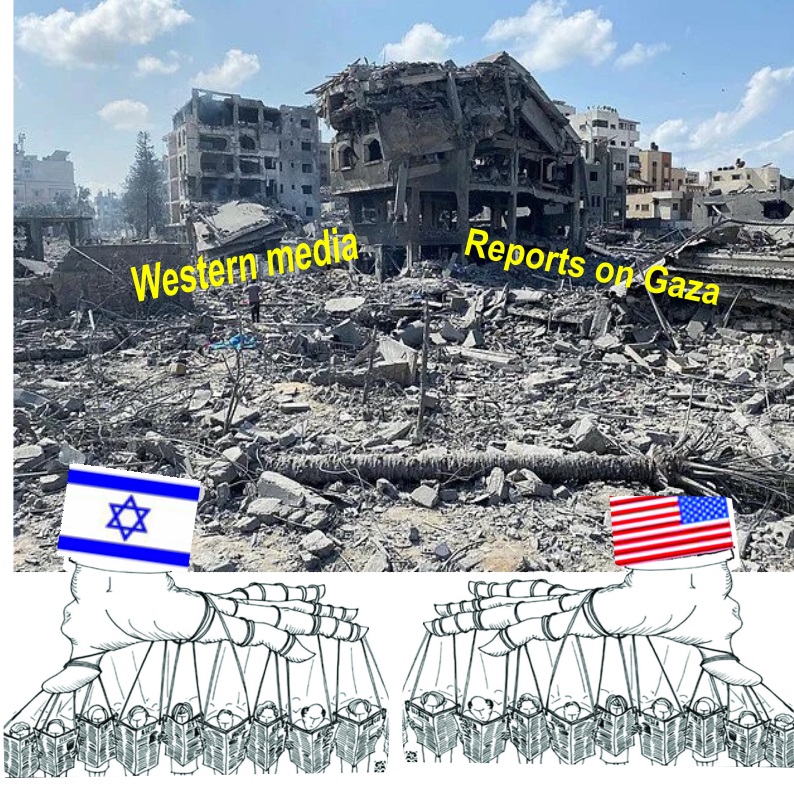
this is a genocide, after all—even if the corporate media refuse to say the word—and starvation is part and parcel of that.
Belén Fernández, April 25, 2025, https://fair.org/home/as-israel-openly-declares-starvation-as-a-weapon-media-still-hesitate-to-blame-it-for-famine/
Israeli Prime Minister Benjamin Netanyahu announced on March 2 that “Israel has decided to stop letting goods and supplies into Gaza,” where the ongoing Israeli genocide, with the loyal backing of the United States, has officially killed more than 51,000 Palestinians since October 2023. The announcement regarding the total halt of humanitarian aid amounted to yet another explicit declaration of the starvation policy that Israel is pursuing in the Gaza Strip, a territory that—thanks in large part to 17 consecutive years of Israeli blockade—has long been largely dependent on such aid for survival.
Of course, this was not the first time that senior Israeli officials had advertised their reliance on the war crime of forced starvation in the current genocidal assault on Gaza. On October 9, 2023, two days after the most recent launch of hostilities, then–Defense Minister Yoav Gallant ordered a “complete siege” of the Gaza Strip: “There will be no electricity, no food, no fuel, everything is closed.” Two days after that, Foreign Minister Israel Katz boasted of cutting off “water, electricity and fuel” to the territory.
And just this month, Israeli National Security Minister Itamar Ben-Gvir proclaimed that there was “no reason for a gram of food or aid to enter Gaza.” Following an April 22 dinner held in his honor in Florida at US President Donald Trump’s Mar-a-Lago resort, Ben-Gvir reported that US Republicans had
expressed support for my very clear position on how to act in Gaza and that the food and aid depots should be bombed in order to create military and political pressure to bring our hostages home safely.
Never mind that the hostages would have been brought home safely as scheduled had Israel chosen to comply with the terms of the ceasefire agreement with Hamas that was implemented in January, rather than definitively annihilating the agreement on March 18.
It is no doubt illustrative of Israel’s modus operandi that the March 2 decision to block the entry of all food and other items necessary for human existence took place in the middle of an ostensible ceasefire.
‘Starved, bombed, strangled’
While Ben-Gvir’s most recent comments have thus far eluded commentary in the US corporate media, the roundabout media approach to the whole starvation theme has been illuminating in its own right. It has not, obviously, been possible to avoid reporting on the subject altogether, as the United Nations and other organizations have pretty much been warning from the get-go of Israel’s actions causing widespread famine in Gaza.
In December 2023, for example, just two months after the onset of Israel’s blood-drenched campaign, the Integrated Food Security Phase Classification initiative, or IPC scale, determined that “over 90% of the population in the Gaza Strip (about 2.08 million people) was estimated to face high levels of acute food insecurity, classified in IPC Phase 3 or above (Crisis or worse).” The assessment went on: “Among these, over 40% of the population (939,000 people) were in Emergency (IPC Phase 4) and over 15% (378,000 people) were in Catastrophe (IPC Phase 5).”
A full year ago, in April 2024, even Samantha Power—then the administrator of the US Agency for International Development—conceded that it was “credible” that famine was already well underway in parts of the Gaza Strip. And the UN Office for the Coordination of Humanitarian Affairs now warns that Gaza is “likely facing the worst humanitarian crisis in the 18 months since the escalation of hostilities in October 2023”—its population being “starved, bombed, strangled” and subjected to “deprivation by design.”
Disappearance of agency
None of these details have escaped the pages and websites of corporate media outlets, although the media’s frequent reliance on ambiguous wordiness tends to distract readers from what is actually going on—and who is responsible for it. Take, for instance, the New York Times headline “Gaza Famine Warning Spurs Calls to Remove Restrictions on Food Shipments” (6/25/24), or the CBS video “Hunger Spreads Virtually Everywhere in Gaza Amid Israel/Hamas War” (12/5/24). Even news outlets that intermittently undertake to spotlight the human plight of, inter alia, individual parents in Gaza losing their children to starvation remain susceptible to long-winded efforts to disperse blame. (As of April of last year, Save the Children confirmed that 27 children in northern Gaza had already died of starvation and disease.)
In an era in which news consumption often consists of skimming headlines, the phrasing of article titles is of utmost import. And yet many headlines manage to entirely excise the role of Israel in Gaza’s “hunger crisis”—as in CNN’s report (2/24): “‘We Are Dying Slowly:’ Palestinians Are Eating Grass and Drinking Polluted Water as Famine Looms Across Gaza.” Or take the Reuters headline (3/24/24): “Gaza’s Catastrophic Food Shortage Means Mass Death Is Imminent, Monitor Says.” Or this one from ABC News (11/15/24): “Famine ‘Occurring or Imminent’ in Parts of Northern Gaza, Experts Warn UN Security Council.”
It’s not that these headlines are devoid of sympathy for Palestinian suffering. The issue, rather, is the dilution—and even disappearance—of agency, such that the “catastrophic food shortage” is rendered as transpiring in a sort of vacuum and thereby letting the criminals perpetrating it off the hook. Imagine if a Hamas rocket from Gaza killed an infant in Israel and the media reported the event as follows: “Israeli Baby Perishes as Rocket Completes Airborne Trajectory.”
‘No shortage of aid’
Then there is the matter of the media’s incurable habit of ceding Israeli officials a platform to spout demonstrable lies, as in the April 17 NBC News headline “Aid Groups Describe Dire Conditions in Gaza as Israel Says There Is No Shortage of Aid.” The fact that Israel is permitted to make such claims is particularly perplexing, given Israeli officials’ own announcements that no aid whatsoever may enter the territory, while the “dire conditions” are made abundantly clear in the text of the article itself: “The Global Nutrition Cluster, a coalition of humanitarian groups, has warned that in March alone, 3,696 children were newly admitted for care for acute malnutrition” in Gaza.
Among numerous other damning statistics conveyed in the dispatch, we learn that all Gaza bakeries supported by the UN World Food Programme closed down on March 31, “after wheat flour ran out.” Meanwhile, the WFP calculated that Israel’s closure of border crossings into Gaza caused prices of basic goods “to soar between 150% and 700% compared with prewar levels, and by 29% to as much as 1,400% above prices during the ceasefire.”
Against such a backdrop, it’s fairly ludicrous to allow Israeli officials to “maintain there is ‘no shortage’ of aid in Gaza and accuse Hamas of withholding supplies.” If the press provides Israel with space to spout whatever nonsense it wants—reality be damned—where is the line ultimately drawn? If Israel decides Hamas is using wheat flour to build rockets, will that also be reported with a straight face?
Lest anyone think that thwarting the entry of food into the Gaza Strip is a new thing, recall that Israel’s blockade of Gaza long predated the present war—although the details of said blockade are generally glossed over in the media in favor of the myth that Israel unilaterally “withdrew” from the territory in 2005. In 2010, the BBC (6/21/10) listed some basic foodstuffs—pardon, potential “dual-use items”—that Israel had at different times in recent history blocked from entering Gaza, including pasta, coffee, tea, nuts and chocolate. In 2006, just a year after the so-called “withdrawal,” Israeli government adviser Dov Weissglas outlined the logic behind Israel’s restriction of food imports into Gaza: “The idea is to put the Palestinians on a diet, but not to make them die of hunger.”
Fast forward almost two decades, and it’s safe to say that the “idea” has evolved; this is a genocide, after all—even if the corporate media refuse to say the word—and starvation is part and parcel of that. But on account of Israel’s extra-special relationship with the United States, US media have institutionalized the practice of beating around the bush when it comes to documenting Israeli crimes. This is how we end up with the aforementioned long-winded headlines instead of, say, the far more straightforward “Israel is starving Gaza,” a Google search of which terms produces not a single corporate media dispatch, but does lead to a January 2024 report by that very name, courtesy of none other than the Israeli human rights organization B’Tselem.
‘Starving as negotiation tactic’
That said, there have been a few surprises. The New York Times (3/13/25), for example, took a short break from its longstanding tradition of unabashed apologetics for Israeli atrocities in allowing the following sentence to appear in a March opinion article by Megan Stack: “Israeli officials are essentially starving Gaza as a negotiation tactic.” In the very least, this was a vast improvement, in terms of syntactic clarity and assignation of blame, over previous descriptions of Israeli behavior immortalized on the pages of the US newspaper of record—like that time the Israeli military slaughtered four kids playing by the sea in Gaza, and the Times editors (7/16/14) went with the headline “Boys Drawn to Gaza Beach, and Into Center of Mideast Strife.”
In the end, Israel’s starvation of the Gaza Strip is multifaceted. It’s not just about physically blocking the entry of food into the besieged enclave. It’s also about Israel’s near-total decimation of Gaza’s healthcare system: the bombardment of hospitals, the targeting of ambulances, the massacres of medical personnel (FAIR.org, 4/11/25). It’s about Israeli military attacks on humanitarian aid convoys and workers, including the April 2024 massacre of seven international employees of the food organization World Central Kitchen.
It’s about Israel razing agricultural areas, wiping out food production, devastating the fishing industry and depleting livestock. It’s about Israel bombing water infrastructure in Gaza. And it’s about Israeli troops slaughtering at least 112 desperate Palestinians queuing for flour on February 29, 2024 (FAIR.org, 3/22/24)—which was at least a quicker way of killing starving people than waiting for them to starve.
In his 2017 London Review of Books essay (6/15/17) on the use of famine as a weapon of war, Alex de Waal referenced the “physical debilitation of groups as a technique of genocide,” noting that “forced starvation was one of the instruments of the Holocaust.” It’s worth reflecting on the essay’s opening paragraph:
In its primary use, the verb “to starve” is transitive: It’s something people do to one another, like torture or murder. Mass starvation as a consequence of the weather has very nearly disappeared: Today’s famines are all caused by political decisions, yet journalists still use the phrase “man-made famine” as if such events were unusual.
As for the current case of the Gaza Strip, US establishment journalists appear to be doing their best to avoid the transitive nature of the verb in question—or any subject-verb-object construction that might too overtly expose Israeli savagery. And by treating famine in Gaza as a subject unto itself, rather than a “technique of genocide,” to borrow de Waal’s words, the media assist in obscuring the bigger picture about this very man-made famine—which is that Israel is not just starving Gaza. Israel is exterminating Gaza.
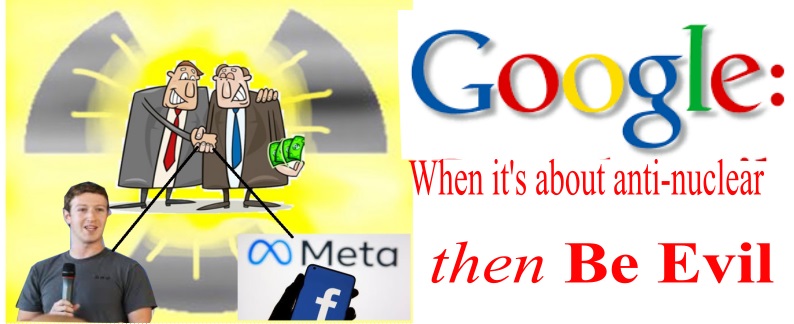
Be wary of Google Search, especially on nuclear matters.
24 Apr 25 https://theaimn.net/be-wary-of-google-search-especially-on-nuclear-matters/
I’ve been meaning for a long time, to write about Google’s very pro-nuclear stance.
Then today, I found something that was both amusing and a wake-up call.
I have, for the past 16 years, run an anti-nuclear website – nuclear-news.net. Today, I typed into Google Search:
“who owns nuclear-news.net?”
And here is Google’s answer:
The online news service at nuclear-news.net, also known as World Nuclear News (WNN), is supported by the World Nuclear Association. WNN is based within the Association’s London Secretariat. The Association is an international industry organization with a global mandate to communicate about nuclear energy.
Well fancy that! I had no idea that WNN promoted the nuclear-free cause. Well of course, it doesn’t. Interestingly one does not “own” a website name, -one licenses it from a domain names company. Even if you make up the name yourself, as I did. And I still have the license. So – poo to the WNN.
And to Google. What a sad decline in morality! They started out with that noble motto: “Don’t Be Evil”
Back in 2008, if you typed “nuclear news” into Google Search – my website would come up at or very near the top. Google’s system then prioritised its list according to two considerations:
- That the website title accurately indicated its content.
- The number of viewings the website receives.
That system’s gone long ago, and Google has at least had the grace to abandon its former motto. Its now motto is “Do the right thing”.
Now isn’t that an interesting motto? Sounds similar to “Don’t Be Evil” – and yet, and yet ……. it’s not really the same. You see “the right thing” depends on who decides between right and wrong.
For a start, in today’s zeitgeist – the culture of economic growth – the right thing is what makes the most money. Therefore, Google correctly prioritises the websites that pay Google the most in sponsorship.
But that priority leads on to other considerations. For a company like Google, well, it’s essential to keep the most powerful economic interests onside. So, the weapons companies, Western militarism, the nuclear industry, and the other polluting industries get priority. And the Gazans and other impoverished communities don’t matter much.
Anyway, as I don’t pay Google any sponsorship money, my website comes up at something like page 154 on Google search , when looking for “nuclear news”.
I’m not writing this to get you to go to my website. And quite a healthy number of viewers do go there each day.
The thing is – be aware of Google’s priorities. They are not interested in the facts. We all knows that economic progress is more important than the truth, don’t we?
And at the same time, you might fairly accuse me of hypocrisy. I use Google Search all the time. It is tremendously useful . One just needs to be aware of the sources of information, and of Google keeping its nose clean by not too much offending the powerful and wealthy.
Pope Francis’ Obituaries Omit Focus on Palestine
rather than criticizing Francis’ attention to Gaza, the lengthy obituaries in the most prominent US newspapers ignored his advocacy for Palestinian rights entirely.
By relegating Francis’ compassion for Palestine to sidebars, as though it were only of transient interest, US outlets eliminated a central aspect of his papacy from that record.
Fair, Ari Paul, April 23, 2025
The obituaries for Pope Francis in the leading US newspapers ignored the late pontiff’s commitment to the Palestinian people and the acute suffering in Gaza in the last years of his life. Many of them ran separate pieces that highlighted Francis’ concern for Gaza and the response of Palestinians to his death, but they failed to mention these aspects of his papacy in the lengthy obituaries that summed up his life.
……………………………………………..regarding his outspoken concern for Gaza, the Times found room for not a word.
Obituaries at other major US newspapers also failed to include Francis’ Palestine focus.
……………………… Toward the end of Francis’ life, the head of the Catholic Church focused his attention on ongoing genocide in Gaza. “He used to call us at 7 p.m. every night. No matter how busy he was, no matter where he was, he always called,” George Anton, spokesperson for the Church of the Holy Family in Gaza, told NPR (4/22/25). Reuters (4/22/25) ran the headline, “Gaza’s Christians ‘Heartbroken’ for Pope Who Phoned Them Nightly.” AP (4/21/25) called these communications his “frequent evening ritual,” noting that this “small act of compassion made a big impression on Gaza’s tiny Christian community.”
Francis was generally sympathetic to addressing political and human rights for Palestinians, and under his watch the Vatican recognized the state of Palestine (BBC, 5/13/15). He “suggested the global community should study whether Israel’s military campaign in Gaza constitutes a genocide of the Palestinian people” (Reuters, 11/17/24). In his final Easter message, issued the day before his death, he called for a ceasefire in Gaza to end a conflict that “continues to cause death and destruction, and to create a dramatic and deplorable humanitarian situation” (Truthout, 4/21/25).
‘Privileged a politicized version’
Not everyone in the press approved of this act of compassion when recalling his life and church leadership. In an editorial, the New York Post (4/21/25) criticized the “leftist” positions of the “deservedly beloved figure,” complaining that Francis “even went so far as to call for an investigation of Israel over its nonexistent genocide in Gaza.”
When it came to Francis’ support for Middle East peace generally, the Jerusalem Post (4/22/25) said in an editorial, “Time and again, Israel expressed dismay at the Vatican’s tendency to elevate Palestinian narratives while brushing aside Israeli concerns.” It complained that “the Vatican’s posture under Francis consistently privileged a politicized version of the Palestinian story over the complex reality on the ground.”
But rather than criticizing Francis’ attention to Gaza, the lengthy obituaries in the most prominent US newspapers ignored his advocacy for Palestinian rights entirely…………………………………………………………………..
regarding his outspoken concern for Gaza, the Times found room for not a word.
Obituaries at other major US newspapers also failed to include Francis’ Palestine focus.
………………………………………………The Wall Street Journal’s obituary (4/21/25) didn’t say anything about the topic either, though it said that Francis
made a priority of improving ties with the Islamic world, washing the feet of Muslims on Holy Thursday, visiting nine Muslim-majority countries and insisting that Islam was, like Christianity, a religion of peace.
The same is true with AP‘s obituary (4/21/25), which likewise commented instead that he “charted new relations with the Muslim world by visiting the Arabian Peninsula and Iraq.” USA Today’s obituary (4/21/25) said Francis “sometimes took progressive or controversial stances on pressing issues, such as same-sex couples and climate change,” but it didn’t bring up Gaza.
By contrast, it was not hard to find references to Gaza in Francis’ obituaries in major non-US English-language outlets. The British Guardian (4/21/25) noted, “During his recent period in hospital, he kept up his telephone calls to the Holy Family church in Gaza, a nightly routine since 9 October 2023.” The Toronto-based Globe and Mail (4/21/25) included Palestine in a list of war-ravaged places Francis prayed for, and devoted most of a paragraph to his nightly Gaza calls. Reuters (4/21/25), headquartered in London and owned by Canada’s Thomson family, noted that Francis’ last Easter Sunday message “reiterated his call for an immediate ceasefire in Gaza—a conflict he had long railed against.”
Though the major US obituaries all ignored Gaza, the same outlets published separate articles on Francis and Gaza. USA Today (4/21/25) ran “Pope Francis Used Final Easter Address to Call for Gaza Ceasefire.” The Wall Street Journal (4/23/25) had “Pope Francis Kept Up Routine of Calling Gaza Until the End.” For the New York Times (4/22/25), it was “Even in Sickness, Pope Francis Reached Out to Gaza’s Christians.” AP (4/21/25) offered “Pope’s Frequent Calls to a Catholic Church Made Him a Revered Figure in War-Battered Gaza,” an article that appeared on the Washington Post‘s website (4/21/25).
These stand-alone pieces are welcome, and spotlight the importance of the Gaza crisis to Francis. But the official obituaries in these major outlets are meant to stand as a permanent record of Francis’ life and career. By relegating Francis’ compassion for Palestine to sidebars, as though it were only of transient interest, US outlets eliminated a central aspect of his papacy from that record.
Reuters not only had a stand-alone story (4/22/25) about Palestinians’ response to Francis’ death, but included his advocacy for Gaza in its main obituary (4/21/25) https://fair.org/home/pope-francis-obits-omit-focus-on-palestine/
Why Is The BBC Middle East Desk Run By A Mossad Collaborator?
Dorset Eye, 14th April 2025
A senior figure at the BBC’s Middle East desk, Raffi Berg, has been exposed as a former employee of a CIA propaganda division and a collaborator with Israel’s intelligence agency Mossad, according to a detailed investigation by MintPress News.
Berg, who currently heads the BBC’s Middle East coverage, is facing growing internal criticism. At least thirteen BBC journalists have reportedly accused him of holding an overt bias in favour of Israel. Staff allege that Berg’s influence is so extensive that his role essentially revolves around “watering down” any reporting that might be overly critical of Israel. One source described him as wielding a “wild” degree of power within the newsroom.
A separate investigation published by Drop Site News in December disclosed that an atmosphere of “extreme fear” prevails at the BBC when it comes to covering stories critical of Israel, with Berg allegedly playing a central role in steering the network’s output towards what has been described as “systematic Israeli propaganda”.
Links to U.S. Intelligence
Before joining the BBC in 2001 as a writer and producer on the world news desk, Berg worked for the U.S. State Department’s Foreign Broadcast Information Service (FBIS), according to MintPress News, which cited his LinkedIn profile and other corroborating sources.
The FBIS was part of the CIA’s Directorate of Science and Technology, tasked with monitoring, translating, and distributing open-source international news and information for U.S. government consumption. According to its publicly available profile, the FBIS played a key role in U.S. intelligence gathering.
Berg himself confirmed his association with the CIA during a 2020 interview with The Jewish Telegraph. Recounting his time at the FBIS, he revealed, “One day, I was taken to one side and told, ‘You may or may not know that we are part of the CIA, but don’t go telling people.’” I was absolutely thrilled. It wasn’t too much of a surprise because the application process was enormous — it took 10 months. They scrutinised my character and background meticulously, even asking whether I had visited communist countries and, if so, whether I had formed any relationships there.”
Mossad Collaboration
The revelations do not stop with Berg’s past ties to the CIA. The MintPress News investigation uncovered a significant professional entanglement between Berg and Mossad, Israel’s intelligence service. This relationship emerged during his work on Red Sea Spies: The True Story of Mossad’s Fake Diving Resort — a book recounting Mossad’s covert mission to smuggle Ethiopian Jews into Israel.
Berg openly acknowledged that the book was written “in collaboration” with Mossad commander Dani Limor…………………..
A Pattern of Pro-Israel Editorial Bias
According to MintPress News, Berg has consistently demonstrated overt sympathies towards Israel since the beginning of his tenure at the BBC. He was elevated to head of the Middle East desk shortly after instructing colleagues during Israel’s 2012 “Operation Cast Lead” to avoid language that could place “undue emphasis” on Israel’s role in the violence.
Operation Cast Lead saw Israel accused of widespread human rights violations, including indiscriminate attacks on civilians, the use of Palestinians as human shields, and the deployment of prohibited munitions such as white phosphorus.
Leaked emails revealed that Berg encouraged reporters to present the military assault as a response to rocket fire from Gaza, thus framing Hamas as the primary aggressor. MintPress noted this editorial slant as a clear effort to deflect blame from Israel.
More recently, during Israel’s ongoing military offensive in Gaza — described by critics as a genocidal campaign — Berg is said to have transformed the BBC’s coverage into “systematic Israeli propaganda”, according to a journalist cited by the Drop Site investigation.
“Almost every correspondent you know has an issue with him,” one journalist revealed. “He has been named in multiple meetings, but [management] just ignore it.”
Berg has also been accused of making extensive editorial changes to reporters’ work before publication, frequently reframing narratives to downplay Israel’s culpability. A stark example involved the killing of Mohammed Bhar, a Palestinian man with Down’s syndrome who was fatally attacked by Israeli military dogs and denied medical assistance as he bled to death.
Under Berg’s direction, the BBC originally ran the headline: “The Lonely Death of Gaza Man with Down’s Syndrome”. Only after significant international backlash did the broadcaster amend the headline to acknowledge the circumstances of Bhar’s death.
Despite repeated internal grievances highlighting Berg’s bias and unprofessional conduct, the BBC has “offered unequivocal support for him and his work,” according to the MintPress report.
Media Whitewashing of Israeli Atrocities
The controversy surrounding Berg comes amid broader criticism of Western media outlets for whitewashing or downplaying Israeli war crimes in Gaza. The BBC is not alone in facing scrutiny; other networks have been accused of propagating misleading narratives supplied by Israeli officials.
An investigation by Al Jazeera in October last year revealed that CNN broadcast false claims that Hamas fighters had hidden captives inside Gaza’s al-Rantisi Children’s Hospital — claims that were based on documents presented by the Israeli military. In reality, the documents turned out to be an ordinary calendar showing the days of the week in Arabic, a fact that CNN’s own Palestinian producer had flagged internally.
Nevertheless, CNN aired the footage, with correspondent Nic Robertson uncritically accepting the Israeli army’s account.
For more info: Raffi Berg: BBC Middle East Editor Exposed as CIA, Mossad Collaborator https://dorseteye.com/why-is-the-bbc-middle-east-desk-run-by-a-mossad-collaborator/
1 This Month

Protect Sazan Island from the Trump family! https://secure.avaaz.org/campaign/en/protect_sazan_island_from_the_trump_family_loc/?bqFCVab&v=174511&cl=22707147157&_checksum=5e9dde668860e8231c33699735e16a1fbf22ab2cb01da50c999fe8732b9775ef&utm_source=email&utm_medium=blast_email&utm_campaign=174511
10 June – Assessing Canada’s Investments in Small Modular Nuclear Reactors – https://zoom.us/meeting/register/IiqHA5feRhaEBycOLNTJlA#/registration



Cuba Is Not a Failed State – It Is a Besieged State
PETITION: “Global Appeal to Endorse Palestinian Right of Return of Refugees”
To see nuclear-related stories in greater depth and intensity – go to https://nuclearinformation.wordpress.com
-
Archives
- June 2026 (89)
- May 2026 (306)
- April 2026 (356)
- March 2026 (251)
- February 2026 (268)
- January 2026 (308)
- December 2025 (358)
- November 2025 (359)
- October 2025 (376)
- September 2025 (257)
- August 2025 (319)
- July 2025 (230)
-
Categories
- 1
- 1 NUCLEAR ISSUES
- business and costs
- climate change
- culture and arts
- ENERGY
- environment
- health
- history
- indigenous issues
- Legal
- marketing of nuclear
- media
- opposition to nuclear
- PERSONAL STORIES
- politics
- politics international
- Religion and ethics
- safety
- secrets,lies and civil liberties
- spinbuster
- technology
- Uranium
- wastes
- weapons and war
- Women
- 2 WORLD
- ACTION
- AFRICA
- Atrocities
- AUSTRALIA
- Christina's notes
- Christina's themes
- culture and arts
- Events
- Fuk 2022
- Fuk 2023
- Fukushima 2017
- Fukushima 2018
- fukushima 2019
- Fukushima 2020
- Fukushima 2021
- general
- global warming
- Humour (God we need it)
- Nuclear
- RARE EARTHS
- Reference
- resources – print
- Resources -audiovicual
- Weekly Newsletter
- World
- World Nuclear
- YouTube
-
RSS
Entries RSS
Comments RSS
 nuclear-news