Jacksonville Electric Authority (JEA) tried to become part-owner of Plant Vogtle in 2019
Lawsuit settlement document shows JEA tried to become part-owner of Plant Vogtle in 2019 https://www.jacksonville.com/story/news/local/2020/08/24/jea-prepared-1-9-billion-offer-plant-vogtle-nuclear-plant-2019/3402832001/
David Bauerlein, Florida Times-Union Before JEA lost a lawsuit in June that tried to void its contract for purchasing electricity from Plant Vogtle, the utility wanted to settle the suit in 2019 by buying an ownership stake in the Georgia nuclear plant for $1.9 billion, according to a draft document that outlined terms of the utility’s strategy for settlement talks.
The controversial power purchase agreement, which dates back to 2008, weighs heavily on JEA because the contract binds JEA to buy electricity for 20 years at a high cost from two Vogtle nuclear reactors slated to go online in late 2021 and late 2022.
The agreement also was a thorny issue for JEA when it sought offers last year from private companies for a potential sale of the city-owned utility. Converting the power purchase agreement into an ownership interest in Plant Vogtle would have made JEA a more marketable asset.
The settlement talks in April 2019 occurred during the tenure of Aaron Zahn, who was CEO when the JEA board voted in July 2019 to put the utility up for sale. Since then, Zahn along with the rest of the senior leadership team and the board have been replaced.
JEA spokeswoman Gerri Boyce said the turnover means current JEA employees cannot say what the rationale was for any settlement offers in April 2019.
“Anything we could say would be speculation since no one currently at JEA was part of that meeting or proposed settlement,” Boyce said.
When JEA first evaluated privatization in early 2018 — prior to Zahn becoming CEO — an attorney for Holland and Knight sent an email to JEA outlining possible strategies for how JEA could get out of the purchase power agreement.
“Obviously, Plant Vogtle and and the purchase agreement (PPA) greatly affect valuation,” Holland & Knight attorney Allen Maines wrote in the Feb. 4, 2018, email.
Maines wrote that “one underlying assumption to privatization is that prospective purchasers will not be interested unless JEA sheds itself of the PPA.”
Maines wrote one way to get rid of the agreement would be to pay the Municipal Electric Authority of Georgia, also known as MEAG, to “take back the PPA.”
When JEA and MEAG entered into settlement talks in April 2019, Holland & Knight drafted proposed terms of a settlement in which JEA would pay $1.9 billion to MEAG in order to get JEA released from the power purchase agreement.
In turn, JEA would become part-owner of the Plant Vogtle plant by having a stake equal to 150 megawatts of the two reactors being built. That would be less than the 206 megawatts of electricity in the power purchase agreement.
WJXT-TV reported in April 2019 that JEA and MEAG met in Atlanta for settlement talks. WJXT reported at that time JEA was negotiating to get out of the nuclear power contract.
The station disclosed the talks after a JEA administrative aide mistakenly sent an email to WJXT reporter Jim Piggott that had the draft settlement terms attached to it.
The ownership stake would have given JEA more direct influence over decisions on Plant Vogtle, whose construction is years behind schedule with a cost that has doubled since JEA entered the power purchase agreement in 2008.
The proposed terms also would have enhanced the marketability of the utility in a sale to a private company.
If a private company purchased JEA, the rates charged to customers would have been regulated by the Florida Public Service Commission.
In the commission’s rate-setting structure, an investor-owned utility does not earn a profit from a purchase-power agreement, said Florida Public Counsel J.R. Kelly of the Office of Public Counsel, which represents consumers in rate-setting cases before the Public Service Commission.
A private utility’s cost from a purchase-power agreement is regulated as a break-even expense, meaning it doesn’t lose money or earn a profit from such agreements, Kelly said. The utility just passes the cost through to customers in the overall rate structure.
But if a private utility has ownership of a plant, it can get a profit from owning an asset and have that profit built into the rate structure approved by the state
Kelly said.
“They have a right to a return of and a return on that asset,” Kelly said. “That’s how they make a profit. That’s how utilities earn money.”
The draft settlement terms from April 2019 for Plant Vogtle proposed that after JEA paid $1.9 billion to end the power purchase agreement and become a part-owner of the nuclear plant, JEA no longer would pay any additional money to cover future cost over-runs for the plant’s construction.
The settlement talks failed to reach any agreement with MEAG. When JEA entered into negotiations last year for the potential sale of the utility, JEA proposed to separate the Plant Vogtle purchase power agreement from the sale by having JEA remains as a shell entity that would remain a party to the agreement.
The cost of the power purchase agreement then would have been passed along to customers on their bills. That arrangement would have been a hard sell to City Council members who would have had to agree to the terms of any sale.
U.S. District Judge Mark Cohen ruled June 17 in MEAG’s favor by finding the power purchase agreement is valid and enforceable. JEA and MEAG then agreed to end the lawsuit.
Court actions over delays in delivering Russia’s giant nuclear icebreaker line
|
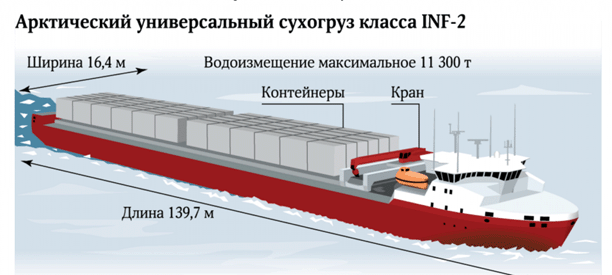
Delays in delivering Russia’s giant nuclear icebreaker line sparks lawsuitsDelays plaguing the launch of the Arktika nuclear icebreaker, billed to be Russia’s largest to date, have prompted a number of lawsuits against the ship’s builder as frustrations mount over a series of technical faults thwarting the vessel’s scheduled release. Bellona , August 21, 2020 by Charles Digges
According to the Barents Observer, which cites industry news portals, Atomflot, Russia’s nuclear icebreaker headquarters, has filed three multi-million dollar lawsuits against the Baltic Shipyard, the St Petersburg-based shipbuilder that has forged most of the country’s icebreaking muscle. Details of the lawsuits are sketchy. But the Barents Observer reports that the suits seek nearly $13.5 million in damages over faulty ship systems and overdue part deliveries, all of which have caused the icebreaker project to overshoot its 2017 deadline. The latest of these mishaps involves a 300-ton electric propulsion engine that failed during the Arktika’s sea trials in February, crippling one of the vessel’s three propeller systems. While the breakdown is not related to the Arktika’s nuclear propulsion system, it was nonetheless an embarrassing setback that will ultimately require the engine to be entirely replaced. Russian media now suggest that the Arktika won’t be repaired before 2021. A new series of upgraded nuclear icebreakers are central component of a Kremlin strategy to keep Arctic sea routes open on a year-round basis. Russia has since Soviet times maintained the world’s largest stable of these vessels. But many have been decommissioned in recent years, and Moscow has embarked on renewing the fleet. The target of this effort is the Northern Sea Route, a 5,600-kilometer sea artery joining Europe to Asia, whose frozen shores are laden with fossil fuels and mineral deposits. To stimulate its development, President Vladimir Putin ordered in 2017 that cargo volumes along the passage reach 80 million tons by the middle of this decade – more than double current volumes. The Arktika, and two other icebreakers in its class – the Ural and the Sibir – are meant to lead the way. Each vessel measures up to 173 meters in length and all are powered by twin RITM-200 nuclear reactors, which deliver a combined 175 megawatts of power – making them the most powerful civilian vessels in the world. Atomflot has filed its suits against the Baltic Shipyard in Moscow’s Arbitration court, the Barents Observer reports. In turn, the shipyard is suing one of its own suppliers – the giant Kirov Plant in St Petersburg, which manufactures heavy machinery. The Arktika’s rollout has face previous delays. In March of 2017, turbines produced by a Ukraine-based manufacturer were held up by military tensions between Moscow and Kiev. https://bellona.org/news/nuclear-issues/2020-08-%EF%BB%BF%EF%BB%BFdelays-in-delivering-russias-giant-nuclear-icebreaker-line-sparks-lawsuits |
|
South Carolina’s $9 billion nuclear fiasco – another legal saga develops, criminal investigation coming

3 years later: How the fallout from SC’s $9 billion nuclear fiasco continues Post and Courier, By Avery G. Wilks and Andrew Brown awilks@postandcourier.com abrown@postandcourier.com, Jul 31, 2020
- It has been three years since two of South Carolina’s largest electric utilities abandoned their $9 billion effort to build two nuclear reactors, but the legal, political and financial consequences continue to ripple across the Palmetto State.
The scuttled V.C. Summer expansion in Fairfield County is now widely considered one of the biggest business failures in the state’s history. The announcement of the project’s cancellation on July 31, 2017, shook South Carolina’s power industry, state government and business community.
The two homegrown S.C. utilities that partnered on the project were thrown into disarray. Investigations were initiated by state lawmakers, financial regulators and federal law enforcement officials.
The state and federal court systems were flooded overnight with lawsuits by investors, ratepayers, construction workers and lenders. The state regulatory system that backed the project for nearly a decade was called into question.
And more than 1.7 million utility customers with S.C. Electric & Gas, Santee Cooper and the state’s 19 local electric cooperatives realized they might be forced to pay billions of dollars more for a power plant that will never produce a watt of electricity.
Much has changed since Santee Cooper and SCE&G’s leaders suddenly announced the project’s collapse. But the saga isn’t over quite yet. Here is a breakdown of where things stand. Continue reading
Electricite de France fined for lying about Hinkley nuclear project, faces costs and delays due to pandemic

 France’s markets regulator for providing false information on the Hinkley
Point C nuclear project. EDF and former Chief Executive Officer Henri
Proglio, who was fined 50,000 euros, failed to properly disclose new
circumstances concerning the U.K. project’s financing, the Autorité des
Marchés Financiers said in a statement on Thursday.
announced it would build the U.K.’s first nuclear reactors since 1995
after reaching a deal with the government on guaranteed prices for the
power they’d generate. The energy firm also said the project would
benefit from a British credit guarantee on conditions that were yet-to-be
agreed. EDF and Proglio should have specified in a statement a year later
that there had been significant changes on the guarantees, the AMF said.
accusation brought forward by AMF investigators. The AMF’s enforcement
committee assesses civil market-abuse cases ranging from insider trading to
publishing misleading information.
facing delays at the Hinkley Point C nuclear plant as the coronavirus
pandemic hampered work on-site and hit supply chains. The largest and most
advanced infrastructure project in the U.K. will miss three key milestones
this year, one of them critical — risking the 2025 completion deadline.
wave of coronavirus and lockdowns could cause more long-term set-backs.
“We’ve absorbed a lot of factory delays but we had some margin in our
program to do so,” Hinkley Point C’s managing director Stuart Crooks
said in an interview on-site in the southwest of England. EDF still expects
Hinkley to be finished on time.
assumption that the virus peters out by the end of the year so supply
chains and work at Hinkley can return to normal. There are about 4,500
staff currently on the site that covers an area equal to 245 soccer fields.
Initial plans were to ramp-up the number of workers to around 6,000 but
that depends how long social distancing rules stay in place.
Legal case settled over nuclear plant Vogtle
JEA Settles Litigation Over Nuclear Plant Vogtle, WJCT News 89.9, By BILL BORTZFIELD • JUL 30, 2020 JEA has ended its attempt to get out of a deal it made to buy electricity from a Georgia nuclear power plant that has seen billions of dollars in cost overruns.
Thursday afternoon Jacksonville’s public utility announced it has settled litigation and all related claims with the Municipal Electric Authority of Georgia (MEAG Power) in its dispute over the Alvin W. Vogtle Electric Generating Plant, which is commonly referred to as Plant Vogtle.
In settling the case, JEA acknowledged the contract is “valid and enforceable.”…….
Earlier this week JEA’s board unanimously agreed to have JEA’s legal team attempt to reach a settlement….. https://news.wjct.org/post/jea-settles-litigation-over-nuclear-plant-vogtle
That followed a U.S. District judge’s June ruling against JEA in the lawsuit, saying the contract Jacksonville’s utility set up for the nuclear power plant is still valid.
Assange appears in court, as lawyers warn case may be delayed by new US indictment
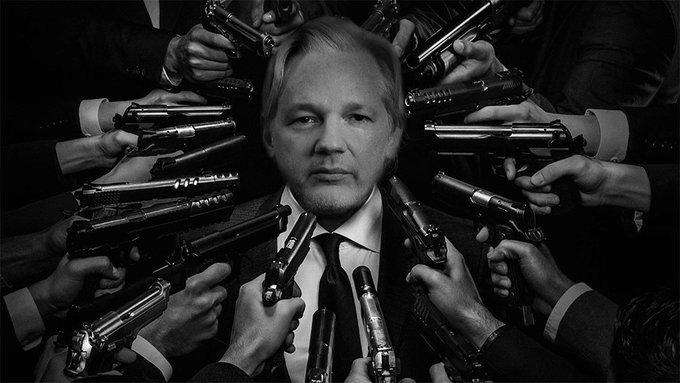 Assange appears in court, as lawyers warn case may be delayed by new US indictment https://www.wsws.org/en/articles/2020/07/28/assa-j28.html By Thomas Scripps, 28 July 2020WikiLeaks founder Julian Assange’s case management hearing yesterday continued the travesty of legal due process to which he has been subjected for more than a decade. Assange appears in court, as lawyers warn case may be delayed by new US indictment https://www.wsws.org/en/articles/2020/07/28/assa-j28.html By Thomas Scripps, 28 July 2020WikiLeaks founder Julian Assange’s case management hearing yesterday continued the travesty of legal due process to which he has been subjected for more than a decade.
The journalist and publisher is fighting extradition to the United States, where he faces politically motivated frame-up charges of espionage with a combined potential sentence of 175 years. He has not attended hearings via videolink for the last three months on the advice of doctors, due to his fragile state of health and the threat of exposure to coronavirus. At the previous hearing on June 29, District Judge Vanessa Baraitser had scolded Assange for not being present, demanding medical evidence to justify his non-appearance in future. But yesterday, Baraitser ruled the hearing could go ahead without Assange after Belmarsh prison disrupted his plans to attend. Prison authorities claimed to have forgotten to arrange videolink facilities for the world-famous political prisoner. Edward Fitzgerald QC, the lead defence lawyer, said he would prefer his client to be present. The hearing was adjourned for ten minutes to allow him to contact Assange. When court resumed, Fitzgerald confirmed his wish to see his client attend. The hearing was then adjourned for another hour and a quarter. When Assange was finally produced via videolink he appeared tired and downcast, according to reporters in the court room. The brief exchanges between Fitzgerald, Baraitser and prosecuting lawyer Joel Smith, centred on the superseding indictment against Assange issued by the US Department of Justice on June 24. The new indictment is based on the testimony of Sigurdur Thordarson, described by WikiLeaks as a “sociopath, convicted conman and sex criminal involved in an FBI entrapment operation against WikiLeaks.” It alleges that Assange recruited and incited hackers against a range of classified, official, and private computers between 2009 and 2015. It contains no new charges but significantly expands the scope of allegations against WikiLeaks, deepening the assault on freedom of the press being waged by the US government. Assange’s support for whistleblower Edward Snowden and transparency of information are alleged in the superseding indictment to constitute solicitation and theft of classified information. Former WikiLeaks section editor Sarah Harrison and former WikiLeaks spokesperson Jacob Applebaum are targeted on the same basis. But the new indictment had not been served in the UK courts at the time of the last hearing (June 29) and had still not been submitted as of yesterday. Baraitser noted, “As it stands no further superseding indictment is before this court.” Smith responded for the prosecution that “It has been disclosed to the defence” and Baraitser confirmed, “It has only been disclosed to the court via email from the defence but not formally.” Smith said that he could not commit to a timeline for serving the new indictment, before absurdly claiming that the “usual procedures” would be followed. There is nothing “usual” about this case, including the procedures surrounding the new indictment. As Fitzgerald said during the hearing, “We’ve had it sprung on us.” Kristinn Hrafnsson, Editor-in-chief of WikiLeaks, explained in a statement yesterday, “What the US is doing is truly unprecedented. A new indictment is being introduced halfway into extradition proceedings, which have been a year in the making. The Assange extradition case started in February and was scheduled to resume in May but was then forced to adjourn until September due to the COVID lockdown. “The ‘new’ superseding indictment actually contains nothing new. All the alleged events have been known to the prosecution for years. It contains no new charges. What’s really happening here is that despite its decade-long head-start, the prosecution are still unable to build a coherent and credible case. So, they’ve scrapped their previous two indictments and gone for a third try. They are wasting the court’s time and flagrantly disregarding proper process.” As it stands, the UK courts are continuing with Assange’s extradition process based on an outdated indictment. The new version has been significantly adjusted and can only raise new and substantial legal issues that must be responded to. The defence are due to serve their skeleton argument on August 25. At the last case management hearing, Summers noted that that the superseding indictment “has the obvious capacity to derail the September date [for the next phase of the hearing].” Fitzgerald told the court yesterday that it would be “improper” if the US government’s actions led to a delay in the case, particularly beyond the November US presidential election, in which he expected Assange to serve as a political football. He continued, “We are concerned about a fresh request being made at this stage with the potential consequence of derailing proceedings and that the US attorney-general is doing this for political reasons.” Baraitser told him to “reserve his comments” on the new request, as it had not yet been served. Fitzgerald indicated the defence may need a fourth week to fully present their arguments during the second phase of the extradition hearing—currently scheduled to last three weeks. Smith said that chief lawyer for the prosecution, James Lewis QC, would not be available for a fourth week and Baraitser agreed that it would be a “real concern” for the court if the case stretched to an additional week. Both parties agreed the court could decide later if a fourth week would be needed. Journalists and monitors from political, legal, and medical organisations attempting to access the court via conference call were again unable to hear proceedings. The audio quality is routinely terrible, but on this occasion not even snatches of conversation where audible since, for the second time, the call was somehow left on hold after the adjournment. Space in the court is still strictly limited by social distancing measures. As Assange appeared in court yesterday from Belmarsh prison, his partner Stella Morris gave evidence in a Spanish court over the spying activities of UC Global. The Spanish security company was hired by the CIA to spy on Assange and his closest associates during his final years of political asylum at the Ecuadorian embassy in London. It recorded Assange’s privileged meetings with lawyers, and his private consultations with medical doctors and journalists. The activities of UC Global, including plans to kidnap or murder Assange, expose the criminal and all-encompassing character of the US vendetta against Assange and WikiLeaks. Assange’s final case management hearing will take place at 10am at Westminster Magistrates Court on August 14, ahead of the resumption of the extradition hearing proper on September 7 at Central Criminal Court. It was agreed that Assange, the judge, the defence, and the prosecution will all attend in person, but it remains unclear what the arrangements will be for the public, press and international observers. |
|
|
Following the nuclear scandal An Ohio resident has filed a class action lawsuit against FirstEnergy
 Ratepayer files class action suit against FirstEnergy amid nuclear plant bailout scandal https://www.reuters.com/article/usa-energy-lawsuit/ratepayer-files-class-action-suit-against-firstenergy-amid-nuclear-plant-bailout-scandal-idUSL2N2F000N Sebastien Malo, 29 Jul 20,
An Ohio resident has filed a class action lawsuit against FirstEnergy Corp and one of its former subsidiaries, claiming that the electric utilities should pay damages for conspiring with the state’s former House speaker, who was federally charged with conspiring to bail out two of the subsidiary’s nuclear power plants in exchange for $60 million in bribes.
Jacob Smith filed a Racketeer Influenced and Corrupt Organizations Act civil lawsuit against FirstEnergy Corp and First Energy Service Company on Monday in U.S. District Court for the Southern District of Ohio, claiming that tens of thousands of customers were like him wrongly charged on their electricity bills to subsidize the survival of the failing power plant under a law championed by the disgraced politician.
Investigation into several Ohio nuclear bailout bills
|
Federal investigators seek records for nuclear bills introduced before Larry Householder became Ohio House speaker, By Andrew J. Tobias, cleveland.com, 27 Jul 20, COLUMBUS, Ohio — Federal investigators are eyeing several nuclear bailout bills, including House Bill 6 but also three previous iterations introduced before Larry Householder became Ohio House speaker.
A federal subpoena, obtained via a public-records request, seeks records related to four nuclear bailout bills. One is 2019′s HB6, which ultimately passed that year through what federal prosecutors have described as an elaborate corruption scheme funded by $60 million in FirstEnergy bribes. Three bills introduced in 2017 failed to progress significantly in the legislative process. Two of the 2017 bills, House Bills 178 and 381, were sponsored by state Rep. Anthony DeVitis, a Republican from suburban Akron, near FirstEnergy’s corporate headquarters. One, Senate Bill 128, was co-sponsored by Sen. John Eklund, a Geauga County Republican and then-Sen. Frank LaRose, a Hudson Republican who is now Ohio Secretary of State. None of the bills’ sponsors have been accused of wrongdoing……. All four bills sought to subsidize two Ohio nuclear plants owned by a former FirstEnergy subsidiary by tacking fees onto electricity customers’ bills. Previous versions of the bill failed to advance until Householder was elected speaker, with heavy financial backing by FirstEnergy, in January 2019. The final version of HB6 raised more than $1 billion, which company officials argued was needed to rescue the financially troubled plants. Federal investigators also are seeking “all documents and items, including communications” related to public records issued to the House referencing or related to Householder. The subpoena is dated July 20, the day before federal agents arrested Householder, his top political aide and three prominent lobbyists who all worked for a political enterprise federal investigators say was led by Householder. Federal agents say FirstEnergy provided $60 million for the enterprise, which first fielded legislative candidates who backed Householder for speaker, then passed HB6 and finally defended it against a repeal effort, in a “corrupt bargain” in return for Householder’s promise to secure the bailout….. www.cleveland.com/open/2020/07/federal-investigators-seek-records-for-nuclear-bills-introduced-before-larry-householder-became-ohio-house-speaker.html |
|
Guilty plea by former SCANA executive – who will be a valuable witness to prosecutors in South Carolina nuclear scandal
 Former SCANA executive pleads guilty to fraud charges tied to failed SC nuclear project, Post and Courier By Andrew Brown and Avery G. Wilks abrown@postandcourier.com; awilks@postandcourier.com, Jul 23, 2020 COLUMBIA — Federal prosecutors locked in a valuable witness Thursday who will give them insights and advantages as they continue to bring charges against the leaders of a failed $9 billion nuclear expansion project in South Carolina. Former SCANA executive pleads guilty to fraud charges tied to failed SC nuclear project, Post and Courier By Andrew Brown and Avery G. Wilks abrown@postandcourier.com; awilks@postandcourier.com, Jul 23, 2020 COLUMBIA — Federal prosecutors locked in a valuable witness Thursday who will give them insights and advantages as they continue to bring charges against the leaders of a failed $9 billion nuclear expansion project in South Carolina.
Steve Byrne, the former vice president of Cayce-based SCANA Corp., pleaded guilty in federal court to defrauding electric customers and lying about construction progress as the company tried to build two nuclear reactors at the V.C. Summer Nuclear Station in Fairfield County. The guilty plea requires Byrne, 60, to cooperate with federal prosecutors who have spent three years investigating the project’s sudden abandonment in July 2017. The construction failure cost South Carolina electric ratepayers billions of dollars in higher power bills. SCANA’s shareholders also suffered huge losses when the company’s stock value tanked. The company was ultimately sold at a bargain price to Virginia-based Dominion Energy. On Thursday, Byrne admitted to falsely telling regulators, investors and the public the project was on track in order to win rate hikes on customers and keep the venture going while failing to raise alarms about critical flaws that were dooming the expansion effort. By pleading guilty, Byrne is hoping to avoid a stiffer sentence. The fraud charges he pleaded to can still carry up to five years in prison, a $250,000 fine and three years of supervised release afterward. He could also be required to forfeit up to $1 million in pay and bonuses tied to his performance when he oversaw the V.C. Summer venture. For now, Byrne will remain out of jail. A federal magistrate released him on $25,000 bail and required Byrne, who owns a home on the Isle of Palms, to surrender his passport. He will need permission from federal parole officials to leave the state for consulting work or special occasions. U.S. Magistrate Judge Shiva Hodges said she was providing leniency because it could take years for a judge to issue Byrne’s sentence, which will come at the end of a federal investigation targeting other SCANA officials……. Byrne will have more to say as the V.C. Summer investigation progresses. SCANA’s former No. 2 official is expected to be a star witness in future trials or grand jury proceedings involving other officials who oversaw the project. |
|
|
SEPTEMBER 3 & 4 – NEW SENTENCING DATES FOR KINGS BAY PLOWSHARES 7
We are still urging people to write to Judge Wood not so much to ask for leniency but for justice and not a death sentence. Details are on the website: https://kingsbayplowshares7.org/2020/05/letters-to-judge-wood/
Settlement for ratepayers over failed VC Summer nuclear project
|
COLUMBIA — Santee Cooper on Monday received final approval for a $520 million legal settlement with its customers over its failure to complete an expansion of the V.C. Summer nuclear plant in Fairfield County. The deal, approved by former S.C. Supreme Court Chief Justice Jean Toal, ends a standoff over how much customers must pay for that unfinished power plant, a project abandoned by Santee Cooper in July 2017 after years of escalating costs and construction delays. The settlement also greatly diminishes the chance Santee Cooper could be sold by lawmakers after the $9 billion nuclear debacle — one of the greatest business failures in state history. It puts refunds into the pockets of customers who have paid higher power bills for the V.C. Summer project, as well as substantial fees for the attorneys who argued the case against the project’s owners. The deal requires Santee Cooper freeze its electric rates for four years and pay $200 million to its ratepayers, including members of South Carolina’s 20 electric cooperatives who purchase the utility’s power indirectly. The rate freeze, the plaintiff attorneys argued, could be worth up to $510 million to Santee Cooper’s customers on its own. Another $320 million would be supplied by Dominion Energy, the Virginia-based company that last year purchased S.C. Electric & Gas — Santee Cooper’s partner on the nuclear project. The deal requires Santee Cooper freeze its electric rates for four years and pay $200 million to its ratepayers, including members of South Carolina’s 20 electric cooperatives who purchase the utility’s power indirectly. The rate freeze, the plaintiff attorneys argued, could be worth up to $510 million to Santee Cooper’s customers on its own. Another $320 million would be supplied by Dominion Energy, the Virginia-based company that last year purchased S.C. Electric & Gas — Santee Cooper’s partner on the nuclear project. |
|

Kentucky man indicted after illegally dumping nuclear waste at landfill.
Associated Press 19 Jul 29, LEXINGTON, Ky. (AP) — A federal grand jury has indicted a Kentucky man with illegally dumping low-level nuclear waste at an Estill County landfill.The Lexington Herald-Leader reports that Cory David Hoskins was indicted Thursday on multiple charges earlier this week, including violating safety regulations and mail fraud due to checks as part of the alleged crimes.
In 2016, Hoskins and his company TENORM were each fined $2.65 million by the Kentucky Cabinet for Health and Family Services after officials said Advanced TENORM was responsible for dumping of out-of-state radioactive waste in landfills in Estill and Greenup counties.
Officials say the waste was a byproduct of fracking and had been transported from Ohio, West Virginia and Pennsylvania in 2015…….. https://www.courier-journal.com/story/news/crime/2020/07/18/kentucky-man-indicted-illegally-dumping-nuclear-waste-landfill/5465037002/
Julian Assange’s father calls on Australia’s Prime Minister Scott Morrison to help this Australian citizen
 Assange’s father calls extradition process ‘disgrace’ https://telanganatoday.com/assanges-father-calls-extradition-process-disgrace?fbclid=IwAR1a7bQ0W_Xcgc9EIeGaAHVP7Zmm2cM6nNV65ZXtkhCwNUlarqIYTJVw6xo1 July 20, The 80-year-old is organizing public events in Australia despite the ongoing coronavirus pandemic and hopes to travel to London in August to support Assange during his extradition trial.
Sydney: WikiLeaks founder Julian Assange’s father, John Shipton, is fighting tirelessly for the release and return of his son, who is facing an extradition trial in London for publishing classified information, a process he described as abuse.
“We maintain that the extradition request is a fraud in the English court… It’s a fraud in the English legal system, it’s a case of abuse of process, it is a disgrace,” Shipton, who travelled from Melbourne to Sydney to campaign for his son’s release, told Efe news in an interview.
The 80-year-old is organizing public events in Australia despite the ongoing coronavirus pandemic and hopes to travel to London in August to support Assange during his extradition trial which, he says, is being carried out under “dire” circumstances.
In May 2019, the UN Special Rapporteur on Torture, Nils Melzer, said, after visiting Assange in the Belmarsh prison along with two medical experts, that he showed “all symptoms typical for prolonged exposure to psychological torture, including extreme stress, chronic anxiety and intense psychological trauma”.
Assange has spent almost a decade in confinement, first under house arrest in a British town and then at the Ecuadorian embassy in London between 2012 until 2019, when Ecuador withdrew his political asylum status.
Shipton has urged the Australian government to mediate with the UK administration for the release of his son, who is wanted in the US on 18 charges of espionage and computer intrusion, for which he could be sentenced to prison for up to 175 years.
“I believe the government can, if it wishes to, assist us in bringing Julian home. I believe that (it) is very simple for the Prime Minister (Scott Morrison) to pick up the phone and ring (his UK counterpart) Boris Johnson and say Julian Assange is an Australian citizen in dire circumstances.
“This will resolve this immediately and that’s easily possible,” he told Efe news during the interview.
Temporary Injunction Slows Holtec’s Work at Closed Nuclear Plant
Temporary Injunction Slows Holtec’s Work at Closed Nuclear Plant, By STEPHANIE A. FAUGHNAN, June 29, 2020 LACEY, NJ – Holtec’s decommissioning work of the former Oyster Creek Nuclear Plant has slowed down since the beginning of this month in compliance with a court-ordered mandate. Ocean County Superior Court Judge Francis R. Hodgson, Jr.’s imposition of temporary restraints on Holtec, puts a temporary hold on work – other than that permitted by the Nuclear Regulatory Commission.
Attorneys for the Township of Lacey filed the court application requesting judicial intervention, citing what it calls Holtec’s refusal to obtain necessary permits or approvals from the municipality.
The Verified Complaint filed by Jerry J. Dasti, of Dasti, Murphy. McGucklin, Ulaky, Koutsouris & Murphy incorporated a letter the firm sent to Holtec’s legal counsel. An excerpt accuses Holtec of already initiating the process of “building structures into the ground, by excavating a substantial area, which presumably will thereafter house the spent fuel rods.”…….
LACEY, NJ – Holtec’s decommissioning work of the former Oyster Creek Nuclear Plant has slowed down since the beginning of this month in compliance with a court-ordered mandate. Ocean County Superior Court Judge Francis R. Hodgson, Jr.’s imposition of temporary restraints on Holtec, puts a temporary hold on work – other than that permitted by the Nuclear Regulatory Commission.
Attorneys for the Township of Lacey filed the court application requesting judicial intervention, citing what it calls Holtec’s refusal to obtain necessary permits or approvals from the municipality.
The Verified Complaint filed by Jerry J. Dasti, of Dasti, Murphy. McGucklin, Ulaky, Koutsouris & Murphy incorporated a letter the firm sent to Holtec’s legal counsel. An excerpt accuses Holtec of already initiating the process of “building structures into the ground, by excavating a substantial area, which presumably will thereafter house the spent fuel rods.”…….. https://www.tapinto.net/towns/barnegat-slash-waretown/sections/government/articles/temporary-injunction-slows-holtec-s-work-at-closed-nuclear-plant
USA adds a new indictment to its charges against Julian Assange
WikiLeaks founder Assange faces new indictment in US, By ERIC TUCKER, 29 June 20, WASHINGTON (AP) — WikiLeaks founder Julian Assange sought to recruit hackers at conferences in Europe and Asia who could provide his anti-secrecy website with classified information, and conspired with members of hacking organizations, according to a new Justice Department indictment announced Wednesday.The superseding indictment does not contain additional charges beyond the 18 counts the Justice Department unsealed last year. But prosecutors say it underscores Assange’s efforts to procure and release classified information, allegations that form the basis of criminal charges he already faces.
Beyond recruiting hackers at conferences, the indictment accuses Assange of conspiring with members of hacking groups known as LulzSec and Anonymous. He also worked with a 17-year-old hacker who gave him information stolen from a bank and directed the teenager to steal additional material, including audio recordings of high-ranking government officials, prosecutors say.
Assange’s lawyer, Barry Pollack, said in a statement that “the government’s relentless pursuit of Julian Assange poses a grave threat to journalists everywhere and to the public’s right to know.”
“While today’s superseding indictment is yet another chapter in the U.S. Government’s effort to persuade the public that its pursuit of Julian Assange is based on something other than his publication of newsworthy truthful information,” he added, “the indictment continues to charge him with violating the Espionage Act based on WikiLeaks publications exposing war crimes committed by the U.S. Government.”
Assange was arrested last year after being evicted from the Ecuadorian Embassy in London, where he had sought refuge to avoid being sent to Sweden over allegations of rape and sexual assault, and is at the center of an extradition tussle over whether he should be sent to the United States.
The Justice Department has already charged him with conspiring with former U.S. Army intelligence analyst Chelsea Manning in one of the largest compromises of classified information in U.S. history by working together to crack a password to a government computer.
Prosecutors say the WikiLeaks founder damaged national security by publishing hundreds of thousands of classified documents, including diplomatic cables and military files on the wars in Iraq and Afghanistan, that harmed the U.S. and its allies and aided its adversaries.
Assange maintains he was acting as a journalist entitled to First Amendment protection. His lawyers have argued the U.S. charges of espionage and computer misuse were politically motivated and an abuse of power.
Assange generated substantial attention during the 2016 presidential election, and in investigations that followed, after WikiLeaks published stolen Democratic emails that U.S. authorities say were hacked by Russian military intelligence officials. An investigation by special counsel Robert Mueller revealed how Trump campaign associates eagerly anticipated the email disclosures. One Trump ally, Roger Stone, was found guilty last year of lying about his efforts to gain inside information about the emails. Assange, however, was never charged in Mueller’s Russia investigation.
The allegations in the new indictment center on conferences, in locations including the Netherlands and Malaysia in 2009, at which prosecutors say he and a WikiLeaks associate sought to recruit hackers who could locate classified information, including material on a “Most Wanted Leaks” list posted on WikiLeaks’ website.
According to the new indictment, he told would-be recruits that unless they were a member of the U.S. military, they faced no legal liability for stealing classified information and giving it to WikiLeaks “because ‘TOP SECRET’ meant nothing as a matter of law.”
At one conference in Malaysia, called the “Hack in the Box Security Conference,” Assange told the audience, “I was a famous teenage hacker in Australia, and I’ve been reading generals’ emails since I was 17.”
1 This Month

To see nuclear-related stories in greater depth and intensity – go to https://nuclearinformation.wordpress.com
-
Archives
- September 2026 (194)
- August 2026 (330)
- July 2026 (355)
- June 2026 (287)
- May 2026 (306)
- April 2026 (356)
- March 2026 (251)
- February 2026 (267)
- January 2026 (308)
- December 2025 (358)
- November 2025 (359)
- October 2025 (375)
-
Categories
- 1
- 1 NUCLEAR ISSUES
- business and costs
- climate change
- culture and arts
- ENERGY
- environment
- health
- history
- indigenous issues
- Legal
- marketing of nuclear
- media
- opposition to nuclear
- PERSONAL STORIES
- politics
- politics international
- Religion and ethics
- safety
- secrets,lies and civil liberties
- spinbuster
- technology
- Uranium
- wastes
- weapons and war
- Women
- 2 WORLD
- ACTION
- AFRICA
- Atrocities
- AUSTRALIA
- Christina's notes
- Christina's themes
- culture and arts
- Events
- Fuk 2022
- Fuk 2023
- Fukushima 2017
- Fukushima 2018
- fukushima 2019
- Fukushima 2020
- Fukushima 2021
- general
- global warming
- Humour (God we need it)
- Nuclear
- RARE EARTHS
- Reference
- resources – print
- Resources -audiovicual
- Weekly Newsletter
- World
- World Nuclear
- YouTube
-
RSS
Entries RSS
Comments RSS
 nuclear-news