Federal appeals court dismisses case against GE over Fukushima nuclear disaster
The US Court of Appeals for the First Circuit affirmed the dismissal of a lawsuit by numerous Japanese individuals and business who hoped to sue General Electric (GE) over its role in building and maintaining the reactors that exploded in the 2011 disaster at the Fukushima nuclear power plant in Japan.
Compensation for the Fukushima disaster in Japan is covered by a 1961 law addressing nuclear damages—the Compensation Act. The Compensation Act creates a complex scheme with several ways for injured parties to recover, and it ultimately places all liability for Fukushima in the Tokyo Electric Power Company (TEPCO) that operated the plant. The plaintiffs in the lawsuit against GE, as well as millions of others, had recovered money from TEPCO in Japan through lawsuits, claims directly to the company, and mediated processes. But the plaintiffs in this case also wanted to recover money from GE, which had built, designed or maintained all the reactors at Fukushima, and, according to the plaintiffs, were responsible for some of what went wrong there during the tsunami in 2011. The plaintiffs sued in Massachusetts because GE is headquartered there.
Impacts of coronavirus on the technical, financial and legal mess that is the Vogtle nuclear project in Georgia, USA

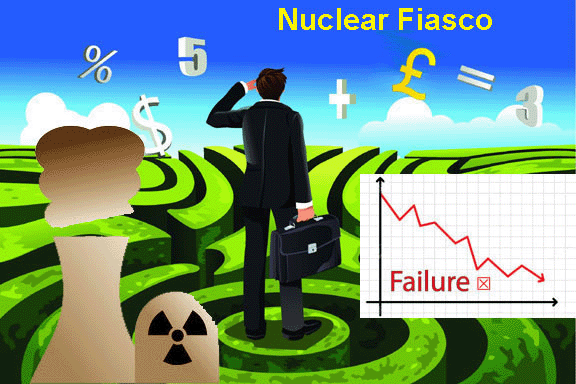 Work continues on Georgia nuclear reactors as coronavirus hits, The Bond Buyer, By Shelly Sigo Work continues on Georgia nuclear reactors as coronavirus hits, The Bond Buyer, By Shelly Sigo
April 15, 2020, Construction continues on new nuclear reactors in Georgia as COVID-19 impacts workers, and as a Florida city tries in court to vacate its contract with a public power agency that has a stake in the nuclear project.
Georgia Power Co., the investor owned utility heading up construction, reports that 35 employees have tested positive for the novel coronavirus that causes COVID-19, which has killed more than 26,000 people in the United States since late February. More than 9,000 workers are on site at Plant Vogtle in Waynesboro, Georgia, about 25 miles from Augusta. GPC owns 45.7% of the reactor project, while three public power agencies have a majority stake and combined ownership of 54.3%. …… The Georgia Department of Health reported 14,987 positive cases of the virus, 552 deaths, and 2,922 hospitalizations across the state Wednesday….. The impacts from the virus “could disrupt or delay construction, testing, supervisory and support activities at Plant Vogtle Units 3 and 4,” the notice said. “It is too early to determine what impact, if any, the COVID-19 outbreak will have on the current construction schedule or budget for Plant Vogtle Units 3 and 4,” the notice concluded. With the onslaught of the coronavirus pandemic, S&P Global Ratings revised the North America regulated utility industry outlook to negative from stable on April 2. Southern’s A-minus long-term rating was placed on creditwatch negative, though it already had a negative outlook due to the Vogtle project’s construction and financial risks….. While GPC is overseeing construction and owns a minority stake in the nearly $30 billion project, three public power agencies hold a majority interest. Those are Oglethorpe Power Corp. with 30%, Municipal Electric Authority of Georgia (or MEAG Power) with 22.7% and Dalton Utilities with 1.6% of the ownership. MEAG remains locked in a federal lawsuit with the city of Jacksonville, Florida, and its utility, JEA. JEA has a 20-year, take-or-pay power purchase agreement to pay debt service on a portion of bonds MEAG issued to finance part of its stake in the Vogtle project. Under the agreement, JEA is paying 41% of MEAG’s cost to finance the new reactors, and will also receive power from the units when completed. In a limited public offering memorandum last year, MEAG said the capital requirements for JEA’s PPA were estimated at about $2.9 billion, most of which were financed with $2.004 billion of long-term Project J bonds and $575.7 million of U.S Department of Energy loan guarantees. As project costs rose, JEA and MEAG sued each other in September 2018 over the PPA, with JEA and Jacksonville contending that the agreement was improperly approved and should be vacated. The legal challenge landed in the Atlanta Division of the United States District Court Northern District of Georgia. In December, MEAG filed a motion for a declaratory judgment in an attempt to enforce the PPA. JEA opposed MEAG’s motion and filed its own for a declaratory judgment stating, in part, that neither JEA nor the city can be bound by Georgia’s bond validation proceedings…….. In other arguments in the case, JEA and Jacksonville have cited increased costs from the delayed nuclear reactors, most of which occurred when the first primary contractor, Westinghouse, filed for bankruptcy. After that, GPC and the public utilities sharing costs in the project voted to continue construction. JEA said it complained about what it considers a subsequent “new uncapped cost-plus construction contract.”…… https://www.bondbuyer.com/news/work-continues-on-georgia-nuclear-reactors-as-coronavirus-hits |
|
|
Finally, they might investigate America’s most fatal nuclear submarine disaster
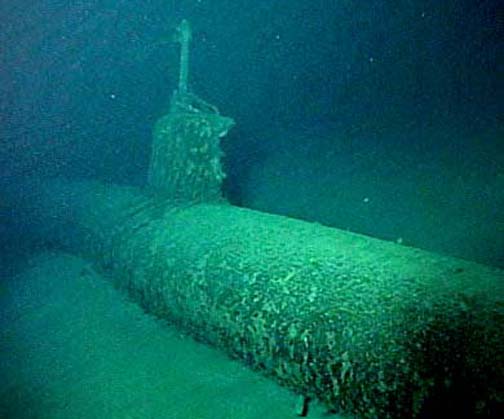
CTY Pisces – Photos of a Japanese midget submarine that was sunk off Pearl Harbor on the day of the attack. There’s a hole at the base of the conning tower where an artillery shell penetrated the hull, sinking the sub and killing the crew. Photos courtesy of Terry Kerby, Hawaii Undersea Research Laboratory. August 2003.
 seven-years-later-americas-worst-nuclear-submarine-disaster, By Robert Eatinger, Friday, April 10, 2020, Fifty-seven years ago today, America suffered its first, and in terms of fatalities its worst, loss of a nuclear-powered submarine. Yet, much of the information about that disaster and the Navy’s subsequent investigation has remained outside of public view. That may change this year.
In February this year, Judge Trevor N. McFadden of the U.S. District Court for the District of Columbia ordered the Navy to review 300 pages of documents a month starting April 30 and by the end of every month thereafter, and to begin rolling productions of documents starting on or before May 15 and every month thereafter.
Expert opinion recommends furloughing Britain’s Trident nuclear weapons
|
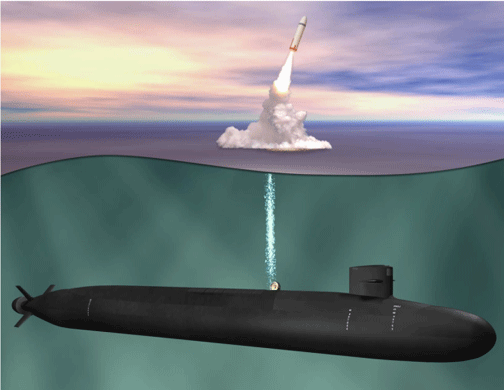
Nuclear weapons law expert suggests furloughing Trident https://www.irishlegal.com/article/nuclear-weapons-law-expert-suggests-furloughing-trident 3 April 2020 A legal expert on nuclear weapons has joined calls for the UK government to rethink keeping Trident submarines at sea during the coronavirus pandemic.Professor Nick Grief of Kent Law School is among a group of signatories to a letter questioning whether the cost of keeping the nuclear weapons system on “continuous at sea deterrent patrol” is justifiable during the COVID-19 outbreak.
Other signatories to the letter, circulated to parliamentarians across the UK, include three former Royal Navy commanders, SNP Westminster leader Ian Blackford, academics and peace campaigners. The signatories have said they hope the letter will encourage politicians and the wider public to begin to question the morality and the feasibility of nuclear weaponry. It states: “The increasing cost of coronavirus will require decades to recover. Meanwhile, the UK’s Trident nuclear weapon system remains on continuous at sea deterrent patrol costing some £2 billion a year and using scarce military assets to protect the on-patrol submarine.” The letter also raises concerns about “the morale of the submarine crew on patrol” during the pandemic, as well as “their own state of health and exposure to the virus”. It concludes: “In these circumstances, and lacking any foreseeable threat of a ‘bolt from the blue’ nuclear weapon attack on the UK, is it appropriate for the government to continue spending billions of pounds on continuous at sea deterrent, as well as building new nuclear warheads and the submarines to carry them?” |
|
Doctors warn on coronavirus danger for Julian Assange, imprisoned without conviction, in a coronavirus incubator
 ASSANGE EXTRADITION: Doctors Warning on Assange in a Covid-19 Breeding Ground, Consortium News,April 1, 2020 • In a prison cited for failing to curb infections, Doctors4Assange warn that Julian Assange is at high risk of contracting the deadly coronavirus. According to a report Wednesday in The Daily Maverick, imprisoned WikiLeaks publisher Julian Assange is one of only two prisoners of 797 inmates in Belmarsh Prison who are being held for skipping bail. The majority are violent criminals, including 20 percent for murder and 16 inmates on terrorism offenses. The facility was also repeatedly criticized by prison inspectors for a lapse in preventing infections to inmates. Following Judge Vanessa Baraitser’s decision to deny Assange bail last week, Doctors4 Assange released the following statement:
Doctors4Assange Statement on Assange
Bail Hearing over Coronavirus Risk, March 27, 2020 Doctors4Assange strongly condemns last Wednesday’s decision by UK District Judge Vanessa Baraitser to deny bail to Julian Assange. Despite our prior unequivocal statement[1] that Mr Assange is at increased risk of serious illness and death were he to contract coronavirus, and the evidence of medical experts, Baraitser dismissed the risk, citing UK guidelines for prisons in responding to the global pandemic: “I have no reason not to trust this advice as both evidence-based and reliable and appropriate.”[2]
Notably, however, Baraitser did not address the increased risk to Mr Assange relative to the general UK prison population, let alone prisoners at HMP Belmarsh where Assange is incarcerated. Nor did she address the rapidly emerging medical and legal consensus that vulnerable and low-risk prisoners should be released, immediately.
As the court heard, Mr Assange is at increased risk of contracting and dying from the novel disease coronavirus (COVID-19), a development which has led the World Health Organization to declare a public health emergency of international concern[3] and a global pandemic.[4] The reasons for Mr Assange’s increased risk include his ongoing psychological torture, his history of medical neglect and fragile health, and chronic lung disease.
Edward Fitzgerald, QC, representing Mr Assange, said, “These [medical] experts consider that he is particularly at risk of developing coronavirus and, if he does, that it develops into very severe complications for him… If he does develop critical symptoms it would be very doubtful that Belmarsh would be able to cope with his condition.”[5]
Baraitser’s casual dismissal of Mr Assange’s dire situation in the face of the COVID-19 emergency stood in stark contrast not only to the expert medical evidence, but the proceedings themselves. The hearing took place on the third day of the UK’s coronavirus lock-down. Of the two counsels representing Mr Assange, Edward Fitzgerald QC wore a facemask and Mark Summers QC participated via audiolink. US attorneys joined the proceedings by phone.
Mr Assange himself appeared by videolink, which was terminated after around an hour, rendering him unable to follow the remainder of his own hearing, including the defence summation and the District Judge’s ruling. Mr Assange’s supporters attending in person observed social distancing measures. Overall only 15 people were in attendance, including judge, counsel, and observers……..
Adding their legal voices to these medical and human rights authorities, the day after Mr Assange’s bail hearing, three professors in law and criminology recommended “granting bail to unsentenced prisoners to stop the spread of coronavirus”.[12]
Julian Assange is just such an unsentenced prisoner with significant health vulnerability. He is being held on remand, with no custodial sentence or UK charge in place, let alone conviction.
Doctors4Assange are additionally concerned that keeping Assange in Belmarsh not only increases his risk of contracting coronavirus, it will increase his isolation and his inability to prepare his defence for his upcoming extradition hearing, in violation of his human right to prepare a defence…… https://consortiumnews.com/2020/04/01/assange-extradition-doctors-warning-on-assange-in-a-covid-19-breeding-ground/
Different federal laws complicate legal case about radiation exposure and teenager’s brain cancer
The appellate panel must decide how two different federal laws should intersect. Law.com By Raychel Lean | April 01, 2020 A federal wrongful death lawsuit alleging exposure to radiation from nuclear materials caused a South Florida teenager’s brain cancer had its moment before the U.S. Court of Appeals for the Eleventh Circuit on Wednesday as attorneys debated whether Florida’s four-year statute of limitations should apply.
The appellate panel must decide how two different federal laws should intersect. While 42 U.S.C. § 9658 preempts state time limits for lawsuits involving nuclear incidents, the Price-Anderson Act adopts state law as “the rules for decision.”
The question arose after Palm Beach County resident Cynthia Santiago sued in the Southern District of Florida in 2014, five years after she was diagnosed with a brain tumor at 13. When she died about two years later, her parents Joselyn and Steve Santiago became personal representatives.
The complaint blamed Connecticut-based aircraft maker United Technologies Corp., alleging its Palm Beach County engineering facility released radioactive materials, heavy metals and semi-volatiles in The Acreage, where several children were also reportedly diagnosed with brain tumors. …… https://www.law.com/dailybusinessreview/2020/04/01/clock-ticking-for-florida-family-alleging-radiation-exposure-caused-teens-cancer/?slreturn=20200301190656
The court has yet to rule.
Tokyo High Court slashes damages to Fukushima nuclear disaster evacuees
|
Tokyo High Court slashes damages to Fukushima nuclear disaster evacuees, Japan Times, 18 Mar 20, The Tokyo High Court on Tuesday ordered ¥1 million in additional damages be paid each to some 300 evacuees from the 2011 Fukushima nuclear disaster, down by two-thirds from the amount awarded by a lower court ruling.The total amount of additional compensation Tokyo Electric Power Company Holdings Inc. must pay was reduced to about ¥360 million from the ¥1.1 billion awarded by the Tokyo District Court in 2018…….
In their petition, the plaintiffs, including former residents of the Odaka district in Minamisoma, Fukushima Prefecture, sought additional damages of ¥10.9 billion in total. The ruling was the second by a high court on a collective damages lawsuit filed by those displaced by the nuclear accident, following one issued by Sendai High Court last week. On Tuesday, presiding Judge Wataru Murata said Tepco must pay additional damages on top of the ¥8.5 million it paid per person based on estimates calculated under government-set interim standards. The additional damages have to be paid to compensate for the loss of hometowns, as “the foundations of residents’ lives have changed greatly and have yet to be restored,” Murata said. But the amount of the additional damages should be reduced because individual circumstances of the evacuees should not be taken into account, Murata said, denying the need for such consideration as had been recognized by the lower court…….https://www.japantimes.co.jp/news/2020/03/18/national/crime-legal/tokyo-high-court-slashes-damages-fukushima-nuclear-disaster-evacuees/#.XnJ94IgzbIU |
|
Nuclear-powered submarines – fraught with legal and political problems

|
The Complex Policy Questions Raised by Nuclear Energy’s Role in the Future of Warfare, Just Security by Alex Gilbert, Morgan Bazilian and Julia Nesheiwat, March 16, 2020 The United States military, as well as other militaries around the world, are racing to develop high-energy weapons—lasers, high-powered microwaves, and electromagnetic rail guns—in order to compete with near-peer competitors on the next generation of military technologies. But the electricity to power these systems will need to derive from somewhere, and so military planners are eyeing a new generation of energy-dense nuclear reactors, despite potential policy and legal challenges to doing so…….. The Army is considering mobile nuclear power plants, in part to drive high-energy weapons, an idea one retired three-star hailed as a potential logistics revolution. And should the U.S. build space-based lasers for missile defense, nuclear energy may be the only way to provide the needed megawatts. All this raises key policy concerns in relation to international law, rules of engagement, and the laws of warfare. Basing, or even deploying, nuclear reactors in the territorial waters or land of an overseas ally requires the permission of the host government, which may be averse to expanding nuclear power as in the case of major bases like Yokosuka, Japan. Diego Garcia, an island in the Indian Ocean, provides another challenging case as the ongoing territorial dispute between the United Kingdom and Mauritius threatens the U.S. base there, and a nuclear plant would only complicate the existing dispute. The U.S. Navy already faces constraints on where their nuclear-powered ships can visit. Floating nuclear power plants, like those developed by Russia and China, face similar concerns if they transit foreign waters or, in the case of the South China Sea, are stationed in disputed territories. Similarly, mobile reactors, like those considered by the U.S. Army, would likely be transported by air, requiring permission of all overflight countries. Beyond basing, a critical question is whether the U.S. military would own and operate these new reactors, as the Navy currently does, or whether they would pursue commercial alternatives, as the Army is considering. The U.S. Army report on mobile reactors noted that, with either government or commercial ownership, there are concerns about international rules and licensing that present potential barriers to deployment. In some cases, potential host countries do not even have nuclear regulatory agencies. Further, commercial ownership raises liability concerns, both in the case of a military incident or an accident. International nuclear liability treaties are not well harmonized between the U.S. and most of its allies, especially when it comes to the unique concerns of transportable reactors. Using nuclear power for high-energy weapons also creates targeting dilemmas for the U.S. and foreign militaries. High-energy weapons and their support infrastructure, including reactors, may be initial targets in a conflict. The social, environmental, and reputational impacts of damaging a nuclear reactor, particularly on a country’s home territory, or with effects on a third country, could lead to conflict escalation and international condemnation……. Nuclear-powered laser satellites could aggravate concerns about nuclear arms controls as such systems could be used for anti-ballistic missile or anti-satellite applications. While the Outer Space Treaty prohibits weapons of mass destruction in orbit, it does not prohibit other types of weaponry. During the Cold War, Soviet military space reactors raised calls for bans on space nuclear power, particularly after one accidentally crashed in Canada. Recent calls for space arms control have been unsuccessful. As with terrestrial nuclear-powered lasers, the unique role of laser satellites would make them early targets in any major power conflict, leading to risks of collateral damage from radioactive and dangerous space debris, as occurred after the accidental 2009 collision involving a decommissioned Soviet nuclear satellite.. The article below is not about Australia, but it is about small nuclear reactors. Everybody knows, (just quietly) that Australia won’t be getting small nuclear reactors for providing electricity. The real aim is for nuclear-powered submarines. So this article, about the legal and political problems of nuclear reactors for Defence is applicable to Australia, too
The Complex Policy Questions Raised by Nuclear Energy’s Role in the Future of Warfare, Just Security by Alex Gilbert, Morgan Bazilian and Julia Nesheiwat, March 16, 2020 The United States military, as well as other militaries around the world, are racing to develop high-energy weapons—lasers, high-powered microwaves, and electromagnetic rail guns—in order to compete with near-peer competitors on the next generation of military technologies. But the electricity to power these systems will need to derive from somewhere, and so military planners are eyeing a new generation of energy-dense nuclear reactors, despite potential policy and legal challenges to doing so…….. The Army is considering mobile nuclear power plants, in part to drive high-energy weapons, an idea one retired three-star hailed as a potential logistics revolution. And should the U.S. build space-based lasers for missile defense, nuclear energy may be the only way to provide the needed megawatts.
All this raises key policy concerns in relation to international law, rules of engagement, and the laws of warfare.
Basing, or even deploying, nuclear reactors in the territorial waters or land of an overseas ally requires the permission of the host government, which may be averse to expanding nuclear power as in the case of major bases like Yokosuka, Japan. Diego Garcia, an island in the Indian Ocean, provides another challenging case as the ongoing territorial dispute between the United Kingdom and Mauritius threatens the U.S. base there, and a nuclear plant would only complicate the existing dispute.
The U.S. Navy already faces constraints on where their nuclear-powered ships can visit. Floating nuclear power plants, like those developed by Russia and China, face similar concerns if they transit foreign waters or, in the case of the South China Sea, are stationed in disputed territories. Similarly, mobile reactors, like those considered by the U.S. Army, would likely be transported by air, requiring permission of all overflight countries.
Beyond basing, a critical question is whether the U.S. military would own and operate these new reactors, as the Navy currently does, or whether they would pursue commercial alternatives, as the Army is considering. The U.S. Army report on mobile reactors noted that, with either government or commercial ownership, there are concerns about international rules and licensing that present potential barriers to deployment. In some cases, potential host countries do not even have nuclear regulatory agencies. Further, commercial ownership raises liability concerns, both in the case of a military incident or an accident. International nuclear liability treaties are not well harmonized between the U.S. and most of its allies, especially when it comes to the unique concerns of transportable reactors.
Using nuclear power for high-energy weapons also creates targeting dilemmas for the U.S. and foreign militaries. High-energy weapons and their support infrastructure, including reactors, may be initial targets in a conflict. The social, environmental, and reputational impacts of damaging a nuclear reactor, particularly on a country’s home territory, or with effects on a third country, could lead to conflict escalation and international condemnation…….
Nuclear-powered laser satellites could aggravate concerns about nuclear arms controls as such systems could be used for anti-ballistic missile or anti-satellite applications. While the Outer Space Treaty prohibits weapons of mass destruction in orbit, it does not prohibit other types of weaponry. During the Cold War, Soviet military space reactors raised calls for bans on space nuclear power, particularly after one accidentally crashed in Canada. Recent calls for space arms control have been unsuccessful. As with terrestrial nuclear-powered lasers, the unique role of laser satellites would make them early targets in any major power conflict, leading to risks of collateral damage from radioactive and dangerous space debris, as occurred after the accidental 2009 collision involving a decommissioned Soviet nuclear satellite…. …… https://www.justsecurity.org/69056/the-complex-policy-questions-raised-by-nuclear-energys-role-in-the-future-of-warfare/
|
|
High Courts in Japan to assess government liability for Fukushima nuclear disaster
|
Attention is on how the courts will assess the liability of the government, which has flatly denied responsibility over the accident at Tokyo Electric Power Company Holdings Inc.’s Fukushima No. 1 nuclear plant. The plant suffered meltdowns in three of its reactors after being hit by a massive earthquake and tsunami on March 11, 2011, forcing many residents to evacuate. So far, six of 10 district courts have found the government responsible for the nuclear accident, while the other four did not recognize government liability. The key issues are whether the government was able to predict the huge tsunami and was able to avert the catastrophe by taking preventive measures. The plaintiffs claim that the government could have prevented the accident if it had urged Tepco to take measures by exercising its regulatory power, based on its long-term earthquake prediction issued in 2002. All of the 10 district courts recognized Tepco’s responsibility to pay damages to the plaintiffs based on a law obliging a plant operator to pay damages over a nuclear accident, regardless of whether it was negligent or not. The Maebashi District Court and five others found that the long-term earthquake assessment was reliable, saying it was a reasonable prediction that should have been taken into account when considering tsunami countermeasures. The courts thus recognized the government’s responsibility, finding that it acted illegally by neglecting to order Tepco to take preventive measures — such as relocating power sources to a higher location at the plant. By contrast, two separate rulings issued by the Chiba District Court did not support the claim of government responsibility, reaching verdicts that the nuclear accident could not have been avoided even if preventive measures had been taken. Still, all district court rulings found that the government had been able to foresee the possibility of a huge tsunami hitting the plant. “Based on the premise that a nuclear plant should be protected at any cost, the government should exercise its regulatory power soon after it predicts a tsunami,” said Izutaro Managi, a lawyer involved in a case filed with the Fukushima District Court. The Fukushima case involves some 3,800 plaintiffs — the largest number among suits filed against Tepco and the government over the nuclear accident. The first high court ruling is expected later this year. “If high courts issue rulings in succession recognizing state responsibility over the nuclear accident, the Japanese government as a perpetrator should act to address damages from the accident,” Managi said. Specifically, he called on the government to review its compensation guidelines, which include measures such as monthly payments of ¥100,000 to each resident in evacuation zones. |
|
Westinghouse nuclear reactors – a very poor deal for India
Pushing the wrong energy buttons, https://www.thehindu.com/opinion/op-ed/pushing-the-wrong-energy-buttons/article30965454.ece?fbclid=IwAR1ymOL6TLlSxlUKkVVSL6_ukPPeiSzDlI_JM-He3CMG2qBD4HaBU0vezog, M.V. Ramana, Suvrat Raju, MARCH 03, 2020
The idea of India importing nuclear reactors is a zombie one with serious concerns about their cost and safety
Red flags in the U.S. deal
Because of serious concerns about cost and safety, the two organisations should have been told to abandon, not finalise, the proposal.
Indeed, it has been clear for years that electricity from American reactors would be more expensive than competing sources of energy. Moreover, nuclear reactors can undergo serious accidents, as shown by the 2011 Fukushima disaster. Westinghouse has insisted on a prior assurance that India would not hold it responsible for the consequences of a nuclear disaster, which is effectively an admission that it is unable to guarantee the safety of its reactors.
The main beneficiaries from India’s import of reactors would be Westinghouse and India’s atomic energy establishment that is struggling to retain its relevance given the rapid growth of renewables. But Mr. Trump has reasons to press for the sale too. His re-election campaign for the U.S. presidential election in November, centrally involves the revival of U.S. manufacturing and he has been lobbied by several nuclear reactor vendors, including 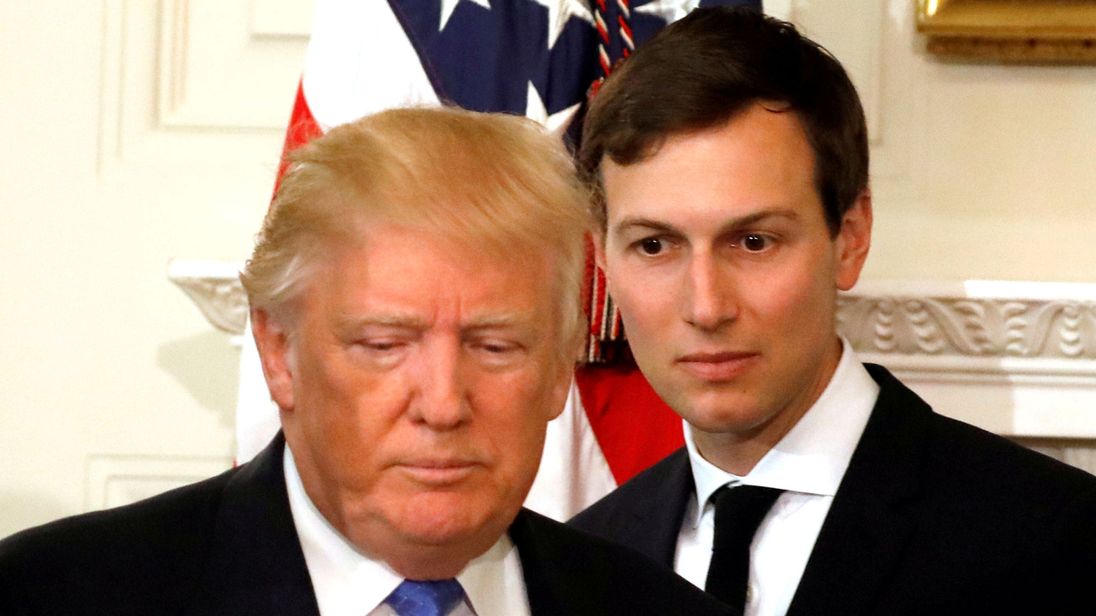 Westinghouse, reportedly to “highlight the role U.S. nuclear developers can play in providing power to other countries”. Finally, he also has a conflict-of-interest, thanks to his son-in-law and adviser, Jared Kushner, who accompanied him during the India visit.
In 2018, the Kushner family’s real-estate business was bailed out by a Canadian company that invested at least $1.1-billion in a highly unprofitable building in New York. Earlier that year, Brookfield Business Partners, a subsidiary of that Canadian company, acquired Westinghouse Electric Company. It violates all norms of propriety for Mr. Kushner to be anywhere near a multi-billion dollar sale that would profit Brookfield enormously.
What renewables can offer
Analysts estimate that each of the two AP1000 units being constructed in the U.S. state of Georgia may cost about $13.8 billion. At these rates, the six reactors being offered to India by Westinghouse would cost almost ₹6 lakh crore. If India purchases these reactors, the economic burden will fall upon consumers and taxpayers. In 2013, we estimated that even after reducing these prices by 30%, to account for lower construction costs in India, the first year tariff for electricity would be about ₹25 per unit. On the other hand, recent solar energy bids in India are around ₹3 per unit. Lazard, the Wall Street firm, estimates that wind and solar energy costs have declined by around 70% to 90% in just the last 10 years and may decline further in the future.
How safe?
Nuclear power can also impose long-term costs. Large areas continue to be contaminated with radioactive materials from the 1986 Chernobyl accident and thousands of square kilometres remain closed off for human inhabitation. Nearly a decade after the 2011 disaster, the Fukushima prefecture retains radioactive hotspots and the cost of clean-up has been variously estimated to range from $200-billion to over $600-billion.
The Fukushima accident was partly caused by weaknesses in the General Electric company’s Mark I nuclear reactor design. But that company paid nothing towards clean-up costs, or as compensation to the victims, due to an indemnity clause in Japanese law. Westinghouse wants a similar arrangement with India. Although the Indian liability law is heavily skewed towards manufacturers, it still does not completely indemnify them. So nuclear vendors have tried to chip away at the law. Instead of resisting foreign suppliers, the Indian government has tacitly supported this process.
Starting with the Tarapur 1 and 2 reactors, in Maharashtra, India’s experiences with imported reactors have been poor. The Kudankulam 1 and 2 reactors, in Tamil Nadu, the only ones to have been imported and commissioned in the last decade, have been repeatedly shut down. In 2018-19, these reactors produced just 32% and 38%, respectively, of the electricity they were designed to produce. These difficulties are illustrative of the dismal history of India’s nuclear establishment. In spite of its tall claims, the fraction of electricity generated by nuclear power in India has remained stagnant at about 3% for decades.
The idea of importing nuclear reactors is a “zombie idea” that, from a rational viewpoint, should have been dead long ago. In fact an earlier plan to install AP1000s in Mithi Virdi, Gujarat was cancelled because of strong local opposition. In 2018, Gujarat Chief Minister Vijay Rupani declared that the reactors “will never come up” in Gujarat. The Prime Minister should take a cue from his own State and make a similar announcement for the rest of the country.
Belgian nuclear plants now could shut down earlier than planned
|
Court ruling could close Doel nuclear reactors earlier, Friday, 06 March 2020 A ruling by the Constitutional Court could mean the nuclear power stations Doel 1 and Doel 2 have to close down earlier than the government planned. Brussels Times, The Court this week struck down a law passed in 2015 which extended the lifetime of the reactors by ten years. The case was brought by two environmental organisations, Bond Beter Leefmilieu (BBL) and Inter-Environnement Wallonie. The two reactors came into service in 1975, and should have closed in 2015. But to fill the requirements of the electricity industry at the time, a law was passed extending the lifetime of the reactors for ten years. However, the Court ruled, that law is unconstitutional, as it required an environmental assessment report be carried out, which never happened. That effectively suspends the 2015 law, but the court said it would allow it to remain in force until the end of 2022. The government must now organise the lengthy procedure to take place of commissioning an environmental assessment report and the public enquiry procedure that goes with it. It must then pass a new law through the various stages in parliament. If that is not completed by the end of 2022, the two reactors will have to close down then, three years earlier than planned. To make matters more complicated still, the government also needs to enter into talks with the Dutch authorities, since Doel – an abandoned village on the estuary of the Scheldt river in the municipality of Beveren in East Flanders – is a stone’s throw from the border with the Netherlands…….. https://www.brusselstimes.com/all-news/belgium-all-news/98803/court-ruling-could-close-doel-nuclear-reactors-earlier-environmental-report-constitutional-court/ |
|
Marshall islanders continue their fight for nuclear justice
Fight for nuclear justice continues in the Marshall Islands https://www.rnz.co.nz/international/pacific-news/410871/fight-for-nuclear-justice-continues-in-the-marshall-islands 3 March 2020
The fight for nuclear justice continues in the Marshall Islands where people have been gathering to call for the US to atone for its legacy of testing.The country marked National Nuclear Victims Remembrance Day on Monday, the 64th anniversary of the Castle Bravo hydrogen bomb test that exposed thousands of people to downwind effects.At a ceremony in the capital, Majuro, a tribute was paid to 22 living survivors from the communities affected by the nuclear testing.
This comes as the Marshall Islands and the United States have begun preliminary talks on a new agreement to address the legacy of testing.
The compact of free association, which guarantees relations and funding for the Marshalls from the US, expires in two years.
Last year, it was revealed the US withheld information about nuclear waste it left behind when the Marshalls gained independence, and the extent of the tests it carried out.
Washington previously said there would be no replacement compact. But the chair of the Marshall Islands Nuclear Commission, Rhea Moss-Christian, said nuclear issues were a key, ongoing aspect of negotiations.
“Well we are coming up on renegotiating the economic provisions of the compact, and we’ve had some initial discussions with the US officials.
“So yes internally we are working on our strategy and pulling together all the key issues to include in those negotiations, including the nuclear legacy.”
Ms Moss-Christian, who said formal talks should start later in the year, vowed that the fight for nuclear justice for Marshall Islanders would continue.
“Really it comes down to compensation for loss of land. It’s about health care for those who might be having medical issues,” she said.
“It’s about livelihoods and how much their lifestyles were forced to change when they were moved from their land. These are just a few examples.”
Meanwhile, an essay competition for high schoolers was held as part of Monday’s commemoration programme.
The winner was a senior at Marshall Islands High School on Majuro, Rosie Ammontha, who wrote:
“They had the choice to test those bombs, we didn’t. They had the choice to be truthful about the consequences that awaited us, we didn’t. They had the choice not to endanger innocent lives, we didn’t. They had the choice to help protect our oceans and environment, we didn’t. At the end of the day, nuclear justice means righting what was wronged.”
USA’s nuclear insurance places the big responsibility on the tax-payer
|
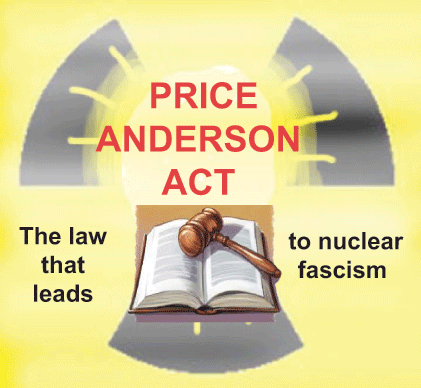
The US government insurance scheme for nuclear power plant accidents no longer makes sense, Bulletin of the Atomic Scientists, By Victor Gilinsky, February 26, 2020 The Japan Center for Economic Research, a source sympathetic to nuclear power, recently put the long-term costs of the 2011 Fukushima accident as about $750 billion. Contrast that with the maximum of $13 billion that could be available after a catastrophic US nuclear accident under the plant owners’ self-insurance scheme defined by the Price-Anderson Act. The Act will have to be renewed before 2025; Congress should seize the opportunity not only to reflect on the lack of insurance in the event of a catastrophic accident, but also to reconsider our approach to nuclear power plant safety altogether.
The main public risk of nuclear power plants comes from rare but devastating nuclear accidents. Because data on such accidents is sparse, the probability of their occurrence has to be calculated on the basis of a model, rather than obtained from experience. Moreover, the extent of an accident and its monetary consequences are postulated on the basis of models that are limited by analysts’ imagination. Who would have imagined, for example, that the Fukushima accident would involve several reactors? Or that Japan would subsequently shut down all its other nuclear power plants?………. Curiously, from the chairman on down, the NRC misstates the legal standard for its safety decisions. The NRC and its staff claim their job is to provide “reasonable assurance of adequate protection,” whereas the standard in the Atomic Energy Act is “adequate protection.” Under the law, their job is to provide adequate protection, period. Do the commissioners think the extra cushion of “reasonable assurance” justifies weaker regulation? To return to the Price-Anderson Act: As we’ve seen, a catastrophic accident would render the US self-insurance scheme for nuclear power plants pretty much irrelevant. But the indemnification of all industry participants would remain highly relevant: The industry would be free of any liability for offsite death or damage, whereas the victims would have to go hat in hand to Congress for restitution. This is an enormous subsidy—consider, again, the $750 billion and counting tab for Fukushima—that the federal government provides the nuclear industry, one without which not a single US nuclear power plant would or could operate. Freedom from liability also has had a perverse effect on nuclear safety. Without the liability protection of Price-Anderson, industry incentives to develop nuclear designs safer than light water reactors would surely have been higher. Freedom from liability was put into law in the 1950s to get the US commercial nuclear power industry off the ground. It was meant to be temporary, until industry and insurers got some experience with the new technology. But even as time went on, industrial organizations like General Electric and Westinghouse would not participate in the civilian nuclear program if they risked responsibility for offsite damage from a nuclear plant accident……… What is clear is that the nuclear firms—the largest of which possess an understanding of nuclear safety far beyond that of the public—do not believe the NRC safety conclusions that the risk of a catastrophic nuclear accident is infinitesmal. Nor do they accept that probable risk—probability of an accident times the consequences, were one to occur—as the right measure of risk to their companies. They don’t want to risk their companies, period. If they don’t believe the NRC numbers, why should the rest of us accept them? Why shouldn’t we have the same protection from physical harm that the nuclear industry has from financial liability? And just as the nuclear vendors will not participate on terms that do not include indemnification from the overwhelming cost of a severe accident, so should the public have the analogous power to only accept future nuclear designs that can demonstrate that they preclude offsite harm. And the designs should demonstrate that level of safety in a clear way, based on physical principles, not on complicated probabilistic calculations put forward by interested parties. Such new designs would eliminate the current dilemma of a federal nuclear self-insurance scheme that cannot, as a practical matter, cover the financial consequences to the public of catastrophic nuclear power plant accidents. But how to get there? One of the disincentives is the Price-Anderson Act’s limitations on industry liability for offsite accident consequences. That should get phased out. https://thebulletin.org/2020/02/the-us-government-insurance-scheme-for-nuclear-power-plant-accidents-no-longer-makes-sense/# |
|
Extradition case for Julian Assange – how it will proceed
 Julian Assange’s extradition case is finally heading to
  court – here’s what to expect more https://www.sbs.com.au/news/julian-assange-s-extradition-case-is-finally-heading-to-court-here-s-what-to-expe
February 24, 2020 Holly Cullen, Adjunct professor, University of Western AustraliaThe extradition hearing to decide whether to send Julian Assange to the United States to be tried for publishing classified military documents on Wikileaks is expected to finally begin today in London.Assange is charged with 17 counts under the Espionage Act, involving receipt, obtaining and disclosing national security information. He has also been charged with one count of conspiracy to assist Chelsea Manning to crack a US Department of Defense password to enable her to access classified information.
Assange has been in Belmarsh prison since his arrest in April 2019. He had been in solitary confinement in a prison medical unit, but was recently moved into a less isolated section of the prison due to concerns about his mental health.
From May to September of last year, Assange served a sentence for bail absconding, but since then has been waiting for the extradition hearing.
How will the process play out? Continue reading
1 This Month


Tell the Ukrainian Government to Drop Prosecution of Peace Activist Yurii Sheliazhenko

Petition to revoke the licensing of the Near Surface Nuclear Disposal Facility (NSDF) at Chalk River. https://www.ourcommons.ca/petitions/en/Petition/Details?Petition=e-7247


of the week – STOP SMALL MODULAR REACTORS IN CANADA
To see nuclear-related stories in greater depth and intensity – go to https://nuclearinformation.wordpress.com
-
Archives
- March 2026 (212)
- February 2026 (268)
- January 2026 (308)
- December 2025 (358)
- November 2025 (359)
- October 2025 (376)
- September 2025 (258)
- August 2025 (319)
- July 2025 (230)
- June 2025 (348)
- May 2025 (261)
- April 2025 (305)
-
Categories
- 1
- 1 NUCLEAR ISSUES
- business and costs
- climate change
- culture and arts
- ENERGY
- environment
- health
- history
- indigenous issues
- Legal
- marketing of nuclear
- media
- opposition to nuclear
- PERSONAL STORIES
- politics
- politics international
- Religion and ethics
- safety
- secrets,lies and civil liberties
- spinbuster
- technology
- Uranium
- wastes
- weapons and war
- Women
- 2 WORLD
- ACTION
- AFRICA
- Atrocities
- AUSTRALIA
- Christina's notes
- Christina's themes
- culture and arts
- Events
- Fuk 2022
- Fuk 2023
- Fukushima 2017
- Fukushima 2018
- fukushima 2019
- Fukushima 2020
- Fukushima 2021
- general
- global warming
- Humour (God we need it)
- Nuclear
- RARE EARTHS
- Reference
- resources – print
- Resources -audiovicual
- Weekly Newsletter
- World
- World Nuclear
- YouTube
-
RSS
Entries RSS
Comments RSS
 nuclear-news