Biden Administration Defies Australia’s Call To End Assange Case, Submits ‘Assurances’ To UK Court
Streamed live on 17 Apr 2024Join Kevin Gosztola, author of “Guilty of Journalism: The Political Case Against Julian Assange,” as he covers the U.S. government’s “assurances” that were submitted to a British appeals court. They represent a clear indication that President Joe Biden’s administration is not going to end the case. If Biden was “considering” a plea deal for Assange, as was reported, he has made the decision to keep pursuing extradition and a U.S. trial on Espionage Act charges.
US Issues Assurances on Assange

The U.S. Tuesday filed assurances on the death penalty and the 1st Amendment, the latter of which Stella Assange called a “non-assurance.”
Joe Lauria, in London, Consortium News, 17 Apr 24, https://consortiumnews.com/2024/04/16/us-issues-assurances-assange/
The United States Embassy on Tuesday filed two assurances with the British Foreign Office saying it would not seek the death penalty against imprisoned WikiLeaks‘ publisher Julian Assange and would allow Assange “the ability to raise and seek to reply upon at trial … the rights and protections given under the First Amendment,” according to the U.S. diplomatic note.
Assange’s wife Stella Assange said the note “makes no undertaking to withdraw the prosecution’s previous assertion that Julian has no First Amendment rights because he is not a U.S citizen. Instead,” she said, “the US has limited itself to blatant weasel words claiming that Julian can ‘seek to raise’ the First Amendment if extradited.”
The note contains a hollow statement, namely, that Assange can try to raise the First Amendment at trial (and at sentencing), but the U.S. Department of Justice can’t guarantee he would get those rights, which is precisely what it must do under British extradition law based on the European Convention on Human Rights.
The U.S. Department of Justice is legally restricted to assure a free speech guarantee to Assange equivalent to Article 10 of the European Convention, which the British court is bound to follow. But without that assurance, Assange should be freed according to a British Crown Prosecution Service comment on extraditions.
In USAID v. Alliance for Open Society, the U.S. Supreme Court ruled in 2020 that non-U.S. citizens outside the U.S. don’t possess constitutional rights. Both former C.I.A. Director Mike Pompeo and Gordon Kromberg, Assange’s U.S. prosecutor, have said Assange does not have First Amendment protection.
Because of the separation of powers in the United States, the executive branch’s Justice Department can’t guarantee to the British courts what the U.S. judicial branch decides about the rights of a non-U.S. citizen in court, said Marjorie Cohn, law professor and former president of the National Lawyers’ Guild.
“Let’s assume that … the Biden administration, does give assurances that he would be able to raise the First Amendment and that the [High] Court found that those were significant assurances,” Cohn told Consortium News‘ webcast CN Live! last month.
“That really doesn’t mean anything, because one of the things that the British courts don’t understand is the U.S. doctrine of separation of powers,” she said.
“The prosecutors can give all the assurances they want, but the judiciary, another [one] .. of these three branches of government in the U.S., doesn’t have to abide by the executive branch claim or assurance,” Cohn said.
In other words, whether Assange can rely on the First Amendment in his defense in a U.S. court is up to that court not Kromberg or the Department of Justice, which issued the assurance on Tuesday.
The United States has issued a non-assurance in relation to the First Amendment,” said Stella Assange
Assange’s legal team now has the right to challenge the credibility and validity of the U.S. assurances filed on Tuesday. The U.S. would then have a right to reply to Assange’s legal submissions to the court, which will hold a hearing on May 20 to determine whether or not to accept the U.S. assurances.
If the court does, Assange can be put on a plane to the U.S. theoretically that day. If not Assange would be granted a full appeal against the Home Office’s 2022 order to extradite him. Assange is wanted in the U.S. on 17 charges under the 1917 Espionage Act and one on conspiracy to commit computer intrusion. He faces up to 175 years in a U.S. dungeon.
“The diplomatic note does nothing to relieve our family’s extreme distress about his future — his grim expectation of spending the rest of his life in isolation in US prison for publishing award-winning journalism,” Stella Assange said.
In its 66-page ruling on March 26, the two High Court judges wrote Kromberg wouldn’t have said Assange would be without First Amendment rights at trial “unless that was a tenable argument that the prosecution was entitled to deploy with a real prospect of success.”
“If such an argument were to succeed it would (at least arguably) cause the applicant [Assange] prejudice on the grounds of his non-US citizenship (and hence, on the grounds of his nationality),” the judges said. They added:
“The applicant wishes to argue, at any trial in the United States, that his actions were protected by the First Amendment. He contends that if he is given First Amendment rights, the prosecution will be stopped. The First Amendment is therefore of central importance to his defence to the extradition charge.”
This is the statement Stella Assange put out on X Tuesday at 11:36 am EDT:
“The United States has issued a non-assurance in relation to the First Amendment, and a standard assurance in relation to the death penalty. It makes no undertaking to withdraw the prosecution’s previous assertion that Julian has no First Amendment rights because he is not a U.S citizen. Instead, the US has limited itself to blatant weasel words claiming that Julian can ‘seek to raise’ the First Amendment if extradited. The diplomatic note does nothing to relieve our family’s extreme distress about his future — his grim expectation of spending the rest of his life in isolation in US prison for publishing award-winning journalism. The Biden Administration must drop this dangerous prosecution before it is too late.”
Faulty Assurances: The Judicial Torture of Assange Continues

April 17, 2024, Dr Binoy Kampmark, https://theaimn.com/faulty-assurances-the-judicial-torture-of-assange-continues/
Only this month, the near comatose US President, Joe Biden, made a casual, castaway remark that his administration was “considering” the request by Australia that the case against Julian Assange be concluded. The WikiLeaks founder has already spent five gruelling years in London’s Belmarsh prison, where he continues a remarkable, if draining campaign against the US extradition request on 18 charges, 17 incongruously and outrageously based on the US Espionage Act of 1917.
Like readings of coffee grinds, his defenders took the remark as a sign of progress. Jennifer Robinson, a longtime member of Assange’s legal team, told Sky News Australia that Biden’s “response, this is what we have been asking for over five years. Since 2010 we’ve been saying this is a dangerous precedent that’s being set. So, we certainly hope it was a serious remark and the US will act on it.” WikiLeaks editor-in-chief Kristinn Hrafnsson found the mumbled comment from the president “extraordinary”, hoping “to see in the coming days” whether “clarification of what this means” would be offered by the powerful.
On April 14, the Wall Street Journal reported that Canberra had asked their US counterparts whether a felony plea deal could be reached, enabling the publisher to return to Australia. “Prosecutors and a lawyer for Assange have discussed a range of potential deals, including those that include pleading guilty to a felony under the espionage law under which he was indicted, and those of conspiring to mishandle classified information, which would be a misdemeanor, people familiar with the matter have said.”
Last month, the UK High Court gave what can only be regarded as an absurd prescription to the prosecution should they wish to succeed. Extradition would be unlikely to be refused if Assange was availed of protections offered by the First Amendment (though rejecting claims that he was a legitimate journalist), was guaranteed not to be prejudiced, both during the trial and in sentence on account of his nationality, and not be subject to the death penalty. That such directions were even countenanced shows the somewhat delusionary nature of British justices towards their US counterparts.
On April 16, Assange’s supporters received confirmation that the extradition battle, far from ending, would continue in its tormenting grind. Not wishing to see the prospect of a full hearing of Assange’s already hobbled arguments, the US State Department, almost to the hour, filed the assurances in a diplomatic note to the Crown Prosecution Service (CPS). “Assange,” the US Embassy in London claimed with aping fidelity to the formula proposed by the High Court, “will not be prejudiced by reason of nationality with respect to which defenses he may seek to raise at trial and at sentencing.”
Were he to be extradited, “Assange will have the ability to raise and seek to rely upon at trial (which includes any sentencing hearing) the rights and protections given under the First Amendment of the Constitution of the United States.” An obvious caveat, and one that should be observed with wary consideration by the High Court judges, followed. “A decision as to the applicability of the First Amendment is exclusively within the purview of the US Courts.”
The US embassy also promised that, “A sentence of death will neither be sought nor imposed on Assange. The United States is able to provide such assurance as Assange is not charged with a death-penalty eligible offense, and the United States assures that he will not be tried for a death-eligible offense.” This undertaking does not dispel the threat of Assange being charged with additional offences such as traditional espionage, let alone aiding or abetting treason, which would carry the death penalty.
In 2020, Gordon Kromberg, the chief Department of Justice prosecutor behind the case, told the Central Criminal Court of England and Wales that the US “could argue that foreign nationals are not entitled to protections under the First Amendment, at least as it concerns national defense information.” There was also the likelihood that Assange, in allegedly revealing the names of US intelligence sources thereby putting them at risk of harm, would also preclude the possibility of him relying on such protections.
-ADVERTISEMENT-
That the zealous Kromberg will be fronting matters should Assange reach US shores is more than troubling. Lawyers and civil rights activists have accused him of using the Eastern District Court of Virginia for selective and malicious prosecutions. As Murtaza Hussain of The Intercept observed with bleak accuracy in July 2021, “[r]ather than being pushed into obscurity by these efforts, today he is serving as a key figure in one of the most important civil liberties cases in the world.”
The High Court also acknowledged Kromberg’s views at trial regarding the possibility that the First Amendment did not cover foreign nationals. “It can fairly be assumed that [Kromberg] would not have said that the prosecution ‘could argue that foreign nationals are not entitled to protections under the First Amendment’ unless that was a tenable argument that the prosecution was entitled to deploy with real prospect of success.” These latest assurances do nothing to change that fact.
A post from Assange’s wife, Stella, provided a neat and damning summary of the embassy note. “The United States has issued a non-assurance in relation to the First Amendment, and a standard assurance in relation to the death penalty. It makes no undertaking to withdraw the prosecution’s previous assertion that Julian has no First Amendment rights because he is not a US citizen. Instead, the US has limited itself to blatant weasel words claiming that Julian can ‘seek to raise’ the First Amendment if extradited.”
UK Government decision to withhold nuclear power plant information unlawful
Government decision to withhold nuclear power plant information unlawful.
A ruling by the Information Commissioner (IC) requiring the Secretary of
State for Energy Security and Net Zero requesting the disclosure of
information in respect of a proposed nuclear power plant on Anglesey was
upheld by the General Regulatory Chamber (GRC) which concluded that the
public interest supported its disclosure.
Planning Resource 11th April 2024
Five Years At Belmarsh: A Chronicle Of Julian Assange’s Imprisonment.

Kevin Gosztola, Apr 11, 2024, https://scheerpost.com/2024/04/12/five-years-at-belmarsh-a-chronicle-of-julian-assanges-imprisonment/
Calls for Assange’s freedom are renewed as the WikiLeaks founder marks five years in Belmarsh prison.
At the behest of the United States government, the British government has detained WikiLeaks founder Julian Assange in His Majesty’s Prison Belmarsh for five years.
Assange is one of the only journalists to be jailed by a Western country, making the treatment that he has endured extraordinary. He has spent more time in prison than most individuals charged with similar acts.
Since December 2010, Assange has lived under some form of arbitrary detention.
He was expelled from Ecuador’s London embassy on April 11, 2019, and British police immediately arrested him. Police transported Assange to Belmarsh, a maximum-security facility often referred to as “Britain’s Guantanamo.”
Around the same time, the U.S. Justice Department unsealed an indictment that alleged that Assange had conspired with U.S. Army whistleblower Chelsea Manning to commit a “computer intrusion.” The following month the DOJ issued another indictment with 17 additional Espionage Act charges.
2019
On May 1, Assange was sentenced by a British court to 50 weeks in prison as punishment for seeking political asylum from Ecuador while Sweden was attempting to extradite him. His sentence was longer than the six-month sentence that Jack Shepherd, the “speedboat killer” received for “breaching bail.”
Continue readingSwiss women win landmark climate victory at European Court of Human Rights
Swiss women win landmark climate victory at European Court of Human
Rights. Court finds in favour of group of older Swiss women who claimed
inaction on the climate crisis by their government put them at greater risk
of death from heatwaves.
Independent 9th April 2024
BBC 9th April 2024
Lawsuit challenges $1 billion in federal funding to sustain California’s last nuclear power plant

BY MICHAEL R. BLOOD, 10, April 4, 2024
LOS ANGELES (AP) — An environmental group has sued the U.S. Energy Department over its decision to award over $1 billion to help keep California’s last nuclear power plant running beyond a planned closure that was set for 2025. The move opens another battlefront in the fight over the future of Diablo Canyon’s twin reactors.
Friends of the Earth, in a complaint filed Tuesday in U.S. District Court in Los Angeles, argued that the award to plant operator Pacific Gas & Electric last year was based on an outdated, flawed analysis that failed to recognize the risk of earthquakes or other serious events.
The complaint called the safety assessment “grossly deficient” and accuses the Energy Department of relying on a 50-year-old environmental analysis.
“The environmental impacts from extending the lifespan of this aging power plant at this point in time have not been adequately addressed or disclosed to the public,” the complaint said.
An email seeking comment was sent to the Energy Department.
Diablo Canyon lies on a bluff overlooking the Pacific midway between Los Angeles and San Francisco. It began operating in the mid-1980s and supplies up to 9% of the state’s electricity on any given day.
In 2016, PG&E, environmental groups and unions representing plant workers agreed to close the facility by 2025. But the Legislature voided the deal in 2022 after Democratic Gov. Gavin Newsom reversed his position and said the power is needed to ward off blackouts as the state transitions to renewables and climate change stresses California’s energy system.
Since then, disputes have swirled about the safety of Diablo Canyon’s decades-old reactors, whether taxpayers might be saddled with hundreds of millions of dollars in additional costs and even if the electricity is needed in the age of solar and other green energy.
PG&E has long said the twin-domed plant is safe, an assessment endorsed by the Nuclear Regulatory Commission.
The Biden administration approved $1.1 billion in Energy Department funding in January. The financing came through the administration’s civil nuclear credit program, which is intended to bail out financially distressed owners or operators of nuclear power reactors as part of the administration’s effort to cut planet-warming greenhouse gas emissions in half by 2030 compared with 2005 levels.
PG&E has said it wants to keep the plant open to “ensure statewide electrical reliability and combat climate change” at the direction of the state.
The utility is seeking a 20-year extension of its federal licenses, typical in the industry, but emphasized the state would control how long the plant actually runs. A state judge has conditionally approved a blueprint to keep it operating for an additional five years, until 2030.
California is the birthplace of the modern environmental movement and for decades has had a fraught relationship with nuclear power. The fight over Diablo Canyon is playing out as the long-struggling nuclear industry sees a potential rebirth in the era of global warming. Nuclear power doesn’t produce carbon pollution like fossil fuels, but it leaves behind waste that can remain dangerously radioactive for centuries.
Sprawling Sellafield Nuclear Waste Site Prosecuted for Cybersecurity Failings

UK regulator said that one of the world’s most toxic sites accumulated cybersecurity “offenses” from 2019 to 2023
Dark Reading Staff, Dark Reading, April 2, 2024, https://www.darkreading.com/ics-ot-security/sellafield-nuclear-waste-site-prosecuted-cybersecurity-failings
Sellafield Ltd, the managing company of the Sellafield nuclear site, will be prosecuted by the UK’s independent nuclear safety regulator for alleged cybersecurity offenses.
According to the safety regulator, the infractions were garnered over a four-year period from 2019 to 2023. However, the regulator noted in its announcement that there is nothing to suggest that public safety has been compromised over these “information technology security offenses.” The Office for Nuclear Regulation (ONR) provided little comment regarding what the specific issues are, or the legal proceedings, but noted that “details of the first court hearing will be announced when available.”
This is not the first time the company has been under scrutiny. Its cybersecurity issues were also addressed in the Chief Nuclear Inspector’s annual report on the country’s nuclear industry, released last September. And in December, the Guardian released a bombshell report that advanced persistent threats (APTs) backed by Russia and China have been breaching the Sellafield’s IT systems as far back as 2015 — attacks that the paper alleged have been consistently covered up by senior staff at the site, which holds a vast store of radioactive waste and the world’s largest store of plutonium
Though it’s not currently known whether any senior managers were involved in these security failings and, if so, whether they’ll face charges, if convicted, an individual can face a maximum of two years in prison.
A nuclear reactor is located on the Sellafield grounds. Even though it was closed in 2003, it is still Europe’s largest nuclear site, and the ONR considers it to be “one of the most complex and hazardous nuclear sites in the world.” That’s likely a big part of the reason why the company’s cybersecurity failings are of notable concern.
Though cyberattacks on power plants aren’t necessarily common, they have occurred on rare occasions, such as the 2017 spate of attacks using Triton malware, also known as Trisis and HatMan, that was used to target a Middle East petrochemical facility at the hands of the Russian Central Scientific Research Institute of Chemistry and Mechanics (TsNIIkhM). The threat actor moved through IT and operational technology (OT) networks to gain entry to the safety system and targeted the Schneider Electric Triconex safety instrumented system, which allows initiation of a safe shutdown process in case of emergencies. With the system modified by malware, it could have led to damages to the facility, operational shutdown, and even fatalities.
That said, what kind of damage a cyberattack would cause Sellafield and whether it could have a similar catastrophic fallout is unknown, since the nuclear reactor is no longer operational.
UK Court Gives Biden Chance to Dodge Assange Appeal by “Assuring” His Rights
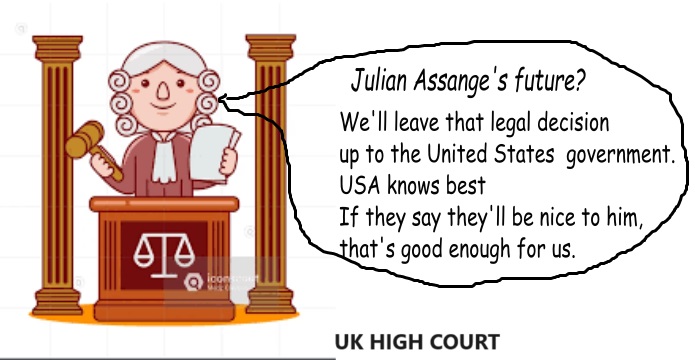
The WikiLeaks publisher could be extradited if the US gives “satisfactory assurances” of rights and no death penalty.
By Marjorie Cohn , TRUTHOUT 29 Mar 24, https://truthout.org/articles/uk-gives-biden-opportunity-to-dodge-assange-appeal-by-assuring-his-rights/
WikiLeaks publisher Julian Assange is closer than ever to being extradited to the United States for trial on 17 counts under the Espionage Act and one count of conspiracy to commit computer intrusion over WikiLeaks’s 2010-2011 revelation of evidence of U.S. war crimes in Iraq, Afghanistan and Guantánamo Bay. He faces 175 years in prison.
“This is a signal to all of you that if you expose the interests that are driving war they will come after you, they will put you in prison and they will try to kill you,” said Stella Assange, Julian’s wife, of his prosecution.
On March 26, the United Kingdom Divisional Court denied Assange the opportunity to make most of his appellate arguments. But the two-judge panel of Justice Jeremy Johnson and Dame Victoria Sharp left open the possibility that Assange could appeal on three grounds. They found that Assange “has a real prospect of success” on the following issues: If extradited to the U.S., he will be denied the right to freedom of expression, will suffer discrimination because he’s not a U.S. citizen and could be sentenced to death.
Rather than simply allowing Assange to argue the three issues on appeal, however, the panel gave the Biden administration an out. If the U.S. provides the court with “satisfactory assurances” that Assange won’t be denied any of these rights, his extradition to the U.S. can proceed without an appeals hearing.
Stella Assange called the decision “astounding,” adding, “The court’s recognized that Julian has been exposed to flagrant denial of his freedom of expression rights, that he is being discriminated against on the basis of his nationality and that he remains exposed to the death penalty.”
At an earlier stage in this case, the U.S. gave the U.K. High Court “assurances” that Assange would be treated humanely if extradited. That caused the court to reverse the magistrate judge’s denial of extradition (which was based on the likelihood of suicide if Assange is held in harsh conditions of confinement in the U.S.). The High Court accepted those assurances at face value in spite of the U.S.’s history of reneging on similar assurances.
The current ruling, however, requires U.S. assurances to be “satisfactory” and the defense will have an opportunity to challenge them at a hearing.
“Mr. Assange will not, therefore, be extradited immediately,” the panel wrote, implying that if they had denied his appeal outright, the U.K. authorities would put him on a plane to the U.S. forthwith. They gave the U.S. three weeks to come forward with satisfactory assurances.
If the U.S. fails to provide any assurances, Assange will be granted a hearing on the three grounds. If the U.S. does give assurances, a hearing to decide whether they are satisfactory will occur on May 20.
“The Biden administration should not offer assurances. They should drop this shameful case that should never have been brought,” Stella Assange said.
These are the grounds the High Court will review if the U.S. fails to provide “satisfactory assurances”:
1. Extradition Would Violate Freedom of Expression Guaranteed by Article 10 of European Convention on Human Rights
Assange would argue at trial that his actions were protected by the First Amendment to the U.S. Constitution. “He contends that if he is given First Amendment rights, the prosecution will be stopped. The First Amendment is therefore of central importance to his defence,” the panel concluded.
The First Amendment provides “strong protection” to freedom of expression, similar to that provided by Article 10 of the European Convention on Human Rights, the panel noted. Article 10 (1) of the convention says, “Everyone has the right to freedom of expression. This right shall include freedom to hold opinions and to receive and impart information and ideas without interference by public authority and regardless of frontiers.”
Gordon Kromberg, assistant U.S. attorney in the Eastern District of Virginia, where Assange’s trial would be held, said the prosecution might argue at trial that “foreign nationals are not entitled to protections under the First Amendment,” the panel noted. In 2017, then-CIA Director Mike Pompeo said that Assange “has no First Amendment freedoms” because “he is not a U.S. citizen.”
In addition, the U.S. Supreme Court ruled in the 2020 case of Agency for International Development v. Alliance for Open Society International that “it is long settled as a matter of American constitutional law that foreign citizens outside United States territory do not possess rights under the US Constitution.”
The panel wrote that if Assange “is not permitted to rely on the First Amendment, then it is arguable that his extradition would be incompatible with article 10 of the Convention.”
But even if the U.S. Department of Justice prosecutors give “satisfactory assurances” that Assange’s First Amendment rights would be protected, that is no guarantee. Prosecutors are part of the executive branch, which cannot bind the judicial branch due to the constitutional doctrine of separation of powers.
“The ruling reveals that the High Court does not understand the American system of government,” Stephen Rohde, who practiced First Amendment law for almost 50 years and writes extensively about the Assange case, told Truthout. “It only has before it the executive branch of the U.S. government. Whatever ‘satisfactory assurances’ the Department of Justice may give the High Court, they are not binding on the judicial branch.”
Moreover, Rohde said, “The High Court is obligated to uphold Assange’s rights to ‘freedom of expression’ under Article 10 of the European Convention on Human Rights, which protects Assange even if the U.S. courts refuse to do so. The only way to do that is to deny extradition.”
2. The U.K. Extradition Act Forbids Discrimination Based on Nationality
Julian Assange is an Australian citizen who would be tried in the U.S. if the Biden administration’s pursuit of extradition is successful.
Section 81(b) of the U.K. Extradition Act says that extradition is barred for an individual who “might be prejudiced at his trial or punished, detained or restricted in his personal liberty by reason of his … nationality.”
Due to the centrality of the First Amendment to Assange’s defense, the panel noted, “If he is not permitted to rely on the First Amendment because of his status as a foreign national, he will thereby be prejudiced (potentially very greatly prejudiced) by reason of his nationality.”
3. Extradition Is Barred by Inadequate Death Penalty Protection Required by the Extradition Act
Section 94 of the U.K. Extradition Act says, “The Secretary of State must not order a person’s extradition … if he could be, will be or has been sentenced to death for the offence” in the receiving state. That limitation does not apply if a written “assurance” that is “adequate” says “that a sentence of death- (a) will not be imposed, or (b) will not be carried out (if imposed).”
None of the charges that Assange is currently facing carry the death penalty. But if extradited to the U.S., he could be charged with aiding and abetting treason or espionage, both of which are capital offenses.
Ben Watson KC, secretary of state for the Home Department, admitted that:
a.) The facts alleged against [Assange] could sustain a charge of aiding or abetting treason, or espionage.
b.) If [Assange] is extradited, there is nothing to prevent a charge of aiding or abetting treason, or a charge of espionage, from being added to the indictment.
c.) The death penalty is available on conviction for aiding or abetting treason, or espionage.
d.) There are no arrangements in place to prevent the imposition of the death penalty.
e.) The existing assurance does not explicitly prevent the imposition of the death.
The panel noted that when former President Donald Trump was asked about WikiLeaks publishing the leaked documents, he said, “I think it was disgraceful…. I think there should be like a death penalty or something.” If Trump is reelected, he may seek to ensure that his Justice Department adds capital charges to the indictment.
In concluding that Assange could raise this issue on appeal subject to “satisfactory assurances,” the panel cited “the potential, on the facts, for capital charges to be laid; the calls for the imposition of the death penalty by leading politicians and other public figures; the fact that the Treaty does not preclude extradition for death penalty charges, and the fact that the existing assurance does not explicitly cover the death penalty.”
Appeal Grounds Denied by Panel
Remaining grounds for appeal that Assange requested were denied by the panel. They include prosecution for a political offense, prosecution based on political opinion; violation of right to a fair trial; violation of right to life; and violation of right to be free from torture and inhuman or degrading treatment or punishment. In addition, since no publisher has ever been prosecuted under the Espionage Act for publishing government secrets, Assange could not have known it was a crime.
The panel also ruled that Assange could not introduce new evidence adduced after the magistrate judge’s ruling. This includes a Yahoo News report detailing the CIA’s plan to kidnap and kill Assange when he was living under a grant of asylum in the Ecuadorian Embassy in London.
If the U.S. offers “satisfactory assurances” and extradition is ordered, Assange could appeal to the European Court of Human Rights and raise these additional issues as well.
Meanwhile, there is a possibility that instead of filing “assurances,” the Biden administration will opt to avoid the political pitfalls of Assange’s extradition to the U.S. and offer a plea bargain to end the case.
Marjorie Cohn is professor emerita at Thomas Jefferson School of Law, former president of the National Lawyers Guild, and a member of the national advisory boards of Assange Defense and Veterans For Peace, and the bureau of the International Association of Democratic Lawyers. She is founding dean of the People’s Academy of International Law and the U.S. representative to the continental advisory council of the Association of American Jurists. Her books include Drones and Targeted Killing: Legal, Moral and Geopolitical Issues.
British nuclear site Sellafield to be prosecuted for cybersecurity failures

Alexander Martin, March 29th, 2024, https://therecord.media/sellafield-site-prosecution-nuclear-facility-cybersecurity
The United Kingdom’s independent nuclear safety regulator has announced that it will be prosecuting the company managing the Sellafield nuclear site over “alleged information technology security offenses during a four year period between 2019 and early 2023.”
It is not clear whether senior managers at the state-owned Sellafield Ltd. will face charges. Under the Nuclear Industries Security Regulations 2003, individuals convicted of an offense can face up to two years imprisonment.
“There is no suggestion that public safety has been compromised as a result of these issues,” the regulator announced on Thursday, adding that the decision to begin legal proceedings followed an investigation.
“Details of the first court hearing will be announced when available,” stated the ONR.
Sellafield had previously been the focus of enhanced regulatory attention over its cybersecurity failings, as the U.K. chief nuclear inspector’s annual report revealed last year. At the same time, EDF, the company operating several nuclear power plants in Britain, was placed under similar measures.
As set out in the U.K.’s civil nuclear cybersecurity strategy, the National Cyber Security Centre (NCSC) threat assessment warns that ransomware “almost certainly represents the most likely disruptive threat.”
A ransomware attack on the IT systems used by a nuclear power plant could disrupt its operations, although the industrial systems are designed with multiple failsafes to prevent a radiological accident.
Sellafield’s nuclear reactor was closed in 2003, but the sprawling complex remains the largest nuclear site in Europe, with the ONR describing it as “one of the most complex and hazardous nuclear sites in the world.”
It houses more plutonium — in particular the isotopes created as a byproduct of nuclear reactor operations — than any other location on the planet, alongside a range of facilities for nuclear decommissioning, and waste processing and storage.
It was the location of the country’s worst-ever nuclear accident in 1957, when a reactor caught fire leading to radioactive material spreading in the atmosphere across Britain and Europe.
Cyberattacks targeting the operational technology (OT) systems at power plants are rare, but not unheard of — with the Triton malware discovered in Saudi Arabia in 2017 among the best known and most concerning examples.
It is not known whether the suspected Russian actors behind that attack could have engineered a method to overcome the failsafe mechanisms preventing an explosion.
According to the British government’s National Risk Register, a cyberattack on the computer systems controlling a nuclear reactor could potentially require a controlled shutdown as a protective measure, although there is not a major concern about them causing any radiological discharge.
As Sellafield no longer has an operational nuclear reactor, it is not clear what damage a cyber incident at the facility could cause.
The Nuclear Explosion That Makes US Aid to Israel Illegal
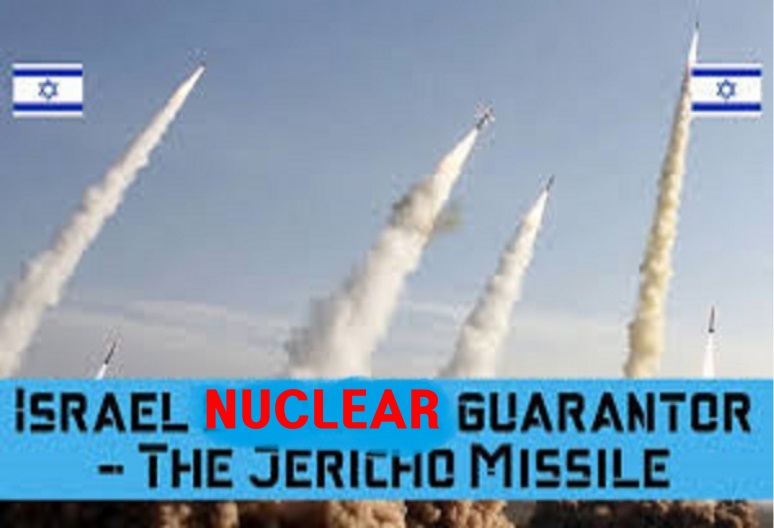
President Carter noted in his White House dairy at the time, “We have a growing belief among our scientists that the Israelis did indeed conduct a nuclear test explosion in the ocean near the southern end of Africa.”
Under US law, Israel must be banned from receiving its annual package of billions of dollars and arsenal of bombs.
Americans are being deliberately lied to by their own government as to Israel’s vast and deadly nuclear stockpile, largely built with nuclear materials stolen from the United States.
At the same time that US administrations were failing to enforce the ban on nuclear weapons testing by Israel, they also deliberately engaged in a campaign of censorship, lies, and disinformation to hide the truth from the American public
Israel’s nuclear program has been in violation of international law for decades, rendering it ineligible for American assistance.
JAMES BAMFORD, 1 April 24 https://www.thenation.com/article/world/israel-nuclear-weapons/
The researchers were startled as they looked up and saw the coal-black sky suddenly turn into a brilliant, multicolored aurora. As geophysicists with Tokyo’s Earthquake Research Institute, they were wintering over at an isolated ice station near Antarctica’s Queen Maud Land, a place where the temperature has dropped to as low as minus-50 degrees Fahrenheit. At about the same time, half the earth away in Puerto Rico, the giant 1,000-foot Arecibo radio telescope picked up an unusual disturbance. An odd and powerful electromagnetic ripple appeared on the lower surface of the ionosphere. And 1,200 miles to the north on the Atlantic coast of Florida, in a secret US government lab, long thin styluses like a spider’s legs began swinging back and forth tracing two hump-shaped images on a rolling sheet of graph paper.
The computer’s action was triggered by a signal from a satellite in the frigid blackness of deep space, 67,000 miles above Earth. Shaped like a giant, 26-sided Christmas tree ornament and hanging weightlessly in the empty void, VELA 6911 was one of a series of satellites designed to act as America’s sentinels in space, watching for signs of nuclear detonations on any part of the planet. And in the early morning of September 22, 1979, at 00:52:43 UTC, VELA 6911’s sensitive instruments recorded what appeared to be a very bright flash, followed quickly by a second. They were the classic indicators of a powerful nuclear explosion. Somewhere down below, as close as someone can come to terra incognita, a rogue country had set off a nuclear bomb. A rogue country that was hoping not to get caught. It was the first and only time in history that a clandestine nuclear blast has taken place. And based on its analysis, US intelligence agencies concluded that the rogue country was Israel.
Now, 45 years later, that explosion could play a significant role in bringing an end to Israel’s genocidal assault on Gaza by using American lawfare to halt Israeli warfare—finally enforcing US laws that would cut off all aid, including the billions and billions of dollars and the tons and tons of weapons Israel now receives. For decades, these laws, enacted by Congress to halt harmful and destructive actions by rogue actors, have been deliberately ignored with regard to Israel. Clearly, they must now be enforced.
Just this week, Francesca Albanese, the UN special rapporteur on human rights in the occupied Palestinian territories, issued a report titled, “Anatomy of a Genocide.” It declared that “there are reasonable grounds to believe that the threshold indicating the commission of the crime of genocide against Palestinians as a group in Gaza has been met.” A few days earlier, the Office of the UN High Commissioner for Human Rights had warned that “any transfer of weapons or ammunition to Israel” could violate international humanitarian law. This week, a Gallup poll indicated that most Americans disapprove of Israel’s war in Gaza as well as of sending them military aid to fight it.
Hours after the sky lit up from the blast, confirmation that it was a nuclear explosion came from another US government facility, this one on remote Ascension Island. A bleak and rugged volcanic speck in the middle of the South Atlantic Ocean, it lies near the equator between Africa and South America and is one of the most secret places on the planet. No one is allowed on the island without the approval of the US and British governments. In addition to a massive British eavesdropping base that targets countries on both continents, the island is also home to an American facility that monitors all undersea activity throughout the Atlantic. And because, at a certain depth, hydroacoustic signals travel through the water at about 5,000 feet per second, the sound of the massive blast was detected about 110 minutes after it took place.
In the netherworld of US intelligence, the rogue atomic explosion was shocking. The Jimmy Carter White House was quickly notified, and, following a series of highly classified meetings, spy agencies became unanimous in their view. “The Intelligence Community has high confidence, after intense technical scrutiny of satellite data, that a low yield atmospheric nuclear explosion occurred in the early morning hours of September 22,” said a Secret/Sensitive Department of State document.
Attention, as a result, turned immediately to Israel. Its nuclear facility in the desert at Dimona had long since ceased to be a secret, and the question wasn’t whether Israel could construct a nuclear weapon but how many it had already built. However, while constructing them secretly inside a building is one thing, secretly testing them out in the open without getting caught is much more difficult. Addressing the issue of “A Secret Test by Israel,” another CIA document outlined a number of reasons the state might have wanted to carry out a hidden nuclear test. Among them was “developing the fission trigger [an atom bomb] for a thermonuclear weapon [an hydrogen bomb]…. A low-yield nuclear test conducted clandestinely at sea could have enabled them to make basic measurements of the device’s performance.”
The report concluded, “Indeed, of all the countries which might have been responsible for the 22 September event, Israel would probably have been the only one for which a clandestine approach would have been virtually its only option.” And President Carter noted in his White House dairy at the time, “We have a growing belief among our scientists that the Israelis did indeed conduct a nuclear test explosion in the ocean near the southern end of Africa.”
The VELA satellite system was designed in particular to watch for rogue tests by nuclear pariah states like Israel, one of the very few countries that had refused to sign both the 1970 Nuclear Non-Proliferation Treaty and the 1975 Biological Weapons Convention, in spite of the fact that it had an illegal hidden arsenal of nuclear weapons and a secret biological weapons program. The problem for Israel—and a key reason for the secrecy involving the tests—was the Glenn Amendment to the US Arms Export Control Act. Passed by Congress in 1977, the amendment aimed particularly at the nuclear pariah states. It mandated an end to arms assistance, and an automatic application of extensive US sanctions, if the president determined that any state (other than the nuclear states authorized by the Nuclear Non-Proliferation Treaty) detonated a nuclear explosive after 1977. The nuclear test was also a clear violation of the 1963 Limited Test Ban Treaty, to which Israel was a party.
Under US law, Israel must be banned from receiving its annual package of billions of dollars and arsenal of bombs. In a 2016 Haaretz column, Victor Gilinsky, a physicist and former commissioner of the US Nuclear Regulatory Commission, laid out the penalties: “The sanctions for detonating a nuclear explosion are tough: termination of assistance under the Foreign Assistance Act, termination of sales of defense equipment and military financing, prohibition of loans from US banks, and more. In other words, if the U.S. government were to conclude Israel detonated a nuclear explosion after 1977, the law, unless waived, would effectively end all US aid to Israel.” Newell Highsmith, who spent three decades with the State Department and was responsible for legal issues related to nonproliferation, agrees. “Glenn Amendment sanctions for detonation or receipt of a nuclear explosive device have been viewed as a ‘death sentence’ because of the breadth of sanctions and because there is no presidential waiver,” he wrote last year for the Carnegie Endowment for International Peace.
In addition to the violation of the Glenn Amendment, Israel is also in violation of the Symington Amendment, which has similar penalties for any country that delivers nuclear materials and technology to another country. Israel had a long history of friendship and cooperation with apartheid South Africa, and in addition to supplying millions of dollars worth of weapons to help violently suppress the country’s Black majority population, it also provided nuclear weapons materials and offered to sell the racist regime nuclear warheads to keep it in power. In return, Israel received uranium from South Africa to develop its weapons.
For decades, US presidents and members of Congress have willfully turned a blind eye to Israel’s extensive violations of American laws. Earlier this month, Maryland Democratic Senator Chris Van Hollen and seven other senators, including Bernie Sanders of Vermont and Jeff Merkley of Oregon, sent a strong letter to President Joe Biden. It urged him to enforce section 6201 of the Foreign Assistance Act by requiring Israel to stop restricting humanitarian aid access to Gaza or forfeit military aid from the US. The law prohibits the sale and transfer of military weapons to any nation that restricts the delivery of US aid, precisely what Israel is doing in its deliberate war of starvation against Palestinian civilians in Gaza. “We need the president and the Biden administration to push harder and to use all the levers of US policy to ensure people don’t die of starvation,” Van Hollen told The Guardian.
At the same time that US administrations were failing to enforce the ban on nuclear weapons testing by Israel, they also deliberately engaged in a campaign of censorship, lies, and disinformation to hide the truth from the American public. The Clinton White House even promulgated a regulation that threatens past and present government employees with harsh actions, including firing, if they publicly acknowledge that Israel has nuclear weapons. “All US government employees are forced to pretend they know nothing about Israeli nuclear weapons,” former NRC commissioner Gilinsky wrote in the Bulletin of the Atomic Scientists. “Since everyone knows it’s not true, the pretense hobbles America’s policy on restraining the spread of nuclear weapons in the Middle East.”
Because of this official gag order, Americans are deliberately kept in the dark regarding the dangerousness of Israel’s illegal stockpile of nuclear weapons—weapons that have never been subject to international inspection and are therefore of questionable safety. And then there is the problem of that secret cache of nuclear weapons being controlled by a number of top Israeli officials whose extreme positions would sanction their use. Last November, Israeli Minister Amichai Eliyahu said one of Israel’s options in the war is to drop a nuclear bomb on Gaza. “That’s one way,” he said. Another Israeli official, Revital “Tally” Gotliv, urged her government to use “everything in its arsenal,” including “doomsday” weapons, against Hamas. “Who would have imagined that, just as we have been worrying about Pakistani weapons falling into the hands of Islamic fanatics, we would come to the point where we have to fear Israel’s nuclear weapons falling into the hands of Israeli fanatics?” said Gilinsky.
With hundreds of drone attacks in the region and missiles flying back and forth, there is also the danger of one of them deliberately or accidentally hitting Israel’s Dimona nuclear weapons plant and setting off a nuclear catastrophe. Last October, according to Israeli reports, “Incoming rocket sirens are sounding in the Southern Negev region, close to the southern city of Dimona.” Adding to the danger is more than half a century’s worth of volatile nuclear waste, numbering hundreds of tons, in shallow trenches at the nuclear weapons complex—material that, unless carefully disposed of, could turn Dimona into another Chernobyl.
Americans are being deliberately lied to by their own government as to Israel’s vast and deadly nuclear stockpile, largely built with nuclear materials stolen from the United States. For those on Capitol Hill and in the White House, the incentive for keeping Israel’s secret—and thus allowing it to avoid US laws—is money and power. Millions in campaign donations from wealthy pro-Israel supporters and PACs, and power from lobbies like AIPAC. In 1979, rather than take any actions against Israel, President Carter, like those in the White House before and after him, did nothing. Carter has acknowledged this in years since, writing that the “reluctance to criticize any policies of the Israeli government is because of the extraordinary lobbying efforts” of AIPAC.
The strength of AIPAC is something CNN’s Wolf Blitzer knows a great deal about. Before his gig with cable news, he was a top propagandist for AIPAC. There is, he noted, “a widely held attitude among Israeli officials that Israel can get away with the most outrageous things. There is a notion among many Israelis that their American counterparts are not too bright, that they can be ‘handled.’”
Vermont Senator Bernie Sanders apparently agrees, having repeatedly warned that Israel is violating both international and US laws. “To pretend that Israel is not violating international law or interfering with US humanitarian aid is absurd on its face,” he said this week. “The State Department’s position makes a mockery of US law and assurances provided to Congress.” Nevertheless, he concluded that “relatively few Democrats are prepared to pull the trigger and say, ‘You know what, hey, Mr. Netanyahu. You continue that and you’re not getting another nickel in American aid.’ Why’s that so? I guess it has a lot to do with AIPAC.”
Sanders then pointed his finger at the White House. “And it’s a lot to do with the president,” he said. Indeed, Joe Biden, during his time in the Senate, was the number-one recipient in Congress of pro-Israel millions—which apparently put him at the top of Israel’s list of “not-too-bright American politicians” that can be “handled” with bags of cash. While vice president in 2011, Biden gave an address to a group of fundraisers and supporters of the Yeshiva Beth Yehuda school in Detroit. “I’ve raised more money from AIPAC than some of you have,” he said to applause. “You think I’m kidding, don’t you,” he added. “I’m not.”
For the White House and Congress, it’s time to rip off the gag, stop being “handled,” reject the cash, and enforce the law with Israel—including the Glenn and Symington amendments. If its leaders want to secretly explode nuclear weapons, sell nuclear materials to racist countries, violate treaties, commit war crimes, and engage in ethnic genocide, America’s billions, bombs, and backing should not be making it possible.
Nuclear waste clean-up company to be prosecuted over alleged cyber blunders
Sellafield Ltd accused of lax IT security at Europe’s largest nuclear facility
Jonathan Leake, 28 March 2024 , https://www.telegraph.co.uk/business/2024/03/28/sellafield-nuclear-waste-prosecuted-cybersecurity/
A state-owned company responsible for cleaning up decades of nuclear waste at the Sellafield site in Cumbria is being prosecuted over alleged cybersecurity blunders.
It follows an investigation prompted by fears that the business’s digital defences were breached by hackers acting for hostile states such as Russia and China.
Sellafield is Europe’s largest nuclear facility, serving as a testing ground and waste dump since 1947. It houses a massive range of highly radioactive wastes, including 140 tonnes of plutonium – a key ingredient for nuclear weapons.
The Office for Nuclear Regulation (ONR) has told Sellafield Ltd, the business tasked with clean-up, that it will be prosecuted under the Nuclear Industries Security Regulations 2003.
The charges relate to alleged information technology security offences during a four-year period between 2019 and early 2023.
The announcement coincides with reports today that Richard Meal, who is chief information security officer at the Cumbrian site, is to leave later this year.
It follows the departure of Mark Neate, the director responsible for safety and security, who announced in January that he intended to quit in a move that had been planned for some time.
Sellafield has denied claims the site had suffered serious security breaches and the ONR has supported this. The new charges are thought to relate to alleged failures in compliance – meaning they are more about lax security than actual breaches.
An ONR spokesman said there was no suggestion that public safety had been compromised. Details of the first court hearing will be announced when available.
Sellafield Ltd is owned by the Nuclear Decommissioning Authority, a quango overseen by the Department for Energy Security and Net Zero, which is tasked with cleaning 17 decaying nuclear sites across the UK. Sellafield is the most expensive, costing taxpayers £2.5bn last year.
Some government estimates suggest the total cost of the clean-up will reach £263bn, with Sellafield accounting for the largest portion. The site employs 11,000 people and comprises more than 1,000 buildings, many not designed to house the radioactive material now stored in them.
Sellafield is so expensive that the Office for Budget Responsibility, which monitors threats to the UK Government’s finances, has warned that it and other legacy sites pose a “material source of fiscal risk” to the country.
The ONR investigation is in addition to another by the National Audit Office, Britain’s public spending watchdog, which is probing risks and costs at Sellafield and is due to report this autumn.
A Sellafield spokesman said: “The ONR’s Civil Nuclear Security and Safeguards (CNSS) has notified us of its intention to prosecute the company relating to alleged past nuclear industry security regulations compliance. As the issue is now the subject of active court proceedings, we are unable to comment further.”
It follows separate reports by Radioactive Waste Management Ltd (RWM), another government-owned company, that hackers unsuccessfully attempted to breach its defences using LinkedIn.
RWM, now part of Nuclear Waste Services, is the company tasked with designing the long-awaited Geological Disposal Facility (GDF) project, a vast underground nuclear waste store which would become the final destination for toxic waste now stored at Sellafield.
Nuclear Waste Services is currently seeking a site that would be geologically stable for the millions of years the waste would need to become safe – and which would be acceptable to the local communities hosting it.
Two sites remain in the running, one off the coast of Cumbria and the other off the coast of Lincolnshire, with the choice of site still surrounded in secrecy.
The development is expected to cost taxpayers up to £53bn.
A report filed at Companies House by Nuclear Waste Services said the attempted hacks had failed.
Starvation in Gaza: The World Court’s Latest Intervention

March 30, 2024, by: Dr Binoy Kampmark, https://theaimn.com/starvation-in-gaza-the-world-courts-latest-intervention/
Rarely has the International Court of Justice been so constantly exercised by one topic during a short span of time. On January 26, the World Court, considering a filing made the previous December by South Africa, accepted Pretoria’s argument that the Convention on the Prevention and Punishment of the Crime of Genocide was applicable to the conflict in so far as Israel was bound to observe it in its military operations against Hamas in Gaza. (The judges will determine, in due course, whether Israel’s actions in Gaza meet the genocidal threshold.) By 15-2, the judges noted that “the catastrophic humanitarian situation in the Gaza Strip is at serious risk of deteriorating further before the Court renders its final judgment.”
At that point 26,000 Palestinians had perished, much of Gaza pummelled into oblivion, and 85% of its 2.3 million residents expelled from their homes. Measures were therefore required to prevent “real and imminent risk that irreparable prejudice will be caused to the rights found by the Court to be plausible, before it gives its final decision.”
Israel was duly ordered to take all possible measures to prevent the commission of acts under Article II of the Genocide Convention; prevent and punish “the direct and public incitement to genocide” against the Gaza populace; permit basic services and humanitarian assistance to the Gaza Strip; ensure the preservation of, and prevent destruction of, evidence related to acts committed against Gaza’s Palestinians within Articles II and III of the Convention; and report to the ICJ on how Israel was abiding by such provisional measures within a month. The balance sheet on that score has been uneven at best.
Since then, the slaughter has continued, with the Palestinian death toll now standing at 32,300. The Israelis have refused to open more land crossings into Gaza, and continue to hamper aid going into the strip, even as they accuse aid agencies and providers of being tardy and dishonest. Their surly defiance of the United States has seen air drops of uneven, negligible success (the use of air to deliver aid has always been a perilous exercise). When executed, these have even been lethal to the unsuspecting recipients, with reported cases of parachutes failing to open.
On March 25, the UN Security Council, after three previous failed attempts, passed Resolution 2728, thereby calling for an immediate ceasefire for the month of Ramadan “leading to a lasting sustainable” halt to hostilities, the “immediate and unconditional release of all hostages”, “ensuring humanitarian access to address their medical and other humanitarian needs” and “demands that the parties comply with their obligations under international law in relation to all persons they detain.”
Emphasis was also placed on “the urgent need to expand the flow of humanitarian assistance to and reinforce the protection of civilians in the entire Gaza Strip.” The resolution further demands that all barriers regarding the provision of humanitarian assistance, in accordance with international humanitarian law be lifted.
Since January, South Africa has been relentless in its efforts to curb Israel’s Gaza enterprise in The Hague. It called upon the ICJ on February 14, referring to “the developing circumstances in Rafah”, to urgently exercise powers under Article 75 of the Rules of Court. Israel responded on February 15. The next day, the ICJ’s Registrar transmitted to the parties the view of the Court that the “perilous situation” in the Gaza Strip, but notably in Rafah, “demands immediate and effective implementation of the provisional measures indicated by the Court in its Order of 26 January 2024.”
Throughout the following month, more legal jostling and communication took place, with Pretoria requesting on March 6 that the ICJ “indicate further provisional measures and/or to modify” those ordered on January 26.
The application was prompted by the “horrific deaths from starvation of Palestinian children, including babies, brought about by Israel’s deliberate acts and omissions … including Israel’s concerted attempts since 26 January 2024 to ensure the defunding of [the United Nations Relief and Works Agency (UNRWA) and Israel’s attacks on starving Palestinians seeking to access what extremely limited humanitarian assistance Israel permits into Northern Gaza, in particular.”
Israel responded on March 15 to the South African communication, rejecting the claims of starvation arising from deliberate acts and omissions
“in the strongest terms.” The logic of the sketchy rebuttal from Israel was that matters had not materially altered since January 26 to warrant a reconsideration: “the difficult and tragic situation in the Gaza Strip in the last weeks could not be said to materially change the considerations upon which the Court based its original decision concerning provisional measures.”
On March 28, the Court issued a unanimous order modifying the January interim order. Combing through the ghoulish evidence, the judges noted an updated report from March 18 on food insecurity from the Integrated Food Security Phase Classification Global Initiative (IPC Global Initiative) stating that “conditions necessary to prevent Famine have not been met and the latest evidence confirms that Famine is imminent in the northern governorates and projected to occur anytime between mid-March and May 2024.” The UN Children’s Fund had also reported that 31 per cent of children under 2 years of age in the northern Gaza Strip were enduring conditions of “acute malnutrition”.
In the face of this Himalaya of devastation, the Court could only observe “that Palestinians in Gaza are no longer facing a risk of famine, as noted in the Order of 26 January 2024, but that famine is setting in, with at least 31 people, including 27 children, having already died of malnutrition and dehydration.” There were “unprecedented levels of food insecurity experienced by Palestinians in the Gaza strip over recent weeks, as well as the increasing risks of epidemics.”
Such “grave” conditions granted the Court jurisdiction to modify the January 26 order which no longer fully addressed “the consequences arising from the changes in the situation.” In view of the “worsening conditions of life faced by Palestinians in Gaza, in particular the spread of famine and starvation”, Israel should take “all necessary and effective measures to ensure, without delay, in full cooperation with the United Nations, the unhindered provision at scale by all concerned of urgently needed basic services and humanitarian assistance.”
The list of what is needed is also enumerated: food, water, electricity, fuel, shelter, clothing, hygiene, sanitation requirements, and “medical supplies and medical care to Palestinians throughout Gaza, including by increasing the capacity and number of land crossing points and maintaining them open for as long as necessary.”
A less reported aspect of the March 28 order, passed by fifteen votes to one, was that Israel’s military refrain from committing “acts which constitute a violation of any rights of the Palestinians in Gaza as a protected group” under the Genocide Convention “including by preventing, through any action, the delivery of urgently needed humanitarian assistance.”
In this, the Court points to the possible, and increasingly plausible nexus, between starvation, famine and deprivation of necessaries as state policies with the intent to injure and kill members of a protected group. It is no doubt something that will weigh heavily on the minds of the judges as they continue mulling over the nature of the war in Gaza, which South Africa continues to insist is genocidal in scope and nature.
The Office for Nuclear Regulation (ONR) will prosecute Sellafield Ltd on charges of security offences
The Office for Nuclear Regulation (ONR) has notified Sellafield Ltd that
it will be prosecuted under the Nuclear Industries Security Regulations
2003. These charges relate to alleged information technology security
offences during a four year period between 2019 and early 2023. There is no
suggestion that public safety has been compromised as a result of these
issues. The decision to begin legal proceedings follows an investigation by
ONR, the UK’s independent nuclear regulator. Details of the first court
hearing will be announced when available. Given that some matters are now
subject to legal proceedings, we are unable to comment further.
ONR 28th March 2024
https://onr.org.uk/news/all-news/2024/03/onr-notifies-sellafield-ltd-of-intention-to-prosecute
1 This Month
29 Jan. Thursday 7-8 p.m. Webinar – World’s Largest Nuclear Station in Port Hope, ON?

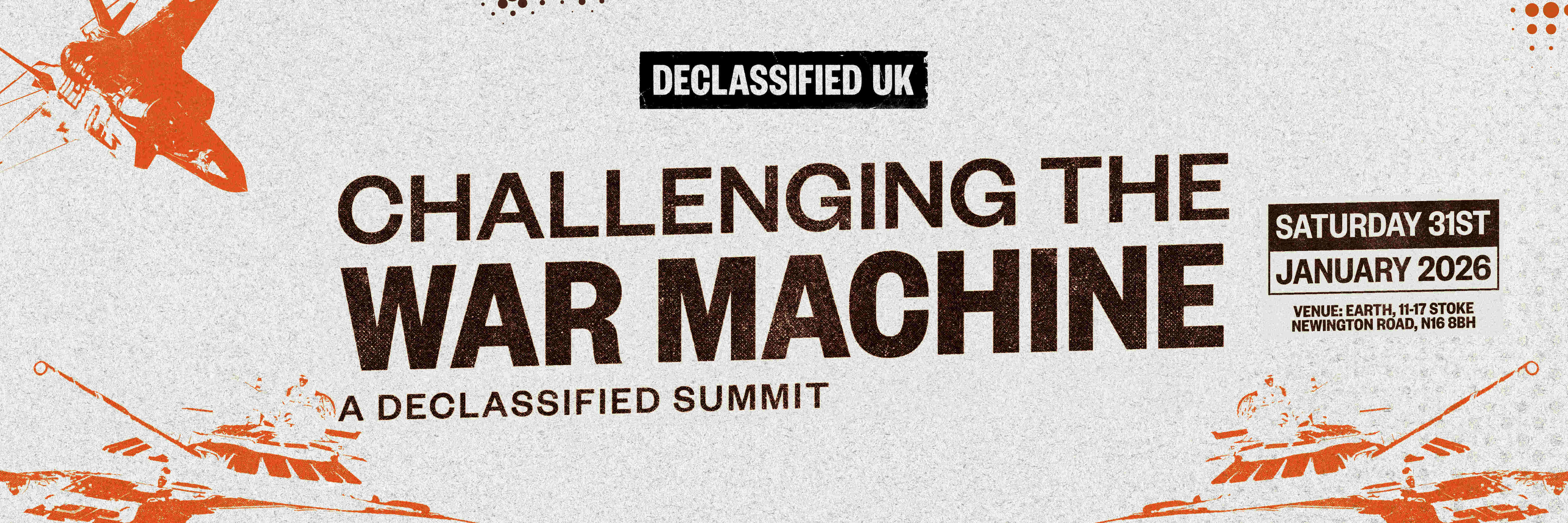
31st January – Challenging the War Machine – a DECLASSIFIED UK SUMMIT



Website of the Week
Now until to February 10, 2026 Radioactive waste storage in France: the debate is finally open! How to participate?
-
Archives
- January 2026 (227)
- December 2025 (358)
- November 2025 (359)
- October 2025 (377)
- September 2025 (258)
- August 2025 (319)
- July 2025 (230)
- June 2025 (348)
- May 2025 (261)
- April 2025 (305)
- March 2025 (319)
- February 2025 (234)
-
Categories
- 1
- 1 NUCLEAR ISSUES
- business and costs
- climate change
- culture and arts
- ENERGY
- environment
- health
- history
- indigenous issues
- Legal
- marketing of nuclear
- media
- opposition to nuclear
- PERSONAL STORIES
- politics
- politics international
- Religion and ethics
- safety
- secrets,lies and civil liberties
- spinbuster
- technology
- Uranium
- wastes
- weapons and war
- Women
- 2 WORLD
- ACTION
- AFRICA
- Atrocities
- AUSTRALIA
- Christina's notes
- Christina's themes
- culture and arts
- Events
- Fuk 2022
- Fuk 2023
- Fukushima 2017
- Fukushima 2018
- fukushima 2019
- Fukushima 2020
- Fukushima 2021
- general
- global warming
- Humour (God we need it)
- Nuclear
- RARE EARTHS
- Reference
- resources – print
- Resources -audiovicual
- Weekly Newsletter
- World
- World Nuclear
- YouTube
-
RSS
Entries RSS
Comments RSS
 nuclear-news