Western Shoshone land stolen for nuclear weapons tests and waste dump
Western Shoshone land stolen for nuclear weapons tests and waste dump, By Ian Zabarte Shoshone land was illegally seized by the U.S government, breaking a historic treaty, first for the atomic test site in Nevada, and then for the planned — but still canceled — Yucca Mountain high-level radioactive waste dump. Throughout, the Shoshone people have paid a terrible price.
To hide the impacts from nuclear weapons testing, Congress defined Shoshone Indian ponies as “wild horses.” There is no such thing as a wild horse. They are feral horses, but the Wild Horse and Burrow Acts of 1971 gave the Bureau of Land Management (BLM) the affirmative act to take Shoshone livestock while blaming the Shoshone ranchers for destruction of the range caused by nuclear weapons testing.
My livelihood was taken and the Shoshone economy destroyed by the BLM. On the land, radioactive fallout destroyed the delicate high desert flora and fauna, creating huge vulnerabilities where noxious and invasive plant species took hold.
Nuclear weapons testing at the Nevada National Security Site has left a dark legacy of radiation exposure to Americans downwind from the battlefield of the Cold War. Among the victims are the Shoshone people, who, by no fault of our own, were exposed to radiation in fallout from more than 924 nuclear tests.
“Yucca Mountain is a serpent…and if you don’t do the things you’re supposed to do the snake will release its poison.” Ian ZabarteToday, the media does not report Native American past exposure to radioactive fallout from US/UK secret nuclear testing and disproportionate burden of risk.
The Shoshone people cannot endure any increased burden of risk from any source including resumption of WMD testing by US/UK, plutonium disposal from the Savannah River Site, depleted uranium disposal, proposed high-level nuclear waste disposal at Yucca Mountain, coal ash uranium or fracking released radiation.
Nuclear testing is a violation of the peace treaty with the Shoshone, the Treaty of Ruby Valley, and the U.S. Constitution, Article 6 Section 2, the treaty supremacy clause. Nothing in the treaty contemplated the secret massacre of Shoshone people with radioactive poison from nuclear weapons testing within our own homelands. My tribe and family are the victims.
The enduring purpose of nuclear technology is the creation of weapons of mass destruction. Their tests within the Shoshone homelands are deliberate acts that destroy the Shoshone people. No Shoshone, not one person, should be sacrificed for the benefit of some Americans and the profit of the military industrial complex.
What the Shoshone people experience is a deliberate intent by the US to systematically dismantle the living life-ways of the Shoshone people for the benefit of the US and the profit of the nuclear industry. This meets the minimum threshold of genocide under both the UN Convention and the US enactments of the crime of genocide.
Nuclear weapons development in Shoshone homelands violates humanitarian law, human rights law and environmental law and is racist. Racism is a crime. It is called genocide, “a crime against humanity.”
To prove intent to commit genocide, we have only to look at the culture of secrecy of the military occupation of Shoshone homelands during and since the Cold War at the test site. The acts committed in nuclear weapons development and testing against the Shoshone people benefit other Americans. The Shoshone people suffer without relief or acknowledgement of our silent sacrifice. Secrecy is not transparent. Secrecy is not democratic and is unconstitutional when the acts are conducted in and upon the Shoshone land and people.
Nothing in the Nuclear Waste Policy Act of 1982, as amended in 1987, considered the fact of Shoshone ownership of the proposed Yucca Mountain high-level nuclear waste repository. Almost $15 billion was spent to characterize the site, giving it the label as, “the most studied piece of real estate in the world.” The Nuclear Regulatory Commission admitted in the licensing proceedings that the Department of Energy has not proven ownership.
Nevada took hundreds of millions of dollars for characterization studies from the federal government in grants equal to taxes from Shoshone property and gave nothing to the Shoshone. A clear case of taxation without representation to defraud the Shoshone people of our property interests.
What is needed now are hearings on and support for the extension and funding of the Radiation Exposure Compensation Act of 2019. The Shoshone people need DNA testing and funding for tribal community health education on radiation basics and information on appropriate protective behavior to mitigate radiation exposure.
The Shoshone people are committed to the enforcement of law in the service of justice and human dignity. That is human growth and development, not nuclear weapons.
Ian Zabarte is Principal Man for the Western Bands of the Shoshone Nation of Indians.
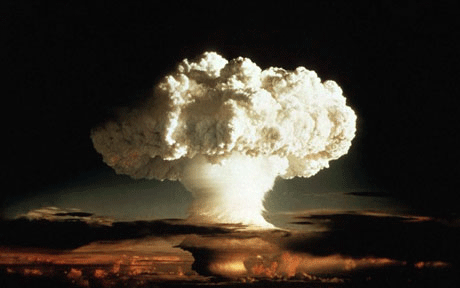
Nuclear bomb testing – the cruellest legacy of environmental injustice and racism
|
Nuclear testing legacy is ‘cruellest’ environmental injustice, warns rights expert,
https://news.un.org/en/story/2020/07/1068481 16 July 2020
Human RightsThe dangerous legacy of nuclear weapons testing continues to affect many communities, a leading rights expert said on Thursday, on the 75th anniversary of testing in the United States, that heralded the nuclear age.
In an appeal to governments worldwide to get rid of weapons of mass destruction, UN Special Rapporteur on toxics, Baskut Tuncak, said that the Trinity tests in New Mexico on 16 July 1945, were the prelude to “two horrific explosions suffered by (the) innocent people of Japan”, during the Second World War.
They were also followed by the detonation of hundreds of nuclear bombs over vulnerable communities in the Pacific, and the disposal of radioactive waste on lands and territories of indigenous peoples. Paradise lostThis had created a legacy of nuclear testing that “is one of the cruellest examples of environmental injustice witnessed” in “what should be a peaceful island paradise”, said Mr Tuncak, who reports to the Human Rights Council in Geneva. From 1946-58, 67 nuclear bombs were detonated on the Marshall Islands, he said, the equivalent of more than 1.5 “Hiroshima-sized explosions every day for 12 years”. Communities “have suffered unimaginably” from radioactive contamination and this continues today “with a legacy of contamination, illness and anguish”, the expert insisted.
Twin environmental disasters made matters worse, he added, referring to climate change-induced sea level rise and nuclear waste concentrated in a radioactive “tomb”. 200 tests in 30 yearsSimilarly, in French Polynesia, over 200 nuclear tests were conducted over a 30-year period from 1966 to 1996, subjecting inhabitants to associated health and environmental damage, the Special Rapporteur said. From Greenland to the indigenous territories of the United States, he warned that people continued to suffer from the nuclear testing era. Waste not“In recent decades, numerous Native American tribes received funding to store unwanted nuclear waste on their lands,” he said. “Those of Point Hope, Alaska, became recipients of radioactive soil and higher cancer rates that are believed to have been the foreseeable result. And the people of Greenland discovered radioactive waste left by the US military, unbeknownst to them as the ice continues to melt in the Arctic.” This discriminatory approach should be addressed by all States as part of the discussion on “systemic racism” and nuclear disarmament, Mr. Tuncak insisted. “Unaddressed, the dangers of radioactive contamination will persist for centuries, and so too will the harmful legacy of racism that surrounds this tragic chapter of humanity,” he added. |
|
Nuclear bomb testing – a form of racism and colonialism
Danielle Endres: Nuclear testing as a form of colonization, https://www.sltrib.com/opinion/commentary/2020/07/15/danielle-endres-nuclear/ By Danielle Endres ·16 July 20
At 5:29 a.m. on July 16, 1945, scientists in the Manhattan Project detonated the world’s first nuclear weapon in the desert homelands of the Mescalero Apache, a place now known as Alamogordo, New Mexico. As the detonation cloud mushroomed into the sky, the Trinity test ushered in a new era, the atomic age.
A global push for racial justice in the climate movement
A global push for racial justice in the climate movement For years, mainstream environmental movements around the globe have excluded people of color, who are disproportionately impacted by climate change. Today’s global Black Lives Matter protests have amplified calls for institutions of all kinds — including environmental groups — to challenge and dismantle chronic systemic racism., The World, June 30, 2020 By Anna Kusmer
Environmental sociologist Dorceta Taylor remembers being the only Black person in her environmental science class at Northeastern Illinois University in the early 1980s. When she asked her white professor why there weren’t more Black students, he quickly told her that it was “because Blacks are not interested in the environment,” she said.
This assumption ran counter to everything she knew. She had grown up in Jamaica, where people from all backgrounds were passionate about the environment and loved nature.
Taylor, until recently a professor of environmental racism at the University of Michigan, found that underrepresentation exists at environmental organizations across the United States. In 2014, just under 16% of people of color were represented in a survey of hundreds of organizations, compared to about 35% of the population, she said. In the early 1990s, only about 2% of the staff of environmental nongovernmental organizations were people of color.
In the UK, the environmental sector is one of the least diverse sectors of the economy.
Yet, people of color are disproportionately impacted by environmental degradation and climate change, and environmental organizations are being called to focus more than ever before on environmental justice.
In the past few weeks, big international green groups including Greenpeace and 350.org have responded with statements, videos and op-eds supporting Black Lives Matter and calling for racial justice.
Related: Black Lives Matter UK says climate change is racist
But environmental activist Suzanne Dhaliwal is skeptical this will translate into real inclusion, particularly in the UK, where she lives and works. Dhaliwal, who identifies as British Indian Canadian Sikh, grew up partly in Canada and spent much of her 20s working alongside big environmental nonprofits in the UK. ………
So, Dhaliwal started her own environmental nonprofit, UK Tar Sands Network, which works alongside Indigenous communities and organizations to campaign against UK companies investing in oil extraction in Alberta, Canada.
“Now, what I call for is direct funding of Black and Brown and Indigenous organizations and leadership training,” said Dhaliwal. “We need research money so that we can research new strategies.”
Other environmentalists are trying to change environmental organizations from within.
Samia Dumbuya just started a job with the European branch of international nonprofit Friends of the Earth, working on climate justice and energy issues. She lives in the UK.
As a Black person whose parents are refugees from Sierre Leone, talking about racial justice issues within the environmental movement is personal for her. She says she sees how climate change is affecting her parents’ home country with increasingly bad flooding and landslides. ………
Across the globe, the urban spaces that are overpoliced and lack public investment also have the worst air quality and contaminated drinking water. The environmental movement will grow stronger with more diverse representation, but also by making these connections, Taylor said.
“Environmentalists all over the country are really taking note that they need to think of the environment now as not just the trees and the birds and the flowers, but the human relationships that are in them — and how these are really threatening some people way more than they’re threatening others.” https://www.pri.org/stories/2020-06-30/global-push-racial-justice-climate-movement
No nuclear waste dump near Lake Huron: opposition of indigenous people, Saugeen Ojibway Nation, the deciding factor
The quest for a deep geologic repository for nuclear waste on the lip of Lake Huron in Ontario is dead.
The 15-plus-year-old effort by Ontario Power Generation to build the underground dump for low and intermediate nuclear waste from Ontario’s 20 reactors appeared to end in January, following the vote of the Saugeen Ojibway Nation against the repository. Eighty-six percent of the first nation voted against the dump, 1,058-170.
SON is made up of the Chippewas of Nawash Unceded First Nation and the Chippewas of Saugeen First Nation. Their territory includes the Bruce Peninsula and runs down the coast of Lake Huron past Goderich and along the shores of Georgian Bay to just beyond Collingwood. SON has roughly 4,500 members.
OPG officially terminated the project on May 27 in a letter to Jonathon Wilkerson, the Federal Minister of Environment and Climate Change, asking for the withdrawal of its application for a building license and ending the environmental impact assessment for the DRG.
“… OPG has informed the Canadian Nuclear Safety Commission that we do not intend to carry out the Project and have asked that the application for a Site Preparation and Construction License be withdrawn,” said Lise Morton, vice president of OPG’s Nuclear Waste Management Division. “Similarly, OPG requests the minister to cancel the environmental assessment for the Project.”
Wilkerson responded on June 15.
“I accept Ontario Power Generation’s request to withdraw the project from the federal environmental assessment process…,” said the minister.
Wilkerson also forwarded his decision to Rumina Velshi, president of the Canadian Nuclear Safety Commission……..
The long term safety of the project — located less than a half-mile from Lake Huron, one of the five Great Lakes that provide drinking water to at least 34 million people in two countries — was at the heart of the controversy. …..
The underground dump was designed to store 200,000 cubic meters of nuclear waste, some of which would remain toxic for at least 100,000 years, roughly 10 times longer than the Great Lakes have been in existence; some of it would remain lethal for more than a million years.
Depositing so much toxic waste on the edge of 20% of the world’s surface fresh water was dubbed as insanity by critics, who pointed to the possibility of the DGR being overtopped by fresh water tsunamis like the Great Lakes Hurricane of 1912, breached by seismic activity in the region, of which there has been a significant amount, threatened by rising lake levels due to climate change, or even targeted by terrorists.
Critics noted that all major underground repositories for nuclear waste to date have failed. https://www.voicenews.com/news/opg-ends-quest-for-nuclear-waste-dump-on-lake-huron/article_9c8334ac-bb07-11ea-8003-7fbee9888ced.html
The Shoshone people and nuclear bomb testing
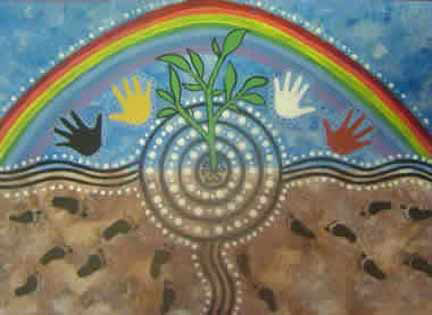 Nuclear tests and the Shoshone people, https://www.reviewjournal.com/opinion/nevada-views-nuclear-tests-and-the-shoshone-people-2063105/ By Ian Zabarte June 27, 2020 -REGARDING Gary Martin’s June 15 Review-Journal article, “Nuke test rumors spur Nevada lawmakers”: As a Shoshone, we always had horses. My grandfather always told me, “Stop kicking up dust.” Now I understand that it was because of the radioactive fallout.
To hide the impacts from nuclear weapons testing, Congress defined Shoshone Indian ponies as “wild horses.” There is no such thing as a wild horse. They are feral horses, but the Wild Horse and Burrow Acts of 1971 gave the Bureau of Land Management the affirmative act to take Shoshone livestock while blaming the Shoshone ranchers for destruction of the range caused by nuclear weapons testing. My livelihood was taken and the Shoshone economy destroyed by the BLM. On the land, radioactive fallout destroyed the delicate high desert flora and fauna, creating huge vulnerabilities where noxious and invasive plant species took hold.
Nuclear weapons testing at the Nevada National Security Site has left a dark legacy of radiation exposure to Americans downwind from the battlefield of the Cold War. Among the victims are the Shoshone people, whom, by no fault of our own, were exposed to radiation in fallout from more than 924 nuclear tests. The Shoshone people never consented to the nuclear weapons testing.
Nuclear testing is a violation of the peace treaty with the Shoshone, the Treaty of Ruby Valley, and the U.S. Constitution, Article 6 Section 2, the treaty supremacy clause. Nothing in the treaty contemplated the secret massacre of Shoshone people with radioactive poison from nuclear weapons testing within our own homelands. My tribe and family are the victims.
The enduring purpose of nuclear technology is the creation of weapons of mass destruction. Their tests within the Shoshone homelands are deliberate acts that destroy the Shoshone people. No Shoshone, not one person, should be sacrificed for the benefit of some Americans and the profit of the military industrial complex.
Nuclear weapons development in Shoshone homelands violates humanitarian law, human rights law and environmental law and is racist. Racism is a crime. It is called genocide, “a crime against humanity.”
To prove intent to commit genocide, we have only to look at the culture of secrecy of the military occupation of Shoshone homelands during and since the Cold War at the test site. The acts committed in nuclear weapons development and testing against the Shoshone people benefit other Americans. The Shoshone people suffer without relief or acknowledgement of our silent sacrifice. Secrecy is not transparent. Secrecy is not democratic and is unconstitutional when the acts are conducted in and upon the Shoshone land and people.
Nevada took hundreds of millions of dollars for characterization studies from the federal government in grants equal to taxes from Shoshone property and gave nothing to the Shoshone. A clear case of taxation without representation to defraud the Shoshone people of our property interests.
What is needed now are hearings on and support for the extension and funding of the Radiation Exposure Compensation Act of 2019. The Shoshone people need DNA testing and funding for tribal community health education on radiation basics and information on appropriate protective behavior to mitigate radiation exposure.
The Shoshone people are committed to the enforcement of law in the service of justice and human dignity. That is human growth and development, not nuclear weapons.
Ian Zabarte is Principal Man for the Western Bands of the Shoshone Nation of Indians.
Opposition by Saugeen-Ojibway nation brings end to plan for nuclear waste near Lake Huron
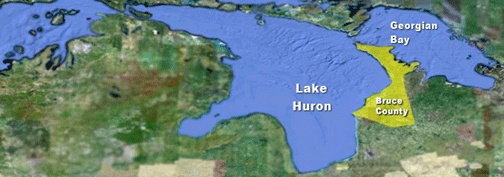
Ontario Power Generation Formally Ends Effort To Place Nuclear Storage Site Near Lake Huron, WKAR
In letters sent in May, Ontario Power Generation officially withdrew from an environmental assessment of the project and an application for a construction license. Those withdrawals were first reported in the Detroit Free Press.
Fred Kuntz is with OPG. He said after fifteen years the company decided to look elsewhere to build a storage facility.
“You need three things in Ontario for a project like this to proceed. You need good geology, which we had, you need municipal support, which we had, and you need indigenous support. Without that, we couldn’t proceed with the project.”
Kuntz said the company will begin looking for alternate locations. …….
In letters sent in May, Ontario Power Generation officially withdrew from an environmental assessment of the project and an application for a construction license. Those withdrawals were first reported in the Detroit Free Press.
Fred Kuntz is with OPG. He said after fifteen years the company decided to look elsewhere to build a storage facility.
“You need three things in Ontario for a project like this to proceed. You need good geology, which we had, you need municipal support, which we had, and you need indigenous support. Without that, we couldn’t proceed with the project.”
Kuntz said the company will begin looking for alternate locations. …..A second, high-level nuclear storage facility could still be built near Lake Huron. The Canadian Nuclear Waste Management Organization is considering two possible sites for a facility, one of which is near the lake.
A spokesperson for the organization said the Saugeen-Ojibway vote was not a referendum on their plan
The organization is expected to select a site for the facility by 2023. https://www.wkar.org/post/ontario-power-generation-formally-ends-effort-place-nuclear-storage-site-near-lake-huron#stream/0
“Get the Hell Off”: The Indigenous Fight to Stop a Uranium Mine in the Black Hills

An unidentified member of AIM Native American woman sits with her rifle at ready on steps of building in Wounded Knee, South Dakota, March 2, 1973. Indians still have control of town having seized it on Tuesday. Eleven hostages they had taken were finally released. (AP Photo/Jim Mone)
Get the Hell Off”: The Indigenous Fight to Stop a Uranium Mine in the Black Hills
Can the Lakota win a “paper war” to save their sacred sites?
Mother Jones, BY DELILAH FRIEDLER; PHOTOS BY DANNY WILCOX FRAZIER, MARCH/APRIL 2020 ISSUE, Regina Brave remembers the moment the first viral picture of her was taken. It was 1973, and 32-year-old Brave had taken up arms in a standoff between federal marshals and militant Indigenous activists in Wounded Knee, South Dakota, on the Pine Ridge Indian Reservation. Brave had been assigned to guard a bunker on the front lines and was holding a rifle when a reporter leaped from a car to snap her photo. She remembers thinking that an image of an armed woman would never make the papers—“It was a man’s world,” she says—but the bespectacled Brave, in a peacoat with hair pulled back, was on front pages across the country the following Sunday……..
In October, Brave spoke at Magpie Buffalo Organizing’s inaugural “No Uranium in Treaty Territory” summit, which offered a crash course on tribal sovereignty. The activists are closely tracking the various Keystone XL permits, which the Rosebud Sioux Tribe is challenging in court as a treaty violation. As the threat of both uranium and gold mining looms, there’s talk of occupying land in the Black Hills, as the American Indian Movement did in 1981.
The lingering horror of the nuclear bomb tests at Maralinga, South Australia
|
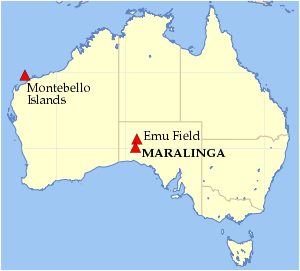
Maralinga is 54 kilometres north-west of Ooldea, in South Australia’s remote Great Victoria Desert. Between 1956 and 1963 the British detonated seven atomic bombs at the site; one was twice the size of the bomb dropped on Hiroshima. There were also the so-called “minor trials” where officials deliberately set fire to or blew up plutonium with TNT — just to see what would happen. One location called “Kuli” is still off-limits today, because it’s been impossible to clean up. I went out to the old bomb sites with a group of Maralinga Tjarutja people, who refer to the land around ground zero as “Mamu Pulka”, Pitjantjatjara for “Big Evil”. “My dad passed away with leukaemia. We don’t know if it was from here, but a lot of the time he worked around here,” says Jeremy Lebois, chairperson of the Maralinga Tjarutja council. Thirty per cent of the British and Australian servicemen exposed to the blasts also died of cancer — though the McClelland royal commission of 1984 was unable to conclude that each case was specifically caused by the tests. It’s not until you stand at ground zero that you fully realise the hideous power of these bombs. Even after more than 60 years, the vegetation is cleared in a perfect circle with a one kilometre radius. “The ground underneath is still sterile, so when the plants get down a certain distance, they die,” explains Robin Matthews, who guided me around the site. The steel and concrete towers used to explode the bombs were instantly vaporised. The red desert sand was melted into green glass that still litters the site. Years ago it would have been dangerous to visit the area, but now the radiation is only three times normal — no more than what you get flying in a plane. The Line of FireAustralia was not the first choice for the British, but they were knocked back by both the US and Canada. Robert Menzies, Australia’s prime minister at the time, said yes to the tests without even taking the decision to cabinet first. David Lowe, chair of contemporary history at Deakin University, thinks Australia was hoping to become a nuclear power itself by sharing British technology, or at least to station British nuclear weapons on Australian soil. “In that period many leaders in the Western world genuinely thought there was a real risk of a third world war, which would be nuclear,” he says. The bombs were tested on the Montebello Islands, at Emu Field and at Maralinga. At Woomera in the South Australian desert, they tested the missiles that could carry them. The Blue Streak rocket was developed and test-fired right across the middle of Australia, from Woomera all the way to the Indian Ocean, just south of Broome. This is known as “The Line of Fire” The Line of Fire from Woomera to Broome is, funnily enough, the same distance from London to Moscow,” Mr Matthews says. Just as the Maralinga Tjarutja people were pushed off their land for the bomb tests, the Yulparitja people were removed from their country in the landing zone south of Broome. Not all the Blue Streak rockets reached the sea. Some crashed into the West Australian desert. The McClelland royal commission showed that the British were cavalier about the weather conditions during the bomb tests and that fallout was carried much further than the 100-mile radius agreed to, reaching Townsville, Brisbane, Sydney and Adelaide. “The cavalier attitude towards Australia’s Indigenous populations was appalling and you’d have to say to some extent that extended towards both British and Australian service people,” Professor Lowe says. There are also questions over whether people at the test sites were deliberately exposed to radiation. “You can’t help but wonder the extent to which there was a deliberate interest in the medical results of radioactive materials entering the body,” Professor Lowe says. “Some of this stuff is still restricted; you can’t get your hands on all materials concerning the testing and it’s quite likely both [British and Australian] governments will try very hard to ensure that never happens.” Project SunshineWe do know that there was a concerted effort to examine the bones of deceased infants to test for levels of Strontium 90 (Sr-90), an isotope that is one of the by-products of nuclear bombs. These tests were part of Project Sunshine, a series of studies initiated in the US in 1953 by the Atomic Energy Commission. They sought to measure how Sr-90 had dispersed around the world by measuring its concentration in the bones of the dead. Young bones were chosen because they were particularly susceptible to accumulating the Sr-90 isotope. Around 1,500 exhumations took place, in both Britain and Australia — often without the knowledge or permission of the parents of the dead. Again, it was hard to prove conclusively that spikes in the levels of Strontium 90 during the test period caused bone cancers around the world. The Maralinga tests occurred during a period that Professor Lowe describes as “atomic utopian thinking”. “Remember at that time Australians were uncovering pretty significant discoveries of uranium and they hoped that this would unleash a vast new capacity for development through the power of the atom,” he says. Some of the schemes were absurdly optimistic. Project Ploughshare grew out of a US program which proposed using atomic explosions for industrial purposes such as canal-building. In 1969 Australia and the US signed a joint feasibility study to create an instant port at Cape Keraudren in the Kimberley using nuclear explosions. The plan was dropped, but it was for economic not environmental or social reasons. The dream (or was it a nightmare?) of sharing nuclear weapons technology with the British was never realised. All Australia got out of the deal was help building the Lucas Heights reactor. The British did two ineffectual clean-ups of Maralinga in the 1960s. The proper clean-up between 1995 and 2000 cost more than $100 million, of which Australia paid $75 million. It has left an artificial mesa in the desert containing 400,000 cubic metres of plutonium contaminated soil. The Maralinga Tjarutja people received only $13 million in compensation for loss of their land, which was finally returned to them in 1984. As we were leaving the radiation zone, the Maralinga Tjarutja people spotted some kangaroos in the distance. Over the years some of the wildlife has started to return. Mr Lebois takes it as a good sign. “Hopefully, hopefully everything will come back,” he says. |
|
Nuclear lobby attacks Australia’s Nuclear Prohibition laws
Jim Green, Online Opinion, 27 Feb 2020, https://onlineopinion.com.au/view.asp?article=20758&page=0
Nuclear power in Australia is prohibited under the Environmental Protection and Biodiversity Conservation (EPBC) Act 1999. A review of the EPBC Act is underway and there is a strong push from the nuclear industry to remove the bans. However, federal and state laws banning nuclear power have served Australia well and should be retained.
 Too cheap to meter or too expensive to matter? Laws banning nuclear power has saved Australia from the huge costs associated with failed and failing reactor projects in Europe and North America, such as the Westinghouse project in South Carolina that was abandoned after the expenditure of at least A$13.4 billion. The Westinghouse / South Carolina fiasco could so easily have been replicated in any of Australia’s states or territories if not for the legal bans.
There are many other examples of shocking nuclear costs and cost overruns, including:
* The cost of the two reactors under construction in the US state of Georgia has doubled and now stands at A$20.4‒22.6 billion per reactor.
* The cost of the only reactor under construction in France has nearly quadrupled and now stands at A$20.0 billion. It is 10 years behind schedule.
* The cost of the only reactor under construction in Finland has nearly quadrupled and now stands at A$17.7 billion. It is 10 years behind schedule.
* The cost of the four reactors under construction in the United Arab Emirates has increased from A$7.5 billion per reactor to A$10‒12 billion per reactor.
* In the UK, the estimated cost of the only two reactors under construction is A$25.9 billion per reactor. A decade ago, the estimated cost was almost seven times lower. The UK National Audit Office estimates that taxpayer subsidies for the project will amount to A$58 billion, despite earlier government promises that no taxpayer subsidies would be made available.
Nuclear power has clearly priced itself out of the market and will certainly decline over the coming decades. Indeed the nuclear industry is in crisis ‒ as industry insiders and lobbyists freely acknowledge. Westinghouse ‒ the most experienced reactor builder in the world ‒ filed for bankruptcy in 2017 as a result of catastrophic cost overruns on reactor projects. A growing number of countries are phasing out nuclear power, including Germany, Switzerland, Spain, Belgium, Taiwan and South Korea.
Rising power bills: Laws banning nuclear power should be retained because nuclear power could not possibly pass any reasonable economic test. Nuclear power clearly fails the two economic tests set by Prime Minister Scott Morrison. Firstly, nuclear power could not possibly be introduced or maintained without huge taxpayer subsidies. Secondly, nuclear power would undoubtedly result in higher electricity prices.
 Nuclear waste streams: Laws banning nuclear power should be retained because no solution exists to for the safe, long-term management of streams of low-, intermediate- and high-level nuclear wastes. No country has an operating repository for high-level nuclear waste. The United States has a deep underground repository for long-lived intermediate-level waste ‒ the only operating deep underground repository worldwide ‒ but it was closed from 2014‒17 following a chemical explosion in an underground waste barrel. Safety standards and regulatory oversight fell away sharply within the first decade of operation of the U.S. repository ‒ a sobering reminder of the challenge of safely managing dangerous nuclear wastes for tens of thousands of years.
 Too dangerous: The Fukushima and Chernobyl disasters results in the evacuation of over half a million people and economic costs in the hundreds of billions of dollars. In addition to the danger of nuclear reactor meltdowns and fires and chemical explosions, there are other dangers. Doubling nuclear output by the middle of the century would require the construction of 800−900 reactors. These reactors not only become military targets but they would produce over one million tonnes of high-level nuclear waste containing enough plutonium to build over one million nuclear weapons.
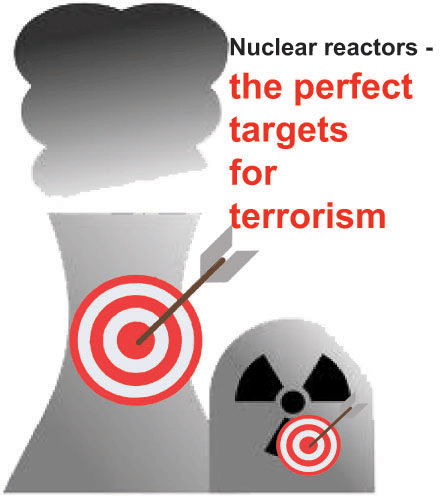 Pre-deployed terrorist targets: Nuclear power plants have been described as pre-deployed terrorist targets and pose a major security threat. This in turn would likely see an increase in policing and security operations and costs and a commensurate impact on civil liberties and public access to information. Other nations in our region may view Australian nuclear aspirations with suspicion and concern given that many aspects of the technology and knowledge-base are the same as those required for nuclear weapons.
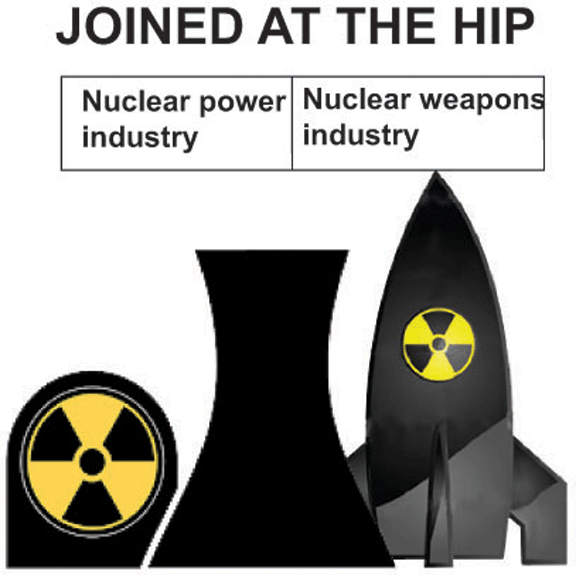 Former US Vice President Al Gore summarised the proliferation problem: “For eight years in the White House, every weapons-proliferation problem we dealt with was connected to a civilian reactor program. And if we ever got to the point where we wanted to use nuclear reactors to back out a lot of coal … then we’d have to put them in so many places we’d run that proliferation risk right off the reasonability scale.”
Too slow: Expanding nuclear power is impractical as a short-term response to climate change. An analysis by Australian economist Prof. John Quiggin concludes that it would be “virtually impossible” to get a nuclear power reactor operating in Australia before 2040. More time would elapse before nuclear power has generated as much as energy as was expended in the construction of the reactor: a University of Sydney report concluded that the energy payback time for nuclear reactors is 6.5‒7 years. Taking into account planning and approvals, construction, and the energy payback time, it would be a quarter of a century or more before nuclear power could even begin to reduce greenhouse emissions in Australia (and then only assuming that nuclear power displaced fossil fuels).
 Too thirsty: Nuclear power is extraordinarily thirsty. A single nuclear power reactor consumes 35‒65 million litres of water per day for cooling.
Water consumption of different energy sources (litres / kWh):
* Nuclear 2.5
* Coal 1.9
* Combined Cycle Gas 0.95
* Solar PV 0.11
* Wind 0.004
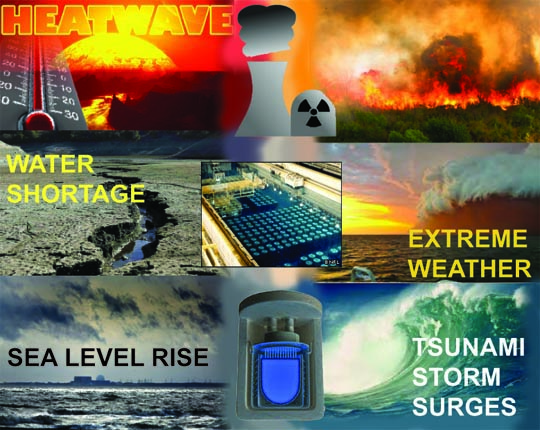
Climate change and nuclear hazards: Nuclear power plants are vulnerable to threats which are being exacerbated by climate change. These include dwindling and warming water sources, sea-level rise, storm damage, drought, and jelly-fish swarms. Nuclear engineer David Lochbaum states. “I’ve heard many nuclear proponents say that nuclear power is part of the solution to global warming. It needs to be reversed: You need to solve global warming for nuclear plants to survive.”
In January 2019, the Climate Council, comprising Australia’s leading climate scientists and other policy experts, issued a policy statement concluding that nuclear power plants “are not appropriate for Australia – and probably never will be”.
By contrast, the REN21 Renewables 2015: Global Status Report states that renewable energy systems “have unique qualities that make them suitable both for reinforcing the resilience of the wider energy infrastructure and for ensuring the provision of energy services under changing climatic conditions.”
 First Nations: Laws banning nuclear power should be retained because the pursuit of a nuclear power industry would almost certainly worsen patterns of disempowerment and dispossession that Australia’s First Nations have experienced ‒ and continue to experience ‒ as a result of nuclear and uranium projects.
To give one example (among many), the National Radioactive Waste Management Act dispossesses and disempowers Traditional Owners in many respects: the nomination of a site for a radioactive waste dump is valid even if Aboriginal owners were not consulted and did not give consent; the Act has sections which nullify State or Territory laws that protect archaeological or heritage values, including those which relate to Indigenous traditions; the Act curtails the application of Commonwealth laws including the Aboriginal and Torres Strait Islander Heritage Protection Act 1984 and the Native Title Act 1993 in the important site-selection stage; and the Native Title Act 1993 is expressly overridden in relation to land acquisition for a radioactive waste dump.
No social license: Laws banning nuclear power should be retained because there is no social license to introduce nuclear power to Australia. Opinion polls find that Australians are overwhelmingly opposed to a nuclear power reactor being built in their local vicinity (10‒28% support, 55‒73% opposition); and opinion polls find that support for renewable energy sources far exceeds support for nuclear power (for example a 2015 IPSOS poll found 72‒87% support for solar and wind power but just 26% support for nuclear power). As the Clean Energy Council noted in its submission to the 2019 federal nuclear inquiry, it would require “a minor miracle” to win community support for nuclear power in Australia.
The pursuit of nuclear power would also require bipartisan political consensus at state and federal levels for several decades. Good luck with that. Currently, there is a bipartisan consensus at the federal level to retain the legal ban. The noisy, ultra-conservative rump of the Coalition is lobbying for nuclear power but their push has been rejected by, amongst others, the federal Liberal Party leadership, the Queensland Liberal-National Party, the SA Liberal government, the Tasmanian Liberal government, the NSW Liberal Premier and environment minister, and even ultra-conservatives such as Nationals Senator Matt Canavan.
 The future is renewable, not radioactive: Laws banning nuclear power should be retained because the introduction of nuclear power would delay and undermine the development of effective, economic energy and climate policies based on renewable energy sources and energy efficiency. A December 2019 report by CSIRO and the Australian Energy Market Operator finds that construction costs for nuclear reactors are 2‒8 times higher than costs for wind or solar. Levelised costs for nuclear are 2‒3 times greater per unit of energy produced compared to wind or solar including either 2 hours of battery storage or 6 hours of pumped hydro energy storage.
Australia can do better than fuel higher carbon emissions and unnecessary radioactive risk. We need to embrace the fastest growing global energy sector and become a driver of clean energy thinking and technology and a world leader in renewable energy technology. We can grow the jobs of the future here today. This will provide a just transition for energy sector workers, their families and communities and the certainty to ensure vibrant regional economies and secure sustainable and skilled jobs into the future. Renewable energy is affordable, low risk, clean and popular. Nuclear is not. Our shared energy future is renewable, not radioactive.
More Information
* Don’t Nuke the Climate Australia, www.dont-nuke-the-climate.org.au
* Climate Council, 2019, ‘Nuclear Power Stations are Not Appropriate for Australia – and Probably Never Will Be’, https://www.climatecouncil.org.au/nuclear-power-stations-are-not-appropriate-for-australia-and-probably-never-will-be/
* WISE Nuclear Monitor, 25 June 2016, ‘Nuclear power: No solution to climate change’, https://www.wiseinternational.org/nuclear-monitor/806/nuclear-power-no-solution-climate-change
Dr. Jim Green is the national nuclear campaigner with Friends of the Earth Australia.
Canada’s Nuclear Waste Management Organization (NWMO) courts indigenous communities

More specifically, the NWMO, which is a consortium of Canadian nuclear industry players created by an act of parliament, is looking for a community willing to allow used nuclear fuel to be placed in what’s called a deep geological repository – or DGR.
Currently the NWMO is engaging with Ignace, Ontario a small community 250 km northwest of Thunder Bay, as well as the municipality of South Bruce, on Lake Huron northwest of Toronto.
Indigenous communities in both those areas are being courted and having the DGR concept pitched to them by the NWMO.
Indigenous engagement is a major focus at the NWMO.
It has put out an eight-part video series on reconciliation, and it also employs Bob Watts as their vice president of Indigenous Relations.
Watts is a long time major player in Indigenous politics who has held high-level positions with the Assembly of First Nations and the federal government………
Fundamentally, a DGR needs to protect radioactive waste from water, because water could potentially bring the deadly radioactive material back into contact with our environment. …….
not everyone is sold on the safety case made by the NWMO.
Gordon Edwards is president of the Canadian Coalition for Nuclear Responsibility and is likely the nuclear industry’s best known critic in Canada.
Edwards isn’t impressed with the NWMO’s multiple barrier system.
“You can put barrier after barrier after barrier, that doesn’t mean that you have a safe system,” he said. ”The same multiple barrier philosophy is used in nuclear reactors. They say the fuel is inside metal tubes, which are called zirconium, that’s another barrier, it’s called the sheath. And those are inside pressure tubes, which is another barrier. And then that’s inside a calandria, which is another barrier. And that’s inside the reactor building, which is another barrier. Consequently, there cannot be a nuclear accident.
“Well, we’ve seen what happened with that philosophy. Chernobyl exploded and the whole area around Chernobyl is still uninhabitable and will be for at least another hundred years. Fukushima, we’ve had three reactors melting down on the same weekend and those multiple barriers were all in place.”
Edwards said the notion that we can build something to last hundreds of thousands of years, the length of time used nuclear fuel will potentially remain dangerously radioactive – is folly.
“You have to realize that the pyramids of Egypt are only 5,000 years old,” said Edwards. “Go and look at them there. They’re really deteriorated a great deal. So the half-life of plutonium is 24,000 years. The Great Lakes didn’t even exist 24,000 years ago. So we’re talking about periods of time that dwarf the span of human history.”
Edwards said he believes taking a wait-and-see approach is better than putting the used fuel in a DGR.
“We can afford to wait another century or two and see if we can come up with a genuine solution,” he said. “If we can’t come up with a genuine solution, we can continue to look after it. We can continue to transmit the information. We can continue to repackage it periodically into better and better packages, which is going to make sure. And if there is leakage that occurs, failure of containment – we can spring into action right away and fix it and not let it get out of hand. That’s a much better approach.
“This is called rolling stewardship.”………
The NWMO said it hopes to have identified a willing host community for a deep geological repository by 2023.
Nuclear Courtship, Part 2 airs next week, and will be accompanied with a web story which will examine the mood of some of the communities engaging with the nuclear industry.cread@aptn.ca https://aptnnews.ca/2020/02/07/indigenous-communities-courted-as-nuclear-industry-looks-for-place-to-put-used-fuel/
Saugeen Ojibway Nation vote ends company’s plans to store nuclear waste near Lake Huron
The decision came following years of Michigan lawmakers asking Ontario Power Generation to reconsider. It took the vote of the Saugeen Ojibway Nation of Ontario Friday to shift the discussions away from the lake. Of 1,232 ballots cast, 1,058 were against the site and 170 in favor.
We were not consulted when the nuclear industry was established in our Territory,” said a news release on the vote. “Over the past forty years, nuclear power generation in Anishnaabekiing has had many impacts on our Communities, and our Land and Waters, including the production and accumulation of nuclear waste.”
The release said that SON leaders will work with Ontario Power Generation “to find an acceptable solution for the waste.
“We will continue to work with OPG and others in the nuclear industry on developing new solutions for nuclear waste in our Territory,” said Chief Greg Nadjiwon of the Chippewas of Nawash Unceded First Nation. “We know that the waste currently held in above-ground storage at the Bruce site will not go away. SON is committed to developing these solutions with our communities and ensuring Mother Earth is protected for future generations. We will continue to ensure that our People will lead these processes and discussions.” ……….
Site had been sought since 2010
On Jan. 24, the Nuclear Waste Management Organization announced it had signed agreements with landowners east of Lake Huron in South Bruce, Ontario, which would allow land access for studies for the site. …….
In January, southeast Michigan state representatives Gary Howell, R-Lapeer, and Shane Hernandez, R-Port Huron, issued statements against locations near Kincardine and Lake Huron. They said the Kincardine locations are too close to Lake Huron, and expressed concerns about drinking water and public health if something went wrong at the site.
They called on the United States Congress to do everything in its power to stop the development. https://www.thetimesherald.com/story/news/2020/02/03/plans-store-nuclear-waster-near-lake-huron-halted/4587366002/
Indigenous community votes down proposed nuclear waste bunker near Lake Huron,
‘We were not consulted when the nuclear industry was established in our territory’,https://nationalpost.com/news/canada/indigenous-community-votes-down-proposed-nuclear-waste-bunker-near-lake-huron The Canadian Press, Colin Perkel. February 1, 2020
TORONTO — An Indigenous community has overwhelmingly rejected a proposed underground storage facility for nuclear waste near Lake Huron, likely spelling the end for a multibillion-dollar, politically fraught project years in the making.
After a year of consultations and days of voting, the 4,500-member Saugeen Ojibway Nation announced late Friday that 85 per cent of those casting ballots had said no to accepting a deep geologic repository at the Bruce nuclear power plant near Kincardine, Ont.
“We were not consulted when the nuclear industry was established in our territory,” SON said in a statement. “Over the past 40 years, nuclear power generation in Anishnaabekiing has had many impacts on our communities, and our land and waters.”
The province’s giant utility, Ontario Power Generation, had wanted to build the repository 680 metres underground about 1.2 kilometres from Lake Huron as permanent storage for low and intermediate-level radioactive waste. The project was tentatively approved in May 2015.
In August 2017, then-environment minister Catherine McKenna paused the process to ensure buy-in from Indigenous people in the area
While Kincardine was a “willing host,” the relative proximity of the proposed bunker to the lake sparked a backlash elsewhere in Canada and the United States. Politicians, environmentalists and scores of communities expressed opposition.
Successive federal governments have withheld final approval. In August 2017, then-environment minister Catherine McKenna paused the process — the last in a string of delays for the project — to ensure buy-in from Indigenous people in the area.
The generating company, which insisted the stable bedrock would safely contain the waste, items such as contaminated reactor components and mops, said it respected SON’s decision.
“OPG will explore other options and will engage with key stakeholders to develop an alternate site-selection process,” Ken Hartwick, head of OPG, said in a statement shortly after the vote was announced. “Any new process would include engagement with Indigenous peoples as well as interested municipalities.”
The apparent end of the road for the project comes shortly after the federally-mandated Nuclear Waste Management Organization said it was making progress toward choosing a site for storing millions of far more toxic spent nuclear fuel bundles.
The organization, comprising several nuclear plant operators, said it had struck deals with landowners in South Bruce — about 30 minutes east of Kincardine — that will allow it to begin site tests. The only other site under consideration for high-level waste storage is in Ignace in northern Ontario.
Despite the rejection of OPG’s proposal, the utility said it planned to continue a relationship “based on mutual respect, collaboration and trust” with the Saugeen Ojibway Nation, which comprises the Chippewas of Saugeen First Nation and the Chippewas of Nawash Unceded First Nation.
Chippewas of Saugeen Chief Lester Anoquot called the vote — 170 for and 1,058 against — a “historic milestone and momentous victory” for the community.
“We worked for many years for our right to exercise jurisdiction in our territory and the free, prior and informed consent of our people to be recognized,” Anoquot said. “We didn’t ask for this waste to be created and stored in our territory.”
At the same time, Anoquot said, the vote showed the need for a new solution for the hazardous waste, a process he said could take many years.
Ontario depends heavily on nuclear power for its electricity but a permanent storage solution for the increasing amounts of waste now stored above ground has proven elusive. The radioactive material, particular from used fuel, remains highly toxic for centuries.
The utility insists exhaustive science shows a repository in stable and impermeable rock offers the best solution.
“Permanent and safe disposal is the right thing to do for future generations,” Hartwick said.
Ignoring Aboriginal opposition, Australian government chooses nuclear waste dump site
|
Federal Government chooses Kimba farm Napandee on the Eyre Peninsula for nuclear dump, ABC, 1 Feb 2020 The Federal Government has selected a farm on South Australia’s Eyre Peninsula as the site of a controversial nuclear waste dump. Key points:
Jeff Baldock’s Napandee property 20 kilometres west of Kimba will be used to permanently store low-level waste and temporarily store intermediate-level waste. The decision to use the 160-hectare area for what the Government calls a “disposal and storage facility” was made after four years of consultation. Nearly 62 per cent of people voted in favour of the site being used in November, while a site near Hawker in the Flinders Ranges was opposed by Aboriginal traditional owners and residents……. Dump to consolidate nuclear wasteLocal federal Liberal MP Rowan Ramsey said waste would come in from more than 100 sites around Australia, such as hospitals and universities, and the Lucas Heights nuclear reactor in Sydney. Processed medium-level nuclear fuel rods from Lucas Heights will be temporarily stored at Kimba while a permanent site is found for them, he said. Mr Ramsey, who tried to nominate his own property near Kimba for the dump but was barred as a federal MP, said there would be no fly-in, fly-out workers at the facility……. Aboriginal group opposed the voteThe Barngarla Determination Aboriginal Corporation launched legal action in 2018 against the District Council of Kimba, arguing it contravened the Racial Discrimination Act by excluding native title holders from a ballot due to be held that year. The Federal Court dismissed the claim last year because it said no contraventions of the Racial Discrimination Act had been established…….. The Howard government proposed a similar dump in South Australia in 1998 but withdrew its plans after losing a fight with the South Australian Labor government in the Federal Court. In 2007, a property called Mukaty Station in the Northern Territory was put forward to host the nuclear waste facility. The plan was abandoned in 2014, again because of legal action, this time by the area’s traditional owners. A group called No Radioactive Waste Facility for Kimba District held a rally against the decision in the town on Sunday.Friends of the Earth national nuclear campaigner Jim Green said the Federal Government promised the facility would not be approved unless it received at least 65 per cent of community support. “They’ve ignored the traditional owners, ignored South Australians. South Australia’s got legislation banning the imposition of nuclear waste dumps and that’s been ignored and it’s just disrespectful from start to finish,” he said. “South Australians have got greater ambitions for our state than to be someone else’s nuclear waste dump.”https://mobile.abc.net.au/news/2020-02-01/kimba-farm-eyre-peninsula-chosen-for-nuclear-dump/11920514 |
|
Indigenous tribe, Saugeen Ojibway Nation, has voted down plans for nuclear waste dump near Lake Huron
Hervé Courtois to C.A.N. Coalition Against Nukes, 1 Feb 2020, Members of  the Saugeen Ojibway Nation (SON) have voted down plans to bury Ontario’s low- and intermediate-level nuclear waste within 1.2 kilometres of Lake Huron….On Friday, 1,232 members of the First Nation band voted. The vote results saw 1,058 ‘no’ votes, with 170 ‘yes’ and 4 spoiled ballots…It means Canada’s first permanent nuclear waste facility will need to be built somewhere else in Ontario…OPG will now have to start searching for a new host community to house over 200,000 cubic metres of low- and intermediate- level nuclear waste…OPG says finding a new site may set the project back 20 to 30 years….https://www.facebook.com/groups/C.A.N.CoalitionAgainstNukes
1 This Month
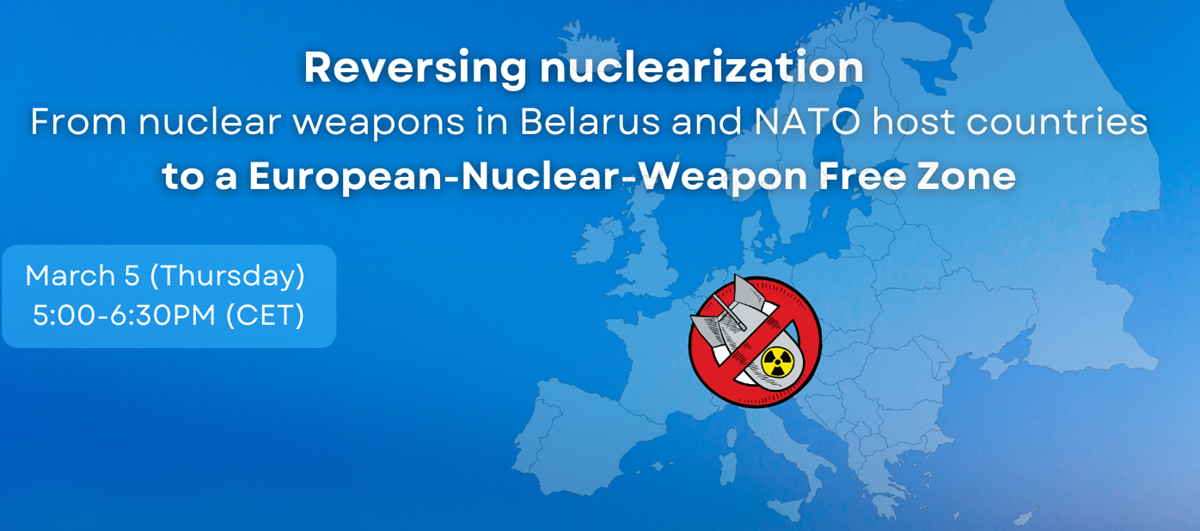
5 March -Online – Reversing nuclearization:
From nuclear weapons in Belarus and NATO host countries to a European-Nuclear-Weapon Free Zone
11am-12:30pm Eastern Time USA / 5pm-6:30pm CET

of the week – Advocating for a
nuclear free beach – https://www.samuellawrencefoundation.org/
The Samuel Lawrence Foundation advocates for a Nuclear Waste Free Beach at San Onofre, join us and take action!

10 March A LIVE WEBINAR THE REAL EFFECTS OF NUCLEAR POWER
What the Industry Isn’t Telling Us
1:00 PM Mountain, 2 pm Central, 3 pm Eastern. Live on the Keepers of the Water Facebook page

18 March Webinar @ 1 PM EST: An Assessment of SMR Projects: The Case of Canada
register for the zoom:
https://us02web.zoom.us/webinar/register/WN_o8BIIOUvQ2ONJR1nta65DQ#/registration

of the week – STOP SMALL MODULAR REACTORS IN CANADA
To see nuclear-related stories in greater depth and intensity – go to https://nuclearinformation.wordpress.com
-
Archives
- March 2026 (38)
- February 2026 (268)
- January 2026 (308)
- December 2025 (358)
- November 2025 (359)
- October 2025 (376)
- September 2025 (258)
- August 2025 (319)
- July 2025 (230)
- June 2025 (348)
- May 2025 (261)
- April 2025 (305)
-
Categories
- 1
- 1 NUCLEAR ISSUES
- business and costs
- climate change
- culture and arts
- ENERGY
- environment
- health
- history
- indigenous issues
- Legal
- marketing of nuclear
- media
- opposition to nuclear
- PERSONAL STORIES
- politics
- politics international
- Religion and ethics
- safety
- secrets,lies and civil liberties
- spinbuster
- technology
- Uranium
- wastes
- weapons and war
- Women
- 2 WORLD
- ACTION
- AFRICA
- Atrocities
- AUSTRALIA
- Christina's notes
- Christina's themes
- culture and arts
- Events
- Fuk 2022
- Fuk 2023
- Fukushima 2017
- Fukushima 2018
- fukushima 2019
- Fukushima 2020
- Fukushima 2021
- general
- global warming
- Humour (God we need it)
- Nuclear
- RARE EARTHS
- Reference
- resources – print
- Resources -audiovicual
- Weekly Newsletter
- World
- World Nuclear
- YouTube
-
RSS
Entries RSS
Comments RSS
 nuclear-news
