Finally some justice for Spokane Tribe uranium workers
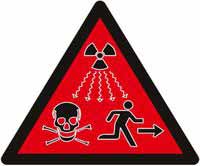 a recently completed epidemiology study of the 2,700-member tribe conducted by the state Department of Health and the Northwest Indian Health Board concluded there were high rates of cancer among tribal members who worked at the mine.
Women of the tribe have contracted cancer from cleaning the clothes of the men who worked in the mines,
 Progress made toward cleaning up uranium mine, Canadian Business By AP | November 06, 2011 SPOKANE, Wash. (AP) — The Spokane Tribe of Indians has recently won big victories in its long fight against uranium contamination, including a deal reached this fall between the federal government and mining companies to clean up the long-closed Midnite Mine on the reservation.
In addition, tribal members in September became eligible to receive federal compensation if they became sick while working at the mine. Continue reading
At last, efforts to rebury the poisonous monster of uranium, in Navajo land
Cleanup takes on uranium monster in Monument Valley, By Judy Fahys, The Salt Lake Tribune, Oct 16, 2011 Monument Valley • An old story tells how the first Navajos made a choice that shaped their destiny.
They embraced yellow corn pollen over yellow uranium. And they concluded unearthing the radioactive rock would unleash evil from the underworld.
But in the rush to fuel atomic weapons and nuclear reactors, Navajo lands yielded tons of the yellow rock, and the heavy machinery that dug it up left behind a hazardous legacy.
Here, below the Skyline Mine, about a mile from the famous Goulding’s Trading Post, the Navajos’ worst fears about uranium came true. Tumors and cancer and a host of other maladies plagued families living on the valley floor in Skyline’s shadow. So did a nagging fear.
In some people’s minds, the U.S. Environmental Protection Agency cleanup this summer signaled the federal government has at long last started owning up to its obligations to the Navajos. Next week dump trucks and dozers will be done stuffing the evil back into the redrock.
And the unseen demons will be vanquished from the mythic landscape……
The $7.5 million Skyline cleanup is part of EPA’s effort to address uranium problems all over the reservation. About $22 million is slated for addressing water contamination. A total of $60 million is planned for five years to identify and deal with contaminated homes and mine sites.
The Skyline cleanup is the first of four that EPA has planned so far,….. A few weeks ago, Tenley announced the next cleanup on the reservation: a $44 million project to address contamination at the largest uranium mine on the Navajo Reservation, Northeast Church Rock, New Mexico. And, unlike the Skyline cleanup that taxpayers paid for, this one will be on the tab of the company that mined it, a subsidiary of General Electric Co….http://www.sltrib.com/sltrib/home2/52705676-183/uranium-mesa-cleanup-skyline.html.csp
Australian Aboriginal response to BHP’s plan for world’s biggest uranium hole

 THE LIZARDS REVENGE, DLF – Desert Liberation Front, Response to the governments decision to expand Olympic Dam mine. Sleeping underneath the ground there is an old lizard, Kalta the sleepy lizard. The lizard ain’t so sleepy anymore.
BHP is mining right into that Lizards body. The government has just approved an expansion of the Olympic Dam uranium mine, making it the biggest uranium mine in the world.
Kalta is angry and wants revenge. Arabana elder Kevin Buzzacot is calling the people of the world to help the lizard shut down the mine. He is calling for people to come and heal the land in the name of peace and justice for the next 10,000 generations to come.
The land is being irreversibly poisoned in and around Roxby Downs by the tailings dam causing dust and ground water contamination, and contamination of its workers.
The uranium is taken all over the world and used to kill the land and all its creatures. It’s destroying lives not only in Fukashima, with the reactor meltdown, but in the depleted uranium shells that children play with in the streets of Iraq and Kosovo.
With the governments numerous attempts to put a nuclear waste dump at Muckaty in the Northern Territory there is a danger that radioactive waste will be brought back, opening Australia up to accepting nuclear waste from all over the world. Lets stop the deadly cycle where it starts.
The land the lizard and the creatures of this earth are summoning everybody who gives a shit to the gates of Roxby Downs on the 14th of july 2012 for The Lizards Revenge – This is an open invitation to all people and a special call out to artists, musicians and activist community groups and media to get involved in the creation of this autonomous zone for the peace and healing of this land.
Party in a Dangerous Planet with Theatre, Cabaret and Art installations. Over 20 musical acts. Solar Powered sound system extravaganza and wind powered cinema. More to be anounced.. Stand up and boogie down at the Gates of Olympic Dam 14th July 2012for more info email- izzybrown@live.com
Rio Tinto, uranium miners, and nuclear colonialism
situation isn’t all rosy for the multinational, which has long faced allegations of widespread environmental destruction and labor and human rights abuses in Africa, Asia and even the U.S.
Foreign control of metals and other natural resources in African and other developing countries is increasingly seen as a new form of colonialism, wherein locals work for relatively low wages and often in grueling, repressive conditions for companies that take most of the profit from the resources and labor out of the country.

Namibian Uranium Miners vs. Rio Tinto, IN THESE TIMES, BY KARI LYDERSEN, OCT 3, 2011 Namibian union uranium miners on strike against international mining giant Rio Tinto alleged in late September that a week into the strike, the company was violating mutually agreed upon conditions of the strike by hiring nonunion workers at its Rossing uranium mine.
Rio Tinto says it is not hiring nonunion workers and is demanding written proof from the Namibian Miners Union.
Miners have demanded payments of $2,557 (USD) each to end the strike over union allegations of unfair bonus payments and other grievances. Rio Tinto has asked the country’s labor court to rule that the union’s complaints are not grounds for a strike. Continue reading
Lengthy and costly cleanup of uranium contaminated site
 Largest abandoned uranium mine cleanup on Navajo Nation announced An important milestone in the effort to clean up of Navajo trust lands contaminated by historic uranium mining will be achieved in the cleanup of the Northeast Church Rock Mine in New Mexico., Mineweb, Dorothy Kosich, 30 Sep 2011 RENO, NV – The U.S. EPA announced Thursday it has approved a plan to clean up 1.4 million tons of radium and uranium contaminated soil at the Northeast Church Rock Mine, the largest and highest priority uranium mine on the Navajo Nation. Continue reading
A start to addressing the scandal of Navajo radiation contamination from uranium mining
The cleanup at the Skyline Mine represents not only a reduced risk of exposure for Begay and her family, but marks the first significant remediation of a mine on the country’s largest American Indian reservation where such sites number in the hundreds.
Tests have found gamma radiation activity greater than two times the background level at 80 locations on the site. In the traditional Navajo home where Begay once lived with two of her sons, the radiation levels were up to 100 times the acceptable level. The two sons have died — one of lung cancer and the other from a tumor.
Navajo woman helps prompt uranium mine cleanup, Houston Chronicle, FELICIA FONSECA, September 5, 2011 MONUMENT VALLEY, Utah (AP) — The stretch of high desert on the Arizona-Utah border gives way to towering rock formations that resemble huge mittens, chimney spires and castles. But to the west of Monument Valley lies a reminder of what has been blamed for much heartache and tragedy in Elsie Mae Begay‘s family: A mesa stained with a gray streak where uranium was mined decades ago. Continue reading
Indigenous peoples cop the uranium pollution by rich corporations
“The biggest problem of uranium mining is slow and constant emission of radiation which leads people to suffer from cancer, kidney problems, and other respiratory diseases.Future generations would be the worst sufferers,” she said. Due to uranium mining, groundwater level goes down, while water, used for agriculture and drinking, is polluted.
”Rich countries encourage uranium mining in poor nations”, IBN Live,,Aug 07,2011, Kadapa(AP), Aug 7 (PTI) Developed nations are taking up uranium mining in third world countries despite themselves being endowed with rich deposits of the mineral to avoid possible environmental pollution, Continue reading
EPA study into uranium contamination of Navajo land
The Mariano Lake Mine is one of a handful of sites that the EPA and its Navajo Nation counterpart have targeted for investigation or cleanup so far. They’ve been assessing hundreds of abandoned uranium mines to address what has become a legacy of death and disease across the reservation.
EPA announces deal for uranium contamination probe, Canadian Business, August 01, 2011 FLAGSTAFF, Ariz. (AP) — The U.S. Environmental Protection Agency is overseeing an effort to determine the extent of contamination at a former uranium mining site on the Navajo Nation that marked a high priority for assessment. Continue reading
AREVA trying to stop Aboriginal land becoming World Heritage listed

 Areva formally requested Australia to withdraw its nomination for heritage listing from the agenda of the 35th World Heritage Committee meeting, which will be held in Paris this week…..
…Jeffrey Lee, the sole member of the Djok clan and senior custodian of the land that includes the 12.5 square kilometre Koongarra project area, has also travelled to Paris hoping to speak at the meeting. Mr Lee, 40, who would be one of Australia’s richest people if he allowed the mine to go ahead, told The Age he wanted to tell the story of his country, which he wanted to see protected forever in the park.
French uranium challenge to Kakadu heritage listing, Lindsay Murdoch, Darwin,The Age, June 20, 2011 A FRENCH government-owned company attempted to block countries discussing an Australian request to expand the World heritage-listed Kakadu National Park to include land that contains uranium worth billions of dollars. Continue reading
Australian uranium miner ERA pushing on despite climate extremes, and Aboriginal opposition
Prime Minister Julia Gillard has been called on by the organisation representing Mirrar people to put a stop to all plans to expand uranium mining in the national park.
The Gundjeihmi Aboriginal Corporation has called for mining to be banned at the Ranger uranium mine as it is a part of their traditional land.
– AUSTRALIAN MINING ERA MISLEADING ABOUT RANGER URANIUM PLANS: ENVIRONMENTALISTS Mining Australia, By Jessica Burke 6 June 2011 Environmentalists have accused Energy Resources Australia (ERA) of ulterior motives over plans to expand its uranium mine in the Kakadu National Park in the Northern Territory. Continue reading
First Nations want uranium ban to stay, in British Columbia
B.C. uranium ban should stay, First Nations leader says. Straight.com, By Matthew Burrows, May 30, 2011 The president of the Union of B.C. Indian Chiefs does not believe the provincial moratorium on uranium mining should be lifted.
“The Okanagan Nation Alliance has always been opposed to uranium exploration and mining, as has the Union of B.C. Indian Chiefs,” Grand Chief Stewart Phillip told the Straight by phone today (May 30). “We’ve never supported uranium exploration and mining, and we’ve always supported those groups and communities that have opposed exploration and mining. And we certainly support a continuation of the moratorium.”
The B.C. Liberals banned the exploration and development of uranium in April 2008…
B.C. uranium ban should stay, First Nations leader says | Vancouver, Canada | Straight.com
Indigenous resistance to uranium mining, as Fukushima news continues
before the first pounds of yellowcake are harvested from the tundra, a fearful word has entered the debate: Fukushima. …..Sandra Inutiq chairs a group called Nunavummiut Makitagunarningit, which translates to “Nunavummiut can rise up” and she has opposed uranium development. In an interview, Ms. Inutiq warned that allowing uranium development will transform parts of Nunavut into “a wasteland of tailings.”….And, she added, Fukushima has raised the stakes, as Inuit contemplate the ethical implications of allowing uranium from their territory to be exported around the world –
 Fukushima chills uranium development NATHAN VANDERKLIPPE, CALGARY— Globe and Mail , May. 19, 2011 It looked to be a nuclear renaissance set on Canada’s sub-Arctic plains.Over the past few years, a series of companies secured rights to remote stretches of Inuit land that hide rich troves of uranium. One project alone, the five mines that make up the Kiggavik proposal from French nuclear giant Areva, stands poised to increase Canada’s uranium output by 35 per cent. Continue reading
Navajo in Washington to fight uranium mining
Navajo group bringing attention to uranium mining, Forbes.com, By SUSAN MONTOYA BRYAN , 05.17.11, TALBUQUERQUE, N.M. — Members of a Navajo group opposed to uranium mining on New Mexico land surrounded by the sprawling Navajo reservation traveled to Washington, D.C., on Monday to bring attention to their fight.Eastern Navajo Dine Against Uranium Mining filed a petition with the Inter-American Commission on Human Rights on Friday. The petition alleges human rights violations and seeks to overturn the Nuclear Regulatory Commission’s decision to grant a mining license to Hydro Resources Inc…..The company has plans to develop claims near the Navajo communities of Church Rock and Crownpoint…..”We know the current governor isn’t particularly interested in listening to Native communities or protecting natural resources. We don’t see ourselves as having any recourse with the state,” said Eric Jantz, an attorney with the New Mexico Environmental Law Center, which filed the petition on behalf of the group.……Navajo group bringing attention to uranium mining – Forbes.com
Navajo’s battle against uranium mining is to go to UN
The groups contend the mines, first permitted by NRC in 1999, could contaminate drinking water for 15,000 Navajo residents in and around the two communities, which lie just outside the Navajo Nation. In 2005, the Navajo’s tribal government passed a law prohibiting uranium mining within its borders….The United Nations also recognizes clean water as a human right
Navajo Group to Take Uranium Mine Challenge to Human Rights Commission, NYTimes.com, By APRIL REESE of GreenwirePublished: May 12, 2011 In a last attempt to deep-six a controversial project to mine uranium near two Navajo communities in northwestern New Mexico, a Navajo environmental group is taking its fight to the global stage.
Tomorrow, Eastern Navajo Diné Against Uranium Mining, with the help of the New Mexico Environmental Law Center, will submit a petition to the Inter-American Commission on Human Rights arguing that the Nuclear Regulatory Commission’s decision to grant Hydro Resources Inc., a license to mine uranium ore near Churchrock and Crown Point, N.M., is a violation of international laws.
The groups contend the mines, first permitted by NRC in 1999, could contaminate drinking water for 15,000 Navajo residents in and around the two communities, which lie just outside the Navajo Nation. In 2005, the Navajo’s tribal government passed a law prohibiting uranium mining within its borders.
“By its acts and omissions that have contaminated and will continue to contaminate natural resources in the Dine communities of Crownpoint and Church Rock, the State has violated Petitioners’ human rights and breached its obligations under the American Declaration of the Rights and Duties of Man,” the petition reads.
“We’re very hopeful,” said Eric Jantz, an attorney with the New Mexico Environmental Law Center who is filing the petition on behalf of ENDAUM. “I think we have very solid claims. It’s always been our client’s position that clean water is a human right.”
The United Nations also recognizes clean water as a human right, he added.
The groups cannot take their case to the Inter-American Court of Human Rights, which is separate from the commission, because the United States does not recognize the international court’s jurisdiction, Jantz said…….
Most of the uranium mining projects in New Mexico are being financed by Japanese and other Asian investors, as well as some in Russia, he said.
Navajo Group to Take Uranium Mine Challenge to Human Rights Commission – NYTimes.com
Australian Aboriginal leader writes to UN about uranium mining
Yvonne Margarula’s letter to the UN expressing solidarity with the people of Fukushima , | Indymedia Australia, 16 Apr 2011 Below is a letter sent by Yvonne Margarula of the Mirrar people to Ban Ki Moon the Secretary General of the UN on the 6th of April 2011. The Mirrar are the traditional owners of the land that Ranger and Jabiluka Uranium mines are located on. These mines have been developed without the consent of the Mirrar people. The letter expresses solidarity with the people of Japan and sorrow that uraniun from the land of the Mirrar was used in the Fukushima plant. Continue reading
1 This Month
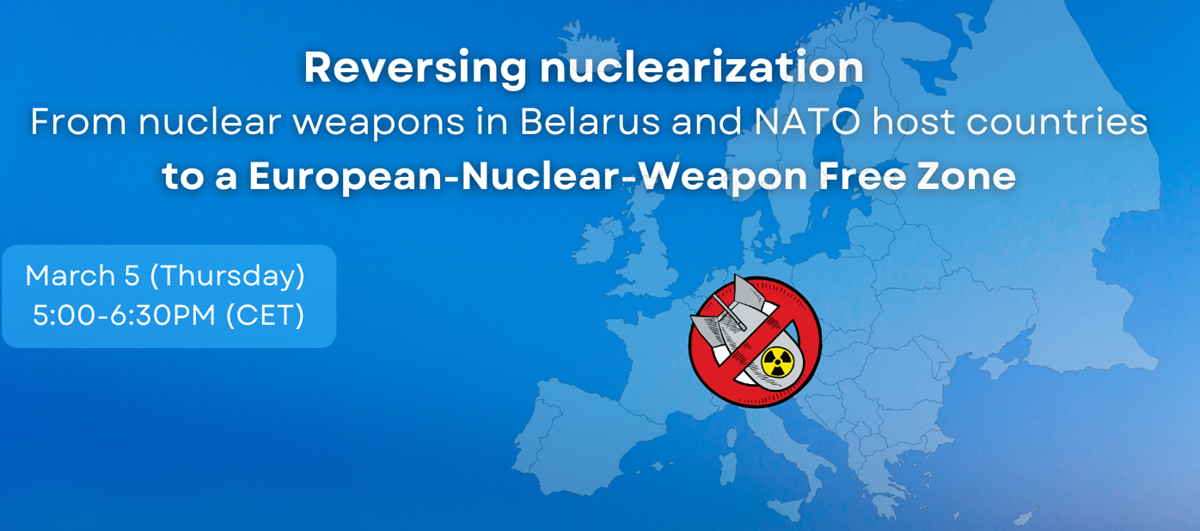
5 March -Online – Reversing nuclearization:
From nuclear weapons in Belarus and NATO host countries to a European-Nuclear-Weapon Free Zone
11am-12:30pm Eastern Time USA / 5pm-6:30pm CET

of the week – Advocating for a
nuclear free beach – https://www.samuellawrencefoundation.org/
The Samuel Lawrence Foundation advocates for a Nuclear Waste Free Beach at San Onofre, join us and take action!

10 March A LIVE WEBINAR THE REAL EFFECTS OF NUCLEAR POWER
What the Industry Isn’t Telling Us
1:00 PM Mountain, 2 pm Central, 3 pm Eastern. Live on the Keepers of the Water Facebook page

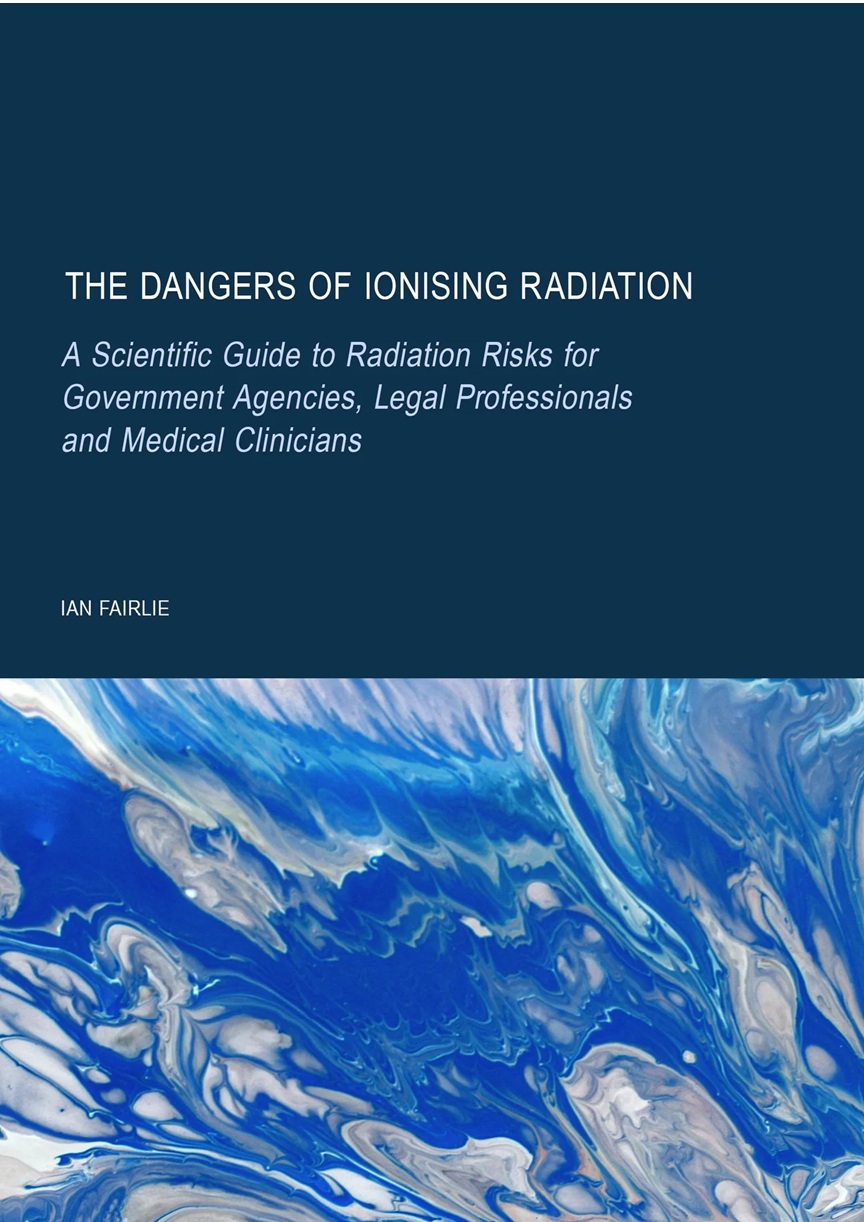
18 March Webinar @ 1 PM EST: An Assessment of SMR Projects: The Case of Canada
register for the zoom:
https://us02web.zoom.us/webinar/register/WN_o8BIIOUvQ2ONJR1nta65DQ#/registration

of the week – STOP SMALL MODULAR REACTORS IN CANADA
To see nuclear-related stories in greater depth and intensity – go to https://nuclearinformation.wordpress.com
-
Archives
- March 2026 (51)
- February 2026 (268)
- January 2026 (308)
- December 2025 (358)
- November 2025 (359)
- October 2025 (376)
- September 2025 (258)
- August 2025 (319)
- July 2025 (230)
- June 2025 (348)
- May 2025 (261)
- April 2025 (305)
-
Categories
- 1
- 1 NUCLEAR ISSUES
- business and costs
- climate change
- culture and arts
- ENERGY
- environment
- health
- history
- indigenous issues
- Legal
- marketing of nuclear
- media
- opposition to nuclear
- PERSONAL STORIES
- politics
- politics international
- Religion and ethics
- safety
- secrets,lies and civil liberties
- spinbuster
- technology
- Uranium
- wastes
- weapons and war
- Women
- 2 WORLD
- ACTION
- AFRICA
- Atrocities
- AUSTRALIA
- Christina's notes
- Christina's themes
- culture and arts
- Events
- Fuk 2022
- Fuk 2023
- Fukushima 2017
- Fukushima 2018
- fukushima 2019
- Fukushima 2020
- Fukushima 2021
- general
- global warming
- Humour (God we need it)
- Nuclear
- RARE EARTHS
- Reference
- resources – print
- Resources -audiovicual
- Weekly Newsletter
- World
- World Nuclear
- YouTube
-
RSS
Entries RSS
Comments RSS
 nuclear-news