Northern Saskatchewan First Nation to drop lawsuit, signs up with uranium companies
Northern Saskatchewan First Nation signs uranium mining deal worth $600 million http://www.newstalk650.com/story/northern-saskatchewan-first-nation-signs-uranium-mining-deal-worth-600-million/112624 Agreement with mining giants Cameco and Areva calls for First Nation to drop lawsuit over proposed mine by Nigel Maxwell May 31, 2013 The English River First Nation in northern Saskatchewan has signed a deal with Uranium mining giants Cameco and Areva worth $600 million.
Much of money is to flow to the First Nation over 10 years through contracts with band-owned businesses and wages to band members who would work at the mines and on community development projects.
Part of the agreement calls for the First Nation to drop a lawsuit over land near the proposed Millennium mine project.
Some members of the band have raised concerns about the environmental impact of more uranium in the area.
Indigenous international co-operation strengthened – World Indigenous Network conference
 Native People More Than Just Park Rangers By Milagros Salazar DARWIN, Australia, May 30 2013 (IPS) – Some good-byes can actually mean the start of a long road working together. That was how it felt at the end of the World Indigenous Network (WIN) conference in this northern Australian city.
The big challenge is to consolidate “the indigenous network so its collective voice can be heard” and to get governments to implement its proposals, said one of the 10 speakers chosen by the delegations from more than 50 countries to sum up what was discussed in four days of sessions at the May 26-29 conference.
The gathering, supported by the Australian government, enabled face-to-face exchanges among indigenous people from around the world, who shared best practices in conservation of ecosystems and biodiversity and in the sustainable use of protected natural areas in Africa, Asia, Latin America, Canada and Australia.
The delegates to the conference of the “international network of indigenous and local community land and sea managers” stressed the importance of the world recognising that for ages, indigenous people have protected the land and sea thanks to their ancestral knowledge, and that their culture and way of life depends on their territories……
In the full auditorium during the closing session, perhaps the most sensitive issue was brought up by the representatives of Latin America, whose spokespersons pointed out that the question of defending indigenous territories was glaringly absent during the conference……..
The Latin American delegation, mainly made up of people from Ecuador and Brazil, as well as activists from Bolivia, Colombia, Mexico and Peru, said they went “one step further” by demanding that governments recognise indigenous rights over their ancestral territories.
“It’s not just about indigenous people taking care of parks and protected natural areas, but about a question of legitimacy, of states recognising that we have been the owners of the territory for a very long time,” Paulina Ormaza, an indigenous woman who formed part of the group from Ecuador, told IPS…….
The Equator Initiative is a partnership that brings together the United Nations, governments, civil society, businesses, and grassroots organisations to build the capacity and raise the profile of local efforts to reduce poverty through the conservation and sustainable use of biodiversity. http://www.ipsnews.net/2013/05/native-people-more-than-just-park-rangers/
Navajo will block uranium transport
Navajo plans to block access for uranium transport, Yahoo 7 Finance, 28 May 13 Navajo Nation plans to deny uranium mining company permission to transport ore on tribal land By Felicia Fonseca, Associated Press |FLAGSTAFF, Ariz. (AP) – A uranium mining company seeking a mineral lease on state land in northwestern Arizona could have a hard time transporting the ore off-site because of the Navajo Nation’s objections to an industry that left a legacy of death and disease among tribal members.
The section of land in Coconino County is surrounded by the Navajo Nation’s Big Boquillas Ranch. The tribe has said it will not grant Wate Mining Company LLC permission to drive commercial trucks filled with chunks of uranium ore across its land to be processed at a milling site in Blanding, Utah.
The Navajo Nation was the site of extensive uranium mining for weapons during the Cold War. Although most of the physical hazards, including open mine shafts, have been fixed at hundreds of sites, concerns of radiation hazards remain.
The tribe banned uranium mining on its lands in 2005, and last year passed a law governing the transport of radioactive substances over its land. The ranch itself is not part of the reservation, although the Navajo Nation owns it.
“Given the (Navajo) Nation’s history with uranium mining, it is the nation’s intent to deny access to the land for the purpose of prospecting for or mining of uranium,” officials from the Navajo Department of Justice wrote in response to the mineral lease application.
The parcel of state land is in a checkerboard area of Arizona, east of the Hualapai reservation and south of the Havasupai reservation and Grand Canyon National Park. Tribal officials and the park superintendent have said any mining would threaten nearby water sources,……
Documents filed with the Arizona State Land Department indicate Wate Mining had requested approval from the Navajo Nation for the proposed access route, but the tribe said it has nothing on record showing that, nor does the state have access to the property.
“We have no intention of allowing them to cross Navajo lands unless they have appropriate access rights,” Navajo Deputy Attorney General Dana Bobroff said in an email…… http://au.finance.yahoo.com/news/navajo-plans-block-access-uranium-154503649.html
Navajo’s continuing fight against nuclear corporations, uranium companies
The Navajo people’s struggle to prevent the re-entry of mining corporations has so far been successful. It is fair to assume that as long as valuable resources remain on Indigenous lands profit-hungry corporations will continue to circle like vultures.
 Navajo Nation battles uranium corporations, nuclear industry Decades of dealing with environmental degradation, racism, Liberation, By Bethany Woody MAY 8, 2013 “……….In early 2013, uranium companies approached the Navajo Nation in hopes they will allow them to renew mining operations on their land. These companies claim that they have developed newer and safer methods for extracting uranium, after decades of environmental destruction and abuse led the Navajo Nation to officially ban their mining. Continue reading
Foreign uranium companies rip off impoverished Niger
the grievances expressed by representatives of local populations in the mining zones and pastoral peoples as well as government representatives. Concerns relate to radioactive pollution, water resource depletion, work-related diseases for mine workers, and the appropriation of land and water resources, including legally enshrined common property regimes and pastoral territories, without required compensation.
It is widely acknowledged among government staff that the Nigerien government is not able to properly implement its environmental legislation and monitor the uranium mining industry.
Niger: Development Cooperation Must Support the Environmental Governance of Uranium Mining THE ISN BLOG, Rasmus K Larsen 2 May 2013 Niger’s new development strategy, the Economic and Social Development Plan, is also intended to guide international development cooperation. Environmental governance of uranium mining, the country’s by far largest single economic activity, appears hitherto to have constituted a ‘blind spot’ for environmentally oriented development cooperation. It is now time to remove the blinkers and include support to strengthen environmental governance of the mining sector in new programmes to assist Niger in meeting its development challenges
Niger is well known in international media as one of the world’s poorest countries, struggling with chronic structural hunger and malnutrition. UNDP ranks Niger 186 out of 187 countries in the Human Development Index, and in 2011, five million people (33% of Niger’s population) were at ‘high risk’ to food insecurity.
What is less well known is that Niger also hosts the fourth largest uranium production in the world. Export values totalled over EUR 348 million in 2010, representing more than twice the total development assistance finance received during the same year. However, the state retains less than one fifth of the value of the uranium ore that is exported. The exploitation of the mineral wealth by international investors is expanding, with granted and requested mining concessions comprising close to 10% of the national territory…….
Attention to environmental impacts or risks associated with the mining sector goes seemingly without mention in the guiding documents of the principal development partners, including the EU, the World Bank, the UNDP, and the African Development Bank.
Severe environmental governance issues
This is in stark contrast to the grievances expressed by representatives of local populations in the mining zones and pastoral peoples as well as government representatives. Concerns relate to radioactive pollution, water resource depletion, work-related diseases for mine workers, and the appropriation of land and water resources, including legally enshrined common property regimes and pastoral territories, without required compensation.
It is widely acknowledged among government staff that the Nigerien government is not able to properly implement its environmental legislation and monitor the uranium mining industry. The Environmental Impact Assessment Bureau has only one person in place to verify all mining project applications in the country and, although legally required, not all verification missions are undertaken. The same applies to the National Centre for Radioprotection, which lacks the necessary capacity e.g. to undertake surprise inspections. The impacts and risks highlighted by civil society must be taken seriously. Due to deficiencies in the public administration, there are considerable constraints in enforcing and implementing the legislative and administrative framework – the very same framework, which development cooperation has helped to put in place……
Any mining activity will carry with it an environmental toll. The decision to sacrifice natural resources and human health, and ultimately lives of citizens, for economic gain will be the executive decision of the mandated political authority – in this case the Nigerien government……..
The Nigerien uranium mining sector is also intricately linked to the geopolitical energy security interests of some donor countries. The mines are operated by foreign companies (the French AREVA Group and Chinese investors). EU countries such as France, which has been involved in uranium mining since Niger gained independence, remain some of the largest buyers of the uranium ore – thus directly stimulating the mining activities and their detrimental impacts. This raises the question how donor countries could better supervise the behaviour of corporations incorporated within their own territories, thus implementing the recent UN guidelines for the supervision of multinational corporations (in “Protect, Respect and Remedy: a Framework for Business and Human Rights”). Indeed, when transparent and comprehensive problem identification is missing as the basis for donor support, then it opens for speculation that the ignorance of mining-related environmental issues and the crisis discourse on desertification and food insecurity are mobilized as instruments to divert attention from geopolitical interests in the country’s mineral wealth.
With its new development strategy, the Nigerien government emphasises the urgency of increasing mining fees and extraction tariffs to raise the state revenue and strengthen oversight with mining corporations. Importantly, specific attention is also directed at the need to improve the coordination between the mining and environmental sectors and their limited human and institutional capacities. This should be interpreted as an invitation from the Nigerien government to its development partners to proactively support enforcement of the existing environmental regulations of the mining sector……
Hopefully, the concerns expressed by people experiencing the impacts of the uranium mining industry first hand will be included in the list of priorities for the on-going negotiation between the Nigerien government and its development partners, among them the European Commission and Danida, on how to spend the EUR 3.7 billions. http://isnblog.ethz.ch/isn-security-watch/niger-development-cooperation-must-support-the-environmental-governance-of-uranium-mining
Uranium mining industries again out to mine on Navajo land
Uranium mining cos. eye new Navajo Nation projects http://www.myfoxphoenix.com/story/21448485/uranium-mining-cos-eye-new-navajo-nation-projects SHIPROCK, N.M. (AP) – Uranium mining companies are showing signs of renewed interest in the Navajo Nation.
The Farmington Daily Times reports that several companies during the past year have addressed the tribe, begging for permission to once again mine the uranium-rich land that the tribe sits upon.
But several environmental studies have suggested that elevated levels of uranium in and around the mines caused health problems for the people working in and living around them.
The Navajo Nation sits on more than 70 million tons of naturally occurring uranium, a radioactive ore.
Uranium mining companies say that history will not repeat itself, especially since they are using advanced technologies and take more precautions.
The tribe banned uranium mining on its land in 2005, though federal government has jurisdiction on Navajo Trust Land
Aboriginal elder saves priceless Koongarra from uranium minng
Aboriginal elder spurns million dollar offer from uranium miners http://www.mining.com/aboriginal-elder-spurns-millions-of-dollars-from-uranium-miners-58963/Marc Howe | February 6, 2013 An elder from the Djok aboriginal community has hailed a move by the federal government to prevent the mining of uranium on his ancestral lands.
On Wednesday the federal government introduced a bill to incorporate 1228 hectares of the Koongarra, the traditional land of the Djok people, into the Kakadu National Park, thus preventing efforts by uranium mines to develop the area’s resources.
Jeffrey Lee, an elder of the Djok people, welcomed the decision after fighting for over three decades to prevent uranium extraction in the area, as well as spurning million dollar offers from miners.
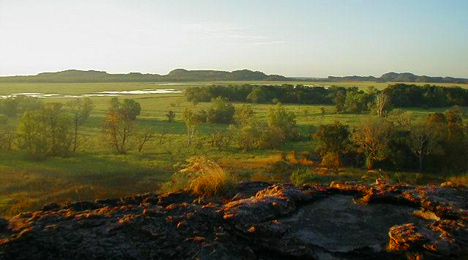
“I have said no to uranium mining at Koongarra because I believe that the land and my cultural beliefs are more important than mining and money,” said Mr. Lee.
A French company reportedly offered Mr. Lee $5 million to withdrawn his opposition to uranium development plans.
Although Koongarra lies within the Kakadu area, a ruling in 1979 prevented its inclusion in the park, in order to leave open the possibility of development of its uranium resources, estimated to stand at around 14,000 tonnes.
Former Prime Minister Bob Hawke as well as Federal Environment Minister Tony Burke joined Mr. Lee to make the announcement as well as hail the government’s decision.
Australian government kept secret on atomic bomb tests’ effects on Aborigines
 a detailed description of how nuclear authorities denied diagnosis for decades, “lost” medical records, when diagnosis of survivors was made 3 decades after the event, the event which caused the symptoms was not referenced and specifically in relation to recurrent local radiation injury to skin, which can become a chronic and cyclic event, outbreaks of symptoms recurring in cycles over decades. This is diagnosed in at least some cases, one specifically known to me, not as local radiation injury (beta burn) but as psoriasis.
It is an easy thing to deny diagnosis, as was done – affected people asked for diagnosis in 1953 and later and doctors in Australia REFUSED to give a diagnosis.
Now, in 2013, British authorities claim nothing can be proven to show it is liable for the suffering and death it visited by its actions and in concert with Australian authorities upon Aboriginal people
 Aboriginal Truth Buried Under Atomic Fudge, Paul Langley’s Nuclear history Blog, 19 Jan 13 The refusal of British authorities to acknowledge that British nuclear weapon testing in Australia in the 1950s and related “minor trials” which continued into the 1960s (including some which contravened the spirit if not the bones of the LTBT) and the Operation Brumby “cleanup” which resulted in a worsened situation of contamination on Aboriginal land.
For many years a sign on the road from Maralinga to Oak Valley warned people to stay in their vehicles.
On this same land Aboriginal people hunted and hunt and gather.
A Vulcan bomber fired a loaded but disarmed nuclear missile over the Maralinga Range. The missile overshot its target, resulting in the missile disintegrating and spreading plutonium dust over a wide area off of the Range.
In the 1980s the Adelaide Advertiser reported on the discovery of plutonium in the Oak Valley school yard and buildings. The white teachers refused to work and returned to Adelaide. The people of Oak Valley had to continue to live there. Continue reading
In Mali – a war for grabbing resources – especially uranium
 Uranium: encouraging signs and exploration in full swing. Exploration is currently being carried out by several companies with clear indications of deposits of uranium in Mali. Uranium potential is located in the Falea area which covers 150 km² of the Falea- North Guinea basin, a Neoproterozoic sedimentary basin marked by significant radiometric anomalies. Uranium potential in Falea is thought to be 5000 tonnes. The Kidal Project, in the north eastern part of Mali, with an area of 19,930 km2, the project covers a large crystalline geological province known as L’Adrar Des Iforas. Uranium potential in the Samit deposit, Gao region alone is thought to be 200 tonnes.
The War on Mali What You Should Know: An Eldorado of Uranium, Gold, Petroleum, Strategic Minerals SPY GhanaBy 4thmedia.org R. Teichman, News Beacon Ireland, 17 Jan 13
The French government has stated that: …… We have one goal. To ensure that when we leave, when we end our intervention, Mali is safe, has legitimate authorities, an electoral process and there are no more terrorists threatening its territory.” [1]
So this is the official narrative of France and those who support it. And of course this is what is widely reported by the mainstrem media.
France is supported by other NATO members. US Defense Secretary Leon Panetta confirmed that the US was providing intelligence to French forces in Mali. [2] Canada, Belgium, Denmark and Germany have also publicly backed the French incursion, pledging logistical support in the crackdown on the rebels. [3]
If we are to believe this narrative we are misled again about the real reasons. A look at Mali’s natural resources reveals what this is really about. Continue reading
It’s the uranium, stupid! France’s war in Mali
Although Niger has been France’s primary uranium trading partner in the region, investors are currently estimating 5,200 tonnes of untapped uranium sources in Mali, making the requirements of a favourable government and a suppressed civil society all the more urgent.
 The curbs on civil liberties in the West which the so-called War on Terror forces upon citizens is part of the same struggle that activists in West Africa are fighting against uranium mining corporations
Blood for Uranium: France’s Mali intervention has little to do with terrorism http://ceasefiremagazine.co.uk/blood-uranium-frances-mali-intervention-terrorism/ Adam Elliott-Cooper looks at the geo-strategic and economic interests shaping the current French intervention in Mali. 17 Jan 13, France opened 2013 with a series of airstrikes on Northern Mali to prevent “the establishment of a terrorist state”. At the time of writing, 11 civilians (including two children) have been killed, and according to the UN, an estimated 30,000 have been displaced. The morbid irony of the France’s leaders bombing people in order to prevent a “terrorist state” appears to be lost on them, but this may be due to their eyes being on something far more important – Mali’s economy. (Picture: Activists in Niger protesting uranium mining company AREVA) Continue reading
The Western lifestyle is not our only choice, we can change
the visionary realm of the Aborigines represents one of the great experiments in human thought
Studies of the human genome leave no doubt that the genetic endowment of humanity is a single continuum. Race is a fiction. We are all cut from the same genetic cloth, all descendants of a relatively small number of individuals who walked out of Africa some 60,000 years ago and then, on a journey that lasted 40,000 years, some 2,500 generations carried the human spirit to every corner of the habitable world.
It follows, as Boas believed, that all cultures share essentially the same mental acuity, the same raw genius. …..
The Victorian notion of the savage and the civilised, with European industrial society sitting proudly at the apex of a pyramid of advancement that widens at the base to the so-called primitives of the world, has been thoroughly discredited – indeed, scientifically ridiculed for the racial and colonial notion that it was, as relevant to our lives today as the belief of 19th-century clergymen that the Earth was but 6,000 years old….. Continue reading
Idle No More – indigenous movement spreads beyond Canada
Why Idle No More matters, Montreal Gazette, The aboriginal protest
movement fits into a pattern that suggests we are entering a new era
of collective action
By Celine Cooper, Special to The Gazette December 30, 2012 MONTREAL —
In a teepee on Victoria Island in the Ottawa River just a stone’s
throw from Parliament Hill, Attawapiskat First Nations Chief Theresa
Spence is engaging in a hunger strike. Her actions have come to
represent the growing social movement known as Idle No More.
Set into motion and founded by four women from Saskatchewan — Sheelah
McLean, Nina Wilson, Sylvia McAdam and Jessica Gordon — Idle No More
(#idlenomore on Twitter) has gained momentum as an indigenous-led
protest against the mammoth omnibus Bill C-45 tabled by the federal
Conservative government this month. Critics of the bill have taken
particular issue with its amendments to the Indian Act and the
Navigable Waters Act, arguing that it disrespects treaty rights and
aboriginal sovereignty and erodes protection of the environment. Continue reading
The exploitation of indigenous peoples by uranium mining companies
 Nuclear dangers real and widespread
BY HELEN CALDICOTT, THE STARPHOENIX NOVEMBER 9, 2012
Caldicott is founding president of Physicians for Social
Responsibility and was featured in the Oscar winning film, If You Love
This Planet.
I write to reply to the allegations made about me in John Gormley’s
column, More private liquor stores, less Caldicott (SP, Nov. 2).
First, it is important for me to stress that the aboriginal people in
Northern Saskatchewan are being exploited by the uranium and nuclear
power industry, as they have routinely been in the United States and
Australia.
People who have lived benignly with nature for tens of thousands of
years have been forced to allow mining companies to extract uranium
from beneath their feet and to work in the mines.
Ample evidence abounds in the scientific literature that one-fifth to
one-half of uranium miners in North America have suffered from lung
cancer. Furthermore, uranium miners are also exposed to carcinogenic
whole body gamma radiation as well as the ingestion of radium – the
element that induced leukemia in Madame Marie Curie.
Many indigenous people who live near uranium mines are also exposed to
radioactive elements, and newly elevated rates of cancer are now
reported in these populations. We don’t know exact numbers because the
Saskatchewan government has not performed a baseline health study on
the populations affected.
As if this ecological danger were not enough, the nuclear industry is
proposing to bury 37,000 tonnes of extremely toxic, high level
long-lasting radioactive waste from Canadian nuclear reactors among
this vulnerable group of people, which, it is claimed will give them
jobs.
As the isotopes inevitably leak, they will contaminate the food chain
for evermore inducing more malignancies and genetic disease over
future generations…..http://limitlesslife.wordpress.com/2012/12/28/nuclear-dangers-real-and-widespread/
Prairie Island Indian Community raised matters opposing 40-year extension of nuclear license
Tribe to get hearing on Prairie Island nuclear waste concerns
http://www.startribune.com/business/184841971.html?refer=y
by: DAVID SHAFFER , Star Tribune December 26, 2012 –
A federal panel will consider some of the issues raised by the nuclear
plant’s neighbors. Xcel Energy Inc. faces more scrutiny from a federal
panel reviewing the utility’s requested 40-year extension of its
license to store high-level nuclear waste at its power plant in Red
Wing, Minn.
The Atomic Safety and Licensing Board, in a ruling released Friday,
said the Indian tribe living next to Xcel’s Prairie Island nuclear
power plant and waste-storage site has raised several contentions
about the license extension that warrant a hearing before the board’s
three-judge panel.
A core issue — whether the “temporary” cask storage is becoming
permanent — was set aside by the panel while its parent agency, the
U.S. Nuclear Regulatory Commission, studies the problem across the
nation. A federal appeals court in June struck down the commission’s
waste storage rules, forcing another look at the implications of
keeping radioactive waste at reactor sites for up to 60 years.
“We are dealing with regulations that were established 30 years ago
for what everybody thought would be 10 to 20 years of storage,” said
Phil Mahowald, general counsel for the Prairie Island Indian
Community.
Indigenous community resisting nuclear reactor in Eastern Cape, South Africa
 the Gamtkwa community still feels marginalised
and establishing a nuclear reactor atop a priceless heritage site is
likely to alienate them further.
There goes the neighbourhood…and here comes nuclear, Mail and
Guardian, Africa,
 21 DEC 2012 05:00 – LIONEL FAULL
What happens when government plans to build a nuclear plant in your
hometown? Lionel Faull went to the Eastern Cape to find out.The
process of rolling out a massive nuclear power expansion programme
gained momentum in November when the Cabinet endorsed electricity
utility Eskom as the owner and operator of the proposed new nuclear
power stations. But the plan still faces an uphill public battle, not
least from the people in whose back yard the first new nuclear
behemoth is going to be carved out.
The Mail & Guardian went to Thyspunt in the Eastern Cape, where Eskom
is finalising the environmental plan for its preferred site, to hear
what locals have to say about living next door to nukes……. Continue reading
1 This Month
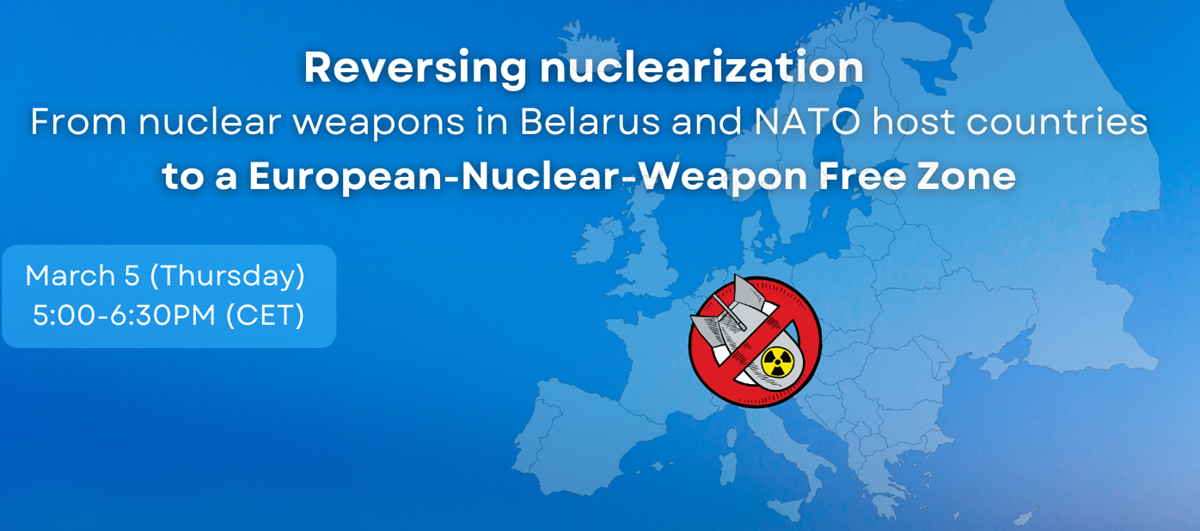
5 March -Online – Reversing nuclearization:
From nuclear weapons in Belarus and NATO host countries to a European-Nuclear-Weapon Free Zone
11am-12:30pm Eastern Time USA / 5pm-6:30pm CET

of the week – Advocating for a
nuclear free beach – https://www.samuellawrencefoundation.org/
The Samuel Lawrence Foundation advocates for a Nuclear Waste Free Beach at San Onofre, join us and take action!

10 March A LIVE WEBINAR THE REAL EFFECTS OF NUCLEAR POWER
What the Industry Isn’t Telling Us
1:00 PM Mountain, 2 pm Central, 3 pm Eastern. Live on the Keepers of the Water Facebook page

18 March Webinar @ 1 PM EST: An Assessment of SMR Projects: The Case of Canada
register for the zoom:
https://us02web.zoom.us/webinar/register/WN_o8BIIOUvQ2ONJR1nta65DQ#/registration

of the week – STOP SMALL MODULAR REACTORS IN CANADA
To see nuclear-related stories in greater depth and intensity – go to https://nuclearinformation.wordpress.com
-
Archives
- March 2026 (51)
- February 2026 (268)
- January 2026 (308)
- December 2025 (358)
- November 2025 (359)
- October 2025 (376)
- September 2025 (258)
- August 2025 (319)
- July 2025 (230)
- June 2025 (348)
- May 2025 (261)
- April 2025 (305)
-
Categories
- 1
- 1 NUCLEAR ISSUES
- business and costs
- climate change
- culture and arts
- ENERGY
- environment
- health
- history
- indigenous issues
- Legal
- marketing of nuclear
- media
- opposition to nuclear
- PERSONAL STORIES
- politics
- politics international
- Religion and ethics
- safety
- secrets,lies and civil liberties
- spinbuster
- technology
- Uranium
- wastes
- weapons and war
- Women
- 2 WORLD
- ACTION
- AFRICA
- Atrocities
- AUSTRALIA
- Christina's notes
- Christina's themes
- culture and arts
- Events
- Fuk 2022
- Fuk 2023
- Fukushima 2017
- Fukushima 2018
- fukushima 2019
- Fukushima 2020
- Fukushima 2021
- general
- global warming
- Humour (God we need it)
- Nuclear
- RARE EARTHS
- Reference
- resources – print
- Resources -audiovicual
- Weekly Newsletter
- World
- World Nuclear
- YouTube
-
RSS
Entries RSS
Comments RSS
 nuclear-news