Nuclear bomb tests on Bikini Atoll – the 70th anniversary
 70th Anniversary of Operation Crossroads Atomic Tests in Bikini Atoll, July 1946
EXCELLENT VIDEOS and PHOTOS, National Security Archive Government Films and Photographs Depict Test “Able” on 1 July 1946

 Removal of 167 Bikinians from the Atoll Preceded the Atomic Tests
National Security Archive Electronic Briefing Book No. 553 July 1, 2016 Edited by William Burr with Stav Geffner For more iThe Atomic Tests at Bikini Atoll, July 1946nformation contact: William Burr at 202/994-7000 or nsarchiv@gwu.edu.
The Atomic Tests at Bikini Atoll, July 1946 Washington, D.C., July 1, 2016 – Seventy years ago this month a joint U.S Army-Navy task force staged two atomic weapons tests at Bikini atoll in the Marshall Islands, the first atomic explosions since the bombings of Japan in August 1945. Worried about its survival in an atomic war, the Navy sought the tests in order to measure the effects of atomic explosions on warships and other military targets. The test series was named Operation Crossroads by the task force’s director, Rear Admiral William Blandy. The first test, Able, took place on 1 July 1946. Of the two tests, the second, Baker, on 25 July 1946, was the most dangerous and spectacular, producing iconic images of nuclear explosions. A third test was scheduled, but canceled. Photographs and videos posted today by the National Security Archive document Crossroads, focusing on the Able test.
Also documented is the U.S. Navy’s removal, in early March 1946, of 167 Pacific islanders from Bikini, their ancestral home, so that the Navy and the Army could prepare for the tests. The Bikinians had the impression that the relocation would be temporary but the islands remain uninhabitable due to subsequent nuclear testing in the atoll……….
Video gallery
Australian government’s efforts to bully Aborigines into a nuclear waste dump on their land?
The plan to turn South Australia into the world’s nuclear waste dump has been met with near-unanimous opposition from Aboriginal people.
The Royal Commission acknowledged strong Aboriginal opposition to its nuclear waste proposal in its final report – but it treats that opposition not as a red light but as an obstacle to be circumvented.
Radioactive waste and the nuclear war on Australia’s Aboriginal people,Ecologist Jim Green 1st July 2016
Australia’s nuclear industry has a shameful history of ‘radioactive racism’ that dates from the British bomb tests in the 1950s, writes Jim Green. The same attitudes persist today with plans to dump over half a million tonnes of high and intermediate level nuclear waste on Aboriginal land, and open new uranium mines. But now Aboriginal peoples and traditional land owners are fighting back!
Then the government tried to impose a dump on Aboriginal land in the Northern Territory, but that also failed.
Now the government has embarked on its third attempt and once again it is trying to impose a dump on Aboriginal land despite clear opposition from Traditional Owners. The latest proposal is for a dump in the spectacular Flinders Ranges, 400 km north of Adelaide in South Australia, on the land of the Adnyamathanha Traditional Owners.
The government says that no group will have a right of veto, which is coded racism: it means that the dump may go ahead despite the government’s acknowledgement that “almost all Indigenous community members surveyed are strongly opposed to the site continuing.”
The proposed dump site was nominated by former Liberal Party politician Grant Chapman but he has precious little connection to the land. Conversely, the land has been precious to Adnyamathanha Traditional Owners for millennia.
It was like somebody ripped my heart out’
The site is adjacent to the Yappala Indigenous Protected Area (IPA). “The IPA is right on the fence – there’s a waterhole that is shared by both properties”, said Yappala Station resident and Adnyamathanha Traditional Owner Regina McKenzie.
The waterhole – a traditional women’s site and healing place – is one of many archeological and culturally significant sites in the area that Traditional Owners have registered with the South Australian government over the past six years. Two Adnyamathanha associations – Viliwarinha Aboriginal Corporation and the Anggumathanha Camp Law Mob – wrote in November 2015 statement:
“Adnyamathanha land in the Flinders Ranges has been short-listed for a national nuclear waste dump. The land was nominated by former Liberal Party Senator Grant Chapman. Adnyamathanha Traditional Owners weren’t consulted. Even Traditional Owners who live next to the proposed dump site at Yappala Station weren’t consulted. This is an insult.
“The whole area is Adnyamathanha land. It is Arngurla Yarta (spiritual land). The proposed dump site has springs. It also has ancient mound springs. It has countless thousands of Aboriginal artefects. Our ancestors are buried there.
“Hookina creek that runs along the nominated site is a significant women’s site. It is a registered heritage site and must be preserved and protected. We are responsible for this area, the land and animals.
“We don’t want a nuclear waste dump here on our country and worry that if the waste comes here it will harm our environment and muda (our lore, our creation, our everything). We call on the federal government to withdraw the nomination of the site and to show more respect in future.”
Regina McKenzie describes getting the news that the Flinders Ranges site had been chosen from a short-list of six sites across Australia: “We were devastated, it was like somebody had rang us up and told us somebody had passed away. My niece rang me crying … it was like somebody ripped my heart out.”
McKenzie said on ABC television: “Almost every waste dump is near an Aboriginal community. It’s like, yeah, they’re only a bunch of blacks, they’re only a bunch of Abos, so we’ll put it there. Don’t you think that’s a little bit confronting for us when it happens to us all the time? Can’t they just leave my people alone?”
Adnyamathanha Traditional Owner Dr Jillian Marsh said in an April 2016 statement:
“The First Nations people of Australia have been bullied and pushed around, forcibly removed from their families and their country, denied access and the right to care for their own land for over 200 years. Our health and wellbeing compares with third world countries, our people crowd the jails. Nobody wants toxic waste in their back yard, this is true the world over. We stand in solidarity with people across this country and across the globe who want sustainable futures for communities, we will not be moved.”
The battle over the proposed dump site in the Flinders Ranges will probably be resolved over the next 12 months. If the government fails in its third attempt to impose a dump against the wishes of Aboriginal Traditional Owners, we can only assume on past form that a fourth attempt will ensue……
Now Aboriginal people in South Australia face the imposition of a national nuclear waste dump as well as a plan to import 138,000 tonnes of high-level nuclear waste and 390,000 cubic metres of intermediate level waste for storage and disposal as a commercial venture.
The plan is being driven by the South Australian government, which last year established a Royal Commission to provide a fig-leaf of independent supporting advice. The Royal Commissioner is a nuclear advocate and the majority of the members of the Expert Advisory Committee are strident nuclear advocates.
Indeed it seems as if the Royal Commissioner sought out the dopiest nuclear advocates he could find to put on the Expert Advisory Committee: one thinks nuclear power is safer than solar, another thinks that nuclear power doesn’t pose a weapons proliferation risk, and a third was insisting that there was no credible risk of a serious accident at Fukushima even as nuclear meltdown was in full swing.
Announcing the establishment of the Royal Commission in March 2015, South Australian Premier Jay Weatherill said: “We have a specific mandate to consult with Aboriginal communities and there are great sensitivities here. I mean we’ve had the use and abuse of the lands of the Maralinga Tjarutja people by the British when they tested their atomic weapons.”
Yet the South Australian government’s handling of the Royal Commission process systematically disenfranchised Aboriginal people. The truncated timeline for providing feedback on draft Terms of Reference disadvantaged people in remote regions, people with little or no access to email and internet, and people for whom English is a second language. There was no translation of the draft Terms of Reference, and a regional communications and engagement strategy was not developed or implemented.
Aboriginal people repeatedly expressed frustration with the Royal Commission process. One example (of many) is the submission of the Anggumathanha Camp Law Mob (who are also fighting against the plan for a national nuclear waste dump on their land):
“Why we are not satisfied with the way this Royal Commission has been conducted:
Yaiinidlha Udnyu ngawarla wanggaanggu, wanhanga Yura Ngawarla wanggaanggu? – always in English, where’s the Yura Ngawarla (our first language)?
“The issues of engagement are many. To date we have found the process of engagement used by the Royal Commission to be very off putting as it’s been run in a real Udnyu (whitefella) way. Timelines are short, information is hard to access, there is no interpreter service available, and the meetings have been very poorly advertised. …
“A closed and secretive approach makes engagement difficult for the average person on the street, and near impossible for Aboriginal people to participate.”
The plan to turn South Australia into the world’s nuclear waste dump has been met with near-unanimous opposition from Aboriginal people. The Aboriginal Congress of South Australia, comprising people from many Aboriginal groups across the state, endorsed the following resolution at an August 2015 meeting:
“We, as native title representatives of lands and waters of South Australia, stand firmly in opposition to nuclear developments on our country, including all plans to expand uranium mining, and implement nuclear reactors and nuclear waste dumps on our land. … Many of us suffer to this day the devastating effects of the nuclear industry and continue to be subject to it through extensive uranium mining on our lands and country that has been contaminated.
“We view any further expansion of industry as an imposition on our country, our people, our environment, our culture and our history. We also view it as a blatant disregard for our rights under various legislative instruments, including the founding principles of this state.”
The Royal Commission acknowledged strong Aboriginal opposition to its nuclear waste proposal in its final report – but it treats that opposition not as a red light but as an obstacle to be circumvented.http://www.theecologist.org/News/news_analysis/2987853/radioactive_waste_and_the_nuclear_war_on_australias_aboriginal_people.html
U.S. Court of Appeals rules nuclear waste can stay on indigenous land
Ruling will keep nuclear waste at Prairie Island indefinitely, Post Bulletin Brian Todd, btodd@postbulletin.com 16 June 16, WELCH — A ruling from the U.S. Court of Appeals for the District of Columbia Circuit will leave the spent nuclear fuel at the Prairie Island Nuclear Generating Plant right where it’s sitting for the foreseeable future.
The Court of Appeals on June 3 upheld a 2014 ruling that allows for the continued onsite storage of radioactive material, mostly spent nuclear fuel. The 2014 ruling is from a case brought by several states regarding the environmental impact, and potential health and safety concerns regarding on-site storage of radioactive materials.
Shelley Buck, Prairie Island Indian Community Tribal Council president, said the community’s worst fear is that the nuclear waste will remain on the tribe’s ancestral homeland forever.

“Our fears are much closer to reality because of this ruling,” Buck said.
Buck described the spent fuel as “some of the most dangerous and toxic substances known to mankind.” That nuclear waste, she said, is stored 600 yards from the homes of some of the community’s members.
“We are frustrated that the U.S. Court of Appeals has failed to consider the very real health and safety impacts of permanent on-site storage of highly radioactive nuclear waste,” she said…….http://www.postbulletin.com/news/local/ruling-will-keep-nuclear-waste-at-prairie-island-indefinitely/article_c2774613-7455-5c92-a87d-8bc0bd2d3339.html
Cultural genocide – nuclear waste dumping in Australia: Take a stand!
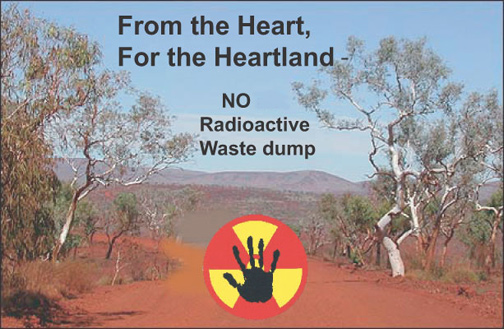 Stop Australia From Committing “Cultural Genocide” and Environmental Injustice http://www.truth-out.org/news/item/36006-stop-australia-from-committing-cultural-genocide-and-environmental-injustice, 14 May 2016 By Jessica Ramos, Care2 | Report Australia is about to make a horrible mistake. The country has (at least, tentatively) earmarked the location of its first nuclear dumping site next to an aboriginal cultural site. And the aboriginal community is speaking out — calling the proposed site “cultural genocide.” Australia is on the path to repeating the United States’ past mistakes and environmental injustices.
Can You Put a Price on Cultural Genocide and Death? Yes, Apparently
The traditional lands at the center of the controversy belong to the Adnyamathanha, also known as the “rock people,” from Flinders Ranges, South Australia. In 2009, the Federal Court of Australia recognized the Adnyamathanha’s native rights over 16,000 square miles of territory. But a nuclear dumping site of low- and intermediate-level nuclear waste (e.g. from medical procedures) endangers their territory and legal rights.
As reported in The Guardian, Wallerberdina Station (a cattle station) near Barndioota — less than 500km north of Adelaide in the Flinders Ranges — was originally one of six sites selected for the proposed nuclear dump last year, but now it’s the only location under consideration after a “four-month consultation process.” I’m not sure who was consulted, but it doesn’t appear to be the Adnyamathanha.
“This is our land, we have been here forever and we will always be here and we are totally opposed to this dump,” says Vince Coulthard, the Adnyamathanha Traditional Lands Association (ATLA) chief executive, to The Guardian. Apart from calling the move “cultural genocide,” Coulthard adds that the community has been mostly excluded from the decision-making process.
Important Adnyamathanha cultural sites near the proposed dumping site need to be taken into consideration. Hookina Creek, a women’s place and registered heritage site, is one of these sites. When Regina McKenzi, an Adnyamathanha woman, learned about the proposed dumping area coming to her ancestral lands, she told The Guardian that she felt like she was “getting news of a death.”
But, hey, the Adnyamathanha will be compensated for, so that’s something — right? As reported in The Guardian, Josh Frydenberg MP, the Minister for Resources, Energy and Northern Australia, explains that the Adnyamathanha community will receive $2m for local projects and $10m if the Wallerberdina Station is ultimately selected. Frydenberg adds that consulting the aboriginal community is the next wave of the process — even though it should’ve been a priority since the process’ inception, in my humble opinion.
National Treasures, Not Nuclear Dumping Sites
If you’re from the United States, then this whole ordeal should sound somewhat familiar. When I wrote about the massive mine spill caused by the EPA near the Navajo Nation last year, it was hard not to reflect on the ways indigenous communities experience environmental injustice. The Navajo Nation is probably the most infamous and prominent example with its long history of uranium mining that caused high rates of cancers and lung disease in the community.
But this form of injustice isn’t limited to one tribe. According to the Scientific American, “[n]ative tribes across the American West have been and continue to be subjected to significant amounts of radioactive and otherwise hazardous waste as a result of living near nuclear test sites, uranium mines, power plants and toxic waste dumps.”
Environmental injustice just doesn’t compromise the physical health of the locals. It also compromises the environment, and, ultimately, the cultural health. To this day, many indigenous identities are intricately tied to ancestral lands. By polluting sacred, ancestral and/or historical sites, these companies and governments are also polluting ancestral memories and robbing future generations of their ancestral identities. Millions of dollars can never compensate for these past and future losses.
Cultures, languages, traditions and stories that have survived centuries of colonization are national treasures — not nuclear dumping sites.
Take Action!
The final decision for the nuclear dumping site will occur in a year, please act now by signing and sharing this petition urging Australian leaders not to dump nuclear waste near Adnyamathanha territory.
Indigenous people push for decontamination of Los Alamos National Laboratory atomic research area
Tribe on front lines of fight over nuclear lab contamination Seattle Times, April 4, 2016 By SUSAN MONTOYA BRYAN The Associated Press ALBUQUERQUE, N.M. (AP) — The tribal community of San Ildefonso Pueblo sits in the shadow of Los Alamos National Laboratory, one of the nation’s premier laboratories and the birthplace of the atomic bomb.
The tribe is on the front lines of a battle to rein in contamination left behind by decades of bomb-making and nuclear research.
Pueblo Gov. James Mountain says he’s encouraged that New Mexico regulators, under a revamped cleanup proposal, have identified as a priority a plume of chromium contamination at the tribe’s border with the lab.
San Ildefonso Pueblo, in northern New Mexico’s high desert, has a tribal enrollment of about 750. Its members are known for their artistry, creating jewelry, paintings, traditional black-on-black pottery and other works.
Groundwater sampling shows increasing chromium concentrations at the edges of the plume, indicating it’s migrating through an area considered sacred by the tribe and closer to the Rio Grande, which provides drinking water to communities throughout the region. The plume has stretched about 1 mile into the upper part of the regional aquifer, and is about a half-mile wide and 100 feet thick.
It’s about a half-mile from the closest drinking water well.
“Without a doubt, it definitely raises concerns,” Mountain said.
The contamination was first detected more than a decade ago, and officials traced it to potassium dichromate used to prevent corrosion inside cooling towers at Los Alamos lab’s power plant. As part of regular maintenance from 1956 to 1972, the chemicals were discharged into canyons below…….
The U.S. Energy Department’s Office of Environmental Management is asking for $189 million for work at the lab next fiscal year. That would pay for handling radioactive waste stored at the lab, as well as completing the chromium investigation.
“The essence is groundwater is precious in New Mexico so we take threats to groundwater very seriously,” he said. “We certainly think there’s an elevated risk associated with any contamination to groundwater.”
The area also is home to flaked stone tools, ceramic shards and even a wagon road that dates back to the homestead period of the 1800s.
“It’s a very important area to the pueblo,” Mountain said. “And it’s not just on the parameters of physical inhabitation. There’s an effect on the pueblo’s health and welfare, on our mental well-being, our spiritual well-being.” http://www.seattletimes.com/nation-world/tribe-on-front-lines-of-fight-over-nuclear-lab-contamination/
South Australian Aborigines strongly resist plans for international nuclear waste importing
18 Mar 16 Traditional Owners and members of the Aboriginal-led Australian Nuclear Free Alliance (ANFA) have today reaffirmed their opposition to the suggestion that South Australia should host a high level international nuclear waste dump. This announcement comes as the submission period closes for comments on the tentative findings of South Australian Nuclear Fuel Cycle Royal Commission
A major recommendation of the Commission to date has been that South Australia could host an international waste storage and disposal facility. This suggestion is strongly rejected by Aboriginal people across the state because of the risks posed to country and culture. Several Aboriginal communities throughout South Australia live with the negative impacts of the nuclear industry through uranium mining and nuclear weapons testing and are committed to resisting any further nuclear proposals.
“We have long memories; we remember the atomic weapons tests at Maralinga and Emu Fields and the ongoing denial around the lost lives and health impacts for Aboriginal people. We don’t want any nuclear projects here in South Australia and we won’t become the world’s nuclear waste dump,” said Arabunna elder and Australian Nuclear Free Alliance president Kevin Buzzacott.
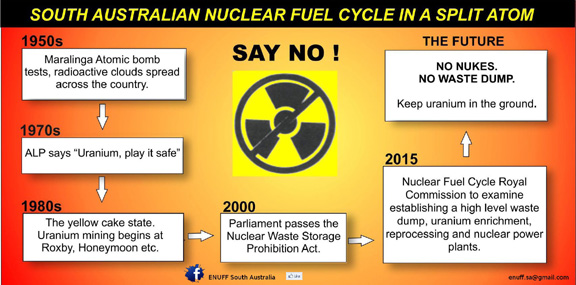
Enice Marsh, senior Adnyamathanha woman and Australian Nuclear Free Alliance member said:
“Any kind of radioactive waste dump would put our groundwater at risk. Groundwater is about survival; we don’t want to be faced with another huge risk like this.”
Sue Coleman-Haseldine is a Kokatha-Mula woman and co-chair of the Australian Nuclear Free Alliance. She has recently travelled to Vienna to share her family’s experience with the nuclear industry: “They’ve poisoned us once and there’s no way in the world they’re going to do it again.”
“This problem doesn’t stop at South Australia’s border, there is nowhere that should be designated an international waste dump,” Ms Coleman-Haseldine concluded.
Australian Aboriginal people oppose expansion of nuclear industry
 Traditional owners in the Flinders Ranges say nuclear waste dump threatens cultural heritage ABC NORTH AND WEST MICHAEL DULANEY Traditional owners in the Flinders Ranges say a Federal Government nuclear waste dump could destroy significant cultural heritage and countless sacred sites around a permanent spring. The lush vegetation and birdlife along Hookina Creek, 30 kilometres north of Hawker in South Australia, stands out even among the imposing space and scale of the central Flinders Ranges. Its permanent waters are fed by aquifers that bubble up to feed ‘an oasis’ of reeds and large eucalypts bursting from the dry heat and dust of the pastoral landscape.
It is an area integral to the lives of the Adnyamathanha people for generations and whose presence has left a rich cultural and archaeological record along the creek.
These waters are also just a few kilometres from Wallerberdina, a cattle station near Barndioota partly-owned by former Liberal senator Grant Chapman.
It is also one of six sites nominated to host Australia’s first nuclear waste dump.The Adnyamathanha people, who manage the Yappala Indigenous Protected Area which shares a boundary with Barndioota, said they were “shocked” by the prospect of storing Australia’s low and intermediate level nuclear waste so close to a significant cultural site.
Traditional owner Regina McKenzie said the facility would jeopardise their links to a place important for the present — a place where her children have learnt to swim and the family comes to camp — as well as the past, as seen in the tools, paintings and storylines that mark the area.
“The emotional stress we’re feeling is off the charts,” Ms McKenzie said. “We’re still the custodians here; we’ve always looked at it that way.”
The Adnyamathanha people are also worried about the risk from large floods known to hit the area, and elder Enice Marsh pointed out damage around the creek caused by the last flood a decade ago.
Ms Marsh said she feared the loss of her people’s heritage in the region if rising flood waters mixed with radioactive waste. “If we’re going to have that poison stuff here, even if it’s a low-level situation, it’s just absolute madness to put something like this near somewhere that’s so special,” she said.
“It’s everything; it’s a type of importance that you would never be able to describe. “The connection to this land for Adnyamathanha people is their culture, their customs; it’s their identity.”…….
With a final decision from the Government due by the end of the year, Ms McKenzie said the Adnyamathanha people would continue to oppose the expansion of the nuclear industry into their traditional lands.
“We’re feeling as though we’re being forced to do something we don’t want to do,” she said. http://www.abc.net.au/news/2016-02-24/traditional-owners-flinders-ranges-fears-on-nuclear-waste-dump/7195030
USA Dept of Energy wants to dump nuclear waste on Sacred Native American Lands
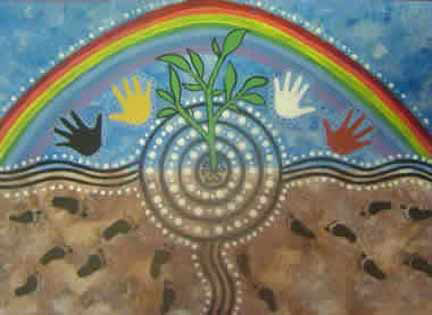
 Sacred Native American Lands Could Become Nuclear Waste Dump Derrick Broze February 22, 2016 (ANTIMEDIA) Nye County, Nevada —During the 1970s and 80s, a large movement of antinuclear and anti-war activists protested the growing acceptance of nuclear power and the possibility of an impending global nuclear war. The protesters were not only concerned with the Cold War breaking down into a hot war, but also with the dangers that nuclear technology presented to the environment and the health of the public……..
Unfortunately, Native communities in the region are not new to this type of exposure to radiation. From 1951 to 1992, the U.S. government used a 1,300-square mile patch of land known as the Nevada Test Site for nuclear weapons testing. 928 American and 19 British nuclear tests were conducted at the Nevada Test Site. Although no official tests have been conducted to examine the health effects on the Paiute and the Shoshone, the communities believe the radiation has affected their health — and the health of the land…….
The DOE is currently accepting public comment from communities, states, tribes, and other stakeholders regarding how to establish a nuclear waste repository with respect to the community. The DOE says it aims “to establish an integrated waste management system to transport, store, and dispose of commercial spent nuclear fuel and high level defense radioactive waste.” The public comment period ends on June 15, and the DOE and Nuclear Regulatory Commission will likely issue statements shortly after.
Ian Zaparte, representative of the Western Shoshone government, says the NRC and the DOE are ignoring the possibilities for danger in the area.
“There are 26 faults, seven cinder cone volcanoes, 90 percent of the mountain is saturated with 10 percent water,” Zaparte told MintPress. “If you heat the rock, it will release that water. If the water comes up and corrodes the canisters, it will take whatever is in storage and bring it into the water and into the valley.”
However, Ian Zaparte takes his criticism of the project even further. He believes the actions taken by the U.S. government constitute acts of genocide against the Western Shoshone and other tribal nations who have been subject to the effects of nuclear testing and power. He is determined to fight for his people’s way of life and the land that his ancestors fought for. http://theantimedia.org/sacred-native-american-lands-could-become-nuclear-waste-dump/
Moapa Band of Paiute Indians fear a nuclear waste dump being imposed at Yucca Mountain
The Battle Continues To Stop Yucca Mountain From Becoming A Nuclear Waste Dump Not far from the site of 40 years of nuclear weapons testing, a proposed long-term nuclear waste dump draws opposition from the Shoshone and Paiute Nations, environmental activists and even Nevada state officials. MintPress News, By Derrick Broze | February 18, 2016 The Moapa River Reservation is downwind of the Nevada Test Site, and locals have long maintained that radiation has harmed the health of the local population.
“We hope that that stuff [radiation] went up in the air and blew over us,” Vernon Lee, a Southern Paiute with the , who has lived on the Moapa River Reservation since 1973, told MintPress News. “We know that we got some because we are just east of the testing, but we hope we got less.”
Areas around the test site, particularly those located “downwind,” saw increases in cancers, including leukemia, lymphoma, thyroid cancer and brain tumors, throughout the entire span of the nuclear weapons testing. A 1984 study by the Journal of the American Medical Association found increased rates of canceramong Mormon families as far away as southwestern Utah, for example.
For Lee, the decades of environmental degradation and risks to human health reflect a much larger issue. The problem, he believes, is that the U.S. government does not recognize the tribal nations as equals. Officially, the U.S. Department of Interior states that the U.S. government operates under a “federal Indian trust responsibility,” a legal obligation that includes “moral obligations of the highest responsibility and trust” toward Native American tribes.
“To me, that doesn’t exist. It’s a word on paper, but I don’t think I have ever seen it put into practice,” Lee said.
“Trust responsibility, to me, is that government-to-government relationship that they are supposed to have with the tribes. It’s ridiculous the way the U.S. government treats the sovereign tribes. It’s very unfair.”
Native communities have a long history of resources discovered beneath the reservations being exploited by the U.S. government and supported industries. These communities have suffered exposure to dangerous substances through uranium mining and milling. In Nevada, the lives of generations of Western Shoshone and Moapa Paiute have become intertwined with the history of nuclear weapons testing and, more recently, the disposal of nuclear waste from faraway power plants.
“There are multiple problems. Moving the waste is a problem. High risk, unnecessary risk. If the company is ever going to benefit from nuclear power they should process it and store it themselves. Stop shipping it across the country and exposing the population to a potential disaster,” Lee said, alluding to the controversial long-term nuclear waste repository planned for Yucca Mountain, about a three hours’ drive from the reservation……….. http://www.mintpressnews.com/the-battle-continues-to-stop-yucca-mountain-from-becoming-a-nuclear-waste-dump/213976/
The continuing saga of the plan to dump nuclear waste on Yucca Mt – an act of genocide
for Zaparte, the actions taken by the U.S. government so far constitute an act of genocide against the Western Shoshone and other tribal nations who have been subject to the effects of nuclear testing and power. He is determined to fight for his people’s way of life and the land that his ancestors fought for.
“We have a deliberate act by the United States to systematically dismantle my living life ways for the profit of the nuclear industry and the benefit of the United States,” Zaparte said. “At the worst, this is genocide underthe U.N. Convention on the Prevention and Punishment of Genocide
The battle for Yucca Mountain The Battle Continues To Stop Yucca Mountain From Becoming A Nuclear Waste Dump Not far from the site of 40 years of nuclear weapons testing, a proposed long-term nuclear waste dump draws opposition from the Shoshone and Paiute Nations, environmental activists and even Nevada state officials. MintPress News, By Derrick Broze | February 18, 2016
“…………Commercial nuclear power plants produce spent nuclear fuel, a radioactive byproduct. High-level radioactive waste is also produced as spent nuclear fuel is reprocessed into material for nuclear weapons. Disposing of both of these byproducts is a difficult and dangerous task.
In response to growing concerns over nuclear waste storage, Congress passed the federal Nuclear Waste Policy Act in 1982, which charged the Department of Energy with finding a place to build and operate a geologic repository, or underground nuclear waste disposal facility. Operating on the notion that the safest way to dispose of the waste is to bury it in rock deep underground, the DOE studied several sites for a possible geologic repository before settling on Yucca Mountain, located 100 miles northwest of Las Vegas.
The plan for the Yucca Mountain Nuclear Waste Repository had the support of President George W. Bush, but met with opposition from Nevada state officials and environmental and Native activists, who fear that the rock at Yucca Mountain will not be able to contain nuclear waste for long periods of time.
In 2009, environmental and anti-nuclear organizations, including Beyond Nuclear, Greenpeace, Center for Health, Environment & Justice, and the International Society for Ecology, sent a letter to President Barack Obama calling the selection of the Yucca Mountain site “a purely political decision.” They argued that it has been been evident since 1992 that the site “could not meet the EPA’s general radiation protection standard for repositories.”
Obama opted to end funding for the project, setting off an ongoing legal battle. In August 2013, the U.S. Court of Appeals for the District of Columbia ordered the Nuclear Regulatory Commission to approve or reject the DOE application for the proposed waste storage site at Yucca Mountain. The Associated Press reported:
“In a sharply worded opinion, the court said the nuclear agency was ‘simply flouting the law’ when it allowed the Obama administration to continue plans to close the proposed waste site 90 miles northwest of Las Vegas. The action goes against a federal law designating Yucca Mountain as the nation’s nuclear waste repository.”
In January 2015 the NRC concluded that the DOE’s license application for Yucca Mountain satisfies nearly all of the commission’s regulations. The commission must now clear all challenges from the state of Nevada and Native communities, a process which could take several more years.
Then, in August, the NRC released a supplement to the DOE’s 2002 and 2008 environmental impact statements for the planned nuclear waste repository. The NRC’s report evaluates different potential radiological and non-radiological impacts on the environment, soil, and public health, and the potential for disproportionate impacts on minority or low-income populations. The NRC wrote:
“…[T]he NRC staff finds no environmental pathway that would affect minority or low-income populations differently from other segments of the general population. Therefore, the NRC staff concludes that no disproportionately high and adverse health or environmental impacts would occur to minority or low-income segments of the population in the Amargosa Valley area.”
The nonprofit environmental advocacy group Natural Resources Defense Council disagreed, stating that the NRC “still adheres to the flawed assumptions the DOE used to frame the foundation of its analysis of potential environmental impacts of the repository.”
As this process drags on, two companies are providing interim storage sites for the country’s nuclear waste. One is located in Andrews County, Texas, and owned by Waste Control Specialists. The other is anunderground storage site in Southeastern New Mexico, operated by Holtec International and the Eddy-Lea Alliance of New Mexico. Waste Control Specialists are hoping to turn the temporary West Texas facility into a long-term waste storage site.
An act of genocide?
About 90 miles from the money and vices of Las Vegas, Ian Zaparte stands at the base of Yucca Mountain, discussing the history of theft of Shoshone land and the threats posed by the Yucca Mountain Nuclear Waste Repository.
Zaparte represents the Western Shoshone traditional government and has been fighting in defense of his community and the planet for 30 years.
The Western Shoshone are one of 12 Indian nations whose chiefs signed the Treaty of Ruby Valley with the governors of the Nevada and Utah territory in 1863. In addition to recognizing the sovereignty of each of the Indigenous nations, the treaty gave the Indian nations ownership over millions of acres of land in Idaho, Nevada, California and Utah. It also allowed settlers access to the land for gold mining and homesteading, but did not give them title.
However, a history of land grabs through controversial legal means saw that land handed over to various agencies of the U.S. government, including the Bureau of Land Management. In 1979, the U.S. put $26 millionin a fund for the Shoshone for title to 24 million acres, but the tribe declined the money. The Supreme Court ruled six years later that the settlement, whether officially accepted by the tribe or not, extinguished the Shoshones’ claim to the land.
Essentially, the U.S. government has stated that encroachment upon Indian lands by settlers, railroads, telegraphs, ranches and gold mines extinguished the Shoshone claim to the land. In 2006, the United Nations Committee on the Elimination of Racial Discrimination found “credible information alleging that the Western Shoshone indigenous people are being denied their traditional rights to land.”
According to a University of Michigan Environmental Justice Case Study:
“The Western Shoshone argue that the basis of this plenary federal power is rooted in the colonial arrogance of the 17th century, and the laws that gave the United States Government control over the Native Americans are ‘extensions of Christian claims to world supremacy.’”
Since the Western Shoshone have lost claims to their traditional lands, the U.S. government is free to use the land for projects, such as nuclear weapons testing and the Yucca Mountain Nuclear Waste Repository.
Zaparte says the NRC and the DOE are ignoring the possibilities for danger in the area and denying the impact the Yucca Mountain Nuclear Waste Repository would have on local communities, including the Paiute and the Shoshone.
“There are 26 faults, seven cinder cone volcanoes, 90 percent of the mountain is saturated with 10 percent water,” Zaparte told MintPress. “If you heat the rock, it will release that water. If the water comes up and corrodes the canisters, it will take whatever is in storage and bring it into the water and into the valley.”
The DOE is currently accepting public comment from communities, states, tribes and other stakeholders on how to establish a nuclear waste repository with respect to the community. The DOE says it aims “to establish an integrated waste management system to transport, store, and dispose of commercial spent nuclear fuel and high level defense radioactive waste.” The public comment period ends on June 15, and the DOE and Nuclear Regulatory Commission will likely issue statements shortly after.
Although the Yucca Mountain project has stalled during the Obama administration, a new president, especially a nuclear-friendly president, could theoretically rally for funding of the Yucca Mountain Nuclear Waste Repository. The timing of the DOE’s study could potentially make the Yucca Mountain a topic of debate in the 2016 presidential election.
Still, for Zaparte, the actions taken by the U.S. government so far constitute an act of genocide against the Western Shoshone and other tribal nations who have been subject to the effects of nuclear testing and power. He is determined to fight for his people’s way of life and the land that his ancestors fought for.
“We have a deliberate act by the United States to systematically dismantle my living life ways for the profit of the nuclear industry and the benefit of the United States,” Zaparte said. “At the worst, this is genocide underthe U.N. Convention on the Prevention and Punishment of Genocide.”………http://www.mintpressnews.com/the-battle-continues-to-stop-yucca-mountain-from-becoming-a-nuclear-waste-dump/213976/
Native Americans’ water supply contaminated by uranium mining
Native Americans Ask: What About Our Water Supply? http://m.voanews.com/a/native-americans-ask-what-about-our-water-supply/3188737.html Celebrities and politicians have rallied around the city of Flint, Michigan, where thousands of children have been exposed to unsafe levels of lead in drinking water. But Native Americans say they have been facing an even more dangerous water contaminant for decades – uranium – and received far less attentionThe Cold War arms race triggered a boom in uranium mining in the U.S. Between the 1940s and 1980s, uranium mining operations were carried out under a 19th century mining law that did not require them to clean up after themselves.When demand for uranium waned in the 1980s, companies simply walked away, leaving open pits and tunnels – and enormous amounts of radioactive waste. Today more than 15,000 abandoned uranium mines dot the U.S. West. Three-quarters of them are located on federal and tribal lands.
Ray Manygoats grew up near Tuba City, Arizona, near a now-abandoned uranium mine. He is no stranger to the substance the Diné (Navajo) people call “the yellow monster.”
“Yellow stuff was always everywhere,” Manygoats told the House Oversight Committee in 2007. “I saw liquids bubbling and tried to stay away from them…we would play in the yellowcake sand near the mill, jumping and rolling around in it.”
Manygoats has suffered from a variety of health troubles, including growths on his eyes; his father has respiratory problems.
Effects on drinking water
“There is a really large and convincing and definitive literature that shows that for miners working underground, uranium mining is associated with a greatly increased risk of lung cancer,” said Douglas Brugge, Professor of Public Health and Community Medicine at Tufts University School of Medicine. “We also know that uranium, radium, radon and arsenic – which is frequently in the ore as well – are toxic. And we know from a fairly large number of studies that people who are drinking water contaminated with uranium have some adverse health effects, mostly kidney damage.”
In 2014, University of New Mexico researchers sampled mine waste at one Arizona site and found uranium concentrations in spring water that was four times the federal drinking-water limit. Thirty percent of Diné lack access to public water and are forced to drink from unregulated wells, springs and livestock ponds, any of which could be contaminated.
Mining ongoing
Today, only a few companies continue to mine for uranium in the U.S. The most common method is in situ leaching: oxygenated water is injected into the earth, where it dissolves uranium. The solution is then brought back up to the surface and shipped off to processing plants.
In situ mining has been going on since 1988 in northwestern Nebraska, not far from the South Dakota Pine Ridge Reservation that is home to the Oglala Lakota people.
“We are 30 minutes away as the crow flies, fifteen minutes as the wind blows, from the mine site,” said Debra White Plume, executive director ofOwe Aku (“Bring Back the Way”), a grassroots Lakota environmental group.
White Plume and other concerned activists have gone up against one of the world’s largest mining corporations in an attempt to block it from opening up three new mines in the area.
Ninety-eight wells have had to be closed on Pine Ridge because of unusually high rates of cancer, kidney disease and other health problems, said White Plume. She’s convinced that uranium is to blame, and she grows frustrated over suggestions that poor diet or smoking could be a factor.
“Why do the innocent human beings at home have to prove that the big corporation is contaminating them? Why aren’t laws in place that say, ‘OK, if that corporation is going to come into our community, let them show us how they will not harm us, let them show us how they aren’t going to threaten everything we depend on for life: Water, food, air, land?’” she asked.
The US Environmental Protection Agency says it has spent more than $100 million to identify areas at highest risk, part of a multi-year plan to address uranium contamination across the country.
Native Americans sound the alarm on radioactive pollution
 Native Americans: ‘We Are The Miner’s Canary’ Indigenous Delegation Sounds Alarm on Homegrown Radioactive Pollution Crisis By Klee Benally, www.cleanupthemines.org, Popular Resistance January 23rd, 2016Washington, DC — From January 25-28, 2016 Indigenous representatives from the Northern Great Plains & Southwest were in the District of Columbia (DC) to raise awareness about radioactive pollution, an invisible national crisis. Millions of people in the United States are being exposed as Nuclear Radiation Victims on a daily basis. Exposure to radioactive pollution has been linked to cancer, genetic defects, Navajo Neuropathy, and increases in mortality. The delegation will speak about the impacts they are experiencing in their communities, which are also affecting other communities throughout the US.
“Native American nations of North America are the miners’ canaries for the United States trying to awaken the people of the world to the dangers of radioactive pollution”, states Charmaine White Face from the South Dakota based organization Defenders of the Black Hills.
South Dakota has 272 Abandoned Uranium Mines (AUMs) which are contaminating waterways such as the Cheyenne River, and desecrating sacred and ceremonial sites. An estimated 169 AUMs are located within 50 miles of Mt. Rushmore where millions of tourists risk exposure to radioactive pollution each year.
The delegation is warning of the toxic legacy caused by more than 15,000 AUMs nationwide, extreme water contamination, surface strip coal mining and power plants burning coal-laced with radioactive particles, radioactive waste from oil well drilling in the Bakken Oil Range, mill tailings, waste storage, and renewed mining threats to sacred places such as Mt. Taylor in New Mexico and Red Butte in Arizona.
Indigenous communities have been disproportionately impacted as approximately 75% of AUMs are located on federal and Tribal lands………https://www.popularresistance.org/native-americans-we-are-the-miners-canary/
Saugeen Nation May Be the key to decision on nuclear waste dump near Great Lakes
Saugeen Nation May Be Final Word in Nuclear Waste Storage Next to Lake Huron, Indian Country Today Konnie LeMay 12/11/15 Lots of voices have been heard about whether to dig a deep geological repository for storing low- and medium-level nuclear waste about half a mile down and less than a mile from Lake Huron.
Canadian and U.S. environmental groups and even members of the U.S. Congress have registered protests; some local municipality councils voted support, and a federally appointed joint review panel recommended licensing it. A decision, originally scheduled for mid-December, has been delayed until March 1, whenOntario Power Generationmay get a decision from the Ministry of the Environment about proceeding with its multimillion dollar, multi-decade project.
But whether a repository is constructed at that site could come down to just one voice —that of the people of the Saugeen First Nation.
“Ontario Power Generation had given us their commitment that they will not proceed unless they have community support. That’s a letter that we have on file,” Saugeen Chief Vernon Roote told Indian Country Today Media Network. Roote publically expressed his opposition in the November 2015Saugeen News, and also noted that he was concerned about simply moving the facility near other First Nations. “We might not be the best of friends when we push nuclear waste on our brothers’ and sisters’ territory.”
Saugeen leaders are determining how to gauge the community voice—by vote at public gatherings or perhaps at the polls—and whether they will favor the facility or not. They’ve held engagement sessions on the issue……
“We have a long list of fears, legitimate fears in our community about these facilities, interaction with our rights, our interests and our way of life,” then–Saugeen Ojibwe Nation Chief Randall Kahgee told Indian Country Today Media Network in 2013…….
Opponents of the deep underground repository point to its proximity to Lake Huron—less than one mile.
For the Saugeen and other nearby First Nations, water is the point. “It’s a natural reaction to say no to anything dangerous like nuclear waste, so there is a lot of negative,” said Roote. “We live so close to the lake that there’s going to have be some studies done in regards to the water and the dangers to water. That’s an example of how much work is needed.”…..
Roote said the Saugeen Nation might do its own studies and that other First Nations should be consulted. The Mohawk Council of Kahnawà:ke, for example, has come out against the proposed DGR and in aMay press releasesupported a Saugeen fight against the proposal.
“We’ve been keeping close watch on this situation, since the failed plan to ship the nuclear waste through the Seaway was announced a few years ago,” Mohawk Council of Kahnawà:ke Environment Portfolio Chief Clinton Phillips said in the statement. “While the Bruce Power plant is hundreds of kilometers from Kahnawà:ke, any potential nuclear contamination problem could nonetheless affect not only us but also the 40 million-plus people who use the Great Lakes/St. Lawrence River for drinking water.”…..http://indiancountrytodaymedianetwork.com/2015/12/11/saugeen-nation-may-be-final-word-nuclear-waste-storage-next-lake-huron-162731
Australian Aboriginal women renew their long hard fight against nuclear waste dumping
Aboriginal women reaffirm fight against nuclear waste dump in South Australia ABC Radio National, The World Today By Natalie Whiting 16 Oct 15 The first shipment of Australia’s nuclear waste to be returned from re-processing in France has now left a French port, and will arrive on our shores by the end of the year. The return of the 25 tonnes of nuclear waste is putting renewed pressure on the Federal Government to find a location for a permanent waste dump.
The shipment began its journey just a day after senior Aboriginal women gathered in Adelaide to mark their fight against a proposed dump in South Australia in the 1990s.
The women say they will fight against any new move to put the waste on their land…..
SA Aboriginal women remember waste dump victory A Federal Government plan to build a
 nuclear waste dump in the South Australian outback in 1998 attracted fierce opposition, especially among local Aboriginal people.
An event in Adelaide last night celebrated the work of a group of women called kupa piti kungka tjuta, who campaigned against the dump. Emily Austin from Coober Pedy was one of them. (centre in picture)
The women campaigned for six years until a Federal Court challenge from the South Australian government put an end to the dump. Ms Austin said she could remember the day the court found in South Australia’s favour.
“I was out in the bush hunting and I heard it on the radio in the Toyota. We were all screaming, ‘We won’.
“All the kungkas (women) were happy.”
While the Federal Government is in the midst of a voluntary process for finding a site for a dump, South Australia’s outback is still seen as an ideal location.
The South Australian Government’s attitude to the industry has been shifting.
It has launched a royal commission to investigate possible further involvement in the nuclear fuel cycle.The royal commission is looking at everything from mining uranium, processing, waste storage and nuclear power.
The organiser of last night’s event, Karina Lester, is the granddaughter of one of the women who campaigned and her father was blinded by the British nuclear tests at Maralinga half a century ago.
She said the Aboriginal people in South Australia’s north have a long and tortured history with the nuclear industry. “Maralinga’s had a huge impact because people speak from first-hand experience,” she said.
“People like the amazing kupa piti kungka tjuta, many of those old women who are no longer with us today, they were there the day the ground shook and the black mist rolled.
“It’s an industry that doesn’t sit comfortably with Anungu community.”
Ms Lester said it was good to see the royal commission consulting with people before a decision is made.”Credit to the royal commission that they’ve made an effort to engage with a broader community of Aboriginal communities,” she said.
“But how many of those Anangu are really understanding he technicality of this royal commission and what industry really means?” Ms Austin said she was ready to fight any future attempts to set up a waste dump in the region.
“Oh yeah, I’ve still got fight yet. They might stop yet, they might listen, I dunno,” she said. http://www.abc.net.au/news/2015-10-16/aboriginal-women-fight-against-nuclear-waste-dump-in-sa/6861012
Move for Grand Canyon Monument that would ban uranium mining
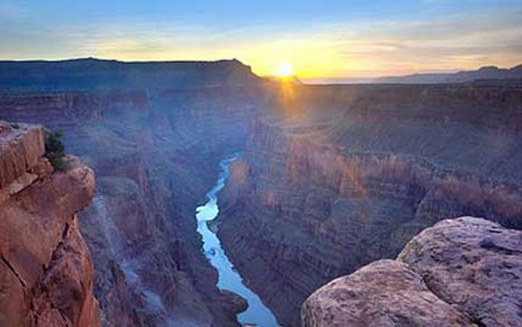 Grand Canyon Monument Would Make Uranium Ban Permanent http://www.fronterasdesk.org/content/10147/grand-canyon-monument-would-make-uranium-ban-permanent By Laurel Morales October 13, 2015 Arizona Congressman Raul Grijalva introduced legislation Monday that would preserve and restore sacred lands, the watershed and the environment north and south of Grand Canyon National Park. The Greater Grand Canyon Heritage National Monument Act would set aside 1.7 million acres of public land.
The area surrounding the Grand Canyon is rich in uranium. In 2012, the Obama administration put a 20-year moratorium on new uranium mining claims. If passed, the law would make that ban permanent.
Eleven tribes connected to the Grand Canyon support the bill. And if passed, they would help manage the monument.
Havasupai council member Carletta Tilousi told a group of reporters her tribe, that lives at the bottom of the Grand Canyon, is at the front lines of groundwater contamination.
“We the Havasupai would like to keep our canyon home clean of no uranium mining,” Tilousi said. “We’d like to see our water remain clean of no uranium mining. We’d like to see our children live in a clean environment, go to our sacred mountains in peace and pray and do our offerings.” This announcement comes at a time when the National Park Service says Energy Fuels has plans to reopen an old mine and extract uranium on Red Butte, what is considered a sacred site by the Havasupai Tribe.
Supporters of the legislation say it will be difficult to get the act through Congress.
1 This Month



Shut down the radiation-damaged Heysham nuclear reactors now
To see nuclear-related stories in greater depth and intensity – go to https://nuclearinformation.wordpress.com

Say No to NASA’s Reckless Nuclear Reactor on the Moon
Say No to NASA’s Reckless Nuclear Reactor on the Moon
-
Archives
- October 2026 (247)
- September 2026 (339)
- August 2026 (330)
- July 2026 (355)
- June 2026 (287)
- May 2026 (306)
- April 2026 (356)
- March 2026 (251)
- February 2026 (267)
- January 2026 (308)
- December 2025 (358)
- November 2025 (359)
-
Categories
- 1
- 1 NUCLEAR ISSUES
- business and costs
- climate change
- culture and arts
- ENERGY
- environment
- health
- history
- indigenous issues
- Legal
- marketing of nuclear
- media
- opposition to nuclear
- PERSONAL STORIES
- politics
- politics international
- Religion and ethics
- safety
- secrets,lies and civil liberties
- spinbuster
- technology
- Uranium
- wastes
- weapons and war
- Women
- 2 WORLD
- ACTION
- AFRICA
- Atrocities
- AUSTRALIA
- Christina's notes
- Christina's themes
- culture and arts
- Events
- Fuk 2022
- Fuk 2023
- Fukushima 2017
- Fukushima 2018
- fukushima 2019
- Fukushima 2020
- Fukushima 2021
- general
- global warming
- Humour (God we need it)
- Nuclear
- RARE EARTHS
- Reference
- resources – print
- Resources -audiovicual
- Weekly Newsletter
- World
- World Nuclear
- YouTube
-
RSS
Entries RSS
Comments RSS

