The hidden health crisis tied to America’s nuclear arsenal: How Native American families suffer the grisly side-effects from uranium mines

The Navajo Nation – a 27,000-square-mile piece of land that overlaps with parts of Arizona, New Mexico, and Utah – has more than 500 abandoned uranium mines that have been identified by the EPA.
‘The government was mining this uranium for the nuclear program, for nuclear weapons, and they put national security and having easy, inexpensive access to uranium ahead of the interests of the health and well-being of the people living there
By JAMES CIRRONE, US NEWS REPORTER, Daily Mail 25th Feb 2026 [Excellent pictures]
Teracita Keyanna’s youngest son was born with a hole in his heart after she spent decades living in a uranium-contaminated Navajo community in New Mexico.
Kravin Keyanna, now 19, spent the first decade of his life dealing with a severely weakened immune system. He constantly got ear infections, his mother said, which led to him having sensitive hearing.
‘We spent a lot of time in the hospital because he was more sickly than most kids,’ Teracita told the Daily Mail. ‘Because of his immune system, they didn’t want to do surgery on him because they were afraid that it was going to cause more harm in the long run.’
After about 11 years, his heart closed up on its own and healed without surgical intervention.
Meanwhile, Teracita’s 11-year-old daughter, Katherine, has continued to develop abnormal tissue growths underneath her top layer of skin near her lymph nodes.
‘She’s had to have them removed. And so she has gone through four different surgeries in five different locations,’ Teracita said. ‘Her first surgery was when she was 3 years old and the latest one was last year at 10 years old.’
Kravin and Katherine spent years of their childhood living on Red Water Pond Road, a Navajo settlement less than two miles away from the New Mexico border. Their family home was sandwiched between three abandoned uranium mines that remain highly toxic to this day.
These mines were part of a Cold War-era uranium boom that helped build America’s nuclear arsenal. Extraordinarily high levels of radiation from hundreds of long-forgotten sites in the Navajo Nation have exposed generations of Native American families to elevated health risks, including cancer and other unknown ailments.
Teracita was born in 1981 and has spent the majority of her life in the Red Water Pond Road community. Uranium ore extraction continued in the area until 1986 at the two nearby mining sites owned by Quivira Mining.
Mining at the United Nuclear Corporation-owned Northeast Church Rock Mine, immediately south of her ancestral home, lasted until 1982.
‘When I was young, nobody ever told me personally about the dangers of uranium,’ she said. ‘I didn’t know that the mines that were near my home were uranium mines. It was like living with a time bomb, and you didn’t even know that it was there.’
Doug Brugge, the chair of the Department of Public Health Sciences at the University of Connecticut School of Medicine, said Kravin and Katherine’s conditions cannot be definitively tied to uranium exposure. But he didn’t dismiss the possibility either.
Brugge led a project in the 1990s that interviewed Navajo uranium miners, many of whom developed lung cancer from the radon gas released when cutting into uranium ore.
The effects on them are ‘unequivocally well established,’ Brugge said. The effects on their wives, children and grandchildren are murkier and harder to pin down.
Brugge actually grew up in the Navajo Nation as one of the few white children among his peers. He left with his family when he was 14 and when he returned in his thirties to study the uranium issue, he heard many stories similar to Teracita’s.
‘The thing that has long bothered me is many people told us they didn’t know. They had no idea there was anything hazardous associated with this mining,’ he said. ‘A lot of them didn’t speak English. They had a limited education level. Their access to news and media was fairly limited.’
On top of a lack of communication from authorities about the dangers, Teracita said the mines near her did not have fences or barriers, which meant people and livestock could freely wander into contaminated areas.
n March 2024, the Environmental Protection Agency took soil samples from Church Rock No. 1, the nearest Quivira-owned mine to where Teracita lived.
Exposure to contaminated surface soil at and around the 44-acre site carried an estimated one-in-100 cancer risk — meaning one additional person out of every 100 exposed residents could develop cancer in their lifetime. About 30 families, including Teracita’s, lived near the mine as of 2006, according to the EPA.
Brugge said that level of risk is ‘really high’ and pointed out that the EPA is usually already concerned if it’s at one in 100,000 or one in a million.
Teracita also lived half a mile away from the Church Rock uranium mill, also owned by United Nuclear Corporation. Facilities like this can extract uranium from mined rock to produce a powder called ‘yellowcake’.
This material can later be converted for use as fuel in nuclear power plants or, at higher enrichment levels, in nuclear weapons. The process is not entirely clean, however, as it also produces sandy-looking radioactive waste called ‘mill tailings’.
In 1979, two years before Teracita was born, the Church Rock uranium mill had a catastrophic spill that sent 1,100 tons of mill tailings and 93 million gallons of radioactive wastewater into the Navajo Nation via the Puerco River.
There have not been extensive studies on the extent of the damage caused by this disaster, which to this day is considered the largest accidental release of radioactive material in US history.
While it is unknown how many people were possibly exposed and developed health conditions later in life, children who swam in the river or herded sheep across the water were left with serious burns on their skin.
Teracita said many of her neighbors and friends on Red Water Pond Road have mysteriously developed diabetes or cirrhosis of the liver without excessive drinking or smoking.
Teracita lived on Red Water Pond Road with her family until around 2018, when the EPA offered them financial assistance to move away while the agency cleaned up the mines. Prior to that, she had been exploring economically feasible ways to leave.
‘I was already trying to figure out what we could do for our kids in order to safeguard them further, considering that when I was a kid, nobody safeguarded me,’ she said.
The Department of Energy says there are a total of 4,225 uranium mines across the United States, the vast majority of them abandoned.
The Navajo Nation – a 27,000-square-mile piece of land that overlaps with parts of Arizona, New Mexico, and Utah – has more than 500 abandoned uranium mines that have been identified by the EPA.
This means the Navajo have just over 11 percent of the country’s abandoned mines within their borders, despite making up just 0.8 percent of America’s total landmass.
‘The government was mining this uranium for the nuclear program, for nuclear weapons, and they put national security and having easy, inexpensive access to uranium ahead of the interests of the health and well-being of the people living there” Brugge said.
It is not just the Navajo, who call themselves Diné in their language, who have been disproportionately exposed to the radioactive byproducts of mining operations, most of which ceased in the 1980s.
Although Native American land takes up 5.6 percent of the western US, about 25 percent of uranium mines in this area of the country are located within 6 miles of a reservation, a 2015 study from the Native American Budget & Policy Institute found………………………………………………………………………………………………………..
https://www.dailymail.co.uk/news/article-15503365/navajo-kids-health-defects-uranium-exposure-nuclear-weapons.html
Navajo lands at risk

by beyondnuclearinternational, https://beyondnuclearinternational.org/2026/01/11/navajo-lands-at-risk/
New proposal is extraction not remediation, warns the Navajo group, Dooda Disa
More than 500 abandoned uranium mines (AUMs) contaminate the Navajo Nation, and genuine cleanup is urgently needed. But cleanup must be grounded in strict environmental oversight, transparency, and full community consultation. A proposal now being advanced by Navajo Nation EPA (NNEPA) Executive Director Stephen Etsitty, in partnership with DISA Technologies, is being marketed as AUM remediation when DISA’s High-Pressure Slurry Ablation (HPSA) system does not clean up Navajo land—it extracts uranium for commercial sale while leaving radioactive waste behind.
Etsitty told the Albuquerque Journal he was “really excited” that the process could “accelerate the cleanup” and said “the Navajo Nation is investing roughly $3 million” in a commercial-scale test —all of which is misleading. Even calling HPSA “remediation” is whitewashing, because the technology is strictly a uranium-extraction process.
On January 6, 2025, he introduced Resolution ENAC-12-2025-049 at the Eastern Navajo Agency Council (6) that asks the Navajo Nation to enter into a commercial partnership with DISA in order to apply for DOE critical-minerals grants—an extraction initiative, not a cleanup program. It provides no site information, no environmental safeguards, and no cost details, yet seeks approval for a commercial partnership structured around uranium extraction rather than cleanup.
The Truth About DISA and HPSA
In 2023, the EPA commissioned Tetra Tech to test HPSA on waste from three Navajo AUM sites: Old Church Rock Mine (OCRM), Quivira Church Rock-1, and the Cove Transfer Station (CTS-2). Over two weeks, small batches of contaminated waste were run through a pilot-scale HPSA unit. The system blasts rock with high-pressure water to create slurry, then separates it into a coarse fraction and a fines fraction. The fines—about 17% of the material—contain 80–95% of the uranium and radium that DISA intends to ship to the White Mesa Mill and sell to Energy Fuels. The coarse fraction is waste that remains radioactive and may be left onsite, buried, or sent to a disposal site that does not exist.
The results are unequivocal: HPSA did not meet Navajo Nation residential cleanup standards because the coarse waste rock left behind is still too radioactive. At each site, the process removed 80–95% of the uranium and concentrated it into the fines fraction (1), but the remaining coarse material still fails cleanup standards. At OCRM, rock that began at 940 mg/kg uranium—milligrams of uranium per kilogram of soil—was reduced only to 47 mg/kg, still far above the Navajo residential cleanup standard of 3.2 mg/kg. The report notes that meeting Navajo standards would require 99.7% uranium removal, which HPSA never achieved. The study shows that HPSA concentrates uranium for extraction but does not produce coarse waste rock clean enough to meet Navajo residential standards. It documents uranium extraction, not cleanup.
Environmental Review, Licensing, and the FONSI
After the field tests, DISA quickly sought federal licensing. On March 28, 2025, the company applied to the Nuclear Regulatory Commission (NRC) for a multi-site “service provider” license. NRC issued a Draft Environmental Assessment (EA) and Finding of No Significant Impact (FONSI) on August 5, 2025, opened a brief comment period, and finalized both documents by September 25, 2025.
This speed was possible only because Trump-era changes to the National Environmental Policy Act (NEPA) weakened requirements for thorough environmental review. NRC’s FONSI rests on assumptions—not Navajo-specific data—about water use, dust, trucking, and waste left onsite. HPSA has never been tested at commercial scale. NRC ultimately granted DISA a multi-state, non–site-specific generic license requiring only a pilot program and a Pre-Mobilization Notification (PMN) before work at any site. If the assumptions in the FONSI are not met, the PMN could trigger a full Environmental Impact Statement (EIS), but this is unlikely given the current administration’s broad weakening of environmental oversight.
Water Use, Energy, Waste, and Trucks
The Tetra Tech study relied on municipal water from Gallup because no Navajo source was available. A scaled-up 50-ton-per-hour HPSA system would use about 200,000 gallons of water per month; a 100-ton-per-hour system, roughly 384,000 gallons—requiring two to four water trucks per day. Each operating campaign ends with 32,000–54,000 gallons of contaminated process water that must be disposed of or transported to another AUM site.
For every 100 tons processed, HPSA generates about 17 tons of fines—the uranium-rich concentrate DISA intends to ship to White Mesa—and roughly 83 tons of coarse waste rock, which remains on the land or must be hauled to a disposal site that does not exist.
Energy demand is also heavy. A 100-TPH system requires two 500-kilowatt diesel generators running continuously, ensuring constant deliveries of diesel fuel and the need for onsite fuel storage—none of which were meaningfully evaluated in the EA, FONSI, or license.
In practice, the project would rely on three continuous streams of truck traffic: water trucks, diesel fuel trucks, and haul trucks carrying uranium-laden fines through Navajo lands to the White Mesa Mill in Utah—transport that is prohibited under the Diné Natural Resources Protection Act of 2005.
Who Profits—and Who Bears the Risk
Under federal law, all Navajo trust land is held by the United States, which controls the mineral rights. Once uranium is extracted from AUM waste, it becomes “source material” that DISA—not the Navajo Nation—may own, transport, and sell under its NRC license. Uranium recovered from high-grade AUM sites could be worth hundreds of millions of dollars—benefiting DISA and Energy Fuels, not the families who have lived with contamination for generations.
Whatever commercial partnership Etsitty envisions with DISA is not clear. DISA needs the partnership to obtain Navajo consent to access sites and conduct business, but what does the Navajo Nation receive in return? Why should the Nation take on the risk while giving up control over Navajo land? The reality is that DISA, a startup with limited funding, cannot even afford to conduct the required pilot itself. That is why Etsitty is asking the Navajo Nation to finance the pilot for $3 million—so DISA can prove its own extraction technology while keeping the uranium and the long-term profits.
What Happens Next—and What Navajo Nation Can Still Do
The question is not whether AUMs should be cleaned up—they must be. The real question is whether DISA should be entrusted with that work. Should the Navajo Nation pay to enter into a commercial partnership with a high-risk company using an unproven technology under the false banner of “cleanup”? All available evidence—the Tetra Tech study, DISA’s own descriptions of HPSA, and NRC’s licensing structure—shows the same thing: this is a mining project, not a cleanup program.
The bottom line is that the Diné Natural Resources Protection Act of 2005 bans uranium mining and processing on Navajo land. Extracting uranium from AUM waste for commercial sale is mining, whether the feedstock is called “ore” or “waste,” and is therefore prohibited.
Dooda Disa is a community-based grassroots group dedicated to providing accurate information, raising awareness, and protecting Navajo lands and communities from renewed uranium extraction disguised as cleanup.
Nuclear power is inherently colonialist and unjust.
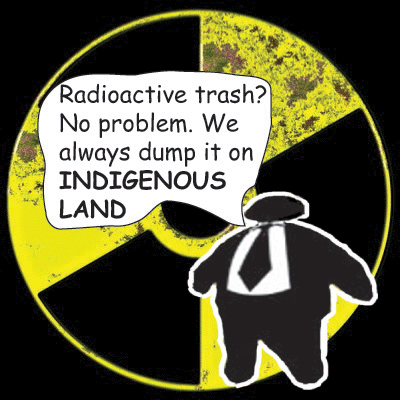
Radioactive waste sites are invariably targeted at indigenous or working-class communities, where dire economic need is preyed upon for easy acquiescence.
The argument for a “significant expansion” of nuclear power will deliver soaring electricity prices that condemn underserved communities to unending hardship and poverty, argues LINDA PENTZ GUNTER
Morning Star 13th Dec 2025, https://morningstaronline.co.uk/article/nuclear-power-inherently-colonialist-and-unjust
MARK JONES is right to argue in his recent article that corporate-driven energy industries should come under public control.
Regrettably, that is unlikely to happen any time soon, whereas long-lasting jobs and a sustainable energy supply are needed today.
However, whether under private or public ownership, nuclear power can deliver neither. Nor will public ownership undo the technology’s fundamental injustices.
The exploitative colonialism and racism inherent in nuclear power renders it incapable of contributing to the “just transition we all want” that Jones and many of us advocate. That’s because nuclear power relies on the victimisation of indigenous and brown populations in foreign lands to provide its fuel — uranium — all of which is imported to Britain.
A just transition cannot simply ignore the perpetual exploitation of Native American, First Nations, Australian Aboriginal and indigenous African uranium miners and millers, living in poverty without running water and electricity and subjected daily to radiation exposure.
Nor does the victimisation end there. In India, a massive mobilisation of thousands of farmers, fishermen and villagers opposed to a six-reactor Russian nuclear power plant in Kudankulam was met with lethal force. Many landed in jail, some went into hiding and at least one died. A democratic process giving voice to the people was nowhere to be seen. The plant went forward, realising their worst nightmares with the natural environment destroyed, incomes lost and small businesses devastated.
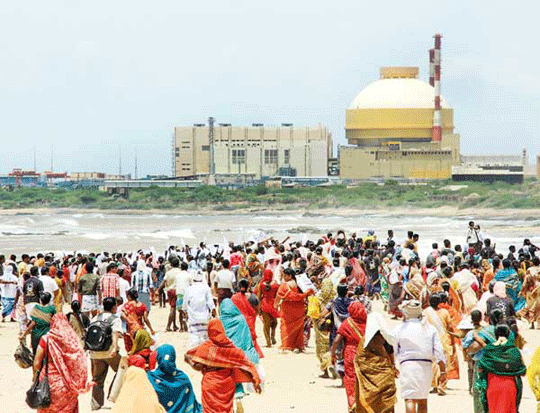
Numerous studies have shown that children living close to operating commercial nuclear power plants have higher rates of leukaemia than those living further away. Radioactive waste sites are invariably targeted at indigenous or working-class communities, where dire economic need is preyed upon for easy acquiescence.
The nuclear industry — even the nationalised version in France — is driven by multinational corporations such as Westinghouse, EDF, Rolls-Royce, Holtec and others, whose only motive is profit.
Britain as an island nation is exceedingly well positioned to deploy renewable rather than nuclear energy on a grand scale. The decision not to maximise expansion of Britain’s abundant offshore wind, wave and tidal power, as well as onshore wind, stream power and solar energy, has been a political, not a technological choice.
Jones’s comment about nuclear waste being “far more straightforward to manage” than the “mountains of unrecyclable turbine blades and solar panels,” is just plain wrong. The waste fuel from nuclear power plants is deadly for tens and, for some of the isotopes it contains, even hundreds of thousands of years.
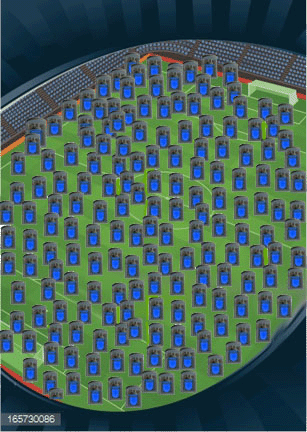
Whether it fits in a shoebox as Jones writes, or is stacked on a football field — another metaphor used by the industry — is irrelevant given the lethality of the contents. If you opened that box or sat in that stadium, you would be dead from radiation exposure within minutes.
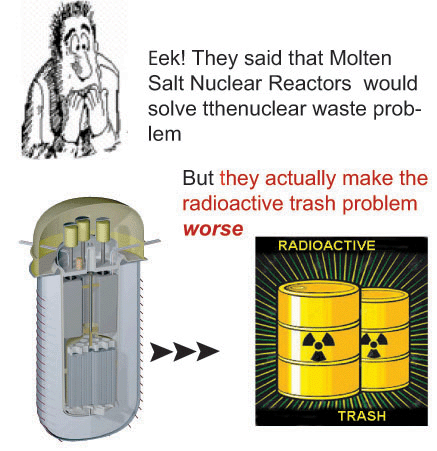
The new proposed small modular reactors, as a Stanford University study has shown, will actually generate greater volumes of radioactive waste than their full-sized predecessors.
Meanwhile, although somewhat complex, wind turbine blades and solar panels are both recyclable and recycled, with advances being made all the time to simplify this process. A similar effort is under way to recycle renewable batteries through the recovery rather than the continued exploitation of metals like lithium, nickel, cobalt and manganese, the major downside of renewables.
To dismiss concerns about major nuclear accidents as “catastrophism” is disingenuous and disrespectful to the hundreds of thousands of people across the former Soviet Union, much of Europe and now Japan, whose lives and livelihoods have been upended, destroyed and even lost altogether as a result of the Chernobyl and Fukushima disasters.
Many of these people were hardworking families indefinitely displaced, unable to resume their former professions.
The prospect of another meltdown is a very real likelihood, given the ageing of current reactors and the major safety uncertainties about the new designs. These latter are unproven, untested, and some use cooling systems such as liquid sodium that have already demonstrated a propensity to catch fire or explode.
A nuclear disaster on a small island like Britain would leave people with nowhere to run to.
The serious concerns around winter warmth, especially for the elderly that Jones rightly calls out, would be better met with a comprehensive energy efficiency progamme combined with renewables that includes insulation and building retrofits. These measures can reduce consumption, obviate the need for new power sources and drive down energy bills.
The huge costs associated with nuclear power will only send electric bills even higher, worsening fuel poverty.
As an example, the British government awarded EDF a guaranteed strike price that was nearly triple what consumers were already paying, to secure Somerset’s Hinkley Point C two reactor deal.
If the reactors are finished by 2027 as EDF presently claims, they will have taken 17 years to get here, 10 years later than expected.
We have seen similar outcomes in the US where Westinghouse — eager for new reactor contracts in Britain — took 15 years to complete two reactors in Georgia at a cost of £27 billion, almost triple the original £10bn estimated cost. That left consumers with the largest electricity rate increase in Georgia history.
Nuclear power falsely advertises itself as reliable, but reactors must shut down under drought and heatwaves if the cooling water sources are too hot or depleted. They must also power or shut down during extreme weather, given the inherent danger of losing the power essential to cool the reactors and the fuel pools, without which the plant can melt down.
Nuclear plants also have to close down routinely for days at a time or longer for refueling or maintenance.
Nuclear power cannot work well with renewable energy because reactors must be on all the time and therefore their power cannot quickly ramp up and down in response to demand as renewables do.
Nuclear power’s inflexibility effectively shuts out grid access to renewables and, as David Toke of 100% Renewable UK points out, “simply pushes wind and solar off the grid.”
Worse still, waiting for slow and far more expensive new nuclear plants while stifling renewables means continued reliance on fossil fuels. This increases pollution and asthma rates while the planet continues to overheat. The result is that a policy of “significant nuclear expansion” actually makes climate change worse.
Renewable energy stimulates employment all along the supply chain, for example in steel and ports, providing jobs not only to energy workers but to those in many other needed sectors. Its “fuel” is the sun, the wind and the waves which, unlike uranium, will never be depleted.
Linda Pentz Gunter is the founder of Beyond Nuclear and the author of No to Nuclear. Why Nuclear Power Destroys Lives, Derails Climate Progress and Provokes War, to be published by Pluto Press in March.
The ‘Nuclearity’ of the Marshall Islands, and the Threat of US Testing
By Bea Paduano
ICAN Australia and Bea Paduano, Dec 09, 2025, https://icanaustralia.substack.com/p/the-nuclearity-of-the-marshall-islands?utm_source=post-email-title&publication_id=6291617&post_id=181019673&utm_campaign=email-post-title&isFreemail=true&r=1ise1&triedRedirect=true&utm_medium=email
This article explores how nuclearity exposes unequal power, why some lives are protected, and others sacrificed, and how these dynamics still matter today as talk of renewed US nuclear testing re-enters global politics. To avoid repeating the devastation imposed on the Marshall Islands, strong international support for the Treaty on the Prohibition of Nuclear Weapons (TPNW) is crucial.
Between 1946 and 1958, the United States tested sixty-seven nuclear weapons in the Republic of the Marshall Islands—turning entire atolls into fallout zones and reshaping life for generations. Seen through Gabrielle Hecht’s lens of nuclearity, which asks who decides what counts as “nuclear”, the Marshall Islands become one of the most nuclear places on Earth—yet they’re rarely recognised as such.
What is Nuclearity?
Historian Hecht describes nuclearity as a “technopolitical spectrum that shifts in time and space” that shapes “the degree to which something counts as ‘nuclear’.”1
In simple terms, nuclearity is a lens that reveals who has the power to declare something nuclear—or to deny it—even in the face of clear harm. Nuclearity isn’t only about radiation; it is shaped by history, geography, politics and power, and by the decisions that determine which harms are acknowledged and which are ignored.2
The Marshall Islands: a Nuclear Frontier
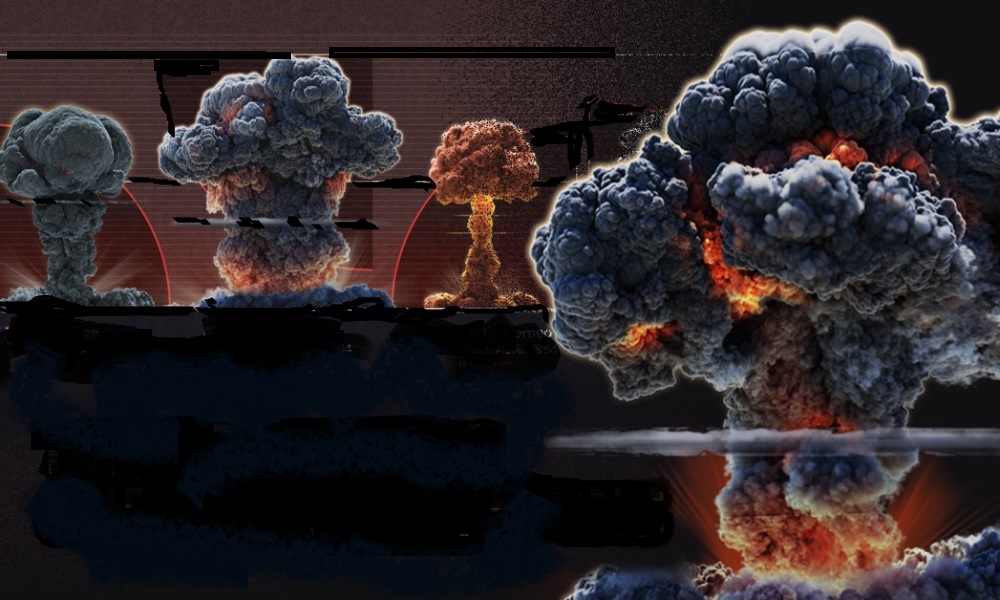
Japan seized the Marshall Islands during World War One to secure a strategic position in the Pacific, occupying them until the United States took control in 1944 during World War Two. After the war, the US turned the islands into a nuclear testing ground, beginning with Bikini and Enewetak in 1946. Over the next twelve years, the United States conducted sixty-seven atmospheric, underwater, and airburst tests that vaporised entire atolls, and exposed the whole country to severe radioactive fallout. The Castle Bravo test—the largest in US history—released an explosive yield equivalent to more than seven thousand Hiroshima bombs.
US officials justified these tests as being “for the good of mankind and to end all wars”.3 In other words, the Marshall Islands became a “display case for flexing military muscle” at the expense of the Marshallese people.4
Health, Identity and Culture
The health impacts of nuclear testing on the Marshall Islands were—and remain—catastrophic. Thyroid and other cancers, blood and metabolic disorders, cataracts, stillbirths, miscarriages, and birth defects have all been recorded and continue to affect Marshallese communities.5 The US Atomic Energy Commission’s Health and Safety Laboratory once described the atoll of Utirik as “by far the most contaminated place in the world.”6
Radioactive fallout poisoned staple foods, led to unexpected deaths, and weakened immune systems—patterns still seen in Marshallese communities today. Due to contamination, traditional foods became unsafe, and people were forced to give up practices that carry memory and meaning.
The damage is also cultural. Marshallese identity is deeply tied to land and water. In her poem Tell Them, Marshallese poet Kathy Jetnil-Kijiner writes, “we are nothing without our islands.”7 Nuclear testing destroyed homelands and forced many Marshallese into exile, severing connections to land, knowledge, and practices tied to fishing, food, and ceremony.8
Colonialism, “Remoteness,” and Power
Colonialism has long shaped understandings of remoteness, helping powerful states distance themselves from responsibility.9 This is evident in the US nuclear testing program in the Marshall Islands, where the construction of “remoteness” positioned the Marshallese at the margins. The US commission concluded that testing should take place overseas and away from US population centres until the health implications could be established.10 The location was chosen by spreading out maps and looking for sites considered remote.11 In his assessment of six nuclear testing sites, Jacobs concludes that it is no coincidence that all sites used were considered “remote.”12
The Marshall Islands were not only seen as geographically distant, but also racially distant, drawing on colonial ideas of eugenics. Eisenbud, Director of the AEC’s Health and Safety Laboratory in New York, justified the testing by claiming the Marshallese people were “more like us than the mice.”13 Their race and classification as “other” helped justify the testing and reveal the colonial underpinnings of the global nuclear order. Those considered racially inferior and physically remote have repeatedly been subjected to the harms of nuclear weapons testing. These colonial legacies maintain power dynamics and legitimise nuclear testing on Marshallese land and people.
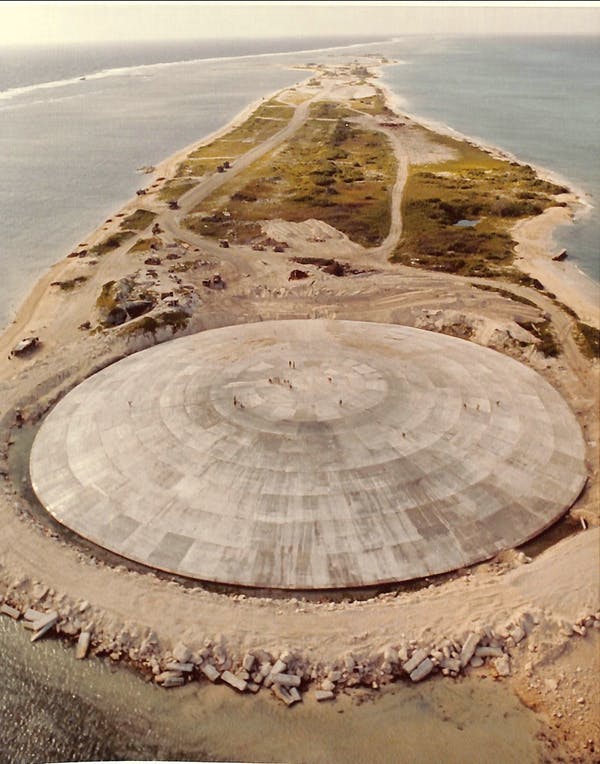
The legacy of this history can be seen in the Runit Dome, the concrete cap covering nuclear waste on Enewetak. As the dome cracks and leaks into the sea, it adds to the already devastating implications of climate change for the Marshall Islands. As sea levels rise, the future of the Marshall Islands remains uncertain.
Who Decides What Counts as ‘Nuclear’?
Hecht’s concept of nuclearity helps explain how authorities can declare certain areas “safe” while people continue to live with radiation and illness.14 Nuclearity does not equate to radioactivity; it is constructed, fluid and changeable, and can be made and unmade by those with the power to define it.
The Bravo test is one example. Communities from Bikini and Enewetak were relocated south before the detonation, yet radioactive fallout still hit the newly inhabited islands. Although the US government claimed that the wind unexpectedly changed, research found that they had six hours’ notice.15 Similar patterns are found in French nuclear testing on the Gambier Islands.16 The US government also imposed arbitrary restrictions such as fishing bans in certain areas of the islands—restrictions that, as Jacobs notes, were not respected by the fish.17 This shows the continued construction of what is considered “nuclear” in specific areas and at specific times, despite ongoing radioactivity.
Kathy Jetnil-Kijiner refers to this denuclearisation in the line: “it’s not radioactive anymore, your illnesses are normal, you’re fine.”18 Despite such claims, the US government restricted visitors from other countries from travelling to the Marshall Islands and restricted the movement of islanders during the tests.19 In this sense, the US government constructed a claim that certain areas would be safe but only for certain individuals, “denuclearising” areas and people despite significant radiation exposure. This draws on Hecht’s concept of nuclearity—that nuclearity “is not the same for everyone, and it is not the same at all moments in time.” 20
Recent US Discussions on Nuclear Testing
These issues are not confined to history. As we watch the current global situation unfold, this article urges us to pay attention to what is considered nuclear and what is not. Donald Trump has suggested that the US should resume nuclear testing to match or surpass other states. Whether this would involve full-scale detonations or ultra-low-yield tests, the political effect is similar: signalling that nuclear threats are back on the table.
Even the discussion of testing changes nuclearity. It designates potential testing sites, shapes perceptions of risk and acceptability, and reinforces harmful colonial power dynamics. Despite no US tests being conducted for decades, and considerable work and commitment to the Comprehensive Nuclear-Test-Ban Treaty (CTBT), this rhetoric threatens the nuclear taboo.
The TPNW, promoted by ICAN, prohibits the testing of nuclear weapons. At the time of writing, seventy-four countries have ratified the treaty. A strong global commitment against testing is needed to confront the harms to health, identity and culture that stretch across past, present and future.
The Marshall Islands illustrate what nuclearity looks like in practice: cancers and contaminated reefs, cracked domes, displaced communities and cultural loss that continues across generations. As talk of renewed nuclear testing returns, we must consider not only where the next “dangerous” place might be, but whose lives will again be treated as expendable.
We cannot allow others to quietly determine what—and who—counts as nuclear.
About the Author
Bea Paduano is a recent graduate of International Relations from the University of Leeds and was a participant in the ICAN-Hiroshima academy 2025 cohort. Her interests include the legacies of social and political injustice, specifically of nuclear testing and migration studies.
References ……………………………………………………………….
David versus Goliath: the battle of a small indigenous community against a federal radioactive waste dump.

There are fewer than 500 of them, but they have managed to put a stop to a federal nuclear waste dump project worth several hundred million dollars…
Anne Caroline Desplanques, Journal de Montréal, September 19, 2025, https://tinyurl.com/mwuymkjp
Federal authorities plan to store the remains of the Bécancour nuclear power plant, Gentilly-1, in a dump in Chalk River, on the edge of the drinking water source for millions of Quebecers.
At a time when the Carney government is promoting nuclear power as one of the ways to make Canada an energy superpower, our investigative team has obtained rare access to this ultra-secure complex, which Ottawa wants to hand over to the Americans. We spoke with citizens and experts who are concerned about the environment and the country’s sovereignty.
There are only 365 Anishinabeg living in the tiny Kebaowek First Nation reserve in Abitibi-Témiscamingue. But through their lawyers, they have succeeded in putting a hold on a multi-million-dollar federal radioactive waste dump project on their traditional territory.
In February, the Federal Court ruled that the Canadian Nuclear Safety Commission had not obtained the free, prior, and informed consent of Indigenous peoples before authorizing the construction of the dump, in violation of the United Nations Declaration on the Rights of Indigenous Peoples.
In March, the court determined that the project endangers several species, including the spotted turtle, a threatened species less than 30 centimeters long that lives for about 50 years and reproduces infrequently, as it does not reach sexual maturity until around 20 years of age.
Federal lawyers have appealed both decisions. If they fail to convince the courts, Canadian Nuclear Laboratories (CNL) and Atomic Energy of Canada Limited (AECL) will have to go back to the drawing board and resume consultations. In the meantime, the project, called the “near-surface waste management facility,” is on hold.
A geotextile membrane to contain radioactivity
It is intended to be a permanent storage and disposal site for up to one million cubic meters of radioactive waste. The waste will be placed on a layer of clay, sand, and geotextile approximately 1.5 meters thick, and covered with another layer of sand, rock, and a membrane.
This is not enough to protect the environment from PCBs, asbestos, heavy metals, and dozens of radioactive elements that CNSC plans to bury there, fears physicist Ginette Charbonneau of the Ralliement contre la pollution radioactive (Coalition Against Radioactive Pollution).
” Radioactive waste cannot be disposed of, it can only be isolated. For that, you need more than a membrane,” she insists.
CNSC assures that this buried waste will have “low-level” contamination and will therefore no longer pose a danger to the environment and health in 500 years, at the end of the containment cells’ useful life.
A pile of waste
But nuclear chemist Kerry Burns has his doubts. Retired from Atomic Energy of Canada since 2010, he was tasked with analyzing waste from the Chalk River laboratories to determine its radioactive content.
He explains that, in the past, CNL buried tons of waste in the sand, which they now plan to exhume and place in their new landfill. However, there are no records indicating the precise level of contamination, he says, describing a gigantic pile of mixed waste.
The project site has too much risk to leave anything to chance, insists the scientist: the landfill will be only one kilometer from the Ottawa River in sandy, porous soil.
“If the contamination escapes from the cells, it will very quickly find its way into the water, and it will be extremely difficult to measure and stop,” he warns.
Like Ms. Chabonneau, Mr. Burns argues that the materials should be isolated in a deep geological repository far from water sources.
This is the method used by one of the American companies chosen to manage CNL, Amentum: it isolates low-level waste in New Mexico in the Waste Isolation Pilot Plant (WIPP), which has isolation chambers 660 meters underground.
First Nations warn of conflict if Ontario proceeds with Bill 5
‘They’re looking for a world of opposition from First Nations in Ontario that are not going to just sit idly by’: First Nations leadership publicly slams proposed bill that would cut ‘red tape’ for economic projects — and potentially erode treaty rights.
Bay Today.ca, James Hopkin, 19 May 25
First Nations leadership is calling on Premier Doug Ford and the Ontario government to put a stop to a newly proposed bill that chiefs say would bulldoze the inherent rights of the Anishinabek and their existing treaty relationships with the Crown.
Robinson Huron Waawiindamaagewin (RHW) is publicly opposing Bill 5, which the political organization says will give extended powers to the province through the creation of “special economic zones” that would allow for the cabinet to exempt selected proponents and projects from requirements under any provincial law or regulation.
This includes bylaws of municipalities and local boards that would otherwise apply in that zone — all while repealing the Endangered Species Act.
RHW spokesperson and Anishinabek Nation Regional Chief Scott McLeod told SooToday that Ford framing Bill 5 as a way of cutting red tape for infrastructure and resource development projects is a “gross understatement,” and that Ontario is essentially gutting environmental checks and balances while undermining the treaty relationship with First Nations in Robinson Huron Treaty territory.
“He’s undermining the reality that Ontario, under the jurisdiction of Canada, inherited the treaty of 1850 from the British Crown, which laid out our relationship as title owners to the land and our willingness to share those resources,” McLeod said during a telephone interview Wednesday.
“He simply is moving forward on this as if Ontario owns the resources outright, and has no obligations to the treaties that are within Ontario.”
The tabling of Bill 5, known as the Protect Ontario by Unleashing Our Economy Act, has also triggered opposition from the Anishinabek Nation, a political advocate for 39 member First Nations representing approximately 70,000 citizens across the province.
The organization says the bill “reflects a dangerous and false narrative that presumes the Government of Ontario has unilateral authority to legislate over lands and resources without consultation or consent from the rightful Anishinabek title holders.”
“To allow lands of economic value that have been cited for development to be exempt from protective checks and balances, such as archaeological assessments and wildlife and ecosystem protections as proposed in this bill will cost First Nations and Ontarians profoundly, exposing and setting back species at risk protection and leading to the destruction of First Nation burial sites and artifacts,” Anishinabek Grand Council Chief Linda Debassige said in a release issued Tuesday. …………………………………………………………………………………………. https://www.baytoday.ca/local-news/first-nations-warn-of-conflict-if-ontario-proceeds-with-bill-5-10673506?utm_source=Email_Share&utm_medium=Email_Share&utm_campaign=Email_Share
‘Protect our future’: Alaskan Indigenous town fights ‘destructive’ uranium mine project
Aisha Kehoe Down in Elim
This summer, the Canadian mining company Panther
Minerals is set to start exploration for a uranium mine at the headwaters
of the Tubuktulik river, adjacent to Elim’s land. David Hedderly-Smith, a
consultant to Panther and the owner of mining claims for the property, has
said the site could become the “uranium capital of America”.
The people of Elim have opposed the mine since last May, when Panther Minerals
announced its intention to apply for exploration permits. In interviews,
they said they feared for their health, and spoke of the cancer and
contamination that followed uranium mining on Navajo land in the 1960s, 70s
and 80s.
Guardian 25th March 2025,
https://www.theguardian.com/us-news/2025/mar/25/uranium-mine-elim-alaska-trump
Federal Court Orders Reconsideration of Nuclear Waste Facility Approval, Citing Inadequate Indigenous Consultation
By NNL Digital News , March 20, 2025, https://www.netnewsledger.com/2025/03/20/federal-court-orders-reconsideration-of-nuclear-waste-facility-approval-citing-inadequate-indigenous-consultation/#google_vignette
OTTAWA – A Federal Court decision has ordered the Canadian Nuclear Safety Commission (CNSC) to revisit its approval of a Near Surface Disposal Facility (NSDF) at the Chalk River Laboratories site, citing errors in its assessment of Indigenous consultation obligations.
The ruling, issued by the Honourable Madam Justice Blackhawk on February 19, 2025, in the case of Kebaowek First Nation v. Canadian Nuclear Laboratories, highlights the importance of adhering to the United Nations Declaration on the Rights of Indigenous Peoples (UNDRIP) in Canadian law.
The Case at a Glance
The Kebaowek First Nation challenged the CNSC’s decision to grant Canadian Nuclear Laboratories Ltd. (Canadian Nuclear) a license amendment to construct the NSDF, a proposed facility for the permanent storage and disposal of low-level nuclear waste. Kebaowek argued that the CNSC erred by:
- Failing to apply the UNDRIP and the United Nations Declaration on the Rights of Indigenous Peoples Act (UNDA) to its decision-making process regarding the duty to consult and accommodate.
- Concluding that the Crown had fulfilled its duty to consult and accommodate Kebaowek.
- Determining that the NSDF is not likely to cause significant adverse environmental effects.
Court’s Findings
Madam Justice Blackhawk’s decision focused on the CNSC’s handling of Indigenous consultation. Key findings included:
- Jurisdiction to Apply UNDRIP/UNDA: The court found that the CNSC erred in determining it did not have the jurisdiction to consider the application of the UNDRIP and the UNDA to the duty to consult and accommodate.
- Duty to Consult and Accommodate: The court determined that the CNSC’s assessment of whether the Crown had fulfilled its duty to consult and accommodate Kebaowek was flawed due to the failure to consider the UNDRIP and its principle of “free, prior, and informed consent” (FPIC) as an interpretive lens.
- Flawed Consultation Process: The court stated that the consultation process was inadequate, and Canadian Nuclear failed to consult in a manner consistent with the UNDRIP and the FPIC standard.
Remedy and Next Steps
The Federal Court has ordered the matter to be remitted back to the CNSC for reconsideration. The CNSC, or a newly struck commission, is directed to:
- Address the jurisdictional question regarding the application of UNDRIP and the UNDA.
- Re-assess the Crown’s fulfillment of the duty to consult and accommodate, considering the UNDRIP and the FPIC standard.
Canadian Nuclear and CNSC staff are also directed to resume consultation with Kebaowek, aiming to implement the UNDRIP FPIC standard in a robust manner and work towards achieving an agreement. The court has set a target completion date of September 30, 2026, for this renewed consultation process.
Implications
This decision has significant implications for future development projects in Canada that may affect Indigenous rights and interests. It underscores the importance of:
- Properly interpreting and applying the UNDRIP and the UNDA.
- Conducting meaningful and robust consultation with Indigenous communities, consistent with the principles of FPIC.
The ruling emphasizes that consultation processes must be approached from an Indigenous perspective and take into account Indigenous laws, knowledge, and practices.
NetNewsLedger.com will continue to follow this developing story and provide updates.
Uranium fever collides with industry’s dark past in Navajo country
Mining.com, Bloomberg News | January 14, 2025
A few miles south of the Grand Canyon, thousands of tons of uranium ore, reddish-gray, blue and radioactive, are piled up high in a clearing in the forest.
They’ve been there for months, stranded by a standoff between the mining company that dug them deep out of the ground, Energy Fuels Inc., and the leader of the Navajo Nation, Buu Nygren.
Back in the summer, Energy Fuels had triggered an uproar when it loaded some of the ore onto a truck, slapped a “radioactive” sign over the taillights and drove it through the heart of Navajo territory.
Radioactive is an alarming word anywhere, but here in Navajo country, surrounded by hundreds of abandoned uranium mines that powered America’s nuclear arms race with the USSR and spewed toxic waste into the land, it causes terror. Those fears have only grown the past couple years as nuclear power came back in vogue and sparked a uranium rush in mining camps all across the Southwest.
So when the news made it to Nygren that morning, he was furious. No one had sought his consent for the shipment. He quickly ordered dozens of police officers to throw on their sirens, fan out and intercept the truck.
The dragnet turned up nothing in the end — the truck snuck through — but the hard-line response delivered a warning, amplified over social media and ratified days later by the governor of Arizona, to the miners: Stay out of Navajo country.
Cut off from the lone processing mill in the US — all the main routes cut through Navajo territory — executives at Energy Fuels stockpiled it by the entrance of the mine. When the heaps of crushed rock grew too sprawling, they pulled the miners out of the tunnels and turned the drilling machines off…………………………………………………………………………………………………………………………………………………………………
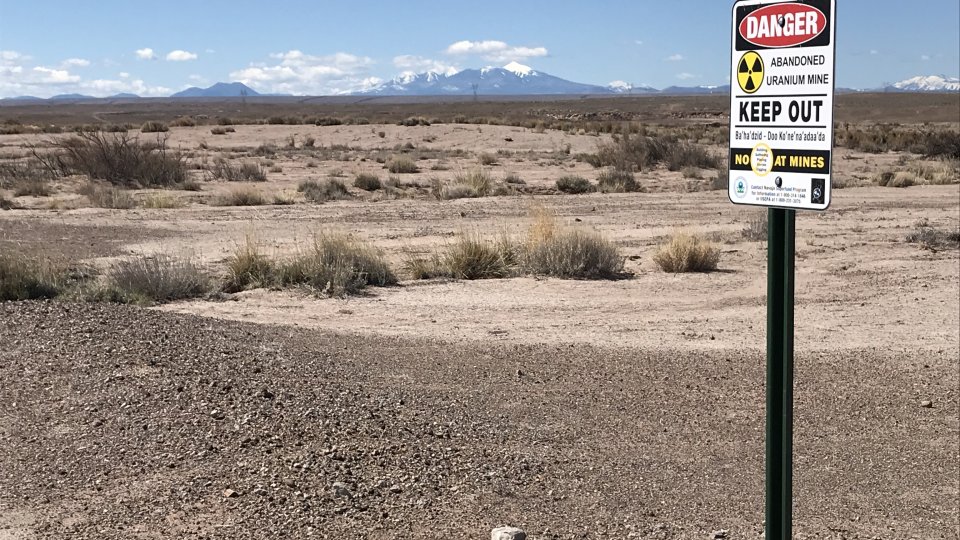
Animosity towards mining companies runs high on Navajo land. It’s visible everywhere. On huge roadside billboards and small office signs, in fading pinks and yellows and jet blacks, too. They read “Radioactive Pollution Kills” and “Haul No” and, along the main entrance to Cameron, a hard-scrabble village on the territory’s western edge, “No Uranium Mining.”
A few miles down the road, big mounds of sand streaked gray and blue rise, one after the other, high above the vast desert landscape. They are the tailings from some of the uranium mines that were abandoned in the territory last century.
To Ray Yellowfeather, a 50-year-old construction worker, the tailings were always the “blue hills,” just one big playground for him and his childhood friends.
“We would climb up the blue hills and slide back down,” Yellowfeather says. “Nobody told us they were dangerous.”
Years later, they would be cordoned off by the Environmental Protection Agency as it began work to clean up the mines. By then, though, the damage was done. Like many around here, Yellowfeather says he’s lost several family members to stomach cancer. The last of them was his mother in 2022.
Yellowfeather admits he doesn’t know exactly what caused their cancer but, he says, “I have to think it has to do with the piles of radioactive waste all around us.” It’s in the construction material in many of the homes and buildings and in the aquifers, too. To this day, drinking water is shipped into some of the hardest-hit areas.
The US government has recognized the harm its nuclear arms projects have done to communities in the Southwest. In 1990, Congress passed a law to compensate victims who contracted cancer and other diseases. It paid out some $2.5 billion over the ensuing three decades. The EPA, meanwhile, has been in charge of the clean-up of the abandoned mines. Two decades after the program began, though, only a small percentage have been worked on at all.
This is giving mining companies an opportunity to curry favor in tribal communities by offering to take over and expedite the clean-up of some mines.
…………………………………………………………………………..the EPA released a detailed study on Pinyon Plain. In it, the agency found that operations at the mine could contaminate the water supply of the Havasupai, a tribe tucked in such a remote corner of the Grand Canyon that it receives mail by mule. The report emboldened Havasupai leaders to step up their opposition to the mine, adding to Chalmers’s growing list of problems.
For the Navajo, the risks that come from the hauling of uranium through its territory are far smaller — so negligible as to be almost non-existent, according to Chalmers. Nygren is unmoved. The Navajo have heard such reassurances many times before, he says, only to pay dearly in the end.
Nygren grew up near a cluster of old mines right along the territory’s Arizona-Utah border, which makes the whole Energy Fuels affair “incredibly personal,” he says. His voice grows louder now and his tone more emphatic, indignant. To him, the Energy Fuels incursion feels no different than all the abuses committed over the course of decades by the US government and the mining companies that supplied it with a steady stream of uranium.
“We played a big role in the national security of the United States and we played a big part in the Cold War, providing energy for nuclear weapons. We’ve done our part. And now it’s time for the US to do its part by cleaning up these mines and respecting our laws.” https://www.mining.com/web/uranium-fever-collides-with-industrys-dark-past-in-navajo-country/
Mi’kmaw Chiefs send stinging rebuke to N.S. Premier Tim Houston
Background, by Gordon Edwards
Canada currently has 220 million tons of radioactive sand-like uranium mill tailings.
These radioactive wastes from past mining have an effective half-life of 76,000 years.
Uranium Mining has been banned in Nova Scotia since 1981. Initially it was a government moratorium. The moratorium was enshrined into law in 2009 as “
The Uranium Mining and Exploration Prohibition Act”. (
The provinces of British Columbia and Quebec have also imposed moratoria on uranium mining.)
The Mi’kmaq are an Indigenous group of people who are native to the Atlantic Provinces of Canada.
They are the founding people of Nova Scotia and the predominant Aboriginal group in the province
by Joan Baxter, March 4, 2025
The Assembly of Nova Scotia Mi’kmaw Chiefs have sent a stinging rebuke to Nova Scotia Premier Tim Houston over recent legislation that would remove the longstanding bans on fracking and uranium mining and exploration in Mi’kma’ki, the unceded land of the Mi’kmaq.
The chiefs say it is “unacceptable that this government is fast-tracking the extraction of natural resources that will permanently devalue and damage our unceded lands and adversely impact the exercise of our section 35 rights.”
The strongly worded reprimand came in a two-page letter dated March 4, 2025, signed by the three co-leads on environment, energy, and mining for the Kwilmu’kw Maw-klusuaqn (KMK): Chief Carol Potter, Chief Cory Julian, and Chief Tamara Young. KMK works on behalf of the Assembly of Nova Scotia Mi’kmaq Chiefs on the best ways to implement Aboriginal and treaty rights.
The letter is addressed to Houston, with copies to Minister of L’nu Affairs Leah Martin and Minister of Natural Resources Tory Rushton. It refers to omnibus Bill 6, An Act Respecting Agriculture, Energy and Natural Resources, which Houston’s Progressive Conservative government tabled on Feb. 18, 2025.
Omissions are ‘highly erosive’
The chiefs noted that the new legislation is not in keeping with Section 35 of Canada’s 1982 Constitution Act that protects the Aboriginal and treaty rights of the Mi’kmaq people of Nova Scotia, and includes hunting, fishing, and gathering for a moderate livelihood. They wrote:
Last week’s sweeping legislative proposal is another example of the provincial government choosing not to engage or consult with the Mi’kmaq of Nova Scotia prior to introducing significant changes in the mining sector that will directly impact the Mi’kmaq’s section 35 rights.
The province also sits at several tables with KMK and the Assembly where these changes should have been discussed but were never raised or flagged for us. From a relationship perspective, these types of repetitive omissions are highly erosive.
The chiefs reminded Houston that in October last year, they wrote to him about the “province’s lack of engagement with Kwilmu’kw Maw-klusuaqn (KMK) and the Assembly of Nova Scotia Mi’kmaw Chiefs” in the lead-up to Bill 471 on offshore wind.
They also pointed out that the Mi’kmaq played a large role in getting uranium mining and fracking banned in the province………………………………………………………………….. https://tinyurl.com/4p9y2cr3.
Algonquin community wins part of court challenge over nuclear waste dump near Ottawa River
Federal judge orders nuclear regulator to renew consultation with Kebaowek First Nation on contentious project
Brett Forester · CBC News ·Feb 21, 2025
An Algonquin community in Quebec is declaring victory after a judge upheld part of its court challenge to a proposed radioactive waste dump to be built about a kilometre away from the Ottawa River.
The Canadian Nuclear Safety Commission approved the project in January 2024, greenlighting Canadian Nuclear Laboratories (CNL) to build the “near-surface disposal facility” at the Chalk River research campus near Deep River, Ont., 150 kilometres northwest of Ottawa.
But according to Federal Court Justice Julie Blackhawk, the regulatory body failed to consider internationally recognized Indigenous rights and how they apply in Canadian law when consulting with Kebaowek, rendering the approval decision both unreasonable and incorrect.
“The consultation process in this matter was not adequate,” Blackhawk wrote in a decision released Wednesday.
The judge ordered the commission and CNL to resume consultations with Kebaowek “in a robust manner,” while properly considering the UN Declaration on the Rights of Indigenous Peoples (UNDRIP) and its standard of free, prior and informed consent.
The consultation must be adapted to address Indigenous laws, knowledge and be aimed at reaching an agreement, to be completed by Sept. 30, 2026, Blackhawk ruled.
Kebaowek had asked the court to quash the commission’s approval entirely, requiring CNL to restart the process altogether. But Blackhawk declined, calling that impractical, sending the matter back to the commission to correct the process instead.
Nevertheless, community leaders are ecstatic, said Chief Lance Haymond.
“It’s clear that when Canada adopted UNDRIP, the provisions of UNDRIP had to be applied in Canadian law from the beginning, not in some time in the future,” said Haymond, whose community is 300 kilometres northwest of Ottawa.
“I think that’s a win for Kebaowek, and that’s a win for First Nations across this country.”
Haymond hailed the decision as one with far-reaching implications for industry and project proponents, meaning he expects it will be appealed. …………………………………….
The facility would contain up to one million cubic metres, or about 400 Olympic-sized swimming pools worth, of low-level radioactive waste from the Second World War-era Chalk River site in a specially designed mound.
Kebaowek has raised concerns about the project’s potential impact on drinking water, wildlife and Indigenous rights.
In the judicial review, the community raised novel legal arguments, centring on the commission’s obligations under the United Nations Declaration on the Rights of Indigenous Peoples Act,federal legislation passed in 2021.
The law requires Canada to harmonize federal laws with UNDRIP, an international instrument outlining minimum standards for the protection of Indigenous peoples’ rights around the world. …………………………..more https://www.cbc.ca/news/indigenous/kebaowek-judicial-review-win-1.7464036#:~:text=An%20Algonquin%20First%20Nation%20in,away%20from%20the%20Ottawa%20River.
Indigenous group vows to stop nuclear waste shipments unless new deal struck

CTV News By Scott Miller, January 23, 2025
Leaders with the Saugeen Ojibway Nation (SON) say they are no longer willing to have their territory “exploited” for the production of nuclear energy and storage of radioactive waste.
“The nuclear issue has the biggest footprint in the Saugeen Ojibway Territory. It’s the biggest footprint bearing on the environmental imprint, so we need to start getting some of that stuff resolved,” said Chippewas of Nawash Unceded First Nation Coun. Paul Jones.
The SON is home to Bruce Power, the world’s largest operating nuclear station, as well as Ontario Power Generation’s (OPG) Western Waste Management Facility that houses most of Ontario’s nuclear waste.
That includes over one million used nuclear fuel bundles and approximately 100,000 cubic metres of low and intermediate level nuclear waste.
SON leadership say they didn’t agree to either nuclear facility being constructed in their territory, but they are left to deal with them on their traditional lands that stretch from Tobermory to Goderich.
“I believe there were some formal agreements with SON in 2018 and 2022. Since then, Ontario Power Generation has reneged (renegotiated) on some of those commitments, and it kind of put some of the talks on standstill for now,” said Saugeen First Nation Chief Conrad Ritchie.
To restart those talks about compensation for hosting a large portion of Ontario’s nuclear waste, SON has threatened to stop allowing shipments of nuclear waste into their territory unless “significant progress” is made “towards the resolution of nuclear legacy issues” within six months………………………………………………..
Although the plan is to eventually move the millions of used nuclear fuel bundles currently stored at the Western Waste Management Facility to a yet constructed underground facility in northern Ontario, the highly radioactive material will remain in Saugeen territory for many more decades, and that’s worth something, said SON leadership.
“We’re taking all the risk and there’s no benefits coming to SON,” said Jones.
“Hopefully we’ll come up with a good plan or a resolution that’s fair for all parties. And that Saugeen and Nawash get their equal share of operating within our traditional treaty territory,” said Ritchie.
The SON is comprised of the Saugeen First Nation and Chippewas of Nawash Unceded First Nation. Their traditional territories stretch from Tobermory east to Collingwood, and south to Arthur and Goderich. https://www.ctvnews.ca/london/article/indigenous-group-vows-to-stop-nuclear-waste-shipments-unless-new-deal-struck/
Northwestern Ontario nuclear waste site selection raises concerns.

The selection process has overlooked the broader impact on local and Indigenous populations near highways that could be used to transport nuclear waste north.
The Hill Times: Canada’s Politics and Government News Source, BY ERIKA SIMPSON | December 12, 2024
The Nuclear Waste Management Organization selection of two northwestern Ontario communities—Wabigoon Lake Ojibway Nation and Ignace—as host communities for Canada’s proposed Deep Geological Repository raises concerns and controversy. Located approximately 1,500 km from Toronto, the distance highlights the geographical separation between the selected communities and Toronto, home to the Darlington and Pickering nuclear power plants that will eventually be decommissioned.
On Nov. 28—the same day of Nuclear Waste Management Organization’s (NWMO) announcement—the Municipality of South Bruce took many by surprise by announcing it was exiting the site selection process for the proposed Deep Geological Repository (DGR). Despite South Bruce’s proximity—just 46 km from the Bruce reactor, the world’s largest-operating nuclear facility on Lake Huron’s shores—the NWMO decided to pursue the Ignace location. This raises questions about why the NWMO chose to bypass South Bruce, which, due to its location, appeared to be a more logical choice for Canada’s first DGR.
Despite being presented as a “community-driven, consent-based” process, the selection process launched in 2010 sought to narrow 22 potential sites down to just one willing community. The process has thus far overlooked the broader impact on local and Indigenous populations near highways that could be used to transport nuclear waste northward.
Media outlets like The Globe and Mail and The Hill Times report that the NWMO’s DGR plan involves transporting nuclear waste by truck for over four decades, from all Canada’s reactor sites to the nuclear facility, where the waste could be stored underground. More than 90 per cent of the waste is currently at Pickering, Darlington, and Bruce nuclear stations in Ontario, with the rest located in Point Lepreau, N.B., Quebec, Manitoba, and Ottawa.
With the NWMO selecting the Ignace site and an all-road transportation method, the trucks are expected to travel a total of 84 million km on Canadian roads. There is always the risk that radioactive material will leak while in transit or short-term storage, something that has happened in Germany and New Mexico over the past two decades.
The NWMO’s claims of a rigorous and independent process are undermined by a lack of public dialogue and transparency. Few have been aware of the proposal to build a national underground nuclear waste site. Northwatch and We The Nuclear Free North raised concerns about the NWMO’s decision involving Wabigoon Lake Ojibway Nation (WLON) in the project.
WLON’s Nov. 28 statement clarifies that the First Nation has not approved the project but has agreed to proceed with the next phase of site characterization and regulatory processes. Their “yes” vote reflects a commitment to assess the project’s feasibility through environmental and technical evaluations, not an endorsement of the DGR itself.
South Bruce, the other potential willing community, held a referendum on Oct. 28, which revealed deep divisions. The final tally was 1,604 votes in favor (51.2 per cent) and 1,526 against (48.8 per cent), with a total of 3,130 votes cast. A margin of just 78 votes decided a by-election with far-reaching implications for millions of people across multiple generations.
The decision to allow a local municipality to oversee the referendum on the nuclear waste disposal site has been met with significant controversy. Critics argue that the arrangement posed a conflict of interest, as municipal staff—partially funded by the NWMO—actively promoted the project, casting doubt on their impartiality and raising concerns about financial influence on the referendum’s outcome. The council’s firm opposition to allowing a paper ballot raised further suspicions. Why reject a voting method that could be physically verified?
Located about 19 km southeast of Dryden, WLON faces similar concerns regarding the fairness of the online voting process and voter eligibility. These issues could erode public confidence in municipal referendum processes, and the handling of decisions by councils.
The nuclear waste storage site selection marks an early shift to the regulatory phase, raising concerns about whether the process is premature. Over the coming year, the effectiveness of the Canadian Nuclear Safety Commission and its regulation of all steps in the management of radioactive waste will come under scrutiny, particularly as Ontario’s new energy minister, Stephen Lecce, emphasizes the need to invest in energy infrastructure to meet rising electricity demand over the next 25 years.
Critics argue that despite evaluations with long-term implications, ethical and environmental concerns surrounding nuclear waste disposal remain long unaddressed. Ontario Power Generation’s initial 2005 proposal to the safety commission for a DGR near the Bruce reactor was rejected in 2020 following a Saugeen Ojibway Nation vote.
While many acknowledge the potential benefits of nuclear energy and DGR technology, the NWMO’s approach to the project over the past two decades has drawn significant scrutiny. Questions centre on the decision to place untested DGR technology in populated farmland near the Great Lakes, the world’s largest source of freshwater. The risks of radiation leakage into Hudson’s Bay and the Arctic over thousands of years are particularly troubling, especially as the technology remains unproven in such a critical and sensitive location.
Despite objections, the NWMO pressed forward, with its process viewed as federally approved bribery through financial incentives. South Bruce has already received millions and will receive $4-million more for its involvement, with another $4-million due in 2025. Mayor Mark Goetz has announced plans for alternative development, but critics like W.J. Noll from Protect Our Waterways question why such options weren’t considered earlier, given the risks to farmland, water sources, and the divisions left in the local farming community.
The growing influence of the nuclear industry on international and local governance has left many feeling powerless, fearing that war-torn regions, Indigenous lands, and rural communities are being sacrificed, threatening ecosystems from Ukraine and Russia to the Great Lakes and Arctic rivers.
If no Canadian community agrees to host a permanent nuclear waste depository, it may be necessary to reconsider nuclear energy expansion, halt new plant construction, and scale back capacity at existing reactors. In the interim, managing waste at above-ground sites could offer a safer alternative until technology ensures long-term environmental protection.
Erika Simpson is an associate professor of international politics at Western University, the author of Nuclear Waste Burial in Canada? The Political Controversy over the Proposal to Construct a Deep Geologic Repository, and Nuclear waste: Solution or problem? and NATO and the Bomb. She is also the president of the Canadian Peace Research Association.
First Nations chiefs shouldn’t be duped by ‘nuclear-is-green’ deception
Commentary
by William Eric Altvater, January 6, 2025, : https://nbmediacoop.org/2025/01/06/first-nations-chiefs-shouldnt-be-duped-by-nuclear-is-green-deception/
Some First Nation Chiefs are victims of shenanigans, not unlike the swindle behind the purchase of Manhattan. The federal government needs the support of Indigenous peoples to expand nuclear power generation capacity in Canada.
For millennia, the cornerstones of the Indigenous people that inhabit Turtle Island, now known as North America, held all that is essential to life, in reverence. Every decision considered the next 7 generations. These cornerstones are crumbling.
Newcomers, armed with the Colonizing tool, “The Doctrine of Discovery” and their mentality of superiority, invaded the land of those they called “Savages,” almost totally exterminating Skicinuwok, People of The Earth.
Determined to bestow Christianity and civility to this wild untamed population, old growth forests were cut, rivers and streams were dammed to power sawmills, roads and railroads were built, bridges erected. All to create an infrastructure for capitalism, a system to make a profit, that morphed into greed, a word of foreign root. This unbridled desire for progress has ruined what was once called Paradise.
Now most water is not fit to drink, clean air is scarce, deforestation is rampant, biodiversity loss out of control, plants genetically modified, food manufactured with unpronounceable chemicals, caged fish starved of oxygen while being fed chicken feathers and pig parts, cancer cases in the millions, the list goes on.
As the population increased over this continent the available sources for power generation have not been able to satisfy the insatiable desires of the “bigger, better, faster, more is never enough” mentality. Some have finally acknowledged the fact that fossil fuels are not the golden egg they were once deemed to be.
So-called “Green Energy” is required to slow the blind drive to extinction of man; man, who is considered by some to be the most intelligent creature to ever roam Earth. Unfortunately, the lure of riches and the corruption of self-serving purposes have led man to stray from practices that nurture everything required to sustain life on this tiny blue marble floating through the universe.
Nuclear power is now being touted as being “Green.” It is not. Big money corporations are lobbying legislators to convince them and the public that it is. They are also lobbying to convince the public that they should foot the bill in the form of taxes and rate hikes, for a process that pollutes from the day it starts. Water is life. As soon as uranium is mined from the earth it begins to contaminate the water in surrounding aquifers.
When the uranium is processed sufficiently, it is used as fuel for reactors where it generates heat while delivering electricity, not just for essential needs, but also for many things once considered luxuries. This fission generated heat is then dumped into nearby waters where it kills thousands, if not millions of small beings that form the basis of life itself.
After this radioactive fuel is depleted, it is stored in various containers where it will stay radioactive for eons. Indigenous Grandmothers have labelled it “Forever Dangerous.”
The power generated during the fission process benefits only those who exist today as the process occurs, not those born tomorrow or next week or next month. All the radioactive waste and the inherent danger it creates is left to future generations, kicking the can down the road.
What better place to dump this waste than in an area with a population that has witnessed Newcomers enrich themselves for hundreds of years? Yes, what better place than a population that has been targeted for assimilation, suffered theft of lands, witnessed the taking of naturally bestowed rights? A population that has been subjected to racial Indian Act legislation essentially stripping away all that sustained this population for thousands of years.
Yes, let us give the Indians some more shiny beads and trinkets so that they willingly agree to care for our radioactive garbage. How do we do this? Let’s talk to the Chief and Council. Let’s wine and dine them. Let’s give them some money, take them to dinner, buy some drinks and make them feel all festive and most of all make them think we are looking out for their best interests. Some Chiefs have taken the bait.
Egregious as it may be, this is exactly what is happening in some Indigenous communities contrary to the will of the majority. Elected Chiefs are continuing the deception as they are blinded and professing the “Nuclear is Green” mantra. They have lost connection with the Spirit of Ancestors and traditional values. They need to have a serious introspection and realize that looking forward, we need only look back at what has sustained us to this point in time. We need not do any more than that.
Ontario First Nation challenging selection of underground nuclear waste site in court
Eagle Lake First Nation is seeking a judicial review of the Nuclear Waste Management Organization’s decision to select the Township of Ignace and Wabigoon Lake Ojibway Nation area as the repository site.
Toronto Star, Dec. 24, 2024 , By Sonja Puzic The Canadian Press
A First Nation in northern Ontario is challenging the selection of a nearby region as the site of an underground repository that will hold Canada’s nuclear waste, arguing in a court filing that it should have had a say in the matter as the site falls “squarely” within its territory.
Eagle Lake First Nation has filed an application in Federal Court seeking a judicial review of the Nuclear Waste Management Organization’s decision to build the deep geological repository in the Township of Ignace and Wabigoon Lake Ojibway Nation area.
The decision was announced in November after Ignace’s town council and Wabigoon Lake Ojibway Nation both agreed to move forward, but Eagle Lake First Nation says it was “unjustifiably” rejected as a host community and denied its own right to consent to the project.
“NWMO rejected ELFN as a host community and not for any fair, justifiable or defensible reasons,” but because members of the First Nation had raised concerns about the nuclear waste site, court documents filed last Friday allege.
The court filing, which also names the federal minister of natural resources among the respondents, accuses the NWMO of acting in “bad faith” and seeks to have its decisions quashed.
The NWMO, a non-profit body funded by the corporations that generate nuclear power and waste, said it is reviewing the legal challenge…………………………….
The $26-billion project to bury millions of used nuclear fuel bundles underground will include a lengthy regulatory and construction process, with operations not set to begin until the 2040s. ………………………………………………………. more https://www.thestar.com/news/canada/ontario-first-nation-challenging-selection-of-underground-nuclear-waste-site-in-court/article_375e4d88-c0bd-53e5-ba7a-03a2c2f8e4e1.html?utm_campaign=Nuclear+Free+North++e-news+%7C+Eagle+Lake+First+Nation+is+seeking+a+judicial+review+of+the+NWMO+Site+Selection&utm_medium=email&utm_source=newsletter
1 This Month

of the week – Shut Down Drone Warfare!


Tell the Ukrainian Government to Drop Prosecution of Peace Activist Yurii Sheliazhenko

Petition to revoke the licensing of the Near Surface Nuclear Disposal Facility (NSDF) at Chalk River. https://www.ourcommons.ca/petitions/en/Petition/Details?Petition=e-7247
To see nuclear-related stories in greater depth and intensity – go to https://nuclearinformation.wordpress.com
-
Archives
- March 2026 (237)
- February 2026 (268)
- January 2026 (308)
- December 2025 (358)
- November 2025 (359)
- October 2025 (376)
- September 2025 (257)
- August 2025 (319)
- July 2025 (230)
- June 2025 (348)
- May 2025 (261)
- April 2025 (305)
-
Categories
- 1
- 1 NUCLEAR ISSUES
- business and costs
- climate change
- culture and arts
- ENERGY
- environment
- health
- history
- indigenous issues
- Legal
- marketing of nuclear
- media
- opposition to nuclear
- PERSONAL STORIES
- politics
- politics international
- Religion and ethics
- safety
- secrets,lies and civil liberties
- spinbuster
- technology
- Uranium
- wastes
- weapons and war
- Women
- 2 WORLD
- ACTION
- AFRICA
- Atrocities
- AUSTRALIA
- Christina's notes
- Christina's themes
- culture and arts
- Events
- Fuk 2022
- Fuk 2023
- Fukushima 2017
- Fukushima 2018
- fukushima 2019
- Fukushima 2020
- Fukushima 2021
- general
- global warming
- Humour (God we need it)
- Nuclear
- RARE EARTHS
- Reference
- resources – print
- Resources -audiovicual
- Weekly Newsletter
- World
- World Nuclear
- YouTube
-
RSS
Entries RSS
Comments RSS
 nuclear-news