VIDEO USA’s Atomic Energy Commission’s pointless efforts at “peaceful bombs”
in the least productive but most destructive test, the scientists wanted “to see how big of a hole a nuclear bomb could make.” Motherboard:
“It proved to be a really big hole.”
That test, Project Sedan, spewed radioactive fallout across four states, contaminating “more Americans than any other nuclear test.”
 VIDEO The U.S. Once Wanted To Use Nuclear Bombs as a Construction Tool : http://blogs.smithsonianmag.com/smartnews/2013/01/the-u-s-once-wanted-to-use-nuclear-bombs-as-a-
 construction-tool/#ixzz2IFsWdcSf Smithsonian. January 16, 2013 In 1962, the Atomic Energy Commission wanted to see how big of a hole they could make with a nuclear bomb. ……..Enter, Project Sedan. the U.S.’s Atomic Energy Commission, Project Plowshare, says Motherboard, was a project in which the nation’s scientists were supposed to find something useful to do with all the nuclear expertise they had acquired throughout World War II and its aftermath. From 1961 through 1973, Project Plowshare saw 27 nuclear detonations. Many of these were at a test site in Nevada, says Motherboard, but some were a bit more experimental. In 1973, Project Rio Blanco, an operation under the banner of Project Plowshare, Continue reading
Ionising radiation a cancer danger in CT scanning
Concerns about exposure to ionising radiation inducing cancer NPS, 15 Jan 13, People are exposed to ionising radiation through medical imaging with X-rays, CT and nuclear medicine scans, including positron-emission tomography (PET).5 While MRI has the advantage of not using ionising radiation4 most of the new MBS items for MRI requested by GPs will require X-ray as a first investigation.2
As there are no completed, large-scale epidemiological studies of cancer risk associated with CT, risk has been approximated using organ doses (or the distribution of dose in the organ) and application of organ-specific cancer incidence and mortality data derived from studies of atomic-bomb survivors on the peripheries of Hiroshima and Nagasaki.6 Risk estimates adjusted to take into account the greater use of CT since 2006 indicate that 1.5–2% of all cancers in the US may be due to radiation from CT.6 Estimating cancer risk from CT remains a contentious issue, and large-scale epidemiological studies are needed for a direct assessment of this risk.6
Imaging is justified if the potential benefits outweigh the risks7…….
Project COW – USA’s bright idea to bomb the moon
A nuclear flash point, Deccan Herald, Jan, 1, 2013: BOMBING THE MOON
Recent reports suggest that during the heydays of the Cold War, the
United States planned to bomb the moon so that the nuclear flash would
intimidate rival powers. Continue reading
Verdi man recalls ‘Operation Crossroads’ nuclear tests of
1946 and ‘unsinkable’ USS Nevada, Guy Clifton: RGJ.com, 23 Dec 12“…..Larson was a
19-year-old sailor assigned to the carrier USS Independence. In July
1946, he was part of the crew that sailed the Independence to Bikini
Atoll in the south Pacific, where it and other aged naval vessels —
including the USS Nevada — were targets in Operations Crossroads, a
series of tests conducted by the U.S. to investigate the effect of
nuclear weapons on naval ships. Continue reading
“Green Run” – deliberate radiation experiments on USA citizens
 COMMENTARY: 1949 nuclear experiment is an ugly legacy of Hanford
http://www.registerguard.com/web/opinion/29097307-57/green-hanford-run-nuclear-iodine.html.csp
BY SUSAN CUNDIFF AND PATRICIA HOOVER The Register-Guard December 2, 2012
Many of us in the timber-rich Northwest are familiar with such terms
as “pulling the green chain” and fresh-cut “green” wood. But how many
know the term “Green Run?” Never heard of it? That’s because it was a
secret.
 On Dec. 2, 1949, officials at the Hanford Nuclear Reservation in
southeastern Washington deliberately experimented on residents in the
area by releasing raw, irradiated uranium fuel. It was the largest
known single incident of intentional radioactive contamination ever.
It’s come to be known as the Green Run; in this case “green” meant
“uncured.”
Normally, radiated fuel would be cooled for 83 to 101 days to allow
some of the short-lived radioactive materials to decay before
releasing those materials into the environment. For this test,
officials waited a mere 16 days and did not filter the exhaust.
Over a seven-hour period, 7,780 curies of iodine-131 and 20,000 curies
of xenon-133 were released. To put these numbers in perspective, the
Three Mile Island accident released between 15 and 24 curies of
radioactive iodine. Women and children were evacuated, and milk was
impounded.
During the Green Run, Air Force planes measured the deposits of
iodine-131 on ground vegetation within a 200- by 40-mile plume that
stretched from The Dalles to Spokane. Vegetation samples taken in
Kennewick, Wash., revealed nearly 1,000 times the acceptable daily
limit of iodine-131.
Citizens in the area routinely accepted unusual practices devised by
Hanford officials as natural and patriotic: urine samples were left on
porches for pick-up, schoolchildren went through whole-body counter
scans, and men in white coats palpated students’ throats around the
thyroid gland.
As thyroid disease and cancer rates rose among the populations of
Richland, Wash., The Dalles, Hermiston and the surrounding
countryside, the public began to question the safety of Hanford’s
practices. They were assured that “not one atom” had ever escaped from
Hanford and that it was as “safe as mother’s milk.” Of course, if
mother is contaminated, her breast milk is, too — as is the milk from
dairy cattle in the area, the salmon in the river, and vegetables and
fruit from the farms and ranches nearby.
With all their collected data, officials had to know the health
consequences. And still the deception continued. Press releases
recommended iodized salt and trucked-in pasteurized milk, but only as
mere suggestions. In fact, all public health records from Hanford were
sent only to Walla Walla, Wash., and never recorded at the state
Capitol, thus ensuring that health research would not contain damning
statistics.
The Green Run was only part of a much larger pattern of contamination.
From 1944 to 1957 a total of 724,779 curies of iodine-131 were
released into the atmosphere.
Why conduct an experiment such as the Green Run? Were the military and
the Atomic Energy Commission trying to develop a method for
determining production rates in the Soviet Union? Were Hanford
officials attempting to speed up their own production? Or was
something more sinister going on?
We may never know, because specific reasons for the experimentation
remain classified. It took 37 years for the public to learn anything
at all about the Green Run, and only then because grass-roots groups
forced the release of documents through the Freedom of Information
Act.
According to Michele Gerber, author of “On the Home Front,” “…the
question of whether the Green Run was a radiological warfare
experiment, designed to test harm to foodstuffs and living creatures,
is still open.”
Hanford continues to pose risks. Radioactive contaminants leak into
the water table and the river. Cleanup efforts stall.
Vitrification, the process of turning waste into glass, was supposed
to be the answer to the problem. In 2010, a whistle-blower warned that
the $12.2 billion plant under construction might be seriously flawed.
He was pushed aside for his ethical stand. Recent announceinclude the hiring of a new manager to take over the “problem-plagued
construction at the Hanford vitrification plant” (Register Guard, Nov.
25).
As a member of the U.S. House of Representatives, Oregon’s Ron Wyden
spoke of nuclear weapons production as “the largest, most
ultra-hazardous industry of its kind in the world.” Wyden’s concerns
about Hanford continue now that he is in the Senate, and he has
traveled to Japan to learn more about the disastrous nuclear plant
site at Fukushima.
Today, Dec. 2, is a time to remember the atrocities of the Green Run
and renew our call for transparency in the secretive nuclear industry.
As we search for viable solutions to our energy needs, we must insist
on openness, truth and safety, striving together for real green
solutions.
Nuclear lunacy: USA’s secret plan to nuclear bomb the moon
Confirmed: US planned to nuke the moon RT.com 26 November, 2012, In a secret project recently discovered, theUnited States planned to blow up the moon with a nuclear bomb in the 1950s as a display of the country’s strength during the Cold War space race.
The secret project, called “A Study of Lunar Research Flights”, as well as “Project A119” was never carried out but initially intended to intimidate the Soviet Union after their launch of the first artificial satellite, Sputnik 1, which demonstrated their technological power, the Daily Mail reports.
The sight of a magnificent nuclear flash from Earth was meant to terrify the Soviet Union and boost US confidence, physicist Leonard Reiffel, 85, told the Associated Press. The nuclear device would have been launched from a missile from an unknown location. It would have
ignited upon impact with the moon, causing a massive explosion that was visible from Earth.
The detonation would have been the result of an atom bomb, since a hydrogen bomb was too heavy for a missile to carry the 238,000 miles to the moon…… In his interview with AP, which took place in the year 2000, Reiffel said the nuclear detonation could have occurred by
1959, which is when the US Air Force deployed intercontinental ballistic missiles. The project documents were kept secret for nearly 45 years and the US government has never formally confirmed its involvement in the study.
But in the end, the mission was abandoned due to safety concerns about the radioactive material that would contaminate space. The scientists were also worried about the bomb detonating prematurely, thereby endangering the people on Earth.
Rather than blow up the moon, the US continued the space race, sending its first satellite, Explorer 1, into orbit on Jan. 31, 1958. The project was officially canceled by the Air Force in Jan. 1959, and the US instead focused on sending a man to the moon.
The background to Germany’s leadership for a nuclear power free Europe
 As we know, in fact, nothing happened. Germany quickly adapted to the loss of the more-than-25% (but no much above that) of national power which nuclear electricity had provided
Germany’s Energiewende And The End Of Nuclear Power, The Market Oracle Nov 25, 2012 By:Andrew_McKillop NUCLEAR SHOCK TREATMENT For Ukraine and Japan, learning to do without nuclear power needed shock treatment: the 1986 Chernobyl catastrophe, and the 2011 Fukushima disaster. The combined economic cost and losses due to these “unforeseen nuclear accidents” will probably exceed $500 billion over the years and the decades. Nuclear accidents are in a class apart, for long term damage capability.Above all, certainly since Fukushima they cannot be kept away from and out of public debate.
Like all revolutions, Germany’s Energiewende or energy transition – which took an intense new lease of life and renewed public interest following the Fukushima disaster – was set in motion by many factors. Continue reading
USA had 2 projects to use nuclear bombs for fracking natural gas
U.S. tried fracking for gas using nuclear bombs — Engineer: “I think it’s awesome” — Drilling to now be allowed within half-mile of blast site? (VIDEO) http://enenews.com/fracking-natural-gas-nuclear-bombs-radioactive-engineer-awesome-drilling-be-allowed-half-mile-blast-site-video-video
November 14th, 2012
NSFW* Watch the full Nov. 14, 2012 broadcast of the Joe Rogan Experience with best selling author, television host and robotics engineer Daniel Wilson on here http://www.youtube.com/watch?v=xZbdXyC9To0
Source: IO9
Author: Esther Inglis-Arkell
Date: July 27, 2012
The Plowshare program was both a public relations ploy and a serious scientific study. It was an attempt to see if nuclear bombs could be used in peaceful constructive ways. If it had been successful, America would pretty much be humming by now.
During the late 1930s and early 1940s, the entire focus of the atomic program was to create the weapon to end any war, even one as all-consuming as World War II. After the war, the makers of the bomb saw its power, and their own uneasy public, and tried to think of ways to both soothe the American people, and put the bombs to good use. Some of their minds drifted to the Bible verse in Isiah 2:4, “They shall beat their swords into plowshares, and their spears into pruning-hooks: nation shall not lift up sword against nation, neither shall they learn war any more.”
[…] Project Rulison and Project Gasbuggy were an attempt to free natural gas with nuclear explosions. […]
Post Independent, Sept. 29, 2012: Project Rulison […] released 10 times the amount of natural gas as compared to traditional methods. However, the natural gas was contaminated with radioactivity, rendering it unmarketable. […] Recently, there has been much debate over whether it is now safe to drill in the buffer zone. In December of 2009, the U.S. Bureau of Land Management approved drilling within the three-mile buffer zone, although permission has not yet been given to drill within a half-mile of the blast site.
Death and illness rate in Chernobyl’s fallout area
The biggest experiment in history – atomic bombing of Bikini Atoll
 Bikini Atoll became the centerpiece of a colossal military operation.
The hydrogen bomb that was detonated on this spot on March 1, 1954, created a fireball four miles wide and raised the temperature of the lagoon water to 99,000 degrees. The blast was 1,000 times more powerful than the Hiroshima bomb and nearly three times stronger than its creators expected. It shook islands 250 miles away. It vaporized three islands in the atoll. And it killed every living thing in the air, on land, and in the sea for miles around.
PARADISE WITH AN ASTERISK, OUTSIDE MAGAZINE, OCTOBER 17, 2012“……..Operation Crossroads, the most spectacular and expensive science experiment in history, was first proposed in August 1945, a few weeks after the U.S. dropped atomic bombs on Hiroshima and Nagasaki. President Harry Truman had ordered the Army and Navy to conduct further tests of nuclear weapons. The reason, which sounds implausible if not ridiculous today, was to see if atomic bombs, when dropped on warships at sea, would sink them. Continue reading
Luck saved world from nuclear holocaust, in Cuban crisis
While Kennedy and Khrushchev’s restraint helped avert disaster, luck played an equally significant role. In one of the most dangerous moments of the crisis, a Soviet captain almost fired his submarine’s nuclear-tipped torpedo at a U.S. warship. However, authorization to fire was denied by one of the officers on board.
A nuclear nightmare The Hill, By Kingston Reif, Center for Arms Control and Non-Proliferation – 10/31/12 “.….. the 50th anniversary of one of the most terrifying real-life horror stories of all time: The Cuban Missile Crisis. Continue reading
Nuclear war prevented by one thoughtful Soviet officer
The launch of the B-59′s nuclear torpedo required the consent of all three senior officers aboard. Arkhipov was alone in refusing permission.
 Thank you Vasili Arkhipov, the man who stopped nuclear war Fifty years ago, Arkhipov, a senior officer on the Soviet B-59 submarine, refused permission to launch its nuclear torpedo Edward Wilson guardian.co.uk, 27 October 2012 If you were born before 27 October 1962, Vasili Alexandrovich Arkhipov saved your life. It was the most dangerous day in history. An American spy plane had been shot down over Cuba while another U2 had got lost and strayed into Soviet airspace. As these dramas ratcheted tensions beyond breaking point, an American destroyer, the USS Beale, began to drop depth charges on the B-59, a Soviet submarine armed with a nuclear weapon. Continue reading
East Kazakhstan’s horror nuclear legacy from Soviet times till now

 Josef Stalin’s nuclear legacy remains in East Kazakhstan Scotsman.com, 9 October 2012 Stalin used the area as a nuclear test site and the local population have been paying a terrible price ever since. The plight of these people in East Kazakhstan has touched the heart of Scottish MEP Struan Stevenson, who has campaigned to bring their situation to wider
recognition for 13 years. Now, in an exclusive article for
The Scotsman, he argues Stalin’s actions could have devastating consequences in the future, too Continue reading
Josef Stalin’s nuclear legacy remains in East Kazakhstan Scotsman.com, 9 October 2012 Stalin used the area as a nuclear test site and the local population have been paying a terrible price ever since. The plight of these people in East Kazakhstan has touched the heart of Scottish MEP Struan Stevenson, who has campaigned to bring their situation to wider
recognition for 13 years. Now, in an exclusive article for
The Scotsman, he argues Stalin’s actions could have devastating consequences in the future, too Continue reading
Today’s Republicans lie about Ronald Reagan: he condemned nuclear weapons
Perhaps the most audacious whopper is that of many Republican candidates who claim the legacy of President Ronald Reagan and do not espouse his policies.
I have gathered some quotes of his on the abolition of nuclear weapons. It should be clear that he was not just concerned that bad people or countries should have the weapon, but that the weapon itself is bad.
Ronald Reagan, Republicans, and Nuclear Weapons HUFFINGTON POST : 09/30/2012 Listening to today’s candidates –at any level — one would not know that, historically, Republicans have been instrumental in advancing arms control, nonproliferation, and nuclear disarmament. That is, until the recent Bush administration. In fact, active Republican leadership was essential in obtaining the Biological Weapons Convention, the Nuclear Nonproliferation Treaty, the Intermediate Nuclear Forces Treaty, the Strategic Arms Reduction Treaty, and the Chemical Weapons Convention, to name but a few.
However, the current Republicans running for offices, both high and low, have forgotten this legacy of success in making America and the world safer based on the US value of the rule of law.
Of serious concern is that the men who brought us the eight-year anomaly of consistent failure now comprise Romney’s foreign policy team. Out of 24 advisers, 17 played significant roles in the Bush administration and contributed to an unmatched history of unprecedented catastrophes. These guys include Max Boot, John Bolton, Elliot Cohen, and Cofer Black. They constructed an era defined by lies to justify a war in Iraq, a distortion of American values that rationalized torture, the execution of an aggressive war of choice rather than necessity, degradation of the international legal order which the United States had spent decades to establish, and the execution of costly military ventures based on money borrowed from China. Continue reading
Intrigue as authorities tried to cover up danger of Three Mile Island nuclear accident
Gordon MacLeod had, in his words, “recommended and, on the next day, urged the governor in the strongest possible terms to call for the departure of pregnant women and young children from an area within five miles of the Three Mile Island plant.”
`Gordon,’ the governor said, `I’m going to have to ask for your resignation.'”
People Died at Three Mile Island http://www.ratical.org radiation/KillingOurOwn/KOO14.html Gordon MacLeod sat across from the governor of Pennsylvania. It was October 9, 1979. MacLeod had been state secretary of health since twelve days prior to the accident at Three Mile Island.
A tall, trim Bostonian, MacLeod was a lifelong Republican who had served in Richard Nixon’s Department of Health, Education, and Welfare. As both a medical doctor and an engineer he had moved from a research fellowship at Harvard Medical School to a chairmanship at the University of Pittsburgh’s Graduate School of Public Health.
In 1979 Governor Richard Thornburgh, a neighbor of MacLeod’s, had urged him to take charge of the state’s Department of Health, which was in disarray. MacLeod had resisted, but finally agreed, with the understanding he would serve just two years, then return to academia.
Now, eight months later, as controversy still raged over how much radiation had been released at Three Mile Island, the governor’s office called the secretary of health for a conference. The meeting began with some small talk, MacLeod told us a year later. And then Thornburgh got to the point. “`Gordon,’ the governor said, `I’m going to have to ask for your resignation.'”
“I just sat there,” MacLeod told us, “stunned. After going to all that trouble to get me to come on board, he was now telling me to leave after just eight months because things were `just not working out.'”[1]
Thornburgh’s public explanation for MacLeod’s firing was a “difference in institutional style.” But the state media had other ideas. As the UPI reported it, MacLeod had been “state government’s harshest critic of the way the Thornburgh administration responded to the Three Mile Island accident. And that may have been why he was fired.” Indeed, MacLeod’s problems with Thornburgh had begun on March 29, the day after news of radioactive releases from TMI began to spread. MacLeod had, in his words, “recommended and, on the next day, urged the governor in the strongest possible terms to call for the departure of pregnant women and young children from an area within five miles of the Three Mile Island plant.” MacLeod told us later that if he had a chance to do it over, he would also have urged the departure of children in puberty, who are also extraordinarily radiation-sensitive.
But the state’s nuclear engineers and radiation health physicists disagreed with MacLeod, and they told the governor there was no need for an evacuation. Initially Thornburgh advised area residents to stay indoors, but said nothing about evacuating.[3]
Meanwhile Dr. Ernest Sternglass had gone to Harrisburg the day after the accident. After testing on his own and finding high radiation levels, he urged that the state evacuate pregnant women and small children. He was worried in particular that I-131 doses could prove devastating to the small children and infants in utero who were particularly vulnerable to miscarriages, stillbirths, malformations, childhood leukemias, and other radiation-linked problems. Thornburgh publicly charged Sternglass with being an alarmist and stood firm in his refusal to call for an evacuation.
That night the state’s Department of Environmental Resources announced that because the holding tanks at TMI were overloaded with radioactive liquids, Met Ed had been flushing them for hours into the Susquehanna River. No one had bothered to notify communities downstream that were continuing to draw their drinking water from the river.[4]
Finally Thornburgh asked NRC chairman Joseph Hendrie, a nuclear engineer, what he would do if he had a pregnant wife in the area. Hendrie replied that he would get her out “because we don’t know what is going to happen.”
Thornburgh then decided to do what MacLeod had quietly urged and what he had attacked Ernest Sternglass for publicly suggesting. At noon on March 30–two days after the start of the accident–he announced that he was “advising those who may be particularly susceptible to the effects of radiation, that is, pregnant Women and pre-school-age children, to leave the area within a 5-mile radius of the Three Mile Island facility until further notice.”
1 This Month
29 Jan. Thursday 7-8 p.m. Webinar – World’s Largest Nuclear Station in Port Hope, ON?

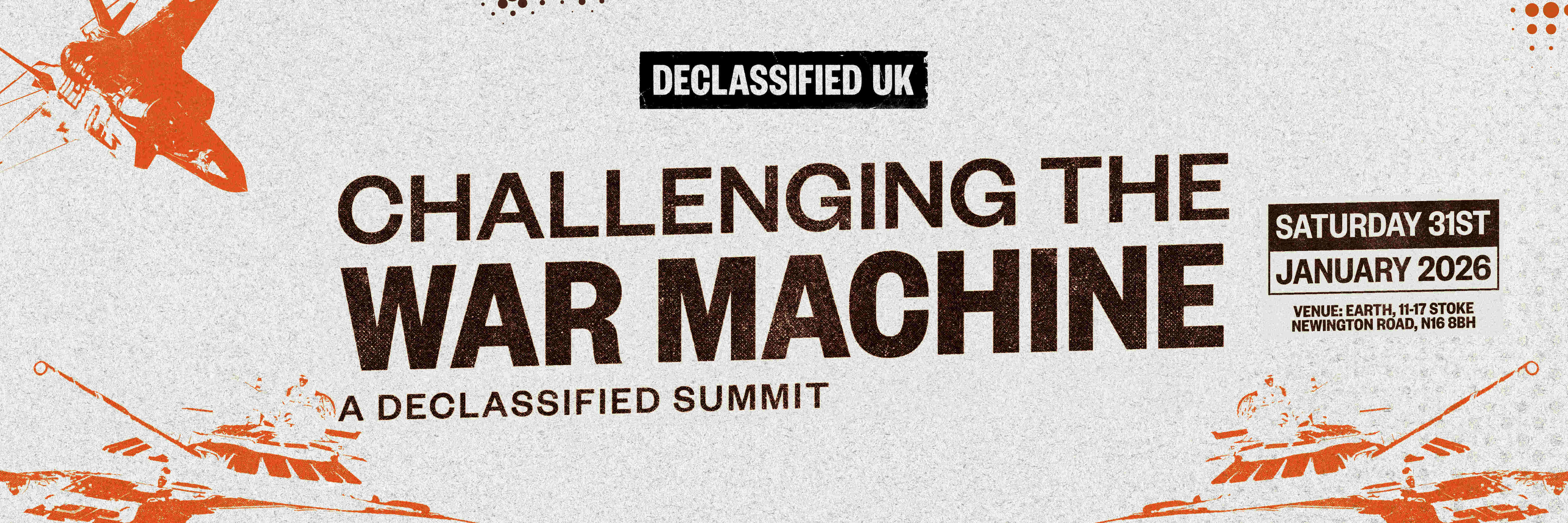
31st January – Challenging the War Machine – a DECLASSIFIED UK SUMMIT


Website of the Week
Now until to February 10, 2026 Radioactive waste storage in France: the debate is finally open! How to participate?
-
Archives
- January 2026 (259)
- December 2025 (358)
- November 2025 (359)
- October 2025 (376)
- September 2025 (258)
- August 2025 (319)
- July 2025 (230)
- June 2025 (348)
- May 2025 (261)
- April 2025 (305)
- March 2025 (319)
- February 2025 (234)
-
Categories
- 1
- 1 NUCLEAR ISSUES
- business and costs
- climate change
- culture and arts
- ENERGY
- environment
- health
- history
- indigenous issues
- Legal
- marketing of nuclear
- media
- opposition to nuclear
- PERSONAL STORIES
- politics
- politics international
- Religion and ethics
- safety
- secrets,lies and civil liberties
- spinbuster
- technology
- Uranium
- wastes
- weapons and war
- Women
- 2 WORLD
- ACTION
- AFRICA
- Atrocities
- AUSTRALIA
- Christina's notes
- Christina's themes
- culture and arts
- Events
- Fuk 2022
- Fuk 2023
- Fukushima 2017
- Fukushima 2018
- fukushima 2019
- Fukushima 2020
- Fukushima 2021
- general
- global warming
- Humour (God we need it)
- Nuclear
- RARE EARTHS
- Reference
- resources – print
- Resources -audiovicual
- Weekly Newsletter
- World
- World Nuclear
- YouTube
-
RSS
Entries RSS
Comments RSS
 nuclear-news