Radiation exposure to workers at Hanford
 Workers at U.S. nuclear site exposed — Levels “well above threshold for a High Contamination Area” #Hanford http://enenews.com/workers-at-u-s-nuclear-site-exposed-levels-well-above-threshold-for-a-high-contamination-area-hanford
Title: PNNL staffers exposed to radioactive tritium in Richland
Source: The Bellingham Herald
Author: Annette Cary
Date: June 27, 2013
Two Pacific Northwest National Laboratory employees inhaled small amounts of radioactive tritium while doing work in the Hanford 300 Area last month. […]
Tritium inadvertently spread outside the fume hood, including along the routes to radiological trash disposal.
“Contamination levels on the floor immediately adjacent to the fume hood were well above the threshold for a High Contamination Area,” according to the defense board staff report. […]
The event is still under investigation and it’s too soon to say if any changes will be made to laboratory procedures, [PNNL spokesman Greg Koller] said.
See also: TV: “It appears the worst case scenario has happened” at U.S. nuclear site — Most dangerous material on earth “out of control”? — A whopping 800,000 dpm measured outside tank (VIDEO) #Hanford
Radiation stored in forests of Chernobyl: the fire danger
 27 Years Later, Radiation Still Hides Out in Chernobyl’s Trees (Fukushima’s Too) The April 26, 1986, meltdown of the Chernobyl Nuclear Power
  Plant scattered radioactive material across 58,000 square miles of eastern Europe. In a ring 18 miles from the destroyed plant, authorities set up the Chernobyl Exclusion Zone—a place where no one is supposed to live (though of course some do.) Scientific American has the story of how, though the disaster took place decades ago, radiation persists in a huge area around the defunct power plant—ready to be re-released to the environment. http://blogs.smithsonianmag.com/smartnews/2013/06/27-years-later-radiation-still-hides-out-in-chernobyls-trees-fukushimas-too/ 30 June 13
In the forests around Chernobyl, the trees have absorbed some of the radioactive fall-out. Washed from the air by the rain, radionuclides are taken up by trees and stored for long periods. The worry, says Scientific American, is that a forest fire could loose this radiation back to the environment.
For almost three decades the forests around the shuttered nuclear power plant have been absorbing contamination left from the 1986 reactor explosion. Now climate change and lack of management present a troubling predicament: If these forests burn, strontium 90, cesium 137, plutonium 238 and other radioactive elements would be released, according to an analysis of the human health impacts of wildfire in Chernobyl’s exclusion zone conducted by scientists in Germany, Scotland, Ukraine and the United States. Continue reading
Hospitak sewage potentially a source of ionising radiation
 Another Radiation Source To Consider: Hospital Sewage Forbes, Jeff McMahon, 30 June 13 Researchers found higher than expected levels of radioactive iodine at a Long Island sewer plant that receives effluent from the thyroid cancer treatment center at Stony Brook University, they report in the latest issue of Health Physics.
The research highlights the need for studies of wastewater treatment plants that receive effluent from thyroid cancer treatment facilities, say researchers Paula S. Rose and Lawrence R. Swanson of Stony Brook’s Marine Sciences Research Center.
“This study highlights that medical use can cause substantial fluctuations of I-131 in sewage sludge and the general need for more surveys of I-131 in municipal WCPCs (Wastewater Polution Control Plants),” they write in the August 2013 issue of Health Physics (subscription required).
Rose and Swanson found a concentration of radioactive iodine four times higher than previously published studies of the Stony Brook plant, and at levels that sometimes exceeded the federal dose limit for members of the public……. “Further evaluation of treatment plant worker dose at this plant has been recommended to the Suffolk County Sewer District based on the radiation doses presented here.”
The researchers studied three wastewater treatment plants on Long Island, but found the highest doses at Stony Brook, perhaps because a relatively small treatment plant there serves a regional thyroid cancer center. The Stony Brook Medical Center treats about 60 inpatient thyroid cancer patients per year.
Iodine-131 can be both a cause of thyroid cancer and a solution. Cancers can develop when the thyroid absorbs I-131 instead of stable iodine, and can be included in the cure after doctors remove the thyroid gland and use I-131 to destroy remaining cells. Patients dosed with I-131 become temporarily radioactive, as does their urine. ”Patient excreta” are exempt from regulation in the U.S., and are therefore released into sewer systems.
Iodine 131 has a half life of about eight days.
“Iodine-131 is readily measured in sewage sludge at the Stony Brook WPCP,” according to the study. “The primary source of this radionuclide is excreta from thyroid cancer inpatients treated at the Stony Brook University Medical Center. Frequent inpatient treatments, flow recycling, and sewage sludge removal practices cause 131I to remain in sewage sludge for at least 13 days after patients have left the hospital.” http://www.forbes.com/sites/jeffmcmahon/2013/06/30/another-radiation-source-to-consider-hospital-sewage/
Errors made by Japanese authorities in estimating Fukushima radiation exposure
Exposure data wrong for 16,000 in Fukushima KYODO HTTP://WWW.JAPANTIMES.CO.JP/NEWS/2013/06/26/NATIONAL/RADIATION-EXPOSURE-DATA-INACCURATE-FOR-16000-FUKUSHIMA-RESIDENTS/#.UC0KSDTWO6I JUN 26, 2013 FUKUSHIMA – Fukushima Prefecture and the National Institute of Radiological Sciences have said they erroneously estimated the radiation exposure of 16,118 people in a survey covering the first four months after the outbreak of the March 2011 disaster at the Fukushima No. 1 nuclear plant.
Among the roughly 420,000 people authorities have so far finished compiling data on, recalculations show 12,469 received higher doses and 3,649 lower doses than previously estimated.
The margins for revisions range from plus 0.4 millisievert to minus 0.2 millisievert. As a result of the revisions, it was learned that some people were exposed to more than 1 millisievert — the annual limit set by the government for ordinary citizens.
People polled were asked to answer in detail where they were between March 12 and July 11, 2011. Based on their whereabouts, the institute estimated their cumulative amount of external exposure by adding up daily radiation levels measured at their locations over the four months.
Used as reference were actual radiation readings at a number of monitoring posts in the prefecture as well as projections of the spread of radioactive substances by the SPEEDI computer simulation system.
But in some cases, the dates in the survey failed to match those in the reference data.
Radiation-caused deaths from Chernobyl nuclear accident
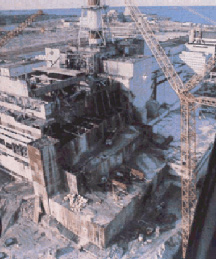 Scientific American: Up to 1 million eventual deaths estimated from Chernobyl exposure — Sweden, Finland, others concerned about risk of forest fires near disaster area http://enenews.com/scientific-american-1-million-eventual-deaths-estimated-chernobyl-exposure-sweden-finland-other-european-countries-concerned-about-risk-forest-fires-disaster-area
Source: Scientific American
Author: Jane Braxton Little and The Daily Climate
Date: June 24, 2013
At Chernobyl, Radioactive Danger Lurks in the Trees
For 26 years, forests around Chernobyl have been absorbing radioactive elements but a fire would send them skyward again – a concern as summers grow longer, hotter and drier […]
[…] scientists at several institutions in Europe and North America analyzed a worst-case scenario: A very hot fire that burns for five days, consumes everything in its path, and sends the smoke 60 miles south to Kiev. A separate worst-case study is underway looking at the risks for Sweden, Finland and other European countries heavily impacted by the 1986 explosion.
Women in their 20s living just outside the zone face the highest risk from exposure to radioactive smoke, the 2011 study found: 170 in 100,000 would have an increased chance of dying of cancer. Among men farther away in Kiev, 18 in 100,000 20-year-olds would be at increased risk of dying of cancer. [No mention of those under 20, who are at much greater risk] These estimates pale in comparison to those from the 1986 Chernobyl explosion, which predict between 4,000 and over a million eventual deaths from radiation exposure. […]
See also: 3 million children require treatment because of Chernobyl, many will die prematurely -U.N. Secretary General Kofi Annan in 2000
Radiation death ray plot to kill President Obama
Obama is death ray target of Ku Klux Klan nut http://www.thesun.co.uk/sol/homepage/news/4978215/Obama-target-of-KKK-nuts-radiation-weapon.html#ixzz2XAvBNDjL By PETE SAMSON, US Editor 21st June 2013 TWO men have been arrested over a plot to kill US President Barack Obama with a home-made DEATH RAY.
Fanatics Glendon Scott Crawford, 49, and Eric Feight, 54, were nicked after a six-month FBI undercover operation. Mr Obama was among those said to have been targeted by the futuristic device that would have fired lethal doses of radiation.
Engineer Crawford, a member of the white supremacist group the Ku Klux Klan, told undercover agents his design was “Hiroshima on a light switch”. He said his plan was to hide the death ray inside a van and park it
near to a target. The device would be activated from a safe distance and according to an
arrest affidavit would “kill human targets silently and from a distance with lethal doses of radiation”.
He said whoever had the device could kill with little chance of being caught, according to the criminal complaint.
Crawford, of Schenectady, New York, said President Obama was on their hit-list because he had let Muslims into the US.
On the day after the Boston Marathon bombing in April he allegedly sent a text message saying: “Obama’s policies caused this.” The two men were investigated after trying to get funding for their plan. Last year Crawford walked into a synagogue and allegedly inquired about technology that could kill “Israel’s enemies while they slept”.
He later asked KKK leaders in North Carolina for money for his machine. Both the KKK and Jewish leaders tipped off the FBI.
Crawford was arrested as he tried to connect a remote activation device to an X-ray machine that undercover agents had given him after making it useless.
Prosecutor John Duncan said: “From our investigation, the device would have been able to emit X-ray radiation that would cause death.”
Shocking new study shows damage from radiation more damaging than at first thought! – Prof.Chris Busby
….This density of events occurring at low doses suggests a mechanism to explain experimental results that show Tritium is a greater mutagenic hazard than ICRP would expect….
Posted by nuclear-news.net
By Arclight2011Part2
20th June 2011
H/t Richard Bramhall ( http://www.llrc.org )
A new review shows the conventional radiation risk model cannot be used to predict health effects of radioactivity inside the body.
On May 22 2013 InTech (http://www.intechopen.com) published a review of evidence that DNA damage caused by inhaling and ingesting man-made radioactivity is having serious health effects. This is the first time such a wide-ranging review of the genetic mechanisms of harm from nuclear discharges has been published in the scientific literature.
The review, by Professor Chris Busby, is entitled “Aspects of DNA damage from internal radiation exposures“

[1]. It is in a book called “New Research Directions in DNA Repair”.
[2] It vindicates the belief that incorporated (internal) radioactivity is more dangerous than predicted by the International Commission on Radiological Protection (ICRP). Much of the information reviewed has been in the literature for decades but has been sidelined or ignored.
The evidence shows that ICRP’s use of “absorbed dose” is invalid for many radionuclides when they are internal. “Absorbed dose” is based on an external irradiation paradigm and therefore averages the energy of radioactive decays across large volumes of body tissue.
By contrast, some forms of radioactivity expose DNA to high densities of ionisation. The review defines and discusses situations where genetic damage is massively more likely than from external radiation at the same “dose”;
1) biochemical affinity for DNA,
2) transmutation,
3) hot particles,
4) sequential emitters (“Second Event Theory”),
5) low energy beta emitters, and 6) the “Secondary Photoelectron Effect”:
- Some substances (for example Strontium-90 and Uranium) have high biochemical affinity for DNA so a large proportion of what is inside the body will be chemically bound to DNA. For this reason the radiation events associated with them are massively more likely to damage DNA structures than the same dose delivered externally.
- Transmutation, where the radioactive decay of a radio-element changes it into a different element (e.g. Carbon-14 changing to Nitrogen), has mutagenic effects far greater than would be expected on the basis of “absorbed dose”. This has been known since the 1960s but it has been ignored by risk agencies such as ICRP, UNSCEAR and BEIR.
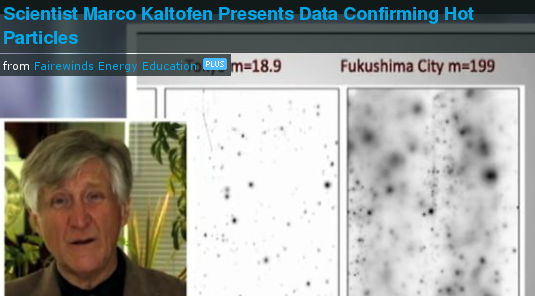
- Hot particles, especially those which emit very short-range alpha radiation, have obvious implications for high local doses to tissue where they are embedded.
- The “Second Event Theory” concerns the decay sequences of some radionuclides which decay to a short-lived daughter. Strontium 90 decaying to Yttrium 90 is an example; the Yttrium 90 has a half-life of 2½ days so the theory is that the first event (decay of Strontium 90) may damage a cell’s DNA which then sets about repairing itself. The repair process is known to be very radiosensitive and there is a finite probability that the second event (the subsequent Yttrium decay) inflicts further damage which cannot be repaired.
Hydraulic fracking causing radiation problem in water
 Report says drilling is creating radiation problems in Ohio Ohio,com.By BOB DOWNING June 14, 2013 The FreshWater Accountability Project Ohio (www.FWAPOH.com) today released a report on the presence and dangers of radiation present throughout the horizontal hydraulic fracturing (fracking) industry that is extracting minerals in Ohio.
The report, authored by Dr. Marvin Resnikoff, a longtime expert on radioactive waste management and since 1992, on radiation hazards from oil and gas drilling, details the serious problem associated with bringing up long-buried radium and other naturally-occurring hazards from thousands of feet underground.
The radiation is associated directly with the “hottest” areas of gas and oil productivity in deep shale layers and is an inevitable and burgeoning waste problem.
Resnikoff points out that much of the highly-radioactive solids such as rocks and soils pulled up during drilling, and contaminated muds and sands are cheaply disposed of in municipal landfills in Ohio, irrespective of actual radioactivity content, for 1/100th of the cost of disposal of comparable low-level radioactive waste from nuclear weapons and nuclear power generation in the nation’s three facilities for that purpose.
n Ohio, he stated, “It is evident that environmental concerns are trumped by the economics beneficial to the unconventional shale drilling industry.” Similarly, Dr. Resnikoff identified evidence that the Patriot water treatment facility in Warren, Ohio, which delivers pretreated water to the Warren public water treatment plant, is likely sending radium-laden water into the Mahoning River watershed. “On a daily basis, Patriot does not test for gamma emitting radionuclides and for radium-226,” he observed.
The expert also performed calculations showing that transport of radioactive liquid waste by tank truck greatly exceed federal thresholds which require specific tank design, minimum insurance under federal regulations of $5 million per shipment, and signage to be prominently located which identify the load as radioactive material.
The report notes that all three sets of federal regulations are being routinely violated which means State of Ohio regulations are clearly inadequate for this hazardous material, and possibly illegal…… http://www.ohio.com/blogs/drilling/ohio-utica-shale-1.291290/report-says-drilling-is-creating-radiation-problems-in-ohio-1.405891
Four types of radioactive isotopes emitted during a nuclear accident
How Does Radiation Affect the Body? Big Think, by MICHIO KAKU APRIL 16, 2011, “……Four different types of radiation are emitted during a nuclear accident like the Fukushima meltdown: iodine, cesium, strontium, and potassium. Physicist Michio Kaku, spoke with Big Think this week about these different types of radiation and the effect each one has on the human body. Like Chernobyl, he said, the main problem has been radioactive iodine: “That’s why people have been taking potassium iodide pills—to flood the thyroid glands.” But potassium
iodide pills are not “radiation pills,” he added. They protect against just one byproduct—iodine 131—not against cesium, strontium, or the extremely dangerous plutonium.

Below are these four different radioactive isotopes, their half-lives, and the types of cancer with which they are most often associated. Continue reading
Japanese Red Cross Society radiation limits for emergency workesr
Red Cross radiation limit for relief workers too low, say critics Asahi Shimbun, By YURI OIWA June 13, 2013 The Japanese Red Cross Society has established a guideline for medical workers that sets an accumulated radiation dose limit of 1 millisievert for relief activities, although experts have said the ceiling is too low to allow workers to provide ample assistance to disaster victims.
“Radiation doses above 1 millisievert have no health effects,” said Yasushi Asari, a professor of emergency medical care at Hirosaki University. “There is no need for medical workers to use that threshold.”
Masahito Yamazawa, director-general of the Red Cross nuclear disaster preparedness task force, said during in-house discussions there were arguments for and against the 1-millisievert threshold. But the Red Cross determined that a 1-millisievert limit would still allow its workers to engage in relief activities in zones with high radiation levels because each relief mission usually lasts only up to a week, Yamazawa said.
One millisievert is the legal annual dose limit for members of the public during normal times.
Yamazawa added that allowances were also made for the fact that its medical relief squads include clerical workers.
“We have created the guideline out of a positive desire to help victims during a nuclear disaster,” Yamazawa said. “We will use it as a platform for further improvements if the need arises.”
Japanese Red Cross relief units fulfilled a total of 900 missions in communities ravaged by the 2011 Great East Japan Earthquake. However, initially they were unprepared for a nuclear disaster, and that created a vacuum of relief squads in Fukushima Prefecture during the early stages of the crisis at the Fukushima No. 1 nuclear power plant.
Red Cross officials said they learned from that experience and decided to create the new guideline for nuclear disaster relief activities.
The guideline says relief squad members should carry dosimeters and iodine tablets at all times, and retreat to safety whenever they are in danger of being exposed to more than 1 millisievert in accumulated radiation. It also says relief workers should keep clear of zones that are off-limits to residents……
Patterns of Fukushima radiation in Northern hemisphere
Study: Fukushima fuel burn-up spread over entire northern hemisphere’s middle latitudes — First time measured in southern hemisphere http://enenews.com/study-fukushima-fuel-burn-up-dispersed-over-entire-northern-hemispheres-middle-latitudes-first-time-also-measured-in-southern-hemisphere
Title: An overview of Fukushima radionuclides measured in the northern hemisphere
Source: Science of The Total Environment
Author: P. Thakura, S. Ballard, R. Nelson
Date: August 1, 2013
Abstract
The Great East Japan Earthquake and tsunami on March 11, 2011 resulted in the tragic accident at the Fukushima Nuclear Power Plant (NPP) and subsequently uncontrolled release of radioactive contaminants into the atmosphere. This review article attempts to compile and interpret data collected by various national and international monitoring networks in response to the Fukushima releases across the northern hemisphere. The majority of the releases occurred during the period March 12–22 with a maximum release phase from March 14–17, 2011. The radioactivity released was dominated by volatile fission products including isotopes of the noble gases (xenon and krypton), iodine, cesium, and tellurium. The radioactive gases and particles released in the accident were dispersed over the middle latitudes of the entire northern hemisphere and for the first time also measured in the southern Hemisphere. Isotopes of iodine and cesium were detected in air, water, milk and food samples collected across the entire northern hemisphere. Elevated levels of fission products were detected from March to May 2011 at many locations over the northern hemisphere.
This article focuses on the most prevalent cesium and iodine isotopes, but other secondary isotopes are also discussed. Spatial and temporal patterns and differences are contrasted. The activity ratios of 131I/137Cs and 134Cs/137Cs measured at several locations are evaluated to gain an insight into the fuel burn-up, the inventory of radionuclides in the reactor and the isotopic signature of the accident. It is important to note that all of the radiation levels detected outside of Japan have been very low and are well below any level of public and environmental hazard. Full study available here
Concern over radiation risks in CT scans for children
 more research is urgently needed to determine when CT in pediatrics can lead to improved health outcomes and whether other imaging methods (or no imaging) could be as effective. For now, it is important for both the referring physician and the radiologist to consider whether the risks of CT exceed the diagnostic value it provides over other tests, based on current evidence,”
Study Examines Cancer Risk from Pediatric Radiation Exposure from CT Scans http://www.sciencedaily.com/releases/2013/06/130610192536.htm June 10, 2013 — According to a study of seven U.S. healthcare systems, the use of computed tomography (CT) scans of the head, abdomen/pelvis, chest or spine, in children younger than age 14 more than doubled from 1996 to 2005, and this associated radiation is projected to potentially increase the risk of radiation-induced cancer in these children in the future, according to a study published Online First byJAMA Pediatrics. The use of CT in pediatrics has increased over the last two decades. The ionizing radiation doses delivered by the tests are higher than convention radiography and are in ranges that have been linked to an increased risk of cancer. Children are more sensitive to radiation-induced carcinogenesis and have many years of life left for cancer to develop, the authors write in the study background.
“The increased use of CT in pediatrics, combined with the wide variability in radiation doses, has resulted in many children receiving a high-dose examination,” the study notes.
Diana L. Miglioretti, Ph.D., of the Group Health Research Institute and University of California, Davis, and colleagues quantified trends in the use of CT in pediatrics plus the associated radiation exposure and estimated potential cancer risk using data from seven U.S. health care systems. Continue reading
Radiation and the ethics of sending astronauts to Mars
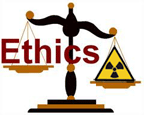 One thing is certain: there can be no more romantic idealism. No amount of wishful thinking, or crowdsourcing, or press releasing can circumvent this problem. Space radiation is dangerous, potentially deadly. Manned missions to Mars with current technology will carry significant exposure risks.
At what price ethically do we want the Red Planet?
Space radiation results should spark manned Mars mission debate, Guardian UK, Stuart Clark 5 June 13Nasa data shows radiation doses would be so high on a manned Mars mission that we must now debate the ethics of deep space exploration – or wait decades to develop safer technology
It is time for idealism about missions to Mars to end. Going there with current technology would carry a significant risk of harmful radiation exposure. Continue reading
EPA Dramatically Weakens Radiation Protection
Fukushima Radiation Risk Media Deception, Lynda Lovon 3 June 13 ………“The U.S. Environmental Protection Agency (EPA) is publishing in the Federal Register today controversial new Protective Action Guides (PAGs) for responding to radioactive releases. EPA says it solicits public comment but is nonetheless making the PAGs immediately effective.
Good news: ionising radiation type scanners removed from airports across USA
 Full-body scanners at airports replaced with less-revealing, low radiation machines http://abclocal.go.com/wls/story?section=news/local&id=9125985 June 03, 2013 — Airports across the U.S. have removed the full-body scanners that used x-rays to create what looks like nude images of passengers.
The remaining 250 machines were removed about two weeks before the June 1st deadline set by Congress.Some critics said they were too revealing, while others expressed health concerns over radiation exposure.
Passengers still have to undergo full-body scans. However, the scanners now use radio waves that produce a less-detailed image.
1 This Month

of the week – Shut Down Drone Warfare!


Tell the Ukrainian Government to Drop Prosecution of Peace Activist Yurii Sheliazhenko

Petition to revoke the licensing of the Near Surface Nuclear Disposal Facility (NSDF) at Chalk River. https://www.ourcommons.ca/petitions/en/Petition/Details?Petition=e-7247
To see nuclear-related stories in greater depth and intensity – go to https://nuclearinformation.wordpress.com
-
Archives
- April 2026 (114)
- March 2026 (251)
- February 2026 (268)
- January 2026 (308)
- December 2025 (358)
- November 2025 (359)
- October 2025 (376)
- September 2025 (257)
- August 2025 (319)
- July 2025 (230)
- June 2025 (348)
- May 2025 (261)
-
Categories
- 1
- 1 NUCLEAR ISSUES
- business and costs
- climate change
- culture and arts
- ENERGY
- environment
- health
- history
- indigenous issues
- Legal
- marketing of nuclear
- media
- opposition to nuclear
- PERSONAL STORIES
- politics
- politics international
- Religion and ethics
- safety
- secrets,lies and civil liberties
- spinbuster
- technology
- Uranium
- wastes
- weapons and war
- Women
- 2 WORLD
- ACTION
- AFRICA
- Atrocities
- AUSTRALIA
- Christina's notes
- Christina's themes
- culture and arts
- Events
- Fuk 2022
- Fuk 2023
- Fukushima 2017
- Fukushima 2018
- fukushima 2019
- Fukushima 2020
- Fukushima 2021
- general
- global warming
- Humour (God we need it)
- Nuclear
- RARE EARTHS
- Reference
- resources – print
- Resources -audiovicual
- Weekly Newsletter
- World
- World Nuclear
- YouTube
-
RSS
Entries RSS
Comments RSS
 nuclear-news