“..clear evidence of excess cancer risk from low dose ionizing radiation…..”

DCEG 13th July 2020, An international team of experts in the study of cancer risks associated with low-dose ionizing radiation published the monograph, “Epidemiological studies of low-dose ionizing radiation and cancer: Summary bias assessment and meta-analysis,” in the Journal of the National Cancer Institute on July 13, 2020. It is well established that ionizing radiation causes cancer through direct DNA damage. The general public are exposed to low doses of ionizing radiation from medical exposures like computed tomography (CT) scans, naturally occurring radiation (emitted from bedrock with the earth’s crust and cosmic rays emitted by the sun), and occupational exposures to medical, aircrew and nuclear workers.
A key question for low-dose exposures is how much of the damage can be repaired and whether other mechanisms, including inflammation, also play a role. This critical question has been long debated for radiation protection standards. After combing data from 26 epidemiological studies the authors found clear evidence of excess cancer
risk from low dose ionizing radiation: 17 of 22 studies showed risk for solid cancers and 17 of 20 studies showed risk for leukemia. The summary risk estimates were statistically significant and the magnitude of risk(per unit dose) was consistent with studies of populations exposed to higher doses. https://dceg.cancer.gov/news-events/news/2020/low-dose-monograph?s=09
New CT scan method lowers radiation exposure
New CT scan method lowers radiation exposure, Science Daily
- Date: July 23, 2020
- Source: University College London
- Summary:
- A CT scan technique that splits a full X-ray beam into thin beamlets can deliver the same quality of image at a much reduced radiation dose, according to a new study. The technique, demonstrated on a small sample in a micro CT scanner, could potentially be adapted for medical scanners and used to reduce the amount of radiation millions of people are exposed to each year.
-
A CT scan technique that splits a full X-ray beam into thin beamlets can deliver the same quality of image at a much reduced radiation dose, according to a new UCL study.
The technique, demonstrated on a small sample in a micro CT scanner, could potentially be adapted for medical scanners and used to reduce the amount of radiation millions of people are exposed to each year.
A computerised tomography (CT) scan is a form of X-ray that creates very accurate cross-sectional views of the inside of the body. It is used to guide treatments and diagnose cancers and other diseases.
Past studies have suggested CT scans may cause a small increase in lifelong cancer risk because their high-energy wavelengths can damage DNA. Although cells repair this damage, sometimes these repairs are imperfect, leading to DNA mutations in later years……… https://www.sciencedaily.com/
Plutonium particles from Fukushima a bigger problem than previously thought
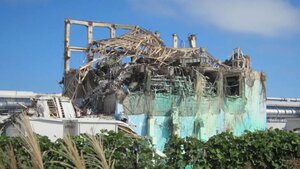
 Plutonium Particles Scattered 200km From Fukushima Nuclear Disaster Site, Scientists Say https://theswaddle.com/plutonium-particles-scattered-200km-from-fukushima-nuclear-disaster-site-scientists-say/, By Aditi Murti, Jul 22, 2020 Plutonium fragments may have spread more than 200km via caesium microparticle compounds released during the 2011 Fukushima Daiichi nuclear power plant disaster in Japan. These findings are according to research done on the region’s soil samples, published in Science of The Total Environment, by an international group of scientists.
Fukushima may have scattered plutonium widely
Fukushima may have scattered plutonium widely, Physics World 20 Jul 2020 Tiny fragments of plutonium may have been carried more than 200 km by caesium particles released following the meltdown at the Fukushima Daiichi nuclear power plant in Japan in 2011. So says an international group of scientists that has made detailed studies of soil samples at sites close to the damaged reactors. The researchers say the findings shed new light on conditions inside the sealed-off reactors and should aid the plant’s decommissioning……..
Mapping plutonium spread
To date, plutonium from the accident has been detected as far as 50 km from the damaged reactors. Researchers had previously thought that this plutonium, like the caesium, was released after evaporating from the fuel. But the new analysis instead points to some of it having escaped from the stricken plant in particulate form within fragments of fuel “captured” by the CsMPs…….
Implications for decommissioning
The researchers note that previous studies have shown that plutonium and caesium are distributed differently in the extended area around Fukushima, which suggests that not all CsMPs contain plutonium. However, they say that the fact plutonium is found in some of these particles implies that it could have been transported as far afield as the caesium – up to 230 km from the Fukushima plant.
As regards any threat to health, they note that radioactivity levels of the emitted plutonium are comparable with global counts from nuclear weapons tests. Such low concentrations, they say, “may not have significant health effects”, but they add that if the plutonium were ingested, the isotopes that make it up could yield quite high effective doses.
With radiation levels still too high for humans to enter the damaged reactors, the researchers argue that the fuel fragments they have uncovered provide precious direct information on what happened during the meltdown and the current state of the fuel debris. In particular, Utsunomiya points out that the composition of the debris, just like that of normal nuclear fuel, varies on the very smallest scales. This information, he says, will be vital when it comes to decommissioning the reactors safely, given the potential risk of inhaling dust particles containing uranium or plutonium.
The research is reported in Science of the Total Environment. https://physicsworld.com/a/fukushima-may-have-scattered-plutonium-widely/
Radioactive Contamination of Europe
Free News 17th July 2020, An international consortium of scientists has specified a map of
concentrations of cesium and plutonium radionuclides in soils in
Switzerland and several neighboring countries. Using an archive of European
soil samples, a team of researchers led by Catherine Meisburger from the
University of Basel was able to track down the sources of radioactive
fallout between 1960 and 2009.
This study was published in the journal
Scientific Reports. On the new map of radioactive contamination of the
soil, there are not only Switzerland but also several neighboring countries
– France, Italy, Germany and Belgium. The map is based on a new
calculation method, namely the use of the ratio of cesium to plutonium.
These two radionuclides were released during military nuclear tests in the
1960s. Additional cesium fell into some countries during the Chernobyl
accident in 1986.
https://freenews.live/a-new-map-of-radioactive-contamination-of-the-soil-with-cesium-and-plutonium/
New fast test to detect ionising radiation
Researchers have developed a simple finger-prick test that scans a single drop of blood to rapidly determine whether the body has been exposed to toxic levels of radiation.
Catastrophic radiological events — like nuclear detonations — can threaten massive populations with acute radiation syndrome, which wreaks havoc on the gastrointestinal system and destroys bone marrow, leading to infections and internal bleeding. In preparation for the possibility of such a public health disaster, scientists at Ohio State have devised a speedy and scalable method for estimating radiation exposure. They published their proof-of-concept research, conducted in mice, Wednesday in Science Translational Medicine.
Timing is key when it comes to assessing radiation dosage in members of an exposed population. Victims above a certain dose threshold require immediate and aggressive treatment, such as a blood transfusion or cytokine therapy.
The test Jacob’s team developed has the capability to turn out a number within hours………. https://www.statnews.com/2020/07/15/radiation-syndrome-exposure-test/
Citizen science and Fukushima radiation
An anthropologist explores the network of citizen monitoring capabilities that developed after the Fukushima nuclear disaster in Japan in 2011 for what they might teach all of us about such strategies for the covonavirus pandemic. Sapiens MAXIME POLLERI / 15 JUL 2020 “…………… The earthquake and subsequent tsunami led to core meltdowns within some of the Fukushima power plant’s nuclear reactors. This malfunction, along with other technical incidents, resulted in the atmospheric release of radioactive pollutants, which spread predominantly over the northeastern part of Japan, forcing a widespread evacuation of Fukushima residents. By March 12, the area around the power plant had been evacuated; those living and working within 20 kilometers of the radius of the plant were forced to relocate. In the days, weeks, and months following this disaster, uncertainty around the scale and extent of contamination grew swiftly—much like what we see occurring throughout the world during the COVID-19 pandemic.
Most notably, the public grew increasingly concerned about the legitimacy of institutional experts’ ability to control and explain the risks of residual radioactivity, while citizens like Natsuo were unable to get adequate information through traditional media venues. Initially, data about radioactive contamination came sporadically and was often explained in hard-to-understand metrics by scientists who were cherry-picked by the state to send reassuring messages to citizens.
Moreover, radioactive contamination was later found to be present in some food products and in school yards where children had been playing that lay beyond the official zone of evacuation. Over the ensuing months and years, the public lost confidence in the state’s response and began to take matters into their own hands, mobilizing expert practices of their own. Widespread grassroot actions led to citizen science networks in which people tracked radiation in their environment, organized learning workshops on radiation dangers, and tested food for contamination, often through local organizations or individual households.
As an anthropologist who conducted fieldwork on the Fukushima nuclear disaster between 2015 and 2017, I came to realize that citizen science can rise up to fill in the gaps of state responses toward crises, for better or for worse. As we’ve seen play out throughout the COVID-19 pandemic in various parts of the world, governance and leadership have often been confusing, mismatched, and at times utterly misleading. The case of Fukushima offers lessons about both the promises and pitfalls of citizen science and how civil society is playing an increasingly important role in managing various disasters, catastrophes, and crises.
The Geiger counter of Masayuki was not silent for long before it began to emit the distinctive “clicking” sound associated with radiation monitoring devices. The “click” grew louder in intensity as we located a hot spot, an area where the level of radiation is significantly higher than elsewhere. Masayuki dutifully noted the number provided by the device before leaving to search for another hot spot. We were standing in the Japanese village of Iitate, situated in the prefecture of Fukushima. It was common at this time for citizens to own their own Geiger counters—often purchased off the internet using international donations or made at home as DIY devices—to measure the level of radiation around them.
When I first came to this rural village in the spring of 2016, more than five years had passed since the nuclear disaster. The forced evacuation of citizens from Fukushima and the surrounding areas had proved short-lived; by 2012, the Japanese state had already embraced a policy of repatriation to irradiated areas like Iitate village, which is where I met Masayuki and citizens like him in 2016. ……….
While happy to be back in their beloved region, many residents were critical of the state radiation-monitoring networks that were supposed to provide them with adequate information to allow them to live safely in the village. Indeed, state data on radiation was often provided through fixed monitoring in precise locations or through an average radiation level taken in the village. This kind of information was not practical enough for residents, who wanted to know the specific radiation levels behind their houses or in their rice paddy fields.
Likewise, official depictions of radiation levels through clear-cut chromatic zones did little to offer the citizens reassurance. As a result of the perceived limitation of state measures, residents quickly decided to track radiation themselves as a means to keep the map of their village relevant—often finding contamination that was not evident from state mapping. In the house of one farmer, I witnessed homemade models that exhibited a 3D topography of Iitate’s geographical landscape. These models had been made using 3D printers, and the level of radiation had been monitored by the citizens themselves.
In particular, the local knowledge of the geography of Iitate helped citizens to attain a level of precision that far exceeded that of the government map. Citizens soon learned that radiation doses could be higher at the bottom of a hill than farther upslope or that the woods behind one’s home, having trapped radiation, might impact the radiation level inside houses. These practices helped strengthen a community that had previously felt helpless in the face of an imperceptible radiation threat. Geiger counters became the ears and eyes of citizens like Masayuki, enabling them to make sense of and gain some semblance of control over a hazard that cannot be registered by the senses.
After the Chernobyl nuclear disaster in 1986, one of the main sources of radiation exposure stemmed from consumption of food products such as milk or wild mushrooms that had been contaminated by radioactive fallout. In an effort to make sure that this did not happen in Japan, the government took on the task of testing the food produced in Fukushima, implementing a limit to the allowable amount of radioactivity in food products.
Within months after the meltdowns, the government assured the public of the safety of its food products, encouraging citizens to consume foods sold at public fairs and other public events. However, citizens of Fukushima also consume food harvested from streams, forests, home gardens, and mountain areas—where state monitoring was largely absent or insufficient.
Again, citizens mobilized to fill in the gaps in food testing: With the help of public donations, citizen scientists were able to purchase scintillation detectors, which are used to measure radioactive contaminants in foodstuff. Such testing enabled citizens to gain an understanding of the types of foods most prone to radioactive contamination, such as mushrooms, green leafy vegetables, citrus, sea cucumber, and seaweeds. This in turn helped people avoid eating the most risky foods. Together with state monitoring, such citizen science practices resulted in lower consumption of contaminated foods.
While such examples demonstrate the power and potential of citizen science, there are inherent political complexities involved when citizens or nongovernmental organizations step in and claim expertise in areas typically reserved for state agencies and experts. Like those entities, citizen science has its own potential pitfalls…….. https://www.sapiens.org/culture/fukushima-citizen-science/
Ruthenium and Caesium radioactive isotopes over Europe due to mismanagement at a nuclear reactor – says IAEA
 Low Levels of Radioisotopes Detected in Europe Likely Linked to a Nuclear Reactor – IAEA, 27/2020 The recent detection of slightly elevated levels of radioisotopes in northern Europe is likely related to a nuclear reactor that is either operating or undergoing maintenance, when very low radioactive releases can occur, the International Atomic Energy Agency (IAEA) said today. The geographical origin of the release has not yet been determined.
Basing its technical assessment on data reported by its Member States, the IAEA reiterated that the observed air concentrations of the particles were very low and posed no risk to human health and the environment.
Estonia, Finland and Sweden last week measured levels of Ruthenium and Caesium isotopes which were higher than usual. They also reported the detection of some other artificial radionuclides. The three countries said there had been no events on their territories that could explain the presence of the radionuclides, as did more than 40 other countries that voluntarily provided information to the IAEA.
Seeking to help identify their possible origin, the IAEA on Saturday contacted its counterparts in the European region and requested information on whether the particles were detected in their countries, and if any event there may have been associated with the atmospheric release.
By Thursday afternoon, 37 Member States in the European region (Albania, Austria, Belgium, Bosnia and Herzegovina, Bulgaria, Republic of Croatia, Cyprus, Czech Republic, Denmark, Estonia, Finland, France, Germany, Greece, Hungary, Iceland, Ireland, Italy, Latvia, Lithuania, Luxembourg, Netherlands, North Macedonia, Norway, Poland, Portugal, Romania, Russian Federation, Republic of Serbia, Slovak Republic, Slovenia, Spain, Sweden, Switzerland, Turkey, Ukraine and United Kingdom) had voluntarily reported to the IAEA that there were no events on their territories that explained the release. They also provided information about their own measurements and results……
Based on the IAEA’s technical analysis of the mix of artificial radionuclides that were reported to it, the release was likely related to a nuclear reactor, either in operation or in maintenance. The IAEA ruled out that the release was related to the improper handling of a radioactive source. It was also unlikely to be linked to a nuclear fuel processing plant, a spent fuel pool or to the use of radiation in industry or medicine.
Based on the data and information reported to the IAEA, no specific event or location for the dispersal of radionuclides into the atmosphere has yet been determined. To do this, the IAEA depends on receiving such information from a country where the release occurred. https://www.iaea.org/newscenter/pressreleases/low-levels-of-radioisotopes-detected-in-europe-likely-linked-to-a-nuclear-reactor-iaea
Fukushima radioactive reference layer found in Northern glaciers as they thaw

 Terrawatch: unearthing snow’s ‘Fukushima layer’ https://www.theguardian.com/science/2020/jun/30/terrawatch-unearthing-snows-fukushima-layer
Chinese glaciologists have found the freeze-thaw process has concentrated discharge from the disaster Kate Ravilious, @katerav Wed 1 Jul 2020 The Fukushima nuclear accident has added a distinctive signature to snow and ice across the northern hemisphere, new research published in Environmental Research Letters shows. Triggered by the Tōhoku earthquake and tsunami off the coast of Japan on 11 March 2011, the disaster resulted in a month-long discharge of radioactive material into the atmosphere, ocean and soil.Feiteng Wang from the Tian Shan glaciological station in Lanzhou, China, and colleagues collected snow samples in 2011 and 2018 from a number of glaciers (spanning a distance of more than 1,200 miles (2,000km) in north-western China. They expected the Fukushima signature to have faded away by 2018, but to their surprise the freeze-thaw processing had made it more concentrated, creating a strong and lasting reference layer in the ice.
Many reference layers from the last 50 years (such as the Chernobyl nuclear disaster) have melted away in recent warming events, making it difficult to date the upper layers of ice cores. “Reference layers are crucial and a prerequisite for telling the story of the ice core,” says co-author Jing Ming. “The Fukushima layer will be useful for dating ice in one or two decades when the snow transforms to ice,” he adds.
Radiation particles leak may have come from Russia’s super nuclear weapons, rather than from commercial reactor
Russia’s nuclear energy body has denied that the radiation originated from its two nuclear power stations in the region. However, it is not only civilian power stations that use nuclear reactors. Tom Moore, a nuclear policy expert and former senior professional staff member of the U.S. Senate Foreign Relations Committee, believes that these military reactors cannot be ruled out:
“CTBTO radionuclide monitoring is intended to discriminate explosive events and to complement seismic monitoring. Not to effectively rule in or rule out a source of radionuclides as being civil or military reactors.”
Possible Cause: Burevestnik Cruise Missile
The first military system under development which comes to mind is the Burevestnik cruise missile. Its name means ‘Storm Bringer’ in Russian, after the Petral sea bird. It is more formally known by the designation 9M730 and NATO code name Skyfall. This is a nuclear-armed cruise missile that is designed to use a nuclear engine to give it virtually unlimited range. Burevestnik is the natural candidate because it is airborne, so any accident would likely release radioactive material into the sky.
This may have previously happened on August 9, 2019. There was a fatal radiation incident at the State Central Navy Testing Range at Nyonoksa. This is near to Severodvinsk in Russia’s arctic north, the same area that the CTBTO has pointed towards this time. Then it was caused by an explosion in a rocket engine. Many analysts believe that this was most likely related to the Burevestnik missile.
Possible Cause: Poseidon Drone-Torpedo
The other weapon in the frame is Poseidon. This is a massive nuclear-powered torpedo that is intended to be launched from specially built submarines. At 60-78 feet long it is about twice the size of a Trident missile. Its designation is believed to be 2m39 and it is known in NATO as Kanyon. Its virtually unlimited range and high autonomy would make it hard to classify. The U.S. government has described it as an intercontinental, nuclear armed, undersea autonomous torpedo. It is a weapon worthy of a Bond villain that would literally go underneath missile defenses. Its threat is slow but inevitable doom to coastal cities such as New York and Los Angeles.
While Poseidon probably doesn’t have very much shielding on its reactor, it is normally underwater, so any radiation leak may not reach the atmosphere. But it would be lifted out of the water after a test launch, so there is room for an incident that could get detected hundreds of miles away in Scandinavia.
Open Source Intelligence On The Suspects
Open source intelligence analysts have been following these weapons. Evgeniy Maksimov noted that flight tests of Burevestnik were probably being conducted. He noted two no-fly zones closed for June 22-27 at a missile test range. But the launch site was far south of where the radiation is believed to originate.
A better candidate may therefore be Poseidon. Vessels believed to be associated with its tests were active in the region at the time. The special support vessel Akademik Aleksandrov was at sea around June 18 to 23, in the area of interest. This ship is suspected of being involved in retrieving Poseidon weapons. Twitter user Frank Bottema found a matching vessel using radar satellite imagery.
We may never know for sure the cause of the heightened radiation levels. But Russia’s denials that it was from a civilian power plant, combined with the ongoing tests, point a finger at the nuclear-powered weapons. This reignites the debate about how safe these projects are, even in peacetime.
Radioactive particles in atmosphere: Russia tells IAEA it has had no nuclear incidents
Russia Tells IAEA It Is Incident-Free After Nuclear Particle Increase, https://www.nytimes.com/reuters/2020/06/30/world/europe/30reuters-nuclear-particles-baltic-russia.html By Reuters
June 30, 2020 VIENNA — Russia has told the U.N. atomic watchdog there have been no nuclear incidents on its territory that could explain elevated but still harmless levels of radioactive particles detected on the Baltic Sea last week, the U.N. agency said on Tuesday.
A separate body, the Comprehensive Nuclear-Test-Ban Treaty Organization (CTBTO), which watches for nuclear weapon tests, said on Friday a monitoring station in Sweden had found higher-than-usual levels of caesium-134, caesium-137 and ruthenium-103. The CTBTO said they were produced by nuclear fission.
CTBTO chief Lassina Zerbo posted a borderless map https://twitter.com/SinaZerbo/status/1276559857731153921?s=20 online showing where the particles might have come from in the 72 hours before they were detected – an area covering the tips of Denmark and Norway as well as southern Sweden, much of Finland, Baltic countries and part of western Russia including St. Petersburg.
All those countries except Denmark, which has no nuclear power plants http://www.ensreg.eu/country-profile/Denmark, and Russia, which has a history of not fully explaining incidents that emitted radioactive particles, told the International Atomic Energy Agency by Monday that there were no events on their territory that could explain the increase.
On Tuesday evening, however, the IAEA issued a statement https://www.iaea.org/newscenter/pressreleases/more-countries-provide-radioisotope-information-to-iaea-reported-levels-very-low saying the list of countries that had declared themselves incident-free had grown to around 40 and now included Denmark and Russia.
“Apart from Estonia, Finland and Sweden, none of the other countries which have so far provided information and data to the IAEA said they had detected elevated radioisotope levels,” said the IAEA, which asked member states for information over the weekend after the CTBTO announcement.
Asked on Monday if Russia was the origin of the elevated particle levels, Kremlin spokesman Dmitry Peskov said Moscow had detected no sign of a radiation emergency.
(Reporting by Francois Murphy; editing by Jonathan Oatis)
Cloud with tiny levels of radioactivity detected over Scandinavia and European Arctic.
 Radioactivity is blowing in the air https://thebarentsobserver.com/en/ecology/2020/06/various-reactor-related-isotopes-measured-over-scandinavia-and-svalbard?fbclid=IwAR2UsXspMQZSLInvisible for humans, but detectable for radiation-filters. A cloud with tiny levels of radioactivity, believed to originate from western Russia, has been detected over Scandinavia and European Arctic. By Thomas Nilsen, June 26, 2020
First, in week 23 (June 2-8), iodine-131 was measured at the two air filter stations Svanhovd and Viksjøfjell near Kirkenes in short distance from Norway’s border to Russia’s Kola Peninsula. The same days, on June 7 and 8, the CTBTO-station at Svalbard measured tiny levels of the same isotope.
CTBTO is the global network of radiological and seismic monitoring under the Comprehensive Nuclear-Test-Ban Treaty Organization.
Norway’s nuclear watchdog, the DSA, underlines that the levels are very small.
“We are currently keeping an extra good eye on our air-monitoring system,” says Bredo Møller with DSA’s Emergency Preparedness unit at Svanhovd.
While iodine-131 is only measured in the north, in the Kirkenes area and at Svalbard, Swedish and Finnish radiation authorities inform about other isotopes blowing in the skies over southern Scandinavia.
Bredo Møller says to the Barents Observer that his agency can’t conclude there is a connection between what is measured up north and what his Scandinavian colleagues measured in week 24.
“As part of our good Nordic cooperation we are currently exchanging data,” he says.
Møller tells about radiation just above detectable levels. “We found 0,9 microBq/m3 at Svanhovd and 1,3 microBq/m3 at Viksjøfjell.”
Finland’s Radiation and Nuclear Safety Authority (STUK) detected on June 16 and 17 small amounts of the radioactive isotopes cobalt, ruthenium and cesium (Co-60, Ru-103, Cs-134 and Cs-137).
STUK says the measurements were made in Helsinki where analysis is available on the same day. “At other stations, samples are collected during the week, so results from last week will be ready later.”
Likely from a reactor
All these isotopes indicate that the release comes from a nuclear-reactor. Iodine-131 has a half-life of 8 days, and given the small amount measured in the north, this isotope could be gone before the radioactive cloud reached the southern parts of Finland and Sweden a week after the first measurements in the north. That be, if the release was somewhere in the Arctic or northwestern Russia and winds were blowing south or southwest.
Neither of the Scandinavian radiation agencies will speculate about the origin.
“It is not possible now to say what could be the source of the increased levels,” writes the Swedish Radiation Safety Authority in a statement. Also the Swedes underline that the levels are low and do not pose any danger to people or the environment.
In the Netherlands, though, the National Institute for Public Health and the Environment (RIVM) has analyzed the data from Scandinavia and made calculations to find out what may have been the origin of the detected radionuclides.
“These calculations show that the radionuclides came from the direction of Western Russia,” RIVM concludes.
Calls for info-exchange
Senior Nuclear Campaigner with Greenpeace Russia, Rashid Alimov, says to the Barents Observer that the composition of the isotopes strongly indicates that the source is a nuclear reactor or a spent fuel element from a reactor.
“The Russian monitoring systems have not reported any unusual levels of radioactivity in June,” Alimov says, emphasizing that could be due to delayed publication of data.
Greenpeace calls for rapid international cooperation that includes Russia.
“We think information exchange is crucial,” Rashid Alimov says.
Russia denies its nuclear plants are source of radiation leak
https://www.bbc.com/news/world-europe-53214259, 28 June, 20
Russia has said a leak of nuclear material detected over Scandinavia did not come from one of its power plants.
Nuclear safety watchdogs in Finland, Norway and Sweden said last week they had found higher-than-usual amounts of radioactive isotopes in the atmosphere.
A Dutch public health body said that, after analysing the data, it believed the material came “from the direction of western Russia”.
It said the material could indicate “damage to a fuel element”.
But in a statement, Russia’s nuclear energy body said its two power stations in the north-west – the Leningrad NPP and the Kola NPP – were working normally and that no leaks had been reported.
“There have been no complaints about the equipment’s work,” a spokesperson for the state controlled nuclear power operator Rosenergoatom told Tass news agency.
“Aggregated emissions of all specified isotopes in the above-mentioned period did not exceed the reference numbers.”
Radiation levels around the two powers stations “have remained unchanged in June”, the spokesperson added.
Lassina Zerbo, executive Secretary of the Comprehensive Nuclear-Test-Ban Treaty Organization (CTBTO) tweeted on Friday that its Stockholm monitoring station had detected three isotopes – Cs-134, Cs-137 and Ru-103 – at higher than usual levels but not harmful to human health.
The particles were detected on 22-23 June, he said.
The Dutch National Institute for Public Health and the Environment in the Netherlands said on Friday that the composition of the nuclear material “may indicate damage to a fuel element in a nuclear power plant”.
The International Atomic Energy Agency – the UN’s nuclear watchdog – said on Saturday it was aware of the reports and was seeking more information from member states.
Testing for radiation in Fukushima – the continued anxiety
Nine years on, Fukushima’s mental health fallout lingers
As radiation from the Fukushima nuclear accident subsides, a damaging social and psychological legacy continues, Wired
Iida, who is 35, forbids her children from entering the sea or into forests. She agonises over which foods to buy. But no matter what she does, she can’t completely protect her children from radiation. It even lurks in their urine.
“Maybe he’s being exposed through the school lunch,” she says, puzzling over why her nine-year-old son’s urine showed two-and-a-half times the concentration of caesium that hers did, when she takes such care shopping. “Or maybe it’s from the soil outside where he plays. Or is it because children have a faster metabolism, so he flushes more out? We don’t know.”
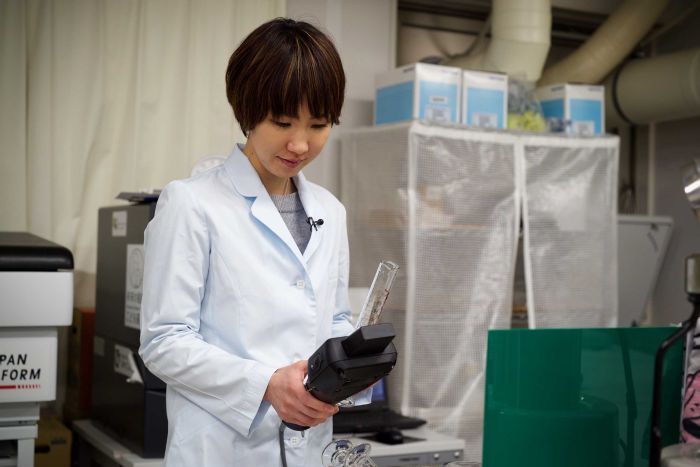
Iida is a public relations officer at Tarachine, a citizens’ lab in Fukushima, Japan, that tests for radioactive contamination released from the 2011 accident at the Fukushima Daiichi nuclear plant. Agricultural produce grown in the area is subject to government and supermarket testing, but Tarachine wants to provide people with an option to test anything, from foraged mushrooms to dust from their home. Iida tests anything unknown before feeding it to her four children. Recently, she threw out some rice she received as a present after finding its level of contamination – although 80 times lower than the government limit – unacceptably high. “My husband considered eating it ourselves, but it’s too much to cook two batches of rice for every meal. In the end we fed it to some seagulls.”
Tarachine is one of several citizen labs founded in the wake of the Tōhoku earthquake and tsunami on March 11, 2011, which obliterated a swathe of the country’s northwest coast and killed more than 18,000 people. The wave knocked out cooling systems at the Fukushima Daiichi nuclear plant, triggering a meltdown in three of the reactor cores and hydrogen explosions that sprayed radionuclides across the Fukushima prefecture. More than 160,000 people were forced to evacuate. A government decontamination programme has allowed evacuation orders to be lifted in many municipalities, but one zone is still off limits, with only short visits permitted.
Driven by a desire to find out precisely how much radiation there was in the environment and where, a group of volunteers launched Tarachine in Iwaki, a coastal city that escaped the worst of the radioactive plume and was not evacuated, through a crowdfunding campaign in November 2011. It is now registered as a non-profit organisation, and runs on donations.
In a windowless room controlled for temperature and humidity and dotted with screens showing graphs, two women sort and label samples, either collected by staff or sent in by the public: soil from back gardens, candied grasshoppers, seawater. In the beginning, mothers sent in litres of breastmilk. Tarachine initially charged a tenth of what a university lab would charge to make the testing accessible to as many people as possible; last year, they made it free.
To test for caesium-137, the main long-term contaminant released from the plant, staff finely chop samples and put them inside a gamma counter, a cylindrical grey machine that looks like a centrifuge. Tarachine’s machines are more accurate than the more commonly accessible measuring tools: at some public monitoring posts, shoppers can simply place their produce on top of a device to get a reading, but this can be heavily skewed by background radiation (waving a Geiger counter over food won’t give an accurate reading for the same reason). Tarachine tries to get as precise readings as possible; the lab’s machines give results to one decimal place, and they try to block out excess background radiation by placing bottles of water around the machines.
Measuring for strontium, a type of less penetrative beta radiation, is even more complicated: the food has to first be roasted to ash before being mixed with an acid and sifted. The whole process takes two to three days. Tarachine received training and advice from university radiation labs around the country, but the volunteers had to experiment with everyday food items that scientists had never tested. “There was no recipe like ‘Roast the leaf for two hours at so-and-so Celsius’, you know?” says Iida. “If it’s too burnt it’s no good. We also had to experiment with types of acid and how much of the acid to add.”
Japanese government standards for radiation are some of the most stringent in the world: the upper limit of radioactive caesium in food such as meat and vegetables is 100 becquerels per kilogram, compared with 1,250 in the European Union and 1,200 in the US (the becquerel unit measures how much ionizing radiation is released due to radioactive decay). Many supermarkets adhere to a tighter limit, proudly advertising that their produce contains less than 40 becquerels, or as few as 10. Tarachine aims for just 1 becquerel.
“How I think about it is, how much radiation was there in local rice before the accident? It was about 0.01 becquerel. So that’s what I want the standard to be,” says Iida. Continue reading
1 This Month

26 September – International Day for the Total Elimination of Nuclear Weapons


PLEASE OPPOSE HR 8255 AND S.3639 – bills would accelerate satellite deployment, with no environmental review or safeguards – https://ncstd5li.quorum.us/campaign/169331/
To see nuclear-related stories in greater depth and intensity – go to https://nuclearinformation.wordpress.com
-
Archives
- September 2026 (206)
- August 2026 (330)
- July 2026 (355)
- June 2026 (287)
- May 2026 (306)
- April 2026 (356)
- March 2026 (251)
- February 2026 (267)
- January 2026 (308)
- December 2025 (358)
- November 2025 (359)
- October 2025 (375)
-
Categories
- 1
- 1 NUCLEAR ISSUES
- business and costs
- climate change
- culture and arts
- ENERGY
- environment
- health
- history
- indigenous issues
- Legal
- marketing of nuclear
- media
- opposition to nuclear
- PERSONAL STORIES
- politics
- politics international
- Religion and ethics
- safety
- secrets,lies and civil liberties
- spinbuster
- technology
- Uranium
- wastes
- weapons and war
- Women
- 2 WORLD
- ACTION
- AFRICA
- Atrocities
- AUSTRALIA
- Christina's notes
- Christina's themes
- culture and arts
- Events
- Fuk 2022
- Fuk 2023
- Fukushima 2017
- Fukushima 2018
- fukushima 2019
- Fukushima 2020
- Fukushima 2021
- general
- global warming
- Humour (God we need it)
- Nuclear
- RARE EARTHS
- Reference
- resources – print
- Resources -audiovicual
- Weekly Newsletter
- World
- World Nuclear
- YouTube
-
RSS
Entries RSS
Comments RSS
 nuclear-news