Whole brain radiation found not to be beneficial for brain cancer patients
 Cancer study could change radiation treatment for hundreds of thousands, Guardian, 1 June 15
Treating whole brain with radiation found to harm cognitive skills without improving survival, study finds – meaning many could be spared such care A major study could change care for many of the hundreds of thousands of people each year who have cancer that spreads to the brain from other sites, study leaders said on Sunday.
The study, one of three discussed at an American Society of Clinical Oncology conference in Chicago, found that contrary to conventional wisdom, radiation therapy to the whole brain did not improve survival, and harmed memory, speech and thinking skills.
“This is the classic question: Which is worse, the disease or the treatment?” said one study leader, Dr Jan Buckner of the Mayo Clinic in Rochester, Minnesota. Radiation helped control the cancer, Dr Buckner said, “but at the cost of cognitive decline”.
For patients, the study is not necessarily the bad news it may seem. It shows that in this case, quality of life is better with less treatment, and many people can be spared the expense and side effects of futile care………
The first study affects the most patients by far. An estimated 400,000 patients in the US alone each year have cancer that spreads to the brain, usually from the lungs, breast or other sites.
That is different from tumors that start in the brain, like the one that on Saturday claimed the life of Joseph “Beau” Biden, the son of vice-president Joe Biden.
Cancer that spreads to the brain is usually treated with radiosurgery – highly focused radiation with a tool such as the Gamma Knife, followed by less intense radiation to the whole brain. The latter treatment can cause hair loss, dry mouth, fatigue and thinking problems……
Dr Paul Brown of the University of Texas MD Anderson Cancer in Houston led a study of 213 patients with one to three tumors in the brain to see whether the risks of whole brain radiation were worth its help in controlling cancer.
Half of the patients had the usual radiosurgery and the rest had that followed by whole brain radiation. Three months later, 92% of patients who got both treatments had cognitive decline versus 64% of those given just radiosurgery.
“The negative effects far outweigh any benefits” of the combination treatment, Brown said……..http://www.theguardian.com/society/2015/may/31/cancer-patients-spared-brain-radiation-study
70 years of cancer-causing nuclear pollution in St Louis
 This week, internationally recognized physician Dr. Helen Caldicott reviewed documents and reports concerning the West Lake landfill. She stated in no uncertain terms that the health records and data clearly show that contaminants have been causing cancers in the affected region at elevated levels.
As the recipient of 21 honorary doctoral degrees for her work on the health consequences of exposure to nuclear material including the disasters at Three Mile Island, Chernobyl, and Fukushima, Caldicott is one of the world’s most-respected experts on the topic. With regard to the West Lake site, she concluded that ongoing health dangers demand that, “the [West Lake] site needs to be dealt with immediately. It needs to be cleaned-up this year.”
Radioactive site continues to plague St. Louis residents and region http://www.examiner.com/article/radioactive-site-continues-to-plague-st-louis-residents-and-region, 29 May 15 In North Saint Louis County, Missouri, in the City of Bridgeton, there is a ticking time bomb in the form of several contiguous landfills which contain radioactive waste and all the “daughter products” associated with weapons-grade uranium processing. Most notably, the site in question, the West Lake landfill, has the largest concentration in the nation of one of these highly dangerous daughter products.
 In a 2013 report entitled, The West Lake Landfill: A Radioactive Legacy of the Nuclear Arms Race, Robert Alvarez states, “Of significance is the fact that the largest estimated amount of Thorium-230, a long-lived, highly radiotoxic element, is present at West Lake — more than any other U.S. nuclear weapons storage or disposal site.” Continue reading
Nazi radiation experiments on humans
Nazi Human Experimentation NMR’s Blog 29 May 2015 Nazi human experimentation was medical experimentation on large numbers of people by the German Nazi regime in its concentration camps during World War II. At Auschwitz, under the direction of Dr. Eduard Wirths, selected inmates were subjected to various experiments which were supposedly designed to help German military personnel in combat situations, to aid in the recovery of military personnel that had been injured, and to advance the racial ideology backed by the Third Reich.After the war, these crimes were tried at what became known as the Doctors’ Trial, and revulsion at the abuses perpetrated led to the development of the Nuremberg Code of medical ethics…………..
A life-saving global agreement – the Montreal Protocol
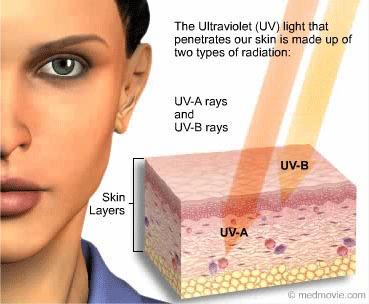 Ozone treaty ‘prevented skin cancer deaths’ http://www.abc.net.au/science/articles/2015/05/27/4242804.htm Anna Salleh
The ozone hole over the Antarctic would have been 40 per cent bigger in 2013 if the Montreal Protocol hadn’t curbed the production of CFCs, according to a new study.
In this scenario, Australia and New Zealand would have experienced greater UV radiation, which in turn would have increased the rate of skin cancer, say the authors of a new paper today in Nature Communications.
The paper also shows that, by 2011, ozone depletion would have become a northern hemisphere problem too.
“There would have been an Antarctic-like ozone hole in the Arctic over populated regions,” says co-author Dr Richard McKenzie, an atmospheric physicist at the National Institute of Water and Atmospheric Research in New Zealand.
In the mid-1980s scientists discovered a hole in the ozone layer above Antarctica, and in 1987 the world agreed to the Montreal Protocol, which limited the production of chlorofluorocarbons (CFCs).
Despite this, the concentration of CFCs continued to rise until 1993, and even today the ozone hole reappears each spring, and this contributes to an increase in cancer-causing UV radiation in Australia and New Zealand.
But without the Montreal Protocol it could have been so much worse, say the researchers.
The team, led by Professor Martyn Chipperfield of the University of Leeds, used a ‘chemical transport model’ to calculate what would have happened over the past two decades if CFCs had not been controlled.
Importantly, the model is the most accurate to date because it uses real data on winds, which blow ozone into the ultra cold parts of the South Pole, where ozone depletion occurs at the highest rate.
‘World avoided’ scenario
According to the new model, a 40 per cent increase in the size of the Antarctic ozone hole by 2013 would have contributed to an 8 to 12 per cent increase in ultraviolet levels over Australia and New Zealand.
The model is also the first to show that, without the Montreal Protocol, a very large Arctic ozone hole would have occurred in the exceptionally cold 2010/11 northern winter, and smaller Arctic ozone holes would have become a regular occurrence.
By 2013, continued decline in ozone levels over the northern hemisphere mid-latitudes would have led to a 14 per cent increase in ultraviolet levels in the United Kingdom.
Earlier research suggests that globally, these higher UV levels would have led to a 16 to 30 per cent increase in non-melanoma skin cancers, says McKenzie.
He says the change in melanoma rates are harder to estimate, but the current model supports previous estimates that by 2030, there would have been two million more skin cancer cases (14 per cent more skin-cancer cases) per year around the world, due to higher the UV.
And, by 2065 the amount of ozone would have been about a third of current levels and the peak UV index would have been about three times higher.
“It would have been drastically bad,” says McKenzie. “So instead of it being safe for fair-skinned people to go out in the sun for maybe 15 minutes, they could only go out for five minutes, which means it wouldn’t really be safe to cross the street.”
“This ‘world avoided’ scenario is really good news. It’s clear evidence that the Montreal Protocol has already worked,” says McKenzie.
“It’s done a good job. If only climate change policy could be half as successful.”
But, regardless of future changes in ozone, people in New Zealand and Australia will need to continue to protect themselves from UV radiation, says McKenzie.
UV levels in the Southern Hemisphere are naturally much higher than those in the Northern Hemisphere because of ozone circulation patterns, cleaner air and the fact that the Earth is much closer to the Sun during the southern summer.
“The heath message doesn’t change. We need to be vigilant,” warns McKenzie.
Inadequate cleaning of Fukushima radioactive water
 Fukushima Daiichi Cleans Most Contaminated Water, Not Really, Simply Info May 28th, 2015 TEPCO announced that they have cleaned most of the contaminated water at Fukushima Daiichi. But thedetails show they are no where near close to being done.
Only cesium 137 & 134 along with strontium 90 have been removed from certain tanks of water. 620,000 tons of water have had these two isotopes removed. 10,000 tons of water currently can not be filtered for an undisclosed reason.
440,000 tons of water have now been run through ALPS with 180,000 tons still needing to be processed. Previous admissions showed that ALPS did not remove cobalt 60, iodine 129 and tritium among possible other isotopes……. http://www.fukuleaks.org/web/?p=14776
High cancer rates in thorium and uranium contaminated sites in Missouri
 The problem, critics such as McKeel and Kleba said, is that the study’s design diluted the string of infant deaths into regional data, making the amount seem statistically insignificant. Between October 1999 and October 2000, the Riverfront Times reported, seven of the eight deaths were children at Kleba’s church, all of whom lived near Dardenne Creek.
in an unexpected turn, a 2014 Missouri Department of Health and Senior Services study did indeed find higher rates of cancers in ZIP codes near known contaminated sites in St. Louis County, and the state promptly requested help from the Center for Disease Control to conducted further studies in the area.

 St. Louis burning: What killed the babies near Weldon Spring? Aljazeera America by Ryan Schuessler @RyanSchuessler1 April 30, 2015
State health studies did little to ease residents’, activists’ concerns about potential radiation exposure in metro area This is part two of a three-part series investigating the effects of radioactive waste from the Manhattan Project on St. Louis and its suburbs. Part one examined the health problems impacting those who lived near Coldwater Creek.
DARDENNE PRAIRIE, Mo. — On a Saturday afternoon in late February at the Immaculate Conception Parish of Dardenne, a fresh snow was falling on the graves of more than a dozen infant-sized tombstones. The church bells tolled, signaling the beginning of Mass as parishioners walked briskly through the cold.
It was at this Roman Catholic parish where, some 15 years ago, the small congregation’s streak of infant deaths caught the attention of locals and media, both of whom drew connections to the area’s atomic history that left groundwater in the area contaminated with uranium.
But the state of Missouri said nothing was out of the ordinary. Continue reading
The very big gender gap – women don’t like nuclear power
A Morning Consult survey finds that a plurality of female voters, 42 percent, oppose increasing the use of nuclear power to generate electricity in the United States; 38 percent support it. A strong majority of men, 70 percent, support using more nuclear power, while 23 percent oppose.
The male-female gap is uniquely wide on this issue.

Previous Morning Consult polling has found much smaller differences between men and women on energy issues. In one poll from Jan. 2015, the gender split on approval for other energy source was 7 percent for natural gas, 10 percent for coal, 3 percent for wind, and 1 percent for solar. For nuclear, the split was 27 percentage points.
“It’s tough to speculate on what makes women more averse to nuclear power than men,” said Sheril Kirshenbaum, director of The Energy Poll at the University of Texas at Austin. “Across issues, women are both less engaged on energy topics, and far less likely to express concern.”……..
A separate survey question reveals three possible explanations as to what’s driving female voter’s concerns over building more nuclear facilities: trepidations over storing nuclear waste, the risk for a disaster or meltdown, and the availability of “better” energy alternatives.
“It doesn’t take a brain surgeon to figure that one out,” said Linda Mayrand, a survey participant from Melbourne, Florida, “there are better alternatives.” Mayrand said she would never live within the Nuclear Regulatory Commission designated evacuation zones, areas that span a 10-mile radius from a nuclear power plant……..
Nicky Davies, a campaigns director for Greenpeace USA, an environmental advocacy group, said the nuclear industry has two Achilles heels. “It is a fact that there’s no safe way to expose of nuclear power,” and secondly “it’s incredibly expensive.”……….
The Morning Consult poll was conducted from April 5 and 7, 2014, among a nationwide sample of 2,047 registered voters. Results from the survey have a margin of error of plus or minus 2 percentage points. http://morningconsult.com/2015/05/men-and-women-divided-on-nuclear-power/
Potassium iodate pills for Canadian communities near nuclear facilities
 KI pill distribution coming near Pickering, Darlington nuclear stations OPG developing extensive awareness campaign prior to fall distribution Ajax News Advertiser By Keith Gilligan DURHAM 24 May 15 — Ontario Power Generation is planning an extensive public relations campaign prior to distributing potassium iodide (KI) pills near the Pickering and Darlington nuclear stations.
Last year, OPG’s federal regulator, the Canadian Nuclear Safety Commission, mandated that KI pills be distributed to all homes and businesses within a 10-kilometre radius of nuclear stations.
Kevin Powers, the director of corporate relations and communications for OPG, told the Pickering Community Advisory Council on Tuesday, May 19 that distributing the pills is “quite a change in what our normal operations are.”
To better understand public knowledge of the pills, OPG has been doing research, Mr. Powers noted.“We did research to understand attitudes on KI pills. We wanted a better understanding of what their understanding was,” he said.
He noted only seven per cent of residents currently have the pills in their homes……… Distribution of pills has been done in New Brunswick and Quebec. It’s being done around the Pickering, Darlington and Bruce stations this year.
Pills are currently in some pharmacies within the 10-kilometre radius, “but not many people know. This change is in how we distribute them,” Mr. Powers noted…… The pills will continue to be available at pharmacies, he said. That’s because people might not get enough pills at their home or have moved and don’t have the pills.
“The CNSC mandated that pharmacies within 50 kilometres have the pills,” Mr. Powers said. http://www.durhamregion.com/news-story/5636397-ki-pill-distribution-coming-near-pickering-darlington-nuclear-stations/
Nuclear Regulatory Commission undervalues American lives
That’s a key, but controversial, question for the federal government. Although it might seem distasteful to put a monetary value on a life, when federal agencies consider adopting new health and safety rules — or strengthening old ones — they often do just that and weigh the proposed rule’s costs against its lifesaving benefits. The lower value they give to a life, the easier it is for them to reject a proposed safety measure as too costly. Continue reading
Inspector resigns as 127 Fukushima children diagnosed malignant or possible malignant thyroid tumor
 127 Fukushima children diagnosed malignant or possible malignant thyroid tumor / Inspector Suzuki resigned http://fukushima-diary.com/2015/05/127-fukushima-children-diagnosed-malignant-or-possible-malignant-thyroid-tumor-inspector-suzuki-resigned/ 5/18/2015, Fukushima prefectural government announced they found malignant or possible malignant thyroid tumor from 127 children so far.
Among 127 children, they confirmed 103 children cases are thyroid cancer.
Before 311, pediatric thyroid cancer was found only in one of 1 million children. The population of Fukushima prefecture is approx. 200 million in 2012.
They have tested only 0.4 million children so far.
Also, Fukushima health investigative committee announced in the press conference that the thyroid tumor inspector, Suzuki, professor from Fukushima medical university resigned “in order to focus on the medical treatment of thyroid cancer”. The successor, Otsuru, who is also a professor of Fukushima medical university stated he is a physician so he cannot treat the cancer.
Hidden horrors of Israel’s nuclear history of the Dimona reactor

 Dimona: Israel’s ‘Little Hiroshima’, Middle East Eye Richard Silverstein Tuesday 19 May 2015 Despite the utter lack of utility of Israel’s WMDs, the state’s nuclear workers have paid a huge and terrible price In the early stages of research, before Dimona existed, there were accidents that exposed scientists to lethal levels of radiation. Some of them died and their names are known (though not well). Less known is that Dimona had a series of accidents – the most serious in 1966 – that exposed hundreds of its workers to similarly lethal doses.
Avner Cohen, the world’s leading scholar of the Israeli nuclear programme, told me that in the first 20-25 years the processes used to protect workers were primitive and sloppy. Mistakes were common, often not intentionally, but because relatively little was known about the proper handling of radioactive materials. In some cases, documentation was fabricated.
This is the subject of Orna Ben Dor’s riveting two-part documentary, The Dark Secret of the Dimona Reactor (Part 1 and Part 2, both in Hebrew), produced for Israeli TV. Workers there call the nuclear plant “Little Hiroshima,” alluding not only to the destructive power of what’s produced there, but the tragic impact that the reactor has on those who work within it.
The documentary, while it exposes many secrets and crimes of the state against its workers, is also unintentionally maddening because it deals with a subject that the nation deems justifiably opaque. For that reason, no one in the Israeli Atomic Energy Commission, which runs Dimona, will speak on the record to the cameras. No journalist is allowed within the facility. Few if any records are made public regarding the functioning of the reactor.
According to Ben Dor, the medical oversight of workers was a sham. They were given tests that were never processed and told they had a clean bill of health, only to find out months or years later they were dying of cancer. The few records that are accessible happen only because of lawsuits that pry them loose from the fingers of the state.
The real story of the film is the extraordinary lengths to which the state will go to shield itself and its nuclear project from public awareness. Following on from this is the nation’s willingness to treat those scientists, engineers and researchers who devoted their lives to this sacred project as refuse to be discarded once they get sick and die, no longer providing any useful service. There is a schizophrenic nature both to the documentary and the victims portrayed. On the one hand, they are patriots who understand the danger posed and accept it for the sake of protecting the state from its enemies. But on the other, they are human beings who demand that the country treat those who paid the ultimate sacrifice with dignity.
Treated as garbage
Fukushima radioactive contamination will build up in the biosphere
 Fukushima : Build-Up In Biosphere Expected http://yournewswire.com/fukushima-build-up-in-biosphere-expected/ Edmondo Burr April 15
http://yournewswire.com/fukushima-build-up-in-biosphere-expected/#sthash.kMSyx76L.dpuf Scientists have raised concern over the rate of radioactive contamination of the Pacific, due to the Fukushima nuclear accident.
- Expert : Plutonium-241 from Fukushima nearly 70,000 times more than atomic bomb fallout in Japan.
- Officials : Molten fuel now ‘particle-like’, contains ‘special’ nuclear materials.
- Gov’t Labs : Large areas of oceans contaminated by plutonium from events such as Fukushima; Build-up in biosphere expected; Considerable hazard to humans.
Energy News statement :
Detection of long-lived plutonium isotopes in environmental samples by Accelerator Mass Spectrometry (AMS) — Plutonium isotopes 239Pu, 240Pu and 242Pu are anthropogenic radionuclides emitted into the environment by nuclear activities. Pu is accumulated in the human body and hence, poses a considerable hazard to human health. Due to the long half-lives, these isotopes are present in the biosphere on large time scales and abuild-up can be expected. Therefore it is important to study the contamination pathway of Pu into the drinking water… a method to detect long-lived Pu isotopes by Accelerator Mass Spectrometry (AMS) is being developed. AMS requires only few milligrams of sample material… Consequently, more samples from different locations can be taken which is essential when searching for locally increased Pu concentrations as in the Pacific Ocean after the Fukushima accident… Samples from different locations in the Pacific Ocean and from the snow-hydrosphere are planned… Continue reading
Japan raises the ‘acceptable’ radiation level for nuclear emergency workers
 NRA to raise nuclear worker radiation exposure limit for emergencies http://www.japantimes.co.jp/news/2015/05/21/national/nra-raise-nuclear-worker-radiation-exposure-limit-emergencies/#.VV-819KeAXA KYODO
In light of the Fukushima meltdowns, the regulator had been considering raising the limit in the event of another disaster as Japan gets closer to reactivating some of its reactors, which remain offline amid heightened safety concerns.
Shunichi Tanaka, the NRA’s chairman, told a news conference that the current limit could be an obstacle in containing a crisis in the future, and the revision, which will entail a legal amendment, is “a step forward” in addressing the issue.
The regulator said it believes raising the limit to 250 millisieverts is appropriate based on overseas standards and scientific studies.
Huge rise in thyroid cancer in Fukushima’s children
Officials: 6,000% cancer rate increase in Fukushima children’s thyroids — Expert: Urgent countermeasures against the suspected outbreak are necessary — Professor: Gov’t stopped me from checking thyroid exposure levels after 3/11 (VIDEO) http://enenews.com/officials-6000-increase-thyroid-cancer-rate-among-fukushima-children-asahi-16-new-cases-detected-first-3-months-2015-professor-urgent-countermeasures-against-suspected-outbreak-necessary-govt?utm_source=feedburner&utm_medium=email&utm_campaign=Feed%3A+ENENews+%28Energy+News%29
Asahi Shimbun, May 19, 2015 (emphasis added): Fukushima finds 16 new cases of thyroid cancer in young people… authorities said May 18, although they added it is “unlikely” a direct result of the nuclear accident…The 16 new cases were detected between January and March, and bring the total number of young people diagnosed with the disease in the testing program to 103… 127 [have been diagnosed or suspected of having thyroid cancer]… many cases of thyroid cancer in infants were reported after the 1986 Chernobyl disaster. However, this has not proven to be the case so far with regard to the Fukushima nuclear crisis.
Fukushima Voice, May 19, 2015: The Thyroid Examination Evaluation Subcommittee… came to a conclusion [that this] clearly represents an excess incidence… by an order of magnitude(At the November 11, 2014 subcommittee meeting, it was described as “61 times“)… this increase can be a result of either excess occurrence due to radiation exposure or over-diagnosis… “it is not possible to conclude if thyroid cancer cases detected during the screening are radiation-induced… it is unlikely these cases are the effect of radiation exposure… the exposure dose is far less than the Chernobyl accident and that there have been no cancer cases in children younger than 5… early internal exposure dose from radioactive iodine is extremely critical in assessing the effect of the accident.”
The subcommittee and Asahi article discount the link between these cancers and the Fukushima disaster due to a lack of cases among infants. Asahi claims this is unlike Chernobyl, where “many cases of thyroid cancer in infants” had developed. Is this accurate? According toShinichi Suzuki, who was in charge of the Fukushima Thyroid Examination, March 2015: “There is a striking similarity between the [age] profiles of patients diagnosed during the period of latency after Chernobylin Ukraine and currently in Fukushima.”
Also, the subcommittee noted “the early internal exposure dose from radioactive iodine is extremely critical in assessing the effect of the accident” — what does that dose data show?
Japan Focus, Dec 8, 2014: Sakiyama Hisako, former senior researcher at the National Institute of Radiological Sciences… observed that power was deployed to stop measurements of thyroid exposure being taken… Professor Tokonami Shinji of Hirosaki University… tried to measure exposure levels immediately after the explosions [but] was halted by Fukushima Prefecture, which accused him of stirring up trouble… Tokonami went on to test 65 Fukushima residents one month after the explosions [and] found radioactive iodine in the thyroids of 50 out of the 65 (77%)… He estimated the equivalent dose to the thyroid [was up to] 87 mSv [and] infants who remained in areas with high iodine levels may have been exposed to over 100 mSv.
FUKUDEN (pdf), Dec 31, 2014: Prof. Toshihide Tsuda, an epidemiology specialist [said] “When we analyzed the results of the thyroid cancer survey conducted in the Fukushima Prefecture according to location, it is obvious that there are more numbers of thyroid cancer cases in the Nakadori area (middle area), and we urgently need to take necessary measures.”
Prof. Tsuda, Eiji Yamamoto & Etsuji Suzuki of Okayama Univ.: [The thyroid cancer] incidence rate ratio was 26.98… in the nearest area, and in Fukushima city, it was 19.41… compared with the Japanese mean… [E]xcess incidence rate ratios were observed… Dose-response relationship by distance from the plant was indicated… countermeasures against the suspected outbreak are necessary in Fukushima and the neighboring areas.
Radioactive iodine – the forgotten nuclear danger
The nuclear danger of iodine , Chemistry world, 21 May 15
In both the Fukushima and the 1986 Chernobyl accidents, volatile iodine species were released into the environment with tellurium. Of all the fission products, iodine poses a special threat to public health because it has a high fission yield, it can spread as volatile species and in mammals it accumulates readily in the thyroid, a small but vital organ. While the vast majority of iodine radioactivity is short-lived, it can have life-changing effects. A thyroid cancer patient who has lost their thyroid function as a result of surgery or 131I treatment, will require hormone replacement medication for life.
Transport properties
The problem of radioactive iodine is complicated by the variety of different species it can form. Each has different transport properties in the environment. For example, most of the airborne 131I from Chernobyl that reached Japan was in the form of organic iodine compounds.1 Furthermore, some iodine-containing compounds will pass through some accident mitigation systems. A water-filled scrubber will capture iodine oxide aerosols or other iodine-containing solids. Meanwhile, the sodium thiosulfate in the large scrubbers used in Swedish nuclear power plants will capture elemental iodine. However, although alkyl iodides will react with sodium thiosulfate to form Bunte salts, the reaction can be slow, allowing some proportion to escape. It is also important to note that, depending on the species, it is possible for some older sampling methods to underestimate the amount of radioactive iodine released in an accident.
20 May 2015Chemistry WorldOnce in the environment, the potential for human exposure increases with dangerous consequences. Research with 132I has shown that humans retain a large fraction of the iodine in inhaled methyl and ethyl iodide. But iodine can take part in lots of reactions before it even leaves the reactor. During normal operation, the temperature gradients in nuclear fuel pellets cause the iodine and caesium to migrate into the gap between the fuel and the cladding.2 The fission process forms 133Xe, which, with a half-life of 5.2 days, has plenty of time to diffuse into the cooler parts of the fuel. There, the xenon decays to form caesium, which reacts with iodine to form caesium iodide. If the fuel is overheated and damaged, caesium iodide aerosols can be delivered into the containment space.The caesium iodide can be converted by redox reactions into iodine, even without available oxygen gas: as an accident starts, the irradiation of water generates oxidants such as hydroxyl radicals and hydrogen peroxide…..http://www.rsc.org/chemistryworld/2015/05/fukushima-iodine-nuclear-accident
1 This Month


No Nuclear in Cwm Llynfi! Stop the nuclear power station near Maesteg.


4 August – WEBINAR – Hiroshima & Nagasaki: Nuclear Bombs Never Again
Tuesday, Aug. 4 at 5 pm PT / 8 pm ET.
Aug 5, 2026 10:00 AM in Australia/Melbourne
Join the Nuclear Bombs Never Again webinar on August 4th at 5pm Pacific Time / 8pm Eastern Time / 9am Japan Standard Time.
Cross generational voices at the intersection of Japan-Korea-US policy and militarization will share their lived experiences, nuclear impacts in these contexts, anti-war strategies, and actions you can take to advocate for a world with Nuclear Bombs Never Again. This 75-minute event is co-hosted by WILPF US and Korea Peace Now.
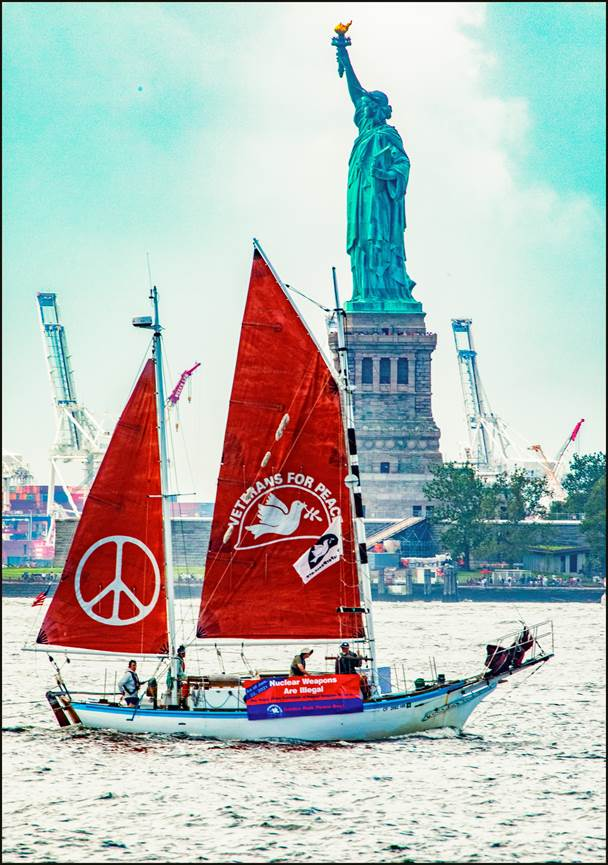
22,000+ miles voyaging for nuclear disarmament
and a radiation-free environment https://vfpgoldenruleproject.org/
To see nuclear-related stories in greater depth and intensity – go to https://nuclearinformation.wordpress.com
-
Archives
- July 2026 (332)
- June 2026 (287)
- May 2026 (306)
- April 2026 (356)
- March 2026 (251)
- February 2026 (267)
- January 2026 (308)
- December 2025 (358)
- November 2025 (359)
- October 2025 (375)
- September 2025 (257)
- August 2025 (319)
-
Categories
- 1
- 1 NUCLEAR ISSUES
- business and costs
- climate change
- culture and arts
- ENERGY
- environment
- health
- history
- indigenous issues
- Legal
- marketing of nuclear
- media
- opposition to nuclear
- PERSONAL STORIES
- politics
- politics international
- Religion and ethics
- safety
- secrets,lies and civil liberties
- spinbuster
- technology
- Uranium
- wastes
- weapons and war
- Women
- 2 WORLD
- ACTION
- AFRICA
- Atrocities
- AUSTRALIA
- Christina's notes
- Christina's themes
- culture and arts
- Events
- Fuk 2022
- Fuk 2023
- Fukushima 2017
- Fukushima 2018
- fukushima 2019
- Fukushima 2020
- Fukushima 2021
- general
- global warming
- Humour (God we need it)
- Nuclear
- RARE EARTHS
- Reference
- resources – print
- Resources -audiovicual
- Weekly Newsletter
- World
- World Nuclear
- YouTube
-
RSS
Entries RSS
Comments RSS
 nuclear-news