Large number of baby deaths close to nuclear contaminated site
 Cemetery full of dead babies missing brains next to US nuclear site — Funeral Director: Almost all infants we have died the same way… “that’s pretty much all I see on death certificates” — Few miles from “most contaminated place in hemisphere” — “One of largest documented anencephaly clusters in US history” (VIDEO) http://enenews.com/one-largest-documented-clusters-history-video?utm_source=feedburner&utm_medium=email&utm_campaign=Feed%3A+ENENews+%28Energy+News%29 March 23rd, 2016
Waiting for answers: a community copes with babies’ deaths
Seattle Times, updated Jan 28, 2016 (emphasis added): How the state is missing chances to find deadly birth defect’s cause… at least 40 other mothers have lost babies to [anencephaly, which result in missing large parts of the brain] in Yakima, Benton and Franklin counties since 2010… one of the largest documented clusters of anencephaly in U.S. history… “Something’s going on and someone needs to tell us,” said [mother Sally] Garcia… Dr. Lisa Galbraith was one of the doctors… In Prosser, the obstetrician oversaw care of Garcia’s pregnancy and others affected by the disorder… “I had a total of four or five babies with anencephaly over the course of two years,” recalled Galbraith… the rate of anencephaly was much higher [than US averages]… Washington health officials… have collected no blood samples, performed no genetic tests and conducted no examination of water, soil… and have no plans to do so… In Texas, just three babies withanencephaly sparked enough outrage to overhaul the state’s birth-defects reporting system.
Seattle Times video transcript – Carlen Majnarich, funeral director: “It’s tragic… It just seems like that’s pretty much all I see on the death certificate is the same diagnosis. And nobody seems to know why. We average close to 100 families a year here in Prosser [a few miles from Hanford]. Almost all the infants that we have have died of anencephaly. It’s just what do you say?”… Sally Garcia (mother who lost her baby to anencephaly): “All these on this side [of the cemetery] are all babies… all babies, starting from right there.”
The Legal Examiner, Dec 31, 2015: [T]he strange eruption of anencephaly cases, which occurs in Washington at a rate almost 5 times as high as the national average, has highlighted a number of government policies that may actually conceal these sort of birth defect “clusters,” rather than help investigate them.
KVEW-TV, Mar 4, 2016: As of November 2015 cases of anencephaly have continued to increase with the current rate at 9.5 per 10,000 live births.
Sara Barron, MS, BSN – American Journal of Nursing, Mar 2016: In the spring of 2012 two babies without brains were born within weeks of each other at the rural hospital in Washington State where I was working… I was stunned when the delivering physician said another patient was expecting the same outcome. After speaking with colleagues at neighboring hospitals, I learned that two other babies with anencephaly had recently been born in the area. In over 30 years of nursing, I had seen only two cases of anencephaly prior to these. I called the Washington State Department of Health and reported a birth defect cluster… RISK FACTORS…Radiation exposure. Popular media and blogs have often linked the Washington State NTD cluster to the Hanford Nuclear Reservation in Benton County, Washington. Althoughleaks from nuclear power plants have been associated with a higher rate of anencephalyand other NTDs, Washington State Department of Health investigators point out that the three counties with the highest prevalence of NTDs were both upwind and upriver of the Hanford site, making the nuclear plant an unlikely cause of the 2012 cluster.
- Bulletin of the Atomic Scientists: “The Hanford Site… is widely considered to be the most contaminated place in the Western Hemisphere”
- KOIN: “The biggest, most toxic nuclear waste site in the Western hemisphere”
- Time: “The largest nuclear clean-up site in the western hemisphere”
- AFP: “The Western hemisphere’s most contaminated nuclear site“”
More infant deaths near Hanford: Cemetery blocks filled w/ babies downwind of US nuclear site — Mother: My newborns died in hours… tumors all over, brain disintegrated after massive stroke — “Body parts, cadavers, fetuses… nuke industry took in the dead of night”
St Louis County residents count the health toll from radioactive wastes
As they painstakingly mapped out the cases, Wright, Schanzenbach, and other members of the group were struck by the statistical improbability of what they were seeing. They found higher than average levels of leukemia, rare brain tumors, breast, and colon cancers — all known to be associated with nuclear radiation exposure according the Centers for Disease Control and the US Environmental Protection Agency. “We realized that we were seeing the effects of long-term exposure among people who grew up in North St. Louis County from the 1960s to the 1980s when the contamination was at its worst,” says Wright…….
Over the past four years, more than 100 current and former North St. Louis County residents have filed lawsuits against Mallinckrodt and the other companies involved in the manufacture and disposal of the nuclear waste, alleging these businesses’ reckless and negligent actions caused their cancers and other illnesses.
According to the latest data collected by the survey, as of 2015 there were 1,993 self-reported cancer cases, of which 45, including Patricia Barry’s, were cases of appendix cancer — a disease so rare that it’s usually seen in 1 of about 500,000 people a year in the United States.
In total, there were more than 2,725 reported cases of multi-generational illnesses, including rare cancers, thyroid problems, infertility, autoimmune diseases, and genetic mutations in children. (below, archival photo of waste barrels, st Louis)

Nuclear Waste Creates Casualties of War in Missouri TruthOut , 18 March 2016 By Lori Freshwater, Earth Island Journal | News Analysis “…….Google search revealed shocking information. It seemed there was an unusually high number of rare cancers and diseases afflicting current and former residents of several neighborhoods that Coldwater Creek ran through, including St. Ann. The most likely cause, the news reports and websites she scanned indicated, was the creek, which had been contaminated by radioactive waste from the World War II era. Continue reading
Radioactivity in the Ocean: Diluted, But Far from Harmless
Still, the world has never quite seen an event like the one unfolding now off the coast of eastern Japan, in which thousands of tons of radioactively contaminated water from the damaged Fukushima Daiichi nuclear power plant are pouring directly into the ocean. And though the vastness of the ocean has the capacity to dilute nuclear contamination, signs of spreading radioactive material are being found off Japan, including the discovery of elevated concentrations of radioactive cesium and iodine in small fish several dozen miles south of Fukushima, and high levels of radioactivity in seawater 25 miles offshore.
“Given that the Fukushima nuclear power plant is on the ocean, and with leaks and runoff directly to the ocean, the impacts on the ocean will exceed those of Chernobyl, which was hundreds of miles from any sea,” said Ken Buesseler, senior scientist in marine chemistry at the Woods Hole Oceanographic Institution in Massachusetts. “My biggest concern is the lack of information. We still don’t know the whole range of radioactive compounds that have been released into the ocean, nor do we know their distribution. We have a few data points from the Japanese — all close to the coast — but to understand the full impact, including for fisheries, we need broader surveys and scientific study of the area.”
Buessler and other experts say this much is clear: Both short-lived radioactive elements, such as iodine-131, and longer-lived elements — such as cesium-137, with a half-life of 30 years — can be absorbed by phytoplankton, zooplankton, kelp, and other marine life and then be transmitted up the food chain, to fish, marine mammals, and humans. Other radioactive elements — including plutonium, which has been detected outside the Fukushima plant — also pose a threat to marine life. A key question is how concentrated will the radioactive contamination be. Japanese officials hope that a temporary fishing ban off the northeastern Japanese coast will be enough to avert any danger to human health until the flow of radioactive water into the sea can be stopped…….
Studies from previous releases of nuclear material in the Irish, Kara and Barents Seas, as well as in the Pacific Ocean, show that such radioactive material does travel with ocean currents, is deposited in marine sediment, and does climb the marine food web. In the Irish Sea — where the British Nuclear Fuels plant at Sellafield in the northwestern United Kingdom released radioactive material over many decades, beginning in the 1950s — studies have found radioactive cesium and plutonium concentrating significantly in seals and porpoises that ate contaminated fish. Other studies have shown that radioactive material from Sellafield and from the nuclear reprocessing plant at Cap de la Hague in France have been transported to the North Atlantic and Arctic Oceans. A study published in 2003 found that a substantial part of the world’s radioactive contamination is in the marine environment.
How the radioactive materials released from the Fukushima plants will behave in the ocean will depend on their chemical properties and reactivity, explained Ted Poston, a ecotoxicologist with the Pacific Northwest National Laboratory, a U.S. government facility in Richland, Washington. If the radionuclides are in soluble form, they will behave differently than if they are absorbed into particles, said Poston. Soluble iodine, for example, will disperse rather rapidly. But if a radionuclide reacts with other molecules or gets deposited on existing particulates — bits of minerals, for example — they can be suspended in the water or, if larger, may drop to the sea floor.
“If particulates in the water column are very small they will move with the current,” he explained. “If bigger or denser, they can settle in sediment.”…….http://e360.yale.edu/feature/radioactivity_in_the_ocean_diluted_but_far_from_harmless/2391/
The health toll of Fukushima nuclear disaster – especially workers and children
Nuclear Expert: Fukushima “like the worst nightmare becoming reality” — Released as much as 1,000 atomic bombs worth of radioactive material — “Everyone on earth has been exposed… an increase in cancer will be the result” »
“Shocking how many people died in Fukushima” — Cremated bodies of Fukushima radiation workers found near plant — “Such a high rate of cancer” being detected in Fukushima children (VIDEOS) http://enenews.com/shocking-many-people-died-fukushima-cremated-remains-fukushima-radiation-workers-found-plant-high-rate-cancer-being-detected-children-videos?utm_source=feedburner&utm_medium=email&utm_campaign=Feed%3A+ENENews+%28Energy+News%29
AP,Mar 10, 2016 (emphasis added): Fukushima ‘Decontamination Troops’ Often Exploited, Shunned — The ashes of half a dozen unidentified laborers ended up at a Buddhist temple in this town just north of the crippled Fukushima nuclear plant… They were simply labeled “decontamination troops” — unknown soldiers in Japan’s massive cleanup campaign to make Fukushima livable again five years after radiation poisoned the fertile countryside… One laborer… said he was instructed never to talk to reporters… Minutes after chatting with some workers in Minamisoma, Associated Press journalists received a call from a city official warning them not to talk to decontamination crews… [W]orkers have developeddiabetes, cerebral and respiratory problems… local hospital intern Toyoaki Sawano said in a medical magazine last month… Hideaki Kinoshita, a Buddhist monk who keeps the unidentified laborers’ ashes at his temple [said] “There is no end to this job… Five years from now, the workers will still be around. And more unclaimed ashes may end up here.”
Mainichi, Mar 7, 2016: Experts divided on causes of high thyroid cancer rates among Fukushima children — A total of 166 children in Fukushima Prefecture had been either diagnosed with thyroid cancer or with suspected cases of cancer… “Compared to the estimated prevalence rates based on the country’s statistics on cancer, which are shown in data including regional cancer registration, the level of thyroid cancer detection is several dozen times higher(in children of Fukushima Prefecture),” said the final draft for the interim report compiled by the prefectural government’s expert panel on Feb. 15… [T]wo teams both concluded that the number of cancer cases found in Fukushima children was “about 30 times” that of national levels [and] agree that the “30 times higher (than the national occurrence rates)” is unexplainable. At the moment, the most likely theories for such a high rate of cancer detection are the “overdiagnosis theory” held by [the team led by Shoichiro Tsugane, a member of the Fukushima government’s expert panel] and the “radiation effect theory” that [the team led by Okayama University professor Toshihide Tsuda] supports… Tsugane is not completely denying the effects of radiation in children’s cancer… [Tsuda] argues that radiation exposure is the main cause of the high prevalence of cancer in children [and] because the spread of cancer cells to lymph nodes and other tissues could be seen in 92 percent of patients, Tsuda believes thatoverdiagnosis makes up 8 percent of the patients at most…
RT, Mar 11, 2016: ‘Shocking how many people died in Fukushima‘ – documentary director… Authorities in Japan want locals to think “nothing happened,” documentary director Jeffrey Jousan told RT. “The government prints the number of people who died as a result of the 2011 disaster in the newspapers… the (death toll) amounts to 300-400 people in each prefecture, but in Fukushima it is over 8,000 people… It is shocking… to see [how] many people have died in Fukushima”… [I]t is still unclear how many people have succumbed to or suffer from radiation-caused cancer diseases directly linked to the crippled plant.
Watch Press Conferences: Prof. Tsuda | Dr. Angelika Claussen, physician
Fukushima misery continues – thyroid cancer epidemic, and more
Fukushima: The misery piles up https://pursuit.unimelb.edu.au/articles/fukushima-the-misery-piles-up
 Five years on from the Fukushima nuclear disaster there is now an emerging thyroid cancer epidemic and 174,000 people are still displaced By Associate Professor Tilman Ruff, Nossal Institute for Global Health, University of Melbourne
Five years on, the Fukushima nuclear disaster is far from over – the dispersed fallout continues to irradiate and move around the environment; in the water, in the plants and animals, and blown on the wind.
Every day 300 tons of contaminated water leak from the wrecked nuclear plants into the soil and eventually the ocean. The Reconstruction Agency estimates 174,000 people remain displaced, with many families disrupted having lost their land and livelihoods and now facing an uncertain future.
Despite inadequate health monitoring of exposed people, ultrasound screening of almost 370,000 children in Fukushima has yielded clear evidence of an emerging thyroid cancer epidemic among children and adolescents in Fukushima.
Whereas across Japan three cases of thyroid cancer per million per year would be expected in children, a total of 166 have been identified in Fukushima children. Rates are up to 50 times the national average in the most contaminated regions. Nor are these cases of little long-term consequence, detected earlier than usual because of an active screening program. Post-operative findings indicate that over 90 per cent had spread outside the thyroid gland, to local lymph nodes, or with distant metastases.
It is highly likely that this emerging thyroid cancer epidemic will be the harbinger of increases in other cancers and chronic illness. However, there is regrettably no register of people exposed from the disaster or of the doses they are likely to have received to enable long-term follow-up of health outcomes and appropriate targeting of health screening services.
The Japanese government is acting as if it wishes the Fukushima nuclear disaster could be quietly swept under the carpet before the 2020 Tokyo Olympics. It has announced cuts to housing and other assistance for displaced people by this time next year, and plans to clear the public evacuation orders for areas still contaminated at more than 20 times the internationally recommended and previous Japanese radiation limit.
Along with limited subsidies for those who choose to return to evacuated areas, these measures serve to push those whose lives have already been disrupted and health harmed by the disaster back into areas that remain significantly contaminated. No other government has failed in its first duty to protect its citizens by accepting such a high level of radiation exposure in the long term, including for pregnant women and young children.
We should not be at all surprised about emerging evidence of human health damage from a disaster which most Japanese and some international agencies, like the United Nations Scientific Committee on the Effects of Atomic Radiation – but not the World Health Organisation – claimed would have no discernible adverse radiation-related health impacts. Extensive evidence from a large number of plant and animal species in Fukushima confirm earlier findings from the region of the Chernobyl nuclear disaster in Ukraine showing high rates of genetic damage and a wide variety of illnesses and abnormalities in direct proportion to the level of contamination in essentially every species studied. In none of these studies was a threshold identified below which no damage occurred.
In Fukushima, malformations have been demonstrated in fir trees, butterflies, reduced diversity and numbers of birds and mammals, and reduced diversity of a wide variety of intertidal marine species, including anemones, worms, sponges, crustaceans and bivalves. Since 2012 rock shells within 30 km of the damaged reactors have completely disappeared.
Australians bear a special responsibility to ensure that the consequences of the Fukushima nuclear disaster and its victims are not forgotten or neglected. The fallout contaminating Japan comes in part from uranium mined in our country. Once mined and processed, there are only three ways that uranium can end up: as nuclear waste, in nuclear weapons, or as radioactive fallout.
The most important lesson from Fukushima is that sustaining global health demands a renewable energy future, not a radioactive one. Along with prohibiting and eliminating nuclear weapons, this is the only way to ensure that massive radioactive releases spreading around the world causing indiscriminate harm to present and future generations are prevented.
Comprehensive report on Chernobyl – 30 years on

 TORCH, Ian Fairlea, March 10, 2016 First of all, apologies to the many readers who have written complaining about the lack of new blogs/information on this website.
The explanation is that I’ve been busy for the past 5 months writing a new report on the health effects of the 1986 Chernobyl nuclear disaster -TORCH-2016. This is an update of the 2006 TORCH report. (TORCH means The Other Report on Chernobyl.)
The report (120 pages) was commissioned by Global 2000/Friends of the Earth Austria and funded by the Vienna City Council Environmental Ombuds Office.
The report updates the new health evidence which has been published in peer-reviewed journals during the 10 year period 2006-2016.
In a nutshell, the report finds
- 5 million people in Belarus, Ukraine and Russia still live in highly contaminated areas
- 400 million people in less contaminated areas
- 37% of Chernobyl’s fallout deposited on western Europe; 42% of western Europe contaminated
- 40,000 fatal cancers predicted
- 6,000 thyroid cancer cases to date, 16,000 more expected
- increased radiogenic thyroid cancers now seen in Austria
- increased radiogenic leukemia, cardiovascular disease, breast cancers confirmed
- new evidence of radiogenic birth defects, mental health effects and diabetes
- new evidence that children in contaminated areas suffer radiogenic illnesses https://www.global2000.at/sites/global/files/TORCH%20-%20The%20other%20Report%20of%20Chernobyl.pdf

Netherlands. Iodine tablets to be issued to communities near Belgian nuclear reactors
 Minister Expands Nuclear Power Plant Iodine Zone http://www.dutchnews.nl/news/archives/2016/03/minister-expands-nuclear-power-plant-iodine-zone/
Schippers said she is currently developing a distribution system based on local chemists and health board offices.
There have been several recent incidents at the Belgian reactors in Doel, on the banks of the Westerschelder estuary. The power plant was first opened in 1975 and should have been decommissioned last year. However, the Belgian authorities have agreed to keep it operational for a further 10 years because of a shortage of capacity.
Fukushima’s dead zone: the abandoned towns
five years on, an area 12 miles around the plant remains a dead zone, abandoned and uninhabited.
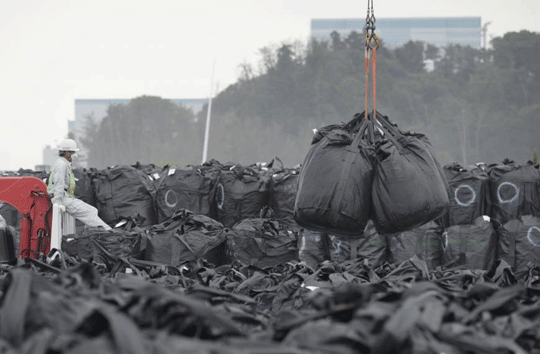 At intervals beside the roads, heaped up in huge piles, lie half a million black plastic bags containing radioactive topsoil, scraped off the surface of the land in an effort to persuade farmers to start work here again.
Some of the dead zone will never return to life. Futaba, the closest town to the plant, will probably be turned into a radioactive waste dump.
thousands of workers are now being bussed in to the cleanup effort at the power station, the radioactive fuel rods which melted down are all still there. Even after five years, radiation levels inside the reactor buildings are still too high for workers to enter, making it hard to even plan the task that needs to be done, let alone carry it out.
Fukushima: Inside the dead zone where the legacy of nuclear disaster still rulesFive years since a tsunami led to disaster at Japan’s Fukushima nuclear plant, Andrew Gilligan explores the ghost towns left in its wake, Telegraph UK, By Andrew Gilligan, in Fukushima, video by Julian Simmonds, additional editing by Charlotte Krol 06 Mar 2016
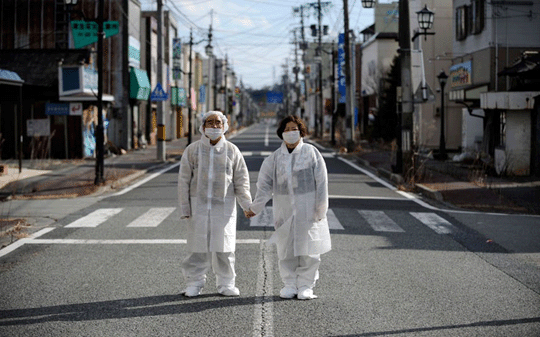
Along the rest of the country’s blasted east coast, the wreckage has been at least cleared away, even if not much has yet been put in its place. But in Futaba, time stopped on the night of 11 March 2011, when those residents who’d survived the giant wave fled, as they thought, for their lives from something even more frightening.
The buildings which collapsed in the earthquake have simply been left – rubble, roof tiles and all. The ceremonial torii gate of the Shinto shrine is lying exactly where it fell, on its side jutting out into the street. But most of the town is physically intact. It was just abandoned, and clearly in a very great hurry…..
As Japan’s prime minister at the time, Nato Kan, told The Telegraph in an interview published on Saturday, the country came within a “paper-thin margin” of a disaster requiring the evacuation of 50 million people. What did happen was bad enough. Inside the plant, a skeleton staff – the so-called “Fukushima 50” – battled to avert total catastrophe, reading emergency manuals by torchlight and at one stage asking workers to bring their car batteries to power the crippled cooling systems.
Outside, there was mass panic, with compulsory evacuation for 400,000 local residents and much of the rest of northern Japan cramming roads and railway stations to get out, too. In the end, the worst was avoided, with seawater pumped to cool the reactors and not a single immediate death from radiation exposure.
But five years on, an area 12 miles around the plant remains a dead zone, abandoned and uninhabited. You can still go there. Anyone can drive on the main road, route 6, which runs through it. Even this is an eerie experience. As well as the traffic signs, route 6 has geiger counters above the carriageway, displaying the radiation readout in the same way that others display roadworks information.
Most of the buildings here are wrecked or empty, too: an entire wall of the Segaworld games arcade has been ripped off, showing all the machines still inside. The side turnings, to get into the hearts of the towns, are blocked and mostly guarded, accessible only with passes (or, as we did, by finding an unguarded one and slipping through.)
At intervals beside the roads, heaped up in huge piles, lie half a million black plastic bags containing radioactive topsoil, scraped off the surface of the land in an effort to persuade farmers to start work here again.
Some of the dead zone will never return to life. Futaba, the closest town to the plant, will probably be turned into a radioactive waste dump. But six months ago, a few miles to the south, the authorities declared that Naraha, another town in the evacuation area, was now safe and everyone should come back.
It was hailed as the first stage in the area’s return to normality. Virtually nobody is buying. Before the disaster, Naraha had a population of 7,000. But for now, poisoned as much by mistrust of the government as by radioactivity, the place remains almost as spectral as Futaba.
“Once it’s dark, there’s only about ten houses with lights on,” said Nawasaki Yoshihiro, who was repairing the tsunami damage at his lovely traditional Japanese home opposite Tatsuma railway station. “You see wild boar running about the streets. I’m fixing this up because my parents kept pestering me not to waste the house. But even we are only here until 6 o’clock.”…….
In the station car park, dozens of commuters’ bikes give an appearance of normality. But look closer, and their chains are rusty, their tyres flat. “They have been there since 2011,” says Mr Yoshihiro. “The owners are probably dead.” Up the street, there are lights in a supermarket, a bright plastic sign above the door. But go up to the door, and you realise the place is some sort of government office, not a supermarket at all. It’s the perfect symbol of this nuclear Potemkin village.
Twenty miles further to the south, in the provincial centre of Iwaki, we find the reason why so few want to return. It’s the twice-yearly “update session” for residents of one of the temporary resettlement camps where much of Naraha’s population – and at least 20,000 other people from the radiation area alone – still live, five years on……….
From the audience, Yoshitaka Matsumoto, a local farmer, is politely angry: “You should fight the government, stop them bullying people,” he tells the mayor. Afterwards, he tells us that contamination of the water is people’s main concern. “The water comes from the taps, but it comes from a reservoir which has radioactive mud at the bottom,” he says. “The people who are back in Naraha now, they buy their drinking water from the shop, but they still have to wash in the tapwater.”…….
Though thousands of workers are now being bussed in to the cleanup effort at the power station, the radioactive fuel rods which melted down are all still there. Even after five years, radiation levels inside the reactor buildings are still too high for workers to enter, making it hard to even plan the task that needs to be done, let alone carry it out.
Around 300 to 400 tons of contaminated water is generated every day as groundwater flows into the plant filled with radioactive debris. To contain the tainted water, TEPCO, the plant’s operator pumps up the water and stores it in tanks, adding a new tank every three to four days.
There are now 1,000 tanks, containing 750,000 tons of contaminated water. “If I may put this in terms of mountain climbing, we’ve just passed the first waystation on a mountain of 10 stations,” said Akira Ono, head of the Fukushima plant, last month. The full cleanup, he admitted, may take as long as 40 years.
Back in Futaba, a banner has been erected protesting against the removal of the “nuclear power, our bright future” sign. “Save the sign, remember our folly,” it says. “Preserve it as a negative legacy.”
In truth, in Japan’s radioactive disaster zone, the reminders of the folly and the memorials of the disaster are everywhere inescapable.http://www.telegraph.co.uk/news/worldnews/asia/japan/12182635/Return-to-Fukushima.html
Occasionally, some of your visitors may see an advertisement here
Eerie situation at Futaba – abandoned town in Fukushima prefecture
Fukushima: Five years on from nuclear meltdown locals still in the dark about future, ABC News, By Rachel Mealey 6 Mar 16 The town of Futaba lies six kilometres from the Fukushima nuclear power plant.
There is an eerie feeling there. Shoes sit in the doorway of houses, as they do in houses across Japan — neatly placed together, waiting for feet to walk them out the door.
Bicycles rest against fences — waiting for the next journey………
Yuji Ohnuma ‘s slogan, “Nuclear Energy: The Energy of a Bright Future” won the day (competition years ago for pro nuclear slogan) .
Mr Ohnuma recalls being very proud when the billboard was erected — it stretched across the road on the way to the train station — seen by all who passed under it.
But now the bright future he foresaw has been ripped away. Council workers peeled the words off the billboard in December last year.
Mr Ohnuma campaigned for the sign to remain where it was — to serve as an ironic reminder to future generations of the dangers of nuclear power. But in a nation that has heavily invested in atomic energy, the billboard was not ironic — it was embarrassing.
The ABC filmed an interview with Mr Ohnuma under his sign on February 27 — the outline of the words could still be seen.
Last week on March 3, the entire structure was demolished.
The town is a chaotic mess and lives are in ruin — yet this job was given immediate priority.
“Nuclear energy has taken away my dream and my life and the bright future has become a catastrophe for us. I had a vision that my children would some day graduate from the same school as me, but all my plans are destroyed and there are no future prospects,” Mr Ohnuma said.http://www.abc.net.au/news/2016-03-06/fukushima-five-year-anniversay/7218734
Very few return to “re-opened” town in Fukushima
Japan’s nuclear refugees face bleak return five years after Fukushima, Yahoo News, By Minami FunakoshNARAHA (Reuters) 3 Mar 16, – Tokuo Hayakawa carries a dosimeter around with him at his 600-year-old temple in Naraha, the first town in the Fukushima “exclusion zone” to fully reopen since Japan’s March 2011 catastrophe. Badges declaring “No to nuclear power” adorn his black Buddhist robe.
(For a video of ‘Fukushima refugees face a bleak return home’ click http://www.reuters.tv/Bus/2016/03/03/inside-fukushima-s-first-town-to-reopen)
Hayakawa is one of the few residents to return to this agricultural town since it began welcoming back nuclear refugees five months ago.
The town, at the edge of a 20-km (12.5 mile) evacuation zone around the crippled Fukushima Daiichi plant, was supposed to be a model of reconstruction.
Only 440 of Naraha’s pre-disaster population 8,042 have returned – nearly 70 percent of them over 60.
“This region will definitely go extinct,” said the 76-year-old Hayakawa.
He says he can’t grow food because he fears the rice paddies are still contaminated. Large plastic bags filled with radioactive topsoil and detritus dot the abandoned fields.
With few rituals to perform at the temple, Hayakawa devotes his energies campaigning against nuclear power in Japan. Its 54 reactors supplied over 30 percent of the nation’s energy needs before the disaster.
Today, only three units are back in operation after a long shutdown following the nuclear meltdown in Fukushima. Others are looking to restart.
“I can’t tell my grandson to be my heir,” said Hayakawa, pointing at a photo of his now-teenaged grandson entering the temple in a full protective suit after the disaster. “Reviving this town is impossible,” he said. “I came back to see it to its death.”
That is bound to disappoint Japan’s Prime Minister Shinzo Abe. Rebuilding Naraha and other towns in the devastated northeast, he says, is crucial to reviving Japan.
Tokyo pledged 26.3 trillion ($232 billion) over five years to rebuild the disaster area and will allocate another 6 trillion for the next five years.
VANISHING TOWN………
No children were in sight at Naraha’s main park overlooking the Pacific Ocean on a recent morning. Several elderly residents were at the boardwalk gazing at hundreds of bags stuffed with radioactive waste.
In fact, the bags are a common sight around town: in the woods, by the ocean, on abandoned rice fields.
Little feels normal in Naraha. Many homes damaged in the disaster have been abandoned. Most of the town’s population consists of workers. They are helping to shut down Tokyo Electric Power Co’s <9501.T> Daiichi reactors or working on decontamination projects around town.
Other workers are building a new sea wall, 8.7 meters high, along a nearly 2 km stretch of Naraha’s coast, similar to other sea walls under construction in the northeast……..
Back at his Buddhist temple, part of which he has turned into an office for his anti-nuclear campaign, Hayakawa called the idea Naraha could be a model of reconstruction “a big fat lie”.
“There’s no reconstructing and no returning to how it used to be before (March 11). The government knows this, too. A ‘model case’? That’s just words.” http://news.yahoo.com/japans-nuclear-refugees-face-bleak-return-five-years-064635977–finance.html
Radioactive fallout a risk factor for hypothyroidism
Elevated airborne beta levels in Pacific/West Coast US States and trends in hypothyroidism among newborns after the Fukushima nuclear meltdown, Scientific Research, Joseph J. Mangano, Janette D. Sherman, 2 March 16
ABSTRACT
Various reports indicate that the incidence of congenital hypothyroidism is increasing in developed nations, and that improved detection and more inclusive criteria for the disease do not explain this trend entirely. One risk factor documented in numerous studies is exposure to radioactive iodine found in nuclear weapons test fallout and nuclear reactor emissions.
Large amounts of fallout disseminated worldwide from the meltdowns in four reactors at the Fukushima-Dai-ichi plant in Japan beginning March 11, 2011 included radioiodine isotopes. Just days after the meltdowns, I-131 concentrations in US precipitation was measured up to 211 times above normal. Highest levels of I-131 and airborne gross beta were documented in the five US States on the Pacific Ocean. The number of congenital hypothyroid cases in these five states from March 17-December 31, 2011 was 16% greater than for the same period in 2010, compared to a 3% decline in 36 other US States (p < 0.03). The greatest divergence in these two groups (+28%) occurred in the period March 17-June 30 (p < 0.04). Further analysis, in the US and in other nations, is needed to better understand any association between iodine exposure from Fukushima-Dai-ichi and congenital hypothyroidism risk…….http://www.scirp.org/journal/PaperInformation.aspx?PaperID=28599
Japanese Government Takes Grave Risks with Radiation Exposure

 How Much Is Too Much? Japanese Government Takes Grave Risks with Radiation Exposure http://www.stuarthsmith.com/how-much-is-too-much-japanese-government-takes-grave-risks-with-radiation-exposure/ 28 Feb 16 Japan’s nuclear crisis isn’t going away – and long-term health impacts from the radiation are now a grave concern as the situation continues to escalate. Dozens of repair workers at the reeling Fukushima-Daiichi nuclear power plant have already been exposed to radiation levels well beyond the country’s legal yearly dose limit. So far, the highest specific exposures reported are from two workers who received – on one day alone – radiation doses of more than three times the internationally recognized annual occupational exposure limit. Reports say the workers had severe rashes on the parts of their bodies exposed to radioactive water. Those troubling revelations prompted an even more troubling response from the Japanese government. In a move that is certain to stunt workers’ lives and potentially plague future generations with increased cancer rates, Japan’s Ministry of Health, Labor and Welfare has lifted the internationally recognized 50-millisievert (mSv) yearly cap on occupational exposure. That specific 50-mSv limit is recognized as the lowest dose that can trigger cancer in adults. It is most definitely not an arbitrary number to be manipulated by short-sighted governments – not even during times of crisis.
The social toll on Fukushima families
For some Fukushima mothers, protecting children from radiation comes at heavy price, Asahi Shimbun February 23, 2016 Three-and-a-half years after fleeing to central Japan, a mother received a package from her husband who had opted to remain at their home in Fukushima Prefecture despite the nuclear disaster.
From Tamura, about 35 kilometers west of the stricken Fukushima No. 1 nuclear plant, the father sent snacks for the couple’s two children. The cardboard box also contained divorce papers.
“I cannot send money to my family whom I cannot see,” the husband told his wife.
She still refused to return home.
Thanks to decontamination work, radiation levels have fallen around the nuclear plant since the triple meltdown caused by the Great East Japan Earthquake and tsunami in March 2011. And families are returning to their hometowns, trying to resume normal lives.
But many mothers, distrustful of the government’s safety assurances, still harbor fears that radiation will affect the health of their children. As a result of these concerns, families are being torn apart, friendships have ended, and a social divide remains wide in Fukushima communities.
Around 70,000 people are still not allowed to return to their homes located in evacuation zones designated by the central government. And an estimated 18,000 people from Fukushima Prefecture whose homes were outside those zones remain living in evacuation………..
Sung Woncheol, a professor of sociology at Chukyo University, and others have conducted surveys on mothers whose children were 1 to 2 years old when the nuclear disaster started. The mothers live in Fukushima city and eight other municipalities in Fukushima Prefecture.
Of the 1,200 mothers who responded to the survey in 2015, 50 percent said they had concerns about child-rearing in Fukushima Prefecture.
Nearly 30 percent said they avoid or try to avoid using food products from Fukushima Prefecture, compared with more than 80 percent six months after the disaster.
But for some mothers, the passage of nearly five years since the disaster unfolded has not erased their fears of radiation.
The 36-year-old mother who received the divorce papers from her husband in autumn 2014 continues to live with her children in the central Japan city to which she had no previous connection.
A month after the nuclear disaster, she fled with her then 1-year-old son and her daughter, 10, from their home, even though it was not located in an evacuation zone.
She said she left Fukushima Prefecture because she “could not trust the data released by the central government.”……..http://ajw.asahi.com/article/0311disaster/fukushima/AJ201602230068
Thousands of nuclear workers made sick by radiation, but not getting any help
Sen. Tom Udall, D-N.M., is among a group of federal lawmakers who have called for an investigation into the program following McClatchy’s probe, which revealed 7,762 workers died after being denied compensation by the government.
The McClatchy DC investigation found that nuclear worker safety remains an issue: Since 2001, more than 186,000 workers have been exposed to radiation.
Efficacy of compensation program for nuclear workers under scrutiny By Rebecca Moss
The New Mexican, 20 Feb 16, “………Due to the commingling of his exposure during the war and his work on various sites at Sandia, Thompson is one of at least 10,273 New Mexicans who have applied for a federal program that compensates individuals with a $150,000 lump sum payment for serious illness or death that can be attributed to work at the state’s nuclear defense facilities since 1943.
As of March 2015, New Mexico had received the second-highest compensation of any state under the fund, with $1.64 billion paid out to workers for compensation and medical bills.
But the program has come under scrutiny lately. An investigation by the McClatchy DC news service found that fewer than half of the people who have applied for benefits have received them, and workers’ complaints are often suspended in the complex process of paperwork or court hearings, with some claims languishing in the system for up to 10 years. A new documentary coming out in March, titled Safe Side of the Fence, questions why side-by-side workers with similar ailments would receive different judgments from the Department of Labor on the validity of their claims.
At least 5,400 workers in New Mexico have been denied financial assistance, according to the Department of Labor, which issues the compensation.
The department recently added new language to the regulations, which is intended to clarify who is eligible for relief. A 60-day public comment period for the proposal ended Thursday. But critics say the new language could make it even more difficult for ailing workers to receive compensation. Continue reading
Leukaemia risk increased in exposure even to low dose radiation – World Health Organisation
 Even low doses of radiation increase risk of dying from leukaemia in nuclear workers, says IARC http://www.iarc.fr/en/media-centre/pr/2015/pdfs/pr235_E.pdf Lyon, France, 22 June 2015 – A study coordinated by the International Agency for Research on Cancer (IARC), the specialized cancer agency of the World Health Organization, shows that protracted exposure to low doses of ionizing radiation can cause leukaemia. The study, published today in The Lancet Haematology, shows that the risk of death from leukaemia increases linearly with the radiation dose.
1 This Month


No Nuclear in Cwm Llynfi! Stop the nuclear power station near Maesteg.


4 August – WEBINAR – Hiroshima & Nagasaki: Nuclear Bombs Never Again
Tuesday, Aug. 4 at 5 pm PT / 8 pm ET.
Aug 5, 2026 10:00 AM in Australia/Melbourne
Join the Nuclear Bombs Never Again webinar on August 4th at 5pm Pacific Time / 8pm Eastern Time / 9am Japan Standard Time.
Cross generational voices at the intersection of Japan-Korea-US policy and militarization will share their lived experiences, nuclear impacts in these contexts, anti-war strategies, and actions you can take to advocate for a world with Nuclear Bombs Never Again. This 75-minute event is co-hosted by WILPF US and Korea Peace Now.
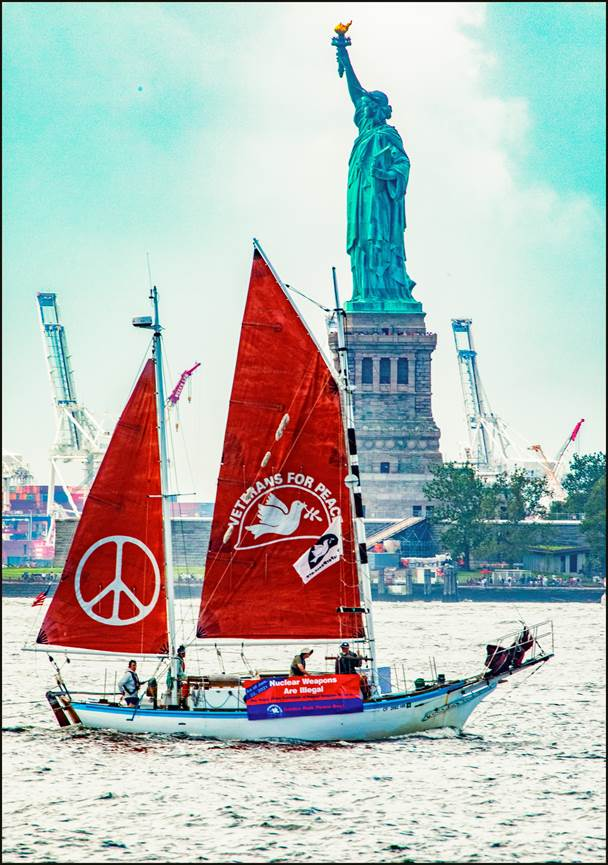
22,000+ miles voyaging for nuclear disarmament
and a radiation-free environment https://vfpgoldenruleproject.org/
To see nuclear-related stories in greater depth and intensity – go to https://nuclearinformation.wordpress.com
-
Archives
- July 2026 (320)
- June 2026 (287)
- May 2026 (306)
- April 2026 (356)
- March 2026 (251)
- February 2026 (267)
- January 2026 (308)
- December 2025 (358)
- November 2025 (359)
- October 2025 (375)
- September 2025 (257)
- August 2025 (319)
-
Categories
- 1
- 1 NUCLEAR ISSUES
- business and costs
- climate change
- culture and arts
- ENERGY
- environment
- health
- history
- indigenous issues
- Legal
- marketing of nuclear
- media
- opposition to nuclear
- PERSONAL STORIES
- politics
- politics international
- Religion and ethics
- safety
- secrets,lies and civil liberties
- spinbuster
- technology
- Uranium
- wastes
- weapons and war
- Women
- 2 WORLD
- ACTION
- AFRICA
- Atrocities
- AUSTRALIA
- Christina's notes
- Christina's themes
- culture and arts
- Events
- Fuk 2022
- Fuk 2023
- Fukushima 2017
- Fukushima 2018
- fukushima 2019
- Fukushima 2020
- Fukushima 2021
- general
- global warming
- Humour (God we need it)
- Nuclear
- RARE EARTHS
- Reference
- resources – print
- Resources -audiovicual
- Weekly Newsletter
- World
- World Nuclear
- YouTube
-
RSS
Entries RSS
Comments RSS
 nuclear-news