They didn’t know their backyard creek carried nuclear waste. Now, they’re dying of cancer.
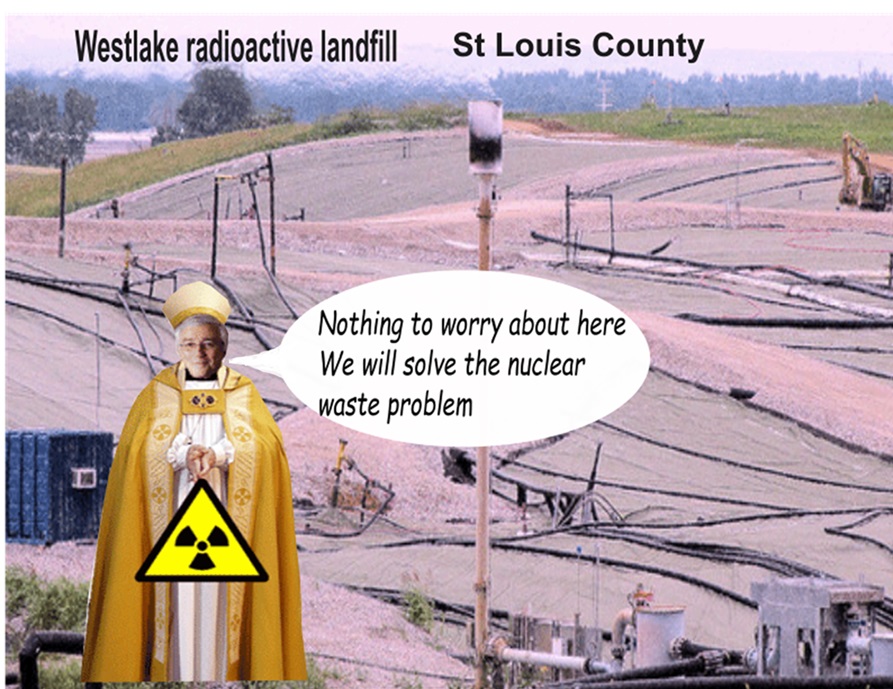
By Skyler Henry, Cait Bladt, https://www.cbsnews.com/amp/news/coldwater-creek-st-louis-missouri-nuclear-waste-manhattan-project/?fbclid=IwY2xjawJ5WlNleHRuA2FlbQIxMQBicmlkETE3b0JDR3JZZ0xqRkNqVU1oAR6r1OHnTIbzQszYmq5UdxWm2CDEhfSw2CBAqIbrvNc_QJ0mnVpSMlz18FoZ6A_aem_HBiqzbUxMZqObYI2gfOYx April 24, 2025
This story is part one of a two-part series that examines the effects of nuclear waste contamination in Coldwater Creek on the surrounding community in St. Louis, Missouri. Part two aired Wednesday, April 23 on “CBS Evening News.”
When Linda Morice and her family first moved to St. Louis in 1957, they had no idea they had anything to fear. Then, people started getting sick.
“It was a slow, insidious process,” Morice said.
After the death of Morice’s mother, her physician uncle took her aside and gave her a stark warning: “Linda, I don’t believe St. Louis is a very healthy place to live. Everyone on this street has a tumor.”
Their neighborhood was bordered by Coldwater Creek, a 19-mile tributary of the Missouri River It wound through their backyards, near baseball fields, schools and cemeteries — and past lots where leaking barrels and open-air dumps of nuclear waste leeched into its waters.
“It was shocking that this creek was likely making people sick,” Morice said.
Starting in 1942, roughly one ton of pure uranium was produced per day in downtown St. Louis. It was then shipped to labs across the country for the top secret Manhattan Project that created the first nuclear bomb.
The leftover waste was dumped around the city.
“That material was in 82 different spots throughout St. Louis County. It spilled. Children played in it. It seemed to me that there wasn’t an attempt to absolutely get to the bottom of it,” Morice said.
In Morice’s family alone, her mother, father and brother died of cancer, leaving her to think differently about her childhood.
“All that time, all those fun things were happening, but that whole time we, and the rest of the community were being exposed to some pretty dangerous stuff,” Morice said.
Now her husband, who also lived in the area, is fighting cancer. He’s being treated by urologic oncologist Dr. Gautum Agarwal. For the last several years, Agarwal has been tracking which of his patients lived near Coldwater Creek.
“I was seeing patients who are young, who had developed pretty significant cancers from areas that there’s been some contamination with nuclear waste,” Agarwal said.
While radiation is known to cause cancer, experts say they can’t pin down the specific cause of the disease in a given patient.
But a 2019 study from the Department of Health and Human Services found that people who lived and played near Coldwater Creek from the 1960s to 1990s “could be at an increased risk of developing lung cancer, bone cancer or leukemia.”
“The people there deserve for us to look at this much closer than we have,” Agarwal said.
Almost 7 months underwater pushes UK nuclear submariners to the limit

Nuclear-armed HMS Vanguard spent 204 days underwater, finally docking last month — and such gruelling conditions are causing experienced personnel to quit
Charlie Parker, Friday April 18 2025, The Times
Guarding Britain’s most powerful weapons deep beneath the waves are sailors who have not seen sunlight, breathed fresh air or spoken to their families for months.
Operating in total isolation on increasingly long patrols, submarine crews are enduring “mind-boggling” marathons underwater to ensure nuclear missiles can be launched at any moment.
Now, after a Vanguard-class vessel returned from a record 204 days at sea, submariners tasked with maintaining the deterrent have revealed what life is like on board the boats.
The £6 billion “bomber” looked grey, barnacled and rusty as she docked at HM Naval Base Clyde, in Scotland, last month. Welcoming her home was Sir Keir Starmer, the only person capable of authorising a nuclear strike, who thanked the crew for completing the tour. https://www.thetimes.com/uk/defence/article/life-on-britains-nuclear-subs-as-record-patrols-push-sailors-to-limits-m5m7q58p8
Doncaster prisoners could sue government over exposure to radon gas

Inmates complain of rashes and fever, echoing the events that led Dartmoor jail to close last year
Richard Palmer, Observer 20th April 2025, https://www.theguardian.com/society/2025/apr/20/doncaster-prisoners-could-sue-government-over-exposure-to-radon-gas
The government faces further potential legal action over concerns about levels of radon gas at a second prison, after Dartmoor jail was forced to close.
Ministry of Justice officials have ordered radon detection equipment to be installed at Lindholme prison near Doncaster in South Yorkshire, where prisoners have reported feeling unwell with symptoms such as headaches, rashes and fever.
There are concerns about the risks of inhaling radioactive particles that can cause lung cancer.
Radon, a naturally occurring gas, is the second leading cause of lung cancer after smoking in the UK. There are concerns that the levels in Lindholme could be several times over the domestic safety limit.
A spokesperson for the Ministry of Justice said: “Radon monitoring is in place at HMP Lindholme as a precautionary measure.” No prisoners have been moved out of the jail.
Last week, the Observer revealed that about 500 former inmates and staff at Dartmoor are taking legal action after being exposed to what they claim were dangerously high levels of radon for years until the prison was closed for safety reasons last summer.
Kesar and Co, the law firm representing them, is also representing prisoners who have been in Lindholme. Violeta Hansen, a Danish radon expert advising the Dartmoor prisoners, said it had been known since at least 1987 that the area had high levels of radon, which is formed by decaying uranium found in rocks and soils, and jail staff had been monitoring levels inside the prison since 2010.
“They knew a long time ago they had a radon issue,” she said. “Why didn’t they do anything until 2024 when they did a risk assessment?”
Britain’s prison system is struggling with overcrowding and it is a logistical challenge to rehouse prisoners, such as the 941 at Lindholme.
Ben Leapman, editor of Inside Time, a free prisoners’ newspaper owned by the charity the New Bridge Foundation, which first reported the health scare at Lindholme, said there were only 553 places free across the men’s prison estate in England and Wales last week.
He said the radon levels in the prison were a cause for concern, not least because prisoners spent so long in their cells. “Even today, a lot of prisoners are locked in their cells for 22 hours a day because there isn’t enough work or courses to keep them busy,” he said.
Uranium’s hazardous effects on humans and recent developments in treatment

USA National Library of Medicine, Epub 2025 Mar 12. Yahya Faqir 1, Ziang Li 1, Talaal Gul 1, Zahoor 1, Ziwei Jiang 2, Libing Yu 2, Chengjia Tan 3, Xi Chen 4, Jiahua Ma 5, Jiafu Feng 6
Abstract
Uranium, a naturally occurring element, is predominantly recognized for its role as fuel in both civilian and military energy sectors. Concerns have been raised regarding the adverse environmental impacts and health risks associated with uranium mining due to the exposure it causes. Such exposure leads to systemic toxicity, affecting pulmonary, hepatic, renal, reproductive, neurological, and bone health. This review identifies significant research gaps regarding detoxification methods for uranium contamination and recommends further advancements, including genetic modification and exploration of plant compounds. A comprehensive review of published research materials from diverse sources of uranium, including various treatments and hazardous impacts on the human body, was conducted. Additionally, a PRISMA analysis was performed in this study. This review emphasizes the importance of collaboration and the formulation of research-informed regulations to effectively safeguard vulnerable communities from the consequences of contamination. Public discourse often emphasizes the significance of radiotoxicity; however, the non-radioactive chemotoxicity of uranium has been identified as a significant risk factor for environmental exposures, contingent upon species, enrichment, and exposure route. Given these serious health consequences, several methods are being investigated to ameliorate uranium toxicity. In response to these concerns, several techniques, such as phytomedicinal treatments, biochemical approaches, and chelation therapy, have been investigated to minimize the adverse effects of uranium exposure in the human body……………………………………………………..https://pubmed.ncbi.nlm.nih.gov/40080936/#:~:text=Concerns%20have%20been%20raised%20regarding,%2C%20neurological%2C%20and%20bone%20health
No such thing as ‘clean’ nuclear energy
John Hoffmann , Carbondale, Apr 12, 2025, https://www.aspendailynews.com/opinion/no-such-thing-as-clean-nuclear-energy/article_8aeb44a7-c226-488e-82e0-4a32ebfcb434.html
Clean nuclear power is an oxymoron. Every part of the process is potentially deadly. Mining uranium involves stockpiling mounds of radioactive dirt.
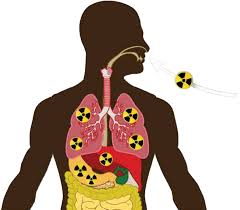
In the National Library of Medicine, the article, “Health Effects of Particulate Uranium Exposure,” begins with, “Uranium contamination has become a non-negligible global health problem,” which “can cause severe body damage once inhaled.” The dust billows over reservations and populations near mines.
Yellowcake is produced through milling and roasting. After an intense four-step process, it is then shipped to concentrating sites, where the uranium is packed into steel drums and hauled to processing plants to turn it into fuel.
Uranium, like other heavy metals, is toxic and should not be inhaled or ingested, even if mildly radioactive. My trip to Naturita, Colorado, near where it is mined, showed me how potent radioactive dust works to rust the bridges, spall concrete, and ruin folks’ teeth.
The milling and roasting into orange oxide at Oak Ridge becomes uranium tetrachloride or S-50 liquid thermal diffusion in the St. Louis plant, then into plutonium piles in Beverly, Massachusetts, Bloomfield, New Jersey, or Ames, Iowa, where the metal is recast into rods in induction-heated furnaces.
Now it can be shipped to one of the 94 reactors in the United States, where it creates electron-saturated cooling water and spent U-285 rods. The highly contaminated water and nuclear rods that pile up over the years need to be kept from contaminating the environment for thousands of years. So it is encased in concrete and stainless steel, which is stacked on-site until it is hauled somewhere for long-term storage, and therein lies the problem.
There is no place to store it safely. Not the salt caverns of Whipp or the deepest subducting zones of the oceans.
Wherever they are stacked, they become a target for an enemy to drop a conventional bomb that will do maximum damage to the downwind population. Yet Chernobyl demonstrated that every place on earth is downwind, because the atmosphere homogenizes pollutants within three days. Let’s rethink calling nuclear “clean” energy.
Radiation exposure victims fight for compensation as nuclear weapons funding soars
Bulletin, By Chloe Shrager | March 19, 2025
Nine months have passed since the law that compensates US victims of radiation exposure expired in June, and yet another opportunity to reinstate it fell to the wayside last week.
The Radiation Exposure Compensation Act (RECA), enacted in 1990, provided pay-outs to people unwittingly exposed to radioactive substances from the Manhattan Project and Cold War efforts. For decades, people living downwind from the Nevada Test Site, nuclear weapons site workers and uranium miners relied on the money they received from RECA to pay their medical bills for rare cancers and diseases contracted from their radiation exposure.
But even so, activist groups across the US homeland and territories argue that the law was woefully inadequate. “When you talk about nuclear justice, we have not had it. We haven’t seen it,” Mary Dickson, a Utah downwinder and thyroid cancer survivor, said in a recent interview.
After the House shot down an attempt to push an expanded version of the compensation act through Congress last year, a bipartisan group of senators reintroduced a RECA reauthorization and expansion bill in January. The effort is led by Republican Sen. Josh Hawley of Missouri and Democratic Sen. Ben Ray Luján of New Mexico, who recently spoke on the proposed bill in an interview with the Bulletin.
“This is not a partisan issue,” Luján said. “This is for the American people, and especially those who live downwind of this testing and those uranium mine workers who are sacrificing their lives and their careers for national security purposes.”
The hope was to slip the amended act into the Trump Administration’s first stopgap budget bill, due no later than the end-of-day last Friday to avoid a government shutdown. But that hope evaporated when instead of proposing an omnibus bill overhauling previous budget priorities—as was expected of the new administration—the House introduced a continuing resolution that largely carried on Biden administration funding levels without mention of the new RECA bill. The continuing resolution does, however, increase defense budget spending by $6 billion……………………………………………………………………………………………………………………………………………………………………………………………………. The human cost of nuclear security. Congress passed a GOP budget bill on Friday to avoid a government shutdown and fund the government through September. While the bill does not fund RECA’s reauthorization, it does earmark at least $21.7 billion for “defense nuclear nonproliferation” and “weapons activities” under the National Nuclear Security Administration for the next six months. Funding under these categories can be used for anything from continued domestic uranium enrichment to warhead modernization and assembly. These defense budget proposals come during an estimated $1.7 trillion, 30-year overhaul of the United States’ nuclear arsenal that will rebuild each leg of the nuclear triad and its accompanying infrastructure.
These investments were approved. Legislation to continue to compensate those poisoned by nuclear weapons activities were not.
“They’re investing all this money to build up our arsenal and develop new weapons. So when they say there’s not enough money to take care of the people those weapons have harmed in the past… I just think part of that cost has got to be taking care of the people they harm,” Dickson said. https://thebulletin.org/2025/03/radiation-exposure-victims-fight-for-compensation-as-nuclear-weapons-funding-soars/?utm_source=ActiveCampaign&utm_medium=email&utm_content=Plans%20to%20colonize%20Mars%20threaten%20Earth&utm_campaign=20250320%20Thursday%20Newsletter
Radioactive Mussels May Pose Threat to Food Chain in Pennsylvania
By Tom Howarth, Science Reporter (Nature) Jan 07, 2025, https://www.newsweek.com/radioactive-mussels-food-chain-bioaccumulation-pennsylvania-2011149?fbclid=IwY2xjawJG4pxleHRuA2FlbQIxMQABHXBgrVgNhUUy1s_U9SLYXUIeD-gugNuUk75xBSTL9AG1vQ6REzIVWJiVGw_aem_0EvCj7mKrreGjCLuSViY1Q
Radioactive contamination in freshwater mussels is potentially affecting the food chain in Pennsylvania, including iconic animals such as bald eagles and possibly even humans.
A study published last year by scientists from Penn State University found elevated levels of radium in mussels downstream from a waste treatment facility in Franklin, Pennsylvania. Now, experts are raising the alarm over the secondary impacts on the ecosystem.
While the facility no longer discharges oil and gas wastewater into the Allegheny River, its legacy of pollution persists, with radioactive material bioaccumulating in the ecosystem.
Why This Matters
The findings highlighted that radioactive materials could be climbing the food chain, affecting not just aquatic life but also land animals, birds and people. Bald eagles, a species reintroduced to Pennsylvania in 1983, are among those at risk. Their diet includes muskrats, a primary predator of freshwater mussels, which are now confirmed to carry radium.
Although freshwater mussels are not consumed by humans, other species higher in the food chain may serve as a bridge for contaminants to eventually affect people. Local fishing activity in the Allegheny River also raises questions about indirect exposure to radioactive material.
Exposure to high levels of radium can result in adverse health conditions like anemia, cataracts, fractured teeth, cancer (especially bone cancer) and death, the U.S. Centers for Disease Control and Prevention says.
What To Know
Freshwater mussels act as ecological barometers because of their fixed locations and long life spans.
In this study, researchers found that mussels downstream of the waste treatment facility had absorbed radioactive particles into their soft tissue and hard shells. Mussels closest to the discharge site perished from salinity, while those farther away adapted but at a cost—they absorbed contaminants instead.
The study also compared the mussels’ radioactivity to Brazil nuts, which naturally absorb radiation from the soil. While a typical 28-gram serving of Brazil nuts contains 0.47 to 0.80 microsieverts, the maximum radioactivity found in a single mussel was 63.42 μSv.
While the International Atomic Energy Agency recommends an annual exposure limit of 1,000 μSv—far exceeding the amount found in even the most radioactive mussel—the findings are concerning because of the potential for radiation to accumulate within food chains over time.
What People Are Saying
Evan Clark, the waterkeeper at Three Rivers Waterkeeper, told Newsweek: “One concern that I immediately thought of after reading [the study] was bioaccumulation. Mussels live pretty close to the bottom of the food chain, eating a lot of algae and bacteria—they are unselective filter feeders.
“Muskrats are one of the larger consumers of freshwater mussels, eating hundreds and hundreds in a lifetime. Those muskrats are going to be eaten by bald eagles, and those bald eagles are only recently making a strong comeback into western Pennsylvania.”
Katharina Pankratz, a co-author of the study, said in a statement: “Depending on the contaminant and its chemistry, if it is small enough to pass through the gills of the mussel, it has the potential to accumulate in their tissue or precipitate within the hard-shell structure. This information may help shape future regulations for wastewater disposal to surface water, especially in regions where mussels are harvested for food.”
Nathaniel Warner, the study’s corresponding author, said in the statement: “Mussels that were closest to the water discharges died off. Further downstream, the mussels found a way to tolerate the salinity and radioactive materials and instead absorbed them into their shells and tissues.”
What Happens Next
The study’s findings could inform future policies on wastewater management, its authors said. While the waste treatment facility in Franklin is no longer discharging waste into the waterways, its impacts still linger and could do so for some time.
Key questions, such as how much radioactive material is accumulating up the food chain, remain.
They had a fairytale American childhood – but was radiation slowly killing them?
Decades later, federal investigators acknowledged an increased cancer risk for some people who played in the creek as children,
Sophie Williams, BBC News, Washington DC, 16 Mar 25
After Kim Visintine put her son to bed every night at a hospital in St Louis, Missouri, she spent her evening in the hospital’s library. She was determined to know how her boy had become seriously ill with a rare brain tumour at just a week old.
“Doctors were shocked,” she says. “We were told that his illness was one in a million. Other parents were learning to change diapers but I was learning how to change chemotherapy ports and IVs.”
Kim’s son Zack was diagnosed with a glioblastoma multiforme. It is a brain tumour that is very rare in children and is usually seen in adults over 45.
Zack had chemotherapy treatments but doctors said there was no hope of him ever recovering. He died at just six years old.
Years later, social media and community chatter made Kim start to think that her son was not an isolated case. Perhaps he was part of a bigger picture growing in their community surrounding Coldwater Creek.
In this part of the US, cancer fears have prompted locals to accuse officials of not doing enough to support those who may have been exposed to radiation due to the development of the atomic bomb in the 1940s.
A compensation programme that was designed to pay out to some Americans who contracted diseases after exposure to radiation expired last year – before it could be extended to the St Louis area.
This Radiation Exposure Compensation Act (Reca) provided one-time payouts to people who may have developed cancer or other diseases while living in areas where activities such as atomic weapons testing took place. It paid out $2.6bn (£2bn) to more than 41,000 claimants before coming to an end in 2024.
Benefits were paid to such neighbours, frequently called “downwinders”, in Arizona, Utah and Nevada, but not New Mexico, where the world’s first test of a nuclear weapon took place in 1945. Research published in 2020 by the National Cancer Institute suggested that hundreds of cancers in the area would not have occurred without radiation exposure.
St Louis, meanwhile, was where uranium was refined and used to help create the atomic bomb as part of the Manhattan Project. After World War Two ended, the chemical was dumped near the creek and left uncovered, allowing waste to seep into the area.
Decades later, federal investigators acknowledged an increased cancer risk for some people who played in the creek as children, but added in their report: “The predicted increases in the number of cancer cases from exposures are small, and no method exists to link a particular cancer with this exposure.”
The clean-up of the creek is still ongoing and is not expected to finish until 2038.
A new bill has been put forward in the House, and Josh Hawley, a US senator representing Missouri, says he has raised the issue with President Donald Trump.
When Kim flicks through her school yearbook, she can identify those who have become sick and those who have since passed away. The numbers are startling.
“My husband didn’t grow up in this area, and he said to me, ‘Kim, this is not normal. It seems like we’re always talking about one of your friends passing away or going to a funeral’,” she says.
Just streets away from the creek, Karen Nickel grew up spending her days near the water picking berries, or in the nearby park playing baseball. Her brother would often try and catch fish in Coldwater Creek.
“I always tell people that we had just the fairytale childhood that you would expect in what you consider suburban America,” says Karen. “Big backyards, big families, children playing out together until the street lights came on at night.”
But years later, her carefree childhood now looks very different.
“Fifteen people from the street I grew up on have died from rare cancers,” she says. “We have neighbourhoods here where every house has been affected by some cancer or some illness. We have streets where you can’t just find a house where a family has not been affected by this.”
When Karen’s sister was just 11 years old, doctors discovered that her ovaries were covered in cysts. The same had happened to their neighbour when she was just nine. Karen’s six-year-old granddaughter was born with a mass on her right ovary.
Karen helped found Just Moms STL, a group that is dedicated to protecting the community from future exposures that could be linked to cancers – and which advocates for a clean-up of the area.
“We get messages every day from people that are suffering from illnesses and are questioning whether this is from exposure,” she says. “These are very aggressive illnesses that the community is getting, from cancers all the way to autoimmune diseases.”
Teresa Rumfelt grew up just a street away from Karen and lived in her family home from 1979 until 2010. She remembers every one of her animals passing away from cancer and her neighbours getting ill from rare diseases.
Years later, her sister Via Von Banks was diagnosed with amyotrophic lateral sclerosis (ALS), a form of motor neurone disease. Some medical studies have suggested there could be a link between radiation and ALS, but this is not definitive – and more research needs to be done to firm it up.
That does not reassure people like Teresa who are concerned that more needs to be done to understand how locals are being affected.
“ALS took my sister at 50,” Teresa says. “I think it was the worst disease ever of mankind. When she was diagnosed in 2019, she’d just got her career going and her children were growing. She stayed positive through all of it.”
Like Hawley, Just STL Moms and other community members want the government’s compensation act to be expanded to include people within the St Louis area, despite the programme being in limbo after expiring.
Expanding it to the Coldwater Creek community would mean that locals could be offered compensation if they could prove they were harmed as a result of the Manhattan Project, during which the atomic bomb was developed with the help of uranium-processing in St Louis. It would also allow screenings and further study into illnesses other than cancer.
In a statement to the BBC, the US government’s Environmental Protection Agency (EPA) said it took concerns very seriously and had actively worked with federal, state and local partners – as well as community members – to understand their health concerns, and to ensure community members were not exposed to the Manhattan Project-era waste.
The BBC has also contacted the US Army Corps of Engineers, which is leading the clean-up – but has not received a response to a request for comment.
“My sister would have loved to be part of the fight. She’d be the first to picket,” says Teresa of her efforts to get greater support from the government.
The trend in people around Coldwater Creek getting unwell has not gone unnoticed among healthcare professionals.
Dr Gautum Agarwal, a cancer surgeon at Mercy Hospital in St Louis, says he has not noticed a “statistical thing”, but notes that he has seen husbands and wives and their neighbours presenting cancers.
Now, he ensures that his patients are asked where they live and how close they are to Coldwater Creek.
“I tell them that there’s a potential that there’s a link. And if your neighbours or family live near there, we should get them screened more often. And maybe you should get your kids screened earlier.”
He hopes that over time more knowledge will be gained about the issue, and for a study into multi-cancer early detection tests to be introduced that could help catch any potential cancers, and help reassure people in the area……….. https://www.bbc.com/news/articles/c2e7011n03vo
Families sickened by radiation exposure want Congress to revive this key compensation program.
7 Mar 2025
The Radiation Exposure Compensation Act or RECA, first enacted in 1990, created a compensation program to process claims from people exposed to radiation leftover from nuclear testing done by the U.S. government.
After the latest expansion of the bill expired in June 2024, communities across the country, including Missouri and the Navajo Nation say they are waiting for the legislation to not only be taken up again, but also to include communities like theirs that were never originally included. https://www.youtube.com/watch?v=0icfLF6AVEQ
Nuclear reactors killing Americans at accelerating rate
John LaForge Guest columnist, Feb 27, 2025 https://www.hometownsource.com/monticello_times/nuclear-reactors-killing-americans-at-accelerating-rate/article_7cb060d2-eef6-11ef-836b-8349ae8997a8.html
A new analysis of public health data from the Centers for Disease Control and Prevention (CDC) reveals alarming evidence that cancer deaths are rising in communities surrounding America’s oldest nuclear power plants.
Epidemiologist Joseph Mangano, executive director for the Radiation and Public Health Project in New York, has conducted a study showing a disturbing correlation between prolonged exposure to nuclear radiation and increased cancer mortality in affected counties.
According to Mangano’s research, which examines county-by-county cancer mortality data over three distinct time periods, radiation routinely released from nuclear reactors is directly impacting public health.
His findings indicate that cancer deaths in counties hosting 15 of the nation’s 16 oldest nuclear facilities have significantly increased over time, reinforcing longstanding concerns about the safety of prolonged nuclear plant operations.
“There is no safe dose of radiation,” Mangano states, citing the National Academy of Sciences’ BEIR VII report, which confirms that every exposure to ionizing radiation has the potential to trigger cancer.
As nuclear reactors age and continue to release radioactive gases such as helium, xenon and krypton into the atmosphere, residents in nearby communities are at increasing risk of developing cancer due to prolonged exposure.
The data further illustrates the impact of these radiation releases varies based on geographical factors, including wind patterns and local topography.
For example, in Wisconsin, excess cancer deaths were significantly lower near the Point Beach nuclear facility than in counties downwind of the Palisades and DC Cook plants on Lake Michigan’s eastern shore.
These findings suggest that radiation exposure is not uniform and that some communities bear a greater burden than others.
The implications of Mangano’s research are particularly concerning for residents of Wright and Sherburne counties in Minnesota, home to the Monticello Nuclear Generating Plant.
Since the plant began operating in 1971, the once-lower-than-average cancer mortality rate in these counties has risen sharply. Projections estimate that between 2031 and 2050, as many as 1,662 excess cancer deaths could occur if Monticello’s operating license is extended through 2051.
“These findings should serve as a wake-up call,” said Kelly Lundeen, a staff member at the Wisconsin-based environmental and nuclear watchdog Nukewatch. “We are urging local, state, and federal officials to take immediate action to phase out commercial nuclear power before more lives are lost.”
Despite growing concerns, the U.S. Nuclear Regulatory Commission (NRC) has already approved license extensions for several aging reactors, allowing some to operate for up to 80 years.
Given the demonstrated public health risks, advocates are calling for an immediate halt to these extensions and a transition toward safer, renewable energy sources.
The Coalition for a Nuclear-Free Mississippi River was planning to rally outside of the Minnesota Public Utilities Commission hearing earlier this month to maintain the current shutdown date of the Monticello reactor.
The Radiation and Public Health Project, the organization behind Mangano’s analysis, is pushing for greater transparency in radiation monitoring, stricter regulations on radioactive emissions, and a comprehensive plan to phase out aging nuclear plants.
John LaForge serves as the co-director of Nukewatch, a Wisconsin-based environmental and peace action watchdog group.
Doctors fear health fallout from nuclear energy plans

Canberra Times, By Marion Rae, February 12 2025
Doctors have warned of no “safe” level of radiation from a proposed network of nuclear reactors as battlelines are drawn for the federal election.
Similar to other nuclear-powered nations, Australians living within a certain radius of a reactor would need to be issued potassium iodide tablets for use in a radiation emergency, a nuclear briefing has learned.
“The only reason that everyone in that radius is given that is because they might need it,” Assistant Minister for Climate Change and Energy Josh Wilson told a nuclear briefing on Tuesday.
If anyone comes to buy your house, the proximity of a reactor will be noted on the land titles register, and insurers will not cover nuclear accidents, he said.
The warning came as doctors fronted parliament to warn of long-term health risks for workers and surrounding communities, particularly children.
Evidence included a meta-data analysis of occupational and environmental exposure that accumulated data on more than seven million people.
It found living within 30km of a reactor increased overall cancer risk by five per cent, with thyroid cancer increasing by 14 per cent and leukaemia by nine per cent.
A separate study of workers in the nuclear industry in France, the United Kingdom and the United States analysed results from more than 300,000 people who were monitored for over 30 years.
Finding not only increased cancer rates but surprisingly increased rates of heart attacks and strokes, it found impacts at low doses were larger than previously thought.
“There is no ‘safe’ lower dose of radiation. The science is clear. All exposure adds to long-term health risks,” vice-president of the Medical Association for Prevention of War Dr Margaret Beavis said……………………………
Under the coalition’s nuclear energy blueprint, seven reactors would be built across five states to replace ageing coal-fired power plants with more gas-fired plants to provide baseload power in the interim.
“Zero-emissions nuclear plants” are a key part of the Nationals’ election pitch to regions where coal plants are already closing, while Labor is pressing ahead with the transition to renewable energy backed up by big batteries.
Public Health Association of Australia spokesman Dr Peter Tait said the idea that the nuclear industry was free of greenhouse gas emissions was a “furphy”, given the construction and uranium supply chain involved.
Emissions would rise threefold under the nuclear plan due to increased coal and gas use, he warned, with the first plant not due to come online until the late 2030s.
From a public health perspective, Australians can’t afford that delay, Dr Tait said.
Executive director of Doctors for the Environment Dr Kate Wylie said prolonging the dependency on fossil fuels would mean more Australians would be affected by their known health risks, including increased rates of asthma.
Nuclear energy would also put communities at risk during the next drought, when reactors would be first in line for scarce water, Dr Wylie said.
“The ethical thing to do is to choose the least water-intensive energy sources, which are wind and solar,” she said. https://www.canberratimes.com.au/story/8890265/doctors-fear-health-fallout-from-nuclear-energy-plans/?fbclid=IwY2xjawIan3hleHRuA2FlbQIxMQABHaAJ7wF9BUi9CgA1_tQDXS5gC2WCrX8HSFZUrOQPGgXABnNkhEvlgHKolQ_aem_OShH2FPpE3tO3RIv_gAgBg
Two workers contaminated with radioactive material at Borssele nuclear plant
NL Times 8th Feb 2025, https://nltimes.nl/2025/02/08/two-workers-contaminated-radioactive-material-borssele-nuclear-plant
Two workers at the Borssele nuclear power plant were reportedly contaminated with radioactive material during maintenance work, plant operator EPZ confirmed. Both employees were wearing respiratory protection, preventing internal contamination.
The incident occurred on November 26, 2024, but was only disclosed last week. A small amount of radioactive material was released during the work, triggering an alarm in the facility. The area was immediately evacuated.
The two affected workers had radioactive particles on their skin. After decontamination showers, they were cleared to go home. A third worker, who was also in the room but was not wearing respiratory protection, left as soon as the alarm sounded and later tested negative for contamination.
All three workers underwent additional testing for internal exposure, but no contamination was found. The affected area was cleaned, and work resumed after safety checks.
40% of workers cite radiation concerns at Fukushima plant
By KEITARO FUKUCHI/ Asahi Shimbun, Staff Writer, February 2, 2025
Forty percent of the workforce at the crippled Fukushima No. 1 nuclear plant worry about radiation issues on the job, a nearly three-fold spike over the previous year, a survey found.
More than half of those respondents cited fears of their body coming into contact with a radioactive substance.
Tokyo Electric Power Co., the plant operator that conducted the annual survey, said recent incidents at the plant probably contributed to the heightened concerns.
For example, two workers were hospitalized in October 2023 after they were accidentally splashed with waste liquid containing highly radioactive substances while cleaning piping in a contaminated water treatment facility.
The survey was carried out between September and October to improve the working environment. TEPCO distributed a questionnaire to all workers at the plant and received responses from 5,498 individuals, or 94.5 percent……………………….
Asked to choose specific issues they were concerned about, 52.2 percent, the largest percentage, picked “physical contamination,” up about seven points from 2023.
In another incident, about 1.5 tons of contaminated water flowed out of a water purification facility at the plant through an air exhaust opening in February 2024…… more https://www.asahi.com/ajw/articles/15609878
Towns near Fukushima plant struggle to attract families with children
Japan Times 27th Jan 2025
The Great East Japan Earthquake on March 11, 2011, and the subsequent meltdowns at the Fukushima No. 1 nuclear power plant have left deep scars on Fukushima Prefecture, which has seen a significant decline in its estimated population.
Futaba County, home to the Fukushima plant that straddles the towns of Futaba and Okuma, has been hit particularly hard, with the prolonged evacuation of residents drastically reducing the number of children in the area. The region’s population decline due to the disaster is beyond the scope of natural or social population shifts.
Municipalities in the region are trying to come up with measures to bring back residents or attract new ones, but increasing the number of children remains a tall order.
Futaba County once enjoyed a high birth rate and strong ties among its residents thanks to stable job opportunities provided by the Fukushima No. 1 and No. 2 power plants and related industries.
Saki Yoshizaki, 36, a worker who lives in the city of Iwaki, gave birth to her eldest daughter, now 14, in her hometown of Okuma in 2010, a year before the nuclear disaster.
“With many relatives, friends and acquaintances around, the whole community helped raise children. I had almost no worries about becoming a parent,” Yoshizaki said, recalling her hometown fondly. “In a good way, it was a tight-knit community.”
However, such an environment changed suddenly following the nuclear incident as residents fled elsewhere. Today, young parents who are bearing and rearing children in the region are voicing their feelings of loneliness where community ties have been severed.
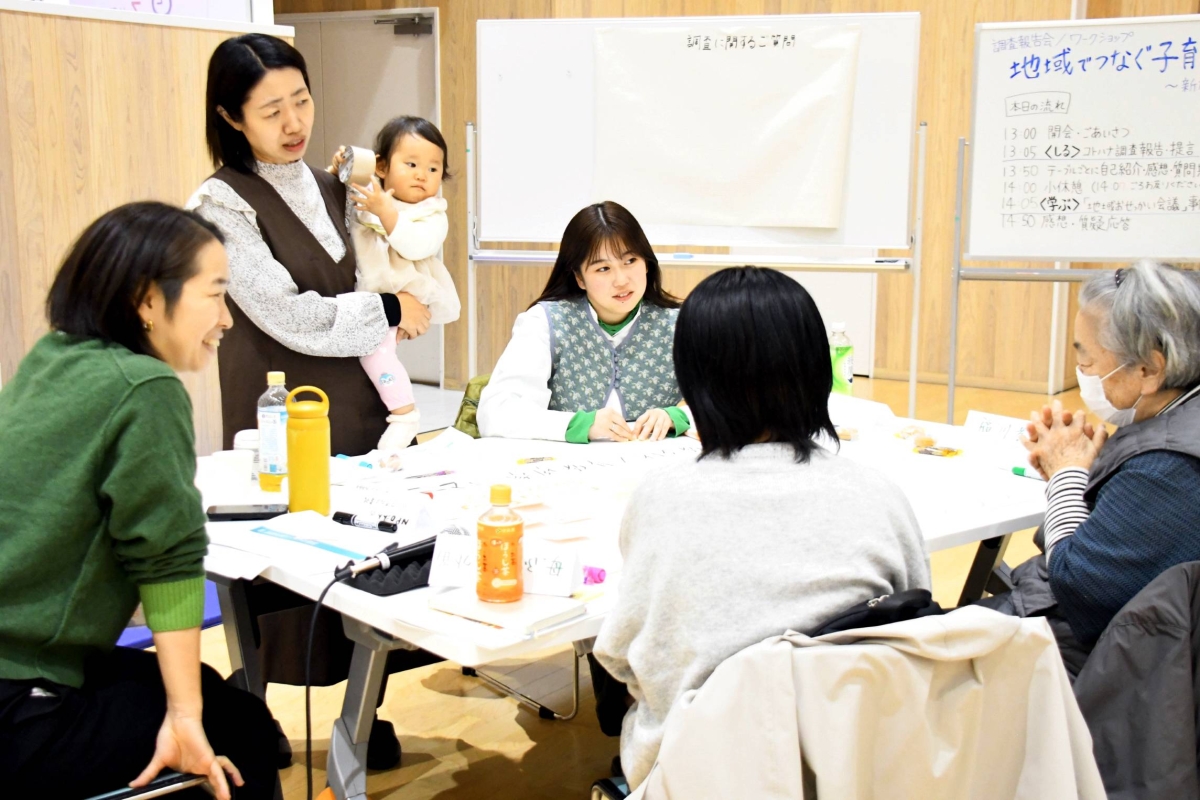
Minami Suzuki, 34, a co-representative of the volunteer group Cotohana in the Futaba town of Tomioka, worries about the future of the region. “If we don’t strengthen connections among parents, it might become increasingly difficult for the younger generations to choose to have children here,” she says……………………………………………………………………………………..
https://www.japantimes.co.jp/news/2025/01/27/japan/society/fukushima-children-decline/
1 This Month

of the week – Nuclear Information and Resource Service



22,000+ miles voyaging for nuclear disarmament
and a radiation-free environment https://vfpgoldenruleproject.org/
To see nuclear-related stories in greater depth and intensity – go to https://nuclearinformation.wordpress.com
-
Archives
- July 2026 (241)
- June 2026 (287)
- May 2026 (306)
- April 2026 (356)
- March 2026 (251)
- February 2026 (267)
- January 2026 (308)
- December 2025 (358)
- November 2025 (359)
- October 2025 (375)
- September 2025 (257)
- August 2025 (319)
-
Categories
- 1
- 1 NUCLEAR ISSUES
- business and costs
- climate change
- culture and arts
- ENERGY
- environment
- health
- history
- indigenous issues
- Legal
- marketing of nuclear
- media
- opposition to nuclear
- PERSONAL STORIES
- politics
- politics international
- Religion and ethics
- safety
- secrets,lies and civil liberties
- spinbuster
- technology
- Uranium
- wastes
- weapons and war
- Women
- 2 WORLD
- ACTION
- AFRICA
- Atrocities
- AUSTRALIA
- Christina's notes
- Christina's themes
- culture and arts
- Events
- Fuk 2022
- Fuk 2023
- Fukushima 2017
- Fukushima 2018
- fukushima 2019
- Fukushima 2020
- Fukushima 2021
- general
- global warming
- Humour (God we need it)
- Nuclear
- RARE EARTHS
- Reference
- resources – print
- Resources -audiovicual
- Weekly Newsletter
- World
- World Nuclear
- YouTube
-
RSS
Entries RSS
Comments RSS
 nuclear-news