Non Government Organisations Warn that Recent Executive Orders Would Harm Public Health, Disproportionately Impacting Women and Children

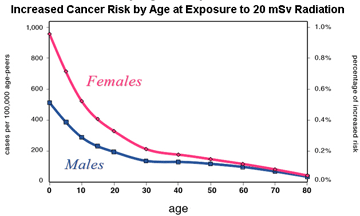
“Young men like the Reference Man are harmed by radiation, but they’re more resistant to harm than are women and children. Radiation causes cancer in women at twice the rate of adult men, while the same exposure in early childhood, will, across their lifetimes, produce seven times more cancer in young females, and four times more in young males.”
Asheville, North Carolina – November 14, https://www.radiationproject.org/blog/ngos-warn-that-recent-executive-orders-would-harm-public-health-disproportionately-impacting-women-and-children?ss_source=sscampaigns&ss_campaign_id=6917d62bc4477007efdd4b63&ss_email_id=6917db9d43e3de1cada92627&ss_campaign_name=Welcome+to+GRIP%E2%80%99s+NEW+Blog&ss_campaign_sent_date=2025-11-15T01%3A47%3A30Z
Over forty citizen’s sector organizations including the national nonprofit Physicians for Social Responsibility have sent a joint letter to federal officials warning of public health consequences of a series of executive orders by President Trump which direct the NRC to dramatically weaken Standards for Protection Against Radiation in the US federal code. The letter points out sharply disproportionate impacts on women and children from weakening existing radiation exposure standards and calls for strengthening them.
The letter is posted here. It was spearheaded by the nonprofit Generational Radiation Impact Project (GRIP) and sent to US Nuclear Regulatory Commissioners, Health and Human Services Secretary Robert F. Kennedy Jr., Surgeon General Denise Hinton, and other key elected and appointed officials.
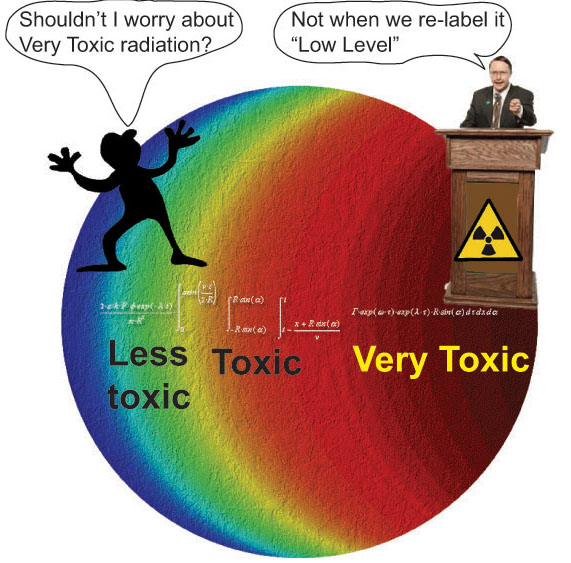
Recent Trump executive orders direct the NRC to “reconsider” the linear no-threshold (LNT) model. The joint letter argues that this “would undermine public trust by falsely claiming that the NRC’s radiation risk models lack scientific basis, despite decades of peer-reviewed evidence and international consensus.” The widely accepted LNT model has no limit “below regulatory concern,” i.e. no level below which radiation exposure can be treated as negligible or zero-risk. Where applied, LNT takes account of proportional cancer and health risks of all tiny exposures no matter how small.
Trump executive orders direct the NRC to undertake new rulemaking and “wholesale revision” of existing radiation regulations, which would likely lead to the NRC abandoning LNT and raising allowable exposure limits.
But past NRC opposition to such changes stands to be reversed by the Trump executive orders. If federal radiation regulations were weakened to permit exposures of 10 Rems a year, scientists estimate that over a 70-year lifetime, four out of five people would develop cancer they would not otherwise get.
Today’s joint letter stresses that health damage would not be evenly distributed across the population, but would disproportionately affect women and children, who are biologically more susceptible to ionizing radiation than men. And an article published today in the Bulletin of Atomic Scientists cites several lines of evidence “that women and young girls are significantly more vulnerable to radiation harm than men—in some cases by as much as a ten-fold difference” and that “infants are especially vulnerable to radiation harm.”
A July 2025 Idaho National Laboratory report commissioned by the Department of Energy recommended loosening the public radiation standard fivefold to 500 millirems. In 2021 the NRC roundly rejected a petition to raise allowable radiation exposures for all Americans, including children and pregnant women, to 10 Rems a year, 100 times the current limit.
“[NRC] bases its risk assessments on Reference Man, a model that represents a young adult male and fails to reflect the greater impacts to infants, children, and women—pregnant or not,” the joint letter states. “Newer research has shown that external radiation harms children more than adults and female bodies more than male bodies. Research on internal exposures…has not yet been sufficiently analyzed to discover if there are broad age-based or male/female differences in impact…. Existing standards should therefore be strengthened to account for these life-stage and gender disparities…not weakened. Radiation causes infertility, loss of pregnancy, birth complications and defects, as well as solid tumor cancer, leukemia, non-cancer outcomes including cardiovascular disease, increased incidence of autoimmune disease and ongoing new findings.”
In cases where cancer, heart disease, and vascular degradation including stroke are caused by radiation, they are documented at higher rates in women than in men, according to 2024 UNIDIR report Gender and Ionizing Radiation.
The joint letter urges the NRC to “to stand up to the Executive Order’s marching orders to ‘promote’ nuclear power—a mission outside its legal regulatory mandate,” and adopt “stronger, science-based radiation protections….Contemporary research shows that radiation’s impact is far greater on females, children, and fetuses—the most at-risk postnatal group being girls from birth to age five. A truly protective framework would replace Reference Man with a lifecycle model.”
“All US radiation regulations and most radiation risk assessments are based on outcomes for the Reference Man,” said Mary Olson, CEO of GRIP, the organization which spearheaded the joint letter, and co-author of Gender and Ionizing Radiation. “Young men like the Reference Man are harmed by radiation, but they’re more resistant to harm than are women and children. Radiation causes cancer in women at twice the rate of adult men, while the same exposure in early childhood, will, across their lifetimes, produce seven times more cancer in young females, and four times more in young males.”
“We know that exposure to radiation causes disproportionate harm from both cancer and non-cancer related disease outcomes over the course of the lifetime to women and especially to little girls, but radiation is dangerous for everyone,” said Amanda M. Nichols, Ph.D., lead author of Gender and Ionizing Radiation. “[President Trump’s] executive order will allow the industry to relax the current standards for radiological protection, which are already far from adequate. This will have detrimental health consequences for humans and for our shared environments and puts us all at higher risk for negative health consequences. “
“Living near nuclear power facilities doubles the risk of leukemia in children; and radiation is also associated with numerous reproductive harms including infertility, stillbirths and birth defects.,” said Cindy Folkers, Radiation and Health Hazard Specialist with the NGO Beyond Nuclear, a signatory to the joint letter. “Exposing people to more radiation, as this order would do if implemented, would be tantamount to legitimizing their suffering as the price of nuclear expansion.”
NFLAs welcome Remembrance Day award of medal to nuke test ‘Sniffers’, but fight not over as groundcrews exposed to radiation remain forgotten.
11th November 2025, https://www.nuclearpolicy.info/news/nflas-welcome-remembrance-day-award-of-medal-to-nuke-test-sniffers-but-fight-not-over-as-groundcrews-exposed-to-radiation-remain-forgotten/
The NFLAs have welcomed the Remembrance Day announcement that the Government has agreed to award the Nuclear Test Medal to gallant RAF aircrew of 27 and 543 Squadrons and sailors aboard the Royal Fleet
Auxiliary vessel Sir Percivale who passed through French and Chinese atmospheric nuclear tests in the Far East to carry out air sampling.
British personnel were ordered to fly or sail through the radioactive clouds of over 40 atomic and nuclear atmospheric tests carried out by China and France.
11th November 2025
NFLAs welcome Remembrance Day award of medal to nuke test ‘Sniffers’, but fight not over as groundcrews exposed to radiation remain forgotten
The NFLAs have welcomed the Remembrance Day announcement that the Government has agreed to award the Nuclear Test Medal to gallant RAF aircrew of 27 and 543 Squadrons and sailors aboard the Royal Fleet Auxiliary vessel Sir Percivale who passed through French and Chinese atmospheric nuclear tests in the Far East to carry out air sampling.
British personnel were ordered to fly or sail through the radioactive clouds of over 40 atomic and nuclear atmospheric tests carried out by China and France.
The NFLAs have been strong advocates for recognition, justice and compensation for Britain’s nuclear test veterans and their families, and the latest announcement comes just a month after NFLA Chair, Councillor Lawrence O’Neill, wrote to the new Veterans Minister, Louise Sandher-Jones, calling for the eligibility criteria for the medal to be extended to include these forgotten ‘sniffers’.
Unfortunately, the revised award criteria still wrongly exclude the RAF ground crew involved in decontaminating the aircraft on their return to the UK. The aircraft involved in sniffing operations were contaminated with radioactivity, and they were decontaminated by washing by groundcrew. Many of these groundcrew were unaware of the levels of radioactivity on the aircraft.
Consequently, many of these ground crew also developed cancers and other health conditions related to exposure to ionising radiation, some repeatedly. Some personnel died and others were able to access a War Pension as a result.
The latest decision by Ministers therefore only represents a part-victory. Councillor O’Neill believes that excluding the ground crew seems ‘not only unjust, but also bizarre and perverse’ given these veterans faced the same dangers as their colleagues who engaged in ‘sniffing’ duties on British tests and who will now qualify for the medal.
The fight therefore continues.
The remnants of Chernobyl are still present in the Black Sea
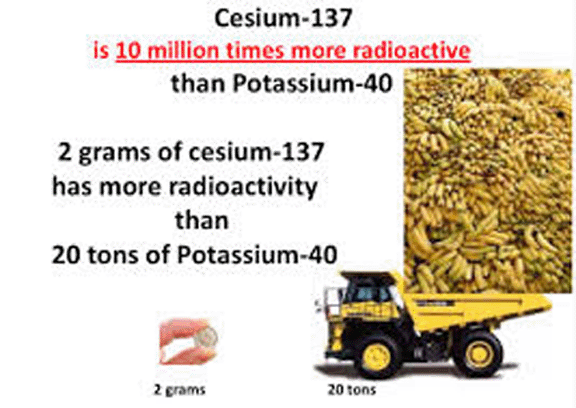
Forty years have passed since Chernobyl, but Chernobyl-related radioactive contamination in the Black Sea has not ended. TENMAK’s research has revealed that the concentration of caesium-137 in the Black Sea is seven times higher than in the Mediterranean Sea.
BirGün Daily, Giriş: 07.11.2025 , https://www.birgun.net/haber/the-remnants-of-chernobyl-are-still-present-in-the-black-sea-667018
Nearly 40 years have passed since the Chernobyl disaster, considered one of the world’s three largest nuclear accidents, but the radioactive contamination caused by the accident continues to affect the Black Sea. At the IVth National Symposium on Monitoring and Assessment in the Seas, Dr Aysun Kılınçarslan, presenting on behalf of the Turkish Energy, Nuclear and Mining Research Institute (TENMAK), announced the results of monitoring studies on radioactive contamination in Turkey’s coastal waters and sediments.
Analyses conducted in coastal sediments between 2015 and 2023 detected high levels of caesium-137 and strontium-90. While an average of 21 becquerels of caesium-137 isotope per kilogram was observed in the Black Sea, this rate was recorded as only 3.2 becquerels in the Mediterranean Sea. Values that are relatively high in the Sea of Marmara decrease as one moves towards the Aegean and Mediterranean Seas. The highest value found in the analyses exceeds 82 becquerels. This figure is 10 times higher than the highest value observed in the Mediterranean Sea. When viewed on a regional basis, the highest caesium-137 value in sediments, 50 becquerels, was found in Hopa. Hopa is followed by Trabzon and Sinop.
HIGH FIGURES IN TRABZON AND HOPA
In measurements taken in coastal surface waters between 2014 and 2023, the caesium-137 concentration averaged 9 millibecquerels per litre in the Black Sea, while this figure dropped to 1.6 millibecquerels in the Mediterranean Sea. Rates in the Bosphorus, Marmara and Çanakkale ranged between 8.4 and 6.9 millibecquerels, while the amount of caesium-137 in the water decreased in the Aegean Sea, falling to 1.8 millibecquerels. The highest figures were found in Trabzon and Hopa, which have been affected by Chernobyl for years and where cancer rates have increased. Tekirdağ, Ordu, Karasu and İğneada stand out as other regions with high measurements. Although the study’s findings indicate that these levels do not pose a risk to human health or environmental pollution, the significant difference between the Black Sea and the Mediterranean clearly demonstrates the consequences of Chernobyl-related contamination.
CHERNOBYL FLOWS
Another noteworthy finding of the study was the detection of plutonium-239, which does not occur naturally and is produced by nuclear reactions, alongside caesium-137. While average values do not differ between seas, the locations most affected by this contamination include Erdek, the Bosphorus Strait, Hopa, and Sinop. Experts point out that the sources of contamination linked to these isotopes are nuclear power plant accidents, nuclear weapons tests, and operational nuclear reactors. Chernobyl is also cited as a source of contamination in the Black Sea. Radioactive pollution from the out-of-control melted reactor and the surrounding area reaches the Black Sea via groundwater and the Dnieper River.
MARINE ASSESSMENT IS NECESSARY
Prof. Dr. İnci Gökmen, who revealed high levels of radiation in tea after Chernobyl, points out that the radiation level detected at 21 becquerels per kilogram is quite high. Gökmen states that data collected from the seas and coasts also highlights the need to measure radiation levels in the soil, adding, “It is surprising to see plutonium in the seas, even at low levels. Strontium is not surprising. However, since strontium does not emit gamma radiation and must be measured by chemical separation, measurements were rarely taken despite the presence of strontium in the environment and food after Chernobyl. However, the strontium values immediately after the accident can be estimated from the current results. By looking at the caesium levels in coastal surface water in some areas, it would be good to calculate the doses that swimmers or those working at sea, such as fishermen, would receive. It would be appropriate to take measurements in fish, mussels and other seafood. Thirty-nine years have passed since Chernobyl. Caesium has only undergone one half-life. This means that radioactive elements will remain in the seas for a long time to come,” he said. WHAT IS CAESIUM (CS-137)?
The most common radioactive form of caesium is Cs-137. Caesium-137 is produced by nuclear reactions. External exposure to Cs-137 can cause burns, acute radiation sickness and even death. Exposure to large amounts of Cs-137 can result from the misuse of a powerful industrial Cs-137 source, a nuclear explosion, or a major nuclear accident. Under normal conditions, large amounts of Cs-137 are not found in the environment. Exposure to Cs-137 can increase the risk of cancer due to the presence of high-energy gamma radiation. Ingestion or inhalation of Cs-137 increases the risk of cancer by causing the radioactive material to spread to soft tissues, particularly muscle tissue. Vascular plants do not accumulate high levels of caesium through root uptake because caesium is strongly adsorbed to the soil. However, the accumulation of radioactive residues on flora with large surface areas, such as lichens or mosses, is significant. Animals that feed on these plants can consume large amounts of radiocaesium (and other radionuclides present in radioactive fallout). Human consumption of the meat of such animals leads to the uptake of these radionuclides into the body.
Note: This article is translated from the original article titled Çernobil’in izleri hâlâ Karadeniz’de, published in BirGün newspaper on November 7, 2025.
The men who stared at mushroom clouds .
In a beige function room at the Pontins holiday park, Weston-super-Mare, a
man in a Hawaiian shirt addresses the veterans of Britain’s little-known
nuclear testing programme. There are about 130 people in the room. More
than half are in their late eighties and participated in the programme.
Also here are their children and, in a few cases, their children’s
children. They’re wearing Hawaiian shirts too, a tapestry of tropical print
and palm trees embellished with plastic flower garlands, tinsel, wigs and
novelty hats. It’s the third day of the All Tests Reunion, a week-long
gathering for this rarefied demographic, and the group chats excitedly as
they await the evening’s entertainment. Tables are laden with bottles of
house wine and pints of bitter, walking sticks propped behind chairs. In
the corner of the room, four women who are due to perform shuffle about as they attach te riri ni mwaie around their waists — heavy straw-like
dancing skirts that are native to Kiribati, a Pacific island nation that
was among several locations the British chose for nuclear weapons tests
during the 1950s and ’60s.
Until tonight, the group has been discussing
rather serious matters. Such as whether the Ministry of Defence (MoD) was
aware of the risks when it stationed thousands of young servicemen in
places such as Kiritimati (or Christmas Island) and started detonating
atomic and hydrogen bombs in the vicinity; and why it continues to deny or
delay access to the medical records of those deployed there. One
particularly urgent question is whether exposure to blast after blast,
without protective shielding, may be the reason so many of the veterans and their descendants have suffered health problems. Many of these questions remain unanswered. Some may be unanswerable.
FT 1st Nov 2025, https://www.ft.com/content/1fca6893-7dfe-43e3-b7ec-c00e3d4ad0b6
New Radiation Protection Standards in 2026?

Tony Webb – November 2025.
In May 2025 US President Donald Trump ordered the US Nuclear Regulatory
Commission (NRC) to review US radiation protection standards for workers and the public. The order claims that these and other NRC regulatory processes hinder development of US nuclear power generation and need to be revised – in line with another set of his ‘alternative facts’ that overturn almost all the established principles that provide the basis of national and international protection standards.
This latest diktat will result in a significant weakening of current protection at a time when we have mounting scientific evidence that the existing standards need to be significantly improved/tightened. Permissible radiation exposures to workers will likely increase five-fold. Exposures to the public could be 100 times greater than currently permitted. Changes in the USA will lead to pressure for similar changes to standards in other countries, including Australia. Whether we end up with better or worse protection will require a sustained awareness and advocacy campaign. This will need to involve exposed workers, trade unions, environment and public health
interests arguing: first that our government and radiation protection agencies should reject the US approach, and second that new and improved national standards in line with the latest evidence should be adopted.
Health effects of radiation exposure
It has long been recognised that all radiation exposures present a risk to human health. Put simply there is no safe level of radiation – whether naturally occurring or artificially generated. Some we cannot avoid. Some like diagnostic medical x-rays we accept as having other countervailing benefits. High doses, like those received
by Japanese residents of Hiroshima and Nagasaki from nuclear bombs in 1945, or some of the first responders to the Ukrainian Chernobyl nuclear reactor meltdown in 1986, cause ‘radiation sickness’ where whole organs are damaged often with fatal
effects.
The results from high-dose exposures are what are known as ‘determinate’ effects.
Above a threshold dose these effects occur with severity determined by the dose. Radiation standards are set to keep exposures below the threshold, so these do not occur.
Lower doses cause a different kind of damage. Particularly concerning are increased rates of a wide range of cancers and genetic damage being passed on to future generations. These are referred to as ‘stochastic’ effects. The damage is not ‘determinate’ with a threshold below which they do not occur. Stochastic damage is a ‘hit and miss’ affair. You either get this type of health damage or you don’t. And if you do the scale of the damage isn’t related to the radiation dose you received.
The initial damage occurs at the cellular level where a radiation strike can have one of three outcomes. (i) It may simply pass through causing no damage. Alternatively, (ii) the radiation may kill the cell which isn’t a problem, unless too many cells are killed at once affecting functioning of whole organs. Our bodies are eliminating and replacing dead and dying cells all the time. Problems arise however when (iii) the cell is merely damaged and goes on to replicate in this damaged form.
Our bodies do have well developed repair mechanisms that often result in adequate repair of the damage. There is even some evidence suggesting that some such radiation damage and repair may assist the body’s capacity for repair in the future.
But where radiation leaves the damaged cell to survive and replicate uncontrollably in this damaged form the result is what we call a cancer – sometimes detectable only decades after the initial radiation damage. The process can be complicated further as growth of some cancers involves a two-stage process – initiation, where damage (from radiation or other environmental pollutants) leaves the cell susceptible,
followed by promotion (again from radiation or other sources) which drives the cell-cancer process forward.
Stochastic radiation damage is real. it doesn’t involve a threshold dose. Any exposure can be the one that causes the initial and/or subsequent damage leading to the health effects. We are in the world of ‘probability’ – far from certainty at the individual level but with fairly predictable outcomes at the population level which allow us to assess the risk (i.e., probability of an adverse outcome) individuals face from receiving small, sometimes repeated, doses of radiation.
Radiation protection principles.
In light of these established mechanisms for harm from radiation, standard setting bodies have long adopted three principles – that any exposure needs to be: (i) justified as necessary against some social benefits; (ii) kept as low as reasonably achievable (the ALARA principle); and (iii) kept below specified limits set in regulations.
The last of these has been the subject of much controversy over the years.
Standards have been set for workers’ occupational exposures and for public exposures. These, first, ensure exposures are below the threshold levels where deterministic effects might occur. Below these high levels, they have been set such that the risk of stochastic effects – particularly cancers and genetic damage are at levels deemed ‘acceptable’. There have been arguments over both what is ‘acceptable’ and how the probable level of risk from any given low dose is estimated.
Estimates of risk
A number of early studies of patients exposed as part of medical procedures indicated a problem with radiation exposure and some early estimates of the stochastic risk. Since then, the bulk of the data for the estimates of risk has come from studies of survivors of the Japanese nuclear bombings of Hiroshima and Nagasaki in 1945. These Life Span Studies (LSS) have consistently shown
increases in cancer rates among survivors higher than those in the non-exposed population. There are a number of problems with this data – not least that survivors were not wearing film badges when the bombs went off, so all doses have had to be estimated later. They were also the ‘hardy’ survivors of wide-ranging traumatic
events, perhaps less vulnerable to damage from radiation Most of these survivors received relatively high doses as a single exposure or within a relatively short time period. More accurate measures of small exposures repeated over longer time periods to a general population, might be expected to yield different results.
However, these were the best data to be had. The risks at lower doses are estimated using the assumption that, if there is no safe level of exposure, no threshold below which stochastic effects do not occur, we can estimate lower dose risks on a straight line from these higher LSS doses. This Linear No Threshold (LNT) assumption, though adopted by all stands setting bodies, has at times been contested. Some have suggested a sub-linear relationship with a threshold for any effects. Others have made the case for a super-linear or marginally higher effect at lower doses where these are spread over longer time periods or result from radiative material that gets inside the body.
For now all the significant agencies agree that radiation protection for workers and the public should be based on LNT and the three radiation protection principles: justification, ALARA, and Specific Exposure Limits. These agencies include: the International Commission on Radiological Protection (ICRP) the United Nations
Scientific Committee on the Effects of Atomic Radiation (UNSCEAR) the US National Academy of Sciences Committee on the Biological Effects of Ionising Radiation (known as the BEIR Committee) and national agencies like the Australian Radiation Protection and Nuclear Safety Agency (ARPANSA). The cancer risk from low
dose radiation is estimated to be in the range of 4-6% per Sievert (1000 mSv) of exposure. The risk of genetic damage (first two generations only) is estimated to be around 1.5% per Sievert.
These estimates have resulted in national protection bodies setting standards that limit annual exposures. For workers the annual limit is 20 mSv as a target – but with 50 mSv allowed in any year provided the average over five years does not exceed 20 mSv. The annual limit for public exposures is 1 mSv. All of these are for
exposures in addition to what might be received from natural background radiation or exposures due to medical procedures such as diagnostic x-rays and nuclear medicine.
Change is coming – one way or another.
It is these protection principles and the exposure standards for workers and the public that the Presidential directive to the US NRC seeks to overturn. It calls on the NRC to reconsider reliance on LNT (and ALARA) as the basis for standard setting at low doses, where there is a need to protect against probable stochastic effects and
directs that instead the NRC set standards based on deterministic effects.
This will likely result in a significant weakening of the current standards at a time when the evidence strongly suggests that they are in need of further tightening. The current standards have been in place since 1991. Revisions at that time were the result of a sustained campaign throughout the 1980s led by trade unions in the UK, Europe, USA and Canada for reduction of the then 50 mSv occupational and 5 mSv public limits -justified in large part by emerging evidence from the Japanese lifespan studies. As previously noted, estimates of risk from these was based on one-off
short-term exposure to relatively high doses (at and above 100 mSv). Since then, studies in Europe and North America of workers exposed over years of work in nuclear industries to doses below the current occupational limits, indicate the risks are around 2 to 3 times greater than those used for setting the current standards.
They also show a doubling of expected rates of cardio-vascular diseases: strokes, arthro-sclerosis, and heart damage. In addition, studies of populations living close to nuclear facilities in Europe and the USA show childhood cancer rates significantly higher than expected. This evidence is cause for concern, suggesting that the
current standards provide inadequate protection and need to be tightened.
A new campaign for improved protection?
Past experience suggests that persuading national and international bodies to improve radiation protection standards is far from easy but not impossible. In the short term, a campaign would be seeking clear and unequivocal statements from national protection agencies that reject the US president’s directive that the NRC abandon the fundamental principles which have formed the basis for regulating worker and public exposures. If implemented Trump’s proposals would likely result in occupational exposure limits five times higher than presently allowed, and public exposure limits could be 100 times greater.
The campaign should seek assurances that there will be no change to the established principles underpinning radiation protection: that there is no safe level of radiation, that all exposures should be kept as low as can be reasonably achievable; and that occupational and public limits need to be based on the best scientific evidence of risk to human populations.
Raising the concern about, and seeking rejection of, the likely US NRC changes will require building an informed coalition of trade union, environment and public health interests. Occupational and public radiation exposures are more widespread that commonly appreciated. Workers are routinely exposed in mining, industry and medicine as well as those associated with the nuclear power industry. The. campaign could involve local initiatives that focus concerns of workers in , and people living close to sites of: proposed nuclear power plants; existing uranium, mineral sands, and hard rock mines; proposed ‘rare earth’ mines; medical and other
radioactive waste storage sites; and other activities that routinely release radiative materials.
Opposing Trump’s latest proposals to weaken standards is fairly straightforward. If implemented by the NRC they would dismantle the whole edifice on which radiation protection has been built over the past 80 years – a framework that many concerned about radiation protection within the affected industries have invested time and energy to establish and maintain.
Pressing the claim for improvements is harder but not impossible given the evidence for greater harm that is emerging. The case can already be made for at least halving the permissible occupational and public exposure limits. If we are successful in pressing for improved protection standards, the nuclear industry is unlikely to thank President Trump for opening this can of worms with his NRC directive. Once opened it will be hard to close without increasing worker and public awareness of how any, and all radiation exposures increase health risks to workers the public and to future generations.
Tony Webb has worked as a researcher, consultant and advisor on radiation and health issues to politicians, trade unions, environment and public health groups in the UK, Europe, USA , Canada and Australasia since the late1970s. He can be contacted for information on how to assist the latest evolving international campaign via tonyrwebb@gmail.com.
Three workers at nuclear fuel reprocessing plant possibly exposed to internal radiation
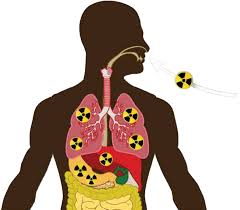
AOMORI – https://www.japantimes.co.jp/news/2025/10/29/japan/society/nuclear-plant-internal-exposure/
Three workers may have suffered internal radiation exposure while working in a spent nuclear fuel reprocessing plant in Rokkasho, Aomori Prefecture, Japan Nuclear Fuel has said.
The men in their 20s to 40s are employees of a partner company sent to work in a controlled area of the plant, according to an announcement by Japan Nuclear Fuel on Monday.
Radiation was detected inside the nasal cavity of one of the three, who is in his 40s, prompting the company to check whether all three had been internally exposed.
None of them has reported any change in their health condition so far, Japan Nuclear Fuel said.
According to the company, the three were working to replace filters that remove radioactive materials from gas emitted from a tank, in a building used for denitration of uranium-plutonium mixed solution, when radiation levels rose at around 11:10 a.m. Friday.
After they left the area, as instructed, contamination was found on the outer surface of the filters of their protective masks.
When contamination is detected, workers are typically instructed to cover air intake filters with tape to prevent further contamination and replace the filter while holding their breath.
However, two of the three breathed without filters for up to three minutes, according to Japan Nuclear Fuel. It is not clear when that occurred.
The company is still investigating why the two men breathed without filters. It is also analyzing urine and stool samples from the three workers to determine whether internal radiation exposure occurred, and investigating the cause of the increase in radiation levels.
Dounreay waste particle ‘most radioactive’ find for three years

Steven McKenzie, Highlands and Islands reporter and Rachel Grant, BBC Scotland. 23 Oct 25
A fragment of waste found near the decommissioned experimental nuclear power facility in Dounreay in April was the most radioactive to be detected in the past three years, the Highland site’s operator has said.
The fragment, categorised as “significant”, was discovered during monitoring work around the nuclear power plant near Thurso. It is the latest in a long line of particle discoveries in the area.
Dounreay was built in the 1950s as the UK’s centre of fast reactor research, but during the 1960s and 1970s sand-sized particles of irradiated nuclear fuel got into the drainage system.
Work to clear the pollution began in the 1980s, after particles were found washed up on the nearby foreshore.
The facility closed in 1994. The multi-billion pound decommissioning process involves hundreds of workers and is expected to last into the 2070s.
The full decontamination of the site is expected to take more than 300 years.
A Dounreay spokesperson said: “Particles are a legacy of industrial practices dating back to the early 1960s and our commitment today to environmental protection includes their monitoring and removal from the marine environment and transparent reporting of our activities.”
A group of independent experts, who advise the Scottish Environment Protection Agency (Sepa) and Dounreay, classify particles by the radioactivity of their caesium-137 content.
The categories are minor, relevant and significant.
Significant means a reading greater than one million becquerels of CS-137.
A becquerel is the standard unit of radioactivity.
The particle was found on the western part of Dounreay’s foreshore on 7 April. Eight other finds reported since then have been categorised as “minor” or “relevant”.
A significant-category particle was last discovered in March 2022.
Thousands of particles of different categories have been removed from beaches, foreshore and seabed at Dounreay.
The site’s operator said monitoring on the site on the north Caithness coast continued to be done on a fortnightly basis.
On occasions it said the scheduled work could be interrupted by bad weather or the presence of protected species of ground-nesting birds……………………………………………………..
What risk is there to the public?
According to official reports, risk to people on local beaches is very low.
Guidance issued by the UK government’s Nuclear Restoration Services says the most at-risk area is not accessible to the public.
The particles found along the coast vary in size and radioactivity with smaller and less active particles generally found on beaches used by the public.
Larger particles have only been found only on the foreshore at Dounreay, which is not used by the public.
The particles found on beaches are believed to come from the disintegration of larger fragments in the seabed near Dounreay. The area is continuously monitored for traces of radioactive materials.
Harvesting of seafood is prohibited within a 2km (1.2 mile) radius of a point near Dounreay. This is where the largest and most hazardous fragments have been detected.
Dounreay’s radioactive history
- 1954 – A remote site on the north coast of Scotland is chosen as the site of a new type of nuclear reactor. Modern homes were built in Caithness to attract workers to the sparsely populated area.
- 1957 – A chain reaction which provided sustained and controlled nuclear energy is achieved for the first time.
- 1959 – A new disposal site for radioactive waste called the Shaft opens. It drops 65.4m (214.5ft) below ground.
- 1962 – The fast reactor inside the dome is the first in the world to provide electricity to a national grid.
- 1977 – The original “golf ball” reactor is shut down and waste disposal in the Shaft ends after an explosion.
- 1994 – Dounreay nuclear power generating facility closes.
- 1998 – Decommissioning programme is announced.
- 2008 – Operation to scour the seabed for hazardous material begins and the Shaft shaft is encircled in a boot-shaped ring of grout to prevent contamination.
- 2020 – Clean-up begins of the highly contaminated Shaft – a three decades-long project.
- 2333 – Decontamination expected to be complete, making the 148-acre site available for other uses. https://www.bbc.com/news/articles/cz91nx0lv59o
Generational RADIATION IMPACT Project
Uncovering Radiation’s Hidden Dangers
Protecting Women and Future Generations
Our Mission
The Generational Radiation Impact Project (GRIP) leads a global effort to bring gender-specific insights into radiation safety. Women are twice as likely to develop radiation-related cancer, yet this crucial fact is missing from most regulations. We aim to change that by conducting groundbreaking research, educating the public, and advocating for policy change. We envision a future where everyone has access to information about radiation risks, especially women and children, who are disproportionately affected. Learn more about how radiation affects women.
Why This Matters Now
Every day, millions of women and children are exposed to radiation through medical treatments, environmental pollution, and consumer goods. Yet, safety standards are based on outdated models that overlook biological differences between men and women. This leaves women—especially those of reproductive age—at greater risk for radiation-induced cancers. We are working to change this. With your support, we will continue our research to inform better policies and protect future generations.
…………………… Generational Radiation Impact Project works at the intersection of public health, medicine, and public policy. We are an educational and funding group that brings together top thinkers to understand the role biological sex plays in harm from radiation.
While this public health threat impacts us all, the risk is dramatically greater for girls and women. For every two men who develop cancer through exposure to ionizing radiation, three women will get the disease. Now we must learn why. https://www.radiationproject.org/
Leah McGrath Goodman, Tony Blair and issues on torture (with added radiation)


Published by arclight2011- date 15 Sep 2012 -nuclear-news.net
[…]
Accusations: Despite the mockery of the film Borat, leaked U.S. cables suggest the country was undemocratic and used torture in detention
Other dignitaries at the meeting included former Italian Prime Minister and ex-EU Commission President
Romano Prodi. Mr Mittal’s employees in Kazakhstan have accused him of ‘slave labour’ conditions after a series of coal mining accidents between 2004 and 2007 which led to 91 deaths.
[…]
Last week a senior adviser to the Kazakh president said that Mr Blair had opened an office in the capital.Presidential adviser Yermukhamet Yertysbayev said: ‘A large working group is here and, to my knowledge, it has already opened Tony Blair’s permanent office in Astana.’
It was reported last week that Mr Blair had secured an £8 million deal to clean up the image of Kazakhstan.
[…]
Mr Blair also visited Kazakhstan in 2008, and in 2003 Lord Levy went there to help UK firms win contracts.
[…]
Max Keiser talks to investigative journalist and author, Leah McGrath Goodman about her being banned from the UK for reporting on the Jersey sex and murder scandal. They discuss the $5 billion per square mile in laundered money that means Jersey rises, while Switzerland sinks.
http://www.youtube.com/watch?v=gA_aVZrR5NI&feature=player_detailpage#t=749s
And as well as protecting the guilty child sex/torturers/murderers of the island of Jersey I believe that they are also protecting the tax dodgers from any association.. its just good PR!
FORMER Prime Minister Tony Blair was reportedly involved in helping to keep alive the world’s biggest takeover by Jersey-incorporated commodities trader Glencore of mining company Xstrata.
11/September/2012
[…]
Mr Blair was said to have attended a meeting at Claridge’s Hotel in London towards the end of last week which led to the Qatari Sovereign wealth fund supporting a final revised bid from Glencore for its shareholding. Continue reading
Here’s What Life Is Like Inside One of Gaza’s Last Remaining Hospitals
Inside al-Wafa Rehabilitation Hospital, starving doctors still fight to keep patients alive.
By Sara Awad , Truthout September 20, 2025, https://truthout.org/articles/heres-what-life-is-like-inside-one-of-gazas-last-remaining-hospitals/
In the heart of a city at war, al-Wafa Rehabilitation Hospital struggles to survive. This site of healing and recovery has now been transformed into a place overwhelmed by cruel suffering.
Please don’t be fooled by the Israeli military propaganda that has asserted that this “building does not currently serve as a hospital” — an assertion conveniently circulated by The Jerusalem Post in December 2024, as the Israeli military sought to deflect criticism of its decision to bomb the hospital. Many credible sources verify how ludicrous that claim is, from the images that Getty’s photojournalists took following that bombing, to the World Health Organization’s appeal for an end to Israel’s attacks on this and other hospitals in Gaza.
From March to May 2025, I lived within the hospital’s walls as a caregiver to my mother. I witnessed how al-Wafa held so much pain in its rooms and corners. From children to the elderly, each patient carries their own devastating injury. When I returned to the hospital three months later as a guest, I observed how much more crowded it had become, with a massive number of patients seeking treatment. I interviewed the medical team and injured patients. This is the story of a hospital pushed to its extreme limits, and of the patients who continue to resist and survive inside it.
The hospital atmosphere now is more suffocating than before. Everywhere you look, you will see someone suffering. Hospital beds are full of tiny bodies of different ages and genders. No one can walk, all are sitting in their wheelchairs due to injuries that left them paralyzed. Being able to walk while everyone around you cannot is emotionally distressing and isolating.
“We cannot offer the bare minimum for the patients,” said Dr. Wael Khalif, director of al-Wafa hospital. The hospital is running out of nearly all medical equipment, from needles to surgical devices. Dr. Khalif described the overwhelming situation, with a massive number of patients on the waitlist to have care from the only rehabilitation hospital still functioning in Gaza, “There are 100 top urgent [patients] needing a bed, while another 400 to 500 patients are also waiting to be admitted,” the hospital director said.
The hospital is running out of nearly all medical equipment, from needles to surgical devices.
Dr. Khalif shed light on the catastrophic consequences of starvation inside the hospital. “Even healthy people are struggling to endure hunger and lack of proper nutrition, so imagine what’s happening for patients suffering from serious illnesses,” he said. Many patients are unable to receive even one meal per day. “Since the starvation period has begun, we are helpless to provide food for our patients,” he added.
And it’s not just the patients facing starvation; the medical staff also cannot endure more suffering. They are exhausted, overwhelmed, and unable to afford services for their patients. “Many of the nursing staff are struggling with dizziness during their duties at the hospital,” said Dr. Khalif.
This disaster is deeply impacting nursing staff. Their hearts are breaking into a million pieces watching their patients dying of hunger and lack of proper care. “I wish I could offer food for my patients. I cannot offer even the smallest amount of food for them,” said Wesam Al-Shawa, 26, a nurse at al-Wafa hospital. She looked completely helpless, and I noticed the exhaustion in her eyes as she spoke.
The hospital’s physical therapist is also working under immense pressure. “We receive approximately 60 to 75 patients per day,” said Dr. Samah Awida, a physical therapist at al-Wafa. This huge number of patients seeking physical therapy sessions has taken a serious toll on the medical team as the situation continues to worsens.
“Many of the nursing staff are struggling with dizziness during their duties at the hospital.”
To make conditions even more unbearable, patients who reach the final stage of recovery are likely going to live in a tent with nothing more than an uninhabitable floor and a small space to sleep in, and, if they are lucky, access to a bathroom. “Our efforts go to waste when patients end up living in a tent,” Dr. Samah said, her tired eyes telling me everything.
Amid these collapsing systems, there is a girl with a story that should never have to be told: Dania Amara.
Five-year-old Dania is among the injured patients. She was wounded while playing with other children on July 7, 2025. “Her body was full of blood,” Dania’s mother recalled. Dania had injuries all over; small shrapnel tore at her small body and caused a paralysis of the limbs. “Why did Israel attack me? I was just playing around,” Dania asked her mother as I was interviewing her.
August 18, when I spoke to her, was Dania’s 40th day in the hospital. She dreams of going home to her siblings, walking again, painting, and enjoying proper meals. “My daughter is now disabled because of one piece of shrapnel,” her mother said.
Dania is just like any other child — full of innocence and life — but Israel has stolen that normalcy and turned her world upside down.
“She hits her legs and begs them to walk like before,” her mother said, tears filling her eyes. Dania’s injury has changed her life forever, and she is just one of thousands suffering as she does, most without documentation or recognition.
Only in Gaza’s hospitals can you watch childhood be stolen by war crimes.
Beyond physical rehabilitation, the occupational therapy department is facing its own obstacles in silence.
While the physical therapy sessions help patients to recover and potentially walk again, occupational rehabilitation helps them to live again. This department helps patients to be completely independent, hold spoons, brush their hair, dress themselves independently, and attend to other needs without assistance. “We do our utmost effort to give back life to our patients,” said Basam Alwan, a therapist in the department.
Hadeel Qriaqa, 27, is one of the many patients struggling to rebuild her life at al-Wafa. She sustained severe head trauma during an attack on her home in March 2025. Since then, she has lost much of her memory and the ability to speak.
Now, she attends occasional occupational therapy sessions with Dr. Alwan aimed at helping her relearn basic daily skills and regain some independence.
Al-Wafa rehabilitation hospital and its medical staff have displayed immense resilience amid the war. Despite all difficulties facing them, they are still fighting to keep their work alive two years into a genocide. The world must not continue to ignore their suffering.
Why a national cancer study near US reactors must be conducted before any new expansion of nuclear power.
Nuclear power reactors were introduced in
the United States during the 1950s. Despite concerns about potential health
hazards posed by routine radioactive emissions into the environment, few
research articles have been published in professional journals. The only
national study of cancer near reactors was conducted by federal researchers
in the 1980s and found no association between proximity to reactors and
cancer risk.
But since then, articles on individual nuclear facilities have
documented elevated cancer rates in local populations. Current proposals to
expand US nuclear power, along with concerns about protracted exposures
near aging reactors, make it imperative that an objective, current national
study of cancer near existing reactors be conducted.
Bulletin of Atomic Scientists 12th Sept 2025, https://thebulletin.org/2025/09/why-a-national-cancer-study-near-us-reactors-must-be-conducted-before-any-new-expansion-of-nuclear-power/
The Building of the First Atomic Bombs Impacted Workers and Residents, Too
Eighty years after the bombing of Hiroshima and Nagasaki, workers who mined the uranium and people who lived near the test sites are still dying from exposure to radiation.
by Jim Carrier, August 7, 2025, https://progressive.org/magazine/the-building-of-the-first-atomic-bombs-impacted-workers-and-residents-too-carrier-20250807/
The road to Nagasaki was littered with radiation.
Eighty years after an atomic bomb called Fat Man was dropped, killing and poisoning about 100,000 people in Nagasaki, at least a dozen sites around the world—sites that contributed to the bomb’s creation—are still dealing with its deadly legacy.
Under the pressure to win World War II, U.S. military leaders pulled out all stops to prioritize the creation and testing of an atomic bomb, indifferent to the cost on the lives and livelihood of everyday people. Landscapes were polluted, workers were exposed to radiation, and civilian neighbors to the nuclear test sites—the first “downwinders”—were ignored or lied to.
The Manhattan Project—a top-secret research and development program created by the U.S. government during World War II to develop a nuclear bomb—sourced nearly all of its much-needed uranium from the Belgian Congo’s Shinkolobwe mine. Located in the modern-day Haut-Katanga province in the Democratic Republic of Congo, the Shinkolonwe mine was the world’s richest source of high-grade uranium, radium, and other valuable minerals. First opened in 1921, the Belgian-owned mine employed artisanal miners who dug the radioactive ore with handheld tools and carried it out in sacks on their shoulders, further exposing them to the toxic substance. While the environmental impact was visible and more difficult to conceal, any known records of lasting health impacts were disappeared by the authorities or never recorded at all.
In 1939, fearing Adolf Hitler and the German discovery of nuclear fission in uranium—with its potential to create a bomb—the mine’s manager shipped more than 1,000 tons of ore from Katanga to a warehouse on Staten Island, New York. Spilled ore contaminated a portion of the site where it sat for three years. A 1980 study later determined that the site might harm trespassers beneath the Bayonne Bridge, but by that time the site had already been demolished.
President Franklin Roosevelt’s January 19, 1942, decision to build an atomic bomb touched off the $2 billion Manhattan Project with its extraordinary mix of secret research at Los Alamos, New Mexico, and massive construction projects at Oak Ridge, Tennessee, and Hanford, Washington. All of these needed hundreds of tons of uranium to make a few pounds of plutonium.
In November 1942, the U.S. Army discovered and bought the Staten Island uranium stockpile and shipped 1,823 drums by barge and railroad to the Seneca Army Depot in Romulus, New York, where it was put into large concrete igloos before being shipped to various refineries. Now part of an Environmental Protection Agency Superfund site, the depot stored all kinds of munitions and even some classified military equipment that was burned and buried. Most of the site was cleaned up in the early 2000s and opened for recreation and industrial warehousing.
The Army’s search for uranium ore also uncovered 500 tons among vanadium tailings in western Colorado, and 300 tons at Port Hope, Ontario, Canada, where the Eldorado Gold Mines refinery processed ore into more pure concentrations. Eldorado’s own mine, on Great Bear Lake in the Northwest Territories of Canada, employed First Nations Dene workers who would later suffer cancers and die from handling sacks of ore. Their community of Délı̨nę became known as a “village of widows.” Without contemporary health records, a re-created exposure study found that overall cancer rates for Délı̨nę were “not statistically significantly different from the Northwest Territories.”
Port Hope, on the northern shore of Lake Ontario, which processed all the African and North American uranium ore for the Manhattan Project, spread tailings in neighborhoods and in the lake, eventually requiring a $1.3 billion cleanup that did not begin until 2018. Residents blame the contamination for cancers, although a 2013 study found no statistical evidence of greater radiosensitive cancers.
An enduring and poetic legend links the labors of Délı̨nę villagers to the Japanese bombs, a story told in A Village of Widows, a documentary film that followed ten Dine to Hiroshima in 1998 where they paid their respects and shared mutual sorrow with hibakusha, the Japanese word for the survivors of the atomic bombs. The uranium ore from Great Bear Lake did, in fact, contribute to the Manhattan Project—a U.S. government history found that Great Bear Lake ore amounted to one-sixth of the uranium used in the Manhattan Project, Colorado ore contributed one-seventh, and the rest came from the Belgian Congo. However, a detailed 2008 analysis of the ore’s movements concluded that “the fissile material in the Nagasaki weapon was almost certainly derived from oxide processed by Eldorado which would have been mostly of Belgian Congo origin. The same is probably true for the Hiroshima weapon. It is also possible that there was some uranium of U.S. origin in both of these weapons.”
After Port Hope, the uranium was further refined at nineteen industrial sites including: Linde Air in Tonawanda, New York; Dupont’s Deepwater Works in New Jersey; Metal Hydrides Inc. in Beverly, Massachusetts; Harshaw Chemical in Cleveland, Ohio; and at Mallinckrodt Chemical Company in St. Louis, Missouri. All of these sites have undergone expensive remediation. Mallinckrodt, whose radiation contamination caused numerous cancers in children and adults, has yet to be scrubbed clean.
Uranium salts were then delivered to either Oak Ridge, Tennessee, where the Y-12 refinery produced enriched uranium for the bomb dropped on Hiroshima, or to Hanford, Washington, where refineries produced the plutonium used in both the Trinity test bomb and the Nagasaki bomb. Both reactor sites deliberately released radioactive material into the air and water. Cleaning the mess has cost much more than the original Manhattan Project. The cost to clean Hanford, considered the most radioactive spot in the world, is estimated at $640 billion. Oak Ridge’s cleanup won’t be finished until 2050. Hanford’s effort to meld radioactive sludge into glass containers and bury them in salt caves is only beginning.

The first atomic bomb blast in history, the Trinity test of the plutonium implosion “gadget” in the Alamogordo, New Mexico, desert on July 16, 1945, left permanent marks on the land and the people downwind. The airborne plume from Trinity drifted across the Tularosa Basin, landing on vegetables, cattle, and water, poisoning residents who would later report leukemia, cancers, and heart disease. Subsequent studies have found Trinity fallout reached forty-six states, Canada, and Mexico. After five years of lobbying, the Tularosa Basin Downwinders Consortium won a two-year window—until December 31, 2028—to be included in the federal Radiation Exposure Compensation Act which covers U.S. uranium workers and downwinders exposed at the Nevada Test Site during the Cold War. As of June 24, 2025, 42,575 people have received $2.7 billion dollars. Tourists can visit the test site one day a year, on the third Saturday in October. Radiation at ground zero is ten times the region’s natural radiation.
The area around Los Alamos, where brilliant physicists and world-class machinists created the bombs that fell on Japan eighty years ago, has realized that the work of those scientists also left plutonium contamination close to home. Wartime practices that dumped raw radioactive waste into Acid Canyon continued until 1951, and despite several cleanup efforts, measurable plutonium remains. The Los Alamos National Laboratory says the risks to humans walking the canyon are “tiny.” However, plutonium has a half-life of 24,000 years.
For more on the story of Nagasaki, Japan, today, see Jim Carrier’s article “The Bombs Still Ticking” from the August/September 2025 issue of The Progressive.
Will Cancer Prove to be Another Weapon in Israel’s War in Gaza?

The Many Ways Bombs Can Kill
By Joshua Frank, September 4, 2025
Gaza’s Looming Cancer Epidemic
As devastating as the war in Iraq was — and as contaminated as Fallujah remains — it’s nearly impossible to envision what the future holds for those left in Gaza, where the situation is so much worse. If Fallujah teaches us anything, it’s that Israel’s destruction will cause cancer rates to rise significantly, impacting generations to come.
Manufacturing Cancer
The aerial photographs and satellite footage are grisly. Israel’s U.S.-backed military machine has dropped so many bombs that entire neighborhoods have been reduced to rubble. Gaza, by every measure, is a land of immense suffering. As Palestinian children hang on the brink of starvation, it feels strange to discuss the health effects they might face in the decades ahead, should they be fortunate enough to survive.
A week after the Hamas attacks on October 7, 2023, a large explosion incinerated a parking lot near the busy Al-Ahli Arab Hospital in Gaza City, killing more than 470 people. It was a horrifying, chaotic scene. Burnt clothing was strewn about, scorched vehicles piled atop one another, and charred buildings surrounded the impact zone. Israel claimed the blast was caused by an errant rocket fired by Palestinian extremists, but an investigation by Forensic Architecture later indicated that the missile was most likely launched from Israel, not from inside Gaza.
In those first days of the onslaught, it wasn’t yet clear that wiping out Gaza’s entire healthcare system could conceivably be part of the Israeli plan. After all, it’s well known that purposely bombing or otherwise destroying hospitals violates the Geneva Conventions and is a war crime, so there was still some hope that the explosion at Al-Ahli was accidental. And that, of course, would be the narrative that Israeli authorities would continue to push over the nearly two years of death and misery that followed.
A month into Israel’s Gaza offensive, however, soldiers of the Israel Defense Forces (IDF) would raid the Indonesian Hospital in northern Gaza, dismantling its dialysis center with no explanation as to why such life-saving medical equipment would be targeted. (Not even Israel was contending that Hamas was having kidney problems.) Then, in December 2023, Al-Awda Hospital, also in northern Gaza, was hit, while at least one doctor was shot by Israeli snipers stationed outside it. As unnerving as such news stories were, the most gruesome footage released at the time came from Al-Nasr children’s hospital, where infants were found dead and decomposing in an empty ICU ward. Evacuation orders had been given and the medical staff had fled, unable to take the babies with them.
For those monitoring such events, a deadly pattern was beginning to emerge, and Israel’s excuses for its malevolent behavior were already losing credibility.
Shortly after Israel issued warnings to evacuate the Al-Quds Hospital in Gaza City in mid-January 2024, its troops launched rockets at the building, destroying what remained of its functioning medical equipment. Following that attack, ever more clinics were also targeted by Israeli forces. A Jordan Field Hospital was shelled that January and again this past August. An air strike hit Yafa hospital early in December 2023. The Nasser Medical Complex in Khan Younis in southern Gaza was also damaged last May and again this August, when the hospital and an ambulance were struck, killing 20, including five journalists.
While human-rights groups like the International Criminal Court, the United Nations, and the Red Cross have condemned Israel for such attacks, its forces have continued to decimate medical facilities and aid sites. At the same time, Israeli authorities claimed that they were only targeting Hamas command centers and weapons storage facilities.
The Death of Gaza’s Only Cancer Center
In early 2024, the Turkish-Palestinian Friendship Hospital, first hit in October 2023 and shuttered in November of that year, was in the early stages of being demolished by IDF battalions. A video released in February by Middle East Eye showed footage of an elated Israeli soldier sharing a TikTok video of himself driving a bulldozer into that hospital, chuckling as his digger crushed a cinderblock wall. “The hospital accidentally broke,” he said. Evidence of Israel’s crimes was by then accumulating, much of it provided by the IDF itself.
When that Turkish-Palestinian Friendship Hospital opened in 2018, it quickly became Gaza’s leading and most well-equipped cancer treatment facility. As the Covid-19 pandemic reached Gaza in 2020, all oncology operations were transferred to that hospital to free up space at other clinics, making it the only cancer center to serve Gaza’s population of more than two million……………………………………………………………………………..
“The repercussions of the current conflict on cancer care in Gaza will likely be felt for years to come,” according to a November 2023 editorial in the medical journal Cureus. “The immediate challenges of drugs, damaged infrastructure, and reduced access to specialized treatment have long-term consequences on the overall health outcomes of current patients.”
In other words, lack of medical care and worse cancer rates will not only continue to disproportionately affect Gazans compared to Israelis, but conditions will undoubtedly deteriorate significantly more. And such predictions don’t even take into account the fact that war itself causes cancer, painting an even bleaker picture of the medical future for Palestinians in Gaza.
The Case of Fallujah
When the Second Battle of Fallujah, part of America’s nightmarish war in Iraq, ended in December 2004, the embattled city was a toxic warzone, contaminated with munitions, depleted uranium (DU), and poisoned dust from collapsed buildings. Not surprisingly, in the years that followed, cancer rates increased almost exponentially there. Initially, doctors began to notice that more cancers were being diagnosed. Scientific research would soon back up their observations, revealing a startling trend.
In the decade after the fighting had mostly ended, leukemia rates among the local population skyrocketed by a dizzying 2,200%. It was the most significant increase ever recorded after a war, exceeding even Hiroshima’s 660% rise over a more extended period of time. One study later tallied a fourfold increase in all cancers and, for childhood cancers, a twelvefold increase.
The most likely source of many of those cancers was the mixture of DU, building materials, and other leftover munitions. Researchers soon observed that residing inside or near contaminated sites in Fallujah was likely the catalyst for the boom in cancer rates.
“Our research in Fallujah indicated that the majority of families returned to their bombarded homes and lived there, or otherwise rebuilt on top of the contaminated rubble of their old homes,” explained Dr. Mozghan Savabieasfahani, an environmental toxicologist who studied the health impacts of war in Fallujah. “When possible, they also used building materials that were salvaged from the bombarded sites. Such common practices will contribute to the public’s continuous exposure to toxic metals years after the bombardment of their area has ended.”
While difficult to quantify, we do have some idea of the amount of munitions and DU that continues to plague that city. According to the International Atomic Energy Agency, the United States fired between 170 and 1,700 tons of tank-busting munitions in Iraq, including Fallujah, which might have amounted to as many as 300,000 rounds of DU. While only mildly radioactive, persistent exposure to depleted uranium has a cumulative effect on the human body. The more you’re exposed, the more the radioactive particles build up in your bones, which, in turn, can cause cancers like leukemia.
With its population of 300,000, Fallujah served as a military testing ground for munitions much like those that Gaza endures today. In the short span of one month, from March 19 to April 18, 2003, more than 29,199 bombs were dropped on Iraq, 19,040 of which were precision-guided, along with another 1,276 cluster bombs. The impacts were grave. More than 60 of Fallujah’s 200 mosques were destroyed, and of the city’s 50,000 buildings, more than 10,000 were imploded and 39,000 damaged. Amid such destruction, there was a whole lot of toxic waste. As a March 2025 report from Brown University’s Costs of War Project noted, “We found that the environmental impact of warfighting and the presence of heavy metals are long-lasting and widespread in both human bodies and soil.”
Exposure to heavy metals is distinctly associated with cancer risk. “Prolonged exposure to specific heavy metals has been correlated with the onset of various cancers, including those affecting the skin, lungs, and kidneys,” a 2023 report in Scientific Studies explains. “The gradual buildup of these metals within the body can lead to persistent toxic effects. Even minimal exposure levels can result in their gradual accumulation in tissues, disrupting normal cellular operations and heightening the likelihood of diseases, particularly cancer.”
And it wasn’t just cancer that afflicted the population that stuck around or returned to Fallujah. Infants began to be born with alarming birth defects. A 2010 study found a significant increase in heart ailments among babies there, with rates 13 times higher and nervous system defects 33 times higher than in European births.
“We have all kinds of defects now, ranging from congenital heart disease to severe physical abnormalities, both in numbers you cannot imagine,” Dr Samira Alani, a pediatric specialist at Fallujah General Hospital, who co-authored the birth-defect study, told Al Jazeera in 2013. “We have so many cases of babies with multiple system defects… Multiple abnormalities in one baby. For example, we just had one baby with central nervous system problems, skeletal defects, and heart abnormalities. This is common in Fallujah today.”
While comprehensive health assessments in Iraq are scant, evidence continues to suggest that high cancer rates persist in places like Fallujah. “Fallujah today, among other bombarded cities in Iraq, reports a high rate of cancers,” researchers from the Costs of War Project study report. “These high rates of cancer and birth defects may be attributed to exposure to the remnants of war, as are manifold other similar spikes in, for example, early onset cancers and respiratory diseases.”

As devastating as the war in Iraq was — and as contaminated as Fallujah remains — it’s nearly impossible to envision what the future holds for those left in Gaza, where the situation is so much worse. If Fallujah teaches us anything, it’s that Israel’s destruction will cause cancer rates to rise significantly, impacting generations to come.
Manufacturing Cancer
The aerial photographs and satellite footage are grisly. Israel’s U.S.-backed military machine has dropped so many bombs that entire neighborhoods have been reduced to rubble. Gaza, by every measure, is a land of immense suffering. As Palestinian children hang on the brink of starvation, it feels strange to discuss the health effects they might face in the decades ahead, should they be fortunate enough to survive.
As current cancer patients die slow deaths with no access to the care they need, future patients, who will acquire cancer thanks to Israel’s genocidal mania, will no doubt meet the same fate unless there is significant intervention.
“[A]pproximately 2,700 [Gazans] in advanced stages of the disease await treatment with no hope or treatment options within the Gaza Strip under an ongoing closure of Gaza’s crossings, and the disruption of emergency medical evacuation mechanisms,” states a May 2025 report by the Palestinian Centre for Human Rights. “[We hold] Israel fully responsible for the deaths of hundreds of cancer patients and for deliberately obliterating any opportunities of treatment for thousands more by destroying their treatment centers and depriving them of travel. Such acts fall under the crime of genocide ongoing in the Gaza Strip.”
Israel’s methodical destruction in Gaza has taken on many forms, from bombing civilian enclaves and hospitals to withholding food, water, and medical care from those most in need. In due time, Israel will undoubtedly use the cancers it will have created as a means to an end, fully aware that Palestinians there have no way of preparing for the health crises that are coming.
Cancer, in short, will be but another weapon added to Israel’s ever-increasing arsenal.
Nuclear-armed states should come clean after 80 years of nuclear testing harm.
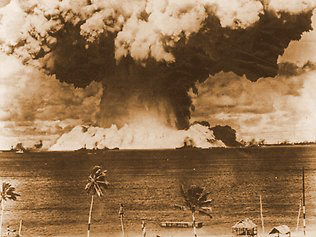
29 August 2025, https://www.icanw.org/nuclear_armed_states_should_come_clean_after_80_years_of_nuclear_testing_harm
Today, the United Nations International Day Against Nuclear Testing, ICAN is calling on the nuclear-armed states that have detonated over 2,000 nuclear devices between them to take full responsibility for the harm they have caused people and the environment.
The first detonation was in New Mexico a few weeks before the nuclear bombings of Hiroshima and Nagasaki 80 years ago this month. Between 1945 and 2007, more than 2000 nuclear tests were carried out, across the world in Algeria, Australia, French Polynesia, Kazakhstan, Kiribati, the Marshall Islands, and the southwestern United States, as well as Alaska, western China, India, North Korea, Pakistan, Russia and Ukraine.
The majority of these explosions were detonated in what were then colonies and/or regions inhabited by Indigenous peoples or other ethnic communities. The communities involved are engaged in efforts for justice and to prevent any return to nuclear testing.
Nuclear testing left a legacy beyond test site boundaries
Radiation cannot be contained geographically; it respects no country’s border. Fallout patterns are complex and the full humanitarian consequences of the fallout of years of particular atmospheric nuclear testing is not known. Fallout is not comprehensively documented in this resource, although some studies on these impacts may be included. For a detailed study on the fallout of a few French nuclear weapons tests in the Pacific – and French efforts to cover it up – see The Moruroa Files.
Nuclear testing is banned
The first international treaty to completely outlaw nuclear testing, the Comprehensive Test Ban Treaty was adopted in 1996, although the treaty has not yet entered into force. The Treaty on the Prohibition of Nuclear Weapons is the only international treaty in force that prohibits nuclear testing. Other treaties ban types of nuclear testing or nuclear testing in certain regions.
What is being done to help those impacted?
The Treaty on the Prohibition of Nuclear Weapons (TPNW) is the first international treaty to ban all nuclear weapons activities, it also requires states parties to provide assistance for survivors of nuclear weapons use and testing and to begin to remediate contaminated environments in Articles 6 and 7. While the primary responsibility for this implementation rests with affected countries, all countries in a position to do so, should help those countries with this work.
Articles 6 and 7 of the TPNW establish a framework of responsibility that offers solidarity and support to affected states parties to address present-day humanitarian and environmental harm from past use and testing. They also serve to place these issues on the agenda of the wider international community, including donors and international organisations. They provide an opportunity for states parties to make a practical difference with and for affected communities.
In some countries where nuclear weapons have been tested there are programs to provide financial or health assistance to survivors or to clean up the environment but none sufficiently address all needs of survivors. Dozens of identified sites around the world remain contaminated by nuclear weapons use, production and testing and there is no one standard for their remediation. Notably there is no widely accepted standard to determine how clean is clean, or how to monitor radiation levels over time. This article in Global Policy reviews existing approaches and looks at what else can be done.
ICAN Calls for states to come clean
ICAN’s Executive Director, Melissa Parke, was in New Mexico last month for the commemorations of the world’s first explosion of a nuclear weapon and to meet communities whose lives were changed forever by the radioactive fallout from the detonation that poisoned their land, air and water. The ‘Trinity Test’ detonated the plutonium bomb design that was used a few weeks later to kill 74,000 people in Nagasaki.
Ms Parke said: “Trinity was followed by more than 2000 nuclear explosions all over the world and the countries responsible – the nuclear-armed states – have never fully acknowledged the catastrophic harm they have caused to people and environments. These countries must stop the cover-up, come clean and provide the support and recognition these communities deserve. The nuclear armed states also need to heed the calls from affected communities for the urgent abolition of nuclear weapons, so that these weapons of total destruction are eliminated before they eliminate us.”
More than 2,000 nuclear weapons have been detonated in the past 80 years. Their effects still linger around the world.

Although these nuclear weapons were detonated decades ago now, “many people are still paying the price,”
a sort of ‘who knows, we don’t know, it’ll probably be fine,’……...Years of secrecy surrounding the test site have given way to years of taboo
CNN, By Issy Ronald, 24 Aug 25
Growing up in Salt Lake City, Utah, in the 1950s and 60s, Mary Dickson was among the millions of American schoolchildren taught to “duck and cover” in the event of a nuclear war.
“I just remember thinking, ‘That’s not going to save us from a bomb,’” she told CNN. At that time, Dickson didn’t know that nuclear weapons were being detonated in the neighboring state of Nevada as the US tested its new stockpile. She lived downwind, in the direction much of the radioactive fallout from atmospheric tests traveled.
She says she has suffered from thyroid cancer; her older sister passed away from lupus in her 40s; her younger sister was recently told that her intestinal cancer has spread to other parts of her body; and her nieces have health issues too.
Dickson says she once counted 54 people from her five-block childhood neighborhood who had suffered from cancer, autoimmune diseases, birth defects or miscarriages.
It’s unclear what caused their cancer, since it is difficult to ascribe direct responsibility, but it is generally accepted in the medical community that radiation exposure increases heightens the risk of cancer, depending on the level of exposure.
“Radiation exposure increases the chance of getting cancer, and the risk increases as the dose increases: the higher the dose, the greater the risk,” says the US Environmental Protection Agency, citing studies that follow groups of people exposed to radiation.
Collectively, those who lived and were exposed in the states surrounding the Nevada testing site, including Arizona, Nevada, Utah, Oregon, Washington State and Idaho, became known as “downwinders.”
“It’s devastating,” said Dickson, a playwright and advocate for survivors of nuclear weapons testing in the US. “I can’t tell you how many friends I’ve had, and their cancers have come back… The psychological damage does not go away. You spend the rest of your life worrying that each lump, each pain (means) it’s back.”
“The Cold War for us never ended,” she added. “We’re still living with its effects.”
The nuclear age began 80 years ago when the US dropped two atomic bombs on the Japanese cities of Hiroshima and Nagasaki near the end of World War II. The bombs killed about 110,000 people instantly and helped set in motion the Cold War-era arms race in which the US and the Soviet Union, as well as Britain, France and China, all scrambled to develop ever more powerful nuclear weapons.
They conducted more than 2,000 tests between 1945 and 1996, each establishing their own nuclear deterrent which, depending on your point of view, either underpins or undermines the world’s security to this day.
And as in Japan, where hundreds of thousands of people died from injuries and radiation-related illnesses in the years after 1945, these nuclear tests damaged the lives, health and land of people living nearby.
Later, India, Pakistan and North Korea carried out their own tests, too, before a series of international treaties almost completely curbed the practice. Only North Korea has tested nuclear weapons in the 21st century – most recently in 2017 – and no atmospheric tests have taken place since 1980.
Still, “it’s not a problem of the past,” said Togzhan Kassenova, a non-resident fellow at the Carnegie Endowment for International Peace who studies nuclear policy.
Although these nuclear weapons were detonated decades ago now, “many people are still paying the price,” she told CNN.
‘We share the same stories’
The earlier nuclear powers tested their bombs in places they deemed remote and sparsely populated, often in territory they had colonized, far away from their own major population hubs.
“Their priorities (were) such that they believed testing was absolutely necessary for national security reasons and if you take that as an absolute truth and everything else is a sort of ‘who knows, we don’t know, it’ll probably be fine,’ it’s very easy to get into a situation where your default response is to do it,” Alex Wellerstein, an associate professor at the Stevens Institute of Technology in New Jersey, told CNN.
The US conducted its nuclear testing mostly in Nevada and the Marshall Islands, in the central Pacific Ocean; the Soviet Union in Kazakhstan and in the Arctic Ocean archipelago of Novaya Zemlya; the United Kingdom in Australia and the Pacific atoll of Kiritimati, formerly known as Christmas Island; France in Algeria and French Polynesia; and China in Lop Nur, a remote desert site in western Xinjiang province.
The Soviet Union tested more than 450 bombs at its Semipalatinsk test site in Kazakhstan from 1949 to 1989, in top secret towns, built for nuclear testing. The residents nearby “didn’t really know the whole extent of it,” Aigerim Seitenova, a nuclear justice and gender equality expert who co-founded the Qazaq Nuclear Frontline Coalition, told CNN.
“So many of my relatives, they were passing away so early when I was a child and I didn’t understand why they were passing away in their 40s and 50s,” she said, adding that she and many members of her family suffer from chronic health issues. “At the time, I thought they were old.”
Years of secrecy surrounding the test site have given way to years of taboo, Seitenova said, adding that making a documentary about the intergenerational impact of Kazakhstan’s nuclear legacy on women was a “process of healing” for her, as she sought to restore their agency.
And Seitenova adds that when the film was translated into Japanese and shown in Hiroshima, it underscored for her that the “experiences of the Kazakh people are not unique.”
“We share the same stories from the Pacific French Polynesia, Marshall Islands, Australia,” she said.
“We are the main experts in the humanitarian impact of nuclear weapons,” she added, lamenting that while scientists from the West consider themselves experts, “those with actually lived experiences are not always taken seriously.”
Understanding the full impact of nuclear testing is difficult – it is both contested and hard to quantify, given the difficulty in ascribing health issues to any one cause, and in assessing the wider social consequences for communities. Various studies have tried to measure these effects, often producing results which contain large uncertainties…………………………………
Studies conducted in the region surrounding the Semipalatinsk test site found that cancer mortality rates and infant mortality rates during the most intensive period of nuclear testing, from 1949 to 1962, were higher than elsewhere in Kazakhstan. Kassenova said that when she returns to the region, she meets children who are fourth- or fifth-generation descendants of those who lived through that period and have health issues they attribute to nuclear contamination………………………………..
Equivalent to 7,232 Hiroshima bombs
As well as impacting people’s health, these tests have had significant environmental consequences. Between 1946 and 1958, the US conducted 67 known nuclear tests in the Marshall Islands, which had a total explosive yield equivalent to 7,232 Hiroshima bombs………………………………………………………………………………………………………………………………………..
France and the UK, meanwhile, have long minimized the impact of their nuclear testing programs. Only in 2010 did France acknowledge a connection between its tests and the ill-health of Algerians and French Polynesians exposed to radiation, and it wasn’t until 2021 that about half of these claimants received compensation……………………………….
Eighty years on from the devastating use of nuclear weapons in Japan, and decades on from the most intensive period of above-ground testing, the world’s nuclear reckoning is far from over. https://edition.cnn.com/2025/08/24/world/nuclear-weapons-tests-effects-intl-scli
1 This Month
23-25 October – on Zoom – World BEYOND War’s annual global conferenc


Shut down the radiation-damaged Heysham nuclear reactors now
To see nuclear-related stories in greater depth and intensity – go to https://nuclearinformation.wordpress.com

Say No to NASA’s Reckless Nuclear Reactor on the Moon
Say No to NASA’s Reckless Nuclear Reactor on the Moon

-
Archives
- October 2026 (247)
- September 2026 (339)
- August 2026 (330)
- July 2026 (355)
- June 2026 (287)
- May 2026 (306)
- April 2026 (356)
- March 2026 (251)
- February 2026 (267)
- January 2026 (308)
- December 2025 (358)
- November 2025 (359)
-
Categories
- 1
- 1 NUCLEAR ISSUES
- business and costs
- climate change
- culture and arts
- ENERGY
- environment
- health
- history
- indigenous issues
- Legal
- marketing of nuclear
- media
- opposition to nuclear
- PERSONAL STORIES
- politics
- politics international
- Religion and ethics
- safety
- secrets,lies and civil liberties
- spinbuster
- technology
- Uranium
- wastes
- weapons and war
- Women
- 2 WORLD
- ACTION
- AFRICA
- Atrocities
- AUSTRALIA
- Christina's notes
- Christina's themes
- culture and arts
- Events
- Fuk 2022
- Fuk 2023
- Fukushima 2017
- Fukushima 2018
- fukushima 2019
- Fukushima 2020
- Fukushima 2021
- general
- global warming
- Humour (God we need it)
- Nuclear
- RARE EARTHS
- Reference
- resources – print
- Resources -audiovicual
- Weekly Newsletter
- World
- World Nuclear
- YouTube
-
RSS
Entries RSS
Comments RSS

