Call to Action! Stop LANL Tritium Venting and Protect the Most Vulnerable
https://nuclearactive.org/call-to-action-stop-lanl-tritium-venting-and-protect-the-most-vulnerable/ November 21st, 2024
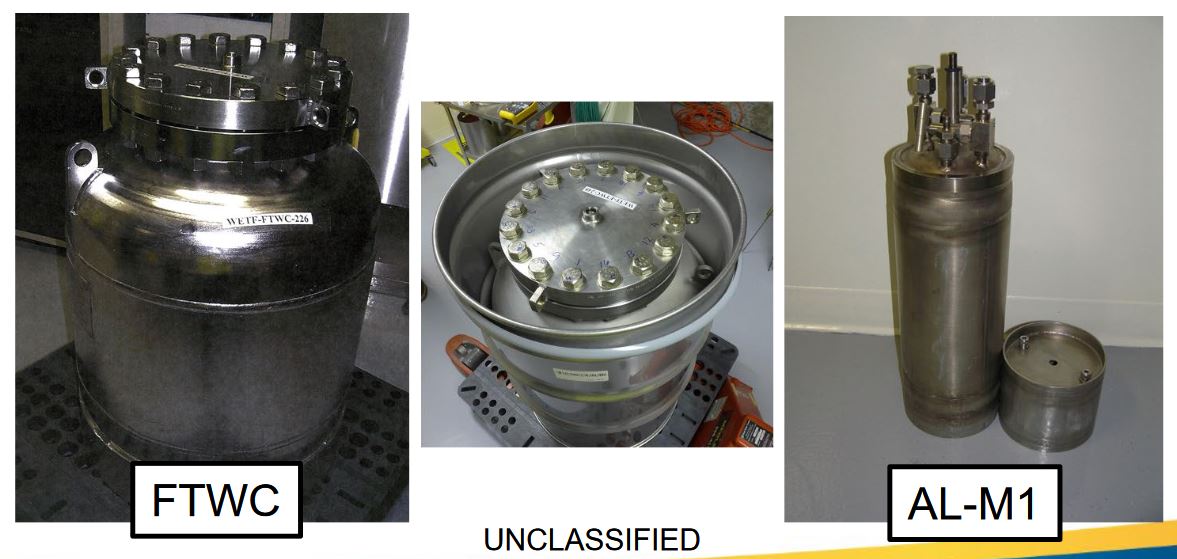
On Monday, Tewa Women United released two independent scientific reports about the harm that would be done to public health and the environment should Los Alamos National Laboratory (LANL) be allowed to vent radioactive tritium from four Flanged Tritium Waste Containers stored at LANL’s Area G radioactive and hazardous waste dump.
It is another important step taken by Tewa Women United to hold LANL and the U.S. Environmental Protection Agency (EPA) accountable to the law.
The two new reports reveal that the proposed venting of tritium, a form of radioactive hydrogen, into the environment would not meet the current EPA or Department of Energy (DOE) regulations.
Tewa Women United collaborated with German scientist Bernd Franke, a Director of the Institute für Energie und Umweliforschung (IFEU), and Dr. Arjun Makhijani from the Institute for Energy and Environmental Research. The first report, Review of LANL Radiation Dose Assessment for the Venting of Flanged Tritium Waste Containers (FTWC) at TA-54 at LANL, authored by Franke, contains results from computer models used to assess the possible range of radiation doses to the public across various weather scenarios.
Dr. Makhijani stated, “According to the EPA regulatory radiation standards, Title 40 Code of Federal Regulations (CFR) 61 Subpart H, require[s that] the radiation dose to ‘any member of the public’ should be less than 10 millirem per year.” Dr. Makhijani noted, “EPA allowed LANL to ignore children and infants in its dose calculations.”
Further, the second report, authored by Dr. Makhijani and titled Out of Order: An evaluation of the regulatory aspects of Los Alamos National Laboratory’s proposal to vent tritium from waste containers, similarly assessed LANL’s compliance with the Clean Air Act regulations and DOE Order 458.1 to keep public exposure to “as low as reasonably achieveable.”
Over the past four years DOE and EPA have ignored repeated requests from Tewa Women United to release their 53 alternatives to the proposed venting.
Kathy Wan Povi Sanchez, member of Pueblo de San Ildefonso and one of Tewa Women United’s co-founders, said, “Tritium makes water, our sacred source of life, radioactive. We were shocked to learn that LANL’s compliance calculations did not take infants and other children into account.
Talavi Cook, the Environmental Justice Program Manager at Tewa Women United, explained: “…Tewa Women United believes … radiation protection should extend to pregnant women due to fetuses comprising of 70% – 90% water; pregnant members of the public are not currently protected by the Clean Air Act or any other radiation protection regulation…. It is a matter of simple environmental justice for future generations.”
For more information, please visit https://tewawomenunited.org/2024/11/press-release-new-report-reveals-lanl-tritium-venting-could-have-triple-the-radiation-exposure-to-infants-compared-to-adults
NFLA submarine champion raises concerns over Clyde Tritium contamination
The Nuclear Free Local Authorities have written to the Defence Secretary and the Head of the Scottish Environment Protection Agency over recent revelations that radioactive tritium discharges from nuclear subs operating in the Clyde are on the increase.
Investigative journalist Rob Edwards recently published the damning findings in award-winning paper The Ferret[i]. The latest data from the Scottish Environment Protection Agency’s Scottish Pollution Release Inventory[ii] shows that emissions of the radioactive gas, tritium, from military nuclear operations on the Clyde into the air and sea have more than doubled over the last six years.
His Majesty’s Naval Base Clyde in Scotland is home to the Royal Navy’s Submarine Service. When not at sea on patrol, the navy’s four Vanguard and five Astute nuclear powered submarines are berthed at Faslane. Whilst Astute are conventionally armed submarines, the Vanguards are each equipped with Trident missiles with nuclear warheads deployed on a rotational basis as a so-called ‘continuous-at-sea deterrent’.
Eight miles from Faslane across the Gare Loch at Coulport is the shore facility where the missiles and warheads are stored. These are fitted or removed from the submarines at an explosive handling jetty, with warheads being periodically and controversially taken by road convoys to and from Aldermaston for maintenance.
21st November 2024
NFLA sub champion raises concerns over Clyde Tritium contamination
The Nuclear Free Local Authorities have written to the Defence Secretary and the Head of the Scottish Environment Protection Agency over recent revelations that radioactive tritium discharges from nuclear subs operating in the Clyde are on the increase.
Investigative journalist Rob Edwards recently published the damning findings in award-winning paper The Ferret[i]. The latest data from the Scottish Environment Protection Agency’s Scottish Pollution Release Inventory[ii] shows that emissions of the radioactive gas, tritium, from military nuclear operations on the Clyde into the air and sea have more than doubled over the last six years.
His Majesty’s Naval Base Clyde in Scotland is home to the Royal Navy’s Submarine Service. When not at sea on patrol, the navy’s four Vanguard and five Astute nuclear powered submarines are berthed at Faslane. Whilst Astute are conventionally armed submarines, the Vanguards are each equipped with Trident missiles with nuclear warheads deployed on a rotational basis as a so-called ‘continuous-at-sea deterrent’.
Eight miles from Faslane across the Gare Loch at Coulport is the shore facility where the missiles and warheads are stored. These are fitted or removed from the submarines at an explosive handling jetty, with warheads being periodically and controversially taken by road convoys to and from Aldermaston for maintenance.
Emissions of radioactive tritium from the associated Royal Naval Armaments Depot on Loch Long into the air have risen steadily from 1,770 megabequerels (MBq) in 2018 to 4,224 MBq in 2023, whilst the Faslane base discharged over 50,000 MBq of tritium contaminated effluents into the Clyde between 2018 and 2023; this peaked at 16,609 MBq in 2020.
The NFLAs have always been concerned about the long-term impact on human and marine animal health of exposure to radioactive contamination, and have repeatedly challenged the practice by military and civil nuclear authorities of discharges into the air, land and watercourses.
Discharges of tritium are an especial concern. Tritium has been found in sewage, waste and ballast water expelled by the submarines. It is also found in reactors and is an essential component of nuclear warheads. The Vanguard submarines are very old and their crews are being stretched by testing patrols which are getting longer. Old boats are more likely to leak and tired crews are more likely to make mistakes.
Dr Ian Fairlie, an expert on radioactivity in the environment, who has previously advised the UK government, told The Ferret that he found the emissions “worrying”. Dr Fairlie explained why: “First, they are large, more than four billion becquerels per year; second, they are steadily increasing; and third, they are of tritium – which is very hazardous when it’s inhaled or ingested” .
Whilst much of our recent attention has been focused on pushing back against the practices of discharges at Dounreay, Sellafield and Trawsfynydd, the NFLAs’ Spokesperson on Nuclear Submarine issues, Councillor Brian Goodall has used Rob’s revelations to write to Labour’s Defence Secretary, John Healey, and the Chief Executive of the Scottish Environmental Protection Agency, Nicole Paterson with his questions and concerns.
Most specifically, Councillor Goodall is seeking clarification of the reasons for the increase in tritium discharges and also the steps being taken by the Ministry of Defence to reduce them and – given our previous criticism of the agency’s oversight at Dounreay – by the SEPA to monitor them.
New Book. The Scientists Who Alerted Us To The Dangers of Radiation.
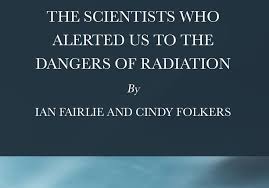
The Scientists Who Alerted us to Radiation’s Dangers by Ian Fairlie, PhD
and Beyond Nuclear’s Cindy Folkers, MS, published by The Ethics Press, is
now available in paperback and ebook.
The book profiles 23 radiation scientists over the previous half-century or so, who revealed that radiation risks were higher than thought, but who were victimized by
governments and the nuclear establishments for doing so.
What this book reveals is that the harmful effects of radiation exposure especially from
the nuclear sector, and especially to children, are more pervasive and
worse than thought. These have been known for decades but suppressed by
politically-motivated censorship and overt disparagement/persecution. A big
problem is the exclusion of independent voices and members of the public.
The hegemony of the nuclear elite, backed by their governments, has kept
radiation’s dangers an “inside game”, leaving the public in the dark
and thereby violating their human rights, especially the rights of the
child. “It’s a timely and rewarding book. It’s timely because several
governments are pushing hard for more public exposures to radiation via
nuclear power.
And it’s rewarding as it explains radiation in
easy-to-grasp language which clarifies its dangers and risks. Anyone who
has ever wondered about radiation or its first cousin, radioactivity,
should read it.”
In addition to the profiles of radiation scientists, the
book includes hundreds of references, 14 scientific Appendices, 5 Annexes,
a glossary and an extensive bibliography. “This galaxy of information
will serve to help activists and students counter the misrepresentations,
incorrect assertions, and plain untruths about radiation often disseminated
by the nuclear establishments on both sides of the Atlantic. It will also
serve as a useful up-to-date reference book for academics on the dangers
and risks of radiation and radioactivity.
Ethics Press 19th Nov 2024
https://ethicspress.com/products/the-scientists-who-alerted-us-to-the-dangers-of-radiation
‘Starmer – meet us before it’s too late,’ nuclear test veterans say

Dominic Casciani, 18 Nov 24, https://www.bbc.com/news/articles/cy4ng2873jro
When 18-year-old John Morris stood for the first time on the Pacific’s Christmas Island in 1956, he had no idea that the destructive forces of nature he would witness, harnessed for military power, would hang like a mushroom cloud over his life forever.
Now 86, Mr Morris is one of the last few of 22,000 personnel who witnessed the UK’s nuclear bomb tests – and those that are able to are still fighting to find out what it did their bodies.
A BBC film, to be broadcast this Wednesday, details their battles for what the dwindling band of men believe is a hidden truth: that the UK’s military knew at the time it was subjecting them to radiation that would damage them and their descendants forever.
Thousands of the men have suffered cancers and other conditions that other nuclear states have recognised as probably linked to the now-banned testing.
But not the UK. It has paid no compensation at all.
In Mr Morris’s case, as the film reveals, he believes the death of his first child, Steven, in 1962, was the result of the radiation damage he suffered during Operation Grapple – the name given to a series of British nuclear weapons tests.
Steven was four months old when he died in his cot. The coroner suspected the baby’s lung had not properly formed. Why? Nobody knows…………………………..
“I blame the Ministry of Defence and the experiments they did on us for Steven’s death – and I always will.”
John Morris’s story is one of many testimonies in the film, which also covers what happened to Indigenous communities who lived in the nuclear bomb test areas in Australia.
All of them believe they were lab rats, subjected to live human experimentation as the British raced to join the USA and Russia as a nuclear power.
And they are appealing to Sir Keir Starmer to meet them – to make good on what they believe was a pledge made by the Labour party.
The campaign for disclosure and damages for ill health began decades ago as the veterans linked health conditions, cancers and birth defects in children to the nuclear testing that began in 1952.
But in 2012, the Supreme Court ended the campaign for damages, saying the men could not prove the link – and they had also long run out of time.
The campaign, however, was relaunched last year thanks to potentially crucial new evidence discovered in what is known as the “Gledhill memo”.
The 1958 report from Christmas Island to the nuclear programme’s secret UK headquarters says that there were blood tests for Squadron Leader Terry Gledhill showing “gross irregularity”.
The memo, says the campaign, is proof that blood tests were being taken from personnel – and that there was a continuing but secret plan to monitor them.
The circumstantial evidence has grown since. This year, 4,000 pages of documents from the Atomic Weapons Establishment were declassified after a long Freedom of Information fight.
Those documents are still being analysed but the campaign says they show there were standing orders for repeated blood and urine tests of military personnel and Indigenous communities at the test sites.
The language in some of the documents is unambiguous. One, from 1957, says that “all personnel selected for duty at Maralinga [the Australian test site] may be exposed to radiation”.
Many of the men have obtained their personnel and medical files – but say they have gaps that correspond to when they were stationed on the operations.
John Morris’s military medical file, for instance, is missing regular blood tests from Christmas Island that he says were part of the regime.
Then the campaign discovered, again by chance, what could be an official order to destroy medical records.
The widow of one veteran who had died of multiple cancers obtained her late husband’s personnel records, hoping the medical records would help with her claim for a war pension.
The bundle she received included a slip of paper, dated 1959, which marks where officials had removed pages. That was when her husband had been part of the testing programme.
And the slip says the material had been removed under a “special directive regarding prompt disposal”, on the then orders of the ministerial office for the Royal Air Force.
What was that “special directive”? Nobody knows.
So was there a cover-up decades ago?
A 2008 government filing, in one part of the then legal battle, shows officials assured their in-house lawyers that “no individual monitoring of servicemen” had taken place during the tests.
But that does not make sense given the Gledhill memo shows personnel were being tested – and men remember it, too.
Another government document, from the 1990s, shows officials discussing their “concerns” that judges at the European Court of Human Rights had been told that there were no classified records concerning the monitoring of personnel.
The men say something stinks, and they have relaunched their legal fight, but time – and age – is against them.
The men’s lawyers believe they have a case for a failure to disclose medical records and, at worst, may have had glimpses of a cover-up locked in the bowels of military archives.
If they sue, the case could take years that the men do not have. So they have proposed an alternative time-limited one-off tribunal to find answers.
And that is why the men now want to meet Sir Keir Starmer – to get it done.
In 2019, the Labour Party, then led by Jeremy Corbyn, pledged £50,000 for each surviving British nuclear-test veteran.
Sir Keir met the veterans in 2021 but made no promises – and the 2019 offer was not in the 2024 manifesto.
But the prime minister has pledged to introduce the so-called “Hillsborough law” that places a duty on public officials to come completely clean when faced with an allegation of cover-up or misconduct.
That law could be in force within a year and it could help the men get answers, assuming they are there to be found.
“Keir Starmer, meet us,” says John Morris. “All I want is to meet him and get a pathway forward. They have let me down for 70 years.”
Ministers ‘looking hard’ at veterans concerns
A Ministry of Defence spokesperson said it recognised the “huge contribution” of the veterans and the government was committed to working with them and “listening to their concerns”.
“Ministers are looking hard at the issue – including the question of records,” said the spokesperson.
“They will continue to engage with the individuals and families affected and as part of this engagement, the Minister of Veterans Alistair Carns has already met with parliamentarians and a Nuclear Test Veteran campaign group to discuss their concerns further.”
Both Labour and Conservatives governments have maintained no records have been withheld from the veterans, including from the court cases.
The MoD says research has found no link between the nuclear tests, ill health and genetic defects in children. That’s contradicted by a respected study from New Zealand that showed its personnel suffered genetic damage from attending the British tests.
Whatever the government chooses to do, the impact of what the men witnessed will be with them forever.
When John Folkes was 19 years old, he was on board a plane ordered to fly through four atomic bomb mushroom clouds.
It was like being “microwaved”, he tells the BBC film, as his body was exposed to the raw power of a nuclear weapon. And he has suffered ever since from PTSD and a permanent tremble.
Some 14 months of his medical records are missing, despite him remembering radiation tests.
“It’s weighed heavily on my conscience,” the 89-year-old tells the BBC’s film.
“I’m a part of something that should never have happened.
“There exists within our society some dark forces that suppress the truth. I firmly believe that we’ve been betrayed. Shamefully betrayed.”
Britain’s Nuclear Bomb Scandal: Our Story airs on Wednesday 20 November at 21:00 on BBC Two and on iPlayer
Occupational exposure to radiation among health workers: Genome integrity and predictors of exposure

Mutation Research/Genetic Toxicology and Environmental Mutagenesis
Volume 893, January 2024, Hayal Çobanoğlu, Akın Çayır
Highlights
- •Significant increase of genomic instability biomarkers reflecting long term disease risk
- •Significant association between radiation exposure and NPB, and NBUD frequencies
- •Work-related parameters have the potential to explain increase of genomic instability
- •Higher risk of exposure in plain radiography field
Abstract
The current study aimed to investigate genomic instabilities in healthcare workers who may experience varying levels of radiation exposure through various radiological procedures. It also sought to determine if factors related to the work environment and dosimeter reading could effectively explain the observed genomic instabilities. Utilizing the cytokinesis-block micronucleus assay (CBMN) on peripheral blood lymphocytes, we assessed a spectrum of genomic aberrations, including nucleoplasmic bridge (NPB), nuclear budding (NBUD), micronucleus (MN) formation, and total DNA damage (TDD). The study uncovered a statistically significant increase in the occurrence of distinct DNA anomalies among radiology workers (with a significance level of P < 0.0001 for all measurements). Notably, parameters such as total working hours, average work duration, and time spent in projection radiography exhibited significant correlations with MN and TDD levels in these workers. The dosimeter readings demonstrated a positive correlation with the frequency of NPB and NBUD, indicating a substantial association between radiation exposure and these two genomic anomalies. Our multivariable models identified the time spent in projection radiography as a promising parameter for explaining the overall genomic instability observed in these professionals. Thus, while dosimeters alone may not fully explain elevated total DNA damage, intrinsic work environment factors hold potential in indicating exposure levels for these individuals, providing a complementary approach to monitoring.
Introduction
Ionizing and non-ionizing radiation constitute inevitable forms of environmental exposure, to which a substantial portion of the global population remains consistently subjected. Among those at heightened risk are individuals employed in radiology, who utilize radiation sources for both diagnostic and therapeutic procedures. More than 30 million medical radiology workers are exposed to low level of radiation worldwide [1], [2], which provides the opportunity to understand the health risks of chronic exposure to low-dose ionizing radiation (IR) [3].
It has been observed that there are increased risks for many cancer types, including skin, leukemia, breast, and thyroid, in medical radiology workers who started working before the 1950 s [4], [5], [6], [7], [8]. These results probably reflect higher occupational radiation exposure of medical radiology workers [5], [9]. Today, even if radiation exposure is less than in the past owing to technological advances and radiation safety measures [9], recent studies show that long-term exposure to low-dose IR may still be a significant health risk [10], [11], [12].
Introduction
Ionizing and non-ionizing radiation constitute inevitable forms of environmental exposure, to which a substantial portion of the global population remains consistently subjected. Among those at heightened risk are individuals employed in radiology, who utilize radiation sources for both diagnostic and therapeutic procedures. More than 30 million medical radiology workers are exposed to low level of radiation worldwide [1], [2], which provides the opportunity to understand the health risks of chronic exposure to low-dose ionizing radiation (IR) [3]. It has been observed that there are increased risks for many cancer types, including skin, leukemia, breast, and thyroid, in medical radiology workers who started working before the 1950 s [4], [5], [6], [7], [8]. These results probably reflect higher occupational radiation exposure of medical radiology workers [5], [9]. Today, even if radiation exposure is less than in the past owing to technological advances and radiation safety measures [9], recent studies show that long-term exposure to low-dose IR may still be a significant health risk [10], [11], [12].
Despite the efforts to minimize radiation exposure, radiation-exposed health workers may frequently encounter low levels of ionizing radiation due to various occupational factors, including excessive work hours, inadequate shielding in their work environment, a high volume of daily imaging procedures, and failure to employ personal protective equipment during imaging activities. Although traditional methods such as physical dosimeters and blood-based clinical assessments are routinely used to monitor worker health, these approaches possess limitations when it comes to assessing the long-term effects of low-dose radiation exposure. Consequently, it is imperative to implement more robust biomarkers to routinely monitor radiology workers………………………………………………………………………………………………………………………………… more Link: https://www.sciencedirect.com/science/article/abs/pii/S1383571824000020
Are Royal Navy nuclear deterrent submarines being re-supplied mid-patrol?
Navy Lookout 25th Oct 2024
A recent article in The Sun newspaper suggests that submariners were almost “starved’ while on an epic six-month patrol because the boat could not be resupplied with food as planned. Here, we briefly consider the implications of this report.
As we first reported, Vanguard-class submarines have been conducting increasingly lengthy Patrols with HMS Vigilant completing a record 195-day patrol in September 2023 and at least one other boat also came close to repeating the feat in 2024. This was due to a number of factors, including the delayed refit of HMS Vanguard and the unavailability of the shiplift in Faslane to conduct urgent maintenance.
The Sun may be dismissed by many as mostly disreputable rag but the journalists who wrote this piece have a good track record and this is a credible story. Under the superb headline “The Hunt for Bread October”, the tabloid reports that the boat ran so low on food that the crew were forced to ration meals. Personal supplies of sweets and nutty were handed in to be shared equally and the small tuckshop on board ran out of supplies and was closed. Of deeper concern, the report says medics on board feared a serious loss of life from fatigue and concentration lapses, although the RN denies there was any danger of starvation. The report does not reveal the kind of quality and frequency of meals being served towards the end of the patrol but does raise questions about the true endurance of nuclear boats.
Able to produce their own power, make freshwater, produce oxygen and remove excess CO2, nuclear submarine endurance is theoretically almost indefinite, only subject to machinery reliability. The limiting factor is the mental endurance of the people on board and their food supply. Even modern AIP conventional submarines will eventually have to return to port to take on diesel fuel so their chain of command do not have the option to extend patrols in the same way……………………………………………………………………..
The Vanguards were originally designed to conduct patrols of around three months, possibly extended to around four months at a push. The storerooms and freezers may have been subsequently modified to support even longer patrols but space is at a premium, even on a large SSBN. There is also the issue of waste disposal, SSBNs are not supposed to eject gash as it potentially could provide a clue to their presence. Imagine how much waste is generated by 130 people during six months at sea. There is also the mundane but important issue of toilet paper. Finding room for an adequate supply of bulky loo rolls can be a problem even on more spacious surface ships. It is difficult to believe that a Vanguard boat can stay at sea unsupported for 6 months, even if it began the patrol with extra food crammed into absolutely every available space.
The most critical line in the Sun article is that “plans to resupply at sea were scrapped”. It is speculation, but it would appear that in order to stay at sea for 6-months, the expectation is that the boats will be resupplied by a ship mid-patrol. This would mean surfacing somewhere and rapidly taking on food and offloading gash. This would need to be done as discreetly as possible, probably at night and in a sheltered location where the resupply can be done quickly and safely. The vessel involved may have been specially equipped for the task as coming alongside a submarine in open water is not easy. Alternatively, a helicopter could VERTREP supplies onto the casing. Either way, if this is the case, it would break a key principle of the nuclear deterrent that is never supposed to surface, potentially exposing it to detection.
With three boats back in the patrol cycle it is hoped that patrol lengths will fall slightly and these epic patrols can be avoided in future. The First Sea Lord, government ministers and His Majesty the King have all been to Faslane/Coulport in recent months to say a personal “thank you” to the crews of these boats who have clearly gone above and beyond in making personal sacrifices to maintain the continuous at-sea deterrent. The ‘super patrols’ might be tolerable on a couple of occasions but cannot be sustainable as it puts undue mental stress on people and risk the credibility and safety of the deterrent force. https://www.navylookout.com/are-royal-navy-nuclear-deterrent-submarines-being-re-supplied-mid-patrol/
Crew members on Royal Navy nuclear submarine left with ‘low supplies’ and suffering fatigue
Medics reportedly feared for a ‘serious loss of life’ after plans to resupply the vessel failed to materialise
Holly Evans, 25 Oct 24,
https://www.independent.co.uk/news/uk/home-news/nuclear-submarine-royal-navy-uk-b2635513.html
Medics on a Royal Navy nuclear submarine were reportedly left fearing a “serious loss of life” after crew members were forced to share food when supplies ran low.
During a six-month patrol, crew began to suffer from fatigue with mistakes caused by concentration lapses, while the vessel closed its honesty shop over fears of hoarding.
Navy chiefs reportedly asked the crew to hand in any supplies of chocolate or sweets and off-duty sailors were instructed to sleep to conserve calories and limit their movements.
A source told The Sun: “It was miserable. If you weren’t on watch your movements were limited to conserve energy and encouraged to sleep to burn less calories.”
They added: “Medical staff raised concerns about a serious loss of life due to fatigue and people either not concentrating or falling asleep on critical duties.”
The Vanguard-class vessel, which has not been named for security reasons, had been due to resupply at sea but had been unable to do so.
A former submarine captain said the conditions onboard the vessel were “horrific”.
Due to the shortage of available submarines, patrols have been extended for six-months rather than the usual customary 80 days.
One submarine, which forms part of the UK’s nuclear deterrent force, is always on patrol with their location remaining top secret, with sailors only allowed to receive one 40-word message each week that is censored for bad news.
The Royal Navy has emphasised that robust practices and procedures are always in place to ensure the safety of its crew on operations.
It comes three weeks after the head of the Royal Navy apologised after an investigation found “misogyny, bullying and other unacceptable behaviours” in the submarine service.
There was at least one report of rape, and women suffered lewd comments and sexual gestures, an official report has revealed.
Nuclear weapons and children
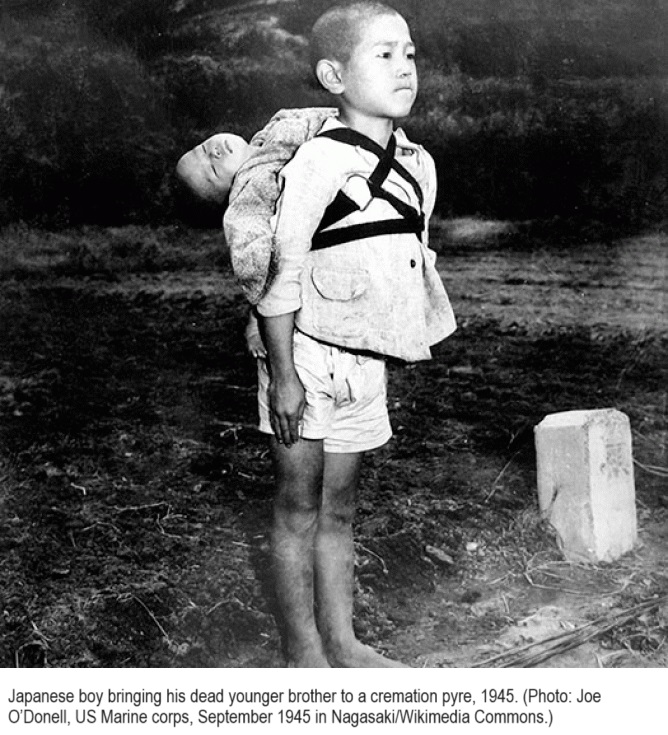
The main perpetrators of violence against children are states armed with nuclear weapons, writes Tim Wright.
Nuclear weapons are designed to destroy cities; to kill and maim whole populations, children among them.
In a nuclear attack, children are more likely than adults to die or suffer severe injuries, given their greater vulnerability to the effects of nuclear weapons: heat, blast and radiation. The fact that children depend on adults for their survival also places them at higher risk of death and hardship in the aftermath of a nuclear attack, with support systems destroyed.
Tens of thousands of children were killed when the United States detonated two relatively small nuclear weapons (by today’s standard) over the Japanese cities of Hiroshima and Nagasaki in 1945.
Many were instantly reduced to ash and vapour. Others died in agony minutes, hours, days or weeks after the attacks from burn and blast injuries or acute radiation sickness. Countless more died years or even decades later from radiation-related cancers and other illnesses. Leukaemia – cancer of the blood – was especially prevalent among the young.
In Hiroshima and Nagasaki, the scenes of devastation were apocalyptic: Playgrounds scattered with the dead bodies of young girls and boys. Mothers cradling their lifeless babies. Children with their intestines hanging out of their bellies and strips of skin dangling from their limbs.
At some of the schools close to ground zero, the entire student population of several hundred perished in an instant. At others, there were but a few survivors. In Hiroshima, thousands of school students were working outside to create firebreaks on the morning of the attack. Approximately 6,300 of them were killed.
Those children who, by chance, escaped death carried with them severe physical and psychological scars throughout their lifetimes. What they witnessed and experienced on 6 August and 9 August 1945 and in the days that followed was permanently seared into their memories.
Thousands of children lost one or both parents, as well as siblings. Some “A-bomb orphans” were left to roam the streets, with orphanages exceeding capacity.
Many of the babies who were in their mothers’ wombs at the time of the atomic bombings were also harmed as a result of their exposure to ionising radiation. They had a greater risk of dying soon after birth or suffering from congenital abnormalities such as brain damage and microcephaly, as well as cancers and other illnesses later in life.
Pregnant women in Hiroshima and Nagasaki also experienced higher rates of spontaneous abortions and stillbirths.
In communities around the world exposed to fallout from nuclear testing, children have experienced similar harm from radiation.
Since 1945, nuclear-armed states have conducted more than two thousand nuclear test explosions at dozens of locations, dispersing radioactive material far and wide
Among the general population, children and infants have been the most severely affected, due to their higher vulnerability to the effects of ionising radiation. Young children are three to five times more susceptible to cancer in the long term than adults from a given dose of radiation, and girls are particularly vulnerable.
In the Marshall Islands, where the United States conducted 67 nuclear tests, children played in the radioactive ash that fell from the sky, unaware of the danger. They called it “Bikini snow” – a reference to the atoll where many of the explosions took place. It burned their skin and eyes, and they quickly developed symptoms of acute radiation sickness.
For decades after the tests, women in the Marshall Islands gave birth to severely deformed babies at unusually high rates. Those born alive rarely survived more than a few days. Some had translucent skin and no discernible bones. They would refer to them as “jellyfish babies”, for they could scarcely be recognised as human beings.
Similar stories have been told by people living downwind or downstream of nuclear test sites in the United States, Kazakhstan, Ma’ohi Nui, Algeria, Kiribati, China, Australia and elsewhere.
We have a collective moral duty to honour the memories of the thousands of children killed in Hiroshima and Nagasaki, as well as those harmed by the development and testing of nuclear weapons globally. And we must pursue the goal of a nuclear-weapon-free world with determination and urgency, lest there be any more victims, young or old.
Under international humanitarian law and the Convention on the Rights of the Child, governments have a legal obligation to protect children against harm in armed conflict. To fulfil this obligation, it is imperative that they work together now to eliminate the scourge of nuclear weapons from the world.
In this report, we describe how nuclear weapons are uniquely harmful to children, based on the experiences of children in Hiroshima and Nagasaki and those living near nuclear test sites. We share their first-hand testimonies and depictions of the toll of nuclear weapons on their lives. And we explain how the ever-present fear of nuclear war – the possibility that entire cities might be destroyed at any given moment – causes psychological harm to children everywhere.
Finally, we make an urgent appeal to all governments to protect current and future generations of children by eliminating nuclear weapons, via the landmark UN Treaty on the Prohibition of Nuclear Weapons, which entered into force in 2021.
Key Findings
So long as nuclear weapons exist in the world, there is a very real risk that they will be used again, and that risk at present appears to be increasing.
In the event of their use, it is all but certain that many thousands of children – perhaps hundreds of thousands or more – would be counted among the dead and injured, and they would suffer in unique ways and out of proportion to the rest of the population.
In a nuclear attack, children would be more likely than adults:
To die from burn injuries, as their skin is thinner and more delicate and burns deeper, more quickly and at a lower temperature;- To die from blast injuries, given the relative frailty of their smaller bodies;
- To die from acute radiation sickness, as they have more cells that are growing and dividing rapidly and are significantly more vulnerable to radiation effects;
- To be unable to free themselves from collapsed and burning buildings or take other steps in the aftermath that would increase their chances of survival;
- To suffer from leukaemia, solid cancers, strokes, heart attacks and other illnesses years later as a result of the delayed effects of radiation damage to their cells; and
- To suffer privation in the aftermath of the attacks, as well as psychological trauma leading to mental disorders and suicide.
Furthermore, babies who were in their mothers’ wombs at the time of the attack would be at greater risk of:
Death soon after birth or in early childhood;- Microcephaly, accompanied by intellectual disability, given the higher vulnerability of the developing brain to radiation damage;
- Other developmental abnormalities;
- Growth impairment due to the reduced functioning of the thyroid; and
- Cancers and other radiation-related illnesses during childhood or later in life.
These horrifying realities should have profound implications for policy-making in countries that currently possess nuclear weapons or those that support their retention as part of military alliances.
They should also prompt organisations dedicated to the protection of children and the promotion of their rights to work to address the grave global threat posed by nuclear weapons.
While children played no part in developing these doomsday devices, it is children who would suffer the most in the event of their future use – one of the myriad reasons why such weapons must be urgently eliminated.
Tim Wright is Treaty Coordinator of the International Campaign to Abolish Nuclear Weapons.
This is the Executive Summary from the longer report, The Impact of Nuclear Weapons on Children, by Tim Wright and published by ICAN, which can be found in full on the ICAN website. It is republished with permission of the author.
Updated findings provide insights into radiation exposure’s impact on cancer risk
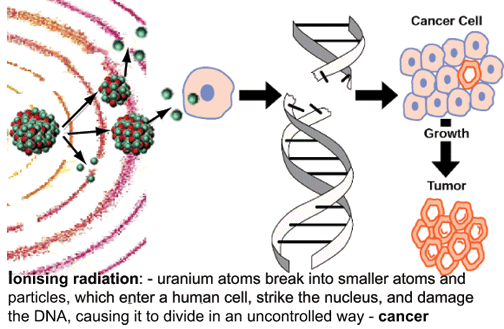
by University of California, Irvine, 7 Oct 24, https://medicalxpress.com/news/2024-10-insights-exposure-impact-cancer.html
A major update was made to the International Nuclear Workers Study (INWORKS), an international epidemiological study of workers in the nuclear sector to assess their risks of cancer and non-cancerous diseases.
David Richardson, Ph.D., professor of environmental and occupational health at UC Irvine Joe C. Wen School of Population & Public Health, was the principal investigator for this study and senior author of a publication in The Lancet Haematology that outlines the new findings.
With the study update, Richardson and colleagues sought to understand the associations between low-dose exposure to penetrating forms of ionizing radiation and its effect on risk of leukemia, lymphoma and multiple myeloma.
The researchers assembled a cohort of more than 300,000 radiation-monitored workers from France, the United Kingdom and the United States, employed at nuclear facilities between 1944 and 2016. Using Poisson regression methods, researchers measured the amount of radiation that got absorbed into bone marrow.
Since radiation exposure is a known risk factor for leukemia, excluding chronic lymphocytic leukemia, the study primarily focused on measuring incidence of leukemia and other cancer subtypes such as myelodysplastic syndromes, Hodgkin and non-Hodgkin lymphomas, and multiple myeloma.
The study revealed a positive association between prolonged low-dose exposure to ionizing radiation and mortality from these hematological cancers. The study concluded that health risk remains low at low exposure levels. Nevertheless, the evidence of associations between total radiation exposure and multiple myeloma and myelodysplastic syndromes signals the necessity for future radiation studies to expand the discussion on radiation protection and occupational safety measures on a global scale.
“Our studies of people exposed to low doses of radiation add to our understanding of radiation risks at the exposure levels encountered in many contemporary settings,” said Richardson who is the associate dean for research at Wen Public Health. “Our results can inform radiation protection standards and will provide input for discussions on protections from radiation.”
More information: Klervi Leuraud et al, Leukaemia, lymphoma, and multiple myeloma mortality after low-level exposure to ionising radiation in nuclear workers (INWORKS): updated findings from an international cohort study, The Lancet Haematology (2024). DOI: 10.1016/S2352-3026(24)00240-0
Journal information: The Lancet Haematology
Radon, even at levels below EPA guideline for mitigation, is linked to childhood leukemia

By ONA Editor October 6, 2024 , https://oncologynews.com.au/latest-news/radon-even-at-levels-below-epa-guideline-for-mitigation-is-linked-to-childhood-leukemia/?fbclid=IwY2xjawFvCqBleHRuA2FlbQIxMQABHS5488aZnUZ2hNIA841-HCIezMi-9ZMQB1QfxQQZpYE67Zfdt00GeqwWew_aem_ccu2uE8COyQskZQX6eY3Bw
A study of more than 700 counties across multiple U.S. states found a link between childhood leukaemia and levels of decaying radon gas, including those lower than the federal guideline for mitigation.
The findings are important because there are few established risk factors for cancer in children and the role of the environment has not been explored much, said Oregon State University’s Matthew Bozigar, who led the research.
Radon, a naturally occurring gas, is a product of the radioactive decay of uranium, which is present in certain rocks and soils.
Upon escaping from the ground, radon itself decays and emits radioactive particles that can get within the body and collect in many tissues, where they can damage or destroy the cells’ DNA, which can cause cancer.
Odourless, tasteless and colourless, radon gas dilutes quickly in open air and is generally harmless before it decays, but indoors or in areas with poor air exchange, it can easily concentrate to dangerous levels and is recognised as a significant risk factor for lung cancer.
Radon, measured with small, passive detectors and mitigated through passive or active ventilation in basements and crawl spaces, has not been linked to other cancers, according to the World Health Organisation.
But in an 18-year statistical modelling study of 727 counties spread among 14 states, Bozigar and collaborators not only found a connection between childhood leukaemia and radon, but at concentrations below the Environmental Protection Agency’s recommended guideline for mitigation.
Becquerels per cubic metre is a unit for expressing the concentration of radioactive decay in a given volume of air.
The EPA says no level of radon is safe and advises that mitigation efforts be taken when radon concentration reaches 148 becquerels per cubic metre; the study considered concentrations as low as half of that.
“This is the largest study of its kind in the U.S., but more robust research is necessary to confirm these findings on an individual level and inform decision-making about health risks from radon in this country and globally,” said Bozigar, an assistant professor in the OSU College of Health.
Leukaemia, the most common cancer in children, affects the blood and bone marrow.
About 3,000 new cases of childhood leukaemia – defined in the study and by the National Institutes of Health as involving patients up to age 19 – are diagnosed in the United States each year, according to the NIH.
The annual incidence rate is 4.8 cases per 100,000 children.
Boys are more likely to receive a leukaemia diagnosis than girls, but the research suggests radon increases the likelihood of leukaemia in both sexes.
“Our study design only allows us to identify statistical associations and to raise hypotheses, so studies that can better determine whether radon exposure causes childhood leukaemia are needed,” Bozigar said.
Counties examined in this study were in the states of Washington, California, Idaho, Utah, New Mexico Iowa, Louisiana, Kentucky, Michigan, Georgia, New York, New Jersey, Connecticut and Massachusetts.
The counties are those that during the study period reported their cancer data to the Surveillance, Epidemiology and End Results registry, a programme that collects and analyses cancer information.
Known as SEER, the registry is supported by the National Cancer Institute.
Collaborating with Bozigar were scientists from the National Cancer Institute, Harvard University and Imperial College London.
The research, funded in part by the Environmental Protection Agency, was published in Science of the Total Environment.
For Bozigar, the research has its roots in personal experience.
He grew up in Portland, which has pockets of high radon levels, and noticed what seemed to be a high incidence of cancer, particularly in younger age groups.
There were multiple cancer diagnoses among his own family and friends.
“As an epidemiologist, I started considering possible environmental causes and connected with awesome collaborators who provided important data and other resources to enable innovative new analyses,” he said.
“We are working on many different radon studies, and we are continuing to find harmful effects not limited to the lungs in adults. We will have more to share in the coming months and years as our studies are published.”
Source: Oregon State University
The challenge of long-lived alpha emitters in the Chalk River legacy wastes
Concerned Citizens of Renfrew County and Area, January 22, 2024 (revised September 17, 2024)
Why is so little Chalk River waste suitable for near surface disposal?
Extensive research work at the Chalk River Laboratories on nuclear reactor fuels, and in the early days, on materials for nuclear weapons, produced waste with large quantities of long-lived alpha emitters. This waste is difficult to manage and can even become increasingly radioactive over time.
According to the International Atomic Energy Agency, because of the presence of long-lived alpha emitters, waste from nuclear research facilities is generally classified as intermediate level, and even in some cases, as high level. This waste cannot be put in a near surface disposal facility because its radioactivity will not decay to harmless levels during the period that the facility remains under institutional control.
Alpha emitters decay by throwing off an alpha particle, the equivalent of a helium nucleus, with two protons and two neutrons. The external penetrating power of an alpha particle is low, but alpha emitters have extremely serious health effects if ingested or inhaled. They can lodge in your lungs and cause cancer.
Research at Chalk River and all other nuclear laboratories is ultimately based on three long-lived alpha emitters — thorium-232, uranium-235, and uranium-238. These are the “naturally occurring” or “primordial” radionuclides. They were created by large stars and then incorporated into the Earth and the solar system when they formed some 4.5 billion years ago. The waste inventory proposed by Canadian Nuclear Laboratories for the Near Surface Disposal Facility (NSDF) includes over six tons each of thorium-232 and uranium-238……………………………………………………..
Hazards increase when uranium and thorium are mined and concentrated from ores and used in their pure form. Marie Curie, who spent much of her career isolating radium and polonium from uranium, died of radiation-induced leukemia at age 66. She was buried in a lead-lined tomb because her corpse emitted so much radiation.
When thorium-232, uranium-235, and uranium-238 are irradiated in a reactor, as at Chalk River, they absorb neutrons and produce significant quantities of new, man-made, long-lived alpha-emitters. Irradiated uranium-238 absorbs a neutron and temporarily forms uranium-239. Uranium-239 transmutes to neptunium-239, which quickly transmutes to long-lived plutonium-239, with a half-life of 24,000 years.
Plutonium-239 is “fissile” – it can readily support a chain reaction. It is what the early Chalk River researchers produced for the manufacture of U.S. nuclear weapons, by separating the plutonium from irradiated reactor fuel. They also used the separated plutonium to make “mixed oxide” (MOX) reactor fuel, mixing it with fresh uranium………………………………………….
Detecting alpha emitters in mixed waste is expensive and challenging. Putting inadequately characterized waste in the NSDF would invalidate its safety case.
Unfortunately, the NSDF Project lacks adequate waste characterization procedures. If the project is allowed to proceed, workers and future Ottawa valley residents could be exposed to unknown quantities of long-lived alpha emitters and suffer the serious health effects associated with them. https://concernedcitizens.net/2024/09/17/the-challenge-of-long-lived-alpha-emitters-in-the-chalk-river-legacy-wastes/
Radiation levels mysteriously spike along Norway’s border with Russia – as it’s claimed activity has been seen at test site for Putin’s ‘Flying Chernobyl’ nuclear missile
Traces of radioactive Cesium-137 have been
measured along Norway’s border with Russia, it was revealed today. The
radiation levels are ‘clearly’ higher than normal, authorities have said,
and the cause of the mysterious spike is unknown.
One fear is that it could
relate to Russia’s Pankovo test site for the Burevestnik – a
nuclear-powered, nuclear-armed cruise missile – on the Novaya Zemlya
archipelago.
Daily Mail 17th Sept 2024
Tritium into the air?
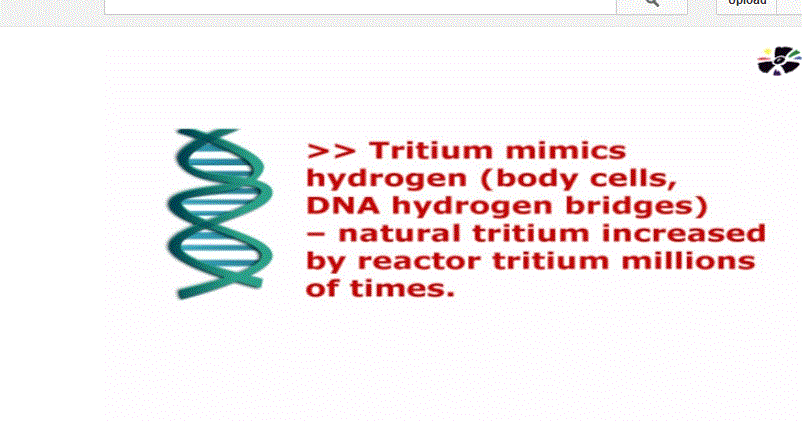
“You get layers and layers and layers and layers of denial.”
Venting plans at Los Alamos have received scant attention, writes Alicia Inez Guzmán of Searchlight New Mexico
Beyond Nuclear International, 16 Sept 24
Last fall, the international community rose up in defense of the Pacific Ocean. Seafood and salt purveyors, public policy professors, scientists and environmentalists, all lambasted Japan’s release of radioactive wastewater from the disastrously damaged Fukushima Daiichi nuclear plant into the sea.
At the heart of the contention was tritium, an element that, by mass, is 150,000 times more radioactive than the plutonium used in the cores of nuclear weapons. Odorless and colorless, tritium — the radioactive form of hydrogen — combines with oxygen to form water. Just one teaspoon is enough to contaminate 100 billion gallons more water up to the U.S. drinking water standard, according to Arjun Makhijani, an expert on nuclear fusion and author of the monograph, “Exploring Tritium Dangers.”
What didn’t make international headlines — but was quietly taking place on the other side of the world — was Los Alamos National Laboratory’s own plans to vent the same radioactive substance into northern New Mexico’s mountain air. Japan’s releases would take place over three decades. LANL’s would include up to three times more tritium — and take place in a matter of days.
There is no hard timeline for the release, but if the plans are approved by the Environmental Protection Agency, LANL is looking at a period with “sufficiently warm weather,” a spokesperson from the National Nuclear Security Administration wrote by email. That could mean as soon as this summer.
Those controversial plans date back to 2016, when LANL discovered that a potentially explosive amount of hydrogen and oxygen was building up in four containers of tritium waste stored in a decades-old nuclear dump called Area G. The safest and most technically viable solution, the lab decided — and the best way to protect workers — would be to release the pressure and, with it, thousands of curies of tritium into the air.
When advocates caught wind of the venting in March 2020, Covid was in its earliest and most unnerving phase. Pueblo leaders, advocates and environmentalists wrote impassioned letters to the lab and the EPA, demanding that they change or, at the very least, postpone the release until after the pandemic. At the same time, Tewa Women United, a nonprofit founded by Indigenous women from northern New Mexico, issued its first online petition, focusing on tritium’s ability to cross the placental barrier and possibly harm pregnant women and their fetuses. Only after a maelstrom of opposition did the lab pause its plans and begin briefing local tribes and other concerned members of the community.
“We see this as a generational health issue,” said Kayleigh Warren, Tewa Women United’s food and seed sovereignty coordinator. “Just like all the issues of radioactive exposure are generational health issues.”
Last fall, the lab again sought the EPA’s consent. A second petition from Tewa Women United followed. Eight months later, the federal agency’s decision is still pending.
The NNSA, which oversees the health of America’s nuclear weapons stockpile from within the Department of Energy, declined Searchlight New Mexico’s requests for an interview.
The crux of the issue comes down to what is and isn’t known about the state of the containers’ contents. Computer modeling suggests they are pressurized and flammable, but the actual explosive risk has not been measured, the lab has conceded.
Critics have requested that the contents be sampled first to determine whether there is any explosive risk and whether venting is even needed. The EPA says that sampling would require going through the same red tape as venting. The lab, for its part, plans to sample and vent the contents in one fell swoop.
But why, critics wonder, are these containers in this state in the first place? Were they knowingly over packed and left for years to grow into ticking time bombs?…………………………………………………………………………………………………………………………………..
……………..Tritium 101
Plutonium and uranium are familiar to most people, if by name only. But few know anything at all about tritium — a radioactive isotope of hydrogen that is used to make watch dials and EXIT signs glow bright neon. Tritium’s other, lesser-known use is as a “boost gas,” which, when inserted into the hollow core of a plutonium pit, amplifies a nuclear weapon’s yield. Globally, hundreds of atmospheric weapons tests dispersed tritium into the atmosphere, steeping rain, sea, and groundwater with the element and, ultimately, lacing sediment worldwide.
Tritium is widely produced at nuclear reactors and is today tested, handled and routinely released at Los Alamos National Laboratory
Criticisms of this venting have always centered on two of the element’s key characteristics: First, it travels “tens to hundreds of miles,” according to lab documents. Second, when tritium is in the form of water, it becomes omnipresent and easy for bodies to absorb.
“Tritium is unique in this,” wrote Makhijani. “It makes water, the stuff of life, most of the mass of living beings, radioactive.”
Years of LANL reports depict tritium’s ubiquity in the lands and ecosystem within its bounds, a palimpsest of radioactive decay. This is measured in curies, a basic unit that counts the rate of decay second by second.
The lab’s first environmental impact statement, published in 1979, estimated that it had buried close to 262,000 curies of tritium at Area G and released tens of thousands more into the air from various stacks over the decades. The lab had two major accidental releases of tritium around the same time — 22,000 curies in the summer of 1976 and nearly 31,000 curies in the fall of 1977.
Today, trees have taken it into their root systems on Area G’s southeast edge. Rodents scurrying in and out of waste shafts are riddled with the substance, owing to tritium vapors from years past. A barn owl ate those rodents and had 740 times more tritium concentration in its body than the U.S. drinking water standard, the common reference value for indicating tritium contamination. The lab’s honeybee colonies — kept to determine how radioactive contaminants are absorbed — produced tritiated honey up to 380 times more concentrated than the drinking water standard, reports show.
The EPA set the current standard for radioactive emissions at DOE facilities in 1989, but that didn’t stop the lab from releasing thousands of curies of tritium into the air shortly afterward. In 1991, the EPA issued a notice of non-compliance to the lab for not calculating how much of a radiation dose the public received. Another notice followed in 1992.
Concerned Citizens for Nuclear Safety filed a lawsuit two years later alleging that the DOE hadn’t properly monitored radioactive emissions, as required by the Clean Air Act. At the time, a former lab safety officer, Luke Bartlein, observed what he described in an affidavit as a “pattern and practice of deception at LANL with respect to the radionuclide air monitoring system.” It was routine for lab staffers and management to vent glove boxes and other materials contaminated with tritium outside so that the contamination would deliberately “not register” on the stack monitors, he recounted, leading to false emissions reports.
The lab settled in 1997; a consent decree followed and would stay in effect until 2003. The lab says it has maintained low annual emissions ever since……………………………………………………………………………………………………………..
Tewa Women United and others now worry that the region’s famously fitful winds will carry tritium, a consummate shapeshifter, to corners far beyond the lab’s bounds.
The movement will be invisible. First, tritium will transform moisture in the air. Then, that moisture will quickly contaminate other “open water surfaces and biota downwind, including food growing in the area and food in open-air markets, and humans themselves,” according to Ian Fairlie, a London-based radiation consultant for the European Parliament.
A fraction of that tritium can linger in the body, if ingested. In pregnant women, tritium can then stage another imperceptible passage across the placental barrier, concentrating 60 percent more of the element in the fetus than in the mother, according to Makhijani. Radiation exposure can lead to early failed pregnancies and neurological damage in the first weeks of gestation.
While the Nuclear Regulatory Commission has radiation exposure limits for pregnant women in the workplace, there are no specific radiation protections for pregnant women in the public — or their fetuses.
In 1999, Makhijani and more than 100 scientists, activists and physicians across the country and worldwide signed a letter to the National Academy of Sciences. Their ask? To evaluate how radionuclides that cross the placental boundary, including tritium, impact the fetus, a request Makhijani renewed in 2022.
As he put it, tritium — the “most ubiquitous pollutant from both nuclear power and nuclear weapons” — has largely escaped regulatory and scientific scrutiny when it comes to matters of pregnancy.
Cindy Folkers, the radiation and health hazard specialist at Beyond Nuclear, a national advocacy organization, believes the reason is rooted in the radiation establishment’s fear of liability. “You get layers and layers and layers and layers of denial.”
The scant research that does exist comes from pregnant women who survived atomic bombs in Hiroshima and Nagasaki. In 1986, the International Commission on Radiation Protection concluded that exposing a fetus to ionizing radiation, the kind that tritium emits, has a “damaging effect…upon the development of the embryonic and fetal brain.” The area most at risk of harm, it went on, is the forebrain, which controls complex and fundamental functions like thinking and processing information, eating, sleeping and reproduction.
Ionizing radiation damages the cell in two ways. On the one hand, it breaks apart the building blocks from which humans are made, causing rifts in DNA. On the other, it fundamentally changes the chemistry of the cell, breaking apart its water molecules and upsetting its metabolism.
That’s what makes it different from, say, an X-ray, Folkers said. “A machine can be shut off,” but “a radioactive particle that’s inside your body will continue irradiating you.” For a pregnant woman, this adds up to “cumulative biological damage,” the kind that cuts across generations.
“We’re dealing with a life cycle,” Folkers said. “And females are an integral part of that life cycle. Not only are they more damaged by radioactivity, and their risks are higher for cancer, but they are also carrying in them the future generations. So when you’re dealing with a female baby who’s developing in the womb, you are dealing with that child’s children at the very least.”
In other words, a mother is like a Russian nesting doll. She holds a fetus and that fetus, if a female, holds all future eggs. Exposure to her is exposure to future generations.
Alicia Inez Guzmán was raised in the northern New Mexican village of Truchas and has written about histories of place, identity and land use in New Mexico. She brings this knowledge to her current role at Searchlight, where she focuses on nuclear issues and the impacts of the nuclear industry. https://beyondnuclearinternational.org/2024/09/16/tritium-into-the-air/
Christopher Busby: New study: the cause of the cancer epidemic
15 Sept 2024, https://www.youtube.com/watch?v=kMauRgvWnII
Dr Busby presents the results of a study which he carried out to identify the cause of the cancer epidemic which began in 1980. He compared cancer death rates between high fallout and low fallout States in the USA looking for an effect which identified the period of birth of the ten year age groups.
The result showed an astonishing cancer risk effect centred around the peak years of atmospheric test fallout, 1955 to 1965. The result showed a 50% excess risk of dying of cancer in the 55-64 year olds who were born during the fallout years. A earlier version of the study, whic he carried out in 2021 was presented in the journal BMJ Oncology in 2023 and can be found online. Link is https://bmjoncology.bmj.com/content/e…
What this means, he explains, is that it is likely that there is a significant probability that you, or anyone you know who has developed cancer, is a victim of the atmospheric test fallout contamination of Strontium-90 and Uranium-238. The total number of victims of this exceeds 100 million.
He says that those who have been anticipating World War should realise that it has already happened. It was the war of the nuclear military complex against humanity, as Dr John Gofman once said. Further videos in this series Science and reality will take this matter further. He belatedly apologises for placing the high fallout States in the west; they are of course in the south east of USA

COMMENT. Very important. In Australia, through the1960s and even later, repeated bursts of atmospheric fallout from the French nuclear tests . Rainfall from the East was tested for radiation – but the results were kept secret. Prof Ernest Titterton was in charge, and he cancelled the tests anyway. Interesting to study the cancer rates of East coast populations exposed at that time.
The scientific nature of the linear no-threshold (LNT) model used in the system of radiological protection
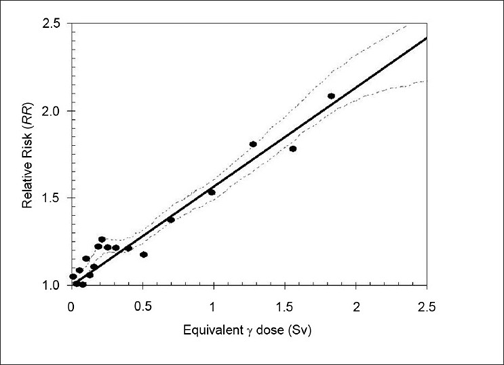
the LNT concept can be tested in principle and fulfils the criteria of a scientific hypothesis. The fact that the system of radiological protection is also based on ethics does not render it unscientific either
attempts to discredit the LNT approach as being non-scientific lack any sound basis, and are in fact counterproductive with respect to the aims of radiological protection, because they preclude any constructive debate.
Radiation and Environmental Biophysics , 02 September 2024, Andrzej Wojcik & Friedo Zölzer https://link.springer.com/article/10.1007/s00411-024-01092-1—
During the first half of the 20th century, it was commonly assumed that radiation-induced health effects occur only when the dose exceeds a certain threshold. This idea was discarded for stochastic effects when more knowledge was gained about the mechanisms of radiation-induced cancer.
Currently, a key tenet of the international system of radiological protection is the linear no-threshold (LNT) model where the risk of radiation-induced cancer is believed to be directly proportional to the dose received, even at dose levels where the effects cannot be proven directly.
The validity of the LNT approach has been questioned on the basis of a claim that only conclusions that can be verified experimentally or epidemiologically are scientific and LNT should, thus, be discarded because the system of radiological protection must be based on solid science.
The aim of this publication is to demonstrate that the LNT concept can be tested in principle and fulfils the criteria of a scientific hypothesis. The fact that the system of radiological protection is also based on ethics does not render it unscientific either. One of the fundamental ethical concepts underlying the LNT model is the precautionary principle
We explain why it is the best approach, based on science and ethics (as well as practical experience), in situations of prevailing uncertainty.
Introduction
A basic assumption of the international system of radiological protection, as recommended by the International Commission on Radiological Protection (ICRP), is that the risk of radiation-induced cancer is directly proportional to the dose received, without any dose level (threshold) below which the risk is zero (ICRP_99 2005). This so-called linear no-threshold (LNT) model is strongly criticized by, on the one hand, researchers claiming that it underestimates the actual risk, because it does not consider, among other possible modifying factors, bystander effects according to which the relationship is more properly described by a supralinear curve (Mothersill and Seymour 2004).
On the other hand, some researchers claim that adaptation processes reduce the radiation-related risk at low doses, resulting in a threshold dose below which there is either no effect or even health benefit (hormesis) (Sacks et al. 2016; Janiak and Waligorski 2023).
Yet others claim that both mechanistic evidence coming from radiobiology and observational evidence coming from epidemiology suggest that a dose threshold, if any, could not be greater than a few tens of mGy and, thus, the LNT model has a solid basis in results from experimental studies (Laurier et al. 2023). Also, UNSCEAR in a review of biological data, concluded that there remains good justification for the use of a non-threshold model for risk inference given the robust knowledge on the role of mutation and chromosomal aberrations in carcinogenesis (UNSCEAR 2021).
Why is it not possible to reach a consensus regarding the shape of the dose response? At low radiation doses, defined as below 0.1 Gy (UNSCEAR 2012), biological effects are very weak so they are easily influenced by random environmental factors making results difficult to reproduce. A good example are the variable results of adaptive response experiments (Wojcik and Streffer 1994; Wojcik et al. 1996; Wojcik and Shadley 2000). In general, despite new, suggestive epidemiological data (Laurier et al. 2023), mechanistic, experimental approaches with both cell and animal models are unable to provide unequivocal evidence for the existence of a dose threshold below which radiation carries no risk to human health. There is still insufficient knowledge about the sequence of events from the deleterious alteration of biomolecules to the diagnosable disease, i.e. to stochastic cancer or non-cancer effects (UNSCEAR 2021). Also, epidemiological studies mostly lack the necessary statistical power to detect effects at doses below 0.1 Gy (Ruhm et al. 2022).
Disagreement about the interpretation of results is an essential element of science and many famous scientific discoveries were accompanied by controversy and disputes (Sarewitz 2011). Consequently, it is desirable that the debate around LNT continues. However, its validity has been questioned on the basis that it is not a scientific concept and should thus be discarded because the system of radiological protection must be based on solid science (Waltar et al. 2023).
This line of argumentation precludes any constructive debate: no researcher will waste time on a non-scientific concept. More importantly, it is flawed because the system of radiological protection, as designed by the ICRP, is “based on scientific knowledge, ethical values, and more than a century of practical experience” (ICRP_138 2018). It relies wholly on state-of-the art science, understood broadly as knowledge (as distinguished from ignorance or misunderstanding), and the LNT model, being an element of the system, is a scientific concept. The aim of this publication is to demonstrate this.
LNT as a scientific concept
The authors of the recent LNT critique (Waltar et al. 2023) write that LNT lacks a solid scientific base because there are no “actually proven radiation effects at low-doses”. The risk of cancer induced by high doses of radiation, they argue, can be derived from frequentist probabilities which “are based on evidence; namely, on the truthful and verifiable existence of an increase in the frequency of radiation health effects in a cohort of exposed people and are defined as the limit of the relative frequency of incidence of the effect in a series of certifiable epidemiological studies on such cohorts”. In contrast, the risk of cancer in the low dose region is assessed based on “subjective probabilities (sometimes also confusedly termed “Bayesian”), which are conjectured for the low-dose area, expressed as a possible expectation that radiation health effects might occur, and are quantified by a personal belief or expert’s judgement; that is, not necessarily substantiated by the frequency or propensity that the effects actually occur at such levels of dose”. In short: the assumption of no threshold dose for the risk of cancer is not scientific because it cannot be proven.
The claim that whatever cannot be proven in experimental or epidemiological studies is not scientific may be based on a particular reading of Karl Popper´s “critical rationalism”, which suggests a method to distinguish between science and non-science. But if the authors had that approach in mind, their reading of it is wrong: lack of proof does not, in Popper’s view, make a hypothesis unscientific. On the contrary, Popper maintains that nothing whatsoever can really be proven; there are no verifiable truths. What scientists can do is to test a given hypothesis over and over again. If they find satisfactory evidence against it, the hypothesis is “falsified”.
If they do not find evidence against it, it is “corroborated”. The more “corroboration” we have, the more certain we can be of that particular hypothesis, but we can still not consider it “verified”. So, the criterion of “scientific” vs. “unscientific” is not “verifiability”, but “falsifiability” (Popper 1961). Popper´s method has been severely criticized for reasons that will not be discussed here. The interested reader is referred to relevant publications (Maxwell 1972; Feyerabend 2010). Despite this ongoing discussion in science theory, however, there is no doubt that the lack of positive proof for a certain model does not render it unscientific. This is true for the LNT model as well. It can, in principle, be tested. For instance, recent epidemiological studies with large numbers of people undergoing medical radiology did not show any indication of a threshold for cancer induction by radiation (Laurier et al. 2023). The latest addition to this growing body of evidence is the EPI-CT study, in which almost a million children who had to undergo a CT examination were followed for several years and their risk of hematological malignancies was quantified. A significant increase was found in the dose group of 10–15 mGy (Bosch de Basea Gomez et al. 2023). With even larger numbers, and more precise and consistent methods of dosimetry as well as diagnosis of disease, it will be possible to corroborate the LNT model even more convincingly. Of course, this will always apply to particular dose ranges and particular effects, but with those caveats in mind, the model can certainly be considered “falsifiable” and, therefore, scientific. To summarize: epidemiological studies have, until now, not been able to falsify LNT (Laurier et al. 2023). Let us have a look at attempts to falsify LNT by other approaches.
Conclusions from UNSCEAR reports on the shape of the dose response for cancer and derivation of dose limits by the ICRP
In developing its recommendations, the ICRP relies on results from the field of natural science on mechanisms and levels of health effects induced by ionising radiation. These are regularly summarised by UNSCEAR (www.unscear.org). As stated above, the epidemiological evidence on the shape of the dose response curve in the dose range relevant for planned exposure scenarios of people does not falsify LNT, but does not allow drawing firm conclusions due to lack of statistical power.
Since 1994, UNSCEAR has published four reports that look into biological effects induced by low dose exposure, with the aim of examining whether they support the assumption of the LNT concept. The 1994 report focused on adaptive responses in cells, experimental animals and humans and concludes that evidence does not exist to support the assumption that adaptive responses convey beneficial effects to the organism that would outweigh the detrimental effects of exposure to radiation (UNSCEAR 1994).
The 2000 report did not specifically focus on adaptive responses but aimed at providing an overview of data available on the relationship between radiation exposure and the induction of cancer and hereditary disease (UNSCEAR 2000). It concludes that, although mechanistic uncertainty remains, studies on DNA repair and cellular/molecular processes of radiation tumorigenesis provide no good reason to assume that there will be a low-dose threshold for the induction of tumours in general.
In support of this, the authors of the report discuss DNA double strand breaks (DSB) originating from single ionizing tracks of radiation that occur in the low dose range. Although their incidence is low, they may arise from the more likely single strand lesions, when these occur in close proximity on opposed DNA strands. Furthermore, the report points out that single ionization tracks were shown to induce locally multiply damaged sites (LMDS). LMDS pose a particular problem for the cellular DNA repair system and will most likely be misrepaired, leading to a mutation and potentially – cancer. This evidence is important in view of existing opinions that low doses of radiation merely increase the level of the naturally occurring oxidative damage that has no negative consequences because cells are well equipped to cope with it (Tubiana 2005). Of course, oxidative damage does occur naturally and appropriate repair processes exist, but its spatial distribution is different from that caused by the ionisation tracks of photons and particles in the form of locally multiply damaged sites.
The aim of the next report, published in 2006, was “to evaluate how non-targeted effects may affect risks associated with radiation exposure, the understanding of radiation-induced carcinogenesis, and the mechanistic basis for interpreting epidemiological data on radiation effects” (UNSCEAR 2006). The report concludes that data currently available do not require changes in radiation risk coefficients for cancer and hereditary effects of radiation in humans.
The last report was published in 2021 (UNSCEAR 2021). Its focus is on biological mechanisms of radiation actions at doses mostly in the low to moderate range relevant for cancer risk inference. Consequently, it looks at available knowledge on DNA damage and repair, chromatin remodelling and epigenetics, gene and protein expression, non-targeted effects, the immune system and modelling of cancer mechanisms. In accordance with the previous reports, it concludes that accumulated knowledge on mechanisms of effects directly related to cancer induction imply a dose-risk relationship without a threshold at least down to 10 mGy and that “little in the way of robust data could be identified that would prompt the need to change the current approach taken for low-dose radiation cancer risk inference as used for radiation protection purposes and for the purpose of comparison with other risks”. In summary, neither epidemiological nor mechanistic studies provide unequivocal evidence for the shape of the dose-response curve, although they confirm that the LNT concept is falsifiable in principle – at least for certain dose ranges.
The ethical basis of radiological protection as a scientific concept
If it is not possible to quantify the risk of stochastic effects at low doses, how did the ICRP arrive at the dose limits that are currently recommended? A historical reconstruction of the considerations underlying the setting of dose limits was recently published by one of us (Zolzer 2022). Here, as well as elsewhere in radiological protection, assumptions about risks at small doses need to be made. If recommendations for radiological protection would have to be based on scientific evidence alone, one might point to the (undeniable and undenied) uncertainties about the LNT concept and remain doubtful as to its applicability. As stated above, however, the ICRP’s system is “based on scientific knowledge, ethical values, and more than a century of practical experience” (ICRP_138 2018). Usually, of course, ethics and practice per se are not considered scientific (which in itself is open to debate), but it needs to be emphasised that the role which they play for the system of radiological protection does not render that system unscientific.
“Ethics” can mean different things. It can denote a set of beliefs and values regarding what is right and what is wrong, and as such can be used in combinations like “the ethics of a particular individual”, “the ethics of a particular group”, or “the ethics of a particular society, culture, or religion“. The same word, however, can also designate a branch of philosophy, sometimes called “moral philosophy”, which systematically studies this kind of beliefs and values. “Ethics” in this sense is clearly a rational endeavour. It examines standards of rightness and wrongness, and their application to practical problems, but it does not single out a concrete standard, i.e. it does not become prescriptive.
What is right and what is wrong can only be established within the context of a particular ethical system. Utilitarian ethics, for instance, recognizes as the criterion of right and wrong nothing but the “greatest happiness of the greatest number” (Bentham 1776), whereas in deontological ethics everything depends on “treating humanity, whether in your own person or that of another, never merely as a means to an end” (Kant 1785). There are other systems, of course. Virtue ethics, for instance, has recently received renewed interest (Aristotle being an early proponent). It is concerned not so much with actions and their consequences, but with people’s characters and dispositions. Consistent ethical judgement is possible on the basis of either of these theories, but they do not always lead to the same result. Thus, there is no such thing as an ethics which is universally applicable and binding for all.
Coming back to radiological protection, it may be interesting to note that around the turn of the 21st century several authors, among them members of ICRP, argued that the three principles of radiological protection – justification, optimization, and dose limitation – are based on one or the other classical theory of Western moral philosophy as outlined above. The ICRP itself in its first publication fully dedicated to the topic of ethics (ICRP_138 2018) has discussed this kind of arguments in an appendix to that publication. In the main body of the report, however, they took a different approach. Recognizing that radiological protection is a world-wide endeavour, it was decided to take as a point of departure a certain set of moral values which are common (or at least acceptable) to people from different cultural backgrounds. These values did not have to be invented from scratch but had been referred to implicitly or explicitly in earlier publications of the IRCP.
The approach is similar to an ethical theory suggested in 1979 by Beauchamp and Childress and widely applied in medicine, called the “principles of biomedical ethics” (Beauchamp 1979). The authors originally worked on quite different basic assumptions, one being a utilitarian, the other a deontological ethicist, but they realised that in spite of belonging to different schools of thought, they could still agree on a number of “principles” which allowed them to solve most ethical dilemmas in clinical practice. They identified these principles as Respect of autonomy, Non-maleficence, Beneficence, and Justice. All of them, they maintained, had prima facie validity, i.e. all of them seem applicable at first sight without any particular ranking, but in certain clinical situations not all of them can be applied in the same way, one or the other having to take precedence. This they called “balancing the principles” and they discussed many examples of how to determine the relative importance of each principle in particular situations.
What the ICRP proposed in Publication 138 is very similar, but it does not copy the Beauchamp and Childress approach one-to-one. The fundamental concepts are called “values” instead of “principles”, because that term is already used for justification, optimization and dose limitation, and more importantly, the four “core values” are slightly different: Beneficence/Non-maleficence, Prudence, Justice, and Dignity. Their application in different contexts, as well as the necessity to “balance” them against each other, is discussed in Publication 138, as well as Publication 153 on “Radiological Protection in Veterinary Practice” and in the up-coming publication on “Ethics in Radiological Protection for Medical Diagnosis and Treatment”. We will not go into any detail here, but just state again that the ethics of radiological protection, as practiced by the ICRP, is not a promotion of subjective convictions or preferences, or a reflection of “personal beliefs”, but is well in line with current trends in moral philosophy.
Prudence is not part of the Beauchamp and Childress set of principles, or values, but does play an important role for radiological protection. The ICRP itself has pointed this out. The 1956/57 amendment to the 1954 recommendation (ICRP_1958, 1958) already stated that ‘it is prudent to limit the dose of radiation received by gametes (…) to an amount of the order of the natural background’, and a similar statement appeared in Publication 1 (ICRP_1 1959), where prudence again played an important role in the justification of dose limits. The ICRP recognised that its recommendations could no longer be based on well-documented tissue reactions, but had to take account of stochastic effects for which there was no more than a certain plausibility. And even though the risks were hard to quantify for the time being, one had to make an attempt to weigh them against the expected benefits of activities involving radiation exposure. This is why ICRP recommended early on ‘that every effort be made to reduce exposure (…) to the lowest possible level’ (ICRP_1955, 1955), ‘that all doses be kept as low as practicable’ (ICRP_1 1959), or ‘that all doses be as low as readily achievable, economic and social consequences being taken into account’ (ICRP_9 1966). All three formulation are obviously early formulations of the ALARA principle, “doses should all be kept as low as reasonably achievable, taking into account economic and societal factors” (ICRP_103 2007). ICRP also suggested that dose limitation ‘necessarily involves a compromise between deleterious effects and social benefits’ (1959) (ICRP_1 1959) and that one has to find ‘a level at which the assumed risk is deemed to be acceptable to the individual and to society in view of the benefits derived from such activities’ (ICRP_9 1966).
In the latest general recommendations (ICRP_103 2007), the ICRP states that “it is prudent to take uncertainties (…) into account”, even when it comes to the estimates of threshold doses for deterministic effects. More importantly, the “so-called linear-non-threshold (LNT) model is considered by the Commission to be the best practical approach to managing risk from radiation exposure… The Commission considers that the LNT model remains a prudent basis for radiological protection at low doses and low dose rates.” Furthermore, in spite of lacking evidence in humans for radiation effects on offspring and next generations, “the Commission prudently continues to include the risk of heritable effects in its system of radiological protection” and “considers that it is prudent to assume that life-time cancer risk following in-utero exposure will be similar to that following irradiation in early childhood, i.e., at most, about three times that of the population as a whole.” In Appendix A, the stress is again on practicality: “The LNT model is not universally accepted as biological truth, but rather, because we do not actually know what level of risk is associated with very-low-dose exposure, it is considered to be a prudent judgement for public policy aimed at avoiding unnecessary risk from exposure.”
In one of the passages just quoted, the ICRP mentions that its emphasis on prudence is “commensurate with the ‘precautionary principle’ (UNESCO 2005)” (for further information on the principle, see (Martuzzi and Bertollini 2004; Tallacchini 2005). This has raised red flags for some, who tend to think that radiological protection is overdone anyway and actually “crippling the beneficial effects that controlled radiation offers to a modern society” (Waltar et al. 2023). It cannot be emphasized enough, however, that the precautionary principle is often (willingly or unwillingly) misinterpreted. It does not say that with the slightest suspicion of a risk, however small it may be, all related activities should be stopped. It does not, as some have put it, provide blanket authorization for technophobia. One of the most widely used versions of the principle states: “When an activity raises threats of harm to human health or the environment, precautionary measures should be taken even if some cause and effect relationships are not fully established scientifically.” This is the so-called ”Wingspread Statement”, issued in 1998 by a diverse group of scientists, philosophers, lawyers and environmental activists from the United States, Canada and Europe. . The wording is similar to that of the “Rio Declaration” six years earlier, which says, “Where there are threats of serious or irreversible damage, lack of full scientific certainty shall not be used as a reason for postponing cost-effective measures to prevent environmental degradation.”
Note that the “Rio Declaration” calls for “cost-effective measures”, which suggests a similar weighing of risks and benefits as the recommendation to keep doses “as low as reasonably achievable, taking into account economic and societal factors” (see above). Admittedly, not every version of the ‘precautionary principle’ contains this qualification. Quite often, the emphasis is very much on avoiding risks. This is perhaps the main reason why the ICRP preferred prudence as a core value: it contains the notion of a careful consideration of both, the negative as well as the positive consequences of an action or practice. In a way, it is precaution combined with solidarity, if by the latter we understand (for want of a better term) “taking into account economic and societal consequences”.
As this brief discussion also indicates, the precautionary principle is not beyond criticism, and may need further explication (Hansson 2020). That does not mean, however, that its substance would be controversial. In our context it may mean this: those in charge of setting the rules of radiological protection cannot excuse themselves on the grounds of uncertainties in our scientific knowledge; they have to act upon plausible indications of risks, while not losing sight of the reasonability of their actions, taking into account economic and societal factors. This requires critical evaluation of the existing evidence, as well as exercising their responsibilities in terms of the “core values” mentioned above. The ICRP itself (ICRP_138 2018) has put it as follows: “Neither prudence nor the precautionary principle should be interpreted as demanding zero risk, choosing the least risky option, or requiring action just for the sake of action. The experience of over half a century of radiological risk management applying the optimisation principle can be considered as a reasoned and pragmatic application of prudence and/or the precautionary principle”. It is not impossible, of course, that at some point a revision of the system of radiological protection will become necessary, perhaps even a reassessment of the LNT model, but that must be left to rational analysis and discussion and cannot be pushed through by sowing doubts regarding the scientific anchoring of radiological protection as it is practised now.
Conclusions
There is no doubt that, in order to be accepted by stakeholders and society at large, the system of radiological protection must be based on solid science. A common misconception, however, is that only conclusions that can be positively “proven” experimentally or epidemiologically are “scientific”. Notably, the assumption of direct proportionality with radiation dose for certain health effects (the linear no-threshold model) has been called unscientific because results describing effects after very low doses are inconclusive.
Here we argue that it is not positive “proof” which renders a hypothesis “scientific”, but its fundamental “testability”. Currently, direct evidence in support of the LNT model is available down to a few tens of mSv. Testing it at even smaller doses seems possible in principle, but such studies are not available yet and must be left for the future. In situations like this, ethical considerations take on special importance – which does not render the whole system unscientific either.
Here we argue that it is not positive “proof” which renders a hypothesis “scientific”, but its fundamental “testability”. Currently, direct evidence in support of the LNT model is available down to a few tens of mSv. Testing it at even smaller doses seems possible in principle, but such studies are not available yet and must be left for the future. In situations like this, ethical considerations take on special importance – which does not render the whole system unscientific either.
-
Archives
- February 2026 (199)
- January 2026 (308)
- December 2025 (358)
- November 2025 (359)
- October 2025 (376)
- September 2025 (258)
- August 2025 (319)
- July 2025 (230)
- June 2025 (348)
- May 2025 (261)
- April 2025 (305)
- March 2025 (319)
-
Categories
- 1
- 1 NUCLEAR ISSUES
- business and costs
- climate change
- culture and arts
- ENERGY
- environment
- health
- history
- indigenous issues
- Legal
- marketing of nuclear
- media
- opposition to nuclear
- PERSONAL STORIES
- politics
- politics international
- Religion and ethics
- safety
- secrets,lies and civil liberties
- spinbuster
- technology
- Uranium
- wastes
- weapons and war
- Women
- 2 WORLD
- ACTION
- AFRICA
- Atrocities
- AUSTRALIA
- Christina's notes
- Christina's themes
- culture and arts
- Events
- Fuk 2022
- Fuk 2023
- Fukushima 2017
- Fukushima 2018
- fukushima 2019
- Fukushima 2020
- Fukushima 2021
- general
- global warming
- Humour (God we need it)
- Nuclear
- RARE EARTHS
- Reference
- resources – print
- Resources -audiovicual
- Weekly Newsletter
- World
- World Nuclear
- YouTube
-
RSS
Entries RSS
Comments RSS
 nuclear-news