 TOXICOLOGICAL PROFILE FOR PLUTONIUM , Agency for Toxic Substances and Disease Registry Division of Toxicology and Environmental Medicine/Applied Toxicology Branch, Atlanta, Georgia
” …….Plutonium may remain in the lungs or move to the bones, liver, or other body organs. It generally stays in the body for decades and continues to expose the surrounding tissues to radiation. Lung, liver, and bone cancer You may develop cancer depending on how much plutonium is in your body and for how long it remains in your body. The types of cancers you would most likely develop are cancers of the lung, bones, and liver…….
The risks of mortality and morbidity from bone and liver cancers have also been studied in Mayak workers. Increasing estimated plutonium body burden was associated with increasing liver cancer mortality, with higher risk in females compared to males…….
Cardiovascular Effects. Epidemiological Studies in Humans. Possible associations between exposure to plutonium and cardiovascular disease have been examined in studies of workers at production and/or processing facilities in the United Kingdom (Sellafield)…….. within a cohort of Sellafield workers morality rate ratios for plutonium workers were significantly elevated for deaths from circulatory disease and ischemic heart disease . ….
the Mayak studies provide evidence for increased risk of cancer mortality (bone, liver, lung) in association with increased internal plutonium-derived radiation dose and/or body burden, with approximately 4-fold higher risks in females compared to males…….
Risks of mortality and morbidity from bone and liver cancers have also been studied in Mayak workers ….. Increasing estimated plutonium body burden was associated with increasing cancer mortality, with higher risk in females compared to males…..
U.K. Atomic Energy Authority and Atomic Weapons Establishment Workers. ………..The mortality rate ratio was significantly elevated for breast cancer and cerebrovascular disease in a cohort of female Sellafield workers identified as plutonium workers……..
Comparisons of mortality rates between plutonium workers and other radiation workers yielded significantly elevated mortality rate ratios for all deaths , all cancers , breast cancer, circulatory disease , and ischemic heart disease.
GENOTOXICITY Abundant information is available regarding the genotoxicity of ionizing radiation……….Although epidemiological studies do not provide conclusive evidence that plutonium produces genetic damage in humans, results of some studies provide suggestive evidence of dose-related increases in chromosomal aberrations in plutonium workers with measurable internalized plutonium……. ……https://www.atsdr.cdc.gov/toxprofiles/tp143.pdf?fbclid=IwAR1iffNMF8xj33aBhDW-zhtFzPejF0eNlQ5QUaIgxBhCcujUKU0XRC8NvMc
January 8, 2019
Posted by Christina Macpherson |
2 WORLD, health, Reference |
1 Comment
Navy veteran with throat cancer continues uphill fight with VA for disability benefits, https://www.mydaytondailynews.com/news/national/navy-veteran-with-throat-cancer-continues-uphill-fight-with-for-disability-benefits/h0fNaZPOwP3O5AMATcTFCN/ By
WSOCTV.com, January 05, 2019
CHARLOTTE, N.C. —Charlotte veteran Dan Parks has been fighting with the Department of Veterans Affairs for five years to get disability benefits.”This has been an uphill battle all the way,” Parks said. Parks showed
WSOC-TV paperwork from multiple doctors who determined his throat cancer was caused by exposure to ionizing radiation during his service in the Navy.
He took care of guns and ammunition in the early 1970s, including in an area that housed nuclear torpedo heads.
Now, because of the cancer, his larynx and thyroid were removed.
Twenty-four years after his diagnosis, he still has side effects and takes 18 pills a day, and the VA denies his disability benefits. “If the VA won’t respect their own doctors’ decisions, who does a guy turn to?” Parks asked.
“I’m not trying to bother anybody out of anything,” Parks said. “I just want what is owed to me.”
Parks has received help from both Sen. Thom Tillis and Rep. Alma Adams.
He’s hoping they can help again as he starts the process for benefits all over.
The VA has not yet responded to WSOC-TV.
Parks has been in the appeals process, but just in the past month, he received a letter from the VA that states it couldn’t find his transcript and he has to start over in his request for disability benefits.
“You feel like a criminal. You served your country,” Parks said.
Because of the burden from medical bills and ongoing health needs, Parks has trouble paying his bills every week and says disability benefits would make a huge difference.
January 8, 2019
Posted by Christina Macpherson |
health |
Leave a comment
By 2050 the government intends to meet 25% of its electricity needs from nuclear power JADUGUDA, JHARKHAND: Nestled in the mountainous district of East Singhbhum, this tiny dot on India’s vast map has become a virtual cancer ward for its residents, following years of dangerous radiation being emitted from uranium mines and tailing ponds in the area.
Jaduguda (or Jadugora) made its tryst with the hazardous byproducts of ‘clean’ nuclear power just 20 years after independence, when the country launched its nuclear programme.
Meeting 25 percent of India’s uranium needs, the town is in the news again as the Uranium Corporation of India Limited (UCIL) recently announced that it would soon resume its excavation operations here, following the renewal of its land lease for another 50 years.
Will Jaduguda’s residents still be able to live there 50 years from now?
As part of its indigenous nuclear power programme, India aims to generate 14.6 GWe (gigawatts electrical) of power through nuclear reactors in the next seven years – and 63 GWe by 2032.
By 2050 the Indian government intends to meet 25% of its electricity needs from uranium-based nuclear power, as against 5% at present.
This ambition, however, may annihilate a large number of Adivasi citizens resident in Jaduguda – from the Ho, Birhore, Santhal, Kora, Beiga, Munda, Malpahari and Mahali communities – who already are paying very dearly for uranium mining.
Due to the dangerous fallout of radiation, they are suffering from a plethora of clinical problems which were unheard of in the area before the public sector UCIL began excavating uranium ores in 1967.
People in the area suffer disproportionately from congenital deformities, sterility, spontaneous abortions, cancers and a plethora of other serious diseases known to be caused by radiation and industrial pollution.
Despite the low risk and damage done by wind and solar renewable energy generation, large, destructive hydel projects and nuclear reactors with highly toxic byproducts continue to be a part of India’s energy generation plans – not to mention the use of fossil fuels which continues unabated.
Jaduguda’s residents inhale toxic air. They drink poisoned water. They consume vegetables and cereals laced with radioactive iodine. They are exposed to radiation 24×7.
As you enter the hamlets located around UCIL’s mines and tailing ponds, where radioactive elements are dumped, the gory sight of deformed children playing innocently with their homemade toys meets your eyes.
The culprit is uranium, the highly radioactive mineral used in making nuclear warheads and for generating electricity.
Uranium is a sleeping monster. An estimated 99.28% of mined uranium ore is effectively waste – referred as tailings. These wastes are very highly radioactive with a centuries’ long half life.
In India the process of neutralising the toxicity of tailings is still done in a rudimentary manner, with simple lime, with the wastes carried through pipes to tailing ponds.
Of course, nowhere in the world is there a safe way to permanently dispose of nuclear waste, or render it harmless. In Jaduguda, though the tailings are treated at an effluent treatment plant for the removal of radium and manganese, solid radioactive matter settles in the ponds, allowing toxic iodine to vitiate the entire atmosphere.
Radioactive elements also leak out of the tailing ponds and enter the earth and water during floods, affecting people, livestock, rivers, forests and agricultural produce in and around Jaduguda.
Yellowcake or urania, processed from uranium, is the lifeblood of any nuclear programme. Jaduguda uranium ore can be enriched to 0.065-grade, making it highly valuable for nuclear power generation. The yellowcake produced Jaduguda is sent to nine nuclear reactors in India.
To obtain about 65 grams of usable uranium, UCIL needs to mine, grind and process 1000 tonnes of uranium ore. The waste is thrown into the tailing ponds.
As mentioned these tailings undergo radioactive decay to produce other radioactive substances, such as radium-226 which in turn produces radon-222 gas, a highly toxic cancer-causing gas, which emits high-energy alpha and gamma particles that can shred genetic material in our cells, leading to cancer and other illnesses.
For instance, radon-222 gas damages the air passages in our lungs. It remains radioactive for 1,600 years.
Some 36,000 to 40,000 citizens – mostly Adivasis – live within 5 kilometres of Jaduguda’s tailing ponds. So you can imagine what the extent of this “radiation trap” would be, given that uranium has been excavated and enriched here almost without a break since 1967.
The ores go through several process of purification. At each and every process, the ores emit radiation and other carcinogens.
Since the mining is carried out at depths as great as 880 metres, the miners also endanger their lives.
As long as uranium remains buried deep inside the earth, it does not pose any danger to living beings. But the moment it is brought out to the surface of the earth and ground, levels of radioactivity become hazardous in the ways described above.
Inside the Cancer Ward
On visits to villages in the Jaduguda uranium mine area, whether Chatikocha or Dungridih or others, several times this writer came across unusually large numbers of deformed children. They were born deformed.
According to an official estimate by the Union Ministry of Social Justice and Empowerment, nearly 3 percent of Indians suffer from physical disabilities, with congenital deformity being one of them.
In Jaduguda the rate is 50 percent higher, at 4.49 percent.
Cases of impotency, frequent abortions, infant mortality, Down’s syndrome, cancers, thalassemia and other serious diseases have made Jaduguda their home.
Some 9,000 people here – almost a quarter of the population – are suffering from congenital deformities, leukemia, and various forms of cancer. Cancer deaths are commonplace here, and do not surprise locals at all now.
Now uranium mining is set to resume here, despite this public health catastrophe. Jaduguda’s citizens are slowly being choked to death before our eyes.
January 7, 2019
Posted by Christina Macpherson |
health, India, Uranium |
Leave a comment
https://www.healio.com/endocrinology/thyroid/news/in-the-journals/%7B33ecf315-c68e-474b-aeda-81c5271d2371%7D/high-iodine-distribution-low-intake-among-children-after-fukushima-nuclear-accident Despite a high distribution rate of stable iodine after the 2011 Fukushima nuclear accident in Japan, only 63.5% of parents reported children took the tablets, with many citing safety concerns in questionnaires, according to findings published in The Journal of Clinical Endocrinology & Metabolism.
The intake of stable iodine after a nuclear emergency is a key strategy for preventing childhood thyroid cancer, along with evacuation and other measures, Yoshitaka Nishikawa, MD, a physician and medical researcher in the department of internal medicine at Hirata Central Hospital in Fukushima, Japan, and colleagues wrote in the study background. The timing of iodine administration is optimally between 24 hours before and up to 2 hours after the expected onset of exposure, they noted; however, iodine is still reasonably effective when taken up to 8 hours later. To date, there is limited information about the acceptability and feasibility of implementation of iodine distribution in actual cases, they wrote.
“To prepare for future nuclear emergencies, investigations of the operational issues in an actual case are needed,” the researchers wrote.
In a retrospective, observational study, Nishikawa and colleagues analyzed data from 961 children from Miharu, a town in Fukushima prefecture, who underwent biennial thyroid screenings at Hirata Central Hospital between August and November 2017 (median age at time of accident, 5 years). In addition to the Fukushima Health Management Survey, Miharu has continued thyroid screenings for all primary and secondary school students.
In Miharu, health care professionals distributed stable iodine to 3,134 households (94.9% distribution rate) after explosions at the Fukushima nuclear plant caused by the 2011 earthquake in eastern Japan, along with instructions provided by the local government. Screening and questionnaire records included age of participants at the time of the nuclear accident, sex, region of residence before the accident, whether the participant was evacuated, whether the child and parents took stable iodine orally after the accident and dietary habits, including iodine intake. Researchers used logistic regression models to identify factors associated with stable iodine intake.
Within the cohort, 610 children (63.5%) had taken stable iodine, according to questionnaire data.
Researchers found that children were more likely to take stable iodine provided after the accident if their parents took stable iodine (OR = 61; 95% CI, 37.9-102.9). Compared with preschool and school-aged children, infants (aged 2 years or younger) were less likely to take stable iodine (OR = 0.21; 95% CI, 0.11-0.36).
In assessing questionnaire data from parents who reported children did not take stable iodine (n = 351), concern about safety was the most frequent reason provided (n = 164; 46.2%), followed by evacuation to other areas, no national or prefectural instruction and iodine not being delivered.
“Qualitative analysis revealed that concern about safety was the major reason for avoiding intake,” the researchers wrote. “Other issues related to distribution methods, information about the effects and adverse events and instruction about intake. In future nuclear disasters, it would be important to explain to both children and parents the effects and adverse effects of iodine intake and to provide detailed instructions about the intake of iodine by infants.” – by Regina Schaffer
Disclosures: The authors report no relevant financial disclosures.
December 18, 2018
Posted by Christina Macpherson |
children, Japan, Reference |
Leave a comment
In the 1950s, the U.S. government downplayed the danger of radioactive fallout, asserting that all radioactivity was confined to the Nevada test site. Despite this, a national estimate attributed 49,000 cancer deaths to nuclear testing in the area.
But the results of new research suggest that this number is woefully inaccurate. Using a novel method, and today’s improved understanding of radioactive fallout, Keith Meyers from the University of Arizona discovered that U.S. nuclear testing was responsible for the deaths of at least as many — and likely more — as those killed by the nuclear bombs in Hiroshima and Nagasaki.
Specifically, between 340,000 and 690,000 Americans died from radioactive fallout from 1951 to 1973.
 At least 340,000 Americans died from radioactive fallout between 1951
  and 1973 https://bigthink.com/politics-current-affairs/new-estimate-deaths-from-us-nuclear-tests?rebelltitem=2#rebelltitem2 Domestic nuclear testing wreaked havoc on thousands of families. MATTHEW DAVIS 14 December, 2018
- Hiroshima and Nagasaki resulted in the deaths of hundreds of thousands. But new research shows that domestic U.S. nuclear tests likely killed more.
- The new research tracked an unlikely vector for radioactive transmission: dairy cows.
- The study serves as a reminder of the insidious and deadly nature of nuclear weapons.
When we think of nuclear disasters, a few names probably come to mind. There’s the Chernobyl disaster, which killed around 27,000 people, although estimates are fuzzy. After Fukushima, there were no deaths due to radiation poisoning, but this event occurred relatively recently, and radiation poisoning often kills slowly over decades. When the U.S. dropped atomic bombs on Hiroshima and Nagasaki, estimates put the death toll at around 200,000 people, but again, exact numbers are difficult to calculate.
One name that almost certainly didn’t come to mind is Nevada. When the Soviet Union detonated their first atomic bomb in 1949, the U.S. was shocked into action. America’s prior nuclear testing had been carried out in the Pacific, but it was logistically slow and costly to conduct tests there. In order to maintain dominance over the growing Soviet threat, the U.S. selected a 1,375 square-mile area in Nye County, Nevada.
This was an ideal spot for several reasons. It was closer than Bikini Atoll. The weather was predictable and very dry, reducing the risk that radioactive fallout would be dispersed by rainstorms. It was sparsely populated. There was an understanding that there would be some amount of risk posed to nearby civilians, but it was deemed acceptable at the time. The trouble is, our understanding of radioactive fallout was still in its infancy. It was a catch-22; the only way to learn more was to test nuclear weapons.
In the 1950s, the U.S. government downplayed the danger of radioactive fallout, asserting that all radioactivity was confined to the Nevada test site. Despite this, a national estimate attributed 49,000 cancer deaths to nuclear testing in the area.
But the results of new research suggest that this number is woefully inaccurate. Using a novel method, and today’s improved understanding of radioactive fallout, Keith Meyers from the University of Arizona discovered that U.S. nuclear testing was responsible for the deaths of at least as many — and likely more — as those killed by the nuclear bombs in Hiroshima and Nagasaki. Specifically, between 340,000 and 690,000 Americans died from radioactive fallout from 1951 to 1973.
Prior studies generally looked at the areas surrounded the Nevada test site and estimated the deaths caused by fallout from the area. This number was relatively low, owing to the dry, predictable weather mentioned earlier. However, the bulk of the deaths were actually dispersed throughout the country, primarily in the Midwest and Northeast regions. These deaths were caused by an unfortunate synergy between meteorology, radiation, and — perhaps oddly enough — cows.
Out of all the radioactive elements produced by a nuclear explosion, iodine-131 was the biggest killer. I-131 has an eight-day half-life, tends to accumulate in the thyroid gland, and emits beta and gamma radiation. While alpha radiation is generally weak and doesn’t penetrate material very well, beta and gamma radiation are highly energetic and shoot through clothing and flesh, ripping up DNA as it goes along.
Prior studies had examined the radioactive fallout dispersed by low-altitude winds, which would generally settle around the Nevada test site. However, a significant amount of I-131 was caught up in high-altitude winds. These winds carried the radioactive particles to other regions of the U.S., where it mixed with rain clouds.
 The now-radioactive rain fell onto the grasslands in the Midwest and Northeast. Then, cows ate the now-radioactive grass. The cows then produced radioactive milk. Dairy practices during the study period were different than they are today — most people drank milk that had recently been extracted from local cows.
Thanks to a National Cancer Institute database that contains broad data on radiation exposure, Meyers was able to track the amount of I-131 found in local milk and compare this with the number and nature of deaths on a county level. In this way, Meyers was able to determine that a significant number of these deaths were due to drinking poisoned milk. These civilians would have had no idea that the milk they were drinking had been irradiated by nuclear explosions hundreds of miles away.
Ironically, the area around the Nevada test site didn’t have this problem. Although they too drank fresh milk from local cows, they imported hay from other parts of the country. Since their cows weren’t eating irradiated hay, the local Nevadans took in significantly less radioactive material than their less-fortunate, distant countrymen.
Although our understanding of radiation and nuclear fallout is much improved since the dawn of the nuclear age, the study serves as a warning of the insidious nature of nuclear weapons. Containing nuclear fallout is challenging, even when you know where all of the vectors of radioactive transmission are. The complexity and intertwining nature of our ecological and social systems means that words like “clean,” “precise,” or “surgical” will likely never apply to nuclear weapons.
December 15, 2018
Posted by Christina Macpherson |
radiation, USA, weapons and war |
2 Comments
NEWSWEEK, BY KASHMIRA GANDER ON 12/11/18, President Donald Trump’s administration reportedly plans to reclassify high-level radioactive waste scattered around the U.S. in order to make it easier and cheaper to dispose of.
The Department of Energy intends to relabel high-level radioactive waste left over from the production of nuclear weapons as low-level, the Associated Press reported.
Currently, high-level radioactive waste is defined as that which is a byproduct of fuel reprocessing (where leftover fissionable material is separated from the waste) or from nuclear reactors.
Low-level waste, on the other hand, represents around 90 percent of all such waste, according to the American Nuclear Society, and generally comes from facilities where radioisotopes are used, such as nuclear power stations, and local hospitals. Items often include wipes, clothes and plastic.
In the U.S., 90,000 metric tons of nuclear waste is being temporarily stored as successive administrations have grappled to find a long-term solution. Storing nuclear waste safely presents a number of challenges: it needs to be protected from natural disasters, and stopped from seeping into the surrounding water and soil, while its radiation blocked. Thieves must be kept from accessing it, and so too future generations who may not understand how toxic such materials are.
The Associated Press reported the agency said the reclassification would shave $40 billion off the cost of cleaning up after the production of nuclear weapons.
A Department of Energy official told Newsweek it is requesting public comment on its interpretation of the meaning of the statutory term of high-level radioactive waste through the federal register. ……..
Facilities which would be affected include the country’s most highly contaminated: the Hanford Nuclear Reservation in Washington state, which takes up an area half the size of Rhode Island. Opened in 1943, the site produced the plutonium for the atomic bomb dropped on Nagasaki, Japan in 1945, according to its website. The production of nuclear materials carried on until 1987, leaving behind waste that threatened the local environment, prompting the state and federal authorities — including the Department of Energy, the Environmental Protection Agency — to pledge in 1987 to clean up the site, without success.
Other facilities mentioned in the plans are the Savannah River Plant, South Carolina and the Idaho National Laboratory, according to the Associated Press…….
Alex Smith, Program Manager of the State of Washngton Department of Ecology Nuclear Waste Program, which is involved in the Hanford project, told the Associated Press: “They see it as a way to get cleanup done faster and less expensively.”
The consultation originally ran from October 10 until December 10. Democratic Senator Ron Wyden for Oregon requested a public consultation on the proposal be extended to January 9……..https://www.newsweek.com/trump-reclassify-radioactive-waste-nuclear-weapons-low-level-disposal-cheaper-1253063?fbclid=IwAR1H-mvAOsdN24NT1pKy3MGAuVDn_q_siZc67iXsl-eLkKNFNMeZ4F8xKgA
|
|
|
December 13, 2018
Posted by Christina Macpherson |
radiation, USA |
Leave a comment
Planetary electromagnetic pollution: it is time to assess its impact, https://www.thelancet.com/journals/lanplh/article/PIIS2542-5196%2818%2930221-3/fulltext?dgcid=raven_jbs_etoc_email
Priyanka Bandara
David O Carpenter
Open AccessPublished:December, 20 As the Planetary Health Alliance moves forward after a productive second annual meeting, a discussion on the rapid global proliferation of artificial electromagnetic fields would now be apt. The most notable is the blanket of radiofrequency electromagnetic radiation, largely microwave radiation generated for wireless communication and surveillance technologies, as mounting scientific evidence suggests that prolonged exposure to radiofrequency electromagnetic radiation has serious biological and health effects. However, public exposure regulations in most countries continue to be based on the guidelines of the International Commission on Non-Ionizing Radiation Protection and Institute of Electrical and Electronics Engineers, which were established in the 1990s on the belief that only acute thermal effects are hazardous. Prevention of tissue heating by radiofrequency electromagnetic radiation is now proven to be ineffective in preventing biochemical and physiological interference. For example, acute non-thermal exposure has been shown to alter human brain metabolism by NIH scientists, electrical activity in the brain, and systemic immune responses.
Chronic exposure has been associated with increased oxidative stress and DNA damage and cancer risk.
Laboratory studies, including large rodent studies by the US National Toxicology Program and Ramazzini Institute of Italy, confirm these biological and health effects in vivo. As we address the threats to human health from the changing environmental conditions due to human activity, the increasing exposure to artificial electromagnetic radiation needs to be included in this discussion.
Due to the exponential increase in the use of wireless personal communication devices (eg, mobile or cordless phones and WiFi or Bluetooth-enabled devices) and the infrastructure facilitating them, levels of exposure to radiofrequency electromagnetic radiation around the 1 GHz frequency band, which is mostly used for modern wireless communications, have increased from extremely low natural levels by about 1018 times (
figure). Radiofrequency electromagnetic radiation is also used for radar, security scanners, smart meters, and medical equipment (MRI, diathermy, and radiofrequency ablation). It is plausibly the most rapidly increasing anthropogenic environmental exposure since the mid-20th century, and levels will surge considerably again, as technologies like the Internet of Things and 5G add millions more radiofrequency transmitters around us.
Unprecedented human exposure to radiofrequency electromagnetic radiation from conception until death has been occurring in the past two decades. Evidence of its effects on the CNS, including altered neurodevelopment and increased risk of some neurodegenerative diseases, is a major concern considering the steady increase in their incidence. Evidence exists for an association between neurodevelopmental or behavioural disorders in children and exposure to wireless devices, and experimental evidence, such as the Yale finding, shows that prenatal exposure could cause structural and functional changes in the brain associated with ADHD-like behaviour. These findings deserve urgent attention
At the Oceania Radiofrequency Scientific Advisory Association, an independent scientific organisation, volunteering scientists have constructed the world’s largest categorised online database of peer-reviewed studies on radiofrequency electromagnetic radiation and other man-made electromagnetic fields of lower frequencies. A recent evaluation of 2266 studies (including in-vitro and in-vivo studies in human, animal, and plant experimental systems and population studies) found that most studies (n=1546, 68·2%) have demonstrated significant biological or health effects associated with exposure to anthropogenic electromagnetic fields. We have published our preliminary data on radiofrequency electromagnetic radiation, which shows that 89% (216 of 242) of experimental studies that investigated oxidative stress endpoints showed significant effects.
This weight of scientific evidence refutes the prominent claim that the deployment of wireless technologies poses no health risks at the currently permitted non-thermal radiofrequency exposure levels. Instead, the evidence supports the International EMF Scientist Appeal by 244 scientists from 41 countries who have published on the subject in peer-reviewed literature and collectively petitioned the WHO and the UN for immediate measures to reduce public exposure to artificial electromagnetic fields and radiation.
Evidence also exists of the effects of radiofrequency electromagnetic radiation on flora and fauna. For example, the reported global reduction in bees and other insects is plausibly linked to the increased radiofrequency electromagnetic radiation in the environment.
Honeybees are among the species that use magnetoreception, which is sensitive to anthropogenic electromagnetic fields, for navigation.
Man-made electromagnetic fields range from extremely low frequency (associated with electricity supplies and electrical appliances) to low, medium, high, and extremely high frequency (mostly associated with wireless communication). The potential effects of these anthropogenic electromagnetic fields on natural electromagnetic fields, such as the Schumann Resonance that controls the weather and climate, have not been properly studied. Similarly, we do not adequately understand the effects of anthropogenic radiofrequency electromagnetic radiation on other natural and man-made atmospheric components or the ionosphere. It has been widely claimed that radiofrequency electromagnetic radiation, being non-ionising radiation, does not possess enough photon energy to cause DNA damage. This has now been proven wrong experimentally. Radiofrequency electromagnetic radiation causes DNA damage apparently through oxidative stress, similar to near-UV radiation, which was also long thought to be harmless.
At a time when environmental health scientists tackle serious global issues such as climate change and chemical toxicants in public health, there is an urgent need to address so-called electrosmog. A genuine evidence-based approach to the risk assessment and regulation of anthropogenic electromagnetic fields will help the health of us all, as well as that of our planetary home. Some government health authorities have recently taken steps to reduce public exposure to radiofrequency electromagnetic radiation by regulating use of wireless devices by children and recommending preferential use of wired communication devices in general, but this ought to be a coordinated international effort.
We declare no competing interests. We thank Alasdair Philips for assistance with the figure and Victor Leach and Steve Weller for assistance with the ORSAA Database, which has enabled our overview of the scientific evidence in this area of research.
References……
December 11, 2018
Posted by Christina Macpherson |
2 WORLD, radiation, Reference |
Leave a comment
Cancer as Weapon: Poppy Bush’s Radioactive War on Iraq Counter Punch, by JEFFREY ST. CLAIR , DECEMBER 7, 
 2018, At the close of the first Gulf War, Saddam Hussein was denounced as a ferocious villain for ordering his retreating troops to destroy Kuwaiti oil fields, clotting the air with poisonous clouds of black smoke and saturating the ground with swamps of crude. It was justly called an environmental war crime.
But months of bombing of Iraq by US and British planes and cruise missiles has left behind an even more deadly and insidious legacy: tons of shell casings, bullets and bomb fragments laced with depleted uranium. In all, the US hit Iraqi targets with more than 970 radioactive bombs and missiles.
It took less than a decade for the health consequences from this radioactive bombing campaign to begin to coming into focus. And they are dire, indeed. Iraqi physicians call it “the white death”-leukemia. Since 1990, the incident rate of leukemia in Iraq has grown by more than 600 percent. The situation is compounded by Iraq’s forced isolations and the sadistic sanctions regime, recently described by UN secretary general Kofi Annan as “a humanitarian crisis”, that makes detection and treatment of the cancers all the more difficult.
“We have proof of traces of DU in samples taken for analysis and that is really bad for those who assert that cancer cases have grown for other reasons,” said Dr. Umid Mubarak, Iraq’s health minister.
Mubarak contends that the US’s fear of facing the health and environmental consequences of its DU bombing campaign is partly behind its failure to follow through on its commitments under a deal allowing Iraq to sell some of its vast oil reserves in return for food and medical supplies.
“The desert dust carries death,” said Dr. Jawad Al-Ali, an oncologist and member England’s Royal Society of Physicians. “Our studies indicate that more than forty percent of the population around Basra will get cancer. We are living through another Hiroshima.”
Most of the leukemia and cancer victims aren’t soldiers. They are civilians. And many of them are children. The US-dominated Iraqi Sanctions Committee in New York has denied Iraq’s repeated requests for cancer treatment equipment and drugs, even painkillers such as morphine. As a result, the overflowing hospitals in towns such as Basra are left to treat the cancer-stricken with aspirin.
This is part of a larger horror inflicted on Iraq that sees as many as 180 children dying every day, according to mortality figures compiled by UNICEF, from a catalogue of diseases from the 19th century: cholera, dysentery, tuberculosis, e. coli, mumps, measles, influenza.
Iraqis and Kuwaitis aren’t the only ones showing signs of uranium contamination and sickness. Gulf War veterans, plagued by a variety of illnesses, have been found to have traces of uranium in their blood, feces, urine and semen.
Depleted uranium is a rather benign sounding name for uranium-238, the trace elements left behind when the fissionable material is extracted from uranium-235 for use in nuclear reactors and weapons. For decades, this waste was a radioactive nuisance, piling up at plutonium processing plants across the country. By the late 1980s there was nearly a billion tons of the material.
Then weapons designers at the Pentagon came up with a use for the tailings: they could be molded into bullets and bombs. The material was free and there was plenty at hand. Also uranium is a heavy metal, denser than lead. This makes it perfect for use in armor-penetrating weapons, designed to destroy tanks, armored-personnel carriers and bunkers.
When the tank-busting bombs explode, the depleted uranium oxidizes into microscopic fragments that float through the air like carcinogenic dust, carried on the desert winds for decades. The lethal dust is inhaled, sticks to the fibers of the lungs, and eventually begins to wreck havoc on the body: tumors, hemorrhages, ravaged immune systems, leukemias.
In 1943, the doomsday men associated with the Manhattan Project speculated that uranium and other radioactive materials could be spread across wide swaths of land to contain opposing armies. Gen. Leslie Grove, head of the project, asserted that uranium weapons could be expected to cause “permanent lung damage.” In the late, 1950s Al Gore’s father, the senator from Tennessee, proposed dousing the demilitarized zone in Korea with uranium as a cheap failsafe against an attack from the North Koreans.
After the Gulf War, Pentagon war planners were so delighted with the performance of their radioactive weapons that ordered a new arsenal and under Bill Clinton’s orders fired them at Serb positions in Bosnia, Kosovo and Serbia. More than a 100 of the DU bombs have been used in the Balkans over the last six years.
Already medical teams in the region have detected cancer clusters near the bomb sites. The leukemia rate in Sarajevo, pummeled by American bombs in 1996, has tripled in the last five years. But it’s not just the Serbs who are ill and dying. NATO and UN peacekeepers in the region are also coming down with cancer. As of January 23, eight Italian soldiers who served in the region have died of leukemia.
The Pentagon has shuffled through a variety of rationales and excuses. First, the Defense Department shrugged off concerns about Depleted Uranium as wild conspiracy theories by peace activists, environmentalists and Iraqi propagandists. When the US’s NATO allies demanded that the US disclose the chemical and metallic properties of its munitions, the Pentagon refused. It has also refused to order testing of US soldiers stationed in the Gulf and the Balkans.
If the US has kept silent, the Brits haven’t. A 1991 study by the UK Atomic Energy Authority predicted that if less than 10 percent of the particles released by depleted uranium weapons used in Iraq and Kuwait were inhaled it could result in as many as “300,000 probable deaths.”
The British estimate assumed that the only radioactive ingredient in the bombs dropped on Iraq was depleted uranium. It wasn’t. A new study of the materials inside these weapons describes them as a “nuclear cocktail,” containing a mix of radioactive elements, including plutonium and the highly radioactive isotope uranium-236. These elements are 100,000 times more dangerous than depleted uranium.
Typically, the Pentagon has tried to dump the blame on the Department of Energy’s sloppy handling of its weapons production plants. This is how Pentagon spokesman Craig Quigley described the situation in chop-logic worthy of the pen of Joseph Heller.: “The source of the contamination as best we can understand it now was the plants themselves that produced the Depleted uranium during the 20 some year time frame when the DU was produced.”
Indeed, the problems at DoE nuclear sites and the contamination of its workers and contractors have been well-known since the 1980s. A 1991 Energy Department memo reports: “during the process of making fuel for nuclear reactors and elements for nuclear weapons, the Paducah gaseous diffusion plant… created depleted uranium potentially containing neptunium and plutonium”
But such excuses in the absence of any action to address the situation are growing very thin indeed. Doug Rokke, the health physicist for the US Army who oversaw the partial clean up of depleted uranium bomb fragments in Kuwait, is now sick. His body registers 5,000 times the level of radiation considered “safe”. He knows where to place the blame. “There can be no reasonable doubt about this,” Rokke told Australian journalist John Pilger. “As a result of heavy metal and radiological poison of DU, people in southern Iraq are experiencing respiratory problems, kidney problems, cancers. Members of my own team have died or are dying from cancer.”
Depleted uranium has a half-life of more than 4 billion years, approximately the age of the Earth. Thousand of acres of land in the Balkans, Kuwait and southern Iraq have been contaminated forever. If George Bush Sr., Dick Cheney, Colin Powell and Bill Clinton are still casting about for a legacy, there’s a grim one that will stay around for an eternity.
This article is adapted from Been Brown So Long, It Looked Like Green to Me. https://www.counterpunch.org/2018/12/07/cancer-as-weapon-of-mass-destruction-poppy-bushs-radioactive-war-on-iraq/
December 10, 2018
Posted by Christina Macpherson |
environment, health, Iraq, USA, weapons and war |
Leave a comment
New PSU study links 1979 TMI accident to thyroid cancer
The study marks the first time the partial meltdown can be connected to specific cancer cases, the researchers have said.
The findings may pose a dramatic challenge to the nuclear energy industry’s position that radiation released had no impact on human health.
The study was published Monday in the medical journal Laryngoscope, one day before Exelon Corp. announced that Three Mile Island would close in 2019. It’s likely to come as another blow to a nuclear power industry already struggling to stay profitable.
Exelon officials declined to comment on the findings, pointing out that it doesn’t own the damaged reactor and wasn’t running the plant during the accident…….
thyroid cancer caused by low-level radiation has a different “mutational signal” than most thyroid cancer, Goldenberg said. He and his colleagues used molecular research that had been pioneered after the Chernobyl nuclear disaster to find that genetic signal. …..
The next step is to expand the study by tapping into resources from other regional hospitals, he said.
The study contradicts conclusions about Three Mile Island held by many nuclear energy proponents, including the Nuclear Regulatory Commission. …… https://www.ydr.com/story/news/2017/05/31/psu-study-links-1979-tmi-accident-thyroid-cancer/358027001/
|
|
|
December 4, 2018
Posted by Christina Macpherson |
health, USA |
Leave a comment
More than 3,600 people died from causes such as illness and suicide linked to the aftermath of the tragedy. OVER 180 TEENAGERS and children have been found to have thyroid cancer or suspected cancer following the Fukushima nuclear accident, new research has found.
A magnitude 9.0 quake – which struck under the Pacific Ocean on 11 March 2011 – and the resulting tsunami caused widespread damage in Japan and took the lives of thousands of people……..
Cancer concerns
The accident at the nuclear power station in 2011 has also raised grave concerns about radioactive material released into the environment, including concerns over radiation-induced thyroid cancer.
Ultrasound screenings for thyroid cancer were subsequently conducted at the Fukushima Health Management Survey.
The observational study group included about 324,000 people aged 18 or younger at the time of the accident. It reports  on two rounds of ultrasound screening during the first five years after the accident.
Thyroid cancer or suspected cancer was identified in 187 individuals within five years – 116 people in the first round among nearly 300,000 people screened and 71 in the second round among 271,000 screened.
The overwhelming common diagnosis in surgical cases was papillary thyroid cancer – 149 of 152 cases.
Worker death
In May, Japan announced for the first time that a worker at the stricken Fukushima nuclear plant has died after being exposed to radiation, Japanese media reported.
The man aged in his 50s developed lung cancer after he was involved in emergency work at the plant between March and December 2011, following the devastating tsunami.
The Japanese government has paid out compensation in four previous cases where workers developed cancer following the disaster, according to Jiji news agency.
However, this was the first time the government has acknowledged a death related to radiation exposure at the plant, the Mainichi daily reported.
The paper added the man had worked mainly at the Fukushima No. 1 nuclear plant and other atomic power stations nationwide between 1980 and 2015.
Following the disaster, he was in charge of measuring radiation at the plant, and he is said to have worn a full-face mask and protective suit.
He developed lung cancer in February 2016. https://www.thejournal.ie/thyroid-cancer-fukushima-nuclear-4364292-Dec2018/
December 3, 2018
Posted by Christina Macpherson |
Fukushima continuing, health |
1 Comment
 A New Report Finds That Climate Change is the World’s Worst Public Health Crisis https://www.motherjones.com/environment/2018/11/climate-change-public-health-report/
Researchers forecast more disease and disaster as the planet warms.
ROWAN WALRATH AND REBECCA LEBER, NOVEMBER 28, 2018 A report released Wednesday by the Lancet Countdown calls climate change “the biggest global health threat of the 21st century,” and warns that if it is not addressed, disease, poor air quality, and food insecurity will threaten millions of people.
The report, written by a team of international researchers, focuses on several climate-related impacts, including extreme heat and its effect on labor productivity and the spread of disease. In 2017, 153 billion hours of labor were lost due to heat—an increase of more than 62 billion hours since 2000. This correlates with a rise in exposure to heat waves and extreme weather events such as hurricanes and wildfires that have already made thousands of climate refugees and are expected to create millions more.
Many of those refugees, one of the report’s author notes, are American. In a press call on Tuesday, Renee Salas, a doctor of emergency medicine at Massachusetts General Hospital and lead author of the Lancet Countdown US Brief, described a recent experience close to home. “I had a patient who came from Puerto Rico, came with bag of luggage, bag of medication she hasn’t taken in days. She was truly a climate refugee who was in my emergency department,” Salas said. “I can’t think of a population more at risk of health effects than a displaced individual.”
Even small changes in temperature and precipitation can result in large changes in the transmission of vector-borne and water-borne diseases, the report notes. In 2016, there were significant increases in the the capacity for insect-borne bacteria and viruses—especially those that cause dengue fever, cholera, and malaria—to be transmitted. (This finding was echoed in last week’s federal climate assessment, which found that climate change would “alter the geographic range and distribution of disease-carrying insects and pests” in the United States.)
Meanwhile, the world’s capacity to grow food also appears to be under threat. An examination of agricultural yields shows declines in every region; 30 countries produced less food in recent years.
The Lancet Countdown’s report does include cause for hope. More electric vehicles were on the road in a 2017 than ever before, and investment in renewable energy has significantly increased, while coal consumption continues to decline. China is responsible for many of these changes. It claims more than 40 percent of all electric cars sold, and it is leading in the installation of renewable energy sources.
Yet spending on climate change adaptation remains well below the amount outlined by the 2015 Paris Agreement, which President Donald Trump has announced the United States will not abide by. And only 3.8 percent of that spending is dedicated to human health. Former Environmental Protection Agency Administrator Gina McCarthy, now the director of the Center for Climate, Health and the Global Environment at Harvard University, says it is crucial to recognize the impacts of climate change on health. She describes visiting California in the midst of the recent wildfire that spread smoke across the state. “It was so clear to see people with masks on literally walking on the streets of San Francisco and downtown Palo Alto,” McCarthy says. “This didn’t look like the United States of America.”
Fine particulate matter—what the masks McCarthy saw Californians wearing are designed to filter out—accounted for nearly 3 million premature deaths in 2015, according to the report. Pollution has actually worsened in nearly three-quarters of the world’s cities since 2010. Road fuel use increased by 2 percent from 2013 to 2015, and cycling—a main alternative to driving in cities—made up less than 10 percent of commutes.
The report, which is aimed at health professionals, argues that they must do more to educate the public about climate change. The impacts of inaction, the report’s authors write, cannot be overstated. As McCarthy notes, “I don’t think people question a diagnosis from their physicians just because a president decides he might not believe in something. This is not about a belief system. This is about science and facts.”
December 1, 2018
Posted by Christina Macpherson |
2 WORLD, climate change, health |
Leave a comment
https://www.propublica.org/article/los-alamos-ill-nuclear-workers-petition-has-lingered-for-ten-years
A security guard at Los Alamos National Laboratory has been seeking compensation for fellow lab workers who’ve become ill, but the government has repeatedly denied the petition and he’s still waiting for a final answer. by Rebecca Moss, Santa Fe New Mexican Nov. 30 Ten years ago, a Los Alamos National Laboratory security guard named Andrew Evaskovich submitted a petition seeking compensation for fellow nuclear lab workers diagnosed with cancer linked to radiation. The government has repeatedly recommended denying the petition, despite evidence of continuing safety and recordkeeping problems at Los Alamos. And today, Evaskovich is still waiting for an answer. (Read our investigation.)
October 2000: Congress creates a program to compensate nuclear workers who’ve become sick after being exposed to hazardous levels of radiation or toxic chemicals. The law allows groups of workers to petition the government for easier access to compensation if their worksite has not kept adequate worker health records. The process has yet to help workers who started after 1996, when labs had to begin meeting higher safety standards.
2000 to 2004: Government inspectors find continuing worker safety problems at Los Alamos. A top official writes that Los Alamos labs’ “corrective actions have not been effective in preventing the recurrence of the radiological and safety basis violations.”
March 2006: Internal government memos are revealed showing a plan to deny petitions seeking special compensation for workers whose exposure records are missing or were destroyed, as a way to keep the costs down.
January 2008: A government watchdog report finds numerous incidents of “unusually high, unexplained dosage readings for workers” at Los Alamos.
April 2008: Evaskovich files a petition seeking compensation for ill Los Alamos workers employed between 1976 and 2005 who may not have adequate records of radiation exposure, based on his research showing problems with lab safety and recordkeeping.
January 2009: The National Institute for Occupational Safety and Health, or NIOSH, recommends for the first time that Evaskovich’s petition be denied, saying Los Alamos records’ show the lab had a health and safety program and was monitoring workers.
February 2009: A government advisory board disagrees and tells NIOSH to continue studying the petition.
July 2009: Workers are exposed to radioactive arsenic-74 at two areas of the lab, violating radiation safety practices in part because personnel “did not recognize the extremely high beta radiation dose rate associated with the arsenic.” Los Alamos is later fined for the incident.
July 2010: In response to a different petition, the government provides easier access to benefits for workers employed at Los Alamos prior to 1975.
August 2012: NIOSH reverses course and says that workers employed prior to 1996 should be eligible for compensation as a group since they “may have accumulated substantial chronic exposures through intakes of inadequately monitored radionuclides.” It also says it needs to continue studying those who started work in subsequent years.
February 2014: Lab workers improperly pack nuclear waste, which causes a drum to burst at an underground nuclear waste facility in Carlsbad, New Mexico. The accident exposes more than 20 workers to radiation and is one of the costliest nuclear accidents in Department of Energy history.
August 2015: The DOE cites Los Alamos for six violations, with issues going back a decade, including a near-runaway chain reaction.
April 2017: NIOSH once again recommends denying Evaskovich’s petition for Los Alamos workers, saying the stricter rules implemented in 1996 meant the lab didn’t have systemic problems after that.
July 2017: Independent consultants disagree. The lab “did not magically” have the ability to follow the rules in 1996 just because the government said it had to, said one of the consultants who had been hired to provide technical advice to the government’s advisory board.
October 2018: NIOSH again recommends that Evaskovich’s petition be denied, saying it has plenty of documents to estimate workers’ radiation exposure, even if they weren’t individually monitored by the lab.
November 2018: Independent consultants again disagree.
The Department of Energy and NIOSH both say that nuclear sites are safer and have done a better job monitoring workers since the new rules were implemented in 1996. Los Alamos spokesman Kevin Roark said that workers are closely monitored for radiation exposure and that the lab complies with all federal requirements.
December 1, 2018
Posted by Christina Macpherson |
employment, health, USA |
Leave a comment
How climate change  , BBC News , 26 November 2018
November 27, 2018
Posted by Christina Macpherson |
ASIA, climate change, health |
1 Comment
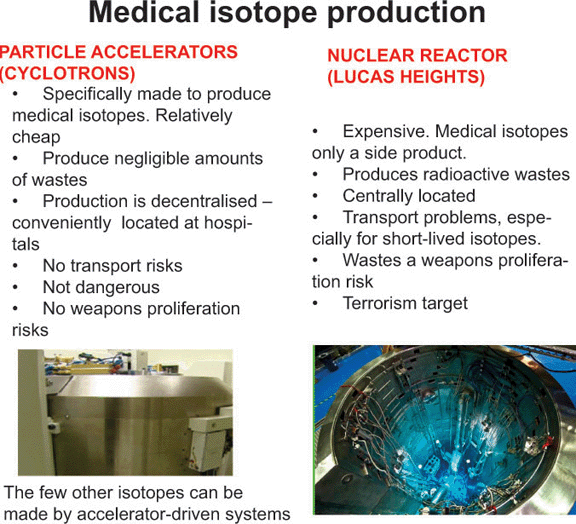
SA nuclear radio-isotope production facility back in business, but… Money Web, 22 Nov 18
Earlier shutdown resulted in shortages to SA’s government hospitals, global market.
Mike Rycroft / 22 November 2018 The Nuclear Energy Corporation of South Africa (Necsa) NTP production facility at Pelindaba, which produces medical nuclear radio-isotopes and associated products and services, is back in partial operation after approval to restart was given by South Africa’s National Nuclear Regulator (NNR).
The facility is the main supplier of medical nuclear radio-isotopes such as Molybdenum-99 in Africa, and one of only four such facilities globally. As a result of safety procedure lapses, the plant was shut down in November 2017, which lasted almost a full year. Several attempts had been made in the interim to restart the plant, but without success.
The process of rectifying shortcomings and bringing the operating and safety procedures in line with the requirements of the NNR has been marred by what appears to be conflict between NTP and its parent company, the Necsa……..
The initial shutdown occurred in November 2017 as a result of procedural errors. It appears that calibration of hydrogen sensors, an important component in the safety chain, had not been carried out correctly, and that records were not being kept properly. This was considered to be a critical safety issue, and the plant was shut down by the NNR.
An investigation was held which resulted in the suspension of a number of NTP staff. Following a number of further senior executive and staff replacements, suspensions and reinstatements, Necsa placed its own employees in charge of the plant, who then attempted to rectify the problems and restart the production facility.
………Several incidents occurred which caused restarts to be halted or abandoned. One example that has been cited is the institution of various changes to parameters which were unrelated to the cause of problems. The reasons for Necsa’s actions in this regard are unclear……
following an announcement during the recent Brics Summit in Sandton of a cooperation agreement in the field of nuclear medicine between NTP and Rusatom, the nuclear medical subsidiary of Russian state-owned nuclear company Rosatom, there are some questions as to whether a second or replacement nuclear research reactor will be built.
NTP said that the current global production over-capacity of medical radio-isotopes does not justify a second nuclear research reactor, since the Safari-1 reactor at Pelindaba still has between 15 and 20 years of life, and this could be extended still further. The Safari-1 nuclear reactor produces medical nuclear radio-isotopes by bombarding target plates of low-enriched uranium with neutrons.
Furthermore, medical nuclear radio-isotopes can also be produced by particle accelerators such as cyclotrons, which could make the consDtruction of second or replacement nuclear research reactor unnecessary, the company said.
There are also concerns regarding the financial health of Necsa. The Auditor-General has raised ongoing concerns about inadequate financial provisions by Necsa for decommissioning and dismantling costs for the Safari-1 reactor end-of-life.
November 24, 2018
Posted by Christina Macpherson |
health, South Africa |
3 Comments






 nuclear-news