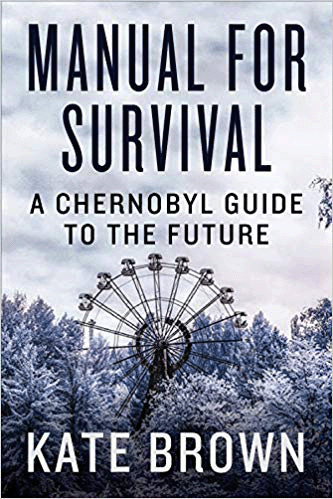
With bountiful, devastating detail, Brown describes how scientists, doctors, and journalists—mainly in Ukraine and Belarus—went to great lengths and took substantial risks to collect information on the long-term effects of the Chernobyl explosion, which they believed to be extensive.
Other researchers have issued a much sunnier picture of post-Chernobyl ecology, but Brown argues persuasively that they are grossly underestimating the scale of the damage, in part because they rely too heavily on simplistic measurements of radioactivity levels.
Radiation has a special hold on our imagination: an invisible force out of science fiction, it can alter the very essence of our bodies, dissolve us from the inside out. But Manual for Survival asks a larger question about how humans will coexist with the ever-increasing quantities of toxins and pollutants that we introduce into our air, water, and soil. Brown’s careful mapping of the path isotopes take is highly relevant to other industrial toxins, and to plastic waste. When we put a substance into our environment, we have to understand that it will likely remain with us for a very long time, and that it may behave in ways we never anticipated. Chernobyl should not be seen as an isolated accident or as a unique disaster, Brown argues, but as an “exclamation point” that draws our attention to the new world we are creating.
“………As her book’s title, Manual for Survival, suggests, Kate Brown is interested in the aftermath of Chernobyl, not the disaster itself. Her heroes are not first responders but brave citizen-scientists, independent-minded doctors and health officials, journalists, and activists who fought doggedly to uncover the truth about the long-term damage caused by Chernobyl. Her villains include not only the lying, negligent Soviet authorities, but also the Western governments and international agencies that, in her account, have worked for decades to downplay or actually conceal the human and ecological cost of nuclear war, nuclear tests, and nuclear accidents. Rather than attributing Chernobyl to authoritarianism, she points to similarities in the willingness of Soviets and capitalists to sacrifice the health of workers, the public, and the environment to production goals and geopolitical rivalries. Continue reading →
Siren sounds on nuclear fallout embedded in melting glaciers https://phys.org/news/2019-04-siren-nuclear-fallout-embedded-glaciers.html, by Patrick Galey, 10 Apr 19, Radioactive fallout from nuclear meltdowns and weapons testing is nestled in glaciers across the world, scientists said Wednesday, warning of a potentially hazardous time bomb as rising temperatures melt the icy residue.
For the first time, an international team of scientists has studied the presence of nuclear fallout in ice surface sediments on glaciers across the Arctic, Iceland the Alps, Caucasus mountains, British Columbia and Antarctica.
It found manmade radioactive material at all 17 survey sites, often at concentrations at least 10 times higher than levels elsewhere.
“They are some of the highest levels you see in the environment outside nuclear exclusion zones,” said Caroline Clason, a lecturer in Physical Geography at the University of Plymouth.
When radioactive material is released into the atmosphere, it falls to earth as acid rain, some of which is absorbed by plants and soil.
But when it falls as snow and settles in the ice, it forms heavier sediment which collects in glaciers, concentrating the levels of nuclear residue.
The Chernobyl disaster of 1986—by far the most devastating nuclear accident to date—released vast clouds of radioactive material including Caesium into the atmosphere, causing widespread contamination and acid rain across northern Europe for weeks afterwards.
“Radioactive particles are very light so when they are taken up into the atmosphere they can be transported a very long way,” she told AFP.
“When it falls as rain, like after Chernobyl, it washes away and it’s sort of a one-off event. But as snow, it stays in the ice for decades and as it melts in response to the climate it’s then washed downstream.”
The environmental impact of this has been shown in recent years, as wild boar meat in Sweden was found to contain more than 10 times the safe levels of Caesium.
Clason said her team had detected some fallout from the Fukushima meltdown in 2011, but stressed that much of the particles from that particular disaster had yet to collect on the ice sediment.
As well as disasters, radioactive material produced from weapons testing was also detected at several research sites.
“We’re talking about weapons testing from the 1950s and 1960s onwards, going right back in the development of the bomb,” she said. “If we take a sediment core you can see a clear spike where Chernobyl was, but you can also see quite a defined spike in around 1963 when there was a period of quite heavy weapons testing.”
One of the most potentially hazardous residues of human nuclear activity is Americium, which is produced when Plutonium decays.
Whereas Plutonium has a half-life of 14 years, Americium lasts 400. [Ed note: Most plutonium isotopes have very long half-lives, plutonium-239 being one of the shortest at over 24,000 years]
“Americium is more soluble in the environment and it is a stronger alpha (radiation) emitter. Both of those things are bad in terms of uptake into the food chain,” said Clason.
While there is little data available on how these materials can be passed down the food chain—even potentially to humans—Clason said there was no doubt that Americium is “particularly dangerous”.
As geologists look for markers of the epoch when mankind directly impacted the health of the planet—known as the Anthropocene—Clason and her team believe that radioactive particles in ice, soil and sediment could be an important indicator.
“These materials are a product of what we have put into the atmosphere. This is just showing that our nuclear legacy hasn’t disappeared yet, it’s still there,” Clason said.
“And it’s important to study that because ultimately it’s a mark of what we have left in the environment.”
Mesothelioma Compensation Center Now Offers to Make Certain That a Nuclear Power Worker with Mesothelioma or Asbestos Exposure Lung Cancer Gets Accelerated Compensation with The Help of Attorney Erik Karst and His Colleagues at Karst von Oiste, Mesothelioma Compensation Center
PR NewswireApr 10, 2019, NEW YORK, The Mesothelioma Compensation Center is incredibly passionate about making certain that a person who was exposed to asbestos at any type of nuclear power plant and now has mesothelioma or asbestos exposure lung cancer receives the very best possible financial compensation. The group recommends the law firm of Karst von Oiste to assist people like this because they so much experience with power plants and asbestos exposure that would have occurred at these types of facilities as they would like to discuss at 800-714-0303. www.karstvonoiste.com
Rather than offering a free book about mesothelioma or asbestos exposure lung cancer the Mesothelioma Compensation Center offers direct access to attorney Erik Karst the founding partner of the law firm Karst von Oiste. The law firm of Karst von Oiste is one of the nation’s leading legal experts on mesothelioma or asbestos exposure lung cancer.
If the family of a nuclear power worker or a Navy Veteran who was exposed to asbestos on a nuclear submarine or aircraft carrier is concerned about compensation, they are urged to call the Mesothelioma Compensation Center anytime at 800-714-0303 for direct access to attorney Erik Karst for answers to questions about compensation and or how the compensation process works. http://MesotheliomaCompensationCenter.Com……
Rather than offering a free book about mesothelioma or asbestos exposure lung cancer the Mesothelioma Compensation Center offers direct access to attorney Erik Karst the founding partner of the law firm Karst von Oiste. The law firm of Karst von Oiste is one of the nation’s leading legal experts on mesothelioma or asbestos exposure lung cancer.
NY Radiation Specialists Unveils State-of-the-Art Linear Accelerator at NYCBS benzinga, 8 Apr 19, Port Jefferson Station, NY, April 08, 2019 –(PR.com)– On Tuesday, March 25, New York Radiation Specialists unveiled its brand new Varian Halcyon Linear Accelerator, at New York Cancer & Blood Specialists’ Eastchester Center for Cancer Care. The “NYCBS” Eastchester location is a multi-lingual facility located at 2330 Eastchester Road in the Bronx, just minutes from the Pelham Parkway. The Halcyon makes the NYCBS Eastchester Center for Cancer Care the most state-of-the-art radiation site in the region.
This cutting edge machine boasts features and benefits previously considered impossible. The Halcyon uses optimized guided radiotherapy technology to shape radiation beams to precisely match a patient’s tumor. These “beam shapers” deliver pinpoint accuracy of radiation to the areas that need it, protecting surrounding tissue and reducing the risk of side effects. In addition, the sophisticated design drastically reduces a patient’s table time. Since the accelerator is a self-contained unit, it is free to rotate up to four times faster than traditional models. The Halcyon can deliver effective radiation therapy in as little as five minutes. “Having the ability to deliver more effective treatment in less time is a win for the patient and aligns perfectly with New York Cancer & Blood Specialist’s mission to provide the highest quality of care,” said Dr. Reuven Grossman, an NYCBS Radiation Oncologist. “This new technology provides the most targeted and effective radiation treatment available anywhere.” Patients even have the option of checking themselves into the unit using a touchscreen and their I.D.
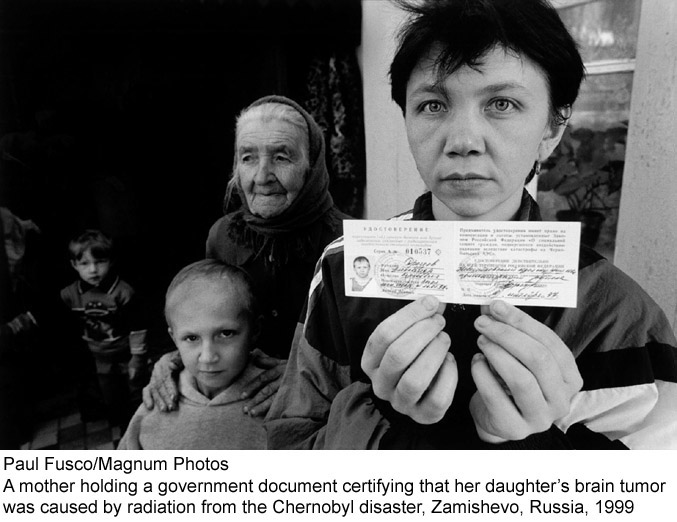
Fortunately, Chernobyl health records are now available to the public. They show that people living in the radioactive traces fell ill from cancers, respiratory illness, anaemia, auto-immune disorders, birth defects, and fertility problems two to three times more frequently in the years after the accident than before. In a highly contaminated Belarusian town of Veprin, just six of 70 children in 1990 were characterised as “healthy”. The rest had one chronic disease or another. On average, the Veprin children had in their bodies 8,498 bq/kg of radioactive caesium (20 bq/kg is considered safe).
Currently, policymakers are advocating a massive expansion of nuclear power as a way to combat climate change. Before we enter a new nuclear age, the declassified Chernobyl health records raise questions that have been left unanswered about the impact of chronic low doses of radioactivity on human health.
As researchers monitored Chernobyl radioactivity, they made a troubling discovery. Only half of the caesium-137 they detected came from Chernobyl. The rest had already been in the Cumbrian soils; deposited there during the years of nuclear testing and after the 1957 fire at the Windscale plutonium plant. The same winds and rains that brought down Chernobyl fallout had been at work quietly distributing radioactive contaminants across northern England and Scotland for decades. Fallout from bomb tests carried out during the cold war scattered a volume of radioactive gases that dwarfed Chernobyl.
The Chernobyl explosions issued 45m curies of radioactive iodine into the atmosphere. Emissions from Soviet and US bomb tests amounted to 20bn curies of radioactive iodine, 500 times more. Radioactive iodine, a short lived, powerful isotope can cause thyroid disease, thyroid cancer, hormonal imbalances, problems with the GI tract and autoimmune disorders.
As engineers detonated over 2,000 nuclear bombs into the atmosphere, scientists lost track of where radioactive isotopes fell and where they came from, but they caught glimpses of how readily radioactivity travelled the globe.
Chernobyl’s disastrous cover-up is a warning for the next nuclear age
https://www.theguardian.com/commentisfree/2019/apr/04/chernobyl-nuclear-power-climate-change-health-radioactivity, Kate Brown , 5 Apr 19, Before expanding nuclear power to combat climate change, we need answers to the global health effects of radioactivity In 1986, the Soviet minister of hydrometeorology, Yuri Izrael, had a regrettable decision to make. It was his job to track radioactivity blowing from the smoking Chernobyl reactor in the hours after the 26 April explosion and deal with it. Forty-eight hours after the accident, an assistant handed him a roughly drawn map. On it, an arrow shot north-east from the nuclear power plant, and broadened to become a river of air 10 miles wide that was surging across Belarus toward Russia. If the slow-moving mass of radioactive clouds reached Moscow, where a spring storm front was piling up, millions could be harmed. Izrael’s decision was easy. Make it rain.So that day, in a Moscow airport, technicians loaded artillery shells with silver iodide. Soviet air force pilots climbed into the cockpits of TU-16 bombers and made the easy one-hour flight to Chernobyl, where the reactor burned. The pilots circled, following the weather. They flew 30, 70, 100, 200km – chasing the inky black billows of radioactive waste. When they caught up with a cloud, they shot jets of silver iodide into it to emancipate the rain.In the sleepy towns of southern Belarus, villagers looked up to see planes with strange yellow and grey contrails snaking across the sky. Next day, 27 April, powerful winds kicked up, cumulus clouds billowed on the horizon, and rain poured down in a deluge. The raindrops scavenged radioactive dust floating 200 metres in the air and sent it to the ground. The pilots trailed the slow-moving gaseous bulk of nuclear waste north-east beyond Gomel, into Mogilev province. Wherever pilots shot silver iodide, rain fell, along with a toxic brew of a dozen radioactive elements.
If Operation Cyclone had not been top secret, the headline would have been spectacular: “Scientists using advanced technology save Russian cities from technological disaster!” Yet, as the old saying goes, what goes up must come down. No one told the Belarusians that the southern half of the republic had been sacrificed to protect Russian cities. In the path of the artificially induced rain lived several hundred thousand Belarusians ignorant of the contaminants around them.
The public is often led to believe that the Chernobyl exclusion zone, a depopulated 20-mile circle around the blown plant, safely contains Chernobyl radioactivity. Tourists and journalists exploring the zone rarely realise there is a second Chernobyl zone in southern Belarus. In it, people lived for 15 years in levels of contamination as high as areas within the official zone until the area was finally abandoned, in 1999.
In believing that the Chernobyl zone safely contained the accident, we fall for the proximity trap, which holds that the closer a person is to a nuclear explosion, the more radioactivity they are exposed to. But radioactive gases follow weather patterns, moving around the globe to leave shadows of contamination in shapes that resemble tongues, kidneys, or the sharp tips of arrows.
Over the years, those who sought care from Dispensary No. 4 or the IRME were logged in the state’s medical registry, which tracks the health of people exposed to the Polygon tests. People are grouped by generation and by how much radiation they received, on the basis of where they lived. Although the registry does not include every person who was affected, at one point it listed more than 351,000 individuals across 3 generations. More than one-third of these have died, and many others have migrated or lost contact. But according to Muldagaliev, about 10,000 people have been continually observed since 1962. Researchers consider the registry an important and relatively unexplored resource for understanding the effects of long-term and low-dose radiation2.
Geneticists have been able to use these remaining records to investigate the generational effects of radiation…….
In 2002, Dubrova and his colleagues reported that the mutation rate in the germ lines of those who had been directly exposed was nearly twice that found in controls3. The effects continued in subsequent generations that had not been directly exposed to the blasts. Their children had a 50% higher rate of germline mutation than controls had. Dubrova thinks that if researchers can establish the pattern of mutation in the offspring of irradiated parents, then there could be a way to predict the long-term, intergenerational health risks.
The nuclear sins of the Soviet Union live on in Kazakhstan https://www.nature.com/articles/d41586-019-01034-8Wudan Yan– 3 Apr 19, Decades after weapons testing stopped, researchers are still struggling to decipher the health impacts of radiation exposure around Semipalatinsk. The statues of Lenin are weathered and some are tagged with graffiti, but they still stand tall in the parks of Semey, a small industrial city tucked in the northeast steppe of Kazakhstan. All around the city, boxy Soviet-era cars and buses lurch past tall brick apartment buildings and cracked walkways, relics of a previous regime.Other traces of the past are harder to see. Folded into the city’s history — into the very DNA of its people — is the legacy of the cold war. The Semipalatinsk Test Site, about 150 kilometres west of Semey, was the anvil on which the Soviet Union forged its nuclear arsenal. Between 1949 and 1963, the Soviets pounded an 18,500-square-kilometre patch of land known as the Polygon with more than 110 above-ground nuclear tests. Kazakh health authorities estimate that up to 1.5 million people were exposed to fallout in the process. Underground tests continued until 1989.
Much of what’s known about the health impacts of radiation comes from studies of acute exposure — for example, the atomic blasts that levelled Hiroshima and Nagasaki in Japan or the nuclear disaster at Chernobyl in Ukraine. Studies of those events provided grim lessons on the effects of high-level exposure, as well as the lingering impacts on the environment and people who were exposed. Such work, however, has found little evidence that the health effects are passed on across generations.
People living near the Polygon were exposed not only to acute bursts, but also to low doses of radiation over the course of decades (see ‘Danger on the wind’). Kazakh researchers have been collecting data on those who lived through the detonations, as well as their children and their children’s children. Continue reading →
Lawsuit filed on behalf of nuclear workers https://www.abqjournal.com/1299172/lawsuit-filed-on-behalf-of-nuclear-workers.html, BY SCOTT TURNER / JOURNAL STAFF WRITER April 2nd, 2019 ALBUQUERQUE, N.M. — James Jaramillo and Harold Archuleta are used to having to navigate through government bureaucracy to receive compensation for illnesses they said were caused by radiation exposure during their days as employees at Sandia National Laboratories and Los Alamos National Laboratory.
Both men had to wait years after filing claims for compensation through the Energy Employees Occupational Illness Compensation Program.
Jaramillo, 65, worked at Sandia for 24 years. He found out he had cancer of the small intestine in 1998. He filed for compensation in 2003 but was originally denied. Through changes in the program, he was finally awarded compensation in 2012 for medical care and lost wages since he was forced to retire.
Archuleta, 80, worked 38 years, 35 full time, at Los Alamos, where, he said, he ended up with skin cancer after years of exposure to plutonium. He’s also received compensation, but his wife, Angie, said it wasn’t an easy process.
“Congress put forth this act to help them, but then when it comes to actually paying, they put up all of these barriers,” Angie Archuleta said. “It’s just been very frustrating.”
According to a release by the Department of Labor’s Office of Workers’ Compensation Programs, changes are being made next week to update some of the regulations, with the goal of increasing efficiency and transparency and reducing administrative costs. The rules would align the regulations regarding processing and paying medical bills with the current system Office of Workers’ Compensation Programs uses to pay medical bills, and set out a new process that the office will use for authorizing in-home health care that will enable the office to better provide its beneficiaries with appropriate care, according to the release.
However, a company that provides health care to workers such as Jaramillo and Archuleta says rule changes involving the program could make it harder for nuclear workers to receive compensation and could delay the medical treatment they need.
The company, Professional Case Management, has filed suit in the District Court of Colorado against the Labor Department to keep the changes to the Energy Employees Occupational Illness Compensation Program from taking effect. Professional Case Management Vice President Tim Lerew said the new changes could cause delays of 60 days or more in treatment.
“It’s hard to know how long those delays will be,” Lerew said at a town hall meeting in Albuquerque last week. “We estimate it will be about an additional 60 days. For some people, coming out of the hospital with particular illnesses where doctors want them to have additional care … they don’t have that time to wait.”
Lerew said the new rule changes will also add 36 steps to the process between the patient, the doctor and the Labor Department to get pre-authorization for treatment and services, such as home health care.
“If they have you jump through 36 more hoops, how is a guy supposed to do that?” Jaramillo asked.
The rule changes would require patients to fill out most of the paperwork. In the past, health care providers would fill out the majority of it, Lerew and Jaramillo said.
“If you don’t dot every ‘i’ and cross every ‘t,’ they deny you,” said Jaramillo’s wife, Terry.
“Nurses take all your vitals and with the doctor come up with your plan, and send to the Department of Labor for approval,” James Jaramillo said. “Now, they want the patients to fill out a lot of the paperwork and submit it themselves, and not let medical people get involved with that.”
Lerew said he wondered how a cancer-stricken person in his or her 80s “is successfully going to navigate that process.”
LeRoy Moore: Low-dose radiation can be more dangerous,http://www.dailycamera.com/letters/ci_32543151/leroy-moore-low-dose-radiation-can-be-more31 Mar 19 Though Maddie Nagle’s beautifully written column of March 8 criticizes me, more important is that she downplays the significance of low-dose exposure to the alpha radiation of plutonium at Rocky Flats. This could harm people unaware of the danger. Carl Morgan, the “Father of Health Physics,” studied the effects of radiation for those building Manhattan Project nuclear weapons. He knew that the alpha particles released by plutonium cannot be harmful unless inhaled or taken into the body through an open wound.
Toward the end of his life he spoke to Robert Del Tredici. He said “down at the low doses you actually get more cancers per person rem than you do at the high doses … because the high levels will often kill cells outright, whereas the low levels of exposure tend to injure cells rather than kill them and it is the surviving injured cells that are the cause for concern.” The effects of a small exposure “will be much more severe than had been anticipated.”(Del Tredici, “At Work in the Fields of the Bomb,” 1987, p. 133)
Nagle also makes misleading remarks about Tom K. Hei of Columbia University. Hei and colleagues demonstrated that a single plutonium alpha particle induces mutations in mammal cells. Cells receiving very low doses are more likely to be damaged than destroyed. Replication of these damaged cells constitutes genetic harm, and more such harm per unit dose occurs at very low doses than would occur with higher dose exposures. “These data provide direct evidence that a single alpha particle traversing a nucleus will have a high probability of resulting in a mutation and highlight the need for radiation protection at low doses.” (Hei et al., Proceedings of the National Academy of Sciences, vol. 94, April 1997, pp. 3765-3770.)
“I see doctors two, three times a week, most the time. That’s my job now, going to the doctor,” Cook said. “There’s like 62 diseases that I have. It’s unreal.”
She lost her hearing, part of her vision, had multiple surgeries and strokes, and is now worried about how she is going to pay for it all.
In 2001, the Energy Employees Occupational Illness Compensation Program Act went into effect, allowing compensation for nuclear workers facing certain health issues. Cook has been filing claims through a division of the Department of Labor since that time, but says the process was long, stressful and lacked communication.
Cook reached out to Denver-based Professional Case Management to help with in-home health care. They provide services for nuclear workers and founded the Cold War Patriots, which advocates for workers.
Oftentimes, they didn’t know that the work they were doing was so dangerous and [so] harmful to their health,” said PCM president Greg Austin.
PCM is now suing the federal government over rule changes set to take effect April 9, saying they violate constitutional rights, among other legal issues.
“Under the new rules, there’s a lengthy, roughly 36-step process that involves filling out forms, mailing them back and forth, before that care can start,” Austin said.
“Program that takes years to get compensation, they want us to die before they pay us?” Cook said.
The Problem Solvers reached out to the Department of Labor for comment about why the rule changes were necessary and was referred to OSHA, but have yet to hear back.
Austin says the process could take former workers more than 60 days just to file a claim.
A judge will hear arguments in federal court in Denver on April 4 to determine whether the rule changes should stay or go.
Age and Sex Bias in Radiation Research—and How to Overcome It http://jnm.snmjournals.org/content/60/4/466.full, 1 Apr 19, Britta Langen, Department of Radiation Physics, Institute of Clinical Sciences, Sahlgrenska Cancer Center, Sahlgrenska Academy, University of Gothenburg, Gothenburg, Sweden
For correspondence or reprints contact: Britta Langen, Department of Radiation Physics, University of Gothenburg, Sahlgrenska University Hospital, Gula stråket 2B, SE-413 45 Gothenburg, Sweden. E-mail: britta.langen@gu.se
Basic research is the driving force behind medical progress. As successful as this relation has been, an intrinsic dilemma persists to this day: each study design frames reality—yet the conclusions seek general validity. This dilemma crystallizes into major bias when conclusions are based on selected groups that do not represent the reality of biologic diversity. Ironically, while striving for a future of highly personalized treatments, we have overlooked the obvious features that make an individual, stratify a cohort, and influence outcome: age and sex.
A current example of this issue are molecular biomarkers that may bring the next quantum leap in clinical practice. Biomarkers such as transcripts, proteins, or metabolites can easily be sampled from blood, quantified, and used for biologic dosimetry, risk estimation for postradiation therapy diseases, or screening in radiation hazard events. Still, most studies that use novel “omics” or “next-gen” methods for screening harbor pitfalls similar to previous methodologies and neglect age and sex as important factors. This can compromise the sensitivity, specificity, and accuracy of biomarkers, leading to erroneous diagnosis and treatment planning.
Sex bias in biomedical research is not a new revelation (1). Surprisingly, it stems not only from the use of single-sex cohorts but also from omitting sex as a factor altogether. Although other fields, such as neuroscience research, have started to tackle this issue (2), it remains largely unaddressed and underrepresented in radiation biology and related medical fields. For instance, sex-specific radiation sensitivity is known in principle yet is rarely considered in study designs beyond this particular research question. The bias in our knowledge base becomes even more worrisome when considering the nonlinearity of age between humans and mice (3). Do we relate age according to sexual maturity, onset of senescence, or total life span? It is reasonable to assume that the answer is, “depending on the research question and biologic endpoint.” However, this issue is usually neglected altogether and the age of the animal is chosen for purely practical reasons. Recently, research on age and sex bias has shown that radiation responses can differ largely between male and female mice, as well as between adolescent and adult specimens (4). If only one group had been used in the proteomic screening for blood-based biomarkers, the conclusions on dose–response would differ and poorly represent radiobiologic effects for other sex and age groups. Most importantly: if neglected, the bias would remain unknown and create large uncertainties that ultimately lead to avoidable risks for patients in radiotherapy and nuclear medicine.
It will be difficult to update our knowledge base to consider these basic factors systematically; in the end, a large body of evidence will still include age and sex biases. Nevertheless, the sooner we start taking action to overcome age and sex bias in our field, the less will misleading information contaminate the knowledge base. Each of us can partake in this effort according to our opportunities. For example, researchers can plan studies with male and female cohorts, principal investigators can establish such cohorts as the group standard, and manuscripts and grant applications can address these possible biases and highlight measures on how to control them. Reviewers can identify age and sex bias and consider it a methodologic limitation, and editors can establish submission forms that require disclosure of age and sex as preclinical study parameters. Lecturers can inform about these potential biases in research and raise students’ awareness when working with source material. Finally, students and PhD candidates can take initiative and, if presented with biased data or methodologies, address age and sex as important factors.
Undoubtedly, using both male and female cohorts and different age groups in research is resource-intensive. It is paramount that funding agencies support these efforts by rewarding points for rigorous research designs that consider age and sex as essential factors. Some large international funding agencies have already started to include dedicated sections on the age and sex dimension in grant applications, but this change needs to be consistent across all funding bodies on the national and regional levels.
By committing to a higher methodologic standard, we can reduce critical bias in our field and in radiation research as a whole. Ultimately, our effort will increase the quality of diagnosis and treatment and improve the odds for therapeutic success for every patient.
School and university students continue Friday protests to call for political action on crisis From Australia to America, children put down their books on Friday to march for change in the first global climate strike.
The event was embraced in the developing nations of India and Uganda and in the Philippines and Nepal – countries acutely impacted by climate change – as tens of thousands of schoolchildren and students in more than 100 countries went on “strike”, demanding the political elite urgently address what they say is a climate emergency. Continue reading →
Thyroid cancer caused by low-level radiation has a different “mutational signal” than most thyroid cancer, Goldenberg said. He and his colleagues used molecular research that had been pioneered after the Chernobyl nuclear disaster to find that genetic marker.
Three Mile Island and thyroid cancer: Debates continue over health issues after nuclear plant accident
Penn Live By Brett Sholtis/PA Post, 15 Mar 19
On March 28, 1979, Chris Achenbach-Kimmel was a 14-year-old freshman at Cedar Cliff High School in Camp Hill, Cumberland County. Fourteen miles away, on the Susquehanna River, staff at Three Mile Island Nuclear Generating Station were trying to contain the damage from an accident at one of its reactors.
“I just remember being in class, and just getting the news, and wondering, what does this mean?”……
Her mother kept her and her siblings inside as much as possible. TV news reports echoed through the house as her mother waited for an “all clear” from authorities. ……
For Achenbach-Kimmel, the accident became merely one more high school memory. She graduated in 1982 and went on to a career in occupational therapy.
It wasn’t until her thyroid cancer diagnosis in 2010 that she thought again about Three Mile Island.
“I think as soon as I got over the initial shock, it’s like, oh my gosh, I wonder if these two things are related,” said Achenbach-Kimmel, now a 54-year-old academic fieldwork coordinator at the Elizabethtown College occupational therapy department.
Her doctor wasn’t surprised when Achenbach-Kimmel mentioned TMI.
“She said, ‘oh yeah, we see an increased incidence in the area compared to what my colleagues see around the country.’”
For those who grew up in central Pennsylvania, Chris’s story is a common one. People blame TMI for their illnesses, and some doctors accept it could have been the case.
Yet, the nuclear industry’s position has been that there has been no conclusive link between the accident and adverse health effects…….
Dr. David Goldenberg, a surgeon and thyroid researcher, launched the Penn State College of Medicine Study after years of hearing his patients bring up the nuclear plant accident.
…… thyroid cancer caused by low-level radiation has a different “mutational signal” than most thyroid cancer, Goldenberg said. He and his colleagues used molecular research that had been pioneered after the Chernobyl nuclear disaster to find that genetic marker.
The scientists screened out many thyroid cancer patients, limiting their study to 44 people who were born in counties around Three Mile Island, were present during the accident and were treated at Penn State Hershey Medical Center.
“We found a shift, which absolutely can be attributed to exposure to radiation, during the correct time frame of the Three Mile Island accident,” he said, adding that this does not prove that TMI caused the cancer. It just shows a correlation.
8 Years On: Number of Kids Dives in Disaster-Hit Fukushima Municipalitieshttps://www.nippon.com/en/news/yjj2019031300954/8-years-on-number-of-kids-dives-in-disaster-hit-fukushima-municipalities.html Mar 15, 2019 Fukushima, March 15 (Jiji Press)–In 10 Fukushima Prefecture municipalities where elementary and junior high school have reopened after the lifting of nuclear evacuation advisories, the number of students stood at 758 as of May 1, 2018, about 10 pct of the level before the March 2011 disasters.
During protracted evacuations, many child-rearing families rebuilt their lives in new locations, leading to the sharp fall in the number of students in Fukushima.
As a result, the local governments are facing difficulties in school operations.
In the Yamakiya district of the town of Kawamata, the evacuation advisory was removed in March 2017, six years after the nuclear accident at Tokyo Electric Power Company Holdings Inc.’s <9501> Fukushima No. 1 plant, heavily damaged by the 9.0-magnitude earthquake and the ensuing tsunami.
Elementary and junior high schools reopened in the town in April 2018, but five six-graders are the only elementary school children. With no freshman joining this spring, the elementary school plans to suspend its operations in April.
Radioactive fallout after the March 2011 Fukushima nuclear meltdown entered the U.S. environment within days; levels of radioactivity were particularly elevated in the five western states bordering on the Pacific Ocean. The particular sensitivity of the fetus to radiation exposure, and the ability of radioisotopes to attach to cells, tissues, and DNA raise the question of whether fetuses/newborns with birth defects with the greater exposures suffered elevated harm during the period after the meltdown. We compare rates of five congenital anomalies for 2010 and 2011 births from April-November. The increase of 13.00% in the five western states is significantly greater than the 3.77% decrease for all other U.S. states combined (CI 0.030 – 0.205, p < 0.008). Consistent patterns of elevated increases are observed in the west (20 of 21 comparisons, 6 of which are statistically significant/borderline significant), by state, type of birth defect, month of birth, and month of conception. While these five anomalies are relatively uncommon (about 7500 cases per year in the U.S.), sometimes making statistical significance difficult to achieve, the consistency of the results lend strength to the analysis, and suggest fetal harm from Fukushima may have occurred in western U.S. states.
Veterans say the research is meaningless, and demand a long-promised medal review By Susie Boniface, 14 MAR 2019
The government has “lost” all trace of almost half its nuclear veterans – making a mockery of a planned health study.
Defence Secretary Gavin Williamson is now facing calls to cancel the expensive and “meaningless research” which survivors of the bomb tests say has no chance of proving their claims to have been irradiatedduring Cold War radiation experiments.
It comes after officials at Public Health England, which is conducting the six-figure study, admitted they have no way of checking the health of all 22,000 servicemen who took part in the 1950s tests.
Alan Owen, chairman of the British Nuclear Test Veterans’ Association, said: “We have been palmed off with meaningless research that has no chance of being definitive or accurate. The only reason for continuing it is shameless PR.
“Mr Williamson should cancel this useless study immediately, and use the money to provide our veterans with a medal for their exemplary service.”
Several studies have been carried out since the 1980s into the veterans’ rate of cancer, which if accurate could indicate radiation exposure.
But veterans says they are flawed because they compare the health of scientists with soldiers, and the health effects of smaller weapons that had fewer eyewitnesses with massive hydrogen bombs. Many of the servicemen lived in the fallout of such weapons for more than a year.
In 1983 the MoD said it could find records of only 85 per cent of those present, and now PHE staff have admitted they have lost almost half.
An official has now said privately to campaigners that they can trace 12,000 deaths of veterans for the research, but details for the remaining 9,400 people – or 44 per cent of the total – are missing from the records.
Those who have moved abroad, not registered with a GP after moving home, or who use private doctors will not be included. If a veterans’ NHS number becomes inactive they cannot be tracked for the study.
The Ministry of Defence did not confirm the figures that were leaked to the veterans.
A spokesman MoD said: “Around 2,000 [of the veterans] have emigrated and around 100 have not yet been traced. We continue to follow up with the remainder and are confident this study will bring the current information up to date.”
 e
e





 Download as PDF

 nuclear-news