Ailing Leaders Heighten Nuclear War Concerns
“This is particularly the case for the United States, where a leader can in principle authorise the release of nuclear weapons on their own, a situation referred to as a ‘nuclear monarchy’.”
14 Jul 2025, https://www.miragenews.com/ailing-leaders-heighten-nuclear-war-concerns-1495665/
Many former leaders of the world’s nine nuclear-armed nations were impaired by health conditions while in office, raising concerns over their decision-making abilities while they had access to nuclear weapon launch codes, a study from the University of Otago, New Zealand, has found.
The study analysed the health information of 51 deceased leaders of nuclear-armed countries: China, France, India, Israel, North Korea, Pakistan, Russia, the United Kingdom and the United States. Eight of the leaders died from chronic disease while still in office, five from heart attacks or strokes. Many of the leaders had multiple serious health issues while in office, including dementia, personality disorders, depression and drug and alcohol abuse.
The research was led by Professor Nick Wilson, from the Department of Public Health at the University of Otago, Wellington – Ōtākou Whakaihu Waka, Pōneke, with Associate Professor George Thomson and independent researcher Dr Matt Boyd.
Professor Wilson says that of the leaders who left office while still alive, 15 had confirmed or possible health issues which likely hastened their departure.
Professor Nick Wilson
“Probably all of this group of 15 leaders had their performance in office impaired by their health conditions. In some cases, the degree of impairment was profound, such as in the case of two former Israeli Prime Ministers: Ariel Sharon, who became comatose after suffering a stroke in office, and Menachem Begin, whose depression was so severe he spent his last year as leader isolated in his home. Impairment during crises was also seen in the case of Richard Nixon’s bouts of heavy drinking – including during a nuclear crisis involving the Middle East.
“There have also been occasions where health information about leaders has been kept secret at the time.”
This was the case for multiple US presidents, including Dwight D Eisenhower, whose doctor described his 1955 heart attack as a digestive upset; John F Kennedy, whose aides lied about him having Addison’s disease, a serious, chronic condition; and Ronald Reagan, whose administration hid the extent of his injuries after he was shot in 1981, and the likely signs of his dementia near the end of his term.
Professor Wilson says Kennedy was in poor health during his first two years in office in 1961 and 1962, with his performance likely impaired from Addison’s disease, back pain, and his use of anabolic steroids and amphetamines. It was in 1961 that he authorised the failed CIA-backed Bay of Pigs invasion of Cuba and that his poor performance at a Cold War summit with Soviet leader Nikita Khrushchev in Vienna was noted. In turn, Khrushchev’s poor mental health probably contributed to him triggering both the Berlin Crisis and the Cuban Missile Crisis.
In France, long-serving President François Mitterrand clung onto power until the end of his term in 1995, despite keeping secret his advanced prostate cancer and after his doctor had concluded in late 1994 that he was no longer capable of carrying out his duties.
This latest study follows previous research involving Professor Wilson on the health of former New Zealand Prime Ministers. It found the performance of at least four of the leaders was impaired, in three cases by poor health, and, in the case of Robert Muldoon, by his heavy drinking.
Professor Wilson says with the rise in international instability following the Russian invasion of Ukraine in 2022 it has become even more important to ensure there is good leadership and governance in those countries with nuclear weapons.
“This is particularly the case for the United States, where a leader can in principle authorise the release of nuclear weapons on their own, a situation referred to as a ‘nuclear monarchy’.”
He says there is a range of measures which could reduce global security risks from leaders whose judgement is in question. They include removing nuclear weapons from ‘high alert’ status, adopting ‘no first use’ policies where nations refrain from using nuclear weapons except as a retaliatory second strike, ensuring any weapon launches need authorisation by multiple people, and progressing nuclear disarmament treaties.
Professor Wilson says democracies could consider introducing term limits for their leaders, as well as recall systems, so voters could petition for politicians to step down. Requirements for medical and psychological assessments could be introduced for leaders before they take office, and during their terms.
“Maintaining a strong media with investigative journalists can also help expose impairment in leaders.”
Professor Wilson says politicians in general are exposed to high levels of stress, which can affect their mental wellbeing. A study of UK Members of Parliament has found they were 34 per cent more likely to experience mental health problems than other high-income earners.
“Finding ways to reduce stress on politicians and better address their mental health needs is another way global security risks can be reduced.”
Publication details
Nick Wilson, George Thomson & Matt Boyd
BMC Research Notes
The associated recent study of impaired New Zealand Prime Ministers is detailed in this University of Otago media release.
Major radiation warning as Israel says it’s ‘on verge of destroying 10 nuclear sites’

International Atomic Energy Agency director Rafael Mariano Grossi said protective measures need to be put in place due to the risk of radiation at the Natanz nuclear facility.
Chiara Fiorillo News Reporter, 17 Jun 2025, https://www.mirror.co.uk/news/world-news/major-radiation-warning-israel-says-35407962
A major radiation warning has been issued after Israel’s Defence Minister said his country is “on the verge” of destroying “more than 10 nuclear targets” in Iran. Israel Katz said the Israeli Air Force will strike “very significant targets, strategic targets, targets of the regime and infrastructure” in Tehran today. One of the targets include the underground Fordow facility which Katz said is “an issue that will certainly be addressed.”
The Natanz nuclear facility has already been hit by Israeli strikes and after the latest warning from Israel, the head of the UN nuclear watchdog agency, Rafael Mariano Grossi, warned of the widespread risks posed by attacks on such facilities. The International Atomic Energy Agency (IAEA) said there is a risk of of both radiological and chemical contamination within Iran’s main nuclear enrichment facility.
“Based on continued analysis of high resolution satellite imagery collected after Friday’s attacks, the IAEA has identified additional elements that indicate direct impacts on the underground enrichment halls at Natanz,” the agency said on X. “No change to report at Esfahan and Fordow,” the IAEA added.
The radiation poses significant danger if uranium is inhaled or ingested. Appropriate protective measures are needed to manage the risk, including using respiratory protection devices while inside the facilities. Mr Grossi said currently, radiation levels outside complex are normal.
Located 220km (135 miles) southeast of Tehran, the Natanz facility was protected by anti-aircraft batteries, fencing and Iran’s paramilitary Revolutionary Guard. The underground part of the facility is buried to protect it from airstrikes and contains the bulk of the enrichment facilities at Natanz, with 10,000 centrifuges that enrich uranium up to 5 per cent, experts assess.
The IAEA had earlier reported that Israeli strikes had destroyed an above-ground enrichment hall at Natanz and knocked out electrical equipment that powered the facility. However, most of Iran’s enrichment takes place underground.
Although Israel has struck Natanz repeatedly and claims to have inflicted significant damage on its underground facilities, Tuesday’s IAEA statement marked the first time the agency has acknowledged impacts there.
Iran has not discussed the damage done in depth at Natanz as the country is reeling from the ongoing Israeli strikes that are dismantling its air defence and killing its top military commanders.
The facility is located 220km southeast of Tehran(Image: Satellite image ©2021 Maxar Tech)
Israel says its sweeping assault on Iran’s top military leaders, nuclear scientists, uranium enrichment sites and ballistic missile program is necessary to prevent its adversary from getting any closer to building an atomic weapon.
The strikes have killed at least 224 people in Iran. Iran has retaliated by launching more than 370 missiles and hundreds of drones at Israel. So far, 24 people have been killed in Israel.
The Israeli military said a new barrage of missiles was launched on Tuesday. Iran maintains its nuclear program is peaceful, and the United States and others have assessed Tehran has not had an organized effort to pursue a nuclear weapon since 2003.
But the head of the IAEA has repeatedly warned that the country has enough enriched uranium to make several nuclear bombs should it choose to do so.
Firm fined £26k after worker exposed to radiation at Teesside site
Mistras Group Limited was fined £26,000 after a radiographer was overexposed to ionising radiation while working at a site in Hartlepool.
By Nicole Goodwin, City Centre Reporter, Jade McElwee, Content Editor,
Teesside Gazette 7th June 2025, https://www.gazettelive.co.uk/news/teesside-news/mistras-group-limited-radiation-hartlepool-31808465
A global firm has been slapped with a £26,000 fine after a radiographer was exposed to ionising radiation at a North East site.
The 69-year-old man was working for Mistras Group Limited in December 2020 when the company was alerted by their approved dosimetry service that he had received a dose exceeding legal limits. The Health and Safety Executive (HSE) was also informed, leading to the prosecution of the company following an investigation.
Ionising radiation is widely used in various industries including energy production, manufacturing, medicine and research. While it offers numerous benefits to society, it’s crucial that its risks are sensibly managed to safeguard workers and the public.
The incident occurred at Mistras Group Limited’s former Hartlepool site when a gamma emitting radioactive source used for radiography failed to return to its shielded container. Due to lax adherence to the company’s own radiation safety protocols, this wasn’t promptly identified, resulting in the radiographer being overexposed to radiation.
Although no symptoms were reported, excessive exposure to ionising radiation can heighten the risk of developing certain cancers. The HSE investigation discovered that pre-use safety checks hadn’t been completed and recorded by the radiographer, reports Chronicle Live. These checks are vital stages in verifying that radiography systems are functioning properly and ensuring the safe use of equipment.
The firm Mistras Group Limited was hit with a £26,000 fine and must pay £11,353 in costs after admitting to breaches of radiation safety regulations at Newton Aycliffe Magistrates’ Court on May 22. The company, based in Norman Way, Cambridge, had provided alarming Electronic Personal Dosemeters (EPDs) and radiation monitors to employees, yet it emerged that a radiographer failed to use the equipment; this could have alerted them to dangerous radiation levels allowing for a safe retreat.
Radiation incidents had not been reported correctly. Additional failings by the company to ensure adherence to radiation protection rules and procedures included not following local rule instructions and insufficient supervision leading to a lack of compliance. Moreover, the firm previously faced enforcement actions from HSE for similar shortcomings.
Commenting on the case, HSE’s radiation specialist inspector Elizabeth Reeves stated: “Industrial radiography is a hazardous practice if not managed properly. Radiation protection is an area where employers and employees must not become complacent with.
“Safety checks and the use of monitoring equipment such as EPD’s and radiation monitors are essential elements to ensuring the safe operation of equipment and protection to personnel. This prosecution demonstrates that the courts, and HSE, take failure to comply with the regulations extremely seriously.”
The HSE’s enforcement lawyer, Jonathan Bambro, and paralegal officer, Rebecca Forman, led the prosecution in this case.
Ending nuclear weapons, before they end us

Led by Ireland and New Zealand, in late 2024, the United Nations General Assembly voted overwhelmingly to establish a 21 member independent scientific panel to undertake a new comprehensive study on the effects of nuclear war,12 with its final report due in 2027.
The resolution calls upon UN agencies, including WHO, to support the panel’s work, including by “contributing expertise, commissioned studies, data and papers.”
BMJ 2025; 389 doi: https://doi.org/10.1136/bmj.r881 (Published 13 May 2025)Cite this as: BMJ 2025;389:r88b https://www.bmj.com/content/389/bmj.r881
- Kamran Abbasi, editor in chief1,
- Parveen Ali, editor in chief2,
- Virginia Barbour, editor in chief,
- Marion Birch, editor in chief4,
- Inga Blum, At-large board member5,
- Peter Doherty, 1996 Nobel prize for physiology or medicine,
- Andy Haines, professor of environmental change and public health6,
- Ira Helfand, past president5,
- Richard Horton, editor in chief7,
- Kati Juva, co-president5,
- Jose F Lapena8,
- Jrvice president,
- Robert Mash, editor in chief9,
- Olga Mironova, co-president5,
- Arun Mitra, past president5,
- Carlos Monteiro, editor in chief10,
- Elena N Naumova, editor in chief11,
- David Onazi, co-president5,
- Tilman Ruff, past president5,
- Peush Sahni, editor in chief12,
- James Tumwine, editor in chief13,
- Carlos Umaña, co-president5,
- Paul Yonga, editor in chief14,
- Chris Zielinski, president8
WHO’s mandate to provide evidence on health effects must be restored
In May 2025 the World Health Assembly (WHA) will vote on re-establishing a mandate for the World Health Organization (WHO) to address the health consequences of nuclear weapons and war.1 Health professionals and their associations should urge their governments to support such a mandate and support the new UN comprehensive study on the effects of nuclear war.
The first atomic bomb exploded in the New Mexico desert 80 years ago, in July 1945. Three weeks later, two relatively small (by today’s standards), tactical size nuclear weapons unleashed a cataclysm of radioactive incineration on Hiroshima and Nagasaki. By the end of 1945, about 213 000 people were dead.2 Tens of thousands more have died from late effects of the bombings.
Last December, Nihon Hidankyo, a movement that brings together atomic bomb survivors, was awarded the Nobel peace prize for its “efforts to achieve a world free of nuclear weapons and for demonstrating through witness testimony that nuclear weapons must never be used again.”3 For the Norwegian Nobel committee, the award validated the most fundamental human right: the right to live. The committee warned that the menace of nuclear weapons is now more urgent than ever before. In the words of committee chair, Jørgen Watne Frydnes, “It is naive to believe our civilisation can survive a world order in which global security depends on nuclear weapons. The world is not meant to be a prison in which we await collective annihilation.”4 He noted that our survival depended on keeping intact the “nuclear taboo” (which stigmatises the use of nuclear weapons as morally unacceptable).5
The nuclear taboo gains strength from recognition of compelling evidence of the catastrophic humanitarian consequences of nuclear war, its severe global climatic and famine consequences, and the impossibility of any effective humanitarian response. This evidence contributed significantly to ending the Cold War nuclear arms race.67
While the numbers of nuclear weapons are down to 12 331 now, from their 1986 peak of 70 300,8 this is still equivalent to 146 605 Hiroshima bombs9 and does not mean humanity is any safer.10 Even a fraction of the current arsenal could decimate the biosphere in a severe mass extinction event. The global climate disruption caused by the smoke pouring from cities ignited by just 2% of the current arsenal could result in over two billion people starving.11
A worldwide nuclear arms race is underway. Deployed nuclear weapons are increasing again, and China, India, North Korea, Pakistan, Russia, and UK are all enlarging their arsenals. An estimated 2100 nuclear warheads in France, Russia, UK, US, and, for the first time, in China, are on high alert, ready for launch within minutes.8 With disarmament in reverse, extensive nuclear modernisations underway, multiple arms control treaties abrogated without replacement, no disarmament negotiations in evidence, nuclear armed Russia and Israel engaged in active wars involving repeated nuclear threats, Russia and the US deploying nuclear weapons to additional states, and widespread use of cyberwarfare, the risk of nuclear war is widely assessed to be greater than ever. This year the Doomsday clock was moved the closest to midnight since the clock’s founding in 1947.10
Led by Ireland and New Zealand, in late 2024, the United Nations General Assembly voted overwhelmingly to establish a 21 member independent scientific panel to undertake a new comprehensive study on the effects of nuclear war,12 with its final report due in 2027. Noting that “removing the threat of a nuclear war is the most acute and urgent task of the present day,” the panel has been tasked with examining the physical effects and societal consequences of a nuclear war on a local, regional and planetary scale. It will examine the climatic, environmental, and radiological effects of nuclear war and their impact on public health, global socioeconomic systems, agriculture, and ecosystems.
The resolution calls upon UN agencies, including WHO, to support the panel’s work, including by “contributing expertise, commissioned studies, data and papers.” All UN member states are encouraged to provide relevant information, scientific data, and analyses; facilitate and host panel meetings, including regional meetings; and make budgetary or in-kind contributions. Such an authoritative international assessment of evidence on the most acute existential threat to humankind and planetary health is long overdue. The last such report dates from 1989. It is shameful that France, UK, and Russia opposed this resolution.13
In 1983 and 1987,14 WHO convened an international committee of scientists and health experts to study the health effects of nuclear war. Its landmark, authoritative reports were influential and an excellent example of WHO fulfilling its constitutional mandate “to act as the directing and coordinating authority on international health work.” In 1993, WHO produced an additional shorter report on the health and environmental effects of nuclear weapons, which included discussion of the production chain of nuclear weapons, including processing, testing, and disposal.15
However, despite the WHA having mandated WHO to report periodically on relevant developments, no further work was undertaken, and in 2020 WHO’s mandate on nuclear weapons and health lapsed.
The Marshall Islands, Samoa, and Vanuatu, supported by seven co-sponsoring states and International Physicians for the Prevention of Nuclear War, are working to renew WHO’s mandate. They are seeking wide support for a resolution on the health effects of nuclear weapons/war at this year’s WHA in Geneva on 19-27 May.1 WHO would then re-establish a programme of work on this most critical threat to health and be able to lead strongly in providing the best health evidence to the UN panel.
Health professionals are well aware how crucial accurate and up-to-date evidence is to making good decisions. We and our organisations should support such a renewed mandate by urging our national WHA delegates to vote in support and commit the modest funds needed to re-establish WHO’s work programme, especially now, as the organisation faces severe financial strain with the US decision to withdraw its membership.
Our joint editorial in 202316 on reducing the risks of nuclear war and the role of health professionals, published in over 150 health journals worldwide, urged three immediate steps by nuclear armed states and their allies: adopt a “no first use” policy, take their nuclear weapons off hair trigger alert, and pledge unequivocally that they will not use nuclear weapons in any current conflicts they are involved in. We also urged nuclear armed states to work for a definitive end to the nuclear threat by urgently starting negotiations for a verifiable, timebound agreement to eliminate their nuclear arsenals, and called on all nations to join the Treaty on the Prohibition of Nuclear Weapons.17
It is an alarming failure of leadership that no progress has been made on these needed measures, nor on many other feasible steps away from the brink, acting on the obligation of all states to achieve nuclear disarmament. Nine states jeopardise all humanity and the biosphere by claiming an exclusive right to wield the most destructive and inhumane weapons ever created. The world desperately needs the leaders of these states to freeze their arsenals, end the modernisation and development of new, more dangerous nuclear weapons, and ensure that new technology such as artificial intelligence can never trigger the launch of nuclear weapons.
The UN scientific panel and a renewed mandate for WHO’s work in this area can provide vital authoritative and up-to-date evidence for health and public education, evidence based advocacy and policies, and the mobilised public concern needed to trigger decisive political leadership. This is a core health imperative for all of us.
The health impact of nuclear tests in French Polynesia – archive, 1981
there is mounting, though not yet definitive evidence of cancer and brain tumours in the area, especially among the young.
France spent €90,000 countering research into the effects of its Pacific nuclear tests in the 1960s and 70s. Learn how the Guardian reported early accounts of sickness and contamination
Guardian, Compiled by Richard Nelsson, 28 May 25
The health impact of nuclear tests in French Polynesia – archive, 1981
France spent €90,000 countering research into the effects of its Pacific nuclear tests in the 1960s and 70s. Learn how the Guardian reported early accounts of sickness and contamination
Compiled by Richard NelssonWed 28 May 2025
Pacific islanders agitate in the shadow of the bomb
By Christopher Price
17 September 1981
A recent Canard cartoon shows Adam and Eve looking at an H-bomb. “Look, H for Hernu,” (the new Socialist defence minister), says Adam. “Yes and for Horror, Holocaust, Hecatomb and Hiroshima,” adds Eve.
French Socialists have never hitherto allowed the nuclear issue to dominate their politics. If it is beginning to do so now it is partly because keeping their independent nuclear deterrent, which they continue to test underground in Muroroa atoll in French Polynesia, implies continuing colonial domination of the islands of the South Pacific – an issue which is very much alive, both among the Indigenous people of the Pacific and in the rank and file of the Socialist party in France.
The official position – “auto-determination” – as stated by Mr Henri Emmanuelli, the French Colonial minister when he visited France’s Pacific colonies was that he would discuss anything if a democratic majority wanted to. But he also said that recent election results made a referendum on the subject unnecessary.
That none of these three groups of islands (Polynesia, New Caledonia, and Wallis and Futuna) can immediately prove a majority for independence is partly due to strenuous French efforts over the years to stamp on emerging independence movements. More powerful than anything else [influencing the calls for independence] are the pollutant effects of nuclear tests on the human and natural environment. They are now beginning to make themselves felt. Hitherto everything that happens on Mururoa has been officially secret. But Mr Hernu has now a new “frankness” about the tests in an effort to allay anxiety; and immediately after he left the Centre d’Expérimentation du Pacifique issued its first-ever admission of an accident; it was not safe to swim off Mururoa.
In fact, authoritative reports state that there is now a crack 15 to 19 inches wide and over half a mile long in the atoll below sea level; that radioactive leaks into the Pacific have been taking place for many years; that a neighbouring atoll, Fangataufa, has been literally blasted out of the sea.
It is not yet possible to gauge the effect of such leaks, but coupled with the profound disquiet about Japanese plans to use the Pacific as a nuclear waste dumping ground, fears about pollution of fish and other marine life and consequently poisoning of the whole ocean, island populations will undoubtedly put further pressure on the Mitterrand government to reconsider its nuclear testing policy.
“Why don’t they do it in Nice?” was the one constant question put to me by the Polynesians. It echoed “Mururoa and Auvergne”, the most telling of the posters in the campaign which forced the French, eight years ago, to put the tests underground. Now there is a new twist to the story. It’s not just H-bombs the French are exploding inside Mururoa.
It was confirmed by Mr Giscard in June 1980 that France had been undertaking feasibility studies of neutron bombs since 1976, and this week Mr Mauroy, the Socialist prime minister, committed his government to strengthening France’s strategic nuclear arsenal and to the development of the neutron bomb. The knowledge that France is as keen as the US on upping the nuclear option can only add to the disquiet.
On top of this there is mounting, though not yet definitive evidence of cancer and brain tumours in the area, especially among the young. The French authorities counter that there is still less radioactivity in Polynesia than in the Massif Central. Maybe, but the fact that they go to quite extraordinary lengths of security in the treatment of such cases in French hospitals, suggesting a pathological desire to suppress such evidence as exists. One Actuel reporter, Mr Luis González-Mata, who tried to investigate the issue in Polynesia and in France, met continuous hostility.
So far the French government’s response to the political pressure has been to offer that decentralisation of local government to its overseas territories which the towns and cities of France are soon to enjoy. But it will be pressed to go further. The Pacific Forum comprising all independent Pacific countries, decided in Vanuatu in August to send a delegation to Mr Mitterrand demanding to know his intentions.
This is an edited extract. Read the article in full.
Testimonies from the atoll
Mururoa has been the centre of French nuclear tests for decades, largely in secret and often with scant regard for the people who live nearby. For the first time the native workers and their families tell their side of the story.
7 September 1990
Manutahi started work as a welder on Mururoa in 1965 at the age of 32. That was before the tests had started. He worked on the construction of the blockhouses Dindon and Denise.
In 1965 and at the beginning of 1966, we were allowed to eat all the fish in the lagoon but when we returned in 1967, we were forbidden to eat any. ……………………………………………………………………………………………………………………………………………………………………………………………………………https://www.theguardian.com/theguardian/2025/may/28/the-health-impact-of-nuclear-tests-in-french-polynesia-1981
Atomic bombs destroyed their lives – now they want Russia to pay
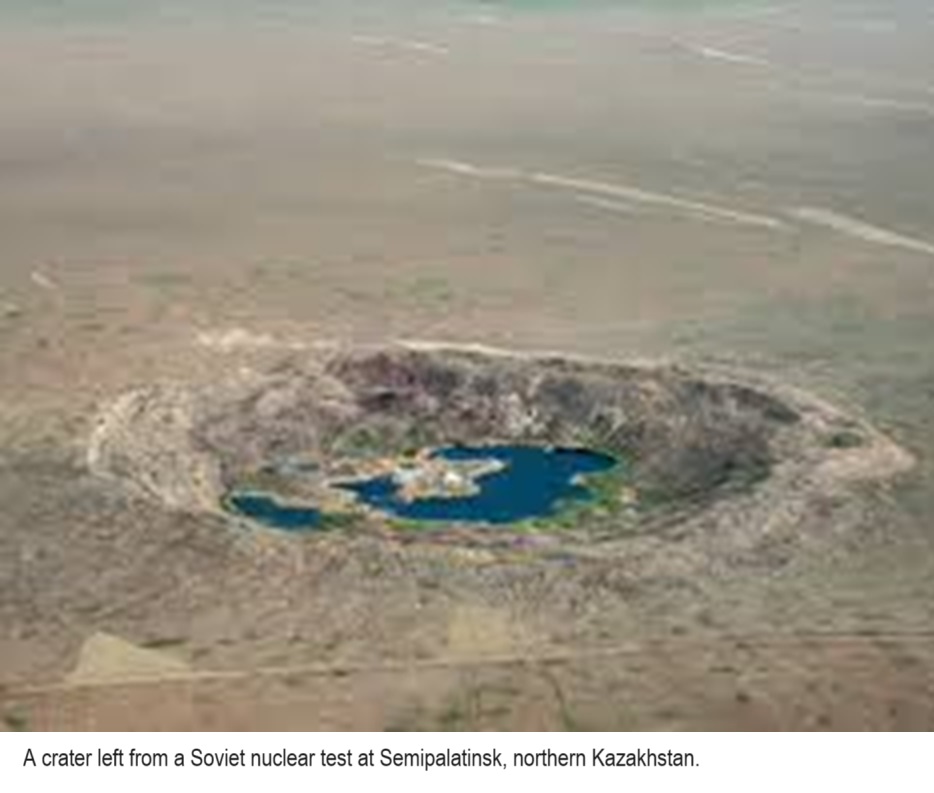
“People living around the test site “became unwitting test subjects, and their lives were treated with casual disregard due to racism and ignorance,”
“It was a crime of negligence, whereby secrecy, control, and the acquisition of more powerful nuclear weapons were prioritised over the lives of local people.”
Amid calls to restart nuclear testing, families are still suffering from mutations passed down through the generations
Arthur Scott-Geddes. Simon Townsley Photographer, in Semey, Telegraph, 21 May 2025
The Geiger counter came to life as we trudged toward the lip of the crater, its clicks becoming frantic before giving way to an alarm.
“This is the Atomic Lake,” said the hazmat-suited guide, throwing out his arms against the wind to encompass the circular expanse of water below. “Don’t get too close to the edge.”
Sixty years ago a nuclear bomb ten times more powerful than the one that destroyed Hiroshima exploded at the bottom of a 178-metre shaft in this remote (but not unpopulated) corner of Kazakhstan.
The blast excavated a basin a quarter of a mile wide and several hundred feet deep, sending up a plume of pulverised rock and radioactive material that was detected as far away as Japan.
It was not a one off. The hydrogen bomb was one of 456 nuclear weapons detonated by the Soviet Union at the Semipalatinsk Test Site, a 7,000 square mile swathe of steppe known as the Polygon.
The tests started in 1949 and continued right up until 1989 and the fall of the Berlin wall. They account for a quarter of all the nuclear explosions in history, creating an ongoing health crisis of a scale and nature that is hard to fathom.
The Kazakh authorities estimate that one-and-a-half million people living in nearby cities, towns and villages were exposed to the residual fallout.
The region has elevated rates of cancer, heart disease, birth defects and fertility problems – all linked to the tests. Suicides are common and the area’s graveyards are filled with people who died young.
But as well as sickening those who were directly exposed, the fallout has worked its way into the population’s DNA, leading to mutations that have been passed down through the generations.
‘There were so many children born with different mutations’
Almost everyone who grew up in Semey, a city of about 350,000 that lies only 75 miles from the Polygon, was affected in some way by the testing programme.
Olga Petrovskaya, the 78-year-old chair of Generation, a campaign group founded in 1999 to petition the government for greater support for the victims of the tests, remembers explosions shaking the city.
“We would be taken out of the classroom because they were worried about the windows shattering,” she said. “But nobody would explain why it was happening.”
White dust would sometimes fall on the city, causing sores to form on exposed skin. It was not long before people started dying.
“When we were six years old, at nursery school, there was a girl who died of leukaemia,” she said. “And then at [primary] school our classmates were also dying of cancerous diseases.
“Cancer became a very common diagnosis – there is no family that hasn’t been affected by it – and there were so many children born with different mutations.”
Ms Petrovskaya lost her brother, her aunt and her in-laws to cancer in the 1960s. She herself suffered numerous miscarriages and still has debilitating headaches and dizzy spells that she believes are linked to the radiation.
Her group of activists has dwindled as its members succumbed to their illnesses. There are now only a handful of them left.
The Soviet testing programme has been frequently criticised for its recklessness.
For instance, the first test of a two-stage hydrogen bomb created a blast much more powerful than anticipated, causing a building to collapse and killing a young girl in Kurchatov, the closed-off city 40 miles away where the tests were directed from
But the scientists and military personnel responsible understood the risks inherent in what they were doing. Modelling has shown that people who lived through all 456 tests received doses of radiation up to 120 times greater than survivors of the Hiroshima bombing.
“The Soviet authorities were absolutely not ignorant of the dangers of nuclear weapons testing,” said Dr Becky Alexis-Martin, a Lecturer in Peace, Science, and Technology at the University of Bradford.
“The tests occurred long after the Hiroshima and Nagasaki bombings, and records from the time reveal that the scientists involved in the Polygon tests had expert understandings of the impacts of ionising radiation on health.”
People living around the test site “became unwitting test subjects, and their lives were treated with casual disregard due to racism and ignorance,” added Dr Alexis-Martin
“It was a crime of negligence, whereby secrecy, control, and the acquisition of more powerful nuclear weapons were prioritised over the lives of local people.”
There is a growing body of evidence showing that radiation-induced mutations can be passed down multiple generations.
In 2002, an international study of 20 families living around the Semipalatinsk test site showed that exposure to fallout nearly doubled the risk of inherited gene mutations.
“Genetic consequences manifest in many different ways and any gene can be affected by radioactive exposure. Some gene changes are invisible beyond our DNA – but others can have harmful and intergenerational impacts,” said Dr Alexis-Martin.5
“We often think of birth defects when we think of radiation exposure, but hereditary heart conditions, blindness, and deafness can also arise.”
Today many Kazakh families still bear the marks of the tests several generations after the explosions stopped.
‘I will not live much longer’
Read more: Atomic bombs destroyed their lives – now they want Russia to pay
Asel Oshakbayeva was born in 1997, eight years after the last atomic detonation at the Polygon.
Yet she soon began to have seizures, and at the age of three months suffered a brain haemorrhage that left her blind and unable to speak, move or eat.
“She was in a coma, she couldn’t see anything,” said her mother, Sandugush.
The family sold their home and two cars to fund experimental surgical treatment in Russia that, after 14 operations, repaired damage to her optic nerve, partly restored her speech and made it possible for her to eat again.
But she remains totally dependent on her mother, and the pair left Semey and now live cheek-by-jowl with five other relatives in a small flat in Astana, the capital.
Sandugush, like her parents before her, was exposed to high levels of radiation while living near the Polygon.
In total, three generations of her family have now been officially recognised as victims of the testing, including her daughter. Her husband died of cancer 10 years ago, and she herself has a host of unusual health complaints.
“I will not live much longer,” she said, gesturing to her side where surgeons removed cancerous tumours from her breast and lymph nodes.
She now worries who will look after her daughter in the future. “She has the mind of a ten-year-old. If I die, what will happen?”
Despite the high prevalence of disability in the communities affected by the Polygon, a stigma around the children born with deformities persists.
Maira Zhumageldina, 56, lived for a time in the area of maximum radiation risk and gave birth to her daughter Zhannur in 1992.
Zhannur’s ribcage, spine and limbs never properly formed, leaving her permanently disabled – unable to walk, talk or feed herself.
When the extent of Zhannur’s disability became clear, Ms Zhumageldina came under pressure to give her up, even from her own family.
“When I had Zhannur about 13 or 14 children were born with different kinds of disabilities, so some were abandoned and some died at early ages,” she said.
“My parents-in-law said: ‘Why don’t you leave her?’ But I said ‘this is my child’ I could never leave her.”
A well-thumbed album of photographs documents the 28 years that Ms Zhumageldina devoted to caring for her daughter.
She trained as a massage therapist to ease her pain, and took her to Astana for specialised treatment……………………………………………………………………………………………………………………
‘The slow genocide’
……people whose families have been torn apart by the tests accuse the government of a “genocide” by inaction.
Reluctant to cough up the cash to properly support the hundreds of thousands of people sickened by the radiation and unwilling to press Russia for help in fear of provoking a diplomatic row, the government, they say, is simply waiting for them to die.
………Most of the fallout came their way – the Soviet scientists in Kurchatov made sure not to detonate any weapons while the wind was blowing towards them.
Hardly anyone here lives to retirement age, and cancer and birth defects are common.
“It’s a genocide,” said Acen Kusayenuli, 59, a veteran of the war in Afghanistan who recently had a portion of his lung removed after being diagnosed with cancer. He cannot afford chemotherapy so instead chews herbs to fight the disease.
“We were just like mice,” he said. “Why else would they not relocate the people and animals? They wanted to see how we would be affected.”
Even the landscape has suffered……..
the villagers, always kept in the dark about what was going on, bore the burden of death with a strange stoicism common to many parts of the former Soviet Union.
“We just accepted that whoever gets sick, gets sick,” she said……………………..
“The nuclear weapons tests were undertaken in the knowledge that the local ethnic Kazakhs could be harmed or even gradually eradicated,” said Dr Alexis-Martin.
“The lack of impetus and action across the decades by successive Soviet, Russian, and Kazakhstan governments and the global community amounts to ‘slow genocide’ – this arises when an ethnic or cultural group is gradually and systematically destroyed due to cumulative and sustained harm over time.”
Seventy-five miles further down the road is the village of Kaynar, which sits in the shadow of a rock formation overlooking the test site. Older residents remember climbing to the top to watch the explosions. ……………………………………………………………
Dr Saule Isakhanova, the head doctor of the Abralinski Regional Hospital which looks after around 2,100 people in Kaynar and the surrounding villages, said nearly half of her patients had health problems linked to the tests.
Her husband, the former mayor, was one of those who used to go out into the steppe to collect grass. He now has bowel cancer.
She said the effects of the tests could continue to harm people living in the area for a long time.
“Research shows that particles of these elements can remain in the dust for 300,000 years,” she said, referring to the radionuclides released by the bombs. “Those particles, once you breathe them in, they get into your bones.”
While much of the research attention has so far focused on rates of cancer and birth defects, little has been done to understand the prevalence of developmental disorders among children affected by the tests.
……………………………………………………..Dr Talgat Moldagaliyev, the former Director of the Institute of Radiation Medicine and Oncology in Semey, said more work is needed to understand the effects the tests are continuing to have.
“It’s a living experimental zone, but not enough research has been done.”
‘It should never happen again’
Most of the victims of the Polygon only learned the truth about what had been happening to them after the Soviet Union collapsed and Kazakhstan gained independence.
That moment gave rise to Kazakhstan’s first civil society movement, which connected survivors of the Polygon tests with communities affected by American nuclear testing in Nevada.
Over 35 years since the last nuclear explosion at the Polygon, there is a renewed push to win justice for those affected by the radiation.
Maira Abenova, the founder of Committee Polygon 21, an advocacy group representing the victims, lost her mother, brother, sister and husband to diseases related to the Polygon and now suspects she has cancer herself.
She wants the world to recognise that the suffering did not end with the closure of the test site.
“Currently the law recognises as a survivor of the nuclear tests only those people who lived in four regions around the Polygon from 1949 to 1991,” she said, referring to a law brought in in 1992 which gave people who qualified a “radiation passport” certifying their exposure to the radiation.
Those given the small, beige documents, which bear a blue mushroom cloud stamp on the cover, receive a small amount of compensation and other benefits including longer holidays.
While older survivors of the tests say the system worked at first, many of the families The Telegraph spoke to, particularly those in the hard-hit villages, said it was difficult to get official recognition for their children.
Rising medical costs far outstrip benefits worth around $40 a month and moving away from the villages, even to seek better medical care, disqualifies survivors from support.
Ms Abenova has been petitioning government agencies, who are more interested in collaborating with Russia on nuclear energy and turning the test site into a dark tourism destination, to take action on a grander scale.
“You cannot solve the problem just by paying small additional payments, you have to upgrade the economy in the region,” she said.
United Nations resolutions and the sustainable development goals (SDGs) should also be used to improve the lives of those living in the areas affected by the tests, and a new law is needed “which recognises all the survivors,” she said.
Committee Polygon 21 was among several Kazakh civil society groups to appeal to the UN in New York urging global action on justice for the testing victims.
After Vladimir Putin, the Russian President, withdrew his country’s ratification of the global treaty banning nuclear weapons tests, and with advisers of Donald Trump urging him to restart US testing, Ms Abenova hopes her work will also energise calls for disarmament.
“Kazakhstan suffered from nuclear tests […] Our people should use this opportunity to appeal to other countries that it should never happen again,” she said.
Meanwhile, how safe it is to live in the area around the Polygon remains unclear.
The site itself has been picked over by scavengers looking for – often highly irradiated – scrap metals.
Some 116 bombs were detonated in the atmosphere, but 340 exploded underground, and a secretive joint US-Russian-Kazakh cleanup programme to secure fissile material and even bomb components left behind by the Soviets in tunnels and shafts was only made public after it ended in 2012.
Those living nearby still do not know if their food and water is safe.
……………………..https://www.telegraph.co.uk/global-health/terror-and-security/soviet-union-nuclear-testing-atomic-bomb-kazakhstan/
Nuclear veterans hand ‘evidence dossier’ to police
Annabel Tiffin, BBC North West Tonight, 18 May 25
A man who was exposed to nuclear tests in the 1950s is calling on police to investigate what he has described as a 74-year injustice.
John Morris, of Rochdale, Greater Manchester, was 18 when he was sent to Christmas Island in the Pacific, where bombs were detonated in a series of infamous tests, and has suffered a range of health problems since.
Now 87, he is part of a group of veterans who have lodged a criminal complaint about the Ministry of Defence (MoD) saying they are “devastated at the way veterans are being denied justice”.
They claim the department’s actions amount to potential misconduct in public office with a cover-up of radiation experiments – a claim the MoD refutes.
Mr Morris said the evidence the veterans have is a “ticking time bomb”.
He said he witnessed the testing of four hydrogen bombs as part of Britain’s effort to demonstrate its nuclear capabilities during the Cold War.
The veterans, alongside the Greater Manchester mayor Andy Burnham, have now handed in a 500-page dossier of evidence, collated by the Mirror newspaper, to the Metropolitan Police.
Mr Morries was dressed in just shorts, a shirt and sunglasses even though he was positioned less than 20 miles (32km) away from the explosion, he told BBC North West Tonight.
He also worked in a laundry, washing contaminated clothing.
“I helped to produce an evil, evil weapon and trust me what I saw will live with me forever,” he said.
Mr Morris was one of about 22,000 military personnel exposed to the nuclear tests.
Many have since died and Mr Morris said many of his troop died from cancer.
He has also had cancer and lost a son at four months old, which he believes was down to his own exposure to radiation……………………….
Regarding their dossier for the police, Mr Morris said “time is of the essence” as many of the survivors are now in their 80s and taking the case to the police was a “last resort”, but he has grown frustrated with what he feels is a lack of accountability.
The veteran had a meeting with Sir Keir Starmer in 2021 when he was leader of the opposition but is now appealing to meet him as Prime Minister – to make good on what the group believe was a pledge made by the Labour Party.
“All I want is to sit down with Keir Starmer and to find a resolution which will suit the government and the veterans,” he said…..
‘Clear evidence’
Mayor Andy Burnham said: “In my view, there is clear evidence of misconduct in public office and following the 80th anniversary of VE day the investigation of it can wait no longer.”…………. https://www.bbc.com/news/articles/cyvme62jej8o
We can’t have both healthier children and nukes

May 15, 2025, https://beyondnuclear.org/we-cant-have-both-healthier-children-and-nukes/
According to The New York Times, a new Trump Administration Executive Order (EO) urges the Nuclear Regulatory Commission (NRC) “to reconsider its safety limits for radiation exposure, saying that current limits are too strict and go beyond what is needed to protect human health.” And yet, studies already show increases in childhood cancers, including leukemia and central nervous system cancers, around operating reactors in countries other than the U.S.
A decade ago, the U.S. opted not to continue a study that would have examined cancer incidence around NRC licensed facilities. Communities around uranium facilities have suffered increases in disease as well. The EO could potentially extend a cover-up of childhood health impacts around nuclear fuel chain facilities, and would contradict another of the Trump Administration’s Executive Order of February 13, 2025 establishing the MAHA Commission.
That EO stated that from 1990-2021 Americans experienced an 88 percent increase in cancer, the largest percentage increase of any country evaluated. The EO addresses the sad state of the American diet compounded by absorption of toxic material and environmental factors as cause for concern. Intake of radioactivity from the nuclear fuel chain is one factor of concern as we know that radioactivity can cause cancer and other health ailments and that children and pregnancy development are particularly susceptible to damage from radiation exposure.
The Trump Administration will have to decide: healthier children? Or an expensive and unnecessary nuclear industry. It’s impossible to have both.
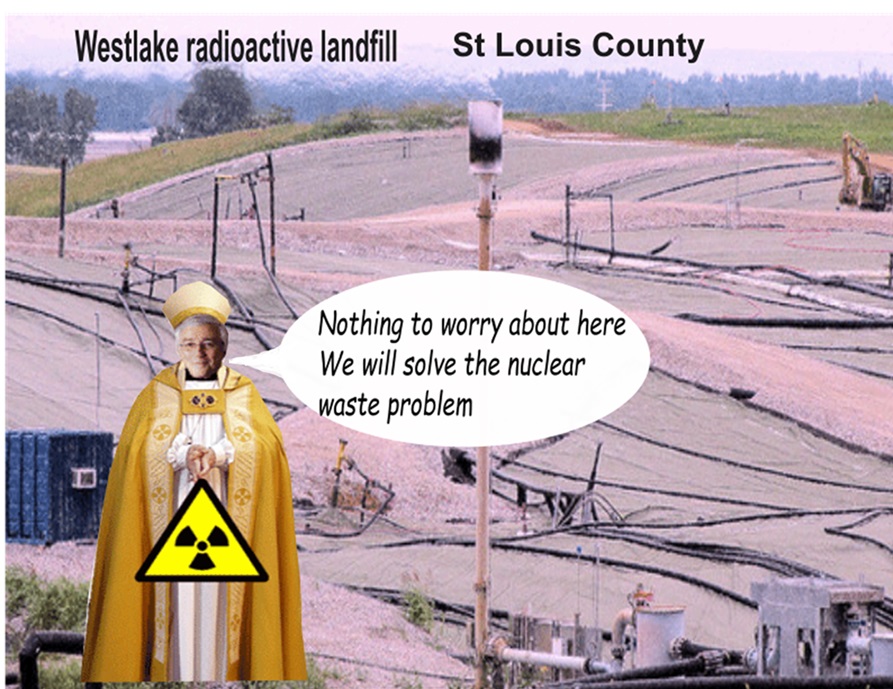
They didn’t know their backyard creek carried nuclear waste. Now, they’re dying of cancer.
By Skyler Henry, Cait Bladt, https://www.cbsnews.com/amp/news/coldwater-creek-st-louis-missouri-nuclear-waste-manhattan-project/?fbclid=IwY2xjawJ5WlNleHRuA2FlbQIxMQBicmlkETE3b0JDR3JZZ0xqRkNqVU1oAR6r1OHnTIbzQszYmq5UdxWm2CDEhfSw2CBAqIbrvNc_QJ0mnVpSMlz18FoZ6A_aem_HBiqzbUxMZqObYI2gfOYx April 24, 2025
This story is part one of a two-part series that examines the effects of nuclear waste contamination in Coldwater Creek on the surrounding community in St. Louis, Missouri. Part two aired Wednesday, April 23 on “CBS Evening News.”
When Linda Morice and her family first moved to St. Louis in 1957, they had no idea they had anything to fear. Then, people started getting sick.
“It was a slow, insidious process,” Morice said.
After the death of Morice’s mother, her physician uncle took her aside and gave her a stark warning: “Linda, I don’t believe St. Louis is a very healthy place to live. Everyone on this street has a tumor.”
Their neighborhood was bordered by Coldwater Creek, a 19-mile tributary of the Missouri River It wound through their backyards, near baseball fields, schools and cemeteries — and past lots where leaking barrels and open-air dumps of nuclear waste leeched into its waters.
“It was shocking that this creek was likely making people sick,” Morice said.
Starting in 1942, roughly one ton of pure uranium was produced per day in downtown St. Louis. It was then shipped to labs across the country for the top secret Manhattan Project that created the first nuclear bomb.
The leftover waste was dumped around the city.
“That material was in 82 different spots throughout St. Louis County. It spilled. Children played in it. It seemed to me that there wasn’t an attempt to absolutely get to the bottom of it,” Morice said.
In Morice’s family alone, her mother, father and brother died of cancer, leaving her to think differently about her childhood.
“All that time, all those fun things were happening, but that whole time we, and the rest of the community were being exposed to some pretty dangerous stuff,” Morice said.
Now her husband, who also lived in the area, is fighting cancer. He’s being treated by urologic oncologist Dr. Gautum Agarwal. For the last several years, Agarwal has been tracking which of his patients lived near Coldwater Creek.
“I was seeing patients who are young, who had developed pretty significant cancers from areas that there’s been some contamination with nuclear waste,” Agarwal said.
While radiation is known to cause cancer, experts say they can’t pin down the specific cause of the disease in a given patient.
But a 2019 study from the Department of Health and Human Services found that people who lived and played near Coldwater Creek from the 1960s to 1990s “could be at an increased risk of developing lung cancer, bone cancer or leukemia.”
“The people there deserve for us to look at this much closer than we have,” Agarwal said.
Almost 7 months underwater pushes UK nuclear submariners to the limit

Nuclear-armed HMS Vanguard spent 204 days underwater, finally docking last month — and such gruelling conditions are causing experienced personnel to quit
Charlie Parker, Friday April 18 2025, The Times
Guarding Britain’s most powerful weapons deep beneath the waves are sailors who have not seen sunlight, breathed fresh air or spoken to their families for months.
Operating in total isolation on increasingly long patrols, submarine crews are enduring “mind-boggling” marathons underwater to ensure nuclear missiles can be launched at any moment.
Now, after a Vanguard-class vessel returned from a record 204 days at sea, submariners tasked with maintaining the deterrent have revealed what life is like on board the boats.
The £6 billion “bomber” looked grey, barnacled and rusty as she docked at HM Naval Base Clyde, in Scotland, last month. Welcoming her home was Sir Keir Starmer, the only person capable of authorising a nuclear strike, who thanked the crew for completing the tour. https://www.thetimes.com/uk/defence/article/life-on-britains-nuclear-subs-as-record-patrols-push-sailors-to-limits-m5m7q58p8
Doncaster prisoners could sue government over exposure to radon gas
Inmates complain of rashes and fever, echoing the events that led Dartmoor jail to close last year
Richard Palmer, Observer 20th April 2025, https://www.theguardian.com/society/2025/apr/20/doncaster-prisoners-could-sue-government-over-exposure-to-radon-gas
The government faces further potential legal action over concerns about levels of radon gas at a second prison, after Dartmoor jail was forced to close.
Ministry of Justice officials have ordered radon detection equipment to be installed at Lindholme prison near Doncaster in South Yorkshire, where prisoners have reported feeling unwell with symptoms such as headaches, rashes and fever.
There are concerns about the risks of inhaling radioactive particles that can cause lung cancer.
Radon, a naturally occurring gas, is the second leading cause of lung cancer after smoking in the UK. There are concerns that the levels in Lindholme could be several times over the domestic safety limit.
A spokesperson for the Ministry of Justice said: “Radon monitoring is in place at HMP Lindholme as a precautionary measure.” No prisoners have been moved out of the jail.
Last week, the Observer revealed that about 500 former inmates and staff at Dartmoor are taking legal action after being exposed to what they claim were dangerously high levels of radon for years until the prison was closed for safety reasons last summer.
Kesar and Co, the law firm representing them, is also representing prisoners who have been in Lindholme. Violeta Hansen, a Danish radon expert advising the Dartmoor prisoners, said it had been known since at least 1987 that the area had high levels of radon, which is formed by decaying uranium found in rocks and soils, and jail staff had been monitoring levels inside the prison since 2010.
“They knew a long time ago they had a radon issue,” she said. “Why didn’t they do anything until 2024 when they did a risk assessment?”
Britain’s prison system is struggling with overcrowding and it is a logistical challenge to rehouse prisoners, such as the 941 at Lindholme.
Ben Leapman, editor of Inside Time, a free prisoners’ newspaper owned by the charity the New Bridge Foundation, which first reported the health scare at Lindholme, said there were only 553 places free across the men’s prison estate in England and Wales last week.
He said the radon levels in the prison were a cause for concern, not least because prisoners spent so long in their cells. “Even today, a lot of prisoners are locked in their cells for 22 hours a day because there isn’t enough work or courses to keep them busy,” he said.
Uranium’s hazardous effects on humans and recent developments in treatment

USA National Library of Medicine, Epub 2025 Mar 12. Yahya Faqir 1, Ziang Li 1, Talaal Gul 1, Zahoor 1, Ziwei Jiang 2, Libing Yu 2, Chengjia Tan 3, Xi Chen 4, Jiahua Ma 5, Jiafu Feng 6
Abstract
Uranium, a naturally occurring element, is predominantly recognized for its role as fuel in both civilian and military energy sectors. Concerns have been raised regarding the adverse environmental impacts and health risks associated with uranium mining due to the exposure it causes. Such exposure leads to systemic toxicity, affecting pulmonary, hepatic, renal, reproductive, neurological, and bone health. This review identifies significant research gaps regarding detoxification methods for uranium contamination and recommends further advancements, including genetic modification and exploration of plant compounds. A comprehensive review of published research materials from diverse sources of uranium, including various treatments and hazardous impacts on the human body, was conducted. Additionally, a PRISMA analysis was performed in this study. This review emphasizes the importance of collaboration and the formulation of research-informed regulations to effectively safeguard vulnerable communities from the consequences of contamination. Public discourse often emphasizes the significance of radiotoxicity; however, the non-radioactive chemotoxicity of uranium has been identified as a significant risk factor for environmental exposures, contingent upon species, enrichment, and exposure route. Given these serious health consequences, several methods are being investigated to ameliorate uranium toxicity. In response to these concerns, several techniques, such as phytomedicinal treatments, biochemical approaches, and chelation therapy, have been investigated to minimize the adverse effects of uranium exposure in the human body……………………………………………………..https://pubmed.ncbi.nlm.nih.gov/40080936/#:~:text=Concerns%20have%20been%20raised%20regarding,%2C%20neurological%2C%20and%20bone%20health
No such thing as ‘clean’ nuclear energy
John Hoffmann , Carbondale, Apr 12, 2025, https://www.aspendailynews.com/opinion/no-such-thing-as-clean-nuclear-energy/article_8aeb44a7-c226-488e-82e0-4a32ebfcb434.html
Clean nuclear power is an oxymoron. Every part of the process is potentially deadly. Mining uranium involves stockpiling mounds of radioactive dirt.
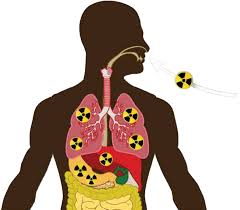
In the National Library of Medicine, the article, “Health Effects of Particulate Uranium Exposure,” begins with, “Uranium contamination has become a non-negligible global health problem,” which “can cause severe body damage once inhaled.” The dust billows over reservations and populations near mines.
Yellowcake is produced through milling and roasting. After an intense four-step process, it is then shipped to concentrating sites, where the uranium is packed into steel drums and hauled to processing plants to turn it into fuel.
Uranium, like other heavy metals, is toxic and should not be inhaled or ingested, even if mildly radioactive. My trip to Naturita, Colorado, near where it is mined, showed me how potent radioactive dust works to rust the bridges, spall concrete, and ruin folks’ teeth.
The milling and roasting into orange oxide at Oak Ridge becomes uranium tetrachloride or S-50 liquid thermal diffusion in the St. Louis plant, then into plutonium piles in Beverly, Massachusetts, Bloomfield, New Jersey, or Ames, Iowa, where the metal is recast into rods in induction-heated furnaces.
Now it can be shipped to one of the 94 reactors in the United States, where it creates electron-saturated cooling water and spent U-285 rods. The highly contaminated water and nuclear rods that pile up over the years need to be kept from contaminating the environment for thousands of years. So it is encased in concrete and stainless steel, which is stacked on-site until it is hauled somewhere for long-term storage, and therein lies the problem.
There is no place to store it safely. Not the salt caverns of Whipp or the deepest subducting zones of the oceans.
Wherever they are stacked, they become a target for an enemy to drop a conventional bomb that will do maximum damage to the downwind population. Yet Chernobyl demonstrated that every place on earth is downwind, because the atmosphere homogenizes pollutants within three days. Let’s rethink calling nuclear “clean” energy.
Radiation exposure victims fight for compensation as nuclear weapons funding soars
Bulletin, By Chloe Shrager | March 19, 2025
Nine months have passed since the law that compensates US victims of radiation exposure expired in June, and yet another opportunity to reinstate it fell to the wayside last week.
The Radiation Exposure Compensation Act (RECA), enacted in 1990, provided pay-outs to people unwittingly exposed to radioactive substances from the Manhattan Project and Cold War efforts. For decades, people living downwind from the Nevada Test Site, nuclear weapons site workers and uranium miners relied on the money they received from RECA to pay their medical bills for rare cancers and diseases contracted from their radiation exposure.
But even so, activist groups across the US homeland and territories argue that the law was woefully inadequate. “When you talk about nuclear justice, we have not had it. We haven’t seen it,” Mary Dickson, a Utah downwinder and thyroid cancer survivor, said in a recent interview.
After the House shot down an attempt to push an expanded version of the compensation act through Congress last year, a bipartisan group of senators reintroduced a RECA reauthorization and expansion bill in January. The effort is led by Republican Sen. Josh Hawley of Missouri and Democratic Sen. Ben Ray Luján of New Mexico, who recently spoke on the proposed bill in an interview with the Bulletin.
“This is not a partisan issue,” Luján said. “This is for the American people, and especially those who live downwind of this testing and those uranium mine workers who are sacrificing their lives and their careers for national security purposes.”
The hope was to slip the amended act into the Trump Administration’s first stopgap budget bill, due no later than the end-of-day last Friday to avoid a government shutdown. But that hope evaporated when instead of proposing an omnibus bill overhauling previous budget priorities—as was expected of the new administration—the House introduced a continuing resolution that largely carried on Biden administration funding levels without mention of the new RECA bill. The continuing resolution does, however, increase defense budget spending by $6 billion……………………………………………………………………………………………………………………………………………………………………………………………………. The human cost of nuclear security. Congress passed a GOP budget bill on Friday to avoid a government shutdown and fund the government through September. While the bill does not fund RECA’s reauthorization, it does earmark at least $21.7 billion for “defense nuclear nonproliferation” and “weapons activities” under the National Nuclear Security Administration for the next six months. Funding under these categories can be used for anything from continued domestic uranium enrichment to warhead modernization and assembly. These defense budget proposals come during an estimated $1.7 trillion, 30-year overhaul of the United States’ nuclear arsenal that will rebuild each leg of the nuclear triad and its accompanying infrastructure.
These investments were approved. Legislation to continue to compensate those poisoned by nuclear weapons activities were not.
“They’re investing all this money to build up our arsenal and develop new weapons. So when they say there’s not enough money to take care of the people those weapons have harmed in the past… I just think part of that cost has got to be taking care of the people they harm,” Dickson said. https://thebulletin.org/2025/03/radiation-exposure-victims-fight-for-compensation-as-nuclear-weapons-funding-soars/?utm_source=ActiveCampaign&utm_medium=email&utm_content=Plans%20to%20colonize%20Mars%20threaten%20Earth&utm_campaign=20250320%20Thursday%20Newsletter
Radioactive Mussels May Pose Threat to Food Chain in Pennsylvania
By Tom Howarth, Science Reporter (Nature) Jan 07, 2025, https://www.newsweek.com/radioactive-mussels-food-chain-bioaccumulation-pennsylvania-2011149?fbclid=IwY2xjawJG4pxleHRuA2FlbQIxMQABHXBgrVgNhUUy1s_U9SLYXUIeD-gugNuUk75xBSTL9AG1vQ6REzIVWJiVGw_aem_0EvCj7mKrreGjCLuSViY1Q
Radioactive contamination in freshwater mussels is potentially affecting the food chain in Pennsylvania, including iconic animals such as bald eagles and possibly even humans.
A study published last year by scientists from Penn State University found elevated levels of radium in mussels downstream from a waste treatment facility in Franklin, Pennsylvania. Now, experts are raising the alarm over the secondary impacts on the ecosystem.
While the facility no longer discharges oil and gas wastewater into the Allegheny River, its legacy of pollution persists, with radioactive material bioaccumulating in the ecosystem.
Why This Matters
The findings highlighted that radioactive materials could be climbing the food chain, affecting not just aquatic life but also land animals, birds and people. Bald eagles, a species reintroduced to Pennsylvania in 1983, are among those at risk. Their diet includes muskrats, a primary predator of freshwater mussels, which are now confirmed to carry radium.
Although freshwater mussels are not consumed by humans, other species higher in the food chain may serve as a bridge for contaminants to eventually affect people. Local fishing activity in the Allegheny River also raises questions about indirect exposure to radioactive material.
Exposure to high levels of radium can result in adverse health conditions like anemia, cataracts, fractured teeth, cancer (especially bone cancer) and death, the U.S. Centers for Disease Control and Prevention says.
What To Know
Freshwater mussels act as ecological barometers because of their fixed locations and long life spans.
In this study, researchers found that mussels downstream of the waste treatment facility had absorbed radioactive particles into their soft tissue and hard shells. Mussels closest to the discharge site perished from salinity, while those farther away adapted but at a cost—they absorbed contaminants instead.
The study also compared the mussels’ radioactivity to Brazil nuts, which naturally absorb radiation from the soil. While a typical 28-gram serving of Brazil nuts contains 0.47 to 0.80 microsieverts, the maximum radioactivity found in a single mussel was 63.42 μSv.
While the International Atomic Energy Agency recommends an annual exposure limit of 1,000 μSv—far exceeding the amount found in even the most radioactive mussel—the findings are concerning because of the potential for radiation to accumulate within food chains over time.
What People Are Saying
Evan Clark, the waterkeeper at Three Rivers Waterkeeper, told Newsweek: “One concern that I immediately thought of after reading [the study] was bioaccumulation. Mussels live pretty close to the bottom of the food chain, eating a lot of algae and bacteria—they are unselective filter feeders.
“Muskrats are one of the larger consumers of freshwater mussels, eating hundreds and hundreds in a lifetime. Those muskrats are going to be eaten by bald eagles, and those bald eagles are only recently making a strong comeback into western Pennsylvania.”
Katharina Pankratz, a co-author of the study, said in a statement: “Depending on the contaminant and its chemistry, if it is small enough to pass through the gills of the mussel, it has the potential to accumulate in their tissue or precipitate within the hard-shell structure. This information may help shape future regulations for wastewater disposal to surface water, especially in regions where mussels are harvested for food.”
Nathaniel Warner, the study’s corresponding author, said in the statement: “Mussels that were closest to the water discharges died off. Further downstream, the mussels found a way to tolerate the salinity and radioactive materials and instead absorbed them into their shells and tissues.”
What Happens Next
The study’s findings could inform future policies on wastewater management, its authors said. While the waste treatment facility in Franklin is no longer discharging waste into the waterways, its impacts still linger and could do so for some time.
Key questions, such as how much radioactive material is accumulating up the food chain, remain.
1 This Month

of the week – Shut Down Drone Warfare!


Tell the Ukrainian Government to Drop Prosecution of Peace Activist Yurii Sheliazhenko

Petition to revoke the licensing of the Near Surface Nuclear Disposal Facility (NSDF) at Chalk River. https://www.ourcommons.ca/petitions/en/Petition/Details?Petition=e-7247
To see nuclear-related stories in greater depth and intensity – go to https://nuclearinformation.wordpress.com
-
Archives
- March 2026 (251)
- February 2026 (268)
- January 2026 (308)
- December 2025 (358)
- November 2025 (359)
- October 2025 (376)
- September 2025 (257)
- August 2025 (319)
- July 2025 (230)
- June 2025 (348)
- May 2025 (261)
- April 2025 (305)
-
Categories
- 1
- 1 NUCLEAR ISSUES
- business and costs
- climate change
- culture and arts
- ENERGY
- environment
- health
- history
- indigenous issues
- Legal
- marketing of nuclear
- media
- opposition to nuclear
- PERSONAL STORIES
- politics
- politics international
- Religion and ethics
- safety
- secrets,lies and civil liberties
- spinbuster
- technology
- Uranium
- wastes
- weapons and war
- Women
- 2 WORLD
- ACTION
- AFRICA
- Atrocities
- AUSTRALIA
- Christina's notes
- Christina's themes
- culture and arts
- Events
- Fuk 2022
- Fuk 2023
- Fukushima 2017
- Fukushima 2018
- fukushima 2019
- Fukushima 2020
- Fukushima 2021
- general
- global warming
- Humour (God we need it)
- Nuclear
- RARE EARTHS
- Reference
- resources – print
- Resources -audiovicual
- Weekly Newsletter
- World
- World Nuclear
- YouTube
-
RSS
Entries RSS
Comments RSS
 nuclear-news
