Free News 17th July 2020, An international consortium of scientists has specified a map of
concentrations of cesium and plutonium radionuclides in soils in
Switzerland and several neighboring countries. Using an archive of European
soil samples, a team of researchers led by Catherine Meisburger from the
University of Basel was able to track down the sources of radioactive
fallout between 1960 and 2009.
This study was published in the journal
Scientific Reports. On the new map of radioactive contamination of the
soil, there are not only Switzerland but also several neighboring countries
– France, Italy, Germany and Belgium. The map is based on a new
calculation method, namely the use of the ratio of cesium to plutonium.
These two radionuclides were released during military nuclear tests in the
1960s. Additional cesium fell into some countries during the Chernobyl
accident in 1986.
The lasting effects of working with nuclear weapons https://www.wcax.com/2020/07/19/the-lasting-effects-of-working-with-nuclear-weapons/By WCAX News Team [includes excellent short video] Jul. 19, 2020 BURLINGTON, Vt. Seventy-five years after the world’s first atomic bombs were dropped in Japan, the people and the island are still feeling the impacts.
Nuclear weapons also have had a lasting effect on American soldiers.
Garry DeFour is a Vermonter who served in the U.S. Senate Committee on Veteran Affairs between 1979 and 1981.
During those few years, he learned about the U.S. Marines who were sent to Nagasaki to help with the clean-up process after the Atomic bomb was dropped. “Now, thirty-five years later several Veterans that served in Nagasaki — are inflicted with rare blood diseases and bone-cancer,” Atomic Veterans Specialist Garry DeFour said.
He says many soldiers who helped create and test nuclear weapons also became contaminated.
Years later, some started to report severe illnesses, stemming from what they believe was from their time serving in the military.
“We were told for years to keep out mouths shut until President Clinton in 1996 did a proclamation that now Veterans could talk about it to the V.A.,” DeFour said. Vets did talk about it, and some even got compensation from the Government because of the on-going health problems they face.
They’re known as Atomic Veterans.
DuFour’s been working on a documentary highlighting the soldiers.
He estimates there are still about 28,000 still living. He believes the U.S. has no need for nuclear weapons and cites a colleague who helped create the hydrogen bomb.
“As Dr. Kenneth Ford told me, he said we have enough conventional weapons, to give a great defense,” DeFour said
Pandemic drives plant operators to employ remote checks, WNN, 17 July 2020Nuclear power plant operators are carrying out remote quality and safety related assessments of systems, structures and components (SSCs) to overcome physical distancing and mobility restrictions during the global COVID-19 pandemic, participants in a recent International Atomic Energy Agency (IAEA) webinar said. SSCs must be regularly monitored, replaced and have their quality verified.
BY ALEXANDRA GENOVA, PHOTOGRAPHS BY PHIL HATCHER-MOORE OCTOBER 13, 2017
Decay and desolation scar the landscape of a remote corner of the Kazakh Steppe. Unnatural lakes formed by nuclear bomb explosions pockmark the once flat terrain, broken up only by empty shells of buildings. It appears uninhabitable. And yet, ghosts – living and dead – haunt the land, still burdened by the effects a nuclear testing program that stopped nearly 30 years ago.
The site, known as the Polygon, was home to nearly a quarter of the world’s nuclear tests during the Cold War. The zone was chosen for being unoccupied, but several small agricultural villages dot its perimeter. Though some residents were bussed out during the test period, most remained. The damage that continues today is visceral.
Photographer Phil Hatcher-Moore spent two months documenting the region, and was struck by the “wanton waste of man’s folly.”
His project ‘Nuclear Ghosts’ marries the wasted landscape and intimate portraits of villagers still suffering the consequences.
The figures are astonishing – some 100,000 people in the area are still affected by radiation, which can be transmitted down through five generations. But with his intimately harrowing pictures, Moore sought to make the abstract numbers tangible.
“Nuclear contamination is not something we can necessarily see,” he says. “And we can talk about the numbers, but I find it more interesting to focus on individuals who encapsulate the story.”
Moore interviewed all his subjects before picking up his camera and learned that secrecy and misinformation plagued much of their experience.
“[During the 50s] one guy was packed up with his tent and told to live out in the hills for five days with his flock. He was effectively used as a test subject to see what happened,” says Moore. “They were never told what was going on, certainly not the dangers that they may be in.”
Though human stories were central, Moore also documented the scientific test labs that are still uncovering the damage. The juxtaposition of these labs alongside portraits of people disfigured by radiation makes for uncomfortable viewing. But this proximity is deliberate.
“There was a history of humans being used as live subjects,” says Moore. “I wanted to marry these ideas together; the way people were used by researchers at the time and how that trickles down into every day life – what that looks like, what that means.”
While some of Moore’s subjects are severely deformed, many suffer from less visible health issues like cancer, blood diseases or PTSD. And the hidden, insidious nature of the thing is what is perhaps most troubling. “For a long time there hadn’t been much nuclear development but it is a very real issue right now,” says Moore. “But we don’t talk about what it takes to renew these weapons. These people are legacy and testament to what was done to meet those ends.”
See more of Phil Hatcher-Moore’s work on his website and follow him on Instagram.
Now I Am Become Death’: The Legacy of the First Nuclear Bomb Test, NYT, By Maria Cramer July 15, 2020
“………The effects of radiation were not well understood by most scientists on the project at the time, according to historians, and the preparations that were made to keep civilians safe reflected that ignorance.
They placed crude monitors around the small towns within 40 miles of the testing site. A scientist who was seven months pregnant and her husband, who was also a scientist, were sent to a motel in one of the towns with a Geiger counter, a device used to detect radioactive emissions, to measure the radiation. If the needle hit a certain mark, she was instructed to alert officials so that they could evacuate the town, Professor Wellerstein said.
Officials did not warn any of the residents — many of them ranchers, Navajos, Mexican settlers and their descendants who raised cattle and drank water from cisterns — about the test. Should anyone ask about the blast, officials had proposed several cover stories, including telling the public that a remote ammunitions depot had exploded, Professor Wellerstein said.
Officials did not warn any of the residents — many of them ranchers, Navajos, Mexican settlers and their descendants who raised cattle and drank water from cisterns — about the test. Should anyone ask about the blast, officials had proposed several cover stories, including telling the public that a remote ammunitions depot had exploded, Professor Wellerstein said.
“It produced more light and heat than the sun,” said Tina Cordova, a founder of the Tularosa Basin Downwinders Consortium, which has urged the government to conduct more research about the aftermath of the blast and to compensate the affected communities.
Based on census data at the time, the consortium estimates there were tens of thousands of people living within a 50-mile radius of the blast, Ms. Cordova said.
Ash fell for days afterward in the landscape and in every direction and in amazing quantities,” she said.
Warnings went unseen and ignored.
The day after the blast, Leo Szilard, a Hungarian physicist who worked on the Manhattan Project, sent a petition signed by 70 scientists to President Harry S. Truman, urging him to give Japan a chance to surrender before dropping the bombs.
“Thus a nation which sets the precedent of using these newly liberated forces of nature for purposes of destruction may have to bear the responsibility of opening the door to an era of devastation on an unimaginable scale,” the petition cautioned.
It was not the first plea to reconsider using a nuclear bomb to end the war.
A month before the test, a committee, which included Dr. Szilard and was headed by the German scientist James Franck, issued the Franck Report, urging the United States to first demonstrate the power of the weapons to members of the United Nations……….
Scientists “were totally shocked when the Japanese reported radiation sickness at Nagasaki,” said Professor Wellerstein, who has written about what the United States knew about the long-term consequences of using the weapons……..
The true effects of the test on the people who lived near the test site remain unclear.
“The Trinity downwinders have not been treated in either a fair or a just manner,” he said.
Ms. Cordova, who grew up in Tularosa, N.M., said cancer had been pervasive in the towns near the Trinity test site, where everyone can name someone who died of the disease.
“We know that the government basically walked away and has taken no responsibility for the suffering and the dying,” said Ms. Cordova, who has survived thyroid cancer and has several relatives who died of various forms of cancer.
Members of Congress from New Mexico have introduced legislation that would expand the Radiation Exposure Compensation Act, which compensates uranium miners and people who lived downwind from nuclear testing sites, to include the residents who lived around Trinity.
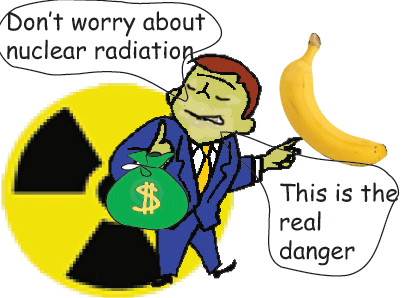
One such tactic, which was witnessed after Fukushima, occurred through the reframing of radiation risks as simplistic and natural, unrelated to the specific risks associated with Fukushima. For instance, the government distributed pamphlets that explained that radiation naturally exists in our food, ch as the potassium levels present in bananas.
Yet such information is irrelevant to the hazards of internalizing fission products from a nuclear power plant. While bananas have naturally occurring potassium, it would require eating around 20 million bananas to get radiation poisoning. On the other hand, each radionuclide released during nuclear meltdown events like Fukushima possesses specific biological signatures and presents particular risks when inhaled or ingested.
Being Clear-Eyed About Citizen Science in the Age of COVID-19, Sapiens MAXIME POLLERI / 15 JUL 2020
“……..there are inherent political complexities involved when citizens or nongovernmental organizations step in and claim expertise in areas typically reserved for state agencies and experts. Like those entities, citizen science has its own potential pitfalls.
For one, corporate polluters or state agencies can potentially exploit citizen science, delegating the monitoring of contamination to the victims of a disaster. For instance, by the end of this year, Japan’s Nuclear Regulation Agency plans to remove 80 percent of radiation monitoring posts in Fukushima, arguing that the radiation levels in many areas have stabilized themselves—owing also in part to the presence and efficiency of monitoring networks provided by citizens. This decision has been controversial, since problems of radioactive contamination persist in Fukushima. For instance, one of the main radioactive pollutants, Cesium-137, has a long lifespan and can emit radiation for nearly 300 years.
Retiring these posts will force citizen scientists to take on the burden of monitoring, shifting liability for ensuring safe living conditions onto the shoulders of the nuclear victims. In addition, the growing impact of citizen science can lead to reduced public expenditure, minimal government intervention, and risk privatization, meaning that risk becomes individual and private. Too much delegation to citizens runs the risk of creating societies where individuals have to take care of themselves in increasingly polluted environments, while interpreting complex data about controversial environmental dangers. And not every community can afford to purchase expensive monitoring devices or test food in a consistent manner.
Citizen scientists also risk reproducing forms of ignorance around certain hazards. n post-Fukushima Japan, what is meant by the “science” of citizen science is often synonymous with a tracking and monitoring agenda, where individuals resort to the very same technologies and knowledge forms used by states, nuclear lobbies, or radiological protection agencies.
Yet many anthropologists and historians have argued that what we know (and don’t know) about the extent of radiation hazards and dangers was embedded in a culture of secrecy, denial, and propaganda that was shaped by the nuclear arms race of the Cold War. Considerations over international security and political stability were often prioritized over the safety of workers or citizens who had been exposed to radiation. As a result, some of the negative effects of radiation were downplayed through different tactics.
One such tactic, which was witnessed after Fukushima, occurred through the reframing of radiation risks as simplistic and natural, unrelated to the specific risks associated with Fukushima. For instance, the government distributed pamphlets that explained that radiation naturally exists in our food, ch as the potassium levels present in bananas.
Yet such information is irrelevant to the hazards of internalizing fission products from a nuclear power plant. While bananas have naturally occurring potassium, it would require eating around 20 million bananas to get radiation poisoning. On the other hand, each radionuclide released during nuclear meltdown events like Fukushima possesses specific biological signatures and presents particular risks when inhaled or ingested. During my fieldwork in Fukushima, I witnessed that this legacy of misinformation was carried on by some citizens who unwittingly replicated these propagandist forms of knowledge by making similar naturalistic or overly simplistic comparisons.
As citizen science efforts grow, it is also critical to consider to what extent citizen involvement might put individuals at risk of adverse health effects. This is a tricky question when one considers that certain members of the population, like children, are more sensitive to radiation than others. In Fukushima, some Japanese parents have understandably opted to evacuate rather than rely on citizen science, arguing that doing so would expose their children to unacceptable levels of radiation and that forcing children to be responsible for their own safety is unethical.
Citizen scientists are hardly homogeneous groups, as mothers, farmers, and urban citizens do not experience hazards and recovery in the same way. In that regard, factors such as gender, employment, and social class strongly influence why people enter citizen science, how science is mobilized, and how data about a controversial hazard ends up being interpreted. For instance, people like Natsuo have used the results gathered by citizen science to highlight the dangers of living in Fukushima, while other citizen science organizations help bring people back to their beloved region. These conflicts can result in even more fragmented communities and conflicts within and around citizen science. ……
In Japanese, two words—shiru and wakaru—can be used for the verb “knowing.” Shiru means “to find out” or “to learn.” It implies a process of acquisition of knowledge and information. Wakaru, on the other hand, is closer to “understanding this knowledge.” Shiru comes before wakaru, and in a way, one can know but not necessarily understand. Wakaru consequently shows a greater and more personal level of comprehension often based on a given context.
For Masayuki, state institutional experts possessed shiru, but not wakaru. Having been directly affected by radioactive contamination, Masayuki strongly believed that the inhabitants of a place, the jūmin (literally, the people who resided) were best suited to manage their life in a post-Fukushima Japan. https://www.sapiens.org/culture/fukushima-citizen-science/
Scientists create a speedy finger-prick test to scan for radiation exposure in mice, Stat, By JULIET ISSELBACHERJULY 15, 2020 Researchers have developed a simple finger-prick test that scans a single drop of blood to rapidly determine whether the body has been exposed to toxic levels of radiation.
Catastrophic radiological events — like nuclear detonations — can threaten massive populations with acute radiation syndrome, which wreaks havoc on the gastrointestinal system and destroys bone marrow, leading to infections and internal bleeding. In preparation for the possibility of such a public health disaster, scientists at Ohio State have devised a speedy and scalable method for estimating radiation exposure. They published their proof-of-concept research, conducted in mice, Wednesday in Science Translational Medicine.
Timing is key when it comes to assessing radiation dosage in members of an exposed population. Victims above a certain dose threshold require immediate and aggressive treatment, such as a blood transfusion or cytokine therapy.
“Early detection will save lives,” said Naduparambil Jacob, senior author of the study and a molecular biologist at Ohio State University Comprehensive Cancer Center.
The current “gold standard” test for radiation exposure is a dicentric chromosome assay, which looks for hallmarks of radiation-induced DNA damage. The problem is that this test takes around three or four days to yield results — a waiting period that can make it harder for clinicians to know how to proceed and can potentially jeopardize patient outcomes.
“If it takes you four days to get the result, then it’s not helpful in immediate management,” said C. Norman Coleman, a researcher at the National Cancer Institute who was not involved with the study. “The idea of getting some kind of number pretty quickly that tells you what you need to do is useful for the medical system and also for the patient.”
Being Clear-Eyed About Citizen Science in the Age of COVID-19
An anthropologist explores the network of citizen monitoring capabilities that developed after the Fukushima nuclear disaster in Japan in 2011 for what they might teach all of us about such strategies for the covonavirus pandemic. Sapiens MAXIME POLLERI / 15 JUL 2020“…………… The earthquake and subsequent tsunami led to core meltdowns within some of the Fukushima power plant’s nuclear reactors. This malfunction, along with other technical incidents, resulted in the atmospheric release of radioactive pollutants, which spread predominantly over the northeastern part of Japan, forcing a widespread evacuation of Fukushima residents. By March 12, the area around the power plant had been evacuated; those living and working within 20 kilometers of the radius of the plant were forced to relocate. In the days, weeks, and months following this disaster, uncertainty around the scale and extent of contamination grew swiftly—much like what we see occurring throughout the world during the COVID-19 pandemic.
Most notably, the public grew increasingly concerned about the legitimacy of institutional experts’ ability to control and explain the risks of residual radioactivity, while citizens like Natsuo were unable to get adequate information through traditional media venues. Initially, data about radioactive contamination came sporadically and was often explained in hard-to-understand metrics by scientists who were cherry-picked by the state to send reassuring messages to citizens.
Moreover, radioactive contamination was later found to be present in some food products and in school yards where children had been playing that lay beyond the official zone of evacuation. Over the ensuing months and years, the public lost confidence in the state’s response and began to take matters into their own hands, mobilizing expert practices of their own. Widespread grassroot actions led to citizen science networks in which people tracked radiation in their environment, organized learning workshops on radiation dangers, and tested food for contamination, often through local organizations or individual households.
As an anthropologist who conducted fieldwork on the Fukushima nuclear disaster between 2015 and 2017, I came to realize that citizen science can rise up to fill in the gaps of state responses toward crises, for better or for worse. As we’ve seen play out throughout the COVID-19 pandemic in various parts of the world, governance and leadership have often been confusing, mismatched, and at times utterly misleading. The case of Fukushima offers lessons about both the promises and pitfalls of citizen science and how civil society is playing an increasingly important role in managing various disasters, catastrophes, and crises.
The Geiger counter of Masayuki was not silent for long before it began to emit the distinctive “clicking” sound associated with radiation monitoring devices. The “click” grew louder in intensity as we located a hot spot, an area where the level of radiation is significantly higher than elsewhere. Masayuki dutifully noted the number provided by the device before leaving to search for another hot spot. We were standing in the Japanese village of Iitate, situated in the prefecture of Fukushima. It was common at this time for citizens to own their own Geiger counters—often purchased off the internet using international donations or made at home as DIY devices—to measure the level of radiation around them.
When I first came to this rural village in the spring of 2016, more than five years had passed since the nuclear disaster. The forced evacuation of citizens from Fukushima and the surrounding areas had proved short-lived; by 2012, the Japanese state had already embraced a policy of repatriation to irradiated areas like Iitate village, which is where I met Masayuki and citizens like him in 2016. ……….
While happy to be back in their beloved region, many residents were critical of the state radiation-monitoring networks that were supposed to provide them with adequate information to allow them to live safely in the village. Indeed, state data on radiation was often provided through fixed monitoring in precise locations or through an average radiation level taken in the village. This kind of information was not practical enough for residents, who wanted to know the specific radiation levels behind their houses or in their rice paddy fields.
Likewise, official depictions of radiation levels through clear-cut chromatic zones did little to offer the citizens reassurance. As a result of the perceived limitation of state measures, residents quickly decided to track radiation themselves as a means to keep the map of their village relevant—often finding contamination that was not evident from state mapping. In the house of one farmer, I witnessed homemade models that exhibited a 3D topography of Iitate’s geographical landscape. These models had been made using 3D printers, and the level of radiation had been monitored by the citizens themselves.
In particular, the local knowledge of the geography of Iitate helped citizens to attain a level of precision that far exceeded that of the government map. Citizens soon learned that radiation doses could be higher at the bottom of a hill than farther upslope or that the woods behind one’s home, having trapped radiation, might impact the radiation level inside houses. These practices helped strengthen a community that had previously felt helpless in the face of an imperceptible radiation threat. Geiger counters became the ears and eyes of citizens like Masayuki, enabling them to make sense of and gain some semblance of control over a hazard that cannot be registered by the senses.
After the Chernobyl nuclear disaster in 1986, one of the main sources of radiation exposure stemmed from consumption of food products such as milk or wild mushrooms that had been contaminated by radioactive fallout. In an effort to make sure that this did not happen in Japan, the government took on the task of testing the food produced in Fukushima, implementing a limit to the allowable amount of radioactivity in food products.
Within months after the meltdowns, the government assured the public of the safety of its food products, encouraging citizens to consume foods sold at public fairs and other public events. However, citizens of Fukushima also consume food harvested from streams, forests, home gardens, and mountain areas—where state monitoring was largely absent or insufficient.
Again, citizens mobilized to fill in the gaps in food testing: With the help of public donations, citizen scientists were able to purchase scintillation detectors, which are used to measure radioactive contaminants in foodstuff. Such testing enabled citizens to gain an understanding of the types of foods most prone to radioactive contamination, such as mushrooms, green leafy vegetables, citrus, sea cucumber, and seaweeds. This in turn helped people avoid eating the most risky foods. Together with state monitoring, such citizen science practices resulted in lower consumption of contaminated foods.
While such examples demonstrate the power and potential of citizen science, there are inherent political complexities involved when citizens or nongovernmental organizations step in and claim expertise in areas typically reserved for state agencies and experts. Like those entities, citizen science has its own potential pitfalls…….. https://www.sapiens.org/culture/fukushima-citizen-science/
Bat research critical to preventing next pandemic, Science Daily, July 13, 2020
Source:
Washington State University
Summary:
The current SARS-CoV-2 pandemic has a likely connection to bats, and the next viral outbreak probably will too. A recent review calls for more research into bats’ molecular biology and their ecology, to help predict, and hopefully prevent, the next pandemic.
The current SARS-CoV-2 pandemic has a likely connection to bats, and the next viral outbreak probably will too, unless scientists can quickly learn more about the thousands of viruses carried by one of the most diverse mammals on the planet.
Evidence already links different bat species to human outbreaks of SARS, MERS, some Ebola viruses as well as the Marbug, Hendra, Sosuga and Nipah viruses. Beyond these connections, there is very little known, and a recent article in Nature Reviews Microbiology calls for more research into bats’ molecular biology and their ecology, to help predict, and hopefully prevent, the next pandemic.
“The more researchers have looked, the more we’ve found that a lot of these emerging pathogens, at one point or another, originated in bats,” said Michael Letko, the lead author and an assistant professor of molecular virology at Washing State University’s Paul G. Allen School of Global Animal Health. “Over time, we have accumulated a lot of information about some of the species of bats and some of the viruses they carry, but there are still these huge glaring holes in our knowledge.”
With more than 1,400 species, bats represent an extremely diverse mammalian order, second only to rodents, which are also known viral hosts. However, unlike rats and mice, bats are not great lab animals. Simply keeping flying animals in labs is difficult. Also, most of the mammalian cell lines developed for research came from other animals and cannot be used to study viruses found in bats.
This knowledge gap is dangerous as the current pandemic shows. Bats are found almost everywhere scientists have looked, and with expanding human encroachment on their habitat, viral infection is almost inevitable, Letko said.
“We are coming into more contact with animal species around us in general, and then we find out these species are loaded with viruses,” he said. “The COVID-19 pandemic is unfortunate, but it’s not surprising. We roll the dice for 20 years not doing anything to reduce contact with these animals. It was more or less a matter of time before something like this was going to happen.”………
Beyond the lab, Letko and his colleagues point to the need for better understanding of bat ecology which can lead to solutions that are relatively simple to implement. The researchers cite examples such as the effort to vaccinate horses in Australia to stop the Hendra virus which was spreading from fruit bats to horses and then potentially on to humans. Another intervention in Bangladesh involved simply putting lids on palm sap containers to keep bats out and prevent human outbreaks of Nipah virus.
“Sometimes, you don’t need vaccines or drugs. It’s just a behavioral change that helps mitigate and reduce the contact between people and the animals,” Letko said. “These are some of the kinds of interventions that we can take once we begin to understand what these viruses actually do.” https://www.sciencedaily.com/releases/2020/07/200713104354.htm
At thirty-five, I was diagnosed with Hodgkin’s lymphoma. One year before my diagnosis, my mother died from complications after heart surgery. At the time of her death, my mother had cancer — lymphoma. Five years prior to Mom’s death, my father passed away from a brain tumor, a metastasis from the cancer melanoma.
Two years after I had completed my chemotherapy treatment for cancer, I gave birth to Olivia. My miracle baby.
At first, I was ecstatic about the pregnancy. I had always wanted children, and with my cancer, I feared this would never happen. My doctors said I was lucky to give birth to a biological child after chemotherapy (my treatment left me with a 50 percent chance of remaining fertile afterward). But now, a mother-to-be, I was also afraid. How could I protect my child from our family cancer blight?
My desire to protect my daughter from a future cancer diagnosis drove me into a rabbit hole of reading and learning about the reasons for my family’s affliction. I began with Rachel Carson’s Silent Spring and moved forward to more recent literature by Sandra Steingraber, Theo Colburn, and numerous others, including the President’s Cancer Panel Report. I learned that the cancer rates today are off the charts: one in two men and one in three women will get cancer in their lifetimes. Carson predicted this plague in 1963. She warned us of humankind’s “hubris” in carelessly polluting our earth with toxic chemicals and ionizing radiation. The epidemiologist Alice Stewart’s study on the grave danger of X-rays on babies in the womb in the 1950s, sounded the alarm about ionizing radiation as well. Today, our world swirls with pollutants — these carcinogens penetrate mothers’ wombs and breasts. Mother’s milk is a toxic cocktail. Newborns today are born with hundreds of synthetic chemicals in their umbilical cord blood. Synthetic chemicals and ionizing radiation change our makeup, harm our genes, and cause mutagenetic damage. More than 80,000 unregulated pollutants fill our environment.
We are guinea pigs.
Fast forward about eleven years: one summer day, in 2009, on the Upper West Side of Manhattan, at lunch with a close friend (and cousin) of my deceased mother, Phyllis Resnick, I stumbled upon a story about my mom that I had never heard before. The tale Phyllis told would radically change my life. My then-preteen daughter, Olivia, was by my side. She listened rapt with me as we learned of our maternal nuclear legacy.
Phyllis described how in the early 1960s, my mother and she, along with their good friend Thalia Stern Broudy, had been a members of Women Strike for Peace (WSP), an antinuclear group led by Dagmar Wilson and the future congresswoman, Bella Abzug. During the Cold War 1950s and early 60s, the U.S. had detonated one hundred above-ground nuclear test bombs in the Nevada desert and one hundred and six atmospheric test bombs in the South Pacific. The government claimed these test bombs posed no harm and the fallout had not spread, but scientists and medical professionals were concerned. A team of experts in St. Louis, MO, directed by Dr. Louise Reiss, initiated a survey to determine the extent of the impact of the bomb testing. With a chemical makeup similar to calcium, strontium-90, a radioisotope found in fallout, is easily absorbed in teeth and bones. Thousands of baby teeth from across the U.S. were collected between 1958 and 1971 for the St. Louis Baby Tooth Survey. In 1961, preliminary results showed high levels of strontium-90 in baby teeth of children born after 1945 and these levels increased over the time period, as the test-bombing continued. When the mothers of Women Strike for Peace learned the results of the survey, they banded together to stop atmospheric bomb testing. 50,000 WSP members from across the U.S. wrote letters, gathered petitions, lobbied congressional representatives, initiated lawsuits, and protested through marches and street demonstrations. My mother and her cohort of 15,000 WSP members traveled to D.C. to protest, lobby, and meet with their legislators November, 1961. In 1963, the United States, the U.K., and the Soviet Union signed the Partial Nuclear Test Ban Treaty, an agreement to halt atmospheric, under water, and outer space bomb testing. The signing of this treaty has been attributed to the efforts of WSP.
The government claimed these test bombs posed no harm and the fallout had not spread, but scientists and medical professionals were concerned.
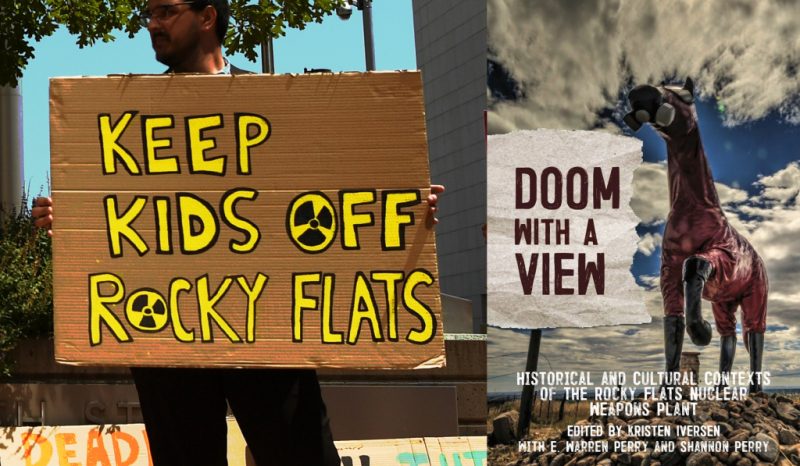
Operating from 1952 to 1992, the Rocky Flats nuclear weapons facility was located approximately 15 miles northwest of Denver, a city built by an influx of miners during the gold rush in the nineteenth century. During the years of its operation, the plant constructed more than 70,000 triggers for nuclear bombs. Rocky Flats would be the site of two major secret plutonium fires, blowing radioactive poison into sections of Arvada and Denver in 1957 and 1969. Hundreds of smaller fires also took place, as well as regular leaks, spills, and atmospheric plutonium releases. Plutonium clouds blew over houses, swimming pools, schools, churches, farms, fields, and streams. Rocky Flats is known for powerful Chinook winds — winds that would blow plutonium dust into local neighborhoods. Locals did not know that Rocky Flats was a weapons factory for most of its years of operation. Workers employed there were forbidden to speak of their work and often didn’t comprehend the full extent of the factory’s activities.
By 1989, The FBI and EPA suspected criminal negligence at Rocky Flats, which led to a raid, led by FBI agent Jon Lipsky.
A federal grand jury began an investigation, a settlement was negotiated, the court documents were sealed, and the plant closed. The story of this federal grand jury is fraught and complex, and cover-ups are suspected in the sealing of the documents and lack of full prosecution. The Rocky Flats cleanup was officially completed in 2004; however, numerous scientists, nuclear experts, local citizens, and antinuclear activists argue the cleanup is far from finished. Unknown but large amounts of plutonium and other contaminants remain on the land in what has been turned into a Superfund site, a designation made under the Comprehensive Environmental Response, Compensation, and Liability Act of 1980. The primary industrial site (the Superfund area — 485 acres) was never completely remediated. There is a buffer zone, also heavily contaminated, although the EPA claims this area is fully remediated. The surrounding area, now called a National Wildlife Refuge, was not remediated. Significant contamination has been detected there in the soil and groundwater. Many other toxic and radioactive contaminants have also been found at Rocky Flats in addition to plutonium: americium, uranium, cadmium, PCBs, beryllium, and more. A 2019 study found plutonium “hot particles” in the soil frighteningly close to the homes abutting the Flats………
Rocky Flats is “a national sacrifice zone,” says Robert Alvarez, associate fellow at the Institute for Policy Studies and former senior policy advisor to the secretary at the US Department of Energy. “That’s what it is, although no one will say so officially. How much remains buried there? A tremendous amount — plutonium doesn’t go away. No one has done this yet — it’s costly and complex — but someone needs to go into those houses nearby in Arvada and take samples. We don’t know how much plutonium is in them.”…….. https://longreads.com/2020/06/30/the-grieving-landscape/amp/
Rooppur Nuclear Power Plant: Rising infections among workers, Daily Star, Ahmed Humayun Kabir Topu, 10 July 20, More and more workers of different sub-contracting firms at Rooppur Nuclear Power Plant in Ishwardi upazila are getting infected with the novel coronavirus.
Upazila Health Officer Dr AFM Asma Khatun said 103 people in the upazila have been diagnosed with the virus till July 6. Of them, around 90 workers were infected with Covid-19 in the last three days. The majority of the workers who tested positive for coronavirus work at Paharpur Cooling Tower Ltd, a sub-contracting firm of the Rooppur project.
The number of Covid-19 patients has increased as over 800 employees of the sub-contracting firms at the plant gave samples to the labs of different government and private institutions for Covid-19 testing in the last few days, said the doctor, adding that the number of infected workers is increasing every day.
Most of the Covid-19 patients are the workers of Paharpur Cooling Tower Ltd, a sub-contracting firm of the plant, said Dr Asma Khatun, adding that the authorities of different sub-contracting firms at Rooppur Nuclear Power Plant have collected samples of several hundred workers and sent those to the lab of a private institution in Dhaka for coronavirus testing but they are yet to get copy of the test reports from the private institution. …… https://www.thedailystar.net/city/news/rooppur-nuclear-power-plant-rising-infections-among-workers-1927965
Warning of serious brain disorders in people with mild coronavirus symptoms
UK neurologists publish details of mildly affected or recovering Covid-19 patients with serious or potentially fatal brain conditions, Guardian, Ian Sample Science editor, @iansample, Wed 8 Jul 2020 Doctors may be missing signs of serious and potentially fatal brain disorders triggered by coronavirus, as they emerge in mildly affected or recovering patients, scientists have warned.
Neurologists are on Wednesday publishing details of more than 40 UK Covid-19 patients whose complications ranged from brain inflammation and delirium to nerve damage and stroke. In some cases, the neurological problem was the patient’s first and main symptom.
A dozen patients had inflammation of the central nervous system, 10 had brain disease with delirium or psychosis, eight had strokes and a further eight had peripheral nerve problems, mostly diagnosed as Guillain-Barré syndrome, an immune reaction that attacks the nerves and causes paralysis. It is fatal in 5% of cases.
“We’re seeing things in the way Covid-19 affects the brain that we haven’t seen before with other viruses,” said Michael Zandi, a senior author on the study and a consultant at the institute and University College London Hospitals NHS foundation trust.
“What we’ve seen with some of these Adem patients, and in other patients, is you can have severe neurology, you can be quite sick, but actually have trivial lung disease,” he added. …….
The cases add to concerns over the long-term health effects of Covid-19, which have left some patients breathless and fatigued long after they have cleared the virus, and others with numbness, weakness and memory problems……..
Nuclear worker with COVID-19 dies, SC plant officials say, The State, BY NOAH FEIT, JULY 07, 2020 An employee at a nuclear plant in South Carolina has died after testing positive for the coronavirus, according to Savannah River Nuclear Solutions.
The employee, who was not publicly identified, got sick last week and died soon after, SRNS President and CEO Stuart MacVean said in a news release.
“I regret to inform you that we have lost a member of the SRNS team to a COVID-related death,” ” MacVean said in the statement. “Our hearts and prayers go out to the individual’s family and friends during this time.”
Grief counseling is being provided to employees in the wake of their colleague’s death at the Savannah River Site atomic weapons and nuclear waste complex near Aiken……..
Through Monday, Savannah River Site officials confirmed 70 staff members tested positive for COVID-19. Of those, 45 have recovered from the virus and been cleared to return to work, it said in the release.
On Tuesday, Savannah River Site announced plans to safely resume operations that were reduced as part of the federal government’s response to the coronavirus pandemic…….
As of Tuesday, there are 47,214 confirmed cases of COVID-19 in South Carolina, and 838 coronavirus-related deaths, according to the Department of Health and Environmental Control. https://www.thestate.com/news/local/article244058147.html
July 8, 2020 This article was originally published here
Semenova Y, et al. Environ Sci Pollut Res Int 2020 – Review.
ABSTRACT
Concerns on health effects from uranium (U) mining still represent a major issue of debate. Any typology of active job in U mines is associated with exposure to U and its decay products, such as radon (Rn), thorium (Th), and radium (Ra) and its decay products with alpha-emission and gamma radiation. Health effects in U miners have been investigated in several cohort studies in the USA, Canada, Germany, the Czech Republic, and France. While public opinion is particularly addressed to pay attention to the safety of nuclear facilities, health hazard associated with mining is poorly debated. According to the many findings from cohort studies, the most significant positive dose-response relationship was found between occupational U exposure and lung cancer. Other types of tumors associated with occupational U exposure are leukemia and lymphoid cancers. Furthermore, it was found increased but not statistically significant death risk in U miners due to cancers in the liver, stomach, and kidneys. So far, there has not been found a significant association between U exposure and increased cardiovascular mortality in U miners. This review tries to address the current state of the art of these studies.
Both also interact – shutting down swathes of the economy and causing life as we know it to a virtual standstill. But it led to huge cuts in worldwide GHG daily emissions estimated at 17% below what they were in the same first week of April, last year.
Global industrial GHG emissions are now expected to be about 8% lower in 2020, the largest annual drop since WWII.
Still, the world will have more than 90% of the necessary decarbonisation left to do in the face of a pandemic, in order to be on track to meet the Paris Agreement’s ambitious goal: of a climate only 1.5 degree Celcius warmer than it was before the Industrial Revolution.
Carbon pricing
The challenges ahead create a unique chance to enact government policies that steer the economy away from carbon at a lower financial, social and political cost than might otherwise have been the case.
Today’s low energy prices will make it easier to cut subsidies for fossil fuels; and more importantly, to introduce a tax on carbon. Revenues from the tax over the next decade can help repair battered government finances. Getting economies back on their feet through investment in friendly infrastructure will boost growth and create new jobs. Low interest rates today make it much cheaper.
Carbon pricing can ensure that the shift happens in the most efficient way possible. The timing is particularly propitious because the costs of wind and solar power have tumbled.
A relatively small push from a carbon price can give renewables a decisive advantage – one which can become permanent as wider deployment made them cheaper still.
True, carbon prices are not popular with politicians.
Even so, Europe is planning an expansion of its carbon-pricing scheme; and China is instituting a brand new one.
Proceeds from a carbon tax can be over 1% of gross domestic product (GDP); and this money can either be paid as a dividend to the public or, help lower government debts (which will reach 122% of GDP in advanced nations, and will rise even further if green investments are debt-financed).
Negative emissions
To be sure, carbon pricing by itself is unlikely to create a network of electric-vehicle charging-points; more nuclear power plants and programmes to retrofit inefficient buildings; and to develop technologies aimed at reducing emissions that cannot simply be electrified away (such as those from large aircrafts and farms).
They could be counterbalanced by “negative emissions” that take carbon dioxide (CO2) out of the atmosphere at a similar rate, i.e. through developing negative emission technologies; more gentle emissions cut in the near future to be made up by negative emissions later on; farming in ways that make the soil richer in organic carbon; restoring degraded forests and planting new ones; growing plantation crops, burning them to generate electricity and sequestering the carbon dioxide given off underground; and bioenergy with carbon capture and storage.
In these areas, subsidies and direct government investment are needed.
Some governments have already put efforts into greening their Covid-19 bailouts. In other countries, the risk is of climate damaging policies: US has been relaxing its environment rules; whereas China continues to build new coal plants.
The International Energy Agency (IEA) estimated that emissions of CO2 in 2019 had remained the same (33.3 billion tonnes) as the previous years.
Energy-related emissions (which include those produced by electricity generation, heating and transport) account for more than 70% of the world’s industrial CO2 pollution.
The stall seems to have been caused by a fall in coal and oil use, combined with a rise in the use of renewable power.
Some governments have already put efforts into greening their Covid-19 bailouts. In other countries, the risk is of climate damaging policies: US has been relaxing its environment rules; whereas China continues to build new coal plants.
The International Energy Agency (IEA) estimated that emissions of CO2 in 2019 had remained the same (33.3 billion tonnes) as the previous years.
Energy-related emissions (which include those produced by electricity generation, heating and transport) account for more than 70% of the world’s industrial CO2 pollution.
The stall seems to have been caused by a fall in coal and oil use, combined with a rise in the use of renewable power.
Historically, it acted as an absorbing sponge for CO2 by removing it from the atmosphere through photosynthesis. Researchers at Brazil’s National Institute for Space Research indicated that about one-fifth of south-east Amazon has lost its ability to soak up the gas, and is now a net source of emissions instead. Most disappointing.
Carpe Covid
I should say the Covid-19 pause is not inherently climate-friendly. Nations need to make it so, the aim being to show that by 2021, they will have made sufficient progress to meet the Paris target commitments.
The pandemic demonstrated that the foundations of prosperity are precarious. Disasters come without warning, shaking all that seemed stable. Indeed, the harm from climate change will be slower than the pandemic, but more massive and longer lasting. There is a lesson to be learnt.
What then are we to do?
Warming depends on the cumulative emissions to date; a fraction of one year’s toll makes no appreciable difference. But returning the world to the emission levels of 2010 – for a 7% drop – raises the tantalising prospect of crossing a psychologically significant boundary.
I think the peak in CO2 emissions from fossil fuels may be a lot closer than many assume. That such emissions have to peak, and soon, is a central tenet of climate policy.
Precisely when they might do so, though, is policy dependent. We know the idea of stripping carbon dioxide out of the atmosphere is fraught with problems.
One is the scale to make a difference. Imagine that in 2060 the world manages to renounce 90% of its fossil fuel use.
To offset the remaining recalcitrant 10% will still mean soaking up about one billion tonnes of carbon a year. Industrial systems currently operate at barely a thousandth of that scale.
Creating such a flow through photosynthesis will require, I think, a plantation the size of Mexico. The second problem: imaginary backstops are dangerous. They deter nations in undertaking the huge efforts required to make the needed negative emissions a reality.
And a third: the known unknowns – high likelihood of drought and crop failures; changes to regional climate that upset whole economies; storms more destructive in both their winds and their rains; seawater submerging beaches and infiltrating aquifers – all add to more anxiety. And in the spaces in between, are the unknown unknowns – as surprising, and deadly, as a thunderstorm that kills and the great ice-sheets that are doomed slowly to collapse.
Above all, only the pathway embodying the strongest climate action (much stronger than what is promised so far) can allow the world to keep the temperature rise since the 18th century well below two degree Celcius in the 21st.
This had led a new generation of climate activists to demand greater commitments at the next UN Framework Convention on Climate Change.
There remain serious problems: how to get people and nations who do not share their passion and commitment, to do more – much more. If governments really want to limit climate change, they must do more. They do not have to do everything; but need to send out clear signals. Around the world, they currently provide US$400bil a year in direct support for fossil fuel consumption; more than twice what they spend subsidising renewable production.
A price on carbon, which hastens the day when new renewables are sustainably cheaper than old fossil fuel plants, is a crucial step.
So is research spending aimed at those emissions which are hard to electrify away. Governments have played a vital role in the development of solar panels, wind turbines and fracking. There is a lot more to do. However much they do, though, and however well they do it, they will not stop what’s on-going.
On today’s policies, I think the rise by the end of the century looks closer to three degree Celcius. Besides trying to limit climate change, I am afraid the world also needs to learn how to adapt to it.
 While some of Moore’s subjects are severely deformed, many suffer from less visible health issues like cancer, blood diseases or PTSD. And the hidden, insidious nature of the thing is what is perhaps most troubling. “For a long time there hadn’t been much nuclear development but it is a very real issue right now,” says Moore. “But we don’t talk about what it takes to renew these weapons. These people are legacy and testament to what was done to meet those ends.”







 nuclear-news