The Building of the First Atomic Bombs Impacted Workers and Residents, Too
Eighty years after the bombing of Hiroshima and Nagasaki, workers who mined the uranium and people who lived near the test sites are still dying from exposure to radiation.
by Jim Carrier, August 7, 2025, https://progressive.org/magazine/the-building-of-the-first-atomic-bombs-impacted-workers-and-residents-too-carrier-20250807/
The road to Nagasaki was littered with radiation.
Eighty years after an atomic bomb called Fat Man was dropped, killing and poisoning about 100,000 people in Nagasaki, at least a dozen sites around the world—sites that contributed to the bomb’s creation—are still dealing with its deadly legacy.
Under the pressure to win World War II, U.S. military leaders pulled out all stops to prioritize the creation and testing of an atomic bomb, indifferent to the cost on the lives and livelihood of everyday people. Landscapes were polluted, workers were exposed to radiation, and civilian neighbors to the nuclear test sites—the first “downwinders”—were ignored or lied to.
The Manhattan Project—a top-secret research and development program created by the U.S. government during World War II to develop a nuclear bomb—sourced nearly all of its much-needed uranium from the Belgian Congo’s Shinkolobwe mine. Located in the modern-day Haut-Katanga province in the Democratic Republic of Congo, the Shinkolonwe mine was the world’s richest source of high-grade uranium, radium, and other valuable minerals. First opened in 1921, the Belgian-owned mine employed artisanal miners who dug the radioactive ore with handheld tools and carried it out in sacks on their shoulders, further exposing them to the toxic substance. While the environmental impact was visible and more difficult to conceal, any known records of lasting health impacts were disappeared by the authorities or never recorded at all.
In 1939, fearing Adolf Hitler and the German discovery of nuclear fission in uranium—with its potential to create a bomb—the mine’s manager shipped more than 1,000 tons of ore from Katanga to a warehouse on Staten Island, New York. Spilled ore contaminated a portion of the site where it sat for three years. A 1980 study later determined that the site might harm trespassers beneath the Bayonne Bridge, but by that time the site had already been demolished.
President Franklin Roosevelt’s January 19, 1942, decision to build an atomic bomb touched off the $2 billion Manhattan Project with its extraordinary mix of secret research at Los Alamos, New Mexico, and massive construction projects at Oak Ridge, Tennessee, and Hanford, Washington. All of these needed hundreds of tons of uranium to make a few pounds of plutonium.
In November 1942, the U.S. Army discovered and bought the Staten Island uranium stockpile and shipped 1,823 drums by barge and railroad to the Seneca Army Depot in Romulus, New York, where it was put into large concrete igloos before being shipped to various refineries. Now part of an Environmental Protection Agency Superfund site, the depot stored all kinds of munitions and even some classified military equipment that was burned and buried. Most of the site was cleaned up in the early 2000s and opened for recreation and industrial warehousing.
The Army’s search for uranium ore also uncovered 500 tons among vanadium tailings in western Colorado, and 300 tons at Port Hope, Ontario, Canada, where the Eldorado Gold Mines refinery processed ore into more pure concentrations. Eldorado’s own mine, on Great Bear Lake in the Northwest Territories of Canada, employed First Nations Dene workers who would later suffer cancers and die from handling sacks of ore. Their community of Délı̨nę became known as a “village of widows.” Without contemporary health records, a re-created exposure study found that overall cancer rates for Délı̨nę were “not statistically significantly different from the Northwest Territories.”
Port Hope, on the northern shore of Lake Ontario, which processed all the African and North American uranium ore for the Manhattan Project, spread tailings in neighborhoods and in the lake, eventually requiring a $1.3 billion cleanup that did not begin until 2018. Residents blame the contamination for cancers, although a 2013 study found no statistical evidence of greater radiosensitive cancers.
An enduring and poetic legend links the labors of Délı̨nę villagers to the Japanese bombs, a story told in A Village of Widows, a documentary film that followed ten Dine to Hiroshima in 1998 where they paid their respects and shared mutual sorrow with hibakusha, the Japanese word for the survivors of the atomic bombs. The uranium ore from Great Bear Lake did, in fact, contribute to the Manhattan Project—a U.S. government history found that Great Bear Lake ore amounted to one-sixth of the uranium used in the Manhattan Project, Colorado ore contributed one-seventh, and the rest came from the Belgian Congo. However, a detailed 2008 analysis of the ore’s movements concluded that “the fissile material in the Nagasaki weapon was almost certainly derived from oxide processed by Eldorado which would have been mostly of Belgian Congo origin. The same is probably true for the Hiroshima weapon. It is also possible that there was some uranium of U.S. origin in both of these weapons.”
After Port Hope, the uranium was further refined at nineteen industrial sites including: Linde Air in Tonawanda, New York; Dupont’s Deepwater Works in New Jersey; Metal Hydrides Inc. in Beverly, Massachusetts; Harshaw Chemical in Cleveland, Ohio; and at Mallinckrodt Chemical Company in St. Louis, Missouri. All of these sites have undergone expensive remediation. Mallinckrodt, whose radiation contamination caused numerous cancers in children and adults, has yet to be scrubbed clean.
Uranium salts were then delivered to either Oak Ridge, Tennessee, where the Y-12 refinery produced enriched uranium for the bomb dropped on Hiroshima, or to Hanford, Washington, where refineries produced the plutonium used in both the Trinity test bomb and the Nagasaki bomb. Both reactor sites deliberately released radioactive material into the air and water. Cleaning the mess has cost much more than the original Manhattan Project. The cost to clean Hanford, considered the most radioactive spot in the world, is estimated at $640 billion. Oak Ridge’s cleanup won’t be finished until 2050. Hanford’s effort to meld radioactive sludge into glass containers and bury them in salt caves is only beginning.

The first atomic bomb blast in history, the Trinity test of the plutonium implosion “gadget” in the Alamogordo, New Mexico, desert on July 16, 1945, left permanent marks on the land and the people downwind. The airborne plume from Trinity drifted across the Tularosa Basin, landing on vegetables, cattle, and water, poisoning residents who would later report leukemia, cancers, and heart disease. Subsequent studies have found Trinity fallout reached forty-six states, Canada, and Mexico. After five years of lobbying, the Tularosa Basin Downwinders Consortium won a two-year window—until December 31, 2028—to be included in the federal Radiation Exposure Compensation Act which covers U.S. uranium workers and downwinders exposed at the Nevada Test Site during the Cold War. As of June 24, 2025, 42,575 people have received $2.7 billion dollars. Tourists can visit the test site one day a year, on the third Saturday in October. Radiation at ground zero is ten times the region’s natural radiation.
The area around Los Alamos, where brilliant physicists and world-class machinists created the bombs that fell on Japan eighty years ago, has realized that the work of those scientists also left plutonium contamination close to home. Wartime practices that dumped raw radioactive waste into Acid Canyon continued until 1951, and despite several cleanup efforts, measurable plutonium remains. The Los Alamos National Laboratory says the risks to humans walking the canyon are “tiny.” However, plutonium has a half-life of 24,000 years.
For more on the story of Nagasaki, Japan, today, see Jim Carrier’s article “The Bombs Still Ticking” from the August/September 2025 issue of The Progressive.
Will Cancer Prove to be Another Weapon in Israel’s War in Gaza?

The Many Ways Bombs Can Kill
By Joshua Frank, September 4, 2025
Gaza’s Looming Cancer Epidemic
As devastating as the war in Iraq was — and as contaminated as Fallujah remains — it’s nearly impossible to envision what the future holds for those left in Gaza, where the situation is so much worse. If Fallujah teaches us anything, it’s that Israel’s destruction will cause cancer rates to rise significantly, impacting generations to come.
Manufacturing Cancer
The aerial photographs and satellite footage are grisly. Israel’s U.S.-backed military machine has dropped so many bombs that entire neighborhoods have been reduced to rubble. Gaza, by every measure, is a land of immense suffering. As Palestinian children hang on the brink of starvation, it feels strange to discuss the health effects they might face in the decades ahead, should they be fortunate enough to survive.
A week after the Hamas attacks on October 7, 2023, a large explosion incinerated a parking lot near the busy Al-Ahli Arab Hospital in Gaza City, killing more than 470 people. It was a horrifying, chaotic scene. Burnt clothing was strewn about, scorched vehicles piled atop one another, and charred buildings surrounded the impact zone. Israel claimed the blast was caused by an errant rocket fired by Palestinian extremists, but an investigation by Forensic Architecture later indicated that the missile was most likely launched from Israel, not from inside Gaza.
In those first days of the onslaught, it wasn’t yet clear that wiping out Gaza’s entire healthcare system could conceivably be part of the Israeli plan. After all, it’s well known that purposely bombing or otherwise destroying hospitals violates the Geneva Conventions and is a war crime, so there was still some hope that the explosion at Al-Ahli was accidental. And that, of course, would be the narrative that Israeli authorities would continue to push over the nearly two years of death and misery that followed.
A month into Israel’s Gaza offensive, however, soldiers of the Israel Defense Forces (IDF) would raid the Indonesian Hospital in northern Gaza, dismantling its dialysis center with no explanation as to why such life-saving medical equipment would be targeted. (Not even Israel was contending that Hamas was having kidney problems.) Then, in December 2023, Al-Awda Hospital, also in northern Gaza, was hit, while at least one doctor was shot by Israeli snipers stationed outside it. As unnerving as such news stories were, the most gruesome footage released at the time came from Al-Nasr children’s hospital, where infants were found dead and decomposing in an empty ICU ward. Evacuation orders had been given and the medical staff had fled, unable to take the babies with them.
For those monitoring such events, a deadly pattern was beginning to emerge, and Israel’s excuses for its malevolent behavior were already losing credibility.
Shortly after Israel issued warnings to evacuate the Al-Quds Hospital in Gaza City in mid-January 2024, its troops launched rockets at the building, destroying what remained of its functioning medical equipment. Following that attack, ever more clinics were also targeted by Israeli forces. A Jordan Field Hospital was shelled that January and again this past August. An air strike hit Yafa hospital early in December 2023. The Nasser Medical Complex in Khan Younis in southern Gaza was also damaged last May and again this August, when the hospital and an ambulance were struck, killing 20, including five journalists.
While human-rights groups like the International Criminal Court, the United Nations, and the Red Cross have condemned Israel for such attacks, its forces have continued to decimate medical facilities and aid sites. At the same time, Israeli authorities claimed that they were only targeting Hamas command centers and weapons storage facilities.
The Death of Gaza’s Only Cancer Center
In early 2024, the Turkish-Palestinian Friendship Hospital, first hit in October 2023 and shuttered in November of that year, was in the early stages of being demolished by IDF battalions. A video released in February by Middle East Eye showed footage of an elated Israeli soldier sharing a TikTok video of himself driving a bulldozer into that hospital, chuckling as his digger crushed a cinderblock wall. “The hospital accidentally broke,” he said. Evidence of Israel’s crimes was by then accumulating, much of it provided by the IDF itself.
When that Turkish-Palestinian Friendship Hospital opened in 2018, it quickly became Gaza’s leading and most well-equipped cancer treatment facility. As the Covid-19 pandemic reached Gaza in 2020, all oncology operations were transferred to that hospital to free up space at other clinics, making it the only cancer center to serve Gaza’s population of more than two million……………………………………………………………………………..
“The repercussions of the current conflict on cancer care in Gaza will likely be felt for years to come,” according to a November 2023 editorial in the medical journal Cureus. “The immediate challenges of drugs, damaged infrastructure, and reduced access to specialized treatment have long-term consequences on the overall health outcomes of current patients.”
In other words, lack of medical care and worse cancer rates will not only continue to disproportionately affect Gazans compared to Israelis, but conditions will undoubtedly deteriorate significantly more. And such predictions don’t even take into account the fact that war itself causes cancer, painting an even bleaker picture of the medical future for Palestinians in Gaza.
The Case of Fallujah
When the Second Battle of Fallujah, part of America’s nightmarish war in Iraq, ended in December 2004, the embattled city was a toxic warzone, contaminated with munitions, depleted uranium (DU), and poisoned dust from collapsed buildings. Not surprisingly, in the years that followed, cancer rates increased almost exponentially there. Initially, doctors began to notice that more cancers were being diagnosed. Scientific research would soon back up their observations, revealing a startling trend.
In the decade after the fighting had mostly ended, leukemia rates among the local population skyrocketed by a dizzying 2,200%. It was the most significant increase ever recorded after a war, exceeding even Hiroshima’s 660% rise over a more extended period of time. One study later tallied a fourfold increase in all cancers and, for childhood cancers, a twelvefold increase.
The most likely source of many of those cancers was the mixture of DU, building materials, and other leftover munitions. Researchers soon observed that residing inside or near contaminated sites in Fallujah was likely the catalyst for the boom in cancer rates.
“Our research in Fallujah indicated that the majority of families returned to their bombarded homes and lived there, or otherwise rebuilt on top of the contaminated rubble of their old homes,” explained Dr. Mozghan Savabieasfahani, an environmental toxicologist who studied the health impacts of war in Fallujah. “When possible, they also used building materials that were salvaged from the bombarded sites. Such common practices will contribute to the public’s continuous exposure to toxic metals years after the bombardment of their area has ended.”
While difficult to quantify, we do have some idea of the amount of munitions and DU that continues to plague that city. According to the International Atomic Energy Agency, the United States fired between 170 and 1,700 tons of tank-busting munitions in Iraq, including Fallujah, which might have amounted to as many as 300,000 rounds of DU. While only mildly radioactive, persistent exposure to depleted uranium has a cumulative effect on the human body. The more you’re exposed, the more the radioactive particles build up in your bones, which, in turn, can cause cancers like leukemia.
With its population of 300,000, Fallujah served as a military testing ground for munitions much like those that Gaza endures today. In the short span of one month, from March 19 to April 18, 2003, more than 29,199 bombs were dropped on Iraq, 19,040 of which were precision-guided, along with another 1,276 cluster bombs. The impacts were grave. More than 60 of Fallujah’s 200 mosques were destroyed, and of the city’s 50,000 buildings, more than 10,000 were imploded and 39,000 damaged. Amid such destruction, there was a whole lot of toxic waste. As a March 2025 report from Brown University’s Costs of War Project noted, “We found that the environmental impact of warfighting and the presence of heavy metals are long-lasting and widespread in both human bodies and soil.”
Exposure to heavy metals is distinctly associated with cancer risk. “Prolonged exposure to specific heavy metals has been correlated with the onset of various cancers, including those affecting the skin, lungs, and kidneys,” a 2023 report in Scientific Studies explains. “The gradual buildup of these metals within the body can lead to persistent toxic effects. Even minimal exposure levels can result in their gradual accumulation in tissues, disrupting normal cellular operations and heightening the likelihood of diseases, particularly cancer.”
And it wasn’t just cancer that afflicted the population that stuck around or returned to Fallujah. Infants began to be born with alarming birth defects. A 2010 study found a significant increase in heart ailments among babies there, with rates 13 times higher and nervous system defects 33 times higher than in European births.
“We have all kinds of defects now, ranging from congenital heart disease to severe physical abnormalities, both in numbers you cannot imagine,” Dr Samira Alani, a pediatric specialist at Fallujah General Hospital, who co-authored the birth-defect study, told Al Jazeera in 2013. “We have so many cases of babies with multiple system defects… Multiple abnormalities in one baby. For example, we just had one baby with central nervous system problems, skeletal defects, and heart abnormalities. This is common in Fallujah today.”
While comprehensive health assessments in Iraq are scant, evidence continues to suggest that high cancer rates persist in places like Fallujah. “Fallujah today, among other bombarded cities in Iraq, reports a high rate of cancers,” researchers from the Costs of War Project study report. “These high rates of cancer and birth defects may be attributed to exposure to the remnants of war, as are manifold other similar spikes in, for example, early onset cancers and respiratory diseases.”

As devastating as the war in Iraq was — and as contaminated as Fallujah remains — it’s nearly impossible to envision what the future holds for those left in Gaza, where the situation is so much worse. If Fallujah teaches us anything, it’s that Israel’s destruction will cause cancer rates to rise significantly, impacting generations to come.
Manufacturing Cancer
The aerial photographs and satellite footage are grisly. Israel’s U.S.-backed military machine has dropped so many bombs that entire neighborhoods have been reduced to rubble. Gaza, by every measure, is a land of immense suffering. As Palestinian children hang on the brink of starvation, it feels strange to discuss the health effects they might face in the decades ahead, should they be fortunate enough to survive.
As current cancer patients die slow deaths with no access to the care they need, future patients, who will acquire cancer thanks to Israel’s genocidal mania, will no doubt meet the same fate unless there is significant intervention.
“[A]pproximately 2,700 [Gazans] in advanced stages of the disease await treatment with no hope or treatment options within the Gaza Strip under an ongoing closure of Gaza’s crossings, and the disruption of emergency medical evacuation mechanisms,” states a May 2025 report by the Palestinian Centre for Human Rights. “[We hold] Israel fully responsible for the deaths of hundreds of cancer patients and for deliberately obliterating any opportunities of treatment for thousands more by destroying their treatment centers and depriving them of travel. Such acts fall under the crime of genocide ongoing in the Gaza Strip.”
Israel’s methodical destruction in Gaza has taken on many forms, from bombing civilian enclaves and hospitals to withholding food, water, and medical care from those most in need. In due time, Israel will undoubtedly use the cancers it will have created as a means to an end, fully aware that Palestinians there have no way of preparing for the health crises that are coming.
Cancer, in short, will be but another weapon added to Israel’s ever-increasing arsenal.
Nuclear-armed states should come clean after 80 years of nuclear testing harm.
29 August 2025, https://www.icanw.org/nuclear_armed_states_should_come_clean_after_80_years_of_nuclear_testing_harm
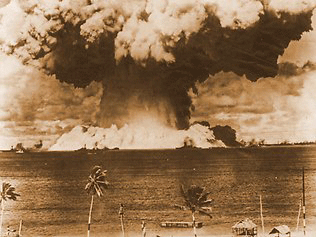
Today, the United Nations International Day Against Nuclear Testing, ICAN is calling on the nuclear-armed states that have detonated over 2,000 nuclear devices between them to take full responsibility for the harm they have caused people and the environment.
The first detonation was in New Mexico a few weeks before the nuclear bombings of Hiroshima and Nagasaki 80 years ago this month. Between 1945 and 2007, more than 2000 nuclear tests were carried out, across the world in Algeria, Australia, French Polynesia, Kazakhstan, Kiribati, the Marshall Islands, and the southwestern United States, as well as Alaska, western China, India, North Korea, Pakistan, Russia and Ukraine.
The majority of these explosions were detonated in what were then colonies and/or regions inhabited by Indigenous peoples or other ethnic communities. The communities involved are engaged in efforts for justice and to prevent any return to nuclear testing.
Nuclear testing left a legacy beyond test site boundaries
Radiation cannot be contained geographically; it respects no country’s border. Fallout patterns are complex and the full humanitarian consequences of the fallout of years of particular atmospheric nuclear testing is not known. Fallout is not comprehensively documented in this resource, although some studies on these impacts may be included. For a detailed study on the fallout of a few French nuclear weapons tests in the Pacific – and French efforts to cover it up – see The Moruroa Files.
Nuclear testing is banned
The first international treaty to completely outlaw nuclear testing, the Comprehensive Test Ban Treaty was adopted in 1996, although the treaty has not yet entered into force. The Treaty on the Prohibition of Nuclear Weapons is the only international treaty in force that prohibits nuclear testing. Other treaties ban types of nuclear testing or nuclear testing in certain regions.
What is being done to help those impacted?
The Treaty on the Prohibition of Nuclear Weapons (TPNW) is the first international treaty to ban all nuclear weapons activities, it also requires states parties to provide assistance for survivors of nuclear weapons use and testing and to begin to remediate contaminated environments in Articles 6 and 7. While the primary responsibility for this implementation rests with affected countries, all countries in a position to do so, should help those countries with this work.
Articles 6 and 7 of the TPNW establish a framework of responsibility that offers solidarity and support to affected states parties to address present-day humanitarian and environmental harm from past use and testing. They also serve to place these issues on the agenda of the wider international community, including donors and international organisations. They provide an opportunity for states parties to make a practical difference with and for affected communities.
In some countries where nuclear weapons have been tested there are programs to provide financial or health assistance to survivors or to clean up the environment but none sufficiently address all needs of survivors. Dozens of identified sites around the world remain contaminated by nuclear weapons use, production and testing and there is no one standard for their remediation. Notably there is no widely accepted standard to determine how clean is clean, or how to monitor radiation levels over time. This article in Global Policy reviews existing approaches and looks at what else can be done.
ICAN Calls for states to come clean
ICAN’s Executive Director, Melissa Parke, was in New Mexico last month for the commemorations of the world’s first explosion of a nuclear weapon and to meet communities whose lives were changed forever by the radioactive fallout from the detonation that poisoned their land, air and water. The ‘Trinity Test’ detonated the plutonium bomb design that was used a few weeks later to kill 74,000 people in Nagasaki.
Ms Parke said: “Trinity was followed by more than 2000 nuclear explosions all over the world and the countries responsible – the nuclear-armed states – have never fully acknowledged the catastrophic harm they have caused to people and environments. These countries must stop the cover-up, come clean and provide the support and recognition these communities deserve. The nuclear armed states also need to heed the calls from affected communities for the urgent abolition of nuclear weapons, so that these weapons of total destruction are eliminated before they eliminate us.”
More than 2,000 nuclear weapons have been detonated in the past 80 years. Their effects still linger around the world.

Although these nuclear weapons were detonated decades ago now, “many people are still paying the price,”
a sort of ‘who knows, we don’t know, it’ll probably be fine,’……...Years of secrecy surrounding the test site have given way to years of taboo
CNN, By Issy Ronald, 24 Aug 25
Growing up in Salt Lake City, Utah, in the 1950s and 60s, Mary Dickson was among the millions of American schoolchildren taught to “duck and cover” in the event of a nuclear war.
“I just remember thinking, ‘That’s not going to save us from a bomb,’” she told CNN. At that time, Dickson didn’t know that nuclear weapons were being detonated in the neighboring state of Nevada as the US tested its new stockpile. She lived downwind, in the direction much of the radioactive fallout from atmospheric tests traveled.
She says she has suffered from thyroid cancer; her older sister passed away from lupus in her 40s; her younger sister was recently told that her intestinal cancer has spread to other parts of her body; and her nieces have health issues too.
Dickson says she once counted 54 people from her five-block childhood neighborhood who had suffered from cancer, autoimmune diseases, birth defects or miscarriages.
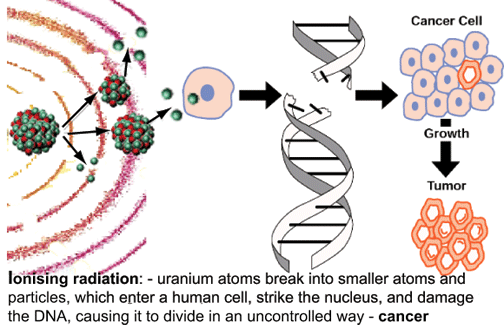
It’s unclear what caused their cancer, since it is difficult to ascribe direct responsibility, but it is generally accepted in the medical community that radiation exposure increases heightens the risk of cancer, depending on the level of exposure.
“Radiation exposure increases the chance of getting cancer, and the risk increases as the dose increases: the higher the dose, the greater the risk,” says the US Environmental Protection Agency, citing studies that follow groups of people exposed to radiation.
Collectively, those who lived and were exposed in the states surrounding the Nevada testing site, including Arizona, Nevada, Utah, Oregon, Washington State and Idaho, became known as “downwinders.”
“It’s devastating,” said Dickson, a playwright and advocate for survivors of nuclear weapons testing in the US. “I can’t tell you how many friends I’ve had, and their cancers have come back… The psychological damage does not go away. You spend the rest of your life worrying that each lump, each pain (means) it’s back.”
“The Cold War for us never ended,” she added. “We’re still living with its effects.”
The nuclear age began 80 years ago when the US dropped two atomic bombs on the Japanese cities of Hiroshima and Nagasaki near the end of World War II. The bombs killed about 110,000 people instantly and helped set in motion the Cold War-era arms race in which the US and the Soviet Union, as well as Britain, France and China, all scrambled to develop ever more powerful nuclear weapons.
They conducted more than 2,000 tests between 1945 and 1996, each establishing their own nuclear deterrent which, depending on your point of view, either underpins or undermines the world’s security to this day.
And as in Japan, where hundreds of thousands of people died from injuries and radiation-related illnesses in the years after 1945, these nuclear tests damaged the lives, health and land of people living nearby.
Later, India, Pakistan and North Korea carried out their own tests, too, before a series of international treaties almost completely curbed the practice. Only North Korea has tested nuclear weapons in the 21st century – most recently in 2017 – and no atmospheric tests have taken place since 1980.
Still, “it’s not a problem of the past,” said Togzhan Kassenova, a non-resident fellow at the Carnegie Endowment for International Peace who studies nuclear policy.
Although these nuclear weapons were detonated decades ago now, “many people are still paying the price,” she told CNN.
‘We share the same stories’
The earlier nuclear powers tested their bombs in places they deemed remote and sparsely populated, often in territory they had colonized, far away from their own major population hubs.
“Their priorities (were) such that they believed testing was absolutely necessary for national security reasons and if you take that as an absolute truth and everything else is a sort of ‘who knows, we don’t know, it’ll probably be fine,’ it’s very easy to get into a situation where your default response is to do it,” Alex Wellerstein, an associate professor at the Stevens Institute of Technology in New Jersey, told CNN.
The US conducted its nuclear testing mostly in Nevada and the Marshall Islands, in the central Pacific Ocean; the Soviet Union in Kazakhstan and in the Arctic Ocean archipelago of Novaya Zemlya; the United Kingdom in Australia and the Pacific atoll of Kiritimati, formerly known as Christmas Island; France in Algeria and French Polynesia; and China in Lop Nur, a remote desert site in western Xinjiang province.
The Soviet Union tested more than 450 bombs at its Semipalatinsk test site in Kazakhstan from 1949 to 1989, in top secret towns, built for nuclear testing. The residents nearby “didn’t really know the whole extent of it,” Aigerim Seitenova, a nuclear justice and gender equality expert who co-founded the Qazaq Nuclear Frontline Coalition, told CNN.
“So many of my relatives, they were passing away so early when I was a child and I didn’t understand why they were passing away in their 40s and 50s,” she said, adding that she and many members of her family suffer from chronic health issues. “At the time, I thought they were old.”
Years of secrecy surrounding the test site have given way to years of taboo, Seitenova said, adding that making a documentary about the intergenerational impact of Kazakhstan’s nuclear legacy on women was a “process of healing” for her, as she sought to restore their agency.
And Seitenova adds that when the film was translated into Japanese and shown in Hiroshima, it underscored for her that the “experiences of the Kazakh people are not unique.”
“We share the same stories from the Pacific French Polynesia, Marshall Islands, Australia,” she said.
“We are the main experts in the humanitarian impact of nuclear weapons,” she added, lamenting that while scientists from the West consider themselves experts, “those with actually lived experiences are not always taken seriously.”
Understanding the full impact of nuclear testing is difficult – it is both contested and hard to quantify, given the difficulty in ascribing health issues to any one cause, and in assessing the wider social consequences for communities. Various studies have tried to measure these effects, often producing results which contain large uncertainties…………………………………
Studies conducted in the region surrounding the Semipalatinsk test site found that cancer mortality rates and infant mortality rates during the most intensive period of nuclear testing, from 1949 to 1962, were higher than elsewhere in Kazakhstan. Kassenova said that when she returns to the region, she meets children who are fourth- or fifth-generation descendants of those who lived through that period and have health issues they attribute to nuclear contamination………………………………..
Equivalent to 7,232 Hiroshima bombs
As well as impacting people’s health, these tests have had significant environmental consequences. Between 1946 and 1958, the US conducted 67 known nuclear tests in the Marshall Islands, which had a total explosive yield equivalent to 7,232 Hiroshima bombs………………………………………………………………………………………………………………………………………..
France and the UK, meanwhile, have long minimized the impact of their nuclear testing programs. Only in 2010 did France acknowledge a connection between its tests and the ill-health of Algerians and French Polynesians exposed to radiation, and it wasn’t until 2021 that about half of these claimants received compensation……………………………….
Eighty years on from the devastating use of nuclear weapons in Japan, and decades on from the most intensive period of above-ground testing, the world’s nuclear reckoning is far from over. https://edition.cnn.com/2025/08/24/world/nuclear-weapons-tests-effects-intl-scli
Workers who developed cancer while building America’s nuclear weapons struggle to make medical claims after Trump cuts
Unless the Trump administration chooses to renew the compensation program former nuclear weapons employees who are hoping to receive assistance with their medical payments will no longer have the opportunity.
Ariana Baio, New York, Friday 22 August 2025, https://www.independent.co.uk/news/world/americas/us-politics/nuclear-facility-cancer-government-compensation-trump-b2812678.html
Former government employees who contracted cancers while working on America’s nuclear weapons are unable to get the government to review their medical claims in order to obtain compensation after the administration made rollbacks.
The Advisory Board on Radiation and Worker Health, part of the U.S. Centers for Disease Control and Prevention, is composed of doctors, nuclear experts, former nuclear weapon employees, and others, who dedicate their time to understanding if a specific ailment is tied to a worker’s exposure to radiation and advising the Department of Health and Human Services about potential compensation.
Their findings help determine whether former nuclear employees at U.S. facilities qualify for government compensation.
But the board has been effectively shut down because of President Donald Trump’s plan to reduce the size of the federal government and streamline processes.
That means those including Steve Hicks are left in limbo. The 70-year-old, who spent 34 years working as a nuclear mechanist at the Y-12 National Security Complex, which enriched uranium for the atomic bomb dropped on Hiroshima, is battling skin cancer and seeking compensation.
“I made a good living there, but I am not happy that I am this sick,” Hicks told Reuters in an interview published Friday. “And there are people who worked there that are sicker than me.”
Hicks is one of the thousands of former nuclear employees who suffer from cancers associated with radiation exposure.
He previously had kidney cancer, which is one of the 22 cancers the government recognizes, and provides a $150,000 lump-sump payment and medical expense compensation.
But skin cancer is not on that list.
Hicks has spent a lot of time petitioning the government to provide coverage for his skin cancer treatment and for them to add the cancer to the “Special Exposure Cohort” which are cancers the government does compensate.
The “Special Exposure Cohort” was established by a congressional act in 2000, to compensate former nuclear weapons workers who were diagnosed with cancer due to high radiation exposure. To qualify, an employee must have worked at least 250 days, before February 1992, at three gaseous diffusion plants in Kentucky, Ohio, or Tennessee and have one of the 22 cancers.
But to add another cancerto the list is an extremely arduous process and can take years.
When it was first established, Congress had 13 cancers on the list and have added to it over the years through the petition process.
“I’ve contacted politicians and the White House and haven’t heard anything back,” Hicks told Reuters.
But the process has now become virtually impossible because the board has been inactive since the start of the Trump administration.
The Advisory Board on Radiation and Worker Health was in the process of reviewing eight petitions from former nuclear workers when HHS suspended its activities in January.
The board is supposed to meet six times per year, according to law. But its 10 members told Reuters that it has not met since December 2024.
“Meetings of the Advisory Board on Radiation and Worker Health are currently paused due to outstanding administrative requirements, which the program is actively working to resolve,” a CDC spokesperson told Reuters.
The Independent has asked the CDC for comment.
As of last year, the U.S. had given $25 billion in compensation and medical benefits to the more than 100,000 atomic weapons workers who made claims, according to the Department of Energy.
But that could end for good soon because it has a statute expiration of September 2025.
Unless the Trump administration chooses to renew the compensation program those former nuclear weapons employees who are hoping to receive assistance with their medical payments will no longer have the opportunity.
The Bombs Still Ticking

Eighty years after Hiroshima and Nagasaki, the trauma of nuclear warfare lingers for thousands of survivors in Japan.
Progressive Magazine, by Jim Carrier ,August 6, 2025
n the cryogenic silence of frozen biological material stored in her radiation lab, Dr. Ayumi Hida hears a lesson for the nuclear age: “The atom bomb must not be used ever again.”
Hida is the Nagasaki chief of clinical studies for the longest continuous health survey in history, a remarkable effort begun days after the destruction of the cities of Hiroshima and Nagasaki. Her work has helped to establish that Japanese people still suffer—physically, mentally, and socially—from two atomic bombs dropped, as of August 2025, eighty years ago.
As Japan marks these anniversaries on August 6 and 9, decades of medical exams by Hida and her colleagues at the Radiation Effects Research Foundation (RERF), along with evidence from its massive collection of preserved blood and tissue, have revealed that the nuclear genie unleashed in 1945 is still at work.
RERF has found in Japan’s bomb survivors new cancers, heart and immune problems, strokes, inflammation, leukemia, and even a form of cataracts—atop the usual maladies of old age. With a mean age of eighty-five, their ranks dropping by some 6,000 a year, 106,825 Japanese atomic bomb survivors—known as hibakusha, a term meaning “bomb-affected people”—also suffer from post-traumatic stress.
“They say, ‘I have an atomic bomb nest in my body,’ ” Dr. Masao Tomonaga tells The Progressive. Tomonaga, eighty-two, a hibakusha himself, cares for 400 survivors in a nursing home.
“The human consequences of the atomic bombs have not ceased,” he has written. “Many people are still dying of radiation-induced malignant disease. Therefore, it is too early to finalize the total death toll. Hibakusha have faced a never-ending struggle to regenerate their lives and families under the fear of disease.”
Honored for their anti-nuclear activism—the national Japanese hibakusha group known as Nihon Hidankyo won the Nobel Peace Prize in 2024—their unique stories describe what it was like to live through the only nuclear attacks in history. In Hiroshima and Nagasaki, where peace is a subject taught in schools, hibakusha speak regularly, so much so that students sometimes complain that they’ve heard it before.
Every living hibakusha is a walking laboratory, an experiment in the human effects of nuclear war. It is this story that is now emerging from long-term studies. “Fat Man,” the plutonium bomb dropped on Nagasaki on August 9, 1945, killed 73,000 of the city’s 240,000 citizens, either instantaneously or by the end of 1945, with a combination of blast wind, thermal burns, and radiation—or, in some cases, all three. Fat Man’s twenty-one-kiloton yield surpassed the Hiroshima uranium bomb’s fifteen kilotons, but its effect was partially shielded by Nagasaki’s hilly Urakami River canyon over which it exploded.
Six hundred yards from ground zero on the day of the blast, Nagasaki’s medical college and hospital lost half of its staff and students, but the survivors set up first-aid stations within days. The injuries they saw ranged from embedded glass to ruptured intestines to carbonized skin flash-burned by the radiation. Tomonaga wrote that “according to the saddest memory of some survivors, the blast wind tore off the heads of babies who were being carried on their mothers’ backs in the traditional Japanese way. Most of the mothers also died.”
By that September, U.S. Army, Navy, and Manhattan District teams, with doctors, pathologists, and physicists, arrived together with occupying forces. Their mission was driven, largely, by a desire to understand the bomb’s effects and how the United States could protect itself from a nuclear bomb in the future. At the time, radiation was a new and mysterious force, and discoveries were mostly classified. Information about radiation and anything related to the bombings would be censored in the Japanese media until 1952.
Within weeks, however, the effects of the radiation began to show up in individuals—loss of hair, bloody diarrhea, peeling skin. Autopsies were performed and organs—such as hearts, lungs, eyes, brains—from hundreds of victims were taken to the U.S. military’s Institute of Pathology in Washington, D.C., where, in a secret, bomb-proof laboratory, the effects of high radiation were studied, analysis that helped create the guidelines and warnings for radiation exposure used worldwide today. The last organs, slides, and tissues were returned to Japan in 1973.
n October 12, 1945, General Douglas MacArthur ordered the merger of Japanese and American medical studies on the bombings under the leadership of sixty American and more than ninety Japanese physicians and scientists. The Joint Commission for the Investigation of the Effects of the Atomic Bombs evolved, in 1975, into RERF, with labs in Nagasaki and Hiroshima. It is supported by the Japanese government and with $14 million annually from the U.S. Energy Department’s Office of Environment, Health, Safety and Security.
In 1950, Japan identified 94,000 bomb survivors and a control group of 27,000 people who were not exposed to the bomb, and began a lifetime epidemiological study of cancer and causes of death. Of that initial group of survivors, 25,000 adults are still being followed closely as they age for signs of any effects of radiation.
Every day at the RERF lab in Nagasaki, five of these patients arrive for their two-year screening. Blood is drawn, urine is collected, they are given a physical, and quizzed about their medical history and lifestyle. Living cells are stored in liquid nitrogen tanks—to date 2.3 million tubes of blood are stored there, Hida reports. Serum, plasma, and urine are put in freezers. The lab also holds half a million paraffin blocks of tissue and nearly one million autopsy and surgical slides, some dating back to 1945, she tells The Progressive. RERF is also following 77,000 children of bomb survivors and 3,600 people who were in their mothers’ wombs at the time when the bombs exploded. These efforts have helped RERF to identify three chronological phases of atomic bomb casualties.
By 1949, 210,000 survivors thought to be in relatively good health began to encounter the first signs of malignancy—leukemia, caused by radiation’s damage to blood cells. Cases in children and adults four-to-five times greater than those not exposed rose until 1955, and leveled out for a decade after that.
Around 1960, solid cancers began to appear, their numbers peaking in 2000 and remaining at that level since, Tomonaga reports. They included lung, breast, thyroid, stomach, colon, liver, skin, and bladder cancers. Some patients had three to five different cancers—all originating independently, rather than metastasizing from a source organ.
The third phase, evident now, includes a second wave of leukemia called myelodysplastic syndrome. This development, which occurs in the elderly at a rate of four times that of the general population, indicates that damaged cells in the bone marrow of children in 1945 have survived for more than seventy years in their bodies. Tomonaga’s hypothesis is that stem cells, which are designed to generate replacement cells in their host organ, “eventually transform to malignant cells” when gene abnormalities accumulate. In essence, they become tiny cancer factories, Tomonaga tells The Progressive. “It can be said that the atomic bomb is still killing some hibakusha.”
Statistically, 46 percent of leukemia deaths and 10 percent of solid cancer cases in Japan between 1950 and 2000 are attributable to the bomb’s radiation.
It is also known that Nagasaki’s plutonium bomb was inefficient—only one of the six kilograms of plutonium exploded—leaving most of its atoms intact. Plutonium particles, with a half-life of 24,000 years, have been discovered in lake bottoms, in spots where black rain fell ten to fifty miles from the hypocenter, and in the lungs and bones of people who died soon after the bombing. It’s possible, Tomonaga has written that the plutonium particles “continue to emit alpha rays intermittently and injure lung cells nearby, causing lung cancer.” This potential has yet to be studied.
As Japan recovered from World War II, hibakusha were shunned and discriminated against by non-bomb-affected families who feared that the hibakusha’s exposure to radiation would be harmful to them and their offspring. This belief arose from the many cases of miscarriage, deformities, and stillbirths of babies who were in utero when the bomb exploded, amid a long-held cultural embrace of purity and distaste for pollution.
This stigma remains today. ……………………………………………………………………………………………………………………….. https://progressive.org/magazine/the-bombs-still-ticking-carrier-20250806/
Those left behind: The long shadow of Britain’s nuclear testing in Western Australia

WA TODAY, ByVictoria Laurie, August 10, 2025
son, a daughter and a grandson of Australian servicemen exposed to nuclear testing have made an emotional pilgrimage up to the remote Montebello Islands to capture details of an era with – literally and metaphorically – enduring fallout.
Paul Grace, Maxine Goodwin and Gary Blinco recently stood together in the ruins of a bomb command centre overlooking the scene of three British nuclear tests in the 1950s that few younger Australians have ever heard of.
As the world commemorates Japan’s wartime nuclear blasts in Hiroshima and Nagasaki, the trio say Australians should not forget the impact of atomic tests conducted on West Australian soil in the 1950s, starting with Operation Hurricane in 1952 and followed by two more tests in Operation Mosaic in 1956. Other atomic tests at Emu Field and Maralinga bookended the Montebello series.
Grace, Goodwin and Blinco all know the tests left a family legacy of death or ill-health – and lingering contamination 70 years later on several islands. On a recent expedition up to the Montebello archipelago, 80 kilometres offshore from Onslow, the trio gathered documentary and archival material while filling gaps in their own family histories………………………
For Grace and Goodwin, the most poignant moment was when they stood on the tarmac at Onslow airport in the exact spot where his grandfather and her father posed for a photograph with No 86 Transport Wing Detachment RAAF, to commemorate the successful test of Britain’s first ever nuclear bomb detonation on October 3, 1952.
“They performed what they called ‘coastal monitoring sorties’ after testing, but that was code for looking for fallout – the British had promised that no fallout would reach the mainland.”
Grace’s grandfather wrote later: “As pilot of the aircraft, I would have been the most exposed crew member, being shielded only by the Perspex of the front and side windows. The navigator, radio operator and Mr Hale being in the body of the aircraft had, presumably, more protection.
“Further to the above, after leaving the atomic cloud, we spent approximately two more hours in a radioactive airplane (as proved by the Geiger-Counter check) during the return to Onslow, landing, parking and shut-down.”
Maxine Goodwin’s father died of lymphatic cancer aged 49, when she was 16.
“He would have been servicing contaminated aircraft, so my mother and I do believe his illness was the result of his participation in the nuclear tests,” she says…………………………………………….
……………………………………. a 2006 DVA study of Australian participants in British nuclear tests in Australia showed an increase in cancer deaths and cancer incidence (18 per cent and 23 per cent respectively) than would be expected in the general population.
“They tried to explain these figures away, but they are really quite damning,” says Paul Grace, an author whose book Operation Hurricane gives a detailed account of the events and personnel involved in UK nuclear testing in Australia.
The three descendants of nuclear veterans describe the Montebello Islands as haunting but beautiful. “Within the landscape, you’ve got an incredible number of Cold War artefacts lying around, what the British referred to as ‘target response items’,” says Grace………………………………………………………………………
The nuclear fallout was not limited to those servicemen involved. Still affected 70 years later are large tracts of land and seabed across the Montebello archipelago.
New research into plutonium levels in sediment on some islands have found elevated levels up to 4500 times greater than other parts of the WA coastline. The research by Edith Cowan University, released in June, was supported by the Australian Radiation Protection and Nuclear Safety Agency. Visitors are urged to spend no more than an hour on some islands.
Grace says the Montebello story is a cautionary tale of Australia’s over-eagerness to host Britain’s nuclear test series, and of UK authorities’ lack of safety and casual attitude toward radioactive drift.
“It forces you to question the wisdom of tying Australia’s defence to powerful allies, especially in the context of the current debate over AUKUS, where the benefits are vague and shifting and the costs will only become clear decades in the future,” she says.
It might seem like we are doing the same thing all over again.” https://www.watoday.com.au/national/western-australia/those-left-behind-the-long-shadow-of-britain-s-nuclear-testing-in-wa-20250808-p5mlj9.html
“Memories that do not heal”: the legacy of uranium mining at Laguna Pueblo.

Following passage of the Radiation and Exposure and Compensation Act expansion, which includes post-1971 miners for the first time, Searchlight spoke with three tribal members whose lives were changed forever by a toxic industry.
SEARCHLIGHT NEW MEXICO, by Aviva Nathan, August 8, 2025
On July 25, I drove to the Pueblo of Laguna to speak with Loretta Anderson, Millie Chino and Vincent Rodriguez, steering members of an advocacy group called the Southwest Uranium Miners Coalition Post-71. Anderson co-founded the organization in 2014 to fight for the expansion of paid benefits — to uranium workers who entered the industry after 1971 — under the Radiation Exposure and Compensation Act (RECA), the 1990 law created to provide financial support to people exposed to radiation from atomic weapons testing as well as the milling, mining and transporting of uranium.
At Laguna, the mines deformed the hills into tiered sites of extraction that are still gray from the uranium. Infrastructure that was built for the mining still remains, now in a state of disrepair. In the wake of mining, what was once a hill collapsed into a contaminated green pond that smells like methane. (The mine in question, called Jackpile Mine, was the largest open-pit uranium mine in the world and operated both underground and open-pit areas.) Anderson’s late husband, Roy Cheresposy, was a miner. Chino lost her husband, James, another miner, in 2023. Vincent Rodriguez was also a miner.
Our conversation took place while we drove around various sites on pueblo land that were affected by mining that happened here between 1953 and 1982. It followed the recent RECA expansion that’s part of President Trump’s One Big Beautiful Bill Act, passed on July 4. This legislation, for the first time, will compensate post-1971 uranium workers, offering a one-time payment of $100,000 to New Mexico workers who meet certain criteria related to exposure and health consequences. Compensation will be overseen by the U.S. Department of Justice (DOJ); the agency has yet to release the new RECA application forms.
The urgent desire of downwinders and uranium workers to be compensated after decades of waiting has been seized upon by lawyers, home health care companies and other third parties that hope to get a slice of the pie for themselves. Already, there has been a cacophony of misinformation and rumors of unlawful solicitation. (For details on how the application process should work, see our sidebar about frequently asked questions.) Right now, it’s difficult to estimate how much will be paid in expanded compensation. Since Reca was first passed, more than $2.7 billion has been awarded.
While potential applicants are in limbo, the physical source of harm remains unattended. The Jackpile Mine, which was declared a Superfund site in 2013, is vacant, but it’s still exposed and quietly lethal. Meanwhile, members of the steering committee have expressed concern that uranium mining could begin again shortly, given the Trump administration’s eagerness to expand uranium mining, which includes efforts to fast-track the opening of mines in New Mexico. Susan Gordon, a coordinator with the Multicultural Alliance for a Safe Environment, adds that further steps are required of companies before they can start mining again in this state.
Land and memory converged as Anderson, Chino and Rodriguez spoke about the history and intimate impact of uranium mining in Laguna Pueblo. The following transcript is edited for clarity and length.
As I drove onto Laguna land, which sits around 50 miles west of Albuquerque, Anderson drove ahead of me and contextualized the landscape over the phone. I’ve added Chino’s comments from a trip on the same roads a few hours later.
Millie Chino: They used to have sheep camps along these hills, years ago before the mining started. But once it started, they couldn’t herd anymore, because of the blasting and all the production going on. Many of our people were farmers and sheepherders and cattle workers.
Lorretta Anderson: There was no acknowledgement of the harm being done by the mines. That’s the terrible part. If you look up at those hills, you can see where the gray clay is. That gray color is uranium.
That was where the mines were. Part of it, anyway. They did do a reclamation at one time, but they only put on a thin layer of dirt. They didn’t clean it up. That dirt all has to have blown away already. The people who did the reclamation are sick. They didn’t have any protective gear.
Chino: On your left, you’ll see the housing area where the supervisors of the mines and their children and families lived. We’ve been told they’re all deceased. Even their children, they died of cancers. My mom worked there as a housekeeper for one of the big shots. Both my parents passed away from radiation diseases.
Anderson: On the right, you can see the arroyo. Now it’s highly contaminated. It’s seeping down the Rio San Jose. Uranium contaminated our Mesita Dam. And there’s a little lake here that’s highly contaminated. That is a hot spot. They don’t know what to do with it. If you stop here, you will see that the horses, cattle and all the animals drink off that area where it’s highly contaminated.
Now we’re entering the village of Paguate. People here are very sick. They’re suffering and dying. The majority of our people were working at the mines. From January 1, 1972, the uranium mining industry just expanded so much, and everybody was employed there at that point. I was living in Seama Village. I live about 11 miles from the mines, down in the valley. I’m in the farthest village, actually. We have six villages in Laguna Pueblo.
We arrived at Chino’s house. In her living room, she read from a poster she’d made.
Chino: These are recollections of my childhood memories, and I’ve titled it, “Memories That Do Not Heal.” The recollections of childhood memories living in Paguate village are of pain, heartbreak and anger. Anger. Uranium mining operations began near our village in the 1950s. A frightening sound became an everyday event. A dynamite blasting happened at least twice per day. When the blasting occurred, everything vibrated. The village shook. The houses built with rock and mud were affected by the vibrations. The pictures that hung on the walls fell.
As children, we were so curious and excited by the loud explosive booms coming from the uranium mine. We figured out the blasting schedule. We gathered at the edge of the village to observe the huge billowing of dust clouds after the blast. The clouds of dust drifted over the village and settled on everything. Women dried fruit and meat outside their homes. Families ate the contaminated food, not knowing the eventual consequences. Years passed. The continued blasting caused cracks in the walls of homes. The outdoor oven walls cracked. The women could not bake bread, roast corn or cook. Today, there are no ovens to be used as they once were. They are in disrepair. As mining operations continued, miners and community members were exposed to the toxic environment.
The Jackpile Mine closed in 1982. Since then, we’ve lived with the knowledge that many community members are sick and dying from cancers. Kidney and respiratory diseases. My beloved spouse, a Vietnam veteran, parents and other relatives passed away from the uranium diseases. These are memories of my childhood growing up in the village so near to the uranium mine.
Anderson: Once you disrupt uranium — and the government knew this — you can’t do anything to stop it from contaminating people. You just open up a porthole of illnesses and diseases. And that’s what our people are suffering from right now. They don’t know how to stop the contamination. There’s nothing they can do. It’s awful. It’s headed down the Rio San Jose, which is going toward Albuquerque and Las Lunas and Belen. And they can’t stop it.
They only have given us until 2027 to file RECA claims. That’s not enough time. Right now, I’m working with over 500 living miners, trying to get them going. We have all these attorneys and home health care groups that are causing so much havoc throughout the community. I told people: Don’t answer them. Do not give out your information. The city of Grants right now is just craziness.
We had a meeting recently and went through everything — and we told everybody to hold off. Our people are calling me asking how to apply, and to get tested, but right now the Radiation Exposure Screening and Education Program at the University of New Mexico is just swamped, because so many people are trying to get tested. I’m telling everyone to get a disc and a radiology report from their doctor, and then we can have the pulmonologist from RESEP read it, so he can do a B-read, in which a diagnosis is made from looking at an X-ray, to determine if miners qualify for compensation………………………………………………………………………………………………………………………………… https://searchlightnm.org/radiation-exposure-compensation-act-expansion-trump-one-big-beautiful-bill-act-new-mexico-laguna-pueblo-uranium-miners-jackpile/?utm_source=Searchlight+New+Mexico&utm_campaign=5a9ee266ce-8%2F8%2F2025+%E2%80%93+%E2%80%9CMemories+that+do+not+heal%E2%80%9D&utm_medium=email&utm_term=0_8e05fb0467-5a9ee266ce-395610620&mc_cid=5a9ee266ce&mc_eid=a70296a261
The Lancet Countdown on health and plastics
Plastics are a grave, growing, and under-recognised danger to human and
planetary health. Plastics cause disease and death from infancy to old age
and are responsible for health-related economic losses exceeding US$1·5
trillion annually. These impacts fall disproportionately upon low-income
and at-risk populations. The principal driver of this crisis is
accelerating growth in plastic production—from 2 megatonnes (Mt) in 1950,
to 475 Mt in 2022 that is projected to be 1200 Mt by 2060. Plastic
pollution has also worsened, and 8000 Mt of plastic waste now pollute the
planet.
Less than 10% of plastic is recycled. Yet, continued worsening of
plastics’ harms is not inevitable. Similar to air pollution and lead,
plastics’ harms can be mitigated cost-effectively by evidence-based,
transparently tracked, effectively implemented, and adequately financed
laws and policies. To address plastics’ harms globally, UN member states
unanimously resolved in 2022 to develop a comprehensive, legally binding
instrument on plastic pollution, namely the Global Plastics Treaty covering
the full lifecycle of plastic. Coincident with the expected finalisation of
this treaty, we are launching an independent, indicator-based global
monitoring system: the Lancet Countdown on health and plastics. This
Countdown will identify, track, and regularly report on a suite of
geographically and temporally representative indicators that monitor
progress toward reducing plastic exposures and mitigating plastics’ harms
to human and planetary health.
The Lancet 3rd Aug 2025,
https://www.thelancet.com/journals/lancet/article/PIIS0140-6736(25)01447-3/abstract
Nuclear waste exposure in childhood associated with higher cancer incidence

Harvard T.H. Chan School of Public Health, Jul 17 2025, https://www.news-medical.net/news/20250717/Nuclear-waste-exposure-in-childhood-associated-with-higher-cancer-incidence.aspx
Living near Coldwater Creek-a Missouri River tributary north of St. Louis that was polluted by nuclear waste from the development of the first atomic bomb-in childhood in the 1940s, ’50s, and ’60s was associated with an elevated risk of cancer, according to a new study led by Harvard T.H. Chan School of Public Health. The researchers say the findings corroborate health concerns long held by community members.
The study will be published July 16 in JAMA Network Open. It coincides with Congress having passed an expanded version of the Radiation Exposure Compensation Act (RECA) as part of the Trump tax bill, through which Americans, including Coldwater Creek residents, can receive compensation for medical bills associated with radiation exposure.
Most studies of radiation exposure have focused on bomb survivors who have had very high levels of exposure; far less is known about the health impacts of lower levels of radiation exposure.
Nuclear waste exposure in childhood associated with higher cancer incidence

Harvard T.H. Chan School of Public HealthJul 17 2025
Living near Coldwater Creek-a Missouri River tributary north of St. Louis that was polluted by nuclear waste from the development of the first atomic bomb-in childhood in the 1940s, ’50s, and ’60s was associated with an elevated risk of cancer, according to a new study led by Harvard T.H. Chan School of Public Health. The researchers say the findings corroborate health concerns long held by community members.
The study will be published July 16 in JAMA Network Open. It coincides with Congress having passed an expanded version of the Radiation Exposure Compensation Act (RECA) as part of the Trump tax bill, through which Americans, including Coldwater Creek residents, can receive compensation for medical bills associated with radiation exposure.
Most studies of radiation exposure have focused on bomb survivors who have had very high levels of exposure; far less is known about the health impacts of lower levels of radiation exposure.
For this study, the researchers used a subsample of 4,209 participants from the St. Louis Baby Tooth – Later Life Health Study (SLBT), a cohort composed of many individuals who lived near Coldwater Creek as children and who donated their baby teeth beginning in 1958 to measure exposure to radiation from atmospheric nuclear testing. The participants, who lived in the Greater St. Louis area between 1958 and 1972, self-reported incidences of cancer, allowing the researchers to calculate cancer risk in accordance with childhood residence proximity to Coldwater Creek.
The findings showed a dose-response effect-those living nearest to the creek had a higher risk for most cancers than those living farther away. There were 1,009 individuals (24% of the study population) who reported having cancer. Of those, the proportion was higher for those living near the creek-30% lived less than one kilometer away, 28% between one and five kilometers away, 25% between five and 20 kilometers away, and 24% 20 kilometers or more away).
The researchers estimated that those living more than 20 kilometers away from the creek had a 24% risk of any type of cancer. Compared to this group, among those who lived less than one kilometer away from the creek, the risk of developing any type of cancer was 44% higher; solid cancers (cancers that form a mass, as opposed to blood cancers), 52% higher; radiosensitive cancers (thyroid, breast, leukemia, and basal cell), 85% higher; and non-radiosensitive cancers (all except thyroid, breast, leukemia, and basal cell), 41% higher. The risk went down among those who lived between one and 5 kilometers away from the creek, and then down a little more among those who lived 5-20 kilometers away, but was still slightly higher than those living more than 20 kilometers away.
“Our research indicates that the communities around North St. Louis appear to have had excess cancer from exposure to the contaminated Coldwater Creek,” said corresponding author Marc Weisskopf, Cecil K. and Philip Drinker Professor of Environmental Epidemiology and Physiology.
These findings may have broader implications-as countries think about increasing nuclear power and developing more nuclear weapons, the waste from these entities could have huge impacts on people’s health, even at these lower levels of exposure.”
Marc Weisskopf, Cecil K. and Philip Drinker Professor, Environmental Epidemiology and Physiology, Harvard T.H. Chan School of Public Health
Other Harvard Chan School authors included Michael Leung, Ian Tang, Joyce Lin, Lorelei Mucci, Justin Farmer, and Kaleigh McAlaine.
Source:
Harvard T.H. Chan School of Public Health
Journal reference:
Leung, M., et al. (2025) Cancer Incidence and Childhood Residence Near the Coldwater Creek Radioactive Waste Site. JAMA Network Open.
Why Starmer’s nuclear power push raises cancer fears
The UK is investing £14.2bn in a new Sizewell plant and £2.5bn in small nuclear reactors. In 1942, the Mallinckrodt Chemical Works in Missouri, US, was
processing uranium for the first atomic bomb. It ran out of space for its
radioactive waste and moved it to an open air storage site near Coldwater
Creek, north of St Louis.
More than 80 years later, Harvard University has
found that communities living near the creek, a tributary of the Missouri
River, have an elevated risk of cancer. The findings, released this week,
showed a dose-response effect, with those nearest the water having a far
higher chance of developing most cancers than those living farther away.
Researchers say it highlights the dangers of exposure to even small amounts
of radiation over time. They say governments must be cautious when building
new nuclear sites near towns and villages. The public was first alerted to
the possibility that nuclear plants could be causing cancer when an ITV
documentary in 1983 revealed a high number of childhood leukaemia cases
between 1955 and 1983 in the village of Seascale, near Sellafield. While
less than one case should have been expected in such a small community,
researchers found seven youngsters suffering from the condition. Residents
feared that radioactive discharges may be to blame and the Committee on
Medical Aspects of Radiation in the Environment (Comare) was set up to
investigate.
Investigations by Comare did show that rates of two types of
childhood leukaemia and non-Hodgkin lymphoma, were significantly higher
than expected, and researchers found a similar cluster at Thurso near
Dounreay. However, researchers did not find raised rates in other villages
near Sellafield and Dounreay, leading them to think that something else was
causing the rise, potentially local infections which are known to trigger
cancer in some cases. The investigators theorised that an influx of workers
moving to Seascale and Thurso to work in the nuclear industry might have
exposed local residents to new infections, sparking a rise in childhood
cancer rates. Viruses such as Epstein-Barr are thought to be linked to
cancers such as non-Hodgkin’s lymphoma.
Telegraph 19th July 2025, https://www.telegraph.co.uk/news/2025/07/19/why-starmers-nuclear-power-push-raises-cancer-fears/
New Study on Cancers near NPPs: additional comments
IanFairlie.org 17th July 2025, https://www.ianfairlie.org/news/new-study-on-cancers-near-npps-additional-comments/
Additional Comments on New Study on Cancers Near UK NPPs*.
The recent Davies et al study (2025) https://doi.org/10.1093/ije/dyaf107 concluded that no increased cancers occur near UK nuclear facilities. On July 16, I placed initial reservations re the above study on my website. These remain correct so may be used with confidence.
However on closer examination the study has the additional shortcomings listed below.
First, the study makes several incorrect statements. It states[1] “Our work {shows} that the clusters of cancer identified in proximity to Sellafield and Dounreay between 1955 and 1991 are no longer present after 1991.” But if one examines their detailed Supplementary data in Table S3[2] for 1995-2016, one sees that around Dounreay, for 0-4 year old children, the SIR[3] is 1.56 for solid cancers and 1.99 for CNS tumours. Ie increases in cancer incidences. Similarly around Sellafield, for 10-14 year old children, the SIR is 1.65 for solid cancers and 1.46 for CNS tumours. Again increased cancer incidences.
Also, on Imperial College’s website, https://www.imperial.ac.uk/news/266256/no-increased-risk-childhood-cancer-near/, the lead author stated “As the UK government announces a multibillion-pound investment for new nuclear energy infrastructure, our findings should provide reassurance that the historical clusters of childhood cancers reported near sites such as Sellafield and Dounreay are no longer evident.”
This statement is of doubtful veracity. The study examined data only to 2016: is it correct to assert nine years later in 2025 that the clusters are “no longer evident”?
Second, my initial comments criticised the choice of a very large 25 km radius around NPPs in which to conduct its studies. But another methodological criticism exists. The best source of information about cancers near NPPs, the Kikk study (see below) observed cancer increases only among children near NPPs aged under 5. Unfortunately the Davies et al study does not examine ill health in under 5 year olds near NPPs.
This study unfortunately shows that by careful manipulation of epidemiological parameters, almost any desired result, or non-result, can be achieved.
Childhood cancers near NPPs
New Study on Cancers near NPPs: additional comments
July 17, 2025
Additional Comments on New Study on Cancers Near UK NPPs*.
The recent Davies et al study (2025) https://doi.org/10.1093/ije/dyaf107 concluded that no increased cancers occur near UK nuclear facilities. On July 16, I placed initial reservations re the above study on my website. These remain correct so may be used with confidence.
However on closer examination the study has the additional shortcomings listed below.
First, the study makes several incorrect statements. It states[1] “Our work {shows} that the clusters of cancer identified in proximity to Sellafield and Dounreay between 1955 and 1991 are no longer present after 1991.” But if one examines their detailed Supplementary data in Table S3[2] for 1995-2016, one sees that around Dounreay, for 0-4 year old children, the SIR[3] is 1.56 for solid cancers and 1.99 for CNS tumours. Ie increases in cancer incidences. Similarly around Sellafield, for 10-14 year old children, the SIR is 1.65 for solid cancers and 1.46 for CNS tumours. Again increased cancer incidences.
Also, on Imperial College’s website, https://www.imperial.ac.uk/news/266256/no-increased-risk-childhood-cancer-near/, the lead author stated “As the UK government announces a multibillion-pound investment for new nuclear energy infrastructure, our findings should provide reassurance that the historical clusters of childhood cancers reported near sites such as Sellafield and Dounreay are no longer evident.”
This statement is of doubtful veracity. The study examined data only to 2016: is it correct to assert nine years later in 2025 that the clusters are “no longer evident”?
Second, my initial comments criticised the choice of a very large 25 km radius around NPPs in which to conduct its studies. But another methodological criticism exists. The best source of information about cancers near NPPs, the Kikk study (see below) observed cancer increases only among children near NPPs aged under 5. Unfortunately the Davies et al study does not examine ill health in under 5 year olds near NPPs.
This study unfortunately shows that by careful manipulation of epidemiological parameters, almost any desired result, or non-result, can be achieved.
Childhood cancers near NPPs
The study purports to examine the issue of childhood cancers near NPPs, but an ecological study like this is the poorest way to do so. It may be cheap and quick but its results are not particularly reliable. One has to look for better evidence from case-control studies or from meta studies which group together several similar studies to reach sufficient size for statistical confidence to be established.
In fact, the best available epidemiological evidence is the 2008 Kikk[4] case-control study (Spix et al, (2008); Kaatsch et al (2008)) commissioned by the German Federal government which examined cancers near all 19 German nuclear reactors. It was conducted over a 3 year period by a crack team of German epidemiologists at Mainz University: apparently no expense was spared.
The problem is that the KiKK study found a 120% increase in leukemias and a 60% increase in all cancers among infants and children under 5 years old living within 5 km of all German NPPs. The increase of risk with proximity to the NPP site, tested with a reciprocal distance trend, was statistically significant for all cancers (p < 0.0034, one-sided), as well as for leukemias (p < 0.0044, one-sided).
Clearly the Imperial researchers did not wish to discuss these disturbing findings, but an unbiased study discussion would have.
Indeed much epidemiological evidence indicates increased leukaemia and solid cancer risks near nuclear plants all over the world. Laurier and Bard (1999) and Laurier et al (2008) examined the literature on childhood leukaemia near NPPs world-wide. These identified a total of over 60 studies[5]. An independent review of these studies (Fairlie and Körblein, 2010) indicated the large majority (>70%5) showed small increases in childhood leukaemia although many findings were not statistically significant. Laurier et al were employees of the French Government’s Institut de Radioprotection et Sûreté Nucléaire: they confirmed that clusters of childhood leukaemia cases existed near NPPs but refrained from drawing any conclusions.
Fairlie and Körblein (2010) in their review of the above studies concluded that the evidence indicating increased leukaemia rates near nuclear facilities, specifically in young children, was convincing. This conclusion was supported by two meta-analyses of national multi-site studies. Baker and Hoel (2007) assessed data from 17 research studies covering 136 nuclear sites in the UK, Canada, France, the US, Germany, Japan, and Spain. In children up to nine years old, leukaemia death rates were 5% to 24% higher and leukaemia incidence rates were 14% to 21% higher. However their analysis was criticised by Spix and Blettner (2010) authors of the KiKK study – see below.
The second meta-analysis by Körblein and Fairlie (2012) covering NPPs in Germany, Switzerland, France and the UK also found a statistically significant increased risk of child leukemias and relative risk of leukaemia deaths near NPPs (RR = 1.37; one-tailed p value = 0.0246). Further studies (Guizard et al, 2001; Hoffman et al, 2007) in France and Germany indicated raised leukaemia incidences. Later, Bithell et al (2008) and Laurier et al (2008) found increases in child leukemias near UK and French NPPs respectively. In both cases, the numbers were low and the results not statistically significant.
Ultimately we should rely on the KiKK study as it was a large, well-conducted study; its findings were scientifically rigorous; its evidence was particularly strong; and the German government’s radiation protection agency, the Bundesamt für Strahlenschutz (BfS) confirmed its findings. A BfS appointed expert group stated (BfS, 2008)
“The present study confirms that in Germany there is a correlation between the distance of the home from the nearest NPP at the time of diagnosis and the risk of developing cancer (particularly leukemia) before the 5th birthday. This study is not able to state which biological risk factors could explain this relationship.” (BfS, 2008)
Although the KiKK study refrained from discussing the reasons for its findings, my hypothesis (Fairlie, 2014) is that the infant leukemias are a teratogenic effect of in utero exposures from intakes of radionuclides[6] from NPPs received during fetal development in pregnant women living nearby. The risks from NPP emissions to embryos/fetuses are apparently much larger than currently estimated. For example, haematopoietic (ie blood-forming) tissues are considerably more radiosensitive in embryos and fetuses than in children/adults. The combined immaturity of embryonic nervous and blood-forming systems make them particularly vulnerable to chronic radiation exposures from NPPs.
Unfortunately, official organisations, without exception, have found it difficult to accept that cancer increases near NPPs may be due to radioactive emissions. In their view, official doses from NPP emissions are too small to explain the observed increases in risks. This assumes that official risk models are correct and that their dose estimates are without uncertainties. However in 2004 the report of the UK Government’s CERRIE Committee stated that official dose estimates from internal emitters contained uncertainties which could sometimes be very large (CERRIE, 2004).
*Credit is due to Dr Alfred Korblein for his valuable assistance during this review.
References
Baker and Hoel (2007) Meta-analysis of standardized incidence and mortality rates of child[1]hood leukemias in proximity to nuclear facilities. Eur. J. Cancer Care 16, 355e363.
BfS (2008) Unanimous Statement by the Expert Group commissioned by the Bundesamt fur Strahlenschutz, 5 Dec 2007. (German Federal Office for Radiation Protection) on the KiKK Study [cited March 30 2008] http://www.bfs.de/de/bfs/druck/Ufoplan/4334_KIKK_Zusamm.pdf (in English).
Bithell et al (2008) Childhood leukaemia near British nuclear installations: methodological issues and recent results. Radiat. Prot. Dosimetry 132 (2), 191- 197
CERRIE (2004) Report of the Committee on the Radiation Risks of Internal Emitters. https://webarchive.nationalarchives.gov.uk/ukgwa/20140108135436/http://www.cer%5B1%5Drie.org/
Bethan Davies, Frédéric B Piel, Aina Roca-Barceló, Anna Freni Sterrantino, Hima Iyathooray Daby, Marta Blangiardo, Daniela Fecht, Frank de Vocht, Paul Elliott, Mireille B Toledano (2025) Childhood cancer incidence around nuclear installations in Great Britain, 1995–2016. International Journal of Epidemiology, Volume 54, Issue 4, August 2025, dyaf107, https://doi.org/10.1093/ije/dyaf107
Fairlie I and Körblein A (2010) Review of epidemiology studies of childhood leukemia near nuclear facilities: commentary on Laurier et al. Radiat. Prot. Dosimetry 138 (2), 194-195 author reply 195-7……………………………………………………………..(and more)
Cognitive collapse and the nuclear codes: When leaders lose control
Date:July 17, 2025, Source: University of Otago, https://www.sciencedaily.com/releases/2025/07/250717013857.htm
Summary:
A shocking study reveals that many leaders of nuclear-armed nations—including US presidents and Israeli prime ministers—were afflicted by serious health problems while in office, sometimes with their conditions hidden from the public. From dementia and depression to addiction and chronic diseases, these impairments may have affected their decision-making during pivotal global crises.
The research underscores the need for greater transparency, better safeguards for nuclear decisions, and reforms such as mandatory health evaluations and shared launch authority to reduce global security risks. Credit: Shutterstock
Many former leaders of the world’s nine nuclear-armed nations were impaired by health conditions while in office, raising concerns over their decision-making abilities while they had access to nuclear weapon launch codes, a study from the University of Otago, New Zealand, has found.
The study analyzed the health information of 51 deceased leaders of nuclear-armed countries: China, France, India, Israel, North Korea, Pakistan, Russia, the United Kingdom and the United States. Eight of the leaders died from chronic disease while still in office, five from heart attacks or strokes. Many of the leaders had multiple serious health issues while in office, including dementia, personality disorders, depression and drug and alcohol abuse.
The research was led by Professor Nick Wilson, from the Department of Public Health at the University of Otago, Wellington – Ōtākou Whakaihu Waka, Pōneke, with Associate Professor George Thomson and independent researcher Dr Matt Boyd. Professor Wilson says that of the leaders who left office while still alive, 15 had confirmed or possible health issues which likely hastened their departure.
“Probably all of this group of 15 leaders had their performance in office impaired by their health conditions. In some cases, the degree of impairment was profound, such as in the case of two former Israeli Prime Ministers: Ariel Sharon, who became comatose after suffering a stroke in office, and Menachem Begin, whose depression was so severe he spent his last year as leader isolated in his home. Impairment during crises was also seen in the case of Richard Nixon’s bouts of heavy drinking – including during a nuclear crisis involving the Middle East.
“There have also been occasions where health information about leaders has been kept secret at the time.”
This was the case for multiple US presidents, including Dwight D Eisenhower, whose doctor described his 1955 heart attack as a digestive upset; John F Kennedy, whose aides lied about him having Addison’s disease, a serious, chronic condition; and Ronald Reagan, whose administration hid the extent of his injuries after he was shot in 1981, and the likely signs of his dementia near the end of his term.
Professor Wilson says Kennedy was in poor health during his first two years in office in 1961 and 1962, with his performance likely impaired from Addison’s disease, back pain, and his use of anabolic steroids and amphetamines. It was in 1961 that he authorized the failed CIA-backed Bay of Pigs invasion of Cuba and that his poor performance at a Cold War summit with Soviet leader Nikita Khrushchev in Vienna was noted. In turn, Khrushchev’s poor mental health probably contributed to him triggering both the Berlin Crisis and the Cuban Missile Crisis.
In France, long-serving President François Mitterrand clung onto power until the end of his term in 1995, despite keeping secret his advanced prostate cancer and after his doctor had concluded in late 1994 that he was no longer capable of carrying out his duties. This latest study follows previous research involving Professor Wilson on the health of former New Zealand Prime Ministers. It found the performance of at least four of the leaders was impaired, in three cases by poor health, and, in the case of Robert Muldoon, by his heavy drinking.
Professor Wilson says with the rise in international instability following the Russian invasion of Ukraine in 2022 it has become even more important to ensure there is good leadership and governance in those countries with nuclear weapons.
“This is particularly the case for the United States, where a leader can in principle authorize the release of nuclear weapons on their own, a situation referred to as a ‘nuclear monarchy’.”
He says there are a range of measures which could reduce global security risks from leaders whose judgement is in question. They include removing nuclear weapons from ‘high alert’ status, adopting ‘no first use’ policies where nations refrain from using nuclear weapons except as a retaliatory second strike, ensuring any weapon launches need authorization by multiple people, and progressing nuclear disarmament treaties.
Professor Wilson says democracies could consider introducing term limits for their leaders, as well as recall systems, so voters could petition for politicians to step down. Requirements for medical and psychological assessments could be introduced for leaders before they take office, and during their terms.
“Maintaining a strong media with investigative journalists can also help expose impairment in leaders.”
Professor Wilson says politicians in general are exposed to high levels of stress, which can affect their mental well-being. A study of UK Members of Parliament has found they were 34 per cent more likely to experience mental health problems than other high-income earners.
“Finding ways to reduce stress on politicians and better address their mental health needs is another way global security risks can be reduced.”
Story Source:
Materials provided by University of Otago. Note: Content may be edited for style and length.
Journal Reference:
- Nick Wilson, George Thomson, Matt Boyd. The frequently impaired health of leaders of nuclear weapon states: an analysis of 51 deceased leaders. BMC Research Notes, 2025; 18 (1) DOI: 10.1186/s13104-025-07351-8
Ian Fairlea critiques New Study on Cancers near UK nuclear facilities
July 16, 2025, https://www.ianfairlie.org/news/new-study-on-cancers-near-uk-nuclear-facilities/
A recent UK study Davies et al (2025) https://doi.org/10.1093/ije/dyaf107 has concluded that no increased cancers occur near UK nuclear facilities.
This is my initial quick response to this study.
In my view, the new study has several limitations which inhibit its use a guide to nuclear policy.
First, as the authors admit, it’s an ecological study – the weakest kind of epidemiological study which just looks at incidence data from UK National Statistical tables. It is much better (but more time-consuming and expensive) to conduct a case-control study, or even better a cohort study.
But their discussion refrains from discussing in detail the much better 2008 German KIKK study which was a case-control study and which actually observed a doubling of leukaemia risks and a 60% increase in solid cancer risks near all German NPPs.
Second the study’s methodology is flawed for several reasons. The authors chose (or were instructed to use) a large 25 km radius around UK NPPs even though the better KiKK study showed that almost all cancer cases resided much closer to the NPPs ie within 5 km with very few cases beyond. Also almost all UK nuclear facilities are on the coast. That means about half the catchment areas here consist of the sea and of course there are no cancer cases there.
The results are that the signal (cancer cases) is diluted …and therefore no increases are detected. It’s almost as if the study were constructed with the aim of not finding any increases. This is not good science.
Third the study refrains from discussing many scientific references by Korblein, by Laurier et al (one is mentioned but their more important ones are not), by myself, and by others, and as stated above the Kikk study. This is evidence of a biased approach, sorry to say.
Nuclear waste exposure in childhood associated with higher cancer incidence
Harvard T.H. Chan School of Public Health, Jul 17 2025, https://www.news-medical.net/news/20250717/Nuclear-waste-exposure-in-childhood-associated-with-higher-cancer-incidence.aspx
Living near Coldwater Creek-a Missouri River tributary north of St. Louis that was polluted by nuclear waste from the development of the first atomic bomb-in childhood in the 1940s, ’50s, and ’60s was associated with an elevated risk of cancer, according to a new study led by Harvard T.H. Chan School of Public Health. The researchers say the findings corroborate health concerns long held by community members.
The study will be published July 16 in JAMA Network Open. It coincides with Congress having passed an expanded version of the Radiation Exposure Compensation Act (RECA) as part of the Trump tax bill, through which Americans, including Coldwater Creek residents, can receive compensation for medical bills associated with radiation exposure.
Most studies of radiation exposure have focused on bomb survivors who have had very high levels of exposure; far less is known about the health impacts of lower levels of radiation exposure.
For this study, the researchers used a subsample of 4,209 participants from the St. Louis Baby Tooth – Later Life Health Study (SLBT), a cohort composed of many individuals who lived near Coldwater Creek as children and who donated their baby teeth beginning in 1958 to measure exposure to radiation from atmospheric nuclear testing. The participants, who lived in the Greater St. Louis area between 1958 and 1972, self-reported incidences of cancer, allowing the researchers to calculate cancer risk in accordance with childhood residence proximity to Coldwater Creek.
The findings showed a dose-response effect-those living nearest to the creek had a higher risk for most cancers than those living farther away. There were 1,009 individuals (24% of the study population) who reported having cancer. Of those, the proportion was higher for those living near the creek-30% lived less than one kilometer away, 28% between one and five kilometers away, 25% between five and 20 kilometers away, and 24% 20 kilometers or more away).
The researchers estimated that those living more than 20 kilometers away from the creek had a 24% risk of any type of cancer. Compared to this group, among those who lived less than one kilometer away from the creek, the risk of developing any type of cancer was 44% higher; solid cancers (cancers that form a mass, as opposed to blood cancers), 52% higher; radiosensitive cancers (thyroid, breast, leukemia, and basal cell), 85% higher; and non-radiosensitive cancers (all except thyroid, breast, leukemia, and basal cell), 41% higher. The risk went down among those who lived between one and 5 kilometers away from the creek, and then down a little more among those who lived 5-20 kilometers away, but was still slightly higher than those living more than 20 kilometers away.
“Our research indicates that the communities around North St. Louis appear to have had excess cancer from exposure to the contaminated Coldwater Creek,” said corresponding author Marc Weisskopf, Cecil K. and Philip Drinker Professor of Environmental Epidemiology and Physiology.
These findings may have broader implications-as countries think about increasing nuclear power and developing more nuclear weapons, the waste from these entities could have huge impacts on people’s health, even at these lower levels of exposure.”
Marc Weisskopf, Cecil K. and Philip Drinker Professor, Environmental Epidemiology and Physiology, Harvard T.H. Chan School of Public Health
Other Harvard Chan School authors included Michael Leung, Ian Tang, Joyce Lin, Lorelei Mucci, Justin Farmer, and Kaleigh McAlaine.
Source:
Harvard T.H. Chan School of Public Health
Journal reference:
Leung, M., et al. (2025) Cancer Incidence and Childhood Residence Near the Coldwater Creek Radioactive Waste Site. JAMA Network Open. doi.org/10.1001/jamanetworkopen.2025.21926.
1 This Month

of the week – Shut Down Drone Warfare!


Tell the Ukrainian Government to Drop Prosecution of Peace Activist Yurii Sheliazhenko

Petition to revoke the licensing of the Near Surface Nuclear Disposal Facility (NSDF) at Chalk River. https://www.ourcommons.ca/petitions/en/Petition/Details?Petition=e-7247
To see nuclear-related stories in greater depth and intensity – go to https://nuclearinformation.wordpress.com
-
Archives
- March 2026 (251)
- February 2026 (268)
- January 2026 (308)
- December 2025 (358)
- November 2025 (359)
- October 2025 (376)
- September 2025 (257)
- August 2025 (319)
- July 2025 (230)
- June 2025 (348)
- May 2025 (261)
- April 2025 (305)
-
Categories
- 1
- 1 NUCLEAR ISSUES
- business and costs
- climate change
- culture and arts
- ENERGY
- environment
- health
- history
- indigenous issues
- Legal
- marketing of nuclear
- media
- opposition to nuclear
- PERSONAL STORIES
- politics
- politics international
- Religion and ethics
- safety
- secrets,lies and civil liberties
- spinbuster
- technology
- Uranium
- wastes
- weapons and war
- Women
- 2 WORLD
- ACTION
- AFRICA
- Atrocities
- AUSTRALIA
- Christina's notes
- Christina's themes
- culture and arts
- Events
- Fuk 2022
- Fuk 2023
- Fukushima 2017
- Fukushima 2018
- fukushima 2019
- Fukushima 2020
- Fukushima 2021
- general
- global warming
- Humour (God we need it)
- Nuclear
- RARE EARTHS
- Reference
- resources – print
- Resources -audiovicual
- Weekly Newsletter
- World
- World Nuclear
- YouTube
-
RSS
Entries RSS
Comments RSS
 nuclear-news