Increased radiation levels around Chernobyl probably due to military’s disturbance of soil around exclusion zone
Chernobyl radiation levels increase 20-fold after heavy fighting around the facility, Live Science, By Ben Turner 25 Feb 22,
Gamma radiation has increased to 20 times its usual levels in the area. The Chernobyl nuclear power plant and its surrounding area are showing increased radiation levels after heavy fighting between Ukrainian and Russian troops in the region, Ukrainian officials said Friday (Feb. 25).
Online data from the Chernobyl exclusion zone’s automated radiation-monitoring system shows that gamma radiation has increased twenty times above usual levels at multiple observation points, which officials from the Ukrainian nuclear agency attributed to radioactive dust thrown up by the movement of heavy military equipment in the area.
The defunct Chernobyl nuclear power plant has been under occupation by attacking Russian soldiers since Thursday (Feb. 24) after Russian president Vladimir Putin launched a full-scale invasion of Ukraine in the early hours of the morning. Workers at the facility, stationed there to monitor and maintain radiation levels within safe bounds, have been taken hostage by Russian troops, according to Anna Kovalenko, a Ukrainian military expert.
“The station staff is being held hostage. This threatens the security of not only Ukraine but also a significant part of Europe,” Kovalenko wrote on Facebook.
White House press secretary Jen Psaki said in a news briefing on Thursday (Feb. 24) that the Biden administration was “outraged” by reports of Russian troops holding Chernobyl plant staff against their will and demanded their release. She warned that the action “could upend the routine civil service efforts required to maintain and protect the nuclear waste facilities.”
As one of the most radioactive places in the world, large parts of the Chernobyl exclusion zone have been closed off since the disastrous meltdown of Ukraine’s Chernobyl nuclear power plant in 1986. In that year, two enormous explosions inside the plant’s reactor flipped its 2,000-ton (1,800 metric tons) lid like a coin, blanketing the surrounding 1,000-square-mile (2,600 square kilometers) with radioactive dust and reactor chunks. Following evacuation and the dousing of the nuclear fire — which cost many firefighters their lives — the reactor was sealed off and the area deemed uninhabitable by humans for the next 24,000 years.
Heavy fighting around the plant on Thursday (Feb. 24) led to concerns that stray munitions could accidentally pierce the exploded reactor’s two layers of protection — consisting of a new, outer safe-confinement structure and an inner concrete sarcophagus — and release the deadly radioactive fallout trapped inside.
In a contradictory statement, Igor Konashenkov, the spokesman for the Russian Defense Ministry, said that radiation around the plant was within normal levels and that Russian forces were working with the facilities’ staff to ensure the area’s safety……..
The site, which is just 60 miles (97 km) north of the Ukrainian capital Kyiv, lies on a direct invasion route between Kyiv and the Russian forces’ northern entry point to Ukraine at the Belarusian border.
Claire Corkhill, a professor of nuclear material degradation at the University of Sheffield in the U.K., wrote on Twitter that the gamma radiation around the Chernoybl plant “looks to have increased by around 20 times compared with a few days ago.” However, caution should be taken “not to over-interpret at this stage,” she said.
“This appears to be based on a single data point,” Corkhill added in a separate tweet. “What is intriguing is that the level of radiation has increased mostly around the main routes in and out of the Chernobyl exclusion zone, as well as the reactor. This would tend to suggest that increased movement of people or vehicles may have disturbed radioactive dust.”
The highly radioactive fuel inside the Chernobyl reactor is buried deep beneath the defunct plant and is unlikely to be released unless the reactor is directly targeted, Corkhill said……. https://www.livescience.com/chernobyl-radiation-levels-rise-after-fighting
Radiation levels increased at Chernobyl, after Russian troops seized the area.
Radiation levels have increased at Chernobyl after Russian troops seized
the area yesterday, Ukraine warns. Russian forces took control of the
defunct plant in a ‘fierce’ battle on Thursday. The condition of the plant
was unknown, but sparked fears of a radiation leak. Ukraine’s State Nuclear
Regulatory Inspectorate said Friday that higher gamma radiation levels have
been detected in the Chernobyl zone. Russian officials denied this,
claiming radiation levels at the site were normal.
Daily Mail 25th Feb 2022
Legal action on Fukushima nuclear disaster’s impact on health
 | |||

Fukushima Disaster’s Impact on Health Will Be Challenged in Court https://thediplomat.com/2022/02/fukushima-disasters-impact-on-health-will-be-challenged-in-court/
A link between radiation from the Fukushima nuclear disaster and cancer will be the focal point of the civil court case against operator TEPCO. By Thisanka Siripala, February 17, 2022
Almost 11 years have passed since the Fukushima Daiichi nuclear power plant catastrophe. But even as Fukushima prefecture gets ready to launch a new revitalization slogan – “Making Fukushima’s reconstruction a reality one step at a time” – it is still struggling to overcome the lingering aftereffects of the accident. Earlier this month, a group of six men and women diagnosed with thyroid cancer as children filed a class action case against Tokyo Electric Power Company (TEPCO), seeking $5.4 million in compensation.
Eastern Japan was hit by a massive magnitude 9.1 earthquake and 15-meter tsunami on March 11, 2011. The disaster shut off power and cooling to three reactors at the Fukushima Daiichi nuclear power plant, triggering the release of radiation for up to six days.
The plaintiffs, who are aged between 17 and 27, are seeking to hold TEPCO responsible for the thyroid cancer they developed. Two have had one side of their thyroid removed and four others have had a complete thyroidectomy and are planning or undergoing radiation therapy. The treatment has forced them to drop out of school or college and give up on their dreams. The plaintiffs argue that their thyroid cancer has created barriers to their education and employment as well as marriage and starting a family.
The Fukushima Daiichi meltdown was the worst nuclear accident since Chernobyl in 1986, which was followed by a spike in cancer cases in the region. In Japan a health survey conducted by the Fukushima prefecture found 266 cases of cancer among the 380,000 people aged under 18 at the time of the accident. The lawyers representing the plaintiffs argue that pediatric thyroid cancer is extremely rare, with an annual incident rate of two cases in one million people
The plaintiffs added that in the past decade they have been forced to stay silent due to social pressure and the risk of public outrage over speaking out about the connection between the Fukushima nuclear accident and their thyroid cancer.
The Federation of Promotion of Zero-Nuclear Power and Renewable Energy, a civic group that includes five former Japanese prime ministers, sent a letter to the EU urging the elimination of nuclear power. In the letter, they stated that many children are suffering from thyroid cancer as a result of the Fukushima nuclear power plant accident.
However, the Japanese government believes there is no causal link between exposure to radiation from the accident and the children developing thyroid cancer. Prime Minister Kishida Fumio said at a House of Representatives Budget Committee meeting that “it is not appropriate to spread false information that children from Fukushima are suffering from health problems.”
At a press conference Takaichi Sanae, chairperson of the ruling LDP’s Policy Research Council refuted the letter sent by the federation. She stressed the government’s position that the cases of childhood thyroid cancer have been assessed by experts who have determined the accident is unlikely to have caused cancer.
Fukushima prefecture’s expert panel say there could be the possibility of “over-diagnosis” due to increased vigilance after the disaster, suggesting that some patients diagnosed with cancer did not need treatment. They say they are continuing to investigate the nature of each diagnosis. The Ministry of Environment also said they will continue to disseminate knowledge based on scientific findings to dispel rumors about the health effects of radiation.
Last week, the Fukushima reconstruction and revitalization council met to discuss the “diverse needs of the prefecture” and a long term response to support evacuees. Governor of Fukushima Uchibori Masao acknowledged that the prefecture is “facing many difficulties including the reconstruction and rehabilitation of evacuated areas and rebuilding the lives of evacuees and victims of the disaster.” There are also plans to establish a new national research and education organization in Fukushima that will devise measures to prevent and dispel rumors fueling discrimination toward evacuees and Fukushima food.
Taiwan recently lifted its blanket food import ban on Fukushima produce introduced in the wake of the disaster but there are 14 countries and regions that still maintain import restrictions. Additionally, Japan’s decision to discharge more than one million tonnes of low-level radioactive water from the crippled Fukushima nuclear power plant into the sea is another issue attracting negative publicity abroad.
Electromagnetic radiation, said by telecom companies to be harmless, could be hurting wildlife.
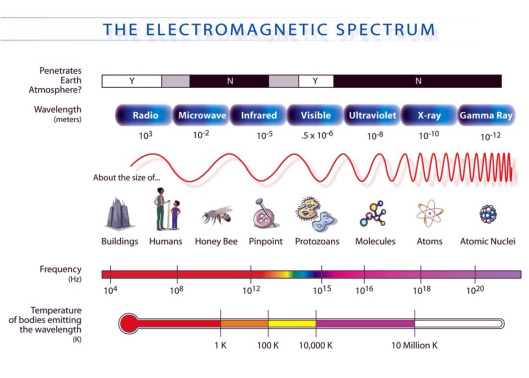
EMFs’ toxic effects on an animal’s cells, DNA and chromosomes have been observed in laboratory specimens — and thus would apply to wildlife, according to the report.
Many types of wildlife are exposed to EMFs from wireless sources, such as deer, seals, whales, birds, bats, insects, amphibians and reptiles, the report said. Many species have been found more sensitive to EMFs than humans in some ways.
Report says wireless radiation, said by telecom companies to be harmless, could be hurting wildlife Source: Environmental Health TrustSanta Fe New Mexican, By Scott Wyland swyland@sfnewmexican.com, Feb 5, 2022
Health researchers raised concerns in the 1990s about the possible harmful effects of wireless radiation from cellphones and towers, and their warnings met pushback from telecommunications companies on the verge of growing a mega-industry.
Industry-backed researchers assured federal agencies health concerns — especially those centered on the possibility of low-level microwaves causing cancer — lacked conclusive evidence.
Regulators accepted their assessments, and the alarm bells went silent.
Now a trio of researchers have compiled a report saying the widespread installation of cell towers and antennas is generating electromagnetic fields — EMFs for short — that could be physiologically harmful.
The report focuses on potential impacts on wildlife, trees, plants and insects, such as bees, because there are no regulations protecting them from EMFs emanating from wireless antennas. Wildlife protections are becoming more vital as this radiation — known more specifically as radiofrequency EMFs — escalates through 5G technologies, the researchers warn.
“There needs to be regulatory standards to address EMFs affecting wildlife,” said Albert Manville, a retired U.S. Fish and Wildlife Service biologist and one of the paper’s authors.
Manville also is an adjunct science professor at Johns Hopkins University.
He said he provided the Federal Communications Commission with some research on how the electromagnetic pollution can hurt wildlife and the steps that could be taken to lessen the impacts.
But the FCC has been unresponsive, Manville said, arguing the agency tends to accommodate the industry it’s supposed to regulate.
“That’s unfortunate, but that’s just the way it is,” he said.
The FCC did not respond to questions about whether it would consider making efforts to reduce animals’ EMF exposure.
The three authors drew from 1,200 peer-reviewed studies to compile a three-part, 210-page report titled “Effects of non-ionizing electromagnetic fields on flora and fauna.” It was published in the journal Reviews on Environmental Health.
Science journalist Blake Levitt, who also co-wrote the report, said they dug up overlooked studies that contained compelling research on how living organisms react to low-level EMFs. Their compilation invalidates any claims that the EMFs don’t cause biological effects, she said.
We just blew the whole thing out of the water and took it to the ecosystem level, which is really where it needed to go,” Levitt said. “Nobody had done that before. We need a whole lot more scrutiny put to the low-intensity stuff.”
Ambient EMFs have risen exponentially in the past quarter-century, as cellphones were widely adopted, to become a ubiquitous and continuous environmental pollutant, even in remote areas, the report said, adding studies indicate EMFs can affect animals’ orientation, migration, food finding, reproduction, nest building, territorial defense, vitality, longevity and survival.
EMFs’ toxic effects on an animal’s cells, DNA and chromosomes have been observed in laboratory specimens — and thus would apply to wildlife, according to the report.
Many types of wildlife are exposed to EMFs from wireless sources, such as deer, seals, whales, birds, bats, insects, amphibians and reptiles, the report said. Many species have been found more sensitive to EMFs than humans in some ways.
The report recommends new laws that include the redesign of wireless devices and infrastructure to reduce the rising ambient levels.
It comes several months after a federal court in Washington, D.C., ordered the FCC to review its guidelines for wireless radiation and justify why it should retain them, as the standards haven’t been updated since 1996. This radiation should not be confused with radioactivity, the court noted, adding microwaves used in transmitting signals are low enough to not heat tissues in what are known as “thermal effects.”
But medical studies suggest the lower-level radiation could cause cancer, reproductive problems, impaired learning and motor skills, disrupted sleep and decreased memory.
These studies and others were submitted to the FCC after it opened a notice of inquiry in 2013 under the administration of former President Barack Obama to probe the adequacy of the 1996 guidelines, which were geared toward avoiding thermal effects, the court said.
In 2019, the Trump administration’s FCC deemed the inquiry unnecessary, saying the 1996 rules were sufficient and required no revision.
Two judges called that FCC action “arbitrary and capricious,” saying the FCC made the decision out of hand, ignoring all the science presented and offering no reasonable, fact-based argument to back it up.
The agency also failed to look at the technological developments in the past 25 years and how they’ve changed the degree of exposure, the judges wrote. And they said it refused to examine possible health effects from EMFs that fall below the threshold set in 1996……………………………….. https://www.santafenewmexican.com/news/local_news/report-says-wireless-radiation-said-by-telecom-companies-to-be-harmless-could-be-hurting-wildlife/article_1ae80fc0-7d5d-11ec-8c13-4f3411ea8ea1.html
Indigenous support for Tularosa Basin Downwinders Consortium
“Fix your damn mistakes before you ask us to risk anymore,” Pino said
recently during an interview from his home in Albuquerque. “The money
that we get from the nuclear industry is a pittance to what we pay out in
medical bills and suffering.”
As he learned more about the blast and the
impacts of the nuclear industry on his native community, about five years
ago Pino joined with the Tularosa Basin Downwinders Consortium, an activist
group in New Mexico that promotes awareness for those affected by nuclear
activities and exposure to radiation.
Pino and the Downwinders join a
diverse group of interests across New Mexico who’ve put aside their
differences to oppose Holtec International’s plan to send nuclear waste
stranded at nuclear power plants across the country to a 1,000-acre site in
the New Mexico desert halfway between Carlsbad and Hobbs.
Carlsbad Current Argus 5th Feb 2022
Give Nuclear Exposure Victims a Break
Those who become sick as a result of work in the nuclear weapons manufacturing and testing industry are eligible for health care benefits and compensation from those two federal programs: the Radiation Exposure Compensation Program (RECP) and the Energy Employees Occupational Illness Compensation Program (EEOICP).
Give Nuclear Exposure Victims a Break https://progressive.org/op-eds/give-nuclear-victims-break-stephens-220202/
My experience working with nuclear weapons and uranium workers has shown me that we must continue to provide essential benefits to workers and their survivors.
BY R. HUGH STEPHENS, FEBRUARY 2, 2022 Every month or so, my law office will get a call from the spouse of a nuclear weapons or uranium worker who has been diagnosed with terminal cancer. We help file a claim for the worker with the Department of Justice or the Department of Labor, both of which run a compensation program.
Typically, these claims can be handled in a matter of weeks. Modest compensation provided through these programs provide help with medical bills and certain other financial obligations.
Most people don’t realize that these programs exist, or even that our nuclear weapons system affects so many people across the country.
Originally known as the Manhattan Project, the U.S. nuclear weapons program in 1945 produced its first nuclear blast, the Trinity Test, in Alamogordo, New Mexico. But the impact of this testing has not been limited by either time or geography. Every day, downwinders, on-site participants, uranium miners, millers and ore transporters are diagnosed with cancers, pulmonary fibrosis and other serious illnesses from exposures that happened decades ago. Even today, nuclear weapons workers are being made ill at facilities across the country.
Those who become sick as a result of work in the nuclear weapons manufacturing and testing industry are eligible for health care benefits and compensation from those two federal programs: the Radiation Exposure Compensation Program (RECP) and the Energy Employees Occupational Illness Compensation Program (EEOICP).
The programs, not unlike the Veterans Affairs program that provides benefits for U.S. soldiers, provide vital benefits to workers who have borne the brunt of the physical and financial toll imposed by the nation’s nuclear weapons program.
Currently pending bills would extend the RECP and allow on-site participants and downwinders to receive medical care for their accepted conditions under the EEOICP. This would make their claims more similar to the other beneficiaries, including uranium miners, millers and ore transporters, thereby eliminating a flaw in the RECP that prevents on-site participants throughout the country and downwinders in the southwest from receiving the same medical benefits as uranium miners, millers, and ore transporters receive.
Without action from Congress and the president, RECA will expire in July of this year. One path forward is a set of bipartisan bills introduced by Representative Leger Fernandez (H.R. 5338) and Senator Mike Crapo (S.2798). These bills extend and make important improvements to these compensation programs.
My experience working with nuclear weapons and uranium workers has shown me that these programs continue to provide essential benefits to workers and their survivors, whose lives have been disrupted by participation in the nuclear weapons program. Both of these programs should be extended and improved.
We owe that, at least, to those who have sacrificed their health in the service of the nation’s nuclear ambitions.
COVID-19 an obstacle for nuclear waste disposal at Waste Isolation Pilot Plant, officials say
COVID-19 an obstacle for nuclear waste disposal at Waste Isolation Pilot Plant, officials say,
Officials plan to ramp up operations as pandemic hoped to subside, Adrian Hedden, Carlsbad Current-Argus, 31 Jan 22,
COVID-19 continued to strain operations to dispose of nuclear waste at the Waste Isolation Pilot Plant near Carlsbad, officials said, slowing shipments accepted at the repository near Carlsbad last year.Officials from WIPP detailed the progress made in 2021 before state lawmakers Monday during the annual WIPP Legislative Breakfast held each year at the start of the Legislative Session.
This year’s presentation was held virtually via Zoom due to health concerns from the COVID-19 pandemic.
In the Fiscal Year 2021, about 199 shipments of waste were emplaced at WIPP, where they are permanently disposed of as an underground salt formation slowly collapses to bury the waste about 2,000 underground.
Shipments averaged about five weekly last year and were occasionally reported at seven or eight per week, said Reinhard Knerr, manager of the U.S. Department of Energy’s Carlsbad Field Office.
The facility’s target was about 240 shipments of waste for FY 2021, he said, and officials hoped to aim for up to 400 shipments in FY 2022.
“Unfortunately, COVID-19 has continued to be a significant challenge on that front,” he said of last year’s shipments. “We’ll be looking to increase here in the next few months.”
In early 2022, Knerr said WIPP hoped to increase shipments of waste to 10 to 12 per week from DOE nuclear facilities around the country including Los Alamos National Laboratory (LANL) in northern New Mexico.
Shipments from LANL recently drew concerns from state officials as the New Mexico Environment Department (NMED) called for federal oversight into how the DOE prioritizes shipments from around the country.
Meanwhile, the DOE announced plans to increase LANL’s production of plutonium pits, which are used to trigger nuclear bombs, to about 30 pits a year by 2026 – a move critics argued would increase waste generation at the site……………………… https://www.currentargus.com/story/news/local/2022/01/31/covid-19-obstacle-nuclear-waste-disposal-wipp/9239299002/
In 2022, compensation funds for the nuclear-affected ”Downwinders” are due to expire
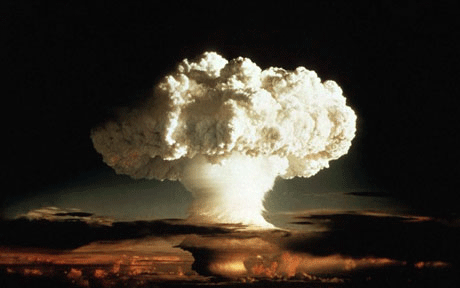
Funds for those impacted by nuclear weapons tests set to expire in 2022 https://www.thedenverchannel.com/news/national/funds-for-those-impacted-by-nuclear-weapons-tests-set-to-expire-in-2022 By: Bo Evans, , Feb 01, 2022
Raymond Harbert may not have the words to describe it.
“It is really hard to relay all the feelings you get from one of those megaton tests,”
But he never forgot the details of the detonation of a nuclear bomb well.
“If you can imagine, 40 miles away, and you can feel the heat when it arrives. It arrives at a separate time. It’s a prickly heat, and then the pressure wave coming—the brightness. The feeling when they finally say, you can take your glasses off. Those are memories that will stick with me for the rest of my life,” said Harbert.
In this 2005 interview conducted by the University of Nevada Las Vegas, Harbert lays out an experience shared by thousands of Americans exposed to radiation from nuclear weapons tests between 1945 and 1962.
The fallout has lasted for decades.
“People don’t realize over 200 above-ground tests were done between 1945 and 1962, and an additional 900+ were done after that below ground. Which exposed Nevadans, people in Utah, Arizona, Colorado, places that were downwind of these tests to fallout,” said Dr. Laura Shaw.
Shaw works with the Nevada Radiation Exposure Screening & Education Program or RESEP at UNLV to provide medical services and cancer screening to people who are known as downwinders.
We review their history, we look at their medications, we offer additional screenings that include colon cancer screening, lung imaging, labs that screen for diabetes, anemia, cholesterol, so we do a lot,” said Shaw.
It’s all paid for by the Radiation Exposure Compensation Act or RECA. The law was passed in 1990. The fund is set to expire in July 2022.
“These people have another 30, 40 years, hopefully, to live that were potentially exposed, so we need this program much, much longer,” said Shaw.
Some in Congress are attempting to extend and expand the fund.
“Tragically, for some, it is already too late. We’ve lost Idahoans Sheri Garmin, Teresa Valberg, and Srgt. 1st Class Paul Cooper to Cancer,” said Sen. Mark Crapo, (R) Idaho, in a congressional hearing.
The Radiation Exposure Compensation Act Amendments of 2021 have been introduced in both the House and Senate and have been referred to committees.
Dr. Shaw remains hopeful it will pass.
“Cancer is still going to happen. These people are going to develop problems associated with their previous exposure. Cancer can happen years later, and it’s not going to pay any attention to any deadlines,” she said.
The nuclear future and the dread factor
The nuclear future and the dread factor, Cape Cod Times, Brent Harold, Columnist 31 Jan 22, ”………………… The struggle over the nuclear future is still on. The movement to overcome public dread and get nuclear back on track is hot in the U.S, fueled by the idea that only nuclear power will slow climate change and the self-fulfilling prophecy that even a concerted commitment to solar, wind and water will never get the job done.
(The nuclear power optimists who dismiss those they see as irrationally fearful of nuclear technology are themselves irrational pessimists when it comes to the less fear-inspiring technologies of solar, wind, hydro and — often overlooked — conservation.)
Whether nuclear power ends up playing a large role in the energy future depends on how we as a society end up answering the questions: What should be the role, if any, of human feelings about this or any technology? Should we overcome and suppress fear of nukes and let technology decisions be decided by the for-profit industry? Perhaps turn the decision over to AI?
Or, should we, on the contrary, listen to and respect that fear? Should we in fact insist that judgments about this and any technology be based at least in part on the feelings — instinctual, commonsensical — of the vulnerable creatures we are? https://www.capecodtimes.com/story/opinion/2022/01/31/criticism-over-proposal-dump-radioactive-water-into-cape-cod-bay/9240645002/
The more radiation, the weirder Fukushima’s fir trees became.
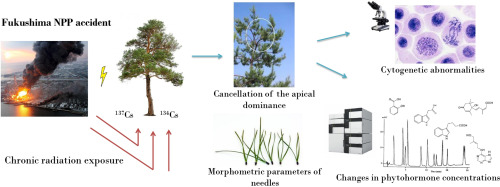
NUCLEAR DISASTER IN JAPAN DID SOMETHING STRANGE TO TREES https://futurism.com/the-byte/nuclear-japan-trees
SOMETHING IS UP WITH THOSE TREES. by ABBY LEE HOOD ( Journalist) They didn’t grow any larger or suddenly become sentient, but the trees outside the Fukushima Daiichi Nuclear Power Plant are definitely acting weird, according to a new study published earlier this month in the journal Plants.
Researchers from multiple universities in Italy and Brazil studied fir trees growing near the plant, which was destroyed in 2011 following a severe earthquake. The scientists studied whorls — nodes where leaves, branches or other plant parts grow from a central point — and found that fir trees around Fukushima exhibited weird growth patterns around them.
“These conifers showed irregular branching at the main axis whorls,” reads the study, spotted by Newsweek. “The frequency of these anomalies corresponded to the environmental radiation dose rate at the observed sites.”
The more radiation, in other words, the weirder the trees got.
Circle of Life
It’s pretty interesting that trees affected by nuclear radiation grow in funky patterns and are still affected by material in the soil near Fukushima. But even more important is the team’s goal of learning how to better take care of people caught up in similar, future disasters, and to create better emergency management plans.
“Ten years have passed since the FNPP accident, and still the large-scale effects are visible,” the researchers concluded. “Learning from past incidents and implementing this knowledge can make a significant difference in terms of lives and costs in healthcare management.”
We may not always be good stewards of the environment around us, but nature seems happy to provide cautionary tales for humanity to learn from all the same.
More on Fukushima weirdness: Scientists Monitoring Radioactive Snakes Near Fukushima Meltdown Site
What’s the situation of Bikini atoll and its people now?
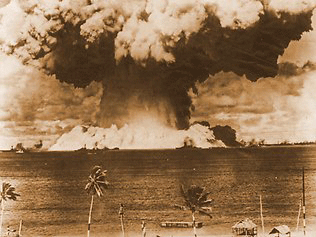
What Bikini Atoll Looks Like 60 Years Post-Nuclear Testing https://www.thetravel.com/bikini-atoll-nuclear-testing-can-you-visit-now/
Bikini Atoll sounds like a tropical paradise, but its history includes that of nuclear testing… So, what does it look like six decades following?
BY AARON SPRAYPUBLISHED 1 DAY AGO Bikini Atoll is an example of a tropical paradise-come-fire-and-brimstone apocalypse. It is a coral reef in the Marshall Islands made up of 23 islands that surround a large central lagoon. After WW2 all of the atoll’s population were forcibly relocated in 1946 to make way for a nuclear testing site for the United States.
Between 1946 and 1958 Bikini Atoll was subjected to 23 nuclear tests by the United States. And here is to be found the sunken American nuclear fleet. Another stunning lagoon to see a ship graveyard is in Truk (Chuuk) Lagoon in Micronesia.
The American authorities had promised the Bikini Atoll’s residents they would be able to return home after they were done nuking their home. Most of the islanders agreed to leave and moved to Rogerik Atoll and then Kili Island. But both of these new islands were unable to sustain them forcing the government to keep giving them aid.
After the end of the nuclear tests, three families were resettled on Bikini Island in 1970 (about 100 residents). But dangerously high levels of contamination were found in the well water and they were evacuated again in 1980.
In the end, the United States paid the islands and their descendants $125 million in compensation.
Nuclear-Testing ‘Downwinders’ Speak about History and Fear
Nuclear-Testing ‘Downwinders’ Speak about History and Fear. An archival project aims to document the experiences of people who suffered from U.S. nuclear weapons testing, Scientific American , By Sarah Scoles on January 27, 2022 When Sandra Evans Walsh was growing up in Parowan, Utah, her class would sometimes trek outside to a row of trees. They were about to watch history in the making, the teacher would tell them. The kids would then stare as an orange shroud spread across the sky. “I remember the clouds coming over our town and writing our names in the dust,” she said in an interview with Justin Sorensen, a geographical information systems (GIS) specialist at the University of Utah’s J. Willard Marriott Library.
That dust had traveled around 200 miles, all the way from what is now called the Nevada National Security Site, where scientists once tested nuclear weapons. Between 1945 and 1962, U.S. researchers detonated around 200 bombs aboveground—100 of them in Nevada. Fallout from the nuclear tests—radioactive particles that were swept into the atmosphere and fell back down to the earth—found their way into crops and livestock, whose radioactivity humans took on when they consumed milk, meat and produce. Fallout takes many different chemical forms, one of which is iodine-131: an isotope, or version, of iodine that has the usual 53 protons but 78 neutrons instead of the standard 74. Inside the body, the thyroid gland will absorb iodine-131, which eventually decays to produce radiation that can cause thyroid cancer and other problems.
People, such as Walsh, who lived “downwind” of nuclear development and open-air explosions are now called “downwinders.” Mary Dickson, another downwinder, told Sorensen and one of his colleagues that she thought the attitude toward those in Utah who were affected by nuclear testing was, “you know, ‘They were Mormons and cowboys and Indians—who cares?’ In general, she added, “they test where they think there are populations that don’t matter.”
Sorensen and his team spoke to both women and dozens of other people for a project called the Downwinders of Utah Archive. Hosted by the J. Willard Marriott Library, the archive is an attempt to qualify, quantify and make accessible people’s experiences of, and effects from, the American legacy of nuclear weapons testing. In 2011 the Senate unanimously designated January 27 as the National Day of Remembrance for Downwinders. “The downwinders paid a high price for the development of a nuclear weapons program for the benefit of the United States,” stated the resolution establishing the designation.
But when the tests were conducted, no one had done the research necessary to truly calculate what that price would be. Wanting to understand the potential link between regional health issues and fallout from nuclear tests, the National Cancer Institute (NCI) undertook a study on Americans exposed to iodine-131 from the Nevada tests. The results were released in 1997 in a report entitled “Estimated Exposures and Thyroid Doses Received by the American People from Iodine-131 in Fallout following Nevada Atmospheric Nuclear Bomb Tests.” It was this document that first led Sorensen to the archival project. “We were just kind of wondering, originally, ‘What does this data look like if you put it on a map?’” he says, “because a spreadsheet doesn’t really tell you a lot.” Sorensen’s background is in GIS and cartography, so he took the NCI’s fallout data and overlaid them onto his home state. “It just really grew from there,” he says. “We started seeing there’s a story to be told.”……………………..
Although no single illness can be conclusively tied to a test-site cause, investigations by the United Nations Scientific Committee on the Effects of Atomic Radiation and the International Physicians for the Prevention of Nuclear War and the Institute for Energy and Environmental Research, among others, have established links between radiation exposure and cancer occurrence. In the early 2000s a report by NCI and the Centers for Disease Control and Prevention estimated that fallout could have led to around 11,000 excess deaths. The NCI has also created a calculator that allows users to calculate their thyroid dose and risk of developing thyroid cancer from fallout. “We can’t know any individual’s cancer was caused by radioactivity,” explains Scott Williams, former executive director of HEAL Utah, a nonprofit advocacy group focused on the environment and public health, “but we do know that some people’s cancer risk was increased by radioactivity.”
Since 1990 the federal government has offered some recompense to downwinders and others affected by nuclear testing through the Radiation Exposure Compensation Act (RECA). Set to expire this summer unless a bill is passed to renew (and expand) it, RECA pays downwinders, test participants and uranium workers between $50,000 and $100,000—if they have specific ailments and can prove (with decades-old evidence that is sometimes hard to come by) they were in the wrong place at the wrong time. “We left a burden on unwitting citizens across the country without ever informing them,” Williams says. “We need to do the honorable thing and own the problem and not create these problems again.”
The Downwinders of Utah Archive is always expanding, and though Sorensen paused interviews during the pandemic, he plans to light the fuse again soon. He also hopes to expand the project to other Western states to preserve their history, too.
Making sure that information remains accessible is part of the point of the Downwinders of Utah Archive. The day of remembrance is, in its own way, an isotope of that openness. “Those kind of markers are really important…,” Dickson told Sorensen and his colleague. “Otherwise, you know, time marches on, and it’s like dipping a big spoon in the water. The rest of the water just fills in, and it’s like it was never there.”
This reporting was supported by the International Women’s Media Foundation’s Howard G Buffett Fund for Women Journalists. https://www.scientificamerican.com/article/nuclear-testing-downwinders-speak-about-history-and-fear/
Increased mutations in animals affected by Chernobyl radiation
New insights into the effects of radiation from Chernobyl
by University of Stirling Phys Org. 26 Jan 22, Researchers at the University of Stirling have found that animals in lakes closest to the Chernobyl nuclear reactor have more genetic mutations than those from further away, giving new insight into the effect of radiation on wild species.
DNA analysis of freshwater crustaceans, called Daphnia, revealed greater genetic diversity in lake populations that experienced the highest radiation dose rates following the accident in 1986. Radiation is the primary cause of these genetic mutations, according to Dr. Stuart Auld, who led the research.
Dr. Auld, of Stirling’s Faculty of Natural Sciences, said: “Chernobyl is a natural experiment in evolution, because the rate of genetic mutation is higher, and all evolutionary change is fuelled by mutations.
“Normally you have to wait for generations to see the effect of the environment on mutations, and most mutant animals are pretty damaged so don’t live long. By sequencing non-coding DNA—bits of genetic code that don’t actually affect the form or function of the organism—we were able to uncover these mutations………..
The paper, “Radiation-mediated supply of genetic variation outweighs the effects of selection and drift in Chernobyl Daphnia populations,” is published in the Journal of Evolutionary Biology. https://phys.org/news/2022-01-insights-effects-chernobyl.html
Anti-radiation pills handed out in case of nuclear emergency at BAE Systems
| |||
|
Anti-radiation pills handed out in Barrow in case of nuclear emergency at BAE Systems
The Mail. BY Eleanor Ovens @EOvensNews, 24 Jan 22, Reporter NEARLY 13,000 anti-radiation pills have been handed out in Barrow in case of the ‘unlikely event’ of a nuclear emergency.Records reveal that childcare facilities and care homes situated near BAE Systems have received iodine tablets should submarine reactors go into meltdown…….
According to Declassified UK, BAE expects people 400 metres downwind of a submarine would need to take iodine in the ‘first few hours’ of a ‘radiation emergency’……
A spokesman for Cumbria County Council told The Mail BAE Systems have a contract with UKHSA (previously Public Health England) and NHS England to distribute iodine tablets to business and residents in the area around the BAE Systems site in Barrow…………. https://www.nwemail.co.uk/news/19865424.anti-radiation-pills-handed-barrow-case-nuclear-emergency-bae-systems/
1 This Month
29 Jan. Thursday 7-8 p.m. Webinar – World’s Largest Nuclear Station in Port Hope, ON?


31st January – Challenging the War Machine – a DECLASSIFIED UK SUMMIT



Website of the Week
Now until to February 10, 2026 Radioactive waste storage in France: the debate is finally open! How to participate?
-
Archives
- January 2026 (246)
- December 2025 (358)
- November 2025 (359)
- October 2025 (376)
- September 2025 (258)
- August 2025 (319)
- July 2025 (230)
- June 2025 (348)
- May 2025 (261)
- April 2025 (305)
- March 2025 (319)
- February 2025 (234)
-
Categories
- 1
- 1 NUCLEAR ISSUES
- business and costs
- climate change
- culture and arts
- ENERGY
- environment
- health
- history
- indigenous issues
- Legal
- marketing of nuclear
- media
- opposition to nuclear
- PERSONAL STORIES
- politics
- politics international
- Religion and ethics
- safety
- secrets,lies and civil liberties
- spinbuster
- technology
- Uranium
- wastes
- weapons and war
- Women
- 2 WORLD
- ACTION
- AFRICA
- Atrocities
- AUSTRALIA
- Christina's notes
- Christina's themes
- culture and arts
- Events
- Fuk 2022
- Fuk 2023
- Fukushima 2017
- Fukushima 2018
- fukushima 2019
- Fukushima 2020
- Fukushima 2021
- general
- global warming
- Humour (God we need it)
- Nuclear
- RARE EARTHS
- Reference
- resources – print
- Resources -audiovicual
- Weekly Newsletter
- World
- World Nuclear
- YouTube
-
RSS
Entries RSS
Comments RSS
 nuclear-news