Medical Journals Issue Urgent Call for Elimination of Nuclear Weapons

August 10th, 2023
More than 100 medical journals, including the Lancet, the British Medical Journal, the New England Journal of Medicine, and the JAMA, have issued a joint call for urgent steps to decrease the growing danger of nuclear war and to move rapidly to the elimination of nuclear weapons. At a time of expanded fighting in Ukraine and increased tensions in Korea, leaders of the global health community underscore that any use of nuclear weapons would be catastrophic for humanity. https://peaceandhealthblog.com/2023/08/02/medical-journals-issue-urgent-call-for-elimination-of-nuclear-weapons/
The unprecedented call to action comes in the form of an editorial co-authored by the editors of 11 of the leading medical and health journals, the World Association of Medical Editors and leaders of the International Physicians for the Prevention of Nuclear War (IPPNW). The editorial was released on August 1st in conjunction with the start of the United Nations Nuclear Non-Proliferation Treaty (NPT) Preparatory Committee Meeting and the 78th year since the bombings of Hiroshima and Nagasaki. https://meetings.unoda.org/npt-/treaty-on-the-non-proliferation-of-nuclear-weapons-preparatory-committee-for-the-eleventh-review-conference-first-session-2023
The editorial warns, “The danger is great and growing. The nuclear armed states must eliminate their nuclear arsenals before they eliminate us.”………………………………………………………………………………………………………………………………………………………… more http://nuclearactive.org/medical-journals-issue-urgent-call-for-elimination-of-nuclear-weapons/
Still more information about Tritium

Many citizens do not realize that SMNRs (Small Modular Nuclear Reactors) produce all of the same kinds of radioactive wastes that traditional larger reactors do – high-level waste (irradiated nuclear fuel), medium-level waste (e.g. decommissioning waste resulting from the dismantling of reactor structures), and low-level waste. This particular post is about tritium.
by Gordon Edwards, 9 Aug 23
By far the most radioactive objects produced by any nuclear reactor, large or small, are the intensely radioactive used nuclear fuel elements. A used nuclear fuel bundle is one of the most dangerous objects on Earth. It can give a lethal gamma radiation dose to any unshielded human being in a short time, even after “cooling off” for several decades.
But even after all the irradiated nuclear fuel (high-level radioactive waste) has been removed from the reactor there is still a large volume of dangerous radioactive waste left behind – including the activation products that are created in the core area of the reactor. Two of the most biologically and environmentally mobile radioactive activation products are tritium (radioactive hydrogen) and carbon-14 (radioactive carbon).
(1) Tritium is radioactive hydrogen. A tritium atom is three times heavier than a normal hydrogen atom, but the two are otherwise chemically identical. Any chemical compounds formed with ordinary hydrogen can equally well use tritium instead. The only fundamental difference is that tritium atoms disintegrate (explode), while other hydrogen atoms do not disintegrate. When a tritium atom explodes it gives off a beta particle, but there are no gamma rays. It is a “pure” beta emitter.
(2) For example, a normal water molecule H2O is not radioactive. Tritiated water is radioactive because one or both of the hydrogen atoms in H2O has been replaced by a tritium atom. So when you drink or inhale or otherwise absorb tritiated water, the tritium atoms are disintegrating inside your body. Your cells are being bombarded with beta particles from disintegrating tritium atoms.
(3) Chemically, radioactive water molecules are no different than ordinary water molecules. It is not possible to separate out the tritiated water molecules by filtration or any normal chemical processes. Tritiated water is chemically identical to ordinary water. Municipal water treatment plants cannot remove tritium from drinking water. You can’t filter water from water.
(4) Evaporation of tritiated water will produce radioactive water vapour. Tritiated water vapour will condense to form radioactive dew drops, and can precipitate as radioactive raindrops or radioactive snowflakes. To contain tritiated water therefore it is important to prevent evaporation. Sealed drums or water tanks are suitable for the task.
At Fukushima Daiichi there are about 1.3 million tonnes of tritiated water stored in over 1000 large steel tanks. This inventory is constantly growing because of the continual cooling of the molten cores with ordinary water which becomes heavily contaminated with two dozen radioactive waste materials on contact with the molten core material, including tritium. The main reason that TEPCO has given for dumping this huge amount of stored tritiated water into the Pacific Ocean is simply because the site is running out of space to accommodate more tanks. This is a lame excuse – more space can be found if needed. The tritiated water at Fukushima is also contaminated with other radioactive materials, even though much of these other varieties has been greatly reduced by decontamination equipment called ALPS — which in no way reduces the tritium content. Since no removal process is 100%, other radionuclides remain in the tritiated water, in some cases to a very significant degree.
This problem of a growing inventory of tritiated water will not occur at Indian Point or any other shut down nuclear reactor. In such a situation, the volume of tritiated water is a constant and can be stored for many decades in drums. These drums would have to be inspected and repaired or replaced when necessary.
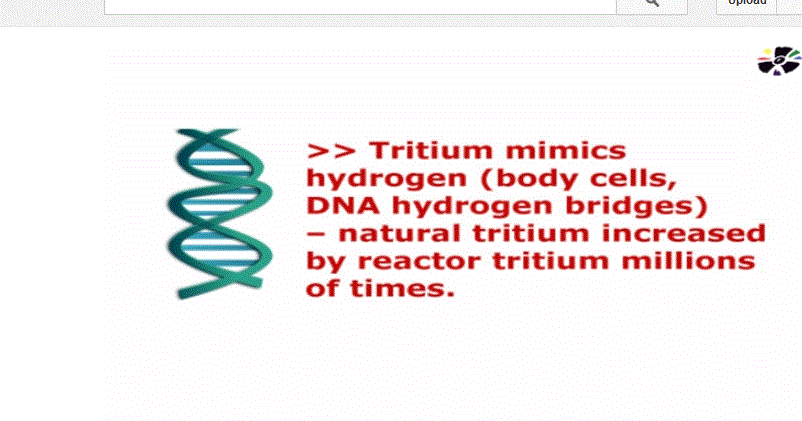
(5) All organic molecules (including DNA) incorporate carbon atoms and hydrogen atoms. Tritium atoms can and do replace some of the non-radioactive hydrogen atoms in the organic molecules in your body. This is called “organically bound tritium” or OBT. Whereas tritiated water, like ordinary water, passes through the body easily, OBT stays around for a lot longer. The “biological half-life” is how long it takes the body to get rid of half of the tritium; evidently it depends a lot on whether it is OBT or not. Tritium and carbon-14 are unique in their ability to become a part of our very own DNA molecules; most radionuclides do not have this possibility.
(6) It has been shown in animal experiments that tritium causes genetic damage of almost all kinds, both chromosomal and non-chromosomal. Tritium ingested by a pregnant female passes through the umbilical cord to the embryo and the developing fetus in fact gets a larger radiation dose than the mother. Tritium has been shown to cause physical deformities and more subtle developmental abnormalities in embryos of experimental animals – for example, loss of the “righting reflex” in mammalian juveniles.
(7) Tritium gives off a non-penetrating form of beta radiation and so it is relatively harmless outside the body – unless it is in contact with bare skin. It can be absorbed directly through the skin. However once inside the body it goes everywhere (all organs) and is known to be at least 2-3 times more biologically damaging (per unit of absorbed energy) than gamma radiation. IMPORTANT: Although this “discrepancy” has been known for decades, and is not disputed, NONE of the regulatory bodies take it into account! After careful study, the UK Committee Examining Radiation Risks of Internal Emitters (CERRIE) published a report showing that the biological damage of tritium (per unit of absorbed energy) may be as much as 15 times greater than the damage from gamma radiation. See www.ccnr.org/tritium_paper_CERRIE.pdf .
(1) Resources on tritium can be found at “Troubles with Tritium” www.ccnr.org/#tr For general background on tritium, this article is easy to read: http://www.ccnr.org/GE_ODWAC_2009_e.pdf(2) Other resources can be found at Tritium Awareness Project (TAP Canada) http://tapcanada.orgHere is a brief reference to OBT (organically-bound tritium) from TAP Canada.
Additional information on tritium .
Robert Alvarez, 9 Aug 23,
To augment Gordon Edward;s ‘s excellent overview about tritium here are some other basic facts.
As for tritium being “mildly radioactive,” as Gordon points out, this is not the case when taken in the body- as tritiated water-the most common form of exposure. The Defense Nuclear Facility Safety Board overseeing DOE nuclear sites informed the Secretary of Energy in June 2019 that “tritiated water vapor represents a significant risk to those exposed to it, as its dose consequence to an exposed individual is 15,000 to 20,000 times higher than that for an equivalent amount of tritium gas.”
With a specific activity of 9,619 curies per gram, tritium emits, as it decays, nearly 400 trillion energetic disintegrations per second. William H. McBride, Professor of radiation oncology at the UCLA Medical School, describes ionizing radiation disintegrations as “explosive packages of energy” that are “highly efficient at forming complex, potentially lethal DNA double strand breaks.”
Source: William MacBride, UCLA School of Medicine Vice Chair for Research in Radiation, Principal Investigator of UCLA’s Center for Medical Countermeasures Against Radiation — National Institutes of Health, Jan 27, 2014.
“No matter how it is taken into the body,” states a fact sheet, from the Energy Departments’ Argonne National Laboratory, “tritium is uniformly distributed through all biological fluids within one to two hours.” During that brief time, the DNFSB points out that “the combination of a rapid intake and a short biological half-life means a large fraction of the radiological dose is acutely delivered within hours to days…” McBride underscored this concern, stating that, “damage to DNA can occur within minutes to hours.”
Campaign for Nuclear Disarmament Bypasses Gender Parity

“If there is one takeaway from Christopher Nolan’s recent film “Oppenheimer,” it is that the nuclear field has been male-dominated from the very start,”
participants in nuclear negotiations perceive that the field has rewarded characteristics, expertise and experiences that are more commonly associated with men, such as toughness, seriousness, risk-taking and military-training.
Such negotiations would be enhanced, and have more possibility for success, if they broadened the ‘diplomatic tool-box’ to also include ‘feminine’ approaches of flexibility, compromise, multi-faceted problem solving, compassion and human interaction (focusing on the people involved and not just the topics),
InDepthNews, By Thalif Deen https://indepthnews.net/campaign-for-nuclear-disarmament-bypasses-gender-parity/
UNITED NATIONS. 6 August 2023 (IDN) — The United Nations has been a vociferous and longstanding advocate of gender empowerment in its political, social and economic agenda characterized by 17 Sustainable Development Goals (SDGs), including poverty and hunger eradication, quality education, human rights and climate change.
In her 23 July presentation, titled Gender inclusivity and approaches to enhance the NPT Review Process, Vanessa Lanteigne, a Rotary Peace Fellow and representative of Parliamentarians for Nuclear Non-Proliferation and Disarmament (PNND), pointed out that in 2019, 76% of heads of delegations to the NPT were men, and that since 2000, all of the Presidents/Chairs of the NPT Prep-Coms have been male and only one President of an NPT Review Conference has been a woman.
She proposed that NPT institute targets for gender inclusion in State Parties’ delegations, with sanctions for imbalanced delegations similar to those applied by Inter-Parliamentary Union for its assemblies.
Lanteigne also noted that a fully-realized gender equality requires that issues, views, and approaches relating to characteristics associated with masculinity and femininity are both fully represented in security frameworks.
She cited the assessment by Ireland in its working paper Gender in the Non-Proliferation Treaty that the NPT Review process has traditionally taken a ‘one -dimensional security approach to addressing nuclear weapons, in terms of the issues which are prioritised’.
She proposed that the NPT establish a subsidiary body to explore nuclear non-proliferation, risk-reduction and disarmament issues in a broader security framework of common and human security incorporating gender, peace, diplomacy, conflict resolution and international law.
Jackie Cabasso, Executive Director at Western States Legal Foundation, told IDN it is completely obvious that women and gender non-conforming people are grossly under-represented in the NPT process.
“And it’s a matter of common sense that people of all genders should be equal partners in making decisions as consequential as the future of nuclear weapons”, she said.
It is also possible that establishing policies like the Inter-Parliamentary Union’s targets for gender balance in States Parties’ delegations to the NPT—enforced, if necessary, by voting sanctions, could help lead the way to improvements in gender equity in delegations’ home countries, said Cabasso, who co-founded the Abolition 2000 Global Network to Eliminate Nuclear Weapons.
However, when talking about how to challenge the seemingly intractable centrality of nuclear threats as an instrument of global domination, she argued, having equal participation in the discussion by all genders will not solve the problem.
“What is needed is a fundamental transformation in the mindset, values, and practices of the institutions that continue to place the construct of “national security” above the increasingly pressing need for universal “human security,” declared Cabasso.
Shampa Biswas, Judge & Mrs. Timothy A. Paul Chair of Political Science and Professor of Politics at Whitman College, Washington told IDN “It is appalling that we are still talking about gender parity in 2023!”.
“If there is one takeaway from Christopher Nolan’s recent film “Oppenheimer,” it is that the nuclear field has been male-dominated from the very start,” she pointed out.
However, although many fields have made great strides toward gender inclusivity, the nuclear policy-making field still remains woefully behind, said Biswas, is an international relations theorist specializing in postcolonial theory and nuclear politics.
“If we are serious about nuclear disarmament, it is imperative that we diversify the field in substantial ways to include voices that can draw attention to the dangers of nuclear weapons from a variety of perspectives and help redefine the meaning of security away from its masculinist, militarist connotations”.
Women’s voices, she said, are critical to that endeavor.
“I support the idea of instituting targets for more gender-inclusive delegations but wish there was a way to do this via incentives rather than penalties,” declared Biswas.
In her 23 July presentation on further strengthening the review process of the Non-Proliferation Treaty (NPT), Lanteigne said the NPT Review process would be enriched, strengthened and made more effective by elevating gender inclusivity and approaches because we could then access a full range of security approaches to our global challenges.
Gender inclusivity and approaches mean firstly that different sexes (male, female and nondeterminate) are included equitably in decision-making processes and leadership positions within the security sector.
And secondly, that diverse gender perspectives, issues and approaches to peace and security are meaningfully incorporated in order to utilize a more diverse, comprehensive and holistic security framework. Integrating these two principles that will support Security Council Resolution 1325 on Women, Peace and Security, which, “stressed the importance of ‘equal participation and full involvement’ of women and the need to increase [women’s] role in decision-making with regard to conflict prevention and resolution”.
Meanwhile, Sustainable Development Goal 5 focuses on gender equality and empowerment of women and girls.
There are indicators that state parties are not only aware and willing to work towards gender equity and inclusion but are actively referencing and promoting it on their own.
At the 2019 PrepCom more than 20 statements were made on behalf of over 60 State Parties addressing the importance of gender perspectives to the NPT, Lanteigne said.
Three papers were submitted directly related to nuclear issues and gender, and eight working papers included references to the links.
Reviewing policies to support equal access to participation is important because it is correlated with improved organizational efficiency and innovative capacity by including more diverse expertise resulting in creative solutions and sustainable developments.
But a gender-inclusive approach should be supplemented by gender-diverse analyses as well. Gender equality requires that issues, views, and approaches relating to characteristics associated with masculinity and femininity are both fully represented in security frameworks.
Research reports that participants in nuclear negotiations perceive that the field has rewarded characteristics, expertise and experiences that are more commonly associated with men, such as toughness, seriousness, risk-taking and military-training.
Such negotiations would be enhanced, and have more possibility for success, if they broadened the ‘diplomatic tool-box’ to also include ‘feminine’ approaches of flexibility, compromise, multi-faceted problem solving, compassion and human interaction (focusing on the people involved and not just the topics), she argued.
An example of a gender-inclusive approach which could hold lessons for the NPT Review Process comes from the Inter-Parliamentary Union Gender Partnership Group which was instituted to ensure that gender-diverse perspectives were incorporated and that the inclusion of women was not just a numerical representation but holistic in terms of representing security approaches more often associated with women.
Other examples of gender-inclusive principles and approaches can be found in the feminist foreign policies adopted by Canada, Germany, Ireland and Sweden among others.
These political steps forward, though, remain at risk of being rolled back like in the case of Sweden by succeeding governments highlighting the need to institutionalize the importance of gender in international organizations and procedures.
“We propose that the NPT establishes a subsidiary body to explore nuclear non-proliferation, risk reduction and disarmament issues in a broader security framework of common and human security incorporating gender, peace, diplomacy, conflict resolution and international law.”
“This broader framework of common and human security will be beneficial to giving gender-diverse perspectives opportunities to participate in conflict resolution and security fields to ensure that inclusivity is fully and substantively implemented and symbolic tokenism is avoided.” [IDN-InDepthNews]
Carcinogens found at Montana nuclear missile sites as reports of hundreds of cancers surface

The Air Force has detected unsafe levels of a likely carcinogen in samples taken at a Montana missile base where a striking number of men and women have reported cancer diagnoses
By TARA COPP Associated Press, August 8, 2023 https://abcnews.go.com/US/wireStory/carcinogens-found-nuclear-missile-sites-reports-hundreds-cancers-102087696
WASHINGTON — The Air Force has detected unsafe levels of a likely carcinogen at underground launch control centers at a Montana nuclear missile base where a striking number of men and women have reported cancer diagnoses.
A new cleanup effort has been ordered.
The discovery “is the first from an extensive sampling of active U.S. intercontinental ballistic missile bases to address specific cancer concerns raised by missile community members,” Air Force Global Strike Command said in a release Monday. In those samples, two launch facilities at Malmstrom Air Force Base in Montana showed PCB levels higher than the thresholds recommended by the Environmental Protection Agency.
PCBs are oily or waxy substances that have been identified as a likely carcinogen by the EPA. Non-Hodgkin lymphoma is a blood cancer that uses the body’s infection-fighting lymph system to spread.
In response, Gen. Thomas Bussiere, commander of Air Force Global Strike Command, has directed “immediate measures to begin the cleanup process for the affected facilities and mitigate exposure by our airmen and Guardians to potentially hazardous conditions.”
After a military briefing was obtained by The Associated Press in January showing that at least nine current or former missileers at Malmstrom were diagnosed with non-Hodgkin lymphoma, a rare blood cancer, the Air Force School of Aerospace Medicine launched a study to look at cancers among the entire missile community checking for the possibility of clusters of the disease.
And there could be hundreds more cancers of all types, based on new data from a grassroots group of former missile launch officers and their surviving family members.
According to the Torchlight Initiative, at least 268 troops who served at nuclear missile sites, or their surviving family members, have self-reported being diagnosed with cancer, blood diseases or other illnesses over the past several decades.
At least 217 of those reported cases are cancers, at least 33 of them non-Hodgkin lymphoma.
What’s notable about those reported numbers is that the missileer community is very small. Only a few hundred airmen serve as missileers at each of the country’s three silo-launched Minuteman III intercontinental ballistic missile bases any given year. There have been only about 21,000 missileers in total since the Minuteman operations began in the early 1960s, according to the Torchlight Initiative.
For some context, in the U.S. general population there are about 403 new cancer cases reported per 100,000 people each year, according to the Centers for Disease Control and Prevention, and non-Hodgkin lymphoma affects an estimated 19 of every 100,000 people annually, according to the American Cancer Society.
Minutemen III silo fields are based at Malmstrom, F.E. Warren Air Force Base in Wyoming and Minot Air Force Base in North Dakota.
Missileers are male and female military officers who serve in underground launch control centers where they are responsible for monitoring, and if needed, launching fields of silo-based nuclear weapons. Two missileers spend sometimes days at a time on watch in underground bunkers, ready to turn the key and fire Minuteman III intercontinental ballistic missiles if ordered to do so by the president.
The Minuteman III silos and underground control centers were built more than 60 years ago. Much of the electronics and infrastructure is decades old. Missileers have raised health concerns multiple times over the years about ventilation, water quality and potential toxins they cannot avoid as they spend 24 to 48 hours on duty underground.
The Air Force discovery of PCBs occurred as part of site visits by its bioenvironmental team from June 22 to June 29 in the Air Force’s ongoing larger investigation into the number of cancers reported among the missile community. During the site visits a health assessment team collected water, soil, air and surface samples from each of the missile launch facilities.
At Malmstrom, of the 300 surface swipe samples, 21 detected PCBs. Of those, 19 were below levels set by the EPA requiring mitigation and two were above. No PCBs were detected in any of the 30 air samples. The Air Force is still waiting for test results from F.E. Warren and Minot for surface and air samples, and for all bases for the water and soil samples.
Reducing the risks of nuclear war — the role of health professionals
By – Kamran Abbasi, Parveen Ali, Virginia Barbour, Kirsten Bibbins‐Domingo, Marcel GM Olde Rikkert, Andy Haines, Ira Helfand, Richard C Horton, Bob Mash, Arun Mitra, Carlos A Monteiro, Elena N Naumova, Eric J Rubin, Tilman A Ruff, Peush Sahni, James Tumwine, Paul Yonga and Chris Zielinski
Med J Aust || doi: 10.5694/mja2.52054, 7 August 2023
In January 2023, the Science and Security Board of the Bulletin of the Atomic Scientists moved the hands of the Doomsday Clock forward to 90 s before midnight, reflecting the growing risk of nuclear war.1 In August 2022, the UN Secretary‐General António Guterres warned that the world is now in “a time of nuclear danger not seen since the height of the Cold War”.2 The danger has been underlined by growing tensions between many nuclear armed states.1,3 As editors of health and medical journals worldwide, we call on health professionals to alert the public and our leaders to this major danger to public health and the essential life support systems of the planet — and urge action to prevent it.
Current nuclear arms control and non‐proliferation efforts are inadequate to protect the world’s population against the threat of nuclear war by design, error, or miscalculation. The Treaty on the Non‐Proliferation of Nuclear Weapons (NPT) commits each of the 190 participating nations “to pursue negotiations in good faith on effective measures relating to cessation of the nuclear arms race at an early date and to nuclear disarmament, and on a treaty on general and complete disarmament under strict and effective international control”.4 …………………………………………
Any use of nuclear weapons would be catastrophic for humanity. Even a “limited” nuclear war involving only 250 of the 13 000 nuclear weapons in the world could kill 120 million people outright and cause global climate disruption leading to a nuclear famine, putting 2 billion people at risk.7,8 A large‐scale nuclear war between the USA and Russia could kill 200 million people or more in the near term, and potentially cause a global “nuclear winter” that could kill 5–6 billion people, threatening the survival of humanity.7,8. Once a nuclear weapon is detonated, escalation to all‐out nuclear war could occur rapidly. The prevention of any use of nuclear weapons is therefore an urgent public health priority and fundamental steps must also be taken to address the root cause of the problem — by abolishing nuclear weapons.
The health community has had a crucial role in efforts to reduce the risk of nuclear war and must continue to do so in the future.9 In the 1980s the efforts of health professionals, led by the International Physicians for the Prevention of Nuclear War (IPPNW), helped to end the Cold War arms race by educating policy makers and the public on both sides of the Iron Curtain about the medical consequences of nuclear war. This was recognised when the 1985 Nobel Peace Prize was awarded to the IPPNW (http://www.ippnw.org).10
In 2007, the IPPNW launched the International Campaign to Abolish Nuclear Weapons, which grew into a global civil society campaign with hundreds of partner organisations. A pathway to nuclear abolition was created with the adoption of the Treaty on the Prohibition of Nuclear Weapons in 2017, for which the International Campaign to Abolish Nuclear Weapons was awarded the 2017 Nobel Peace Prize……………………………………………………………..
We now call on health professional associations to inform their members worldwide about the threat to human survival and to join with the IPPNW to support efforts to reduce the near‐term risks of nuclear war, including three immediate steps on the part of nuclear‐armed states and their allies: first, adopt a no first use policy;12 second, take their nuclear weapons off hair‐trigger alert; and, third, urge all states involved in current conflicts to pledge publicly and unequivocally that they will not use nuclear weapons in these conflicts. We further ask them to work for a definitive end to the nuclear threat by supporting the urgent commencement of negotiations among the nuclear‐armed states for a verifiable, timebound agreement to eliminate their nuclear weapons in accordance with commitments in the NPT, opening the way for all nations to join the Treaty on the Prohibition of Nuclear Weapons…………….. more https://www.mja.com.au/journal/2023/219/5/reducing-risks-nuclear-war-role-health-professionals
Dangers of Tritium
by Karl H Grossman, August 01, 2023 https://www.dailykos.com/stories/2023/8/1/2184519/-Dangers-of-Tritium
The two nuclear reactors at Brookhaven National Laboratory on Long Island, New York were shut down in the late 1990s because they had been leaking tritium into the water table below, part of the island’s aquifer system on which more than 3 million people depend on as their sole source of potable water.
BNL was established on a former Army base in 1947 by the then U.S. Atomic Energy Commission to develop civilian uses of nuclear technology and do atomic research.
BNL scientists were upset with the U.S. Department of Energy over the closures. BNL has been a DOE facility in the wake of the elimination of the AEC by the U.S. Congress in 1974 for being in conflict of interest for having two missions, promoting and also regulating nuclear technology.
The water table below BNL flows partly into a community named Shirley.

Welcome to Shirley: A Memoir of an Atomic Town is a 2008 book by Kelly McMasters, a professor at Hofstra University on Long Island, who grew up in Shirley.
In it she tells of widespread cancer in Shirley noting how BNL was designated as a high-pollution Superfund site in 1989 “with soil and drinking water contaminated with Cesium 137, Plutonium 239, Radium 226, and Europium 154, as well as underground plumes of tritium stretching out towards my town.”
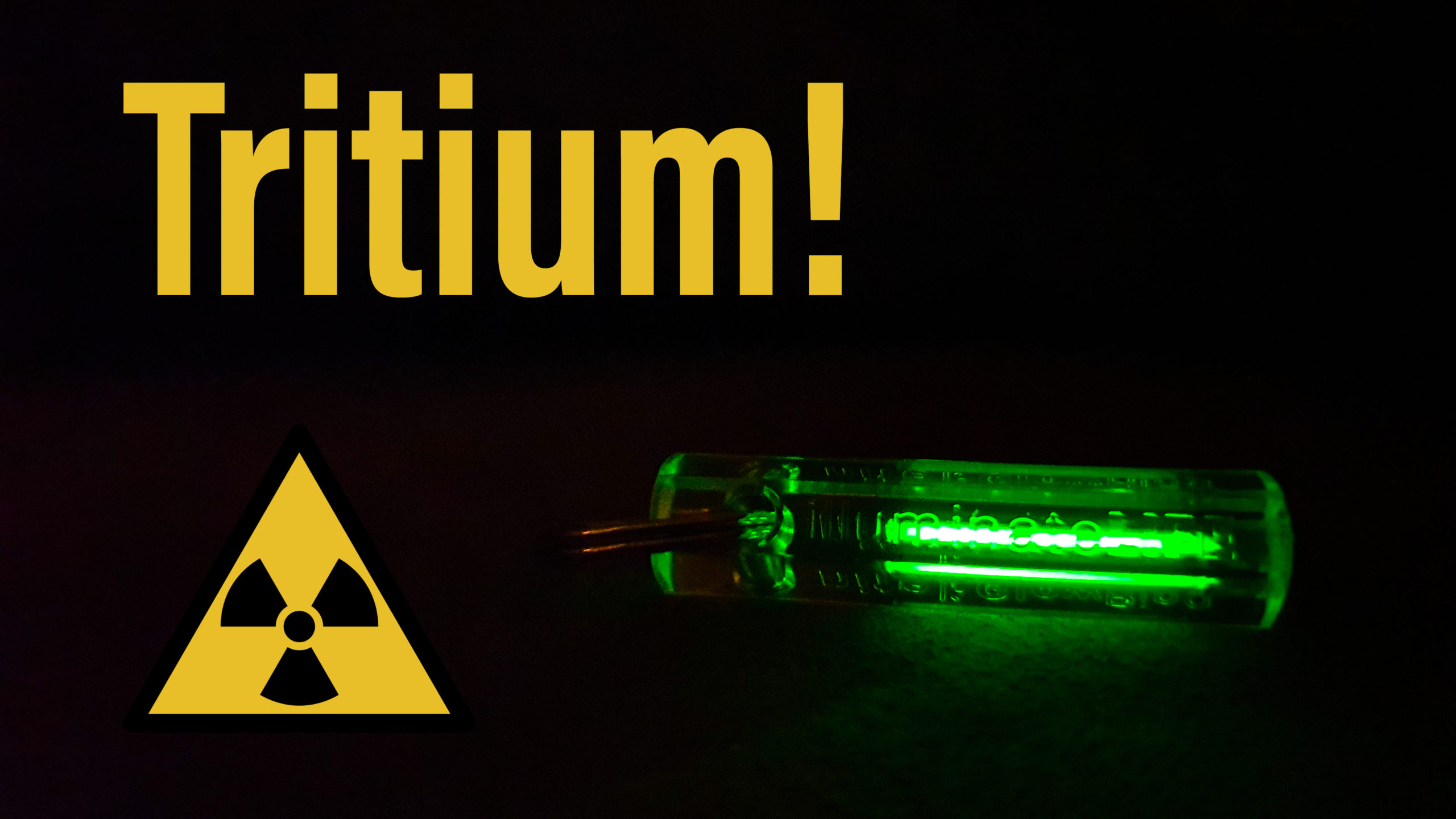
BNL scientists in the wake of the closure of its two reactors because of the tritium leaks minimized their health impacts noting that tritium is used in exit signs—begging the question of why a radioactive substance is used in exit signs.
Now, tritium has become a major international issue with the Japanese government planning to release 1.3 million tons of water containing tritium into the Pacific Ocean from the site of the Fukushima Daiichi nuclear power plants.
It’s also been a hot issue in New York State where Holtec International has a plan to dump tritium-contaminated water from the decommissioned Indian Point nuclear power plants, which it owns, into the Hudson River. A number of communities along Hudson River depend on the river for their potable water.
Tritium is a radioactive isotope of hydrogen. As the U.S. Nuclear Regulatory Commission in its “Backgrounder on Tritium” acknowledges: “Like normal hydrogen, tritium can bond with oxygen to form water. When this happens, the resulting ‘tritiated’ water is radioactive. Tritiated water…is chemically identical to normal water and the tritium cannot be filtered out of the water.”
Regarding the use of tritium in exit signs, what’s that about?
As the website of a company called Self Luminous Exit Signs, which sell signs using tritium for $202.95 each, says: “World War II created the demand for glowing emergency exits in ships, submarines, barracks and bombers where battery power was unavailable.”
Something that grew out of war was commercialized afterwards—as has nuclear technology been generally.
As to dangers, in a posting titled “Tritium in Exit Signs,” the U.S. Environmental Protection Agency says: “Tritium is a radioactive isotope that needs special handling procedures. Tritium is most dangerous when it is inhaled or swallowed. Many exit signs contain tritium….Tritium exit signs are marked with a permanent warning label. Tritium exit signs are useful because they do not require a traditional power source such as batteries or hardwired electricity.”
“No radiation is emitted from a working, unbroken, tritium exit sign,” EPA goes on.
Damage to tritium exit signs is most likely to occur when a sign is dropped during installation or smashed into the demolition of a building. If a tritium exit sign is damaged, the tritium could be released….If a tritium exit sign is broken, never tamper with it. Leave the area immediately and call for help.”
Adds EPA: “Unwanted tritium exit signs may not be put into ordinary trash; they require special disposal. Tritium exit signs that are illegally put in ordinary landfills can break and contaminate the site.”
Further, says the Conference of Radiation Control Programs, Inc. on its posting headed “Tritium Exit Signs Present a Challenge in Handling and Disposal,” they “must be isolated from other wastes during disposal, since they may and often do contaminate scrap metal from demolition sites. For this reason, tritium exit signs are regulated by the Nuclear Regulatory Commission, and proper disposal of the signs is required once they are no longer used. “
It goes on: “While many large commercial and government entities are aware of the requirements for use and disposal, many small businesses are unaware of the NRC requirements, leading to the improper disposal of tritium exit signs industrial or municipal landfills, or worse, their being sold over the internet. An estimated 2 million tritium exit signs have been sold in the U.S. The number of signs in use now and where they are located is unknown, given that there is limited tracking of the purchase, use, or disposal of the signs and that tritium exit signs have a usable life ranging from ten to twenty years.”
Also, says the organization: “Should a tritium exit sign—which contains tritium-filled glassed tubes—break, its contents could pose a risk to those located in the near vicinity. They could be exposed to tritium gas or tritiated water from the tritium that has escaped into the environment. Cleaning up tritium after an accident could be costly, especially for small businesses. Worker or public exposure to tritium also could present unwanted and unnecessary liabilities.”
So it goes regarding the very real dangers of tritium exit signs.
For a broader review of the hazards of tritium, this year a book, Tritium’s Danger, was published, authored by Dr. Arjun Makhijani, president of the Institute for Energy and Environmental Research. His Ph.D. involved a specialization in nuclear fusion, on which the hydrogen bomb is based. The hydrogen bomb’s fusion process utilizes tritium. And, if fusion is ever developed as an energy source—and an enormous effort has been underway for years to do that—tritium would play a major part.
“Makhijani makes it clear that the impacts of tritium on human health, especially when it is taken inside the body, warrant much more attention and control than they have received until now,” writes Robert Alvarez in his review of Tritium’s Danger in the June 26, 2023 issue of The Bulletin of the Atomic Scientists. Alvarez, senior scholar at the Institute for Policy Studies, served as senior policy adviser to the Department of Energy’s secretary and was deputy assistant secretary for national security and the environment from 1993 to 1999.
Tritium, relates Alvarez, “is one of the most expensive, rare, and potentially harmful elements in the world.”
“Although its rarity and usefulness in some applications give it a high monetary value, tritium is also a radioactive contaminant that has been released widely to the air and water from nuclear power and spent nuclear fuel reprocessing plants,” Alvarez goes on. “Makhijani points out that ‘one teaspoon of tritiated water would contaminate about 100 billion gallons of water to the U.S. drinking water limit; that is enough to supply about 1 million homes with water for a year.”
“Since the 1990s, about 70 percent of the nuclear power plant sites in the United States (43 out of 61 sites) have had significant tritium leaks that contaminated groundwater in excess of federal drinking water limits,” writes Alvarez.
“The most recent leak occurred in November 2022, involving 400,000 gallons of tritium-contaminated water from the Monticello nuclear station in Minnesota. The leak was kept from the public for several months….A good place to start limiting the negative effects of tritium contamination, Makhijani recommends, is to significantly tighten drinking water standards,” says Alvarez.
“Routine releases of airborne tritium are also not trivial,” writes Alvarez. As part of his “well-researched” book, says Alvarez, “Makhijani underscores this point by including a detailed atmospheric dispersion study that he commissioned, indicating that tritium from the Braidwood Nuclear Power Plant in Illinois has literally raining down from gaseous releases—as it incorporates with precipitation to form tritium oxide—something that occurs at water cooled reactors. Spent fuel storage pools are considered the largest source of gaseous tritium releases.”
And Alvarez, who not only has long experience as an official with the Department of Energy but for years was senior investigator for the U.S. Senate Committee on Governmental Affairs, states: “In past decades, regulators have papered over the tritium-contamination problem by asserting, when tritium leakage becomes a matter of public concern, that the tritium doses humans might receive are too small to be of concern. Despite growing evidence that tritium is harmful in ways that fall outside the basic framework for radiation protection, agencies such as the Nuclear Regulatory Commission remain frozen in time when it comes to tritium regulation. The NRC and other regulating agencies are sticking to an outdated premise that tritium is a ‘mild’ radioactive contaminant….Overall, the NRC implies its risk of tritium ingestion causing cancer is small.”
As for the dumping of 1.3 million tons of tritium-contaminated water into the Pacific from the Fukushima site, this is being opposed in the Pacific region and is focused upon in a just-released film documentary, “The Fukushima Disaster: The Hidden Side of the Story.”
After the 2011 disaster, Tokyo Electric Power Company, the owner of the Fukushima plants, released 300,000 tons of tritium-contaminated water into the Pacific, notes the film. A thousand tanks were eventually built for holding tritium-contaminated water which continues to leak from the plants. But now there is no room for additional tanks. So the 1.3 million tons of tritium-contaminated water are proposed to be discharged over 30 years into the Pacific.
In the documentary, Andrew Napuat, a member of the Parliament of the nation of Vanuatu, an 83-island archipelago in the Pacific, says: “We have the right to say no to the Japan solution. We can’t let them jeopardize our sustenance and livelihood.”
“China condemns Japanese plan to release Fukushima water,” was the headline of an Associated Press report. It quoted a Foreign Ministry spokesperson as saying it “concerns the global marine environment and public health, which is not a private matter for the Japanese side.”
Sean Burnie, a senior nuclear specialist with Greenpeace who has been involved in the aftermath of the Fukushima disaster, is quoted in the Guardian as describing as “scientifically bankrupt” the claim the tritium would not pose a health risk. “It is internal exposure to organically bound tritium that is the problem—when it gets inside fish, seafood, and then humans. When tritium gets inside cells, it can do damage. Tepco and the Japanese government are making a conscious decision to increase marine pollution with radioactivity, and they have no idea where that will lead.”
The International Atomic Energy Agency is supporting the scheme. However, the agency was established by the UN as an international version of the U.S. Atomic Energy Commission with its mission, like that of the AEC, to promote nuclear technology—as the IAEA statute says “to accelerate and enlarge the contribution of atomic energy”—while also regulating it, a continuation of nuclear conflict interest but on the international level.
Back in the U.S.A., some 138 groups organized in a Stop Holtec Coalition have been calling on New York Governor Kathy Hochul to stop Holtec’s plan to dump a million gallons of tritium-contaminated water into the Hudson River.
A letter they sent to the governor says “we are deeply concerned about the impacts on the health and safety of local resident, the river’s ecosystem, and local economy. The Hudson Valley region is densely populated and also serves as a recreational area for millions from New York City and across the state…The Indian Point nuclear power plant was rightfully shuttered in 2021, yet the spent fuel pool wastewater remaining on the site contains radioactive contaminants, including tritium. Exposure to tritium is linked to cancer, miscarriages, genetic defects and other health effects.”
Organizations signing the letter include Food & Water Watch, Grassroots Environmental Education, Hudson Riverkeeper, Hudson River Sloop Clearwater, Indian Point Safe Energy Coalition and Promoting Health and Sustainable Energy.
There was legislation passed in the New York State Assembly in June and in the State Senate in May banning “the discharge of any radiological agent into the waters of the state.”
There have been demonstrations protesting the plan, a petition drive with more than 400,00 signatures, and resolutions passed by local governments opposing the release. The first was passed unanimously in March by the Westchester Board of Legislators. It noted how “pre-release treatment would not remove tritium” from water, that tritium is “carcinogenic” and that “there are seven communities” that “source their drinking water from the Hudson.” The Indian Point plants are in Westchester County, 25 miles north of New York City.
St. Louis link in ‘Oppenheimer’ is latest reminder of city’s nuclear legacy
Tony Messenger, 30 Jul 23, https://www.stltoday.com/news/local/column/tony-messenger/messenger-st-louis-link-in-oppenheimer-is-latest-reminder-of-city-s-nuclear-legacy/article_3d529cde-2d78-11ee-b12a-2f2eb70ff7ba.html
There’s a scene in the hit movie “Oppenheimer” that has a hidden St. Louis connection.
As J. Robert Oppenheimer gathers his group of Manhattan Project scientists at Los Alamos, New Mexico, he lets them in on a secret. They don’t have enough uranium or plutonium to test a potential atomic bomb, even if they figure out how to create one.
Sitting on the desk in front of him are two glass containers — a large fish bowl and a smaller brandy snifter. One by one, Oppenheimer drops marbles into the glass — plink, plink, plink — marking the growth in processing the deadly elements.
The character doesn’t mention St. Louis in the movie. But the city is where some of that initial uranium was developed. And after World War II, St. Louis became a major source of the uranium processing for missiles during the Cold War arms race.
In the Christopher Nolan-directed movie, the scientists celebrate when the final marble plinks into the glass bowl to show they have enough uranium for their task, much as they celebrate when the bomb test is successful. They celebrate again when the bomb is dropped, first on Hiroshima and then on Nagasaki, killing hundreds of thousands of Japanese civilians and ending the war.
The celebrations are muted, at least for Oppenheimer and many of the scientists, once they realize the impact of what they — and the politicians they serve — have done.
The story reverberates today.
Once every generation, it seems, members of Congress realize all over again that the people of our region — the workers who toiled at Mallinckrodt Chemical Works plants, and the folks who grew up in areas where some of that nuclear waste was buried, such as along Coldwater Creek in north St. Louis County — suffered serious maladies for their role in the war effort.
Three generations of activists — Kay Drey, Denise Brock and the co-founders of Just Moms STL, Dawn Chapman and Karen Nickel — have sounded alarm bells about the damage that the processing of nuclear material and its waste had on people.
Like the story of Oppenheimer, it’s one that has to be told over and over again because the legacy of the Manhattan Project is ongoing. It’s a story of patriotism and death; of moral ambiguity and the pain of unintended consequences.
So it was in late May, when I was at the Weldon Spring Interpretive Center for the rededication of a memorial that honors workers who died from maladies related to the processing of nuclear materials. The remodeled museum sits beside a massive pile of gray stone, piled high like so many marbles in a glass jar, protecting future generations from the nuclear waste buried there.
Veterans who attended the memorial were thanked for their service. Family members of the workers waved American flags. But the Rev. Gerry Kleba, a Catholic priest, also reminded folks of the somber reason for the occasion. He recounted the estimated 200,000 deaths in Japan, and the local deaths from various illnesses. He repeated the quote that haunted Oppenheimer and was repeated in the recent movie: “Now I am become death, the destroyer of worlds.”
This month, there was another event at Weldon Spring, this one with the Just Moms STL crowd. Sen. Josh Hawley, a Republican, pushed for a bill — also supported by Rep. Cori Bush, a Democrat — to create a new flow of compensation for St. Louis families who have suffered because of the city’s connection to the nuclear weapons program. The push comes on the heels of recent reporting from The Missouri Independent, The Associated Press, and MuckRock, reinforcing what Drey has argued for more than a generation: the government knew it was poisoning the Earth, and workers and residents, in its rush to build weapons.
Who pays the price?
That’s a question that tortured Oppenheimer. It’s the question before Congress again and a new generation of St. Louisans, learning about the city’s past, buried under a pile of rocks that sits as a monument to the past.
Backgrounder on health consequences of nuclear radiation fallout and the Anthropocene.

Mary Olson — July 21, 2023
Since fatal cancer and some catastrophic impacts to pregnancy originate from damage to a single living cell, there is no amount of ionizing radiation that is safe. It is therefore extremely appropriate in terms of human and environmental health, that particles of plutonium from nuclear weapons fallout has been chosen as the marker for the new geologic epoch in which the dominant force acting on this planet is us.
The Anthropocene is, so far, a time of imbalance and disease, including destabilization of our climate, destruction of natural habitat sending extinction rates up and biodiversity down, made worse by dumping new toxic chemicals widely, polluting air, water and food. Radiation from nuclear fission adds the additional scrambling of genes and genomes.
Fallout warrants an update from the health perspective. The disproportionate impact of bomb radiation on women and girls is established, and particularly troubling given the global distribution of fallout particles. However, a new paper from Dr Alfred Körblein is the first to find the correlation of very large numbers of lives lost and fallout. Körblein reports the death rate of infants (live-birth) in five European nations (UK, France, Italy, Germany and Spain) and the U.S. during and following the period of atmospheric nuclear testing (1945—1963). After a tour de force statistical analysis, Körblein concludes: “atmospheric nuclear weapons testing may be responsible for the deaths of several million babies in the Northern Hemisphere.”
A clear spike (25% increase) in infant deaths was previously reported by Tucker and Alvarez citing New Mexico state records after the 1945 Trinity Test. These are live births, not losses of pregnancies, which may have been much higher. Körblein examined biological sex as a factor, but found no strong correlation. Infant death was likely due to insufficient immune capacity.
Fallout is not only in the past, when worldwide 528 nuclear detonations were made in our atmosphere. In 2021 Science Magazine reported detection of Cesium-137 in honey in the United States. While only trace levels were found in the honey, radioactivity from Cesium, a major constituent of the fine particles of fallout that drift back down, or are carried down in much higher concentrations by rain. Cesium, inhaled or ingested mimics potassium in the body, where uptake is primarily to muscle, including the heart. Cardiovascular damage has now been linked to radiation as a causal agent for heart disease and stroke.
Highly radioactive fallout particles have been dispersed worldwide, not only the lake in Canada where the Anthropocene spike will be placed. This is demonstrated in the modern digital modeling work of Sebastien Philippe and his team on French nuclear tests in Polynesia.
The widescale distribution of highly radioactive cesium, iodine, strontium and also plutonium, known carcinogens at any concentration have been contributors to the widescale suffering of cancers. Fission products in our air, food and water have contributed to reproductive impacts. Due to many factors, the global birth rate has dropped in half since 1950 and the impact of fallout is likely to be part of this.
Exploding a nuclear weapon in the biosphere is not only a test of the weapon—it is a test of life itself, in a massive, uncontrolled experiment. Thankfully, our species retains the capacity to change our minds, and invest in a healthy future. The United Nations General Assembly declared a healthy environment to be a universal Human Right in July, 2022. Perhaps the Anthropocene will also be a time of healing.
From body bags of ice to pavement burn: US grapples with new extreme heat reality

From body bags of ice to pavement burn: US grapples with new extreme heat
reality. As unrelenting, record-breaking temperatures continue across many
states, pressure is mounting on US healthcare systems due to an increasing
number of people in heat distress coming through their doors.
In the Southwest, doctors are relying on tried-and-tested measures such as body
bags packed with ice to quickly bring down dangerously high body
temperatures. Doctors at Memorial Hermann Medical Center in Houston, Texas,
told The Independent that there has been an increase in the number of
patients presenting with heat-related illnesses including heat stroke,
which can be potentially fatal if not treated rapidly.
Independent 22nd July 2023
https://www.independent.co.uk/climate-change/news/heatwave-arizona-texas-deaths-burns-b2378285.html
Science and Global Security Maps Radioactive Fallout from U.S. Nuclear Weapon Tests, Beginning with July 1945 Trinity Test
July 21, 2023
SGS has released research showing in unprecedented detail the spread of radioactive fallout from 94 continental U.S. atmospheric nuclear weapon tests, including the first nuclear weapon test – the 16 July 1945 Trinity explosion that was a key part of the Manhattan Project. This work has been reported in The New York Times.
The new model shows the nuclear explosions carried out in New Mexico and Nevada between 1945 and 1962 led to widespread radioactive contamination, with Trinity making a significant contribution to exposure in New Mexico, in neighboring states, and reaching 46 of the 48 contiguous United States as well as Canada and Mexico. The study also documents significant deposition in Nevada, Utah, Wyoming, Colorado, Arizona and Idaho, as well as dozens of federally recognized tribal lands.
The research provides estimates of the deposition of radioactivity over 10 days following the detonation of the Trinity nuclear explosion, and for five days subsequent to the atmospheric tests in Nevada. It highlights that significant radioactive deposition took place in locations in New Mexico and on federally recognized tribal lands not covered by the U.S. Radiation Exposure Compensation Act. It also reveals that plutonium carried by the wind from the Trinity test explosion reached Crawford Lake in Canada on July 20, 1945. The presence of plutonium in Crawford Lake sediments has been proposed as one maker for the beginning of the Anthropocene epoch……………………………………….. more https://sgs.princeton.edu/news-announcements/n
China’s blanket radiation testing could spell trouble for Japanese seafood imports
Japan Times, BY ERIC JOHNSTON, STAFF WRITER, 19 jul 23
China has begun testing all seafood imports from Japan for radiation, Japanese media reported Wednesday, in a move that could create further diplomatic headaches for Prime Minister Fumio Kishida.
The news comes ahead of Japan’s plan to begin releasing treated radioactive water from the crippled Fukushima No. 1 plant into the sea. It follows a July 7th announcement by China’s customs agency that seafood products from 10 prefectures, including Fukushima, would continue to be banned due to radiation concerns.
Chief Cabinet Secretary Hirokazu Matsuno told reporters in Tokyo on Wednesday that there have been cases where some Japanese seafood exports are being held up by Chinese customs. The reason for this is seen as a result of China’s tightened radiation inspections in response to the planned release of treated water from the nuclear power plant…………. (subscribers only) more https://www.japantimes.co.jp/news/2023/07/19/national/china-radiation-test-japan-seafood-trouble/
Nuked blood: PM Rishi Sunak is urged to uncover the truth on veterans’ missing health records

The PM has been told to fix his “broken promises” as MPs urge an investigation into missing blood records of nuclear veterans
Rishi Sunak promised to meet test veterans and back a police investigation into possible crimes committed against them, but has yet to do either
Mirror UK, By Susie Boniface, Reporter, 14 Jul 2023
Rishi Sunak has been told to fix his “broken promises” to nuclear test veterans by telling Parliament the full truth of their missing medical records.
Labour and Tory MPs have asked the Defence Select Committee to hold its own inquiry into the blood tests that Cold War veterans say are being illegally withheld from them.
Labour peer Lord Watson of Wyre Forest has written to the Prime Minister asking him to correct Ministry of Defence claims in Parliament that it does not hold the blood data, and fulfil the promise made last year to meet the test veterans in person.
“Given the series of misleading statements, broken promises, and unwarranted delays, the onus rests upon the PM to rectify this matter,” Lord Watson said……………….
Lord Watson added: “It is an affront to expect elderly veterans to navigate the labyrinthine corridors of the MoD, merely to ascertain partial truths.”
It followsthe Mirror’s revelations yesterday that veterans’ service records appear to have had health data, including blood and urine analysis which may have showed radiation damage during their time at the weapons tests, removed from the files.
It is potentially a criminal offence for any healthcare provider to withhold, falsify or destroy medical records, due to the likely impact on the health of patients who cannot later be properly diagnosed or treated.
A timeline of denial…
December 2018: Defence Minister Tobias Ellwood tells Parliament “the MoD is unable to locate any information AWRE staff took blood samples for radiological monitoring”
October 2022: Atomic Weapons Establishment confirmed in Freedom of Information requests it held the results of “a small number” of blood and urine tests; the same information is given to Parliament
February 2023: Royal Navy tells veteran’s son that “the AWE does not hold any evidence that such tests ever happened”
March 2023: Defence Minister Andrew Murrison tells Parliament “AWE does not hold the blood test results for Nuclear Test Veterans” but only “references” to them, which are “included in scientific documentation related to nuclear weapons trials”. He says veterans can request any information held, individually
June 2023: Murrison tells one Tory MP that AWE only has information about blood tests of “one individual”; 10 days later he tells a second Tory MP it holds “blood test data for a small number of individuals”……………………………………
Labour MP Emma Lewell-Buck, who sits on the Commons defence committee, has urged it to consider launching an investigation. She said yesterday: “There is enough evidence to show blood tests were ordered, arranged, and taken, from large numbers of people. The results were stored and analysed. The veterans have always had a right to that information, and failing to provide it can cost lives.
“We must find out when and why they were removed from the medical records.”
Support has come from Tory backbencher Dr Julian Lewis, on behalf of a test veteran constituent, who has asked the committee chairman Tobias Ellwood to question the MoD further.
We have uncovered more than 200 pages of archive documents, ordering blood to be taken from servicemen at all of Britain’s nuclear weapons tests, from 1952 onwards.
They show:
- The MoD had a “Director of Hygiene and Research” who organised blood tests of personnel and kept a “master record” of results
- Orders from the Air Ministry and War Office telling unit medical officers to arrange repeated “blood testing of personnel working regularly with radioactive sources”, from 1952 onwards
- The medical forms used and instructions on how to duplicate and store them
- Officers seeking guidance from government ministers on testing troops and civilians
- A task force commander demanding all RAF sampling and decontamination personnel, and 25% of other trades under his command, have blood tests
- RAF crews being blood-screened before leaving the UK, with some rejected for service as a result
- Proof that army blood tests were copied “from AWRE records” to be put into soldiers’ main medical files – where they can no longer be found
- Pathologists attached to the weapons trials were told to create a “special health register” to log the data, with “safety limits” set for the blood counts, and instructions to send home or withdraw from service anyone who tested below those levels.
We have uncovered documentary evidence that urine was taken from men ordered into the forward area after Britain’s first atomic bomb in 1952, and analysed by scientists. Everyone who served at nine subsequent bomb tests on the Australian mainland had their blood tested. And for another three atom bombs, and six hydrogen bombs, detonated at Christmas Island in the South Pacific, there is evidence that RAF and Army soldiers were tested too.
Almost 22,000 men took part in the weapons tests, which were the biggest tri-service operation since D-Day.
Alan Owen, who founded campaign group LABRATS, said: “It is inconceivable that with all these orders, and thousands of men involved over more than a decade, there isn’t a warehouse somewhere filled with the results. We understand they were held on microfiche at the AWE in Aldermaston, and may have been recently reclassified or moved.
“We are certain these records exist and are being withheld, and the only possible reason to do that is to limit compensation claims to those injured by the radiation the government has always denied they were exposed to.”
All the documents are available to view online at www.labrats.international/blood https://www.mirror.co.uk/news/politics/nuked-blood-rishi-sunak-promises-30464869
New Evidence on Tritium Hazards
Due to recent unprecedented levels of public interest in tritium, it is
relevant to point to new publications (and two older ones just discovered)
on tritium’s hazards. One of these concludes “ …contrary to some
popular notions that tritium is a relatively benign radiation source, the
vast majority of published studies indicate that exposures, especially
those related to internal exposures, can have significant biological
consequences including damage to DNA, impaired physiology and development,
reduced fertility and longevity, and can lead to elevated risks of diseases
including cancer. Our principal message is that tritium is a highly
underrated environmental toxin that deserves much greater scrutiny.”
Ian Fairlie 14th July 2023
How the world’s most radioactive man cried blood while his skin melted as he was kept alive in 83-day nightmare after horror accident at Japanese nuclear power plant

- Hisashi Ouchi, 35, became the world’s ‘most radioactive man’ in 1999
- He was the worst affected by Japan’s 1999 Tokaimura nuclear accident
- Ouchi – reportedly left with ‘melted skin’ and ‘crying blood’ – died after 83 days
Daily Mail , By MATTHEW COX, 14 July 2023
A Japanese nuclear disaster on September 30, 1999, was the world’s worst since Chernobyl, and left the world’s ‘most radioactive’ man with ‘melted skin.’
That victim was Hisashi Ouchi, a worker at the uranium processing plant in Tokaimura – 70 miles northeast of Tokyo – who was exposed to a massive dose of radiation resulting in severe burns.
This was to be the first of 83 days of unimaginable suffering in critical condition for the 35-year-old who died on December 21, after begging doctors to stop treating him months earlier.

The accident was a result of a series of fatal mistakes while he and his colleagues were preparing uranium for use as reactor fuel in the privately-run plant, including carrying the uranium in buckets, and not wearing appropriate protective equipment.
Technicians Ouchi and Masato Shinohara, with supervisor Yutaka Yokokawa, were speeding up the conversion process by putting 16kg of uranium in a vat which had a maximum limit of 2.4kg, when a chain-reaction was caused as Ouchi was ‘draped over’ the tank.
He was exposed to 17 Sieverts of radiation – for comparison, emergency responders at Chernobyl were exposed to 0.25 – over double what is seen as a lethal dose.
That is also the record amount of radiation in any living person, making him the most irradiated man ever, sometimes referred to as the world’s ‘most radioactive.’
He and his co-workers reported seeing a blue flash above the vat, the indication that a reaction similar to that inside an atomic bomb has happened, releasing deadly neutron radiation.
The colleagues rapidly lost consciousness as alarms blared inside the plant and radiation levels shot to 4,000 times typical levels.
The surrounding area was evacuated, with many not having even been aware that the unassuming building was a nuclear facility.
Ouchi was rushed to the University of Tokyo Hospital, where doctors found that he had almost no white blood cells and was in need of extensive skin grafts and multiple blood transfusions.
Local reports at the time claimed that he was also left ‘crying blood,’ and begged doctors to stop treating him.
However, he was resuscitated after multiple heart attacks on his 59th day in hospital.
Ouchi eventually died on December 21, 1999, and a few months later in April 2000 Shinohara, his fellow technician, died of multiple organ failure aged 40………………………. https://www.dailymail.co.uk/news/article-12299235/How-worlds-radioactive-man-cried-blood-kept-alive-83-day-nightmare.html
1 This Month


4 August – WEBINAR – Hiroshima & Nagasaki: Nuclear Bombs Never Again
Tuesday, Aug. 4 at 5 pm PT / 8 pm ET.
Aug 5, 2026 10:00 AM in Australia/Melbourne
Join the Nuclear Bombs Never Again webinar on August 4th at 5pm Pacific Time / 8pm Eastern Time / 9am Japan Standard Time.
Cross generational voices at the intersection of Japan-Korea-US policy and militarization will share their lived experiences, nuclear impacts in these contexts, anti-war strategies, and actions you can take to advocate for a world with Nuclear Bombs Never Again. This 75-minute event is co-hosted by WILPF US and Korea Peace Now.

22,000+ miles voyaging for nuclear disarmament
and a radiation-free environment https://vfpgoldenruleproject.org/
To see nuclear-related stories in greater depth and intensity – go to https://nuclearinformation.wordpress.com
-
Archives
- July 2026 (251)
- June 2026 (287)
- May 2026 (306)
- April 2026 (356)
- March 2026 (251)
- February 2026 (267)
- January 2026 (308)
- December 2025 (358)
- November 2025 (359)
- October 2025 (375)
- September 2025 (257)
- August 2025 (319)
-
Categories
- 1
- 1 NUCLEAR ISSUES
- business and costs
- climate change
- culture and arts
- ENERGY
- environment
- health
- history
- indigenous issues
- Legal
- marketing of nuclear
- media
- opposition to nuclear
- PERSONAL STORIES
- politics
- politics international
- Religion and ethics
- safety
- secrets,lies and civil liberties
- spinbuster
- technology
- Uranium
- wastes
- weapons and war
- Women
- 2 WORLD
- ACTION
- AFRICA
- Atrocities
- AUSTRALIA
- Christina's notes
- Christina's themes
- culture and arts
- Events
- Fuk 2022
- Fuk 2023
- Fukushima 2017
- Fukushima 2018
- fukushima 2019
- Fukushima 2020
- Fukushima 2021
- general
- global warming
- Humour (God we need it)
- Nuclear
- RARE EARTHS
- Reference
- resources – print
- Resources -audiovicual
- Weekly Newsletter
- World
- World Nuclear
- YouTube
-
RSS
Entries RSS
Comments RSS
 nuclear-news