The irradiated community – Losses of homes, community and identity
The Radiation That Makes People Invisible: A Global Hibakusha Perspective Robert Jacobs The Asia-Pacific Journal, Vol. 12, Issue 30, No. 1, August 3, 2014.
“…………Losses of homes, community and identity–Areas that experience radioactive contamination often have to be abandoned by those who live there. The levels of radiation may be so high that continued habitation could be dangerous to health. In these cases people lose their homes, often permanently.
For communities that have to be abandoned, the bonds that have been built up and that sustain the wellbeing of the community disintegrate. Friends are separated, extended families are often separated, and schools are closed. People who have lived in the same place all of their lives have to make a fresh start, sometimes in old age, sometimes as children. The communal structures that sustained them are destroyed: shopkeepers who know them, neighbors who can be relied on, the simple familiarity of communities. What is lost when a person is no longer able to eat an apple from a tree planted by a parent or grandparent? Tony Hood, a former uranium miner from Gallup, New Mexico, spoke of the sense of loss when contemplating the necessity for his Navajo community to abandon their homes because of uranium contamination, “Our umbilical cords are buried here, our children’s umbilical cords are buried here. It’s like a homing device.”2
With the loss of community, many people lose their livelihood. This is especially true in places where many have been farmers, fishers or herders for generations. When someone who has only known farming is taken from the land they have tended, when fishers can no longer fish in areas where they understand the natural rhythms and habits of the fish, it can be impossible to start over. Often such people are forced to enter service positions or become dependent on state subsidies, further eroding their sense of self and wellbeing. Usually, those removed from their land because of contamination are placed into temporary housing. In Fukushima this has been the case for 100,000 who remain in temporary housing while hundreds of thousands of others who are not housed by the government have fled the area.3 In almost all cases the public housing provided to officially recognized victims proves not to be temporary, but becomes permanent.
Frequently, multigenerational families that have been living together for decades, find it impossible to remain together. This can remove care for the elderly, childcare for young families and further erodes the continuity of family identity, knowledge and support. Removal from land also is accompanied by the loss of a traditional diet. Those without access to the land and seas that have provided food for their families often begin a journey of dislocation and ill health. In some communities such as the small villages around the former Soviet nuclear test site in Kazakhstan, many people simply continue to live in dangerously contaminated homes. The state responsible for their exposures (the Soviet Union) no longer exists and neither the Russian nor Kazakh governments feel the responsibility to evacuate them or to provide health care for those with disabilities. Many live very traditional lives deriving most of their food from their own gardens and from livestock raised on their contaminated land. Many long-lived radionuclides simply cycle through this ecosystem and residents can be contaminated and recontaminated over generations.4
In Fukushima Prefecture the Japanese government proclaimed a 20km mandatory evacuation zone, while also designating a “suggested” evacuation zone from 20km to 30km. These zones do not directly reflect the dangers from radiation levels. In some of the mandatory evacuation areas the gamma levels are below those in parts of the suggested evacuation areas. Some areas where the plumes came down 50-80km away have even higher levels. The limits to mandatory evacuation areas reflect efforts to limit the direct liability of the government. Even today children live in areas where the radiation levels are too high for them to be allowed to play or spend significant time outdoors.5 http://japanfocus.org/-Robert-Jacobs/4157
Loss of traditional knowledge– In some remote places survival is dependent on centuries old understandings of the land. In Maralinga, Australia the areas where the British conducted nuclear tests between 1956 and 1963 are very difficult places to live. Traditional communities in these areas often have songs that hold and transmit essential knowledge about how to survive in such a harsh environment, such as where to find water, when to hunt specific animals, when to move to various locations. But can knowledge gathered over millennia be effectively applied to radiation disasters?
When the British relocated entire communities to areas hundreds of kilometers from their homes, the local knowledge chain was broken. It became impossible for the refugees to sustain a traditional life in areas where they had no knowledge of the rhythms of the land and animals. This removal from their lands led to ever increasing dependence on governmental assistance and severed what had been millennia of self-reliance. While self-reliance had been dramatically impacted by the brutal rule of the Australian government and its policies towards aboriginal peoples, the people living near the test site were still living on the land in the 1950s. Relocation led to the further erosion of community, familial and personal wellbeing………http://japanfocus.org/-Robert-Jacobs/4157
Proper research urgently needed into medical effects of Japan’s nuclear meltdowns
issue under the rug, predicting any harmful effects of the catastrophe is “unlikely.”
The UN panel made a very broad assumption about the worst nuclear catastrophe in history (or worst since Chernobyl) – and did this BEFORE research is done. However, a local health study raises alarm bells. Fukushima Medical University found 46% of local children have a pre-cancerous nodule or cyst, and 130 have thyroid cancer, vs. 3 expected. Incredibly, the University corrupts science by asserting the meltdown played no role in these high figures.
But Japanese studies must go far beyond childhood thyroid diseases. Japan isn’t the only site to study, as the fallout from the meltdown spread across the northern hemisphere.
In 2011, we estimated 13,983 excess U.S. deaths occurred in the 14 weeks after Fukushima, when fallout levels were highest – roughly the same after Chernobyl in 1986. We used only a sample of deaths available at that time, and cautioned not to conclude that fallout caused all of these deaths.
Final figures became available this week. The 2010-2011 change in deaths in the four months after Fukushima was +2.63%, vs. +1.54% for the rest of the year. This difference translates to 9,158 excess deaths – not an exact match for the 13,983 estimate, but a substantial spike nonetheless.
Again, without concluding that only Fukushima caused these deaths, some interesting patterns emerged. The five Pacific and West Coast states, with the greatest levels of Fukushima fallout in the U.S., had an especially large excess. So did the five neighboring states (Arizona, Idaho, Montana, Nevada, and Utah), which received the next highest levels.
Most of the spring 2011 mortality increase were people over 80. Many of these elderly were in frail health; one possibility is that the added exposure to radioactive poison sped the dying process.
Fukushima radiation is the same as fallout from atom bomb explosions, releasing over 100 chemicals not found in nature. The radioactive chemicals enter the body as a result of precipitation that gets into the food chain. Once in the body, these particles harm or kill cells, leading to disease or death.
Once-skeptical health officials now admit even low doses of radiation are harmful. Studies showed X-rays to pregnant women’s abdomens raised the risk of the child dying of cancer, ending the practice. Bomb fallout from Nevada caused up to 212,000 Americans to develop thyroid cancer. Nuclear weapons workers are at high risk for a large number of cancers.
Rather than the UN Committee making assumptions based on no research, medical research on changes in Japanese disease and death rates are needed – now, in all parts of Japan. Similar studies should be done in nations like Korea, China, eastern Russia, and the U.S. Not knowing Fukushima’s health toll only raises the chance that such a disaster will be repeated in the future.
Joseph Mangano is Executive Director of the Radiation and Public Health Project.
Janette D. Sherman MD is an internist and toxicologist, and editor of Chernobyl: Consequences of the Catastrophe for People and the Environme
Dr Helen Caldicott on the authorities’ concealment of medical effects of Fukushima catastrophe
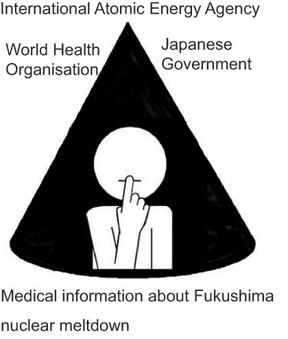
UN, Japan, Concealing Extent of Fukushima Catastrophe MWC News, By Sherwood Ross Friday, 01 August 2014 Japanese and United Nations authorities have placed “a cone of silence” over medical information an endangered Japanese public is entitled to have about the Fukushima nuclear plant meltdown.
“It is obvious that there is collaboration between the World Health Organization(WHO) and the International Atomic Energy Agency(IAEA) and also the Japanese government…to hide, to lie, and to cover-up vital medical information that must be made available to the Japanese population,” says Dr. Helen Caldicott, the medical doctor who has been showered with honors and awards for her long-time opposition to the dangers of nuclear power manufacture and nuclear war.
“Many doctors have been ordered not to inform their patients that their symptoms could be related to radiation, leaving them in a state of despair,” Dr.Caldicott says. (They) “need to know the truth about their situation and that of their children.”
Dr. Caldicott, who has received 21 honorary doctorates for her work, says that to make matters worse, Japan Prime  Minister Shinzo Abe “has passed a secrecy law which will almost certainly intimidate the media from keeping a very close watch over the tenuous (nuclear) plant.”
The government, she says, and Tokyo Electric Power Co.(TEPCO), “have been reluctant to divulge reliable data and information about radioactive releases, the ongoing state of the severely damaged reactors, the continuous outflow of radioactive water into the sea, and the possibility of a serious accident and radiation release in the event of another earthquake greater than 7 on the Richter scale which could well trigger the collapse of the seriously damaged buildings numbers 3 and 4.”
Damaged Building 3 contains over 100 tons of molten radioactive fuel which “would almost certainly release massive quantities of radioactive elements…threatening millions of people with radioactive contamination,” Dr. Caldicott points out.
She goes on to say that if precariously damaged Building 4 should collapse, 400 tons of extremely radioactive fuel will plunge 100 feet to the ground, releasing its cooling water with possible ignition of the fuel. This could release ten times more cesium than was released at Chernobyl or the equivalent of 14,000 Hiroshima-sized bombs.
What’s more, of the 800,000 healthy youngsters called “liquidators” brought in by the Government from around Russia to fight the burning reactor, within 19 years more than 120,000 were dead.
Dr. Caldicott urged the public to “demand that TEPCO and the Japanese government continually inform the public about the events that are and will be occurring at the Fukushima reactors, without cover-ups and denials of the facts.”
Should another major release of radiation occur, she said, the public must be informed immediately and evacuation begun immediately. http://mwcnews.net/focus/politics/44145-fukushima-catastrophe.html#sthash.5cgmPLZn.dpuf
Bioaccumulation of Fukushima radiation in global food supply
 Fukushima Radiation Poisoning Global Food Supply (includes videos) http://chemtrailsplanet.net/2014/08/01/forget-mh-17-fukushima-radiation-poisoning-global-food-supply/ Chemtrail Following a major earthquake, a 15-metre tsunami disabled the power supply and cooling of three Fukushima Daiichi reactors, causing a nuclear accident on 11 March 2011. All three cores largely melted in the first three days. — World Nuclear Association
Report by Dr. Bill Deagle reminds us that extinction-level amounts of lethal radiation continues to contaminate the planet.
It has to be considered that the consequences of global panic in response to full public knowledge the horrific Fukushima event are so dire that corporate media outlets have been instructed not to cover it. Instead, we get bizarre reports on MH-370, MH-17, the Ebola virus, Israeli war on Gaza, Impeaching Obama,…on and on.
By not reporting on Fukushima, “authorities” hope to hide the dire consequences of continued radiation leak(s) from the American people and global populations for as long a possible.
By monitoring social media conversations, it’s an easy task for “rulers” to know when the “flash-point” of public awareness will prompt need to apply further media distractions or increase certain elements of the police state without actually declaring outright, “martial law”….as a last resort.
Bio-accumulation of radiation from Fukushima can damage nearly all life on earth.
All along the west coast of North America, sea stars are dying at an alarming rate. There was an “outbreak” of some unknown wasting disease last year and it appears to have come back even worse this summer. — Radiation Rain
One aspect of this out-of-control contamination is in the Pacific’s 30 foot deep layer of surface ocean water where much of the global oxygen supply is generated by plankton. Bio-accumulation in this layer is unknown and no questions are being asked by corporate media “experts”. Dalton’s Law of partial pressures of gases tells us that measured CO2 levels will respond by going up if global oxygen levels go down.
Reports of a massive case of dead star-fish, absence of certain species of fish and dwindling herds of animals up and down the Pacific region of the northern hemisphere are never connected to the consequences of bio-accumulation of radiation sprays from the ongoing Fukushima disaster.
Why?
Follow the money. Media will avoid reporting any news that could be bad for business as usual.
Spraying aerosols over the Pacific to interrupt rainfall is a desperate attempt to mitigate radiation from being washed onto crops in the central valley that provides much of our food commodities . The obvious downside is the failure of normal rainfall and forcing of drought that increases the number of wildfires in the Northwest and the opportunistic privatization of water resources.
Japan wants to measure individuals’ radiation exposure, not air doses
Ministry seeks to focus on individual radiation exposure The Yomiuri Shimbun 2 Aug 14 The Environment Ministry has compiled a report calling for decontamination work in areas affected by the crisis at Tokyo Electric Power Co.’s Fukushima No. 1 nuclear power plant to be based on measurements of individuals’ radiation exposure doses, instead of air doses. Continue reading
Fukushima children having an holiday in Australia
The Rainbow Stay Project is designed to give the children a chance to do things they can no longer do at home, due to the fear of radiation poisoning……..The group of children, aged between ten and sixteen, are here on a charity-sponsored trip.
It is world away from the ongoing fear of radiation which affects their daily lives back home………..
Kazuki says the threat of radiation still affects her life in many ways.
“I was really sad because everything was polluted by radioactive material. I couldn’t swim in the sea anymore and my mum told me to stay inside and not touch the soil.”
There have been several trips like this since 2011, thanks to a Japanese woman living in Sydney.
Yukiko Hirano set up a Rainbow Stay Project with the aim of giving the children new hope.
” I tried to invite the Fukushima children to come over to Sydney. Beautiful environment, and no fear of radiation earthquake. They can enjoy entire holiday, without fearing those kind of things.”……..Andrew Vickers is from the Construction, Forestry, Mining and Energy Union which helped make the trip a reality.
“They can’t eat fish from the sea, they can’t pick up plants and flowers, they can’t touch any wild animals for fear of further radiation poisoning – so it’s not just coming to another country, it’s a totally new experience” http://www.sbs.com.au/news/article/2014/08/01/fukushima-children-visit-australia
Japanese residents near Sendai to get iodine tablets, in case of nuclear power accident
 Kagoshima residents near Sendai nuclear plant given iodine tablets http://www.japantimes.co.jp/news/2014/07/27/national/kagoshima-residents-near-sendai-nuclear-plant-given-iodine-tablets/#.U9bY_ONdUnk KYODO JUL 27, 2014 Local authorities in Kagoshima Prefecture on Sunday started handing out iodine tablets to residents living within 5 km of the Sendai nuclear power plant, which may be restarted in the fall.
It is the first time iodine tablets have been distributed under guidelines instituted by the Nuclear Regulation Authority, which was set up in the wake of the 2011 Fukushima nuclear disaster. Iodine tablets help people protect their thyroid glands from radiation.
The move by the Kagoshima prefectural and Satsumasendai municipal governments came after Kyushu Electric Power Co.’s Sendai plant cleared a key safety hurdle for restarting operations earlier this month.
About 2,700 of the roughly 4,700 residents over 3 who live within the 5-km radius were given a supply of tablets after hearing an official briefing, submitting medical interview sheets and receiving the green light from doctors, according to prefectural officials.
Briefings for the remaining residents will resume in September, they said.
A total of 39 residents declined to receive the tablets. Children under 3 will receive the equivalent at shelters in the event of a nuclear accident, the officials said.
Delaware residents to get iodine tablets just in case of nuclear [power accident
Del. distributing radiation protection tablets http://newsok.com/del.-distributing-radiation-protection-tablets/article/feed/715584 July 26, 2014 MIDDLETOWN, Del. (AP) — Officials say they’ll be distributing free potassium iodide tablets to Delaware residents who live within 10 miles of the Salem/Hope Creek nuclear power plant in New Jersey.
If a radiation emergency were to occur, officials would inform the public through the use of emergency alert system radio stations. The information would include evacuation instructions as well as instructions on when to take the potassium iodide tablets.
Tokyo’s growing nuclear radiation danger
 ‘Tokyo should no longer be inhabited,’ Japanese doctor warns residents regarding radiation http://www.naturalnews.com/046112_radiation_fukushima_tokyo.html 25 July 14 (NaturalNews)In an essay addressed to his colleagues, Japanese doctor Shigeru Mita has explained why he recently moved away from Tokyo to restart his practice in western Japan: He believes that Tokyo is no longer safe to inhabit due to radioactive contamination caused by the March 11, 2011, meltdowns at the Fukushima Daiichi nuclear plant.
The essay, titled “Why did I leave Tokyo?” was published in the newsletter of the Association of Doctors in Kodaira, metropolitan Tokyo.
Soil tests prove contamination
Dr. Mita opens his essay by contextualizing his decision to leave, noting that he had a long history as a doctor in Tokyo.
“I closed the clinic in March 2014, which had served the community of Kodaira for more than 50 years, since my father’s generation, and I have started a new Mita clinic in Okayama-city on April 21,” he wrote.
Dr. Mita notes that, for the past 10 years, he had been working to persuade the municipal government of Tokyo to stock iodine pills to distribute to the population in the case of a nuclear accident. Dr. Mita’s concern had been that an earthquake might trigger a meltdown at the Hamaoka nuclear power plant. All of his requests were rejected, however, under the excuse that there was no reason to expect such an accident.
Prior to 2011, Shinjuku (the region of Tokyo that houses the municipal government) tested at only 0.5-1.5 Bq/kg. Today, levels at nearby Kodaira are at 200-300 Bq/kg.
“Within the 23 districts of Metropolitan Tokyo, contamination in the east part is 1000-4000 Bq/kg and the west part is 300-1000 Bq/kg,” Dr. Mita wrote.
For comparison, Kiev (capital of the Ukraine) has soil tested at 500 Bq/kg (Cs-137 only). Following the Chernobyl accident, West Germany and Italy reported levels of 90-100 Bq/kg, and both experienced measurable health effects on their populations.
Dr. Mita notes that the radiation situation in Tokyo is getting worse, not better, due to urban practices of concentrating solid waste in small areas such as municipal dumps and sewage plants. That is why, he says, radiation levels in Tokyo riverbeds have actually been increasing over the prior two years.
Dr. Mita’s essay also chronicles the many cases he has observed of patients presenting with radiation-induced health problems. He notes that, since 2011, he has observed while blood cell counts declining in children under the age of 10, including in children under one year old. In all of these cases, symptoms typically improve if the children move to western Japan. He has similarly observed persistent respiratory symptoms that improve in patients who move away.
Other patients have shown symptoms including “nosebleed, hair loss, lack of energy, subcutaneous bleeding, visible urinary hemorrhage, skin inflammations, coughs and various other non-specific symptoms.” He also notes high occurrences of rheumatic muscle symptoms similar to those observed following the Chernobyl disaster.
“Ever since 3.11, everybody living in Eastern Japan including Tokyo is a victim, and everybody is involved,” he wrote.
Sources for this article include:
Lack of knowledge about potential cancer risks of electromagnetic radiation from cell phones
Here’s What We Know About Mobile Phones And Cancer, Business Insider LAUREN F FRIEDMAN JUL 22 2014, “……..Mobile phones emit “non-ionizing electromagnetic radiation” (the kind that comes from microwaves), not “ionizing radiation” (the kind that comes from X-rays). And it turns out that’s an important difference.
“Exposure to ionizing radiation, such as from radiation therapy, is known to increase the risk of cancer,” the National Cancer Institute explains, although even there, the dose matters a lot. “However, although many studies have examined the potential health effects of non-ionizing radiation from radar, microwave ovens, and other sources, there is currently no consistent evidence that non-ionizing radiation increases cancer risk.”
Non-ionizing radiation also does not cause DNA damage, something that’s usually considered a necessary trigger for cancer.
While people spend much more time with their cell phones than their microwaves, it’s still hard to get a good idea of the dose of non-ionizing radiation we get from them. The amount of radiation absorbed by individuals will vary depending on the kind of phones they have and how they use them.
A lot of uncertainty also comes from improved cell phone technology and increased usage over the years — the research just can’t keep up.
The Research So Far
“Studies thus far have not shown a consistent link between cell phone use and cancers of the brain, nerves, or other tissues of the head or neck,” the National Cancer Institute notes on their website. But their fact sheet addressing the topic is not conclusive for the reasons above.
Since proximity is so important in radiation exposure, most research has looked for links between cell phones and brain cancer specifically, which only represents 2% of all cancers……….
The World Health Organisation, in 2011, concluded that the radiation emitted by cell phones was “possibly carcinogenic to humans” based on evidence they describe as “limited.” …..
More recent research, however, suggests that if anyone is at risk, it would be the heaviest cell phone users, not those who use their phones with moderation.
What’s Next
While the research has been inconclusive so far, scientists are working to figure out if there is a link between cancer and cell phone use — or if such a link can be ruled out.
One study in the U.K., known as COSMOS, began in 2010 and will follow 290,000 cell phone users for 20-30 years. Researchers will have access to participants’ phone records, which should give a much more reliable picture of usage than previous studies, which relied largely on people’s recollections of their cell phone usage from many years ago.
Such ongoing research will be crucial.
“It often takes many years between the use of a new cancer-causing agent — such as tobacco — and the observation of an increase in cancer rates,” Dr. John Moynihan, of the Mayo Clinic, points out. “At this point, it’s possible that too little time has passed to detect an increase in cancer rates directly attributable to mobile phone use.”
In the meantime, people concerned about the potential but as yet wholly unknown risks from cell phones can minimize usage, text instead of call, use a headset, and keep a distance from the phone as much as possible. http://www.businessinsider.com.au/do-cell-phones-cause-cancer-2014-7
Critical analysis of Fukushima report by the United Nations Scientific Committee on the Effects of Atomic Radiation
Fukushima: Bad and Getting Worse – Global Physicians Issue Scathing Critique of UN Report on Fukushima CounterPunch, by JOHN LaFORGE, 20 July 14
There is broad disagreement over the amounts and effects of radiation exposure due to the triple reactor meltdowns after the 2011 Great East-Japan Earthquake and tsunami. The International Physicians for the Prevention of Nuclear War (IPPNW) joined the controversy June 4, with a 27-page “Critical Analysis of the UNSCEAR Report ‘Levels and effects of radiation exposures due to the nuclear accident after the 2011 Great East-Japan Earthquake and tsunami.’”
IPPNW is the Nobel Peace Prize winning global federation of doctors working for “a healthier, safer and more peaceful world.” The group has adopted a highly critical view of nuclear power because as it says, “A world without nuclear weapons will only be possible if we also phase out nuclear energy.”
UNSCEAR, the United Nations Scientific Committee on the Effects of Atomic Radiation, published its deeply flawed report April 2. Its accompanying press release summed up its findings this way: “No discernible changes in future cancer rates and hereditary diseases are expected due to exposure to radiation as a result of the Fukushima nuclear accident.” The word “discernable” is a crucial disclaimer here.

Cancer, and the inexorable increase in cancer cases in Japan and around the world, is mostly caused by toxic pollution, including radiation exposure according to the National Cancer Institute.[1] But distinguishing a particular cancer case as having been caused by Fukushima rather than by other toxins, or combination of them, may be impossible – leading to UNSCEAR’s deceptive summation. As the IPPNW report says, “A cancer does not carry a label of origin…”
UNSCEAR’s use of the phrase “are expected” is also heavily nuanced. The increase in childhood leukemia cases near Germany’s operating nuclear reactors, compared to elsewhere, was not “expected,” but was proved in 1997. The findings, along with Chernobyl’s lingering consequences, led to the country’s federally mandated reactor phase-out. The plummeting of official childhood mortality rates around five US nuclear reactors after they were shut down was also “unexpected,” but shown by Joe Mangano and the Project on Radiation and Human Health.
The International Physicians’ analysis is severely critical of UNSCEAR’s current report which echoes its 2013 Fukushima review and press release that said, “It is unlikely to be able to attribute any health effects in the future among the general public and the vast majority of workers.”
“No justification for optimistic presumptions”
The IPPNW’s report says flatly, “Publications and current research give no justification for such apparently optimistic presumptions.” UNSCEAR, the physicians complain, “draws mainly on data from the nuclear industry’s publications rather than from independent sources and omits or misinterprets crucial aspects of radiation exposure”, and “does not reveal the true extent of the consequences” of the disaster. As a result, the doctors say the UN report is “over-optimistic and misleading.” The UN’s “systematic underestimations and questionable interpretations,” the physicians warn, “will be used by the nuclear industry to downplay the expected health effects of the catastrophe” and will likely but mistakenly be considered by public authorities as reliable and scientifically sound. Dozens of independent experts report that radiation attributable health effects are highly likely………. http://www.counterpunch.org/2014/07/18/fukushima-bad-and-getting-worse/
United Nations Scientific Committee on the Effects of Atomic Radiation (UNSCEAR) has 10 major flaws
 Fukushima: Bad and Getting Worse – Global Physicians Issue Scathing Critique of UN Report on Fukushima CounterPunch, by JOHN LaFORGE, 20 July 14 Physicians find ten grave failures in UN report
The majority of the IPPNW’s report details 10 major errors, flaws or discrepancies in the UNSCEAR paper and explains study’s omissions, underestimates, inept comparisons, misinterpretations and unwarranted conclusions.
1. The total amount of radioactivity released by the disaster was underestimated by UNSCEAR and its estimate was based on disreputable sources of information. UNSCEAR ignored 3.5 years of nonstop emissions of radioactive materials “that continue unabated,” and only dealt with releases during the first weeks of the disaster. UNSCEAR relied on a study by the Japanese Atomic Energy Agency (JAEA) which, the IPPNW points out, “was severely criticized by the Fukushima Nuclear Accident Independent Investigation Commission … for its collusion with the nuclear industry.” The independent Norwegian Institute for Air Research’s estimate of cesium-137 released (available to UNSCEAR) was four times higher than the JAEA/UNSCEAR figure (37 PBq instead of 9 PBq). Even Tokyo Electric Power Co. itself estimated that iodine-131 releases were over four times higher than what JAEA/UNSCEAR) reported (500 PBq vs. 120 BPq). The UNSCEAR inexplicably chose to ignore large releases of strontium isotopes and 24 other radionuclides when estimating radiation doses to the public. (A PBq or petabecquerel is a quadrillion or 1015 Becquerels. Put another way, a PBq equals 27,000 curies, and one curie makes 37 billion atomic disintegrations per second.)
2. Internal radiation taken up with food and drink “significantly influences the total radiation dose an individual is exposed to,” the doctors note, and their critique warns pointedly, “UNSCEAR uses as its one and only source, the still unpublished database of the International Atomic Energy Association and the Food and Agriculture Organization. The IAEA was founded … to ‘accelerate and enlarge the contribution of atomic energy to peace, health and prosperity throughout the world.’ It therefore has a profound conflict of interest.” Food sample data from the IAEA should not be relied on, “as it discredits the assessment of internal radiation doses and makes the findings vulnerable to claims of manipulation.” As with its radiation release estimates, IAEA/UNSCEAR ignored the presence of strontium in food and water. Internal radiation dose estimates made by the Japanese Ministry for Science and Technology were 20, 40 and even 60 times higher than the highest numbers used in the IAEA/UNSCEAR reports.
3. To gauge radiation doses endured by over 24,000 workers on site at Fukushima, UNSCEAR relied solely on figures from Tokyo Electric Power Co., the severely compromised owners of the destroyed reactors. The IPPNW report dismisses all the conclusions drawn from Tepco, saying, “There is no meaningful control or oversight of the nuclear industry in Japan and data from Tepco has in the past frequently been found to be tampered with and falsified.” Continue reading
Some points of agreement on Fukushima between global physicians and UNSCEAR
Fukushima: Bad and Getting Worse – Global Physicians Issue Scathing Critique of UN Report on Fukushima CounterPunch, by JOHN LaFORGE, 20 July 14 “……..Points of agreement: Fukushima is worse than reported and worsening still
Before detailing the multiple inaccuracies in the UNSCEAR report, the doctors list four major points of agreement. First, UNSCEAR improved on the World Health Organization’s health assessment of the disaster’s on-going radioactive contamination. UNSCEAR also professionally “rejects the use of a threshold for radiation effects of 100 mSv [millisieverts], used by the International Atomic Energy Agency in the past.” Like most health physicists, both groups agree that there is no radiation dose so small that it can’t cause negative health effects. There are exposures allowed by governments, but none of them are safe.
Second, the UN and the physicians agree that areas of Japan that were not evacuated were seriously contaminated with iodine-132, iodine-131 and tellurium-132, the worst reported instance being Iwaki City which had 52 times the annual absorbed dose to infants’ thyroid than from natural background radiation. UNSCEAR also admitted that “people all over Japan” were affected by radioactive fallout (not just in Fukushima Prefecture) through contact with airborne or ingested radioactive materials. And while the UNSCEAR acknowledged that “contaminated rice, beef, seafood, milk, milk powder, green tea, vegetables, fruits and tap water were found all over mainland Japan”, it neglected “estimating doses for Tokyo … which also received a significant fallout both on March 15 and 21, 2011.”
Third, UNSCEAR agrees that the nuclear industry’s and the government’s estimates of the total radioactive contamination of the Pacific Ocean are “far too low.” Still, the IPPNW reports shows, UNSCEAR’s use of totally unreliable assumptions results in a grossly understated final estimate. For example, the UN report ignores all radioactive discharges to the ocean after April 30, 2011, even though roughly 300 tons of highly contaminated water has been pouring into the Pacific every day for 3-and-1/2 years, about 346,500 tons in the first 38 months.
Fourth, the Fukushima catastrophe is understood by both groups as an ongoing disaster, not the singular event portrayed by industry and commercial media. UNSCEAR even warns that ongoing radioactive pollution of the Pacific “may warrant further follow-up of exposures in the coming years,” and “further releases could not be excluded in the future,” from forests and fields during rainy and typhoon seasons –when winds spread long-lived radioactive particles – a and from waste management plans that now include incineration.
As the global doctors say, in their unhappy agreement with UNSCAR, “In the long run, this may lead to an increase in internal exposure in the general population through radioactive isotopes from ground water supplies and the food chain.”……” http://www.counterpunch.org/2014/07/18/fukushima-bad-and-getting-worse/
 Joy Thompson’s excellent explanation and advice on this – see https://nuclear-news.net/2014/07/19/6-issues-for-americas-epa-on-radiation-safety-limits/
 Is EPA About To Relax Radiation Protections From Nuclear Power? Jeff McMahon Forbes, 19 July 14Both proponents and opponents of nuclear power expect the Environmental Protection Agency in coming months to relax its rules restricting radiation
 emissions from reactors and other nuclear facilities. EPA officials say they have no such intention, but they are willing to reconsider the method they use to limit public exposure—and the public’s level of risk.
“We want you to know EPA is not proposing any changes to the standards at this time,” said Jessica Wieder of EPA’s Office of Radiation. “We’ve issued theANPR just to solicit public input and information early as we evaluate whether the standards need to be changed at all.”
EPA has concerns about several other deficiencies in the current rule, Littleton said, including:
“In addition to finding groundwater contamination in the vicinity of several nuclear power plants, radioactive contaminants including uranium, strontium, and cesium have been found in groundwater in other uranium fuel cycle facilities,” Littleton said. “These environmental problems could linger on long past the operational phase of these facilities.”
Spent Fuel Storage: When the 1977 rule was written, regulators expected used fuel rods to be stored at nuclear plants for no more than 18 months before being transported to reprocessing plants or a long-term waste depository. Now regulators expect fuel rods to continue to accumulate in increasingly crowded conditions at power plants until at least 2050.
“Since these wastes are stored for much longer duration, there’s a possibility that these wastes could contribute to higher public doses,” Littleton said. ”The agency believes that storage is a covered activity, but if we revise it could be prudent to state that the rule is applicable to long-term storage on site.”
Radionuclides: Because regulators in 1977 expected spent fuel to be reprocessed, the rule specifically restricts radionuclides likely to be emitted during reprocessing: krypton-85, iodine-129, plutonium-238 and other alpha emitters. The U.S. no longer considers reprocessing viable for most existing spent fuel…….
Alternative Technologies: The 1977 rule applies only to the uranium fuel cycle, so it does not apply to facilities that use other fuels, like thorium, and it may not be suited to emerging technologies like small modular reactors, Littleton said.
“Do small modular reactors pose unique environmental considerations, or do existing limits adequately address concerns with small modular reactors?”
The EPA is collecting public comments on the proposed rule revision until Aug. 3. The public may submit comments at regulations.gov.

CT scan radiation cancer risk is reduced by Ohio hospital
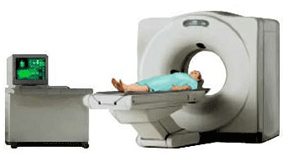 Ohio hospital slashes CT radiation dose — and cancer risk By Brian Casey, AuntMinnie.com staff writer July 16, 2014 — By changing its scanning protocols, an Ohio hospital was able to cut by more than half the number of radiation-induced cancers that would have occurred following CT exams. The finding could alter the debate over the risks of medical radiation, according to a study in the July issue of the Journal of the American College of Radiology.
In the article, a team of researchers led by Michael Rayo, PhD, of Ohio State University described their project to implement new scanning protocols to reduce radiation dose. The group relied on commercially available tools accessible to most U.S. hospitals, such as iterative reconstruction, tube current modulation, and weight-based variable kV.
While taking into account an overall reduction in CT utilization that occurred during the same time period, the researchers calculated that their efforts would lead to a 63% reduction in cancers induced by the CT scans, based on widely accepted data. If the same scenario were repeated widely around the U.S., it could offer a way out of the morass that has engulfed radiology since the radiation dose controversy erupted in 2007 (JACR, July 2014, Vol. 11:7, pp. 703-708).
Rising volume and radiation dose
CT utilization grew steadily in the U.S. from 1998 through 2008, the authors noted. But in 2007, research studies began appearing that raised the specter that thousands of cancers could be caused by medical imaging exams, in particular CT studies. One study postulated that as many as 2% of all cancers in the U.S. could be caused by exposure to CT radiation, while another estimated that some 29,000 cancers could be caused annually by CT use.
The findings have spurred members of the radiology community to find ways to reduce exposure to medical radiation, with two main avenues being pursued: The first includes efforts such as Choosing Wisely, which reduces exposure by eliminating unnecessary imaging exams, while the second involves developing protocols to reduce the radiation dose used in appropriate exams.
Rayo and colleagues decided to study the topic to determine the impact on radiation dose at Ohio State University Wexner Medical Center, a tertiary-care facility in Columbus. They felt that previous research had not addressed the potential effects of dose reduction protocols and utilization declines on cancer risk reduction.
The researchers examined data for both Medicare and non-Medicare patients treated at the hospital on an inpatient basis in the calendar years 2008 to 2012. They examined reimbursement codes for CT scans of four regions: the abdomen and pelvis, head, sinus, and lumbar spine.
To assess the effectiveness of dose reduction strategies, they calculated the average dose-length product (DLP) in 2010 and 2012 (the hospital implemented its dose reduction program in 2011). The group used a sample of patients for each anatomical region and extrapolated the averages to all the patients scanned for that area at the hospital during the study periods.
Finally, the researchers calculated cancer incidence for both the preintervention and postintervention periods based on data from the Biological Effects of Ionizing Radiation (BEIR) VII report. They divided the estimates into three anatomical regions (estimates were not made for sinus CT due to a small sample size of patients).
They found that overall CT volume grew 21% from 2008 to 2010 and fell by 30% from 2010 to 2012, for a net decline of 15% over the study period. Other changes are shown in the table below. [table in original article]………
Finally, the researchers applied BEIR VII data to calculate how many fewer cancers might develop if all patients were scanned at the lower levels. This translated into an estimated decline of induced cancers from 10.1 cases in 2010 to 3.8 cases in 2012, and a drop in resulting mortalities from 5.1 individuals to 1.9 individuals……….http://www.auntminnie.com/index.aspx?sec=ser&sub=def&pag=dis&ItemID=107954
1 This Month



19 November – Webinar – The Reality of Reprocessing
Time: 11:00 AM Pacific Time (US & Canada) / 2:00 PM Eastern / 7:00 PM UK / 8:00 PM CET
Register for the Zoom Event Here



Shut down the radiation-damaged Heysham nuclear reactors now
To see nuclear-related stories in greater depth and intensity – go to https://nuclearinformation.wordpress.com

Say No to NASA’s Reckless Nuclear Reactor on the Moon
Say No to NASA’s Reckless Nuclear Reactor on the Moon
-
Archives
- November 2026 (54)
- October 2026 (302)
- September 2026 (339)
- August 2026 (330)
- July 2026 (355)
- June 2026 (287)
- May 2026 (306)
- April 2026 (356)
- March 2026 (251)
- February 2026 (267)
- January 2026 (308)
- December 2025 (358)
-
Categories
- 1
- 1 NUCLEAR ISSUES
- business and costs
- climate change
- culture and arts
- ENERGY
- environment
- health
- history
- indigenous issues
- Legal
- marketing of nuclear
- media
- opposition to nuclear
- PERSONAL STORIES
- politics
- politics international
- Religion and ethics
- safety
- secrets,lies and civil liberties
- spinbuster
- technology
- Uranium
- wastes
- weapons and war
- Women
- 2 WORLD
- ACTION
- AFRICA
- Atrocities
- AUSTRALIA
- Christina's notes
- Christina's themes
- culture and arts
- Events
- Fuk 2022
- Fuk 2023
- Fukushima 2017
- Fukushima 2018
- fukushima 2019
- Fukushima 2020
- Fukushima 2021
- general
- global warming
- Humour (God we need it)
- Nuclear
- RARE EARTHS
- Reference
- resources – print
- Resources -audiovicual
- Weekly Newsletter
- World
- World Nuclear
- YouTube
-
RSS
Entries RSS
Comments RSS

