NFLAs ‘shout up’ for National Parks to be spared from nuclear development

Despite our objections and those of many in the antinuclear community, Energy Ministers and departmental civil servants remain intent upon introducing a new National Planning Statement, called the EN-7, which gives considerable latitude to prospective developers to site new nuclear plants more widely, subject to meeting certain criterion (called the ‘criteria-based approach’) and lifts any time limits (called ‘the removal of a deployment deadline’).
10th April 2025, https://www.nuclearpolicy.info/news/nflas-shout-up-for-national-parks-to-be-spared-from-nuclear-development/
NFLAs ‘shout up’ for National Parks to be spared from nuclear development
The Nuclear Free Local Authorities have made an emphatic plea to the government for National Parks to be definitively spared from development and for further ‘specific consideration’ to be given to the challenges attendant to siting so-called Small and Advanced Modular Reactors (SMRs and AMRs).
Despite our objections and those of many in the antinuclear community, Energy Ministers and departmental civil servants remain intent upon introducing a new National Planning Statement, called the EN-7, which gives considerable latitude to prospective developers to site new nuclear plants more widely, subject to meeting certain criterion (called the ‘criteria-based approach’) and lifts any time limits (called ‘the removal of a deployment deadline’).
Interestingly neither of these notions was popular amongst respondents in the initial consultation on the policy with only 47% supporting the first and 50% the second; which begs the NFLAs to ask the question: why change the existing policy which is based on a government led strategic assessment of sites to in effect a ‘free-for-all’?
As we did in response to the first stage consultation, so in the second the NFLAs ‘shout up…against new nuclear in any of our National Parks and on sites adjoining or threatening Sites of Outstanding Natural Beauty or Immense Heritage Value’. The Welsh NFLA affiliates are particularly passionate in seeking to defend Trawsfynydd, which lies at the heart of Eryri, the premier National Park of Wales, from new development. As we point out:
‘The principle that National Parks can be excluded from future nuclear development has already been established by Government diktat. Any part of the Lake District National Park in England has been specifically (and in our view rightly) excluded from any consideration as a prospective site of a future Geological Disposal Facility. Surely then Trawsfynydd being at the heart of the Eryri National Park should enjoy the same protection in law?
In our view, to do otherwise exposes UK Government policy as hypocritical and inconsistent, implying that the premier National Park of Wales is not worthy of the same protection as the premier National Park of England and unfortunately conveys the impression that Wales remains a rank colonial possession, rather than a nation in its own right, whose natural assets are open to exploitation by any major nuclear development of the most egregious kind’.
Only 59% of respondents in phase one backed the inclusion of ‘SMRS and AMRs alongside large-scale GW technologies’ within the policy, with the NGO community calling for a separate policy. Despite this, Ministers intend this policy to be one-size-fits-all. In this second phase consultation, the NFLAs have referenced the lack of ‘specific consideration’ of the ‘additional, and not entirely defined, challenges’ that accompany the inclusion of SMRs and AMRs.
There have been many recent reports of concerns amongst the nuclear industry and the academic community about the radioactive waste produced by smaller reactors and the security implications of a wider rollout of smaller reactors. The NFLAs have therefore requested that final version of EN-7 should require ‘SMR, AMR, Micro reactor developers to submit robust statements about their proposals to address radioactive waste management, safety, security and proliferation concerns’.
1
EDF urged to tackle ‘nuclear rats’ infestation at Somerset power plant site
Unite and GMB trade unions have warned French energy giant EDF that urgent action is needed to tackle the massive rodent outbreak at the construction site of Hinkley Point C nuclear reactor in Somerset.
Katie Timms, Joshua Whorms, Somerset Live 9th April 2025
“Nuclear rats” have reportedly overrun the construction site of a new nuclear reactor in Somerset, raising alarm among workers about their health and safety as they contend with the pervasive rodent problem.
Trade unions Unite and GMB have urgently called on French energy giant EDF to take immediate action to address the significant rodent infestation at the Hinkley Point C nuclear reactor site.
Concerns are mounting for the wellbeing of the workforce tasked with constructing Britain’s first new nuclear power station in decades due to the burgeoning rat population, reports the Daily Star.
An insider at the site disclosed to the Observer: “They’re all over. You see them just sat there, looking at you. It is worse near the canteens, where I guess it started. But they are everywhere now.
“The more men working on the site, the more rubbish on the site and the canteens are not clean either. It has just become worse over time,” the source elaborated.
Other employees have described the situation as “quite grim”. Amidst the project exceeding its budget by a billion pounds, workers have voiced concerns that financial constraints imposed by EDF are compromising their working conditions and impacting their wages.
These persistent issues led to industrial action last November, with hundreds of electricians, pipe fitters, and welders ceasing work due to security worries…………………….
The Star previously reported on the alarming sight of “cat-sized rats” which ignited concerns about a potential outbreak of a rare bacterial disease in the UK’s second largest city.
Residents have reported sightings of enormous “rats the size of cats” prowling their streets, as industrial action by waste collectors has resulted in rubbish accumulating in the streets of Birmingham. There is growing concern among experts about these oversized rodents potentially leading to locals contracting Leptospirosis…………………………………
https://www.somersetlive.co.uk/news/somerset-news/edf-urged-tackle-nuclear-rats-10094730
‘They’re everywhere’: workers warn of rat infestation at Somerset nuclear plant
Unions urge energy giant EDF to take action as concerns mount over health of construction staff.
Guardian, Jillian Ambrose, Sun 6 Apr 2025
Workers building the troubled Hinkley Point C nuclear reactor in Somerset have raised concerns that the construction site is overrun by rats.
The Unite and GMB trade unions are understood to have warned the developer, the French energy giant EDF, that urgent action is needed because the rodents are “everywhere”.
The growing vermin population has prompted fears over the health of the workforce building Britain’s first new nuclear power plant in a generation, which is running years late and billions of pounds over budget. A source on the site told the Observer: “They’re all over. You see them just sat there, looking at you. It is worse near the canteens, where I guess it started. But they are everywhere now.”
A second source confirmed that the trade unions had broached the issue with EDF, describing the number of rats on the site as “quite grim”.
“The more men working on the site, the more rubbish on the site – and the canteens are not clean either. It has just become worse over time,” the source added………………………………………………………….https://www.theguardian.com/world/2025/apr/06/theyre-everywhere-workers-warn-of-rat-infestation-at-somerset-nuclear-plant
Nuclear Severnside…is this our future?
STAND (accessed) 23rd March 2025,
https://www.youtube.com/watch?v=wz9CaHbM-9o
The Severn Estuary, in Gloucestershire, is set to be a major hub for the
Government’s plans to expand nuclear power in the UK. This video, by STAND
(Severnside Together Against Nuclear Development)
https://www.nuclearsevernside.co.uk, explains the Government’s proposed
expansion of nuclear power by building the completely unproven technology
of SMRs (Small Modular Reactors. It also explains why they will be
disastrous for the economy, increase the cost for electricity bill payers,
rob renewable sources of power generation such as wind, solar and tidal of
essential resources, fail to secure energy security and come far too late
to help mitigate climate change or meet the country’s carbon emission
targets.
Radioactive Mussels May Pose Threat to Food Chain in Pennsylvania

By Tom Howarth, Science Reporter (Nature) Jan 07, 2025, https://www.newsweek.com/radioactive-mussels-food-chain-bioaccumulation-pennsylvania-2011149?fbclid=IwY2xjawJG4pxleHRuA2FlbQIxMQABHXBgrVgNhUUy1s_U9SLYXUIeD-gugNuUk75xBSTL9AG1vQ6REzIVWJiVGw_aem_0EvCj7mKrreGjCLuSViY1Q
Radioactive contamination in freshwater mussels is potentially affecting the food chain in Pennsylvania, including iconic animals such as bald eagles and possibly even humans.
A study published last year by scientists from Penn State University found elevated levels of radium in mussels downstream from a waste treatment facility in Franklin, Pennsylvania. Now, experts are raising the alarm over the secondary impacts on the ecosystem.
While the facility no longer discharges oil and gas wastewater into the Allegheny River, its legacy of pollution persists, with radioactive material bioaccumulating in the ecosystem.
Why This Matters
The findings highlighted that radioactive materials could be climbing the food chain, affecting not just aquatic life but also land animals, birds and people. Bald eagles, a species reintroduced to Pennsylvania in 1983, are among those at risk. Their diet includes muskrats, a primary predator of freshwater mussels, which are now confirmed to carry radium.
Although freshwater mussels are not consumed by humans, other species higher in the food chain may serve as a bridge for contaminants to eventually affect people. Local fishing activity in the Allegheny River also raises questions about indirect exposure to radioactive material.
Exposure to high levels of radium can result in adverse health conditions like anemia, cataracts, fractured teeth, cancer (especially bone cancer) and death, the U.S. Centers for Disease Control and Prevention says.
What To Know
Freshwater mussels act as ecological barometers because of their fixed locations and long life spans.
In this study, researchers found that mussels downstream of the waste treatment facility had absorbed radioactive particles into their soft tissue and hard shells. Mussels closest to the discharge site perished from salinity, while those farther away adapted but at a cost—they absorbed contaminants instead.
The study also compared the mussels’ radioactivity to Brazil nuts, which naturally absorb radiation from the soil. While a typical 28-gram serving of Brazil nuts contains 0.47 to 0.80 microsieverts, the maximum radioactivity found in a single mussel was 63.42 μSv.
While the International Atomic Energy Agency recommends an annual exposure limit of 1,000 μSv—far exceeding the amount found in even the most radioactive mussel—the findings are concerning because of the potential for radiation to accumulate within food chains over time.
What People Are Saying
Evan Clark, the waterkeeper at Three Rivers Waterkeeper, told Newsweek: “One concern that I immediately thought of after reading [the study] was bioaccumulation. Mussels live pretty close to the bottom of the food chain, eating a lot of algae and bacteria—they are unselective filter feeders.
“Muskrats are one of the larger consumers of freshwater mussels, eating hundreds and hundreds in a lifetime. Those muskrats are going to be eaten by bald eagles, and those bald eagles are only recently making a strong comeback into western Pennsylvania.”
Katharina Pankratz, a co-author of the study, said in a statement: “Depending on the contaminant and its chemistry, if it is small enough to pass through the gills of the mussel, it has the potential to accumulate in their tissue or precipitate within the hard-shell structure. This information may help shape future regulations for wastewater disposal to surface water, especially in regions where mussels are harvested for food.”
Nathaniel Warner, the study’s corresponding author, said in the statement: “Mussels that were closest to the water discharges died off. Further downstream, the mussels found a way to tolerate the salinity and radioactive materials and instead absorbed them into their shells and tissues.”
What Happens Next
The study’s findings could inform future policies on wastewater management, its authors said. While the waste treatment facility in Franklin is no longer discharging waste into the waterways, its impacts still linger and could do so for some time.
Key questions, such as how much radioactive material is accumulating up the food chain, remain.
Niobium – A Radioactive Sword of Damocles Hangs over Brazil’s Northern Amazon.
what most of the recent published articles on Niobium mining and production did not tell is, that it comes together with radioactive contamination.
by Norbert Suchanek March 14, 2025, http://www.brazzil.com/niobium-a-radioactive-sword-of-damocles-hangs-over-brazils-northern-amazon/?fbclid=IwY2xjawJG251leHRuA2FlbQIxMQABHfGUg_gxwqT-GH-2rf2gS6UFbCIEJor7nUjyHk5r3QeWWDN68BkPISQ75Q_aem_IuD1Bi2C47ICmfmj-uK0BQ
Balaio at the upper Rio Negro in the Northwest of the State of Amazonas is one of the most preserved indigenous reservation in Brazil. More then 257,000 hectares of rainforest, rivers and mountains. Located in the municipality of São Gabriel da Cachoeira it is the traditional territory of the Tukano and eight other indigenous peoples, the Baniwa, Baré, Desana, Koripako, Kubeo, Pira-tapuya, Tariana and Tuyuka. And it is the birthplace of 71-year-old Alvaro Doéthiro Sampaio Tukano.
Since his father Ahkïto died in 2020, at the age of 110, Alvaro Doéthiro Sampaio Tukano has been the chief of the Tukanos in Balaio. Alvaro is one of the most respected indigenous leaders and shamans in Brazil. He was one of the founders of the Union of Indigenous Nations (UNI) and together with other known leaders and activists like Mario Juruna, Marcos Terena, Aílton Krenak, Paulinho Paiakan and Davi Kopenawa Yanomami at the forefront of the indigenous movement in the 1980s and 1990s fighting for the demarcation and preservation of their traditional territories.
As chief of the Tukano, Alvaro is committed to preserving their traditions and expanding the supply of traditional medicine and food. The challenge is to preserve the forest and achieve food and health sovereignty by harnessing the indigenous knowledge his people have acquired over millennia.
However a sword of Damocles hangs over Balaio. It’s called Niobium (Nb).
One of the world’s largest deposits of the strategic mineral Niobium is located in the Tukano territory. The Niobium reserves in the São Gabriel da Cachoeira region could be enough to meet the world’s demand for Niobium for 400 years, prospectors say.
Niobium is a heavy metal used essentially in alloys in several industrial applications, such as aeronautics, aerospace, fabrication of pipelines and oil rigs and in nuclear fuel rods of nuclear power plants. It is particularly important for the arms industry. In addition Niobium plays today a vital role in the global energy transition from non-renewable to so called “green” energy solutions. Used in advanced Lithium-ion batteries, it enables the development of materials with fast charging capabilities.
A recent paper on Brazil published at the Munich Security Conference 2025 states: “The second issue is the energy transition and the global fight against climate change. Brazil’s critical mineral reserves make it indispensable for the development of clean technologies. It holds 94 percent of the world’s niobium, 22 percent of its graphite, 16 percent of its nickel, and 17 percent of its rare earth elements – all vital components in green technologies.”
However, already in 2020 scientists from the University of São Paulo (USP) pleaded “Keep the Amazon Niobium in the Ground” because of the possible cumulative effects of forest loss resulting from potential development of unexploited rare earths and Niobium (Nb) reserves in the region.
They wrote in the study: “Whilst developing these mineral deposits goes against the economic rationale of matching supply and demand of commodities in international markets, it is conceivable that political will could build a narrative ‘demonstrating’ that opening up the region for mining is in the national interest, thus paving the way for subsidies and public investments in infrastructure that could have devastating consequences for biodiversity and indigenous peoples.”
To date, any mining in demarcated indigenous territories is prohibited by the Brazilian Constitution. However, there is now a strong political lobby in Brasilia that wants to change this. Furthermore there are growing international interests in Brazil’s strategic minerals.
In November of last year, Brazil and China signed an agreement for sustainable mining — whatever the word “sustainable” may mean in this context. The extraction and development of niobium, lithium, and nickel are among the priorities of the agreement. And, of course, the US government also has a keen interest in that heavy metal. In May 2024, the US ambassador to the country, Elizabeth Bagley, said to the media that the US wants partnership with Brazil for Critical Minerals such as Niobium.
But what most of the recent published articles on Niobium mining and production did not tell is, that it comes together with radioactive contamination.
All Niobium mining and processing is associated with the generation of large amounts of radioactive waste. Niobium ore is classified worldwide as a naturally occurring radioactive material (NORM) and it occurs in the Earth’s crust along with radioactive elements such as uranium, radium, thorium, potassium-40, and lead-210. Each ton of niobium produced leaves behind a legacy of around 100 to 400 tons of radioactive and toxic waste, according to current statistics from the Brazilian Atomic Energy Commission (CNEN).
Last February, Federal Minister Gilmar Mendes of the Supreme Federal Court (STF) presented a bill that would undermine the Brazilian Constitution and allow mining even in demarcated indigenous territories. If the bill gains a majority in Brasilia, the indigenous peoples of the upper Rio Negro region may have to decide whether to consent to niobium mining in exchange for compensation or to defend consequently their territories.
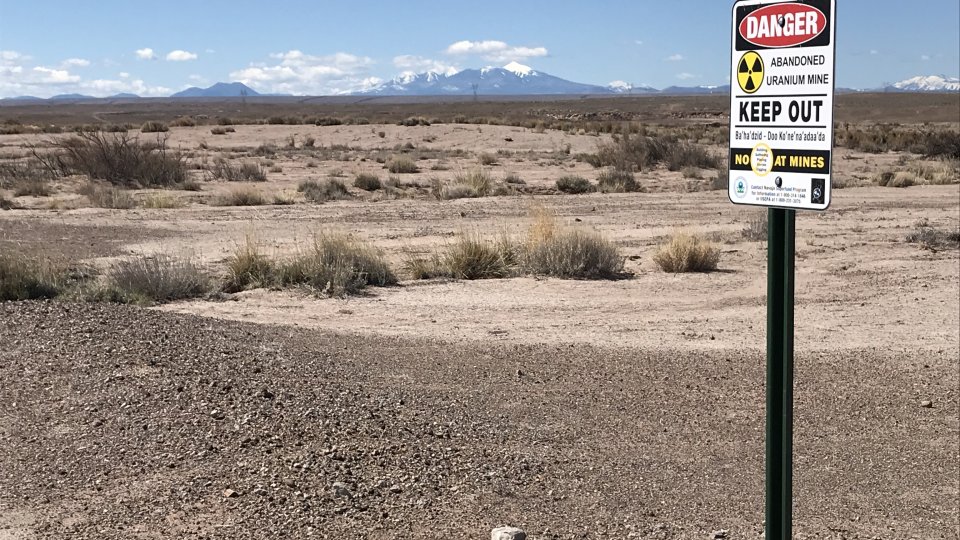
The Navajo Nation, with over 500 abandoned uranium mines and unsecured radioactive tailings, could show Alvaro Tukano and his people what it means to live in a radioactive contaminated territory.
Norbert Suchanek is a German correspondent in Rio de Janeiro and an experienced environmental journalist. At the beginning of March of this year, he received the Nuclear-Free Future Award in the Education category in New York City.
Contact: norbert.suchanek@online.de
Red light for the greenway

A wildlife corridor plans to connect two Superfund sites at the former Rocky Flats plutonium plant and the Rocky Mountain Arsenal that once produced chemical weapons. Locals fear residual contamination could spread.
John Abbotts, March 14, 2025, https://thebulletin.org/2025/03/red-light-for-the-greenway-locals-oppose-wildlife-corridor-at-plutonium-contaminated-rocky-flats-site/?utm_source=ActiveCampaign&utm_medium=email&utm_content=Plutonium-contaminated%20wildlife%20corridor%3F%20Colorado%20locals%20say%20no&utm_campaign=20250317%20Monday%20Newsletter
n September, the city council of Westminster, Colorado voted not to fund a pedestrian bridge and underpass at the Rocky Flats site due to concerns about residual soil contamination from plutonium and other hazardous materials. In the process, the city council withdrew about $200,000 in financial support for the development of the project, known as the Rocky Mountain Greenway.
The US Fish and Wildlife Service proposed the greenway to connect wildlife refuges at the Rocky Mountain Arsenal through hiking trails via the Two Ponds refuge to Rocky Flats, with plans to eventually connect to the Rocky Mountain National Park. But the plan is controversial: Both Rocky Flats and the Arsenal are still on the US Environmental Protection Agency’s National Priorities List, identified since 1987 as “Superfund” cleanup sites that contain residual contamination.
The US Army established the Arsenal to produce chemical weapons to support World War II efforts, and in the 1990s, the federal government leased part of the Arsenal to Shell Chemical Co. to manufacture fertilizer and pesticides. In 1952, the Atomic Energy Commission began operations at Rocky Flats as a federal atomic weapons facility, producing plutonium triggers for hydrogen bombs. (A hydrogen bomb or H-bomb uses fission in the primary—uranium or plutonium—to trigger the secondary into a fusion reaction that combines two atomic nuclei to form a single heavier nucleus, releasing a much larger amount of energy.) Operations started largely in secret at Rocky Flats, located in a sparsely populated area 16 miles upwind and upslope of the city of Denver. But in the late 1970s, the public became more informed about plant operations, and the movement opposing atomic weapons began to focus on the facility, organizing protests and civil disobedience actions.
By the late 1980s, when the federal cleanup program at both sites had been initiated, work had already begun on the new Denver International Airport on Rocky Mountain Arsenal lands, and the Denver suburbs had steadily spread west toward Rocky Flats. Accordingly, there was consensus at each site that expedited cleanup would most effectively protect the metropolitan area, and cleanup standards were looser than “unrestricted use” to develop national wildlife refuges at each site. The consequences were residual contamination, especially at Rocky Flats, where there was no limit on how much plutonium remained below six feet of soil in an industrial area fenced off from the public and with the surrounding land converted to a wildlife refuge. This “cleanup on the cheap” at Rocky Flats, plus a record of cover-ups of accidents at the site, created continuing distrust and controversy over post-remediation uses near Rocky Flats. Cities and citizens opposed different proposals for re-use, even over the issue of public access to the refuge. Now there are concerns that the proposed greenway—a trail between the two tracts—may facilitate cross-contamination, taking radioactive material from the Rocky Flats site to the chemically hazardous Arsenal property, and vice versa.
Contamination—then a raid
Each of the two Rocky Mountain sites has a controversial history. At Rocky Mountain Arsenal, chemical contaminants have been identified as organochlorine pesticides, akin to DDT and its chemical cousins, of which Rachel Carson warned in her classic 1962 book Silent Spring. Other contaminants at the site include heavy metals, organophosphate, and carbamate pesticides—with each of these pesticide classes known to be neurotoxic—along with a potpourri of other chemical contaminants in groundwater.
As for Rocky Flats, a 1972 paper from radiochemist Edward Martell and one of his colleagues at the National Center for Atmospheric Research in Boulder, Colorado reported that just east of the site boundary levels of radioactive plutonium 239 and americium 241 ranged “up to hundreds of times that from nuclear tests.” In 1969, a highly visible fire at the site’s plutonium processing facility sparked off-site monitoring; at the time, the fire was assumed to be the source of the detected contamination. Later, the Atomic Energy Commission was forced to admit that a 1957 fire in a separate plutonium recovery building or leaks from drums containing plutonium-contaminated waste were more likely the source of off-site soil contamination.
When the Rocky Flats facility was still operating, it accepted contaminated metal from another Atomic Energy Commission facility. In the process of treating and burying the waste, Rocky Flats released tritium into a nearby stream, contaminating the drinking water source for the city and county of Broomfield, five miles west of the facility. The contamination occurred for more than a decade leading up to 1970; the tritium remained undetected until 1973.
In 1986, amendments to Superfund legislation expanded the authority of the Environmental Protection Agency (EPA) to oversee the cleanup of contaminated federal facilities. The following year, the agency designated Rocky Mountain Arsenal as a Superfund site.
Then, in June 1989, the FBI and EPA raided the Rocky Flats plant in response to allegations of multiple environmental crimes at the site. After an investigation, plutonium production ended, the EPA designated Rocky Flats a Superfund site in the same year. In 1992, Rockwell International, the contractor in charge of managing the site, pleaded guilty to environmental crimes and paid a fine of $18.5 million.
Contested cleanup plans
The regulatory agencies responsible for environmental cleanup—the EPA’s Region 8 office, based in Denver, and the Colorado Department of Public Health and Environment—have certified cleanup as partially complete at each site. The “responsible parties” are now the US Army for the Arsenal and the US Department of Energy for Rocky Flats.
At the Rocky Mountain Arsenal, cleanup extended to 10 feet below the surface, considered a sufficient depth to prevent burrowing animals from spreading the widespread chemical contamination there. In 2010, the regulatory agencies determined parts of the Arsenal sufficiently remediated to serve as a National Wildlife Refuge and transferred the management of the designated property to the US Fish and Wildlife Service. That service transferred a small herd of bison from a national range in Montana, and bison continue to inhabit the refuge.
The Army retains responsibility for a central area, along with smaller contaminated locations covered for monitoring and groundwater remediation. In 2019, the Colorado Department of Public Health sued Shell and the Army in the US District Court for hazardous chemicals from the Arsenal leaking into groundwater. The suit alleged that unsafe levels of organochlorine pesticides, heavy metals, chlorinated and aromatic solvents, and chemical agent degradation products and manufacturing byproducts had been found in groundwater. Litigation on that case is still ongoing.
At Rocky Flats, the controversy over the site’s past activities extended into its cleanup, with some opponents characterizing the proposed plans as “bait-and-switch.” Early in the cleanup process, the Energy Department funded an advisory committee that, in turn, established a “future site uses” working group. One of the working group’s recommendations was for residual plutonium contamination to be cleaned down to background level, to protect future area residents, no matter how long it would take. However, state officials assessed that a speedy cleanup that converted some areas into a National Wildlife Refuge was the desirable approach to protect outer metropolitan areas expanding toward the site boundaries.
The Energy Department and the site’s federal and state regulators agreed to limit the total costs of remediation and established a residual plutonium contamination limit in the top three feet of soil and a higher limit between three and six feet. (There was no contamination limit below six feet.) These limits were sufficient to qualify outer areas of Rocky Flats as a National Wildlife Refuge, and those areas were released to the Fish and Wildlife Service in 2006. Since then, the controversy has remained because the residual contamination is too high for unlimited uses of Rocky Flats.
Opposing the greenway
The city of Westminster is now the third municipal government to express concern over residual contamination at Rocky Flats. In 2016, the town of Superior, north of the site, voted to withdraw from the Rocky Mountain Greenway, a Federal Lands Access Program grant and project. The city and county of Broomfield followed suit in October 2020, unanimously approving a resolution for the withdrawal from the greenway. The Broomfield city council hired an environmental consultant to conduct soil sampling along the proposed Greenway, and the resolution expressed concern over the high levels of plutonium detected in the soil. After the resolution, the city stated that it would not contribute the $105,000 that was supposed to go to the Greenway project and would not allow Greenway-related construction work on Broomfield property.
The city of Broomfield also opposed another post-cleanup proposal—the Jefferson Parkway Highway Authority—described on its web page as a “privately-funded, publicly-owned regional toll road.” The proposed road would pass just outside the wildlife refuge, which was the eastern boundary of the former plutonium facility. The parkway authority had no plans to sample soil nearby until both Broomfield and a citizens advisory board recommended doing so before construction began. The authority then started sampling and, in September 2019, reported a sample containing 264 picocuries of plutonium per gram. (A picocurie is one trillionth of a curie, a measure of radioactivity.) This was much higher than the maximum limit of 50 picocuries per gram for surface contamination within the former industrial zone. Although this was the only sample above the limit, given the authority’s earlier resistance to sampling, the community lost faith in the project’s safety.
The Broomfield city council voted unanimously in February 2020 to withdraw from the Jefferson Parkway Association, removing a $70,000 annual payment in the process. In 2022, the county of Jefferson and city of Arvada sued Broomfield in response, claiming the parkway could not continue without that county’s continued participation. But a Colorado District Court judge dismissed that suit in December 2023, urging the parties to negotiate over Broomfield’s participation. The city and county of Broomfield expressed satisfaction with that decision, and the parkway’s future was described as “uncertain.”
In an escalatory move, in January 2024, the Colorado state chapter of the Physicians for Social Responsibility and five other groups filed a federal lawsuit in Washington D.C., seeking to prevent the greenway from coming through Rocky Flats. The plaintiffs sought to enjoin the US Federal Highway Administration, US Fish and Wildlife Service, and their respective cabinet departments (Transportation and Interior), from constructing an eight-mile trail through the most heavily plutonium-contaminated area of the wildlife refuge. (The filing assumed that the greenway would proceed from Westminster, but that city’s most recent decision to withdraw funds seems to require a different route.) According to the complaint, the city of Boulder has suggested since at least 2016 that the greenway path avoid Rocky Flats entirely.
The presiding judge, Timothy J. Kelley, denied the plaintiffs’ motion for a preliminary injunction in September 2024. The case now awaits trial.
So far, concerns over Rocky Flats and its wildlife refuge have already limited public access to the refuge. Since April 2018, the Denver School District, the largest in the area, has forbidden its nearly 100,000 students from visiting Rocky Flats on field trips. Other school districts, including Boulder’s, had previously issued similar orders to protect their students.
It is still uncertain how the Trump administration will regard public participation, public protest, and the rule of law at Rocky Flats and other Superfund sites. The new Energy Secretary, Chris Wright, is the former chief executive of a fracking company based in Denver, a known climate change denier, and was on the boards of EMX Royalty, a Canadian company that seeks royalties from extractive mineral mining, and Oklo, Inc., which designs small modular nuclear reactors. Wright is now responsible for overseeing atomic weapons production, cleanup of former weapons facilities, and US energy policy in general. How Wright will interact with Colorado peace activists and environmental protection groups concerned about the defunct plutonium-contaminated weapons facility at Rocky Flats is unclear. But the fight over the future of this legacy site appears far from over.
Uranium fever collides with industry’s dark past in Navajo country
Mining.com, Bloomberg News | January 14, 2025
A few miles south of the Grand Canyon, thousands of tons of uranium ore, reddish-gray, blue and radioactive, are piled up high in a clearing in the forest.
They’ve been there for months, stranded by a standoff between the mining company that dug them deep out of the ground, Energy Fuels Inc., and the leader of the Navajo Nation, Buu Nygren.
Back in the summer, Energy Fuels had triggered an uproar when it loaded some of the ore onto a truck, slapped a “radioactive” sign over the taillights and drove it through the heart of Navajo territory.
Radioactive is an alarming word anywhere, but here in Navajo country, surrounded by hundreds of abandoned uranium mines that powered America’s nuclear arms race with the USSR and spewed toxic waste into the land, it causes terror. Those fears have only grown the past couple years as nuclear power came back in vogue and sparked a uranium rush in mining camps all across the Southwest.
So when the news made it to Nygren that morning, he was furious. No one had sought his consent for the shipment. He quickly ordered dozens of police officers to throw on their sirens, fan out and intercept the truck.
The dragnet turned up nothing in the end — the truck snuck through — but the hard-line response delivered a warning, amplified over social media and ratified days later by the governor of Arizona, to the miners: Stay out of Navajo country.
Cut off from the lone processing mill in the US — all the main routes cut through Navajo territory — executives at Energy Fuels stockpiled it by the entrance of the mine. When the heaps of crushed rock grew too sprawling, they pulled the miners out of the tunnels and turned the drilling machines off…………………………………………………………………………………………………………………………………………………………………
Animosity towards mining companies runs high on Navajo land. It’s visible everywhere. On huge roadside billboards and small office signs, in fading pinks and yellows and jet blacks, too. They read “Radioactive Pollution Kills” and “Haul No” and, along the main entrance to Cameron, a hard-scrabble village on the territory’s western edge, “No Uranium Mining.”
A few miles down the road, big mounds of sand streaked gray and blue rise, one after the other, high above the vast desert landscape. They are the tailings from some of the uranium mines that were abandoned in the territory last century.
To Ray Yellowfeather, a 50-year-old construction worker, the tailings were always the “blue hills,” just one big playground for him and his childhood friends.
“We would climb up the blue hills and slide back down,” Yellowfeather says. “Nobody told us they were dangerous.”
Years later, they would be cordoned off by the Environmental Protection Agency as it began work to clean up the mines. By then, though, the damage was done. Like many around here, Yellowfeather says he’s lost several family members to stomach cancer. The last of them was his mother in 2022.
Yellowfeather admits he doesn’t know exactly what caused their cancer but, he says, “I have to think it has to do with the piles of radioactive waste all around us.” It’s in the construction material in many of the homes and buildings and in the aquifers, too. To this day, drinking water is shipped into some of the hardest-hit areas.
The US government has recognized the harm its nuclear arms projects have done to communities in the Southwest. In 1990, Congress passed a law to compensate victims who contracted cancer and other diseases. It paid out some $2.5 billion over the ensuing three decades. The EPA, meanwhile, has been in charge of the clean-up of the abandoned mines. Two decades after the program began, though, only a small percentage have been worked on at all.
This is giving mining companies an opportunity to curry favor in tribal communities by offering to take over and expedite the clean-up of some mines.
…………………………………………………………………………..the EPA released a detailed study on Pinyon Plain. In it, the agency found that operations at the mine could contaminate the water supply of the Havasupai, a tribe tucked in such a remote corner of the Grand Canyon that it receives mail by mule. The report emboldened Havasupai leaders to step up their opposition to the mine, adding to Chalmers’s growing list of problems.
For the Navajo, the risks that come from the hauling of uranium through its territory are far smaller — so negligible as to be almost non-existent, according to Chalmers. Nygren is unmoved. The Navajo have heard such reassurances many times before, he says, only to pay dearly in the end.
Nygren grew up near a cluster of old mines right along the territory’s Arizona-Utah border, which makes the whole Energy Fuels affair “incredibly personal,” he says. His voice grows louder now and his tone more emphatic, indignant. To him, the Energy Fuels incursion feels no different than all the abuses committed over the course of decades by the US government and the mining companies that supplied it with a steady stream of uranium.
“We played a big role in the national security of the United States and we played a big part in the Cold War, providing energy for nuclear weapons. We’ve done our part. And now it’s time for the US to do its part by cleaning up these mines and respecting our laws.” https://www.mining.com/web/uranium-fever-collides-with-industrys-dark-past-in-navajo-country/
Some Small Nuclear Reactors could bypass environmental review step under Arizona bill
SMRs in rural Arizona would be exempt from review if the units are colocated with certain large industrial loads or built at power plants that previously received environmental certification.
March 14, 2025, By Brian Martucci, https://www.utilitydive.com/news/arizona-smr-nuclear-environmental-review-bill-aps-srp/742564/
Dive Brief:
- Arizona utilities would be allowed to bypass a key state environmental review process to deploy small modular nuclear reactors on or near certain power plants and large rural industrial sites, including data centers, under a bill that cleared the state House of Representatives on Feb. 26.
- In most Arizona counties, the bill would supersede any local zoning restrictions on the construction and operation of colocated SMRs, provided the host facility received all required zoning entitlements, according to a March 7 fact sheet developed by Arizona Senate staff.
- Arizona House Majority Leader Michael Carbone, R, introduced the bill on Feb. 10, days after the state’s three largest utilities announced a joint effort to assess “a wide range of possible locations” for the siting and deployment of nuclear reactors.
Dive Insight:
The collaboration among Arizona Public Service, Salt River Project and Tucson Electric Power would consider options for both small modular reactors and “potential large reactor projects,” the utilities said Feb. 5.
The utilities have applied for a grant through the U.S. Department of Energy’s Generation III+ Small Modular Reactor Program, they said. The Gen III+ SMR program will provide up to $800 million to “two first-mover teams of utility, reactor vendor, constructor, and end-users or power off-takers” committed to an initial SMR deployment and developing a multi-reactor order book, according to DOE.
The utilities called the application a first step in a broader effort to “explore the possibility” of adding nuclear capacity in Arizona, possibly at retiring coal-fired power plant sites. The trio could select a preferred nuclear site later this decade “at the earliest, potentially enabling additional nuclear to be in operation in the early 2040s,” they said.
“We know the development timeline would be long, so it makes sense for our state’s energy providers to begin this preliminary evaluation as soon as possible,” Tucson Electric Power President Susan Gray said in February.
Carbone’s bill allows a utility to construct an SMR in Arizona after providing 30 days’ notice to the Arizona Corporation Commission, the state utility regulator, provided the SMR complies with applicable state, federal and local laws and is colocated with a large industrial user.
The utility would not have to apply to the ACC for a certificate of environmental compatibility, as is typically required for new generation and transmission projects, according to the Arizona Senate fact sheet.
The bill also allows utilities to bypass the certificate of environmental compatibility process to construct a new or replacement SMR if the SMR is located “on or immediately adjacent to” a power plant that previously received a certificate of environmental compatibility or was in operation before Aug. 13, 1971. This allowance covers SMRs built to replace existing thermal generation units.
The bill requires the ACC to define colocation, large industrial user and eligible SMR types and sizes, provided the maximum nameplate capacity is at least 100 MW, according to the fact sheet.
The bill limits preemption of local land use ordinances related to SMR construction to counties with fewer than 500,000 people, according to the fact sheet. That comfortably excludes Arizona’s two largest counties, Maricopa and Pima, which are together home to about 75% of the state’s population. Fast-growing Pinal County crossed the 500,000-person threshold in 2024, according to the U.S. Census Bureau.
Poisoning the well – The toxic legacy of Cold War uranium mining in western New Mexico
Studies have shown that chronic exposure to uranium through drinking water can cause kidney damage and cardiovascular disease. When inhaled, uranium can lead to lung cancer and pulmonary fibrosis, a scarring of the lung tissue. Studies of uranium miners associate cumulative exposure to radon with higher rates of death by lung cancer.
Proving that one’s illness originated as a result of living near a mine or mill, as opposed to actually working in it, is nearly impossible, given that symptoms can take years to manifest — a lack of clear causation that is ultimately advantageous to polluters.
Near the western New Mexico town of Grants, the toxic legacy of Cold War uranium mining and milling has shattered lives, destroyed homes and created a contamination threat to the last clean source of groundwater for an entire region
SEARCHLIGHT NEW MEXICO, by Alicia Inez Guzmán, March 13, 2025 [ excellent pictures and maps]
Driving along a stretch of New Mexico Highway 605, just north of the tiny Village of Milan, it’s easy to imagine that this area has always been no-man’s-land. Little appears in the distance except for a smattering of homes and trees peppered by expanses of bone-dry scrub brush. But a hard second look reveals something else — vestiges of a mass departure. Sidewalks lead to nowhere, a dog house sits in the middle of a field next to a mound of cinder blocks, phone lines crisscross empty stretches of land and deserted propane tanks and mailboxes sit perched in front of nothing. Around the bend on one unpaved side road, a neighborhood watch sign stands sentinel where a neighborhood no longer exists…………………………………………………………………………………………………………………
This home site was once part of a cluster of five rural subdivisions interspersed with rich farm and ranchland. The Homestake Mining Company — famously known for gold mining in the Black Hills of South Dakota — took up residence here in 1958, to mill uranium. From that year until 1990, millions of tons of ore were prised from nearby mines and processed at Homestake, where the ore was ground into fine particles and leached with a solution that coaxed out pure uranium oxide, often called “yellowcake.” That uranium was then shipped off to help make America’s Cold War fleet of nuclear weapons or to power nuclear reactors. The leftover slurry was piped into two unlined earthen pits, the largest the size of 50 football fields and filled with over 21 million tons of uranium mill tailings.
Over time, the uranium tailings decayed into radon gas; meanwhile, radioactive contaminants seeped into four of the region’s aquifers. Residents compiled a list of neighbors who died of cancer — they called it the Death Map. In 2014, the U.S. Environmental Protection Agency (EPA) predicted that the probability of developing cancer was notably higher for residents who lived closest to the mill, especially if they drank the water.
In the intervening decades, Homestake attempted to hold its remaining contamination at bay rather than offer a long-term solution. That changed in 2020, when the company declared that a full cleanup of the groundwater was not feasible and instead embarked on a mass buyout and demolition of homes inside the rural subdivisions and beyond, Boomer and Billiman’s included. Homestake’s goal, ultimately, is to hand over 6,100 acres of land — almost twice the size of nearby Milan — to the U.S. Department of Energy (DOE) as part of a special federal program that takes over shuttered nuclear outfits when industry walks away. The deadline is 2035. And if this site is anything like the majority of the DOE’s other sites, the land will be rendered inaccessible to the public, with the company’s guarantee that toxins will stay inside the massive contamination zone boundary for a thousand years.
“Talk about the myth of containment,” says Christine Lowery, a commissioner in Cibola County. “The myth of reclamation as well,” she adds. For Lowery, a member of the Pueblo of Laguna who lives in Paguate, one of its six villages — itself blighted by the Jackpile-Paguate Uranium Mine, one of the world’s largest open pit uranium mines — the subtext is clear. “What they should be saying is, ‘We’ve contaminated everything we can, and there’s no way we can fix it.’”
In fact, the conditions necessary for contaminants to infiltrate a fifth aquifer in a single generation — not a thousand years — could already be in the making. The aquifer in question is the San Andres-Glorieta, so ancient that its limestone was forged from the same material as seashells before the era of the dinosaurs. It’s also the last clean source of groundwater for Milan, the county seat of Grants, many private well owners and the Pueblo of Laguna, as well as the Pueblo of Acoma, one of the longest continually inhabited communities in the United States.
According to regulators, the San Andres-Glorieta still meets standards for groundwater that is safe to use and drink. According to Homestake’s own reports, however, at least three uranium plumes are converging toward what Ann Maest, an aqueous geochemist with Buka Environmental, a Colorado-based firm, calls “a bull’s-eye of radioactive contamination.” The potential target? A geological formation called a subcrop. Here, approximately 100 feet below the surface of the earth and three miles southwest of the Homestake site, this subcrop directly connects the San Andres-Glorieta with an overlying aquifer long known to transport contamination from two uranium mills including Homestake. In 2022, the company commissioned an independent firm to study the geological feature. But according to a memo sent to state and federal regulators and written by Maest the following year, the findings were “light on interpretation” and evaded answering the most important question of all: Have those contaminants reached the San Andres-Glorieta?………………………
Gauging the extent of groundwater plumes is notoriously difficult. Topography and geology shape how groundwater moves, and sampling can underestimate the full range of a plume, leaving gaps in the data, whether that’s inadvertent or intentional. A 2022 ProPublica investigation found that regulators had been lax in their oversight of the Homestake mill, its toxic footprint and the uranium industry as a whole. Over time, a dizzying array of state and federal agencies have each overseen a different aspect of the site’s reclamation; in the past, those agencies haven’t even agreed on what that reclamation should look like.
Now, as uranium mining undergoes a national revival under initiatives that favor carbon-free nuclear energy, waste from the previous Cold War era of mining and milling endures. Homestake’s remediation — which has gone on for 49 years — exemplifies this legacy. During that time, company reports say, its collection wells have pumped out billions of gallons of contaminated water. Nearly one million pounds of uranium have been removed from the groundwater, too. Bingham says this represents 85 percent of the total uranium that was released into the environment. That’s in addition to the removal of tens of thousands of pounds of selenium and over a million pounds of molybdenum.
The company has attempted to keep pollutants that have seeped into groundwater from migrating farther away from the source. But this so-called hydraulic barrier has only addressed the symptoms of the contamination, not the cause: the tailings piles, which the company declined to relocate into a lined repository nearby. That means that some groundwater contamination continues to spread beyond Homestake’s site. The hydraulic barrier has another drawback — it has used “a massive amount of freshwater from the San Andres-Glorieta aquifer to operate,” says Laura Watchempino, a member of the Multicultural Alliance for a Safe Environment (MASE), a grassroots network of uranium-impacted communities working collectively to address the legacy of mining and milling on the health and environment of future generations. Watchempino is a former lawyer who also worked as a water quality specialist for the Pueblo of Acoma………………………………………………………………………………..
………………………………………………………………….Carver estimates that he is one of around 30 holdouts left in the five subdivisions; four of the families live in his own, Murray Acres. But few others have spent so much time fighting to hold the company accountable. “I’m 85 and it all started when I was 40,” he says.
In 1983, he was one of the plaintiffs in a lawsuit filed against the company, which argued, among other claims, that contamination of the well water had “completely destroyed the market value of the plaintiffs’ properties.” As part of the settlement, the company made small cash payments to residents and hooked them up to the municipal water system, which drew from the last clean source of water in the region, the San Andres-Glorieta. That year, the mill was designated a Superfund site, and in 1987 the company entered into a consent order with the EPA to analyze radon levels in residents’ homes, the product of uranium decaying from the tailings piles.
The mill closed in 1990, less than a decade after the uranium industry went bust. Records from the county assessor’s office show that Homestake quietly began buying a handful of homes in adjacent neighborhoods as early as 1996. (In 2001, Homestake Mining merged with the Canadian juggernaut, Barrick Gold, one of the world’s largest gold mining companies.)
“Every time someone dies or decides to move away, Homestake-Barrick Gold buys the property at a greatly reduced cost, which they can do because their ineffective groundwater remediation has devalued property many of us worked lifetimes to build,” Candace Head-Dylla, a former resident, said in a 2017 letter to the NRC.
In 2020, the company argued that it was no longer technically practical to clean up the groundwater to match its pre-mill days, Bingham wrote. So began the tangled regulatory process of applying for a less-stringent cleanup standard through the NR……………………………………
Searchlight asked the DOE for comment, but the agency declined. According to Samah Shaiq, a former DOE spokesperson, the agency is not yet responsible for the site.
The NRC denied Homestake’s application for the lower standard — the basis of the buyout — but the company remains steadfast in its desire to walk away. As part of those plans, Homestake has already scooped up approximately 455 of the estimated 523 properties that sit inside its proposed boundary, an expanse that’s nearly as large as the most contaminated area of the Rocky Flats Plant, another of the more than 100 sites under the DOE’s perpetual care, where thousands of plutonium bomb cores for the nation’s nuclear arsenal were fabricated between 1952 and 1989.
Much of Milan, along with huge swaths of land west and north, including some five miles of Highway 605, sit within this massive pie-shaped chunk, a proposed boundary that is based on the company’s groundwater modeling data. Inside are public water and electric lines, groundwater wells, septic systems and other, smaller roads, the fate of which have yet to be determined. Milan Elementary School sits only a mile away from the boundary’s southernmost rim.
When Searchlight asked how fast those plumes are migrating, drawing on a Homestake-produced simulation that’s meant to predict how contaminants move in groundwater aquifers at the site, the EPA declined to comment, because the simulation was still in draft form.
Regulators, meanwhile, are plodding through the process of determining what final act of remediation they should require before allowing Homestake to hand off the site to the DOE. But prospects for that remedy depend on whether and when the company will receive a lower cleanup threshold. If a lower standard is settled on, that remedy, whatever it may be, will fall radically short of truly protecting groundwater, advocates believe. Adding to the uncertainty is a recent announcement that the Trump administration intends to cut personnel at the EPA by up to 65 percent.
The future of the site seems all but predetermined: a wasteland in the truest sense, and a national sacrifice zone. The buyout, a prologue to this future, has fractured residents’ lives in the present. Homestake subjected sellers to nondisclosure agreements — “standard business practice,” in Bingham’s words — but to some in the community, a mechanism for silencing dissent……………………………………………………………………………………………………………………………………………
“We’ve been poisoned to the gills”
The Grants Mining District stretches from the Pueblo of Laguna to Gallup, across almost 100 miles of western New Mexico’s red bluffs. Uranium here and throughout the world is ancient even by cosmic standards………………………………………………………
…………………………..in time, more than 150 mines would be developed across this district and the greater San Mateo Creek Basin, and, today, there are a total of 261 former uranium mines statewide, making New Mexico the fourth-largest producer of uranium globally, behind East Germany, the Athabasca Basin and the Democratic Republic of the Congo, which supplied much of the uranium for the Manhattan Project.
But with the uranium boom came a wave of devastation across the greater Southwest, including in Indigenous communities like the Pueblo of Laguna, as well as the Navajo Nation, where there are more than 500 abandoned uranium mines. Workers often lived near mines and mills and would bring yellowcake home on their clothes, exposing their families to harmful radioactive dust; water sources, meanwhile, have shown “elevated levels of radiation,” according to the EPA.
In the Church Rock Chapter of the Navajo Nation, a tailings dam breached on an early July morning in 1979, sending contaminated water into the Rio Puerco. Today, it constitutes the largest release of nuclear materials in the U.S. worse even than the meltdown at Three Mile Island.
Church Rock was among the eight mills that processed uranium ore in New Mexico. Others include Homestake and, in its immediate vicinity, Bluewater and two mills at Ambrosia Lake. Workers flocked here from across the state and nation during the booming 1960s and 1970s, with Homestake alone employing 1,500 people at its peak.
After graduating from high school and intermittently through his college years, Carver worked stints at all four of those mills before opening his own business, Carver Oil. At Homestake, he worked at a site where yellowcake was processed and packaged into barrels to go to Oak Ridge, Tennessee, where it would be enriched for use in nuclear weapons. He also worked in the tailings piles.
Carver now receives benefits for spots on his lungs from the Radiation Exposure Compensation Act (RECA), a program he qualified for because of his time working in the mills. Whether his illness was compounded by living near the mill tailings and by breathing excess radon, or by drinking the water — at least until the company connected residents to a clean source — is unknown. Studies have shown that chronic exposure to uranium through drinking water can cause kidney damage and cardiovascular disease. When inhaled, uranium can lead to lung cancer and pulmonary fibrosis, a scarring of the lung tissue. Studies of uranium miners associate cumulative exposure to radon with higher rates of death by lung cancer.
Maggie Billiman, who’s from the Sawmill Chapter of the Navajo Nation, has advocated for RECA to cover people in New Mexico and parts of Arizona who lived downwind of atmospheric nuclear tests or who worked in mines after 1971, the current cutoff date. Last fall, she traveled with other Indigenous activists to Washington, D.C., as part of her efforts to expand RECA after struggling with various undiagnosed illnesses for years; several painful cysts that have yet to be biopsied were recently found on her liver and pancreas. Many doctor visits later, she’s still pursuing a clear diagnosis and treatment plan.
But whether or how one gets sick can depend on biological sex, age when exposed and the pathway a certain type of radioactive particle takes to enter the body. Proving that one’s illness originated as a result of living near a mine or mill, as opposed to actually working in it, is nearly impossible, given that symptoms can take years to manifest — a lack of clear causation that is ultimately advantageous to polluters.
Groundwater contamination from uranium mining was detected as early as 1961. Even before that, the federal government was aware that New Mexico’s waterways were already showing signs of radioactive contamination from the burgeoning uranium extraction industry. It would take another 15 years for Homestake to begin a convoluted, if limited, remediation effort: A series of collection wells would pull contaminated water out and treat it, then pump that water, along with clean water sourced from the San Andres-Glorieta, back into the subsurface.
………………………………………………………………………………………………………………………….. It’s hard to visualize such an underground fortification — on maps, it looks like a cashew-shaped moat that wraps around the west and south sides of the large tailings pile — or the timescale needed for its maintenance. In 1982, Homestake said it would “require operation for a considerable amount of time.” In response, NMED declared that Homestake had to commit to operating the system until it “can be demonstrated that contaminants in the groundwater will not exceed New Mexico Water Quality Control Commission standards off Homestake’s property in the foreseeable future.”
Advocates believe that means forever. If barrier maintenance is stopped, experts contend that highly contaminated groundwater will migrate southward and downward and eventually make its way to the subcrop, an entry point into the San Andres-Glorieta, municipal supply wells for Milan and Grants and eventually the Río San José. “This signals a bleak future for the stream system and for future generations,” Laura Watchempino warns.
Bluewater’s plume is coming from the northwest; Homestake’s plumes from the northeast. Models show that all are converging, like a Venn diagram, in a location where groundwater flows toward the subcrop. On one side, the hydraulic barrier is warding off some of that pollution, but when it stops operation completely, those contaminants will very likely infiltrate the San Andres-Glorieta, according to NMED.
In the past, it’s been difficult to discern what contaminants belong to what polluter, especially when they mingle, as is the case here. But in 2019, the USGS published the findings of a study that “fingerprinted” such mine and mill contaminants to show their point of origin……………………….
…………………………………….. “We’ve been poisoned to the gills,” says Christine Lowery, the Cibola county commissioner. “The question is: How do we recover and live with contamination?”
Alicia Inez Guzmán
Raised in the northern New Mexican village of Truchas, Alicia Inez Guzmán has written about histories of place, identity and land use in New Mexico. She brings this knowledge to her current role at Searchlight, where she focuses on nuclear issues and the impacts of the nuclear industry. The former senior editor of New Mexico Magazine, Alicia holds a Ph.D. in Visual and Cultural Studies from the University of Rochester in New York. More by Alicia Inez Guzmán https://searchlightnm.org/new-mexico-cold-war-uranium-mining-toxic-legacy-threat-homes-underground-aquifers/?utm_source=Searchlight+New+Mexico&utm_campaign=d2d0fd81fc-3%2F13%2F2025+%E2%80%93+Poisoning+the+well&utm_medium=email&utm_term=0_8e05fb0467-d2d0fd81fc-395610620&mc_cid=d2d0fd81fc&mc_eid=a70296a261
EDF’s salt marsh plans pause met with ‘great relief’ on either side of the Severn
By Carmelo Garcia – Local Democracy Reporter, Gloucester News Centre 11th March 2025
Villagers on both sides of the Severn are relieved EDF has shelved their controversial plans to create salt marshes which were linked to the construction of nuclear power plant Hinkley Point C.
EDF had drawn up the environmental schemes as an alternative to their plan to install an acoustic fish deterrent system at Hinkley Point C in Somerset to scare fish away from the site as the Bristol Channel is home to numerous species such as eels, herring, salmon and sprats.
However, the plans to create salt marshes were met with strong opposition at Arlingham, Rodley near Westbury-on-Severn in Gloucestershire and at Littleton-upon-Severn in South Gloucestershire and Kingston Seymour in Somerset.
And now the energy firm says he plan to install an acoustic fish deterrent system is back on thanks to new innovative technology.
This has been met with relief in communities on both side of the Severn. Councillor Richard Maisey (L, Severn), who represents Arlingham on Stroud District Council said the residents are happy with the outcome.
He attended the public meeting held in the village regarding the proposals last year and said the news has been met with “great reliel”.
“The general feeling is happiness that it doesn’t appear to be going ahead,” he said.
“They haven’t totally written it off but they have indicated it is not their intention to proceed.”………………………………………………………. https://gloucesternewscentre.co.uk/edfs-salt-marsh-plans-pause-met-with-great-relief-on-either-side-of-the-severn/
EDF unveils fresh details on new fish deterrent technology to be used at Hinkley Point C
An alternative acoustic fish deterrent (AFD) system is being proposed for
the Hinkley Point C nuclear power station near Burnham-On-Sea to end a
bitter row over some of the site’s environmental measures.
The move sees EDF, which owns the nuclear power site, drop the controversial idea to
create new salt marshes along the Severn Estuary rather than fit AFDs to
the station’s water intake turbines. The company had been applying to the
Environment Agency for permission to not fit AFDs due to the high cost and
the danger for divers involved in fitting them in the fast-flowing tides
and poor visibility of the Bristol Channel.
Now, Hinkley C stakeholder relations head Andrew Cockcroft has said an innovative new form of AFD could be used. Mr Cockcroft said it was EDF’s preferred solution to the
issue of deterring fish from swimming too close to the Hinkley intakes and
being sucked in. He told Burnham-On-Sea.com: “The technology, pioneered
in the South West, is proven and deployed internationally.” “We are now
working with experts to provide the scientific data to underpin the case
for using it at Hinkley Point C.”
“We have received positive feedback
from environmental groups and this option is now our preferred solution
rather pursuing salt marsh creation.” Andrew Cockcroft adds that all salt
marsh design and development would be paused while work continues in 2025
to prove the effectiveness of the new AFD system. The new AFDs are already
used in fishing fleets around the world, with the technology using
electronic transducers to target specific fish species with high-frequency
sound.
Burnham-on-Sea.com 9th March 2025, https://www.burnham-on-sea.com/news/edf-unveils-fresh-details-on-new-fish-deterrent-technology-to-be-used-at-hinkley-point-c/
Radioactive pollution is increasing at Britain’s nuclear bases
7 Mar 25 https://cnduk.org/radioactive-pollution-is-increasing-at-britains-nuclear-bases/
Radioactive air emissions have been increasing year-on-year at Coulport one of Britain’s nuclear submarine bases in Scotland. This development is of some concern as it would lead to increased health risks wherever the emissions were inhaled.
Investigations by The Ferret and The National newspaper found that emissions of radioactive tritiated water vapour had doubled at the Royal Navy’s nuclear weapons storage depot at Coulport on Loch Long between 2018 and 2023. According to the Scottish Pollution Release Inventory, tritiated water vapour emissions at Coulport were 1.7 billion becquerels (units of radioactivity) in 2018, rising steadily to 4.2 billion units in 2023. Tritiated water vapour is harmful when inhaled, ingested or absorbed through the skin as its radiation causes cancer and cardiovascular diseases including strokes.
The investigation also found that eight miles from Coulport at Faslane, where Britain’s nuclear submarines are based, tritiated water containing over 50 billion units of radioactivity had been dumped into the Gareloch. The level of dumping peaked in 2020, when 16.6 billion units were discharged.
The Ferret noted that in 2019, the Scottish Environment Protection Agency (SEPA) “changed the rules to allow certain tritium-contaminated effluents from nuclear submarines at Faslane to be discharged into the Gareloch.” Both SEPA and the MoD claim these emissions are within official safety limits.
However Dr Ian Fairlie, CND’s science advisor, states that these limits are unreliable, as official estimated doses from tritium contain “large uncertainties.”
CND General Secretary Sophie Bolt said:
“From faulty nuclear-armed subs on dangerously extended patrols to crumbling nuclear waste sites, Britain’s nuclear industry is putting us all at great risk. Instead of enforcing the highest levels of environmental standards, the government is just redefining what ‘acceptable risk’ means. All so it can allow the dumping of radioactive water, putting local people at greater risk of cancer. This is beyond reckless. It’s time to scrap Trident and its replacement, and decommission the nuclear industry.”
‘Fish disco’ plan revived to protect salmon from Hinkley Point C.
Energy company EDF has proposed an acoustic fish deterrent to stop fish in
the Severn Estuary being sucked into the nuclear power station. EDF
previously ditched plans for an acoustic fish deterrent, a device designed
to keep Atlantic salmon, eel and other species away from a cooling water
intake pipe for Hinkley Point C in Somerset, due to fears that maintaining
it for 60 years would put divers at risk.
The former minister Michael Gove
mockingly called the measure, a condition of the plant’s planning
permission, a “fish disco”. Now it’s returning, but as a mobile
disco. Instead of the originally proposed 280 loudspeakers permanently
attached to concrete structures, ceramic transducers will be installed that
can be lifted up and down in lobster pot-style containers, negating the
need for divers.
The devices will produce a sound which can be tuned to
precise frequencies to deter specific species. Engineers will be able to
maintain them by raising them to the water’s surface. However, it also
means the axe for EDF’s interim plan to build salt marshes along the
River Severn as a compensatory measure. Mark Lloyd, the CEO of The Rivers
Trust charity, welcomed the firm’s about-turn to honour its commitment on
fish protections. But he said the company should still create salt marsh
habitat or passages to help salmon, as some will still be sucked to their
death despite the deterrent.
Times 5th March 2025
https://www.thetimes.com/uk/environment/article/fish-disco-plan-edf-hinkley-point-c-j303w9rdk
Has common sense finally prevailed at Hinkley Point C?
NFLA 5th March 2025 https://www.nuclearpolicy.info/news/has-common-sense-finally-prevailed-at-hinkley-point-c/
In what appears to be a welcome change of heart, EDF Energy has just announced that at Hinkley Point C it will pause its unpopular saltmarsh plan and will instead pursue the possibility of installing a new version of an Acoustic Fish Deterrent.
The Nuclear Free Local Authorities have been consistent in its support for the demand made by our friends at Stop Hinkley that the French company honour the obligation placed upon it to install such a device to prevent millions of fish being sucked to their death into the huge intake pipes, each the size of six double decker buses.
The new station will suck in the equivalent of three Olympic swimming pools of cooling water per minute from the Severn Estuary, and with it the fish. The estuary is one of the UK’s most highly designated nature conservation sites.
A Public Inquiry and the Secretary of State upheld the importance of the AFD, and scientists and experts in the field are convinced that it remains necessary and practical.
Without the AFD, EDF have estimated that almost 3 million fish will die annually, while other studies put the number of fish lost at up to 182 million per year.
EDF Energy has previously been wholly resistant to installing an AFD citing the supposed threat by its operation to divers, but, in its announcement, the company has described its recent discovery of ‘a new type of acoustic fish deterrent system’. This provides an ‘innovative solution’ and can installed in a way that is ‘safe and effective’.
EDF Energy also says that ‘we are pausing all design and development work on saltmarsh creation’, which will come as a considerable relief to local people, including Lily Hewlett who wrote recently to the company with a plea to refrain from taking, and flooding, 340 acres of the farming family’s grazing land.
Ten-year-old Lily made plain what she thought of the proposed action: ‘You would not just be taking over our land, but you will be hurting nature, and you can’t just use other people’s land for the mistake that you have done. You need to stop it; it is cruel and just because you have lots of money does not mean you can do what you like.’
Who knows maybe this letter touched a heartstring amongst one of the big-wigs in the Hinkley Point C senior management team, but, whatever the catalyst, if this is indeed a genuine attempt by EDF Energy at seeking to establish a new Entente Cordiale with campaigners and the local community then the Nuclear Free Local Authorities welcome it.
For our part we shall suspect disbelief and keep a watching brief. Let’s see what happens.
1 This Month

of the week – Shut Down Drone Warfare!


Tell the Ukrainian Government to Drop Prosecution of Peace Activist Yurii Sheliazhenko

Petition to revoke the licensing of the Near Surface Nuclear Disposal Facility (NSDF) at Chalk River. https://www.ourcommons.ca/petitions/en/Petition/Details?Petition=e-7247
To see nuclear-related stories in greater depth and intensity – go to https://nuclearinformation.wordpress.com
-
Archives
- April 2026 (68)
- March 2026 (251)
- February 2026 (268)
- January 2026 (308)
- December 2025 (358)
- November 2025 (359)
- October 2025 (376)
- September 2025 (257)
- August 2025 (319)
- July 2025 (230)
- June 2025 (348)
- May 2025 (261)
-
Categories
- 1
- 1 NUCLEAR ISSUES
- business and costs
- climate change
- culture and arts
- ENERGY
- environment
- health
- history
- indigenous issues
- Legal
- marketing of nuclear
- media
- opposition to nuclear
- PERSONAL STORIES
- politics
- politics international
- Religion and ethics
- safety
- secrets,lies and civil liberties
- spinbuster
- technology
- Uranium
- wastes
- weapons and war
- Women
- 2 WORLD
- ACTION
- AFRICA
- Atrocities
- AUSTRALIA
- Christina's notes
- Christina's themes
- culture and arts
- Events
- Fuk 2022
- Fuk 2023
- Fukushima 2017
- Fukushima 2018
- fukushima 2019
- Fukushima 2020
- Fukushima 2021
- general
- global warming
- Humour (God we need it)
- Nuclear
- RARE EARTHS
- Reference
- resources – print
- Resources -audiovicual
- Weekly Newsletter
- World
- World Nuclear
- YouTube
-
RSS
Entries RSS
Comments RSS
 nuclear-news