David Lowry : Nuclear power has no role in “clean energy” because it isa very dirty technology!

The significant problem of long term stewardship
of radioactive waste has not been solved, notwithstanding the development
of experimental burial caverns in Finland and Sweden.
Nuclear operations
crept very large scale decommissioning challenges with vast buildings
radioactively and toxicologically contaminated. Moreover, there is
widespread radioactive and toxic contamination caused at uranium mines and
milling plants.
It is simply dishonest to persistently mislabel nuclear as
“clean.” The Nuclear Fuel production line also emits significant
quantiles of greenhouse gases, especially in the highly energy intensive
uranium enrichment. Nuclear is also not carbon-free or emission-free or
zero carbon, as it is often portrayed by its proponents. I would have
thought these points should have been put in your conference. Please assure
me that they will be. I will listen in on line to find out if this is so.
Linkedin 26th May 2025,
https://www.linkedin.com/feed/update/urn:li:ugcPost:7332803157393149953/
Japan’s Fukushima nuclear wastewater ‘pose major environmental, human rights risks’ – UN experts
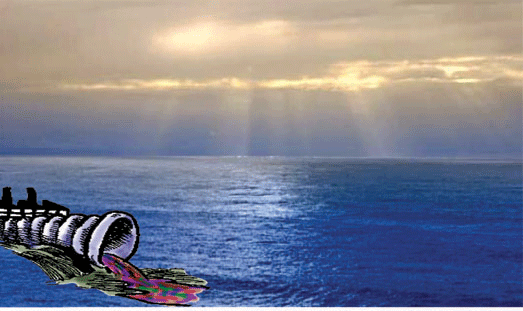
The United Nations (UN) human rights experts have written to the Japanese government to express their concerns about the release of more than one million metric tonnes of treated nuclear wastewater into the Pacific Ocean.
In August 2023, Japan began discharging wastewaster from about 1000 storage tanks of contaminated water collected after the earthquake and tsunami in 2011 that caused the meltdown of its Fukushima nuclear plant.
In the formal communication, available publicly, UN Human Rights Council special rappoteurs addressed the the management of Advanced Liquid Processing System (ALPS)-treated wastewater from the Fukushima Daiichi Nuclear Power Station (NPS) by the Japan government and TEPCO (Tokio Electric Power), and the ongoing discharge of such waters into the Pacific Ocean.
They said “we are alarmed that the implementation of contaminated water release operations of into the ocean may pose major environmental and human rights risks, exposing people, especially children, to threats of further contamination in Japan and beyond.”
“We wish to raise our concern about the allegations of the failure to assess the consequences on health of the release of wastewater against the best available scientific evidence,” the special rappoteurs write.
“Against this backdrop, we would like to highlight that the threats to the enjoyment of the right to adequate food do not concern only local people within the borders of Japan.
“Given the migratory nature of fish, their contamination represents a risk also for people living beyond the Japanese borders, including Indigenous Peoples across the Pacific Ocean which, according to their culture and traditions, mainly rely on seafood as their primary livelihood.”
The letter follows a complaint submitted by Ocean Vision Legal in August 2023 on behalf of the Pacific Network on Globalisation (PANG) and endorsed by over 50 civil society groups in the Pacific and beyond.
In a statement on Tuesday, PANG hailed it as “a landmark move for ocean justice and human rights”.
The organisation said that the destructive legacy of nuclear contamination through nuclear testing is still strongly felt across the region.
It said this legacy is marked by severe health impacts across generations and the ongoing failure to properly clean up test sites, which continue to contaminate the islands and waterways that Pacific peoples depend on.
“As Pacific groups, we remain disappointed in the Japanese Government and TEPCO’s shameless disregard of the calls by numerous Pacific leaders and civil society groups to hold off on any further release,” PANG’s coordinator Joey Tau said.
“Their ignorance constitutes a brazen threat to Pacific peoples’ livelihoods, safety, health and well-being, and the sovereignty of Pacific nations,” he added.
Japan has consistently maintained that the release is safe.
The UN human rights experts have asked for further information from Japan, including on the allegations raised, and on how the Radiological Environmental Impact Assessment has been conducted according to the best available scientific evidence.
This communication sends a clear message: Ocean issues must be understood as human rights issues, requiring precautionary and informed action aligned with international environmental law to safeguard both people and the marine environment.
Ocean Vision Legal founder and CEO Anna von Rebay said while the communication is not legally binding, it is a crucial milestone.
“It informs the interpretation of human rights and environmental law in response to contemporary threats, contributing to the development of customary international law and strengthens accountability for any actor harming the Ocean,” she said.
“Ultimately, it paves the way towards a future where the Ocean’s health is fully recognised as fundamental to human dignity, justice, and intergenerational equity.”
Welcome to Britain’s biggest building site. There’s a ‘fishdisco’
It’s economy v ecology at Hinkley Point C power station, which
will power a fifth of British homes if it can pull off an audacious plan to
protect wildlife.
Two miles off the Somerset coast, a strange sound is
playing. About 20 metres below the slate-grey surface of the Bristol
Channel, a small device called a ceramic transducer blasts out a
high-pitched acoustic beam at a frequency far higher than can be detected
by the human ear. This machine — once disparaged by the former
environment secretary Michael Gove as a “fish disco” — is being
tested to see if it can scare off the salmon, herring, shad, eel and sea
trout that in six years’ time will start being sucked in their millions
into massive water inlets that have been built near by.
Hinkley Point C nuclear power station is late and over budget. This is the biggest building
site in Britain, possibly Europe: 12,000 staff and 52 cranes (including the
world’s tallest — “Big Carl”, 250 metres high) are working to
complete the project. When the £46 billion station finally switches on in
2031, it will power more than a fifth of the UK’s homes.
To cool the reactors, 120,000 litres of seawater a second — fish and all — will be
sucked into concrete pipes six metres wide. A complex mechanism has been
installed to return as many fish as possible to the sea, but even so,
Hinkley’s owner, EDF, estimates that up to 44 tonnes of marine life —
more than 180 million individual fish — will be killed each year.
Natural England, in consultation with the Environment Agency and Natural Resources
Wales, will advise EDF whether the fish disco machine is sufficient to
comply with its planning permission, or whether the company will need to
revert to its plans for creating salt marshes like the one at Steart.
David Slater, Natural England’s regional director for the southwest, said the
agency is keeping an open mind on the fish deterrents. But if the tests
fail to demonstrate the fish can be kept away, the energy company will be
required to return to its plan for “compensatory habit” — the jargon
for the salt-marsh reserves — as a condition of its planning permission.
Times 18th May 2025, https://www.thetimes.com/uk/environment/article/welcome-to-britains-biggest-building-site-theres-a-fish-disco-c0wqs8lg9
Ohio EPA launches limited Luckey water testing after independent report shows high radiation in wells.
The Ohio Environmental Protection Agency, now under sharp scrutiny, will begin targeted water sampling in the village of Luckey on Wednesday, May 7. The move comes in response to independent testing conducted by The Toledo Blade, which uncovered elevated levels of radioactive contaminants in residential wells surrounding a former Cold War-era nuclear materials site.
The Ohio EPA said it will collect samples from Eastwood Local School buildings, Pemberville Public Library branches, and the Pemberville water treatment plants. The agency stated that certified laboratories will perform radiological analyses using “standard protocols,” though it has not clarified whether that includes specific isotope detection or testing for beta-emitting radionuclides.
Of the 38 samples tested for gamma radiation, 19 revealed bismuth-214 levels at least 10 times higher than the background thresholds established by the U.S. Army Corps of Engineers. The presence of bismuth-214 strongly indicates the presence of radon-222, a radioactive gas known to increase cancer risk. Some wells also tested positive for radium-226, radon-222, alpha and beta radiation, beryllium, and mercury.
https://googleads.g.doubleclick.net/pagead/ads?gdpr=0&gdpr_consent=tcunavailable&tcfe=3&client=ca-pub-2554767935405984&output=html&h=280&adk=3957413466&adf=830603344&pi=t.aa~a.3453247533~i.6~rp.4&w=634&abgtt=6&fwrn=4&fwrnh=100&lmt=1746683330&num_ads=1&rafmt=1&armr=3&sem=mc&pwprc=3568220565&ad_type=text_image&format=634×280&url=https%3A%2F%2Fappareport.com%2F2025%2F05%2F06%2Fohio-epa-launches-limited-luckey-water-testing-after-independent-report-shows-high-radiation-in-wells%2F%3Futm_source%3Dfacebook%26utm_medium%3Djetpack_social%26fbclid%3DIwY2xjawKH1O9leHRuA2FlbQIxMQBicmlkETFqODFPMTBmQTF5TEZicE1sAR7DD3WHCKFbMcsxONI6PwwU3BG179LZeDq1kHE5syHZgCdNvasXdjpfr-DjYw_aem_DfMkHt4eTpIDIAfrZFlmGQ&host=ca-host-pub-2644536267352236&fwr=0&pra=3&rh=159&rw=633&rpe=1&resp_fmts=3&wgl=1&fa=27&uach=WyJXaW5kb3dzIiwiMTUuMC4wIiwieDg2IiwiIiwiMTM1LjAuNzA0OS4xMTUiLG51bGwsMCxudWxsLCI2NCIsW1siR29vZ2xlIENocm9tZSIsIjEzNS4wLjcwNDkuMTE1Il0sWyJOb3QtQS5CcmFuZCIsIjguMC4wLjAiXSxbIkNocm9taXVtIiwiMTM1LjAuNzA0OS4xMTUiXV0sMF0.&dt=1746683047064&bpp=1&bdt=4365&idt=1&shv=r20250506&mjsv=m202505050101&ptt=9&saldr=aa&abxe=1&cookie=ID%3D64420eca75c0ed2b%3AT%3D1746229513%3ART%3D1746683048%3AS%3DALNI_MadpzcDidvM12j1XEfmCG_w3cmjYA&gpic=UID%3D000010171172a210%3AT%3D1746229513%3ART%3D1746683048%3AS%3DALNI_Ma3MjH8_Lx9G9s2ELouutptKcrFZQ&eo_id_str=ID%3Df70225faa56d1ddf%3AT%3D1746229513%3ART%3D1746683048%3AS%3DAA-AfjY3YWrttstp60Hpetggs1xY&prev_fmts=0x0%2C1265x585&nras=3&correlator=6082623994933&frm=20&pv=1&u_tz=600&u_his=2&u_h=720&u_w=1280&u_ah=672&u_aw=1280&u_cd=24&u_sd=1.5&dmc=8&adx=127&ady=3031&biw=1265&bih=585&scr_x=0&scr_y=699&eid=95358862%2C95358864%2C95354563%2C95359240%2C95359120%2C95359476&oid=2&pvsid=8479030565798310&tmod=1640054256&uas=3&nvt=1&fc=1408&brdim=0%2C0%2C0%2C0%2C1280%2C0%2C1280%2C672%2C1280%2C585&vis=1&rsz=%7C%7Cs%7C&abl=NS&fu=128&bc=31&bz=1&td=1&tdf=2&psd=W251bGwsbnVsbCxudWxsLDNd&nt=1&pgls=CAEQBBoHMS4xNTIuMQ..~CAEQBRoGMy4yOC40&ifi=3&uci=a!3&btvi=1&fsb=1&dtd=M
Beryllium, used at the Luckey site in the 1950s, was a focal point. Of 14 wells tested for it and other metals, multiple locations showed concerning levels. Several samples were also retested to look for specific contamination types.
Katie Boyer, spokesperson for the Ohio EPA, told investigative journalist Jason Salley during an earlier investigation into drinking water concerns in Pike County, that “Ohio public water systems are not required to monitor for gross beta radiation unless they are located near a known contamination source or are at risk of contamination. If initial tests show low or no beta radiation, no further testing is necessary. Gross beta monitoring is very rare in public water systems.”
https://googleads.g.doubleclick.net/pagead/ads?gdpr=0&gdpr_consent=tcunavailable&tcfe=3&client=ca-pub-2554767935405984&output=html&h=280&adk=3957413466&adf=1277231945&pi=t.aa~a.3453247533~i.8~rp.4&w=634&abgtt=6&fwrn=4&fwrnh=100&lmt=1746683332&num_ads=1&rafmt=1&armr=3&sem=mc&pwprc=3568220565&ad_type=text_image&format=634×280&url=https%3A%2F%2Fappareport.com%2F2025%2F05%2F06%2Fohio-epa-launches-limited-luckey-water-testing-after-independent-report-shows-high-radiation-in-wells%2F%3Futm_source%3Dfacebook%26utm_medium%3Djetpack_social%26fbclid%3DIwY2xjawKH1O9leHRuA2FlbQIxMQBicmlkETFqODFPMTBmQTF5TEZicE1sAR7DD3WHCKFbMcsxONI6PwwU3BG179LZeDq1kHE5syHZgCdNvasXdjpfr-DjYw_aem_DfMkHt4eTpIDIAfrZFlmGQ&host=ca-host-pub-2644536267352236&fwr=0&pra=3&rh=159&rw=633&rpe=1&resp_fmts=3&wgl=1&fa=27&uach=WyJXaW5kb3dzIiwiMTUuMC4wIiwieDg2IiwiIiwiMTM1LjAuNzA0OS4xMTUiLG51bGwsMCxudWxsLCI2NCIsW1siR29vZ2xlIENocm9tZSIsIjEzNS4wLjcwNDkuMTE1Il0sWyJOb3QtQS5CcmFuZCIsIjguMC4wLjAiXSxbIkNocm9taXVtIiwiMTM1LjAuNzA0OS4xMTUiXV0sMF0.&dt=1746683047068&bpp=3&bdt=4369&idt=3&shv=r20250506&mjsv=m202505050101&ptt=9&saldr=aa&abxe=1&cookie=ID%3D64420eca75c0ed2b%3AT%3D1746229513%3ART%3D1746683048%3AS%3DALNI_MadpzcDidvM12j1XEfmCG_w3cmjYA&gpic=UID%3D000010171172a210%3AT%3D1746229513%3ART%3D1746683048%3AS%3DALNI_Ma3MjH8_Lx9G9s2ELouutptKcrFZQ&eo_id_str=ID%3Df70225faa56d1ddf%3AT%3D1746229513%3ART%3D1746683048%3AS%3DAA-AfjY3YWrttstp60Hpetggs1xY&prev_fmts=0x0%2C1265x585%2C634x280&nras=4&correlator=6082623994933&frm=20&pv=1&u_tz=600&u_his=2&u_h=720&u_w=1280&u_ah=672&u_aw=1280&u_cd=24&u_sd=1.5&dmc=8&adx=127&ady=3428&biw=1265&bih=585&scr_x=0&scr_y=1123&eid=95358862%2C95358864%2C95354563%2C95359240%2C95359120%2C95359476&oid=2&pvsid=8479030565798310&tmod=1640054256&uas=3&nvt=1&fc=1408&brdim=0%2C0%2C0%2C0%2C1280%2C0%2C1280%2C672%2C1280%2C585&vis=1&rsz=%7C%7Cs%7C&abl=NS&cms=2&fu=128&bc=31&bz=1&td=1&tdf=2&psd=W251bGwsbnVsbCxudWxsLDNd&nt=1&pgls=CAEQBBoHMS4xNTIuMQ..~CAEQBRoGMy4yOC40&ifi=4&uci=a!4&btvi=2&fsb=1&dtd=M
This admission has further fueled public concern, given that Luckey sits adjacent to a federally managed cleanup site under the Formerly Utilized Sites Remedial Action Program (FUSRAP). Critics argue that limited testing of public buildings, rather than the private wells identified in The Blade’s report, leaves gaps in understanding potential exposure risks.
In response to the Ohio EPA’s vague testing plan, the Appalachian Press and Public Affairs Report (APPA Report) submitted a formal request to the agency, pressing for clarity on whether the upcoming analyses will include beta emitters or man-made radionuclides. As of publication, the agency has not responded.
https://googleads.g.doubleclick.net/pagead/ads?gdpr=0&gdpr_consent=tcunavailable&tcfe=3&client=ca-pub-2554767935405984&output=html&h=280&adk=3957413466&adf=3563305841&pi=t.aa~a.3453247533~i.10~rp.4&w=634&abgtt=6&fwrn=4&fwrnh=100&lmt=1746683332&num_ads=1&rafmt=1&armr=3&sem=mc&pwprc=3568220565&ad_type=text_image&format=634×280&url=https%3A%2F%2Fappareport.com%2F2025%2F05%2F06%2Fohio-epa-launches-limited-luckey-water-testing-after-independent-report-shows-high-radiation-in-wells%2F%3Futm_source%3Dfacebook%26utm_medium%3Djetpack_social%26fbclid%3DIwY2xjawKH1O9leHRuA2FlbQIxMQBicmlkETFqODFPMTBmQTF5TEZicE1sAR7DD3WHCKFbMcsxONI6PwwU3BG179LZeDq1kHE5syHZgCdNvasXdjpfr-DjYw_aem_DfMkHt4eTpIDIAfrZFlmGQ&host=ca-host-pub-2644536267352236&fwr=0&pra=3&rh=159&rw=633&rpe=1&resp_fmts=3&wgl=1&fa=27&uach=WyJXaW5kb3dzIiwiMTUuMC4wIiwieDg2IiwiIiwiMTM1LjAuNzA0OS4xMTUiLG51bGwsMCxudWxsLCI2NCIsW1siR29vZ2xlIENocm9tZSIsIjEzNS4wLjcwNDkuMTE1Il0sWyJOb3QtQS5CcmFuZCIsIjguMC4wLjAiXSxbIkNocm9taXVtIiwiMTM1LjAuNzA0OS4xMTUiXV0sMF0.&dt=1746683047074&bpp=1&bdt=4375&idt=1&shv=r20250506&mjsv=m202505050101&ptt=9&saldr=aa&abxe=1&cookie=ID%3D64420eca75c0ed2b%3AT%3D1746229513%3ART%3D1746683048%3AS%3DALNI_MadpzcDidvM12j1XEfmCG_w3cmjYA&gpic=UID%3D000010171172a210%3AT%3D1746229513%3ART%3D1746683048%3AS%3DALNI_Ma3MjH8_Lx9G9s2ELouutptKcrFZQ&eo_id_str=ID%3Df70225faa56d1ddf%3AT%3D1746229513%3ART%3D1746683048%3AS%3DAA-AfjY3YWrttstp60Hpetggs1xY&prev_fmts=0x0%2C1265x585%2C634x280%2C634x280&nras=5&correlator=6082623994933&frm=20&pv=1&u_tz=600&u_his=2&u_h=720&u_w=1280&u_ah=672&u_aw=1280&u_cd=24&u_sd=1.5&dmc=8&adx=127&ady=3794&biw=1265&bih=585&scr_x=0&scr_y=1493&eid=95358862%2C95358864%2C95354563%2C95359240%2C95359120%2C95359476&oid=2&pvsid=8479030565798310&tmod=1640054256&uas=3&nvt=1&fc=1408&brdim=0%2C0%2C0%2C0%2C1280%2C0%2C1280%2C672%2C1280%2C585&vis=1&rsz=%7C%7Cs%7C&abl=NS&fu=128&bc=31&bz=1&td=1&tdf=2&psd=W251bGwsbnVsbCxudWxsLDNd&nt=1&pgls=CAEQBBoHMS4xNTIuMQ..~CAEQBRoGMy4yOC40&ifi=5&uci=a!5&btvi=3&fsb=1&dtd=M
Sampling will begin at 1 p.m. on Wednesday at Basic Park in Luckey. Amy Klei, chief of Ohio EPA’s Division of Drinking and Ground Waters, will be available to address media questions about the scope and intent of the testing.
While state officials move forward with limited action, residents and environmental watchdogs continue to demand transparency and accountability, warning that failure to address the full scope of potential contamination could have long-term public health consequences.
Sellafield’s massive water abstraction plan for its new construction work has no environmental impact assessment and inadequate monitoring
Sellafield blithely apply to the Environment Agency for new water abstraction and in the same application admit that they have already contaminated the freshwater aquifer beneath them
Lakes against Nuclear Dump and NFLA , Marianne Birkby, May 07, 2025
Campaigners concerned that Sellafield’s water abstraction plan has no environmental impact assessment and inadequate monitoring
In a recent response to an Environment Agency consultation on a application by Sellafield Limited to extract water to support construction work at the site, campaigners at Lakes against the Nuclear Dump [LAND], a campaign of Radiation Free Lakeland, and the UK/Ireland Nuclear Free Local Authorities have expressed concerns that no environmental impact assessment has been carried out and that plans to monitor contamination in discharges are inadequate.
Sellafield plans to extract an additional 350,000 cubic metres of water a year from the Lake District to support the construction of new facility to repackage radioactive waste, whilst proposing to discharge almost a million litres of contaminated water every day into the River Calder and out into the sea. This for an indefinite and uncertain period.
LAND and the NFLAs are concerned that this will be done without an Environmental Impact Assessment being carried out and with no proper plans in place to monitor the discharged water, adding to fears that the work will lead to yet more radioactive contamination in the already fragile local environment.
Sellafield may believe that the discharges are safe and within legal limits, but the two campaign groups do not subscribe to the view that there is a safe limit when it comes to radiation and in recent years there have been large research studies demonstrating the cumulative effects of low-level, but legal, radiation on human health.
Tracing radiation through the Marshall Islands: Reflections from a Greenpeace nuclear specialist
Greenpeace, Shaun Burnie, 30 April 2025
We’ve visited ground zero. Not once, but three times. But for generations, before these locations were designated as such, they were the ancestral home to the people of the Marshall Islands.
As part of a team of Greenpeace scientists and specialists from the Radiation Protection Advisors team, we have embarked on a six-week tour on-board the Rainbow Warrior, sailing through one of the most disturbing chapters in human history: between 1946 and 1958, the United States detonated 67 nuclear bombs across the Marshall Islands — equivalent to 7,200 Hiroshima explosions.
During this period, testing nuclear weapons at the expense of wonderful ocean nations like the Marshall Islands was considered an acceptable practice, or as the US put it, “for the good of mankind”. Instead, the radioactive fallout left a deep and complex legacy—one that is both scientific and profoundly human, with communities displaced for generations.
Between March and April, we traveled on the Greenpeace flagship vessel, the Rainbow Warrior, throughout the Marshall Islands, including to three northern atolls that bear the most severe scars of Cold War nuclear weapons testing:
- Enewetak atoll, where, on Runit Island, stands a massive leaking concrete dome beneath which lies plutonium-contaminated waste, a result of from a partial “clean-up” of some of the islands after the nuclear tests
- Bikini atoll, a place so beautiful, yet rendered uninhabitable by some of the most powerful nuclear detonations ever conducted;
- And Rongelap atoll, where residents were exposed to radiation fallout and later convinced to return to contaminated land, part of what is now known as Project 4.1, a U.S. medical experiment to test humans’ exposure to radiation.
This isn’t fiction, nor distant past. It’s a chapter of history still alive through the environment, the health of communities, and the data we’re collecting today. Each location we visit, each sample we take, adds to a clearer picture of some of the long-term impacts of nuclear testing—and highlights the importance of continuing to document, investigate, and attempt to understand and share these findings.
These are our field notes from a journey through places that hold important lessons for science, justice, and global accountability……………………………………………………………………………………………………
Stop 1: Enewetak Atoll – the dome that shouldn’t exist
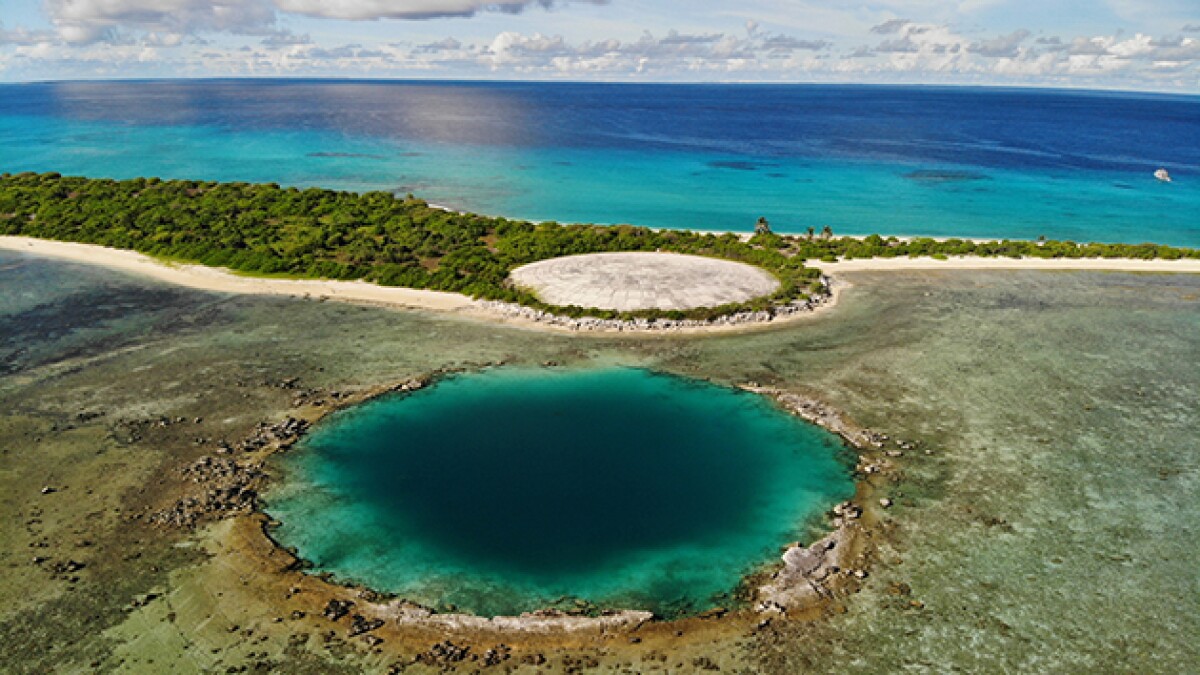
At the far western edge of the Marshall Islands is Enewetak. The name might not ring a bell for many, but this atoll was the site of 43 U.S. nuclear detonations. Today, it houses what may be one of the most radioactive places in the world: the Runit Dome
Once a tropical paradise thick with coconut palms, now Runit Island is capped by a massive concrete structure the size of a football field. Under this dome—cracked, weather-worn, and only 46 centimeters thick in some places—lies 85,000 cubic meters of radioactive waste. These substances are not only confined to the crater—they are also found across the island’s soil, rendering Runit Island uninhabitable for all time. The contrast between what it once was and what it has become is staggering. We took samples near the dome’s base, where rising sea levels now routinely flood the area.
We collected coconut from the island which will be processed and prepared in the Rainbow Warrior’s onboard laboratory. Crops such as coconut are a known vector for radioactive isotope transfer, and tracking levels in food sources is essential for understanding long-term environmental and health risks. The local consequences of this simple fact are deeply unjust. While some atolls in the Marshall Islands can harvest and sell coconut products, the people of Enewetak are prohibited from doing so because of radioactive contamination. They have lost not only their land and safety but also their ability to sustain themselves economically. The radioactive legacy has robbed them of income and opportunity.
One of the most alarming details about this dome is that there is no lining beneath the structure – it is in direct contact with the environment – while containing some of the most hazardous long lived substances ever to exist on planet earth. It was never built to withstand flooding, sea level rise, and climate change. The scientific questions are urgent: how much of this material is already leaking into the lagoon? What are the exposure risks to marine ecosystems and local communities?
We are here to help answer questions with new, independent data, but still, being in the craters and walking on this ground where nuclear Armageddon was unleashed, is an emotional and surreal journey.
Stop 2: Bikini – a nuclear catastrophe, labeled “for the good of mankind”
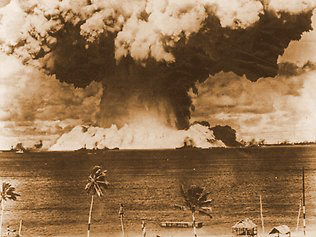
Unlike Chernobyl or Fukushima, where communities were devastated by catastrophic accidents, Bikini tells a different story. This was not an accident. The nuclear destruction of Bikini was deliberate, calculated, and executed with full knowledge that entire ways of life were going to be destroyed.
Bikini atoll is incredibly beautiful and would look idyllic on any postcard. But we know what lies beneath: the site of 23 nuclear detonations, including Castle Bravo, the largest ever nuclear weapons test conducted by the United States.
Castle Bravo alone released more than 1,000 times the explosive yield of the Hiroshima bomb. The radioactive fallout massively contaminated nearby islands and their populations together with thousands of U.S. military personnel. Bikini’s former residents were forcibly relocated in 1946 before nuclear testing began, and with promises of a safe return. But the atoll is still uninhabited and most of the new generations of Bikinians have never seen their home island. As we stood deep in the forest next to a massive concrete blast bunker, reality hit hard – behind its narrow lead-glass viewing window, U.S. military personnel once watched the evaporation of Bikini lagoon.
On our visit we notice there’s a spectral quality to Bikini. The homes of the Bikini islanders are long gone. In its place now stand a scattering of buildings left by the U.S. Department of Energy: rusting canteens, rotting offices, sleeping quarters with peeling walls, and traces of the scientific experiments conducted here after the bombs fell.
On dusty desks we found radiation reports, notes detailing crop trials, and a notebook meticulously tracking the application of potassium to test plots of corn, alfalfa, lime, and native foods like coconut, pandanus, and banana. The potassium was intended to block the uptake of caesium-137, a radioactive isotope, by plant roots. The logic was simple: if these crops could be decontaminated, perhaps one day Bikini could be repopulated.
We collected samples of coconuts and soil—key indicators of internal exposure risk if humans were to return. Bikini raises a stark question: what does “safe” mean, and who gets to decide? The U.S. declared parts of Bikini habitable in 1970, only to evacuate people again eight years later after resettled families suffered from radiation exposure. The science is not abstract here. It is personal. It is human. It has real consequences.
Stop 3: Rongelap – setting for Project 4.1

The Rainbow Warrior arrived at the eastern side of Rongelap atoll anchoring one mile from the center of Rongelap Island, the church spire and roofs of “new” buildings reflecting the bright sun. In 1954, fallout from the Castle Bravo nuclear detonation on Bikini blanketed this atoll in radioactive ash—fine, white powder that children played in, thinking it was snow. The U.S. government waited three days to evacuate residents, despite knowing the risks. The U.S. government declared it safe to return to Rongelap in 1957 – but it was a severely contaminated environment. The very significant radiation exposure to the Rongelap population caused severe health impacts: thyroid cancers, birth defects such as “jellyfish babies”, miscarriages, and much more.
In 1985, after a request to the US government to evacuate was dismissed, the Rongelap community asked Greenpeace to help relocate them from their ancestral lands. Using the first Rainbow Warrior, and over a period of 10 days and three trips, 350 residents collectively dismantled their homes bringing everything with them – including livestock, and 100 metric tons of building material – where they resettled on the islands of Mejatto and Ebeye on Kwajalein atoll. It is a part of history that lives on in the minds of the Marshallese people we meet in this ship voyage – in the gratitude they still express, the pride in keeping the fight for justice, and in the pain of still not having a permanent, safe home.
Now, once again, we are standing on their island of Rongelap, walking past abandoned buildings and rusting equipment, some of it dating from the 1980s and 1990s – a period when the U.S. Department of Energy launched a push to encourage resettlement declaring that the island was safe – a declaration that this time, the population welcomed with mistrust, not having access to independent scientific data and remembering the deceitful relocation of some decades before.
Here, once again we sample soil and fruits that could become food if people came back. It is essential to understand ongoing risks—especially for communities considering whether and how to return.
This is not the end. It is just the beginning
Our scientific mission is to take measurements, collect samples, and document contamination. But that’s not all we’re bringing back.
We carry with us the voices of the Marshallese who survived these tests and are still living their consequences. We carry images of graves swallowed by tides near Runit Dome, stories of entire cultures displaced from their homelands, and measurements of radiation showing contamination still persists after many decades. There are 9,700 nuclear warheads still held by military powers around the world – mostly in the United States and Russian arsenals. The Marshall Islands was one of the first nations to suffer the consequences of nuclear weapons – and the legacy persists today.
We didn’t come to speak for the Marshallese. We came to listen, to bear witness, and to support their demand for justice. We plan to return next year, to follow up on our research and to make results available to the people of the Marshall Islands. And we will keep telling these stories—until justice is more than just a word…….. https://www.greenpeace.org/international/story/74328/tracing-radiation-through-the-marshall-islands-reflections-from-a-greenpeace-nuclear-specialist/
Kingston Fossil Plant and Oakridge Nuclear Facility – an unholy alliance of radioactive pollution,
While no one was killed by the 2008 coal ash spill itself, dozens of workers have died from illnesses that emerged during or after the cleanup. Hundreds of other workers are sick from respiratory, cardiac, neurological, and blood disorders, as well as cancers.
The apparent mixing of fossil fuel and nuclear waste streams underscores the long relationship between the Kingston and Oak Ridge facilities.
Between the 1950s and 1980s, so much cesium-137 and mercury was released into the Clinch from Oak Ridge that the Department of Energy, or DOE, said that the river and its feeder stream “served as pipelines for contaminants.” Yet TVA and its contractors, with the blessing of both state and federal regulators, classified all 4 million tons of material they recovered from the Emory as “non-hazardous.”
A U.S. Environmental Protection Agency analysis confirms that the ash that was left in the river was “found to be commingled with contamination from the Department of Energy (DOE) Oak Ridge Reservation site.
For nearly a century, both Oak Ridge and TVA treated their waste with less care than most families treat household garbage. It was often dumped into unlined, and sometimes unmarked, pits that continue to leak into waterways. For decades, Oak Ridge served as the Southeast’s burial ground for nuclear waste. It was stored within watersheds and floodplains that fed the Clinch River. But exactly where and how this waste was buried has been notoriously hard to track.
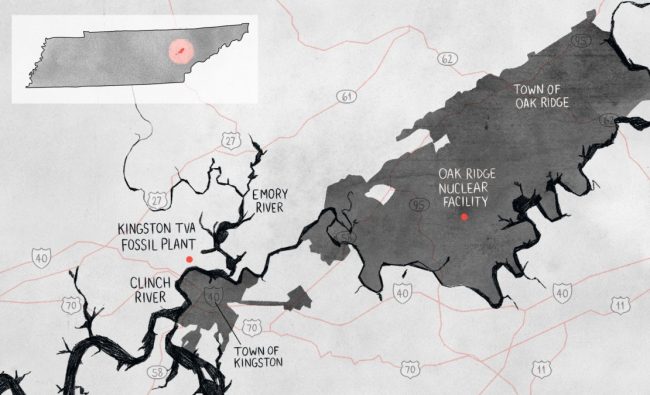
A Legacy of Contamination, How the Kingston coal ash spill unearthed a nuclear nightmare, Grist By Austyn Gaffney on Dec  15, 2020 This story was published in partnership with the Daily Yonder.
In 2009, App Thacker was hired to run a dredge along the Emory River in eastern Tennessee. Picture an industrialized fleet modeled after Huck Finn’s raft: Nicknamed Adelyn, Kylee, and Shirley, the blue, flat-bottomed boats used mechanical arms called cutterheads to dig up riverbeds and siphon the excavated sediment into shoreline canals. The largest dredge, a two-story behemoth called the Sandpiper, had pipes wide enough to swallow a push lawnmower. Smaller dredges like Thacker’s scuttled behind it, scooping up excess muck like fish skimming a whale’s corpse. They all had the same directive: Remove the thick grey sludge that clogged the Emory.
The sludge was coal ash, the waste leftover when coal is burned to generate electricity. Twelve years ago this month, more than a billion gallons of wet ash burst from a holding pond monitored by the region’s major utility, the Tennessee Valley Authority, or TVA. Thacker, a heavy machinery operator with Knoxville’s 917 union, became one of hundreds of people that TVA contractors hired to clean up the spill. For about four years, Thacker spent every afternoon driving 35 miles from his home to arrive in time for his 5 p.m. shift, just as the makeshift overhead lights illuminating the canals of ash flicked on.
Dredging at night was hard work. The pump inside the dredge clogged repeatedly, so Thacker took off his shirt and entered water up to his armpits to remove rocks, tree limbs, tires, and other debris, sometimes in below-freezing temperatures. Soon, ringworm-like sores crested along his arms, interwoven with his fading red and blue tattoos. Thacker’s supervisors gave him a cream for the skin lesions, and he began wearing long black cow-birthing gloves while he unclogged pumps. While Thacker knew that the water was contaminated — that was the point of the dredging — he felt relatively safe. After all, TVA was one of the oldest and most respected employers in the state, with a sterling reputation for worker safety.
Then, one night, the dredging stopped.
Sometime between December 2009 and January 2010, roughly halfway through the final, 500-foot-wide section of the Emory designated for cleanup, operators turned off the pumps that sucked the ash from the river. For a multi-billion dollar remediation project, this order was unprecedented. The dredges had been operating 24/7 in an effort to clean up the disaster area as quickly as possible, removing roughly 3,000 cubic yards of material — almost enough to fill an Olympic-sized swimming pool — each day. But official reports from TVA show that the dredging of the Emory encountered unusually high levels of contamination: Sediment samples showed that mercury levels were three times higher in the river than they were in coal ash from the holding pond that caused the disaster.
Then there was the nuclear waste. Continue reading
Ohio EPA slams DOE’s sloppy radiation sampling plan for Piketon plant demolition
Investigative Team April 30, 2025 , https://appareport.com/2025/04/30/ohio-epa-slams-does-sloppy-radiation-sampling-plan-for-piketon-plant-demolition/?utm_source=facebook&utm_medium=jetpack_social&fbclid=IwY2xjawKA6SFleHRuA2FlbQIxMQBicmlkETFISGV5ZEdSZW16a2ZnQzh3AR53xTzNJzPFjzVPspqmkVKeF7uYVgoFo-3JyRvLAWnkr4ofz6UTULG0jmZ6Bw_aem_Pf0iP9VXjHpnvVMH91GcuQ
The Ohio Environmental Protection Agency has raised serious concerns about the U.S. Department of Energy’s (DOE) plans to demolish a key structure at the Portsmouth Gaseous Diffusion Plant, flagging gaps in how contaminants and radiation will be tested before the teardown begins.
In a letter dated April 29, the Ohio EPA responded to the DOE’s proposed Materials of Construction Sampling and Analysis Plan for the X-330 Process Building—a massive uranium enrichment facility used during the Cold War. The building is scheduled for demolition as part of the long-term decontamination and decommissioning (D&D) of the Piketon site, but state regulators say the current plan lacks clarity and thoroughness.
One of the EPA’s primary concerns is DOE’s proposal to use composite samples to test for volatile organic compounds (VOCs), metals, PCBs, hexavalent chromium, and asbestos. Regulators questioned why composite samples—where multiple samples are blended into one—would be acceptable for VOC testing, since that can dilute concentrations and mask localized contamination.
n another comment, EPA noted that roof samples are currently clustered in the center of the building, suggesting that such grouping could fail to capture the full range of possible contaminants across the massive structure’s roof.
Most notably, Ohio EPA is demanding more transparency about future radiological sampling, which has not yet been fully described. According to DOE’s plan, further testing is needed to define the “radiological source term”—essentially, the type and amount of radioactive materials that could end up in the demolition debris. EPA officials asked whether a separate radiological sampling and analysis plan will be submitted, and emphasized the importance of establishing the building as “criticality incredible,” meaning it poses no risk of a nuclear chain reaction.
The letter was issued under the authority of a legally binding 2010 agreement between the state and DOE, known as the Director’s Final Findings and Orders, which governs how the contaminated site must be cleaned up.
The exchange highlights ongoing tensions between state regulators and federal agencies over how to safely dismantle one of the most contaminated Cold War legacy sites in the country. Local residents and activists have long raised concerns about cancer clusters, radioactive leaks, and environmental mismanagement at the Piketon plant.
The DOE has not yet publicly responded to the EPA’s letter.
Tankers travel from Alton Water to Sizewell C every day

Tankers full of water are travelling 30 miles up the A12 and B1122 to keep Sizewell C’s offices topped up because the local water company cannot cope with demand.
Essex and Suffolk Water is the company that supplies the north
east of the county – and it has long been known that it has problems in
coping with increasing demand. The company is operating at near capacity –
and this problem has forced some development or expansion plans in the area
to be cancelled or postponed. It is not able to supply water to the offices
that have been built at Sizewell so a temporary deal has been signed with
Anglian Water to bring in supplies.
Ipswich Star 25th April 2025,
https://www.ipswichstar.co.uk/news/25110191.tankers-travel-alton-water-sizewell-c-every-day/
Sellafield Construction of new “Box Encapsulation Plant” Requires Dumping Nearly 1 Million Litres of Contaminated Water into the River Calder Every Day For An Unknown Length of Time
And they already use the River Calder as a sewer for radioactive crapola, there is sacrifice and then there is sacrifice.
Marianne Birkby, Apr 21, 2025, Radiation Free Lakeland
If anyone can make sense of this document received from the Environment Agency then please do get in touch – the deadline for comments to the EA is 23rd April.
From what I can see the plan is to dig a tunnel and drive multiple piles into the alluvium sandstone below Sellafield for a “Box Encapsulation Plant Product Store 2 (BEPPS2)”. This new build would be just 700 metres from the coast and would facilitate transfer of the Magnox wastes including from the silos that have been leaking at a rate of knots for decades into the groundwater.
This is the information below, no-one begrudges the nuclear industry repackaging the wastes – we are relying on them to repackage the wastes again and again into eternity but we should absolutely begrudge them the label of “clean energy.” An industry that produces wastes that should be isolated from the biosphere and has polluted an existing major aquifer (and more) as they admit in this document is not “clean.” The tone of this Sellafield application to the Environment Agency is one of: “we have you over a barrel so you need to allow us to do this no matter the cost to the River Calder or the major aquifer that we have already polluted.” Any help on our response to the Environment Agency about this application would be really welcome. People can contact me here: wastwater@protonmail.com
The application by Sellafield to the Environment Agency is for a full licence to abstract water from the Alluvium Sandstone Deposit at Sellafield, Cumbria, within the area marked by National Grid References NY 03193 03004, NY 03240 02991, NY 03175 02939 and NY 03223 02927. [Map here on original]
The application is to abstract water as follows:
· 40 cubic metres an hour
· 960 cubic metres a day
· 350,400 cubic metres a year
· between 1 April and 31 March inclusive in each year.
“The water will be used for the purpose of dewatering to aid construction.
The Box Encapsulation Plant Product Store 2 (BEPPS2) facility is one in a series of Intermediate Level Waste (ILW) stores required to provide future storage and enable operational continuity for High Hazard Risk Reduction work at Sellafield. BEPPS2 construction excavations will generate construction waters – rainfall, infiltration through soil, and groundwater due to digging and piling required for construction. This will initially require an Abstraction Licence to dewater excavations and transfer the collected water for discharge.” Environment Agency
Documents and tables …………………………………………………………………………………………………………………………….. https://radiationfreelakeland.substack.com/p/sellafield-construction-of-new-box?utm_source=post-email-title&publication_id=2706406&post_id=161731523&utm_campaign=email-post-title&isFreemail=true&r=ln98x&triedRedirect=true&utm_medium=email
Trump’s Latest Executive Order is Blatant Attack on States’ Rightful Action to Protect Communities and the Climate

“We will pursue all legal avenues to ensure that states are not harmed by this shameful assault on health and the environment.”
On Tuesday the Trump administration issued an executive order that seeks to initiate an attack on state laws and policies that address the environmental pollution and climate-wrecking emissions resulting from fossil fuel and nuclear energy development.
In response, Food & Water Watch Legal Director Tarah Heinzen issued the following statement:
“This malicious and destructive order goes further than ever before in proving that President Trump cares nothing about states’ rights, or clean air, or healthy people, or anything else of any virtue that he has ever claimed to prioritize. It proves that Trump cares only about doing the bidding of filthy, polluting industries that poison our air and water, sicken our communities and wreck our climate.
“This executive order baselessly threatens to weaponize the justice department against state climate protections adopted with broad public support. States have clear authority to act to protect people and communities from toxic pollution – including carbon emissions that drive climate chaos.
“Laws like the Climate Change Superfund Acts in New York and Vermont, which ensure that the largest industrial polluters are held responsible for their harmful impacts on the land and communities, are currently at the vanguard of responsible environmental protection in the country. Trump’s attack on these common-sense laws are an attack on everyday Americans who bear the brunt of toxic pollution and climate change-fueled weather catastrophes.
“We will monitor closely how the administration may seek to implement this preposterous order, and we will pursue any and all legal avenues to help ensure that states and communities are not harmed by this shameful assault on public health, environmental protection and climate stability.”
The climate crisis has tripled the length of ocean heatwaves, study finds.

The climate crisis has tripled the length of ocean heatwaves, a study has
found, supercharging deadly storms and destroying critical ecosystems such
as kelp forests and coral reefs. Half of the marine heatwaves since 2000
would not have happened without global heating, which is caused by burning
fossil fuels.
The heatwaves have not only become more frequent but also
more intense: 1C warmer on average, but much hotter in some places, the
scientists said. The research is the first comprehensive assessment of the
impact of the climate crisis on heatwaves in the world’s oceans, and it
reveals profound changes.
Hotter oceans also soak up fewer of the carbon
dioxide emissions that are driving temperatures up. “Here in the
Mediterranean, we have some marine heatwaves that are 5C hotter,” said Dr
Marta Marcos at the Mediterranean Institute for Advanced Studies in
Mallorca, Spain, who led the study. “It’s horrible when you go
swimming. It looks like soup.”
Guardian 14th April 2025, https://www.theguardian.com/environment/2025/apr/14/climate-crisis-has-tripled-length-of-deadly-ocean-heatwaves-study-finds
Uranium Hot Particles Detected in Soil Samples from Site of Israel Bomb in Beirut
Marianne Birkby, Apr 15, 2025, https://radiationfreelakeland.substack.com/p/uranium-hot-particles-detected-in?utm_source=post-email-title&publication_id=2706406&post_id=161332055&utm_campaign=email-post-title&isFreemail=true&r=ln98x&triedRedirect=true&utm_medium=email
Dr Chris Busby; Analysis of soil samples from site of Israel bomb in Beirut, Lebanon where Hassan Nasrallah was killed using CR39 track imaging plastic show presence of Uranium hot particles. It was discovered that the micron size hot particles become self-resuspended and airborne. This has public health implications. Dr Busby explains the methodology, showing how the images and results were obtained and discusses the implications of the findings with emphasis on the health risks both local and global.
People may remember Dr Chris Busby was demonised by George Monbiot when the “UKs leading environmentalist’ was silencing “green” opposition against new nuclear build (the results of which can be seen in the appalling devastation already at Hinkley C and Sizewell)
Nuclear Energy Expansion Faces Water Resource Challenges
Oil Price, By Haley Zaremba – Apr 10, 2025.
- The global nuclear energy sector is experiencing a renaissance with increased interest and expansion plans, but faces the challenge of high water consumption for reactor cooling.
- Debates surround the actual water needs of nuclear power, with some arguing it uses more water than coal and renewables, while others claim water use can be managed with existing licenses and recycling.
- Advancements in nuclear technology, including small modular reactors and future designs using gas or air cooling, offer potential solutions to reduce water dependency, but concerns about increased nuclear waste persist.
A global nuclear energy renaissance is unfolding. Around the world, the public and private sectors are warming to the idea of nuclear energy expansion to meet ballooning energy demand driven by data centers without throwing decarbonization accords out the window. ………….
However, next-generation nuclear does have some key drawbacks as well. For one, studies have shown that SMRs will create more nuclear waste than traditional models. This presents a tricky and expensive problem, as the highly radioactive waste material remains hazardous for thousands of years in the best of scenarios. For another, nuclear energy is an extremely thirsty form of power production, requiring huge quantities of water to cool down the reactors for optimal particle speed for fission, as well as to generate steam to create electricity.
According to Dave Sweeney, a nuclear policy analyst at the Australian Conservation Foundation, nuclear power uses more water than coal, and “massively more than renewables” on a per-kilowatt basis. Sweeney was speaking with the Guardian in reference to a recent conflict between political parties in Australia over planned nuclear expansion and water scarcity. A report commissioned by the organization Liberals Against Nuclear found that a whopping 90% of the nuclear generation capacity proposed by the opposing Coalition party lacks sufficient access to water for safe operations. “Half of the proposed nuclear capacity was already unfeasible given insufficient water, while a further 40% of the capacity would need to be curtailed during dry seasons,” the Guardian reported this week based on the findings. ……………………….
https://oilprice.com/Alternative-Energy/Nuclear-Power/Nuclear-Energy-Expansion-Faces-Water-Resource-Challenges.html
NFLAs ‘shout up’ for National Parks to be spared from nuclear development

Despite our objections and those of many in the antinuclear community, Energy Ministers and departmental civil servants remain intent upon introducing a new National Planning Statement, called the EN-7, which gives considerable latitude to prospective developers to site new nuclear plants more widely, subject to meeting certain criterion (called the ‘criteria-based approach’) and lifts any time limits (called ‘the removal of a deployment deadline’).
10th April 2025, https://www.nuclearpolicy.info/news/nflas-shout-up-for-national-parks-to-be-spared-from-nuclear-development/
NFLAs ‘shout up’ for National Parks to be spared from nuclear development
The Nuclear Free Local Authorities have made an emphatic plea to the government for National Parks to be definitively spared from development and for further ‘specific consideration’ to be given to the challenges attendant to siting so-called Small and Advanced Modular Reactors (SMRs and AMRs).
Despite our objections and those of many in the antinuclear community, Energy Ministers and departmental civil servants remain intent upon introducing a new National Planning Statement, called the EN-7, which gives considerable latitude to prospective developers to site new nuclear plants more widely, subject to meeting certain criterion (called the ‘criteria-based approach’) and lifts any time limits (called ‘the removal of a deployment deadline’).
Interestingly neither of these notions was popular amongst respondents in the initial consultation on the policy with only 47% supporting the first and 50% the second; which begs the NFLAs to ask the question: why change the existing policy which is based on a government led strategic assessment of sites to in effect a ‘free-for-all’?
As we did in response to the first stage consultation, so in the second the NFLAs ‘shout up…against new nuclear in any of our National Parks and on sites adjoining or threatening Sites of Outstanding Natural Beauty or Immense Heritage Value’. The Welsh NFLA affiliates are particularly passionate in seeking to defend Trawsfynydd, which lies at the heart of Eryri, the premier National Park of Wales, from new development. As we point out:
‘The principle that National Parks can be excluded from future nuclear development has already been established by Government diktat. Any part of the Lake District National Park in England has been specifically (and in our view rightly) excluded from any consideration as a prospective site of a future Geological Disposal Facility. Surely then Trawsfynydd being at the heart of the Eryri National Park should enjoy the same protection in law?
In our view, to do otherwise exposes UK Government policy as hypocritical and inconsistent, implying that the premier National Park of Wales is not worthy of the same protection as the premier National Park of England and unfortunately conveys the impression that Wales remains a rank colonial possession, rather than a nation in its own right, whose natural assets are open to exploitation by any major nuclear development of the most egregious kind’.
Only 59% of respondents in phase one backed the inclusion of ‘SMRS and AMRs alongside large-scale GW technologies’ within the policy, with the NGO community calling for a separate policy. Despite this, Ministers intend this policy to be one-size-fits-all. In this second phase consultation, the NFLAs have referenced the lack of ‘specific consideration’ of the ‘additional, and not entirely defined, challenges’ that accompany the inclusion of SMRs and AMRs.
There have been many recent reports of concerns amongst the nuclear industry and the academic community about the radioactive waste produced by smaller reactors and the security implications of a wider rollout of smaller reactors. The NFLAs have therefore requested that final version of EN-7 should require ‘SMR, AMR, Micro reactor developers to submit robust statements about their proposals to address radioactive waste management, safety, security and proliferation concerns’.
1
1 This Month
23-25 October – on Zoom – World BEYOND War’s annual global conferenc


Shut down the radiation-damaged Heysham nuclear reactors now
To see nuclear-related stories in greater depth and intensity – go to https://nuclearinformation.wordpress.com

Say No to NASA’s Reckless Nuclear Reactor on the Moon
Say No to NASA’s Reckless Nuclear Reactor on the Moon

-
Archives
- October 2026 (247)
- September 2026 (339)
- August 2026 (330)
- July 2026 (355)
- June 2026 (287)
- May 2026 (306)
- April 2026 (356)
- March 2026 (251)
- February 2026 (267)
- January 2026 (308)
- December 2025 (358)
- November 2025 (359)
-
Categories
- 1
- 1 NUCLEAR ISSUES
- business and costs
- climate change
- culture and arts
- ENERGY
- environment
- health
- history
- indigenous issues
- Legal
- marketing of nuclear
- media
- opposition to nuclear
- PERSONAL STORIES
- politics
- politics international
- Religion and ethics
- safety
- secrets,lies and civil liberties
- spinbuster
- technology
- Uranium
- wastes
- weapons and war
- Women
- 2 WORLD
- ACTION
- AFRICA
- Atrocities
- AUSTRALIA
- Christina's notes
- Christina's themes
- culture and arts
- Events
- Fuk 2022
- Fuk 2023
- Fukushima 2017
- Fukushima 2018
- fukushima 2019
- Fukushima 2020
- Fukushima 2021
- general
- global warming
- Humour (God we need it)
- Nuclear
- RARE EARTHS
- Reference
- resources – print
- Resources -audiovicual
- Weekly Newsletter
- World
- World Nuclear
- YouTube
-
RSS
Entries RSS
Comments RSS

