By Itai Vardi • Tuesday, October 31, 2017Kathleen Hartnett White, President Trump’s nominee to head the White House Council on Environmental Quality (CEQ), has recently made money from both leases on oil drilling and speaking fees at conferences sponsored by the fossil fuel industry. These new details come from Hartnett White’s financial disclosure, obtained by DeSmog.
If her nomination is confirmed, Hartnett White will be charged with interagency coordination of science, energy, and environmental policy and with overseeing crucial environmental review processes for new energy and infrastructure projects. The CEQ, a division of the Executive Office of the President, was established in 1969 as part of the landmark National Environmental Policy Act (NEPA).
Hartnett White also enjoyed income from an interest in four oil leases — two in Texas and two in Kansas. These rigs were operated by Central Crude, Linn Operating, CHS Operating, and CVR Refining. Hartnett White indicated in her disclosure that she recently gifted these interests to her nephew.
Additionally, she reported royalties from her co-authored book Fueling Freedom: Exposing the Mad War on Energy, a text that copiously celebrates fossil fuels as the “lifeblood of the modern world.”
Other sources of reported income include a dog breeding business, co-owned with her husband, Beau Brite White.
Derek Seidman, a research analyst at the Public Accountability Initiative, a nonpartisan watchdog research group focused on corporate and government accountability, says that Hartnett-White’s recent earnings from fossil fuel interests is cause for concern.
“It’s unsettling to learn about the close ties that White has to the very interests and entities that she’s been tasked to oversee at the CEQ,” says Seidman, who has reviewed the financial disclosure. “Her cozy relationship with the oil and gas drilling industry is particularly troubling. These types of conflicts undermine public trust in regulatory institutions and open the door to all kinds of potential problems and abuses.”
Kathleen Hartnett-White did not respond to a request for comment. A spokesperson for the Texas Public Policy Foundation said that she is not available for interviews.
Independent 26th Oct 2017, Global warming might be far worse than we thought, according to a new
study. The research challenges the ways that researchers have worked out
sea temperatures until now, meaning that they may be increasing quicker
than previously suggested. The methodology widely used to understand sea
temperatures in the scientific community may be based on a mistake, the new
study suggests, and so our understanding of climate change might be
fundamentally flawed.
Wales Online 26th Oct 2017, Nearly 60,000 people sign petitions to stop radioactive mud being dumped
off Cardiff. Campaigners say not enough research has been done on the
dangers of the mud from the decommissioned Hinkley A nuclear reactor.
Somerset Live 25th Oct 2017, Concerns have been raised after more than 200,000 tonnes of ‘radioactive’
mud from Hinkley Point power station will be dumped in the Bristol Channel.
EDF Energy, the company behind Hinkley Point C development in Bridgwater,
has obtained a marine licence to dump up to 200,000 cubic metres of dredged
material in the Bristol Channel – just a mile off Cardiff Bay. The
dredging licence was granted to the French energy giant in 2013 and it
gives them the right to discharge materials at Cardiff Grounds, a sandbank
in the Bristol Channel. http://www.somersetlive.co.uk/news/somerset-news/radioactive-mud-hinkley-point-dumped-672554
Authors, Joanna Burger, K. F. Gaines, J. D. Peles, W. L. Stephens Jr., C. Shane Boring, I. L. Brisbin Jr., J. Snodgrass, A. L. Bryan, Jr., M. H. Smith, M. Gochfeld First published: June 2001
Abstract
This study examined radiocesium (137Cs) levels in fish from the vicinity of the Department of Energy’s Savannah River Site (SRS), a former nuclear weapons production facility in South Carolina. Fish from the Savannah River were sampled above (upstream), along, and below (downstream) the SRS, and from Steel Creek, a tributary that runs through the SRS. There was some off-site contamination of 137Cs in the Savannah River watershed due to low-level releases from past nuclear production on the SRS. The null hypotheses tested were that there would be no differences in 137Cs levels as a function of location along the river, and between species collected from the river and from Steel Creek on the SRS. For six of eight species of fish collected from the Savannah River, there were no differences in 137Cs levels in muscle from fish collected above, along, or below the SRS; exceptions were bowfin and shellcracker. Fish collected from Steel Creek had significantly higher levels (by about an order of magnitude) of 137Cs in muscle tissue than fish collected in the Savannah River. However, no fish from either Steel Creek or the Savannah River had 137Cs levels above the European Economic Community limit for fresh meat of 0.6 Bq/g. Lifetime cancer risk was calculated using the cancer slope factor of 3.2 × 10⁻¹¹/pCi, and various fish consumption scenarios reflecting actual data from Savannah River fishermen. Using mean 137Cs concentrations and median fish consumption for 70 years for Black males—the group with the highest consumption—the excess lifetime risk associated with the eight species of fish in the Savannah River ranged from 9.0 × 10⁻⁷ to 1.0 × 10⁻⁵. The same calculation for fish from Steel Creek gave risk estimates from 1.4 to 8.0 × 10⁻⁵. The 95% level for consumption by Blacks, however, was about 70 kg/year. Black fishermen consuming that amount of bass from Steel Creek would sustain a lifetime risk of 3.1 × 10⁻⁴, whereas the same consumption of Savannah River bass would yield a risk estimate of 1.5 × 10⁻⁵.
After six tests, the mountain hosting North Korea’s nuclear blasts may be exhausted, SMH, Anna Fifield, 21 Oct 17 Tokyo: Have North Korea’s nuclear tests become so big that they’ve altered the geological structure of the land?
Some analysts now see signs that Mount Mantap, the 2200-metre-high peak under which North Korea detonates its nuclear bombs, is suffering from “tired mountain syndrome”.
The mountain visibly shifted during the last nuclear test, an enormous detonation that was recorded as a 6.3-magnitude earthquake in North Korea’s northeast. Since then, the area, which is not known for natural seismic activity, has had three more quakes.
“What we are seeing from North Korea looks like some kind of stress in the ground,” said Paul G Richards, a seismologist at Columbia University’s Lamont-Doherty Earth Observatory.
“In that part of the world, there were stresses in the ground but the explosions have shaken them up.”
North Korea has conducted six nuclear tests since 2006, all of them in tunnels burrowed deep under Mount Mantap at a site known as the Punggye-ri Nuclear Test Facility. Intelligence analysts and experts alike use satellite imagery to keep close track on movement at the three entrances to the tunnels for signals that a test might be coming.
After the latest nuclear test, on September 3, Kim Jong Un’s regime claimed that it had set off a hydrogen bomb and that it had been a “perfect success”.
After the latest nuclear test, on September 3, Kim Jong Un’s regime claimed that it had set off a hydrogen bomb and that it had been a “perfect success”.
Images captured by Airbus, a space technology company that makes earth observation satellites, showed the mountain literally moving during the test. An 85-acre area on the peak of Mount Mantap visibly subsided during the explosion, an indication of both the size of the blast and the weakness of the mountain.
Since that day, there have been three much smaller quakes at the site, in the 2 to 3 magnitude range, each of them setting fears that North Korea had conducted another nuclear test that had perhaps gone wrong. But they all turned out to be natural.
If the mountain collapses and the hole is exposed, it will let out many bad things.
Wang Naiyan, former chairman of the China Nuclear Society
That has analysts Frank V. Pabian and Jack Liu wondering if Mount Mantap is suffering from “tired mountain syndrome”, a diagnosis previously applied to the Soviet Union’s atomic test sites.
“The underground detonation of nuclear explosions considerably alters the properties of the rock mass,” Vitaly V. Adushkin and William Leith wrote in a report on the Soviet tests for the United States Geological Survey in 2001. This leads to fracturing and rocks breaking, and changes along tectonic faults.
Earthquakes also occurred at the US’ nuclear test site in Nevada after detonations there.
“The experience we had from the Nevada test site and decades of monitoring the Soviet Union’s major test sites in Kazakhstan showed that after a very large nuclear explosion, several other significant things can happen,” Richards said. This included cavities collapsing hours or even months later, he said.
Pabian and Liu said the North Korean test site also seemed to be suffering.
“Based on the severity of the initial blast, the post-test tremors, and the extent of observable surface disturbances, we have to assume that there must have been substantial damage to the existing tunnel network under Mount Mantap,” they wrote in a report for the specialist North Korea website 38 North.
But the degradation of the mountain does not necessarily mean that it would be abandoned as a test site – just as the United States did not abandon the Nevada test site after earthquakes there, they said. Instead, the US kept using the site until a nuclear test moratorium took effect in 1992.
For that reason, analysts will continue to keep a close eye on the Punggye-ri test site to see if North Korea starts excavating there again – a sign of possible preparations for another test.
The previous tests took place through the north portal to the underground tunnels, but even if those tunnels had collapsed, North Korea’s nuclear scientists might still use tunnel complexes linked to the south and west portals, Pabian and Liu said.
Chinese scientists have warned that another test under the mountain could lead to an environmental disaster. If the whole mountain caved in on itself, radiation could escape and drift across the region, said Wang Naiyan, the former chairman of the China Nuclear Society and senior researcher on China’s nuclear weapons programme.
World pollution kills more people annually than wars, disasters, hunger, ABC News, 21 Oct 17, Environmental pollution — from filthy air to contaminated water — is killing more people every year than all war and violence in the world. More than smoking, hunger or natural disasters. More than AIDS, tuberculosis and malaria combined.
Key points:
One out of every six premature deaths in 2015, about 9 million, was due to toxic exposure
The financial cost of pollution-related death, sickness and welfare is $5.9 trillion annually
The worst affected countries are in Asia and Africa, with India topping the list
One out of every six premature deaths in the world in 2015 — about 9 million — could be attributed to disease from toxic exposure, according to a major study released on Thursday in The Lancet medical journal.
The financial cost from pollution-related death, sickness and welfare is equally massive, the report said, costing some $5.9 trillion in annual losses, or about 6.2 per cent of the global economy.
“There’s been a lot of study of pollution, but it’s never received the resources or level of attention as, say, AIDS or climate change,” Dean of global health at the Icahn School of Medicine at Mount Sinai, New York, and the lead author on the report, Philip Landrigan said.
The report marks the first attempt to pull together data on disease and death caused by all forms of pollution combined.
“Pollution is a massive problem that people aren’t seeing because they’re looking at scattered bits of it,” Mr Landrigan said……
Africa, Asia worst affected
Experts say the 9 million premature deaths the study found was just a partial estimate, and the number of people killed by pollution is undoubtedly higher and will be quantified once more research is done and new methods of assessing harmful impacts are developed.
Areas like Sub-Saharan Africa have yet to even set up air pollution monitoring systems. Soil pollution has received scant attention. And there are plenty of potential toxins still being ignored, with less than half of the 5,000 new chemicals widely dispersed throughout the environment since 1950 having been tested for safety or toxicity.
Asia and Africa are the regions putting the most people at risk, the study found, while India tops the list of individual countries.
One out of every four premature deaths in India in 2015, or some 2.5 million, was attributed to pollution, the study found.
China’s environment was the second deadliest, with more than 1.8 million premature deaths, or one in five, blamed on pollution-related illness.
Several other countries such Bangladesh, Pakistan, North Korea, South Sudan and Haiti also saw nearly a fifth of their premature deaths caused by pollution.
To reach its figures, the study’s authors used methods outlined by the US Environmental Protection Agency for assessing field data from soil tests, as well as with air and water pollution data from the Global Burden of Disease, an ongoing study run by institutions including the World Health Organisation and the Institute for Health Metrics and Evaluation at the University of Washington.
Even the conservative estimate of 9 million pollution-related deaths is one-and-a-half times higher than the number of people killed by smoking, three times the number killed by AIDS, tuberculosis and malaria combined, more than six times the number killed in road accidents, and 15 times the number killed in war or other forms of violence, according to GBD tallies.
Poorer countries most at risk
It is most often the world’s poorest who suffer. The vast majority of pollution-related deaths — 92 per cent — occur in low or middle-income developing countries, where policy makers are chiefly concerned with developing their economies, lifting people out of poverty and building basic infrastructure, the study found.
Environmental regulations in those countries tend to be weaker, and industries lean on outdated technologies and dirtier fuels.
In wealthier countries where overall pollution is not as rampant, it is still the poorest communities that are more often exposed, the report said.
“What people don’t realise is that pollution does damage to economies. People who are sick or dead cannot contribute to the economy. …..
The World Bank in April declared that reducing pollution, in all forms, would now be a global priority. And in December, the United Nations will host its first-ever conference on the topic of pollution.
“The relationship between pollution and poverty is very clear,” Ernesto Sanchez-Triana, lead environmental specialist at the World Bank, said.
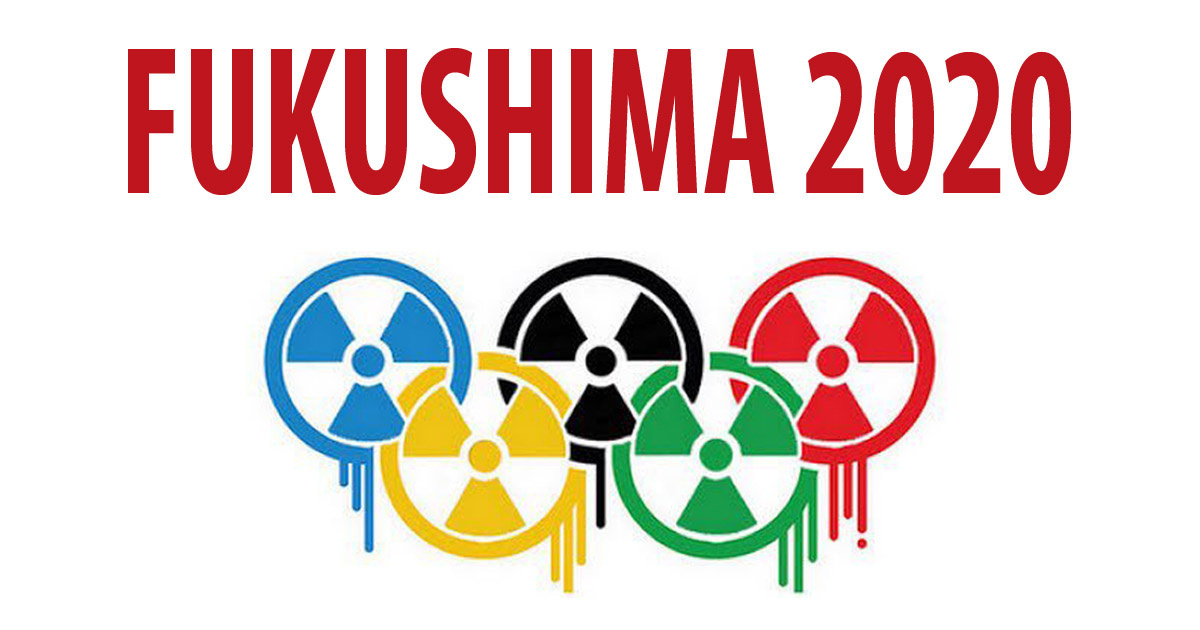
The 1985 Royal Commission report into British Nuclear Tests in Australia discussed many of these issues, but never in relation to the proximity and timing of the 1956 Olympic Games. Sixty years later, are we seeing the same denial of known hazards six years after the reactor explosion at Fukushima?
It brings to mind the British atomic bomb tests in Australia that continued until a month before the opening of the 1956 Olympic Games in Melbourne – despite the known dangers of fallout travelling from the testing site at Maralinga to cities in the east. And it reminds us of the collusion between scientists and politicians – British and Australian – to cover up the flawed decision-making that led to continued testing until the eve of the Games.
Australia’s prime minister Robert Menzies agreed to atomic testing in December 1949. Ten months earlier, Melbourne had secured the 1956 Olympics even though the equestrian events would have to be held in Stockholm because of Australia’s strict horse quarantine regimes.
The equestrians were well out of it. Large areas of grazing land – and therefore the food supplies of major cities such as Melbourne – were covered with a light layer of radiation fallout from the six atomic bombs detonated by Britain during the six months prior to the November 1956 opening of the Games. Four of these were conducted in the eight weeks running up to the big event, 1,000 miles due west of Melbourne at Maralinga.
Bombs and games
In the 25 years I have been researching the British atomic tests in Australia, I have found only two mentions of the proximity of the Games to the atomic tests. Not even the Royal Commission into the tests in 1985 addressed the known hazards of radioactive fallout for the athletes and spectators or those who lived in the wide corridor of the radioactive plumes travelling east. Continue reading →
by Sam KnightEnvironmental regulators are telling local officials that it’s okay for the public to be exposed to radiation equivalent to “5,000 chest x-rays,” according to critics.
The EPA issued a public guidance in September, advising local officials to respond to a possible nuclear emergency by claiming that 5,000-10,000 millirems exposure “usually result[s] in no harmful health effects.” The watchdog group Public Employees for Environmental Responsibility (PEER) said past studies funded by the US government declared that level to be highly carcinogenic.
“National Research Council of the National Academy of Sciences, and EPA itself, have long estimated that 10,000 millirems could be expected to induce excess cancers in every 86th person exposed,” PEER said on Monday.
The non-profit criticized the agency for failing to cite which “radiation safety experts” it used to justify the declaration.
The EPA also didn’t say how long a human should be safe, when exposed to radiation at the 5,000-10,000 millirem range. It did note, however, that 75,000 millirem exposure “in a short amount of time (usually minutes too hours)” can cause acute radiation sickness.
“Although cancer has been associated with high doses of radiation received over short periods of time, the cancers usually do not appear for many years, even decades,” the guidance noted, ominously.
PEER Executive Director Jeff Ruch said the threshold cited by the agency could lead to a dangerous hands-off approach, should catastrophe strike.
“This signals that in the event of a Fukushima-type accident EPA will allow public consumption of radiation-contaminated drinking water for months,” Ruch said.
“Dr. Strangelove is alive and lurking somewhere in the corridors of EPA,” he added.
PEER noted that it is planning on suing the EPA to challenge the legality of the radiation exposure claims. The group said that the guidance violates the Safe Drinking Water Act.
The agency advice on radiation exposure–a supplement to a “Protective Action Guide”–was crafted, in its own words, “to help emergency planners prepare public communications prior to and during” radiological and nuclear emergencies.
In January, just before President Obama left office, the EPA issued the initial Protective Action Guide. It set the allowable threshold for the general population at 500 millirems, and the threshold for babies, children, and pregnant and nursing women at 100 millirems.
“Some commenters…believe the proposed PAG was too conservative and that EPA should consider establishing the PAG in the 2,000 to 10,000 [millirem] range,” the agency said in January, in the Federal Register.
PEER was critical of these limits, reacting to them by saying they also violated Safe Drinking Water Act rules.
“For decades, EPA had taken the position that ‘There is no known safe amount of radiation,’” the watchdog said on Monday.
Radioactive wild boars in Sweden are eating nuclear mushrooms, Quartz, 13 Oct 17Radioactive wild boars currently roaming central and northern Sweden are proof positive that nuclear disasters have long-term environmental impacts, both near and far from where they occur.
In 1986, a nuclear power plant in Chernobyl, Ukraine exploded, irradiating the surrounding region, including Belarus, Russia and the rest of the Ukraine, and sending a cloud of radioactive material over northern and central Sweden. At the time, Swedes were warned against eating potentially nuclear berries and mushrooms. But no one told the wild boars about irradiated fruits and fungus, and three decades later these Swedish animals show exceptionally high levels of radioactivity because of mushrooms rooted deep in ground that remains radioactive.
On Oct. 5, the Swedish television channel SVT reported (link in Swedish) that of 30 wild boar carcasses tested for radiation this year by Calluna, a local environmental consultancy, 24 showed high levels of exposure. Calluna’s Ulf Frykman recently alerted local hunters in the Gävle region, about 100 miles north of Stockholm, of “extremely high” radiation levels among local boar,
“This is the highest level we’ve ever measured,” he told the Telegraph, noting one animal in particular. Although flora and fauna in Sweden have been generally deemed safe, Frykman believes deeply-rooted, nuclear mushrooms in the country’s northern territories are to blame for the high traces of radiation in these wild boars.
The creatures root for food in the soil, which exposes them to the iodine and cesium-137 traces that remain in soil long after they’re gone above ground. “Wild boar root around in the earth searching for food, and all the cesium stays in the ground,” Frykman explained. “If you look at deer and elk, they eat up in the bushes and you do not have not so much cesium there.”…….https://qz.com/1099248/radioactive-wild-boars-in-sweden-are-eating-nuclear-mushrooms/
Greed for atomic minerals to leave Tamil Nadu in peril, INDIAN EXPRESS, By Sv Krishna Chaitanya & Sushmitha Ramakrishnan | Express News Service 13th October 2017 CHENNAI: Tamil Nadu has been the biggest victim of illegal beach sand mining in the country. As per the report submitted recently by senior lawyer and rights activist V Suresh, appointed as amicus curiae by Madras High Court in the case relating to illegalities in mining of beach sand minerals in Thoothukudi, Tirunelveli and Kanniyakumari, out of 1.5 crore tonnes of raw sand mined between 2000 and 2017, 57 per cent had been mined illegally.
Now, the latest “horrific” amendment, as activists call it, to Coastal Regulation Zone (CRZ) Notification, 2011 by Union Ministry of Environment, allowing mining of atomic minerals like uranium, thorium or titanium in ecologically sensitive CRZ areas, irrespective of whether they are available in non-CRZ areas or not, is only going to deliver a telling blow on the already under-stress Tamil Nadu coast.
As per the study titled “Coastal Mineral Mapping” done by researchers in Institute of Ocean Management (IOM) in Anna University, it is revealed that Tamil Nadu arguably has highest concentration of Monazite deposits in the country along its coastline that spans over 1,076 km. Monazite, an atomic mineral, contains 8-10 percent thorium, which is a nuclear fuel. This was India’s first exhaustive attempt to map and record all the natural minerals available, done is tandem with Atomic Mineral Directorate for Exploration and Research (AMD) of Department of Atomic Energy and funded by Environment Ministry. The beach sands of India — especially in Tamil Nadu, Odisha, Kerala and Andhra Pradesh — are rich in several heavy minerals such as ilmenite, rutile, leucoxene, garnet, sillimanite, zircon and monazite.
Supreme Court lawyer Ritwick Dutta, who is also the managing trustee of Legal Initiative for Forest and Environment, said the latest notification will compromise the integrity of the coast. “I can’t make sense of this notification. There is no consultation, there is no fixation on extraction of minerals. This will give a free run for miners to plunder India’s natural treasure. There is a pattern in what the Centre is doing. It is systematically weakening all the laws coming under Environment (Protection) Act, 1972. Firstly, construction projects were exempted from preparing EIA, later Central Wetlands Regulatory Authority was replaced with ‘toothless’ Wetlands (Conservation and Management) Rules, 2016, where state authorities call the shots. Now, this mindless amendment to CRZ Notification, 2011.”………
Environmental activist Nityanand Jayaraman says that Tamil Nadu has already been plundered violating CRZ norms. The intertidal, CRZ-1 areas were not spared even when there were laws. “Now, this is legitimising some of the wrongdoing done in the past and people have also lost their right to question the illegality.”
Environmental dangers
It’s not just the loss of precious minerals that should worry the States. Tampering of fragile coastline would also invite disasters like salt water intrusion, qualitative and quantitative degradation of ground water……..
Health effects
While social and environmental consequences seem inevitable, Konstantine claimed that atomic mining has brought serious health complications to residents around the mines. “Since 1965, mining for radioactive minerals has been prominent in Kanniyakumari, particularly in Manavalakruchi. Studies in the neighbouring mines in Kollam have revealed that the effect of radiation has had a far reaching effect, up to 85 km,” he rued.
He added that no comprehensive study has been brought to public forum about the health effects of these radiations. “The incidences of cancer has been rising over the decades and most victims from Manavalakuruchi and Midalam, approach the Regional Cancer Centre in Thiruvananthapuram or the International Cancer Centre , by CSI Medical Mission at Neyyoor. “These cases are however are not mapped back to radioactivity,” he said claiming that the incidence of the disease is relatively lower the farther one lives from atomic mining areas……..
Alarm bells ringing
Activists say the resources could end up in foreign soil owing to lack of state-run companies’ expertise in handling such rare-earth minerals
Mining for radioactive minerals can contribute to cancer among those in the vicinity of the project
Tampering of fragile coastline would also invite disasters like salt water intrusion, leading to degradation of ground water. They say there are many areas in the State already battling such issues due to unscientific construction
The idea that nuclear pollution can be rendered safe by extreme dilution has been proven wrong
radioactive materials bioaccumulate. A worm can contain 2,000 to 3,000 times higher levels than its environment. The worm is then eaten by another marine animal, which gets eating by another, and so on. At each step, the radioactive level rises. Barbey has identified reproductive defects in sea crabs, caused by radioactive contamination, and these genetic defects are passed on to future generations of crabs.
Are we to believe the same is not happening in humans, who are at the top of the food chain?
The fact of the matter is that a certain number of cancer deaths are considered acceptable in order to keep costs for the nuclear waste industry down. The question no one has the answer to is: At what point do the deaths begin to outweigh the cost-savings of the nuclear industry?
As to where such cost-benefit considerations came from in the first place, the filmmakers identify the International Commission on Radiological Protection (ICRP)
the nuclear industry is hardly operating for the benefit of the many.
For decades, the common method of nuclear disposal was to dump plutonium-filled steel barrels into the ocean. Today, many if not most of these barrels have corroded and disintegrated, releasing radioactive material into the environment
“Versenkt und Vergessen” (Sunk and Forgotten) investigates what happened to the barrels of nuclear waste, and how radioactive material is disposed of today
In 1993, nuclear waste dumping into the ocean was banned worldwide, yet the ocean remains a primary dumping ground for radioactive waste
Instead of ditching barrels overboard, the nuclear waste industry built pipes along the bottom of the sea, through which the radioactive material is discharged directly into the open sea
Cancer deaths are considered acceptable to keep costs for the nuclear waste industry down. According to the International Commission on Radiological Protection, this cost-benefit consideration is part of Epicurus’ utilitarian ethics, which states that the needs of the many outweigh the needs of the few
By Dr. Mercola
A rarely addressed environmental problem is radioactive pollution from nuclear waste disposal. For decades, the common method of nuclear disposal was to simply dump plutonium-filled steel barrels into the ocean. Continue reading →
Since the 1940s, nuclear weapons tests, power plant failures and uranium mining have left radioactive contamination at hundreds of sites around the world. Whether the contamination is from weapons tests, accidents, or just reckless routine operations, the story of the affected people unfolds in much the same way, as if it were a formulaic plot for a generic television soap opera. Communities that have been chemically contaminated follow much the same script, but radiation adds some distinctive elements to the situation.
Radiation is invisible, and it has always been imbued with a diverse range of magical powers in science fiction. Ironically, in a very real sense, radiation does make people invisible (the phenomenon is fully explained by Robert Jacobs in “Radiation Makes People Invisible”) [1]. Once groups of people have become victims of a radiological contamination, they are, in addition to being poisoned (or being traumatized by the possibility that they have been poisoned), marginalized and forgotten. Their traditions and communities are fragmented, and they are shamed into concealing their trauma. When contamination occurs, there is a strong impulse even among many victims to not admit that they have been harmed, for they know the fate that awaits them if they do.
The victims are helped in this denial by those who inflicted the damage on them because nuclear technology, both for weapons and electricity production, has always been treated as two sides of a single national security problem that requires secrecy and the occasional sacrifice. Its workings must be hidden from enemies, terrorists and citizens themselves. Thus governments have never been interested in helping their citizens investigate nuclear accidents and environmental damage left in the wake of nuclear development.
As secretive programs of nation states, nuclear complexes operate free of any governing body that could provide checks and balances. In this sense, they are a more intractable problem than the corporate villains that are occasionally held in check by government supervision. The American tobacco industry was eventually forced into retreat by government, and it had to pay enormous damages to state governments for health care costs, but the nuclear weapons and energy complexes still operate free of any higher power that could restrain or abolish them.
Thus it is that hibakusha (the Japanese word for radiation victims) become invisible. When a new group of people become victims, such as in Fukushima in 2011, they feel that they have experienced a unique new kind of horror. For them, for their generation, it is new, but for those who know the historical record, it is a familiar replay of an old story. The people of Fukushima should know by now that they are bit players who have been handed down a tattered script from the past.
A case in point is “Blind Faith,” the superb 1981 book by journalist Penny Sanger, about the small irradiated Canadian town of Port Hope on the shores of Lake Ontario. (See the timeline at the end of this article) [2] In the 1970s it faced (and more often failed to face) the toxic legacy of processing first radium, then uranium for nuclear weapons and nuclear power plants.
In a saner world this book would not be out of print and forgotten. It would be a classic text known by everyone who has ever had to share his town with a dangerous corporate citizen. Then there would be no surprises when a nuclear reactor explodes or a cancer cluster appears somewhere new. It wouldn’t be a shock to see the victims themselves fall over each other in a rush to excuse their abuser, beg for a continuation of jobs and tax revenue, and threaten the minority who try to break the conspiracy of silence.
On the back cover of the 1981 paperback edition of “Blind Faith” there was an endorsement by the late great Canadian writer Farley Mowat, who passed away in the spring of 2014:
Penny Sanger has written a fascinating and fearsome account of the emotional turmoil that engulfs a small town when it discovers that its major industry is a threat to the health of its citizens. This is a classic account of how economic power enables industry to ride roughshod over those who must depend on it for their daily bread.
Although I wrote above that “Blind Faith” illustrates universal truths about what happens to communities contaminated with radiation, there are always unique aspects of the situation that come into play. In this case, we see the extreme complacency and obliviousness of Canadian society to the role that the country played in the development of nuclear weapons and nuclear power.
The uranium refinery in Port Hope was a key element in the Manhattan Project. It was the main facility for refining uranium ores from the Congo and northern Canada. However, as a subordinate nation in the American-led war, Canada just had to go along in complete secrecy. As was the case even in the US, there was never any debate in public or in elected legislatures. Canada was just taking orders and didn’t have to feel responsible. Canadians are still largely ignorant about their complicity in making the bombs that fell on Japan, as they are about being one of the sources of the uranium that was in the reactors of Fukushima Daiichi.
Another factor in our sense of irresponsibility is the comfortable delusion that all bad things are done by the evil empire south of the border. We’re the good guys, with universal health care and multiculturalism……..
The Port Hope refinery began operations in the 1930s to produce radium from uranium ore. The ore came from the recently discovered rich deposits in the Port Radium mine on the shore of Great Bear Lake in the Northwest Territories (previous post on this topic here). This mine would later become one of the primary sources of uranium for the first atomic weapons, but in the 1930s radium was the only product that had value for its use in making luminescent paint and medical applications.
By the 1930s it was well understood that radium and uranium mines were extremely dangerous. The high lung cancer rates of miners in Czechoslovakia had been noted for a long time, but there were others who failed to acknowledge any connection. Marie Curie died in 1934 from aplastic anemia, and she never acknowledged that her numerous health problems had been related to the vials of radium that she carried around in her pocket or perhaps to the unshielded x-ray machines she worked with. [3] Today her diaries and papers still have to be stored in a lead box.
Because there was no consensus on the dangers of radium by the early pioneers (DNA wasn’t even understood until the 1950s), there were few safety controls in place when radium became an industrial product. Radium paint workers got sick and died for mysterious reasons, as did workers in processing plants like the Eldorado Mining and Refining facility in Port Hope. Almost nothing was done to protect workers or properly dispose of the waste product. The wastes were isolated in a dump, but when that became problem, the dirt was sold as fill to unsuspecting (or unscrupulous) buyers and used at construction sites all over town.
It wasn’t until the 1970s that a few citizens of Port Hope started to notice radioactive wastes turning up in various locations. This new awareness was the beginning of bitter social divides that would be familiar to anyone who has followed what has happened in Fukushima prefecture since 2011. The enormous implications of the necessary cleanup forced political and economic powers to downplay or ignore the dangers, and ostracize anyone who dared to threaten real estate values and tarnish the image of the community. The mayor even boasted of what a great role the town had played in the Cold War by refining uranium so that America could beat back the Soviet threat, as if the contamination had been worth it.
There was a minimal recognition of the need to do something about the worst hot spots, to placate critics and relocate residents in the worst danger. Everyone agreed, for example, that something had to be done to clean up a contaminated school, but for the most part the problem was denied in favor of keeping the town’s biggest tax payer and employer satisfied. At the same time, the federal government was not motivated to do anything that would set back the expansion of the nation’s nuclear energy program. The Darlington and Pickering nuclear plants were built nearby in this era on the shores of Lake Ontario.
By this time, Eldorado was no longer selling uranium for American nuclear weapons, but it had become a major player in the uranium fuel market. It would provide the fuel for the large fleet of CANDU reactors that Ontario was building, and by the 1980s Eldorado was privatized, turned into Cameco, and was then selling about 80% of its output to the US where the uranium was enriched for use in light water reactors.
Thus a full acknowledgment of the extent of the problem—the cost of cleanup and the health impacts—would have jeopardized the refinery’s role as a major supplier in a growing nuclear energy industry. Eldorado might have seemed like a wealthy giant to outsiders, but the uranium business was perilous and changing rapidly. Just as the public was becoming aware of the extent of the pollution, Eldorado was stuck in long-term contracts that were a bargain for its customers but disastrous in a time of soaring costs.
The situation presented especially difficult obstacles for opponents because Eldorado was a crown (publicly owned) corporation. One obstacle was secrecy. Since 1942, the operations of Eldorado have been state secrets, and much remains locked up in archives that are yet to be opened to historians. [4]
The other problem was in the fact that the government had no interest in investigating its own corporation, and because Eldorado was a federal crown corporation, the province of Ontario had no authority to investigate it for environmental crimes. Thus complaints from citizens ran into this dead end.
Similar situations in the United States, such as at the Rocky Flats plutonium pit factory, involved the Department of Energy hiring large defense contractors like Rockwell to manage the plant. This meant there was a possibility the Environmental Protection Agency and the Federal Bureau of Investigations could act if enough public pressure were applied and evidence of crimes became apparent. As much as the American nuclear weapons complex was a monstrous crime against nature, there is at least something redeeming in the fact that the American system of government consisted of various institutions that could sometimes keep the others in check. In the dying days of operations at Rocky Flats in 1989, the EPA and the FBI raided the facility which was then operated by Rockwell under contract for the Department of Energy. The US government essentially raided and prosecuted itself. [5]
Unfortunately, no such checks and balances existed in Canada’s nuclear industry. The federal government and its crown corporation had a monolithic grip on the historical records and on decisions about environmental safety and health related to radiation. There was no outside force that had legal authority to prosecute them and force them to divulge information.
There are some further details in “Blind Faith” that stand out in my memory. Some are unique to the Port Hope story, while others are typical of stories of other irradiated and poisoned communities.
At one point, a doctor in a nearby town grew alarmed at the number cancer cases that appeared in his patients from Port Hope. He tried to bring the issue to the attention of health authorities, but was slandered and opposed by city officials to a degree that he found alarming. He had foolishly thought that his efforts to speak up for public health would be appreciated.
Instead, city officials made a pathetic attempt to sue him for defaming Port Hope, and when that immediately failed, they complained to the provincial medical association. They had thought that this would succeed in getting him stripped of his license to practice, but they were quickly rebuffed by the medical association that found no fault in a doctor expressing his opinion about a serious public health concern. Such was the sophistication of the strategies of the town fathers as they floundered for ways to preserve the tax base.
Eldorado and the federal government, and even the Workmen’s Compensation Board were equally combative in the lawsuits that former workers eventually managed to bring to court. Lung cancer was the only health issue that was admitted for consideration in the lawsuits, and once it became a legal battle, all ethical considerations went by the wayside. It became a matter of winning at all costs, of admitting to absolutely no wrongdoing no matter how absurd the defendants had to appear. The government lawyers played hardball, abandoning any thought that the government corporation owed anything to the citizens who had lost their health working on a project so essential for national security. The government side was not too ashamed to engage in extreme forms of legalistic hair-splitting.
For example, the victims were forced to prove their exposure, but everyone involved knew that the only party that had the information were the defendants, and Eldorado did its best to conceal it. One victim was denied compensation because the records showed his cumulative exposure was 10.8 working level months. Expert witnesses were brought in to say that the threshold of danger to health was 12 working level months.
Another segment of the book that stands out is that in which Penny Sanger was able to discover that at one time, before the contamination was known by townspeople, the Canadian military had used Port Hope as a training ground for operating in the aftermath of nuclear warfare. The military knew what the citizens of the town didn’t know at the time: there were sizzling hot spots of various sizes all over town, so it made for an ideal training ground for soldiers who would have to map radiation levels and move through contaminated terrain after a nuclear attack. After the training exercise, they might have bothered to tell the locals about what they were living with, but the contamination remained a secret until residents started to figure it out for themselves.
As the years of legal struggles and activism dragged on, there were signs that the government was tacitly admitting to the scale of the problem, even if it refused to accept legal responsibility for health damages. The management of Eldorado was routed, and it would eventually be privatized and turned into Cameco. The refinery became the object of pork barrel politics when the federal Liberals came back to power in 1980. They announced that the more dangerous uranium trioxide operation would be relocated to Blind River, a town in the north that had voted Liberal. Eldorado wanted the refinery kept in place close to markets. (I wonder if anyone saw the ironic symbolism of progress in the names; going from hope to blind—a fiction writer couldn’t have come up with anything better).
One stand-out account is that of a widow whose husband, a long-time Eldorado worker, had died of lung cancer at age 50. He had worked at Eldorado for over twenty years, during the era when workplace monitoring and standards were non-existent. Her husband was no longer there to say whether he too was “philosophical” about it and “couldn’t be bitter about it” like his wife and his daughter claimed. The widow said that in spite of her husband’s shortened life, they were grateful for the good jobs and university education that the children were able to get. Thanks to Eldorado, they had come up in the world.
Penny Sanger passed no judgment on this thinking, but I find it to be a rather disturbinging example of working man’s Stockholm Syndrome. The victim has internalized the values of the captor, and lost self-esteem and critical thinking skills in the process. The bereaved family shrugs that they “can’t be bitter about it.” They’ve internalized the value that children have to go to university to live worthwhile lives, and it’s alright if parents have to kill themselves to accomplish this goal.
It seemed to never occur to any of the Port Hope boosters that there were dozens of similar towns in rural Ontario that had found ways to survive without hosting toxic industries. I know a family of Polish immigrants who landed in Port Hope in the 1960s, and they managed to get by without working for Cameco. The children had the sense to leave town after high school when they saw their friends going straight to grim lives working with the yellowcake down at the plant. One of them managed somehow to get a couple of university degrees after he left town.
This lack of imagination among the terminally hopeful applies more widely. Not only do company towns fail to imagine less toxic ways to live, but large nations also fail to imagine new paradigms for energy and economic systems.
Port Hope’s troubles with its radioactive legacy didn’t end with the privatization of the refinery and other varied forms of resolution that came about in the 1980s. A cleanup was done in the 1980s, but twenty years later hot spots were still turning up, and the Canadian Nuclear Safety Commission finally admitted the extent of the problem and committed taxpayer funds to a billion-dollar decontamination project which is presently underway—an amount that is, ironically, about the same as the budget for the new Chernobyl sarcophagus under construction now. [6][7]
There is further irony in the fact that while the Fukushima and Chernobyl exclusion zones have become the famous global icons of radiation-affected communities, the Port Hope disaster has no place in Canada’s national consciousness. [8] There is little public awareness of the history, and the present billion-dollar decontamination project has received scant media attention and no public alarm over the high cost.
Opposition parties in Ontario have focused in recent years on stoking citizen outrage over cancelled plans to build gas-powered electric generating stations. That loss was comparatively little, amounting to “only” a few hundred million dollars. The same can be said of the province’s plan to spend $20 billion or more to refurbish nuclear power plants to operate them beyond their originally planned expiry dates. This issue receives little attention, as none of the major political parties wish to use it to stoke debate with rivals. Nuclear energy has vanished from political discourse.
Meanwhile, Cameco has continued to practice its philosophy of good corporate citizenship by funneling all its uranium sales through Switzerland in order to avoid Canadian taxes. The company is in an ongoing legal battle with Canada Revenue Agency, while it has warned stockholders it may owe as much as $850 million in back taxes[9]. Note that this amount falls a bit short of the cost of the decontamination project in Port Hope, but it would provide a big chunk of it.
“Blind Faith” is available on a website dedicated to the history of Port Hope. Since it is out of print and over thirty years old, I asked the author if she would allow its free distribution as a pdf file. She gave her permission, but of course the common sense rules apply. If you want to sell the book, ask the author for permission. If you redistribute it free, in whole or in part, do so with proper citation.Read it in a web browser: http://www.porthopehistory.com/blindfaith/blindfaith.htmFree download (permitted by author):
Penny Sanger,“Blind Faith” (pdf) (McGraw-Hill Ryerson, 1981), 135 pages.http://www.mintpressnews.com/MyMPN/blind-faith-nuclear-history-port-hope-ontario/
The first casualty of North Korean nuclear tests? The country’s environment, LA Times, Barbara Demick, 5 Oct 17
Mt Paektu is an active volcano that occupies a revered place in Korean legend as the birthplace of the Korean people. But it may be paying a price for their division.
Located on the border of North Korea and China, the volcano has been appropriated by Pyongyang as the “sacred mountain of the revolution.” Propagandists for the Communist state spin a tale, most likely apocryphal, that the late leader Kim Jong Il was born there while his father was a guerrilla fighting the Japanese.
The sacred mountain, however, is just 60 miles from the site where North Korea, now led by Kim’s son, Kim Jong Un, tested its sixth and most powerful nuclear weapon on Sept. 3.
Shortly afterward, Chinese authorities closed part of the tourist park on their side of the border because of rock slides. Chinese authorities would not say definitively whether the nuclear test was to blame, but seismologists think it is likely. The explosion registered as a 6.3 magnitude earthquake and was blamed for water bottles rolling off tables and furniture toppling in China, and apartment buildings rattling all the way to the Russian port city of Vladivostok.
It is just one example of the way that North Korea’s headlong rush to become a nuclear power is degrading the environment in and around the country’s borders.
The first casualty is inside North Korea itself, around the rugged, granite mountains of North Hamgyong province. All six of North Korea’s nuclear tests have taken place there at a site known as Punggye-Ri. Satellite images taken after the last test show numerous landslides around the site as well as water leaking from the entrance to one of the tunnels, according to 38 North, an academic website on Korea run by John Hopkins University.
“These disturbances are more numerous and widespread than seen after any of the North’s previous five tests, and include additional slippage in pre-existing landslide scars and a possible subsidence crater,’’ the report said.
Another analysis of satellite data found that Mt. Mantap, a 7,000-foot peak above the test site, actually lost a little elevation from the force of the underground explosion……
North Korea has conducted all six of its nuclear tests around the same site. The Sept. 3 test involved a device estimated at 250 kilotons — 17 times the force of the bomb that destroyed Hiroshima, Japan, in 1945.
“Every country that has developed a nuclear program has harmed its own people,” said Matthew McKinzie, director of the nuclear program at the Natural Resources Defense Council. He compares the situation to East Germany, where the extent of environmental degradation wasn’t known until after reunification in 1990.
The satellite photographs taken after the last test show water draining from the test site that was likely forced out from underground by explosion and could leach into the groundwater. A stream near the test site runs to the nearest sizable city, Kilju, some 25 miles away.
Even closer is the Hwasong labor camp, which is nestled next to Mt. Mantap and houses an estimated 20,000 political prisoners and their families. North Korean defectors in South Korea have said they believe prisoners were used to dig the tunnels of the nuclear test complex.
Satellite images also show that North Korea has failed to dispose safely of nuclear waste. In Pyongsan, north of the capital, Pyongyang, tailings are routinely dumped from North Korea’s largest uranium mine into an unlined pond, which is likely to contaminate the groundwater, 38 North has reported.
Defectors have complained as well about the environmental and safety risks of the nuclear program.
The reason for the unusually high radiation is that the animal lived in fields which are still affected by fallout from the nuclear disaster in Chernobyl, 31 years ago.
After the explosion at the reactor in what is now Ukraine, much of Sweden was covered in a toxic cloud of radioactive iodine and cesium-137. When the rain came, the area around Gävle in the centre-east of the country took the brunt of the radioactive pollution.
But while levels of radiation in animals such as elk and reindeer have been continually decreasing, wild boar have now begun to move north into the areas worst affected by the nuclear fallout – meaning the level of radiation among the boar population seems to be on the rise.
One boar shot in August had a radiation of 13,000 becquerel per kilogram (Bq/kg), whereas the limit set by Sweden’s Food Agency (Livsmedelsverket) for safe consumption is 1,500 Bq/kg.
And another boar, which was shot a while ago but was kept in freezer storage, has just had its radiation level measured at 16,000 Bg/kg, or in other words, more than ten times the safe limit. That animal was killed in Tärnsjö, located between Uppsala and Gävle.
“This is the highest level we’ve measured,” Ulf Frykman, an environmental consultant who tests radiation levels in game meat, told SVT.
Frykman said his team had measured around 30 samples of meat so far this year, and found that only five or six of those were below the safe limit.. The animals themselves rarely suffer any negative health effects from the radiation due to their short life spans, but people who consume meat with high radiation levels face an increased risk, albeit still a small one, of developing cancer.