Wildlife charities unite to oppose Sizewell C nuclear power station
it must not go ahead. The RSPB and Suffolk Wildlife Trust (SWT) say they
have not seen evidence that the £14billion project can be built without
detrimentally impacting internationally and nationally important
landscapes, habitats, animals and plants on the Suffolk coast.
direct loss of nationally important and protected land on Sizewell Belts, a
Site of Special Scientific Interest (SSSI). An area between 10-12 hectares
– or roughly ten football pitches – will be covered in concrete. The
loss of this nationally rare fen habitat would be devastating and
irreplaceable.”
build will bring the Sizewell Estate adjacent to the internationally famous
wildlife haven. It is feared the building work may increase erosion,
upsetting the delicate balance of the reserve. It could affect the water
levels in Minsmere’s ditches, impacting its rare wetland wildlife, which
includes bitterns, water voles, otters and ducks.
https://www.eadt.co.uk/news/swt-rspb-unite-to-oppose-sizewell-c-nuclear-power-station-1-6674364
Opposition to unnecessary, environmentally destructive Sizewell nuclear project
after the Covid-19 lockdown restrictions are lifted. Community leaders
believe people need to be able to attend public meetings and other events
as part of the process for the Sizewell C planning application submitted
yesterday.
earliest – and a final decision on the project late next year. The
leaders of East Suffolk Council and Suffolk County Council have been
supportive of EDF Energy making the Development Consent Order submission
for permission for the project but are continuing to call on the company to
ensure they talk to the two local authorities before triggering the formal
Section 56 process and timescale which includes a period of formal public
engagement.
Energy asking them to delay the Section 56 process given the current
Government guidance on social distancing, social isolation and public
gatherings. We believe all parties must be satisfied that appropriate
public engagement can take place. “We would like EDF Energy to continue
its discussions with both councils so we can work together to find a
suitable solution that works for all our communities.”
Suffolk county councillors calling on them to let their hearts rule their
heads and reject the project, which he claims will “irreparably alter
that unique Suffolk character and nature of this tranquil and welcoming
county, transforming it into just another over-developed, car-dominated,
road-centred, urbanised area of the UK like so many others – bland,
conformist and uniform”.
the national planning inspectorate for permission to build two huge nuclear
reactors on a site which is barely big enough to contain them. It requires
the destruction of the 100 year old Coronation Wood for its overspill
facilities. The construction is designed to house two European Pressurised
Reactors generating 3.2 gigawatts of electricity at full power. The
Sizewell B plant has recently reduced its output by 50% at a reported cost
of £50million due to over-supply. This over-supply is not just a
consequence of the covid-19 pandemic. In 2005, the government made plans to
meet a predicted 15% increase in electricity demand by 2020. In fact,
demand has dropped over those 15 years by 16%, an overestimation of demand
by more than 30%. It is axiomatic that Sizewell C is not needed to ‘keep
the lights on’ nor is it an essential infrastructure project.”
https://www.eadt.co.uk/news/edf-delay-on-sizewell-c-consultation-1-6672349
UK’s National Trust says new Sizewell C nuclear power station poses threat to rare birds
National Trust. A new nuclear power station planned for the Suffolk coast
would threaten rare wildlife on protected heathland, according to the
National Trust.
submitted to the Planning Inspectorate tomorrow, to build twin reactors at
Sizewell in a project that the French state-controlled company says would
supply enough low carbon electricity for six million homes, or 7 per cent
of UK power.
that is one of Britain’s rarest habitats and is home to a breeding
population of endangered stone curlews. It has written to the leaders of
East Suffolk council and Suffolk county council to raise concerns about the
proposed £18 billion plant, which EDF would build with the Chinese nuclear
power company China General Nuclear (CGN). Stop Sizewell C, a local
campaign group, said the power stations “would be an expensive bridge to
nowhere: it will suck vital funds away from the technologies and projects
that are more capable of truly transforming our energy landscape”.
including the actors Bill Nighy and David Morrissey and the painter Maggi
Hambling, called on the government to step in to delay consideration of the
proposal until the coronavirus restrictions were lifted. Mr Nighy, who used
to live in Theberton with his former partner, the actress Diana Quick,
said: “It is beyond belief that EDF is pressing forward during these
terrible and uncertain times with a project so misguided, and which even
the government’s own advisers find deeply concerning.
will not fit to any degree in our new world, and this internationally
famous environment will be desecrated. This is a time to protect our
ecosystems, not shatter them.”
Michigan flood – a setback to cleanup of toxic waste Superfund site
Michigan flood displaces thousands, threatens chemical plant Brynne Connolly 21 May 20, MIDLAND, Mich. (AP) — Floodwaters have overtaken dams and forced the evacuation of about 10,000 people from communities in central Michigan, where the governor warned that Dow Chemical Co.’s hometown could end up under 9 feet of water by Wednesday evening and said the state will investigate the dam operators.
Families living along the Tittabawassee River and connected lakes in Midland County were ordered to leave home Tuesday evening, the second time in less than 24 hours. By Wednesday morning, water several feet deep covered streets, parking lots and parkland and had reached a hotel near the river in downtown Midland.
No injuries or fatalities related to the flooding have been reported, city spokeswoman Selina Tisdale said.
The river topped a previous record of 33.9 feet (10.3 meters) set during flooding in 1986, the National Weather Service said. Its flood stage is 24 feet (7.3 meters), and it was expected to crest by day’s end at about 38 feet (11.6 meters).
The Weather Service urged anyone near the river to seek higher ground following “catastrophic dam failures” at the Edenville Dam, about 140 miles (225 kilometers) north of Detroit, and the Sanford Dam, about seven miles (11 kilometers) downriver.
Midland City Manager Brad Kaye said Wednesday that the Sanford Dam is overflowing but the extent of structural damage isn’t yet known.
If the entire dam structure were to fail, “there would be a much higher surge that will come down the river and that could raise the level much more quickly than what we’re seeing right at the moment,” Kaye said.
Michigan is under a stay-at-home order to prevent the spread of the coronavirus. The state has been a national hot spot for COVID-19, with more than 52,000 cases and 5,000 deaths, but Midland County has had fewer than 80 cases and under 10 deaths. Still, residents were advised to take precautions and schools set up as shelters spaced cots to adhere to social distancing guidelines.
Gov. Gretchen Whitmer said downtown Midland, a city of 42,000 and home to Dow Chemical Co., faced an especially serious flooding threat.
“In the next 12 to 15 hours, downtown Midland could be under approximately 9 feet of water,” the governor said during a late Tuesday briefing. “We are anticipating an historic high water level.”
On Wednesday, Whitmer told reporters that her office has been in touch with federal officials and will ask FEMA for support. “This is an event unlike anything we’ve ever seen before,” she said.
President Donald Trump tweeted that he was closely monitoring the situation and praised first responders. But he also took a jab at Whitmer, whom he has criticized for her stay-at-home orders: “We have sent our best Military & @fema Teams, already there. Governor must now ‘set you free’ to help. Will be with you soon!”
Whitmer said the state would investigate the operators of the dams and “pursue every line of legal recourse we have.”
The Federal Energy Regulatory Commission said it has directed Boyce Hydro to establish an independent investigation team to determine the cause of the damage to Sanford Dam, and that it would reach out to state officials regarding the Edenville Dam. It will send an engineer to assist with the investigation when it’s safe to do so.
In 2018, the commission revoked Boyce Hydro’s license to operate the Edenville Dam due to non-compliance issues that included spillway capacity and the inability to pass the most severe flood reasonably possible in the area. That year, the state rated the dam, built in 1924, in unsatisfactory condition.
The Sanford Dam, which was built in 1925, received a fair condition rating. Both are in the process of being sold.
“The initial readout is that this was a known problem for a while and that’s why its important that we do our due diligence,” Whitmer said.
Dow Chemical, with 9,000 employees and contractors in Midland, on Tuesday shut down all operating units except those needed to contain chemicals, spokesman Kyle Bandlow said. By Wednesday, floodwater was mixing with on-site containment ponds prompting the company and U.S. Coast Guard to activate emergency plans, Dow said in a statement.
It said there was no threat to the public or the environment, and that it has uncovered no product releases.
The flooding likely will pose a significant setback to the cleanup of a federal Superfund site caused by Dow’s release of dioxins in the last century, which contaminated sediments and floodplains along 50 miles (80 kilometers) of the Tittabawassee and Saginaw rivers, said Allen Burton, a professor of environment and sustainability at the University of Michigan…… https://wordpress.com/read/blogs/110336978/posts/1018052
Antarctic krill threatened by warming waters – climate change’s danger to the marine ecosystem
Climate change threatens Antarctic krill and the sea life that depends on it The Conversation, Devi Veytia, PhD student , University of Tasmania, Stuart Corney, Senior lecturer, University of Tasmania, 19 May 20,
The Southern Ocean circling Antarctica is one of Earth’s richest marine ecosystems. Its food webs support an abundance of life, from tiny micro-organisms to seals, penguins and several species of whales. But climate change is set to disrupt this delicate balance.
What we found
Antarctic krill are one of the most abundant animal species in the world. About 500 million tonnes of Antarctic krill are estimated to exist in the Southern Ocean.
Antarctic krill play a critical role in the ocean’s food webs. But their survival depends on a delicate balance of food and temperature. Scientists are concerned at how climate change may affect their population and the broader marine ecosystem.
Krill growth depends largely on ocean temperature and the abundance of its main food source, phytoplankton (microscopic single-celled plants)………
Krill growth habitat shifted south as suitable ocean temperatures contracted towards the poles. Combined with changes in phytoplankton distribution, growth habitat improved in spring but deteriorated in summer and autumn.
This early end to the growth season could have profound consequences for krill populations. The krill life cycle is synchronised with the Southern Ocean’s dramatic seasonal cycles. Typically this allows krill to both maximise growth and reproduction and store reserves to survive the winter.
A shift in habitat timing could create a mismatch between these two cycles.
For example, female krill need access to plentiful food during the summer in order to spawn. Since larger females produce exponentially more eggs, a decline in summer growth habitat could result in smaller females and far less spawning success.
Why this matters
Krill’s significant role in the food chain means the impacts of these changes may play out through the entire ecosystem.
If krill shift south to follow their retreating habitat, less food would be available for predators on sub-Antarctic islands such as Antarctic fur seals, penguins and albatrosses for whom krill forms a significant portion of the diet.
In the past, years of low krill densities has coincided with declines in reproductive success for these species…….. https://theconversation.com/climate-change-threatens-antarctic-krill-and-the-sea-life-that-depends-on-it-138436
South Carolina nuclear fuel plant treatment pool leaking, polluting groundwater?
Now, the lagoon liner is wearing out. And that’s a concern.
Recent research suggests radioactive pollution has seeped through the synthetic barrier that was supposed to protect soil and groundwater in the Congaree River flood plain. Soil below the liner is suspected of being polluted with waste from the east lagoon, according to a new report for the plant’s operator, Westinghouse Nuclear.
’“It is expected that some contamination will exist in the soil underlying the east lagoon liner, given the long operating history of the lagoon and the potential for a liner system leak,’’ the May 8 report for Westinghouse says.
If the soil below the lagoon is polluted, as Westinghouse suspects, it could indicate that groundwater flowing away from the property and toward the Congaree River has been contaminated.
No one knows the extent of the contamination yet, but Westinghouse has a plan to dig radioactive sludge from the lagoon and haul it across the country for disposal in the Idaho desert.
Once the company has removed the mucky sludge and the lagoon’s 1980s era liner, it plans to test the soil below the waste pond to see how much contamination may be in the earth.
The new Westinghouse consulting report, released by the U.S. Nuclear Regulatory Commission, says sludge in the east lagoon at Westinghouse is contaminated with low enriched uranium and technetium-99, nuclear materials generated as part of production of fuel rods at the 51-year-old factory.
Exposure to sufficient amounts of uranium can cause kidney damage in adults and children. Technetium 99, which concentrates in the thyroid and gastrointestinal tract, can increase a person’s chances of cancer if exposed to certain amounts………
For now, Westinghouse is moving forward with cleanup efforts. Although the company doesn’t plan to clean up some pollution until it closes the plant in future decades, Westinghouse has agreed to get rid of other contamination sooner. …….
The tainted material that would be shipped to Idaho, likely next year, includes 45,000 cubic feet of sludge, soil and debris from the east lagoon, a 160-foot long pond behind the plant on Bluff Road.
Radioactive pond sludge would be hauled away on railroad cars to a U.S. Ecology site in the Owyhee Desert near Grand View, Idaho, according to plans filed with the U.S. Nuclear Regulatory Commission. Contaminated cylinders and a polluted sludge pile also will be carted away from the site for disposal……. https://www.thestate.com/news/local/environment/article242667201.html
Close to 100 USA Environmental Rules now removed by Trump govt: here’s the list
The Trump Administration Is Reversing Nearly 100 Environmental Rules. Here’s the Full List. NYT, By NADJA POPOVICH, LIVIA ALBECK-RIPKA and KENDRA PIERRE-LOUIS May 6, 2020
After three years in office, the Trump administration has dismantled most of the major climate and environmental policies the president promised to undo.
Calling the rules unnecessary and burdensome to the fossil fuel industry and other businesses, his administration has weakened Obama-era limits on planet-warming carbon dioxide emissions from power plants and from cars and trucks, and rolled back many more rules governing clean air, water and toxic chemicals. Several major reversals have been finalized in recent weeks as the country has struggled to contain the spread of the new coronavirus.
In all, a New York Times analysis, based on research from Harvard Law School, Columbia Law School and other sources, counts more than 60 environmental rules and regulations officially reversed, revoked or otherwise rolled back under Mr. Trump. An additional 34 rollbacks are still in progress.
With elections looming, the administration has sought to wrap up some of its biggest regulatory priorities quickly, said Hana V. Vizcarra, a staff attorney at Harvard Law School’s Environmental and Energy Law Program. Further delays could leave the new rules vulnerable to reversal under the Congressional Review Act if Democrats are able to retake Congress and the White House in November, she said.
The bulk of the rollbacks identified by the Times have been carried out by the Environmental Protection Agency, which repealed and replaced the Obama-era emissions rules for power plants and vehicles; weakened protections for more than half the nation’s wetlands; and withdrew the legal justification for restricting mercury emissions from power plants.
At the same time, the Interior Department has worked to open up more land for oil and gas leasing by cutting back protected areas and limiting wildlife protections……
All told, the Trump administration’s environmental rollbacks could significantly increase greenhouse gas emissions and lead to thousands of extra deaths from poor air quality each year, according to energy and legal analysts.
Below, [on original] we have summarized each rule that has been targeted for reversal over the past three years.
Are there rollbacks we missed? Email climateteam@nytimes.com or tweet @nytclimate. https://www.nytimes.com/interactive/2020/climate/trump-environment-rollbacks.html
Scientists Warn Worse Pandemics Are on the Way if We Don’t Protect Nature
 Scientists Warn Worse Pandemics Are on the Way if We Don’t Protect Nature https://www.ecowatch.com/pandemics-environmental-destruction-2645854694.html?rebelltitem=4#rebelltitem4 Jordan Davidson
Apr. 27, 2020 A group of biodiversity experts warned that future pandemics are on the horizon if mankind does not stop its rapid destruction of nature.
Writing an article published Monday by The Intergovernmental Science-Policy Platform on Biodiversity and Ecosystem Services (IPBES), the authors put the responsibility for COVID-19 squarely on our shoulders.
“There is a single species that is responsible for the COVID-19 pandemic – us. As with the climate and biodiversity crises, recent pandemics are a direct consequence of human activity – particularly our global financial and economic systems, based on a limited paradigm that prizes economic growth at any cost. We have a small window of opportunity, in overcoming the challenges of the current crisis, to avoid sowing the seeds of future ones,” the authors wrote on IPBES.
The authors of the report include the three co-chairs of the comprehensive 2019 IPBES Global Assessment Report on Biodiversity and Ecosystem Services, which found that one million species of plants and animals are at risk of extinction within decades. The fourth author, Peter Daszak, is the president of EcoHealth Alliance and is tasked with spearheading the IPBES’ next global assessment, as The Guardian reported.
The authors argue that government stimulus plans need to include sustainable and nature-positive initiatives. “It may be politically expedient at this time to relax environmental standards and to prop up industries such as intensive agriculture, long-distance transportation such as the airlines, and fossil-fuel-dependent energy sectors, but doing so without requiring urgent and fundamental change, essentially subsidizes the emergence of future pandemics,” the authors wrote.
They also fault wanton greed for allowing microbes that lead to novel diseases to jump from animals to humans.
“Rampant deforestation, uncontrolled expansion of agriculture, intensive farming, mining and infrastructure development, as well as the exploitation of wild species have created a ‘perfect storm’ for the spillover of diseases from wildlife to people,” they wrote in their article.
They warn that 1.7 million unidentified viruses known to infect people are estimated to exist in mammals and water birds. Any one of these may be more disruptive and lethal than COVID-19.
With that in mind, the authors suggest three facets that should be considered for COVID-19-related stimulus plans. Countries should strengthen environmental regulations; adopt a ‘One Health’ approach to decision-making that recognizes complex interconnections among the health of people, animals, plants, and our shared environment; and prop up healthcare systems in the most vulnerable countries where resources are strained and underfunded. “This is not simple altruism – it is vital investment in the interests of all to prevent future global outbreaks,” the scientists argue in their IPBES article.
“The programs we’re talking about will cost tens of billions of dollars a year,” Daszak told The Guardian. “But if you get one pandemic, even just one a century, that costs trillions, so you still come out with an incredibly good return on investment.
“Business as usual will not work. Business as usual right now for pandemics is waiting for them to emerge and hoping for a vaccine. That’s not a good strategy. We need to deal with the underlying drivers.”
Their assessment has been supported recently by others in the scientific community. A study published earlier this month blamed human impact on wildlife for the current outbreak, as The Guardian reported.
The authors of the new article end their piece on an optimistic note about nature’s resiliency. “We can build back better and emerge from the current crisis stronger and more resilient than ever – but to do so means choosing policies and actions that protect nature – so that nature can help to protect us,” they wrote.
The COVID-19 crisis is a warning for the future
|
As Tasmania prepares to enter the recovery phase of the COVID-19 pandemic, calls are growing for the crisis to be seen as a warning for the future. The pandemic has had widespread health and economic ramifications across Tasmania. Thirteen people have died, thousands have been quarantined and more than 20,000 people have lost their jobs. While we don’t know exactly what animal species the virus originated from, scientists widely consider bats the likely source. Dr Scott Carver is a senior lecturer at the University of Tasmania who specialises in the ecology and epidemiology of infectious diseases. He said human impacts on the environment can create new contacts with animals and increase risk of pathogens transferring between animals and humans.
“Pathogen spillover between species … happens quite often,” Mr Carver said. “It is just that most pathogens don’t cause really significant health outcomes. Some of them, however, do. “The chance of any one spillover event resulting in an epidemic is low, but if you increase the opportunity for that to happen, through increasing new contacts, then the probability increases.” He said implementing policies to limit the risk of potential future pandemics would benefit both public health and biodiversity. “With a growing human population size and growing human impacts on the environment it is not surprising that you get more of these events happening,” Dr Carver said. “It is incumbent upon us to really take a serious look at the way we treat the environment and think about policies that can limit these sorts of things.” UTAS’s Dr Olivia Hasler believes legislating a law of ecocide could be one way to approach establishing these policies. “Ecocide is an attempt to criminalise human activities that destroy and diminish the well-being and health of ecosystems and species within an ecosystem,” she said. She said the COVID-19 pandemic had highlighted how connected we were as a society, and she hoped that would not be forgotten in the recovery effort. “A law against ecocide would provide accountability to those that are in positions of power to make decisions about the use of our resources and shared land,” Dr Hasler said…… https://www.examiner.com.au/story/6743091/human-impacts-on-the-environment-could-be-increasing-the-risk-of-pandemics/?cs=95 |
|

Hole in the ozone layer is now closed
Record Arctic ozone hole now closed: UN https://www.heraldsun.com.au/news/breaking-news/record-arctic-ozone-hole-now-closed-un/news-story/b0d4c72a9befb02c7ebc4ccc2e91a6c1
May 2, 2020 Ozone depletion over the Arctic hit a “record level” in March, the biggest since 2011, but the hole has now closed, the UN World Meteorological Organisation (WMO) says.
The springtime phenomenon in the northern hemisphere was driven by ozone-depleting substances still in the atmosphere and a very cold winter in the stratosphere, WMO spokeswoman Clare Nullis told a UN briefing in Geneva.
“These two factors combined to give a very high level of depletion which was worse than we saw in 2011. It’s now back to normal again … the ozone hole has closed,” she said on Friday.
Nullis, asked whether less pollution during the pandemic had played a role, said: “It was completely unrelated to COVID.”
This is what uranium and radon, do in drinking water
 Dr. Hans Frehly 1 May 2020, People who are exposed to relatively high levels of radionuclides in drinking water for long periods may develop serious health problems, such as cancer, anemia, osteoporosis, cataracts, bone growths, kidney disease, liver disease and impaired immune systems. https://agrilifeextension.tamu.edu/library/water/drinking-water-problems-radionuclides/
 The pandemic is showing us how our trashed world can heal
 Now We Know How Quickly Our Trashed Planet Can Heal
Clean air, wandering goats. The pandemic is teaching us that all is not yet lost. By Margaret Renkl “………. Now a pandemic has turned us all into window gazers. We have been given an unexpected space for wondering. In cities the world over, songbirds seem louder now that they aren’t competing with the sounds of traffic.
I think the birds are enjoying this,” wrote a New York City bookseller in response to an online order I’d placed for a new field guide to songbirds. “In NYC we can hear them better than ever.”
But it’s not just that our ears are tuned, in the new silence, to the sounds of birds that have always shared our world. Coyotes now wander the sidewalks of San Francisco and the streets of Chicago; Great Orme Kashmiri goats forage in the town of Llandudno, Wales; a groundhog snarfs pizza right outside a window in Philadelphia; a mountain lion jaywalks in San Mateo; wild boars root in the medians of Barcelona; a red fox saunters across a driveway in Nashville.
This pandemic has overlapped with the annual spring songbird migration, so it’s possible that people are seeing birds that truly weren’t there before we all went into lockdown. But in general it’s not true that the wild animals we’re seeing from our windows have become more plentiful in our absence. They are simply making themselves more visible to us now that we have become less visible to them.
The pandemic is teaching us that all is not yet lost.
None of these changes will last — the human race cannot stay cooped up indoors forever — but while we have both the time to observe and the window perch to watch from, we can use this cultural moment to rethink our relationship to wildness. We can ponder what it truly means to share the planet. We can resolve to change our lives.…..
And so our first task when we emerge from this isolation will be to remember. To sear into our memories that pure pageantry of wildness, of life in its most insistent persisting. And then to try in every possible way to save it. https://www.nytimes.com/2020/04/27/opinion/coronavirus-shutdown-environment.html
Animals in radiation zones are not doing well

above – Chernobyl bird at right has facial tumour
Not thriving, but failing https://beyondnuclearinternational.org/2018/03/11/not-thriving-but-failing/ https://beyondnuclearinternational.org/2018/03/11/not-thriving-but-failing/ Animals in radiation zones are not doing well, By Linda Pentz Gunter
It started with wolves. The packs around the Chernobyl nuclear plant, which exploded on April 26, 1986, were thriving, said reports. Benefitting from the absence of human predators, and seemingly unaffected by the high radiation levels that still persist in the area, the wolves, they claimed, were doing better than ever.
Appearances, however, can be deceptive. Abundant does not necessarily mean healthy. And that is exactly what evolutionary biologist, Dr. Timothy Mousseau and his team began to find out as, over the years, they traveled to and researched in and around the Chernobyl disaster site in the Ukraine. Then, when a similar nuclear disaster hit in Japan — with the triple explosions and meltdowns at Fukushima Daiichi on March 11, 2011 — Mousseau’s team added that region to its research itinerary.
Mousseau has now spent more than 17 years looking at the effects on wildlife and the ecosystem of the 1986 Chernobyl nuclear disaster. He and his colleagues have also spent the last half dozen years studying how non-human biota is faring in the wake of Fukushima. Ninety articles later, they are able to conclude definitively that animals and plants around Chernobyl and Fukushima are very far indeed from flourishing.
Mousseau’s findings strongly contradicted earlier work including the 2006 Chernobyl Forum report which claimed the Chernobyl zone “has become a wildlife sanctuary,” and a subsequent article published in Current Biology in 2015 that said wildlife was “thriving”around Chernobyl.
“I suppose everyone loves a Cinderella story,” speculated Mousseau, who is based at the University of South Carolina. “They want that happy ending.” But Mousseau felt sure the moment he read the Forum report, which, he noted, “contained few scientific citations,” that the findings “could not possibly be true.
What Mousseau found was not unexpected given the levels of radiation in these areas and what is already known about the medical effects of such long-term exposures. Birds and rodents had a high frequency of tumors.
“Cancers are the first thing we think about,” Mousseau said. “We looked at birds and mice. In areas of higher radiation, the frequency of tumors is higher.” The research team found mainly liver and bladder tumors in voles and tumors on the head, body and wings of the birds studied.
But Mousseau wanted to look beyond cancers, which is what everyone expects to find and what researchers had looked for, but only in humans. There were few wildlife studies, a fact Mousseau found surprising, given nature’s ability to act as a sentinel for likely impending human health impacts.
Mousseau and his fellow researchers found cataracts in birds and rodents. Male birds had a high rate of sterility. And the brains of birds were smaller. All of these are known outcomes from radiation exposure.
“Cataracts in birds is a problem,” Mousseau said. “A death sentence.”
Mental retardation has been found among children exposed to radiation in utero. Mousseau and colleagues discovered the same pattern in the birds they studied. “Birds already have small brains, so a smaller brain size is a definite disadvantage,” he said.
There were also just fewer animals in general. “There were many fewer mammals, birds and insects in areas of higher radiation,” Mousseau said. And they had their hunch as to why.
He and his colleagues extracted sperm from the male birds they caught and were shocked to find that “up to 40% of male birds in the radiologically hottest areas were sterile.”
The birds’ sperm were either deformed or dead. None would be able to reproduce. The discovery, he said, was “not at all surprising. These are the levels of radiation known to influence reproduction. At the same time, there is no safe level of radiation below which there aren’t detectable effects.”
Fewer birds have already been observed in the contaminated areas around Fukushima, said Mousseau. “Although it’s too early to assess the long term impact on abundance and diversity around Fukushima, there are very few butterflies and many birds have declined in the more contaminated areas. If abundance is compressed, biodiversity will follow.”
The consequences of radiation exposure, says Mousseau, “will have a tremendous impact on the quality of life of these animals, and the length of quality of life. It need not necessarily be cancers,” that cause these damages he said. “There is no doubt that the levels of radiation in Chernobyl and Fukushima generate genetic damage.”
Read more about Dr. Timothy Mousseau’s work.
Trump’s new uranium plans threaten Grand Canyon area
|
New Trump Nuclear Plan Favors Uranium Mining Bordering the Grand Canyon, The administration, seeking to restore America’s “competitive nuclear advantage,” also wants to create a $150 million uranium reserve in the coming decade. Inside Climate News, Judy Fahys APR 26, 2020
Evergreen forests blanket the Grand Canyon’s less traveled northern plateau, and the perfume of Ponderosa pine drifts down a creekbed to the bottom of the great redrock canyon. Downstream, the strangely blue waters of the Little Colorado River meet the main Colorado, coming from the southern plateau close to sacred places for indigenous people who have lived here for centuries.
Both plateaus are also where mining companies want to unearth uranium. Mining those claims has been barred since 2012, when Congress imposed a 20-year mining ban across 1,000 acres here because past uranium extraction has polluted drinking water and poisoned the air and the ground. Local tribes and environmental groups that sought the temporary ban have been pressing Congress to make the ban permanent. But in a sweeping plan to revive the domestic uranium mining industry unveiled Thursday, the Trump administration proposed instead to open the scenic and sacred areas once again in the name of economic vitality and national security. Allowing more uranium mining on federal lands is just one of the suggestions that emerged from an eight-month review by the White House Nuclear Fuel Working Group. Proposals outlined in the Restoring America’s Competitive Nuclear Advantage report quickly triggered criticism. Some environmentalists say that the administration shouldn’t propose using taxpayer funds during a pandemic to bail out a dirty, uncompetitive industry that’s largely owned by foreign companies. ….. |
|
Earth Day 2020: Climate change would be small fry compared to nuclear war
 Earth Day 2020: Climate change would be small fry compared to nuclear war https://www.pressenza.com/2020/04/earth-day-2020-climate-change-would-be-small-fry-compared-to-nuclear-war/
21.04.2020 – Abolition 2000, On this Earth Day 2020, members of the Abolition 2000 coodinating committee and others have written a statement in support of the need to address the triple threats facing humanity today: climate change, global pandemics and nuclear devastation. The statement is open for signatories by anyone who would like to endorse it. It highlights the fact that although climate change is a huge threat to human civilization given that a tipping point could be reached at any time, and covid-19 is killing thousands of people every day, a nuclear war has the capability to destroy civilization in a matter of days.
Addressing the threats to Planetary Survival
Earth Day 2020 sign on statement from members of the Abolition 2000 global network to eliminate nuclear weapons
The year 2020 marks the 50th Anniversary of Earth Day[i] and finds the planet facing existential threats like never before in human history.
The threat from climate change is manifesting itself more and more strongly as the years go by through extreme weather events, forest fires on a vast scale, the bleaching of coral reefs, and receding glaciers, among others. This year also sees the world facing a pandemic which, as we speak, is costing thousands of lives every day and seems likely to have an impact on our civilization for years, if not decades to come.
Alongside these threats to human existence, however, is the lesser-considered, but more dangerous threat from nuclear disaster, and in this context we recall that the year 2020 also marks the 75th anniversary of the U.S. atomic bombs dropped on Hiroshima and Nagasaki, killing an estimated 500,000 people either through immediate incineration by the blast or subsequent death over the following months and years from agonising radiation poisoning[ii]. 2020 also marks the 75th anniversary of the establishment of the United Nations to “save succeeding generations from the scourge of war,” by putting in place the common security mechanisms to achieve this. Unfortunately, the end of the 2nd World War also kicked off a race for nations to develop nuclear technology that has the possibility to inflict a more devastating blow to the planet in 10 days than climate change will have in 100 years.
Today, some 14,000 nuclear weapons – most of which are vastly more powerful than the bombs that destroyed Hiroshima and Nagasaki – continue to pose an intolerable threat to humanity as identified by Atomic Scientists who judge the planet to be a symbolic 100 seconds to midnight on their doomsday clock[iii]. These weapons, thousands of which can be launched within minutes of the order being given, are in the hands of sometimes erratic leaders who cannot be trusted to put the wellbeing of the planet ahead of their own domestic agendas. Research published in 2013 by International Physicians for the Prevention of Nuclear War concludes that up to 2 billion people would be at risk of starvation in a nuclear conflict consisting of the use of only 100 nuclear warheads[iv], and evidence from the ICRC showed that there is no capacity to provide humanitarian assistance in the case of nuclear bombs used in populated areas[v], either.
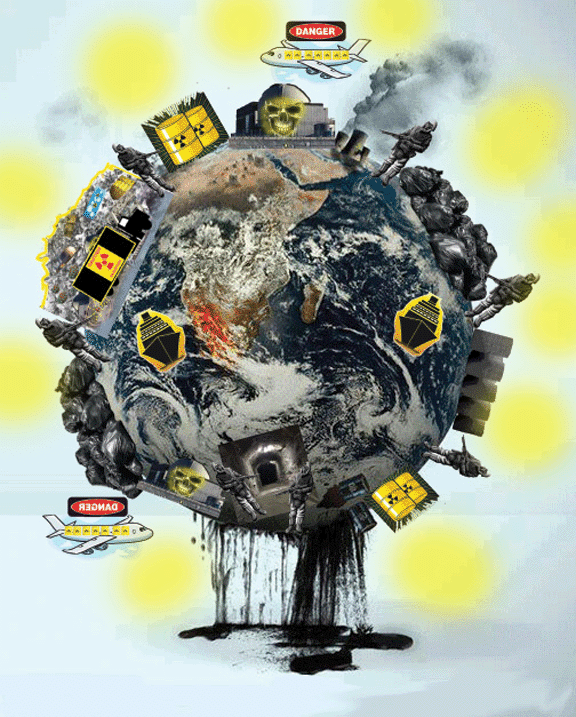 In addition, the over 400 nuclear power stations distributed all over the planet are capable of poisoning the entire planet with toxic radioactive waste that needs to be stored safely for 250,000 years. Each one of these stations is an accident waiting to happen and a potential terrorist threat. Over the last 50 years in which Earth Day has been marked, we have seen dramatic accidents at reactors in Three Mile Island, Chernobyl and Fukushima. At the time of writing, forest fires around Chernobyl are cause for concern as they approach the reactor location, and the fires themselves are re-releasing into the atmosphere the radioactive material previously absorbed by trees and other plants since the reactor exploded[vi].
Colonised and indigenous peoples have, in the large part, borne the brunt of nuclear devastation – from the mining of uranium and the testing of nuclear weapons on indigenous peoples land, to the dumping, storage and transport of plutonium and nuclear wastes, and the theft of land for nuclear infrastructure.[vii]
On this Earth Day, as the world faces the triple threats of climate change, virus pandemic and nuclear oblivion, we  call on all people of good faith around the world to come together and construct the foundations of a new world: a world without nuclear weapons and nuclear energy, a sustainable world in which the land, oceans, atmosphere, glaciers, wildernesses, flora and fauna in all its diversity can recover, and an equitable world with an economic system that provides a dignified life for all the planet’s inhabitants.
An essential part of this new world will be better implementation of the UN Charter prohibition on war and the utilisation of diplomacy and law to resolve international disputes. It will also require redirection of military spending towards human security, the elimination of nuclear weapons, the rapid phasing out of nuclear power, and a turn to clean, safe renewable energy sources.[viii][ix]
As a species, we have the capability of doing this, and the current global crisis is the wake-up call we need in order to make a better world for all.
We, the undersigned, are ready to do our part. Who is with us?
Click here to add your name to the list of signatories
Click here to view the full list of signatories
[i] https://www.earthday.org/earth-day-2020/
[ii] https://www.pressenza.com/2019/07/interview-with-kathleen-lawand-international-committee-of-the-red-cross/
[iii] https://thebulletin.org/2020/01/press-release-it-is-now-100-seconds-to-midnight/
[iv] https://www.ippnw.org/pdf/nuclear-famine-two-billion-at-risk-2013.pdf
[v] https://www.regjeringen.no/globalassets/upload/ud/vedlegg/hum/hum_malich.pdf
[vi] https://www.bbc.co.uk/news/world-europe-52274242
[vii] http://www.abolition2000.org/en/resources/newsreleasesstatements/moorea-declaration/
[viii] http://www.abolition2000.org/a2000-files/sustainable-now.pdf
[ix] https://www.irena.org/newsroom/pressreleases/2020/Apr/Renewable-energy-can-support-resilient-and-equitable-recovery
1 This Month



26 September – International Day for the Total Elimination of Nuclear Weapons


PLEASE OPPOSE HR 8255 AND S.3639 – bills would accelerate satellite deployment, with no environmental review or safeguards – https://ncstd5li.quorum.us/campaign/169331/
To see nuclear-related stories in greater depth and intensity – go to https://nuclearinformation.wordpress.com
-
Archives
- September 2026 (245)
- August 2026 (330)
- July 2026 (355)
- June 2026 (287)
- May 2026 (306)
- April 2026 (356)
- March 2026 (251)
- February 2026 (267)
- January 2026 (308)
- December 2025 (358)
- November 2025 (359)
- October 2025 (375)
-
Categories
- 1
- 1 NUCLEAR ISSUES
- business and costs
- climate change
- culture and arts
- ENERGY
- environment
- health
- history
- indigenous issues
- Legal
- marketing of nuclear
- media
- opposition to nuclear
- PERSONAL STORIES
- politics
- politics international
- Religion and ethics
- safety
- secrets,lies and civil liberties
- spinbuster
- technology
- Uranium
- wastes
- weapons and war
- Women
- 2 WORLD
- ACTION
- AFRICA
- Atrocities
- AUSTRALIA
- Christina's notes
- Christina's themes
- culture and arts
- Events
- Fuk 2022
- Fuk 2023
- Fukushima 2017
- Fukushima 2018
- fukushima 2019
- Fukushima 2020
- Fukushima 2021
- general
- global warming
- Humour (God we need it)
- Nuclear
- RARE EARTHS
- Reference
- resources – print
- Resources -audiovicual
- Weekly Newsletter
- World
- World Nuclear
- YouTube
-
RSS
Entries RSS
Comments RSS
 nuclear-news