Not only Fukushima – UK nuclear reactors also empty radioactive water into the sea
 Ian Fairlie’s Blog 22nd Oct 2020, Concerns over proposed tritium discharges from Fukushima – why no apparent concern about the larger tritium releases from Hunterston B and Torness? Recent newspaper reports have expressed concern about the apparent decision by the Japanese Government and TEPCO to discharge large volumes of radioactive tritiated water from the stricken Fukukshima nuclear power station in Japan into the Pacific Ocean. Ian Fairlie’s Blog 22nd Oct 2020, Concerns over proposed tritium discharges from Fukushima – why no apparent concern about the larger tritium releases from Hunterston B and Torness? Recent newspaper reports have expressed concern about the apparent decision by the Japanese Government and TEPCO to discharge large volumes of radioactive tritiated water from the stricken Fukukshima nuclear power station in Japan into the Pacific Ocean.I have expressed concern myself about this proposed decision -see here. Instead I recommend that TEPCO and the Japanese Government should build more storage tanks to allow for the decay of the radioactive tritium. Some readers have commented that all nuclear power stations world-wide discharge tritium into the sea (sometimes via rivers) and into the atmosphere. This is true and TEPCO used this fact to try to justify its proposed dumping of tritium into the sea.
My reply as that two wrongs do not make a right: it is in fact quite worrying that all nuclear facilities routinely dump large volumes of tritium into the sea and the air. This applies to all UK nuclear power stations as well – including Hunterston B and Torness in Scotland. Recent reports have expressed concern about the restarts of the ancient dilapidated reactors at Hunterston B which are well past their sell-by dates.
These fears largely centre on the risks of a nuclear accident at these oldunsafe reactors. But shouldn’t we also be concerned about their tritium discharges? In 2018, annual tritium releases to the sea from Hunterston B were 148 terabecquerels (TBq) and the even more dangerous tritium emissions to the atmosphere totalled 0.96 TBq.
The situation is similar at all other UK nuclear power stations. For example, at Torness, the tritium discharges in 2018 were 295 TBq into the sea and 1.32 TBq into the air. In most cases, these annual amounts are larger than the annual amounts being proposed to
be released at Fukushima. So shouldn’t we be equally be concerned at these releases, as we are at the Japanese ones? |
|
Study finds that bees are harmed by quite low levels of ionising radiation

 Current Chernobyl-level radiation harmful to bees: study https://www.thehindu.com/sci-tech/energy-and-environment/current-chernobyl-level-radiation-harmful-to-bees-study/article32908484.eceAFP
PARIS, FRANCE, OCTOBER 21, 2020
Researchers exposed bee colonies in a laboratory setting to a range of radiation levels found in areas of the exclusion zone around the ruined Chernobyl site
Bumblebees exposed to levels of radiation found within the Chernobyl exclusion zone suffered a “significant” drop in reproduction, in new research published Wednesday that scientists say should prompt a rethink of international calculations of nuclear environmental risk.
The study, published in the journal Proceedings of the Royal Society B, set out to discover how ionising radiation affects insects, which are often thought to be more resilient than other species.
“We found that at radiation levels detectable in Chernobyl, the number of new queen bees produced from the colony was significantly reduced and colony growth was delayed — meaning colonies reached their peak weight at a week later,” said the paper’s lead author Katherine Raines.
The lecturer in environmental pollution at the University of Stirling told AFP by email that researchers “anticipate that this may have an effect on pollination/ecosystem services in contaminated areas”.
The authors said they chose bumblebees both because of a lack of lab-based research into bees and because of their crucial role in pollination.
Ionising radiation can occur either from nuclear sites or medical procedures, although the levels tested were higher than those that would likely be found in the environment from normal releases, Raines said.
But she added that the researchers were “very surprised that we could detect effects as low as we did”.
“Our research suggests insects living in the most contaminated areas at Chernobyl may suffer adverse effects, with subsequent consequences for ecosystem services such as pollination,” she added.
The authors said if their findings could be generalised “they suggest insects suffer significant negative consequences at dose rates previously thought safe” and called revisions to the international framework for radiological protection of the environment.
People are not allowed to live near the Chernobyl power station and the abandoned settlements within the exclusion zone are surrounded by forests hosting birds, wolves, elks and lynxes. A giant protective dome was put in place over the destroyed fourth reactor in 2016.
Vital need to protect Antarctic seas: groups aim for new protected areas

‘No other choice’: Groups push to protect vast swaths of Antarctic seas, Mongabay
BY ELIZABETH CLAIRE ALBERTS ON 19 OCT, 2020
- A coalition of conservation groups is advocating for the establishment of three new marine protected areas (MPAs) in East Antarctica, the Antarctic Peninsula and the Weddell Sea, which would encompass 4 million square kilometers (1.5 million square miles) of the Southern Ocean, or 1% of the global ocean.
- These proposals will be discussed at an upcoming meeting of the Commission for the Conservation of Antarctic Marine Living Resources (CCAMLR), which is due to take place online because of the pandemic.
- Conservationists anticipate that China and Russia may not support these MPA proposals due to fishing interests in the region, although they are optimistic that the MPAs will eventually be approved.
A coalition of conservation groups, including Pew, ASOC, SeaLegacy, Antarctica2020, Ocean Unite, and Only One, are working together to advocate for the formation of three marine protected areas (MPAs) in East Antarctica, the Antarctic Peninsula, and the Weddell Sea. Together, these areas would protect about 4 million square kilometers (1.5 million square miles), encompassing 1% of the world’s ocean. That’s two and a half times the size of Alaska, and nearly three times the size of Papahānaumokuākea Marine National Monument in Hawaiʻi, which is currently one of the world’s largest marine sanctuaries.
“If these three marine protected areas … [are] created at the same time, it would form the largest marine protection in the history of humanity,” Cristina Mittermeier, National Geographic wildlife photographer and co-founder of SeaLegacy, told Mongabay. “[It would be] a piece of good news that the planet needs.”
This is a matter of political will’
The body responsible for making decisions surrounding Antarctica’s marine region is the Commission for the Conservation of Antarctic Marine Living Resources (CCAMLR), an international commission with 25 member states and the European Union, as well as 10 acceding states. Originally established to manage krill fisheries in the Southern Ocean, the commission meets each year in Hobart, Australia, to negotiate total allowable catches for fisheries, and to discuss other matters related to Antarctica’s marine region, including the designation of MPAs.
Any decision requires a consensus among all members, and proposals can take a long time to be approved. For instance, it took more than five years for the commission to approve a proposal to turn a region of the Ross Sea into an MPA, according to Werner. But it finally went ahead in 2016: now 1.55 million km2 (nearly 600,000 mi2)of the Ross Sea is classified as an MPA, with 1.12 million km2 (432,000 mi2) of the region fully protected from commercial fishing.
“In CCAMLR, everything is possible,” said Werner, who acts as an official observer and scientific representative at the commission. “You can have a proposal blocked for years like the Ross Sea, and then one day [it happens].”…………
The way that Antarctica goes, so does the world’
One of the most important species living in the Southern Ocean is krill. These tiny, shrimp-like crustaceans are the foodstuff for many species, such as whales, seals, penguins, squids, fish and seabirds. Without krill, the pelagic food web would entirely collapse.
Krill is also heavily harvested for human consumption, mainly for fish meal and omega-3 dietary supplements.
The establishment of the three proposed MPAs — which would include no-take zones, but also areas that would allow regulated fishing — would help protect krill populations from overharvesting and enable fishing activities to continue in other areas, Cousteau said. According to one study, MPAs help increase fish mass………
But it’s not just fishing that’s a threat to krill — climate change is wreaking havoc on the species as high temperatures melt the ice it vitally depends upon. …….. https://news.mongabay.com/2020/10/no-other-choice-groups-push-to-protect-vast-swaths-of-antarctic-seas/
South Wales and the danger of pollution from the dumping of radioactive mud from Hinkley nuclear project
|
Welsh politicians urge openness on impact of mud from nuclear power stationHinkley Point C building site waste due to be dumped in sea near Cardiff, Guardian, Steven Morris, @stevenmorris20, Thu 22 Oct 2020 The builders of the Hinkley Point C nuclear power station must be completely open about the potential environmental impact of dumping tens of thousands of tonnes of mud in the sea near Cardiff, politicians in Wales have said.
EDF is proposing to deposit mud excavated as part of the huge construction project on the Somerset coast in the waters off the Welsh capital next year. The Welsh parliament debated the issue on Wednesday after 10,000 people signed a petition calling for a full environmental impact assessment (EIA) to be carried out on the proposal. Petitioners, led by the musician Cian Ciarán, of the band Super Furry Animals, fear the mud could be contaminated and may cause environmental damage and harm the health of people who live in south Wales. Ahead of the debate, EDF confirmed it would carry out a full EIA but members of the Welsh parliament, or Senedd Cymru, said it was vital the findings – and the workings – were published in full. Llyr Gruffydd, a Plaid Cymru member of the Senedd, said there were “real concerns” that the dumping may harm marine life and put public health in danger. “Radioactive particles from the outflow pipes of Hinkley Point A and Hinkley Point B have been flushed out for the last 55 years,” he said. “We know there were plutonium leaks in the 1970s that might also have contaminated the mud they want to dump in Welsh waters.” …….. https://www.theguardian.com/uk-news/2020/oct/21/welsh-politicians-urge-openness-on-impact-of-mud-from-nuclear-power-station |
|
Do the UK authorities really understand the hazards of radioactive waste mud dumping off Cardiff?
|
Nation Cymru 20th Oct 2020, Richard Bramhall, Secretary of the Level Radiation Campaign. Tomorrow the
Senedd will debate a petition calling for an Environmental Impact Assessment (EIA) to be undertaken ahead of any further dredged material from Hinkley Point being disposed of at the Cardiff Grounds disposal site. This is taking centre stage as Electricité de France (EDF) seeks a licence
to dredge huge amounts of mud from the Severn Estuary and dump it on a shallow sandbank less than two miles from Cardiff. The Environment (Wales) Act 2016 requires decision-makers to take great care and to consult widely when there are uncertainties. We argue that there are large uncertainties
about how many uranium oxide fragments are in the mud, and about where they would go if dumped on Cardiff Grounds, how much genetic damage they would do to the population of Wales and whether the people who must make the licensing decisions understand the relevant science. https://nation.cymru/opinion/why-were-calling-for-more-testing-before-more-mud-from-hinkley-point-is-dumped-near-cardiff/ |
|
Scientific women get together in plan for marine protected area for Antarctica Peninsula
All-female scientific coalition calls for marine protected area for Antarctica Peninsula Plus other ways to help penguins, whales, and seabirds, EurekAlert, UNIVERSITY OF SYDNEY, Research News 19 Oct 20, The Western Antarctic Peninsula is one of the fastest warming places on earth. It is also home to threatened humpback and minke whales, chinstrap, Adélie and gentoo penguin colonies, leopard seals, killer whales, seabirds like skuas and giant petrels, and krill – the bedrock of the Antarctic food chain.With sea ice covering ever-smaller areas and melting more rapidly due to climate change, many species’ habitats have decreased. The ecosystem’s delicate balance is consequently tilted, leaving species in danger of extinction.
Cumulative threats from a range of human activities including commercial fishing, research activities and tourism combined with climate change is exacerbating this imbalance, and a tipping point is fast approaching.
Dr Carolyn Hogg, from the University of Sydney School of Life and Environmental Sciences, was part of the largest ever all-female expedition to the Antarctic Peninsula, with the women in STEMM initiative, Homeward Bound, in late 2019. There, she witnessed the beauty and fragility of the area, and the negative impacts of climate change and human activity on native species, first-hand. As part of the Homeward Bound program she learnt about the science, conservation and governance of Antarctica.
In a new commentary piece published in Nature, Dr Hogg and her colleagues from the expedition outline these threats, and importantly, offer ways to counter them. More than 280 women in STEMM who have participated in the Homeward Bound initiative are co-signatories to the piece.
A global initiative, Homeward Bound ‘aims to elevate the voices of women in science, technology, engineering mathematics and medicine in leading for positive outcomes for our planet’.
Women are noticeably absent in Antarctica’s human history, which is steeped in tales of male heroism. Female scientists are still a minority in the region’s research stations.
“Now, more than ever, a broad range of perspectives is essential in global decision-making, if we are to mitigate the many threats our planet faces,” said Dr Hogg.
“Solutions include the ratification of a Marine Protected Area around the Peninsula, set to be discussed on 19 October, at a meeting of a group of governments that collectively manage the Southern Ocean’s resources,” said Dr Hogg. “The region is impacted by a number of threats, each potentially problematic in their own right, but cumulated together they will be catastrophic.”
Decreasing krill affects whole ecosystem
The Peninsula’s waters are home to 70 percent of Antarctic krill. In addition to climate change, these krill populations are threatened by commercial fishing. Last year marked the third largest krill catch on record. Nearly 400,000 tonnes of this animal were harvested, to be used for omega-3 dietary supplements and fishmeal.
“Even relatively small krill catches can be harmful if they occur in a particular region, at a sensitive time for the species that live there,” said Dr Cassandra Brooks, a co-author on the comment from the University of Colorado, Boulder. “For example, fishing when penguins are breeding lowers their food intake, and affects their subsequent breeding success. A Marine Protected Area will conserve and protect this unique ecosystem and its wildlife, and we need to implement it now.”
Climate change is fundamentally altering the Western Antarctic Peninsula:……
Three ways to protect the Peninsula
1. A Marine Protected Area (MPA) designation for the waters………
2. Protect land areas ………
3. Integrate conservation efforts…….
….https://www.eurekalert.org/pub_releases/2020-10/uos-asc101520.php
Dangerous radiation levels from fracking
I have raised this concern in several letters to the Guardian over the past seven years. Indeed, seven years ago this month, Public Health England said in a review of potential risks that “there is … the potential for radon gas to be present in natural gas extracted from UK shale”.
Eight years ago, Dr Marvin Resnikoff, of Radioactive Waste Management Associates, estimated that radon levels from the Marcellus gas field in the eastern US were up to 70 times the average, and suggested that the radiation from some shale gas deposits was as much as 30 times as high as natural background levels.
Hence, there is undoubtedly a risk of radon gas being pumped into citizens’ homes as part of the shale gas stream. Unless the gas is stored for up to a month to allow the radon’s radioactivity to naturally reduce, this is potentially very dangerous.
Dr David Lowry
Senior international research fellow, Institute for Resource and Security Studies
Analysis of risk of ecosystem collapse, biodiversity loss – a fifth of countries at risk

Fifth of countries at risk of ecosystem collapse, analysis finds https://www.theguardian.com/environment/2020/oct/12/fifth-of-nations-at-risk-of-ecosystem-collapse-analysis-finds
Trillions of dollars of GDP depend on biodiversity, according to Swiss Re report, Damian Carrington Environment editor @dpcarrington, Mon 12 Oct 2020 .One-fifth of the world’s countries are at risk of their ecosystems collapsing because of the destruction of wildlife and their habitats, according to an analysis by the insurance firm Swiss Re.
Natural “services” such as food, clean water and air, and flood protection have already been damaged by human activity.
More than half of global GDP – $42tn (£32tn) – depends on high-functioning biodiversity, according to the report, but the risk of tipping points is growing.
Countries including Australia, Israel and South Africa rank near the top of Swiss Re’s index of risk to biodiversity and ecosystem services, with India, Spain and Belgium also highlighted. Countries with fragile ecosystems and large farming sectors, such as Pakistan and Nigeria, are also flagged up.
Countries including Brazil and Indonesia had large areas of intact ecosystems but had a strong economic dependence on natural resources, which showed the importance of protecting their wild places, Swiss Re said.
“A staggering fifth of countries globally are at risk of their ecosystems collapsing due to a decline in biodiversity and related beneficial services,” said Swiss Re, one of the world’s biggest reinsurers and a linchpin of the global insurance industry.
“If the ecosystem service decline goes on [in countries at risk], you would see then scarcities unfolding even more strongly, up to tipping points,” said Oliver Schelske, lead author of the research.
Jeffrey Bohn, Swiss Re’s chief research officer, said: “This is the first index to our knowledge that pulls together indicators of biodiversity and ecosystems to cross-compare around the world, and then specifically link back to the economies of those locations.”
The index was designed to help insurers assess ecosystem risks when setting premiums for businesses but Bohn said it could have a wider use as it “allows businesses and governments to factor biodiversity and ecosystems into their economic decision-making”.
The UN revealed in September that the world’s governments failed to meet a single target to stem biodiversity losses in the last decade, while leading scientists warned in 2019 that humans were in jeopardy from the accelerating decline of the Earth’s natural life-support systems. More than 60 national leaders recently pledged to end the destruction.
The Swiss Re index is built on 10 key ecosystem services identified by the world’s scientists and uses scientific data to map the state of these services at a resolution of one square kilometre across the world’s land. The services include provision of clean water and air, food, timber, pollination, fertile soil, erosion control, and coastal protection, as well as a measure of habitat intactness.
Those countries with more than 30% of their area found to have fragile ecosystems were deemed to be at risk of those ecosystems collapsing. Just one in seven countries had intact ecosystems covering more than 30% of their country area.
Among the G20 leading economies, South Africa and Australia were seen as being most at risk, with China 7th, the US 9th and the UK 16th.
Alexander Pfaff, a professor of public policy, economics and environment at Duke University in the US, said: “Societies, from local to global, can do much better when we not only acknowledge the importance of contributions from nature – as this index is doing – but also take that into account in our actions, private and public.”
Pfaff said it was important to note that the economic impacts of the degradation of nature began well before ecosystem collapse, adding: “Naming a problem may well be half the solution, [but] the other half is taking action.”
Swiss Re said developing and developed countries were at risk from biodiversity loss. Water scarcity, for example, could damage manufacturing sectors, properties and supply chains.
Bohn said about 75% of global assets were not insured, partly because of insufficient data. He said the index could help quantify risks such as crops losses and flooding.
Conflict of interest – UK’s Centre for Environment, Fisheries and Aquaculture Science (CEFAS)
Stop Hinkley Press Release 8th Oct 2020, EDF’s Hinkley C Nuclear Power Station will be wiping out fish stocks in
Severn Estuary for 60 years. The Stop Hinkley Campaign is accusing
EDFGenco, the French and Chinese owned Company building Hinkley Point C, of
trying to bully the UK Environment Agency into allowing them to destroy
environmentally precious fish stocks for the 60 year lifetime of the
nuclear power station.
A condition placed on EDFGenco by the Environment
Agency was that permission to build Hinkley C was dependent on Acoustic
Fish Deterrents (AFDs) being placed on the two massive cooling water intake
heads 3 kilometres offshore from the Nuclear site.
Now EDFGenco is trying
to renege on its commitment to install AFDs and is seeking a variation on
the planning conditions imposed. EDFGenco claims that the Centre for
Environment, Fisheries and Aquaculture Science (CEFAS) the government’s
marine and freshwater science expert body – is happy for them to go ahead
without AFDs. The Wildfowl and Wetland Trust points out that “CEFAS’s
relationship as a paid contractor to EDFGenco and an agent of Government
raises unavoidable questions of conflict of interest”.
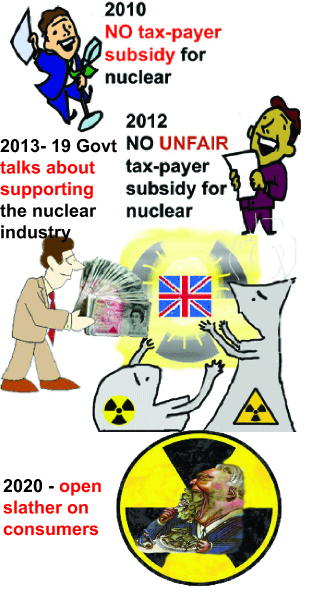
Will the UK government sacrifice the beautiful Suffolk coast in its misguided, uneconomic, Sizewell nuclear power push?
 East Anglian Daily Times 8th Oct 2020, As councils lose patience with EDF, will Suffolk businesses follow suit?
Today East Suffolk lies at a crossroads – the future of the east of the county now seems certain to rest in the hands of London-based civil servants and ministers – and to be honest I don’t know which way they will jump when push comes to shove. The deadline has now passed for councils, businesses, and residents to have their say on whether a two new nuclear reactors should be built on the Suffolk coast at Eastbridge, north of the existing stations at Sizewell.
landscape. But I do worry that there are some in government who do not understand the value of this area to the country as a whole who will be prepared to look on Sizewell C as a shiny investment to try to kick-start the UK economy after the pandemic and in a world no longer governed by EU rules, will pour in government subsidies to make up for the loss of Chinese money.
https://www.eadt.co.uk/ea-life/last-chance-to-stop-sizewell-c-1-6871419?s=09
BBC 8th Oct 2020, Campaigners against a new nuclear power station say they are “resolute”
after their bid to protect woodland was thrown out by the High Court. EDF
Energy, which wants to build two new reactors next to Sizewell B in
Suffolk, was given approval in 2019 to fell Coronation Wood on the site.
Together Against Sizewell C (Tasc) sought a judicial review, claiming that
decision was unlawful.
14 million tonnes of plastic on ocean floor – more on the coasts
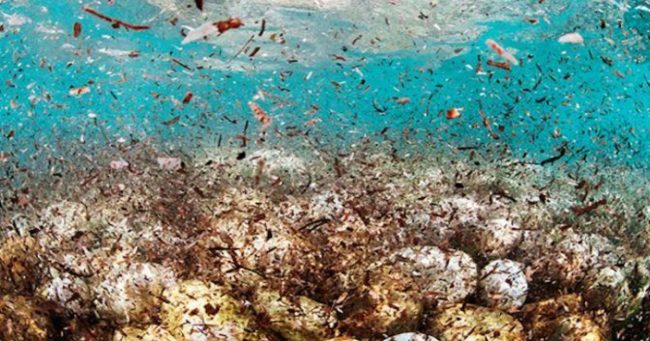
Every drink bottle we buy, face scrub we use and chip packet we finish results in tiny plastics entering the ocean.But where are these tiny micro-plastics, exactly?
Are they floating around on the ocean’s surface, waiting to be scooped up by a surfer?
Or are they stuck in the tummies of turtles or seabirds?
A new study by the CSIRO, Australia’s national science agency, has estimated up to 14 million tonnes of micro-plastics have sunk to the bottom of the ocean floor.
The peer-reviewed research, published on Tuesday, is the first global estimate for micro-plastics on the seafloor. Dr Britta Denise Hardesty, team leader with CSIRO’s Oceans and Atmosphere, said 14 million tonnes of micro-plastics was a “huge amount, especially when you think about how tiny all those bits are”.Dr Britta Denise Hardesty, team leader with CSIRO’s Oceans and Atmosphere, said 14 million tonnes of micro-plastics was a “huge amount, especially when you think about how tiny all those bits are”.
But where are these tiny micro-plastics, exactly?
Are they floating around on the ocean’s surface, waiting to be scooped up by a surfer?
Or are they stuck in the tummies of turtles or seabirds?
A new study by the CSIRO, Australia’s national science agency, has estimated up to 14 million tonnes of micro-plastics have sunk to the bottom of the ocean floor.
The peer-reviewed research, published on Tuesday, is the first global estimate for micro-plastics on the seafloor.
Dr Britta Denise Hardesty, team leader with CSIRO’s Oceans and Atmosphere, said 14 million tonnes of micro-plastics was a “huge amount, especially when you think about how tiny all those bits are”.
To put it into perspective: Imagine five carrier bags stuffed with plastic dotted along every single metre of coastline around the world, excluding Antarctica
The piles of bags would sit on every Australian beach, along Italy’s Amalfi Coast, around Vietnam’s Ha Long Bay, and all around Canada’s coastlines and beyond.
Now imagine someone pushing those bags into the ocean, and letting them sink into the darkness.
“It’s a confronting amount, and hopefully it provides a reasonable wake-up call,” Dr Hardesty told The New Daily.
“We’re finding them hundreds of kilometres offshore and thousands of metres deep – more micro-plastics than has been found by lots of other studies.”
“Micro-plastics come from the same place as plastics,” Dr Hardesty said, adding “micro just means they’re smaller than 5mm”.
“It’s really just small plastic from single-use items, consumer goods, industry or fishing-related goods, cosmetics, micro-beads, agriculture, aquaculture, household waste, everything.”Many of these tiny plastics end up in our oceans via stormwater drains, sewage systems, sea-based activities, littering, things falling off the backs of trucks, and improper waste management where people intentionally dump rubbish straight into the sea or rivers.
They often end up in the stomachs of marine animals like dolphins or fish, while bigger pieces of plastic can be just as dangerous.
“Masks that have those little straps can tangle the feet and legs of sea birds and things like that,” Dr Hardesty said.
“Rubber gloves might be more likely to look like a jellyfish that could be mistakenly eaten by turtles if they end up in the ocean.”
The World Economic Forum estimates one garbage truck of plastic alone is dumped into the ocean every minute of every day.
It estimates there could be more plastic in the ocean than fish by 2050.
The missing piece
Although the CSIRO’s findings are troubling, perhaps what’s more concerning is the answer to the following question: Where is the rest of the missing plastic?
Compared to the tonnes of plastic entering the ocean every day, Dr Hardesty said 14 million tonnes on the ocean floor was “just a drop in the ocean”.
“Where is all the missing plastic? Is it in the stomachs of animals? Is it floating on the surface?” she said.
“I’d say most of it is on our coastlines.”
USA ‘s Environment and climate cases face a bleak future with a Republican dominated Supreme Court
 HOW WILL CLIMATE AND ENVIRONMENTAL CASES FARE ON A 6-3 CONSERVATIVE SUPREME COURT? THE ALLEGHENY FRONT, REID FRAZIER, OCTOBER 2, 2020
It appears that President Trump has enough votes in the Senate to confirm Supreme Court nominee Amy Coney Barrett before Election Day. That means the court’s balance would tip from a 5 to 4 advantage for conservatives to 6 to 3. What would this majority mean for the environment?
For our podcast, Trump on Earth, Reid Frazier examines what the loss of RBG could mean for the environment with Ellen Gilmer, senior legal reporter for Bloomberg Law.
But first, we take a look back at Ginsburg’s environmental legacy with Pam King and Jeremy Jacobs, reporters for E&E News who wrote in a recent article, “The passing of Supreme Court Justice Ruth Bader Ginsburg could shake the foundation of America’s bedrock environmental laws, leaving a chasm on the bench where once sat an environmental champion.” (Read the transcript to that interview HERE.)
(The interviews were conducted before Amy Coney Barrett was nominated to fill Justice Ruth Bader Ginsburg’s seat on the Supreme Court.)
Listen to the full episode or read the transcript below:
The safety of the world requires a nuclear-free planet
 power: A gargantuan threat, Independent Australia By Karl Grossman | 4 October 2020, At the start of 2020, Bulletin of the Atomic Scientists moved its Doomsday Clock to 100 seconds to midnight — the closest to midnight, doomsday, since the clock started in 1947.
There are two gargantuan threats — the climate crisis and nuclear weapons/nuclear power.
The only realistic way to secure a future for the world without nuclear war is for the entire planet to become a nuclear-free zone — no nuclear weapons, no nuclear power. A nuclear-free Earth.
How did India get an atomic bomb in 1974? Canada supplied a reactor and the U.S. Atomic Energy Commission provided heavy water for it under the U.S. so-called “Atoms for Peace” program. From the reactor, India got the plutonium for its first nuclear weapon.
Any nation with a nuclear facility can use plutonium produced in it to construct nuclear arms.
Nuclear technology continues to spread around the world — a recent headline: ‘Trump Administration Spearheads International Push for Nuclear Power.’ Russia, despite Chernobyl, is pushing hard at selling nuclear plants.
Can the atomic genie be put back in the bottle? Anything people have done other people can undo. And the prospect of massive loss of life from nuclear destruction is the best of reasons.
There is a precedent: the outlawing of poison gas after World War I when its terrible impacts were tragically demonstrated, killing 90,000. The Geneva Protocol of 1925 and the Chemicals Weapons Convention of 1933 outlawed chemical warfare and to a large degree the prohibition has held.
There are major regions of the Earth – all of Africa and South America, the South Pacific and others – that are Nuclear-Weapon-Free Zones based on the United Nations provision for such zones.
But if we are truly to have a world free of the horrific threat of nuclear arms, the goal needs to be more. A world free of the other side of the nuclear coin – nuclear power –is also necessary.
Radical? Yes, but consider the even more radical alternative: a world where many nations will be able to have nuclear weapons because they have nuclear technology. And the world continuing to try using carrots and sticks to try to stop nuclear proliferation — juggling on the road to nuclear catastrophe…………
It took decades of struggle to make the place where I live – Long Island, New York – nuclear-free. The Shoreham Nuclear Power Plant was stopped and the six to ten more the Long Island Lighting Company wanted to build, prevented. The two reactors at Brookhaven National Laboratory leaking radioactive tritium into its underground water table have been shut down.
On this 50th anniversary of Earth Day, let us strive for the goals of defeating global warming and having all the Earth nuclear-free. These are existential threats that must be overcome.
A version of this article was given as a presentation at the Long Island Earth Day 2020 Program on 21 September.
Karl Grossman is a full professor of journalism at the State University of New York. He is also an award-winning investigative reporter. Click here to go to Karl’s website. https://independentaustralia.net/environment/environment-display/nuclear-power-a-gargantuan-threat,14372
Debunking myths about saving the natural world
 An Explorer Debunks 5 Myths About Saving The Earth, An Explorer Debunks 5 Myths About Saving The Earth, National Geographic ecologist Enric Sala explains why protecting the planet is not a selfless act. Huffington Post , By Amanda Schupak 4 Oct 2o, ”…………. Sala picked apart five common misapprehensions about conservation for HuffPost. The following are his responses to each myth, edited for length and clarity. Myth No. 1: Conservation is an altruistic, bleeding-heart pursuit.Sala says: It’s a myth that conserving our life-support system is a luxury. Come on. Everybody’s so worried about the financial markets and the economy, but there is no economy without people. And there are no people without the natural world, because everything we need to survive — the oxygen we breathe, the food we eat, the clean water we drink — it’s produced by the work of other species. We cannot replicate any of the goods and services that nature gives us for free. Myth No. 2: Conservation costs too much money.Sala says: Actually, the lack of conservation costs more money. One example: the COVID-19 pandemic. Every single person on the planet has been affected by this. What is the cost of the pandemic? The International Monetary Fund estimated $9 trillion. Other estimates run as high as $15.8 trillion. How much would it have cost to prevent this pandemic? Well, let’s look at the source of the epidemic: wildlife trade. In previous pandemics, it was also wildlife trade — moving species around the world like commodities — but also the destruction of their natural habitat. HIV, Ebola, SARS and many other infectious diseases have come from animals. So, how much would it have cost to prevent the destruction of these places? We released an economic report this year that estimated that, on average, protecting what the science is telling us is the very minimum, which is 30% of the planet (land and sea), would cost $140 billion per year. Is this a lot of money? Well, let’s compare it with a couple of things. One is how much money governments spend today to subsidize activities that actually destroy nature, like burning fossil fuels and industrial agriculture: hundreds of billions to trillions of dollars per year. So what it would cost to protect a third of our life-support system is only a fraction of what the governments of the world spend now to destroy it. This $140 billion is less than what the world spends today on video games. So to people who say, “Well, can we afford it?” I would say that is the most disingenuous argument in the world. The question should be, “How can we afford not to?” Myth No. 3: Ending deforestation is at odds with meeting humanity’s needs.Sala says: We have let ourselves be hijacked by industries that monopolize the use of our land for just a single commodity, at the expense of all the other benefits that society gets if that land is not degraded. ……….. Myth No. 4: We cannot protect more of the ocean because we need to fish more.Sala says: Today only 7% of the ocean is protected, and science is telling us that we need at least 30%. So why don’t we have more of the ocean protected? Because there is a conflict with fishing. We hear from the industrial fishing lobby that we need to fish more because we need to feed more people, but now we’re going to do it sustainably. Well, we reached peak fishing in the mid-’90s ― that was the maximum catch of wild fish and it’s been declining since. Eighty-two percent of fish stocks are overfished, meaning we’re taking them out of water faster than they can reproduce. However, if we get at least 30% of the ocean protected [from fishing], the ocean actually would give us a net gain in fishing catch. In these areas where you don’t kill the fish, they take a longer time to die. They grow larger, they have more sex, they produce many more babies. So this helps to replenish the areas around these reserves. We protect the right 30% of the ocean, [then] actually fishing less, with less effort, we will catch more fish. So what’s not to like here? Myth No. 5: Humans are separate from nature.Sala says: We need to shift from our view of humans as masters of the universe and that everything is centered around us. We are one species living among millions of species of plants and animals and a trillion different types of microbes. And even though, ironically, the fate of all these species is in our hands, without them there will be no us, either. …… https://www.huffingtonpost.com.au/entry/explorer-debunks-myths-saving-earth_n_5f74de08c5b66377b27c92cc?ri18n=true |
|
Good living standards for the world can be attained with reduced energy use

Decent living for all does not have to cost the Earth https://www.sciencedaily.com/releases/2020/10/201001113557.htm
- October 1, 2020, University of Leeds
- Summary:
- A new study reveals that decent living standards could be provided to the entire global population of 10 billion that is expected to be reached by 2050, for less than 40% of today’s global energy. This is roughly 25% of that forecast by the International Energy Agency if current trends continue. This level of global energy consumption is roughly the same as that during the 1960s, when the population was only three billion.
-
Global energy consumption in 2050 could be reduced to the levels of the 1960s and still provide a decent standard of living for a population three times larger, according to a new study.
The study led by the University of Leeds has estimated the energy resource needed for everyone to be provided decent living standards in 2050 — meaning all their basic human needs such as shelter, mobility, food and hygiene are met, while also having access to modern, high quality healthcare, education and information technology.
The findings, published in in the journal Global Environmental Change, reveal that decent living standards could be provided to the entire global population of 10 billion that is expected to be reached by 2050, for less than 40% of today’s global energy. This is roughly 25% of that forecast by the International Energy Agency if current trends continue.
- This level of global energy consumption is roughly the same as that during the 1960s, when the population was only three billion.
The authors emphasise that achieving this would require sweeping changes in current consumption, widespread deployment of advanced technologies, and the elimination of mass global inequalities.
However, not only do the findings show that the energy required to provide a decent living could likely be met entirely by clean sources, but it also offers a firm rebuttal to reactive claims that reducing global consumption to sustainable levels requires an end to modern comforts and a ‘return to the dark ages’.
The authors’ tongue in cheek response to the critique that sweeping energy reform would require us all to become ‘cave dwellers’ was: “Yes, perhaps, but these are rather luxurious caves with highly-efficient facilities for cooking, storing food and washing clothes; comfortable temperatures maintained throughout the year, computer networks — among other things — not to mention the larger caves providing universal healthcare and education to all 5-19 year olds.”
- The study calculated minimum final energy requirements, both direct and indirect, to provide decent living standards. Final energy is that delivered to the consumer’s door, for example, heating, electricity or the petrol that goes into a car, rather than the energy embedded in fuels themselves — much of which is lost at power stations in the case of fossil fuels.
The team built a final energy-model, which builds upon a list of basic material needs that underpin human well-being previously developed by Narasimha Rao and Jihoon Min.
The study compared current final energy consumption across 119 countries to the estimates of final energy needed for decent living and found the vast majority of countries are living in significant surplus. In countries that are today’s highest per-capita consumers, energy cuts of nearly 95% are possible while still providing decent living standards to all.
- Study lead author Dr Joel Millward-Hopkins from the School of Earth and Environment at Leeds said: “Currently, only 17% of global final energy consumption is from non-fossil fuel sources. But that is nearly 50% of what we estimate is needed to provide a decent standard of living for all in 2050.”
“Overall, our study is consistent with the long-standing arguments that the technological solutions already exist to support reducing energy consumption to a sustainable level. What we add is that the material sacrifices needed to for these reductions are far smaller than many popular narratives imply.”
Study co-author Professor Julia Steinberger leader of the Living Well Within Limits project at the University Leeds and professor at the Université de Lausanne in Switzerland said: “While government official are levelling charges that environmental activists ‘threaten our way of life’ it is worth re-examining what that way of life should entail. There has been a tendency to simplify the idea of a good life into the notion that more is better.
“It is clearly within our grasp to provide a decent life for everyone while still protecting our climate and ecosystems.”
-
Study co-author Professor Narasimha Rao from Yale University said: “This study also confirms our earlier findings at a global scale that eradicating poverty is not an impediment to climate stabilization, rather it’s the pursuit of unmitigated affluence across the world.”
Study co-author Yannick Oswald, PhD researcher at the School of Earth and Environment at Leeds said: “To avoid ecological collapse, it is clear that drastic and challenging societal transformations must occur at all levels, from the individual to institutional, and from supply through to demand.”
1 This Month
19 February – VIRTUAL EVENT-Decision Time: AI and Our Nuclear Arsenal
12:45 p.m. Central / 1:45 p.m. Eastern
To see nuclear-related stories in greater depth and intensity – go to https://nuclearinformation.wordpress.com
-
Archives
- February 2026 (161)
- January 2026 (308)
- December 2025 (358)
- November 2025 (359)
- October 2025 (376)
- September 2025 (258)
- August 2025 (319)
- July 2025 (230)
- June 2025 (348)
- May 2025 (261)
- April 2025 (305)
- March 2025 (319)
-
Categories
- 1
- 1 NUCLEAR ISSUES
- business and costs
- climate change
- culture and arts
- ENERGY
- environment
- health
- history
- indigenous issues
- Legal
- marketing of nuclear
- media
- opposition to nuclear
- PERSONAL STORIES
- politics
- politics international
- Religion and ethics
- safety
- secrets,lies and civil liberties
- spinbuster
- technology
- Uranium
- wastes
- weapons and war
- Women
- 2 WORLD
- ACTION
- AFRICA
- Atrocities
- AUSTRALIA
- Christina's notes
- Christina's themes
- culture and arts
- Events
- Fuk 2022
- Fuk 2023
- Fukushima 2017
- Fukushima 2018
- fukushima 2019
- Fukushima 2020
- Fukushima 2021
- general
- global warming
- Humour (God we need it)
- Nuclear
- RARE EARTHS
- Reference
- resources – print
- Resources -audiovicual
- Weekly Newsletter
- World
- World Nuclear
- YouTube
-
RSS
Entries RSS
Comments RSS
 nuclear-news