Fukushima’s Olympic makeover: Will the ‘cursed’ area be safe from radioactivity in time for Games?

|
Fukushima’s Olympic makeover: Will the ‘cursed’ area be safe from radioactivity in time for Games? VIDEO, https://www.france24.com/en/asia-pacific/20200626-fukushima-s-olympic-makeover-will-the-cursed-area-be-safe-from-radioactivity-in-time 26/6/ 20 The Olympic Games, dubbed the “reconstruction Olympics”, should allow Japan to move on from the Fukushima tragedy. The region, a symbol of the 2011 disaster, has officially been cleaned up but many problems remain, such as radioactivity and “forbidden cities”. Over the course of several months, our reporters followed the daily lives of the inhabitants of this “cursed” region. In recent months, Japanese authorities have been working hard to finish rebuilding the Fukushima region in time for the Summer Games. This huge reconstruction and decontamination project is never-ending and is expected to cost nearly €250 billion. Although the work undertaken over the past 10 years is colossal and the region is partly rebuilt, it’s still not free from radioactivity. The NGO Greenpeace has detected radioactive hotspots near the Olympic facilities. And at the Fukushima power plant, Tepco engineers continue to battle against radioactive leaks. They also face new issues such as contaminated water, which is accumulating at the site and poses a new-fangled problem for Japan. Our reporters were able to visit the notorious nuclear power plant. They bring us a chronicle of daily life in Fukushima, with residents determined to revive their stricken region. |
|
Dust with French nuclear test residue threatens Turkey
|
Dust with French nuclear test residue threatens Turkey https://www.dailysabah.com/turkey/dust-with-french-nuclear-test-residue-threatens-turkey/news
BY DAILY SABAH WITH AGENCIES, ISTANBUL TURKEY , MAR 03, 2021 France is not the only country to be affected by sandstorms carrying the residues of cesium 137, used in nuclear tests by the country in the 1960s in the Sahara desert. Experts warn the dust, expected to move eastward and make a landing in Turkey soon, may be harmful for the population. Bekir Taşdemir, a nuclear medicine expert from Dicle University, says though it is unclear how much cesium residue there is in the dust sandstorms brought, people need to be cautious. “Possible high rate (of cesium) will necessitate people to stay indoors. They should not breathe the air outside and not open their windows,” Taşdemir warned. French experts had revealed that cesium was found in dust hailing from the Sahara Desert after a sandstorm on Feb. 6 traveled to the Jura Mountains. The same pattern of sandstorms is forecast for Turkey in the coming days. Taşdemir told Demirören News Agency (DHA) on Wednesday that the movement of dust particles, when combined with rainfall, will be more dangerous. “You should take an umbrella or have protective clothing if it is necessary to go out. If it rains, you should rapidly remove your clothes and wash them and take a shower when you return home. If radioactive residues are accumulated on your body or clothes, it poses a risk. There is also the possibility that those residues will settle on fruits and vegetables and you should be careful washing them thoroughly before consumption, in case of such a sandstorm,” he added. Cesium 137, a lethal chemical element, is used in the nuclear industry. When touched with bare hands, it can kill the person within seconds. It was emitted into the atmosphere after the 2011 nuclear plant accident in Fukushima, according to researchers. France had conducted its first nuclear test in the Sahara desert on Feb. 13, 1960. It carried out 17 nuclear explosions in the Algerian part of the Sahara Desert between 1960 and 1966. Eleven of the tests came after the 1962 Evian Accords ended the six-year war of independence and 132 years of French colonial rule. The issue of nuclear tests remains a major bone of contention between France and Algeria which claims the nuclear tests claimed the lives of a large number of people among the local population and damaged the environment. The Sahara dust that has blanketed parts of southern and central Europe last month has caused a short, sharp spike in air pollution across the region according to researchers. |
|
Nuclear Free And Independent Pacific Day 2021

Peace Movement Aotearoa Today, 1 March, is Nuclear Free and Independent Pacific Day – the 67th anniversary of the ‘Bravo’ nuclear bomb detonation by the United States close to the surface of Bikini Atoll, in the Marshall Islands, which blasted out a crater more than 200 feet deep and a mile across.
Particles of radioactive fallout from the blast landed on the island of Rongelap (100 miles away) to a depth of one and a half inches in places, and radioactive mist appeared on Utirik (300 miles away). The US navy did not send ships to evacuate the people of Rongelap and Utirik until three days after the explosion. Fallout from this one nuclear weapon detonation spread over more than 7,000 square miles, and traces were detected throughout the Pacific, in India, Japan, the United States and Europe. The Marshallese, and other Pacific peoples subjected to more than 300 full scale nuclear bomb detonations in the Pacific – conducted by Britain, France and the US – were used as human guinea pigs in an obscene experiment to ‘progress’ the insane pursuit of nuclear weapons supremacy.
Nuclear Free and Independent Pacific Day is a day to remember that the arrogant colonial mindset which allowed, indeed encouraged, this horror continues today – the Pacific is still neither nuclear free nor independent.
Much of the Pacific remains under foreign control, from military or illegal occupation to dependence on a coloniser state for international representation, including ‘American’ Samoa, Cook Islands, French-Occupied Polynesia, Guam, Hawai’i, Kanaky, Niue, Norfolk Island, Northern Marianas, Pitcairn Island, Rapa Nui, Tokelau, Uvea mo Futuna, and West Papua. The voices of these Pacific peoples, along with the voices of ngā hapū o Aotearoa and indigenous Australians, are not heard directly in the UN General Assembly and other international forums where so many decisions on crucial issues affecting our region are made – not only on nuclear weapons and other disarmament priorities, but also on social and economic justice, human rights, protection of natural resources and the environment, the COVID-19 pandemic, climate justice and demilitarisation.
The Pacific is one of the regions that is being, and will continue to be, most impacted by climate change and extreme weather events which are affecting low-lying islands and Pacific peoples who are dependent on natural resources for food, clothing and shelter, and on water sources that are vulnerable to salinisation by rising sea levels and high seas. Yet the overwhelming majority of fossil fuel use and greenhouse gas emissions do not come from the Pacific island nations.
The Pacific is also one of the most highly militarised regions in the world – but only four Pacific island nations have armed forces. The overwhelming majority of militarisation in the Pacific comes from outside the region – military bases, military training exercises, and military occupation by the armed forces of Indonesia, France and the United States, in particular, along with Australia, Britain, China, New Zealand, Russia and others.
Nuclear Free and Independent Pacific Day is a day to think about the many faces of colonisation – physical, cultural, spiritual, economic, nuclear, military – past and present; the ongoing issues of independence, self-determination and sovereignty here in Aotearoa New Zealand and the other colonised and occupied countries of the Pacific; and the ability of Pacific peoples to stop further nuclearisation, militarisation and economic exploitation of our region.
It is a day to acknowledge and remember those who have suffered and died in the struggle for independence around the Pacific; those who have opposed colonisation in its many forms and paid for their opposition with their health and life; and those who have suffered and died as a result of the nuclear weapons states’ use of the Pacific for nuclear experimentation, uranium mining, nuclear bomb blasts and nuclear waste dumping.
It is a day to celebrate the courage, strength and endurance of indigenous Pacific peoples who have maintained and taken back control of their lives, languages and lands to ensure the ways of living and being which were handed down from their ancestors are passed on to future generations.
It is the day to pledge your support to continue the struggle for a nuclear free and independent Pacific, as the theme of the 8th Nuclear Free and Independent Pacific Conference said: “No te parau tia, no te parau mau, no te tiamaraa, e tu, e tu – For justice, for truth and for independence, wake up, stand up!”
Radioactive dust over Europe – from France’s nuclear bomb tests in the Sahara!
RESIDENTS fear nuclear waste is buried beneath land being earmarked for development.
 Lancashire Telegraph 18th Feb 2021, RESIDENTS fear nuclear waste is buried beneath land being earmarked for development. Blackburn with Darwen Council has included 94 acres of Lancashire Telegraph 18th Feb 2021, RESIDENTS fear nuclear waste is buried beneath land being earmarked for development. Blackburn with Darwen Council has included 94 acres ofcountryside on the edge of the borough in its draft local plan as suitable for employment uses. But residents and West Pennine Tory councillor Julie
Slater fear nuclear waste was dumped on old mineshafts in the 1950s. The green belt land between Belthorn and Guide is included in the draft local plan which runs until 2037 as ideal for business, commercial and job-creating development. Cllr Slater, Darwen MP Jake Berry, his Hyndburn Tory colleague Sara Britcliffe want the 94 acres removed from the blueprint while the nuclear waste concerns are investigated. Blackburn with Darwen
Council’s growth boss Cllr Phil Riley said preliminary investigations found no evidence of any atomic material. Cllr Slater said: “The site is located in a Coal Authority ‘High Risk Area’ and there are a number of mine shafts along the Grane Road. “In the early 1950s residents believe a large amount of nuclear waste was dumped into the shafts along the roadside. “There was no formal and very little informal regulation so it is unclear as to the exact location, amount and what it contains, but sources suggest up to 900 tonnes. “It is unclear where the tunnels from these shafts are but there is a high chance they run into the proposed site and our fear is the waste could be disturbed when work begins. https://www.lancashiretelegraph.co.uk/news/19099926.blackburn-nuclear-waste-fears-development-plans/ |
|
Over 100,000 people sign petition to stop Sizewell nuclear, save nature reserve

East Anglian Daily Times 16th Feb 2021, More than 100,000 people have signed a petition calling for the proposed Sizewell C nuclear power station to be rejected because of its fearednimpact on an internationally-important nature reserve.
The RSPB Love Minsmere campaign launched a national advertising campaign last week
targeting EDF Energy offices with more experts and wildlife campaigners backing its fight against the £20billion project.
https://www.eadt.co.uk/news/rspb-love-minsmere-petition-hits-100000-target-7327452
EPA awards $220 million for uranium mine cleanup on Navajo Nation
WASHINGTON — The Environmental Protection Agency said Thursday it will award contracts worth up to $220 million to three companies for the cleanup of some of the hundreds of abandoned uranium mines on the Navajo Nation.
Work could start later this year following the completion of assessments for mining sites coordinated between the EPA and the Navajo Nation’s environmental agency, the federal agency said.
This week’s announcement is just the latest in years of efforts to clean up the mines, the toxic legacy of Cold War mining in the region. More than 30 million tons of uranium ore were mined in the region, according to the EPA, which said more than 500 mines were ultimately abandoned.
“From World War II until the end of the Cold War, millions of tons of uranium were mined on Navajo lands, exposing mine workers and their families to deadly radiation,” said Rep. Tom O’Halleran, D-Sedona, whose district includes the Arizona portion of the Navajo Nation.
“As a result, high rates of cancer, birth defects, and contaminated water sources remain a reality for residents of the Navajo Nation even now,” O’Halleran said in a statement on the contracts.
The agency said it worked closely with Navajo Nation to develop contracts that would incentivize the creation of employment opportunities for Navajo residents in order to build local economic and institutional capacity.
The majority of funding for the contracts comes from a nearly $1 billion settlement made in 2015 with Kerr McGee Corp. for the cleanup of more than 50 mines in Nevada and on the Navajo Nation that the company and its successor, tronox, were responsible for.
From the late 1940s through the 1960s, Kerr-McGee mined more than 7 million tons of ore on or near the Navajo Nation, leaving behind uranium mine sites that included contaminated waste rock piles. Exposure to uranium in soil, dust, air, and groundwater, as well as through rock piles and structural materials used for building can pose risks to human health, according to the EPA
Mining stopped for the most part decades ago, and the Navajo Nation banned uranium mining on its lands in 2005. But the cleanup effort has lingered. The EPA launched five-year programs in 2007 and 2014 to study the issue and identify the biggest risks, and the agency last year added abandoned Navajo uranium mines to its list of Superfund sites “targeted for immediate, intense action.”……. https://www.12news.com/article/news/local/arizona/epa-awards-220-million-for-uranium-mine-cleanup-on-navajo-nation/75-154a0fae-53e3-477d-a5ce-0a678d97d
‘Ecocide’ proposal aiming to make environmental destruction an international crime
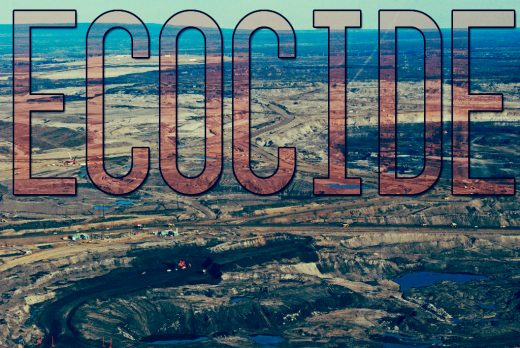
‘Ecocide’ proposal aiming to make environmental destruction an international crime
By Anthony Funnell for Future Tense– 13 Feb 21, A group of leading international law experts has defined a new super-crime.They’re calling it “ecocide”.
They plan to submit a draft of their new law to the governing body of the International Criminal Court, in the hope that the ICC will adopt it for future prosecutions.
If successful, ecocide will become the court’s fifth jurisdictional responsibility, alongside genocide, crimes against humanity, war crimes and crimes of aggression.
The group behind the proposal, Stop Ecocide, argues that climate change knows no borders and the destruction of local ecosystems can have huge global consequences.
“In this day and age, it’s no longer possible to say that one is destroying large swathes of nature without realising what one is doing,” Stop Ecocide’s Jojo Mehta says.
She, and the expert panel she’s assembled, want governments, companies and individuals to be brought to account for the environmental destruction they knowingly allow.
And that sense of knowing is important, she says, because most destruction occurs not by accident, but in support of commercial gains.
A growing momentum
Prominent environmental activist Greta Thunberg is onboard, as is the French President, Emmanuel Macron, who’s raised the possibility of incorporating the concept of ecocide into domestic French law.
Though not an official member of the Stop Ecocide movement, he’s also leant his weight to the idea of charging the ICC with oversight of international prosecutions.
President Macron’s involvement began in 2019, when large swathes of the Amazon caught fire under suspicious circumstances. Macron personally accused the Brazilian government of not doing enough to protect the forests from destruction.
Brazil’s populist leader, Jair Bolsonaro — a self-proclaimed climate change denier — initially ridiculed the idea of an ecological emergency and refused to accept international assistance.
“This is an issue that concerns the entire world,” President Macron responded.
“We have a real ecocide that is developing everywhere in the Amazon, not only in Brazil.”
Pope Francis has also spoken of what he calls the “sins of ecology”, explicitly describing his understanding of ecocide as:
“The massive contamination of air, land and water resources, the large-scale destruction of flora and fauna, and any action capable of producing an ecological disaster or destroying an ecosystem.”
The pros and cons
Queens University Law lecturer, Rachel Killean, says the concept of ecocide dates back to the Vietnam War and debates over the American military’s use of the Agent Orange defoliant.
It also briefly gained attention during early discussions on the role and function of the International Criminal Court.
So, Dr Killean says, it makes historical sense to adapt the ICC’s brief, rather than establish a new environmental court.
She says International Law experts such as University College London’s Philippe Sands, former ICC judges and climate change experts are talking about it as “something that is possible and tangible.”
Ms Mehta says the ICC is the only global mechanism that directly accesses the criminal justice systems in all of its member states.
“So, effectively if you make something a crime there, any member state that ratifies that crime must then include it in their own domestic legislation within a year.”
This means it’s likely the most efficient way to make a rule that stays similar across international borders.
“That’s very important with ecosystem destruction because the biggest perpetrators are big transnational companies which operate in many jurisdictions,” Ms Mehta says.
But, Dr Killean warns, despite renewed interest in the ecocide concept there are big hurdles to overcome, the first being sufficient political will………….. https://www.abc.net.au/news/2021-02-13/will-ecocide-become-an-international-crime/13136912
As Wylfa nuclear project is rejected, Sizewell C nuclear project should be dead in the water
 East Anglian Daily Times 9th Feb 2021, Campaigners fighting plans for a new nuclear power station on the Suffolkcoast say the project should be “dead in the water” after a similar scheme
was rejected on environmental grounds. They say the proposed Sizewell C
site has far more important wildlife and environment than Wylfa, which has
been described as “the best site available globally” for a new power plant.
Inspectorate has recommended that the Wylfa Newydd project site regarded as
“the best” be rejected by the Government.
Beauty and impacting Sizewell Marshes SSSI and internationally famous RSPB
Minsmere, this project should be dead in the water. “Our grave concern is
that the Secretary of State could approve a project they would otherwise
refuse because it is seen as their only remaining option.”https://www.eadt.co.uk/news/sizewell-c-dead-in-the-water-7314394
Economics’ failure over destruction of nature presents ‘extreme risks’

Economics’ failure over destruction of nature presents ‘extreme risks’
New measures of success needed to avoid catastrophic breakdown, landmark review finds
Guardian 2nd Feb 2021. The world is being put at “extreme risk” by the failure of economics to take account of the rapid depletion of the natural world and needs to find new measures of success to avoid a catastrophic breakdown, a landmark review has concluded.
education were urgently needed, he said.
similar Treasury-sponsored review in 2006 by Nicholas Stern is credited with transforming economic understanding of the climate crisis.
change – provided opportunities for the international community to rethink an approach that has seen a 40% plunge in the stocks of natural capital per head between 1992 and 2014.
Bees may be more susceptible to ionising radiation than previously estimated

Insects Might Be More Sensitive to Radiation than Thought
A study of bumble bees exposed to levels of radiation equivalent to those existing in Chernobyl hotspots shows that the insects’ reproduction takes a hit. The Scientist, February 2021 Notebook Alejandra Manjarrez, Feb 1, 2021
A few years ago, on one of her first visits to Chernobyl, Katherine Raines went to the Red Forest, a radioactive cemetery of pine trees scorched by the nuclear accident in 1986. She was curious to see if there were bees living in the area. Research on the effect of chronic exposure to ionizing radiation on insects is limited, and some of the findings are controversial, but most experts support the idea that bees and other invertebrates are relatively resilient to radioactive stress.
Raines, a radioecologist at the University of Stirling in Scotland, didn’t spend long in that forest. In one spot there, her personal radiation dosimeter measured an environmental level of ionizing radiation of 200 microsieverts (µSv) per hour; more than a few hours of that exposure could have increased her cancer risk. But even during that brief visit, she did see bees. Whether they were living there or just visiting, Raines says, is hard to tell.
Back in the UK, Raines and colleagues recreated the same levels of radiation in a specialized facility. Boxes each containing a bumble bee colony made up of a queen, workers, and brood were placed at different distances from a radiation source, creating a gradient where bees in each box received a fairly steady dose of between 20 and 3,000 micrograys (µGy) per hour. (The two kinds of units, sieverts and grays, are essentially equivalent measures of the amount of exposure to radiation; sieverts factor in the type of radiation and account for the sensitivity of the exposed tissue. Bees at the site Raines visited in the Red Forest would experience around 200 µGy per hour.) The bees stayed in their artificial homes for four weeks before being moved outdoors into the university gardens for around one month, until the colonies were no longer viable—that is, once the queen had died and only a few workers remained.
The limited lab studies previously carried out by other groups had suggested that bees and other insects should be safe below 400 µGy per hour. So, Raines says, she was shocked when she found that even those colonies exposed to lower rates showed signs of a negative effect of radiation, especially on reproduction. Bumble bee colonies experiencing just 100 µGy per hour, for example, had reduced their production of queens by almost half, dramatically impairing the chances of successfully founding new colonies. According to the study, the overall effect was stronger than the one-fourth reduction observed in colonies exposed to a popular pesticide.
This work “sheds new light on the importance of chronic low-dose radiation exposure in a nonmodel species [with] profound relevance for the natural world,” says Timothy Mousseau, an ecological geneticist at the University of South Carolina who was not involved in this research. But he adds that it is hard to determine how some of these results, based on experimental manipulations in an artificial setting, can translate “to what’s actually going on in Chernobyl” for these important pollinators.
Mousseau and his colleague Anders Pape Møller (now at CNRS in France) have been doing field studies since 2000 to assess the abundance of wildlife populations living in the Chernobyl Exclusion Zone (CEZ), a 2,600 square-kilometer area surrounding the nuclear power plant. Their results have shown a negative correlation between radiation levels—which vary a great deal within the zone—and wildlife abundance. Insects were no exception: the team observed fewer bumble bees in the most contaminated areas, a relationship that held even within a range of extremely low radiation levels (from 0.01 to 1 µGy per hour)
Those studies have been criticized, partly over the accuracy of their estimations of radiation levels. Mousseau and Møller have collaborated with some of their critics to reanalyze some of their data, and maintain that there has been wildlife reduction in the CEZ due to radiation. ………
Researchers who spoke to The Scientist about the study agree that further work is needed to conclusively demonstrate the effects of radiation on bumble bees. ……. Raines is now gathering more data. The next stage of her research, she says, will be to look at the interaction between parasite load, which reduces longevity, and radiation exposure—both in lab-kept bees and in bees she sampled on one of her visits to deserted agricultural land around Chernobyl. “It would be ideal to directly relate lab and field [data].” https://www.the-scientist.com/notebook/insects-might-be-more-sensitive-to-radiation-than-thought-68366
Why Spain plans to ban uranium mining.
Shock waves: what will a Spanish ban mean for uranium mining in Europe?, Mining Technology, Yoana Cholteeva12 January 2021 ” ………. Reasons behind the proposed ban
The proposed ban has been welcomed by environmental groups and local organisations concerned about the potential damage to ecosystems in the country and overall safety, as argued by the Spanish organisation Stop Uranio (Stop Uranium). The group, which was established in 2013, has since then been trying to prevent the approval and construction of Berkley Energy’s uranium mining project in the Campo Charro area of Salamanca.
For the past seven years, Stop Uranium has organised a number of campaigns and protest rallies over the country, with activists from both Spain and Portugal raising concerns over Salamanca’s agriculture lands, pastures, rural tourism, and the population’s health being at stake.
Stop Uranium member and spokesperson Jose Manuel Barrueco has written in The Free – blog of the post capitalist transition, that “the majority of the inhabitants of the area oppose the planned mines due to the negative effects that this activity will entail for the region: explosions with release of radioactive dust into the atmosphere, the continuous transfer of trucks and heavy machinery, loss of forest, diversion of water courses, etc.”.
It terms of scientific evidence to support the some of the claims, according to a 2013 peer reviewed article, ‘Uranium mining and health’, published in the Canadian Family Physician journal, the chemical element has the potential to cause a spectrum of adverse health effects to people, ranging from renal failure and diminished bone growth to DNA damage.
The effects of low-level radioactivity include cancer, shortening of life, and subtle changes in fertility or viability of offspring, as determined from bothanimal studies and data on Hiroshima and Chernobyl survivors.
….. MP Juan Lopez de Uralde has in turn voiced his support of a holistic approach, telling the Spanish online newspaper Publico that banning uranium extraction is directly linked to the energy policies of both Spain and the EU. He continued that “since no uranium mine is active in the Old Continent”, “by committing to the closure of nuclear power stations we should complete the circle entirely by banning uranium mining”………. https://www.mining-technology.com/features/shock-waves-what-will-a-spanish-ban-mean-for-uranium-mining-in-europe/
Avoiding a ‘Ghastly Future’: Hard Truths on the State of the Planet
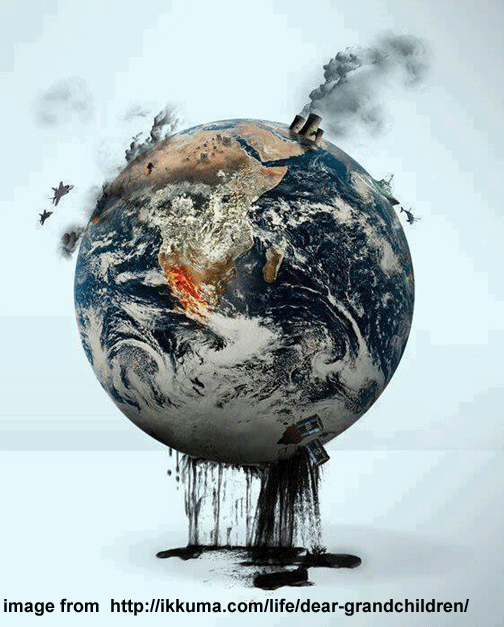 Avoiding a ‘Ghastly Future’: Hard Truths on the State of the Planet, Yale Environment 360
BY CARL SAFINA • JANUARY 27, 2021
A group of the world’s top ecologists have issued a stark warning about the snowballing crisis caused by climate change, population growth, and unchecked development. Their assessment is grim, but big-picture societal changes on a global scale can still avert a disastrous future.
Within the lifetime of anyone born at the start of the Baby Boom, the human population has tripled. Has this resulted in a human endeavor three times better — or one-third as capable of surviving? In the 1960s, humans took about three-quarters of what the planet could regenerate annually. By 2016 this rose to 170 percent, meaning that the planet cannot keep up with human demand, and we are running the world down.
“In other words,” say 17 of the world’s leading ecologists in a stark new perspective on our place in life and time, “humanity is running an ecological Ponzi scheme in which society robs nature and future generations to pay for boosting incomes in the short term.” Their starkly titled article, “Underestimating the Challenges of Avoiding a Ghastly Future,” reads less as an argument than as a rain of asteroids encountered in the course of flying blind on a lethal trajectory. The authors’ stated goal is not to dispirit readers. “Ours is not a call to surrender,” they write, “we aim to provide leaders with a realistic ‘cold shower’ of the state of the planet that is essential for planning to avoid a ghastly future.”
Put on your shower cap and step into the cold. Humans have altered about 70 percent of Earth’s land surface and ocean. …….
Referring to the loss of living diversity and abundance, the authors note: “The mainstream is having difficulty grasping the magnitude of this loss, despite the steady erosion of the fabric of human civilization.” But I think the problem is that the fabric of human civilization has been built and fueled precisely by causing erosion of the living world. The pain of other living things is seldom humanly felt, their interests seldom considered, their intrinsic values discounted. (I am still asked “why we should care” about whether even iconic creatures such as right whales, for example, vanish forever.)
Worth noting is that the authors are overwhelmingly ecologists. As am I. This may account for their perceiving a grim future versus the rosy future offered by techno-optimists. Ecologists understand the world as interdependent relationships among diverse living and non-living systems…….
Ecologists understand that building an ever-larger human enterprise has resulted from putting more of the world through a macerator at the expense of the rest of life on Earth and generations unborn. On a planet that is finite, such an enterprise faces inevitable limits. ……
Most economists and politicians catastrophically confuse growth and improvement as synonymous…….
If there is one silver bullet, that bullet is full citizenship and empowerment of women……..
The point of “Avoiding a Ghastly Future” is that we all must recognize the enormity of these problems. But the authors believe that reality can be faced without sowing “disproportionate” fear and despair. They say the necessary choices will entail “difficult conversations about population growth” and “the necessity of dwindling but more equitable standards of living.”…….. https://e360.yale.edu/features/avoiding-a-ghastly-future-hard-truths-on-the-state-of-the-planet
Uranium mining plunder of Greenland, and the threat to the sub-arctic environment
|
The plundering of Greenland, Uranium and other resources the latest threat to precious sub-arctic ecosystems, Beyond Nuclear International. By Niels Henrik Hooge, 24 Jan 21, The governments of Greenland and Denmark are encouraging large-scale mining in Greenland, including what would be the second-largest open pit uranium mine in the world. Now groups are calling on those governments to halt such desecration and instead establish an Arctic sanctuary. Your organization can sign onto this petition. Read the petition here, then send your organization name (and logo, optional) to either Niels Henrik Hooge at nielshenrik@noah.dk or to Palle Bendsen at: pnb@ydun.net. No or few World Heritage Sites probably have more or bigger mining projects in their vicinity than the Kujataa UNESCO World Heritage Site (WHS) in Southern Greenland. The property was inscribed on UNESCO’s world heritage list in 2017. It comprises a sub-arctic farming landscape consisting of five components that represent key elements of the Norse Greenlandic and modern Inuit farming cultures. On one hand they are distinct, on the other they are both pastoral farming cultures located on the climatic edges of viable agriculture, depending on a combination of farming, pastoralism and marine mammal hunting. The landscape constitutes the earliest introduction of farming to the Arctic. Some of the world’s biggest mining projects are located near Kujataa Kujaata is situated in Kommune Kujalleq, the southernmost and smallest municipality of Greenland with its rich mineral resources. These include zinc, copper, nickel, gold, diamonds and platinum group metals, but first and foremost substantial deposits of rare earth elements (REEs) and uranium. …… Some of the biggest REEs mining projects in the world are located only a few kilometres from the Kujataa WHS. The biggest and most controversial is the Kvanefjeld REEs-uranium mining project, owned by the Australian company Greenland Minerals Ltd., GML. According to GML, in addition to containing the second biggest uranium and by far the largest thorium deposits, the Ilimaussaq Complex, of which Kvanefjeld is a part, possesses the second largest deposits of rare earth elements in the world. The mine, which would be the world’s second largest open pit uranium mine, is located on top of a mountain, almost one kilometre above sea-level, and only six kilometres away from Narsaq, a town of approximately 1,500 inhabitants, and also near some of the parts of the Kujataa WHS. A second major project close to Kujataa is the Kringlerne REEs mining project, which is described by its owner, the Australian mining company Tanbreez Mining Greenland A/S, as the probably largest deposit of REEs in the world. ………… Calls for enlargement of the Kujataa WHS Especially in Southern Greenland, there has long existed a notion that the Kujataa World Heritage Site in its present form has been delineated to accommodate the Kvanefjeld mining project and that the potential impacts of the other mining projects surrounding the site have not been considered. …………… Kujataa’s OUV under threat It is also clear that Kujaata’s Outstanding Universal Value, i.e. its exceptional cultural and natural significance, will be under threat if the mining projects surrounding the site are implemented. There have already been calls to put Kujaata on the World Heritage Convention’s danger list. Kujataa’s unique farming traditions have been a determining factor in designating it as world heritage. However, the Danish Risø National Laboratory has estimated that up to a thousand tons of radioactive dust might be released annually from just the Kvanefjeld open pit mine due to material handling, hauling and blasting and from the ore stock and waste rock piles. Furthermore, if the tailings by some unforeseen cause such as leakages, technical problems, etc. would turn dry, massive amounts of radioactive and toxic dust would be blown away. The dust from the aforementioned sources will be carried by heavy arctic sea winds across the region, where it will affect among others agricultural activities. The predominant wind direction and the direction for the strongest winds are east- and north- eastwards, where the Kujataa WHS is located. The area, its people, domestic animals and wildlife would be chronically exposed to radioactive and other toxic species via drinking water, food and air1. Furthermore, most if not all the planned mining projects in the area are open pit mines. Perpetual blasting with explosives on the mountain tops in the open pit mines surrounding the world heritage site and the excavation and transport by dump trucks to the mills, where the rocks are crushed, could cause considerable noise disturbance during the entire operation of the mines. According to the EIA draft reports for the Kvanefjeld project, a dilution factor in the order of 2000 for the waste water would be required to be rendered safe for the most critical parameters. This would mean that the discharges of waste water during just one year would have to be diluted into 7 km3 of seawater in the Fiord system, which is part of the Kujataa World Heritage Site, and into 260 km3 of seawater during the planned operational lifetime of the Kvanefjeld mine. Furthermore, seepage, leaks and spills of liquids form the tailings will cause contamination of groundwater and rivers by radioactive and non-radioactive toxic chemical species. Seafood would become contaminated as well, due to the substantial discharges of wastes into the Fiords and the coastal sea. Large-scale mining and particularly uranium mining are incompatible with the development of three of the four sectors of the farming landscape, namely fishing and hunting, tourism and food production. It is relevant to ask how the entire character of the landscape would change in the development from a rural to an industrial area in the wake of both the big mining projects. This also pertains to the question of urban development, when among others new ports, port facilities and accommodation villages have to be built and corresponding support infrastructure implemented. No real plans to protect Kujataa………… in its description of the impacts of the nearby mining activities, the management plan relies on a draft of an Environmental Impact Assessment (EIA) of the Kringlerne mining project, which was rejected by Greenland’s Environmental Agency for Mineral Resources Activities (EAMRA), because it did not contain enough relevant information. EAMRA has also rejected the four latest EIA draft reports on the Kvanefjeld project because of lack of information. Among other things, Kvanefjeld’s owner, GML, is criticised for not providing a comprehensive assessment of the earthquake risk in the region, final results of tests of toxic elements during extraction and processing, final radiological estimates and results of investigations of impacts of radioactive minerals, and for failing to describe the alternatives regarding management of tailings and the shutdown of the tailings facility. In September 2019, the CEO of GML was also formally reproached by Greenland’s Prime Minister and the Department of Nature and Environment’s Permanent Secretary for lobbying high-ranking civil servants and ministers who had no competence within the EIA review process in order to undermine EAMRA’s authority. A Heritage Impact Assessment is not enough …….. it could be argued that there is already enough reason for the Greenlandic and Danish States Parties to involve UNESCO and – considering that environmental issues are at the core of the problems and Kujataa’s management plan is based on rejected EIA draft reports – to include IUCN in the process. However, the biggest problem for not only Kujataa, but all Greenland’s three world heritage sites could be the fact that Greenland’s environmental legislation does not mandate strategic environmental impact assessments for minerals exploration areas, which means that the public is not kept informed in advance on what areas could be designated. Thus, implementation of the Aarhus Convention in Greenland should have high priority in order to reinforce Greenland’s environmental legislation. Niels Henrik Hooge is member of NOAH Friends of the Earth Denmark’s uranium group. https://wordpress.com/read/feeds/72759838/posts/3144708883 |
|
|
Serious shortcomings in the file on Bure (Meuse) underground nuclear waste storage
 Actu Environnement 19th Jan 2021, In a notice published on January 18, the Environmental Authority (Ae) points to serious shortcomings in the file of the underground radioactive waste storage center (Cigéo) in Bure (Meuse). The opinion relates more particularly to the “very detailed” environmental assessment carried out by Andra as part of the project’s declaration of public utility (DUP) file. T Actu Environnement 19th Jan 2021, In a notice published on January 18, the Environmental Authority (Ae) points to serious shortcomings in the file of the underground radioactive waste storage center (Cigéo) in Bure (Meuse). The opinion relates more particularly to the “very detailed” environmental assessment carried out by Andra as part of the project’s declaration of public utility (DUP) file. TThe DUP should make it possible to ensure the land control of the project on a surface of 665 hectares, allowing if necessary expropriations, to carry out the compliance of the town planning documents and to ” legitimize politically ” the realization of the project.
|
|
|
1 This Month



26 September – International Day for the Total Elimination of Nuclear Weapons


PLEASE OPPOSE HR 8255 AND S.3639 – bills would accelerate satellite deployment, with no environmental review or safeguards – https://ncstd5li.quorum.us/campaign/169331/
To see nuclear-related stories in greater depth and intensity – go to https://nuclearinformation.wordpress.com
-
Archives
- September 2026 (245)
- August 2026 (330)
- July 2026 (355)
- June 2026 (287)
- May 2026 (306)
- April 2026 (356)
- March 2026 (251)
- February 2026 (267)
- January 2026 (308)
- December 2025 (358)
- November 2025 (359)
- October 2025 (375)
-
Categories
- 1
- 1 NUCLEAR ISSUES
- business and costs
- climate change
- culture and arts
- ENERGY
- environment
- health
- history
- indigenous issues
- Legal
- marketing of nuclear
- media
- opposition to nuclear
- PERSONAL STORIES
- politics
- politics international
- Religion and ethics
- safety
- secrets,lies and civil liberties
- spinbuster
- technology
- Uranium
- wastes
- weapons and war
- Women
- 2 WORLD
- ACTION
- AFRICA
- Atrocities
- AUSTRALIA
- Christina's notes
- Christina's themes
- culture and arts
- Events
- Fuk 2022
- Fuk 2023
- Fukushima 2017
- Fukushima 2018
- fukushima 2019
- Fukushima 2020
- Fukushima 2021
- general
- global warming
- Humour (God we need it)
- Nuclear
- RARE EARTHS
- Reference
- resources – print
- Resources -audiovicual
- Weekly Newsletter
- World
- World Nuclear
- YouTube
-
RSS
Entries RSS
Comments RSS
 nuclear-news