UK’s Royal Society for the Protection of Birds condemns the Sizewell nuclear project
 The Government looks set to fail in its first major domestic test over its declared commitment to the environment ahead of an upcoming speech by the Prime Minister.
A recent PR charm offensive by the energy company EDF extolling the green credentials of its proposals to build the Sizewell C nuclear reactor seems to be swaying government opinion, despite the fact that the project may irreversibly damage one of the UK’s most important and well protected wildlife sites. It is rumoured that the Prime Minister will announce the importance of future nuclear energy development in his upcoming 10-point speech on the environment.
The Royal Society for the Protection of Birds ’s Chief Executive, Beccy Speight, said: “The Government has committed to protect 30% of the UK’s land by 2030 to boost biodiversity, so allowing the destruction of one of the most nature rich places we already have in the UK would be a crazy decision. The Prime Minister must not let EDF pull the wool over his eyes regarding what a damaging project this would be.
“If EDF were to be given permission to build a brand-new twin nuclear reactor slap bang on the border of a globally important wildlife haven, then we believe that contrary to the ambition set out by this Government, nowhere in the UK is sacred anymore. The Government has stated that we are in an ecological emergency as well as a climate emergency and it simply cannot afford to waste taxpayer’s money destroying flagship reserves which mean so much to wildlife and people.”
The RSPB has waited for over a decade for EDF Energy to show them evidence that RSPB Minsmere won’t be irrevocably damaged if the energy giant builds the UK’s latest white elephant: Sizewell C. That evidence has never materialised and EDF continue to try and paint the development as environmentally friendly despite evidence to the contrary.
Home to a whopping 6000 species, Minsmere is widely acknowledged as one of Europe’s most important wildlife sites and has legal protection at both the national and international level. Protected animals that call the Suffolk coast home like otters, water voles, marsh harriers, bats and many more could all fall victim to this huge infrastructure project and legally protected land, Sizewell Marshes SSSI, could be built directly on. The concerns extend to marine life too with proposals suggesting waters off the local beaches could warm and that toxic chemicals could be pumped into the sea along with worrying numbers of dead fish.
Beccy Speight continued: “We could be witnessing the horrors of HS2 all over again, wasting tax payers’ money on destroying irreplaceable homes for nature. If Sizewell C was to be built, it should come as no surprise to us all that we would once again be witnessing chainsaws and diggers decimating precious habitats which are not only important to wildlife, but to people’s health and wellbeing too. For this to happen as we attempt to recover from a pandemic caused by a zoonotic disease only adds to the bitter irony of the situation. We urge the Government to think again.”
The accumulating radioactive water is another Fukushima disaster crisis
|
Japan faces another Fukushima disaster crisis https://www.eco-business.com/news/japan-faces-another-fukushima-disaster-crisis/ – 6 Nov 20, A plan to dump a million tonnes of radioactive water from the Fukushima disaster off Japan is alarming local people. Paul Brown, Climate News Network. The Japanese government has an unsolvable problem: what to do with more than a million tonnes of water contaminated with radioactive tritium, in store since the Fukushima disaster and growing at more than 150 tonnes a day.
The water, contained in a thousand giant tanks, has been steadily accumulating since the nuclear accident in 2011. It has been used to cool the three reactors that suffered a meltdown as a result of the tsunami that hit the coast. Tritium is a radioactive element produced as a by-product by nuclear reactors under normal operation, and is present everywhere in the fabric of the reactor buildings, so water used for cooling them is bound to be contaminated by it. To avoid another potentially catastrophic meltdown in the remaining fuel the cooling has to continue indefinitely, so the problem continues to worsen. The government has been told that Japan will run out of storage tanks by 2022. Announcement delayedAs often happens when governments are faced with difficult problems, the unpalatable decision to release the contaminated water into the sea has not been formally announced, but the intention of the government to take this course has been leaked and so widely reported. Immediately both local and worldwide adverse reaction has resulted. There are the direct effects on the local fishermen who fear that no one will want to buy their catch, but over a wider area the health effects are the main concern. As ever with the nuclear industry, there are two widely different views on tritium. The Health Physics Society says it is a mildly radioactive element that is present everywhere, and doubts that people will be affected by it. But the Nuclear Information and Resource Service believes tritium is far more dangerous and increases the likelihood of cancers, birth defects and genetic disorders. The issue is further complicated because the Fukushima wastewater contains a number of other radionuclides, not in such high quantities, but sufficient to cause damage. Ian Fairlie, an independent consultant on radioactivity in the environment, is extremely concerned about Japan’s plans and the health of the local people. In a detailed assessment of the situation he says other highly dangerous radioactive substances, including caesium-137 and strontium-90, are also in the water stored at Fukushima. They are in lower quantities than the tritium, he says, but still unacceptably high – up to 100 times above the legally permitted limit. All these radionuclides decay over time − some take thousands of years − but tritium decays faster, the danger from it halving every 12.3 years. In a briefing for the Nuclear Free Local Authorities (NFLA), a UK based organisation, another independent analyst, Tim Deere-Jones, discusses research that shows that tritium binds with organic material in plants and animals. This is potentially highly damaging to human health because it travels up the food chain in the marine environment, specifically accumulating in fish. This means fish-eating communities on the Japanese coast could ingest much larger quantities of tritium than some physicists think likely. Relying on dilutionTim Deere-Jones is also concerned that the tritium will be blown inshore on the prevailing wind in sea spray and will bio-accumulate in food plants, making it risky to eat crops as far as ten miles inland. Because of the potential dangers of releasing the water the NFLA has asked the Japanese government to reconsider its decision. The government has not yet responded though, because officially it is still considering what to do. However, it is likely to argue that pumping the contaminated water into the sea is acceptable because it will be diluted millions of times, and anyway seawater does already contain minute quantities of tritium. Dr Fairlie is among many who think this is too dangerous, but he admits there are no easy solutions. He says: “Barring a miraculous technical discovery which is unlikely, I think TEPCO/Japanese Gov’t [TEPCO is the Tokyo Electric Power Company, owner of the Fukushima Daiichi plant] will have to buy more land and keep on building more holding tanks to allow for tritium decay to take place. Ten half-lives for tritium is 123 years: that’s how long these tanks will have to last – at least. “This will allow time not only for tritium to decay, but also for politicians to reflect on the wisdom of their support for nuclear power.” |
|
Chernobyl’s bumblebees still affected by radiation
This new data shows effects on bumblebees are happening at dose rates previously thought safe for insects, and the current international recommendations will need to be re-evaluated.
|
Chernobyl: bumblebees still at risk from radiation nearly 35 years on, https://theconversation.com/chernobyl-bumblebees-still-at-risk-from-radiation-nearly-35-years-on-149055, Katherine Raines, Fellow and Lecturer, University of Stirling, November 5, 2020 In the early hours of April 26 1986, reactor four of the Chernobyl nuclear power plant in Ukraine exploded, causing the largest nuclear disaster in history. More than 350,000 people were evacuated, and a 4,700km² exclusion zone was formed in Ukraine and Belarus. Despite the intervening 34 years, there is still uncertainty about the effects of the radiation exposure on wildlife living in the Chernobyl exclusion zone (CEZ).
|
315 nuclear bombs and ongoing suffering: the shameful history of nuclear testing in Australia and the Pacific
315 nuclear bombs and ongoing suffering: the shameful history of nuclear testing in Australia and the Pacific, https://theconversation.com/315-nuclear-bombs-and-ongoing-suffering-the-shameful-history-of-nuclear-testing-in-australia-and-the-pacific-148909, Tilman Ruff, Associate Professor, Education and Learning Unit, Nossal Institute for Global Health, School of Population and Global Health, University of Melbourne, Dimity Hawkins, PhD Candidate, Swinburne University of Technology
November 3, 2020 The Treaty on the Prohibition of Nuclear Weapons received its 50th ratification on October 24, and will therefore come into force in January 2021. A historic development, this new international law will ban the possession, development, testing, use and threat of use of nuclear weapons.Unfortunately the nuclear powers — the United Kingdom, France, the United States, Russia, China, Israel, India, Pakistan and North Korea — haven’t signed on to the treaty. As such, they are not immediately obliged to help victims and remediate contaminated environments, but others party to the treaty do have these obligations. The shifting norms around this will hopefully put ongoing pressure on nuclear testing countries to open records and to cooperate with accountability measures.
For the people of the Pacific region, particularly those who bore the brunt of nuclear weapons testing during the 20th century, it will bring a new opportunity for their voices to be heard on the long-term costs of nuclear violence. The treaty is the first to enshrine enduring commitments to addressing their needs.
From 1946, around 315 nuclear tests were carried out in the Pacific by the US, Britain and France. These nations’ largest ever nuclear tests took place on colonised lands and oceans, from Australia to the Marshall Islands, Kiribati to French Polynesia.
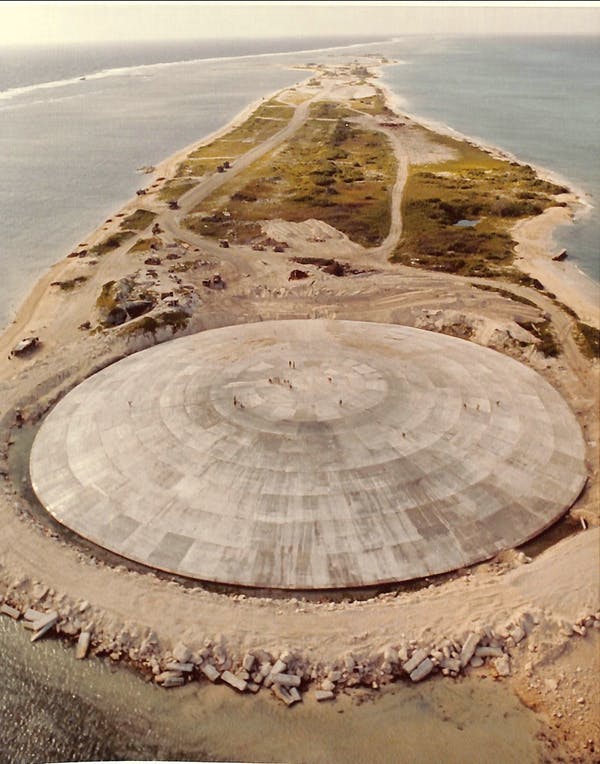
The impacts of these tests are still being felt today.
All nuclear tests cause harm
Studies of nuclear test workers and exposed nearby communities around the world consistently show adverse health effects, especially increased risks of cancer.
The total number of global cancer deaths as a result of atmospheric nuclear test explosions has been estimated at between 2 million and 2.4 million, even though these studies used radiation risk estimates that are now dated and likely underestimated the risk.
The number of additional non-fatal cancer cases caused by test explosions is similar. As confirmed in a large recent study of nuclear industry workers in France, the UK and US, the numbers of radiation-related deaths due to other diseases, such as heart attacks and strokes, is also likely to be similar.
Britain conducted 12 nuclear test explosions in Australia between 1952 and 1957, and hundreds of minor trials of radioactive and toxic materials for bomb development up to 1963. These caused untold health problems for local Aboriginal people who were at the highest risk of radiation. Many of them were not properly evacuated, and some were not informed at all.
We may never know the full impact of these explosions because in many cases, as the Royal Commission report on British Nuclear Tests in Australia found in 1985: “the resources allocated for Aboriginal welfare and safety were ludicrous, amounting to nothing more than a token gesture”. But we can listen to the survivors.
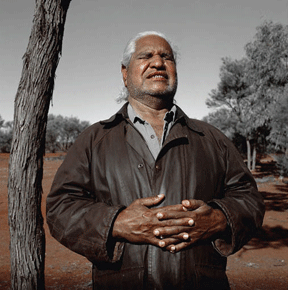 The late Yami Lester directly experienced the impacts of nuclear weapons. A Yankunytjatjara elder from South Australia, Yami was a child when the British tested at Emu Field in October 1953. He recalled the “Black Mist” after the bomb blast:
It wasn’t long after that a black smoke came through. A strange black smoke, it was shiny and oily. A few hours later we all got crook, every one of us. We were all vomiting; we had diarrhoea, skin rashes and sore eyes. I had really sore eyes. They were so sore I couldn’t open them for two or three weeks. Some of the older people, they died. They were too weak to survive all the sickness. The closest clinic was 400 miles away.
His daughter, Karina Lester, is an ambassador for the International Campaign to Abolish Nuclear Weapons in Australia, and continues to be driven by her family’s experience. She writes:
For decades now my family have campaigned and spoken up against the harms of nuclear weapons because of their firsthand experience of the British nuclear tests […] Many Aboriginal people suffered from the British nuclear tests that took place in the 1950s and 1960s and many are still suffering from the impacts today.
More than 16,000 Australian workers were also exposed. A key government-funded study belatedly followed these veterans over an 18-year period from 1982. Despite the difficulties of conducting a study decades later with incomplete data, it found they had 23% higher rates of cancer and 18% more deaths from cancers than the general population.
An additional health impact in Pacific island countries is the toxic disease “ciguatera”, caused by certain microscopic plankton at the base of the marine food chain, which thrive on damaged coral. Their toxins concentrate up the food chain, especially in fish, and cause illness and occasional deaths in people who eat them. In the Marshall Islands, Kiritimati and French Polynesia, outbreaks of the disease among locals have been associated with coral damage caused by nuclear test explosions and the extensive military and shipping infrastructure supporting them.
Pacific survivors of nuclear testing haven’t been focused solely on addressing their own considerable needs for justice and care; they’ve been powerful advocates that no one should suffer as they have ever again, and have worked tirelessly for the eradication of nuclear weapons. It’s no surprise independent Pacific island nations are strong supporters of the new treaty, accounting for ten of the first 50 ratifications.
Negligence and little accountability
Some nations that have undertaken nuclear tests have provided some care and compensation for their nuclear test workers; only the US has made some provisions for people exposed, though only for mainland US residents downwind of the Nevada Test Site. No testing nation has extended any such arrangement beyond its own shores to the colonised and minority peoples it put in harm’s way. Nor has any testing nation made fully publicly available its records of the history, conduct and effects of its nuclear tests on exposed populations and the environment.
These nations have also been negligent by quickly abandoning former test sites. There has been inadequate clean-up and little or none of the long-term environmental monitoring needed to detect radioactive leakage from underground test sites into groundwater, soil and air. One example among many is the Runit concrete dome in the Marshall Islands, which holds nuclear waste from US testing in the 1940s and 50s. It’s increasingly inundated by rising sea levels, and is leaking radioactive material.
The treaty provides a light in a dark time. It contains the only internationally agreed framework for all nations to verifiably eliminate nuclear weapons.
It’s our fervent hope the treaty will mark the increasingly urgent beginning of the end of nuclear weapons. It is our determined expectation that our country will step up. Australia has not yet ratified the treaty, but the bitter legacy of nuclear testing across our country and region should spur us to join this new global effort.
Now climate change, rising seas, swamping Kiribati and the Marshall Islands, victims of nuclear racism
Losing paradise, Atomic racism decimated Kiribati and the Marshall Islands; now climate change is sinking them, Beyond Nuclear https://wordpress.com/read/feeds/72759838/posts/2998141589–1 Nov 20, This is an extract from the Don’t Bank on the Bomb Scotland report “Nuclear Weapons, the Climate and Our Environment”.
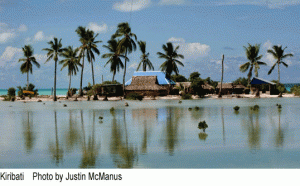 Kiribati. In 1954, the government of Winston Churchill decided that the UK needed to develop a hydrogen bomb (a more sophisticated and destructive type of nuclear weapon). The US and Russia had already developed an H-bomb and Churchill argued that the UK “could not expect to maintain our influence as a world power unless we possessed the most up-to-date nuclear weapons”.
The governments of Australia and New Zealand refused to allow a hydrogen bomb test to be conducted on their territories so the British government searched for an alternative site. Kiritimati Island and Malden Island in the British Gilbert and Ellice Islands Colony in the central Pacific Ocean (now the Republic of Kiribati) were chosen. Nine nuclear weapons tests – including the first hydrogen bomb tests – were carried out there as part of “Operation Grapple” between 1957 and 1958.
Military personnel from the UK, New Zealand and Fiji (then a British colony) and Gilbertese labourers were brought in to work on the operation. Many of the service personnel were ordered to witness the tests in the open, on beaches or on the decks of ships, and were simply told to turn their backs and shut their eyes when the bombs were detonated. There is evidence that Fijian forces were given more dangerous tasks than their British counterparts, putting them at greater risk from radiation exposure. The local Gilbertese were relocated and evacuated to British naval vessels during some of the tests but many were exposed to fallout, along with naval personnel and soldiers.
After Grapple X, the UK’s first megaton hydrogen bomb test in November 1957, dead fish washed ashore and “birds were observed to have their feathers burnt off, to the extent that they could not fly”. The larger Grapple Y test in 1958 spread fallout over Kiritimati Island and destroyed large areas of vegetation.
Despite evidence that military personnel and local people suffered serious health problems as a result of the tests, including blindness, cancers, leukaemia and reproductive difficulties, the British government has consistently denied that they were exposed to dangerous levels of radiation and has resisted claims for compensation.
Like the Marshall Islands, the low-lying Republic of Kiribati is now bearing the brunt of the effects of climate change. Salt water washed in on king tides has contaminated the islands’ scarce freshwater resources. Pits that are used to grow taro plants have been ruined and the healthy subsistence lifestyle of local people is under threat.
It is predicted that rising sea levels will further impact freshwater resources and reduce the amount of agricultural land, while storm damage and erosion will increase. Much of the land will ultimately be submerged. In anticipation of the need to relocate its entire population, the government of Kiribati bought 20km2 of land on Fiji in 2014.
The UK is set to spend £3.4 billion a year on Trident nuclear weapons system between 2019 and 2070. If Trident were scrapped, a portion of the savings could be provide to the Republic of Kiribati in the form of climate finance (see section 1.2.1). Scrapping Trident would also allow money and skills to be redirected towards measures aimed at drastically cutting the UK’s carbon emissions (see section 1.2.2) – action that Pacific island nations are urgently demanding.
The Marshall Islands. The most devasting incident of radioactive contamination took place 8,000 km from the US mainland during the Castle Bravo test in 1954. The US detonated the largest nuclear weapon in its history at Bikini Atoll in the Marshall Islands, causing fallout to spread over an area of more than 11,000km. Residents of nearby atolls, Rongelap and Utirik, were exposed to high levels of radiation, suffering burns, radiation sickness, skin lesions and hair loss as a result.

Castle Bravo was just one of 67 nuclear weapons tests conducted by the US in the Marshall Islands between 1946 and 1958. Forty years after the tests, the cervical cancer mortality rate for women of the Marshall Islands was found to be 60 times greater than the rate for women in the US mainland, while breast and lung cancer rates were five and three times greater respectively. High rates of infant mortality have also been found in the Marshall Islands and a legacy of birth defects and infertility has been documented. Many Marshallese were relocated by the US to make way for the testing.
Some were moved to Rongelap Atoll and relocated yet again after the fallout from Castle Bravo left the area uninhabitable.
Rongelap Atoll was resettled in 1957 after the US government declared that the area was safe. However, many of those who returned developed serious health conditions and the entire population was evacuated by Greenpeace in 1984. An attempt to resettle Bikini Atoll was similarly abandoned in 1978 after it became clear that the area was still unsafe for human habitation.
A 2019 peer-reviewed study found levels of the radioactive isotope caesium-137 in fruits taken from some parts of Bikini and Rongelap to be significantly higher than levels recorded at the sites of the world’s worst nuclear accidents, Chernobyl and Fukushima.
Compounding the injustice of nuclear weapons testing, the Republic of the Marshall Islands is now on the frontline of the climate emergency. The government declared a national climate crisis in 2019, citing the nation’s extreme vulnerability to rising sea levels and the “implications for the security, human rights and wellbeing of the Marshallese people”.
At Runit Island, one of 40 islands in the Enewetak Atoll, rising sea levels are threatening to release radioactive materials into an already contaminated lagoon. In the late 1970s, the US army dumped 90,000 cubic metres of radioactive waste, including plutonium, into a nuclear blast crater and covered it with a concrete cap. Radioactive materials are leaking out of the crater and cracks have appeared on the concrete cap. Encroaching salt water caused by rising sea levels could collapse the structure altogether. The Marshallese government has asked the US for help to prevent an environmental catastrophe but the US maintains that the dome is the Marshall Islands’ responsibility. Hilda Heine, then President of the Republic of the Marshall Islands, said of the dome in 2019: “We don’t want it. We didn’t build it. The garbage inside is not ours. It’s theirs.”
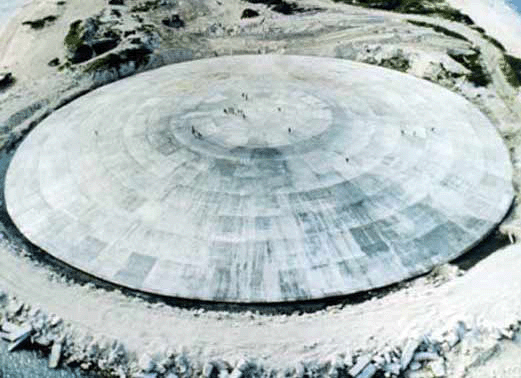
The Runit Island dome offers a stark illustration of the ways in which the injustices of nuclear weapons testing and climate change overlap. Marshall Islanders were left with the toxic legacy of nuclear weapons testing conducted on their territory by another state. The country is now being forced to deal with the effects of a climate crisis that they did not create, including the erosion of the Runit dome.
The nations that contributed most to the crisis are failing to cut their emissions quickly enough to limit further global heating, leaving the Marshallese at the mercy of droughts, cyclones and rising seas. A recent study found that if current rates of greenhouse gas emissions are maintained, the Marshall Islands will be flooded with sea water annually from 2050. The resulting damage to infrastructure and contamination of freshwater supplies will render the islands uninhabitable.
If the US scrapped its nuclear weapons programme, it could give a portion of the billions of dollars that would be saved to the Republic of the Marshall Islands to help the country mitigate and adapt to climate disruption (see section 1.2.1 on international climate finance). The US could also use the freed-up funds to invest in its own Just Transition away from a fossil-fuel powered economy. Read the full report.
Urgency to protect nature, or up to 850,000 animal viruses could be caught by humans

UN report says up to 850,000 animal viruses could be caught by humans, unless we protect nature, The Conversation Katie Woolaston, Lawyer, Queensland University of Technology, Judith Lorraine Fisher, Adjunct Professor University of Western Australia, Institute of Agriculture
October 30, 2020 Human damage to biodiversity is leading us into a pandemic era. The virus that causes COVID-19, for example, is linked to similar viruses in bats, which may have been passed to humans via pangolins or another species.Environmental destruction such as land clearing, deforestation, climate change, intense agriculture and the wildlife trade is putting humans into closer contact with wildlife. Animals carry microbes that can be transferred to people during these encounters.
A major report released today says up to 850,000 undiscovered viruses which could be transferred to humans are thought to exist in mammal and avian hosts.
The report, by The United Nations’ Intergovernmental Science-Policy Platform on Biodiversity and Ecosystem Services (IPBES), says to avoid future pandemics, humans must urgently transform our relationship with the environment.
Humans costs are mounting
The report is the result of a week-long virtual workshop in July this year, attended by leading experts. It says a review of scientific evidence shows:
The report says, on average, five new diseases are transferred from animals to humans every year – all with pandemic potential. In the past century, these have included:
- the Ebola virus (from fruit bats),
- AIDS (from chimpazees)
- Lyme disease (from ticks)
- the Hendra virus (which first erupted at a Brisbane racing stable in 1994).
Finally, Australia is one of few countries without a national centre for disease control and pandemics.
But there are good reasons for hope. It’s within Australia’s means to build an organisation focused on a OneHealth approach. Australia is one of the most biologically diverse countries on the planet and Australians are willing to protect it. Further, many investors believe proper environmental policy will aid Australia’s economic recovery.
Finally, we have countless passionate experts and traditional owners willing to do the hard work around policy design and implementation.
As this new report demonstrates, we know the origins of pandemics, and this gives us the power to prevent them…… https://theconversation.com/un-report-says-up-to-850-000-animal-viruses-could-be-caught-by-humans-unless-we-protect-nature-148911
A bit of good news – Chameleon last seen a century ago rediscovered in Madagascar
|
Chameleon last seen a century ago rediscovered in Madagascar https://www.theguardian.com/environment/2020/oct/30/voeltzkow-chameleon-rediscovered-madagascar
Scientists find several living specimens of Voeltzkow’s chameleon during expedition Scientists have found an elusive chameleon species that was last spotted in Madagascar 100 years ago.Researchers from Madagascar and Germany said on Friday they had discovered several living specimens of Voeltzkow’s chameleon during an expedition to the north-west of the African island nation. In a report published in the journal Salamandra, the team, led by scientists from the Bavarian State Collection of Zoology (ZSM), said genetic analysis determined that the species was closely related to Labord’s chameleon. Researchers believe that both reptiles only live during the rainy season – hatching from eggs, growing rapidly, sparring with rivals, mating and then dying during a few short months. “These animals are basically the mayflies among vertebrae,” said Frank Glaw, the curator of reptiles and amphibians at the ZSM. Researchers said the female of the species, which had never previously been documented, displayed particularly colourful patterns during pregnancy, when encountering males and when stressed. The scientist say the Voeltzkow’s chameleons’ habitat is under threat from deforestation. |
|
Santa Susana Field Laboratory site- historically radioactively polluted, but risks never being cleaned up
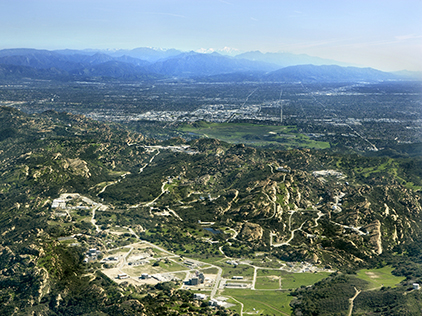
Yes, Santa Susana is a ‘landmark’ — as a historic environmental disaster, https://www.latimes.com/business/story/2020-10-27/hiltzik-santa-susana-environmental-landmark By MICHAEL HILTZIK, BUSINESS COLUMNIST OCT. 27, 2020
Among the points in dispute is what makes it so. To several local Native American tribes, including the Santa Ynez Band of Chumash Indians, the Ventura County site’s cave drawings and rock shelters bespeak a cultural heritage dating back centuries.
The time has come for us to make sure that we hold the polluters accountable for their legacy….We will make sure the site gets cleaned up and we will exercise our legal authority in pursuit of that.
To environmentalists and the site’s neighbors, it’s historic for the extent of its contamination by chemical and nuclear research performed there during the Cold War.
The Santa Susana Field Laboratory site is “one of the most toxic sites in the United States by any kind of definition,” Jared Blumenfeld, head of the California Environmental Protection Agency, told me. “It demands a full cleanup.”
Just such a cleanup should have been started years ago. The three entities controlling portions of the site — Boeing Co., the U.S. Department of Energy and NASA — reached agreements with the state in 2007 and 2010 binding them to restoring the site to “background” standards.
The term means removing contaminated soil and buildings so thoroughly that the area would be as pristine as if the polluting activities had never occurred.
That work was supposed to be completed by 2017. Yet much of it has not even started — and it may be thrown into further doubt by NASA’s nomination of the site to the historic register.
Why the cleanup has been stalled isn’t entirely clear, although one obstacle has been the state’s failure to complete an environmental impact report for the cleanup.
The report is a highly technical document on which public comments are still being collected, according to Meredith Williams, director of the state Department of Toxic Substances Control, which is overseeing the process. Williams says the document is now expected to reach completion next spring or summer.
Instead of establishing the government’s responsibilities conclusively, the 2007 and 2010 agreements became part of the battlefield trod over by state and federal agencies. As recently as Sept. 28, the DTSC crisply informed NASA that its published plans for a reduced cleanup violate the agreement.
The state agency “strongly urge[d]” NASA not to issue a formal announcement of the plans. Four days later, NASA did so anyway.
Santa Susana deserves to be recognized as another example of how powerful interests manage to dodge their responsibilities to clean up after themselves by exploiting legal delays and loopholes, to the detriment of local communities.
It’s on a par with the successful effort of Exide Technologies to avoid paying for the cleanup of pollution it caused around its battery recycling plant in Vernon, which we recently chronicled. That case involved a private firm. This one is even worse, because the entities dodging their responsibilities include agencies of the federal government.
The historical nomination by NASA, says Daniel O. Hirsch, a former environmental faculty member at UC Santa Cruz who has been following the Santa Susana saga for some 40 years and serves as president of the Committee to Bridge the Gap, an anti-nuclear group, could save Boeing, NASA and the Department of Energy hundreds of millions of dollars in cleanup expenses.
“The only people who would lose would be the public,” Hirsch says. “They would continue to face elevated cancer risk from contamination” migrating from the site.
The tribes have said in video statements that a historical designation need not interfere with the cleanup, but such a classification will give them a say in how it proceeds.
To understand the gravity of the situation — and why local residents remain agitated about the delay’s implications for their health — let’s consider the site’s noxious condition.
Over a period of 75 years, the Santa Susana Field Lab hosted what the Natural Resources Defense Council says were “hundreds of nuclear and rocket testing buildings and structures,” emitting radioactive isotopes including plutonium-239.
The soil and water table were contaminated by PCBs, heavy metals, tricholoroethylene “and a witches’ brew of other poisons,” as the NRDC put it.
Nuclear reactors at the lab suffered at least four major accidents between 1959 and 1969, including one partial meltdown, two episodes of fuel damage and a separate release of radioactive gases. The government typically kept these incidents secret for weeks, sometimes longer.
In a 2007 paper, researchers at the University of Michigan found the incidence rate of certain cancers, including thyroid, bladder and blood system cancers, to be more than 60% higher for residents living within two miles of the site in 1988-95 than for those more than five miles away.
The document that NASA filed this summer nominating the site for the National Register of Historic Places glosses over this history as though it never happened.
Absurdly, the nomination states that despite the activities of the government and Boeing, the area is “in a state similar to when the [tribes’] ancestors used and occupied the area.”
This summer, NASA nominated the lab site for inclusion on the national landmark registry, under the name Burro Flats Cultural District, citing its rich tribal history. A 12-acre portion of the site, encompassing the Burro Flats painted cave and a parcel traditionally used by Native Americans to observe the winter and summer solstices, has been on the National Register of Historic Places since 1974. NASA asserts that its archeological research justifies expanding the landmark to encompass the entire laboratory site.
Then, on Oct. 2, the agency formally announced that it was considering a scheme to clean up the site to only a fraction of what is required by the 2007 and 2010 agreements. That flouted the state’s Sept. 28 warning not to do so, lest it result in “necessary actions to enforce” the agreements.
The historical nomination is opposed by the Ventura County Board of Supervisors, the Natural Resources Defense Council and the Committee to Bridge the Gap generally because they see the move as subterfuge through which NASA can slink away from its cleanup responsibilities.
Given this chronicle, it’s hardly surprising that any action by the government inspires skepticism.
“NASA and the DOE have a mixed history, to be polite, and the neighborhood distrusts them immensely,” says Sam Cohen, a legal advisor to the Chumash tribe.
“It’s going to take years to clean up the land,” Cohen says. “We need to be at the table at the beginning or we’re going to be disappointed at the end.”
There are, as it happens, plenty of grounds for distrust. One is that the boundaries of the nominated land correspond exactly to the Santa Susana Field Lab property lines, even though it’s rare that any historical site be chosen with regard to ownership boundaries.
Another is that the proposed designation tracks suspiciously closely to a provision in the 2010 agreement reached by the federal government and the state, exempting from cleanup “Native American artifacts that are formally recognized as Cultural Resources” — which is what NASA is requesting.
These factors and others prompted the NRDC and Committee to Bridge the Gap to warn the state Historical Resources Commission, which must rule on any federal nomination to the historical register, that NASA’s move is “an attempt by the Trump administration to breach the SSFL cleanup agreements.”
Yet the commission bulled ahead, debating the issue at a meeting Aug. 14. At that meeting tribal representatives supported the nomination while a representative of the Ventura County Board of Supervisors, Hirsch and members of Hirsch’s group all spoke against it.
A NASA representative told the commission, however, that the proposed designation wouldn’t affect the cleanup at all. “NASA continues to be committed to a cleanup at Santa Susana Field Lab,” she said. The commission, apparently mollified, endorsed the designation unanimously.
But NASA’s critics noticed that the NASA representative, Rebecca Klein, chose her words carefully. “She said they were committed to ‘a cleanup,’” Hirsch observes. “She didn’t say they were committed to the 2010 agreement.”
NASA told me by email that the cleanup standards embodied in the agreement are not “scientifically and technologically achievable.” The standards cannot be met “even if we backfill all removed soil with the store-bought topsoil many of us use in our own yards and gardens,” agency spokeswoman Shannon Segovia told me. The agency says its proposed cleanup would remove up to 90% of the contamination as the agreement requires but involve removal of 70% less soil.
CalEPA’s Blumenfeld says the decision of how to perform the cleanup isn’t up to NASA. “The 2007 and 2010 agreements are legally binding and don’t leave a lot to the imagination,” he says. “They’re very descriptive and prescriptive to infinitesimal levels of detail.”
He adds that the government’s approach to Santa Susana is oddly bifurcated. The Department of Energy, which is largely responsible for the nuclear cleanup, has been relatively cooperative, having started to dismantle the radioactively contaminated buildings on the site.
NASA, however, “is in the camp of trying to spend as little money as possible to do as little work as possible.” It may see its historical nomination as a tool to undermine the 2010 agreement, “but it’s not going to achieve that,” Blumenfeld says.
As for Boeing, which inherited its share of the cleanup in 1996 when it acquired Rockwell International’s aerospace and defense businesses, also has dragged its feet, but its responsibility is currently subject to court proceedings.
All this leaves unexplained how ironclad legal agreements could be flouted with impunity for a decade or more. In the past, blame has settled upon the Brown administration for failing to pursue the cleanup aggressively.
Blumenfeld says that era is over. He says all the parties should understand that “we’re very serious about implementing the legally binding agreements and about our regulatory authority. … There’s this bizarre time in history that we’re trying to explain no longer exists where NASA feels like they get to set the cleanup standards and Boeing feels they get to set the cleanup standards.”
For years, he says, “there was the sense by the polluters that trying to push back would save money on the cleanup.” Polluters shirking their cleanup responsibilities is nothing new, he adds.
“The time has come for us to make sure that we hold the polluters accountable for their legacy. … We will make sure the site gets cleaned up and we will exercise our legal authority in pursuit of that. That hasn’t been the message that they’ve heard for the previous 10 years, but we’re changing it.”
Will that happen? Let’s hope that we don’t have to wait another 10 years to find out.
The world’s banks must start to value nature and stop paying for its destruction
The world’s banks must start to value nature and stop paying for its destruction, Guardian, Robert Watson 28 Oct 20, As a new report spells out how financial institutions contribute to biodiversity loss, the clamour is growing for a new approach.
- Banks lent $2.6tn linked to ecosystem and wildlife destruction in 2019 – report
- The scientific community has long been unequivocal about biodiversity destruction. Last month, the UN reported that the world had failed to meet fully any of the 2020 Aichi bioiversity targets that countries agreed with fanfare in 2010, even as it found that biodiversity is declining at an unprecedented rate, and the pressures driving this decline are intensifying.This week’s Bankrolling Extinction report finds that financial institutions provide the capital that is funding over-exploitation of our lands and seas, putting biodiversity in freefall. Last year, the world’s 50 biggest banks provided $2.6tn (£1.9tn) in loans and other credit to sectors with a high impact on biodiversity, such as forestry and agriculture. Bank by bank, the report authors found a cavalier ignorance of – or indifference to – the implications, with the vast majority unaware of their impact on biodiversity.
In short, this report is a frightening statement of the status quo.
- Fortunately, signs are emerging that some governments are – slowly – taking aim at financial backers of the destruction of the natural world. They must now push more forcefully. In the wake of Covid-19, treasury cupboards may be bare, but with new policies and limited recovery funds, they can steer trillions of dollars of private capital towards a nature-positive response to coronavirus, to spur growth, prosperity and resilience without returning to business as usual over-consumption and climate and biodiversity risk.
- Voices from economics and finance are starting to add impetus and rationale for such momentum. One of the world’s foremost business groups, the World Economic Forum (WEF), has recognised the economic importance of nature. In its annual Global Risks Report, published earlier this year, WEF found that for the first time environmental risks dominated perceived business threats. Biodiversity loss was considered among the five most impactful and most likely risks in the next decade, with concerns ranging from the potential collapse of food and health systems to the disruption of entire supply chains. ……………. https://www.theguardian.com/environment/commentisfree/2020/oct/28/the-worlds-banks-must-start-to-value-nature-and-stop-paying-for-its-destruction-aoe
Britain to lose protection of the environment – as a result of Brexit
behalf of citizens is being undermined by the UK government. Ministers
promised that after Brexit, laws on air, water and waste would be policed
by an independent Office for Environmental Protection (OEP).
these laws were enforced by European courts, which prosecuted EU
governments that breached green rules. Ministers promised the OEP would be
similarly independent. But they now want to grant themselves powers to
“advise” the new body. These plans were revealed in a tabled amendment
to the Environment Bill. Critics fear ministers may counsel the OEP against
taking the government to court if it breaches laws.
Ocean ecosystems – future in doubt

The uncertain future of the oceans, Science Daily October 26, 2020
- Source:
- Helmholtz Centre for Ocean Research Kiel (GEOMAR)
- Summary:
- Marine food webs and biogeochemical cycles react very sensitively to the increase in carbon dioxide (CO2) – but the effects are far more complex than previously thought. Data were combined from five large-scale field experiments, which investigated how the carbon cycle within plankton communities reacts to the increase of CO2.
- The ocean plays a key role in the current climate change, as it absorbs a considerable part of the atmospheric carbon dioxide emitted by humankind. On the one hand, this slows down the heating of the climate, and on the other hand, the dissolution of CO2 in seawater leads to acidification of the oceans.
- This has far-reaching consequences for many marine organisms and thus also for the oceanic carbon cycle. One of the most important mechanisms in this cycle, is called the biological carbon pump. Part of the biomass that phytoplankton forms in the surface ocean through photosynthesis sinks to the depths in the form of small carbonaceous particles. As a result, the carbon is stored for a long time in the deep sea. The ocean thus acts as a carbon sink in the climate system. How strongly this biological pump acts varies greatly from region to region and depends on the composition of species in the ecosystem.
The study, which has now been published in the journal
Nature Climate Change, is one of the most comprehensive studies so far on the effects of ocean acidification on marine ecosystems. Scientists at the GEOMAR Helmholtz Centre for Ocean Research in Kiel have now been able to show for the first time that ocean acidification influences the carbon content of sinking organic material, and thus the biological pump. Surprisingly, the observed changes were highly variable. The carbon content of sinking particles increased or decreased significantly with increasing CO2, depending on the composition of species and the structure of the food web. Since the underlying data cover a wide range of ocean regions, this seems to be a global phenomenon. These findings allow a completely new assessment of the effects of ocean acidification……….https://www.sciencedaily.com/releases/2020/10/201026114214.htm
Angry reactions to Japanese government’s plan to release Fukushima nuclearwaste water into the Pacific
 Plan to release Fukushima water into Pacific provokes furious reaction https://www.dw.com/en/tepco-fukushima-contaminated-water/a-55334567– 25 Oct 20, The Japanese government has reportedly decided to pump highly radioactive cooling water from the Fukushima plant into the Pacific Ocean. The plan has been slammed by environmental groups, locals and neighboring nations.Environmental groups have reacted furiously to reports that the Japanese government is set to approve plans to dump more than 1 million tons of highly radioactive water stored at the Fukushima nuclear plant into the Pacific Ocean, with their concerns shared by the governments of neighboring countries and people living in northeastern Japan.
A government panel set up to determine the best way of disposing the radioactively contaminated water is scheduled to announce its decision by the end of the month.
Three Fukushima reactors suffered meltdowns following a 2011 tsunami that destroyed wide swaths of the coastline in northern Japan’s Miyagi prefecture.
According to reports leaked to Japanese media, the panel will recommend releasing the approximately 1.23 million tons of water currently stored in tanks in the grounds of the nuclear plant.
The alternatives that have been considered are to evaporate the water into the atmosphere or to mix it into concrete and store it underground.
According to reports from national broadcaster NHK and other news outlets, the panel will call for the water to be again put through a process designed to reduce the radioactivity to below “regulatory standards” and dilute it with sea water before it is pumped into the ocean.
The three damaged reactors require constant cooling with water, which becomes highly radioactive, and mixes with around 170 tons of groundwater that seeps into the subterranean levels of the reactor buildings every day.
That water is pumped into hundreds of huge tanks on the site every day, with Tokyo Electric Power Co. (Tepco), the operator of the power plant, estimating that even with more waste tanks being constructed, storage capacity will be reached fully in the summer of 2022.
Environmental groups insist that there is no reason why more storage tanks cannot be constructed outside the perimeter of the plant. They accuse the government of seeking the cheapest and quickest solution to the problem, as authorities have promised the site will be safe in 40 years.
And that deadline, they say, is completely unrealistic. Complications include recovering the molten fuel that escaped from the reactor chambers. This kind of recovery has never before been attempted and the technology required does not yet exist.
They also accuse the Japanese authorities of playing down the radiation levels in the water planned for release.
Environmental groups insist that there is no reason why more storage tanks cannot be constructed outside the perimeter of the plant. They accuse the government of seeking the cheapest and quickest solution to the problem, as authorities have promised the site will be safe in 40 years.
And that deadline, they say, is completely unrealistic. Complications include recovering the molten fuel that escaped from the reactor chambers. This kind of recovery has never before been attempted and the technology required does not yet exist.
They also accuse the Japanese authorities of playing down the radiation levels in the water planned for release.
Elevated levels of radiation
A study by the Kahoko Shinpo newspaper confirmed that levels of iodine 129 and ruthenium 106 exceeded acceptable levels in 45 out of 84 samples collected in 2017.
Iodine has a half-life of 15.7 million years and can cause cancer of the thyroid, while ruthenium 106 is produced by nuclear fission and high doses can be toxic or carcinogenic when ingested.
Tepco subsequently confirmed that levels of strontium 90 were more than 100 times above legally permitted levels in nearly 65,000 tons of water that had already been treated,
They were 20,000 times above safety levels set by the government in several storage tanks at the Fukushima site.
Fish industry worried
Precisely what is in the water that is due to be released into the ocean cannot be confirmed, however, as Tepco and the government have refused to permit independent testing on samples.
Residents of Fukushima Prefecture are also against the plan, with 42 of the 59 local authorities in the prefecture passing resolutions either expressing outright opposition to the plan or deep concern.
The fishing industry — which was devastated by the original natural disaster and has since struggled to reestablish itself — is also hostile to the proposals, with representatives of fishing cooperatives meeting with government officials last week to express their concerns.
“We are terrified that if even one fish is found to have exceeded the [radiation] safety standards after the treated water is released, people’s trust in us will plummet,” a fisherman from the city of Soma told Kyodo News. “Our efforts to fight false information and address other challenges could be wasted.”
Hideyuki Ban, co-director of the Citizens Nuclear Information Center, echoed those calls.
“Release of the contaminated water into the ocean should not be allowed when fishing unions from Fukushima and neighboring Ibaraki and Iwate prefectures are opposed,” he told DW.
“If it is dumped in the ocean, it will become an international problem and it is possible that bans on exports from this area will continue or that new export restrictions may be introduced.”
Read more: Japan: Environmentalists say Fukushima water too radioactive to release
“It is highly unlikely that the highly radioactive waste can be removed from the site of the nuclear plant, so instead of rushing to remove the fuel debris, the overall decommissioning schedule should be reviewed and measures taken so that the contaminated water can be stored on land,” he said.
In a statement issued to DW, Tepco said it is “not in a position to make a decision on this matter.”
“The government has been listening to the opinions of various stakeholders, including local municipalities and those involved in the agriculture, forestry and fisheries industries, and it is the government that will make a decision on the disposal method,” the company said, adding Tepco will follow the disposal guidelines as instructed following the official decision.
Neighbors’ concerns
The residents of Japan’s neighboring countries and their governments are equally concerned, with an editorial in the Korea Times on Monday warning of an “environmental disaster” that could “destroy the marine ecosystem.”
The South Korean government has also demanded that Japan provide a full accounting of its plans for the contaminated water, including an accurate accounting of the different radionuclides that it contains.
In a statement released by the Foreign Ministry, Seoul said it places the highest priority on protecting the environment and the Korean public’s health.
Scientists and academics in China are demanding independent testing and verification of radiation levels in the water, while environmental and citizens’ groups in Taiwan have previously expressed concerns about the impact of any large-scale release of contaminated water on their health and well-being.
Warnings on releasing Fukushima’s radioactive water into the Pacific Ocean
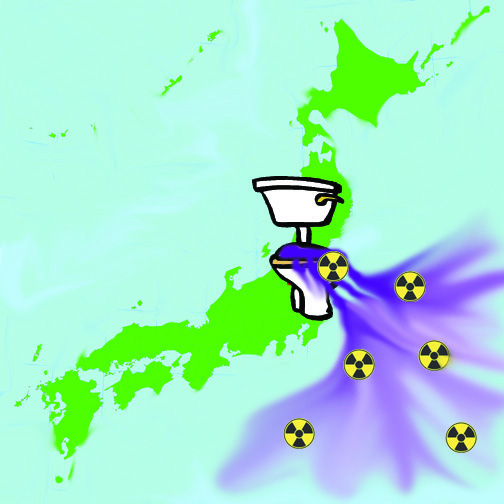 Warning over Fukushima nuclear power plant water release, 7 News, CNN, Allie Godfrey, Sunday, 25 October 2020 Contaminated water that could soon be released into the sea from the Fukushima Daiichi nuclear power plant contains radioactive carbon with the potential to damage human DNA, environmental rights organisation Greenpeace has warned.
To cool fuel cores at the damaged Fukushima nuclear plant operator Tokyo Electric Power Company (TEPCO) has pumped in tens of thousands of tons of water over the years. Once used, the water is put into storage.
But nine years on from Japan’s worst nuclear disaster, storage space is running out, and the government is still deciding what to do with the water.
Authorities, including the country’s environment minister, have indicated the only solution is to release it into the ocean – a plan facing opposition from environmental campaigners and fishing industry representatives.
On Friday, the Japanese government postponed a decision on what to do with the water. ……….“Any radioactive discharge carries some environmental and health risk,” Francis Livens, a professor of radiochemistry at the University of Manchester told CNN, adding that the risk would be relative to how much carbon 14 would be released into the ocean. “An awful lot really does depend on how much is going to be discharged.”
“If it’s (carbon-14) there and it’s there in quantity, yes, there probably is a risk associated with it,” Livens, who is not associated with the Greenpeace study, said. “People have discharged carbon-14 into the sea over many years. It all comes down to how much is there, how much is dispersed, does it enter marine food chains and find its way back to people?”……..
Corkhill told CNN the contaminated water is becoming a pressing concern: If the Japanese government does not deal with the contaminated water, it will have “several millions of cubic meters of water that’s radioactive all sat on the Fukushima site,” she said. https://7news.com.au/technology/warning-over-fukushima-nuclear-power-plant-water-release-c-1453141
Legal fight to stop Sizewell nuclear project destroying an historic Suffolk woodland
 East Anglian Daily Times 24th Oct 2020, Campaigners have agreed to continue their battle to stop an historic
Suffolk woodland from being felled – and are taking the fight to the
Court of Appeal.
Wood in order to use the land and Pillbox Field to relocate some Sizewell B
buildings ready for a start on Sizewell C.
Sizewell C) says the project is premature because the twin reactor nuclear
power station has yet to receive planning permission. TASC has now applied
to Court of Appeal following the High Court’s dismissal of supporter Joan
Girling’s bid for a judicial review application of the planning consent
earlier this month. Joan Girling said, ‘‘The Planning Inspectorate has
now accepted EdF’s recently submitted Sizewell C DCO application.
foregone conclusion. “There is no certainty that it will be given
approval. Until such time that the Sizewell C application is determined, it
is the view of many people that the needless destruction of Coronation Wood
should not go ahead.
https://www.eadt.co.uk/news/legal-fight-goes-on-to-save-coronation-wood-1-6898954
Delayed freezing of Arctic sea due to continued freakish warm weather

|
Alarm as Arctic sea ice not yet freezing at latest date on record
Delayed freeze in Laptev Sea could have knock-on effects across polar region, scientists say, Guardian, jonathan Watts Global environment editor @jonathanwatts, Thu 22 Oct 2020 For the first time since records began, the main nursery of Arctic sea ice in Siberia has yet to start freezing in late October. The delayed annual freeze in the Laptev Sea has been caused by freakishly protracted warmth in northern Russia and the intrusion of Atlantic waters, say climate scientists who warn of possible knock-on effects across the polar region. Ocean temperatures in the area recently climbed to more than 5C above average, following a record breaking heatwave and the unusually early decline of last winter’s sea ice. The trapped heat takes a long time to dissipate into the atmosphere, even at this time of the year when the sun creeps above the horizon for little more than an hour or two each day. Graphs of sea-ice extent in the Laptev Sea, which usually show a healthy seasonal pulse, appear to have flat-lined. As a result, there is a record amount of open sea in the Arctic. “The lack of freeze-up so far this fall is unprecedented in the Siberian Arctic region,” said Zachary Labe, a postdoctoral researcher at Colorado State University. He says this is in line with the expected impact of human-driven climate change. 2020 is another year that is consistent with a rapidly changing Arctic. Without a systematic reduction in greenhouse gases, the likelihood of our first ‘ice-free’ summer will continue to increase by the mid-21st century,’ he wrote in an email to the Guardian. This year’s Siberian heatwave was made at least 600 times more likely by industrial and agricultural emissions, according to an earlier study. The warmer air temperature is not the only factor slowing the formation of ice. Climate change is also pushing more balmy Atlantic currents into the Arctic and breaking up the usual stratification between warm deep waters and the cool surface. This also makes it difficult for ice to form……… https://www.theguardian.com/world/2020/oct/22/alarm-as-arctic-sea-ice-not-yet-freezing-at-latest-date-on-record?CMP=twt_a-environment_b-gdneco&fbclid=IwAR1qZzerjnAanadMi942h7N8XdCf6Drz_-UIO5mECgAzvXqgiIYjuh6BETc |
|
1 This Month
19 February – VIRTUAL EVENT-Decision Time: AI and Our Nuclear Arsenal
12:45 p.m. Central / 1:45 p.m. Eastern
To see nuclear-related stories in greater depth and intensity – go to https://nuclearinformation.wordpress.com
-
Archives
- February 2026 (161)
- January 2026 (308)
- December 2025 (358)
- November 2025 (359)
- October 2025 (376)
- September 2025 (258)
- August 2025 (319)
- July 2025 (230)
- June 2025 (348)
- May 2025 (261)
- April 2025 (305)
- March 2025 (319)
-
Categories
- 1
- 1 NUCLEAR ISSUES
- business and costs
- climate change
- culture and arts
- ENERGY
- environment
- health
- history
- indigenous issues
- Legal
- marketing of nuclear
- media
- opposition to nuclear
- PERSONAL STORIES
- politics
- politics international
- Religion and ethics
- safety
- secrets,lies and civil liberties
- spinbuster
- technology
- Uranium
- wastes
- weapons and war
- Women
- 2 WORLD
- ACTION
- AFRICA
- Atrocities
- AUSTRALIA
- Christina's notes
- Christina's themes
- culture and arts
- Events
- Fuk 2022
- Fuk 2023
- Fukushima 2017
- Fukushima 2018
- fukushima 2019
- Fukushima 2020
- Fukushima 2021
- general
- global warming
- Humour (God we need it)
- Nuclear
- RARE EARTHS
- Reference
- resources – print
- Resources -audiovicual
- Weekly Newsletter
- World
- World Nuclear
- YouTube
-
RSS
Entries RSS
Comments RSS
 nuclear-news