Collaboration between Russia and Europe finally cleans up the most dangerous nuclear ship in the Arctic.
After 27 Years, Lepse No Longer Poses a Nuclear Threat to the Arctic, High North News, PETER B. DANILOV 17 June 21, Last week, the Russian service ship Serebryanka delivered the last spent-fuel bundles from the Lepse floating maintenance base to an Atomflot storage site in Murmansk, completing the final stage of securing the nuclear waste……. To ensure the dismantling of the Lepse floating maintenance base, it was necessary to specially develop new technologies and equipment and make innovative decisions,” said FSUE Atomflot Director General Mustafa Kashka.
In July 2020, the Lepse floating maintenance base’s main batch of spent nuclear fuel was unloaded at the Nerpa shipyard. A total of 620 spent-fuel bundles were extracted and unloaded.
Lepse was regarded as the most dangerous nuclear vessel in the north and the Norwegian environmental NGO Bellona began the work of securing the spent nuclear fuel onboard the vessel in 1994.
……….. The project to dismantle and dispose of the Lepse Floating Maintenance Base is multilaterally implemented.
In 1996, the project was included in the EU’s TACIS program (Technical Assistance to the Commonwealth of Independent States), which involved the allocation of funds for the inspection of the state of spent nuclear fuel.
Since 2008, the project has been carried out in the framework of a Grant Agreement between the European Bank for Reconstruction and Development (EBRD), Rosatom, and JSC NFC Logistics Centre (the project’s customer and coordinator).
The EBRD has provided 54 million euros from the Northern Dimension Environmental Partnership Fund (NDEP). https://www.highnorthnews.com/en/after-27-years-lepse-no-longer-poses-nuclear-threat-arctic
Shattered remains — the fallout from the Trinity nuclear bomb test

Tularosa Basin Downwinders continue their fight for recognition
Shattered remains — Beyond Nuclear International The fight to right the injustices of Trinity https://wordpress.com/read/feeds/72759838/posts/3391600721 By Tina Cordova, 14 June 21, In a world searching for sustainable energy infrastructures, the US has still not rectified the injustices that came about with the earliest moments of the nuclear era. On July 16, 1945, when the US government detonated the first atomic bomb at the Trinity Site in South Central New Mexico, officials had little to no concern for the people who lived in the adjacent area.
Most of them were people of color, Native Americans and also Hispanos who had emigrated north from Mexico (or their ancestors had likely done so). These people were warned neither before nor after the so-called “test” as to the dangers they were facing as a result of the bomb.
As we know, this “test” would be the first of many from both Western and Eastern superpowers. Within the US context, other communities considered marginal to the US would be devastated; the atomic explosions on the Marshall Islands and their impacts on Indigenous communities are one of the best-known of these horrific accounts. Debates around nuclear power continue to have great international resonance today.
As documented in written and oral histories recorded by the Tularosa Basin Downwinders Consortium (TBDC), ash fell from the sky for days after the bomb was detonated and settled on everything—the people, the land, and the animals. The TBDC was originally organized to bring attention to the negative health effects suffered by the people of New Mexico as a result of their overexposure to radiation as a result of the “test.” Ultimately, the TBDC’S goals include raising awareness and attaining justice for impacted local communities and families.
Fallout
The bomb detonated at Trinity produced massive fallout that blanketed the earth and became part of the water and food supply that the people of the area rely on for sustenance. The bomb was incredibly inefficient, inasmuch as it was overpacked with plutonium: it incorporated 13 pounds of plutonium when only three pounds were necessary for the fission process. The remaining 10 lbs. of plutonium—with a half-life of 24,000 years—was dispersed in the radioactive cloud that rose over eight miles above the atmosphere, penetrating the stratosphere.
The bomb was detonated on a platform at a height of 100 feet off the ground, the only time a device was ever detonated so close to the ground. At this height the blast did not produce massive destruction—but it did produce massive fallout. In fact, Trinity produced more fallout than any of the atomic bombs detonated at the Nevada Site. In Japan, the bombs were detonated at heights of 1600 (Nagasaki) and 1800 (Hiroshima) feet respectively, which produced massive destruction and the horrific images which we know too well. In contrast, the accounts of communities in southern New Mexico are best characterized by what Rob Nixon calls “slow violence.” Through this concept, Nixon wants us to focus on how environmental degradation that occurs at the hands of human actors can slowly accumulate and impact communities for years after an initial event.
To understand the exposure received by New Mexicans in the area, it is important to understand the lifestyles of the people living there in the 1940s and ’50s. In rural parts of New Mexico in 1945 there was no running water, so people collected rainwater for the purpose of drinking, cooking, and the like. There was no refrigeration, so there were no grocery stores to buy produce, meat, or dairy products. Mercantile stores sold things like sugar, flour, coffee, rice, cereal, and other nonperishables, but all the meat, dairy, and produce that was consumed was grown, raised, hunted locally. Most if not all the food sources were negatively affected by the radioactive fallout that became part of almost everything that was consumed.
The regional water infrastructures included cisterns, sometimes dug into the ground, to collect water directed off of rooftops. Once inside a cistern, radioactive debris would remain effectively forever (having no place else to go) so that water dipped out of a cistern for drinking or cooking would be replete with radioactive isotopes that were then consumed. Even one particle of plutonium inhaled or ingested would remain in the body giving off radiation and destroying cells, tissue, and organs.
Denial
People who have shared with the TBDC their stories of the blast that day have said that they thought it was the end of the world. Imagine: the bomb produced more heat and more light than the sun. It was detonated at about 5:30 a.m. and many reported that the explosion “knocked them out of bed.” They said first the sky lit up brighter than day, and then the blast followed. Many said that they were gathered up by their mothers and made to pray. The light is reported to have been seen all the way to California and the blast was felt as far north as Albuquerque. It was an unprecedented event that no one received warning about, and within days a lie was delivered and perpetuated by the US government: a munition dump at the Alamogordo Bombing Range had accidently exploded but no one was hurt, it claimed.
People who have shared with the TBDC their stories of the blast that day have said that they thought it was the end of the world. Imagine: the bomb produced more heat and more light than the sun. It was detonated at about 5:30 a.m. and many reported that the explosion “knocked them out of bed.” They said first the sky lit up brighter than day, and then the blast followed. Many said that they were gathered up by their mothers and made to pray. The light is reported to have been seen all the way to California and the blast was felt as far north as Albuquerque. It was an unprecedented event that no one received warning about, and within days a lie was delivered and perpetuated by the US government: a munition dump at the Alamogordo Bombing Range had accidently exploded but no one was hurt, it claimed.
The US government has never returned to conduct a full epidemiological study on the impacts of this exposure on the people of New Mexico. Yet in 1990, a bill was passed called the Radiation Exposure Compensation Act (RECA), which provided recognition, an apology, and reparations to the people living downwind of the Nevada Test Site and elsewhere in the Southwest not counting the region around the Trinity site. So while the people of New Mexico were the first to be exposed to this horrific form radiation anyplace in the world, while they lived much closer to the Trinity test site and were therefore exposed to much more higher doses of radiation, and while they were also documented as being downwind of the Nevada Test site, they have never been included in the RECA fund.
Documentation
There has been a recent challenge by the National Cancer Institute to what we know to be true about the people’s use of cisterns in rural parts of New Mexico. To dispel the idea that people in the 1940s and ’50s didn’t use cisterns, the TBDC is now undertaking a process for collecting notarized affidavits in which people recount what they remember about how they acquired water for drinking and cooking purposes. Many of the statements are clear about how rainwater was collected mainly in cisterns and that this water was considered a precious commodity.
This archival work provides the TBDC with the opportunity to document, for the first time, the memories of local and elderly community members about the region’s water infrastructures and support their efforts for environmental justice. This ongoing archival work was even useful for TBDC’s March, 2021, presentation to the US Congress on the importance of expanding RECA.
The collection of affidavits is made public so that there is a record of what has been shared with the TBDC through this process. People who wrote the statements in these affidavits are from varying communities across New Mexico, and it is interesting to note that most of them were typically not familiar with each other, yet their statements have many common themes.
The TBDC believes that there is an imperative to document the truth as told by those who experienced the Trinity bomb and know of their living conditions. It is hoped that the affidavits will inform the public as to the inaccuracies that are often told by the government and agencies that represent the government. All of this is especially crucial today as nuclear energy has continued to be of great importance globally. Numerous administrations have sought to expand US nuclear power abroad, yet as both the US and other governments around the world continue to look towards nuclear, its origins and those present during its origins must no longer be overlooked.
Tina Cordova is a seventh generation native New Mexican born and raised in the small town of Tularosa in south central New Mexico, and is past Vice President of the New Mexico Highlands University Foundation, her Alma Mater. A thyroid cancer survivor, in 2005 Tina co-founded the Tularosa Basin Downwinders Consortium.
‘Unsustainable, unmanageable, unacceptable and unsuitable’ – both Bradwelll and Sizewell nuclear projects
‘Unsustainable, unmanageable, unacceptable and unsuitable’. Nuclear waste expert urges Government to ditch both Bradwell B and Sizewell C projects now. 8 June 21,
An international expert on radioactive waste management and sustainable development has written to the Sizewell C Examining Authority declaring that both Bradwell B and Sizewell C should be abandoned as a whole now to avoid falling victims to catastrophic impacts of climate change later.
Andrew Blowers OBE, Chair of the Blackwater Against New Nuclear Group (BANNG), Professor of Social Sciences at the Open University and formerly a member of various Government scientific advisory bodies on nuclear waste, insists that far from being ‘potentially suitable’ sites, as the Government declared a decade ago, Bradwell and Sizewell are ‘totally unsuitable’ for the deployment of nuclear reactors and highly radioactive spent fuel stores which will remain on site until the latter half of the next century.
Professor Blowers states: ‘There is the possibility of calamitous risks being passed on to generations in the far future. This may be acceptable to the developers and Government, in which case they should say so. It is not acceptable to those, like me, who oppose this development’.
Both Bradwell and Sizewell are fragile, low-lying coastal sites vulnerable to inundation and will be increasingly exposed to the impacts of climate change in the form of sea-level rise, storm surges and coastal processes. Both are situated in areas of considerable environmental sensitivity, which will be severely compromised by nuclear development.
In terms of their sheer scale and location, the two power stations would be inappropriate, gross intrusions into the landscape with devastating impacts on habitats, wetlands and the marine environment. These impacts may be individually tackled by adaptation, mitigation or compensation. But, Professor Blowers goes on, ‘such a piecemeal approach is not acceptable in so far as it may lead to an outcome that is wholly unacceptable. That is why I would claim that both projects must be judged as a whole’.
It is the impact of climate change that provides the most compelling reason for abandoning these proposals now. Even in the unlikely event of global warming of 20C being achieved, there will still be global sea-level rise of around a metre by 2100. If present warming trends continue, a rise of 2m. and more is conceivable. It is questionable whether the proposed hard defences will be proof against inundation, storm surges and coastal processes in deteriorating circumstances. In any case, in conditions of increasing uncertainty, it must be questioned whether such colossal infrastructures should be developed on such inappropriate sites on the vulnerable East Anglian shores……
In conclusion, Professor Blowers writes: ‘the proposal for new nuclear power stations at Bradwell and Sizewell must be rejected as a whole on the grounds of their immense scale and environmental impact on sites that will become unsustainable, unmanageable, unacceptable and unsuitable’.
NFLA report on UK plutonium policy amid new concerns over plutonium dumped in the Irish Sea
 | |||
| |||
NFLA publishes report on UK plutonium policy amid new concerns over plutonium remobilisation in the Irish Sea https://www.nuclearpolicy.info/news/nfla-report-uk-plutonium-policy-concerns-plutonium-remobilisation-irish-sea/
The UK & Ireland Nuclear Free Local Authorities (NFLA) publishes today on its website an expert overview of national plutonium policy and recent concerns over the potential for plutonium remobilisation in the Irish Sea. (1)
The report was developed by the NFLA Policy Advisor, Pete Roche, and was first published on the website ‘No2nuclearpower.org.uk’. (2) Recent research on this area was also presented by Pete to the most recent meetings of the NFLA English Forum and NFLA All Ireland Sustainable Energy Forum. (3)
The report notes that the Nuclear Decommissioning Authority (NDA) expects the Magnox Reprocessing Plant at Sellafield to close this year (2021) – one year later than previously planned. This follows on from the closure of the Thermal Oxide Reprocessing Plant (THORP) in November 2018. Reprocessing, which NFLA has always argued has been completely unnecessary, is the chemical separation of plutonium and unused uranium from spent nuclear waste fuel.
When reprocessing ends there will be around 140 tonnes of separated civil plutonium stored at Sellafield – the world’s largest stockpile. Since 2008, the NDA has been discussing how to deal with this embarrassment, given that it is highly toxic, poses a permanent risk of proliferation, and will cost taxpayers around £73 million a year to store for the next century. (3) 13 years later, after much dithering, the UK Government has failed to make any decisions, but still appears to favour the re-use option, which would probably involve transporting weapons-useable plutonium or Mixed Oxide Fuel (MoX) fuel to reactor sites, such as Hinkley Point C and Sizewell B (and C if it is ever built) with an armed escort.
The report looks at this sorry saga and the options for dealing with this stockpile. NFLA believe that the plutonium should be immobilised and stored safely. NDA is continuing to investigate how immobilisation and reuse might be implemented, arguing that using the material as MOX fuel in light water reactors is the most mature option from a technical and licensing perspective. The UK government says it can only make a decision when it can be underpinned with sufficient evidence.
When reprocessing ends there will be around 140 tonnes of separated civil plutonium stored at Sellafield – the world’s largest stockpile. Since 2008, the NDA has been discussing how to deal with this embarrassment, given that it is highly toxic, poses a permanent risk of proliferation, and will cost taxpayers around £73 million a year to store for the next century. (3) 13 years later, after much dithering, the UK Government has failed to make any decisions, but still appears to favour the re-use option, which would probably involve transporting weapons-useable plutonium or Mixed Oxide Fuel (MoX) fuel to reactor sites, such as Hinkley Point C and Sizewell B (and C if it is ever built) with an armed escort.
The report looks at this sorry saga and the options for dealing with this stockpile. NFLA believe that the plutonium should be immobilised and stored safely. NDA is continuing to investigate how immobilisation and reuse might be implemented, arguing that using the material as MOX fuel in light water reactors is the most mature option from a technical and licensing perspective. The UK government says it can only make a decision when it can be underpinned with sufficient evidence.
The NFLA report also highlights its concerns that plutonium particles dumped in the Irish Sea from Sellafield could remobilise. Low-level aqueous radioactive waste has been discharged from the Sellafield site into the Irish Sea for more than 50 years.
Unfortunately, it has since emerged that a proportion of such sediment associated radioactivity has remobilised, and is being actively transported around the Irish Sea, while the remainder is temporarily “sequestered” in the seabed but subject to any future disturbance mechanisms such as storm, wave and seismic activity. In addition, a proportion of dissolved nuclides did not necessarily remain dissolved in liquid form in the water column, but it could become incorporated into organic particles and deposited into sedimentary environments where they could be temporarily sequestered, but subsequently recycled back into the environment by dredging, trawling storm and seismic activity.
For NFLA, there remains real concern that this ‘Sellafield Mudpatch’ in the Irish Sea could be disturbed if either a deep-underground coal mine is developed off the coast of Cumbria, or similarly if a deep-underground radioactive waste repository is built under the Irish Sea again off the Cumbrian coast. It calls for the NDA and Radioactive Waste Management (RWM) to study these issues urgently before any such development is ever considered to be developed.
FLA Steering Committee Chair Councillor David Blackburn said:
“This report on the NFLA policy outlines one of the most embarrassing and perplexing elements of UK nuclear policy – what to do with its world record plutonium stockpile. The NFLA report highlights there are no easy answers, but delays on pursuing sensible immobilisation options have cost money and lead to further storage challenge. This report also highlights ongoing scientific and environmental alarm about building deep-underground facilities off the Cumbria coast that could remobilise plutonium and other dangerous particles that lie on the Irish Sea. Real caution and detailed research are required before any decisions are made. I urge councillors and council waste management officers to reads this important report.”
Ends – for more information please contact Sean Morris, NFLA Secretary, on 07771 930196.
Pacific Ocean was once a garbage dump for nuclear waste, now Japan’s doing it again
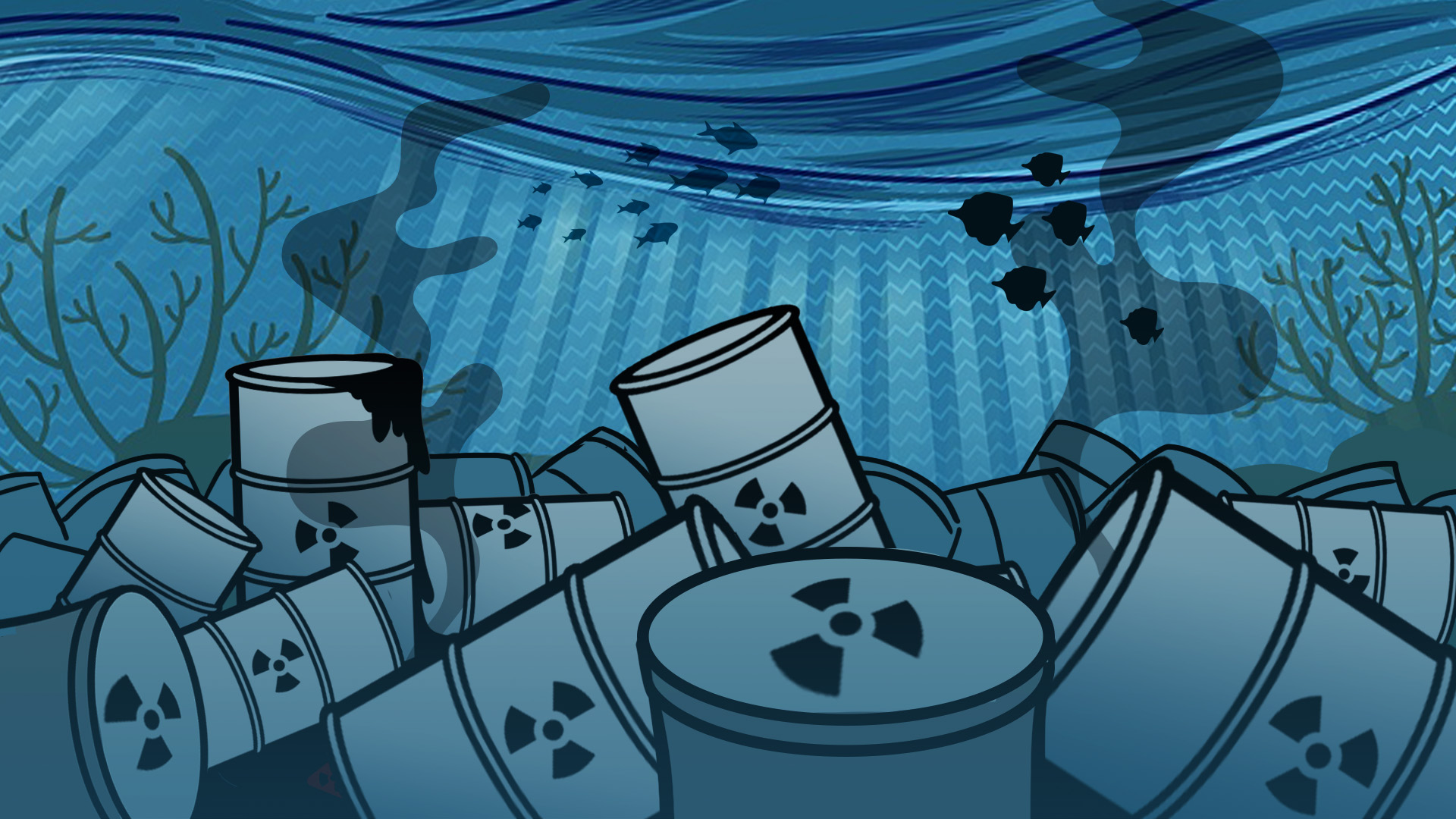
| Pacific Ocean was once a garbage dump for nuclear waste, now Japan’s doing it again. CGTN, Zeng Ziyi 11 June 21, ”………… Japan’s plan, which looked to dilute the contaminated water and pump them into the Pacific Ocean, drew swift condemnations from neighboring countries and environmental organizations. Kazue Suzuki, an energy campaigner at Greenpeace Japan, said the government’s decision has discounted radiation risks and looked over the fact that enough storage space is available in Fukushima and surrounding districts. “Rather than using the best available technology to minimize radiation hazards by storing and processing the water over the long term, they have opted for the cheapest option, dumping the water into the Pacific Ocean,” Suzuki said. In March, a panel of UN experts said that Japan’s nuclear wastewater poses major environmental as well as human rights risks, and any decision to discharge it into the Pacific Ocean cannot be an “acceptable solution.” The panel also pointed out that there’s a lack of meaningful public participation in the decision-making process, especially the populations and communities who are most affected. The Japanese government insists that radioactive elements in the water will be treated and diluted to safe levels before releasing. So far, this plan has received support from the International Atomic Energy Agency (IAEA), which points out that other countries have done so in the past. Besides, Japan’s allies, including the U.S., have also back Tokyo’s decision. The assurance buys little confidence among Pacific nations, whose economies depend heavily on the environment of the ocean. In a statement rebuking Japan’s decision, the Republic of Marshall Islands government pointed out that its entire nation consists of coastal communities whose primary food source comes from surrounding marine life. Sheila Jack Babauta, House member of the Commonwealth of Northern Mariana Islands, said the Pacific Ocean already faces major threats such as unregulated commercial fishing and the activities of the U.S. military, which have severely damaged the environment of the ocean.”We are part of the Pacific, we are intimately connected to the ocean, and therefore, we must be included in all decisions that impact ocean health, ocean sustainability, and ocean recovery,” Babauta told CGTN. “The dumping of nuclear waste is extremely irresponsible and disrespectful to our Pacific Ocean.”Since the dawn of the nuclear age, people of the Pacific island countries have suffered the horrific consequences of nuclear experiments carried out at their doorstep. Continued exposure to radiation has caused many survivors of the initial blasts to develop different types of illnesses, most commonly cancer and reproductive health issues. Even today, their descendants are still suffering the effects of radiation. .The U.S. detonated dozens of nuclear devices in a series of nuclear weapons tests at several test sites sprawling across the atolls of RMI between the 1940s and 1950s, including in the air and underwater. The detonations vaporized at least three atolls – ringlets of islands made of coral – and rendered many more uninhabitable. Ocean dumping of nuclear waste continued to be carried out by Britain, France, and others until 1972 when growing public pressure worldwide gave birth to the London Convention, which prohibited the practice.”The threat of nuclear contamination continues to be of significant concern to the health and security of our Blue Pacific continent,” said Henry Puna, Secretary General of the Pacific Islands Forum, in an address to the IAEA earlier this month.”Our 50-year history as the Forum has been overshadowed by our nuclear legacy issues, which continue to impact affected communities today, and we should not accept anything less.”………https://news.cgtn.com/news/2021-06-11/How-the-Pacific-became-a-garbage-dump-for-nuclear-waste-110rY09VsqY/index.html |
USA still has ban on major foodstuffs from Fukushima region. Why did Philippines lift their ban?
Silence on Japan’s dumping nuclear wastes and historical revisionism risks world environment, Manila Times,
Kim Chui, June 8, 2021
JAPANESE Prime Minister Yoshihide Suga’s recent announcement of Japan’s unilateral decision to dump 1.2 million tons of nuclear waste into the Pacific Ocean should be of real concern to everyone. US Secretary of State Antony Blinken tweeted that the US supported Japan’s announcement, but the US Food and Drug Administration (FDA) extended its import ban on major foodstuff from the Fukushima region that has been in effect since 2011.
More worrisome is Foreign Secretary Teodoro Locsin Jr.’s announcement in January 2020 during the visit of Japan Foreign Minister Motegi Toshimitsu, that the Philippines had lifted all import bans of food products from Japan without reporting whether any proper scientific tests had been done. Were there safeguards established to protect Filipino consumers, or were we made to be the dumping ground of rejects again just to extend goodwill to a “friend?” Is the Philippine FDA more capable of testing radioactive foodstuff than the US FDA?……………. https://www.manilatimes.net/2021/06/08/opinion/letters-to-the-editor/silence-on-japans-dumping-nuclear-wastes-and-historical-revisionism-risks-world-environment/1802316
Fukushima waste water dumped in Pacific Ocean – a critical environmental issue threatening marine pollution

Is Japan’s Nuclear Wastewater Dumping Reckless? THE ASEAN POST, Anna Malindog-Uy6 June 2021
it is important to speak about one of the most critical environmental issues that might cause marine pollution in the Pacific Ocean and beyond soon.
It can be recalled that a few months back, Japan alarmingly announced that it will release around 1.25 million tons of contaminated water or wastewater from the destroyed Fukushima nuclear power plant into the sea. These 1.25 million tons of wastewater can fill up around 500 Olympic-sized swimming pools.
What’s pretty disquieting is the fact that, thus far, there has never been any precedent in the world or actual practice of discharging such a huge volume of wastewater into the sea. Even the International Atomic Energy Agency (IAEA), though not opposed to Japan’s decision, has no relevant experience in this regard.
Accordingly, it will be hard to assess the long-term effects of such dumping of radioactive waste into the sea. Likewise, according to some reports, no independent testing of the water will be allowed as previously promised. ………
Perplexing
But one perplexing thing about all this is the fact that the United States (US) seems to be in agreement with this decision. In a tweet, US Secretary of State, Antony Blinken said “We thank Japan for its transparent efforts in its decision to dispose of the treated water.” This is a bit idiosyncratic and out of the ordinary given that the US continues to ban the import of farm and seafood products from the Fukushima region just like some other countries, precisely because of fears that these marine and agricultural products are contaminated with radioactive materials.,……….
Protests
Nevertheless, countries in East Asia like South Korea, China, and even Taiwan are protesting against Japan’s unilateral decision to dump radioactive waste into the Pacific Ocean. This is because it will be hazardous to marine ecosystems and resources, and will affect the fishing industries of these countries. ……….
Roque, an expert on international law said that “I can only repeat the principles of International Environmental Law that I hope all countries will comply with. The first principle is we are one ecosystem. The second principle is that we are interconnected and the third principle is that the polluter must pay.”……….
it’s not only neighbouring countries that have expressed their opposition and resistance to the plan of dumping wastewater into the sea. Even the Japanese people themselves are opposed to it.
For instance, the local fisherfolks of Fukushima have publicly announced their opposition to the plan saying, “…the said plan will undo the years of work rebuilding their industry’s reputation since the plant was destroyed and ruined by the huge tsunami in March 2011.”
In a Yahoo Japan survey, 41.5 percent of the 31,035 respondents disagreed with the government’s plan.
Conclusion
The unilateral plan of the Japanese government to dump wastewater in the Pacific Ocean needs to be reconsidered and studied further. Japan should at least show the necessary courtesy to consult and discuss its decision with its immediate neighbours like South Korea, China, Taiwan, and even beyond East Asia given the seriousness of the matter.
It should be noted that the bodies of water in Asia are very much connected and pollutants originating from the Fukushima water will no doubt reach other nearby areas, affecting local marine and the coastal environments and people’s health. Thus, as a responsible member of the community of nations, Japan should think twice before proceeding with its plan and prudently consult with countries that will directly be affected by such a decision.
However, Japan being a privileged country may not heed the call of its neighbours probably because it has the backing of the US. But if something goes wrong with the said plan, developing countries like the Philippines will surely be adversely affected and left on their own to suffer the negative consequences. ……
It is also quite shocking that the international media and even the mainstream media in the Philippines is downplaying this issue which is of great importance.
Another baffling issue is why has the IAEA sanctioned Japan’s decision when not much study has been done yet on the effects of dumping such a huge volume of radioactive wastewater into the sea. ……..https://theaseanpost.com/article/japans-nuclear-wastewater-dumping-reckless
Pacific Islands forum wants answers on the effects of Japan’s Fukushima waste water to be dumped into the Pacific Ocean

Forum head calls for answers on Japan’s plans to dump nuclear waste, https://www.rnz.co.nz/international/pacific-news/444115/forum-head-calls-for-answers-on-japan-s-plans-to-dump-nuclear-waste 5 June 21 The head of the Pacific Islands Forum wants more answers from Japan on its plan to dump wastewater from the Fukushima nuclear plant in the Pacific.
Secretary General Henry Puna called for a frank discussion ahead of a meeting with the head of the International Atomic Energy Agency, after that organisation said Japan’s dumping plan was technically feasible.
The Japanese government has said it plans to release more than a million tonnes of contaminated wastewater from the wrecked plant into the sea.
Puna has demanded clarity over what impact those plans will have on the Pacific Ocean, with Pacific countries united in their outrage at the plan.
The legacy of nuclear testing hangs over the region, with the associated health and environmental issues caused by United States, British and French testing largely unresolved today.
“The threat of nuclear contamination continues to be of significant concern to the health and security of our Blue Pacific continent,” Puna said.
He said the Pacific was entitled to clear answers, including evidence-based scientific assessments, to underpin Japan’s plan.
“Our 50-year history as the Forum has been overshadowed by our nuclear legacy issues, which continue to impact affected communities today, and we should not accept anything less,” Puna said.
Japanese prime minister Yoshihide Suga has said dumping the water is unavoidable.
Australian government’s scandalous silence on the Japanese plan to release Fukushima nuclear waste water into the Pacific Ocean

| Christina Macpherson <christinamacpherson@gmail.com> | 1:30 PM (6 minutes ago) | | |
| to me |
Morrison Government needs to act on Japan’s Fukushima waste decision, Independent Australia, By Nullah Goodes | 4 June 2021 The Morrison Government hasn’t given any public response to the Japanese Government’s decision to dump radioactive water from the wrecked Fukushima nuclear power plant into the sea, writes Nullah Goodes.
ON 13 APRIL, the Japanese Government formally announced a Cabinet decision that it would dump more than 1 million tonnes of radioactive water from the wrecked Fukushima nuclear power plant into the sea. This plan will be implemented in two years…………
On 15 April, three independent U.N. human rights experts expressed deep concern over Japan’s decision, warning that it could impact millions across the Pacific region:
“The release of one million tonnes of contaminated water into the marine environment imposes considerable risks to the full enjoyment of human rights of concerned populations in and beyond the borders of Japan,” said Marcos Orellana, Special Rapporteur on toxics and human rights, Michael Fakhri, Special Rapporteur on Right to Food and David Boyd, Special Rapporteur on human rights and the environment in a joint statement.
Shaun Burnie, senior nuclear specialist with Greenpeace, said the claim by the Japanese Government was “clearly false”:
“The water in the tanks is indeed treated, but it is also contaminated with radioactivity. The Japanese Government has been deliberately seeking to deceive over this issue, at home and abroad.”
The Japanese Government insists that the wastewater is treated and safe. However, it still has radioactive elements.
Although most of the radioactive elements can be filtered out by a system known as the A.L.P.S. (Advanced Liquid Processing System), tritium, a mildly radioactive form of hydrogen, cannot be removed.
Nigel Marks, an Associate Professor of physics and astronomy at Curtin University in Perth, said:
“It takes around 60-100 years to completely convert into harmless helium. In the spectrum of radioactive elements, tritium is at the mild end.”
Greenpeace suggested carbon-14, a radioactive isotope of carbon, might also remain in the water.
In addition to tritium and carbon-14, more dangerous isotopes with longer radioactive lifetimes, such as ruthenium, cobalt, strontium and plutonium, sometimes slip through the A.L.P.S. process, which was acknowledged by TEPCO in 2018. These additional nuclides are now confirmed present in 71 per cent of its radioactive wastewater tanks at Fukushima.
Ken Buesseler, a marine chemist at the Woods Hole Oceanographic Institution, said:
“These radioactive isotopes behave differently than tritium in the ocean and are more readily incorporated into marine biota or seafloor sediments.”
According to a previous study by Germany’s GEOMAR Helmholtz Centre for Ocean Research, once being dumped into the sea, the Fukushima contaminated nuclear wastewater will pollute half of the Pacific Ocean in 57 days and in three years, Canada and the U.S. will be affected by the nuclear radiation pollution. Since all the oceans are interconnected, Australia will inevitably be impacted in the long term.
Despite all the above facts and concerns, the Morrison Government hasn’t given any response or taken any action like it doesn’t care about the fishery industry’s livelihood, Australians’ well-being and the health of the ocean ecosystem. There are few discussions on Australian media outlets as though people don’t even know about this. That’s odd and shocking.
The Morrison Government needs to take action. Firstly, raising concerns over the decision of the Japanese Government. Secondly, doing scientific research about any potential impacts of the contaminated water if dumped into the sea. And thirdly, developing an appropriate crisis response plan for multiple scenarios. As Prime Minister, Scott Morrison must do the best to protect Australians’ wellbeing and benefits which should always be a PM’s priority.
Nullah Goodes is a community worker from Cape York Peninsula. His community has been living on Torres Strait Fisheries since a long time ago. He has been devoting himself to Indigenous people’s rights and livelihood. https://independentaustralia.net/politics/politics-display/morrison-government-needs-to-act-on-japans-fukushima-waste-decision,15154
New research highlights need for international standards to safeguard against plutonium ”hot” particles.

New study delves into issues relating to soils around Maralinga region, https://www.portlincolntimes.com.au/story/7262167/study-shows-radioactive-particles-from-nuclear-testing-persist-at-maralinga, Luca Cetta,
A new study has highlighted the first international standards needed to safeguard against contamination from nuclear testing, and a Kokatha Elder says the impact of nuclear testing at Maralinga cannot be forgotten.
More than 100 kilograms of highly toxic uranium and plutonium was dispersed in the form of tiny ‘hot’ radioactive particles after nuclear tests were conducted by the British in remote areas of South Australia, including Maralinga.
Scientists have new evidence these radioactive particles persist in soils to this day, more than 60 years after the detonations.
The British detonated nine nuclear bombs and conducted nuclear tests in South Australia between 1953 and 1963.
There had previously been limited understanding in how plutonium was released from the particles into the environment for uptake by wildlife around Maralinga.
The new study, published in Nature’s Scientific Reports, led by Monash University researchers, warns the hot particles are more complex and varied than previously thought.
Currently, there are no international best practice standards for the environmental impact or risk assessment of plutonium and uranium-rich hot particles released during nuclear testing.
This study provides the first mechanism for future modelling to predict the environmental life cycle of plutonium from hot particles, including how they are slowly broken down in the environment over a long period, and potentially exposed to animals and humans through inhalation, soil or ground water.
“The resulting radioactive contamination and cover-up continues to haunt us,” lead study author from Monash University’s School of Earth, Atmosphere and Environment Dr Megan Cook said.
“The results of our study profoundly changes our understanding of the nature of hot particles at Maralinga – despite the fact that those were some of the best studied particles anywhere in the world.”
Sue Haseldine, who grew up in the Koonibba district in the 1950s and 1960s, has long campaigned against nuclear testing and weapons.
She has been part of the International Campaign to Abolish Nuclear Weapons (ICAN), an organisation awarded the Nobel Peace Prize in 2017, and has spoken about her experience growing up in the shadow of nuclear testing at Maralinga.
Ms Haseldine said the people in the area had long-suspected there were health issues deriving from those tests.
“Experts would tell you that radiation will not last for 60 years, nor 60,000, but for a long, long time, and it is still causing troubles today,” she said.
“The old ladies told me these cancers and illnesses were not around before the bomb and over the years I have seen the rates go up.
“There are a lot more younger people with heart problems – it is known that radiation problems can cause heart diseases – and it is coming down through the generations.”
Ms Haseldine said the testing and fallout from Maralinga was not spoken about enough and that was why her campaigning with ICAN was so important.
“It is important to let people know what the government’s legacy is to us through their testing and we have to keep the past alive to protect the future, so they don’t do it to future generations,” she said.
“I grew up in the Koonibba district, but the radiation didn’t just stay in the Maralinga area.”
Study co-author professor Joël Brugger said the study invited a revisit of the implications of earlier results for the fate of plutonium at Maralinga.
“Understanding the fate of hot particles in the arid environment setting of the Australian outback is critical for securing Australia in case of nuclear incidents in the region, and returning all the native land affected by the British tests to the traditional Anangu owners of the Maralinga Tjarutja lands.”
The research team used synchrotron radiation at the Diamond Light Source near Oxford in the United Kingdom to decipher the physical and chemical make-up of the particles.
At Monash, they dissected some of the hot particles using a nano-sized ion beam, and further characterised the complex make-up of these particles down to the nano-size.
“It’s a major breakthrough,” study co-author associate professor Vanessa Wong said.
“Our observations of the hot particles from Maralinga provide a clear explanation for the complex and variable behaviour of different hot particles with respect to the chemical and physical weathering that has hindered predictive modelling to this day.
“This study provides a mechanistic foundation for predicting the future evolution of hot particles from high-temperature nuclear events and the likely exposure pathways.”
The researchers demonstrated the complexity of the hot particles arose from the cooling of polymetallic melts from thousands of degrees Celsius in the explosion cloud during their formation.
“We found that the particles contained low-valence plutonium-uranium-carbon compounds that are typically highly reactive – which is unexpected for particles that survived for over 30 years in the environment,” corresponding author Dr Barbara Etschmann said.
Russia launches a mission to investigate te Komsomolets, Soviet nuclear submarine sunk 32 years ago .
Bellona 25th May 2021, Russian scientists have embarked on a mission to the Komsomolets, a Soviet nuclear submarine that sank 32 years ago during an onboard fire off Norway’s northern coast, killing 41, in a bid to determine whether the wreck presents threats to the undersea environment.
The scientists, from Rosgidromet, Russia’s state weather agency which also measures radiation, set sail from Arkhangelsk last week aboard the Professor Molchanov research vessels, reaching the accident site over the weekend, Russian media reported.
Russia launches mission to the sunken Komsomolets nuclear submarine
China says Japan ‘repeatedly betrayed public trust’ in Fukushima response
|
China says Japan ‘repeatedly betrayed public trust’ in Fukushima response
Beijing says Tokyo’s handling of Fukushima disaster casts doubt over ‘so-called safe methods, credibility of data’ https://www.aa.com.tr/en/asia-pacific/china-says-japan-repeatedly-betrayed-public-trust-in-fukushima-response/2253463
Riyaz Ul Khaliq |25.05.2021 ANKARA
China on Tuesday repeated its criticism of Japan’s plan to dump treated nuclear waste from the Fukushima nuclear plant into the sea.
“Japan has repeatedly betrayed public trust over its handling of the Fukushima nuclear accident,” Lijian Zhao, spokesperson for China’s Foreign Ministry, said at a news conference in Beijing, according to state-run daily Global Times.
He said Japan’s response to the Fukushima disaster of 2011 has left “a big question mark over the rationality and scientific nature of its so-called safe methods, as well as authenticity and credibility of the data it had provided.”
Apart from China, South Korea, North Korea, the island nation of Taiwan, and other international bodies, including the UN, have previously voiced concern over Tokyo’s idea to release treated wastewater from the destroyed nuclear plant into the ocean in the next two years.
The US, however, has backed Japan’s proposal, which come after years of talks on how to get rid of more than 1 million tons of water accumulated at the Fukushima nuclear complex since the meltdown triggered by a massive earthquake and tsunami in March 2011.
The International Atomic Energy Agency has vowed to play a “central and permanent role in monitoring the discharge.”
Tokyo has said it aims to have an action plan by the end of 2021.
“We will proactively take swift measures to deepen understanding of people in Japan and overseas,” Katsunobu Kato, Japan’s chief Cabinet secretary, said last month.
| Virus-free. www.avast.com |
Russia’s Arctic Council leadership now facing up to the problem of nuclear reactors dumped in the ocean
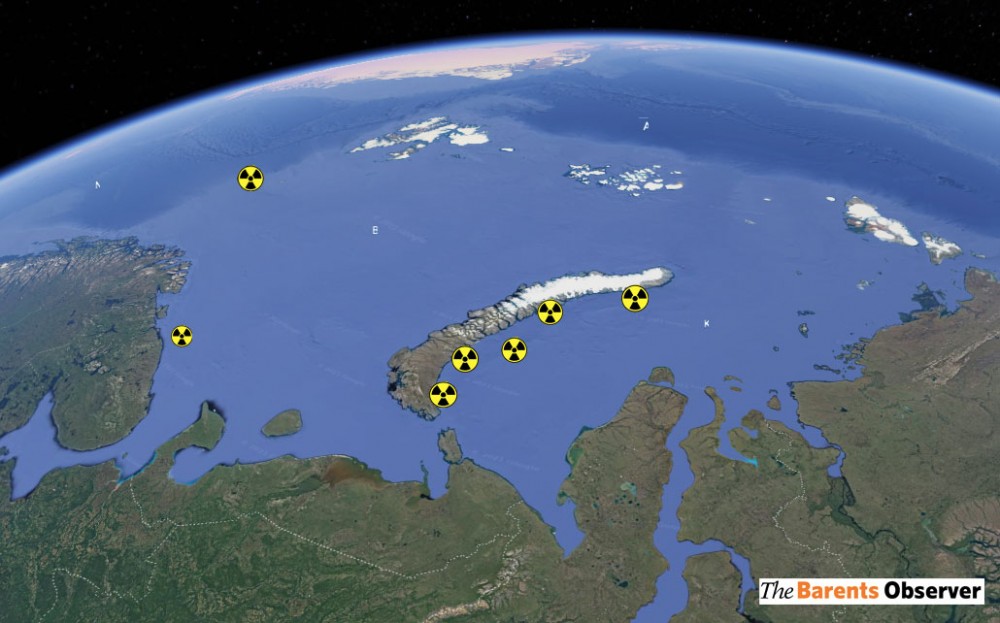
Reactors are dumped at several locations in the Kara Sea in addition to the two submarines K-159 and K-278 that sank in the Barents- and Norwegian Seas. Map: Barents Observer / Google Earth
Tackling dumped nuclear waste gets priority in Russia’s Arctic Council leadership https://thebarentsobserver.com/en/nuclear-safety/2021/05/lifting-nuclear-waste-kara-sea-gets-priority-russias-arctic-council
The reactors from the submarines K-11, K-19, and K-140, plus the entire submarine K-27 and spent uranium fuel from one of the old reactors of the Lenin-icebreaker have to be lifted from the seafloor and secured. Thomas Nilsen
Russia’s Foreign Ministry invites international experts from the other Arctic nations to a June 2022 conference on how to recover the sunken radioactive and hazardous objects dumped by the Soviet Union on the seafloor east of Novaya Zemlya.
No other places in the world’s oceans have more radioactive and nuclear waste than the Kara Sea.
While mentality in Soviet times was «out of sight, out of mind», the Kara Sea seemed logical. Ice-covered most of the year, and no commercial activities. That is changing now with rapidly retreating sea ice, drilling for oil-, and gas and increased shipping.
The submarine reactors dumped in shallow bays east of the closed-off military archipelago of Novaya Zemlya were all brought north for a good reason, they had experienced accidents and posed a radiation threat at the navy yards where people were working.
Dumping the reactors in shallow waters, someplace at only 50 meters, meant they could be lifted one day when technology allowed.
There is momentum now. For environmental and foreign policy reasons, Russia needs to take action now,” says nuclear safety expert Andrey Zolotkov. He works with Bellona Murmansk, an advocacy group promoting international cooperation to secure hazardous radioactive objects in Russia’s Arctic region. Zolotkov is pleased to see Moscow highlighting steps to secure the sunken reactors in the Kara Sea.
“Ecology is one of the few topics where Russia and foreign partners can conduct constructive dialogue nowadays,” he says.
However, Zolotkov underlines, “the issue of urgency can only be discussed after at least one expedition to the flooded objects.”
A worst-case scenario would be a failed lifting attempt, causing criticality in the uranium fuel, again triggering an explosion with following radiation contamination of Arctic waters.
Technical survey needed
With Russia now holding the chair of the Arctic Council, Zolotkov hopes such expedition can take place within the next two-year period.
A Russian-Norwegian expedition to the K-27 submarine in Stepovogo bay in 2012 took samples for studying possible radioactive leakages. Now, the Bellona expert, calls for an expedition to thoroughly study the strength of the hull and look for technical options on how to lift the heavy submarine and reactor compartments.
“Decades on the seafloor do not pass without impacts,” Andrey Zolotkov explains.
A previous study report made for Rosatom and the European Commission roughly estimated the costs of lifting all six objects, bringing them safely to a yard for decommissioning, and securing the reactors for long-term storage.
The estimated price-tag for all six is €278 million, of which the K-159 in the Barents Sea is the most expensive with a cost of €57,5 million. Unlike the submarines and reactors that are dumped in relatively shallow waters in the Kara Sea, the K-159 is at about 200 meters depth, and thus will be more difficult to lift.
In addition, about 17,000 objects were dumped in the Kara Sea in the period from the late 1960s to the early 1990s.
Most of that is containers with solid radioactive waste from the naval yards on the Kola Peninsula and in Severodvinsk. Some radioactive waste also originated from the repair and maintenance of the fleet of civilian nuclear-powered icebreakers in Murmansk.
Most of the objects are metal containers with low- and medium-level radioactive waste. The challenge today, though, are the reactors with high-level waste and spent uranium fuel, objects that will pose a serious threat to the marine environment for tens of thousands of years if nothing is done to secure them.
According to the Institute for Safe Development of Nuclear Energy, part of Russia’s Academy of Science, the most urgent measures should be taken to secure six objects that contain more than 90% of all the radioactivity.
The Arctic Council in late 2019 took a formal decision to establish a Working Group on radiation Emergency Prevention, Preparedness and Response (EPPR).
The effects of radioactive waste water released into the ocean

when radionuclides are present in seawater alongside commonly-occurring metals like copper, the DNA damage caused by radionuclides to the mussels was increased.
the need for transparency when it comes to nuclear technology has never been greater
After all, we are what we eat: our health as a global community depends on the health of the environment, and a contaminated ocean knows no geographical or political borders.
Nuclear power: how might radioactive waste water affect the environment? https://theconversation.com/nuclear-power-how-might-radioactive-waste-water-affect-the-environment-159483 Awadhesh Jha
Professor of Genetic Toxicology and Ecotoxicology, University of Plymouth April 30, 2021 It’s been just over a decade since the fourth most powerful earthquake of the modern era triggered a tsunami that struck Fukushima on the eastern coastline of Japan, causing thousands of deaths and leaving hundreds of thousands unable to return home. That tsunami was also responsible for the world’s worst nuclear accident since the Chernobyl disaster.
When the 14-metre wave flooded the Fukushima Daiichi plant, it shut down emergency generators, triggering a series of heat-induced meltdowns.Now, the Japanese government’s decision to allow the release of more than one million tonnes of radioactive water from the plant into the ocean has dividedopinion.
Water is a vital tool for all nuclear power stations: it’s used to cool their heat-generating radioactive cores. During the cooling process, the water becomes contaminated with radionuclides – unstable atoms with excess energy – and must be filtered to remove as many radionuclides as possible.
The filtered water is then stored in huge steel tanks or released into nearby bodies of water. As huge amounts of water are required by every plant, most nuclear facilities are built on coastlines – or, in the case of Chernobyl, surrounded by huge lakes. That way, filtered waste water can be discharged into the ocean or lake once it’s been assessed and confirmed safe by authorities.
This is how workers at Fukushima dealt with waste water while the plant was operating. But since the tsunami hit in 2011, authorities have used more than a million tonnes of water to try and cool the plant’s disabled reactors, which are still hot thanks to the long-term release of energy from the nuclear power source. All that radioactive water – which is more contaminated than standard waste water – has to go somewhere. The decision to release it into the oceans is – some would argue – the most pragmatic long-term solution.
What could the impacts be?
The process of filtering and diluting the huge amounts of water to meet safety standards will take a few years to complete. Then, we’d usually expect the water to be released gradually in small volumes through coastal pipelines. That way, any potential effects of releasing the radioactive waste will be minimised. However, the fact is that we don’t know exactly what those effects will be on marine – or human – life, given the sheer volume of water set to be released from the Fukushima plant.
Our own research has shown that a number of marine species could have their DNA damaged through extended exposure to radionuclides in seawater. It’s important to note that our conclusions are mostly drawn from studies in the lab, rather than in the real world; when a nuclear accident takes place, human safety takes priority and biological assessment often takes place decades after the original event.
That being said, our experiments with both marine and freshwater mussels found that when radionuclides are present in seawater alongside commonly-occurring metals like copper, the DNA damage caused by radionuclides to the mussels was increased. Much, much more research is needed to understand the effects of exposure to different types of radionuclides on different species.
In the meantime, anger towards Japan’s decision from fishing communities is understandable. In a world where global dependence on fisheries for food is increasing – and at least 10% of the world’s population depend on fisheries for their livelihood – a potentially contaminated environment could result in a contaminated food chain, raising consumer concerns.
We also know that around 95% of cancers in humans are triggered by exposure to toxic substances present in the environment, food included. If these substances damage genetic material within our cells, that damage must be repaired. Otherwise, the damaged cell either dies or divides. And when the latter happens, the damage – which can cause genetic mutations – is passed on to dividing cells in a process that may lead to diseases like cancer.
If that genetic damage happens to egg or sperm cells, it may be passed down from parent to child, triggering new diseases in future generations. To neutralise these complex threats, it’s key to ensure that only safe levels of nuclear waste are being released into the ocean.
Where do we go from here?
As new nuclear plants emerge in the effort to tackle climate change, the need for transparency when it comes to nuclear technology has never been greater: especially if we are to build public confidence in the benefits of nuclear energy.
When nuclear reactors are mentioned, it’s disasters which tend to spring to mind. Yet considering the long history of nuclear power generation, serious accidents – involving loss of life and severe damage to the environment – are extraordinarily rare. The huge amounts of data gathered from each disaster site have enabled powerful advances in nuclear security, making future accidents even less likely. Meanwhile, waste from the world’s nuclear reactors is being managed safely every day, although long-term solutions to waste disposal still pose a challenge.
Rapidly developing technology like nuclear fusion – mimicking the Sun’s way of generating energy by fusing hydrogen atoms to form helium, and converting that helium into energy – may eventually slash generation of nuclear waste. There’s also room for improvement of our existing nuclear facilities to help minimise waste generation: for example, by forcing radioactive byproducts to decay faster.
But while we still rely on nuclear power, the most urgent priority is to set internationally accepted regulations for radiation exposure levels across different species. After all, we are what we eat: our health as a global community depends on the health of the environment, and a contaminated ocean knows no geographical or political borders.
The dark legacy of a nuclear meltdown – The Santa Susana Field Laboratory.
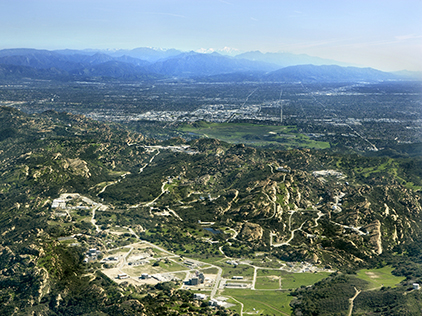
Newsletter: The dark legacy of a nuclear meltdown, and what it means for climate change L.A. Times, By SAMMY ROTH. STAFF WRITER MAY 20, 2021
”………………The Santa Susana Field Laboratory.
Despite growing up in Los Angeles, until recently I knew next to nothing about Santa Susana, which is nestled in the Simi Hills west of the San Fernando Valley. As my L.A. Times colleagues have chronicled, it was a nuclear reactor and rocket engine test facility for decades, and the site of a partial nuclear meltdown in 1959. Today more than 700,000 people live within 10 miles.
Santa Susana is an incredibly toxic site.
And the parties responsible for the long legacy of radioactive waste and other contaminants — namely Boeing, NASA and the federal Department of Energy — have done hardly anything to clean it up.
“That work was supposed to be completed by 2017. Yet much of it has not even started,” columnist Michael Hiltzik wrote last year.
Santa Susana is also the subject of a new documentary, “In the Dark of the Valley,” which is making the rounds on the film festival circuit. It’s a gut-wrenching story about children living near the field lab who have been diagnosed with cancer, and whose mothers have banded together to demand a full cleanup, in hopes that other families won’t suffer like theirs have.
The film focuses on Melissa Bumstead, whose daughter Grace Ellen was diagnosed with a rare and aggressive form of leukemia at age 4. Bumstead started a Change.org petition that has garnered more than 700,000 signatures, calling on politicians including Gov. Gavin Newsom to compel Boeing and the federal agencies to live up to their long-unfulfilled promises.
“I’m not going to stop. So we’ll just have to find out who has more endurance, me or them,” she says in the film’s closing moments. “The thing that’s heartbreaking is that it’s just going to continue. But it’s the kids who have to suffer, and it’s the parents who have to bury them.”
…. there’s been research suggesting that Santa Susana may pose a serious health risk to people nearby.
In 1997, UCLA scientists reported that field lab workers exposed to higher doses of radiation from 1950 through 1993 were more likely to die of cancer. A decade later, University of Michigan researchers found that people living within two miles of the site had been diagnosed with thyroid, bladder and other cancers at a 60% higher rate than people living more than five miles away.
The scope of the contamination far exceeds a single meltdown more than 60 years ago.
Daniel Hirsch — a retired UCLA and UC Santa Cruz lecturer whose students originally uncovered the meltdown, which was hidden from public view for two decades — says there were several accidents at the field lab, worsened by a lack of containment domes for the nuclear reactors. There were shockingly unsafe waste disposal practices too. For years, workers used rifles to shoot barrels of toxic chemicals to make them ignite or explode. Radioactive waste was also routinely burned in open-air pits, Hirsch said.
This was completely illegal. They weren’t supposed to be doing it,” he said
Hirsch runs the anti-nuclear group Committee to Bridge the Gap, and he’s been trying to get Santa Susana cleaned up for more than 40 years. His concerns include the continued presence of cancer-causing chemicals that can seep into groundwater, or be flushed down into the San Fernando and Simi valleys during rainstorms — or become airborne during a wind-driven wildfire.
That was a major worry during the 2018 Woolsey fire, which was ignited by a Southern California Edison electrical line at the field lab. State officials said the wildfire smoke wasn’t any more dangerous to breathe than usual, but Hirsch had a hard time believing that.
“They set up the air monitor two days after the fire,” he said.
……….. Hirsch and many local residents say Boeing and the federal government have repeatedly tried to weasel out of their commitments. And the Department of Toxic Substances Control hasn’t put up much of a fight, critics say. In January, for instance, the agency agreed to confidential talks with Boeing to resolve a dispute over the extent of the cleanup.
Another wrinkle is NASA’s recent decision to nominate the entire field lab for inclusion in the National Register of Historic Places, citing its Native American cave drawings and archaeological relics. Critics fear the historic designation is a thinly veiled attempt by NASA to shirk some of its cleanup obligations, a charge the space agency denies, as my colleague Louis Sahagún reported.
…… I was definitely jarred by Hirsch’s response when I told him I had hiked in the Simi Hills, within a few miles of the Santa Susana Field Lab, and asked whether he would feel safe doing the same. He didn’t hedge. He told me he would not.
“Every area around the site has been found to have contamination,” he said. https://www.latimes.com/environment/newsletter/2021-05-20/long-legacy-nuclear-meltdown-climate-change-boiling-point
1 This Month



26 September – International Day for the Total Elimination of Nuclear Weapons


PLEASE OPPOSE HR 8255 AND S.3639 – bills would accelerate satellite deployment, with no environmental review or safeguards – https://ncstd5li.quorum.us/campaign/169331/
To see nuclear-related stories in greater depth and intensity – go to https://nuclearinformation.wordpress.com
-
Archives
- September 2026 (233)
- August 2026 (330)
- July 2026 (355)
- June 2026 (287)
- May 2026 (306)
- April 2026 (356)
- March 2026 (251)
- February 2026 (267)
- January 2026 (308)
- December 2025 (358)
- November 2025 (359)
- October 2025 (375)
-
Categories
- 1
- 1 NUCLEAR ISSUES
- business and costs
- climate change
- culture and arts
- ENERGY
- environment
- health
- history
- indigenous issues
- Legal
- marketing of nuclear
- media
- opposition to nuclear
- PERSONAL STORIES
- politics
- politics international
- Religion and ethics
- safety
- secrets,lies and civil liberties
- spinbuster
- technology
- Uranium
- wastes
- weapons and war
- Women
- 2 WORLD
- ACTION
- AFRICA
- Atrocities
- AUSTRALIA
- Christina's notes
- Christina's themes
- culture and arts
- Events
- Fuk 2022
- Fuk 2023
- Fukushima 2017
- Fukushima 2018
- fukushima 2019
- Fukushima 2020
- Fukushima 2021
- general
- global warming
- Humour (God we need it)
- Nuclear
- RARE EARTHS
- Reference
- resources – print
- Resources -audiovicual
- Weekly Newsletter
- World
- World Nuclear
- YouTube
-
RSS
Entries RSS
Comments RSS
 nuclear-news