This Abandoned Nuclear City Is Trapped Under Ice, What Happens If It Thaws?
https://twistedsifter.com/videos/what-happens-if-this-frozen-abandoned-nuclear-city-thaws 24 Oct 22, In an effort to stop the spread of Soviet influence during the height of the Cold War, the United States and Denmark signed the 1951 Defense of Greenland Act. Soon after, the U.S. Army constructed a state-of-the-art nuclear-powered Arctic research center, with multiple military bases built out on the ice sheet, one of them was Camp Century.
Watch the video on why Project Iceworm was aborted before it began, and the state of Camp Century today. In the midst of a warming climate, who is responsible for the abandoned base, and how do we protect the environment from the physical, biological, and radiological wastes at the site?
For more on this unfolding threat, read about Denmark’s Camp Century Climate Monitoring Programme and scientists’ warning of melting Artic releasing banned toxins.
The Nuclear Site That Can’t Be Cleaned Up
‘Atomic Days: The Untold Story of the Most Toxic Place in America’ exposes the story of a Washington state complex that poses dangers that—like the nuclear industry itself—cannot be contained.
https://portside.org/2022-10-23/nuclear-site-cant-be-cleaned October 23, 2022 Ron Jacobs , In what I consider to be something between coincidence and synchronicity, I began reading journalist Joshua Frank’s newest book on the dangers of the Hanford Nuclear Reservation, Atomic Days: The Untold Story of the Most Toxic Place in America, the day after the California state legislature extended the Diablo Canyon Nuclear Power Plant’s license to operate for another five years.
Back in 1981, I spent a few days in jail for protesting the opening of the Diablo plant as part of a direct action initiative called by the Abalone Alliance, an anti-nuclear advocacy group. We were reasonably concerned about the dangers it could pose: For starters, it was built on an earthquake fault. Then there’s the question of nuclear waste disposal, the impacts these sites have on the water sources, and the industry’s relationship to the building and stockpiling of nuclear weapons.
Frank’s in-depth reporting of the Hanford site illuminates similar threats to those posed by Diablo and other nuclear plants. Constructed beginning in the spring of 1943, the Washington state nuclear production complex was built to create and stockpile plutonium and purified uranium for weapons of war. The site was chosen for its remoteness and ease of access to one of North America’s great rivers, the Columbia. Empowered by the War Powers Act of 1941, the United States government took the land from residents who lived, fished, and farmed there—descendants of settlers and Indigenous people alike—and developed it to serve as a plutonium processing plant for the Manhattan Project.
Like so much of the nuclear bomb project in its early years, the construction of the Hanford site involved dangerous shortcuts. The rationale given had to do with the war engulfing the world and the United States’ rush to develop a nuclear weapon, the desire to cut costs in that development, as well as the lack of practical knowledge among the scientists and engineers involved. Naturally, like virtually every other industrial element of war-making in the United States, the bulk of the research, development, and construction of nuclear weapons, even at these early stages, was privatized.
In fact, as Frank describes in his book, the Army Corps of Engineers lieutenant general in charge of the Manhattan Project, Leslie Groves, contracted with the DuPont Corporation to find a suitable site for the processing plant that ended up in Hanford. As Frank explains, a consistent theme is the sacrificing of safety for the sake of profit. Even so, many if not most of the contracts exceeded the original contract costs by millions.
Atomic Days also discusses the cleanup of the Hanford Reservation; a process that officially began in 1989. As Frank carefully documents, not only has this cleanup been less than successful, it has often created a bigger mess than that which it was supposedly cleaning up. In addition, the way the process is being done almost guarantees cost overruns and a task that will never be complete. Much of this is traceable back to the original construction of the site, especially of the nuclear waste storage containers. Once they started leaking, the task became one of how to stop the leakage and prevent more from occurring. In response, plans were designed to create a waste treatment plant. Like so much else associated with the nuclear industry, and Hanford in particular, this led to more dangers. Once again, many of these risks could have been avoided if profit were not the primary motive.
Frank relates tales of scientists being ignored after warning management that the fixes it preferred were not workable in the long term. He writes about a culture of fear inside the project—a culture fed by the employees’ sense of allegiance to their nation and the importance of their role in defending that nation. It is this allegiance that is manipulated by corporate interests into something close to its opposite. It is also a part of the basis for employees ignoring safety protocols at their own risk and poisoning themselves and the environment surrounding Hanford. As is the case in many government and corporate cultures, whistleblowers are punished and silenced. This allegiance was not always limited to the workers inside, many residents of nearby towns refused to believe reports of radioactive material being released and accidentally leaking when the reports first came out.
As if to verify Frank’s assertions, I lived in western Washington for seven years (1985-1992) and knew very little of the dangers. With the exception of a couple friends who were scientists and antinuclear activists, most locals knew less than I did. A friend who grew up in Kennewick, Washington, a town just a few miles away from Hanford, would argue with me, convinced that the site was completely safe, even though people he knew who had worked there were diagnosed with cancer in their thirties.
The Hanford Nuclear Reservation is testament to the war machine’s inhumanity. The fact that its primary purpose was the production of an element that remains deadly poisonous to humans and other life forms for tens of thousands of years is a damning testament to the suicidal nature of too many human pursuits. In writing Atomic Days, author Joshua Frank has done a great public service. The fact that he has done so in a narrative style that is both accessible and instructive makes one hope his story will be read by many.
An Elementary School Near a Nuclear Dump Site Is Teeming With Radioactivity
A recent analysis found dangerous, radioactive compounds at levels as high as 22 times background rates on the Missouri school’s grounds.
Gizmodo By Lauren Leffer 17 Oct 22, [good map and aerial view]
Dangerous, radioactive particles are all over an elementary school in suburban St. Louis, according to a recently published analysis by Boston Chemical Data Corp.
The testing follows an earlier assessment by the Army Corps of Engineers that also found elevated levels of radiation near Jana Elementary School in Florissant, Missouri. However, the new report—which included indoor testing and more extensive samples from the school grounds—is even more startling, confirming fears of contamination.
Based on dust and soil samples collected in August, scientists found harmful, radioactive material in multiple locations inside the school, including the gymnasium, and kitchen—as well as on the grounds. In an outdoor, kindergarten play area the researchers determined levels of the isotope lead-210 were more than 22 times the expected background level. In addition to the radioactive lead isotope, the Boston Chemical scientists also found high levels of radium-266, polonium-210, multiple isotopes of thorium, and other compounds in and around the school.
Inhaling, ingesting, or even simply skin contact with these particles can cause “significant injury to humans,” said the report.
Jana Elementary is bordered by a small stream called Coldwater Creek. And though it may look picturesque, the waterway is polluted by the nuclear legacy of World War II.
A 21.7 acre area upstream from Jana Elementary, called the St. Louis Airport Site (SLAPS), served as a storage and dumping ground for radioactive material produced as part of the Manhattan Project for decades. There, nuclear waste leaked into the ground and headwaters of the Coldwater Creek, and flowed down the tributary of the Missouri River. The stream, which frequently floods, then spread that contamination even more broadly—into soil, buildings, home gardens and elsewhere.
In 2019, a federal report confirmed that people who lived along the creek and in its floodplain between the 1960s and 1990s likely faced an increased risk of leukemia, bone, and blood cancers. And the analysis of Jana Elementary brings renewed concern about ongoing exposure.
When she learned of the report, she “was heartbroken,” said Ashley Bernaugh, president of the Jana parent-teacher association whose son attends the school, to National Public Radio. “It sounds so cliché, but it takes your breath from you.” ………………. more https://gizmodo.com/nuclear-waste-radioactivity-missouri-1849667056
Marshall Islanders unwilling to sign economic agreement with USA – want redress first of their harmful nuclear legacy

Haunted By 67 Nuclear Tests, US Facing Severe Roadblocks To Renew COFA Pact With Marshall Islands
https://eurasiantimes.com/haunted-by-67-nuclear-tests-us-facing-severe-roadblocks-to-renew-cofa-pact-with-marshall-islands/ By Ashish Dangwal, October 18, 2022
The United States appears to be facing a severe roadblock in renewing a binding treaty with the Marshall Islands, which have long sought compensation for the dozens of US nuclear tests conducted there between the 1940s and 1950s.
The provisions of a Compact of Free Association (COFA), signed between the Pacific island group and the US in 1986, will be reviewed by the Marshall Islands and the United States later this year.
The COFA’s key components include US immigration benefits for Marshallese citizens, direct economic support, and exclusive American defense and security access to the islands and their territorial waters.
The Marshall Islands leaders have repeatedly highlighted that the long-term repercussions of the 67 US nuclear tests conducted between 1946 and 1958 on health, the environment, and the economy must be adequately addressed before they consent to a new economic agreement with the US.
How nuclear testing leaves lasting environmental scars
https://www.dw.com/en/nuclear-testing-north-korea-environment-biodiversity/a-6341. Edited by: Tamsin Walker 13 Oct 22,
With analysts predicting further nuclear tests in North Korea, the planet stands to lose. The ongoing environmental effects of nuclear testing are felt worldwide and for millions of years.
Since late September, North Korea has launched a flurry of ballistic missile tests as part of what experts believe is a program to develop so-called tactical nuclear weapons. If the reclusive state were to move beyond testing missiles to testing actual nuclear warheads, as some analysts are predicting, it would not only ramp up political tensions, but also pose a significant environmental threat.
In the past, countries such as the United States, the former Soviet Union and the United Kingdom tested their nuclear weapons in the open atmosphere and in the sea — and around Pacific Islands, the Australian desert, mainland US, remote parts of the USSR and other places. These tests left contaminated landscapes and spread their radioactive clouds far afield.
Thanks to global treaties, nuclear tests were largely moved underground after 1963, a slightly preferable scenario environmentally speaking. And since a 1996 test ban, only India, Pakistan and North Korea have tested weapons at all.
North Korea is the only country known to have conducted tests in the 21st century.
The impact of nuclear testing on mammals
“The legacy of nuclear weapons testing has been absolutely catastrophic for humans and for the environment,” said Alicia Sanders, the policy research coordinator at the International Campaign to Abolish Nuclear Weapons.
One of the unique consequences for the environment, she added, “is that it lasts essentially forever.”
Putting aside the development required to set up test sites, the first major effects are felt in the microseconds after the explosion.
A 2015 paper on the environmental impact of military actions found that nuclear blasts represent an extreme threat to local biodiversity.
The massive energy released in the thermal emission from the blast — comprising light and heat — kills any organisms unfortunate enough to be near the epicenter. Depending on the yield of the bomb, even organisms several kilometers away face lethal temperatures. What remains is a charred mess.
The effect from the thermal shock on animals is not well researched, but humans face serious, life-threatening burns even several kilometers away, depending on the power of the bomb. A similar effect is assumed for other mammals. They also suffer from the pressure of the blast, which causes lung damage and hemorrhaging.
And animals that aren’t killed immediately are more likely to die from infections in the days and weeks following the explosion, leading to a localized die-off event, the 2015 review found.
The impact on plants, birds and marine life
Plants are also not spared the effects of a nuclear blast. The sheer force strips trees of their foliage, tears down branches and uproots vegetation.
For fish, meanwhile, the impact is similar to that of a non-nuclear explosion, but on a much larger scale. The US tests in Alaska, and those of France in French Polynesia in the late 1960s and early 70s were associated with large-scale die-offs of fish, as their gas-filled swim bladders ruptured.
Marine mammals and diving birds suffered similarly, post-mortem analysis showed. However, marine non-vertebrates appeared to be more resistant to pressure waves as they do not have gas-containing organs, according to defense studies at the time.
Long-term environmental impacts
During the Cold War, the United States detonated scores of nuclear weapons in atmospheric tests in the Pacific. Entire islands were incinerated and many are still uninhabitable. Local residents were forced to leave. A 2019 study found that some of the affected areas had radiation levels 1,000-times that of those found in Chernobyl and Fukushima.
Significant long-term environmental consequences of nuclear testing are the contamination of surface soil and groundwater, land disturbances in the form of craters or partially collapsed mountains — as in the case of the North Korean testing site — and the addition of radionuclides to sediments in seabeds.
Atmospheric nuclear tests spread radionuclides — unstable particles that releases radiation as they break down — far and wide, contaminating topsoil.
But even in underground testing, high pressure conditions can propel radionuclides into the atmosphere — a phenomenom known as venting — where they can be carried by winds and deposited far away from the test sites and enter food-chains.
Ankit Panda, a senior fellow at the Carnegie Endowment for International Peace’s nuclear policy program, says Pyongyang has thus far avoided the pitfall of venting.
“The North Koreans have actually, with their last five nuclear tests at least, been very effective at preventing the venting of radionuclides,” he said. “Because some of these radionuclides can even offer hints about the specific materials that are being used in the nuclear device.”
At the very least, underground tests deposit huge quantities of radioactive material which will remain there for millions of years. The long-term ecological damage from such contamination is unknown.
The impact on drinking water
Underground testing also poses a threat of radionuclides leeching into drinking water.
Studies at the US nuclear testing site near Las Vegas, found that some contaminants released by underground nuclear tests can get into the surrounding water. Plants and animals are particularly liable to pick up radioactive strontium and caesium, which are easily spread in water.
With a half-life of 30 years, these two radionuclides can cause health issues in the food chain for decades. A common shrub in New Mexico, chamisa, has roots that extend deep into the ground, bringing strontium back up to the surface near the Los Alamos testing site in New Mexico, from where it can be widely distributed as the leaves fall, decay, and contaminate the soil understory.
“Animals will eat from contaminated land and that becomes very dangerous. These can be key sources of food for people,” ICAN’s Sanders said.
Organizations such as ICAN continue to push for complete denuclearization.
Until that happens, one factor that might help clean up the legacy of nuclear testing is a provision in the 2017 Treaty on the Prohibition of Nuclear Weapons, which requires signatories to provide assistance to victims of nuclear weapons and begin to remediate contaminated environments. States should next year begin initial assessments of environmental damage and use that as a basis for future remediation efforts.
Marshall Islands to receive U.N. support over nuclear legacy
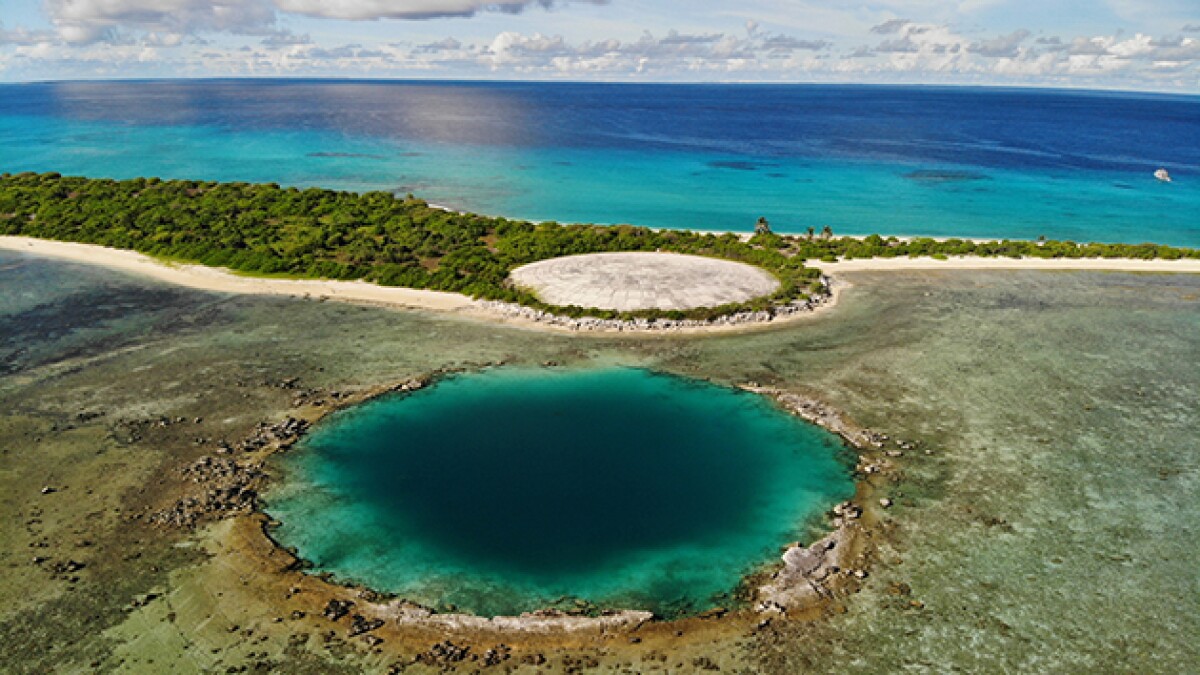
https://english.kyodonews.net/news/2022/10/e2a640256da0-marshall-islands-to-receive-un-support-over-nuclear-legacy.html KYODO NEWS -8 Oct 22,
The U.N. Human Rights Council adopted a resolution Friday aimed at assisting the Marshall Islands in its efforts to secure justice for people suffering from the impact of the United States’ former nuclear testing program in its territory.
“We have suffered the cancer of the nuclear legacy for far too long and we need to find a way forward to a better future for our people,” Samuel Lanwi, deputy permanent representative of the Republic of the Marshall Islands in Geneva told the body in an emotional speech.
The United States conducted dozens of nuclear weapons tests in the islands of the Pacific state in the 1940s and ’50s, including the 1954 Castle Bravo test at Bikini Atoll, the biggest U.S. bomb ever detonated.
The text tabled by five Pacific Island states — the Marshall Islands, Fiji, Nauru, Samoa and Vanuatu — was backed by Australia and did not demand reparations.
It called on the U.N. rights chief to submit a report in September 2024 on the challenges to the enjoyment of human rights by the Marshallese people stemming from the nuclear legacy.
The United States as well as other nuclear weapons states such as Britain, India and Pakistan expressed concern about some aspects of the text but did not ask for a vote on the motion. Japan did not speak at the meeting.
The Marshallese people are still struggling with the health and environmental consequences of the nuclear tests, including higher cancer rates. Many people displaced due to the tests are still unable to return home.
A concrete dome on Runit Island containing radioactive waste is of particular concern, especially in relation to rising sea levels as a result of climate change, according to the countries that drafted the resolution.
The Marshall Islands says a settlement reached in 1986 with the United States fell short of addressing the extensive environmental and health damage that resulted from the tests.
The U.S. government asserts the bilateral agreement settled “all claims, past, present and future,” including nuclear compensation.
Observers say some nuclear states fear the initiative for the Marshall Islands could open the door to other countries bringing similar issues to the rights body.
Crops growing 30 miles outside of Chernobyl are still contaminated with dangerous levels of strontium .
https://www.washingtonpost.com/politics/2022/04/20/does-russia-sell-nearly-1-billion-uranium-us-year/ 7 Oct 22, Crops grown near Chernobyl are still contaminated, more than three decades after the worst nuclear disaster in history.
Almost half the grain analyzed by scientists in Ivankiv, about 30 miles from the power plant, showed levels of strontium 90 far above recommended levels.
It was also present at unsafe levels in firewood and wood ash used to fertilize crops.
The Ukrainian government stopped testing goods for strontium 90 in 2013.
A radioactive isotope, it collects in the teeth, bones and marrow like calcium, and can cause numerous kinds of cancer.
Black pigmentation in Chernobyl’s Eastern Tree Frogs
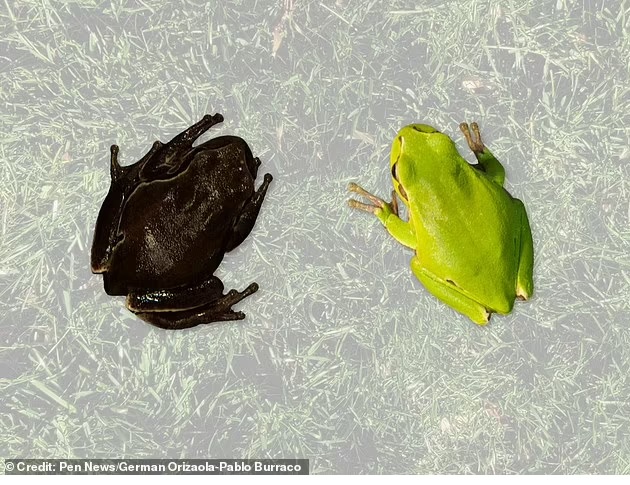
Chernobyl is spawning MUTANT frogs: Bizarre black amphibians are spotted near the nuclear plant – 36 years after its catastrophic meltdown
- Eastern tree frogs are meant to have bright green skin
- But scientists working near Chernobyl have found many with black skin
- They think the dark skin may have helped them to survive the exclusion zone
https://www.dailymail.co.uk/sciencetech/article-11290735/Chernobyl-spawning-MUTANT-frogs-Bizarre-black-amphibians-spotted-near-nuclear-plant.html By SHIVALI BEST FOR MAILONLINE and MICHAEL HAVIS, 7 October 2022
Mutant black frogs are spawning near the Chernobyl power plant, 36 years after its catastrophic meltdown unleashed one of the worst nuclear disasters in history.
Eastern tree frogs are meant to have bright green skin but scientists working near Chernobyl have found many with darker or black pigmentation.
In 1986, the site in northern Ukraine – then under Soviet rule – witnessed the largest release of radioactive material into the environment in human history.
Now scientists think the mutated frogs’ darker skin may have helped them survive in the exclusion zone, which today restricts access to 1,0000 sq miles around ground zero.
Germán Orizaola, a researcher at Spain’s University of Oviedo, who co-authored the new study, said: ‘We become aware of these frogs the very first night we worked in Chernobyl.
‘We were looking for this species near the damaged power plant and we detected many frogs that were just black.
‘We know that melanin is responsible for dark or black colouration in many organisms, including frogs.
‘At the same time, we know that melanin protects from the damage caused by different types of radiation, from UV to ionizing radiation – the kind at Chernobyl.’
For their study, Dr Orizaola and his co-author, Pablo Burraco, collected more than 200 male frogs from 12 different breeding ponds with different levels of radiation.
They found that frogs within the exclusion zone were much darker than those from outside it.
And though there was no correlation between the darkest frogs and the most irradiated places today, there was a correlation with the worst-affected places from the time of the accident.
In other words, the darker frogs had stood a better chance of survival when disaster struck in 1986, making them more numerous today.
Dr Orizaola said: ‘With this species it’s possible to find, under normal circumstances, a small percentage of frogs with unusual colouration.
Macron’s nuclear dream means attacking environmental law, and is no help to the climate
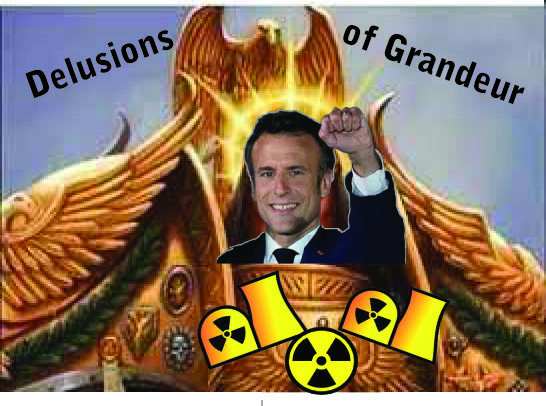
Attacking environmental law to accelerate the construction of new nuclear reactors: Macron’s assumed project.
On September 22, on the occasion of the inauguration of the St Nazaire maritime wind farm, and once again anticipating the public debate supposed to be held on the EPR projects in Penly, Emmanuel Macron reaffirmed his project of a “deployment of a forced-march nuclear strategy” (sic!). On this occasion, he announced an acceleration of the procedures supposed to make it possible to start the first reactors even earlier than planned.
Barely a week later, the dedicated bill reached the National Council for Ecological Transition, summoned to make a decision within an extremely short time. This forced passage and the assumed deconstruction of environmental law presented in this text are quite simply shameful.
But trampling on the law and democracy will not make the problems of a sector undermined by a lack of skills, and of a technology that is too slow and too cumbersome to respond to the climate emergency, disappear with a magic wand.
Sortir du Nucleaire 28th Sept 2022
https://www.sortirdunucleaire.org/Attaquer-le-droit-de-l-environnement-pour
Here comes the catastrophocene…

If humans have become a geological force reshaping the Earth in the Anthropocene, then we need to become a geological force to undo the damage we have caused, and correct the threats we are still causing.
Pearls and Irritations, By Julian Cribb Oct 3, 2022, https://johnmenadue.com/here-comes-the-catastrophocene/
The good news is that the Anthropocene is almost over. It will have been the shortest geological epoch in all of Earth history.
The bad news is that the Catastrophocene is just beginning.
This is a period marked by the interaction of ten catastrophic risks which many scientists are now warning could precipitate the end of human civilisation – and potentially bring about the departure of our species from an uninhabitable Earth.
The Holocene, the climatically stable period which enabled humans to develop agriculture and cities, is now over. It lasted about 11,650 years, from the last Ice Age to the latter C20th. And now it is gone and we are into a wholly different world, named in 2000 by Dutch Nobel laureate Paul Crutzen ‘the Anthropocene’ – the epoch in which humans became a truly geological force, reshaping and altering the entire planet, its atmosphere, oceans, the land, and life itself. On present indications, the Anthropocene will last only a century or two.
The evidence is all about us that we’re into something altogether grimmer. Each day, almost, brings fresh reports of colossal unintended consequences of human activity around the planet – vast floods, tens of thousands of fires raging, dust storms sweeping topsoil off our farms, heatwaves, dried-up rivers and lakes, melting glaciers, unimaginable losses of birds, animals, insects and other life, dwindling forests and fish, poisoned water, oceans, food and air, declining oxygen levels, hunger and starvation, the dissemination of new diseases, the mass migration of 350 million people a year, the advent of powerful new technologies whose effects are unknown and uncontrolled, and the insidious worldwide seep of malicious lies about it all.
The evidence is all about us that we’re into something altogether grimmer. Each day, almost, brings fresh reports of colossal unintended consequences of human activity around the planet – vast floods, tens of thousands of fires raging, dust storms sweeping topsoil off our farms, heatwaves, dried-up rivers and lakes, melting glaciers, unimaginable losses of birds, animals, insects and other life, dwindling forests and fish, poisoned water, oceans, food and air, declining oxygen levels, hunger and starvation, the dissemination of new diseases, the mass migration of 350 million people a year, the advent of powerful new technologies whose effects are unknown and uncontrolled, and the insidious worldwide seep of malicious lies about it all.
These phenomena are the physical manifestations of what the Council for the Human Future has termed the ‘existential emergency’ now confronting humanity – a crisis which many scientists and individual citizens now recognise as real, but which most governments, corporates and politicians seem loath to accept the evidence that is before their very eyes.
This crisis is comprised of ten catastrophic risks, not just the one or two most commonly reported in the media. All these risks interact with one another, meaning they cannot be tackled separately or solved one by one. Collectively, they are driven by human overpopulation, overconsumption and over pollution. The risks are:
Extinction and eco-collapse: currently proceeding 1000-10,000 times faster than normal, eliminating the ecosystems that humans and wildlife need to survive. Mainly caused by agriculture and land development.
Overheating: a climate approaching out-of-control as nine huge ‘feedbacks’ from the Earth system itself make it even faster, hotter and more turbulent than man-made factors (like fossil fuels and land clearing) alone.
Global poisoning: five times larger and ten times more deadly even that climate, human chemical emissions are the largest and most underestimated threat to planetary health and survival.
Nuclear holocaust: with 70 nations still committed to nuclear arms and conflict, scientists currently rate the threat at ‘100 seconds to midnight’, the worst level since Hiroshima.
Resource scarcity: a world water crisis is already a reality for half the population. Loss of topsoil, forests, fish stocks and scarcity of other key resources threaten to unleash fresh conflicts.
Pandemics: there have been seven pandemics since 2000, with a new one striking every 2-3 years. With some 90 wild animal diseases already crossed into humans, more are on the way.
Overpopulation: due to hit 8 billion in November and 10 billion by 2060, human numbers are estimated by some researchers to now be 4 times what the Earth can carry in the long run. Not a threat in itself, population pressure drives all the other threats and must be brough under control.
Famine and hunger: already rising due to loss of soil, water and a stable climate. World food chains increasingly vulnerable to disruption from shortages, conflict and big events, putting megacities at risk.
Ultratechnologies: uncontrolled development and release of powerful new technologies without thought for the consequences will unlock fresh threats for humanity, just as fossil fuels and chemistry already have.
Misinformation: the world is drowning in lies, half-truths and disinformation, mainly spread by the fossil fuels lobby, certain media, politicians and other malicious actors. These are disabling government, breeding mistrust of science and making the task of saving civilisation ever harder.
It is the interaction of these ten mega-threats which now constitutes the new age – The Catastrophocene. This will be a period in which most human lives will be consumed in attempting merely to survive and find workable collective solutions to these threats, to repair our damaged planet and salvage all that is good and decent of our civilisation.
Take heart, solutions do exist. I detail the main ones in a forthcoming book, both global answers and what individuals can do to save themselves. However, as the Council for the Human Future has noted: no government on Earth yet has a policy for human survival. They simply do not grasp the magnitude or the reality of what is unfolding. Or they don’t care. Nor do the giant corporations who now rule the world economically.
If humans have become a geological force reshaping the Earth in the Anthropocene, then we need to become a geological force to undo the damage we have caused, and correct the threats we are still causing. Part of that consists in reducing both our numbers and our material demands to what the planet can safely bear in the long term. If we do not undertake this task, then nature will surely do it for us. Doing nothing, or doing too little too late, will destroy us.
In other words, controlling the catastrophic risks we now face will save countless lives, help avoid total collapse or even extinction, restore the Earth and preserve what is best about the human endeavour.
It is the greatest, noblest and most urgent cause in all our million year journey.
‘People’s Plan for Nature’ – a response to UK government’s attack on environmental protection laws
Three of the UK’s biggest conservation charities have joined with
celebrities to launch a new People’s Plan for Nature, in response to the
Government’s “open season” on policy protection for nature, which
could seed hundreds of environmental laws eased.
The National Trust, the RSPB, and WWF have joined forces with celebrity champions Maisie Williams
and Cel Spellman to launch the People’s Plan for Nature, a national
rallying cry for the public to have its say on how to respond to the
ecological crisis. The plan calls on Prime Minister Liz Truss and new
Environment Secretary Ranil Jayawardena to take rapid action on what the
charities describe as “open season” on existing environmental
legislation, with the recent mini-budget and rumours that Defra will U-turn
on its manifesto sparking concerns amongst green groups.
Edie 30th Sept 2022
UK Government to speed through nuclear development by making a bonfire of existing environmental regulations.

Whilst the media may have focused on the Chancellor’s contentious plan
to make the rich richer by cutting tax for higher earners, anti-nuclear
campaign groups, including and the Nuclear Free Local Authorities, are
concerned that buried within the finer print of the HM Treasury Growth
Plan, which was published alongside Kwasi Kwarteng’s speech in
Parliament, is a clear plot to streamline planning regulations and stifle
public objections to civil nuclear projects.
Treasury mandarins have identified Hinkley Point C and Sizewell C, numbered 115 and 116
respectively, as amongst the large infrastructure projects earmarked to be
fast-tracked by the end of next year by creating a bonfire of existing
regulations covering protection of the natural environment and the rights
and opportunity of the public and other stakeholders to object.
According to departmental officials new legislation will be brought forward to
‘address barriers by reducing unnecessary burdens to speed-up the
delivery of much-needed infrastructure’.
NFLA 27th Sept 2022
Pilgrim power plant owner Holtec still considering dumping nuclear waste into Cape Cod Bay
Holtec International has 1.1 million gallons of radioactive wastewater to get rid of.
Boston.com By Susannah Sudborough, September 28, 2022 ,
The company working to decommission the Pilgrim Nuclear Power Plant in Plymouth is still considering dumping radioactive waste into Cape Cod Bay despite pushback from activists, lawmakers, and the EPA.
Holtec International has 1.1 million gallons of leftover wastewater from the plant, which closed in 2019, that it needs to get rid of.
NBC 10 Boston reported Tuesday that a representative from Holtec gave an update on the company’s plans at a town hall meeting Monday evening.
“When you do liquid discharges, it is diluted with seawater to non-detectable levels pretty quickly once it’s released, and doing it in small batches is actually the safest manner,” Holtec spokesman Patrick O’Brien told the news station.
But activists from Save Our Bay, a coalition of conservation groups, local leaders, and citizens who oppose the proposed dumping, say Holtec wants to dump the nuclear waste in Cape Cod Bay simply because it’s cheaper.
While O’Brien denied to NBC 10 Boston that dumping is the cheaper option, the group, which protested in Plymouth before the meeting Monday, says the waste will make the bay’s and local waters unsafe.
“The contaminated water will inevitably flow into Plymouth, Duxbury, and Kingston Bays. The bays are semi-enclosed, and circulation currents tend to keep the water in them. It [does] not quickly flush out and disperse in the ocean, but is likely to end up in the sediments at the bottoms of the bays or beaches,” the group wrote on its website.
Additionally, Save Our Bay says, the nuclear waste could contaminate the fish, oysters, clams, and mussels that support the local aquaculture industry, making a major local product dangerous.
The loss of the local fishing and potentially tourism, due to contaminated waters would devastate the local economy, the group says.
Save Our Bays is not alone in opposing the proposed dumping. In January 2022, Sen. Elizabeth Warren, Sen. Ed Markey, Rep. Bill Keating, and Rep. Seth Moulton sent a letter to Holtec stating their opposition.
Additionally, in July, the EPA wrote to the company saying it doesn’t think the company is allowed to dump the waste according to its permit.
According to The Boston Globe, Nuclear Regulatory Commission rules say Holtec can dump the water as long as its radioactivity is not above specified limits……………………….
A decision could come early next year, NBC 10 Boston reported. https://www.boston.com/news/local-news/2022/09/28/pilgrim-power-plant-owner-considering-dumping-nuclear-waste-into-cape-cod-bay-holtec-international-plymouth/—
Save the fish: Nuclear Free Local Authorities call for acoustic deterrent at Sizewell C
https://www.nuclearpolicy.info/news/save-the-fish-nuclear-free-local-authorities-call-for-acoustic-deterrent-at-sizewell-c/ 28 Sept 22, The Nuclear Free Local Authorities have written to the Environment Agency calling for the developers of a new nuclear power plant at Sizewell C to be required to install an acoustic fish deterrent to save local fish stocks from destruction should the plant become operational.
The Environment Secretary George Eustace has recently decided that EDF Energy should be required to install a similar device at Hinkley Point C, a new nuclear plant currently being built on the Somerset coast, and as Sizewell C would be built to the same design the NFLA can see no reason why the same condition should not be applied to the Suffolk plant.
Councillor David Blackburn, Chair of the NFLA Steering Committee, has just written to the Environment Agency responding to a consultation over the permits that will be issued to EDF by the Environment Agency now that a Development Consent Order has been granted by a government minister.
Commenting he said: “We are still a very long way from Sizewell C becoming operational and it is far from a done deal. Most of the finance is not in place, there remains doubts about the safety and reliability of the proposed EDR reactor, EDF appears to be having cold feet given its financial position and poor operational performance at home, and local activists are looking to challenge the decision to go-ahead in the courts.
“I hope that the decision to grant approval can be successfully challenged in the courts or that EDF’s many troubles elsewhere may still kibosh the plan, but if somehow, despite the odds, this insane plan goes ahead it is important that we ensure that high standards are encapsulated in the conditions attached to the operation of Sizewell C to protect the natural environment and the people who live in adjoining communities – at least as far as is possible when your neighbour is a huge nuclear power plant.”
Although the NFLA submission to Environment Agency covers many points but two particular concerns are plans for long-term salination and the welfare of marine life.
Councillor Blackburn further explained: “We are grateful to Sizewell C for their advice on our response to this consultation; we completely share their concerns about the adverse impact of this plant on the lives of local people and the local environment. Our two key points in our response are that should EDF Energy look to desalination as a long-term solution to the lack of potable water that an extensive public consultation should take place prior to a decision on approval and that an acoustic fish deterrent should be installed at Sizewell C.
“The Environment Secretary has creditably recently upheld his inspector’s decision to require EDF Energy to install an Acoustic Fish Deterrent at Hinkley Point C. The EPR reactors proposed for Sizewell C will be the same as those proposed for Hinkley Point C. Both sites will be heavily reliant upon sucking in vast amounts of seawater to cool the plant, the impact on local sea life is likely to be similarly destructive. Accordingly, the NFLA believes that an acoustic fish deterrent, which projects sound waves to deter fish entering the plant, should be installed at Sizewell C as a condition of any permit issued by the Environment Agency giving the go ahead.”
Continuing campaign to stop the dumping of Hinkley nuclear power station mud off Cardiff coast
Campaigners attempting to stop mud from the construction of Hinkley Point
Nuclear Power Station, Somerset, being dumped into Welsh waters, have
announced they are working with leading environmental lawyers Leigh Day to
block the proposals. In February EDF Energy applied to National Resources
Wales for a licence to dump 800,0000 tonnes of mud dredged as part of
building work for the new plant that is being built on the site of the
disused Hinkley Point A facility.
Two years ago, EDF were given permission
to dump 300,000 tonnes of mud from the site off the Cardiff coast, despite
protests and following a Senedd debate. A petition against the latest
proposals received over 10,000 signatures and has triggered a debate in the
Senedd tomorrow. Earlier this month EDF Energy confirmed it will carry out
an Environmental Impact Assessment as part of its licence application. This
agreement reverses NRW and Welsh Government’s previous position that an
EIA was not needed for the dumping they permitted in 2018 just 2.1 miles
off the South Wales coast and 2.5 miles from Cardiff. Leigh Day has now
written to Natural Resources Wales (NRW) requesting full disclosure of
documents on the Environmental Impact Assessment (EIA)-screening
application from EDF and the agreement with NRW that “environmental
impact assessment is required”.
EDF are also facing a public inquiry over
a controversial fish management system that is being installed at the site
of the new facility. The Environment Agency granted a licence to EDF in
2013 that permitted sea water to be used for the nuclear power station’s
cooling system but required the deployment of a fish deterrent system on
the site to protect marine life in the estuary. Initially the operator
proposed the use of an acoustic deterrent system to reduce the number of
fish being killed by the cooling system but in 2017 abandoned the plans
without suggesting any alternative.
Currently the plant’s proposed Fish
Recovery and Return System will consist of a 5mm mesh barrier set up in the
water intake tunnel to stop large fish from being sucked in while another
channel will divert fish, dead or alive, back out to sea. Last year the
Sunday Times reported that marine and conservation groups estimated that
this system will kill 250,000 fish a day and called for it to be altered or
scrapped. EDF said the FRR will kills an estimated 650,00 fish a year.
Source: Nation Cymru 20th Oct 2020
https://nation.cymru/news/senedd-roundup-leading-environmental-lawyers-join-battle-to-block-mud-dump/
1 This Month



Shut down the radiation-damaged Heysham nuclear reactors now
To see nuclear-related stories in greater depth and intensity – go to https://nuclearinformation.wordpress.com

Say No to NASA’s Reckless Nuclear Reactor on the Moon
Say No to NASA’s Reckless Nuclear Reactor on the Moon
-
Archives
- October 2026 (256)
- September 2026 (339)
- August 2026 (330)
- July 2026 (355)
- June 2026 (287)
- May 2026 (306)
- April 2026 (356)
- March 2026 (251)
- February 2026 (267)
- January 2026 (308)
- December 2025 (358)
- November 2025 (359)
-
Categories
- 1
- 1 NUCLEAR ISSUES
- business and costs
- climate change
- culture and arts
- ENERGY
- environment
- health
- history
- indigenous issues
- Legal
- marketing of nuclear
- media
- opposition to nuclear
- PERSONAL STORIES
- politics
- politics international
- Religion and ethics
- safety
- secrets,lies and civil liberties
- spinbuster
- technology
- Uranium
- wastes
- weapons and war
- Women
- 2 WORLD
- ACTION
- AFRICA
- Atrocities
- AUSTRALIA
- Christina's notes
- Christina's themes
- culture and arts
- Events
- Fuk 2022
- Fuk 2023
- Fukushima 2017
- Fukushima 2018
- fukushima 2019
- Fukushima 2020
- Fukushima 2021
- general
- global warming
- Humour (God we need it)
- Nuclear
- RARE EARTHS
- Reference
- resources – print
- Resources -audiovicual
- Weekly Newsletter
- World
- World Nuclear
- YouTube
-
RSS
Entries RSS
Comments RSS

