The temperature of the world’s ocean surface has hit an all-time high.
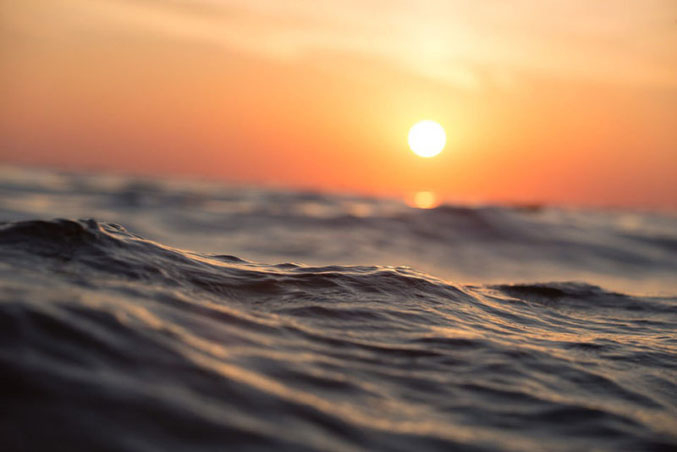
The temperature of the world’s ocean surface has hit an all-time high
since satellite records began, leading to marine heatwaves around the
globe, according to US government data. Climate scientists said preliminary
data from the National Oceanic and Atmospheric Administration (Noaa) showed
the average temperature at the ocean’s surface has been at 21.1C since
the start of April – beating the previous high of 21C set in 2016.
Three years of La Niña conditions across the vast tropical Pacific have helped
suppress temperatures and dampened the effect of rising greenhouse gas
emissions. But scientists said heat was now rising to the ocean surface,
pointing to a potential El Niño pattern in the tropical Pacific later this
year that can increase the risk of extreme weather conditions and further
challenge global heat records.
Guardian 8th April 2023
Sizewell C permits approved despite concerns over potential mass fish deaths
Sizewell C permits approved despite concerns over potential mass fish
deaths. The Environment Agency has issued three new permits to Sizewell C,
despite concerns that the approved cooling system and lack of fish
deterrent device could result in “thousands of fish dying every day”.
ENDS 30th March 2023
Opponents pack Pilgrim Nuclear meeting as potential discharge of radioactive water looms
CAI | By Jennette Barnes, March 28, 2023
Opponents of the proposed discharge of radioactive water from the Pilgrim Nuclear Power Station packed a meeting on the future of the station last night.
Ryan Collins of Bourne received a standing ovation from the audience when he presented a thick binder of signatures from his Change.org petition. The petition calls for a stop to the discharge plan. It garnered more than 200,000 signatures.
The state’s Nuclear Decommissioning Citizens Advisory Panel hosted the meeting at Plymouth Town Hall as part of its regular calendar.
…………………………………… opponents argue that the terms of a state settlement with Holtec would make a release of contaminated water illegal, with or without a permit.
Many members of the audience held orange signs that read, “Protect our bays! No permit!” in reference to the proposed modification of Holtec’s permit under the National Pollutant Discharge Elimination System.
Jo-Anne Wilson-Keenan, of East Dennis, said she’s concerned about contamination. Speaking from the podium, she raised her arm to show the shape of Cape Cod and the location of Dennis.
“We live right here in the elbow, and when the radioactive water comes down from Plymouth, it’s going to land right on our beaches,” she said.
Jim Cantwell, state director for U.S. Sen. Ed Markey, discussed Markey’s March 17 letter to Holtec asking the company to use the ratepayer-funded decommissioning trust fund to pay for an independent scientific study of the risks of discharging the radioactive water stored at Pilgrim.
Last May, at a field hearing hosted by Markey in Plymouth, Singh agreed to allow independent testing.
Meanwhile, state-supervised testing of the Pilgrim water is set to begin with a collection of samples on April 5. Senior staff from the Massachusetts Department of Environmental Protection and Department of Public Health are scheduled to observe, along with a representative of the town of Plymouth.
But Seth Pickering, a deputy regional director with DEP, said the state no longer plans to use the previously identified Colorado lab, Eurofins, to test for non-radioactive pollutants.
The agency will instead rely on Gel Laboratories of South Carolina, which Pickering disclosed is a lab Holtec uses as well.
Members of the audience objected to the idea of using the same lab as Holtec……………. https://www.capeandislands.org/local-news/2023-03-28/opponents-pack-pilgrim-nuclear-meeting-as-potential-discharge-of-radioactive-water-looms
EPA finds radioactive contamination in Missouri landfill
by Allison Kite 29 March 2023
Shortly after MuckRock and the Missouri Independent announced a callout for stories from families impacted by 47,000 tons of radioactive waste buried in the West Lake Landfill in northern St. Louis County, the EPA held a community meeting sharing that the problem was even more widespread than initially believed.
The finding is based on two years of testing at the St. Louis County site, which has held thousands of tons of radioactive waste for decades. An underground “fire” in another area of the landfill threatens to exacerbate the issue, which residents believe is responsible for a host of mysterious illnesses.
Chris Jump, the EPA’s remedial project manager for the site, said the findings don’t change the agency’s planned cleanup strategy or the level of risk the site poses to the surrounding residents. The radioactive waste is still within the footprint of the landfill, she said.
And though the site was placed on the National Priorities List more than 30 years ago, meaning it is among the most contaminated hazardous waste sites in the country, the EPA wouldn’t commit to a timeline for the cleanup during Tuesday’s meeting.
I know this is not what people want to hear,” Jump said, adding that federal law requires certain steps for Superfund sites. “I’m sorry. I can’t give you a specific timeframe.”
The Missouri Independent and MuckRock are partnering to investigate the history of dumping and cleanup efforts of radioactive waste in the St. Louis area. Read the full story by the Missouri Independent’s Allison Kite at MuckRock or at the Missouri Independent’s website.
South Korea to keep Fukushima seafood ban despite thaw with Japan
Aljazeera, 30 Mar 23
President Yoon Seok-yeol’s administration says ‘health and safety’ top priority despite improving Seoul-Tokyo ties.
South Korea has ruled out lifting a ban on Japanese seafood imports from the area around the Fukushima nuclear plant despite warming relations between Seoul and Tokyo.
“
“Seafood imports from near the tsunami-stricken plant will “never come into” South Korea due to health concerns related to leaked radiation, the administration of President Yoon Seok-yeol said on Thursday.
With regard to the import of Japanese seafood products, the government’s stance remains unchanged that the health and safety of the people are the top priority,” the presidential office said in a statement, South Korea’s Yonhap News Agency reported.
South Korea has banned Japanese seafood imports from eight prefectures, including Fukushima, since 2013 due to fears of radiation contamination from the meltdown of the plant following an earthquake and tsunami.
…………………………………………….. Apart from South Korea, mainland China and Hong Kong continue to block imports of food from the region, including all dairy products and fruits and vegetables. https://www.aljazeera.com/economy/2023/3/30/south-korea-to-keep-fukushima-seafood-ban-despite-thaw-with-japan
What’s dumped is not just Fukushima nuclear water
In January, the Japanese government announced that it would begin to release into the Pacific Ocean more than 1.37 million tons of water from the wrecked Fukushima Daiichi nuclear plant sometime this spring or summer. A shadow of nuclear contamination is looming larger.
Although the Tokyo Electric Power Company (TEPCO) insists that the contaminated water has been filtered and diluted and meets the criterion for a safe discharge, a report has shown that 73 percent of the treated water still exceeds the discharge standard.
Unlike normal wastewater from nuclear power plants, Fukushima nuclear-contaminated water contains over 60 kinds of radioactive substances. Besides tritium, which is difficult to remove, the treated water also contains strontium-90 and carbon-14, whose half-lives are 29 years and 5,730 years, respectively.
For those who can’t grasp its meaning, tritium can replace stable hydrogen atoms in the human body and cause chronic radiation syndrome and cancer. Strontium-90 is highly toxic and may induce bone tumors.
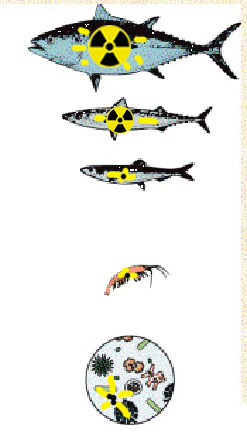
Experts have pointed out that once released into the ocean, the contaminated water would rapidly spread to most parts of the Pacific. Radiation would be absorbed by marine life and enters the human body.
In 2022, it was detected that radiation in black rockfish caught off Fukushima prefecture was 14 times higher than the safe level for humans, even after 11 years have passed since the Fukushima nuclear disaster. The South China Morning Post reported that caesium, one of the most dangerous radionuclides that “can build up in muscle, fat and bone and cause malignant tumors,” was detected in “fish caught at a depth of 24 meters about 9 km off Fukushima prefecture’s town of Shinchi.”
After more than 10 years, the local fishery industry has not fully recovered. In 2012, Japan banned the sale of 36 species of fish caught off Fukushima, and Tokyo’s decision crushed their hopes. Voices of opposition have been ongoing. In Japan, fishery organizations have expressed their concerns. Citizens in Tokyo, Osaka and Shizuoka protested on the streets to demand the government rescind its decision.
On the world stage, Japan’s neighbors including China, Russia and South Korea have asked Tokyo to provide useful information, engage in full consultation, and take responsible measures. The Pacific Island countries urged Japan not to release the contaminated water before there is enough scientific evidence proving that it’s safe. And independent UN human rights experts issued a joint statement calling Japan’s decision “very concerning” and “deeply disappointing.”
To make a clear evaluation of the safety of Japan’s plan, an International Atomic Energy Agency task force was set up to conduct a safety review. Days ago, it completed its second regulatory review and “will release a report on its findings in about three months, as well as a comprehensive report before the discharge.” Nonetheless, even before the task force set out, Tokyo unilaterally announced the planned discharge. The Japanese government has set its mind on the discharge regardless of the review outcome.
When Tokyo decides to discharge the contaminated water without ensuring safety, does it even consider people’s right to life and health? As a party to the UN Convention on the Law of the Sea, the Convention on Early Notification of a Nuclear Accident, and the Convention on Nuclear Safety, does the Japanese government recognize its international obligations? When it puts the whole Pacific and Pacific Rim countries at the risk of environmental disaster, how does it uphold the principle of “environment first”?
When it comes to nuclear contamination, it’s better to err on the side of caution. There could be better alternatives than dumping the contaminated water into the sea. Evaporating, storing underground the tritium-laced water from the plant, or storing and processing the water over the long term, these are all technically reasonable options that are safer than a direct discharge. Unfortunately, Tokyo has chosen to go for the cheapest “quick fix.”
When the earthquake and tsunami struck Fukushima, neighboring countries reached out their helping hands to Japan. Today, the nation is repaying them with tons of nuclear contaminated water.
The Pacific Ocean is home to billions of people, but Japan takes it as its own sewer. Along with contaminated water, Japan’s reputation, conscience and international obligations will be dumped as well.
Sir David Attenborough urges people to unite to save ‘nature in crisis

Sir David Attenborough said “nature is in crisis” as he urged people to
unite to save it for future generations. He spoke out after last night’s
first episode of his five-part show about British wildlife.
His plea comes
as the National Trust, RSPB and WWF have launched their first joint
campaign, Save Our Wild Isles, which encourages people to “go wild”
once a week, by doing activities such as sowing bee-friendly plants or
creating “hedgehog highways”, and urges citizens to call on the
government to make changes to halt nature’s decline.
The series features a
sixth, iPlayer-only episode called Saving Our Wild Isles, commissioned by
the RSPB and WWF. “[It] shows what amazing people are doing to turn the
UK round and how quickly it can recover,” Alastair Fothergill, the
producer, said.
Times 13th March 2023
Independent 13th March 2023
Ocean discharge is the worst plan for Fukushima waste water — IPPNW peace and health blog

Japan may soon start dumping radioactively contaminated waste water from the Fukushima Daichi nuclear plant into the Pacific Ocean, despite warnings from neighboring countries, marine scientists, and health experts. As soon as within a month or two, Japan could begin dumping into the Pacific Ocean 1.3 million tons of treated but still radioactively contaminated wastewater […]
Ocean discharge is the worst plan for Fukushima waste water — IPPNW peace and health blog
As soon as within a month or two, Japan could begin dumping into the Pacific Ocean 1.3 million tons of treated but still radioactively contaminated wastewater from the stricken Fukushima Daichi nuclear plant. Construction of the kilometer long undersea discharge tunnel and a complex of pipes feeding it commenced last August.
This cheap and dirty approach of “out of sight out of mind” and “dilution is the solution to pollution” belongs in a past century. It ignores the significant transboundary, transgenerational and human rights issues involved in this planned radioactive dumping, projected to continue over the next 40 years.
Concerns about Japan’s ocean dumping plans have been strongly voiced by China and South Korea, and by numerous Pacific island nations. Multiple UN Special Rapporteurs have severely criticised the plan, which has also been opposed by the United States National Association of Marine Laboratories and many regional and international health and environmental civil society organisations.
Australia bears a particular responsibility in relation to the aftermath of the ongoing Fukushima nuclear disaster, since fuel fabricated with uranium from Australia was in each of the Fukushima reactors which exploded. Yet my letters to the relevant Australian federal ministers on this matter have gone unanswered for seven weeks, and no evidence is publicly available that the Australian government has supported our Pacific neighbours in raising concerns about the planned discharge with its Japanese counterparts.
We are in the UN Decade of Ocean Science for Sustainable Development (2021-30). As Pacific Islands Forum (PIF) Secretary-General Henry Puna reminded us in his piece in The Guardian on 4 January, in 1985 the Forum welcomed the then Japanese prime minister’s statement that “Japan had no intention of dumping radioactive waste in the Pacific Ocean in disregard of the concern expressed by the communities of the region.” The current plan is inconsistent with this commitment.
In a public event organised by the PIF in Suva on 18 January, Puna noted Prime Minister Kishida’s reassurance during Japan’s regular meeting with the Forum in July 2022 of the need to progress this matter consistent with international law and verifiable science. The Secretary-General reiterated his request on behalf of Forum members for postponement of the planned discharge in order to allow adequate consideration of alternative options and to engage in respectful and full evidence-based consultation with Pacific nations in planning the best course of action. His calls have been ignored.
The most authoritative independent scientific assessment of the planned discharge has been conducted by a five-member independent international scientific panel appointed by the PIF. The experts were unanimous in their conclusions and recommendations. Their main conclusions:
- TEPCO’s knowledge of the specific radionuclide contents of all the tanks is seriously deficient. Only roughly one quarter of the more than 1,000 tanks at the site have been sampled at all, and in almost all cases only nine or fewer of 64 total radionuclides are measured in the data shared with PIF. TEPCO’s assumptions of consistent ratios of various radionuclides across different tanks are contradicted by the data, with show many thousand-fold variation.
Sampling and measurements have been unrepresentative, statistically deficient and biased, and have not included the debris and sludges, which Japan has acknowledged are present in at least some of the tanks. Sludges and debris are likely to be most radioactive, particularly in relation to harmful isotopes like plutonium and americium.- More than 70% of the tanks which had gone through ALPS (Advanced Liquid Processing System), designed to remove most of the radioactive contaminants, will require re-treatment. For some isotopes, the levels after treatment are up to 19,900 times higher than the regulatory limits for discharge. There is no evidence confirming that even repeated processing through ALPS can provide consistently effective purification.
- There has been no adequate consideration of the behavior of radioactive elements in the ocean, with transport by ocean currents and organisms, accumulation in biota and sea floor sediments, or the behavior of organically bound tritium in an ocean environment. The seafloor off Japan’s east coast still contains up to 10,000 times the cesium concentration as before the disaster, before any planned discharge.
- Neither TEPCO nor the IAEA acknowledged or addressed the many serious scientific questions raised by the panel. For example, TEPCO reported that tanks sampled in 2019 contained tellurium-127, an isotope with a half-life of only 9 hours. This signifies either that accidental criticality with fission reactions are occurring on an ongoing basis in the molten reactor cores, which would be very significant, or that the measurements are wrong. However no satisfactory answers were provided. Indeed the IAEA cut off contact with the panel.
- Neither TEPCO, the International Atomic Energy Agency (IAEA) nor the Japanese Nuclear Regulatory Authority have properly considered several viable alternative approaches, including storage in purpose-built seismically safe tanks, possibly after initial purification, subsequent use in concrete for structural applications with little or no potential for contact with humans and other organisms, and bioremediation for some important isotopes such as strontium-90. All the proposed alternatives would have orders of magnitude less impact and avoid transboundary impacts.
The argument that the site is running out of room to store water is spurious. Contaminated water will continue to be generated for many decades hence, and there is plenty of nearby space available that will be unfit for other uses for a very long time and is already being used to store large amounts of contaminated soil from around the prefecture. There is in fact no urgency to begin ocean discharge.
The independent expert panel recommended unanimously that the planned ocean dumping should not proceed. Their overwhelming case, based on scientific evidence and the need to minimise transboundary and transgenerational impacts, is that new approaches and alternatives to ocean dumping are needed and are the responsible way forward.
This matter requires urgent attention. Construction of the pipeline through which the ocean discharge is planned to occur is well underway, and the discharge may commence as soon as this month. Given that the discharge is planned to continue over 30-40 years, reconsideration could still be undertaken even after ocean discharge commenced. However it would be far better if the planned discharge were postponed until better alternatives were properly considered and implemented.
Now is the time for the Australian government, scientists and citizens to join with our Pacific neighbours in calling on Japan to stop its irresponsible plan to use the Pacific Ocean as a radioactive waste dump.
Fukushima nuclear water plan is a new blow to fishermen
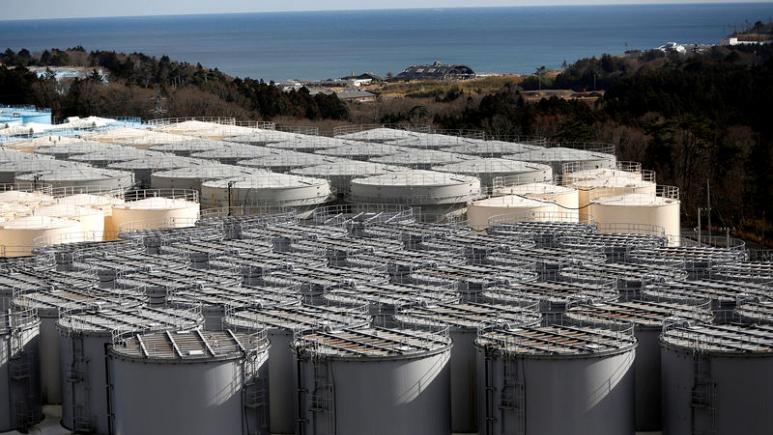
Locals believe livelihoods are at risk as authorities attempt to tackle
contamination 12 years on from the disaster. The authorities are about to
begin pumping contaminated water from the Fukushima nuclear power plant
into the Pacific Ocean.
More than a million tons of water will be released
into the sea over the next thirty years. The waste water will be treated
and diluted to remove most radioactive contaminants, but will still contain
traces of the isotopes, tritium and carbon-14.
The governments of China,
South Korea and Pacific island nations have protested against the decision.
But none are affected more directly than the fishermen of Fukushima. Twelve
years after the catastrophe, there is no clear timeline for the
decommissioning of Fukushima Daiichi, which is decades away from being
safely dismantled.
In the meantime, 130 tons of water is contaminated by it
every day. Some of this is poured directly onto the broken reactors to cool
them. Much is natural ground water which flows through the earth towards
the sea, picking up radiation from the exposed reactors on the way.
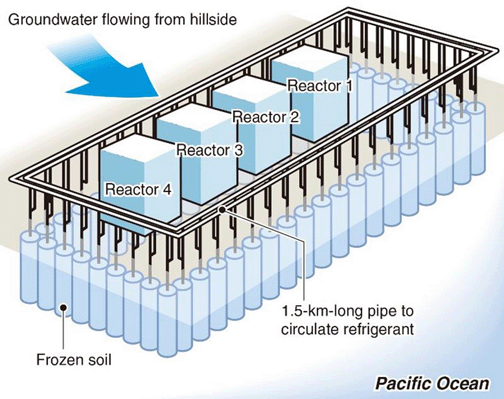
To prevent the groundwater reaching the plant in the first place, the
authorities built an underground “ice wall” of frozen earth, but this
has been only partly effective. Filtering is supposed to remove all the
radioactive elements except for tritium, which is routinely released into
the sea in diluted form from nuclear plants around the world
. But carbon-14
and trace elements of more dangerous radioactive substances, including
strontium-90 and iodine-129, have also been detected in the water. The
Japanese government says that tritium will be diluted to less than one-40th
of the concentration permitted under Japanese safety standards and
one-seventh of the World Health Organisation’s permitted level for safe
drinking water.
According to Tepco, the radiation in the tritium in the
water amounts to some 860 trillion becquerels — less than half the 1,620
trillion becquerels released from Britain’s Sellafield plant in 2015. The
theory is that the water will quickly and harmlessly dissipate into the
vastness of the Pacific Ocean.
But environmentalists and some scientists
disagree. The US National Association of Marine Laboratories claims that
the statistics, assumptions and models used in the Tepco projections are
flawed. It points to the danger of concentrated clusters of radiation
accumulating on the ocean floor.
Shaun Burnie, a nuclear expert at
Greenpeace, says that the water should be stored longer in tanks, allowing
time for the tritium to reduce, and that the decision to release into the
ocean is as much as about saving money as science. It also gives an
illusion of concrete progress.
Even if it is safe, it makes little
difference to the fishermen of Soma, for whom even just the perception of a
danger is enough to harm their business. Among them opinion is divided.
Some oppose the release under any circumstances; others, including Konno,
reluctantly accept it as the least worst option given that only complete
decommissioning, decades in the future, will solve the problem.
Times 10th March 2023
Historic treaty to protect the oceans.
After 15 years of stalled talks, more than 100 countries reached a historic
agreement to protect the high seas on Saturday, a long-awaited step that
environmental groups say will help reverse marine biodiversity losses from
climate change and overfishing.
The legally binding UN treaty to conserve
and ensure the sustainable use of ocean biodiversity was finally agreed on
after five rounds of protracted UN-led negotiations that ended on Saturday,
a day after the original deadline. “The ship has reached the shore,”
said the UN conference’s president Rena Lee, after a marathon final stretch
of talks hit 38 hours.
Independent 5th March 2023
https://www.independent.co.uk/climate-change/news/un-ocean-treaty-global-biodiversity-b2294370.html
Nuclear Free Local Authorities call on Secretary of State to end ‘wanton vandalism’ of environment at Sizewell

The UK/Ireland Nuclear Free Local Authorities have joined forces with local
campaigners in protesting against the destruction of the local environment
around the Sizewell C site now being carried out by developer, EDF.
The Chair of the NFLA Steering Committee, Councillor Lawrence O’Neill has
written to the Secretary of State for the Environment, Dr Therese Coffey,
asking her to intercede to stop the destruction.
The Sizewell C project has
yet to receive site approvals from the Office of Nuclear Regulation and the
Environment Agency or achieve financial close (the so-called Financial
Investment Decision) and the decision by government ministers to give the
go-ahead last year is being challenged in the High Court by Together
Against Sizewell C in late March.
Despite this, developer EDF has been busy
felling ancient trees and destroying wet woodland, in a Protected site of
Special Scientific Interest, despite previously promising to only carry out
preparatory works that were ‘reversible’ at this time. Councillor O’Neill
said: “It appears that EDF are playing fast and loose with the word
‘reversible’. It is way too early to be carrying out such drastic acts of
destruction against the natural environment, such as uprooting
irreplaceable ancient trees, when there are still many uncertainties about
whether Sizewell C will go ahead and when the plans are still subject to a
major legal challenge.
NFLA 28th Feb 2023
Group calls for the stoppage of works at Sizewell C nuclear site, as Sizewell project is not yet authorised, and works are damaging the environment
EDF continues its programme of eco-vandalism. TASC calls on SoS for Defra
to intervene. Despite an EDF statement on 18th January, claiming that,
“[Its] Advance [preparatory] works [for Sizewell C] are reversible in the
unlikely event Sizewell C will not proceed to a Final Investment Decision
and full construction”, TASC is shocked and disgusted to discover that
EDF will renege on that promise when, on 1st March, EDF begins to destroy
wet woodland, a legally protected priority ‘Biodiversity Action Plan’
habitat, located in Sizewell Marshes Site of Special Scientific Interest.
Despite EDF knowing full well that we are now entering the bird, bat and
reptile breeding season, it has already begun felling woodland in Goose
Hill, as part of its plan to clear over 40 hectares – including the
felling of some ancient trees – to make way for Sizewell C’s car park.
TASC’s Chair, Jenny Kirtley said “These actions create permanent and
irreversible environmental loss to East Suffolk’s Heritage Coastal
biodiversity and is in direct contradiction of the government’s ‘green
agenda’. Despite EDF’s claim, it is not possible to reverse such losses
and represents further eco-vandalism which goes hand-in-glove with the
construction of a redundant and unnecessary nuclear plant which may never
commence construction.
Sizewell C has yet to make a Final Investment
Decision, does not have a site licence from the Office for Nuclear
Regulation, nor three outstanding environmental permits needed from the
Environment Agency. Furthermore, the project’s DCO approval is subject to
TASC’s judicial review proceedings scheduled to take place in the High
Court on 22nd and 23rd March.
We have asked the Secretary of State for
Defra and the MP for Suffolk Coastal to intervene and to stop the work at
least until these uncertainties around Sizewell C’s various
authorisations have been granted.’.
TASC 24th Feb 2023
Groundwater carries radiation risk for North Korean cities near nuke test site – rights group
By Hyonhee Shin https://www.reuters.com/world/asia-pacific/groundwater-carries-radiation-risk-north-korean-cities-near-nuke-test-site-2023-02-21/
SEOUL, Feb 21 (Reuters) – Tens of thousands of North Koreans and people in South Korea, Japan and China could be exposed to radioactive materials spread through groundwater from an underground nuclear test site, a Seoul-based human rights group said in a report on Tuesday.
North Korea secretly conducted six tests of nuclear weapons at the Punggye-ri site in the mountainous North Hamgyong Province between 2006 and 2017, according to the U.S. and South Korean governments.
The study by the Transitional Justice Working Group said radioactive materials could have spread across eight cities and counties near the site, where more than 1 million North Koreans live, and where groundwater is used in everyday lives including drinking.
The group, formed in 2014, worked with nuclear and medical experts and defectors and used open source intelligence and publicly available government and U.N. reports for the study, which was backed by the National Endowment for Democracy, a non-profit corporation funded by the U.S. Congress.
“This report is significant in showing that North Korea’s nuclear tests could threaten the right to life and health of not only the North Korean people, but also of those in South Korea and other neighbouring countries,” said Hubert Young-hwan Lee, the group’s chief and a co-author.
Telephone calls by Reuters to North Korea’s diplomatic mission to the United Nations in New York went unanswered.
In 2015, South Korea’s food safety agency detected nine times the standard level of radioactive caesium isotopes in imported hedgehog mushrooms that had been sold as Chinese produce though their actual origin was North Korea.
China and Japan have ramped up radiation monitoring and expressed concerns over potential exposure following the North’s previous nuclear tests but did not openly provide information on contaminated food.
Many outside experts have raised concerns over potential health risks from contaminated water, but North Korea rejected such concerns, saying there were no leaks of harmful materials following past nuclear tests, without providing evidence.
When North Korea invited foreign journalists to witness the destruction of some tunnels at the nuclear test site in 2018, it confiscated their radiation detectors.
Seoul’s Unification Ministry, which handles inter-Korean affairs, stopped testing defectors for radiation exposure since 2018 amid a thaw in cross-border ties.
But, out of 40 defectors from the regions near Punggye-ri who were tested for radiation in 2017 and 2018, at least nine showed abnormalities. The ministry said, however, that it could not establish a direct link with the nuclear site.
More than 880 North Koreans have escaped from those regions since 2006, the report said.
The rights group urged a resumption of testing and an international enquiry into the radiation risks for communities around Punggye-ri.
The Unification Ministry said it will consider restarting testing if any defectors report health problems and request support regarding radiation exposure.
Seoul and Washington have said Pyongyang could be preparing for a seventh nuclear test.
Fury as Japan plans to dump a million tonnes of contaminated water in the Pacific
Japan has a serious problem it can no longer control – and the “solution” has horrified our nearest neighbours, who say a catastrophe is coming.
Alexis Carey@carey_alexis, news.com.au February 23, 2023
Outrage is growing over an “unjust” plan to dump more than a million tonnes of contaminated wastewater on Australia’s doorstep – within months.
In 2011, Japan was rocked by the Fukushima nuclear disaster – the worst of its kind since Chernobyl in 1986.
Responders scrambled to stop damaged reactors at Fukushima’s Daiichi nuclear plant from overheating by pumping massive amounts of water through them, with the contaminated water then being stored in massive tanks at the site.
But now, Japan has run out of space, and in 2021, announced plans to dump 1.3 million tonnes of the contaminated wastewater into the Pacific Ocean.
The water would be treated before being released over a period of several decades, with Prime Minister Yoshihide Suga saying at the time it was “a realistic solution”.
“We will do our utmost to keep the water far above safety standards,” he vowed.
In the almost two years since, Japan has been working out the finer details of the release, which is now due to begin as soon as the northern hemisphere’s spring or summer – Australia’s autumn or winter.
And countries across the Pacific are furious.
Kenichi Takahara, risk communicator of the Fukushima Daiichi decontamination and decommissioning engineering company, visits the Fukushima Daiichi nuclear power plant. Picture: Philip Fong/AFP
‘Catastrophic harm’
Writing for The Guardian soon after the plan was first announced, youth advocates from the region Joey Tau and Talei Luscia Mangioni described it as an “unjust act”.
“To Pacific peoples, who have carried the disproportionate human cost of nuclearism in our region, this is yet another act of catastrophic and irreversible trans-boundary harm that our region has not consented to,” they wrote.
They were referring to the long history of the Pacific being used as the world’s nuclear waste dumping ground, with hundreds of nuclear tests being carried out across the region in the decades since the Second World War.
High-profile individuals and groups from across the Pacific – including from Vanuatu, Fiji, the Marshall Islands and French Polynesia – have also spoken out against Japan’s plan for months on end.
“If it is safe, dump it in Tokyo, test it in Paris, and store it in Washington, but keep our Pacific nuclear-free,” Vanuatu stateswoman and veteran activist of the Nuclear Free and Independent Pacific (NFIP) movement Motarilavoa Hilda Lini said soon after Japan’s plan was unveiled.
“We are people of the ocean, we must stand up and protect it.”
In another moving statement released last year, environmental advocacy group Youngsolwara Pacific likened the release to “nuclear war”.
“How can the Japanese government, who has experienced the same brutal experiences of nuclear weapons in both Hiroshima and Nagasaki, wish to further pollute our Pacific with nuclear waste? To us, this irresponsible act of trans-boundary harm is just the same as waging nuclear war on us as Pacific peoples and our islands.”
But their pleas have fallen on deaf ears – and a string of experts have even voiced support for Japan’s controversial move.
………………………………….But for many critics of the plan, plenty of concerns remain.
“We must prevent actions that will lead or mislead us towards another major nuclear contamination disaster at the hands of others,” the former prime minister of the Cook Islands Henry Puna said just last month, as the deadline for the release looms. https://www.news.com.au/technology/environment/fury-as-japan-plans-to-dump-a-million-tonnes-of-contaminated-water-in-the-pacific/news-story/fbf0c9c3ab7a4414c7e41713a4b0c628
‘Extreme situation’: Antarctic sea ice hits record low

Damian Carrington 16 Feb 23
https://www.theguardian.com/world/2023/feb/15/antarctic-sea-ice-hits-record-low-climate-crisis
The area of sea ice around Antarctica has hit a record low, with scientists reporting “never having seen such an extreme situation before”. The ice extent is expected to shrink even further before this year’s summer melting season ends.
The impact of the climate crisis in melting sea ice in the Arctic is clear in the records that stretch back to 1979. Antarctic sea ice varies much more from year to year, which has made it harder to see an effect from global heating.
However, “remarkable” losses of Antarctic sea ice in the last six years indicate that the record levels of heat now in the ocean and related changes in weather patterns may mean that the climate crisis is finally manifesting in the observations.
Scientists were already very concerned about Antarctic ice. Climate models suggested as far back as 2014 that the giant West Antarctic Ice Sheet (WAIS), which sits on the continent, was doomed to collapse due to the levels of global heating already seen then.
The increasing loss of sea ice exposes ice sheets and their glaciers to waves that accelerate their disintegration and melting, researchers warned. A recent study estimated that the WAIS would be tipped into gradual collapse – and four metres of sea level rise – with a global temperature rise as low as 1C, a point already passed.
“I have never seen such an extreme, ice-free situation here before,” said Prof Karsten Gohl, from the Helmholtz Centre for Polar and Marine Research in the Alfred Wegener Institute, Germany, and who first visited the region in 1994.
Gohl, on board the research vessel Polarstern in Antarctica, said: “The continental shelf, an area the size of Germany, is now completely ice-free. It is troubling to consider how quickly this change has taken place.”
Prof Christian Haas, also at the Helmholtz Centre, said: “The rapid decline in sea ice over the past six years is quite remarkable, since the ice cover hardly changed at all in the 35 years before.”
Scientists at the National Snow and Ice Data Center in the US have also said a new record low has been set. They said Antarctic sea ice extent fell to 1.91m square kilometres on 13 February, below the previous record set on 25 February 2022.
Sea ice melts away in the Antarctic summer before starting to grow again as autumn arrives. “In past years, the annual minimum has occurred between 18 February and 3 March, so further decline is expected,” the NSIDC researchers said. “Much of the Antarctic coast is ice free. Earlier studies have linked low sea ice cover with wave-induced stresses on the floating ice shelves that hem the continent, leading to break up of weaker areas.”
The German scientists said the “intense melting” could be due to unusually high air temperatures to the west and east of the Antarctic peninsula, which were about 1.5C above the long-term average. Furthermore, there have been strong westerly winds, which increase sea ice retreat. The result is “intensified melting of ice shelves, an essential aspect of future global sea-level rise”, the researchers said.
Historical records also show dramatic changes in Antarctica, they said. The Belgian research vessel Belgica was trapped in massive pack ice for more than a year in the Antarctic summer 125 years ago, in exactly the same region where the Polarstern vessel is now sailing in completely ice-free waters.
Prof Carlos Moffat, at the University of Delaware, US, and recently returned from a research cruise in the Southern Ocean, told Inside Climate News: “The extraordinary change we’ve seen this year is dramatic. Even as somebody who’s been looking at these changing systems for a few decades, I was taken aback by what I saw.”
1 This Month
19 February – VIRTUAL EVENT-Decision Time: AI and Our Nuclear Arsenal
12:45 p.m. Central / 1:45 p.m. Eastern
To see nuclear-related stories in greater depth and intensity – go to https://nuclearinformation.wordpress.com

-
Archives
- February 2026 (141)
- January 2026 (308)
- December 2025 (358)
- November 2025 (359)
- October 2025 (376)
- September 2025 (258)
- August 2025 (319)
- July 2025 (230)
- June 2025 (348)
- May 2025 (261)
- April 2025 (305)
- March 2025 (319)
-
Categories
- 1
- 1 NUCLEAR ISSUES
- business and costs
- climate change
- culture and arts
- ENERGY
- environment
- health
- history
- indigenous issues
- Legal
- marketing of nuclear
- media
- opposition to nuclear
- PERSONAL STORIES
- politics
- politics international
- Religion and ethics
- safety
- secrets,lies and civil liberties
- spinbuster
- technology
- Uranium
- wastes
- weapons and war
- Women
- 2 WORLD
- ACTION
- AFRICA
- Atrocities
- AUSTRALIA
- Christina's notes
- Christina's themes
- culture and arts
- Events
- Fuk 2022
- Fuk 2023
- Fukushima 2017
- Fukushima 2018
- fukushima 2019
- Fukushima 2020
- Fukushima 2021
- general
- global warming
- Humour (God we need it)
- Nuclear
- RARE EARTHS
- Reference
- resources – print
- Resources -audiovicual
- Weekly Newsletter
- World
- World Nuclear
- YouTube
-
RSS
Entries RSS
Comments RSS
 nuclear-news