We are all Hibakusha- the global footprint of nuclear fallout
By M.V. Ramana https://beyondnuclearinternational.org/2023/09/03/we-are-all-hibakusha/
The front page of the Times of India of August 7, 1945, carried the headline World’s deadliest bomb hits Japan: Carries blast power of 20,000 tons of TNT. For millions around the world, headlines of that sort would have been their first intimation of the process of nuclear fission on a large scale.
But, a careful stratigrapher, who studies layers in the soil or rock, might be able to discern that, in fact, nuclear fission had occurred in July 1945. The stratigrapher would just have to look for plutonium at Crawford Lake in Ontario, Canada, the site proposed as the “golden spike” spot to mark the start of the Anthropocene (recognising the problems with its definition as highlighted in Down To Earth’s interview with Amitav Ghosh).
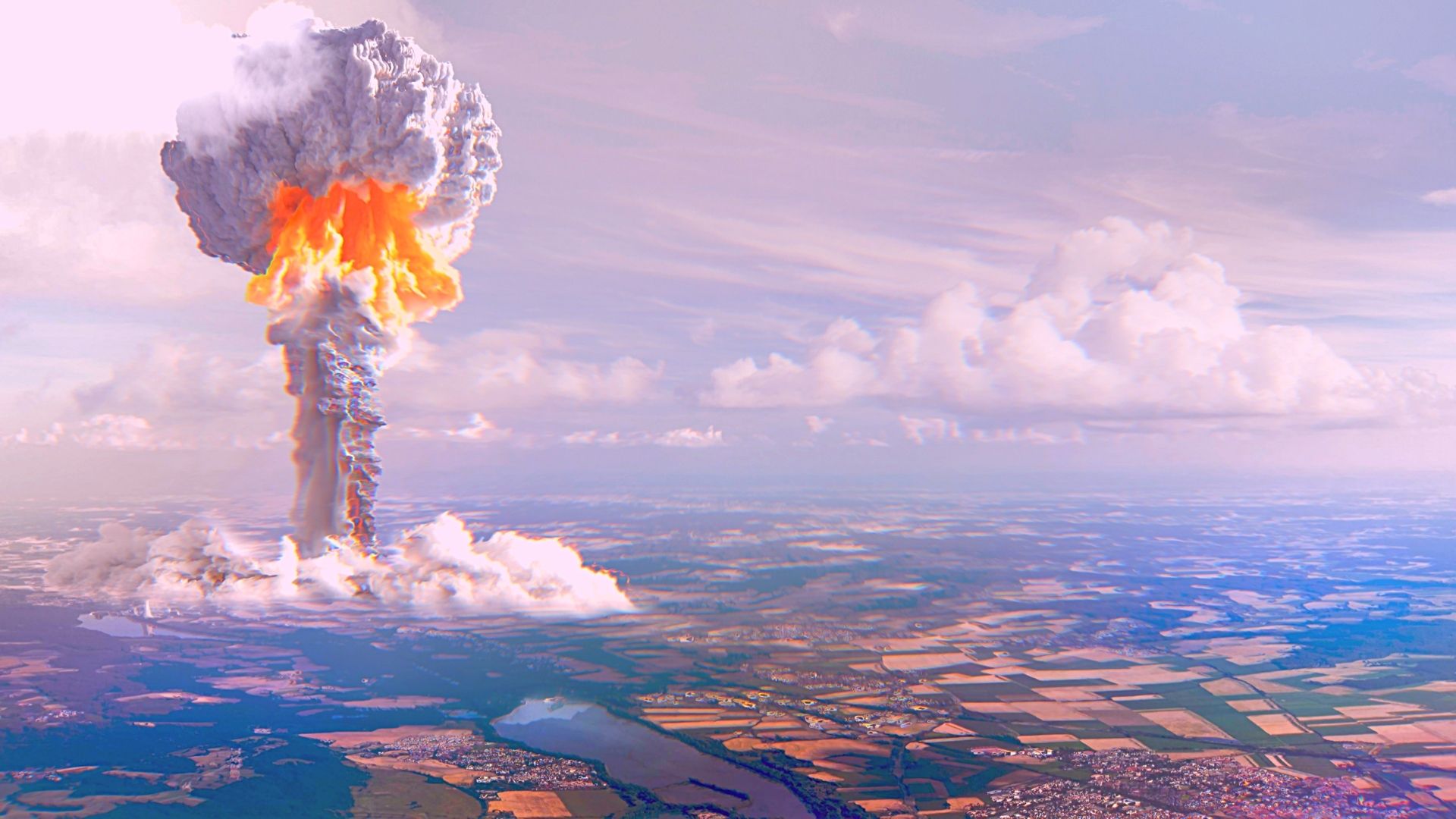
What happened in July 1945 was, of course, Trinity, the world’s first nuclear weapon test, now familiar to many through the film Oppenheimer. A group of researchers recently reconstructed how the plutonium released during that explosion would have been transported by the wind. They calculated that direct radioactive fallout from that test would have reached Crawford Lake within four days of the test, “on July 20, 1945 before peaking on July 22, 1945”.
Since Crawford Lake is nearly 3,000 kilometres from the Trinity test site in New Mexico, it stands to reason that many other places would also have received radioactive fallout from the Trinity test. Now consider the fact that there have been at least 528 nuclear weapon tests around the world that took place above the ground, plus the bombs dropped on Hiroshima and Nagasaki—and you can easily imagine how radioactive fallout must have fallen practically everywhere, whether on land or in the oceans.
Not included in the abovementioned list of 528 is the debated 1979 “Vela incident” that most likely involved an Israeli nuclear weapon test with help from South Africa. It is described as debated only because political elites in the United States, whose Vela satellite 6911 detected a double-flash of light that is characteristic of nuclear explosions, did not want to impose sanctions on Israel.
In 2018, two scientists collected a range of evidence consistent with such a nuclear test, importantly cases of radioactive element iodine-131 that was found in the thyroids of some sheep in 1979—in the south east part of Australia, across the oceans. Again, proof that radioactive fallout from nuclear weapon tests spread out globally.
But it is not just nuclear weapons tests. Accidents at nuclear power plants, too, have produced radioactive fallout that has contaminated the peoples of the world. Radioactive cesium released by the 1986 Chernobyl reactor explosion was found in multiple countries across Western Europe. Yet again, sheep, this time in England, Scotland and Wales, were contaminated, and for a time scientists could not even understand the behaviour of the radioactive cesium that the sheep were ingesting.
The sheep remained contaminated for decades. Restrictions on sheep were lifted in all areas only in 2012. Of course, closer to Chernobyl, many areas are still highly contaminated. Radiation levels go up and down depending on outside events, such as forest fires or the Russian army invading the area.
Even without nuclear weapons explosions and reactor accidents, people around the world are exposed to radioactive materials—from reprocessing plants. These facilities chemically process the irradiated spent fuel from nuclear power plants, while also producing very large volumes of liquid and gaseous radioactive effluents. These effluents are released into the air; exposure to these constitutes the largest component of the radiation dose to “members of the public from radionuclides released in effluents from the nuclear fuel cycle”.
People in South Asia have, of course, been exposed to radioactive fallout from nuclear explosions conducted by other countries, nuclear reactor accidents, and reprocessing plants. What about the nuclear weapons exploded by India and Pakistan in 1998, and by India, in 1974? All of these weapons were exploded underground, which should, in principle, have contained all the radioactive materials within the soil. If so, their route for exposing people to radiation can only be by contaminating underground water sources, sometime in the future.
But underground nuclear weapon tests do, sometimes, vent, releasing radioactive materials into the air. After the Limited Test Ban Treaty of 1963, all US nuclear weapons tests were designed to completely contain the radioactivity underground. Nevertheless, 105 of them vented radioactive materials into the atmosphere. A further 287 tests had “operational releases” whereby radioactivity was released during routine post-test activities. Similarly, several hundred underground nuclear weapons explosions at the Novaya Zemlya test site in the Soviet Union released radioactivity into the atmosphere.
Radioactive materials from these releases spread far and wide. In 1970, radioactive materials vented during the Baneberry test were detected as far as Canada; but Canadian diplomats told US officials that “they had no intention to make a formal protest or to conceive of the event as a violation” of the Limited Test Ban Treaty.
It is possible, though not very probable, that the 1998 or the 1974 nuclear tests vented radioactivity. One reason to suspect venting is that residents of the villages near Pokhran, India have repeatedly complained of different kinds of physical illnesses, and demanded that radiation levels be checked. So far, no comprehensive and independent examination of the health of these people or the radioactivity levels in the area has been conducted.
Nearly eight decades since the nuclear age started, people around the world, not to mention the flora and fauna, have all been exposed to radioactive materials from nuclear activities. Any exposure to radioactivity elevates the risk of developing cancer or cardiovascular disease, two great health scourges in modern times.
We are all, in the words of Robert “Bo” Jacobs, the “Global Hibakusha”, survivors of the nuclear age but always at risk of developing one of the diseases associated with radiation exposure. And the worldwide spread of fallout is not, as Jacobs points out, “something that happened, it is something that is still happening”.
South Koreans worry about Fukushima water: more disapprove of President Yoon
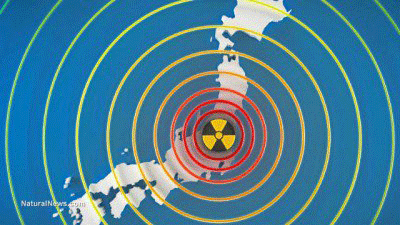
A majority of South Koreans are worried about Japan’s discharge of treated
radioactive water from the Fukushima nuclear plant into the sea despite
efforts by their government to allay fears, a poll published on Friday
showed.
Japan says the water from the wrecked nuclear power plant is safe
and it began releasing it into the Pacific on Aug. 24 despite objections at
home and abroad, particularly from China, Japan’s biggest trade partner,
which banned Japanese seafood.
The South Korean government, however, has
said it sees no scientific problem with the water release, though stressing
it does not approve of it, and banning the import of seafood from waters
off Fukushima, north of Tokyo. President Yoon Suk Yeol has led a campaign
to ease public concern and encourage consumption of seafood. On Thursday,
he visited a major fisheries market to shop and have lunch. Despite such
efforts, South Korean environmental groups and many members of the public
are alarmed and Yoon’s disapproval rating has risen to the highest in
months, a Gallup Korea poll of 1,002 people showed.
Reuters 1st Sept 2023
Fukushima Daiichi adds Insult to Injury for the Pacific’s Coral Reefs.
September 1, 2023 by Kevin Hester
As the El Niño builds to a terrifying crescendo, that won’t peak before April 2024, the Pacific’s Coral Reefs will become stressed, and a bleaching event will unfold as it did in the 2016 El Niño. What is our response? TEPCO and the Japanese government have decided to dump 1.3million tons of radioactive water into my beloved Pacific Ocean. After careful consideration the criminal cohort in Japan have decided to take the cheapest option and dump the radioactive sludge into the adjacent Pacific Ocean.
In the video above, I mentioned that Sea Surface Temperatures hit 38C off the coast of Florida. Here’s the evidence:
“Sea surface temperatures of more than 38C (100.4F) have been recorded off the coast of Florida – potentially setting a new world record.” Sea temperature off Florida reaches 38C- potentially a world record.
Almost every coral reef in the Northern Hemisphere is under stress.
Daily Global 5km Satellite Coral Bleaching Heat Stress Degree Heating Week
…………………………………………. We discussed the compounding consequences of the Pacific Ocean being irradiated thanks to TEPCO, the Japanese Government and Fukushima Daiichi. The very same people who triggered this disaster, by building a sea wall half the size their own analysis called for.
My Polynesian neighbours are furious. Niue and Tuvalu ‘concerned, dismayed, disappointed’ with Fukushima release
The Fukushima Nuclear Disaster Still Casts a Shadow Over Japan


The “great powers” in the past had given island peoples repeated assurances that there would be no risk to health or environment from testing or dumping. Those peoples watch sadly now as Japan does likewise, engaging in intense propaganda efforts to line up regional states to endorse its wastewater dumping campaign.
The Jacobin, BYGAVAN MCCORMACK 2 Sept 23
Twelve years after the Fukushima disaster, Japanese authorities have started pumping wastewater from the plant into the ocean. They insist there’s no danger to public health, but Japan’s neighbors are up in arms about the controversial plan.
In 2011, Fukushima Daiichi Nuclear Power Plant, roughly 250 kilometers north of Tokyo, was hit by a magnitude 9.0 quake and tsunami. Three reactors stopped immediately, but the loss of electricity supply led over the following days and months to breakdown of the cooling system and to a series of hydrogen explosions and meltdowns of the cores of Reactors 1 to 3.
Prime Minster Kan Naoto feared for the worst. He faced the possible need to evacuate the whole Kanto region, including the Tokyo metropolitan area. Japan itself, its state and society, stood on the brink of catastrophe. That fate was only narrowly averted………………………
The Half-Life of Catastrophe
The flow of water to cool the debris polluted with various forms of radioactivity has had to be maintained to this day. Over the past twelve years, some 1.34 million tons of water have accumulated and is being held in a vast array of more than one thousand tanks along the coast of Fukushima prefecture.
Those tanks are now about 98 percent full, but the flow of contaminated water will have to be continued for at least the next three decades, or until such time as the site can be cleaned up. Nobody today can say with any confidence when that might be.
The polluted waters contain sixty-four radioactive elements, or radionuclides, the ones of greatest concern being carbon-14, iodine-131, caesium-137, strontium-90, cobalt-60, and hydrogen-3, also known as tritium. Some have a short life and might already have ended, but others take longer to decay, with a half-life of more than five thousand years in the case of carbon-14………………………………………………….
The Cheapest Option
In 2016, the Japanese government considered multiple methods of treating the water. Ruling out simple continuation of the status quo — more and more tanks along an already crowded seafront — there seemed to be three options: ocean discharge, atmospheric discharge, and underground burial. The estimated cost was 34.9 billion yen to release the problem materials as gas into the atmosphere, 24.3 billion to dig a deep hole and bury it, but just 3.4 billion to pour it out gradually into the sea…………………………………………………
Anxiety, alarm, and increasingly anger have been spreading, both within Japan itself (and especially in the Fukushima vicinity that bore the brunt of the initial 2011 disaster) and on the part of Japan’s Pacific neighbor states: China (including Hong Kong), Korea (both north and south), Russia, the Philippines, and the mini-states of the South Pacific, with eighteen countries and regions. In Japan, just 44 percent of people said they had “no worries” over the release, while about 75 percent said the government had not properly explained what it was doing.
The Japanese government had promised it would take no step without duly consulting all concerned parties. Yet it proceeded to ignore that principle both when it came to its own citizenry (especially those employed in its once-vibrant fishing industry) and in relation to its Pacific neighbors, whose shores are washed by the same Pacific waters.
Under Control”
True, the United Nations’ International Atomic Energy Agency (IAEA) has provided helpful cover for the Japanese government and the Tokyo Electric Power Company (TEPCO) by taking the view that the environmental impact of the discharge would be “negligible.” That judgment, however, is neither surprising nor decisive.
The IAEA, founded in 1957, is an organization devoted to the propagation of “safe” civil nuclear energy. Japan is its third-largest source of its funds, and the future of the global nuclear industry depends on there being seen to be a “final solution” to the problems posed by Fukushima………………
Though it has received little attention in media coverage of the problem, a small but significant body of scientific opinion has begun to express severe criticism of the IAEA for failing to apply its own fundamental principles. One paper accused the agency of being in some important respects “at least 10,000 times in error,” neglecting to give proper consideration to the nondumping solutions, and “grossly overstating well-known facts” in its “eagerness to assure the public that harm will be ‘negligible.’”
When Japan’s then prime minister Abe Shinzo told the world in September 2013 that Fukushima was ‘under control,’ he lied.
According to the paper’s author, Arjun Makhijani of the Institute for Energy and Environmental Research, a very different approach is required:
The IAEA should, starting with Japan, provide guidance to nuclear power-possessing countries to stop dumping so that the oceans that have been much abused in so many ways for so long can at least have a chance to begin recovering.
When Japan’s then prime minister Abe Shinzo told the world in September 2013 that Fukushima was “under control,” he lied. Until 2018, all attempts to locate the missing reactor cores, let alone to place them “under control,” had failed. Only in 2021 did it become possible at least to locate the debris in one reactor.
However, knowing the location is just the start. Now we know where it is, we are no closer to knowing how to deal with it. The recovery effort for two of the reactors will not commence until 2024.
If they succeed in locating the debris, estimated to be about 880 tons, it will then have to be extracted, gram by gram. Meanwhile, as of 2023, between four and five thousand workers are mobilized each day to perform various high-risk tasks in the disaster zone.
People of the Ocean
The “great powers” in the past had given island peoples repeated assurances that there would be no risk to health or environment from testing or dumping. Those peoples watch sadly now as Japan does likewise, engaging in intense propaganda efforts to line up regional states to endorse its wastewater dumping campaign.
Japan’s word today rings as hollow to Pacific Island peoples as that of the United States or France once did. Even the Japanese people themselves have “little trust in TEPCO or the Japanese Government” when it comes to Fukushima wastewater dumping, according to Suzuki Tatsujiro, former vice chairman of the Japan Atomic Energy Commission.
Japanese governments far into the future are to be bound now by the decisions taken by the current administration and by the process launched on August 24. The support given to Japan’s ocean dumping by prominent Western industrial countries strikes Pacific Islanders as hypocritical. Motarilavoa Hilda Lini is chief of the Turaga nation of Pentecost Island, Vanuatu, and an activist with the Nuclear Free and Independent Pacific (NFIP) movement. She put it this way:……………………………………………………………. more https://jacobin.com/2023/09/fukushima-nuclear-reactor-radioactive-waste-japan-ocean
Nuclear weapons testing cause of radioactivity in wild boars, study says

https://www.bbc.com/news/world-europe-66665646— 31 Aug 23
A new study has found that nuclear weapons tests during the Cold War are a major cause of high levels of radioactivity in central Europe’s wild boar population.
The radioactivity found in wild boars has previously been blamed on the 1986 Chernobyl disaster.
But the new research concludes that earlier nuclear weapons testing in the 1960s is a significant cause.
Other wild animals’ radioactivity levels have dropped over the years.
So many wondered why the wild pigs’ contamination levels remained so high.
After testing meat from 48 boars in Germany’s state of Bavaria, scientists from Vienna’s University of Technology and Leibniz University of Hannover found that their radioactivity is to a significant degree caused by older, Cold War nuclear bomb blasts which are still affecting the soil in the area.
Writing in the Environmental Science and Technology journal, the scientists say that radioactive caesium from the tests have sunk into the earth, contaminating deer truffles – the food favoured by wild boars, who dig into the soil to find them.
But the truffles – and the subsequent contamination of wild boars – is unlikely to abate any time soon, the study says.
This is because more radioactive caesium from Chernobyl will seep further into the soil, further contaminating the truffles.
The boars’ continued contamination threatens the Bavarian forests themselves, the study says: as the animals are not shot for their meat, their populations are growing unsustainably.
Brink of catastrophe: Japan as Pacific polluter
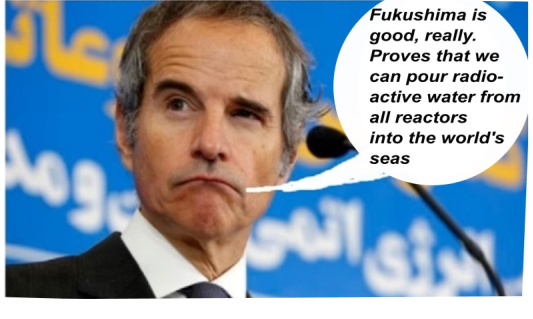
True, the IAEA (the UN’s International Atomic Energy Agency) has provided helpful cover for the Government of Japan (and the TEPCO power company) by taking the view that the environmental impact of discharge of polluted (but “processed” to remove most of the major radio-active materials) cooling water would be “negligible.” That, however, is neither surprising nor decisive.
The IAEA, founded in 1957, is an organisation devoted to the propagation of “safe” civil nuclear energy; the state of Japan is its third largest source of its funds; and the future of the global nuclear industry depends on there being seen to be a “final solution” to the problems posed by Fukushima.
https://johnmenadue.com/brink-of-catastrophe-japan-as-pacific-polluter/ By Gavan McCormack, Aug 30, 2023
In 2011, Fukushima Nuclear Power Plant, roughly 250 kilometres north of Tokyo, was hit by a magnitude 9.0 quake and tsunami. Three reactors stopped immediately but the loss of electricity supply led in the days and months that followed to breakdown of the cooling system and to a series of hydrogen explosions and meltdowns of the cores of Reactors 1 to 3.
Prime Minster Kan Naoto feared for the worst. He faced the possible need to evacuate the whole Kanto region, including the Tokyo metropolitan area. Japan itself, its state and society, stood on the brink of catastrophe. That fate was only narrowly averted.
To this day the flow of water to cool the debris polluted with various forms of radioactivity has had to be maintained. Over the past twelve years some 1.34 million tons of water has accumulated and is being held in a vast array of over 1000 tanks along the coast of Fukushima prefecture. Those tanks are about 98 per cent full, but the flow of contaminated water will have to be continued for at least the next three decades, or till such time as the site can be cleaned up. Nobody today can say with any confidence when that might be.
The polluted waters contain 64 radioactive elements, or radionuclides, of greatest concern being carbon-14, iodine-131, caesium-137, strontium-90, cobalt-60 and hydrogen-3, also known as tritium. Some have short life and might already have ended, but others take longer to decay, with a half-life of more than 5,000 years in the case of carbon-14 (Nature, 29 June 2023). Tritium, which focuses most attention, has a half-life of 12.3 years. Its concentrations may be low, but one hundred years will have to pass before its threat to humans and the ocean becomes truly negligible
The government has yet to find additional sites for expansion, and each day it has to put about 90 tons of newly polluted water somewhere. And, while the people of Japan remain steadfast in opposing any return to the pre-2011 vision of a nuclear-powered, energy self-reliant, superpower Japan future, government and bureaucracy are increasingly open about their determination to pursue just such a goal.
In 2016, the Japanese government considered multiple methods of treating the water. Ruling out simple continuation of the status quo – more and more tanks along an already crowded sea-front – there seemed to be three options: ocean discharge, atmospheric discharge, and underground burial. The cost differential was estimated at 34.9 billion yen to release the problem materials as gas into the atmosphere, 24.3 billion to dig a deep hole and bury it, but just 3.4 billion to pour it out gradually into the sea.
The logic of such math was inescapable. The chosen option was the one that was cheaper by a factor of 7 or more. Time, and the recuperative, regenerative powers of the sea, would come to humanity’s rescue. The materials would be released into the ocean (channelled by giant pipes to a point about one kilometre offshore). That process began on 24 August 2023.
Anxiety, alarm, and increasingly anger, spread, both within Japan (and especially in the Fukushima vicinity that bore the brunt of the initial 2011 disaster) and on the part of Japan’s Pacific neighbour states – China (including Hong Kong), Korea (north and south), Russia, Philippines, and the mini-states of the South Pacific (its 18 countries and regions). In Japan just 44 per cent of people said they had “no worries” over the release, but about 75 per cent said the government had not properly explained what it was doing.
The Japanese government, having promised it would take no step without duly consulting all concerned parties, proceeded to ignore that principle both in regard to its own citizenry (especially those employed in its once vibrant fishing industry) and its Pacific neighbours, whose shores are washed by the same Pacific waters.
True, the IAEA (the UN’s International Atomic Energy Agency) has provided helpful cover for the Government of Japan (and the TEPCO power company) by taking the view that the environmental impact of discharge of polluted (but “processed” to remove most of the major radio-active materials) cooling water would be “negligible.” That, however, is neither surprising nor decisive. The IAEA, founded in 1957, is an organisation devoted to the propagation of “safe” civil nuclear energy; the state of Japan is its third largest source of its funds; and the future of the global nuclear industry depends on there being seen to be a “final solution” to the problems posed by Fukushima.
Though given little attention in media coverage of the problem, a small but significant body of scientific opinion has begun to express severe criticism of IAEA for its failure to apply its own fundamental principles, being in some important respects “at least 10,000 times in error,” neglecting to give proper consideration to the non-dumping solutions, “grossly over-stating” well known facts in its “eagerness to assure the public that harm will be ‘negligible’.” (Arjun Makhijani, “TEPCO’s ALPS-treated Radioactive Water Dumping Plan Violates Essential Provisions of IAEA’s General Safety Guide No. 8 and Corresponding Requirements in Other IAEA Documents, Institute for Energy and Environmental Research [IEER], 28 June 2023.
In this view, the IAEA should, starting with Japan, provide assistance to nuclear-possessing countries to stop dumping so that the oceans that have been much abused in so many ways for so long can at least have a chance to begin recovering.
When then Prime Minster Abe Shinzo told the world in September 2013 that Fukushima was “under control,” he lied. Till 2018, all attempts to locate the missing reactor cores, let alone to place them “under control,” had failed. Only in 2021 did it become possible at least to locate the debris in one reactor. But knowing the location is but the start. Now we know where it is, we are no closer to knowing how to deal with it. The recovery effort for two of the reactors will not commence until 2024. If they succeed in locating the debris, estimated to be about 880 tons, it will then have to be extracted, gram-by-gram. Meanwhile, as of 2023, between 4,000 and 5,000 workers are mobilised each day to perform various (high-risk) tasks in the disaster zone.
To the peoples of the small states of the Pacific, serial victims of waves of nuclear testing, first American, then French, the blow coming from nuclear-victim country Japan was especially bitter. To the shock and harm caused by the initial massive radioactivity release of 2011 has now to be added that of the deliberate, premeditated dumping of nuclear wastes from 2023. The “great powers” in the past had given Island peoples repeated assurances that there would be no risk to health or environment from testing or dumping. Those peoples watch sadly now as nuclear victim country Japan does likewise, engaging in intense propaganda efforts to line up regional states to endorse its wastewater dumping campaign.
Japanese words today rings as hollow to Pacific Island peoples as did once American or French words. Even the Japanese people themselves, when it comes to Fukushima wastewater dumping “have little trust in TEPCO or the Japanese Government.” (Suzuki Tatsujiro, former Vice-Chairman of Japan’s Atomic Energy Commission, quoted in Makhijani, p. 3)
by the current administration and by the process launched on 24 August. The support given Japan’s ocean dumping by prominent Western industrial countries strikes Pacific Islanders as hypocritical (Kalinga Seneviratne, “To the Pacific islands, the West’s support for Japan’s Fukushima nuclear waste ocean dumping is hypocrisy,” South China Morning Post, 20 July 2023,) Motarilavoa Hilda Lini, chief of the Turaga nation of Pentacost Island, Vanuatu, and activist of the Nuclear Free and Independent Pacific (NFIP) movement, puts it this way, “We are people of the ocean. We must stand up and protect it.” She went on,
“We need to remind Japan and other nuclear states of our Nuclear Free and independent Pacific movement slogan: if it is safe, dump it in Tokyo, test it in Paris, and store it in Washington, but keep our Pacific nuclear-free.” (Guardian, 26 April 2023).
Brushing aside the pleas of neighbour states, especially those of the long-suffering peoples of the Pacific Islands, Japan has pressed ahead to dump its nuclear wastes into the ocean, ensuring that in due course a third wave of nuclear pollution will wash over Pacific shores.
OPENING THE FLOOD GATES AT FUKUSHIMA
Discharging radioactive water from the damaged Fukushima Daiichi nuclear power plant is avoidable, risky and potentially illegal
By Sarah Hachman and Associate Professor Tilman Ruff AO, University of Melbourne, 29 Aug 23 https://pursuit.unimelb.edu.au/articles/opening-the-flood-gates-at-fukushima
The Japanese government intends to discharge all 1.34 million tonnes of wastewater from the Fukushima Daiichi Nuclear Power Station, an operation that began on 24 August 2023. Presumably, it also plans to discharge the wastewater that will continue to accumulate over the coming decades.
This decision is not only harmful to human and environmental health but is also in direct violation of international law.
The original announcement, made in 2021, came 10 years after a 9.0 earthquake and tsunami struck Japan’s east coast, damaging the cooling mechanisms at the Fukushima Daiichi Nuclear Power Station (FDNPS) and causing three nuclear reactors to meltdown.
The destruction of the FDNPS released an estimated 520 Peta Becquerels (520 x 10¹⁵ nuclear decays per second) of various radionuclides (radioactive elements) into the atmosphere, including cesium, carbon-14, iodine-129, and tritium. However, this figure excludes noble gases such as xenon-133, of which the Fukushima release was the largest since atmospheric nuclear bomb tests.
AN INCOMPLETE CLEAN-UP
Following the incident, the Japanese government worked with the UN’s International Atomic Energy Agency (IAEA) and the Tokyo Electric Power Company (TEPCO) on a plan to decommission the plant, efforts which continue to this day.
The first step of this process was to ensure the reactors remained stable. As such, ocean water was pumped into the reactors as a replacement for the now-defunct cooling mechanisms. Though necessary, this process, along with extensive groundwater leakage, has produced over one million tonnes of irradiated wastewater, which continues to accumulate daily.
This wastewater is being decontaminated using an Advanced Liquid Processing System (ALPS), a filtration process intended to remove 62 radionuclides from water using a series of chemical reactions. However, this system’s consistent effectiveness, even with repeated treatment, has not yet been demonstrated, and ALPS is incapable of eliminating tritium and carbon-14.
As of July 2023, the ALPS-treated wastewater was being stored on-site in 1,046 storage tanks that are nearing capacity, hence the claimed need for ocean discharge.
The Japanese government plans to incrementally discharge the treated wastewater into the Pacific Ocean over the next 30 to 40 years. Though presented with other disposal options, such as long-term storage in purpose-built, seismically-safe tanks and solidifying the water in a leakproof form such as mortar or concrete, the task force declined to explore these avenues due to complexity and cost.
Even after initial cleaning, 70 per cent of the stored wastewater contains levels of radionuclides above regulatory standards, in some cases up to 20,000 times higher. And it’s not just tritium (more on this substance below) in this water, there are other, more toxic, substances, such as cesium-137, strontium-90 and cobalt-60.
However, the IAEA found that Japan’s plans “are consistent with IAEA Safety Standards” and that the levels of tritium, carbon-14, and other potential radioactive contaminants will be within international standards when discharged, without TEPCO having demonstrated its water cleaning can consistently achieve this.
Dilution of the wastewater as planned to meet regulatory limits will not alter the total amount of materials released, which is the key factor.
TEPCO estimates the annual radiation dose to people from the discharged water would be lower than that of a dental x-ray or a round-trip flight from New York City to Tokyo.
However, TEPCO’s checkered history gives little grounds for confidence in its assurances.
NOT ENOUGH EVIDENCE OF SAFETY
Despite reassurance from the IAEA, the scientific community remains divided on the decision, citing growing evidence of how tritium may impact human and environmental health.
Moreover, environmental scientists have argued that the amount considered to be an environmentally safe level of radiation is more political than scientific. National standards invariably lag behind the science, and regulatory limits for tritium in water vary from as much as 7000 Bq/L (Becquerels per litre) in Canada to 15 Bq/L in California.
Tritium is a naturally occurring, radioactive form of hydrogen also produced by nuclear reactors and explosions. It is the largest radioactive byproduct of nuclear power plants. It reacts with oxygen to create tritiated water, which is why ALPS is unable to filter it. Tritium exposure has been largely considered to be harmless in low concentrations and, when ingested, tritiated water is processed in the body identically to water.
There is strong evidence, however, that tritium, particularly organically-bound forms, may have lasting health effects similar to other forms of radiation exposure, such as decreased lifespan, developmental delays and cognitive deficits, immunodeficiency, infertility and birth defects, and cancer and DNA mutations among humans, land animals and aquatic vertebrates and invertebrates who experienced high or prolonged exposure.
The International Commission on Radiological Protection considers tritium’s beta radiation overall to be twice as biologically damaging as X-rays, and organically-bound tritium three times as damaging as tritium incorporated into water.
Though the task force has committed to monitoring tritium exposure in aquatic animals, TEPCO noted that “fish tritium measurement is very difficult and there are only a few analysis agencies that are capable of performing this measurement,” and that reports from these agencies are often conflicting, making this an insufficient risk mitigation strategy.
ILLEGAL UNDER INTERNATIONAL LAW
Japan joined both the 1972 London Convention to prevent marine pollution by waste dumping, and also the 1996 Protocol which specifically prohibits the marine dumping of radioactive waste. In 1996, Japan ratified the United Nations Convention on the Law of the Sea (UNCLOS), an international agreement that established a framework for maritime activities.
By ratifying UNCLOS, Japan committed itself to “protect and preserve the marine environment” and abstain from polluting waterways from “land-based sources”.
Additionally, in 1992 Japan committed to the Rio Declaration, a collection of goals created by the UN targeting sustainable development and environmental protection that heavily emphasises the precautionary principle. Article 15 states: “where there are threats of serious or irreversible damage, lack of full scientific certainty shall not be used as a reason for postponing cost-effective measures to prevent environmental degradation.”
Though there is still debate within the scientific community surrounding the effects of tritium and what constitutes an acceptable level of radiation exposure, two truths remain. One, Japan has committed itself to environmental protection, and two, the contaminated wastewater is a land-based source of pollution.
Furthermore, the very existence of the debate on tritium’s safety and the knowledge that the discharged water will contain other, more harmful radioactive pollutants, requires Japan to employ the precautionary principle just as they agreed to in 1992.
The Japanese government moving forward with the discharge plan, disregarding its commitments to the global community and international efforts for environmental protection sets a precedent for how the global community responds to modern nuclear crises.
Approving this plan means approving a compromise on human and environmental health, inflicting a transboundary and transgenerational problem on peoples around the Pacific with no offsetting benefit or say in the decision, and a failure to engage state and non-state actors with stakes in the nuclear industry to question what’s acceptable.
As such, the Japanese government must follow through on its commitments to the international community and critically consider alternatives for wastewater disposal. The discharge is planned to go on for 30-40 years and radioactive wastewater will continue to accumulate.
Even though it has already started, it can still be stopped and a better alternative implemented.
Marshall Islands sea turtle found to have nuclear contamination
Radio New Zealand, Christina Persico, RNZ Pacific Bulletin Editor 28 Aug 23
Scientists studying tortoise and turtle shells near the Marshall Islands have found they contain nuclear contamination.
An article in the journal PNAS Nexus considered ‘Anthropogenic uranium signatures in turtles, tortoises, and sea turtles from nuclear sites’.
The scientists studied a sea turtle collected at Enewetak Atoll in the Marshall Islands [RMI] in 1978.
“In May 1977, one year prior to the collection of this sea turtle in 1978, cleanup activities began at Enewetak Atoll resulting in the creation of the Runit Dome containment structure,” the report on the study said.
Green sea turtles are migratory, but live, forage, and nest at Enewetak Atoll, the researchers said.
“The presence of uranium contamination in this green turtle [approximately] 20 years after nuclear testing ended in the RMI – thus suggests the potential that cleanup activities disturbed contaminated sediments which (re)input small quantities of local fallout products into the surrounding environment.”
It also notes that eating contaminated algae or seagrass, or ingesting contaminated sediments during nesting, are all potential sources of uranium for this green turtle.
“It is also possible that legacy contamination present in the Enewetak Atoll lagoon occurred in substantive quantities to contaminate this turtle at some point during its lifetime, regardless of potential impacts during the cleanup for Runit Dome,” the report said…………………………………….
They said turtles inhabiting locations with significant nuclear deployment histories, such as Japanese pond turtles; nuclear test histories like the Kazakhstan steppe tortoise; or nuclear processing, production, and accident histories like Ukrainian pond turtles will undoubtedly clarify the extent to which these reptiles bioaccumulate and reflect anthropogenic contamination in the environment.
“We anticipate that our green sea turtle results may influence future sea turtle-based environmental monitoring and tracking of contaminates at Runit Dome in the RMI, and potentially long-term releases of radioactive water from the Fukushima Daiichi reactors, into the Pacific Ocean.” https://www.rnz.co.nz/international/pacific-news/496730/marshall-islands-sea-turtle-found-to-have-nuclear-contamination
Hinkley Point C: Millions of fish under threat after permit change
Campaigners say tonnes of fish could be sucked into Hinkley Point C’s
cooling system if an acoustic fish deterrent is not installed. The
Environment Agency (EA) has removed a requirement for EDF to install the
deterrent, which the company said could be dangerous to maintain.
Environmental groups say millions of fish could be killed per year. The EA
said it was confined to looking at water discharge activity, which did not
deal with the entrapment of fish. A final decision on whether EDF will have
to install an acoustic fish deterrent (AFD) will made by the Secretary of
State for Environment later this year.
The reactor cooling system tunnels
will take in 132,000 litres of water per second from the Severn Estuary to
cool the plant’s two nuclear reactors. An AFD would use underwater sound to
cause hearing species of fish to swim away.
BBC 26th Aug 2023
Concerned Citizens for Nuclear Safety Urges State Legislature to Protect the Española Aquifer from LANL Pollutants.
August 24th, 2023 http://nuclearactive.org/
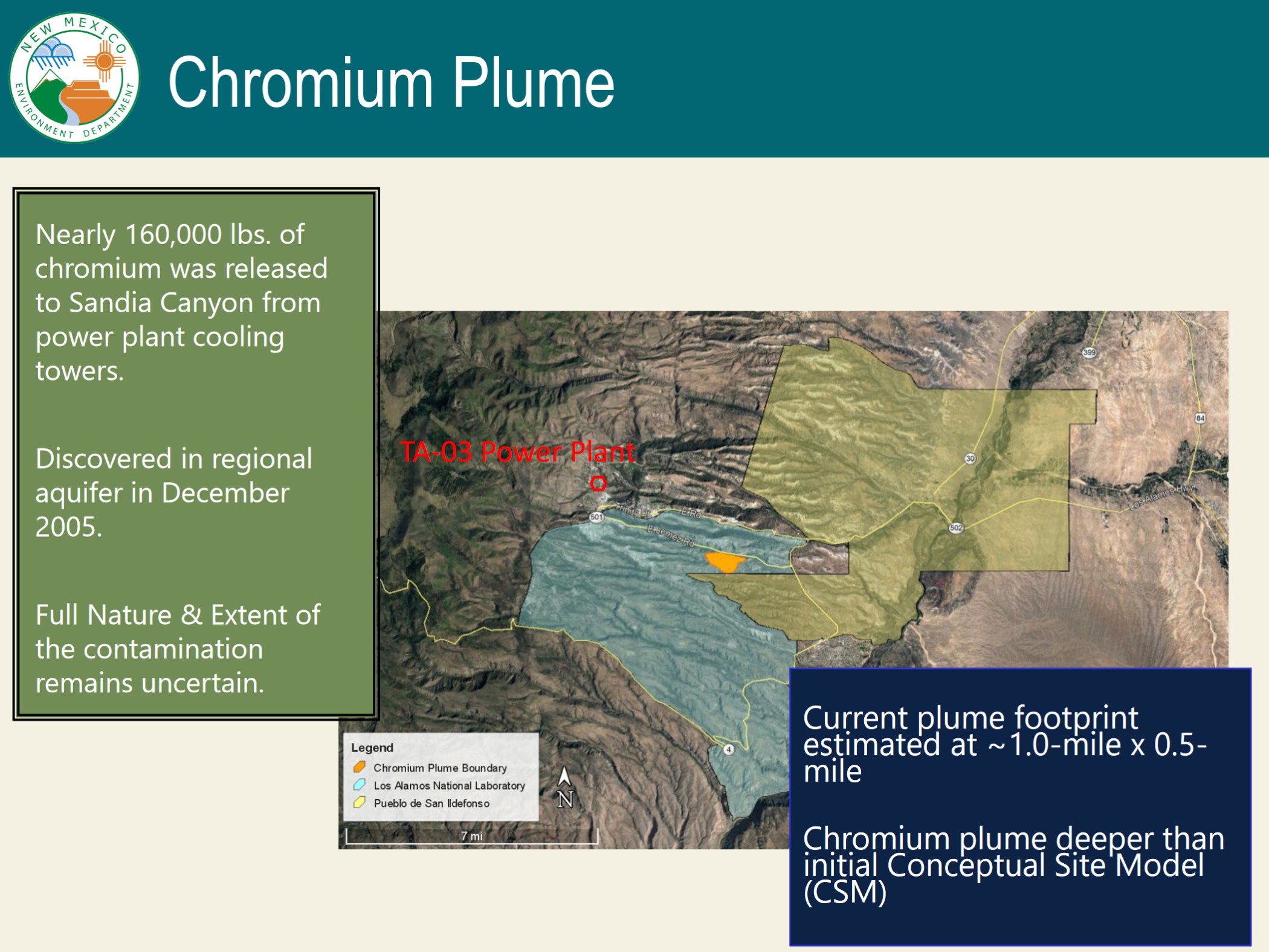
Did you know that in 2008 the Environmental Protection Agency (EPA) designated the 3,000 square mile Española Basin System as a Sole Source Drinking Water Aquifer? https://www.epa.gov/dwssa One ongoing concern is that Los Alamos National Laboratory (LANL) sits on its western edge, near the Valles Caldera. And a recent dispute between the New Mexico Environment Department and the Department of Energy about the LANL hexavalent chromium plume, which is being pushed deeper into the regional drinking water aquifer, highlights the need for state agencies to have the resources to protect it. See Powerpoint presentations titled “DOE-Los Alamos Field Office (1)” and “NMED Hex Chrome Plume” under Item 1.
On Monday, August 21st CCNS requested that a New Mexico Legislative Committee provide funding to key state agencies to protect this aquifer from LANL pollutants, which are migrating through the aquifer to the Rio Grande and beyond. The request to the New Mexico Radioactive and Hazardous Materials Committee was for line items for the budgets of the Office of the State Engineer and New Mexico Environment Department. See CCNS presentation “Concerned Citizens for Nuclear Safety” under Item 1. https://www.nmlegis.gov/committee/Handouts_List?CommitteeCode=RHMC&Date=8/21/2023
An important history: In 2006, La Cienega Valley Citizens for Environmental Safeguards and geo-hydrologist Zane Spiegel submitted a petition to the Environmental Protection Agency (EPA) to designate the area as a sole source aquifer. They argued that the aquifer supplies at least 50 percent of the drinking water for its service area and there are no reasonably available alternative drinking water sources should the aquifer become contaminated. The aquifer encompasses the area between the Jemez and Sangre de Cristo Mountains, from Tres Piedras to the north almost to Galisteo to the south.
Then, in 2008, after EPA determined that 85% of the drinking water in the area covered by the petition comes from wells in the aquifer, EPA approved the application and designated the aquifer as a sole source drinking water aquifer. http://www.nuclearactive.org/news/011808.html
Nevertheless, LANL has been investigating the hexavalent chromium contamination for nearly 20 years. http://www.nuclearactive.org/audio/092706.mp3 and http://www.nuclearactive.org/news/122206.html
More recently, NMED became concerned that the hexavalent chromium was being pushed further and further into the regional drinking water and ordered that the injection process be stopped. See NMED Hex Chrome Plume Powerpoint under “Item 1” at https://www.nmlegis.gov/committee/Handouts_List?CommitteeCode=RHMC&Date=8/21/2023
The threat posed to the Española Basin Sole Source Aquifer by the hexavalent chromium contamination encouraged CCNS to ask for legislative oversight by providing funding to the Office of State Engineer and New Mexico Environment Department.
It is important to note that three of the Los Alamos County drinking water wells are located close to the known perimeter of the hexavalent chromium plume.
A full recording of the August 21, 2023 meeting of the Radioactive and Hazardous Materials Committee meeting is available here: https://sg001-harmony.sliq.net/00293/Harmony/en/PowerBrowser/PowerBrowserV2/20230824/-1/73647 The presentation by Joni Arends, Executive Director of CCNS begins at 10:06 AM.
‘Animals could become MUTATED’ from the 1.3 million tons of radioactive waste dumped from Japan’s nuclear power plant in the Pacific
Japan started dumping more than 1.3 million tons of radioactive water into
the Pacific Ocean Thursday – and an expert has warned it ‘has the potential
to cause mutations as seen in Chernobyl.
‘The wastewater is currently being
held in the nation’s Fukushima nuclear plant, which is set to be
decommissioned and must be cleaned to prevent accidental leaks. The
contaminated water has been filtered to remove isotopes, leaving only
tritium and carbon-14, which are radioactive isotopes of hydrogen and
carbon that cannot be easily removed from water.
Timothy Mousseau, a
researcher at the University of South Carolina, told DailyMai.com: Tritium
and carbon-14, along with the other radionuclides [that cause cancer] to be
released, all have the potential to cause mutations, cancers and
developmental deformities, as seen in Chernobyl.’
Daily Mail 24th Aug 2023
Fukushima waste-water decision disregards scientific evidence, violates the human rights of Pacific region communities

Japan announces date for Fukushima radioactive water release
Greenpeace International, 22 August 2023 https://www.greenpeace.org/international/press-release/61364/japan-announces-date-for-fukushima-radioactive-water-release/
Tokyo – Greenpeace Japan criticises the Japanese government’s announcement of the start date for radioactive water discharges from the Fukushima Daiichi nuclear station into the Pacific Ocean.
The decision disregards scientific evidence, violates the human rights of communities in Japan and the Pacific region, and is non-compliant with international maritime law. More importantly it ignores its people’s concerns, including fishermen. The Japanese government and Tokyo Electric Power Company (TEPCO) – the nuclear power plants’ operators – falsely assert that there is no alternative to the decision to discharge and that it is necessary to move towards final decommissioning. This further highlights the failure of the decommissioning plan for the nuclear plants destroyed in the 2011 earthquake, stating that tens of thousands of tons of contaminated water will continue to increase with no effective solution.
“We are deeply disappointed and outraged by the Japanese Government’s announcement to release water containing radioactive substances into the ocean. Despite concerns raised by fishermen, citizens, Fukushima residents, and the international community, especially in the Pacific region and neighboring countries, this decision has been made,” said Hisayo Takada, Project Manager at Greenpeace Japan.
The increasing volumes of and the pending release of the radioactive water demonstrate the failure of the decommissioning plan for the Fukushima Daiichi. The contaminated water will continue to accumulate for many years without effective measures to stop it. The Japanese Government and TEPCO falsely claim that discharge is the only viable option necessary for eventual decommissioning. Nuclear power generation, which experiences shutdowns due to accidents and natural disasters, and perpetually requires thermal power as a backup, cannot serve as a solution to global warming.
“The deliberate pollution of the Pacific Ocean through these radioactive waste discharges is a consequence of the 2011 nuclear disaster and Japan’s decades long nuclear power program. Instead of acknowledging the flaws in the current decommissioning plan, the ongoing nuclear crisis, and the massive amount of public funds required, the Japanese government intends to restart more nuclear reactors despite evidence of major earthquakes and safety risks. The current government energy plan fails to deliver secure and sustainable renewables such as wind and solar energy that the climate emergency demands,” said Takada.
As of 8 June 2023, there were 1,335,381 cubic meters of radioactive wastewater stored in tanks[1], but due to the failure of the ALPS (Advanced Liquid Processing System) processing technology, approximately 70% of this water will have to be processed again. Scientists have warned that the radiological risks from the discharges have not been fully assessed, and the biological impacts of tritium, carbon-14, strontium-90 and iodine-129, which will be released in the discharges, have been ignored.[2]
The International Atomic Energy Agency (IAEA) endorsed Japan’s plans for discharge. However, the IAEA has failed to investigate the operation of the ALPS, has completely ignored the highly radioactive fuel debris that melted down which continues every day to contaminate ground water – nearly 1000 cubic meters every ten days. Furthermore, the discharge plan has failed to conduct a comprehensive Environmental Impact Assessment, as required by its international legal obligations, given that there is a risk of significant transboundary harm to neighboring countries. The IAEA is not tasked with protecting the global marine environment but it should not encourage a state to violate it.
“The myth is being perpetuated that discharges are necessary for decommissioning. But the Japanese government itself admits that there is sufficient water storage space in Fukushima Daiichi.[3] Long-term storage would expose the current government decommissioning roadmap as flawed, but that is exactly what needs to happen. The Fukushima Daiichi nuclear station is still in crisis, posing unique and severe hazards, and there is no credible plan for its decommissioning,” emphasized Shaun Burnie, Senior Nuclear Specialist at Greenpeace East Asia.
Member states at the United Nations Human Rights Council in Geneva, as well as UN Special Rapporteurs, have opposed and criticized Japan’s discharge plans.[4] Japan’s discharge plans also disregard the groundbreaking Human Rights Council resolution 48/13, which in 2021 determined that it is a human right to have a clean, healthy and sustainable environment.[5] Furthermore, Japan has failed to comply with its legal obligations under the United Nations Convention for the Law of the Sea (UNCLOS), to protect the marine environment including its legal requirement to conduct a comprehensive Environmental Impact Assessment into the discharges into the Pacific Ocean, given the risk of significant transboundary harm to neighboring countries.[6]
“Instead of engaging in an honest debate about this reality, the Japanese government has opted for a false solution – decades of deliberate radioactive pollution of the marine environment – during a time when the world’s oceans are already facing immense stress and pressures. This is an outrage that violates the human rights of the people and communities of Fukushima, and other neighboring prefectures and the wider Asia-Pacific region,” said Burnie.
Fukushima: What are the concerns over waste water release?
By Tessa Wong, Asia Digital Reporter, BBC News, 23 Aug 23,
Japan’s controversial plan to release treated waste water from the Fukushima nuclear plant into the Pacific Ocean has sparked anxiety and anger at home and abroad.
Since the 2011 tsunami which severely damaged the plant, more than a million tonnes of treated waste water has accumulated there. Japan has said it will start discharging it from 24 August.
Despite an endorsement from the UN nuclear watchdog, the International Atomic Energy Agency (IAEA), the plan has been deeply controversial in Japan with local communities expressing concerns about contamination.
Fishing industry groups in Japan and the wider region are also worried about their livelihoods, as they fear consumers will avoid buying seafood.
China has accused Japan of treating the ocean as its “private sewer”, and criticised the IAEA of being “one-sided”. While South Korea’s government has said it has no objections to the plan, many of its citizens are opposed to it.
So what is Japan’s plan and how exactly has it churned the waters?
What is Japan doing with the nuclear waste water?
Since the disaster, power plant company Tepco has been pumping in water to cool down the Fukushima nuclear reactors’ fuel rods. This means every day the plant produces contaminated water, which is stored in massive tanks.
More than 1,000 tanks have been filled, and Japan says that it needs the land occupied by the tanks to build new facilities to safely decommission the plant. It has also pointed out concerns that the tanks could collapse in a natural disaster.
Releasing treated waste water into the ocean is a routine practice for nuclear plants – though critics have pointed out that the amount from Fukushima is on an unprecedented, far vaster scale.
Tepco filters the Fukushima water through its Advanced Liquid Processing System (ALPS), which reduces most radioactive substances to acceptable safety standards, apart from tritium and carbon-14…………………………………………….
What do critics say?
Despite years of government assurances, the plan remains deeply controversial to the Japanese public. Only 53% said they support it, while 41% said they did not, in a survey conducted in August by the newspaper Asahi Shimbun.
UN-appointed human rights experts have opposed the plan, as have environmental activists. Greenpeace has released reports casting doubt on Tepco’s treatment process, alleging it does not go far enough in removing radioactive substances.
Critics say Japan should, for the time being, keep the treated water in the tanks. They argue this buys time to develop new processing technologies, and allow any remaining radioactivity to naturally reduce.
There are also some scientists who are uncomfortable with the plan. They say it requires more studies on how it would affect the ocean bed and marine life.
“We’ve seen an inadequate radiological, ecological impact assessment that makes us very concerned that Japan would not only be unable to detect what’s getting into the water, sediment and organisms, but if it does, there is no recourse to remove it… there’s no way to get the genie back in the bottle,” marine biologist Robert Richmond, a professor with the University of Hawaii, told the BBC’s Newsday programme.
Tatsujiro Suzuki, a nuclear engineering professor from Nagasaki University’s Research Center for Nuclear Weapons Abolition, told the BBC the plan would “not necessarily lead to serious pollution or readily harm the public – if everything goes well”.
But given that Tepco failed to prevent the 2011 disaster, he remains concerned about a potential accidental release of contaminated water, he said.
What have Japan’s neighbours said?
China has been the most vocal, accusing Japan of violating “international moral and legal obligations” and “putting its selfish interests above the long-term wellbeing of the entire humanity”.
It has also warned that Tokyo “must bear all consequences”, and has already banned seafood from Fukushima and surrounding prefectures…………….
n contrast to China, Seoul – which has been keen to build ties with Japan – has soft-pedalled its concerns. It says it “respects” the IAEA’s findings and has endorsed the plan.
But this approach has angered the South Korean public, 80% of whom are worried about the water release according to a recent poll.
“The government enforces a strong no-littering policy at sea… But now the government is not saying a word (to Japan) about the wastewater flowing into the ocean,” Park Hee-jun, a South Korean fisherman told BBC Korean………….
Thousands have attended protests in Seoul calling for government action, as some shoppers fearing food supply disruptions have stockpiled salt and other necessities.
In response, South Korea’s parliament passed a resolution in late June opposing the water release plan – though it is unclear what impact this would have on Japan’s decision. Officials are also launching “intense inspections” of seafood, and are sticking to an existing ban of Japanese seafood imports from regions around the Fukushima plant……………………………
the biggest vindication may lie with the IAEA report, released by the agency’s chief Rafael Grossi while visiting Japan in July.
The report, which came after a two year investigation, found that Tepco and Japanese authorities were meeting international safety standards on several aspects including facilities, inspections and enforcement, environmental monitoring, and radioactivity assessments.
Mr Grossi said the plan would have a “negligible radiological impact on people and the environment”.
Yet, Japan’s decision to start discharging the Fukushima water has set the stage for an intensified showdown with its critics.
Additional reporting by Yuna Ku and Chika Nakayama. https://www.bbc.com/news/world-asia-66106162
Japanese fishing industry leader is “greatly concerned” over the pending disharge of Fukushima radioactive water into the ocean.

The leader of a Japanese fisheries industry group told officials on Monday
he was “greatly concerned” about the discharge of treated radioactive water
set to be released into the sea from the wrecked Fukushima nuclear plant.
The government is expected to decide soon, perhaps within days, when to
start releasing the water, equivalent to the contents of 500 Olympic-size
swimming pools, despite objections at home and abroad to the plan.
Reuters 21st Aug 2023
Poisoning the planet
Radioactive water dump is just latest example our reckless destruction of habitat
By Linda Pentz Gunter, 20 Aug 23, https://beyondnuclearinternational.org/2023/08/20/poisoning-the-planet/
Much has been made — and rightly so — about the potential impact on human health and the Japanese fishing industry if Japan moves forward with its proposal to dump 1.2 million cubic meters — that’s 1.3 million tons —of radioactively contaminated water into the Pacific Ocean from the destroyed Fukushima Daiichi nuclear power plant site.
Unfortunately, this looks likely to happen sometime this month or next despite the worldwide outcry. But when I say “happen”, that rather suggests a one-off dump. Instead, the discharge of these liquid nuclear wastes could go on for at least 17 years according to the Atomic Energy Society of Japan, but likely longer as decommissioning work at the site is expected to take at least 30-40 years.
It is perfectly right and reasonable that the Japanese fishing community sees its livelihood under threat from this proposal. Indeed, it has already taken a hit, as imports of Japanese fish stock to South Korea were down by 30% in May, before the dumping even began. This was clearly driven by jitters around the on-going safety of Japanese fish supplies once those radioactive discharges get underway.
And Pacific Island nations, along with an international team of scientific experts, have equally decried the plan as premature, unnecessary and in need of far greater confidence and further study before such discharges are executed, if ever.
But there is a greater moral issue here, one that speaks to humankind’s reckless and selfish behavior on planet Earth ever since mechanization and the various so-called industrial revolutions began.
For almost three centuries in the developed world, we have continuously and wantonly destroyed vast areas of precious habitat for numerous species. We have clear cut forests, sliced the tops off mountains, broken open the earth to mine minerals, exploded atomic weapons, spewed mercury and carbon into our air, drilled for oil, sprayed pesticides at will and filled the oceans with plastics, to name just a few environmental atrocities.
The toxic mess these activities leave behind has been dumped into rivers, streams, lakes and oceans, or on the lands where the less influential and powerful amongst us live — in the United States almost always in communities of color or on Native American reservations.
One of the worst offenders on this list is nuclear waste. In keeping with our heedless irresponsibility we have kept making lethal radioactive waste without the slightest idea how to safely manage or store it for the longterm. For years, barrels of the stuff were dumped into the sea, until a 1994 amendment to the London Dumping Convention, put an end to it.
But of course the nuclear industry found a way around this. Routine liquid discharges through a pipe circumvented this law. Institutions such as the LaHague reprocessing site on the northern French coast, have discharged radioactive liquids (and gases) for decades. Didier Anger, the now retired expert activist on the environmental crimes at La Hague, uses this history to warn us urgently and eloquently of the folly of discharging nuclear waste into our oceans.
At times, the liquid wastes from La Hague, measured at the discharge point by vigilant groups such as Greenpeace, could have been classified as high-level radioactive waste that would normally require a deep geological repository.
As we approach the moment when radioactive liquids are once more poured into the sea, this time in Japan, imposing a toxic burden on the creatures who are already struggling to survive there, we must ask whether human beings have some sort of divine right of kings to trash the habitat of other living things?
The answer should surely be ‘no’. That humans can generate a radioactive mess and “dispose” of it into some other creatures’ habitat, poisoning their environment is, frankly, both arrogant and abhorrent.
We have already done this everywhere and it has come with a terrible price to other creatures as well as to ourselves. The destruction and contamination of habitat has led to mass extinctions. The US has lost three billion birds since 1970. That’s one in four birds. We may have thought the birds were back in abundance during the start of the covid pandemic, but that was just us hearing what’s left of them more clearly, in the quiet of lockdown.
Bees, who perform around 80% of all pollination, are dying out and hives collapsing, all due to human activities. These include pesticides, drought, habitat destruction, nutrition deficit, air pollution, and, of course, the climate crisis.
Absent these and other essential members of the web of life, our own extinction is not far behind.
We need to stop this behavior and we need to stop it now. We should do it not only for ourselves but for the countless innocent creatures who should not be expected to offer up their homes as our dustbins.
Loading up the Pacific Ocean with liquid radioactive waste — whether it dilutes and disperses or not — is a crime of immorality representative of so many that have come before. If we are truly to change our plundering, polluting and profligate ways, banning the radioactive water dump at Fukushima would be an excellent place to start.
Linda Pentz Gunter is the international specialist at Beyond Nuclear and writes for and curates Beyond Nuclear International.
1 This Month
Chernobyl: The Lost Tapes – A good documentary on Chernobyl on SBS available On Demand for the next 3 weeks– https://www.sbs.com.au/ondemand/tv-program/chernobyl-the-lost-tapes/2352741955560

of the week–London Campaign for Nuclear Disarmament

Tell the Ukrainian Government to Drop Prosecution of Peace Activist Yurii Sheliazhenko
To see nuclear-related stories in greater depth and intensity – go to https://nuclearinformation.wordpress.com
-
Archives
- April 2026 (139)
- March 2026 (251)
- February 2026 (268)
- January 2026 (308)
- December 2025 (358)
- November 2025 (359)
- October 2025 (376)
- September 2025 (257)
- August 2025 (319)
- July 2025 (230)
- June 2025 (348)
- May 2025 (261)
-
Categories
- 1
- 1 NUCLEAR ISSUES
- business and costs
- climate change
- culture and arts
- ENERGY
- environment
- health
- history
- indigenous issues
- Legal
- marketing of nuclear
- media
- opposition to nuclear
- PERSONAL STORIES
- politics
- politics international
- Religion and ethics
- safety
- secrets,lies and civil liberties
- spinbuster
- technology
- Uranium
- wastes
- weapons and war
- Women
- 2 WORLD
- ACTION
- AFRICA
- Atrocities
- AUSTRALIA
- Christina's notes
- Christina's themes
- culture and arts
- Events
- Fuk 2022
- Fuk 2023
- Fukushima 2017
- Fukushima 2018
- fukushima 2019
- Fukushima 2020
- Fukushima 2021
- general
- global warming
- Humour (God we need it)
- Nuclear
- RARE EARTHS
- Reference
- resources – print
- Resources -audiovicual
- Weekly Newsletter
- World
- World Nuclear
- YouTube
-
RSS
Entries RSS
Comments RSS
 nuclear-news