Groups Demand DOE Environmental Impact Statement Before Agency Bails Out Palisades Zombie Reactor Restart

Beyond Nuclear, September 20, 2023 #nuclear #antinuclear #nuclear-free #NoNukes
| NEPA Requires “Major Federal Project” Hard Look, Groups Assert |
| Covert Township, MI and Washington, DC, September 20, 2023– Legal counsel for Beyond Nuclear, Don’t Waste Michigan, and Michigan Safe Energy Future, have written the Energy Secretary and the Loan Programs Office director at the U.S. Department of Energy (DOE), demanding National Environmental Policy Act (NEPA) compliance before DOE awards Holtec International a requested $1 billion risk- and interest-free nuclear loan guarantee, backed by U.S. taxpayer dollars. The billion dollar federal loan, which Holtec does not have to pay back, is the linchpin in Holtec’s reactor restart scheme, also backed by Michigan’s governor, Gretchen Whitmer, as well as the state legislature. The State of Michigan has already gifted Holtec with $150 million towards the restart, although Holtec requested twice that. The state handout is contingent on the much larger federal bailout. A Power Purchase Agreement was just announced between Holtec and rural electric co-ops in Michigan (Wolverine) and Indiana (Hoosier), although how far above market rates the co-ops’ members will be forced to pay, and for how long, has not been publicly disclosed. Citing the largesse provided by the public (which most taxpayers and ratepayers are not even aware of, let alone consent to), Holtec is pressuring the U.S. Nuclear Regulatory Commission to simply reverse legally-binding, permanent shutdown filings from June 2022. |
A coalition of hundreds of environmental groups, including more than fifty groups in Michigan, have written Energy Secretary Jennifer Granholm — herself a former governor and attorney general of the State of Michigan — several times in the past year, urging Holtec’s requests for federal bailouts to restart Palisades be rejected.
Toledo, Ohio-based attorney Terry Lodge, and Cedar Rapids, Iowa-based attorney Wally Taylor, serve as legal co-counsel for the environmental groups. They provided DOE with a litany of pathways to catastrophic reactor core meltdown at Palisades, which Energy Secretary Granholm and Loan Programs Office Director Shah have been asked by Holtec to bankroll. The severe safety risks include: the most neutron radiation-embrittled reactor pressure vessel in the country, at risk of pressurized thermal shock through-wall fracture; a reactor vessel closure head in need of replacement for more than two decades; steam generators in need of replacement for more than two decades, as well; and the worst control rod drive mechanism seal leaks in industry.
There is no indication that, even with $1.15 billion, or more, in federal and state subsidies, Holtec will fix any of those severe safety problems before restarting the long problem-plagued reactor.
Lodge and Taylor also pointed out that restarting Palisades’ more than half-century old reactor would lead to the generation of another 20 metric tons per year of highly radioactive irradiated nuclear fuel. The high-level radioactive waste stored on-site since 1971 already poses its own severe risks, including violating NRC earthquake safety regulations. Palisades’ dry cask storage is perched on the very edge of Lake Michigan, a major headwaters of the entire Great Lakes, 84% of North America’s surface fresh water, and drinking water supply to 40 million people in eight U.S. states, two Canadian provinces, and a very large number of Indigenous Nations……………………………………………. more https://beyondnuclear.org/groups-demand-doe-eis-before-bailing-out-palisades-zombie-reactor-restart/?fbclid=IwAR1qlrC0heccGG150YGtyT3F1-38m4p2TVIz0ITiuFOK0Pi-qpjc6VNUrDM
Fukushima nuclear plant starts 2nd release of treated radioactive wastewater into the sea
Japan’s wrecked Fukushima nuclear power plant says it has begun releasing a second batch of treated radioactive wastewater into the sea after the first round of discharges ended smoothly
abc news, By The Associated Press, October 5, 2023, #nuclear #nuclear-free #anti-nuclear #NoNukes
TOKYO — Japan’s wrecked Fukushima nuclear power plant said it began releasing a second batch of treated radioactive wastewater into the sea on Thursday after the first round of discharges ended smoothly.
Plant operator Tokyo Electric Power Company Holdings said workers activated a pump to dilute the treated water with large amounts of seawater, slowly sending the mixture into the ocean through an underground tunnel.
The plant’s first wastewater release began Aug. 24 and ended Sept. 11. During the 17-day first release, TEPCO said it discharged 7,800 tons of treated water from 10 tanks. About 1.34 million tons of radioactive wastewater is stored in about 1,000 tanks at the plant…………….
In the second discharge TEPCO plans to release another 7,800 metric tons of treated wastewater into the Pacific Ocean over 17 days. ………………………………………………………………..https://abcnews.go.com/Business/wireStory/fukushima-nuclear-plant-starts-2nd-release-treated-radioactive-103742211
Japan to release second batch of wastewater from Fukushima nuclear plant next week
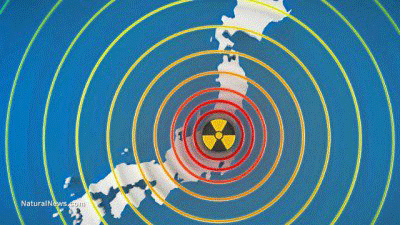
UN-approved release to go ahead despite China’s ban on all Japanese sea imports following first batch
Japan will begin releasing a second batch of wastewater from the crippled
Fukushima nuclear plant from next week, its operator has said, an exercise
that angered China and others when it began in August.
Guardian 29th Sept 2023
Microsoft Is Using a Hell of a Lot of Water to Flood the World With AI
Angely Mercado, September 12, 2023 https://gizmodo.com.au/2023/09/microsoft-is-using-a-hell-of-a-lot-of-water-to-flood-the-world-with-ai/
—
As artificial intelligence is increasingly developing and data centres are erected to further this tech, it’s becoming clear that AI has a water usage problem.
Microsoft’s latest sustainability report revealed that the software giant’s water usage saw a tremendous spike between 2021 and 2022. In 2021, the company used up 4,772,890 cubic meters of water. In 2022 that went up to 6,399,415—which is around a 30 percent increase from one year to the next. That’s almost 1.7 billion gallons of water in just one year, which is enough to fill more than 2,000 Olympic-sized swimming pools.
Why did Microsoft draw so much freaking water? Data centres that run AI supercomputers are hot. Equipment heats up, and if a centre overheats, those computers can shut down. The increase in water use is directly tied to the company’s investment and development of AI. Microsoft has backed OpenAI, which has a data centre in Des Moines, Iowa. During the summer months, the centre has to use a ton of water to keep equipment cool, especially as Iowa experiences rising temperatures due to climate change.
The water is drawn from nearby watersheds including the Des Moines and Raccoon rivers to cool the supercomputer that develops AI systems, the Associated Press reported. However, local waterways also provide drinking water for nearby communities. The volume used by the data centres has become a concern for the local utility company, West Des Moines Water Works.
A document from the utility dated April 2022 outlined that officials and the utility will only “consider future data centre projects beyond Microsoft Data Center Project Ginger East and West” unless the new projects can significantly lower their water usage. “This approach to resource conservation will help preserve the water supply for current and future commercial and residential needs of West Des Moines,” the document read.
Google, another tech giant that has heavily invested in AI products, has also seen a spike in water usage. An environmental report released this July outlined that the company’s water usage increased about 20% from 2021 to 2022. “We’re working to address the impact of our water consumption through our climate-conscious data centre cooling approach and water stewardship strategy,” a spokesperson told Gizmodo in an email this July.
As the planet becomes warmer, it may become harder for large tech companies to cool facilities. Many data centres are in cooler locations like the Pacific Northwest and states like Iowa in the upper Midwest, but neither location has been spared from heat waves.
Other tech companies have experienced challenges with keeping their centres online during especially hot weather. Last September, equipment at then Twitter’s data centre in Sacramento shut down during a heat wave. Increased instances of heat waves due to the climate crisis have also plagued data centres overseas. Last July, Google and Oracle’s London-based data centres went offline as England baked through sky-high temperatures of over 40 degrees Celsius.
Cooling system at Zaporizhzhya stabilised – but military action in the area continues
In its Update 183 on the Ukraine situation International Atomic
Energy Agency director general Rafael Grossi announced that Zaporizhzhya
Nuclear Power Plant has been drilling more wells at the site as part of
efforts to find new sources of cooling water following the destruction of
the downstream Kakhovka dam more than three months ago.
ZNPP has built
another two groundwater wells to supply the sprinkler ponds that cool the
six reactors and spent fuel, bringing the total of new wells to nine.
Together they pump around 200 cubic metres of water per hour into the
sprinkler ponds, representing most of the cooling needs of the six shutdown
reactors.
The remainder of the water comes from the drainage system and
clean water that is periodically discharged from the plant’s chemical
water treatment facility. The IAEA has been informed that the water supply
situation will be assessed after a tenth well has been constructed to see
if more will be needed.
South Korea will expand the number of spots for water testing amid concerns over the release of nuclear waste from Japan’s crippled Fukushima power plant.
Seoul plans to raise the number of testing spots to nearly 250 next year, said South Korean Oceans Minister Cho Seung-hwan.
About a month ahead of Tokyo’s release of treated radioactive water from the Fukushima plant in August, South Korea had begun “emergency radiation tests on samples from a total of 75 coastal locations in the east, west and south of South Korea, as well as the waters off the southern island of Jeju,” Seoul-based Yonhap News reported on Monday.
“We chose the spots, as they are expected to have the released waters first given the sea current. We will add more locations to the list, particularly in the East Sea, to further ensure safety,” said Cho, after visiting a test spot off the southern port city of Busan last week.
Seoul is also conducting radiation tests on 33 points from more distant areas, the minister said.
Tokyo began releasing the nuclear waste on Aug. 24, triggering a sharp reaction from China and opposition parties in South Korea.
Beijing has imposed a blanket ban on imports of seafood from Japan.
Today, the Chinese Embassy in Tokyo refuted claims that Beijing had “refused to join” the International Atomic Energy Agency’s international monitoring mechanism.
Early this month, Seoul warned it will take Japan to the UN if Tokyo does not follow its original plan about releasing the treated radioactive water from its crippled Fukushima nuclear power plant.
The warning came after Seoul called for a discussion on the potential impacts on the marine environment while Japan ignored the call https://www.aa.com.tr/en/asia-pacific/south-korea-to-expand-water-testing-amid-concerns-over-japan-s-nuclear-waste/2994594
Radioactive discharge from Fukushima nuclear plant raising concerns on California coast.

CBS News, BY ANNE MAKOVEC, MOLLY MCCREA, SEPTEMBER 14, 2023
A controversial plan to release more than one million tons of treated radioactive water into the sea is now underway in Japan, giving scientists here in the Bay Area pause as well as those who seek escape on the open water.
Near Fort Cronkhite in the Marin Headlands recently, surfer Jason Gittens contemplated what is means to be able to enjoy the open oceans. For him, the Pacific Ocean is a treasure………………..
……………………………………………………………….. Recently, protestors have gathered in Tokyo and in parts of South Korea. They oppose Japan’s release of more than a million tons of treated radioactive water into the Pacific Ocean which started on August 24.
Soon after, China announced a ban on all imported Japanese fish because of the release.
That prompted the U.S. ambassador to Japan, Rahm Emanuel, to go shopping for Fukushima fish in a supermarket and to chow down sushi to show support for Japan in front of the news media……………………………………………
The damaged reactors are still hot. There is a massive amount of melted nuclear fuel and fuel debris inside them and they require constant cooling.
‘Water was used to cool the reactors and it is still needed to cool the reactors,” explained UC Berkeley nuclear engineering professor Dr. Kal Vetter. The water used for cooling turns radioactive. …………………
The water is cooling the molten cores of the Fukushima reactors from the time of the accident,” said Dr. Arjun Makhijani. “It’s coming into direct contact with highly radioactive fission products and plutonium. So that’s why the water gets extremely radioactive.”
Makhijani is a nuclear fusion expert and president of the Institute for Energy and Environmental Research (IEER).
In addition to the cooling water that is pumped inside, groundwater has seeped into the site, and rainwater has fallen on the damaged reactors and turbines. All this water is now contaminated with radioactivity. The tainted water is collected, filtered, and stored on-site in specially prepared tanks.
……………………………….The discharging of the radioactive waters will take at least 30 years and will be controlled and monitored not just by Japanese officials, but by the International Atomic Energy Agency (IAEA). “The monitoring remains critical,” advised Vetter,…………………………………
Makhijani and Dalnoki-Veress remain concerned. Both belong to a panel of experts representing the Pacific Islands Forum. The panel consulted with Japan over its intentions to release treated nuclear wastewater into the Pacific Ocean and found the decision to release “regrettable.”
“There’s a lot of things that can go wrong,” said Dalnoki-Veress.
Tritiated water remains a concern for the panel. Makhijani recently wrote the book “Exploring Tritium’s Danger,” which challenges many long-held beliefs about the radioactive substance. He maintains that the impacts of tritium on human health, especially when taken into the body, warrant much more attention.
Makhijani told CBS News Bay Area that in addition to the discharges, we all must pay more attention to what else we’re putting into the oceans.
“Because it’s not just this dumping,’ he said. “The oceans are under extreme stress. They’re under heat stress. They’re under acid stress, they’re under plastic stress.”
The oceans cover 72% of the earth and supplies half its oxygen. They also absorb 50 times more carbon dioxide than the atmosphere.
A recent poll conducted by the National Marine Sanctuary Foundation and Consortium on the Ocean’s Role in Climate found Americans care deeply about the ocean and that the majority worry about how climate change is impacting the ocean’s health.
………………………………”We used to think in the old days, “Out of sight, out of mind.” And they just dump stuff in the ocean,” said Gittens. “Well, now it’s not so out-of-sight, and going forward, I worry about my kids. Are they going to enjoy the ocean as much as I do?” https://www.cbsnews.com/sanfrancisco/news/radioactive-discharge-from-fukushima-nuclear-plant-raising-concerns-on-california-coast/
Uranium Mining Protections Needed Across the West
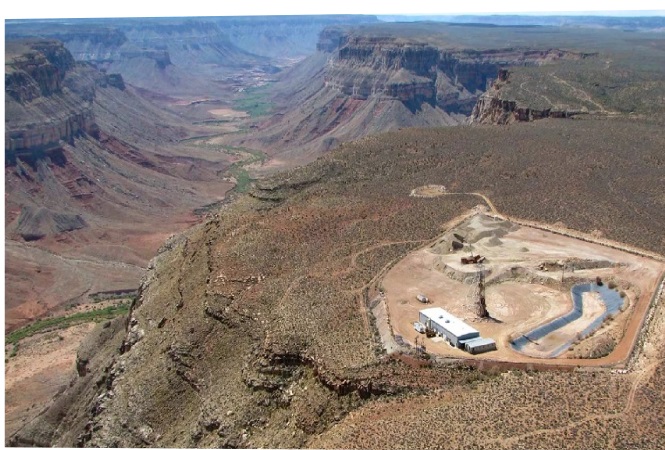
The Biden administration needs to protect communities and water supplies across the West from the dangers of uranium mining.
Geoffrey H. Fettus Senior Attorney, Nuclear, Climate & Clean Energy Program
President Biden’s designation of the Baaj Nwaavjo I’tah Kukveni—Ancestral Footprints of the Grand Canyon National Monument will go far in protecting the rich cultural and ecological value of this majestic landscape. It will safeguard some of the most iconic public lands in the American West from the ravages of destructive mining and destructive waste. This protection has been a top priority for tribes in the area, and the designation is long overdue.
“That’s our aboriginal homelands,” Dianna Sue Uqualla, a Havasupai tribal council member, told the Bureau of Land Management at a public meeting according to Bloomberg Law. The monument will “keep at bay these mining people that are coming in,” and will protect the Grand Canyon from companies that are “desecrating, raping the Mother Earth.”
This is wonderful news, but there is much more to be done about uranium mining across the American West. And there’s also a lot of misinformation out there that muddies what should be a clear path forward to protecting all the people and watersheds of the West from unchecked uranium mining.
Uranium mining contaminated tribal lands for decades
The uranium mining industry has left a dreadful history of contamination and harm across vast swathes of the American West, but especially with respect to the Indigenous People who call this area home. It’s a complicated history that intertwines with the Manhattan Project and the Cold War, and it’s a legacy that has yet to be addressed.
On Navajo land alone, nearly four million tons of uranium ore were extracted from 1944 to 1986. The industry and the U.S. government left behind hundreds of abandoned uranium mines, four inactive uranium milling sites, a former dump site, and the widespread contamination of land and water; this includes the 1979 collapse of a tailings dam in Church Rock, New Mexico, that deposited 93 million gallons of radioactive and chemically contaminated liquid and 1,100 tons of solid radioactive tailings into the Rio Puerco, contaminating the river for more than 60 miles downstream. After decades of pressure, the government has finally started to assess and mitigate this contamination.
Much is left to be done: More than 500 abandoned uranium mines remain on Navajo land.
We need new standards
Back in 2016, the Obama administration was poised to take action on uranium mining standards, but then Donald Trump was elected president. It will come as no surprise that the U.S. Environmental Protection Agency (EPA) under the Trump administration cast aside the Obama EPA’s long-overdue protective environmental standards. In an about-face, the Trump EPA and Nuclear Regulatory Commission (NRC) moved to weaken uranium mining rules.
Once Biden took office in 2021, NRDC had hoped for a new approach. So far, however, we haven’t heard anything from either the EPA or NRC, despite repeated requests by NRDC and other major environmental groups, tribal representatives, and regional groups across the West.
It is time for the EPA to clear the obstacles and move forward on the uranium protections it drew up years ago.
The Biden administration can begin to protect the communities and water resources that have been negatively affected by uranium mining for decades by taking two steps: (1) dissolving a 2020 memorandum of understanding between the EPA and NRC that undercuts the EPA’s ability to enact standards; and (2) issuing protective uranium in situ mining standards that have been sitting on a shelf for years. ……………………………………………………………….
Earth ‘well outside safe operating space for humanity’, scientists find
1
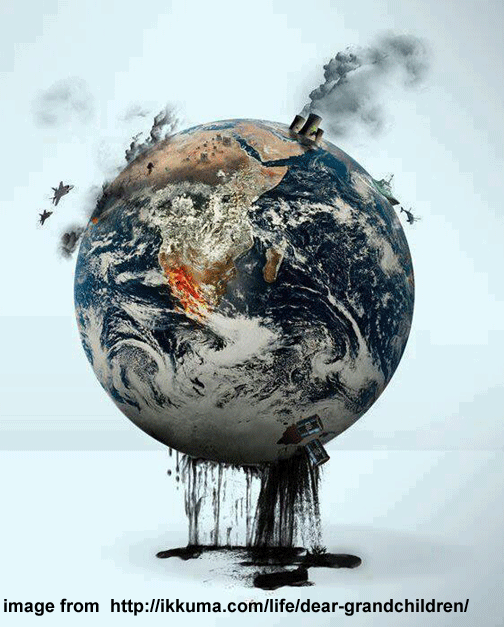
Earth’s life support systems have been so damaged that the planet is
“well outside the safe operating space for humanity”, scientists have
warned.
Their assessment found that six out of nine “planetary
boundaries” had been broken because of human-caused pollution and
destruction of the natural world. The planetary boundaries are the limits
of key global systems – such as climate, water and wildlife diversity –
beyond which their ability to maintain a healthy planet is in danger of
failing.
The broken boundaries mean the systems have been driven far from
the safe and stable state that existed from the end of the last ice age,
10,000 years ago, to the start of the industrial revolution. The whole of
modern civilisation arose in this time period, called the Holocene.
Guardian 13th Sept 2023
Japan’s Insane Immoral, Illegal Radioactive Dumping
CounterPunch, BY ROBERT HUNZIKER 8 Sept 23
Japan cannot possibly outlive the atrocity of dumping radioactive wastewater into the Pacific Ocean. In fact, Tokyo Electric Power Company (TEPCO) is an example of how nuclear meltdowns negatively impact the entire world, as its toxic wastewater travels across the world in ocean currents. The dumping of stored toxic wastewater from the meltdown in 2011 officially started on August 24th, 2023. Meanwhile, the country restarts some of the nuclear plants that were shut down when the Fukushima Daichi Nuclear Power Plant exploded.
Fukushima’s broken reactors are an example of why nuclear energy is a trap that can’t handle global warming or extreme natural disasters. Nuclear is an accident waiting to happen, for several reasons, including victimization by forces of global warming.
According to Dr. Paul Dorfman, chair of the Nuclear Consulting Group, former secretary to the UK Scientific Advisory Committee on Internal Radiation, and Visiting Fellow, University of Sussex: “It’s important to understand that nuclear is very likely to be a significant climate casualty. For cooling purposes nuclear reactors need to be situated by large bodies of water, etc. …” Essentially, global warming is nuclear energy’s Waterloo; it has already seriously endangered France’s 56 nuclear reactors with partial shutdowns because of extreme global warming. Nuclear reactors cannot survive global warming. See “the nuclear energy trap” link at the end of this article.
TEPCO’s treacherous act of dumping radioactive water into a wide-open ocean is a deliberate violation of human decency, as it clearly violates essential provisions of the International Atomic Energy Agency’s (IAEA) General Safety Guide No. 8 (GSG-8).
Japan should be forced to stop its diabolical exercise of potentially destroying precious life. Shame on the IAEA and shame on the member countries of the G7 for endorsing this travesty. They’ve christened the ocean an “open sewer.” Hark! Come one, come all, dump your trash, open toxic spigots, bring chemicals, bring fertilizers, bring plastic, bring radioactive waste that’s impossible to dispose… the oceans are open sewers. It’s free! Yes, it’s free but only weak-minded people would allow a broken-down crippled nuclear power plant to dump radioactive waste into the world’s ocean. It is a testament to human frailty, weakness, insipience, not courage.
According to Arjun Makhijani, Ph.D. Institute for Energy and Environmental Research, TEPCO’s ALPS-treated Radioactive Water Dumping Plan Violates Essential Provisions of IAEA’s General Safety Guide No. 8 (GSG-8) and Corresponding Requirements in Other IAEA Documents, June 28, 2023: “The IAEA is an important United Nations institution. Like the rest of the Expert Panel, the author of this paper has been reluctant to criticize the IAEA. Yet, its outright refusal to apply its own guidance documents in full measure is stark. Its constricted view of the dumping plan has allowed it to evade its responsibilities to many countries. Its eagerness to assure the public that harm will be “negligible” has been carried to the point of grossly overstating well-known facts about tritium. The serious lapses of the IAEA in the Fukushima radioactive water matter have made criticism unavoidable.”………………………………………………………………………………………………………….
“At high doses, ionizing radiation can cause immediate damage to a person’s body, including, at very high doses, radiation sickness and death. At lower doses, ionizing radiation can cause health effects such as cardiovascular disease and cataracts, as well as cancer. It causes cancer primarily because it damages DNA, which can lead to cancer-causing gene mutations.” (Source: National Cancer Institute)
How is it possible to justify dumping any amount of radioactive wastewater into the Pacific Ocean? Is the world’s consciousness so low, so lacking a moral compass, that it’s okay to dump the most toxic material on the planet into the oceans?
Stop destroying the oceans!
And please contemplate the dire ramifications of the nuclear energy trap. more https://www.counterpunch.org/2023/09/08/japans-insane-immoral-illegal-radioactive-dumping/?fbclid=IwAR0IaIETBoTgZeDUmJ3caeJAlFFWGPrdCtsqt5oR0A7XP8NEl1fKqLJwu54
Robert Hunziker lives in Los Angeles and can be reached at rlhunziker@gmail.com.
Disproportionately High Contributions of 60 Year Old Weapons-137Cs Explain the Persistence of Radioactive Contamination in Bavarian Wild Boars

Environmental Science and Technology, Felix Stäger, Dorian Zok, Anna-Katharina Schiller, American Chemical Society, ACS Publications 30th Aug 2023
Abstract
Radionuclides released from nuclear accidents or explosions pose long-term threats to ecosystem health. A prominent example is wild boar contamination in central Europe, which is notorious for its persistently high 137Cs levels. However, without reliable source identification, the origin of this decades old problem has been uncertain. Here, we target radiocesium contamination in wild boars from Bavaria. Our samples (2019–2021) range from 370 to 15,000 Bq·kg–1 137Cs, thus exceeding the regulatory limits (600 Bq·kg–1) by a factor of up to 25. Using an emerging nuclear forensic fingerprint, 135Cs/137Cs, we distinguished various radiocesium source legacies in their source composition. All samples exhibit signatures of mixing of Chornobyl and nuclear weapons fallout, with 135Cs/137Cs ratios ranging from 0.67 to 1.97. Although Chornobyl has been widely believed to be the prime source of 137Cs in wild boars, we find that “old” 137Cs from weapons fallout significantly contributes to the total level (10–68%) in those specimens that exceeded the regulatory limit. In some cases, weapons-137Cs alone can lead to exceedances of the regulatory limit, especially in samples with a relatively low total 137Cs level. Our findings demonstrate that the superposition of older and newer legacies of 137Cs can vastly surpass the impact of any singular yet dominant source and thus highlight the critical role of historical releases of 137Cs in current environmental pollution challenges.
Synopsis
Sixty years old 137Cs from nuclear weapons fallout contributes significantly to the notorious contamination levels in wild boars in Central Europe that were previously believed to be dominated by Chornobyl.
Introduction
In the face of climate change, nuclear energy is experiencing a renaissance as a low-carbon option to feed humanity’s hunger for energy. (1) However, the release of radionuclides into the environment from nuclear accidents or nuclear weapons fallout poses potential threats to public health and societies and economic activities as some radionuclides are capable of persistently contaminating the food chain, resulting in widespread and long-term risk of radiation exposure. (2,3) The fission product cesium-137 (137Cs, half-life T1/2 = 30.08 y) is a prominent example of such contaminants as it is ubiquitously present in the environment. It originates from the fallout of atmospheric nuclear explosions from the mid-20th century (weapons-137Cs) and nuclear accidents, most prominently the Chornobyl (4) and Fukushima (5,6) nuclear accidents (reactor-137Cs).
For safety regulations, many countries have employed strict regulatory limits for 137Cs levels in general food products (e.g., EU < 600 Bq·kg–1 and Japan: <100 Bq·kg–1). (7) However, although routine radiation surveillance provides essential quantitative information on 137Cs contamination levels, the attribution of a contamination to its origins remains poorly understood as the ubiquitous weapons-137Cs cannot be distinguished from any reactor-137Cs. This analytical challenge impedes the comprehensive understanding of the origin of environmental 137Cs contamination, which is a critical prerequisite for a quantitative assessment of the responsibilities for certain 137Cs legacies and the establishment of more targeted strategies for environmental remediation and protection. More than ever, with threats of nuclear strikes or accidental releases in the course of the Russo-Ukrainian war, it is now imperative to be able to identify the source of any release of 137Cs and evaluate their environmental consequences.
Synopsis
Sixty years old 137Cs from nuclear weapons fallout contributes significantly to the notorious contamination levels in wild boars in Central Europe that were previously believed to be dominated by Chornobyl.
Introduction
ARTICLE SECTIONS
In the face of climate change, nuclear energy is experiencing a renaissance as a low-carbon option to feed humanity’s hunger for energy. (1) However, the release of radionuclides into the environment from nuclear accidents or nuclear weapons fallout poses potential threats to public health and societies and economic activities as some radionuclides are capable of persistently contaminating the food chain, resulting in widespread and long-term risk of radiation exposure. (2,3) The fission product cesium-137 (137Cs, half-life T1/2 = 30.08 y) is a prominent example of such contaminants as it is ubiquitously present in the environment. It originates from the fallout of atmospheric nuclear explosions from the mid-20th century (weapons-137Cs) and nuclear accidents, most prominently the Chornobyl (4) and Fukushima (5,6) nuclear accidents (reactor-137Cs). For safety regulations, many countries have employed strict regulatory limits for 137Cs levels in general food products (e.g., EU < 600 Bq·kg–1 and Japan: <100 Bq·kg–1). (7) However, although routine radiation surveillance provides essential quantitative information on 137Cs contamination levels, the attribution of a contamination to its origins remains poorly understood as the ubiquitous weapons-137Cs cannot be distinguished from any reactor-137Cs. This analytical challenge impedes the comprehensive understanding of the origin of environmental 137Cs contamination, which is a critical prerequisite for a quantitative assessment of the responsibilities for certain 137Cs legacies and the establishment of more targeted strategies for environmental remediation and protection. More than ever, with threats of nuclear strikes or accidental releases in the course of the Russo-Ukrainian war, it is now imperative to be able to identify the source of any release of 137Cs and evaluate their environmental consequences.
While isotopic signatures of actinides (e.g., uranium and plutonium) have been used successfully to distinguish the contributions between various sources, (8,9) radiocesium isotopic fingerprints have not yet been applied routinely for source identification. Cesium-135 is an ideal and long-lived candidate (T1/2 = 2.3 My) after a release, better suited than fast-fading 134Cs (T1/2 = 2.07 y). Also, the production mechanism of 135Cs provides more detailed information on the nuclear origin of a contamination, which hence allows attribution of a radiocesium contamination to its source via its distinct 135Cs/137Cs ratio. Its mother nuclide (135Xe) has a large cross-section for thermal neutron capture, resulting in suppressed onset of 135Cs under the high neutron flux density of a reactor core. (10) By contrast, despite the intense but short neutron flux at the moment of a nuclear explosion, 135Xe mostly “survives” the explosion because most primary fission products of the 135 isobar are 135Te and 135I, which have yet to decay to 135Xe. (11)
A nuclear explosion hence yields a relatively high 135Cs/137Cs ratio, whereas a reactor yields a low ratio. Nowadays, analytical protocols for commercial triple quadrupole inductively coupled plasma mass spectrometry (ICP-QQQ-MS) as well as thermal ionization mass spectrometry (TIMS) are available for the precise determination of 135Cs/137Cs, thus allowing the application of the 135Cs/137Cs ratio as an isotopic fingerprint in nuclear forensics and environmental tracing studies. (12−19) In any case, the application of 135Cs/137Cs as a forensic fingerprint is still far from routine as it requires meticulous chemical separation and sophisticated analytical procedures.
Synopsis
Sixty years old 137Cs from nuclear weapons fallout contributes significantly to the notorious contamination levels in wild boars in Central Europe that were previously believed to be dominated by Chornobyl.
Introduction
ARTICLE SECTIONS
In the face of climate change, nuclear energy is experiencing a renaissance as a low-carbon option to feed humanity’s hunger for energy. (1) However, the release of radionuclides into the environment from nuclear accidents or nuclear weapons fallout poses potential threats to public health and societies and economic activities as some radionuclides are capable of persistently contaminating the food chain, resulting in widespread and long-term risk of radiation exposure. (2,3) The fission product cesium-137 (137Cs, half-life T1/2 = 30.08 y) is a prominent example of such contaminants as it is ubiquitously present in the environment. It originates from the fallout of atmospheric nuclear explosions from the mid-20th century (weapons-137Cs) and nuclear accidents, most prominently the Chornobyl (4) and Fukushima (5,6) nuclear accidents (reactor-137Cs). For safety regulations, many countries have employed strict regulatory limits for 137Cs levels in general food products (e.g., EU < 600 Bq·kg–1 and Japan: <100 Bq·kg–1). (7) However, although routine radiation surveillance provides essential quantitative information on 137Cs contamination levels, the attribution of a contamination to its origins remains poorly understood as the ubiquitous weapons-137Cs cannot be distinguished from any reactor-137Cs. This analytical challenge impedes the comprehensive understanding of the origin of environmental 137Cs contamination, which is a critical prerequisite for a quantitative assessment of the responsibilities for certain 137Cs legacies and the establishment of more targeted strategies for environmental remediation and protection. More than ever, with threats of nuclear strikes or accidental releases in the course of the Russo-Ukrainian war, it is now imperative to be able to identify the source of any release of 137Cs and evaluate their environmental consequences.
While isotopic signatures of actinides (e.g., uranium and plutonium) have been used successfully to distinguish the contributions between various sources, (8,9) radiocesium isotopic fingerprints have not yet been applied routinely for source identification. Cesium-135 is an ideal and long-lived candidate (T1/2 = 2.3 My) after a release, better suited than fast-fading 134Cs (T1/2 = 2.07 y). Also, the production mechanism of 135Cs provides more detailed information on the nuclear origin of a contamination, which hence allows attribution of a radiocesium contamination to its source via its distinct 135Cs/137Cs ratio. Its mother nuclide (135Xe) has a large cross-section for thermal neutron capture, resulting in suppressed onset of 135Cs under the high neutron flux density of a reactor core. (10) By contrast, despite the intense but short neutron flux at the moment of a nuclear explosion, 135Xe mostly “survives” the explosion because most primary fission products of the 135 isobar are 135Te and 135I, which have yet to decay to 135Xe. (11) A nuclear explosion hence yields a relatively high 135Cs/137Cs ratio, whereas a reactor yields a low ratio. Nowadays, analytical protocols for commercial triple quadrupole inductively coupled plasma mass spectrometry (ICP-QQQ-MS) as well as thermal ionization mass spectrometry (TIMS) are available for the precise determination of 135Cs/137Cs, thus allowing the application of the 135Cs/137Cs ratio as an isotopic fingerprint in nuclear forensics and environmental tracing studies. (12−19) In any case, the application of 135Cs/137Cs as a forensic fingerprint is still far from routine as it requires meticulous chemical separation and sophisticated analytical procedures.
Bavaria, southeastern Germany, is notorious for its heavy 137Cs contamination following the Chornobyl nuclear accident. (20) It was reported that 137Cs inventory in surface soil ranged from 102 to 105 Bq·m–2 in April 1986 [data from the Federal Office for Radiation Protection (BfS), Germany]. As a potent accumulator of 137Cs, (21,22) regional wild boars (Sus scrofa) were subsequently contaminated, and the 137Cs activity concentrations in their meat exceeded the regulatory limit by approximately 1–2 orders of magnitude. However, unlike most forest species, which initially also exhibited high 137Cs contamination in their bodies followed by a decline with time (i.e., a short ecological half-life), (23,24) 137Cs levels in wild boars have not shown a significant decline trend since 1986. (20,25)
In certain locations and instances, the decline in contamination levels is even slower than the physical half-life of 137Cs. (26) This phenomenon has been termed “wild boar paradox” and is generally attributed to the ingestion of 137Cs accumulating hypogeous fungi (e.g., deer truffle, Elaphomyces) by wild boars. (27,28) Depending on the soil composition, especially clay mineral content, (29) these underground mushrooms are a critical repository of the downward migrating 137Cs. They are one major food item for wild boars, particularly during winter when food on the surface is scarce. (30) However, due to the lack of convincing evidence for identifying the sources of 137Cs, the origins of the persistent contamination in wild boars remains unclear.
Here, we analyzed the 137Cs activities together with 135Cs/137Cs ratios in wild boar meat samples, collected from 11 Bavarian districts during 2019–2021. Reporting the largest environmental sample set of 135Cs/137Cs to date (n = 48), we undertook a critical comparison with the published values and validated the feasibility of utilizing 135Cs/137Cs for source identification. Using a mixing model, we estimated the contribution of weapons-137Cs and reactor-137Cs, which not only deepens our understanding of the “wild boar paradox” but may also allow a future location-specific prediction of the evolution of the 137Cs contamination in wild boars with time. Lastly, our method can be applied for the traceability of 137Cs in any environmental samples in the future.
Materials and Methods……………………………………………………..
Results and Discussion………………………………………………………..
……..more https://pubs.acs.org/doi/full/10.1021/acs.est.3c03565
RADIOACTIVE TSUNAMIS: NUCLEAR TORPEDO DRONES AND THEIR LEGALITY IN WAR
, By Raul (Pete) Pedrozo, Center for International Maritime Security
Introduction
Russia and North Korea are both fielding a novel type of naval weapon – nuclear-armed torpedo drones. These new weapons introduce a variety of strategic and operational challenges that further complicate a worsening threat environment. They also pose critical legal questions about whether their intended concepts of operation are lawful. These weapons have a fearsome potential to weaponize the maritime environment, and precise questions of their legality should be resolved in order to dissuade their proliferation.
North Korea and Russia’s Doomsday Torpedoes
On July 28, North Korea displayed a new nuclear-armed drone torpedo at the 2023 Victory Day Parade in Pyongyang. Although its official classification is unknown, the new weapon is likely a Haeil-class drone torpedo. The nuclear torpedo drone is approximately 52 feet long and 5 feet in diameter, has an estimated range of about 540 nautical miles, and can be fitted with a conventional or nuclear warhead. It could therefore be used against targets in both South Korea and Japan. ……………………………………………..
The nuclear-armed underwater drone can be used to attack coastal naval installations or cities with little or no warning, providing North Korea with a strategic nuclear weapons delivery option that is difficult to detect and defend against.
The Haeil-class drone torpedo is similar to (but smaller than) the Russian Poseidon, an intercontinental, nuclear-powered, nuclear-armed autonomous torpedo that was first revealed by the Russian Navy in 2015. The Poseidon (also known as Kanyon or Status 6) can reportedly operate at speeds of around 70-100 knots and at depths of around 3,300 feet, which means it can outrun and out dive any conventional torpedo……………………………………………………….
These drone torpedoes can be armed with up to a 100-megaton nuclear warhead, but their primary method of destruction is less about directly impacting targets. Instead, they focus on weaponizing the immediate aftereffects of nuclear detonations in the maritime environment. These nuclear torpedo drones are designed to trigger a radioactive tsunami-like ocean swell that destroys coastal cities and renders them uninhabitable, potentially resulting in large-scale displacement and millions of deaths. The legality of this concept of operations deserves closer scrutiny.
Legal Means and Methods of Warfare
Generally, the legal right of the belligerents to adopt means or methods of warfare during an international armed conflict is not unlimited (AP I, art. 35; HR, art. 22; Newport Manual, § 6.1). Specifically, a belligerent does not have the unlimited right to inflict superfluous injury or unnecessary suffering on the opposing belligerent (HR, art. 23; Newport Manual, § 6.1). Weapons law “regulates which weapons and means can lawfully be used during an armed conflict,” and is comprised on both customary international law and treaties (St. Petersburg Declaration; Newport Manual, § 6.2). The customary international law principle of distinction and the prohibition of unnecessary suffering regulate the legality of the means of warfare (Newport Manual, § 6.2). Weapons law is also codified in treaties, such as the Environmental Modification (ENMOD) Convention and Additional Protocol I (AP I) to the 1949 Geneva Conventions.
Damage to the environment is a concern. AP I places restrictions on weapons that “are intended or may be expected to cause widespread, long-term, and severe damage to the natural environment (AP I, art. 35(3); Newport Manual, § 6.3).” AP I further provides that the belligerent shall take care “in warfare to protect the natural environment against widespread, long-term and severe damage,” which includes a prohibition of the “use of methods or means of warfare which are intended or may be expected to cause such damage to the natural environment…” that prejudices the health or survival of the civilian population (AP I, art. 55(1); Newport Manual, § 6.3). The International Committee of the Red Cross interprets “long-term” to include damage over a period of decades (ICRC Commentary to AP I, ¶ 1453(c))……………………………………………………………………………………………………………………………………………………………………………………………………………………….
Conclusion
Armed with multi-megaton nuclear warheads, these torpedo drones will be detonated along an adversary’s coast to create a powerful radioactive tsunami to destroy coastal cities and naval bases. Given that the concept of operations for these new weapons might unlawfully modify and weaponize the natural environment, both the North Korean Haeil and Russian Poseidon torpedo drones are likely unlawful weapons per se under the law of armed conflict.
The unleashing of environmental forces in such a manner is contrary to the law of war and likely violates the ENMOD Convention, which prohibits any method of warfare for changing—through the deliberate manipulation of natural processes—the dynamics, composition, or structure of the Earth (DoD Law of War Manual, §§ 6.10.1-6.10.2; FM 6-27, ¶¶ 2-139, 2-140). ………………………………………………………………………………………..
As parties to AP I and the ENMOD Convention, both North Korea and Russia have legal obligations not to use environmental techniques that are prohibited by the Convention, or to employ means or methods of warfare that can cause widespread, long-term, and severe damage to the natural environment. https://cimsec.org/radioactive-tsunamis-nuclear-torpedo-drones-and-their-legality-in-war/
We are all Hibakusha- the global footprint of nuclear fallout
By M.V. Ramana https://beyondnuclearinternational.org/2023/09/03/we-are-all-hibakusha/
The front page of the Times of India of August 7, 1945, carried the headline World’s deadliest bomb hits Japan: Carries blast power of 20,000 tons of TNT. For millions around the world, headlines of that sort would have been their first intimation of the process of nuclear fission on a large scale.
But, a careful stratigrapher, who studies layers in the soil or rock, might be able to discern that, in fact, nuclear fission had occurred in July 1945. The stratigrapher would just have to look for plutonium at Crawford Lake in Ontario, Canada, the site proposed as the “golden spike” spot to mark the start of the Anthropocene (recognising the problems with its definition as highlighted in Down To Earth’s interview with Amitav Ghosh).
What happened in July 1945 was, of course, Trinity, the world’s first nuclear weapon test, now familiar to many through the film Oppenheimer. A group of researchers recently reconstructed how the plutonium released during that explosion would have been transported by the wind. They calculated that direct radioactive fallout from that test would have reached Crawford Lake within four days of the test, “on July 20, 1945 before peaking on July 22, 1945”.
Since Crawford Lake is nearly 3,000 kilometres from the Trinity test site in New Mexico, it stands to reason that many other places would also have received radioactive fallout from the Trinity test. Now consider the fact that there have been at least 528 nuclear weapon tests around the world that took place above the ground, plus the bombs dropped on Hiroshima and Nagasaki—and you can easily imagine how radioactive fallout must have fallen practically everywhere, whether on land or in the oceans.
Not included in the abovementioned list of 528 is the debated 1979 “Vela incident” that most likely involved an Israeli nuclear weapon test with help from South Africa. It is described as debated only because political elites in the United States, whose Vela satellite 6911 detected a double-flash of light that is characteristic of nuclear explosions, did not want to impose sanctions on Israel.
In 2018, two scientists collected a range of evidence consistent with such a nuclear test, importantly cases of radioactive element iodine-131 that was found in the thyroids of some sheep in 1979—in the south east part of Australia, across the oceans. Again, proof that radioactive fallout from nuclear weapon tests spread out globally.
But it is not just nuclear weapons tests. Accidents at nuclear power plants, too, have produced radioactive fallout that has contaminated the peoples of the world. Radioactive cesium released by the 1986 Chernobyl reactor explosion was found in multiple countries across Western Europe. Yet again, sheep, this time in England, Scotland and Wales, were contaminated, and for a time scientists could not even understand the behaviour of the radioactive cesium that the sheep were ingesting.
The sheep remained contaminated for decades. Restrictions on sheep were lifted in all areas only in 2012. Of course, closer to Chernobyl, many areas are still highly contaminated. Radiation levels go up and down depending on outside events, such as forest fires or the Russian army invading the area.
Even without nuclear weapons explosions and reactor accidents, people around the world are exposed to radioactive materials—from reprocessing plants. These facilities chemically process the irradiated spent fuel from nuclear power plants, while also producing very large volumes of liquid and gaseous radioactive effluents. These effluents are released into the air; exposure to these constitutes the largest component of the radiation dose to “members of the public from radionuclides released in effluents from the nuclear fuel cycle”.
People in South Asia have, of course, been exposed to radioactive fallout from nuclear explosions conducted by other countries, nuclear reactor accidents, and reprocessing plants. What about the nuclear weapons exploded by India and Pakistan in 1998, and by India, in 1974? All of these weapons were exploded underground, which should, in principle, have contained all the radioactive materials within the soil. If so, their route for exposing people to radiation can only be by contaminating underground water sources, sometime in the future.
But underground nuclear weapon tests do, sometimes, vent, releasing radioactive materials into the air. After the Limited Test Ban Treaty of 1963, all US nuclear weapons tests were designed to completely contain the radioactivity underground. Nevertheless, 105 of them vented radioactive materials into the atmosphere. A further 287 tests had “operational releases” whereby radioactivity was released during routine post-test activities. Similarly, several hundred underground nuclear weapons explosions at the Novaya Zemlya test site in the Soviet Union released radioactivity into the atmosphere.
Radioactive materials from these releases spread far and wide. In 1970, radioactive materials vented during the Baneberry test were detected as far as Canada; but Canadian diplomats told US officials that “they had no intention to make a formal protest or to conceive of the event as a violation” of the Limited Test Ban Treaty.
It is possible, though not very probable, that the 1998 or the 1974 nuclear tests vented radioactivity. One reason to suspect venting is that residents of the villages near Pokhran, India have repeatedly complained of different kinds of physical illnesses, and demanded that radiation levels be checked. So far, no comprehensive and independent examination of the health of these people or the radioactivity levels in the area has been conducted.
Nearly eight decades since the nuclear age started, people around the world, not to mention the flora and fauna, have all been exposed to radioactive materials from nuclear activities. Any exposure to radioactivity elevates the risk of developing cancer or cardiovascular disease, two great health scourges in modern times.
We are all, in the words of Robert “Bo” Jacobs, the “Global Hibakusha”, survivors of the nuclear age but always at risk of developing one of the diseases associated with radiation exposure. And the worldwide spread of fallout is not, as Jacobs points out, “something that happened, it is something that is still happening”.
South Koreans worry about Fukushima water: more disapprove of President Yoon
A majority of South Koreans are worried about Japan’s discharge of treated
radioactive water from the Fukushima nuclear plant into the sea despite
efforts by their government to allay fears, a poll published on Friday
showed.
Japan says the water from the wrecked nuclear power plant is safe
and it began releasing it into the Pacific on Aug. 24 despite objections at
home and abroad, particularly from China, Japan’s biggest trade partner,
which banned Japanese seafood.
The South Korean government, however, has
said it sees no scientific problem with the water release, though stressing
it does not approve of it, and banning the import of seafood from waters
off Fukushima, north of Tokyo. President Yoon Suk Yeol has led a campaign
to ease public concern and encourage consumption of seafood. On Thursday,
he visited a major fisheries market to shop and have lunch. Despite such
efforts, South Korean environmental groups and many members of the public
are alarmed and Yoon’s disapproval rating has risen to the highest in
months, a Gallup Korea poll of 1,002 people showed.
Reuters 1st Sept 2023
Fukushima Daiichi adds Insult to Injury for the Pacific’s Coral Reefs.
September 1, 2023 by Kevin Hester
As the El Niño builds to a terrifying crescendo, that won’t peak before April 2024, the Pacific’s Coral Reefs will become stressed, and a bleaching event will unfold as it did in the 2016 El Niño. What is our response? TEPCO and the Japanese government have decided to dump 1.3million tons of radioactive water into my beloved Pacific Ocean. After careful consideration the criminal cohort in Japan have decided to take the cheapest option and dump the radioactive sludge into the adjacent Pacific Ocean.
In the video above, I mentioned that Sea Surface Temperatures hit 38C off the coast of Florida. Here’s the evidence:
“Sea surface temperatures of more than 38C (100.4F) have been recorded off the coast of Florida – potentially setting a new world record.” Sea temperature off Florida reaches 38C- potentially a world record.
Almost every coral reef in the Northern Hemisphere is under stress.
Daily Global 5km Satellite Coral Bleaching Heat Stress Degree Heating Week
…………………………………………. We discussed the compounding consequences of the Pacific Ocean being irradiated thanks to TEPCO, the Japanese Government and Fukushima Daiichi. The very same people who triggered this disaster, by building a sea wall half the size their own analysis called for.
My Polynesian neighbours are furious. Niue and Tuvalu ‘concerned, dismayed, disappointed’ with Fukushima release
1 This Month





PLEASE OPPOSE HR 8255 AND S.3639 – bills would accelerate satellite deployment, with no environmental review or safeguards – https://ncstd5li.quorum.us/campaign/169331/
To see nuclear-related stories in greater depth and intensity – go to https://nuclearinformation.wordpress.com
-
Archives
- October 2026 (67)
- September 2026 (339)
- August 2026 (330)
- July 2026 (355)
- June 2026 (287)
- May 2026 (306)
- April 2026 (356)
- March 2026 (251)
- February 2026 (267)
- January 2026 (308)
- December 2025 (358)
- November 2025 (359)
-
Categories
- 1
- 1 NUCLEAR ISSUES
- business and costs
- climate change
- culture and arts
- ENERGY
- environment
- health
- history
- indigenous issues
- Legal
- marketing of nuclear
- media
- opposition to nuclear
- PERSONAL STORIES
- politics
- politics international
- Religion and ethics
- safety
- secrets,lies and civil liberties
- spinbuster
- technology
- Uranium
- wastes
- weapons and war
- Women
- 2 WORLD
- ACTION
- AFRICA
- Atrocities
- AUSTRALIA
- Christina's notes
- Christina's themes
- culture and arts
- Events
- Fuk 2022
- Fuk 2023
- Fukushima 2017
- Fukushima 2018
- fukushima 2019
- Fukushima 2020
- Fukushima 2021
- general
- global warming
- Humour (God we need it)
- Nuclear
- RARE EARTHS
- Reference
- resources – print
- Resources -audiovicual
- Weekly Newsletter
- World
- World Nuclear
- YouTube
-
RSS
Entries RSS
Comments RSS

