Chinese villagers flee county in radiation scare, return amid official assurances of safety
Chinese villagers flee county in radiation scare
Freaking News 24/7 20 July 09 BEIJING — They fled in droves, terrified by rumors of a radiation leak, with many jumping empty-handed into motorcycle taxis and farm trucks they hoped would take them out of harm’s way. While most of the residents of Henan province’s Qi county had returned by Monday amid government assurances it was safe, last week’s mass exodus — some residents estimated that hundreds of thousands of people left — illustrates how quickly rumors can spread and cause alarm in China……………..
………….. alarm spread as people began hearing word that explosions occurred at the irradiation plant……………..
……..Rumors can run rife in China, where many do not trust local officials and the government-controlled media because they downplay or in some cases boycott negative news fearing it will trigger social unrest.
Chinese villagers flee county in radiation scare, return amid official assurances of safety
Too hot for nuke power
Too hot for nuke power Deseret News 16 July 09
Proponents of nuclear power in Utah probably have not noticed an article in the UK Times (July 13, 2009) regarding the problems France is having with its nuclear-power plants, problems that bear on the feasibility of nuclear power in Utah.France is in the grips of another hot summer, with air temperatures in the 80s. Water temperatures have exceeded the limits under which plants cooled by river water can safely operate.As a result of the heat, France has had to reduce power generation by one-third and is now importing power from England. Much the same thing happened during the heat wave of 2003.
Reading this, I couldn’t help thinking about the nuclear plant proposed for Green River, where summer temperatures are regularly in high 90s. T
he water temperature of the Green River at Jensen on July 13, 2009, was 23.5 degrees Celsius, almost as high as the maximum allowed for water returned to rivers from France’s nuclear plants. During the drought of 1999-2005, Green River water temperatures reached 25.4 degrees.
As the earth warms, high river temperatures will become commonplace. Nuclear plants, especially those dependent on rivers, will become untenable. Utah should avoid this boondoggle now.
Under Chernobyl’s shadow
Jul 15, 2009 21:20
Under Chernobyl’s shadow
Jpost.com By RUTH EGLASH, REPORTING FROM PRIPYAT, UKRAINE “……………..Just two kilometers from the Chernobyl nuclear power station, Pripyat – once home to some 48,000 people working at the nearby plant – was evacuated forever in less than three hours when Reactor No. 4 exploded, filling the air with deadly radioactive fallout.
Within 24 hours of the explosion on April 26, 1986, the entire city was emptied, with residents being told to take only essentials. No one has returned to live here since.
Although eerily empty, Pripyat still remains a symbol of one of the worst man-made ecological disasters in history and the repercussions of Chernobyl, both medically and environmentally, still resonate strongly not just for former residents but for the Ukrainian people in general.
A report released by Greenpeace on the 20th anniversary of the accident, with new data based on cancer statistics in neighboring Belarus, estimated that approximately 270,000 cancers and 93,000 fatal cancers in the area were caused by Chernobyl. Additionally, demographic data from the previous 15 years showed that 60,000 people died in Russia as a result of the fallout and the total death toll for Ukraine and Belarus could reach another 140,000 indirectly.
Radiation from the accident has also had ongoing effects on survivors, including damage to immune and endocrine systems, accelerated aging, cardiovascular and blood illnesses, psychological problems, chromosomal aberrations and an increase in fetal deformities.
Despite these horrific aftereffects and even as many Ukrainians still come to terms with what happened, officials in Kiev are actively seeking to expand the country’s nuclear energy capabilities, even if it comes at the risk of another Chernobyl.
The move to enhance nuclear energy, which can power the country’s large cast iron and steel industries, as well as individual homes, is justified today, say officials, because of the growing tensions between Ukraine and Russia.
Alarming increase in Thyroid Cancer
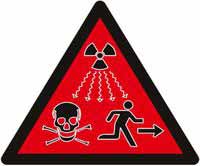
Alarming increase in Thyroid Cancer Doctors advise ‘check your neck’ 12 News 14 July 09 by Jill Hanks – Jul. 13, 2009 04:50 PM12 NewsThyroid cancer rates have increased more than 6 percent per year over the last decade, making it the fastest-increasing cancer in the U.S. But experts aren’t sure why…………….
……………Women are much more likely than men to develop thyroid problems, according to Dr. Verso and they are also three times more likely to develop thyroid cancer.
A Look at Uranium Mining
A Look at Uranium Mining Texas Vox July 8, 2009 by Public Citizen Texas
“………………………There is one destructive aspect of nuclear power that public discourse tends to be especially silent on. Just as coal industry apologists brush over the enormous damage caused by coal mining, any discussion of nuclear is power is likely to be silent on the damage done by uranium mining.
The damage to human health associated with uranium mining is huge. Historically, uranium miners have had a significantly higher risks of developing small cell Carcinoma, which is a likely product of their exposure to Radon-222 — a cancer causing agent created by decaying uranium. The presence of Radon gas also makes uranium mines a very dangerous work environment.………………………..
Last year the French mining company Areva was nominated for a Public Eye Award (a recognition intended for companies who brought about the most social or ecological damage) by Pro Natura (Switzerland’s branch of Friends of The Earth), and the Berne Declaration development campaign. The nomination came from the company’s perceived failure to adequately disclose the risks associated with uranium mining to its workers in Niger, as well as neglecting to treat patients who are unable to pay at company hospitals. Workers also mentioned deaths caused by radioactive contamination of air and ground water.
Aside from the dangers of uranium exposure, mining projects also cause considerable damage to the local environments and to the health of people who live nearby.
A Look at Uranium Mining « TexasVox: The Voice of Public Citizen in Texas
Nuclear critics suspect hidden agenda in Sask. medical isotope plan
Nuclear critics suspect hidden agenda in Sask. medical isotope plan , July 10, 2009 CBC News Critics of nuclear development in Saskatchewan say a plan by the provincial government to supply medical isotopes may lead to more substantial nuclear facilities…………………………….
Jim Penna, a retired philosophy professor and a member of the Coalition for a Clean Green Saskatchewan, said there are ways of producing isotopes for medical diagnostics that do not require the construction of a nuclear reactor.
Penna said people should be wary of the motives behind the premier’s proposal. Penna said a plan for a research reactor may be the thin edge of the wedge leading to further expansion of the nuclear industry.
“That’s how it’s argued you see,” Penna told CBC News on Thursday. “They do talk about a research reactor … as one of the elements of a nuclear program for Saskatchewan. So this is a way of bringing about their nuclear agenda by piggybacking on the medical isotope issue.”…………………………….
Sandra Morin, environment critic for the Saskatchewan NDP, said Thursday that an economic feasibility study should be prepared, to demonstrate the project’s financial viability.
“We need a much more careful examination of just how much money will be put up by the Saskatchewan taxpayer and whether this is truly a feasible option for our province,” Morin said. “By all accounts, an isotope reactor simply doesn’t make sense from an economic standpoint so I would question the rush for the province to get involved in one.”
Morin also raised questions about one of the people closely involved in Saskatchewan’s pitch to the federal government, Richard Florizone.
Florizone, the vice-president of finance and resources at the University of Saskatchewan, is helping to prepare Saskatchewan’s proposal.
Florizone also chaired the province’s Uranium Development Partnership, the group appointed to look for ways to develop the uranium industry. Their report recommended building a research reactor that could produce medical isotopes.
Morin called the overlap of roles troublesome.
Nuclear critics suspect hidden agenda in Sask. medical isotope plan
Overweight Get More Radiation and Doctors Admit Ignorance to Damage Caused
Overweight Get More Radiation and Doctors Admit Ignorance to Damage Caused
NaturalNews.com July 08, 2009 by: Jane Jones “………………….Recently, it was uncovered that obese patients are receiving up to 4000 percent more exposure to radiation with each X-ray – and in the ambitious medical world, the number of X-rays people receive is also increasing. The increase of radiation exposure appears to be done on the basis of logic: more radiation is needed to get an accurate exposure due to the excess fat getting in the way.
While more radiation might actually help get a usable x-ray, the question of what damage it’s causing the patient is one an MIT doctor admits hasn’t even been looked at. The question of it being an acceptable risk has also been neglected.
We know that radiation is dangerous. We know that radiation even from X-rays is dangerous…………
……………..Resources:
Obese Get Higher Doses of Radiation for X-Rays
http://news.yahoo.com/s/hsn/2009063…
Radiation Damage
http://www.umm.edu/altmed/articles/…
http://www.naturalnews.com/026570_doctors_overweight_X-rays.html
Can Nuclear Power Take The Heat?
Nor is this just Europe’s problem: In 2006, Exelon had to cut the power at a nuclear plant in Illinois when the Mississippi River got too warm to be used as cooling water. According to the recent NOAA synthesis report on climate-change impacts in the United States, one of the things we can expect to see across the country in the coming decades is a much greater frequency of hotter-than-90°F (32°C) days—precisely the point at which France’s plants keep running into trouble. Meanwhile, as the AP reported last year, if droughts become more frequent, that could mean additional trouble for nearly one-quarter of the nation’s nuclear plants.
A new face of nuclear medicine
A new face of nuclear medicine Heart Institute makes own medical isotopes By Tom Spears, The Ottawa Citizen J uly 7, 2009 “…………………In the institute’s basement, there’s a machine with a name like a carnival ride — the cyclotron — that produces medical isotopes (radioactive atoms) without a nuclear reactor.
To anyone who has toured a nuclear reactor building, the contrast is startling. Reactors are huge machines in earthquake-proof buildings running 24 hours a day, surrounded by layer upon layer of security and shutdown systems, and with radioactive waste that will last for millennia.
They cost hundreds of millions of dollars to build (even the smallest ones), and the last pair built in Canada flunked their safety tests last year and therefore have never operated.
The cyclotron at the Heart Institute is a big metal box in a room that measures about eight by 10 metres. You can walk right up to it safely while it’s running.
At night, the staff just turn it off and go home.
This is a new face of nuclear medicine, making medical isotopes that will make pictures of the heart, brain, bones and so on.
De Kemp continues his explanation of the glowing blobs on a compu
Inexplicable leukemias rock small German rural region
Inexplicable leukemias rock small German rural region Google News By Arnaud Bouvier – 7 July 09 GEESTHACHT, Germany (AFP) — For 20 years, children from a small rural northern German region — where Alfred Nobel invented dynamite — have been contracting leukemia at a higher rate than anywhere else in the world and no one knows exactly why.Nineteen cases of leukemia among children under 15 have been recorded since 1989 in the region of Elbmarsch, some 30 kilometres (19 miles) from the city of Hamburg, three or four times the average rate.”Such a high rate of leukemia is unique in the world,” according to Hayo Dieckmann, a health official in the nearby town of Lueneburg who is also a medical doctor…………………………………………..
Campaigners, however, point out that within two kilometres of the region lie the Kruemmel nuclear power station and the GKSS scientific research centre, both of which they believe are to blame for the leukemia outbreaks.
The “citizens’ association against leukemia in Elbmarsch” (BI) believes that a nuclear accident took place at the GKSS centre, only six months after the devastating meltdown at Chernobyl.
The campaigners say that a radiation leak occurred at the centre — which operates a small nuclear reactor for research purposes — on September 12, 1986, which was later covered up by the authorities……………………………
Campaigners also point an accusing finger at the Kruemmel nuclear power plant which reopened on June 24 after a fire broke out there two years ago.
The plant hit headlines again at the weekend in the wake of two further malfunctions, one of which plunged part of Hamburg into darkness and knocked out the city’s traffic lights.
At the end of 2007, a national survey of nuclear power stations in Germany showed that the risk of contracting cancer rose dramatically for children living near a power plant.
Belarussian kids receive care
Belarussian kids receive careBy John Henderson Rocky Mount Telegram July 06, 2009 Children from Belarus who continue to be exposed to radiation from the 1986 Chernobyl nuclear power plant incident have once again traveled to Rocky Mount from the former Soviet Union to receive free medical care.But fewer local “host families” in this down economy have been able pay for the flights and take the children into their homes for six weeks. The host families also take the children to local offices for medical, eye and dental care treatment………………………….
On April 26, 1986, the Chernobyl nuclear power plant reactor exploded, releasing dangerous amounts of radiation into the air. The wind on that day carried it toward Belarus, contaminating the region’s air, soil and water.
“The problem is there is so much unknown radiation material (in Belarus), and it will probably be there for 3,000 or 4,000 years,” Patrone said. “Some of the food is not safe.”………………………………….
“Medically, they are small in size,” Patrone said. “Some have thyroid problems and an occasional immune-deficiency problem. They are still suffering, because basically, radiation is still in the dirt.”
If a child is diagnosed with a major problem here such as thyroid cancer, they are sent back to Belarus for treatment, he said.
“(The trip to Rocky Mount) is a way to get out of the radiation zone and to give kids a second (doctor’s) opinion,” he said.
Downwinders still waiting for RECA coverage
Downwinders still waiting for RECA coverage By Blair Koch Times-News 7 july 09 A common fear among victims of radiation fallout caused by nuclear testing in Nevada during the 1950s and ’60s is that they will not live long enough to see the government take accountability.Ilene Hoisington expressed this sentiment when interviewed by the Times-News in June 2007. At 75, she had seen both her sons die of cancer and had her own larynx removed due to the same disease. Hoisington’s sister also died of cancer.In June 2008, Hoisington lost her battle too, having died before Idaho fallout victims were included in the Radiation Exposure Compensation Act.”I think (the government) is waiting until we all die and then there won’t be anymore downwinders, problem solved,” Hoisington said in 2007.
New study: Nuclear workers at higher risk for cancer –
New study: Nuclear workers at higher risk for cancer Brattleboro Reformer By BOB AUDETTE, Reformer Staff July 2BRATTLEBORO — Are nuclear power plant workers at higher risk to die of cancer?A study conducted by a Canadian researcher concluded the risk is substantially higher to them than to the general public.The document, “Exposure to Radiation and Health Outcomes” was made public last week. It was written by Mark Lemstra, who was formerly a senior research epidemiologist for the Saskatoon, Canada, Health Region……………………In the radiation report, in which Lemstra reviewed 1,725 articles related to radiation studies, he concluded that nuclear power plant workers have a “relative excess risk” of getting cancer.
In epidemiology, excess risk is defined as the difference between the proportion of subjects in a population with a particular disease who were exposed to a specific risk factor and the proportion of subjects with that same disease who were not exposed.
In the case of nuclear power plant workers, that risk factor is low-dose radiation.
New study: Nuclear workers at higher risk for cancer – Brattleboro Reformer
No answer on nuclear waste issue
Before George Bush left office, the U.S. EPA had radically increased permissible public exposure to radiation in drinking water, including a nearly 1,000-fold increase in permissible concentrations of strontium-90, 3,000- to 100,000-fold for iodine-131, and a nearly 25,000 increase for nickel-63. The relaxation of these radiation protection regulations had been sought for years by the nuclear industry and its allies in the Department of Energy and Nuclear Regulatory Commission .
In the most extreme case, the new standards permit radionuclide concentrations seven million times more lax than permitted under the Safe Drinking Water Act and would permit public exposure to radiation levels vastly higher than EPA had previously deemed unacceptably dangerous. The public did not get to comment on these changes. What exactly is the radioactive waste that is now being discharged into the Connecticut River. When will our Vermont Department of Public Health start reporting on the trends of cancer incidence rising in Vermont? And Entergy and the NRC thinks its OK to continue to build up the stockpile of the radioactive waste here in Vermont because no one else will accept it
Nuclear power is well-disguised fossil fuel
Nuclear power is well-disguised fossil fuel1 Mail and Guardian 30 June 09 …by Roger DiamondAs global warming gets hotter on the international political agenda, and with recent oil price volatility, the nuclear power proponents have jumped on a bandwagon to promote “the peaceful atom” as a means to power our society………………….. Carbon free? When uranium, or any other fissionable material, reacts, indeed, it does not give off any carbon dioxide, or any other greenhouse gases. However, almost every other aspect of the production of nuclear power does. Let’s start with mining uranium…………………All of this mining, processing and transporting activity uses energy — fossil fuels to be precise. But that’s not even the big energy user in nuclear power. The biggest factor is probably the building of the power stations that have to be over-engineered for terrorist strikes, earthquakes, careless operators………………………..the energy consumed in earth moving, making thousands of tons of cement and building a nuclear power station, is very significant. Maintenance of the power station also consumes energy, as does the transport and disposal of the low and medium-level radioactive waste, but the big unknowns in nuclear power are decommissioning and disposal of high-level nuclear waste.
All of this activity is driven by fossil fuels and so to say that nuclear power is carbon free is to pretend that nuclear power stations descend from the heavens and that fuel rods grow on trees, neither of which are particularly believable. It is also to ignore the challenge that decommissioning and high-level waste disposal pose………………………….he clincher is that all of this adds up to make nuclear power rather expensive and uncertain, and so the predicted boom in nuclear power has not materialised and in fact, the construction of new nuclear power stations is only keeping pace with the decommissioning of old ones built in the 1960s. This is even without the years of expense that we look forward to in guarding and maintaining radioactive hulks of concrete for the rest of civilisation so that they don’t crumble and leak radiation or demolishing the monstrosities and finding a hole to bury them in.
Thought Leader » Peak Oil Perspectives » Nuclear power is well-disguised fossil fuel
1 This Month
26 September – International Day for the Total Elimination of Nuclear Weapons





PLEASE OPPOSE HR 8255 AND S.3639 – bills would accelerate satellite deployment, with no environmental review or safeguards – https://ncstd5li.quorum.us/campaign/169331/
To see nuclear-related stories in greater depth and intensity – go to https://nuclearinformation.wordpress.com
-
Archives
- September 2026 (305)
- August 2026 (330)
- July 2026 (355)
- June 2026 (287)
- May 2026 (306)
- April 2026 (356)
- March 2026 (251)
- February 2026 (267)
- January 2026 (308)
- December 2025 (358)
- November 2025 (359)
- October 2025 (375)
-
Categories
- 1
- 1 NUCLEAR ISSUES
- business and costs
- climate change
- culture and arts
- ENERGY
- environment
- health
- history
- indigenous issues
- Legal
- marketing of nuclear
- media
- opposition to nuclear
- PERSONAL STORIES
- politics
- politics international
- Religion and ethics
- safety
- secrets,lies and civil liberties
- spinbuster
- technology
- Uranium
- wastes
- weapons and war
- Women
- 2 WORLD
- ACTION
- AFRICA
- Atrocities
- AUSTRALIA
- Christina's notes
- Christina's themes
- culture and arts
- Events
- Fuk 2022
- Fuk 2023
- Fukushima 2017
- Fukushima 2018
- fukushima 2019
- Fukushima 2020
- Fukushima 2021
- general
- global warming
- Humour (God we need it)
- Nuclear
- RARE EARTHS
- Reference
- resources – print
- Resources -audiovicual
- Weekly Newsletter
- World
- World Nuclear
- YouTube
-
RSS
Entries RSS
Comments RSS

