Ecocide a ‘Critical Dimension of Israel’s Genocidal Campaign’ in Gaza: Probe
Analysis by a research group found that roughly 40% of Gaza land that was previously used for food production has been destroyed by Israeli forces.
JAKE JOHNSON, Mar 29, 2024, https://www.commondreams.org/news/ecocide-israel-gaza
The widespread destruction Israel’s military has inflicted on Gaza’s farmland and agricultural infrastructure amounts to a “deliberate act of ecocide,” according to a new investigation that uses satellite imagery to survey the extent of the damage.
Released Friday ahead of Palestine’s Land Day, the analysis by the London-based research group Forensic Architecture (FA) shows that Israel’s ground forces—including tanks and other military vehicles—have advanced over half of Gaza’s farms and orchards, critical food sources that the besieged enclave’s population has worked tirelessly to cultivate in the face of decades of occupation.
“Since 2014, Palestinian farmers along Gaza’s perimeter have seen their crops sprayed by airborne herbicides and regularly bulldozed, and have themselves faced sniper fire by the Israeli occupation forces,” FA said. “Along that engineered ‘border,’ sophisticated systems of fences and surveillance reinforce a military buffer zone.”
Comparing satellite imagery from prior to Israel’s invasion and the present, FA found that roughly 40% of Gaza land that was previously used for food production has been destroyed by Israeli forces. Nearly a third of Gaza’s greenhouses have been demolished, according to the investigation.
“In total, Forensic Architecture has identified more than 2,000 agricultural sites, including farms and greenhouses, which have been destroyed since October 2023, often to be replaced with Israeli military earthworks,” the group said. “This destruction has been most intense in the northern part of Gaza, where 90% of greenhouses were destroyed in the early stages of the ground invasion.”
It is no surprise, then, that northern Gaza is currently experiencing famine conditions, with most of the population there at imminent risk of starvation as Israeli forces impede the flow of humanitarian assistance and continue their relentless bombing campaign.
Leading human rights organizations have accused the Israeli government of using starvation as a weapon of war in Gaza, pointing to the decimation of the territory’s agricultural sector and attacks on aid convoys. The United Nations warned less than two months into Israel’s assault that “in the north, livestock is facing starvation and the risk of death due to shortage of fodder and water.”
The new investigation was published amid growing global momentum to formally codify ecocide as an international crime alongside genocide, which Israel also stands accused of committing against Palestinians in Gaza.
An expert panel convened by Stop Ecocide International has defined ecocide as “unlawful or wanton acts committed with knowledge that there is a substantial likelihood of severe and either widespread or long-term damage to the environment being caused by those acts.”
Ecocide is officially recognized as a crime in at least 10 countries, including France, Ecuador, Russia, and Ukraine. Earlier this week, the European Council adopted new rules that include a provision criminalizing acts deemed “comparable to ecocide.”
FA’s analysis argues that Israel’s latest military assault on the Gaza Strip and the intentional targeting of the enclave’s agriculture is “a critical dimension of Israel’s genocidal campaign,” fueling both a humanitarian and environmental disaster.
“The targeted farms and greenhouses are fundamental to local food production for a population already under a decades-long siege,” the research group said. “The effects of this systematic agricultural destruction are exacerbated by other deliberate acts of deprivation of critical resources for Palestinian survival in Gaza.”
“These acts include the well-reported, catastrophic, and Israeli-made famine ongoing in Gaza, continued obstruction of humanitarian aid destined for Gaza, the destruction of medical infrastructure, the destruction beyond repair of other areas of civilian infrastructure, including bakeries, schools, mosques, churches, and cultural heritage sites,” the group added.
Japan confirms experts met in China to ease concerns over discharge of treated radioactive water
Japan said Sunday its experts have held talks with their Chinese
counterparts to try to assuage Beijing´s concerns over the discharge of
treated radioactive wastewater from the wrecked Fukushima Daiichi nuclear
power plant into the sea. The discharges have been opposed by fishing
groups and neighboring countries especially China, which banned all imports
of Japanese seafood. China´s move has largely affected Japanese scallop
growers and exporters to China. During the talks held Saturday in the
northeastern Chinese city of Dalian, Japanese officials provided
“science-based” explanation of how the discharges have been safely carried
out as planned, according to the Japanese Foreign Ministry.
Daily Mail 31st March 2024
Man blames nuclear meltdown for deformities in city more radioactive than Chernobyl

Ozersk – code named City 40 – was the birthplace of the Soviet nuclear weapons programme, now it’s one of the most contaminated places on the planet with residents exposed to high radiation levels.
By Kelly Williams, Assistant News Editor (Live) https://www.dailystar.co.uk/news/world-news/man-blames-nuclear-meltdown-deformities-32405120
A man living in a secret city five times more radioactive than Chernobyl has been left with facial deformities he blames on huge nuclear meltdowns.
Vakil Batirshin has massively swollen lymph nodes said to be caused by radiation-related illness. He lives in Ozersk – code named City 40 in Russia – which was built in total secrecy around the huge Mayak nuclear power plant by the Soviets in 1946.
For the first eight years after City 40 was built, Ozersk residents were forbidden from communicating with the outside world. Like Chernobyl, it was designed as a place to house the scientists working at the plant who – unbeknownst to the world – were leading the Soviet Union’s nuclear weapons programme during the Cold War era.
Locals were told they were “the nuclear shield and saviours of the world,” and everyone on the outside was an enemy.
They also kept it a secret that the extreme exposure to radiation was affecting the health of the city’s inhabitants. They started to get sick and die and the authorities were clandestine about the mortality rate.
However, the city’s graveyard with all its young victims tells the story.
Ozersk, nicknamed “The graveyard of the Earth,” was surrounded by guarded gates and barbed wire fences and did not appear on any maps.
Its inhabitants’ identities were also erased from the Soviet census to guard their secret.
The Mayak nuclear plant went through Russia’s biggest nuclear disaster when the facility allegedly dumped 200million curies worth of radioactive material into the environment around Ozersk.
The residents also suffered the Kyshtym disaster in 1957, the worst nuclear disaster the world had seen before Chernobyl.
Radiation bathed the city when a cooling system exploded at Mayak with the force of 100 tons of dynamite.
One of the nearby lakes has been so heavily contaminated by plutonium that locals have renamed it the “Lake of Death” or “Plutonium Lake”.
In an interview which resurfaced earlier this week on X (formerly Twitter), Vakil Batirshin struggles to speak, his neck is painfully swollen from lymph nodes that have grown to triple their normal size.
His exact diagnosis remains steeped in mystery as doctors say it can be hard to trace any one condition to radiation.
But asked if he has any doubt his symptoms are related to radioactivity, he said: “Well, when I lived in my home village, I didn’t have anything. Everything was great.
“When I came here, it all started.”
Another resident, Gilani Dambaev is riddled with diseases doctors think are linked to a lifetime’s exposure to excessive radiation. He and his family have government-issued cards identifying them as residents of radiation-tainted territory.
He said: “Sometimes they would put up signs warning us not to swim in the river, but they never said why. After work, we would go swimming in the river. The kids would too.”
Although the secret is now out and Ozyorsk resembles “a suburban 1950s American town” according to The Guardian, residents know their water is contaminated, their crops are poisoned, and their children may be sick.
Half a million people in Ozersk and its surrounding area are said to have been exposed to five times as much radiation as those living in the areas of Ukraine affected by the Chernobyl nuclear accident.
But most refused to leave, because while the Soviet population were suffering from famine and living in extreme poverty, the city was regarded as a paradise as authorities gave them private apartments, plenty of food, good schools and healthcare, and a plethora of entertainment and cultural activities.
Even still, residents opt against leaving. The Guardian reported that “it is prestigious to live in Ozersk.”
Residents describe it as a town of “intellectuals”, where they are used to getting “the best of everything for free”.
Living in Mayak’s nuclear shadow and resigned to her fate, one said: “I don’t hope for anything anymore. If we get sick, we get sick.”
Some locals, however, claim that long term dumping by the nuclear plant’s management continues today.
The government has started resettling residents to new homes away from the river, but the process only began in 2008.
WHERE HAVE ALL THE INSECTS GONE? Satellites are taking them, every one.
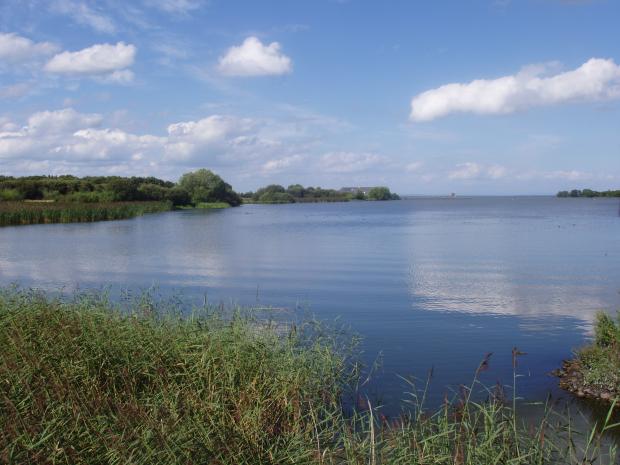
The least noticed and greatest assault on Earthly life rains on us from the sky. Nature’s wires strung above us from horizon to horizon, carrying the electricity that helps power our bodies, and the information that informs our growth, healing, and daily lives, now carries dirty electricity — millions of frequencies and pulsations that confuse our cells and organs, and dim our nervous systems, be we humans, elephants, birds, insects, fish, or flowering plants.
The pulsations pollute the Earth beneath our feet, surround us in the air through which we fly, course through the oceans in which we swim, flow through our veins and our meridians, and enter us through our leaves and our roots. The planetary transformer that used to gentle the solar wind now agitates, inflames.
The lake pictured above is the United Kingdom’s largest. Located in Northern Ireland, Lough Neagh swarms so densely with flies every spring and summer that residents shut their windows against the living smoke. Clothes left out on a line are covered with them. So is any windshield on a vehicle traveling around the lough’s 90-mile shoreline. Until 2023.
Last year, unbelievably, no flies were to be seen. Windshields and hanging clothes were bare of them. None flew into open windows. Other species that used to eat them were gone as well — ducks, frogs, fish, eels, and predatory insects. Fly larvae were not there to keep the lake bottom clean. Little was alive in the lough except an overgrowth of algae. “Has the ecosystem of the UK’s largest lake collapsed?” asked The Guardian in a February 19, 2024 article.
Has the ecosystem of the entire Earth collapsed? we ask, for the same is happening all over, according to reports I have been receiving for a year from almost everywhere on every continent.
56 Years of Global Vandalism
On June 13, 1968, the United States completed its launch of the world’s first constellation of military satellites. Twenty-eight of them, more than twice as many satellites as were in orbit around the Earth until then, were lofted to an altitude of 18,000 miles, in the heart of the outer Van Allen radiation belt. The “Hong Kong” flu pandemic began two weeks later and lasted for almost two years.
For the next three decades, the skies slowly filled up with hundreds of satellites, mostly for military purposes. Then in the late 1990s, cell phones became popular.
On May 17, 1998, a company named Iridium completed its launch of a fleet of 66 satellites into the ionosphere, at an altitude of only 485 miles, and began testing them. They were going to provide cell phone service to the general public from anywhere on earth. Each satellite aimed 48 separate beams at the earth’s surface, thus dividing the planet into 3,168 cells. Reports of insomnia came from throughout the world………………………………………………………………
SpaceX has been launching rockets carrying dozens of satellites at a time on a weekly or biweekly basis, filling the heavens with luminous objects that interfere with astronomy, spewing chemicals that are destroying our planet’s protective ozone layer, filling the upper layers of the atmosphere with water vapor that should not be there and that is increasing the current in the global electric circuit and the violence of thunderstorms, and cluttering up space with satellites that are nothing but solar arrays and computers that are continually failing, wearing out, and having to be replaced, and which are deorbited to burn up in the lower atmosphere, filling it with metals and toxic chemicals for everyone to breathe — and altering the electromagnetic environment of the Earth that had not changed in three billion years and that life below depends on for its vitality and survival.
Last Thursday morning, from Boca Chica, Texas, SpaceX successfully launched its Starship — the largest rocket ever built, the one it wants to ferry men and women to Mars with — into space for the first time. And on Friday it launched yet another 23 Starlink satellites to bring its total polluting the ionosphere up to more than 6,000, now not only for internet communication with rooftop dishes but for direct communication with handheld cell phones. The 6,000 satellites are also now communicating directly with one another, wrapping the Earth with pulsating lasers carrying 42 million gigabytes of data every single day………
Since March 24, 2021, not only has human health deteriorated, but the biodiversity of the Earth, everywhere, has plummeted. People have not so much noticed the decline of the larger wildlife like wolves, bears, lions and tigers, which were already scarce, but they are shocked by the total disappearance of the smallest animals that were only recently so common you couldn’t open your windows without them flying in. They are shocked by the disappearance of all the frogs that used to swim in their ponds, the birds that used to nest in their trees, the worms that used to slither on the ground, the insects that used to fly through their windows and cover their clothes hanging on the line. My newsletters of March 29, June 21, September 20, October 17, and November 28, 2023 carried major stories about this from various parts of the world. My newsletters of December 5 and December 26, 2023, and January 9 and February 6, 2024 quoted from individuals all over the world who have emailed or called me, and I have a huge backlog of more such reports that you can read when I publish them in the future.
If we want to have a planet to live on, not only for our children but for ourselves, the [electromagnetic]radiation has to stop. Not only do the cell towers have to come down that are so ugly to look at, but also the cell phones that we hold in our hands and have become so dependent on, and the satellites that are squeezing all the life that remains out from under them. We are running out of time. https://cellphonetaskforce.org/where-have-all-the-insects-gone/

Canadian officials found radiation levels in these northern Ontario homes ‘well above’ the safe limit. Their response: ‘¯\_(ツ)_/¯’ .
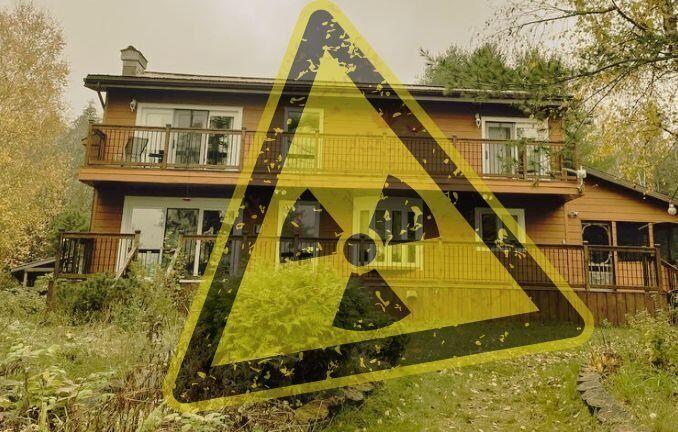
Many residents might not be aware they are living atop radioactive infill, which came from nearby, closed-down uranium mines that helped develop atomic bombs during the Cold War.Toronto Star
The number of homes in Elliot Lake affected by buried radioactive waste could top 100 — twice as many as previously thought.
By Declan Keogh and Masih Khalatbari, Investigative Journalism Bureau, Thursday, March 21, 2024 https://www.thestar.com/news/investigations/canadian-officials-found-radiation-levels-in-these-northern-ontario-homes-well-above-the-safe-limit/article_6b68ad20-e605-11ee-9a2a-f72182db65b6.html
In January 2021, a senior official with Canada’s nuclear regulator asked a colleague to do a rough, “back-of-the-envelope” calculation on the amount of potentially deadly radiation that residents in Elliot Lake were exposed to in their homes.
The government had just received a complaint that long-forgotten radioactive mine waste was buried underneath some homes in the northern Ontario city. Ron Stenson, senior project officer at the Canadian Nuclear Safety Commission (CNSC), wanted to “confirm our assumption that 468 Bq/m3 is not an urgent health concern.”
He did not get the answer he wanted. A senior official with the commission’s radiation protection division replied that those levels of radon are “well above” the public radiation dose limit set by federal authorities.
Stenson’s response came 90 minutes later: “¯\_(ツ)_/¯.”
For too long, shrugging is all the Canadian government has done, as far as local homeowner Lisa Speck is concerned.
The government official’s email is “a true visual representation of the response we’ve received to date,” she says. “It accurately summarizes the respect we’ve been shown.”
Documents show 100+ homes affected
Documents obtained by the Investigative Journalism Bureau show the number of homes affected by buried radioactive waste could top 100 — twice as many as previously thought. Many of the residents might not be aware they are living atop radioactive infill, which came from nearby, closed-down uranium mines that helped develop atomic bombs during the Cold War.
And when faced with calls for action, civil servants make jokes.
Speck, part of a group of Elliot Lake homeowners fighting to get the radioactive mining waste removed from their properties, called the email exchange “disgusting” and “dismissive.”
Despite having spent billions of dollars to clean up similar radioactive waste in Port Hope, federal regulators deny they have any obligation to do the same in Elliot Lake, saying the waste buried beneath the properties is the homeowners’ responsibility.
CNSC declined an interview request. In a statement, the agency said it could not answer detailed questions from the IJB because of ongoing litigation, adding that it’s “dedicated to upholding the highest standards of safety in our work.” Stenson did no respond to a request for comment.
Lawyers representing impacted Elliot Lake homeowners filed an application to Federal Court for a judicial review last July in the hopes of forcing the reversal of the federal government’s position.
The government filed their response in federal court on March 4, reiterating the waste is outside their jurisdiction and stating that the Nuclear Safety and Control Act, which governs the CNSC, does not compel them to act upon demands from the homeowners.
It argues federal legislation does not give the public the right “to file complaints, request inspections, or demand orders be issued as against regulated entities.”
A screen grab from a January 2021 email sent by a senior project officer at the Canadian Nuclear Safety Commission (CNSC), after being told the levels of radon recorded at homes in Elliot Lake are “well above” the safe limits. Toronto Star illustration
Lawyers representing impacted Elliot Lake homeowners filed an application to Federal Court for a judicial review last July in the hopes of forcing the reversal of the federal government’s position.
The government filed their response in federal court on March 4, reiterating the waste is outside their jurisdiction and stating that the Nuclear Safety and Control Act, which governs the CNSC, does not compel them to act upon demands from the homeowners.
It argues federal legislation does not give the public the right “to file complaints, request inspections, or demand orders be issued as against regulated entities.”
Lawyers representing impacted Elliot Lake homeowners filed an application to Federal Court for a judicial review last July in the hopes of forcing the reversal of the federal government’s position.
The government filed their response in federal court on March 4, reiterating the waste is outside their jurisdiction and stating that the Nuclear Safety and Control Act, which governs the CNSC, does not compel them to act upon demands from the homeowners.
It argues federal legislation does not give the public the right “to file complaints, request inspections, or demand orders be issued as against regulated entities.”
At the crux of the federal government’s refusal to accept responsibility is a technicality: It says that it isn’t responsible for the regulation of naturally-occurring radioactive materials, only those that have been processed in some way. It says that the uranium rock dug up during mining “was never chemically processed” before being trucked to nearby Elliot Lake for use as backfill during the construction of homes. That, the government says, means it’s technically “not considered radioactive waste.”
‘Public perception of a coverup’
The government didn’t always view the radiation blight in Elliot Lake as someone else’s problem, internal documents suggest.
By the 1980s, the government had assumed some role alongside the mining companies that built most of the houses.
The Atomic Energy Control Board (AECB) — the predecessor of the CNSC — took responsibility for “about 1,900 private properties and public areas,” according to a 1998 internal report summarizing the ongoing radiation problems in Elliot Lake.
Despite discovering “contaminated materials in structures” as well as “excessive gamma radiation due to the presence of mine waste on private properties,” there had been “minimal effort” to remove the waste, the summary report noted.
Fans and venting had been previously installed in homes to funnel the dangerous gas outside. However, it was likely these remediation efforts had failed, the report stated, possibly because residents didn’t know how to maintain the systems — or that they even existed.
“There is no evidence to suggest that owners were made aware of corrections made, or that they must assume responsibility for maintenance,” the report states.
All of this, the report concluded, created a “public perception of a coverup.”
“The only way to remove the mine waste issue from public perception is to remove the contamination.”
Supplied
As of 1998, it was estimated up to 120 properties were potentially affected by radioactive contamination and, as a result, “increased radiation exposure is likely as is renewed public concern.”
The report also called for a citywide effort to test properties, monitor and remediate excess levels of radiation and clean up the “man-introduced contamination” once and for all. It’s unclear whether those calls were heeded.
At the time, it was assumed that cleanup efforts would be shared between the federal government and the mining companies, with the companies offering financial assistance to remediate the properties they once owned.
Billions spent on remediation in other Ontario communities
In 2001, the federal government signed a deal with the municipalities of Port Hope and Clarington to collect, transport and permanently store as much as 2 million cubic metres of low-level radioactive waste that had been distributed by a government-owned radium and uranium refinery between the 1930s and the 1980s.
The $2.6 billion remediation project, which involves digging up and removing soil around affected houses, the construction of permanent storage facilities and monitoring of radiation levels, is slated to be completed by the end of this year.
Despite the parallels to Elliot Lake, the federal government has said it is not responsible for the cleanup in the northern community because the radioactive contamination came from a private company, not a crown corporation.
In June 2023, lawyers for the residents sent a host of politicians including Prime Minister Justin Trudeau and executives of CNSC more than 3,000 pages of evidence and documentation. They called on the government and mining companies to remove the uranium waste in Elliot Lake.
Upon receiving the demands, Patrick Burton, director of CNSC’s uranium mines and mills division, asked two of his colleagues in radiation protection about the claims that residents were getting excess doses of radiation. He also told them to “buy a shovel and get a [travel authorization] for Elliot Lake,” adding a winking face emoji.
“Is that going to get a response?” replied one of his colleagues with a smiling face emoji.
When reached by the IJB, Burton directed questions about the email to CSNC. The agency did not offer further comment. When questioned by lawyers representing the Elliot Lake homeowners, Burton said it was supposed to be a joke among colleagues.
“The intention was never … for the homeowners to become aware of this exchange,” Burton said during his deposition.
Homeowner Speck says the joke was “rude” but says she would welcome the government’s shovels to clean up the uranium on her property.
“The statement sort of lends to the fact that he thinks it’s a small job. If it’s such a small job that he’s just going to go to buy a shovel and fix it … then just do that,” Speck says.
“Everyone in the community would expect better from a government official than to be joking about a matter that could potentially affect … or maybe has affected, a population of people.”
With files from the Toronto Star’s Marco Chown Oved. The Investigative Journalism Bureau is a non-profit newsroom based at the University of Toronto’s Dalla Lana School of Public Health.
Japan finishes first-year ocean discharge of nuclear-tainted wastewater amid backlash
“All fishermen are against ocean dumping. The contaminated water has flowed into what we fishermen call ‘the sea of treasure’, and the process will last for at least 30 years,“
“There is no good reason to dump radioactive materials into the ocean. There is no reason to just dilute them and flush them away,“
https://thesun.my/world/japan-finishes-first-year-ocean-discharge-of-nuclear-tainted-wastewater-amid-backlash-PD12227910 18 Mar 24,
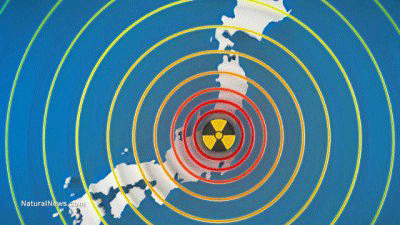
TOKYO: Despite opposition and concern from at home and abroad, Japan’s crippled Fukushima Daiichi Nuclear Power Plant has finished its initial year of discharging nuclear-contaminated wastewater into the ocean, according to the plant’s operator, said Xinhua.
As per the initial plan, approximately 31,200 tons of wastewater, containing radioactive tritium, was released into the ocean since the discharge started in August 2023, with each round of discharge carried out for about two weeks. Earlier this week, International Atomic Energy Agency Director-General Rafael Grossi emphasised continued efforts in monitoring Japan’s ocean discharge of nuclear-contaminated wastewater from the crippled plant, following his first visit to Fukushima prefecture since the discharge started.
Stressing that the discharge marks merely the initial phase of a long process, Grossi said that “much effort will be required in the lengthy process ahead,“ and reiterated the organisation’s stance on maintaining vigilance throughout the process.
While the Japanese government and TEPCO have asserted the safety and necessity of the discharge, concerns have been raised by neighbouring countries and local stakeholders regarding environmental impacts.
“All fishermen are against ocean dumping. The contaminated water has flowed into what we fishermen call ‘the sea of treasure’, and the process will last for at least 30 years,“ said Haruo Ono, a fisherman in the town of Shinchi in Fukushima.
“There is no good reason to dump radioactive materials into the ocean. There is no reason to just dilute them and flush them away,“ said the man in his 70s.
“Is it really necessary, in the first place, to dump what has been stored in tanks into the sea? How can we say it’s ‘safe’ when the discharged water clearly consists of harmful radioactive substances? I think the government and TEPCO must provide a solid answer,“ said Chiyo Oda, a resident of Fukushima’s Iwaki city.
Concerns were fuelled among the Japanese public over the recent leakage of contaminated water from pipes at the Fukushima plant. – Bernama, Xinhua
Fourth discharge of treated Fukushima water completed
The release of the fourth batch of treated radioactive water from the
crippled Fukushima No. 1 nuclear power plant into the sea concluded Sunday,
with the next round possibly starting next month, the plant’s operator
said.
Japan Times 17th March 2024
https://www.japantimes.co.jp/news/2024/03/17/japan/fourth-fukushima-water-release-completed
Concerns and complaints continue as fourth Fukushima wastewater discharge completed

Concerns and complaints from home and abroad remain while Japan’s crippled Fukushima Daiichi Nuclear Power Plant has finished its first year of discharging nuclear-contaminated wastewater into the ocean.
The plant completed its fourth and final round of discharge for the current fiscal year, which ends in March, Tokyo Electric Power Company (TEPCO) said on Sunday.
As per the initial plan, approximately 31,200 tonnes of wastewater containing radioactive tritium has been released into the ocean since August 2023, with each discharge running for about two weeks.
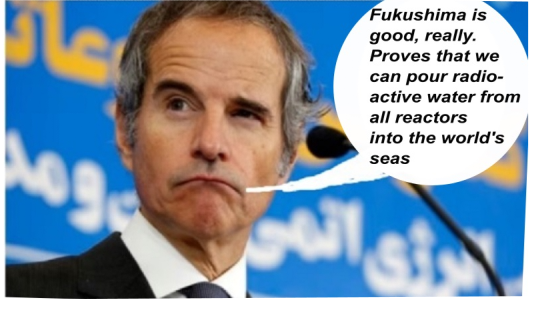
Earlier this week, International Atomic Energy Agency Director-General Rafael Grossi emphasized continued efforts to monitor the discharging process.
Stressing that the discharge marks merely the initial phase of a long process, Grossi said that “much effort will be required in the lengthy process ahead,” and reiterated the organization’s stance on maintaining vigilance throughout the process.
While the Japanese government and TEPCO have asserted the safety and necessity of the process, there are still concerns from other countries and local stakeholders regarding environmental impacts.
Sophia from the U.S. complained that the release of nuclear-contaminated water into the sea made her fear for the future.
Najee Johnson, a college student from Canada, suggested the Japanese government find a different plan because it could pollute our ocean and harm our sea life.
Haruo Ono, a fisherman in the town of Shinchi in Fukushima, said “All fishermen are against ocean dumping. The contaminated water has flowed into what we fishermen call ‘the sea of treasure’, and the process will last for at least 30 years.”
“Is it really necessary, in the first place, to dump what has been stored in tanks into the sea? How can we say it’s ‘safe’ when the discharged water clearly consists of harmful radioactive substances? I think the government and TEPCO must provide a solid answer,” said Chiyo Oda, a resident of Fukushima’s Iwaki city.
The recent leakage of contaminated water from pipes at the Fukushima plant also fueled concerns among the Japanese public.
Besides, the promised fund of more than 100 billion yen (around $670 million) to compensate and support local fishermen and fishing industry remains doubtful as a court ruling last December relieved the government of responsibility to pay damages to Fukushima evacuees.
A Tokyo court ruled that only the operator of the tsunami-wrecked Fukushima nuclear power plant has to pay damages to the evacuees, relieving the government of responsibility. Plaintiffs criticized the ruling as belittling their suffering and the severity of the disaster. The court also slashed the amount by ordering the TEPCO to pay a total of 23.5 million yen to 44 of the 47 plaintiffs.
The ruling backpedaled from an earlier decision in March 2018, when the Tokyo District Court held both the government and TEPCO accountable for the disaster, which the ruling said could have been prevented if they both took better precautionary measures, ordering both to pay 59 million yen in damages.
Radioactive waste, baby bottles and Spam: the deep ocean has become a dumping ground

The ocean’s depths are not some remote alien realm, but are in fact intimately entangled with every other part of the planet. We should treat them that way
by James Bradley. Guardian 12 Mar…….
“…………………………………………………………………………………………..The ocean’s depths have also been used as the final resting place for large amounts of nuclear material.
A 2019 study found at least 18,000 radioactive objects scattered across the bottom of the Arctic Ocean, many of them dumped there by the Soviet Union. These objects include vessels such as the K-27, the 110-metre nuclear submarine powered by an experimental liquid-metal-cooled reactor, which was scuttled in 1982 with its reactor still on board (when the explosive charges that were supposed to sink the K-27 failed to fully detonate, it had to be rammed with a tug); the wreck of the K-141 Kursk, which sank in the Barents Sea in 2000 during a naval exercise, killing all 118 on board and bearing its reactor and fuel to the bottom; and the K-159 attack submarine, which sank while being towed near Murmansk in 2003 with 800kg of spent uranium fuel on board. The head of Norway’s Nuclear Safety Authority says it is only a matter of time before these objects begin to release their toxic legacy into the water; others have called the situation a “Chornobyl in slow motion on the sea floor”.
While the Soviet Union dumped more nuclear waste on the sea floor than any other country, it was certainly not alone. Between 1948 and 1982, the British government consigned almost 70,000 tonnes of nuclear waste to the ocean’s depths, and the US, Switzerland, Japan and the Netherlands are just a few of the nations that have used the ocean to dispose of radioactive material, albeit in much smaller quantities. And while international treaties now prohibit the dumping of radioactive material at sea, the British government is exploring plans to dispose of up to 750,000 cubic metres of nuclear waste, including more than 100 tonnes of plutonium, beneath the sea floor off Cumbria. British officials argue this sort of geological disposal offers a way of keeping waste stable and secure over hundreds of thousands of years, although incidents such as the 2014 leak of radioactive material at a waste disposal facility half a kilometre beneath salt beds in New Mexico suggests that like many of the assurances offered by the nuclear industry, this claim should be approached with great caution.
The dumping of nuclear waste in the ocean is only one part of a far larger story of carelessness and greed. Human waste in the form of plastics and other objects is everywhere in the deep ocean, a fact that is made brutally apparent by the Japan Agency for Marine-Earth Science and Technology’s Deep-sea Debris Database, which documents the presence of tyres, fishing nets, sports bags, mannequins, beach balls and baby’s bottles spread across the sea floor at depths of many thousands of metres. In some regions, the number of such objects exceeds 300/sq km.
This tide of garbage has even reached the deepest and most remote parts of the ocean: …………………………………………………………………………………….
Possibly more disturbing, though, is the growing accumulation of microplastics in the ocean depths………………………………………………..
Nor is plastic the only thing that drifts downwards. In 2019 Chinese scientists discovered radioactive carbon-14 from the detonation of nuclear bombs in the 1940s and 50s in the bodies of amphipods living at the bottom of the Mariana Trench, borne into the deep not by ocean circulation, but in the rain of organic matter from above. More recent studies have found radioactive caesium from the Fukushima nuclear disaster in sediment more than 7,000 metres down in the Japan Trench……………………………………………………….. more https://www.theguardian.com/environment/2024/mar/12/radioactive-waste-baby-bottles-and-spam-the-deep-ocean-has-become-a-dumping-ground
Could Fukushima’s radioactive water pose lasting threat to humans and the environment?
studies have highlighted how tritium can be absorbed into sediments and soils, raising concerns about its potential transfer to the water cycle and the food web.
research showing that fish have transported radioactive particles generated by the Fukushima incident far and wide. Like a number of other nuclear accidents before it, that makes what happened at Fukushima a global concern.”
by Alan Williams, University of Plymouth, https://phys.org/news/2024-03-fukushima-radioactive-pose-threat-humans.html
The meltdown of Japan’s Fukushima Daiichi power plant, caused by the devastating earthquake and tsunami of March 2011, represents the most severe nuclear power accident of the 21st century so far.
However, a new study highlights how the decision by the Japanese government to begin releasing the radioactive water stored within it—a decision approved by the International Atomic Energy Agency (IAEA)—has generated scientific and public debate, given its potential to cause environmental harm for decades to come.
Writing in the journal Environmental Science and Technology, researchers say the water cannot be stored indefinitely due to the ongoing risk of earthquakes and tsunamis in the region.
But they say not enough is known about the long-term impacts of tritium—the primary radionuclide present, with a half-life of 12.6 years—to ascertain if the release of more than one million tons of water can be considered safe or not.
As a result, they have called for assurances that regular monitoring will be carried out in different components of the region’s ecosystem to examine any impacts the release might be having on the environment.
They have also suggested more evidence is needed about the future effects of tritium in the presence of multiple and emerging stressors, such as hypoxia, rising ocean temperatures, and microplastics, given that environmental contamination can occur in many combinations.
The study was carried out at the University of Plymouth, where researchers have been examining the environmental impacts of radioactive material for almost three decades.
“The Japanese tsunami of 2011 was devastating for people living along this whole coastline. The presence of a nuclear power plant within the region left a lasting threat, and this study highlights some of the complex challenges that need managing and scientific questions that still need addressing.”
“Being in a region prone to earthquakes and tsunamis, there is an obvious danger in simply storing radioactive water there indefinitely. But based on our research, not enough is known about the impacts of tritium on both environmental and human health to say that releasing the water into the ocean is completely safe,” says Awadhesh Jha, professor in genetic toxicology and ecotoxicology and corresponding author on the research.
The new study includes a review of existing literature on the behavior of tritium in the environment and studies that have assessed its impact on individual species.
That includes studies that have highlighted how tritium can be absorbed into sediments and soils, raising concerns about its potential transfer to the water cycle and the food web.
There has also been research showing that tritium can cause DNA damage to certain fish species, which could impact their physical and reproductive fitness and—ultimately—the genetic diversity of a population.
However, the researchers say there is little data available on the distribution, behavior, and potential effects of tritiated water and organically-bound tritium, and therefore assessing the broad risks is almost impossible.
They also say the Fukushima situation cannot be compared with the Chornobyl accident, as some authorities have attempted to do, given the differing geographical locations of the two plants and the fact the long-term environmental impacts of Chornobyl are still being debated.
“Through our study, we have found research showing that fish have transported radioactive particles generated by the Fukushima incident far and wide. Like a number of other nuclear accidents before it, that makes what happened at Fukushima a global concern.”
“As such, we urgently need global research into the impacts of tritium—and how they might be managed—especially with the nuclear power industry set to expand significantly. If it does indeed expand, the construction of nuclear power plants, especially in coastal regions, should also take into account worst-case scenarios of flooding, earthquakes, and tsunamis as part of a fundamental goal to minimize radioactive discharges to the environment,” says Professor Jha.
Hinkley Point Responds to Environmental Concerns Over Bristol Channel Eel Populations
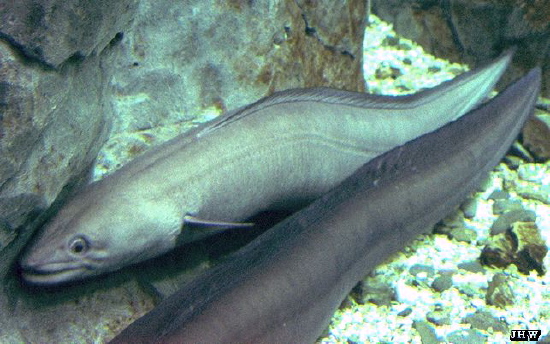
Hinkley Point addresses SEG’s concerns on eel populations in the Bristol Channel, proposing solutions for environmental conservation amidst development.
BNN, Nitish Verma, 05 Mar 2024
In a recent development, Hinkley Point has addressed concerns voiced by the Sustainable Eel Group (SEG) regarding the nuclear plant’s impact on eel populations in the Bristol Channel. The SEG, a prominent organization dedicated to the conservation of the European eel, has expressed reservations about supporting the Hinkley Point C development without significant changes to protect these migratory fish, especially the critically endangered European eel.
Environmental Alarms and Hinkley’s Rebuttals
The Bristol Channel is home to the most substantial population of migrating eels in the British Isles, with recent surveys suggesting an annual arrival of 75 million tonnes of glass eels. This has raised alarms about the potential threats posed by the Hinkley Point C development to this vital migratory route. The area’s designation as a RAMSAR reserve and Site of Special Scientific Interest underscores its global ecological importance. Chris Fayers, head of environment at Hinkley Point C, countered these concerns by highlighting extensive research conducted by the Centre for Environment, Fisheries and Aquaculture Science (Cefas), which suggests a minimal impact on fish populations, including eels. Furthermore, joint studies by the Universities of Bristol and Exeter have been cited to address risks related to noise pollution, a factor previously thought to significantly harm eel populations.
Proposed Solutions and SEG’s Stance
In response to the SEG’s concerns, Hinkley Point C has proposed the creation of a new salt marsh and the implementation of fish passes designed to be ‘eel friendly’ and benefit the overall eel population. These measures aim to mitigate the environmental impact of the nuclear plant’s operations on the local ecosystem. However, the SEG remains cautious, emphasizing the need for substantial evidence and effective implementation of these measures before lending their support to the development. The group’s focus on ensuring the survival and recovery of the European eel underscores the critical nature of this issue.
Looking Ahead: Conservation and Development Balance
The debate surrounding Hinkley Point C’s impact on eel populations in the Bristol Channel highlights the broader challenge of balancing infrastructure development with environmental conservation. As the largest and most high-profile NGO focusing on the recovery of the European eel, the SEG’s concerns carry significant weight. The outcome of this situation could set important precedents for how large-scale projects address and mitigate their environmental impacts. With both sides presenting arguments and potential solutions, the ongoing dialogue between Hinkley Point C and environmental groups will be crucial in determining the future of the Bristol Channel’s eel populations. https://bnnbreaking.com/world/uk/hinkley-point-responds-to-environmental-concerns-over-bristol-channel-eel-populations
AI’s craving for data is matched only by a runaway thirst for water and energy

John Naughton, https://www.theguardian.com/commentisfree/2024/mar/02/ais-craving-for-data-is-matched-only-by-a-runaway-thirst-for-water-and-energy
The computing power for AI models requires immense – and increasing – amounts of natural resources. Legislation is required to prevent environmental crisis.
One of the most pernicious myths about digital technology is that it is somehow weightless or immaterial. Remember all that early talk about the “paperless” office and “frictionless” transactions? And of course, while our personal electronic devices do use some electricity, compared with the washing machine or the dishwasher, it’s trivial.
Belief in this comforting story, however, might not survive an encounter with Kate Crawford’s seminal book, Atlas of AI, or the striking Anatomy of an AI System graphic she composed with Vladan Joler. And it certainly wouldn’t survive a visit to a datacentre – one of those enormous metallic sheds housing tens or even hundreds of thousands of servers humming away, consuming massive amounts of electricity and needing lots of water for their cooling systems.

On the energy front, consider Ireland, a small country with an awful lot of datacentres. Its Central Statistics Office reports that in 2022 those sheds consumed more electricity (18%) than all the rural dwellings in the country, and as much as all Ireland’s urban dwellings. And as far as water consumption is concerned, a study by Imperial College London in 2021 estimated that one medium-sized datacentre used as much water as three average-sized hospitals. Which is a useful reminder that while these industrial sheds are the material embodiment of the metaphor of “cloud computing”, there is nothing misty or fleecy about them. And if you were ever tempted to see for yourself, forget it: it’d be easier to get into Fort Knox.
There are now between 9,000 and 11,000 of these datacentres in the world. Many of them are beginning to look a bit dated, because they’re old style server-farms with thousands or millions of cheap PCs storing all the data – photographs, documents, videos, audio recordings, etc – that a smartphone-enabled world generates in such casual abundance.
But that’s about to change, because the industrial feeding frenzy around AI (AKA machine learning) means that the materiality of the computing “cloud” is going to become harder to ignore. How come? Well, machine learning requires a different kind of computer processor – graphics processing units (GPUs) – which are considerably more complex (and expensive) than conventional processors. More importantly, they also run hotter, and need significantly more energy.
On the cooling front, Kate Crawford notes in an article published in Nature last week that a giant datacentre cluster serving OpenAI’s most advanced model, GPT-4, is based in the state of Iowa. “A lawsuit by local residents,” writes Crawford, “revealed that in July 2022, the month before OpenAI finished training the model, the cluster used about 6% of the district’s water. As Google and Microsoft prepared their Bard and Bing large language models, both had major spikes in water use – increases of 20% and 34%, respectively, in one year, according to the companies’ environmental reports.”
Within the tech industry, it has been widely known that AI faces an energy crisis, but it was only at the World Economic Forum in Davos in January that one of its leaders finally came clean about it. OpenAI’s boss Sam Altman warned that the next wave of generative AI systems will consume vastly more power than expected, and that energy systems will struggle to cope. “There’s no way to get there without a breakthrough,” he said.
What kind of “breakthrough”? Why, nuclear fusion, of course. In which, coincidentally, Mr Altman has a stake, having invested in Helion Energy way back in 2021. Smart lad, that Altman; never misses a trick.
As far as cooling is concerned, it looks as though runaway AI also faces a challenge. At any rate, a paper recently published on the arXiv preprint server by scientists at the University of California, Riverside, estimates that “operational water withdrawal” – water taken from surface or groundwater sources – of global AI “may reach [between] 4.2 [and] 6.6bn cubic meters in 2027, which is more than the total annual water withdrawal of … half of the United Kingdom”.
Given all that, you can see why the AI industry is, er, reluctant about coming clean on its probable energy and cooling requirements. After all, there’s a bubble on, and awkward facts can cause punctures. So it’s nice to be able to report that soon they may be obliged to open up. Over in the US, a group of senators and representatives have introduced a bill to require the federal government to assess AI’s current environmental footprint and develop a standardised system for reporting future impacts. And over in Europe, the EU’s AI Act is about to become law. Among other things, it requires “high-risk AI systems” (which include the powerful “foundation models” that power ChatGPT and similar AIs) to report their energy consumption, use of resources and other impacts throughout their lifespan.
It’d be nice if this induces some investors to think about doing proper due diligence before jumping on the AI bandwagon.
Could climate change release 35 swimming pools’ worth of nuclear waste? Or worse… unleash a world-ending pandemic? These are the terrifying unexpected consequences of melting ice
By ROB WAUGH FOR DAILYMAIL.COM, 2 March 2024 https://www.dailymail.co.uk/sciencetech/article-13135571/Could-climate-change-release-35-swimming-pools-worth-nuclear-waste-worse-unleash-world-ending-pandemic-terrifying-unexpected-consequences-melting-ice.html
- Buried ‘nuclear city’ and swimming pools’ worth of nuclear waste
- Frozen viruses have already begun to infect human beings
- READ MORE As melting ice exposes new oil reserves, oil giants move in
Around the world, glaciers and permafrost are melting, and in some places the retreating ice is releasing buried secrets people hoped would remain forgotten.
Rising waters have exposed a secret Greenland nuclear base that engineers thought would never resurface as well as a radioactive ‘Tomb’ at the site of American nuclear tests.
And while it sounds far-fetched, very credible experts have warned that the next pandemic may well come from ancient pathogens buried in the ice, or even from diseases harbored by frozen dead Neanderthals.
The ‘secret nuclear city’ under Greenland’s ice
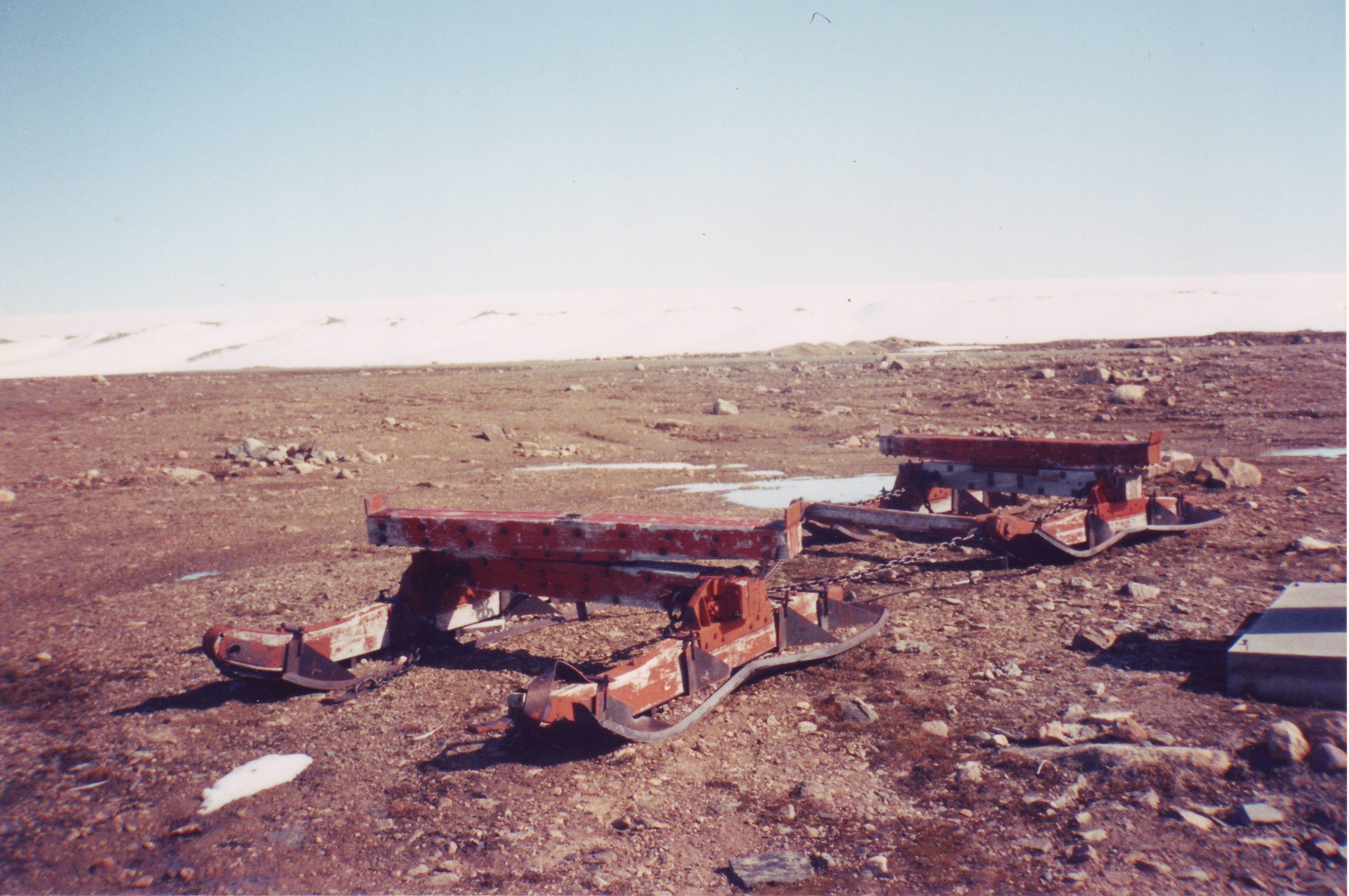
Camp Century in Greenland is a secret nuclear-powered ‘city under the ice’, where U.S. Army engineers carried out weapons research
The base has been abandoned for almost half a century, but now poses a serious concern over nuclear waste.
Powered by a portable nuclear generator, Camp Century was built in 1959, and was built to host 200 soldiers, with a plan to expand the base to hold 600 ballistic missiles.
‘Camp Century’ was abandoned in 1967, but the nuclear reactor at the base – which also had a hospital and a church in its tunnels – has long since been removed, but radioactive waste remains.
When the Army Corps of Engineers (ACE) left the base, they assumed that frigid temperatures and falling snow would keep the nuclear waste there forever.
In total, the waste is equivalent to the mass of 30 Airbus A320 airplanes – and researchers now fear that it could be released into the sea.
A 2016 study suggested that the nuclear waste could be released into the sea this century, but newer measurements at the base suggest that this will not happen until 2100.
‘Tomb’ of poison at nuclear test site
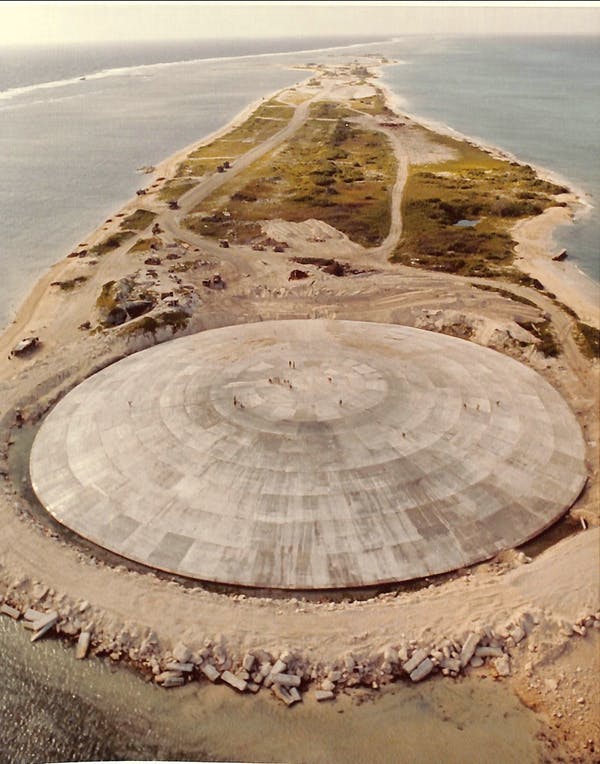
In the Marshall Islands, a huge ‘lid’ which locals know as ‘The Tomb’ covers 31 million cubic feet of nuclear waste – equivalent to the volume of 35 Olympic-sized swimming pools.
The islands were the site of American nuclear tests, but the U.S. military also shipped in waste from the mainland.
From 1946 to 1958, America conducted 67 nuclear tests in the South Pacific.
The concrete ‘lid’ officially known as the Runit Dome was built on Enewetak Atoll in the Marshall Islands to contain radioactive material from American nuclear tests in the 1950s.
Some studies have suggested that radiation levels near the site are similar to those near Chernobyl and the waters around the dome are rising every year.
Changing temperatures are causing the lid to crack, while rising waters are lapping at the atoll.
Plutonium – and a lost hydrogen bomb?
A 1968 plane crash scattered plutonium from American nuclear weapons over the ice in Greenland, which could be released by global warming.
The U.S. military assumed that the Thule air base in Greenland would be rapidly attacked in a nuclear war, so kept nuclear-armed bombers in the air to fly towards Russia in the event of an attack.
The Thule incident saw large amounts of radioactive plutonium dispersed onto the ice sheet, as a cabin fire in a B-52 bomber forced the crew to bail out.
Conventional explosives inside the four B28FI thermonuclear bombs detonated, spreading radioactive waste.
But the uranium-235 fissile core of one of the bombs was never found, despite a search with submarines.
Reports in the decades since have suggested that the lost bomb is lying under the seabed.
Frozen viruses and the next pandemic
Researchers have warned that the next pandemic could come from melting ice.
Genetic analysis of soil and lake sediment near the highest Arctic freshwater lake, Lake Hazen, suggests that the risk of ‘viral spillover’ may be high close to melting glaciers.
‘Spillover’ is where a virus infects a new host for the first time – and analysis of viruses and potential hosts in the lakebed suggests this risk may be higher near to melting glaciers.
Researchers at Ohio State University found genetic material from 33 viruses, 28 of which were unknown, in the Tibetan plateau in China, putting their age at 15,000 years old.
Viruses from Neanderthals
Other researchers have warned of viruses unleashed by melting permafrost: one-quarter of the northern hemisphere sits on top of permanently frozen ground – known as permafrost, but large areas are now melting as the world warms.
There are already examples of this – with a 2016 anthrax outbreak in Siberia attributed to melting permafrost exposing an infected reindeer carcass.
Previously researchers have warned that global warming and thawing ice might unearth diseases such as smallpox frozen into the corpses of victims, with a few infectious particles enough to revive the pathogen.
As permafrost thaws due to climate change, virologist Jean-Michel Claverie has warned that ancient viruses harbored in the long-frozen ground could be released.
Claverie explains that if an ancient pathogen eradicated Neanderthals, for instance, their frozen remains might still contain infectious viruses that could be unleashed as ice melts.
Claverie told Bloomberg News, “With climate change, we are used to thinking of dangers coming from the south.
“Now, we realize there might be some danger coming from the north as the permafrost thaws and frees microbes, bacteria and viruses.”
Claverie’s team previously revived giant viruses from up to 48,000 years ago – and the veteran scientist has warned that there could be even more ancient viruses in the ice, some of which could potentially infect humans.
Frozen poison in the ice
Polar regions have acted as a ‘chemical sink’ for the planet, locking away poisons in the ice – but melting ice could release this.
A study in Geophysical Research Letters found huge reserves of the toxic heavy metal mercury frozen in Arctic permafrost.
The amount may be 10 times higher than all the mercury pumped into the atmosphere from industry in three decades.
Paul Schuster, a U.S. Geological Survey hydrologist, “This is a complete game-changer for mercury. It’s a natural source, but some of it will be released through what we’re doing with climate change.”
Mercury is released by industry, volcanic eruptions and rock weathering – but what’s less clear is what will happen if the ‘pool’ in the Arctic is released.
New Research from Antarctica Affirms the Threat of the ‘DoomsdayGlacier,’ but Funding to Keep Studying It Is Running Out.
In a worst case scenario, rising global temperatures and marine heatwaves could melt enough of the Thwaites Glacier and other Antarctic ice to raise sea levels 10 feet by the early 2100s.

Inside Climate News, By Bob Berwyn, February 26, 2024
“………………………………………………………….. It took a whole day of sailing just to monitor and map the front of the Thwaites Glacier’s floating shelf, he said, with ice cliffs in some places towering several hundred feet above the water, marking the abrupt edge of an ice expanse about the size of Nebraska and averaging between 2,500 and 4,000 feet thick. If all the ice melts, it would raise average global sea level about 2 feet.
The sediment samples Kirkham and other scientists collected four years ago provided the data for a study published Monday in the Proceedings of the National Academies of Sciences that affirms one of the most serious concerns about Antarctica—that an irreversible meltdown of some of the frozen continent’s ice masses has already started.
“You just can’t ignore what’s happening on this glacier,” said lead author Rachel Clark, a University of Houston ice researcher who also works with the International Thwaites Glacier Collaboration, a team that has been trying to figure out just how fast the vulnerable ice will melt. But, she said the new study is important because it shows that the melting is not just random or limited to one glacier.
“It is part of a larger context of a changing climate,” she said.
Not Just Thwaites
After analyzing the chemistry and other characteristics of seafloor sediment grains from various depths and different locations near the floating edge of the glacier, the team’s members were able to show that the glacier had been relatively stable for nearly 10,000 years, since the end of the last ice age, but that it started to retreat in the mid-1940s.
Shifts in regional winds and associated changes in ocean currents are pushing more relatively warm water toward Antarctica’s frozen fringe, melting the ice and loosening it from rocky seafloor anchor points that have held the floating part of the glacier in place for thousands of years. As the ice melts away from the pinning points, it can float to sea and disintegrate faster, allowing the glacier behind it to accelerate toward the ocean. In the last 30 years, the amount of ice flowing out to sea from the Thwaites and Pine Island glacial areas and their associated floating ice shelves has doubled.
……………………………………the Thwaites Glacier, and the neighboring Pine Island Glacier, have kept retreating since the 1940s. …………………..
While the Thwaites Glacier has been identified as being among the most vulnerable to pinning point loss, a similar pattern of melting and retreat in many other Antarctic glaciers and ice shelves at least since the 1970s was documented in a separate study published Feb. 21 in Nature.
………………………………………………………… “We already seem to have pushed the climate and ice sheet system past certain irreversible thresholds, and need to observe and understand more about Thwaites, not less,” said Pam Pearson, founder and director of the International Cryosphere Climate Initiative. “Pleas of ignorance will be little comfort to future generations displaced by Antarctic sea-level rise that we could have stopped had we only acted in time.” https://insideclimatenews.org/news/26022024/new-research-from-antarctica-affirms-threat-of-doomsday-glacier-but-funding-is-running-out/
Conservationists say Hinkley C nuclear water intakes could wipe out Atlantic salmon stocks

West Somerset Free Press, By John Thorne , Friday 1st March 2024
ENDANGERED Atlantic salmon could be wiped out in the Bristol Channel once the new Hinkley Point C nuclear power station starts generating electricity, campaigners fear.
They believe the estuary’s migrating salmon population could be decimated by huge water cooling intakes serving the power station’s nuclear reactors.
The Missing Salmon Alliance (MSA), which is a collective of passionate conservation organisations with a common interest in improving the plight of Atlantic salmon, is demanding greater fish protection measures by Hinkley C’s owner EDF.
They accused EDF of ‘flagrant disregard’ for major fish kill potential if it was successful in a bid to drop a requirement to fit acoustic fish deterrents (AFDs) on the water intake heads on the bed of the estuary.
Consultation on Hinkley’s proposals to drop the AFDs ended on Thursday (February 29) and MSA said it understood the system was now unlikely to be used.
As mitigation for the removal of the AFDs, EDF had suggested compensatory creation of wetland habitat for birds and other species, and enhancements to fish passage on some existing weirs.
But MSA said Hinkley would draw a huge amount of water from the Bristol Channel to cool its reactors, about 120,000 litres per second.
A spokesperson said: “This is the equivalent of three Olympic swimming pools per minute and twice the average flow of the River Thames, in London.
“An independent panel warned in 2021 the power station could capture up to 182 million fish per year. It is likely that most of these will not survive.”
The area surrounding Hinkley is a Special Area of Conservation with a number of rivers which are home to endangered, protected, and commercially important fish, including Atlantic salmon, shad, elver eel, which is critically endangered, conger eel, brown shrimp, cod, bass, whiting, flounder, sole, and thornback ray.
The Severn has one of only four UK spawning populations of twait shad and data showed a significant risk of Hinkley wiping them out as nearly one-third of their population used the sea around the abstraction zones.
The International Union for Conservation of Nature (IUCN) classifies Atlantic salmon as ‘endangered’ in Great Britain and ‘near threatened’ on a global scale.
Game and Wildlife Conservation Trust head of fisheries Dylan Roberts said: “Wild Atlantic salmon migrate through the Bristol Channel each spring from a number of recognised rivers in the area.
“It is critical a real-time assessment of salmon smolts migrating through the area is funded by EDF.
“This is not solely about salmon, it is a much broader remit.
“It is about conserving our wider biodiversity against a massive State project steamrolling through and putting two fingers up to the environment.”
Angling Trust head of campaigns Stuart Singleton-White said: “What EDF propose in terms of compensation is inadequate.
“It will not compensate for the millions of fish sucked in by these intakes every year.
“It will decimate Atlantic salmon and shad.
“Without proper compensation and mitigation, they could become locally extinct.”………………..
1 This Month

of the week – Shut Down Drone Warfare!


Tell the Ukrainian Government to Drop Prosecution of Peace Activist Yurii Sheliazhenko

Petition to revoke the licensing of the Near Surface Nuclear Disposal Facility (NSDF) at Chalk River. https://www.ourcommons.ca/petitions/en/Petition/Details?Petition=e-7247
To see nuclear-related stories in greater depth and intensity – go to https://nuclearinformation.wordpress.com
-
Archives
- April 2026 (91)
- March 2026 (251)
- February 2026 (268)
- January 2026 (308)
- December 2025 (358)
- November 2025 (359)
- October 2025 (376)
- September 2025 (257)
- August 2025 (319)
- July 2025 (230)
- June 2025 (348)
- May 2025 (261)
-
Categories
- 1
- 1 NUCLEAR ISSUES
- business and costs
- climate change
- culture and arts
- ENERGY
- environment
- health
- history
- indigenous issues
- Legal
- marketing of nuclear
- media
- opposition to nuclear
- PERSONAL STORIES
- politics
- politics international
- Religion and ethics
- safety
- secrets,lies and civil liberties
- spinbuster
- technology
- Uranium
- wastes
- weapons and war
- Women
- 2 WORLD
- ACTION
- AFRICA
- Atrocities
- AUSTRALIA
- Christina's notes
- Christina's themes
- culture and arts
- Events
- Fuk 2022
- Fuk 2023
- Fukushima 2017
- Fukushima 2018
- fukushima 2019
- Fukushima 2020
- Fukushima 2021
- general
- global warming
- Humour (God we need it)
- Nuclear
- RARE EARTHS
- Reference
- resources – print
- Resources -audiovicual
- Weekly Newsletter
- World
- World Nuclear
- YouTube
-
RSS
Entries RSS
Comments RSS
 nuclear-news
