Japan starts 8th ocean discharge of Fukushima nuclear-tainted wastewater
Xinhua, 2024-08-08 09
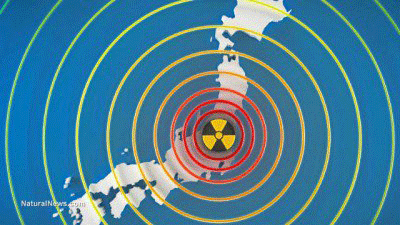
TOKYO, Aug. 8 (Xinhua) — Despite persistent opposition at home and abroad, Japan on Wednesday started its eighth round of release of nuclear-contaminated wastewater from the crippled Fukushima Daiichi Nuclear Power Plant into the Pacific Ocean.
Tokyo Electric Power Company (TEPCO), the plant’s operator, will discharge about 7,800 tons of wastewater from storage tanks into the Pacific Ocean until Aug. 25.
The Chinese Embassy in Japan on Wednesday expressed firm opposition to this irresponsible move of ocean discharge, noting that discharge concerns the health of all mankind, the global marine environment and the international public interests, and is by no means a private matter for Japan.
Japan starts 8th ocean discharge of Fukushima nuclear-tainted wastewater
Source: Xinhua
Editor: huaxia
2024-08-08 09:23:15
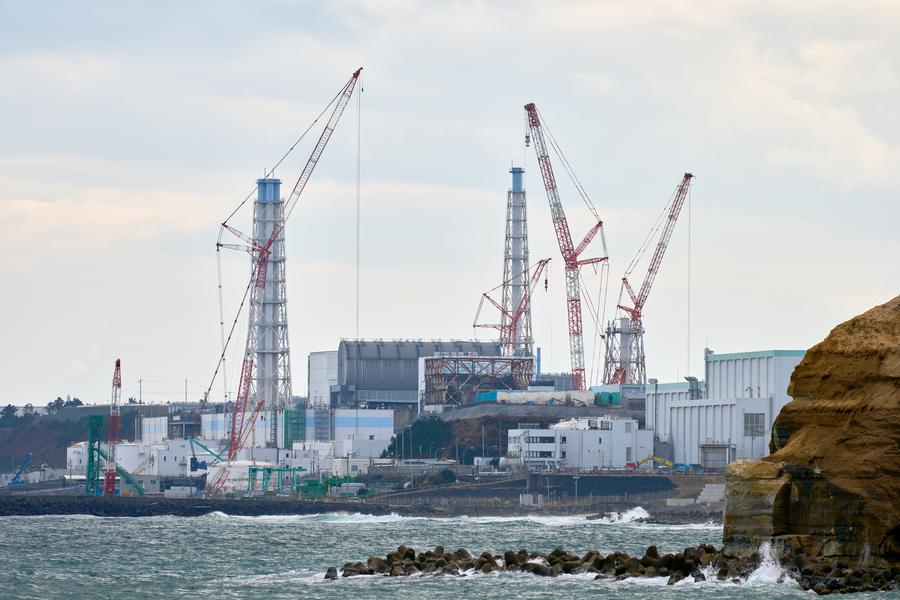
TOKYO, Aug. 8 (Xinhua) — Despite persistent opposition at home and abroad, Japan on Wednesday started its eighth round of release of nuclear-contaminated wastewater from the crippled Fukushima Daiichi Nuclear Power Plant into the Pacific Ocean.
Tokyo Electric Power Company (TEPCO), the plant’s operator, will discharge about 7,800 tons of wastewater from storage tanks into the Pacific Ocean until Aug. 25.
The Chinese Embassy in Japan on Wednesday expressed firm opposition to this irresponsible move of ocean discharge, noting that discharge concerns the health of all mankind, the global marine environment and the international public interests, and is by no means a private matter for Japan.
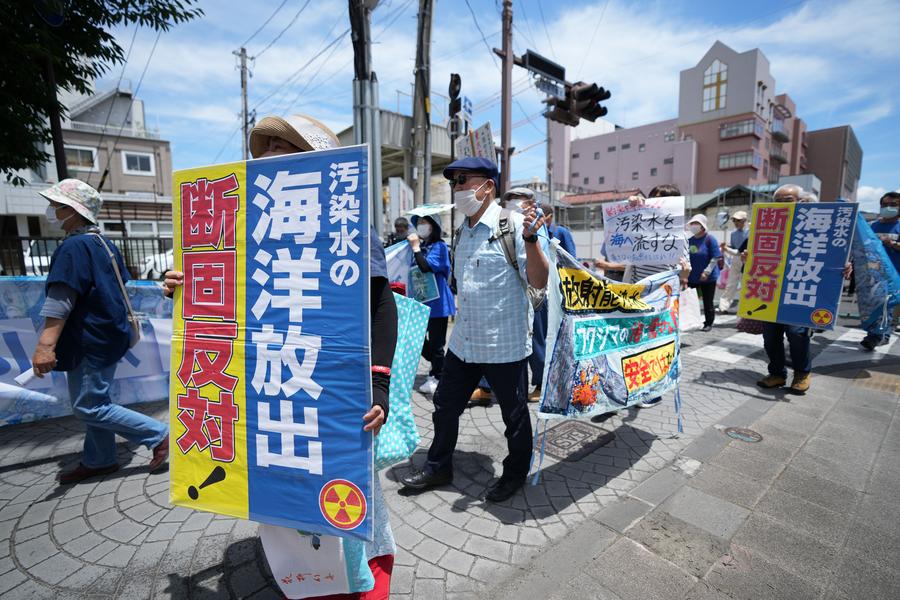
Without addressing the international community’s concerns about the safety of such discharges, the long-term reliability of purification facility, and the effectiveness of monitoring arrangements, Japan’s continued release of nuclear-contaminated water into the ocean shifts the risk of potential contamination to the whole world, a spokesperson for the embassy said.
The spokesperson called on the Japanese side to fully cooperate in setting up an independent international monitoring arrangement that remains effective in the long haul and has substantive participation of stakeholders…………………… more https://english.news.cn/20240808/34fcc4b7f0054fc6a525823c411acbe1/c.html
Link between unexploded munitions in oceans and cancer-causing toxins determined

by Anisa S. Jimenez, Phys Org, February 18, 2009
During a research trip to Puerto Rico, ecologist James Porter took samples from underwater nuclear bomb target USS Killen, expecting to find evidence of radioactive matter – instead he found a link to cancer. Data revealed that the closer corals and marine life were to unexploded bombs from the World War II vessel and the surrounding target range, the higher the rates of carcinogenic materials.
“Unexploded bombs are in the ocean for a variety of reasons – some were duds that did not explode, others were dumped in the ocean as a means of disposal,” said Porter. “And we now know that these munitions are leaking cancer-causing materials and endangering sea life.”
Data has been gathered since 1999 on the eastern end of the Isla de Vieques, Puerto Rico – a land and sea area that was used as a naval gunnery and bombing range from 1943-2003. Research revealed that marine life including reef-building corals, feather duster worms and sea urchins closest to the bomb and bomb fragments had the highest levels of toxicity. In fact, carcinogenic materials were found in concentrations up to 100,000 times over established safe limits. This danger zone covered a span of up to two meters from the bomb and its fragments.
According to research conducted in Vieques, residents here have a 23% higher cancer rate than do Puerto Rican mainlanders. Porter said a future step will be “to determine the link from unexploded munitions to marine life to the dinner plate.”….. https://phys.org/news/2009-02-link-unexploded-munitions-oceans-cancer-causing.html
Hungary to allow nuclear plant to exceed Danube water temperature limit

By Reuters, July 27, 202 https://www.reuters.com/business/energy/hungary-allow-nuclear-plant-exceed-danube-water-temperature-limit-2024-07-27/
BUDAPEST, July 27 (Reuters) – Hungary is planning to allow the temperature limit for a section of the Danube which receives cooling water from the Paks nuclear power plant to be exceeded for security of supply reasons, the energy ministry said in a statement on Friday.
The plant’s four reactors operate by using the water of the Danube to cool its operations. Currently, according to the regulation, the river cannot receive water if its temperature exceeds 30 degree Celsius, in which case the operator must cut output and wait for the river to cool below the limit.
“In addition to environmental considerations, it may therefore be justified to exceed the limit value on a case-by-case basis if this is unavoidable for security of supply.”
The Paks plant has four Russian-built VVER 440 reactors with a combined capacity of about 2,000 megawatts. The reactors became operational between 1982 and 1987 and are scheduled to be retired in 2032-2037.
Hungary plans to expand the plant, with Russia’s Rosatom building two VVER reactors with a capacity of 1.2 gigawatts each, in addition to the currently working four reactors.
Hungary is planning to allow the temperature limit for a section of the
Danube which receives cooling water from the Paks nuclear power plant to be
exceeded for security of supply reasons, the energy ministry said in a
statement on Friday. The plant’s four reactors operate by using the water
of the Danube to cool its operations. Currently, according to the
regulation, the river cannot receive water if its temperature exceeds 30
degree Celsius, in which case the operator must cut output and wait for the
river to cool below the limit.
Reuters 27th July 2024
Pacific leaders, Japan, agree on Fukushima nuclear wastewater discharge (not everyone is happy)
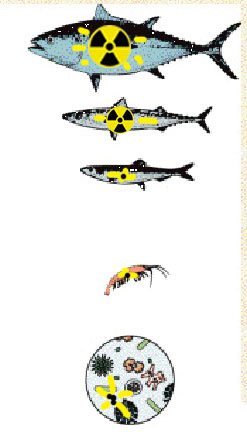
“The discharge, planned to continue for decades, is irreversible. Radionuclides bioaccumulate in marine organisms and can be passed up the food web, affecting marine life and humans who consume affected seafood,”
“The discharge, planned to continue for decades, is irreversible. Radionuclides bioaccumulate in marine organisms and can be passed up the food web, affecting marine life and humans who consume affected seafood,”
RNZ 19 July 2024 , By Pita Ligaiula in Tokyo
Consensus has been reached by Pacific leaders with Japan to address the controversial release of treated nuclear wastewater from the Fukushima nuclear power plant into the Pacific Ocean.
In August last year, Japan began discharging waste from about 1000 storage tanks holding 1.34 million metric tons of contaminated water collected after an earthquake and tsunami in 2011 that caused the meltdown of the Fukushima nuclear plant.
The agreement came at the Japanese hosted 10th Pacific Island Leaders Meeting (PALM10) on Thursday in the capital Tokyo attended by most of the Pacific Islands Forum (PIF) country leaders…………………………..
Pacific leaders emphasised the importance of a shared commitment to safeguarding the health, environment, and marine resources of the Pacific region and a need for transparency from Japan………………………………………….
TEPCO uses a process known as Advanced Liquid Processing System involving special filters which remove from the contaminated water most of the 62 types of radioactive materials, radionuclides such as cesium, strontium, iodine and cobalt but not tritium.
The leaders agreed to keep the ALPS treated water issue as a standing agenda item for future PALM meetings with Japan, supported by an ongoing review process. Their decision reflects concerns about addressing the long-term implications and ensuring continuous monitoring and evaluation.
While consensus was reached at the summit, the wastewater release continues to be questioned by some scientists.
Director of the Kewalo Marine Laboratory at the University of Hawaii, Research Professor Robert Richmond, said concerns remain regarding the efficacy of the ALPS treatment and the contents of the thousands of storage tanks of radioactive wastewater.
“The long-term effects of this discharge on Pacific marine ecosystems and those who depend on them are still unknown. Even small doses of radiation can cause cancer or genetic damage,” Richmond said in a statement to BenarNews after the agreement.
He criticised the current monitoring program as inadequate and poorly designed, failing to protect ocean and human health.
“The discharge, planned to continue for decades, is irreversible. Radionuclides bioaccumulate in marine organisms and can be passed up the food web, affecting marine life and humans who consume affected seafood,” Richmond said……………………………………………… https://www.rnz.co.nz/international/pacific-news/522582/pacific-leaders-japan-agree-on-fukushima-nuclear-wastewater-discharge—
Fukushima plant ends 7th round of treated water release into sea

Tokyo Electric Power Co. announced that it has completed the third round of
treated radioactive water discharge from the stricken Fukushima No. 1
nuclear power plant in this fiscal year. About 7,800 tons of filtered water
were released from storage tanks into the Pacific Ocean after being diluted
by a large volume of seawater, the company said on July 16. This was the
seventh batch of treated water dumped into the sea since TEPCO began the
discharge program in August last year. The utility plans four more rounds
of discharge before the current fiscal year ends in March.
Asahi Shimbun 17th July 2024
Israel using water as weapon of war as Gaza supply plummets by 94%, creating deadly health catastrophe: Oxfam

A new Oxfam report reveals how Israel has been systematically weaponizing water against Palestinians in Gaza, showing disregard for human life and international law.
July 18, 2024, by: The AIM Network,
https://theaimn.com/israel-using-water-as-weapon-of-war-as-gaza-supply-plummets-by-94-creating-deadly-health-catastrophe-oxfam/
A new Oxfam report reveals how Israel has been systematically weaponizing water against Palestinians in Gaza, showing disregard for human life and international law.
The report, Water War Crimes, finds that Israel’s cutting of external water supply, systematic destruction of water facilities and deliberate aid obstruction have reduced the amount of water available in Gaza by 94% to 4.74 litres a day per person – just under a third of the recommended minimum in emergencies and less than a single toilet flush.
Oxfam analysis also found:
- Israeli military attacks have damaged or destroyed five water and sanitation infrastructure sites every three days since the start of the war.
- The destruction of water and electricity infrastructure and restrictions on entry of spare parts and fuel (on average a fifth of the required amount is allowed in) saw water production drop by 84% in Gaza. External supply from Israel’s national water company Mekorot fell by 78%.
Israel has destroyed 70% of all sewage pumps and 100% of all wastewater treatment plants, as well as the main water quality testing laboratories in Gaza, and restricted the entry of Oxfam water testing equipment.- Gaza City has lost nearly all its water production capacity, with 88% of its water wells and 100% of its desalination plants damaged or destroyed.
The report also highlighted the dire impact of this extreme lack of clean water and sanitation on Palestinians’ health, with more than a quarter (26%) of Gaza’s population falling severely ill from easily preventable diseases.
In January, the International Court of Justice demanded that Israel immediately improve humanitarian access in light of a plausible genocide in Gaza. Since then, Oxfam has witnessed firsthand Israel’s obstruction of a meaningful humanitarian response, which is killing Palestinian civilians.
Oxfam Water and Sanitation Specialist Lama Abdul Samad said it was clear that Israel had created a devastating humanitarian emergency resulting in Palestinian civilian deaths.
“We’ve already seen Israel’s use of collective punishment and its use of starvation as a weapon of war. Now we are witnessing its weaponizing of water, which is already having deadly consequences.
“But the deliberate restriction of access to water is not a new tactic. The Israeli Government has been depriving Palestinians across the West Bank and Gaza of safe and sufficient water for many years,” she said.
“The widespread destruction and significant restrictions on aid delivery in Gaza impacting access to water and other essentials for survival, underscores the urgent need for the international community to take decisive action to prevent further suffering by upholding justice and human rights, including those enshrined in the Geneva and Genocide Conventions.”
Monther Shoblak, General Manager of the Gaza Strip’s water utility CMWU, said:
“My colleagues and I have been living through a nightmare these past nine months, but we still feel it’s our responsibility and duty to ensure everybody in Gaza is getting their minimum right of clean drinking water. It’s been very difficult, but we are determined to keep trying – even when we witness our colleagues being targeted and killed by Israel while undertaking their work.”
Oxfam is calling for urgent action including an immediate and permanent ceasefire; for Israel to allow a full and unfettered humanitarian response; and for Israel to foot the reconstruction bill for water and sanitation infrastructure.
Tribes and Environmentalists Press Arizona and Federal Officials to Stop Uranium Mining Near the Grand Canyon

Activists hope to shut down an existing mine within a new national monument and to prevent the transportation of uranium on state and federal roads across Navajo Nation lands.
Inside Climate News, By Noel Lyn Smith, July 17, 2024
PHOENIX—Members of environmental groups stood together in the lobby of the Arizona State Capitol Executive Tower late last month to deliver a petition to Arizona Gov. Katie Hobbs, requesting that she stop uranium mining activities near the Grand Canyon National Park.
The Sierra Club, Center for Biological Diversity, National Parks Conservation Association, Wild Arizona, Chispa Arizona and Haul No!, a group formed to fight the mining and transport of uranium, delivered a petition with more than 17,500 signatures to the governor.
They are seeking closure of the Pinyon Plain Mine, located less than 10 miles from the Grand Canyon. It is inside the Baaj Nwaavjo I’tah Kukveni—Ancestral Footprints of the Grand Canyon National Monument, which President Joe Biden established in August 2023. The removal of uranium ore from the mine started in late December.
Although the designation prohibits new mining claims and development, it allows prior claims with valid existing rights like Pinyon Plain to continue their operations. Energy Fuels Resources owns the mine, which is approximately 17 acres, and operates it on land managed by the U.S. Forest Service.
“This mine threatens to pollute the groundwater that feeds the seeps and springs in Grand Canyon, supporting plants, animals and people,” the petition states.
People can develop respiratory disease and toxicity in the kidneys due to uranium exposure, according to the federal Agency for Toxic Substances and Disease Registry. There are more than 500 abandoned uranium mines on the Navajo Nation, and the tribe continues to confront the ramifications of mining activities on tribal members and the environment. This includes advocating for federal money to clean up abandoned mines and compensation for former mine workers.
No one from Hobbs’ office met the group or accepted the written requests in person. Instead, the activists left the petition, the groups’ latest action attempting to get the Democratic governor’s attention, with the executive receptionist on the first floor. In January, the groups sent a letter to Hobbs urging her to revisit permits issued for Pinyon Plain Mine and seeking her help closing it. They said she has not responded to the letter.
A spokesperson with the governor’s office confirmed on July 11 that the petition was received…………………………………………………………………………..
Vania Guevara is the advocacy and political director with Chispa Arizona, a program under the League of Conservation Voters that is dedicated to increasing Latinx voices in policies that address climate change and the environment. Guevara said it is urgent for Hobbs to address uranium mining because it threatens the health and safety of Indigenous communities.
A dozen tribes have ancestral, ceremonial and traditional connections to the region, including the Havasupai Tribe, Hopi Tribe, Hualapai Tribe, Kaibab Band of Paiute Indians, Las Vegas Paiute Tribe, Moapa Band of Paiutes, Paiute Indian Tribe of Utah, Navajo Nation, San Juan Southern Paiute Tribe, Yavapai-Apache Nation, Pueblo of Zuni and the Colorado River Indian Tribes…………………………………. https://insideclimatenews.org/news/17072024/arizona-activists-press-officials-to-stop-uranium-mining-near-grand-canyon/
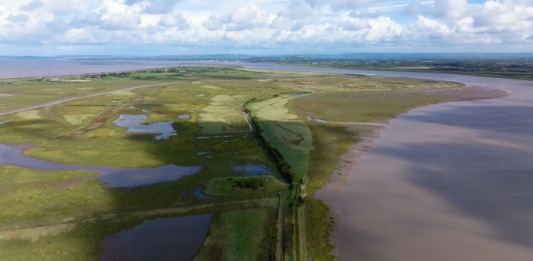
EDF’s plans to create new saltmarsh
ByBurnham-On-Sea.com, July 16, 2024
Meet the Regulator’ event on Tuesday 16th July drop-in session overseen by the EA.
It came as locals have spoken out over EDF’s plans to create a huge new saltmarsh on the Pawlett Hams instead of introducing measures to prevent fish being killed at Hinkley Point C.
Hinkley Point C says the new saltmarsh on the Pawlett Hams would be a ‘natural alternative’ to installing an acoustic fish deterrent at the new power station.
As Burnham-On-Sea.com reported here, EDF is planning to create a saltmarsh at Pawlett Hams to create a new habitat for fish and animals instead of creating an acoustic fish deterrent system at Hinkley Point C which would stop millions of fish from swimming into the plant’s cooling system and being killed.
Local environmental campaign group Protect Pawlett Hams Action Group claims the EDF plans are an “ecological disaster in the making.”
And Fish Guidance Systems (FGS) is calling for urgent support from the Environment Agency (EA) on how a Acoustic Fish Deterrent (AFD) system will be included in EDF Energy’s plans at Hinkley Point C.
FGS says: “One of these conditions includes the application of an AFD which uses low-frequency signals to deter fish from the cooling intakes for the nuclear power plant, located two miles offshore.”
“This would save the lives of local and protected fish species in the Severn Estuary, which would otherwise be pulled through the cooling water systems and released back into the Estuary. Fish under threat include shad, while migratory species such as Atlantic salmon and shad will have a 50% and 100% respective death rate if pulled into the processing as reported in a Welsh Government Commission.”
…………………………………….EDF has suggested the creation of wetland habitat for birds and other species, combined with enhancements to fish passage on a small number of existing weirs however, several environmental groups state that this will not compensate for the millions of fish pulled in by the intakes every year, which some estimate to be 128 million. FGS urges that an AFD system is the only warranted option.
Dr David Lambert, Managing Director of Fish Guidance Systems, adds: “Acoustic Fish Deterrent systems have been successfully used at coastal power plants for nearly thirty years and EDF’s repeated appeal to the government to revoke the use of one does not take into account the important fish species and wider ecosystem. We want to use our expertise to help EDF make informed, scientifically-backed decisions………………………… https://www.burnham-on-sea.com/news/edfs-plans-to-create-huge-new-saltmarsh-to-be-aired-at-meet-the-regulator-event-today/
NATO’s nuclear bases have poisoned water and fish

A German Brown Trout caught downstream from Büchel Air Base, Germany contained massive levels of carcinogenic PFAS.
Fish from Pahlbach Stream which drains Büchel Air Base, Germany are dangerously contaminated with PFAS, according to the German government.
Nuclear deterrence has a nasty side effect.
Military Poisons, By Pat Elder, July 13, 2024
Nuclear armed air bases at Kleine Brogel in Belgium, Büchel in Germany, Aviano and Ghedi in Italy, and Volkel in the Netherlands have poisoned the environment with PFAS.
Massive fires were intentionally lit in large fire pits at these bases and extinguished with cancer-causing fire-fighting foams during routine training exercises dating back 40 years or longer. Afterward, the foam residue was typically allowed to run off or drain into the soil. The “forever chemicals” pollute the soil, sewers, sediment, surface water, groundwater, and the air. NATO (North Atlantic Treaty Organization) bases regularly tested sprinkler systems in hangars to create a carcinogenic foam layer to coat the expensive aircraft. The sprinkler systems often malfunctioned. The foams were sent to sewers or deposited in groundwater or surface water.
The PFAS-laden foams work miraculously well in putting out super-hot petroleum-based fires, but remarkable technologies may escape our control and imperil humanity.
Two astonishing inventions in 1938 are like Daedalus’ fastening of wings to wax: the splitting of the uranium atom by German scientists and the discovery of per – and poly fluoroalkyl substances, (PFAS) by Dupont chemists in New Jersey. It’s not a stretch. Both nuclear weaponry and PFAS chemicals are existential threats to humanity. Their development and use are inextricably linked.
Wherever nuclear weapons are found, huge quantities of PFAS foams are ready to be used to snuff out a fire that may cause unimaginable destruction.
Like Pandora’s nightmare, once PFAS is let loose we can’t get it back in the box. We can’t get rid of it. We can’t bury it. We can’t incinerate it. We don’t know what to do with it. Notions of ”cleaning up” PFAS from these practices are largely misguided, propagandistic ploys promulgated by the U.S. military.
The Fish at Büchel Air Base
The base is located in the Rhineland-Palatinate region of western Germany, about 60 km from the border with Belgium and Luxembourg. A German Brown Trout caught in the Pahlbach, downstream from Büchel Air Base, contained
769 μg/kg of PFOS, a particularly deadly type of PFAS.
769 ug/kg = 769 micrograms per kilogram.
769 micrograms per kilogram = 769 parts per billion.
769 parts per billion = 769,000 parts per trillion (ppt).
People eat these fish.
The US EPA, meanwhile, is enforcing a limit of 4 ppt for PFOS in drinking water. Throughout most of the world municipal water providers are removing the majority of PFAS from drinking water supplies while governments largely ignore the threat of poisoned food, especially the fish. Regular ingestion of just 1 part per trillion is associated with a higher risk of developing cancer.
The European Environment Agency’s Drinking Water Directive limits total PFAS in drinking water to 500 ppt and levels for 20 individual PFAS (including PFOS) to 100 ppt. Meanwhile Germans are free to eat the fish containing PFOS 7,690 times more than the standard for drinking water.
The European Environment Agency has also set a a largely unenforced Environmental Quality Standard, (EQS) level for fish at 9,100 ppt. Scientists have scoffed at this ridiculously high level since it was promulgated. The agency has proposed to update the EQS for fish from 9,100 ppt to 77 ppt. This limit will apply to a sum of 24 PFAS, according to a “potency factor.”
We only know the results in the Brown Trout for one compound – PFOS. Often, fish may contain more than a dozen compounds and sometimes, the levels of these chemicals surpass that of the PFOS. If the EU actually passes and enforces the new regulation, eating fish throughout large areas of the continent with be “verboten.”
The Water at Büchel Air Base
Surface water on Büchel Air Base was reported at 1,866.32 ppt. In 2016 PFOS was detected at 3,200 ppt in the surrounding bodies of water and in the rainwater retention basins of Buchel Airbase…………………………………………………………………………………………………………….
Nuclear Bases
Büchel Air Base, known in Germany as Der Fliegerhorst Büchel, is the home of approximately 15 US thermonuclear weapons, carried by the German Luftwaffe’s Panavia Tornado fighter jets. F-35’s are scheduled to replace the Tornadoes. The Luftwaffe is working to upgrade the runway for the arrival of the Lockheed Martin F-35 Lightning II Joint Strike Fighter later this decade.
Each bomb can deliver a blast 22 times greater than Hiroshima.
German pilots will take off with these weapons if the order comes from President Biden. The squadron of fighter jets directly supports the North Atlantic Treaty Organization’s (NATO) contingency and wartime operations and its strike mission.
The German Tornadoes are fitted with B61 nuclear bombs. The B61 features a “dial-a-yield” capability with a yield of 0.3 to 340 kilotons. The Hiroshima bomb contained 15 kilotons, the same as 15,000 tons of TNT.
These “scalable” nuclear devices may be programmed enroute, allowing for a variety of tactical responses. A yield of .3 kilotons is 2% of the blast of Hiroshima’s Little Boy. This enables NATO to annihilate neighborhoods or advancing tanks rather than entire cities. This option lowers the threshold, the proclivity to use these weapons.
About 100 B61’s are stored at six bases: Kleine Brogel in Belgium, Büchel Air Base in Germany, Aviano and Ghedi Air Base in Italy, Volkel Air Base in the Netherlands and Incirlik in Turkey.
Let’s briefly examine the PFAS contamination at these facilities, courtesy of the data gathered by LeMonde’s Forever Pollution Project.
Kleine-Brogel Airbase, Belgium
Kleine-Brogel Airbase in Peer, Belgium was found to have 416,000 ppt of PFAS in soil. This total includes 360,000 ppt of PFOS, 7,300 ppt of PFOA, 2,500 ppt of PFNA, and 5,400 ppt of PFHxS. Buchel Air Base reported 100,000 ppt of PFOS in soil, so Kleine-Brogel appears to be substantially more contaminated than Buchel, based on the limited data……………….
LeMonde – ‘Forever pollution’: The map of Europe’s PFAS contamination
Examine LeMonde’s map to see how Belgium is fantastically contaminated with PFAS from military and industrial sources. (Map on original)…………………………………………………………………………….
Ghedi Air Base, Italy
Surface water contained 1,659 ppt of total PFAS about two miles south of the runway at Ghedi Air Base, Italy. Note the 1,000 ppt of PFBS in surface water. The compound has been used as a replacement for PFOS in firefighting foams. Ample evidence confirms the toxicity effects PFBS has on several organ systems, including cardiac, immune, hepatic, and reproductive systems. PFBS bioaccumulates in fish, although few seem to know or care.
Those who treat people who are sick and dying of disease and cancer are rightfully today’s heroes, but those who attempt to pinpoint the source of these diseases are enemies of the state.
Incirlik Air Base, Turkey
NATO
On July 10 NATO released the following statement after its Washington Summit: “We are further accelerating the modernisation of our collective defence and are investing in our Chemical, Biological, Radiological and Nuclear defence capabilities required to effectively operate in all environments.” Notice how they capitalize the powerful gods of our age.
NATO’s bases contaminate the continent. Chemical, biological, radiological, and nuclear agents don’t just terrorize the enemy, they also endanger people at home.
Buchel Shrine, Peace Camp, and jailed resisters
There’s a Catholic shrine in the Peace Camp adjacent to Büchel Air Base. It is just 200 meters from the main gate and it is seen by 2,000 soldiers and civilians as they enter the base every day. The shrine depicts Jesus breaking a gun in two. It says, “Think – Atomic weapons are a crime against God and Humanity.”……………………………………………………………………………………………….. more https://www.militarypoisons.org/latest-news/natos-nuclear-bases-have-poisoned-water-and-fish
Landmark Swedish Court Judgment against Nuclear Waste Repository.

Landmark Swedish Court Judgment against Nuclear Waste Repository: Read the English Translation http://www.dianuke.org/landmark-swedish-court-judgment-nuclear-waste-repository-read-english-translation/
MKG, the Swedish NGO Office for Nuclear Waste Review has made an unofficial translation into English of the Swedish Environmental Court opinion on the power industry’s Nuclear Waste Company SKB’s license application for a final repository for spent nuclear fuel in Forsmark, Sweden.
The court said no to the application because it considered that there were problems with the copper canister that had to be resolved now and not later. The translation shows the courts judicial argumentation and why it decided not to accept the regulator SSM’s opinion that the problems with the integrity of the copper canister were not serious and could likely be solved at a later stage in the decision-making process.
The main difference between the court’s and the regulator’s decision-making was that the court decided to rely on a multitude of scientific sources and information and not only on the material provided by SKB. It had also been uncovered that the main corrosion expert at SSM did not want to say yes to the application at this time that may have influenced the court’s decision-making. In fact there appear to have been many dissenting voices in the regulator despite the regulator’s claim in the court that a united SSM stood behind its opinion.
The court underlines in its opinion that the Environmental Code requires that the repository should be shown to be safe at this stage in the decision-making process, i.e. before the government has its say. The court says that some uncertainties will always remain but it sees the possible copper canister problems as so serious that it is not clear that the regulator’s limits for release of radioactivity can be met. This is a reason to say no to the project unless it can be shown that the copper canister will work as intended. The copper canister has to provide isolation from the radioactivity in the spent nuclear fuel to humans and the environment for very long time-scales.
It is still unclear how the process will proceed. The community of Östhammar has cancelled the referendum on the repository, as there will be no question from the government in the near future. The government has set up a working group of civil servants to manage the government’s handling of the opinions delivered by the court and SSM. SSM has told the government that it is ok to say yes to the license application.
The court has stated that there are copper canister issues that need to be considered further. The nuclear waste company SKB has said that it is preparing documentation for the government to show that there are no problems with the canister. Whether the government thinks that this will be enough remains to be seen. This is likely not what the court had in mind. The government would be wise to make a much broader review of the issue. There is a need for a thorough judicial review on the governmental level in order to override the court’s opinion. Otherwise the government’ decision may not survive an appeal to the Supreme Administrative Court.
 There are eminent corrosion experts that are of the opinion that copper is a bad choice as a canister material. There is also increasing experimental evidence that this is the case. One problem for the court was likely that SKB has hesitant to do the required corrosion studies that show that copper does not corrode in an anoxic repository environment. The 18-year FEBEX field test shows that copper corrodes relatively rapidly with pitting corrosion. SKB says that all corrosion is due to in-leaking oxygen but it is now clear that experimental systems containing copper and clay become anoxic within weeks or months so this explanation is not valid.
MKG has for long wanted SKB to retrieve the next experimental package in the LOT field test in the Äspö Hard Rock Laboratory. SKB had refused. The remaining packages have now been heated for 18 years. When a 5-year package was retrieved in 2006 it was discovered that there was “unexpectedly high corrosion”. There is clearly a need for more lab and field test results to decide whether copper is a good and safe choice for a canister material.
The court’s decision-making shows the importance of a democratic and open governance in environmental decision-making. It is important that the continued decision-making regarding the Swedish repository for spent nuclear is transparent and multi-faceted.
The $91 billion wasted on nuclear weapons last year could transform ecosystem restoration (commentary)

by Melissa Parke on 28 June 2024, https://news.mongabay.com/2024/06/the-91-billion-wasted-on-nuclear-weapons-last-year-could-transform-ecosystem-restoration-commentary/
- Nuclear weapons have caused much damage to the environment and are the only devices ever created that have the capacity to destroy all complex life forms on Earth.
- Yet every year, the nine nuclear armed-nations divert vast sums of taxpayers’ money into producing, maintaining and modernizing weapons of mass destruction, approximately $91.4 billion in 2023 alone.
- “One year of nuclear weapons spending could pay for wind power for more than 12 million homes to help combat climate change, plant one million trees a minute, or clean up the Great Pacific Garbage Patch for 187 years in a row,” argues the director of the Nobel Peace Prize-winning organization, ICAN.
- This post is a commentary. The views expressed are those of the author, not necessarily of Mongabay.
The overwhelming sums of money being wasted on nuclear weapons every year should be spent on conserving our planet instead, argues a new report from my organization, the International Campaign to Abolish Nuclear Weapons (ICAN). We should take the money wasted on these bombs and missiles every single year and instead of setting ourselves up to cause more, possibly irrevocable and irreconcilable damage, clean up the legacy of harm already done and invest in restoring ecosystems and halting biodiversity loss.
Nuclear weapons have already caused so much damage to our environment and they are the only devices ever created that have the capacity to destroy all complex life forms on Earth. Nuclear war would mean climate disruption with devastating consequences. The world would fall under a nuclear winter, be subject to a deadly global famine and exacerbated effects of global warming.
But contrary to what some would like you to believe, their devastating impact is not just limited to a hypothetical post-apocalyptic hell, many of them are already being felt today.
Throughout their entire cycle, nuclear weapons have left a devastating environmental legacy around the world: from uranium mining through fuel production at nuclear processing plants to the impacts of the thousands of nuclear tests over the decades. Nuclear weapons facilities have contaminated land and water with radioactive waste that can last many thousands of years. Efforts to clean up the sites have been haphazard or half-hearted, cost billions of dollars over decades – and are still largely unfinished.
For a terrible and terrifying example of how poorly restoration efforts were carried out, we need to talk about the Runit Dome in the Marshall Islands. After exploding 43 nuclear bombs on the Enewetak Atoll between 1948 and 1958, and removing the people who lived there from their homes, the U.S. government did not initiate clean up until the 1970s. This consisted of – as the LA Times put it in a scathing exposé – “burying 33 Olympic-sized swimming pools’ worth of irradiated soil and two Olympic swimming pools’ worth of contaminated debris from islands across the atoll” and dumping it into the crater they created with the detonation, capping it off with a concrete dome.
That dome is showing signs of structural weakness and could crack under the pressure from rising sea levels. The U.S. Government now contends that the crater was built to store the debris, not protect the rest of the nearby environment from its contents.
Of course, it is not only the U.S. that has failed to deal with the environmental effects of its nuclear weapons production, testing, and use. The same can be said for the British in Australia and Kiribati, the French in Algeria and the Pacific, and the USSR/Russia in Kazakhstan.
It is also important to remember that radiation cannot be contained geographically; it respects no country’s border. Fallout patterns are complex and the full consequences of the fallout of years of particular atmospheric nuclear testing is not known- neither on humans, nor on other animals. Recent scientific studies found that the high radiation levels in wild boars in Ukraine are likely not directly due to the Chernobyl disaster but rather the result of nuclear weapons testing before the disaster occurred, resulting in residual radiation in the surrounding areas for decades.
Yet their destructive capacity does not end there. Nuclear weapons also carry a hefty opportunity cost that prevents us from addressing some of the urgent crises facing our planet.
Every year, the nine nuclear armed-states divert vast sums of taxpayers’ money into producing, maintaining and modernizing weapons of mass destruction. ICAN puts out the only report tracking this global nuclear weapons spending on an annual basis, our latest edition found that they wasted $91.4 billion on their arsenals in 2023.
Think of what this money could have gone to instead. One year of nuclear weapons spending could pay for wind power for more than 12 million homes to help combat climate change, plant one million trees a minute, or clean up the Great Pacific Garbage Patch for 187 years in a row.
It could also cover the entire annual funding gap ($79 billion) for global efforts to restore ecosystems and halt biodiversity loss. As biodiversity loss continues at unprecedented speeds under the onslaught of environmental degradation and climate change, new studies reveal that conservation efforts to improve or slow the decline of biodiversity are working in two-thirds of the cases. Imagine what could be achieved if these efforts were fully funded.
Anyone concerned about the climate crisis, about environmental degradation and biodiversity loss, should also support the cause of nuclear disarmament with equal passion, as these are interconnected issues.
Every species will be harmed in a nuclear war. Only one species can stop it.
Melissa Parke is Executive Director of the International Campaign to Abolish Nuclear Weapons (ICAN), winner of the 2017 Nobel Peace Prize. She formerly worked for the United Nations in Gaza, Kosovo, New York and Lebanon and served as Australia’s Minister for International Development.
Newly identified tipping point for ice sheets could mean greater sea level rise
Small increase in temperature of intruding water could lead to very big increase in loss of ice, scientists say
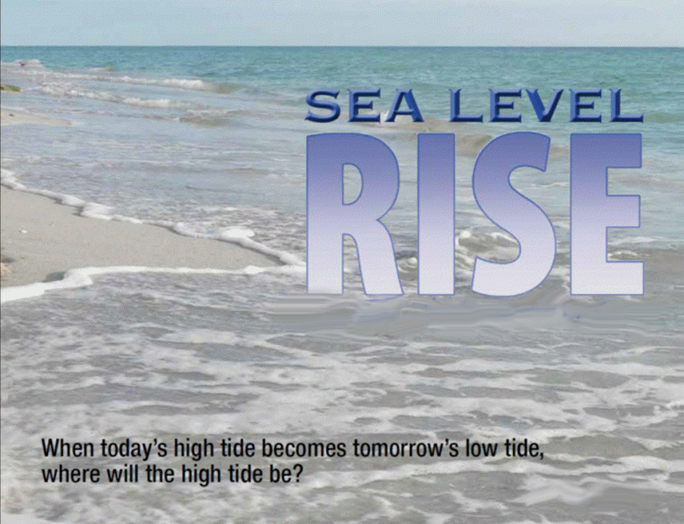
A newly identified tipping point for the loss of ice sheets in Antarctica and elsewhere could mean future sea level rise is significantly higher than current projections.
A new study has examined how warming seawater intrudes between coastal ice sheets and the ground they rest on. The warm water melts cavities in the ice, allowing more water to flow in, expanding the cavities further in a feedback loop. This water then lubricates the collapse of ice into the ocean, pushing up sea levels.
The researchers used computer models to show that a “very small increase” in the temperature of the intruding water could lead to a “very big increase” in the loss of ice – ie, tipping point behaviour.
It is unknown how close the tipping point is, or whether it has even been crossed already. But the researchers said it could be triggered by temperature rises of just tenths of a degree, and very likely by the rises expected in the coming decades.
Sea level rise is the greatest long-term impact of the climate crisis and is set to redraw the world map in coming centuries. It has the potential to put scores of major cities, from New York City to Shanghai, below sea level and to affect billions of people.
The study addresses a key question of why current models underestimate the sea level seen in earlier periods between ice ages. Scientists think some ice sheet melting processes must not be yet included in the models.
“[Seawater intrusion] could basically be the missing piece,” said Dr Alexander Bradley of the British Antarctic Survey, who led the research. “We don’t really have many other good ideas. And there’s a lot of evidence that when you do include it, the amount of sea level rise the models predict could be much, much higher.”
Previous research has shown that seawater intrusion could double the rate of ice loss from some Antarctic ice shelves. There is also real-world evidence that seawater intrusion is causing melting today, including satellite data that shows drops in the height of ice sheets near grounding zones.
“With every tenth of a degree of ocean warming, we get closer and closer to passing this tipping point, and each tenth of a degree is linked to the amount of climate change that takes place,” Bradley said. “So we need very dramatic action to restrict the amount of warming that takes place and prevent this tipping point from being passed.”
The most important action is to cut the burning of fossil fuels to net zero by 2050.
Bradley said: “Now we want to put [seawater intrusion] into ice sheet models and see whether that two-times sea level rise plays out when you analyse the whole of Antarctica.”
Scientists warned in 2022 that the climate crisis had driven the world to the brink of multiple “disastrous” tipping points, including the collapse of Greenland’s ice cap and the collapse of a key current in the north Atlantic, disrupting rains upon which billions of people depend for food.
Research in 2023 found that accelerated ice melting in west Antarctica was inevitable for the rest of the century, no matter how much carbon emissions are cut, with “dire” implications for sea levels.
The new research, published in the journal Nature Geoscience, found that some Antarctic ice sheets were more vulnerable to seawater intrusion than others. The Pine Island glacier, currently Antarctica’s largest contributor to sea level rise, is especially vulnerable, as the base of the glacier slopes down inland, meaning gravity helps the seawater penetrate. The large Larsen ice sheet is similarly at risk.
The so-called “Doomsday” glacier, Thwaites, was found to be among the least vulnerable to seawater intrusion. This is because the ice is flowing into the sea so fast already that any cavities in the ice melted by seawater intrusion are quickly filled with new ice.
Dr Tiago Segabinazzi Dotto, of the UK’s National Oceanography Centre, welcomed the new analysis of the ocean-ice feedback loop under ice sheets.
“The researchers’ simplified model is useful for showing this feedback, but a more realistic model is highly needed to evaluate both positive and negative feedbacks,” he said. “An enhancement of observations at the grounding zone is also essential to better understand the key processes associated with the instability of ice shelves.”
Japan starts 7th discharge of Fukushima nuclear-contaminated wastewater despite opposition
https://news.cgtn.com/news/2024-06-28/news-1uNrsTbwBm8/p.html
Japan on Friday started the seventh round of release of nuclear-contaminated wastewater from the crippled Fukushima Daiichi Nuclear Power Plant into the Pacific Ocean.
Despite opposition from local fishermen, and residents as well as backlash from the international community, Tokyo Electric Power Company (TEPCO), the plant’s operator, started releasing the radioactive wastewater in the morning, the third round in fiscal 2024.
Just like the previous rounds, about 7,800 tonnes of wastewater will be discharged from about a kilometer off the coast of Fukushima Prefecture via an underwater tunnel until July 16.
According to TEPCO, the company will begin dismantling empty storage tanks after the wastewater has been discharged around January next year.
There are approximately 1,000 storage tanks at the Fukushima plant because of its continued production of wastewater. TEPCO plans to dismantle 21 of these tanks over about one year starting next January, which will free up 2,400 square meters of space.
There is still uncertainty when it comes to the decommissioning schedule of the Fukushima plant and the measures to deal with contaminated wastewater, Masahide Kimura, a member of a Japanese anti-nuclear campaign group, told Xinhua.
The collapse of houses, the destruction of roads and the ground uplift along the coast caused by the recent Noto Peninsula Earthquake have warned us that nuclear power plants should not be operated in Japan, an archipelago prone to earthquakes, Kimura said.
Hit by a 9.0-magnitude earthquake and an ensuing tsunami on March 11, 2011, the Fukushima nuclear plant suffered core meltdowns that released radiation, resulting in a level-7 nuclear accident, the highest on the International Nuclear and Radiological Event Scale.
The plant has been generating a massive amount of water tainted with radioactive substances from cooling down the nuclear fuel in the reactor buildings. The contaminated water is now being stored in tanks at the nuclear plant.
Despite furious opposition both at home and abroad, the ocean discharge of the Fukushima nuclear-contaminated water began in August 2023.
French-Chinese nuclear power plant could put 200m UK fish at risk
By Freddie Sandford | 14 06 2024https://www.anglingtimes.co.uk/news/stories/french-chinese-power-plant-could-put-200m-uk-fish-at-risk/
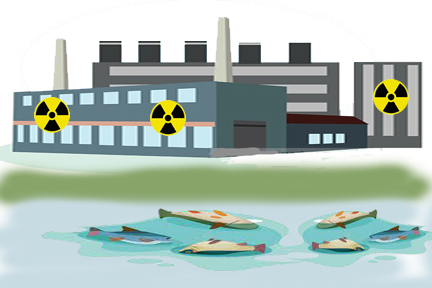
Builders of a new nuclear power plant are applying to remove fish protection measures, putting the lives of nearly 200 million fish at risk.
Earlier this year, concerns grew around the new power plant at Hinkley Point, in Somerset, as it was revealed that an incredible 178 tonnes of fish would be sucked into its pipes every year.
Initially, an acoustic fish deterrent was to be added, but the plant’s builders, NNB Generation Company Limited, co-owned by French and Chinese energy giants EDF and CDN, are applying to remove this safeguarding measure.
Fish Legal questioned the company’s plans, but they were rejected, as NNB claimed it wasn’t subject to UK laws.
“It is extremely concerning that a French and Chinese-owned company believes itself to be above our laws,” says Fish Legal’s Penny Gane.
“The British public have a right to know the impact this nuclear power plant will have. This fight is not over yet.”
Radioactive Tritium from Monticello Reactor Leaked to the Mississippi River

BY JOHN LAFORGE, https://www.counterpunch.org/2024/06/10/radioactive-tritium-from-monticello-reactor-leaked-to-the-mississippi-river/
The US Nuclear Regulatory Commission (NRC) has formally apologized for multiple false assurances from its staff that a major leak of radioactive tritium from Xcel Energy’s Monticello nuclear reactor had not reached the Mississippi River — the drinking water source for 20 million people, including, 3.7 million in the Minneapolis/St. Paul metro area.
In opening remarks to an NRC-sponsored public hearing at the Monticello (Minn.) Community Center May 15, 2024, senior NRC Branch 1 Environmental Project Manager Stephen Koenick, made jaws drop around the room when he quashed and corrected the NRC staff’s oft-repeated claims that 820,000 gallons of radioactive tritium-contaminated cooling water, that leaked from the 53-year-old reactor, had not been detected in the Mississippi.
Koenick said, “I would like to take a moment to address and clarify some miscommunication regarding the presence of detectable tritium in the Mississippi River. I know we … reported there [was] no indication [that the] tritium leak made it to the Mississippi. However, … in our Draft Environmental Impact Statement we … conclude there were some very low concentrations of tritium in the Mississippi River.” In this extremely rare and incriminating confession, Koenick went on: “So we apologize for this miscommunication.” (Transcribed from cellphone recording of the hearing.)
This official U-turn and apology from NRC managerial staff over its use of routinized PR-driven claims of “no danger to the public” — in this case regarding a major radioactive leak — should ravage the credibility an arguably industry-captured commission. Nothing it says should be taken at face value.
The NRC’s about-face nullifies months of repeatedly saying to the press, which then duly reported, that no detectable tritium had been found by Xcel’s testing of the Mississippi River. On March 18, 2023, NRC spokesperson Victoria Mitlyng even told the press, “There is no pathway for the tritium to get into drinking water.” Absurdly, even an official NRC email message sent to Nukewatch the same evening of the May 15 public hearing, states: “As far as the Mississippi River, samples taken from the river so far have not shown increased tritium concentrations.”
A week before the formal disavowal, on May 7, 2024, NRC presenters at an NRC-sponsored public hearing, held in the same Monticello community center, repeated on the record that Xcel had found “no detectable levels” of tritium in the Mississippi. Since the massive leak was disclosed in March 2023, Xcel has claimed, as it does in a company website posting (“Monticello Groundwater: Progress on the recovery and treatment of tritium in the groundwater….as of Nov. 18, 2023”): “We test the river regularly for tritium and have not found any, indicating that if it is present, it is at such low levels, and is dispersing so quickly, that it cannot be detected by highly sensitive instruments.”
Xcel’s tritium contamination of the Mississippi has been confirmed by the NRC’s April 2024 “draft Site-specific Environmental Impact Statement” (Draft EIS) regarding Xcel’s request for an extended operating license, and by Xcel’s own 2023 “Annual Radioactive Effluent Release Report”, which says on page 2: “Tritium was detected in newly developed MW-33A [monitoring well-33A] and MW-37A which resulted in MNGP [Monticello Nuclear Generating Plant] reporting an abnormal discharge to the Mississippi River.” Monitoring wells 33A and 37A are the two closest to the river.
Xcel has now, and for a second time, applied to the NRC for an extended operating license which, if granted, would allow the achey, breaky Monticello jalopy to run until the age of 80. No power reactor on earth has ever done so. Such official lying and its protection of corporate contamination of drinking water ought to be scandal enough to cancel any consideration of Xcel’s license extension. Public denunciations or “comments” on the NRC’s Draft EIS on the application are being accepted until June 25. To send yours, see: www.nukewatchinfo.org.
John LaForge is a Co-director of Nukewatch, a peace and environmental justice group in Wisconsin, and edits its newsletter.
1 This Month

of the week – Shut Down Drone Warfare!


Tell the Ukrainian Government to Drop Prosecution of Peace Activist Yurii Sheliazhenko

Petition to revoke the licensing of the Near Surface Nuclear Disposal Facility (NSDF) at Chalk River. https://www.ourcommons.ca/petitions/en/Petition/Details?Petition=e-7247
To see nuclear-related stories in greater depth and intensity – go to https://nuclearinformation.wordpress.com
-
Archives
- April 2026 (91)
- March 2026 (251)
- February 2026 (268)
- January 2026 (308)
- December 2025 (358)
- November 2025 (359)
- October 2025 (376)
- September 2025 (257)
- August 2025 (319)
- July 2025 (230)
- June 2025 (348)
- May 2025 (261)
-
Categories
- 1
- 1 NUCLEAR ISSUES
- business and costs
- climate change
- culture and arts
- ENERGY
- environment
- health
- history
- indigenous issues
- Legal
- marketing of nuclear
- media
- opposition to nuclear
- PERSONAL STORIES
- politics
- politics international
- Religion and ethics
- safety
- secrets,lies and civil liberties
- spinbuster
- technology
- Uranium
- wastes
- weapons and war
- Women
- 2 WORLD
- ACTION
- AFRICA
- Atrocities
- AUSTRALIA
- Christina's notes
- Christina's themes
- culture and arts
- Events
- Fuk 2022
- Fuk 2023
- Fukushima 2017
- Fukushima 2018
- fukushima 2019
- Fukushima 2020
- Fukushima 2021
- general
- global warming
- Humour (God we need it)
- Nuclear
- RARE EARTHS
- Reference
- resources – print
- Resources -audiovicual
- Weekly Newsletter
- World
- World Nuclear
- YouTube
-
RSS
Entries RSS
Comments RSS
 nuclear-news