Plans to turn land in Somerset into a saltmarsh should be scrapped.
Plans to flood 1500 acres of farmland along the Severn Estuary to create
saltmarsh won’t be effective in saving fish affected by a nuclear power
station – that’s according to ecosystems expert Dr Mark Everard of the
University of the West of England. EDF is building the station at Hinkley
Point in Somerset and had agreed to install and maintain an acoustic fish
deterrent to prevent fish being sucked into the site’s cooling systems. But
they now say it’s dangerous to build and the technology is untested, and
want to flood farmland instead to create saltmarsh habitats. Dr Everard
says most fish – including migrating salmon – won’t benefit from this, and
the deterrent system is already used effectively worldwide.
BBC Farming Today 25th Nov 2024, https://www.bbc.co.uk/sounds/play/m0025cyx
What Project 2025 Would Do to the Environment – and How We Will Respond

The policy playbook from the Heritage Foundation would strip away our rights to clean air, clean water, and a healthy planet.
By Earthjustice November 12, 2024, https://earthjustice.org/article/what-project-2025-would-do-to-the-environment-and-how-we-will-respond
When Donald Trump takes office for the second time in January, we expect his administration to dramatically dismantle environmental protections. We see the shape of what’s coming not just from battling his first administration, but because of the blueprint laid out in Project 2025.
Project 2025 is 900 pages, and 150 of them are about how to destroy the environment. This deregulatory agenda, written by former Trump government officials and Heritage Foundation staff, would strip away our rights to clean air, clean water, and a healthy planet.
Earthjustice is built for moments like this. We’re the legal arm of the environmental movement, with more than 200 attorneys wielding the power of the law to defend the planet and its people. We filed more lawsuits on behalf of clients against the last Trump administration to protect the environment than any other organization – and we won 85% of our cases.
We’ve shown that we can take on the Trump administration’s worst ideas and win.
We’ve studied the proposed tactics in Project 2025, including undermining government staff who are charged with safeguarding health and environmental protections. We are prepared to defend the environment and communities from what comes next, no matter how long it takes. Here are some of the Project 2025 recommendations we’re most concerned about:
Taking a hatchet to bedrock environmental laws
What Project 2025 says:
- Gut the Endangered Species Act (ESA): Project 2025 would rewrite the most successful legal tool we have for protecting wildlife in ways that would harm imperiled species. It specifically calls for removing protections from gray wolves and Yellowstone grizzlies.
- No need for national monuments: Another proposal would repeal the Antiquities Act, which would strip the president of the ability to protect priceless public lands and waters as national monuments.
- Weaken the Clean Air Act: Project 2025 would nix the part of the law that requires the Environmental Protection Agency (EPA) to set health-based air quality standards.
- Less say for communities in environmental decisions: The plan would undermine key portions of the National Environmental Policy Act (NEPA), which ensures you have a voice in major projects built near you.
Why we’re prepared:
- Defending endangered species: The Trump administration went after both Yellowstone grizzlies and the Endangered Species Act itself. Both times, Earthjustice went straight to court. One of our cases spared the grizzlies from planned trophy hunts, and the Biden administration subsequently reversed some damaging changes to the ESA.
- Defending national monuments: When the Trump administration gutted Bears Ears and Grand Staircase-Escalante National Monuments in Utah, Earthjustice immediately sued. Protections for the monuments have now been restored. We also helped defend the monuments from a later legal challenge by the state of Utah that attacked the Antiquities Act itself.
- Defending NEPA: This summer, when 21 state attorneys-general sued to block important updates to NEPA, we intervened to fight back. The updates will ensure that critical infrastructure needed for the clean energy transition is built quickly and equitably and is resilient to climate change.
More mining and fossil fuel development on public lands
What Project 2025 says:
- Prioritize oil and gas: Project 2025 tells the agencies that manage federal lands and waters to maximize corporate oil and gas extraction. It calls for approving more pipelines like Keystone XL and Dakota Access.
- Willow? Make it bigger: The agenda explicitly aims to expand the Willow Project, which is already the largest proposed oil and gas undertaking on U.S. public lands.
- Target iconic landscapes: The project also calls for drilling in Alaska’s Arctic National Wildlife Refuge and mining in Minnesota’s Boundary Waters wilderness, among other irreplaceable natural treasure
Why we’re prepared:
- Fighting on all fronts: Under the Trump administration, Earthjustice challenged an aggressive extractive agenda at every turn. Our victories included winning protections for 128 million acres of ocean and hundreds of thousands of acres of sage-grouse habitat threatened by oil and gas development.
- We’ve defended many of the places Project 2025 targets:
- We have been defending the Arctic National Wildlife Refuge from fossil fuel development since the 1980s, and we celebrated last year when the government canceled a set of illegal oil leases
- Our litigation and advocacy has helped secure a 20-year mining ban in the Boundary Waters.
- Currently, we are fighting the Willow Project in court.
- Undermining science and the regulation of toxic chemicals
- What Project 2025 says:
- Trust the chemical companies: Project 2025 tells the EPA to be more open to industry science and to stop funding major research into toxic chemical exposure.
- Make it harder to regulate chemicals: The plan calls for the EPA to meet an absurdly high standard of proof that a chemical is hazardous before deciding to regulate it. This would give chemical companies greater freedom to put toxic substances into our air, water, and products.
- Forever chemicals are fine: Project 2025 would walk back the determination that PFAS — the “forever chemicals” linked to reproductive harms, developmental delays, and increased risk of cancer — are a hazardous substance.
Why we’re prepared:
- Fighting for the full use of the law: The government has the authority to protect us from harmful chemicals under a critical law called the Toxic Substances Control Act, or TSCA. Earthjustice is fighting to force the Biden administration to use this law more effectively.
- Pushing for transparency: When the Trump administration EPA understated the risks of deadly chemicals, Earthjustice sued under TSCA.
- Taking on PFAS: Earthjustice has fought for an array of protections against PFAS. We have helped protect communities from PFAS incineration, defended the public’s right to know about PFAS releases, pushed for stronger state laws regulating PFAS in water, and more.
Ending government efforts to address the climate crisis
What Project 2025 says:
- The plan’s authors are climate skeptics: The document refers pointedly to “the perceived threat of climate change.”
- Climate solutions? Don’t need ‘em: Project 2025 calls for undoing many of the clean energy investments in the Inflation Reduction Act, the largest climate solutions bill in history. It also supports Congressional efforts to repeal the law entirely.
- Shut down climate research: The plan would get rid of more than a dozen government offices and agencies that study climate change.
Why we’re prepared:
- Confronting government with climate reality: We have fought every administration in recent decades to include climate change impacts in various decisions. Earlier this century, we joined in a suit that became a landmark Supreme Court ruling, Massachusetts v. EPA, which found that carbon emissions are air pollutants and consequently the EPA must set limits on such pollution. We will defend the necessity to combat climate change — but further delays will hurt us all. An analysis from Energy Innovation found that enacting Project 2025 would increase carbon emissions by 2.7 billion tons by 2030 — equivalent to the annual emissions of India. These policies would cost households $32 billion in higher energy costs, result in 1.7 million lost jobs, and decrease the U.S. GDP $320 billion per year by 2030.
- Fighting for science: Earthjustice has previously defended the critical role of scientific experts within the government. In 2020, we won a lawsuit challenging the Trump administration’s illegal decision to remove independent science advisors from the EPA.
Eliminating environmental justice programs
What Project 2025 says:
- Environmental justice is not the government’s problem: Project 2025 questions whether the government should address the ways that communities of color and low-income communities are disproportionately exposed to dangerous pollution.
- Get rid of staff who work on these issues: The plan calls for disbanding offices with the Department of Justice and the EPA that focus on environmental justice.
Why we’re prepared:
- An environmental justice first: In 2021, after years of pushing by Earthjustice and our partners, the Justice Department opened its first-ever environmental justice investigation, looking into whether an Alabama county was managing sewage in a way that disproportionately harmed Black communities.
- Raising our voice: We helped advocate for billions of dollars of funding from the Inflation Reduction Act to go to the communities that need it most.
What You Can Do
- Take action: Join Earthjustice to fight back against Project 2025
Thornbury MP fights for Hinkley Point environmental protections
Claire Young is rallying to preserve essential environmental protections.
Lewis Clarke, 21 Nov 24
An MP has joined South Gloucestershire Council in calling on the Secretary
of State for Energy, Security, and Net Zero to block plans to remove
important environmental protections from the Hinkley Point C project.
In a letter to Ed Milliband, Thornbury & Yate MP Claire Young has expressed her
concern about proposals to remove Acoustic Fish Deterrent measures from the
project – warning that millions of fish, and connected wildlife, could be
affected by the plans. This is not the first time removing this
environmental mitigation tool has been proposed, with a similar push to do
so being blocked back in 2022 due to the impact it would have on local fish
stocks.
Bristol Live 21st Nov 2024, https://www.bristolpost.co.uk/news/bristol-news/thornbury-mp-fights-hinkley-point-9686572
Call to Action! Stop LANL Tritium Venting and Protect the Most Vulnerable
https://nuclearactive.org/call-to-action-stop-lanl-tritium-venting-and-protect-the-most-vulnerable/ November 21st, 2024
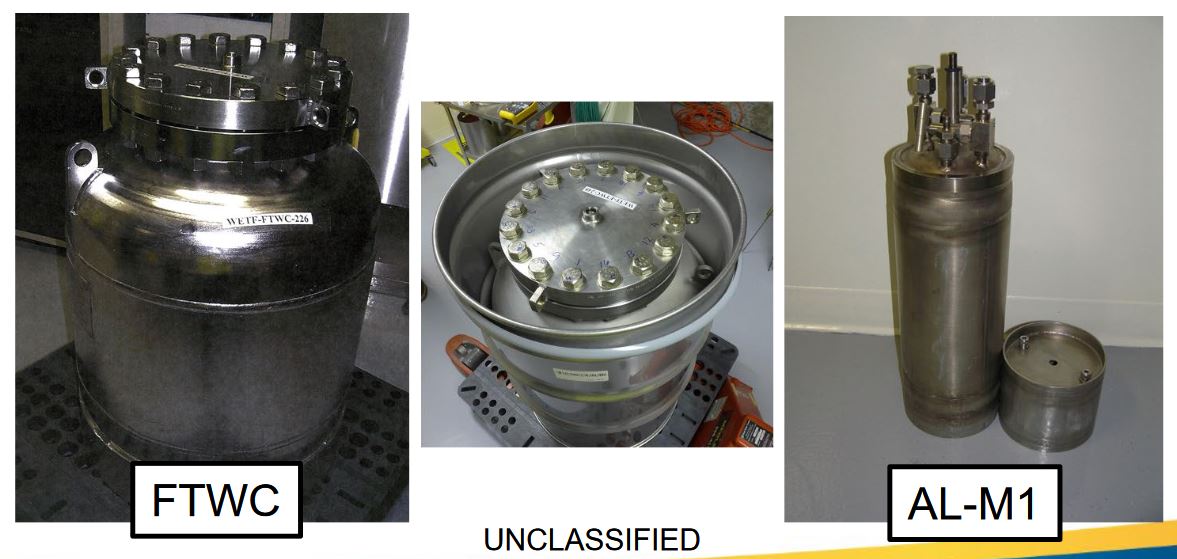
On Monday, Tewa Women United released two independent scientific reports about the harm that would be done to public health and the environment should Los Alamos National Laboratory (LANL) be allowed to vent radioactive tritium from four Flanged Tritium Waste Containers stored at LANL’s Area G radioactive and hazardous waste dump.
It is another important step taken by Tewa Women United to hold LANL and the U.S. Environmental Protection Agency (EPA) accountable to the law.
The two new reports reveal that the proposed venting of tritium, a form of radioactive hydrogen, into the environment would not meet the current EPA or Department of Energy (DOE) regulations.
Tewa Women United collaborated with German scientist Bernd Franke, a Director of the Institute für Energie und Umweliforschung (IFEU), and Dr. Arjun Makhijani from the Institute for Energy and Environmental Research. The first report, Review of LANL Radiation Dose Assessment for the Venting of Flanged Tritium Waste Containers (FTWC) at TA-54 at LANL, authored by Franke, contains results from computer models used to assess the possible range of radiation doses to the public across various weather scenarios.
Dr. Makhijani stated, “According to the EPA regulatory radiation standards, Title 40 Code of Federal Regulations (CFR) 61 Subpart H, require[s that] the radiation dose to ‘any member of the public’ should be less than 10 millirem per year.” Dr. Makhijani noted, “EPA allowed LANL to ignore children and infants in its dose calculations.”
Further, the second report, authored by Dr. Makhijani and titled Out of Order: An evaluation of the regulatory aspects of Los Alamos National Laboratory’s proposal to vent tritium from waste containers, similarly assessed LANL’s compliance with the Clean Air Act regulations and DOE Order 458.1 to keep public exposure to “as low as reasonably achieveable.”
Over the past four years DOE and EPA have ignored repeated requests from Tewa Women United to release their 53 alternatives to the proposed venting.
Kathy Wan Povi Sanchez, member of Pueblo de San Ildefonso and one of Tewa Women United’s co-founders, said, “Tritium makes water, our sacred source of life, radioactive. We were shocked to learn that LANL’s compliance calculations did not take infants and other children into account.
Talavi Cook, the Environmental Justice Program Manager at Tewa Women United, explained: “…Tewa Women United believes … radiation protection should extend to pregnant women due to fetuses comprising of 70% – 90% water; pregnant members of the public are not currently protected by the Clean Air Act or any other radiation protection regulation…. It is a matter of simple environmental justice for future generations.”
For more information, please visit https://tewawomenunited.org/2024/11/press-release-new-report-reveals-lanl-tritium-venting-could-have-triple-the-radiation-exposure-to-infants-compared-to-adults
Somerset church would ‘become’ island if ‘ham-fisted’ Hinkley saltmarsh plans go-ahead
Sunday 17th November
Somerset church would ‘become’ island if ‘ham-fisted’ Hinkley saltmarsh
plans go-ahead. Steve Bridger (Yatton, Independent), a local councillor for
the village on North Somerset Council, told a full meeting of the council
on November 12 that the plan was “ham-fisted.”
He said: “Landowners
who would be directly impacted by the proposals were sent letters in
September, completely out of the blue, with a rather threatening tone
talking about compulsory purchase of their land.” When Somerset’s new
nuclear power station was granted planning permission, it was told to
install speakers to scare off fish from getting sucked into its cooling
systems.
But EDF now says this would be “dangerous to install,” and
wants to compensate for the 44 tonnes of fish expected to die each year by
creating 340 hectares of saltmarsh along the Severn. Peter Burden
(Portishead South, Conservative) told the council chamber: “It is crazy,
chairman, to destroy habitat to mitigate for killing fish.”
West Somerset Free Press 17th Nov 2024, https://www.wsfp.co.uk/news/somerset-church-would-become-island-if-ham-fisted-hinkley-saltmarsh-plans-go-ahead-739509
‘The sixth great extinction is happening’, conservation expert warns. ‘Window of time to save climate is closing’

Dr Goodall says taking action to slow down the warming of our planet is
more urgent than ever. “We still have a window of time to start slowing
down climate change and loss of biodiversity,” Dr Goodall says. “But
it’s a window that’s closing.” Destruction of forests, and other wild
places, she points out, is intrinsically linked to the climate crisis.
“So much has changed in my lifetime,” she says, recalling that in the
forests of Tanzania where she began studying chimps more than 60 years ago,
“you used to be able to set your calendar by the timing of the two rainy
seasons”. “Now, sometimes it rains in the dry season, and sometimes
it’s dry in the wet season. It means the trees are fruiting at the wrong
time, which upsets the chimpanzees, and also the insects and the birds.”
BBC 17th Nov 2024, https://www.bbc.co.uk/news/articles/c93qvqx5y01o
Leaked tritium reached the Mississippi

by beyondnuclearinternational, https://beyondnuclearinternational.org/2024/11/17/leaked-tritium-reached-the-mississippi/
False assurances by Xcel Energy and the Nuclear Regulatory Commission have now been retracted by the regulator, reports John LaForge
In April, I reported on false assurances made by Xcel Energy and the Nuclear Regulatory Commission (NRC) regarding the November 2022 leak from the Monticello, Minnesota nuclear reactor of some 829,000 gallons of cooling water containing a huge concentration of radioactive tritium (technically, 5.2 million picocuries per liter).
In eye-opening remarks at the Monticello Community Center on May 15, NRC Senior Environmental Project Manager, Stephen J. Koenick, apologized for the commission staff’s often-repeated claims that leaked tritium from the 53-year-old reactor had not reached the Mississippi River — drinking water source for 20 million people, including the Minneapolis/St. Paul metro area.
In his underreported apology, Koenick said, “I would like to take a moment to address and clarify some miscommunication regarding the presence of detectable tritium in the Mississippi River. I know we … reported there were no indication[s] of [a] tritium leak [which] made it to the Mississippi.
“However, … in our Draft Environmental Impact Statement, we … conclude there were some very low concentrations of tritium in the Mississippi River.” Koenick went on to say, “So we apologize for this miscommunication.”
The weekly Monticello Times reported on the vanishingly rare public confession and its crucial admission that radioactive tritium from the massive 2022 leak had contaminated the Mississippi. The paper published a report on the front-page on Jun. 6, under the headline: “NRC apologizes, changes its stance on tritium leak: Now says low concentrations got into Mississippi River.”
What Koenick meant by “miscommunication” were false assurances made to the press that no tritium had been found by Xcel’s testing of the river. On Mar. 18, 2023, NRC spokesperson Viktoria Mitlyng even told the press, “There is no pathway for the tritium to get into drinking water.”
As recently as May 7, 2024, NRC presenters at a separate NRC-sponsored public hearing, also held in Monticello, said that Xcel had found “no detectable levels” of tritium in the river.
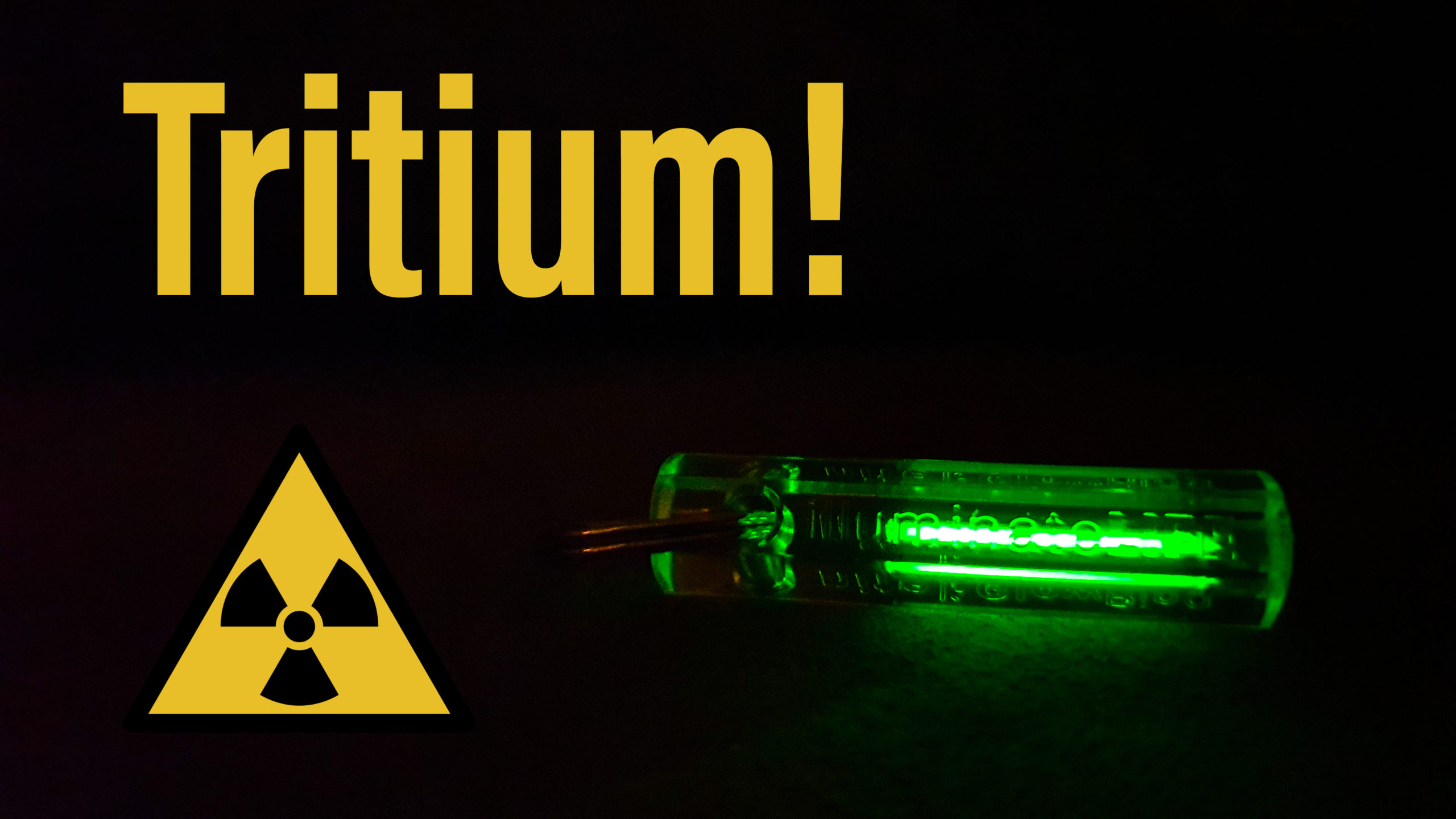
Tritium is the radioactive form of hydrogen. It cannot be removed by any kind of filtering and contaminates huge volumes of regular water that it contacts. Tritium is a danger to health if taken internally, by drinking or breathing, because it moves like water to every part of the body, and because it crosses the placenta where it endangers the fetus and causes birth abnormalities and problem pregnancies.
Xcel has applied for a second operating license extension for the Monticello jalopy which, if granted, would allow the reactor, one of the three oldest in the country, to run until the age of 80. Over 3,000 public comments have been sent to the NRC regarding its Draft Environmental Impact Statement on the 80-year-risk — most of them voicing alarmed opposition.
While studying the NRC’s Draft EIS, Nukewatch’s Lindsay Potter discovered an extremely odd coincidence.
As with any environmental impact study, the NRC has to establish a formal calendar for information-gathering. The data collection time-frame for the Monticello draft officially ended on August 18, 2023.
According to Xcel Energy and NRC documents, August 18 was the very same day that radioactive tritium contamination in Xcel’s groundwater tests near the Mississippi River exceeded the federal EPA drinking water limit. (Technically 20,000 picocuries per liter.)
Curiously, high and rapidly increasing levels of tritium (from the plume created by the major 2022 leak) was detected in a monitoring well near the river, beginning July 27, 2023. Then, tests over the following three weeks show the concentration of tritium grew five-fold, the documents show, until on August 18 when the tritium concentration exceeded the United States EPA’s drinking water allowable max.
As a result of the NRC’s data collection cut-off date, the Draft EIS omits the critical time-frame immediately after August 18, when tritium levels were above permitted limits and still increasing.
Likewise, Xcel’s “2023 Annual Radioactive Effluent Release Report” submitted to the NRC, fails to provide precise data on groundwater monitoring tests results following Aug. 18, 2023, noting in general terms only that tests done after Aug. 18, 2023 found no unsafe levels of contamination.
Based on past “miscommunications,” readers can decide whether such public assurances are reliable.
John LaForge is a co-director of Nukewatch, a peace and environmental watchdog group in Wisconsin, edits the group’s quarterly newsletter, and with Arianne Peterson co-edited Nuclear Heartland, Revised Edition: A guide to the 450 land-based missiles of the United States.
This article first appeared on Southside Pride and is republished with permission of the author.
North Somerset Council says no to ‘crazy’ EDF salt marsh plan
Chard and Ilminster News, By John Wimperis, 15 Nov 24
NORTH Somerset Council is set to urge the government to block “crazy” plans to flood hundreds of acres of farmland near Kingston Seymour.
Power company EDF wants to turn a huge swath of farmland by the village into a salt marsh to make up for fish killed at Hinkley Point C.
But councillors are calling for EDF to drop the plan and instead invest in biodiversity in ways the area wants and needs.
“It is crazy, chairman, to destroy habitat to mitigate for killing fish,” Peter Burden, Conservative Portishead South, told a full council meeting November 12.
Burden tabled a motion, amended by Annemieke Waite (Winford, Green), for the council to urge the government to insist that EDF obey the original planning conditions.
Councillors voted to pass the resolution unanimously.
Steve Bridger (Yatton, Independent), a local councillor for the village on North Somerset Council, described the EDF plan as “ham-fisted.”
Farmers and businesses dismayed
Farmers and local businesses have expressed dismay at the plans. Third generation young farmer Sophie Cole, whose entire farm could be affected, said in September: “No amount of money can compensate me for the loss of my livelihood and exciting plans for the future.”
When Somerset’s new nuclear power station was granted planning permission, it was told to install speakers to scare off fish from getting sucked into its cooling systems.
But EDF now says this would be “dangerous to install,” and wants to compensate for the 44 tonnes of fish expected to die each year by creating 340 hectares of saltmarsh along the Severn……………………..
Mr Burden said any changes to sea defences should be dealt with in the same way as other shoreline changes.
“I think we should ask for serious amounts of cash to be put into proper nature conservation and environment improvements in the wider area, not set up a completely new scheme by an organisation that’s interested in making power,” he said.
Involving central government
The council resolution sees it commit to continue working with the Environment Agency and local communities to develop a strategy to protect residents and the natural habitat, and to write to Angela Rayner and Ed Miliband, as the secretaries of state responsible for local government and energy, to urge them to enforce the original planning conditions on EDF, and not let them swap them for creating salt marshes……….. https://www.chardandilminsternews.co.uk/news/24725089.north-somerset-council-says-no-crazy-edf-salt-marsh-plan/
Farmers slam ‘crazy’ plans to flood 1,500 acres to save fish from a power plant.
Farmers and locals say their ‘lives will be destroyed’ by ‘crazy’ plans to
flood 1,500 acres – to compensate for fish lost to a nuclear power plant.
EDF Energy wants the land – much of it used for agriculture and businesses
like camping and tourism – to create a saltmarsh habitat.
Hinkley Point C is currently being built and will ingest 44 tonnes of fish a year – and EDF
wants to mitigate that loss and the wider environmental impact of the site.
It wants to compensate the death of the fish and its carbon footprint by
creating the saltmarsh at one of four sites along the River Severn in
Somerset. Plans are currently focused on Kingston Seymour, between Clevedon
and Weston-super-Mare, where landowners have received letters and documents
from EDF.
SWNS 10th Nov 2024 https://www.youtube.com/watch?v=Z1IDkPWZ46g
The Guardian view on Trump’s planet-wrecking plans: the UK government’s resolve will be tested

The new president’s disruptive policies will challenge Sir Keir Starmer’s green goals. But with strong leadership he could enhance Britain’s global influence.
Donald Trump’s electoral earthquake in America will complicate Sir Keir Starmer’s plans. Nowhere will the shock of Mr Trump’s win be more intensely felt than in environmental policy. His stance on climate – advocating a US exit from the Paris climate agreement and rallying behind “drill baby drill” – is more disruptive than constructive. This should concentrate Sir Keir’s mind as he heads to Cop29, the UN’s annual climate summit, in Baku, Azerbaijan.
At last year’s conference, world leaders agreed to “transition away” from fossil fuels in a just and orderly manner for the first time. Mr Trump, however, dismisses the climate crisis as a hoax. With this year likely to be the hottest on record, the devastating effects of global heating are undeniable, as extreme weather batters the planet. Mr Trump may ignore the facts, but the trail of climate-related chaos and destruction speaks for itself.
This ought to steel the prime minister’s resolve. Mr Trump’s plan to give the US an advantage in world trade through tariffs will complicate Labour’s goals of greening the economy, producing zero-carbon electricity, and cutting energy prices. The worst move Sir Keir could make would be to listen to rightwing voices arguing that if other nations are dropping green commitments, so should Britain. That would be a serious misstep, as leadership on climate not only reduces Britain’s carbon emissions but builds strategic alliances around the globe.
Mr Trump’s trade war threatens to disrupt supply chains, hike costs, jeopardise Britain’s green transition and stall its growth. His push for higher Nato defence spending could, in the UK, divert public funds from environmental initiatives. But this misses the point: Britain’s growth will be turbocharged by embracing green energy, leveraging its strengths in areas like offshore wind. Plus, most voters see a green shift as a path to lower energy costs and a stronger economy – a cause Sir Keir would be smart to champion.
The prime minister should double down on the plans of his energy secretary, Ed Miliband, rather than waver in the face of Trumpian pressure that prioritises short-term gains over a cleaner future. Mr Trump’s stance may also soften. He wants to gut Joe Biden’s Inflation Reduction Act and eliminate its clean tech subsidies. Yet most investment under the act has flowed to red and swing states in America’s south and midwest that voted for Mr Trump. Republican leaders in those states have vowed to protect these projects.
The profits of Elon Musk’s electric vehicle company Tesla would gain under Mr Trump’s deregulatory agenda. Mr Musk was $26bn richer the day after Mr Trump won. That reveals how the world’s richest person’s wealth is tied to political forces undermining green protections. Once a critic, Mr Musk now cosies up to Mr Trump. The quid pro quo is clear: Mr Trump, who once mocked electric cars, pandered to Mr Musk, telling a rally in August: “I’m for electric cars … because Elon [Musk] endorsed me.”
Mr Trump’s absence from future Cop meetings would be a mixed blessing. On one hand, he would hinder proceedings rather than help them. But having Mr Trump in the room might be preferable to him causing trouble from the outside. With some European leaders backing off green leadership due to domestic challenges, and others likely to follow Mr Trump’s lead, Sir Keir has a chance to step up on the world stage. This is a popular position at home. It would also be welcomed by his embattled counterparts on the continent – and beyond.
Radioactive pollution from bomb plant sparks cancer fears
The Ferret Rob Edwards, November 4, 2024
Radioactive air pollution from the nuclear weapons plant at Coulport, on the Clyde, has more than doubled over the last six years, prompting cancer warnings from campaigners.
Emissions of the radioactive gas, tritium, from the Royal Naval Armaments Depot on Loch Long, have risen steadily between 2018 and 2023 from 1.7 billion to 4.2 billion units of radioactivity, according to the latest official figures.
Campaigners say that tritium is “very hazardous” when it is breathed in, and can increase the risk of cancers. But according to the Scottish Environment Protection Agency (Sepa), the emissions are well within safety limits.
The Ministry of Defence (MoD) has declined to say what has caused the increased pollution. Tritium is known to leak from ageing nuclear submarine reactors, and is also an essential component of nuclear bombs.
Coulport, eight miles from the nuclear submarine base at Faslane on the Gareloch, is where Trident missiles and nuclear warheads are stored. They are loaded on and off Vanguard nuclear-powered submarines at an explosives handling jetty.
The rising tritium emissions from Coulport have been revealed in Sepa’s Scottish Pollution Release Inventory. The inventory was updated in October 2024 to include figures for 2023.
Rising tritium pollution from Coulport
| Year | Tritium emitted to air (MBq) |
|---|
| 2018 | 1,770 |
| 2019 | 2,046 |
| 2020 | 2,298 |
| 2021 | 3,038 |
| 2022 | 3,472 |
| 2023 | 4,224 |
| Total | 16,848 |
Source: Scottish Pollution Release Inventory
The inventory also disclosed that Faslane has discharged liquids contaminated with tritium into the Gareloch, amounting to a total of over 50 billion units of radioactivity from 2018 to 2023. The discharges peaked at 16.6 billion units in 2020.
A report released by Sepa under freedom of information law revealed that in 2019 it changed the rules to allow certain tritium-contaminated effluents from nuclear submarines at Faslane to be discharged into the Gareloch.
“Low levels” of tritium had been discovered in waste, sewage and ballast water from submarines. Sepa agreed a “minor variation” to radioactive waste regulations to allow the continued treatment and disposal of the effluents.
Tritium discharges into the Clyde from Faslane
| Year | Tritium discharged to water (MBq) |
|---|
| 2018 | 5,817 |
| 2019 | 6,510 |
| 2020 | 16,609 |
| 2021 | 13,416 |
| 2022 | 1,582 |
| 2023 | 6,946 |
| Total | 50,880 |
Source: Scottish Pollution Release Inventory
Increasing tritium air pollution from Coulport was described as “worrying” by Dr Ian Fairlie, an expert on radioactivity in the environment and a former UK government advisor. He is now vice-president of the UK Campaign for Nuclear Disarmament.
“First, they are large, more than four billion becquerels per year; second, they are steadily increasing; and third, they are of tritium – which is very hazardous when it’s inhaled or ingested,” he told The Ferret.
The discharges from Faslane into the Gareloch were also of concern, he said. “Any dose of radiation is hazardous to some degree, so that these discharges – especially of tritium – are disquieting.”…………………………………………………………………………………
https://theferret.scot/radioactive-tritium-coulport-cancer/
Endangered Bees Halt Meta’s Nuclear-Powered AI Data Center Plans
Mark Zuckerberg is trying to find more renewable energy sources for his AI ambitions.
By Kate Irwin, Nov 05, 2024, https://au.pcmag.com/ai/108105/endangered-bees-halt-metas-nuclear-powered-ai-data-center-plans
Meta’s plans to set up a nuclear-powered AI data center in the US have been halted in part because a rare bee species was found on the land, the Financial Times reports.
Meta CEO Mark Zuckerberg told staff about the issue in an all-hands meeting, according to sources familiar with the situation. The project has also faced other environmental and regulatory hurdles, and Meta is now looking for other ways to access carbon-free energy for its AI data centers.
Zuckerberg previously said Meta would build bigger AI computing clusters if the company could get the electricity to do so, admitting that limited energy resources are the main bottleneck for AI expansion.
Because AI uses a lot of electricity (and water), energy is one of its biggest challenges. Because of existing rules, adding new sources to US grids can take years, and utility firms may not want to add large, new power plants to their systems because of the challenges associated with the additions, MIT researcher and energy council member Robert Stoner previously told PCMag.
A 2017 report from the Center for Biological Diversity found that there are 347 endangered bee species in North America and Hawaii. It noted that 90% of wild plants require pollinator activity in order to survive, meaning that disrupting bee habitats could result in not only extinct species but also a loss of plant life, which could further accelerate climate change.
The 1973 Endangered Species Act currently only protects one species of endangered bee in the continental US: the Rusty Patched Bumblebee. While it’s unclear which bee species has posed a challenge to Meta’s nuclear plans, according to a map from the US Fish and Wildlife Service, there are only about 471 Rusty Patched Bumblebees left, and most of them are in Minnesota, Wisconsin, Illinois, and around the Virginia-West Virginia border.
Meta’s website currently lists nearly two dozen data centers worldwide, with the majority concentrated in the US. A map shows 26 data centers either completed or being built in addition to 75 different solar power locations, 21 wind power locations, and 25 “Water Restoration” projects.
Meta isn’t the only big tech firm eyeing nuclear power, though. Google has ordered six or seven small modular nuclear reactors from Kairos Power, and Microsoft has made plans to reopen Three Mile Island in Pennsylvania to power its AI plans.
‘Two sides of the same coin’: governments stress links between climate and nature collapse

Representatives at the Cop16 summit in Colombia negotiated against a backdrop of extreme weather and ecosystem collapse
Patrick Greenfield and Phoebe Weston in Cali, Guardian 4th Nov 2024
As world leaders gathered in Colombia this week, they also watched for news from home, where many of the headlines carried the catastrophic consequences of ecological breakdown. Across the Amazon rainforest and Brazil’s enormous wetlands, relentless fires had burned more than 22m hectares (55m acres). In Spain, the death toll in communities devastated by flooding passed 200. In the boreal forests that span Siberia, Scandinavia, Alaska and Canada, countries were recording alarming signs that their carbon sinks were collapsing under a combined weight of drought, tree death and logging. As Canada’s wildfire season crept to a close, scientists calculated it was the second worst in two decades – behind only last year’s burn, which released more carbon than some of the world’s largest emitting countries.
In global negotiations, climate and nature move along two independent tracks, and for years were broadly treated as distinct challenges. But as negotiations closed at the Cop16 biodiversity summit in Cali on Saturday, ministers from around the world underscored the crucial importance of nature to limiting damage from global heating, and vice versa – emphasising that climate and biodiversity could no longer be treated as independent issues if either crisis was to be resolved. Countries agreed a text on links between the climate and nature, but failed to include language on a phase out of fossil fuels.
The UK environment secretary, Steve Reed, said that attending the summit in Colombia had brought home the links between climate and biodiversity. “One of the other things that’s really struck me coming here and speaking to the Colombians in particular is how for them the nature crisis and the climate crisis are exactly the same thing. In the UK, perhaps more widely in the global north, we tend to talk a lot about climate and particularly net zero, and much less about nature – perhaps because we’re already more nature-depleted. But those two things connect entirely,” he said.
The Cop16 president, Susana Muhamad, Colombia’s environment minister, has sought to put nature on a level with global efforts to decarbonise the world economy during the summit, warning that slashes to greenhouse gas emissions must be accompanied by the protection and restoration of the natural world if they are to be effective. Her presidency has repeatedly described nature and climate as “two sides of the same coin”.
“There is a double movement humanity must make. The first one is to decarbonise and have a just energy transition. The other side of the coin is to restore nature and allow nature to take again its power over planet Earth so that we can really stabilise the climate,” she has said throughout Cop16 and during the buildup……………………………………………………………………………. https://www.theguardian.com/environment/2024/nov/04/two-sides-of-the-same-coin-governments-stress-links-between-climate-and-nature-collapse
Inside the radioactive island with mutant sharks that was used to test nuclear bombs

The water….remains undrinkable and sealife and plants cannot be eaten due to the radioactive water and soil.
The Defence Department concluded in the ’70s that the soil was so contained with cesium-137 and strontium-90 – both taking about three decades to decay, called a half-life – that the best course of action was to just let it rot.
Plutonium-239, however, takes a little longer; 24,000 years..…………………
Josh Milton, Oct 26, 2024,
https://metro.co.uk/2024/10/26/inside-radioactive-island-mutant-sharks-caused-nuclear-bombs-21376332/
Mutant sharks. White sand laced with plutonium. Water tainted with strontium. Hub cap-sized hermit crabs eating coconuts containing caesium. A dome ‘coffin’ crammed with radioactive material in plastic bags.
The Marshall Islands, a ring of coral reefs in the middle of the Pacific Ocean, looks like the perfect place to throw on a floppy sun hat and read a book below swaying palm trees.
But in the 1940s and ’50s, the US used two of the far-flung atolls, Bikini and Enewetak, to test out 67 nuclear bombs.
One was 1,000 times more powerful than the Hiroshima bomb, according to Hibakusha Worldwide, which tracks nuclear incidents.
This was part of Operation Crossroad, an atomic testing programme that came out of the anxiety of the Cold War.
With 52,000 Marshallese people calling the islands home at the time, the 20 islands are the remnants of ancient volcanoes halfway between Hawaii and Australia.
Yet entire islands were vaporized and craters gouged into its shallow lagoons, forcing hundreds of people out of their homes, never to return.
Bikini Atoll now has such a reputation for groovy wildlife it inspired the setting of Spongebob Squarepants.
While the islands are unlikely home to talking sponges, the radiation that lingers in its waters is impacting the wildlife.
Nurse sharks with just one dorsal fin swim around the Bikini Atoll and car-sized coral grows along the seafloor.
‘Popular belief is that radiation causes mutations, and you know what, it’s true,’ Steve Palumbi, a professor of marine sciences also at Stanford, told The Sun.
Even low levels of radiation can cause genetic mutations. Caesium, strontium and other radioactive isotopes break apart DNA, compressing thousands of years of evolution into a few decades in what one paper once described as ‘unnatural selection‘.
Marine life is on the rebound in Bikini. ‘The fact there is life there and the life there is trying to come back from the most violent thing we’ve ever done to it is pretty hopeful,’ said Steve Palumbi, a professor in marine sciences at Stanford University.
The water, though, remains undrinkable and sealife and plants cannot be eaten due to the radioactive water and soil.
People living on nearby islands, now part of the Republic of the Marshall Islands, during and after the testing show a higher risk of developing cancer – not one of the top two causes of death – and birth defects.
The list of woes for the Marshallese does not end there, with rising sea levels fuelled by climate change slowly swallowing up the habitable atolls.
The largest nuclear detonation was the hydrogen bomb Castle Bravo, fired on March 1, 1954, in Bikini. As the mushroom-shaped clast cast a shadow over the island, the radioactive fallout and debris spewed well beyond the shorelines.

‘Traces of radioactive material were later found in parts of Japan, India, Australia, Europe, and the US,’ says the Atomic Heritage Foundation.
‘This was the worst radiological disaster in US history and caused worldwide backlash against atmospheric nuclear testing.’
Bikini, the colonial spelling of Pikinni, became so radioactive there’s little hope it’ll ever be habitable.
After the Limited Test Ban Treaty of 1963 put an end to atmospheric nuclear testing, this left American officials – and the islands’ displaced citizens – with one option: wait.
The Defence Department concluded in the ’70s that the soil was so contained with cesium-137 and strontium-90 – both taking about three decades to decay, called a half-life – that the best course of action was to just let it rot.
Plutonium-239, however, takes a little longer; 24,000 years. The US dumped 437 plastic bags filled with lumps of plutonium that had spewed after a bomb misfired into a 33-foot crater left behind in 1958 by a nuke on Runit Island.
That, and about 35 Olympic-sized swimming pools’ worth of radioactive soil and nuclear waste.
The crater was plugged up by a 350-foot-wide slab of concrete called the Runit Dome, which locals call ‘The Tomb’, in the ’70s. The dome almost looks like something from a science fiction movie, surrounded by a tropical paradise.
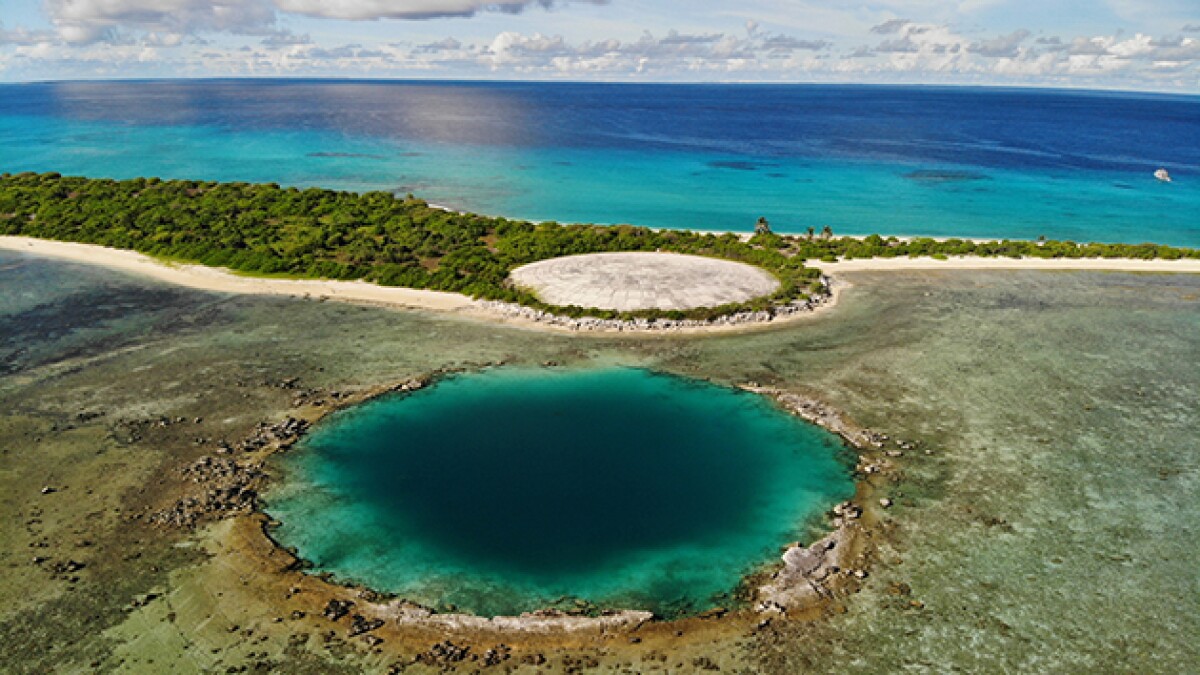
And the dome is leaking. ‘The dome is a significant visible scar on the landscape,’ Ken Buesseler, a marine radioactivity expert at the Woods Hole Oceanographic Institution (WHOI), told Oceans magazine in 2020.
But it’s a relatively small source of radioactivity.’
Overall, more than half of the 167 original inhabitants of Bikini Atoll have died. Some started showing cancers related to radiation exposure in the 1960s, while people living downwind of the explosions suffered burns and low blood counts.
Several generations later, about 5,400 Bikinians are still living in exile. Some live on a lone Pacific island called Kili, roughly 400 miles from Bikini, and others from Honolulu to the ‘Wheat Capital’ of Oklahoma, Enid.
Bikini Atoll largely remains uninhabited, with a tiny caretaker team taking care of the island infrastructure and divers pop in from time to time.
Bikinians continue to fight, however. Lobbying the US Congress for money to redevelop and clean up the place they once called home.
Scientists are hopeful. Remediation efforts include sprinkling affected areas with potassium fertilizer which reduces how much cesium-137 seeps into locally grown crops. How radioactive the soil is has also been decreasing.
The Marshall Islands Program advises that, once resettlement finally begins, a radiation monitoring programme be set up.
‘In this way, the Kili-Bikini-Ejit Local Government and the people of Bikini can be assured that radiological conditions on the islands remain at or below applicable safety standards, and the United States Government can avoid mistakes of the past,’ the programme says.
Wildlife Refuge’s Toxic Past Still A Colorado Concern
A national wildlife refuge that was contaminated by plutonium from the 1950s through the early 1990s is still a health concern for nearby Colorado communities.
Gary Stoller, Forbes, Oct 25, 2024
For many decades, Rocky Flats has been a controversial contaminated site south of Boulder, Colorado, about 20 miles north of Denver. The controversy continues, as nearby communities refuse to further develop the 6,200-acre site that’s now a wildlife refuge with trails for walkers and cyclists.
Rocky Flats, which housed facilities to produce nuclear weapons components from 1952 through the early 1990s, was contaminated by plutonium and other nuclear materials. Cleanup ended in 2006, and, a year later, the U.S. Fish and Wildlife Service designated the site as the Rocky Flats National Wildlife Refuge. Federal government officials say the area used for the refuge is safe for human visitors, but neighboring cities Westminster and Broomfield and the town of Superior apparently remain unconvinced.
For many decades, Rocky Flats has been a controversial contaminated site south of Boulder, Colorado, about 20 miles north of Denver. The controversy continues, as nearby communities refuse to further develop the 6,200-acre site that’s now a wildlife refuge with trails for walkers and cyclists.
Rocky Flats, which housed facilities to produce nuclear weapons components from 1952 through the early 1990s, was contaminated by plutonium and other nuclear materials. Cleanup ended in 2006, and, a year later, the U.S. Fish and Wildlife Service designated the site as the Rocky Flats National Wildlife Refuge. Federal government officials say the area used for the refuge is safe for human visitors, but neighboring cities Westminster and Broomfield and the town of Superior apparently remain unconvinced.
Last month, Westminster withdrew from an intergovernmental agreement to fund the building of a tunnel and a bridge into the refuge. Such construction would improve access to the refuge — home to more than 200 wildlife species— for hikers, walkers, cyclists and outdoor enthusiasts. Broomfield and Superior had previously withdrawn their support.
The refuge is part of the Rocky Mountain Greenway, a 25-mile trail that reaches from Commerce City, a Denver suburb, into Boulder and Jefferson counties. The trail links Rocky Flats with the Rocky Mountain Arsenal, land outside of downtown Denver that also was cleaned up after contamination from the manufacture of chemical warfare agents, including mustard gas, for World War II.
In a 2006 report, the U.S. Government Accountability Office said $10 billion had been spent since 1995 to clean up Rocky Flats. The amount of cleanup waste that had to be removed “was equivalent to a 65-story building the length and width of a football field,” the GAO said…………….
The majority of Westminster city councilors said last month they feared foot traffic could stir up plutonium, according to a story published by Colorado Community Media, which has publications in eight Colorado counties. Critics said measurable radioactive materials remain in and around the Rocky Flats site and will remain for thousands of years, the media group reported. https://www.forbes.com/sites/garystoller/2024/10/25/wildlife-refuges-toxic-past-still-a-colorado-concern/
1 This Month


Shut down the radiation-damaged Heysham nuclear reactors now
To see nuclear-related stories in greater depth and intensity – go to https://nuclearinformation.wordpress.com

Say No to NASA’s Reckless Nuclear Reactor on the Moon
Say No to NASA’s Reckless Nuclear Reactor on the Moon
-
Archives
- October 2026 (247)
- September 2026 (339)
- August 2026 (330)
- July 2026 (355)
- June 2026 (287)
- May 2026 (306)
- April 2026 (356)
- March 2026 (251)
- February 2026 (267)
- January 2026 (308)
- December 2025 (358)
- November 2025 (359)
-
Categories
- 1
- 1 NUCLEAR ISSUES
- business and costs
- climate change
- culture and arts
- ENERGY
- environment
- health
- history
- indigenous issues
- Legal
- marketing of nuclear
- media
- opposition to nuclear
- PERSONAL STORIES
- politics
- politics international
- Religion and ethics
- safety
- secrets,lies and civil liberties
- spinbuster
- technology
- Uranium
- wastes
- weapons and war
- Women
- 2 WORLD
- ACTION
- AFRICA
- Atrocities
- AUSTRALIA
- Christina's notes
- Christina's themes
- culture and arts
- Events
- Fuk 2022
- Fuk 2023
- Fukushima 2017
- Fukushima 2018
- fukushima 2019
- Fukushima 2020
- Fukushima 2021
- general
- global warming
- Humour (God we need it)
- Nuclear
- RARE EARTHS
- Reference
- resources – print
- Resources -audiovicual
- Weekly Newsletter
- World
- World Nuclear
- YouTube
-
RSS
Entries RSS
Comments RSS