Cesium found in deep subsea mud along West coast of Japan
 Asahi: “Significant quantity” of cesium detected along West Coast of Japan — Concentrations rise as it gets deeper http://enenews.com/asahi-significant-quantity-of-cesium-detected-along-west-coast-of-japan-concentrations-rise-as-it-gets-deeper
September 11th, 2012 By ENENews
Title: Radioactive fallout detected far from Fukushima
Source: Asahi Shimbun
Author: NOBUTARO KAJI
Date: September 11, 2012
A significant quantity of radioactive cesium, likely from the crippled Fukushima No. 1 nuclear power plant, has turned up in subsea mud about 200 kilometers away, near the mouth of the Shinanogawa River on Japan’s northwestern coast.
Scientists said samples taken in 2011 at Nagaoka, Niigata Prefecture, contained concentrations of up to 460 becquerels per kilogram of dry mud
[…]
The highest concentration was 2-3 cm below the mud surface at a water depth of 30 m. That reading of 460 becquerels per kg compares to samples of over 400 becquerels around the mouth of the Arakawa river in Tokyo Bay in August 2011.
Both readings are dozens of times higher than contamination detected after past atmospheric nuclear tests.
At a depth of 20 m the maximum concentration was 318 becquerels per kg, while at 15 m it was 255 becquerels.
[…]
Cesium increasing in Tochigi environment
Cesium from incineration ash of normal garbage is not decreasing in Tochigi, Fukushima Diary by Mochizuki September 10th, 2012 · It has been 16 months since 311, but still high level of cesium is found in incineration ash of normal garbage. It means a certain amount of cesium is still coming from Fukushima. Other nuclides are not analyzed.
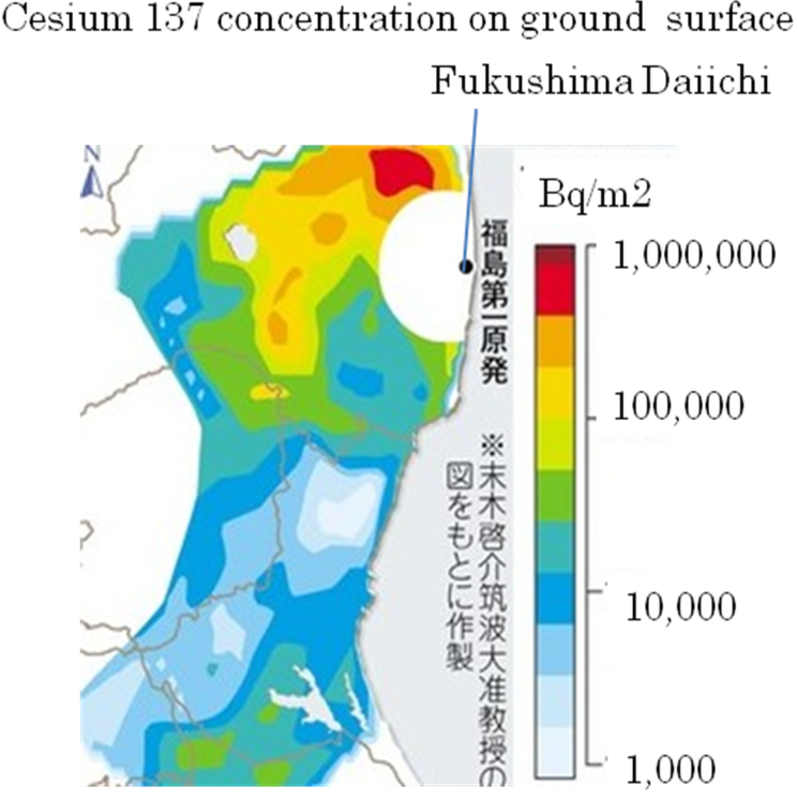
From the beginning of 2012, cesium from incineration ash is not decreasing in Ashikaga city, Tochigi. (185km from Fukushima) As the whole ecosystem, cesium is being accumulated in the environment.
On 8/30/2012, Ashikaga city government published the data of cesium detected from incineration ash. The incineration ash is not from disaster debris, only from normal garbage.
The cesium (Cs-134/137) amount in the total of fly ash and incineration ash is like below…… http://fukushima-diary.com/2012/09/cesium-from-incineration-ash-of-normal-garbage-is-not-decreasing-in-tochigi/#.UE4am9o5ekc.facebook
What do Tony Blair, nuclear power, depleted uranium, radioactive tobacco and the Nobel family have in common?
 The real point of this wide ranging article is to highlight the international scope of this cover up on contamination issues and allowing high levels in the rest of the world while showing the low levels in japan.
Op Ed by Arclight2011, 9 September 2012
 In a previous article I posed the question concerning the whereabouts of Japans contaminated food supply. Continue reading
Huge tuna fish caught – must be tested for radiation
Radiation tests for monster bluefin tuna Weekly Times, September 7, 2012 SCIENTISTS are to test a monster bluefin tuna caught off New Zealand to see if it carries radioactivity from Japan’s Fukushima nuclear plant.
The 275kg tuna was caught by Victorian fisherman Paul Worsteling50km off the coast of Greymouth.
Mr Worsteling said he waited more than 30 hours to hook the fish, then another two hours to haul it on board.
This came after a year planning the trip to hook the fish.He said he was “blown away” when he saw the tuna, which took five men to haul aboard the boat.
The fish will now be tested for radiation to determine if it has been affected by the Fukushima reactor meltdown in Japan.
The waters around Japan are a spawning ground for bluefin tuna. Mr Wosterling, from the Mornington Peninsula, said the fish would be worth more than $700,000 in Japan, but as an amateur fisherman he couldn’t sell it….
http://www.weeklytimesnow.com.au/article/2012/09/07/535075_latest-news.html
IN its quest for Arctic oil, Russia admits its undersea nuclear dump
17,000 containers of radioactive waste, 19 ships containing radioactive waste, 14 nuclear reactors, including five that still contain spent nuclear fuel; 735 other pieces of radiactively contaminated heavy machinery, and the K-27 nuclear submarine with its two reactors loaded with nuclear fuel.
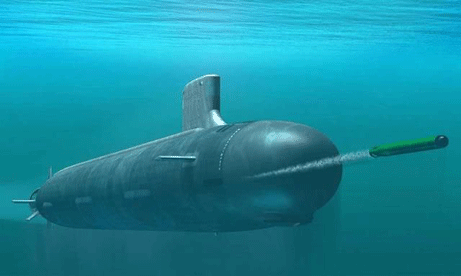 one of the most critical pieces of information missing from the report released to the Norwegian Radiation Protection Authority was the presence of the K-27 nuclear submarine, which was scuttled in 50 kilometers of water with its two reactors filled with spent nuclear fuel in in Stepovogo Bay in the Kara Sea in 1981.
Information that the reactors abord the K-27 could reachieve criticality and explode was released at the Bellona-Rosatom seminar in February.

 Russia Dumped 17 Nuclear Reactors and Tons of Waste in the Arctic by Charles Digges / Bellona.org, Earth First! Newswire, 30 Aug 12, Enormous quantities of decommissioned Russian nuclear reactors and radioactive waste were dumped into the Kara Sea in the Arctic Ocean north of Siberia over a course of decades, according to documents given to Norwegian officials by Russian authorities and published in Norwegian media.
Bellona had received in 2011 a draft of a similar report prepared for Russia’s Gossoviet, the State Council, for presentation at a meeting presided over by then-president Dmitry Medvedev on Russian environmental security.
The Russian state nuclear corporation Rosatom confirmed the figures in February of this year during a seminar it jointly held with Bellona in Moscow. Bellona is alarmed by the extent of the dumped Soviet waste, which is far greater than was previously known – not only to Bellona, but also to the Russian authorities themselves. Continue reading
The true scale of Chernobyl’s radioactive disaster

 Chernobyl, Insight from the Inside by Vladimir M.
  Chernousenko, Scientific Director of the Ukrainian Academy of Sciences Institute of Physics in Kiev’s Task Force for the Rectification of the Consequences of the Chernobyl Accident
Foreward, pp. XVI-XVII, From the Publisher:
The author’s chief motivation for writing this book is that he considers it vitally important that the world should be told the unvarnished truth about the scale and consequences of the disaster, the legacy of which will remain with us for many generations. He presents realistic estimates and new unpublished hard data from various reliable sources about the radiation pollution caused by the accident. The figures prove to be much higher than anyone dared assume up to now. We are confronted with horrendous numbers regarding the radiation pollution of the soil and aquifers in the Soviet Union. On the basis of these data, it is estimated that a territory of a least 100,000 km^2 is so polluted as to be uninhabitable. There are even estimates of an amount three times as high.
The author’s greatest concern is the well-being of the people still living in this huge territory. Many of those who are still living in the polluted areas want to leave, but the problems posed by local administration and bureaucracy do not allow them to do so. For lack of precedence, the effects on their health in the long-term can only be guessed at, at the present time. But those effects are already beginning to become evident. The health statistics included in this book are a matter of serious concern and urgently call for further investigations. Continue reading
Cesium 134 and 137 in baby food made in Tolyo
Cesium from baby food made in Tokyo and Aichi Fukushima Diary by Mochizuki on September 3rd, 2012 · Radiation is starting to be measured from baby food. We are having less and less to feed our babies.
According to the radiation measurement of Yokohama city government, cesium 134/137 are measured from baby food.
The producers are in Tokyo and Aichi. Aichi is the central Japan, 446km from Fukushima plant.
Sample 1
Purchasing date : 8/13/2012
Location : Aichi
Cs-134 : 1.59 Bq/Kg
Cs-137 : 1.83 Bq/Kg
Total : 3.4 Bq/Kg
Sample 2
Purchasing date : 8/27/2012
Location : Tokyo
Cs-134 : ND Bq/Kg
Cs-137 : 1.42 Bq/Kg
Total : 1.4 Bq/Kg
Nuclear power and its threat to fresh water supplies
 According to a 2011 report from the Union of Concerned Scientists, water withdrawals vary widely from one type of power plant to another: “On average in 2008, plants in the US nuclear fleet withdrew nearly eight times more freshwater than natural gas plants per unit of electricity generated, and 11 percent more than coal plants.
When water efficiency is factored into the equation, alternative energy sources, like wind turbines and solar cells, compare more favorably to coal, gas, and nuclear power.
Treading water, BULLETIN OF THE ATOMIC SCIENTISTS, BY DAWN STOVER | 22 AUGUST 2012 In 1954, Lewis Strauss, then chairman of the Atomic Energy Commission, gave a speech in which he famously predicted that “our children will enjoy in their homes electrical energy too cheap to meter.” Whether he was talking about fission reactors or a secret fusion project is unclear, but he was wrong in either case. What did turn out to be too cheap to meter, however, was water.
Unless you have a private well or spring on your property, you probably don’t enjoy free water in your home. But it’s a different story if you’re running a power plant or drilling for oil: The biggest water consumers pay the least for every gallon, and most power plants pay almost nothing at all. Perhaps that’s why so little research and funding is devoted to saving water — far less than is spent on energy efficiency.
This year’s drought, however, is a painful reminder that water is not an unlimited resource. According to the National Climate Data Center, moderate to exceptional drought currentlycovers 64 percent of the contiguous United States. A new study in the journal Nature Climate Change predicts that severe and widespread droughts will continue during the coming decades……
A June 2012 report from the watershed-protection group River Network found that, for every gallon of water used in an average American household, five times as much water is used to provide that same home with electricity.
It takes water to make energy. Coal, gas, and nuclear power plants generate electricity using steam-driven turbine generators. They withdraw surface water from rivers, lakes, or other bodies and use it to cool the steam. Thermoelectric power production has been the largest category of water use in the United States since 1965, and it is currently the fastest-growing user of freshwater. Continue reading
Clean up Marshall Islands radioactive mess, Pacific leaders tell USA
Pacific leaders urge US on nuclear mess, Herald Sun, 31 Aug 12, PACIFIC leaders have used a joint communique to urge the US to clean up the mess left by nuclear tests in the Marshall Islands ….. A meeting of the 15-nation Pacific Island Forum (PIF) in the Cook Islands issued the communique after a leaders’ retreat, saying the United States, which tested 67 nuclear weapons in the Marshalls from 1946-1958, had a “special responsibility” on the issue.
The communique said radioactive contaminants were still present in the Marshalls and Washington should “live up to its full obligations” to remove them and compensate affected populations.
“(There is) a special responsibility by the United States of America towards the people of the Marshall Islands, who have been and continue to be, adversely affected as a direct result of nuclear weapons tests,” it said.
US Secretary of State Hillary Clinton arrives in the Cook Islands later on Thursday and PIF leaders will have a chance to voice their concerns to her first-hand on Friday, when she meets them in the capital Avarua….
The communique also called for action on climate change, which threatens many of the low-lying island states, and marine conservation…….
They agreed that next year’s forum will be held in the Marshall Islands, which is set to place more pressure on the United States over its nuclear legacy.
A UN fact-finding mission to the northern Pacific nation found in March that test-affected islanders “feel like nomads in their own country” and had suffered long-term health problems for the Cold War-era nuclear program. http://www.heraldsun.com.au/news/breaking-news/pacific-leaders-urge-us-on-nuclear-mess/story-e6frf7k6-1226462698540
Fukushima Prefecture’s forests contaminated with radioactivity
 Fukushima to expand forest areas for radiation decontamination, The Mainichi 30 Aug 12 The Ministry of the Environment accepted a request on Aug. 29 from Fukushima Prefecture to expand forest areas for radiation decontamination from the nuclear plant disaster, ministry officialssaid.
Currently, forest decontamination is limited to areas around 20 meters from where people live, and places where people gather, like camping sites or mushroom-raising facilities. Fukushima Prefecture, which is hit hard by the nuclear disaster and has 70 percent of its area covered by forests, requested an expansion of decontamination
areas…..
. Fukushima Prefecture Vice Gov. Masao Uchibori, who submitted a request to the Ministry of the Environment to push forward with forest decontamination, says, “Even if we decontaminate an area, after a week, two weeks, or a month, the radiation levels return. We think it is because of radioactive material coming from the mountains.”
The national government will study factors including radioactive material movement and buildup in forests, the leaking and spreading of radioactive material from forests to other areas, and the effects on radiation levels from tree-thinning. The Fukushima Prefectural Government, meanwhile, will this fall examine the decontamination effects of tree-thinning over a 10-hectare area. http://mainichi.jp/english/english/newsselect/news/20120830p2a00m0na003000c.html
Excessive levels of radioactive cesium in Pacific cod
Fukushima hot cod stopped from entering U.S. Examiner, FUKUSHIMA AUGUST 30, 2012 BY: DEBORAH DUPRE The central government of Japan has ordered Aomori Prefecture to suspend shipping Pacific cod caught near the port of Hachinohe due to excessive levels of cesium detected, according to The Japan Times Wednesday.
The central government ordered Aomori Prefecture to halt shipping Pacific cod caught near the port of Hachinohe after excessive levels of radioactive cesium were, initiating the first such ban for the prefecture because of the Fukushima nuclear disaster…
..Nuclear expert Arnie Gundersen told SolarIMG that high-level people he knows in the
State Department said Hillary Clinton signed a pact with her counterpart in Japan agreeing for the United States to continue buying food from Japan, despite that food not being properly tested for radioactive materials…….
Earlier this month, fish off the crippled Fukushima No. 1 nuclear power plant were found to have 258 times the legal limit of radioactive cesium, according to Tokyo Electric Power Co.
“So we are not sampling the food coming into the United States,” he said, repeating, “The US government has come up with a decision at the highest levels of the State Department, as well as other departments who made a decision to downplay Fukushima.”
Aomori prefecture is surrounded by the sea on three sides. It literally means blue forest and was used as a landmark for fishermen. http://www.examiner.com/article/fukushima-hot-cod-stopped-from-entering-u-s?CID=examiner_alerts_article
Ontario Power Generation’s (OPG) Darlington nuclear station polluting Lake Ontario
 Darlington takes its cooling water directly from Lake Ontario and in so doing sucks up and kills millions of fish annually. The station’s hot, chemical laden waste water is then dumped back into Lake Ontario.
 Protect Lake Ontario: Stop Darlington Greenpeace Canada by Shawn-Patrick Stensil – August 24, 2012 Ontario Power Generation’s (OPG) Darlington nuclear station has been killing millions of fish every year, in contravention of federal environmental law. You can help stop this.
At public hearings in 2011, a representative from the federal Department of Fisheries and Oceans (DFO) admitted that OPG had been operating Darlington in contravention of the Fisheries Act for years. So while aware that Darlington was flouting the law, DFO did nothing to enforce the Fisheries Act, which is intended to protect fish and fish habitat.
This has caused a great deal of harm to Lake Ontario.
Nuclear stations need massive amounts of water to prevent the reactor core from overheating and causing an accident.
This is why people visualize large cooling towers emitting steam when they think of nuclear stations. Cooling towers are installed to protect aquatic ecosystems. They allow cooling water to be recycled instead of continually sucked from a lake.
The Darlington nuclear station is a dirty exception. Continue reading
Radiation levels at Louisiana sinkhole 15 times over limit
Sinkhole radiation 15 times over limit, residents urged to record health signs
BAYOU CORNE SINKHOLE DISASTER, Examiner.com AUGUST 24, 2012 BY: DEBORAH DUPRE A non-government group is urging Bayou Corne sinkhole area residents to use a new record log as a veteran radiation expert says Louisiana environmental officials are “in denial” over hazards posed by elevated radium levels that are actually fifteen times higher than the state limit, a “worst nightmare coming true,” according to an environmental attorney.
Stanley Waligora, a New Mexico-based radiation protection consultant and leading authority on health risks of naturally occurring radioactive material (NORM) has confirmed that radium levels at Bayou Corne’s sinkhole are not within safe limits, but instead, roughly 15 times higher than the state’s acceptable level, according to one of the nation’s leading environmental attorney’s Stuart Smith.
State officials are saying NORM is is below hazardous levels, but the independent findings indicate other actions need to be taken, including residents using Louisiana Environmental Action Network’s report logs to record signs and symptoms of ill health.
The information about radium is buried in a state news release, poorly written, “and goes out of its way to downplay the results,” Smith said Wednesday…… http://www.examiner.com/article/sinkhole-radiation-15-times-over-limit-residents-urged-to-record-health-signs
Radioactive sewerage accumulation in Japan
Paul Langley’s Nuclear History Blog, Asahi Shimbun, By NOBUTARO KAJI/ Japan May 22 2012 http://ajw.asahi.com/article/0311disaster/fukushima/AJ201205220055 Incinerating radioactive sewage sludge could contaminate environment Continue reading
JAPANESE FISH FOUND WITH RADIATION 250 TIMES LEGAL LIMIT
, fish Update.com, 25 Aug 12 NEW tests have detected high levels of radioactive cesium on fish caught close to the Japanese Fukushima nuclear power plant badly damaged in a massive earthquake more than 18 months ago.
Some reports suggests that the rock trout caught contained more than 250 times the legal limit.The Japanese government has already banned the sale of most species fish from that area and this is likely to continue in the light of the new tests. A few months ago radiation from the plant was found in fish close to the US West Coast…
http://www.fishupdate.com/news/fullstory.php/aid/18105/FISHupdate_Briefing.html
1 This Month
26 September – International Day for the Total Elimination of Nuclear Weapons





PLEASE OPPOSE HR 8255 AND S.3639 – bills would accelerate satellite deployment, with no environmental review or safeguards – https://ncstd5li.quorum.us/campaign/169331/
To see nuclear-related stories in greater depth and intensity – go to https://nuclearinformation.wordpress.com
-
Archives
- September 2026 (281)
- August 2026 (330)
- July 2026 (355)
- June 2026 (287)
- May 2026 (306)
- April 2026 (356)
- March 2026 (251)
- February 2026 (267)
- January 2026 (308)
- December 2025 (358)
- November 2025 (359)
- October 2025 (375)
-
Categories
- 1
- 1 NUCLEAR ISSUES
- business and costs
- climate change
- culture and arts
- ENERGY
- environment
- health
- history
- indigenous issues
- Legal
- marketing of nuclear
- media
- opposition to nuclear
- PERSONAL STORIES
- politics
- politics international
- Religion and ethics
- safety
- secrets,lies and civil liberties
- spinbuster
- technology
- Uranium
- wastes
- weapons and war
- Women
- 2 WORLD
- ACTION
- AFRICA
- Atrocities
- AUSTRALIA
- Christina's notes
- Christina's themes
- culture and arts
- Events
- Fuk 2022
- Fuk 2023
- Fukushima 2017
- Fukushima 2018
- fukushima 2019
- Fukushima 2020
- Fukushima 2021
- general
- global warming
- Humour (God we need it)
- Nuclear
- RARE EARTHS
- Reference
- resources – print
- Resources -audiovicual
- Weekly Newsletter
- World
- World Nuclear
- YouTube
-
RSS
Entries RSS
Comments RSS

