Farmers warn over Hinkley Point C’s saltmarsh plan
Burnham & Highbridge Weekly News 12th October, By John Wimperis,
PLANS to turn a huge swathe of land in North Somerset into a marsh to make up for the environmental impact of Hinkley Point C would “destroy” homes and livelihoods, farmers have warned.
Bosses at Somerset’s new nuclear power station are proposing creating new saltmarsh habitats along the Severn to compensate for the number of fish that will die by being sucked into the power station’s cooling systems. But this means communities along the river and estuary face losing hundreds of acres of farmland.
In Kingston Seymour in North Somerset, the plans to turn 1,500 acres of prime agricultural land between Weston-super-Mare and Clevedon into salt marshes have caused outcry. Farmers, who were left in “extreme distress,” after finding out their land was under threat blocked access to wildlife surveys for the plans in protest on Tuesday (October 8).
A public meeting with EDF — the energy company building Hinkley Point C — is set to be held in Kingston Seymour Village Hall on October 14 at 7.45pm.
Farmers across the affected area have urged EDF to drop the plan.
Young farmer Sophie Cole of the farm at Wharf House said: “I am a third-generation young farmer in Kingston Seymour and all my land and property is directly impacted by this proposal.
“No amount of money can compensate me for the loss of my livelihood and exciting plans for the future.”
Peter and Karen Stuckey of Channel View Farm said: “We have a thriving commercial business which provides employment and services to local people.
“We also have agricultural land and several dwellings which provides much needed local housing.
“This proposal will destroy our home and livelihood and is causing us a great deal of worry and anxiety.”
They added: “This will destroy everything we have built up over the last 50 years.”
Meanwhile, at Dowlais Farm, Kathrin and David Kirk said: “We have rebuilt Dowlais Farm from near derelict to a great family home (grade II listed) as well as a thriving campsite and two holiday cottages.
“We purchased the farm seven years ago from North Somerset Council and have invested everything we have both financially and physically into this business and built it up from scratch.
“This proposal would destroy our livelihood and our home. It would also destroy wildlife habitats for otters, bats, badgers, foxes, deer as well as birds such as owls, kestrels and buzzards who all nest in the trees on our land.”
Dan Kostyla of Sea Wall Farm, another young farmer, said: “My family have been farming here for generations — I am fourth generation — and have invested heavily in the farm business. We have a large dairy and beef farm business.
“All of this will be lost from the food chain and our business will be unviable/destroyed.”
Another young farmer, Dan Kostyla of Sea Wall Farm said: “My family have been farming here for generations — I am fourth generation — and have invested heavily in the farm business. We have a large dairy and beef farm business.
“All of this will be lost from the food chain and our business will be unviable/destroyed.”
EDF said it is obligated to make environmental improvements such as salt marshes to compensate for the power station’s impact on fish populations, which the energy company said would be limited………….
A public consultation will be held on any plans before they go ahead……………………………………………………………… https://www.burnhamandhighbridgeweeklynews.co.uk/news/24646958.farmers-warn-hinkley-point-cs-saltmarsh-plan/
Hinkley Point C saltmarsh plans ‘a disaster’, say MPs
A debate was held in Westminster Hall on October 10
Somerset Live By Daniel Mumby, Local Democracy Reporter, 11 Oct 24
Creating saltmarshes to offset the impact of Somerset’s new nuclear power station would be “a disaster”, according to local MPs. EDF Energy held a public consultation in January and February over its proposals for new saltmarshes on the Pawlett Hams, which lie on the right bank of the River Parrett near the villages of Combwich and Pawlett.
The company U-turned in early-September following a successful campaign by local residents, and is currently exploring four additional sites in Somerset and Gloucestershire which could offset the construction of Hinkley Point C. But local MPs have warned that saltmarshes will not address the underlying environmental issues and could harm existing flood defences
Sir Ashley Fox, the Conservative MP for Bridgwater, secured a parliamentary debate on this issue, which took place in Westminster Hall on Wednesday morning (October 9). He said: “The Pawlett Hams proposal was highly unpopular with the local community.
“In fact, it was difficult to find anyone who thought it was a good idea, and when I met representatives from EDF, even they seemed a little half-hearted about it.” When EDF Energy secured planning permission to build Hinkley Point C, it set out three separate proposals to prevent the loss of fish stocks in the Bristol Channel, from which water will be sourced to cool the power station’s reactor:……………………………………………………………………………………………….. https://www.somersetlive.co.uk/news/somerset-news/hinkley-point-c-saltmarsh-plans-9620846
WWF: Average wildlife populations have fallen 73 per cent in 50 years

Global wildlife populations suffered a catastrophic average decline of 73
per cent between 1970 and 2020, according to the latest edition of the
Living Planet Index published today as part of WWF’s biennial Living Planet
Report. Bleakly subtitled A System in Peril, the landmark study of global
progress towards the 2030 Sustainable Development Goals attributed the
rapid wildlife losses to human activities, such as habitat destruction and
overfishing, which have then compounded by escalating climate impacts.
Business Green 10th Oct 2024
https://www.businessgreen.com/news/4368251/wwf-average-wildlife-populations-fallen-cent
Nuclear plant ‘will decimate fish stocks’
How many fish does a nuclear power station kill? It sounds grisly, but for
the engineers on the Somerset coast building Britain’s first nuclear
power station in a generation, it’s an urgent question.
And for conservationists and local villagers on the banks of the River Severn in
Gloucestershire, it has become such an urgent question they filled a
village hall to debate it.
Proposals for the sea-water cooling system at
Hinkley Point C will see 44 tonnes of fish ingested and killed every year,
according to EDF, the company building it.
“This scheme will decimate
fish stocks,” said Dave Seal, a wildlife campaigner. “We already have
lost 80% of our salmon, and half of the salmon that get into Hinkley’s
cooling system will be destroyed.” But Andrew Cockroft, from Hinkley
Point C, insisted there will be a “very very small impact on fish
populations”.
BBC 9th Oct 2024
EDF bosses grilled over River Severn salt marsh plans at ‘prickly’ meeting
Arlingham peninsula salt marsh proposal questioned at parish council meeting with one person turning up dressed as a hedgehog
News. Will Luker, Community Reporter, 8 Oct 24,
https://www.gloucestershirelive.co.uk/news/gloucester-news/edf-bosses-grilled-over-river-9615208
Plans for salt marshes along the River Severn in Gloucestershire linked to a new nuclear power station were met with disbelief at a packed meeting last night (Monday October 7). EDF bosses were quizzed at Arlingham Parish Council about their environmental improvement plans which are linked to the new Hinkley C site in Somerset.
Prior to the meeting, the energy firm has been in touch with landowners about the idea of creating salt marshes along the river. EDF made a presentation which outlined how important the nuclear power plant is and they identified four sites for saltmarshes.
They outlined Kingston Seymour in Somerset, Littleton Upon Severn in South Gloucestershire, Rodley near Westbury-on-Severn and Arlingham as the four areas they are interested in.
IAEA to have marine sampling near Fukushima plant with China, others
The International Atomic Energy Agency said Friday it will conduct a
sampling of the marine environment near the wrecked Fukushima nuclear power
plant from next week with international experts including those from China.
China, a staunch opponent of the discharge of treated radioactive water
from the power complex into the sea, imposed a blanket ban on seafood
imports from Japan immediately after the discharge started in August last
year. Meanwhile, the Japanese government has repeatedly urged Beijing to
repeal the ban. The environment monitoring and assessment activities will
be carried out from Monday to Oct 15 by a team of IAEA scientists and
experts from laboratories in China, South Korea and Switzerland.
Japan Today 5th Oct 2024, https://japantoday.com/category/national/iaea-to-have-marine-sampling-near-fukushima-plant-with-china-others
‘Environmental impact’ of Hinkley Point C debate due
2nd October, By Seth Dellow https://www.somersetcountygazette.co.uk/news/24624674.environmental-impact-hinkley-point-c-debate-due/
A PARLIAMENTARY debate has been secured by Bridgwater’s MP Ashley Fox to address the ‘environmental impact’ of the proposed salt marshes at Pawlett Hams and other sites.
The Westminster Hall Debate will take place in Parliament on Wednesday, October 9 at 11am. It will enable concerns to be raised about the impact of Hinkley Point C’s water intake system. The securing of the debate follows ongoing concerns about the recently scrapped proposal to create a 800-acre salt marsh at Pawlett Hams, as part of mitigation efforts for marine life in the Severn Estuary.
Hinkley Point C requires effective environmental measures to protect fish from being harmed by its water intake pipes, which are located 2km offshore. Originally, a range of mitigation efforts were agreed upon, including the installation of an Acoustic Fish Deterrent (AFD). However, after years of study, EDF Energy deemed the AFD impractical due to safety concerns.
Therefore, as an alternative, the creation of a salt marsh was proposed, with Pawlett Hams identified as a potential site. But this plan has since been halted following strong local opposition.
Ashley Fox will use the debate to recognise the efforts of residents in advocating for the protection of Pawlett Hams, question why the AFD was recommended without precedent, and to urge the Environment Agency to commit to maintaining vital flood defences along the River Parrett. Mr Fox will also caution against environmental measures that may cause unintended damage to local ecology.
The debate will compel a government minister to respond to these concerns and can be watched live on October 9 online at Parliament TV.
Ashley Fox said: “I supported the campaign to protect Pawlett Hams when I was running to be the local MP. I am pleased to have this opportunity to highlight the effective advocacy of the action group at the highest level.”
Charities call for greater transparency over Sizewell C
Bird Guides, 29 Sept 24
Suffolk Wildlife Trust and the RSPB have called for greater transparency from Sizewell C in relation to its wildlife compensation schemes.
Earlier this month, developers of the nuclear power station announced a new partnership with the nature-restoration movement WildEast to promote the return of land to nature across the region.
In announcing the partnership, Sizewell C flagged up how it had pledged to return a large part of the land to nature during the construction of the new power station.
Not doing enough
Its involvement in leading on a wildlife habitat scheme at Wild Aldhurst NR in Leiston was mentioned, along with plans for wetland habitat creation at three nature reserves at Benhall, Halesworth and Pakenham.
Planning consent obligations mean that the developers of the new power station, situated just to the south of the RSPB’s flagship Minsmere reserve, must offset damage caused by the construction by creating new areas for nature.
However, in a joint statement with the RSPB, Suffolk Wildlife Trust – which has long held concerns – spoke of its “real disappointment” that Sizewell C had included the work at the three nature reserves, which is part of its legal duty to compensate for the impacts of the power station’s construction on wildlife.
Misrepresented
The charities said the projects were a “minimum requirement,” but were being “misrepresented” as examples of the developers going the extra mile for nature.
A spokesperson for the trust said: “People have a right to expect far better transparency from Sizewell C when it comes to its wildlife compensation. Sizewell C must do better to be clear about the compensation they are required to deliver by law, versus what is truly ‘additional’ for nature.”………………………………………… https://www.birdguides.com/news/charities-call-for-greater-transparency-over-sizewell-c/
Hinkley Point C must deploy mandated protections for fish
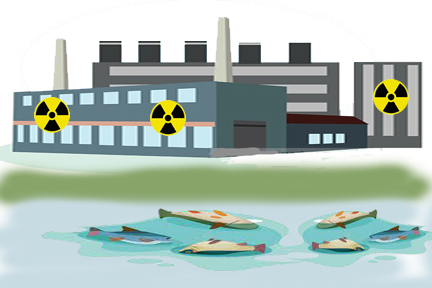
For Hinkley Point C to deliver on its environmental claims, the project must install its mandated Acoustic Fish Deterrent (AFD) system, writes Fish Guidance Systems’ Lewis English.
Can we truly call energy “clean” if it
causes significant environmental harm? This question becomes particularly
pertinent when examining the situation at Hinkley Point C, a new generation
nuclear power plant under construction in Somerset.
For nearly eight years,
EDF Energy has been working to remove a vital environmental protection at
Hinkley Point C, the Acoustic Fish Deterrent (AFD). The AFD system is
designed to protect aquatic life by deterring fish from entering the
cooling systems of the power plant, and was included in the initial design
plans of Hinkley Point C. Despite its importance, the removal of the AFD
has been a contentious issue.
The Welsh Government Commission has warned
that its absence could lead to the death of approximately 182 million fish
annually, including sensitive species like shad, sprat, Atlantic salmon,
and herring, which are crucial to local ecosystems, and Secretary of State
Kwasi Kwarteng ruled in a Public Inquiry that the measure must be applied.
Still, EDF continues to contest it, arguing that it would further delay the
completion of Hinkley Point C and hold up the UK’s net zero plans.
The Engineer 16th Sept 2024
A Suffolk wildlife and conservation charity has called for “greater transparency” from Sizewell C in relation to its wildlife compensation schemes.
Earlier in September, developers of the new Sizewell C nuclear
power station announced a new partnership with the nature restoration
movement WildEast to promote the return of land to nature across the
region. In announcing the partnership, Sizewell C flagged up how it had
pledged to return a large part of the land to nature during the
construction of the new power station. Its involvement in leading on a
wildlife habitat scheme at Wild Aldhurst nature reserve in Leiston was
mentioned, along with plans for wetland habitat creation at three nature
reserves at Benhall, Halesworth and Pakenham.
However, in a joint statement
with the Royal Society for the Protection of Birds (RSPB), the Suffolk
Wildlife Trust spoke of its “real disappointment” that Sizewell C had
included the work at the three nature reserves, which is part of its legal
duty to compensate for the impacts of the power station’s construction on
wildlife. The charities said the projects were a “minimum requirement,” but
were being “misrepresented” as examples of the developers going the extra
mile for nature.
East Anglian Daily Times 16th Sept 2024
https://www.eadt.co.uk/news/24585320.suffolk-wildlife-trust-rspb-speak-sizewell-c-nature/
Southern boom town that is just 24 miles away from dangerous canyon contaminated by plutonium

By Alex Hammer For Dailymail.Com, 16 September 2024, https://www.dailymail.co.uk/news/article-13765533/canyon-contaminated-plutonium-santa-fe-boom-town.html
Residents of Santa Fe, New Mexico – less than a half-hour drive from the birthplace of the atomic bomb – are drinking from a water supply with alarming traces of plutonium, scientists have found.
The shocking samples were taken from Los Alamos’s soil just 24 miles from Santa Fe, which has roughly 90,000 residents.
Experts warned have since warned that the discovery could mean a rehabilitation project is necessary to save the city’s drinking water.
The contaminated soil can be found right on the cusp of Los Alamos, in the area’s appropriately named Acid Canyon, where radioactive waste seeped into the land from 1943 to 1964.
‘We need to permanently protect precious, irreplaceable groundwater and the Rio Grande while providing high-paying cleanup jobs for decades,’ said Jay Coghlan, executive director of Nuclear Watch, in an email to Santa Fe New Mexican this past spring.
Pointing to maps showing the contaminated spots across an area of land, Coghlan asserted that there was proof a ‘genuine cleanup’ is needed.
While the water in Santa Fe is still drinkable with its current levels of plutonium, Coghlan said the radioactive drinking water ‘should be of great concern to Northern New Mexicans’.
In Santa Fe County, up to 3 picocuries per liter of plutonium were recorded in the water supply – twice the guideline set by the New Mexico Administrative Code, according to the outlet.
Nuclear Watch also compiled data plutonium contamination below the soil from 1992 and 2023 through plot points on a map.
Huge hot spots were found at dump sites of an old lab used for experiments.
This, of course, was at Los Alamos’ National Laboratory, located a little more than a mile out of town, and one of 16 research and development sites used and owned by the United States Department of Energy.
Contamination in surface water like streams and rivers has been traced back to places including the hiking trail Acid Canyon, where the lab discarded waste from 1943 to 1964.
Its past pollution could now be migrating down to the area’s unseen aquifer underground – likely bringing the pollutants across San Ildefonso Pueblo land and into the Rio Grande, Coghlan warned.
The river feeds into the Buckman Direct Diversion Project, a system of integrated infrastructure used to divert as much as 2.8 billion gallons of surface water to Santa Fe annually.
That water serves as nearly half of Santa Fe’s public drinking supply – a cause for concern, according to Coghlan.
Over the past 40 years, Santa Fe has seen its population almost double to roughly 90,000, leading it to earn the distinction of ‘boom town’ in a 2019 national survey.
In the years since, the city added roughly 5,000 residents, for an increase of about 6 percent as occupied homes and per capita income have also grown.
The news of Acid Canyon’s contamination comes almost 20 years after the Department of Energy and the University of California – the lab’s previous operator – made an agreement with the New Mexico Environment Department to clean up the contamination.
Spread out over decades, the efforts have so far been unsuccessful in remediating the fallout, data from Nuclear Watch shows – as the NMED seeks a full cleanup at one of the dump sites at a cost of over $800 million to protect Santa Fe’s drinking water.
As it stands, radiation levels are not high enough to hurt those walking the Acid Canyon trail, but Coghlan pointed out another danger that would happen if a fire broke out.
‘Were Acid Canyon to burn in a wildfire, and we know that threat is all too real, that could be dangerous in the form of respirable plutonium that is released to the air through wildfire,’ he said.
Warning the smoke inhaled could lead to lung cancer, Coghlan had his concerns echoed by the Professor Emeritus of Chemistry and Biochemistry at Northern Arizona University, Dr. Michael Ketterer.
‘I’m just trying to show New Mexicans what the truth is here,’ he said after collecting and analyzing plutonium samples from trailheads at Acid Canyon. ‘I see a lot of things to be concerned about here.’
We can’t really predict where it’s going to go and how bad it’s going to be,’ he continued, of the possibility of a fire creating deadly conditions in the area.
Surrounding communities could be at risk as well, including historic Santa Fe, as the shocking contamination data saw Ketterer question whether official warnings should be posted across the trail.
‘I’ve never seen anything quite like it in the United States,’ Ketterer. ‘This is an unrestricted area.’
He went on to compare radiation levels seen at the popular park to those at the site of the Soviet Union’s Chernobyl nuclear disaster.
‘It’s just an extreme example of very high concentrations of plutonium in soils and sediments,’ the biochemist said. ‘It’s hiding in plain sight.’
The biochemist also noted that high concentrations of plutonium in the canyon’s water posed wider environmental risks to communities and habitats downstream.
‘Under monsoon storm flow conditions, Pu [plutonium] laden water and sediment flow through Acid Canyon and into Los Alamos Canyon and ultimately, the Rio Grande,’ he noted in a presentation for Nuclear Watch New Mexico.
Radioactive plutonium in ground water, Ketterer noted, can also be absorbed by plants where it enter the food chain via local veggie-eating herbivores, or spread as airborne ash following increasingly common wildfires.
‘This is one of the most shocking things I’ve ever stumbled across in my life,’ the biochemist recently told The Guardian of the unsettling find.
Meanwhile, the cleanup of the lab’s Cold War sites is only half complete, the DOE reports.
Should the department’s plans be finalized, all pits and shafts would be excavated and radioactive waste interred at Carlsbad’s Waste Isolation Pilot Plant.
‘Unacceptable’: Is this Ontario nuclear waste dump a risk to Quebec’s water supply?
The Bloc Québécois is calling for work to immediately stop on an already-approved nuclear waste facility at the Chalk River research site in eastern Ontario, arguing its current placement unnecessarily risks Quebecers’ water supply — a claim that the company behind the project denies.
Sept. 10, 2024, By Alex Ballingall, Ottawa Bureau, Toronto Star
OTTAWA — The Bloc Québécois is calling for work to immediately stop on an already-approved nuclear waste facility at the Chalk River research site in eastern Ontario, arguing its current placement unnecessarily risks Quebecers’ water supply — a claim the company behind the project denies.
Bloc Leader Yves-François Blanchet held a news conference on Parliament Hill Monday with First Nations from Ontario and Quebec who also oppose the project. Trumpeting his solidarity with the leaders, who claim the project’s approval early this year violated their rights as Indigenous Peoples, Blanchet said the waste facility is too close to the Ottawa River that separates Quebec from Ontario and flows into the St. Lawrence River.
Speaking in French, Blanchet described the plan as a way to take the “dangerous” waste from Ontario’s nuclear industry and place it in a spot that he claimed could put the water supply of Quebecers at risk.
“This is unacceptable to us,” Blanchet said. He added that the planned facility “should be placed elsewhere.”
Chief Lance Haymond of the Kebaowek First Nation, who attended the news conference with Blanchet, accused the company building the facility — Canadian Nuclear Laboratories, which is contracted to run the Chalk River facility by an arms-length federal Crown corporation — of dismissing his community’s concerns, which include worries about disruption to local bears and other wildlife.
Haymond said the company is presenting a “façade of reconciliation” over its failure to seek his nation’s consent for the project, which is on unceded territory of the Algonquin Anishinaabeg near Deep River, Ont., almost 200 kilometres northwest of Ottawa.
The Kebaowek First Nation has also launched a legal process in Federal Court that seeks to overturn the January decision by Canada’s federal nuclear regulator to green-light the project.
“We will not stand by while our rights are trampled, our lands desecrated and our future put at risk,” Haymond said. ……………………………………………………………..
The Canadian Nuclear Safety Commission approved the project in January, more than eight years after Canadian Nuclear Laboratories first raised the idea.
A spokesperson for the commission declined to comment Monday, citing the Federal Court challenge………………………………………………………………………….
According to the safety commission, most of the waste slated for disposal there will come from the company’s existing Chalk River Laboratories operation at the site, with about 10 per cent coming from other sites, including commercial sources like hospitals and universities.
The waste site is planned as an “engineered containment mound” that covers 37 hectares, alongside other facilities like a wastewater treatment plant.
The project has been controversial for months, with several municipalities in the region and environmental groups stating their opposition alongside First Nations. Bloc MPs and Green Leader Elizabeth May have also denounced the project. https://www.thestar.com/politics/federal/unacceptable-is-this-ontario-nuclear-waste-dump-a-risk-to-quebecs-water-supply/article_27adb27e-6ec2-11ef-985e-9345e7a9932d.html?source=newsletter&utm_source=ts_nl&utm_medium=email&utm_email=C574FBD817092BE3920DD70067C080F0&utm_campaign=frst_1906
Somerset campaigners celebrate as EDF Energy U-turns on planned Hinkley Point C saltmarshes
More than 800 acres have been saved
By Daniel Mumby, Local Democracy Reporter, Somerset Live 11th Sept 2024
Environmental campaigners in Somerset are celebrating after plans to create new saltmarshes to offset the county’s new nuclear power station were scrapped. EDF Energy held a public consultation in January and February over its proposals for new saltmarshes on the Pawlett Hams, which lie on the right bank of the River Parrett near the villages of Combwich and Pawlett.
The plans envisioned more than 800 acres of saltmarsh being created as part of the wider mitigation for the new Hinkley Point C nuclear power station, which is currently under construction. EDF argued that the new marshes would provide safe habitats for fish and animals, improve water quality and reduce the risk of localised flooding – complementing the creation of the Bridgwater tidal barrier immediately upstream.
But following a substantial local backlash, the energy giant has U-turned and promised that any saltmarshes created to offset the power station will be created outside of the Somerset Council area. EDF released a statement confirming the change of heart on Monday evening (September 9), stating that it would be seeing alternative locations “within the wider Severn estuary” before any formal planning application is submitted to the Planning Inspectorate ahead of a public inquiry, which is currently expected to be held in the autumn of 2025.
The company has confirmed that none of the other sites being considered as “within the Somerset Council boundary” and that further rounds of public consultation will take place in the chosen locations. In addition, the company will be looking to upgrade an existing weir on the River Wye at Osbaston near Monmouth, in order to support migrating fish like salmon and shad in their journeys upstream………………………………………………………….. https://www.somersetlive.co.uk/news/somerset-news/somerset-campaigners-celebrate-edf-energy-9542744
Fukushima fishermen not in the clear yet
Japan Times 1 Sept 24
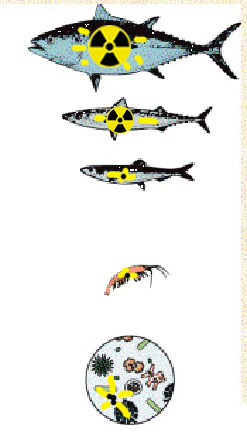
A year has passed since treated water containing trace amounts of tritium started to be released into the sea from the crippled Fukushima No. 1 nuclear power plant.
While the move is said to have had no significant impact on the prices of fishery products, tourism or the surrounding environment, challenges remain, including a number of hurdles for Tokyo Electric Power Company Holdings’ decommissioning of its reactors and measures to reduce the generation of contaminated water………………………………………………………..
In the absence of price decreases, the central and prefectural governments conclude that there has been almost no reputational impact to seafood from the region.
However, those in the local fisheries industry say the prices are holding up because there is momentum to support Fukushima, but they are not optimistic about the future due to it being a temporary measure.
The trading of Joban-mono increased in response to a central government initiative after the treated water started to be released.
But this process is expected to continue for around 30 years.
In April, the release of treated water was temporarily halted after a worker accidentally damaged a power cable at the Fukushima plant, partially cutting off the supply of power.
If such incidents continue to occur, they could pose reputational risks to Joban-mono.
………………………………………………………………………………………….. the local fishermen have lost trust in the central government after it decided on proceeding with the plan to release the treated water into the ocean despite opposition from the fisheries industry in and out of Fukushima Prefecture.
In announcing the decision, Prime Minister Fumio Kishida said, “Even though operations will last for decades, the government will take responsibility until the release is completed.”
The local fishing industry has become increasingly distrustful of Kishida, who suddenly expressed his intention of not seeking reelection as Liberal Democratic Party leader in this month’s presidential race.
“Concerns over treated water will remain for a long time,” a Fukushima fisheries industry official said. “We want the government to work with us as one to cope with the issue.” https://www.japantimes.co.jp/news/2024/09/02/japan/society/fukushima-fisheries-radioactive-water/
Popular US park as radioactive as Chernobyl, says expert: ‘I’ve never seen anything quite like it’
By Matthew Phelan For Dailymail.Com and Associated Press, 29 August 2024
A scenic hiking trail has been discovered to be dangerously contaminated with radiation.
New tests have discovered that Acid Canyon — a popular hiking and biking trail near the birthplace of the atomic bomb, Los Alamos, New Mexico — is still radioactive today at level’s akin to the site of the Soviet Union’s Chernobyl nuclear disaster.
The shocking contamination data, collected in an effort led by biochemist Michael Ketterer, has galvanized public calls for posting official warnings across the trail…………………………………………………………………………………………….. more https://www.dailymail.co.uk/sciencetech/article-13788759/Popular-hiking-trail-radioactive-Chernobyl-nuclear.html?fbclid=IwY2xjawE99R1leHRuA2FlbQIxMQABHVP-28QfZ-nxj8mjOk5A9fM4TyF-EOzzzKA2-rHdbbAFhrQEr4LY-M8GsA_aem_XVLP4cUbyyPBXNd03zrK4g
1 This Month
To see nuclear-related stories in greater depth and intensity – go to https://nuclearinformation.wordpress.com/
12 February – Webinar The Big Push: New Nuclear Projects in Canada
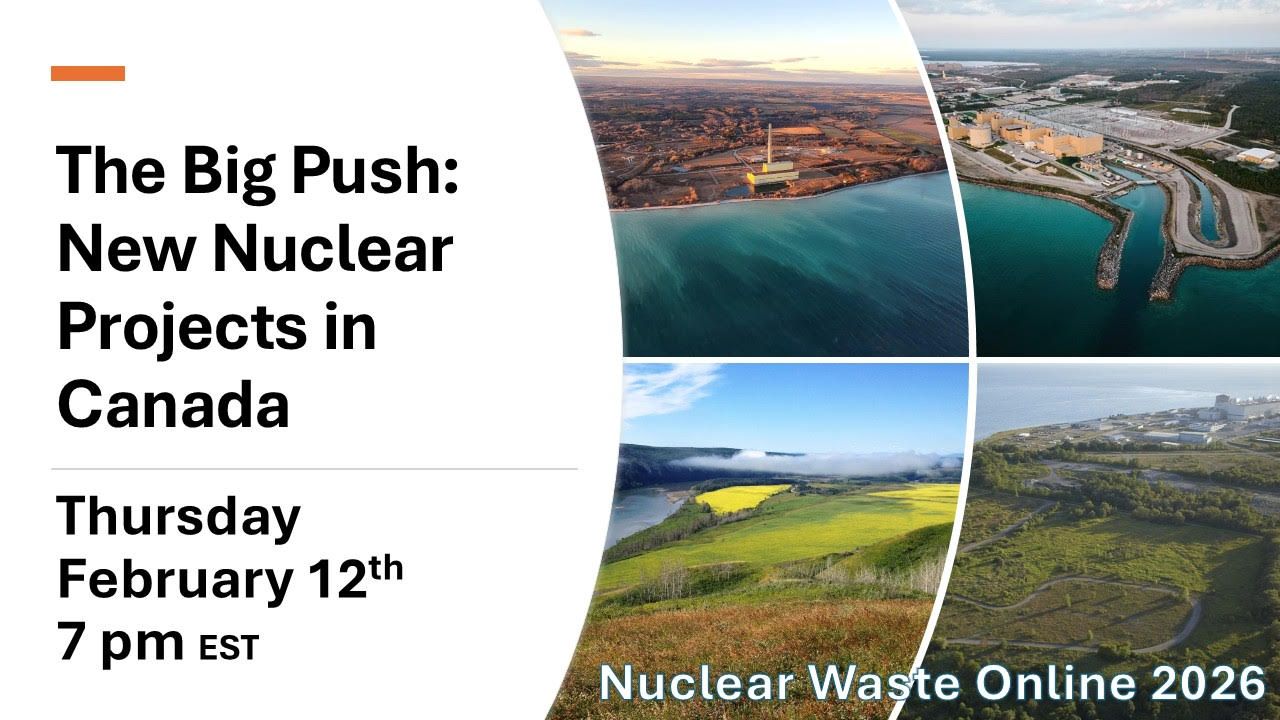
Thursday, February 12, 7 pm Eastern | 2nd of 4 sessions in the 2026 Nuclear Waste Online webinar series
Join a webinar on the push for new nuclear generation in Canada. Go to Northwatch.org to register or use the registration link https://us02web.zoom.us/webinar/register/WN_ZfWOf1GITqSRIZX8CB-A9w

-
Archives
- February 2026 (127)
- January 2026 (308)
- December 2025 (358)
- November 2025 (359)
- October 2025 (376)
- September 2025 (258)
- August 2025 (319)
- July 2025 (230)
- June 2025 (348)
- May 2025 (261)
- April 2025 (305)
- March 2025 (319)
-
Categories
- 1
- 1 NUCLEAR ISSUES
- business and costs
- climate change
- culture and arts
- ENERGY
- environment
- health
- history
- indigenous issues
- Legal
- marketing of nuclear
- media
- opposition to nuclear
- PERSONAL STORIES
- politics
- politics international
- Religion and ethics
- safety
- secrets,lies and civil liberties
- spinbuster
- technology
- Uranium
- wastes
- weapons and war
- Women
- 2 WORLD
- ACTION
- AFRICA
- Atrocities
- AUSTRALIA
- Christina's notes
- Christina's themes
- culture and arts
- Events
- Fuk 2022
- Fuk 2023
- Fukushima 2017
- Fukushima 2018
- fukushima 2019
- Fukushima 2020
- Fukushima 2021
- general
- global warming
- Humour (God we need it)
- Nuclear
- RARE EARTHS
- Reference
- resources – print
- Resources -audiovicual
- Weekly Newsletter
- World
- World Nuclear
- YouTube
-
RSS
Entries RSS
Comments RSS
 nuclear-news