Irradiated horses cared for by compassionate Japanese horse breeder
As Iitate’s population plummeted in the spring of 2011, Hosokawa managed to find new homes for more than 80 of his horses. Then, in January this year, he noticed that several among the 30 that remained, mainly foals, had become unsteady on their feet.
Within weeks, 16 had died in mysterious circumstances. Autopsies on four of the horses found no evidence of disease and tests revealed caesium levels at 200 becquerels per kilo – twice as high as the government-set safety limit for agricultural produce,
Fukushima horse breeder braves high radiation levels to care for animals Despite the departure of all his neighbours and the unexplained deaths of some of his stock, Tokue Hosokawa refuses to budge Justin McCurry in Iitate theguardian.com, Monday 28 October 2013 Until March 2011, Tokue Hosokawa had only to peer through the window of his home in Iitate village to confirm that all was well with his 100-year-old family business.
The 130 or so horses that once roamed this sprawling farm in Fukushimaprefecture have sustained three generations of Hosokawa’s family. Some were sold for their meat – a local delicacy – but his animals were better known for their appearances in commercials, period TV dramas and films, and local festivals celebrating the region’s samurai heritage.
For decades, the 62-year-old horse breeder barely registered that his farm was just 25 miles north-west of the Fukushima Daiichi nuclear powerplant. But the rural idyll was shattered on the afternoon of 11 March 2011, when the facility was hit by a towering tsunami that caused meltdowns in three of its reactors…….
two and half years after the accident, Iitate has become a nuclear ghost town. When Hosokawa looks out of his window these days, it is at empty, irradiated fields. Continue reading
China’s legacy of radioactive pollution from rare earths processing
Whole villages between the city of Baotou and the Yellow River in Inner Mongolia have been evacuated and resettled to apartment towers elsewhere after reports of high cancer rates and other health problems associated with the numerous rare earth refineries there.
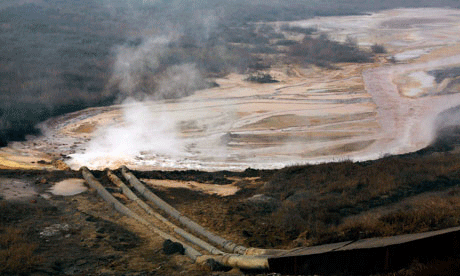
China Tries to Clean Up Toxic Legacy of Its Rare Earth Riches NYT By KEITH BRADSHER : October 22, 2013 TIANJIN, China — In northern China, near the Mongolian border, radioactively contaminated leaks from two decades of rare earth refining have been slowly trickling underground toward the Yellow River, a crucial water source for 150 million people. In Jiangxi province in south-central China, the national government has seized control of rare earth mining districts from provincial officials after finding widespread illegal strip-mining of rare earth metals.
And in Guangdong province in southeastern China, regulators are struggling to repair rice fields and streams destroyed by powerful acids and other runoff from open-pit rare earth mines that are often run by violent organized crime syndicates.
Communities scattered across China face heavy environmental damage that accumulated through two decades of nearly unregulated rare earth mining and refining. While the Chinese government has begun spending billions of dollars to clean up the damage, the environmental impact is becoming an international trade issue, with a World Trade Organization panel in Geneva expected to issue a crucial draft report on Wednesday……. The rare earth case “will be a landmark case in terms of both export restrictions and the environment,” said James Bacchus, the former two-term chairman of the W.T.O. appeals tribunal in Geneva. Continue reading
What will be the effects of strange ‘spheres’ of radioactive material from Fukushima?
Scientists: ‘Spheres’ of radioactive material from Fukushima reported for first time — Ball-like particles composed of cesium, iron, zinc — Solid and insoluble in water — Impact on human health needs to be examined (PHOTOS) http://enenews.com/scientists-spheres-radioactive-material-fukushima-reported-first-time-ball-like-particles-composed-cesium-iron-zinc-solid-insoluble-water-impact-human-health-be-examined-photos
Title: Emission of spherical cesium-bearing particles from an early stage of the Fukushima nuclear accident
Source: Scientific Reports (Nature Publishing Group)
Authors: Kouji Adachi, Mizuo Kajino, Yuji Zaizen & Yasuhito Igarashi
:Aug. 30, 2013
The Fukushima nuclear accident released radioactive materials into the environment over the entire Northern Hemisphere […] we still do not know the exact physical and chemical properties of the radioactive materials. This study directly observed spherical Cs-bearing particles emitted during a relatively early stage (March 14-15) of the accident. In contrast to the Cs-bearing radioactive materials that are currently assumed, these particles are larger, contain Fe, Zn, and Cs, and are water insoluble. Our simulation indicates that the spherical Cs-bearing particles mainly fell onto the ground by dry deposition. The finding of the spherical Cs particles will be a key to understand the processes of the accident and to accurately evaluate the health impacts and the residence time in the environment.
[…] Although the accident has global impacts, we still do not know exactly what happened in the reactors during the accident […]
We measured the radioactive materials that were collected in the filter at ground level on March 14-15 […] we counted approximately 100 spots caused by radioactive materials, suggesting a concentration of approximately 10 radioactive particles per m³. […]
This study reports for the first time the presence of spherical radioactive Cs-bearing particles emitted from the FNPP during a relatively early stage (March 14-15) of the accident. The particles coexist with Fe, Zn, and possibly other elements, and their diameters are approximately 2 μm. Because these elements were evenly distributed within the particle, we conclude that they are internally mixed and form an alloy. […] Due to its spherical shape and composition, the particle is likely solid and is largely insoluble in water. […]
The spherical Cs-bearing particles likely have longer retention times on the land surface than those of the water-soluble Cs particles. The retention time of the particles in the soil or other environments needs to be reconsidered.
See also: Journal: Unprecedented phenomenon from using saltwater in Fukushima reactors — Forming new uranium compounds able to travel long distances… “like carbon buckyballs”
Slowly developing radiation disaster in the Pacific Ocean
Washington Post: It’s an environmental disaster, radioactivity levels in ocean hundreds of times above normal — NHK: Countries around Pacific worried about ongoing Fukushima leaks, gov’t wants testing up to 3,000 km offshore (VIDEO)http://enenews.com/washington-post-its-an-environmental-disaster-radioactivity-levels-hundreds-of-times-above-normal-in-pacific-nhk-countries-worried-about-fukushima-leaks-govt-wants-testing-up-to-3000-km-of
NHK WORLD, Oct. 22, 2013: […] Japan’s effort to clean up what remains of the complex is turning into another kind of disaster. […] 400 tons of toxic groundwater is flowing daily into the Pacific Ocean […] the flow of radioactive water amounts to a slow-burning environmental disaster with implications for Japan’s wildlife and its food chain. […] The coastal Fukushima plant is on an old riverbed […] rainfall from across the region would funnel toward the plant […] Both the government and Tepco say the ocean contamination is confined mostly to a man-made harbor around the plant. But some scientists say that assurance plays down significant long-term concerns about marine life and the food chain. Cesium levels are still hundreds of times the pre-accident norm in areas beyond the harbor, said Ken Buesseler, a senior scientist with the Woods Hole Oceanographic Institution who has monitored waters around the nuclear plant, most recently last month. […] “It’s a serious concern for internal doses. (Radionuclides) are now on the seafloor and could stay in the food chain for years, if not decades.” […]
NHK WORLD, Oct. 21, 2013: [Tepco] has announced plans to monitor offshore radiation around the clock […] many experts have been calling for 24-hour monitoring to allow faster responses to unexpected leaks and provide a clearer idea of how much water has escaped. […] The nuclear regulators have proposed expanding the offshore monitoring from the current 300 kilometers to between 1,000 and 3,000 kilometers. […] the agency will ask the operators of oceangoing vessels to collect data for northern Pacific Rim countries that are worried about radioactive leaks.
NHK Newsline,, Oct. 21, 2013: “Nuclear regulators proposed increasing the distance they’re monitoring from 300 kilometers to up to 3,000 kilometers”
See also: Official Gov’t Documents: Fukushima to endanger NorthPacific marine ecosystem and health of human beings? “Very important to monitor radiation exposure level and assess effects of radioactive substances”
Japan’s radiation cleanup not going to schedule
Japan Delaying Cleanup of Towns Near Nuclear Plant abc news, TOKYO October 21, 2013 (AP) By MARI YAMAGUCHI Associated Press Radiation cleanup in some of the most contaminated towns around Fukushima’s damaged nuclear power plant is behind schedule, so some residents will have to wait a few more years before returning, Japanese officials said Monday.
Environment Ministry officials said they are revising the cleanup schedule for six of 11 municipalities in an exclusion zone from which residents were evacuated after three reactors at the Fukushima Dai-ichi nuclear power plant went into meltdown following the March 2011 earthquake and tsunami. The original plan called for completing all decontamination by next March.
Nobody has been allowed to live in the zone again yet, though the government has allowed day visits to homes and businesses in some places after initial decontamination, said Shigeyoshi Sato, an Environment Ministry official in charge of decontamination……http://abcnews.go.com/International/wireStory/japan-delaying-cleanup-towns-nuclear-plant-20630619
Fukushima nuclear reactors leaking directly into sea?
 Alert: Top Japan nuclear official suggests Fukushima reactors “leaking directly into sea”… not mixing with groundwater and getting diluted — Expert: Contamination flowing from plant will be carried away to North America’s west coast
Jiji Press, http://enenews.com/alert-top-level-japan-official-publicly-suggests-multiple-fukushima-reactors-are-leaking-directly-into-the-sea-its-not-mixing-with-groundwater-and-getting-diluted-expert-contamination-f Oct. 16, 2013: Tepco’s toxic water failures pitiful: NRA[…] Tepco is pumping up groundwater and has injected a water-stopping agent into the ground near the plant’s port in order to curb the flow of radioactive groundwater into the sea. Despite such efforts, the levels of cesium-137 in seawater samples collected between the water intakes for reactors 1 and 2 inside the port rose to around 100 becquerels per liter this month from around 10 becquerels between late June and early July. […] Radioactive water from the damaged reactors “may be leaking directly into the sea instead of mixing with groundwater before making its way into the sea,” [Nuclear Regulation Authority Commissioner Toyoshi] Fuketa said. […]
Vladimir Kovbasyuk, Russian Hydrometeorological Expert, Oct. . 16, 2013: “We analyzed the problems several years ago, when the 2011 earthquake and tornado hit the Fukushima nuclear plant. Radioactive waters will first be carried away to the west coast of North America and only then, on intermingling with other ocean waters, may they return to the Russian coast. Currently, we are measuring radiation levels, and we’ve registered no excess radiation thus far.” […]
It appears Fuketa has provided the answer to the ‘mystery’ discussed on NHK’s ‘Nuclear Watch’ earlier thisyear: Fukushima Mystery? TV: Japan expert says radiation levels in ocean too high to be explained by groundwater flow alone — Must be coming from “other contamination routes” entering Pacific — “Devastating impact” to come? (VIDEO)
Huge spike in groundwater radiation under Fukushima nuclear reactor No 1
 Strontium readings spike 6,500-fold in one day Water radiation soars at Fukushima No. 1 Japan Times JIJI, AFP-JIJI 18 Oct 13 FUKUSHIMA – Radiation levels in groundwater under Tokyo Electric Power Co.’s Fukushima No. 1 nuclear plant are soaring, Tepco said Friday after taking samples from an observation well.
Tepco said 400,000 becquerels per liter of beta ray-emitting substances such as strontium were detected in water sampled Thursday from the well located some 15 meters from a storage tank that leaked about 300 tons of highly radioactive water in August.
The level of becquerels, a record high for water in that well, was up 6,500-fold from the 61 becquerels found Wednesday.
Tepco was planning to pump groundwater up from different wells about 100 meters from the leaky tank for release into the Pacific before the water flows into the damaged reactor buildings and becomes heavily contaminated with radioactive materials.
But that plan appears in jeopardy because the sharp increase in the levels of radioactive materials in the observation well suggest the radioactive groundwater is spreading.
By law, water containing beta particle-emitting substances exceeding certain levels cannot be released into the sea. The upper limit is set at 30 becquerels per liter for strontium-90 and 60 becquerels for cesium-134.
Tepco also said water collected Thursday from a drainage ditch near the leaky tank contained 34,000 becquerels of beta particle-emitting substances per liter, compared with 2,300 becquerels the day before……Officials said Thursday they will solicit proposals from both domestic and overseas nuclear experts and firms on how best to scrap the ruined reactors at Fukushima No. 1…….http://www.japantimes.co.jp/news/2013/10/18/national/water-radiation-soars-at-fukushima-no-1/?utm_source=feedburner&utm_medium=feed&utm_campaign=Feed%3A+ja
Slow progress on decontamination of Fukushima, most of the budget still unused
Ministry fails to use 77% of Fukushima decontamination budget; TEPCO refuses to pay Asahi Shimbun, 18 Oct 13, By TAKUYA KITAZAWA/ Staff Writer The Environment Ministry has failed to use 76.6 percent, or 247.2 billion yen, of its budget to decontaminate radioactive areas around the Fukushima No. 1 nuclear plant, the Board of Audit said.
Progress has been slow because opposition from local residents is making it difficult for the ministry to secure places to temporarily store the contaminated soil and debris collected in the work.
The ministry faces another problem: Tokyo Electric Power Co., the operator of the stricken Fukushima plant, refuses to cover all the costs of the decontamination work as required under law.
The Board of Audit investigated the ministry’s budget of about 322.8 billion yen ($3.2 billion) for decontamination work for the period until March 2013, the end of fiscal 2012.
The results were released on Oct. 16………http://ajw.asahi.com/article/0311disaster/fukushima/AJ201310170058
Concerns over radioactivity in Fukushima rice
Rice grown nearby Fukushima plant cleared for sale — Farmer: “I would not dare eat it… We feel guilty about growing it and selling it” (VIDEO)http://enenews.com/rice-grown-near-fukushima-plant-cleared-for-sale-farmer-i-would-not-dare-eat-it-myself-we-farmers-know-better-we-feel-guilt-about-growing-it-and-selling-it-video
Fukushima farmers negotiate with Japanese Government
The Chosun Ilbo (English Edition),, Oct. 10, 2013: Rice Grown Near Fukushima Cleared for Sale […] Rice grown in some areas within a 30 km radius of the stricken Fukushima nuclear power plant will be cleared for sale this year, but concerns remain. Some samples have tested positive for radiation well above the permitted level. So far only test farming of rice in the region was allowed. Fukushima Prefecture on Wednesday said 44 out of 52 sacks of 30-kg rice harvested in Minamisoma, 20 to 30 km from the power plant, likely exceeded the permissible levels of radioactive materials when tested with a conveyer-belt detector. The prefecture carried out thorough test of the 44 sacks, and detected 120 becquerels of cesium per kilogram, way over the permissible level of 100 becquerels. “It is possible to sell rice that does not exceed the level,” said a prefecture official. […]
Fukushima Farmers Negotiate with Japanese Government,Published August 31, 2013 – Farmer from Sukagawa, 60 km west of Fukushima Daiichi (at 1:45 in): Do you understand the meaning of ‘de’ in the word decontamination? We are just tilling deeply and spreading the radiation thinly. We are not removing the contamination. No wonder that the radiation level has not gone down. We measured the radioactivity in the air. It has not gone down at all. We have not removed the contaminated soil. Of course not! The environment has not changed at all 2 years after the explosions. […] In Fukushima, all farm produce must be checked for the cesium level prior to shipping. The current government limit is 100 becquerels. The farmers know how many becquerels of cesium their produce contains. We can ship them if the reading is lower than 100. But I would not dare eat them myself. The consumers assume there is no radiation in the food they buy. […] We farmers know better. We feel guilty about growing it and selling it. We won’t eat it ourselves, but we sell it.
Radioactive cesium found at Tokyo’s Olympic venues
 Report: Olympic athletes and tourists warned they will be in danger from Tokyo’s elevated radiation levels — Cesium found at almost every venue tested http://enenews.com/report-olympic-athletes-and-tourists-warned-they-will-be-in-danger-from-tokyos-elevated-radiation-levels-cesium-found-at-almost-every-venue-tested
Title: Elevated radiation claimed at Tokyo 2020 Olympic venues
Source: South China Morning Post
Author: Julian Ryall in Tokyo
Date: Oct. 12, 2013
A citizens’ group in Tokyo has found elevated levels of radioactivity at sporting facilities that will be used in the 2020 Olympic Games and is warning that competitors and the hundreds of thousands of people expected to flock to the city for the event will be putting themselves in danger.
The Citizens’ Group for Measuring Radioactive Environment at Facilities for the 2020 Tokyo Olympics claims wind-borne radiation from the four crippled reactors at the Fukushima nuclear plant has contaminated a number of future venues.
Measurements were taken at 39 sporting venues that have been earmarked to stage events in seven years’ time […]
“We found caesium-137 at almost every place we carried out tests, and there was no caesium here before the accident at Fukushima,” Mitsuo Tanaka, a member of the group, told the South China Morning Post. […]
Higher radiation levels in sea near Fukushima
 Radiation levels in harbour off Fukushima hit two-year high Australia Network News 10 Oct 2013 Radiation levels in harbour seawater beside one of the damaged Fukushima reactors spiked this week to the highest level in two years.
The operator of the crippled Japanese nuclear plant, TEPCO, says Cesium-134 and Cesium-137 readings on Wednesday jumped 13 times the previous day’s reading.
The readings were taken in the harbour right next to the Fukushima plant, hundreds of meters from the port entrance that connects to the Pacific Ocean.
Radiation from water leaking from the facility is mostly confined to the harbour around the plant, officials have said……http://www.abc.net.au/news/2013-10-10/an-radiation-levels-in-harbour-off-fukushima-hit-two-year-high/5015082
High radiation levels remain in parts of Fukushima’s evacuated areas
 Greenpeace critical of Japan radiation Sky News, 10 Oct 13 Japan’s efforts to scour areas around Fukushima have been insufficient, pressure group Greenpeace said Thursday, as the government considers letting some residents return to homes near the crippled nuclear plant.
The environmental group said tests it had carried out inside the original 20-kilometre no-go zone around the plant showed that high levels of radiation remain.
Local and national officials are mulling lifting the exclusion order in parts of Tamura city, allowing people to return to homes they abandoned more than two and a half years ago. They cite lowered pollution levels in the wake of large cleaning operations.
A recent Greenpeace survey found that decontamination programmes have been effective for houses and many parts of major routes in the city.
But some lesser-used public roads, large areas of farmland and mountain areas still have high contamination levels, said Jan Vande Putte, Greenpeace radiation protection adviser.
He said the cleaned houses and roads were like ‘islands’ and ‘corridors’ in an otherwise polluted region.
It would be ‘unrealistic’ to ask residents to stay off contaminated roads and farmland, he said.
‘They can be exposed to high levels of radiation’ if they returned home, he said.
Decontamination ‘is a sticky problem. It is very difficult’, he told a press briefing……. http://www.skynews.com.au/world/article.aspx?id=913978
Trade winds and Pacific currents bring Fukushima radiation to North America
Fukushima Radiation Hitting Canada and United States More than Japan http://talesfromthelou.wordpress.com/2013/10/08/fukushima-radiation-hitting-canada-and-united-states-more-than-japan-209/ Oct 8, 2013
ForbiddenKnowledgeTV
Alexandra Bruce
October 5, 2013
Besides the billions of gallons of radioactive water spilling from the abandoned Fukushima Nuclear Energy Plant every day, there is also a steady plume of radio nuclides including Cesium, Cobalt, Uranium and Plutonium, which are steadily being carried across the Pacific via trade winds, with the lion’s share landing (usually, along with the rain) in communities within the US and Canada – and in places beyond, throughout the Northern Hemisphere. Ironically, more fallout is presently occurring in North America than in Japan, the scene of the disaster, due to the trade winds, off the Japanese coast.
It has been calculated that in 1 day, there are 666,733.717599549 bequerels of radiation emitted in every cubic foot of the Pacific, per mile.
There are about 63,800,000 miles in the Pacific Ocean. The average depth is about 2.28 miles. There are 145,464,000 cubic miles in the Pacific Ocean. Cesium-137 has a double decay process 94.6% of the time; first beta rays, then gamma rays.
So each cubic foot of the entire Pacific Ocean will have 218.174056838937 Beta radiation events per day and each cubic foot of the entire Pacific Ocean will have 206.392657769635 Gamma radiation events per day.
34 is the average background radiation of the N. American continent.
The Pacific Ocean will have a “radiation fog” in every cubic foot of water that is 12.47 times HIGHER than the average background radiation count of North American continent.
Sea life will be affected in some manner; perhaps all fish will get cancer. The impact on humanity is a shortage in sea food and no swimming allowed until radiation levels abate to a “safe level”… in about how long???
Possible Olympics site in Tokyo has high radiation levels
 “Saying there is no problem without even measuring for radiation is the same response as the Democratic Party of Japan government immediately after the Fukushima nuclear accident”
“As host nation for the Olympics, it is imperative that radiation levels at the venues be released to the world”
Asahi: High radiation levels found at possible Olympic sites — Japan Professor: Radioactive materials have spread throughout greater Tokyo; Region remains in “emergency situation”? http://enenews.com/asahi-high-radiation-levels-found-at-possible-olympic-sites-japan-professor-radioactive-materials-have-spread-throughout-greater-tokyo-region-remains-in-emergency-situation
Title: High radiation levels found at possible Olympic sites; Tokyo dismisses data
Source: Asahi Shimbun (Weekly Aera)
Author: Shoji Nomura
Date: October 8, 2013
A citizens group said it measured high radiation levels at candidate venues for the 2020 Tokyo Olympics, but the metropolitan government disputes the data and the International Olympic Committee has shown little interest. […]
The group said some of the potential venues for the Summer Games had radiation levels exceeding the Tokyo metropolitan government’s standards for decontamination […] Continue reading
Japan’s secrecy over health consequences of Fukushima radiation
International Scientists: Japan experts must be allowed to report health consequences of Fukushima — “The official data is all denial” — Pressured to downplay true impact of disaster http://enenews.com/international-scientists-japan-experts-must-be-allowed-to-report-health-consequences-of-fukushima-the-official-data-is-all-denial-pressured-to-downplay-true-impact-of-disaster October 6th, 2013
Georgia Straight (Canada), Oct. 2, 2013: “The official data is all denial,” [Eiichiro Ochiai, a retired chemistry professor in Vancouver who taught at University of British Columbia and the University of Tokyo] said. “The nuclear industry tries to suppress the truth.”
Fukushima News 10/1/13: Thousands in Japan Suffering Massive And Recurring Nosebleeds In Recent Days
Letter to United Nations Secretary-General Ban Ki-Moon from 17 international scientists and experts urging international action on Fukushima crisis, Sept. 13, 2013: […] it is clear that the situation at the Fukushima Daiichi reactor site is progressively deteriorating, not stabilizing. […] It is clear now that the Fukushima Daiichi nuclear disaster is far from over, and that there can be no credible estimate of total environmental or human health impacts because the radiological release has not ceased and the outcomes from exposing large populations to low doses over long time frames is unclear. A final estimation of the radiological release from the Fukushima Daiichi site, of necessity lies in the future; perhaps the distant future. […] Japanese physicians and scientists in Japan must be allowed and supported to treat and report Fukushima related health consequences. Nuclear calamities to date result in institutional pressure to under report and even distort patient health data and other evidence […] Such institutional pressure is now contributing to a downplaying of the true impact of the Fukushima accident.
1 This Month
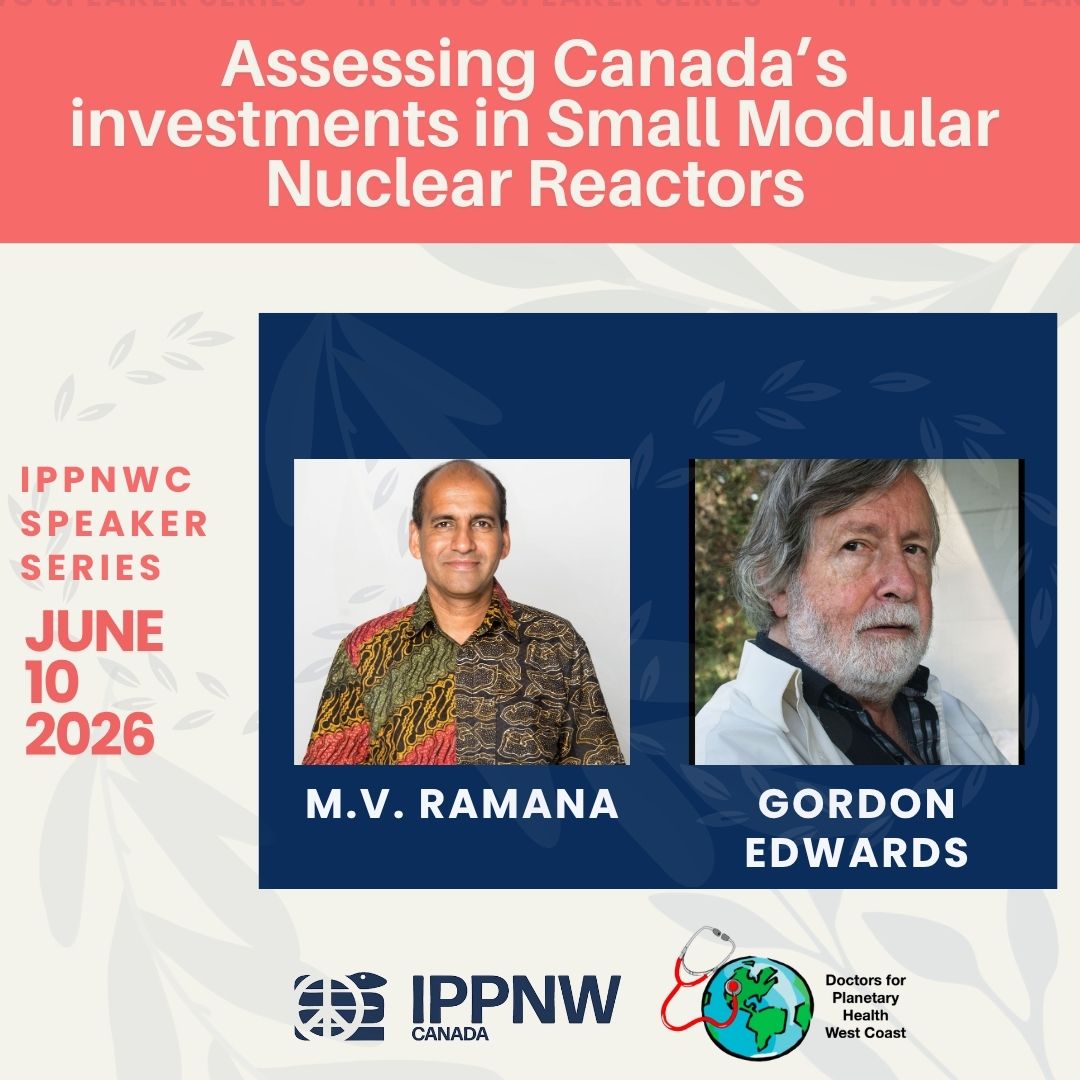
10 June – Assessing Canada’s Investments in Small Modular Nuclear Reactors – https://zoom.us/meeting/register/IiqHA5feRhaEBycOLNTJlA#/registration


Cuba Is Not a Failed State – It Is a Besieged State
PETITION: “Global Appeal to Endorse Palestinian Right of Return of Refugees”
To see nuclear-related stories in greater depth and intensity – go to https://nuclearinformation.wordpress.com
-
Archives
- June 2026 (89)
- May 2026 (306)
- April 2026 (356)
- March 2026 (251)
- February 2026 (268)
- January 2026 (308)
- December 2025 (358)
- November 2025 (359)
- October 2025 (376)
- September 2025 (257)
- August 2025 (319)
- July 2025 (230)
-
Categories
- 1
- 1 NUCLEAR ISSUES
- business and costs
- climate change
- culture and arts
- ENERGY
- environment
- health
- history
- indigenous issues
- Legal
- marketing of nuclear
- media
- opposition to nuclear
- PERSONAL STORIES
- politics
- politics international
- Religion and ethics
- safety
- secrets,lies and civil liberties
- spinbuster
- technology
- Uranium
- wastes
- weapons and war
- Women
- 2 WORLD
- ACTION
- AFRICA
- Atrocities
- AUSTRALIA
- Christina's notes
- Christina's themes
- culture and arts
- Events
- Fuk 2022
- Fuk 2023
- Fukushima 2017
- Fukushima 2018
- fukushima 2019
- Fukushima 2020
- Fukushima 2021
- general
- global warming
- Humour (God we need it)
- Nuclear
- RARE EARTHS
- Reference
- resources – print
- Resources -audiovicual
- Weekly Newsletter
- World
- World Nuclear
- YouTube
-
RSS
Entries RSS
Comments RSS
 nuclear-news