Danger to migratory fish, of Fukushima radiation in ocean
 Japan’s Fukushima catastrophe brings big radiation spikes to B.C. | Vancouver, Canada | Straight.com, By Alex Roslin, August 4, 2011 “……..TEPCO released 11,500 tons of radioactive water from its storage tanks into the Pacific Ocean on April 4. One aspect of the fallout and seawater contamination that remains unclear is how it might affect fish stocks, especially migratory species like salmon that could pass through poisoned areas of the ocean, eat irradiated prey, or have radioactive water dumped in their home ranges by Pacific currents.
Of the five species of Pacific salmon that are native to western North America, the sockeye is the most commercially prized. It also has the most wide-ranging migration route through the North Pacific, swimming for two to three years—as far as just northeast of the top of Japan—before coming back to its natal streams in Alaska, B.C., and the U.S. Northwest…..”
Japan’s Fukushima catastrophe brings big radiation spikes to B.C. | Vancouver, Canada | Straight.com
The radiation danger in seafoods
even at those low quantities the radioactive elements may pose a danger when concentrated in seafood,…..fish have been known to accumulate as much as 100 times the amount of pollutants in the environment,
Japan Scientists Say Sea Radiation Tests May Miss Seafood Threat, SF Gate,July 26 (Bloomberg) –– Japan’s government has to release more data from ocean radiation tests to accurately assess the contamination threat to seafood, according to a statement by the Oceanographic Society of Japan. Continue reading
Oceans give a warning of the planet’s ecology in danger
 These symptoms, moreover, could be the harbinger of wider disruptions in the interlocking web of biological and chemical interactions that scientists now call the Earth system….
Oceans in distress, mass extinctions. The Age, Marlowe Hood , June 21, 2011 Pollution and global warming are pushing the world’s oceans to the brink of a mass extinction of marine life unseen for tens of millions of years, a consortium of scientists warn.
Dying coral reefs, biodiversity ravaged by invasive species, expanding open-water “dead zones,” toxic algae blooms, the massive depletion of big fish stocks — all are accellerating, they said on Monday in a report compiled during an April meeting in Oxford of 27 of the world’s top ocean experts. Continue reading
Continuing radiation emissions into sea and air, from Fukushima
 Highly toxic radioactive iodine, cesium, strontium, plutonium and other toxic man-made radionuclides have leaked unabated since March 12 into the ocean and atmosphere…..The mainstream media is not reporting on this.
Preface Nuclear Toxicity Syndrome, The Intel Hub, By Dr. Mark Sircus – June 9th, 2011 Arnie Gundersen, widely-regarded to be the best nuclear analyst covering Japan’s Fukushima disaster, indicates that the situation on the ground at the crippled reactors remains precarious and at a minimum it will be years before it can be hoped to be truly contained. Continue reading
Studying the effects of Fukushima radiation in the ocean
The scientists say the effects of radioactive contamination in ocean waters, sediments and fish is not well understood. The Japanese nuclear disaster is the worst release of radioactive materials into an ocean.
Scientific voyage to study Japanese nuclear impact on ocean, MiamiHerald.com, By RENEE SCHOOF, McClatchy Newspapers, WASHINGTON, 4 June 11 — A team of scientists will set out Saturday from Hawaii on a research expedition to study how radioactive contamination from the nuclear power plant crisis in Japan has spread in the Pacific Ocean and what effects it will have on marine life, the food chain and human health. Continue reading
1 This Month
To see nuclear-related stories in greater depth and intensity – go to https://nuclearinformation.wordpress.com/
12 February – Webinar The Big Push: New Nuclear Projects in Canada
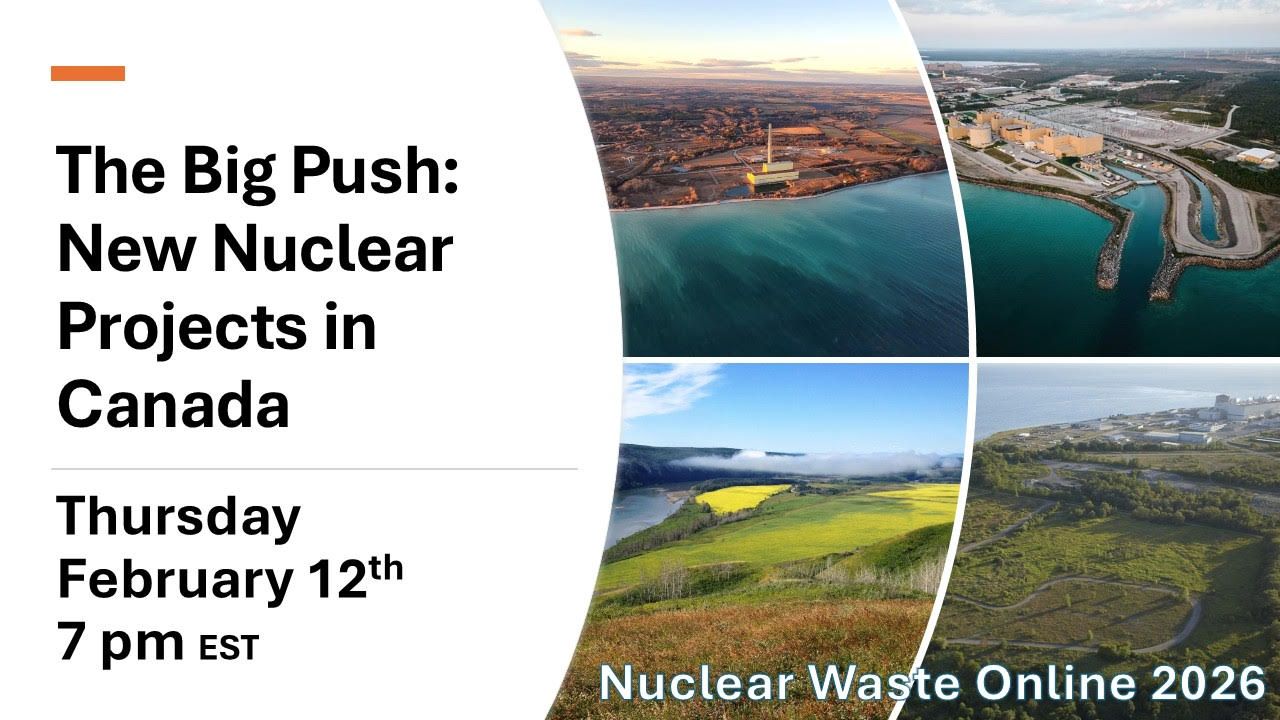
Thursday, February 12, 7 pm Eastern | 2nd of 4 sessions in the 2026 Nuclear Waste Online webinar series
Join a webinar on the push for new nuclear generation in Canada. Go to Northwatch.org to register or use the registration link https://us02web.zoom.us/webinar/register/WN_ZfWOf1GITqSRIZX8CB-A9w
-
Archives
- February 2026 (127)
- January 2026 (308)
- December 2025 (358)
- November 2025 (359)
- October 2025 (376)
- September 2025 (258)
- August 2025 (319)
- July 2025 (230)
- June 2025 (348)
- May 2025 (261)
- April 2025 (305)
- March 2025 (319)
-
Categories
- 1
- 1 NUCLEAR ISSUES
- business and costs
- climate change
- culture and arts
- ENERGY
- environment
- health
- history
- indigenous issues
- Legal
- marketing of nuclear
- media
- opposition to nuclear
- PERSONAL STORIES
- politics
- politics international
- Religion and ethics
- safety
- secrets,lies and civil liberties
- spinbuster
- technology
- Uranium
- wastes
- weapons and war
- Women
- 2 WORLD
- ACTION
- AFRICA
- Atrocities
- AUSTRALIA
- Christina's notes
- Christina's themes
- culture and arts
- Events
- Fuk 2022
- Fuk 2023
- Fukushima 2017
- Fukushima 2018
- fukushima 2019
- Fukushima 2020
- Fukushima 2021
- general
- global warming
- Humour (God we need it)
- Nuclear
- RARE EARTHS
- Reference
- resources – print
- Resources -audiovicual
- Weekly Newsletter
- World
- World Nuclear
- YouTube
-
RSS
Entries RSS
Comments RSS
 nuclear-news