Radiation levels not decreasing in seas around Fukushima
 Radiation Still High Around Fukushima http://www.the-scientist.com/?articles.view/articleNo/33275/title/Radiation-Still-High-Around-Fukushima/,
Continued leaks, run off from land, and contaminated sediment on the ocean floor are causing radioactivity levels to remain high in the seas around Fukushima. By Dan Cossins | November 15, 2012 Levels of radiation in the seas surrounding the ruined Fukushima Daiichi power plant in Japan are showing no signs of dropping off as expected, according to new data presented last week (November 12-13) at a conference in Tokyo. Scientists believe that continued leaks from the plant in addition to run off from contaminated land and radiation-soaked sediment on the sea floor are responsible. Continue reading
Highly radioactive fish in seas near Fukushima
 Asahi: Gov’t worried about highly radioactive fish — Why are radiation readings still 100s of times over official safe limits? http://enenews.com/asahi-govt-worried-about-highly-radioactive-fish-why-are-radiation-readings-still-100s-of-times-over-official-safe-limit
November 13th, 2012
(Subscription Only) Title: Worries over highly radioactive fish prompt study
Source: Asahi
Author: HIROSHI ISHIZUKA
Date: November 13, 2012
Persistently high radioactivity in some fish caught close to the Fukushima nuclear plant has sparked a government investigation into the physiological basis for contamination and why radiation readings in some specimens remain hundreds of times over the official safe limit.
[…] The overall trend has been a decline in detected amounts of radioactive cesium.
However, in August, two greenlings caught 20 kilometers north of the Fukushima plant were found to have cesium levels of 25,800 becquerels per kilogram, the highest level ever measured in fish since the nuclear accident. The government standard for food is 100 becquerels per kilogram.
And in March, tests recorded a level of 18,700 becquerels per kilogram
in freshwater salmon in the Niidagawa river near Iitate […]
[…] cesium in freshwater salmon and char caught since March has not been decreasing, leading to restrictions on the shipment […]
The forthcoming study will analyze cesium levels in the fish’s otolith, a part of the inner ear. The otolith is widely used in such research because it is an organ where trace elements tend to accumulate over the animal’s lifespan, leaving a growth record that can be likened to the rings of a tree. […]
Ocean life endangered by proposed seismic imaging project
California energy agencies have recommended and PG&E has proposed the Central Coastal California Seismic Imaging Project (the project). Using high-intensity seismic surveys in ocean waters, PG&E intends to study faults and their connections deep under the seafloor near the plant.
The project would put sea birds, fish, squid, and other ocean life at risk, undermine the safeguards of Marine Protected Areas that local residents worked hard to create, and affect human communities that depend on thriving ocean life.
Given that less harmful studies likely will address high priority uncertainties in the hazard assessment, we urge the Coastal Commission to follow the staff recommendation and deny the permit
Can Nuclear Safety Be Improved Without Sacrificing Ocean Life? NRDC Switchboard, Karen Garrison, November 5, 2012 I was just a child when scientists in St. Louis found radioactive material in thousands of baby teeth collected nationwide. People around the world were shocked to learn that fallout from nuclear testing had worked its way into the food chain, as dairy cows ingested radioactive material that landed on pastures. A test ban treaty is now in place, but decades later, we’re still living with the risks of nuclear power. Continue reading
Fukushima cooling water might be released into ocean
 Tepco: Water used to cool Fukushima reactors could be released into ocean — Outside experts worried http://enenews.com/tepco-water-cool-fukushima-reactors-could-be-released-ocean-experts-worried-about-lasting-impact
October 25th, 2012 Title AP Interview: Japan Nuke Plant Water Worries Rise (PHOTOS)
Source: Associated Press
Author: MARI YAMAGUCHI (Malcolm Foster contributed to this report)
Date: October 25, 2012
Japan’s crippled nuclear power plant is struggling to find space to store [… a]bout 200,000 tons of radioactive water […]
TEPCO is close to running a new treatment system that could make the water safe enough to release into the ocean. […]
Outside experts worry that if contaminated water is released, there will be lasting impact on the environment. […]
TEPCO claims the treated water from this new system is clean enough to be potentially released into the ocean, although it hasn’t said whether it would do that. […]
Seabed off Fukushima radioactive for decades to come
Radiation settles on seabed off Japan Radio Australia 26 October 2012, New research suggests radiation from the crippled Fukushima nuclear plant has settled on the ocean floor off Japan, and could contaminate sea life for decades.
Contamination may be due to low-level leaks from the Fukushima nuclear plant. (Credit: AFP) Marine chemist Ken Buesseler of the Woods Hole Oceanographic Institution reviewed official Japanese data on radiation levels in fish, shellfish and seaweed collected near the crippled nuclear plant. He concluded the lingering contamination may be due to low-level leaks from the facility, or contaminated sediment on the ocean floor.
His research, published on Thursday in the US magazine Science, estimated that about 40 per cent of fish caught near Fukushima are considered unfit for consumption under Japanese
regulations…..http://www.radioaustralia.net.au/international/2012-10-26/radiation-settles-on-seabed-off-japan/1036750
Fish caught off Japan’s coast becoming MORE radioactive
the most contaminated fish found yet off Fukushima were caught in August, some 17 months after the disaster. The two greenlings, which are bottom-feeders, had cesium levels of more than 25,000 becquerels per kilogram, 250 times the level the government considers safe.
 Radiation levels in fish off Japan not declining since nuclear disaster Anchorage Daily News, October 25, 2012 By MALCOLM FOSTER — Associated Press TOKYO — Radioactive cesium levels in most kinds of fish caught off the coast of Fukushima haven’t declined in the year following Japan’s nuclear disaster, a signal that the seafloor or leakage from the damaged reactors must be continuing to contaminate the waters – possibly threatening fisheries for decades, a researcher says. Continue reading
Critics on all sides as Australia leads way on Antarctic protection BY: MATTHEW DENHOLM, TASMANIA CORRESPONDENT The Australian October 18, 2012 AUSTRALIA and France have developed a plan to protect 1.9 million square kilometres of east Antarctica as new marine parks, although a report today will call for an even larger reserve.
The Australia-France proposal, backed by the EU, covers seven coastal zones in east Antarctica…. (subscribers only)
http://www.theaustralian.com.au/national-affairs/foreign-affairs/critics-on-all-sides-as-australia-leads-way-on-antarctic-protection/story-fn59nm2j-1226498135791
Rapid melting of ice in the Antarctic
parts of the Antarctic ice caps were melting at unprecedented rates.
“The role of scientists is not to be alarmists, and not to downplay the data, but simply to report it.”
 Antarctic climate facing ‘rapid’ changes: chief scientist, The Age, October 16, 2012 -Australia’s chief Antarctic scientist says claims by climate experts about environmental changes in the southern continent are not alarmist.
The Australian Antarctic Division (AAD) told a Senate estimates hearing today “rapid changes” taking place across the icy land mass would have significant impact on global climate.
Changes in ocean flows and shifts in Antarctic ice cap levels were occurring at rates faster than at any other time in history, chief scientist Nick Gales said. ”That’s the part that is the most dramatic about the information we’re receiving,” he told the hearing. Continue reading
Global warming causing rapid decline in Arctic sea ice
Norwegian Arctic Summers Warmest in 1,800 Years
Summer temperatures on the Norwegian archipelago of Svalbard in the High Arctic are now higher than during any time over the last 1,800 years, including a period of higher temperatures in the northern hemisphere known as the Medieval Warm Period, according to a new study. In an analysis of algae buried in deep lake sediments, a team of scientists calculated that summer temperatures in Svalbard since 1987 have been 2 to 2.5 degrees Celsius (3.6 to 4.5 degrees F) warmer than during the Medieval Warm Period, which lasted from roughly 950 to 1250 AD. Scientists say this year’s record declines in Arctic sea ice extent and volume are powerful evidence that the giant cap of ice at the top of the planet is on a trajectory to largely disappear in summer within a decade or two, with profound global consequences. http://www.enn.com/wildlife/article/45024
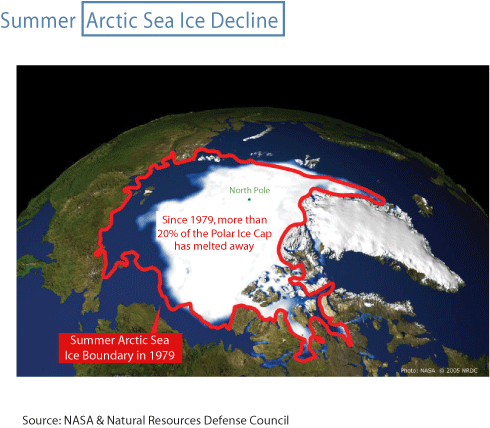
Never mind the radioactive waste under the Arctic sea: Shell is keen to drill there
Shell still optimistic about Arctic drilling
http://www.heraldsun.com.au/business/breaking-news/shell-still-optimistic-about-arctic-drilling/story-e6frf7ko-1226485643427 AP October 01, 2012 THE stars lined up – almost – for Shell Oil to drill exploratory wells this year in waters off Alaska’s north coast.
The Arctic Ocean was on record pace for low sea ice. The Obama administration gave a qualified green light to drilling. Two drill ships and a flotilla of support vessels were staged off prospects.
But as the open water season wound down, Shell announced last week it would limit drilling to time-consuming preparation for an offshore well. The final straw for the decision: damage during testing September 15 to an undersea containment dome, a key to the company’s spill response system.
Environmentalists cheered the setback. Shell Oil President Marvin Odum says he considers it a temporary impediment in the long-term quest to open a petroleum frontier.
Danger as oil companies plan drilling in nuclear waste ocean dump
The Kara Sea is so remote that the Soviet Union used it as a dumping ground for radioactive material for more than 25 years. The two oil companies have avoided calls for the nuclear waste, estimated to consist of over 17,000 barrels of radioactive waste, worn-out reactors, and even an old nuclear submarine, to be cleared up before any exploration takes place.
The most dangerous item down on the sea floor in that area is the K-27 nuclear submarine, which was dumped their by the Soviet navy in 1981. The NRPA said that any significant corrosion could damage the ships reactor and cause an environmental disaster.
 Exxon, Rosneft eye oil in nuclear wasteland http://www.csmonitor.com/Environment/Energy-Voices/2012/0927/Exxon-Rosneft-eye-oil-in-nuclear-wasteland
Exxon Mobil and Rosneft are planning to drill for oil in the Kara Sea, which the Soviet Union used as a dumping ground for radioactive material for more than 25 years, according to OilPrice.com. By James Burgess, September 27, 2012 It has been well documented that oil majors from around the world are looking at oil exploration in the Arctic, where they believe that some of the largest untapped fields in the world still lie.
Environmentalists have been fighting efforts to start exploring for oil, fearing that any serious oil spill could mean the destruction of one of the last pristine wildernesses on the planet. Continue reading
Sea ice at record low – climate change nears crisis point
What the scientific community understands is that Arctic ice is melting at an accelerated rate — and that humans play a role in these changes.
includes VIDEO Arctic Sea Ice Levels Hit Record Low, Scientists Say We’re ‘Running Out Of Time’, HUFFINGTON POST Joanna  Zelman James Gerken
09/19/2012 As Arctic sea ice levels hit a new record low this month, scientists and activists gathered to discuss how to bridge the gap between scientific facts and the public’s limited understanding that we are, in their words, “really running out of time.”
The National Snow and Ice Data Center (NSIDC) released preliminary findings Wednesday suggesting that on Sept. 16, Arctic ice covered just 1.32 million square miles — the lowest extent ever recorded. This minimum is 49 percent below the 1979 average, when satellite records began. Continue reading
A warning on the genetic effects of low dose radiation
“Radioactive waste – the source of which is mostly human-made, like nuclear power plants, nuclear testing, wrong disposal of nuclear or radioactive medicines by hospitals and so on — can cause serious impact on marine and land species,”
There is a link between other species and humans via the associated food chain,”
‘Man-made radiation makes repairing broken genes harder’ The Gulf Today BY A STAFF REPORTER September 15, 2012 DUBAI: All living things on earth and in the oceans live with exposure to natural levels of ionising radiation, which is high-frequency radiation with enough energy to change the DNA of organisms.
Most such genetic damage heals, but the addition of human-made radiation can make it harder for the body to repair broken genes, according to Master Pritvik Sinhadc, the world’s youngest author on palaeontology, the earth science that studies fossil organisms and related remains. Continue reading
Russia’s nuclear waste storage ship

 Nuclear waste storage ship Lepse leaves Murmansk for decomissioning, Kola Peninsula, Russia http://www.youtube.com/watch?v=guPem_guPUk
Nuclear waste storage ship Lepse leaves Murmansk for decomissioning, Kola Peninsula, Russia Sep 14, 2012 by bellonafoundation
The Lepse, which in its heyday had been used as a support vessel for Russia’s nuclear icebreaker fleet, has been bobbing at dockside at the Atomflot port four kilometers north of Murmansk’s more than a quarter of a million-strong population since 1988. In the holds of the Lepse are filled with casks and caissons holding 639 spent nuclear fuel assemblies –equaling hundreds of tons of radioactive materials — a significant portion of which have been damaged, including assemblies that were damaged during offloading from the nuclear icebreaker Lenin. On September 14, 2012, Lepse was towed to Nerpa shipyard on the Kola Peninsula for decommissioning. Bellona has been instrumental in Lepse project. Bellona’s President Frederic Hauge is in Murmansk to see Lepse leaving the Kola Bay.
Russian scientists find high levels of cesium 137 in Pacific ocean near Fukushima
[The Voice of Russia] Cs137 in Pacific ocean 500~800km from Fukushima, “10 times higher than norm” http://fukushima-diary.com/2012/09/the-voice-of-russia-cesium137-detected-in-pacific-ocean-500800km-from-fukushima-10-times-higher-than-normal/#.UFOPru59MAQ.facebook by Mochizuki on September 14th, 2012
<Quote> [The voice of Russia]
Russian scientists find radiation off Fukushima coast
Russian scientists have detected radiation in the north-west of the
Pacific Ocean at a distance between 500-800 km to the east from
Japan’s troubled Fukushima-1 nuclear power plant.
The expedition of the Russian geographical society has detected that
the concentration of cesium-137 in that area exceeds the norm 10
times.
This is the first time when concentration of cesium 137 was found in
the local sea waters while the air is clean.
The level of radiation near the Russian coast is normal.
1 This Month
To see nuclear-related stories in greater depth and intensity – go to https://nuclearinformation.wordpress.com/
12 February – Webinar The Big Push: New Nuclear Projects in Canada
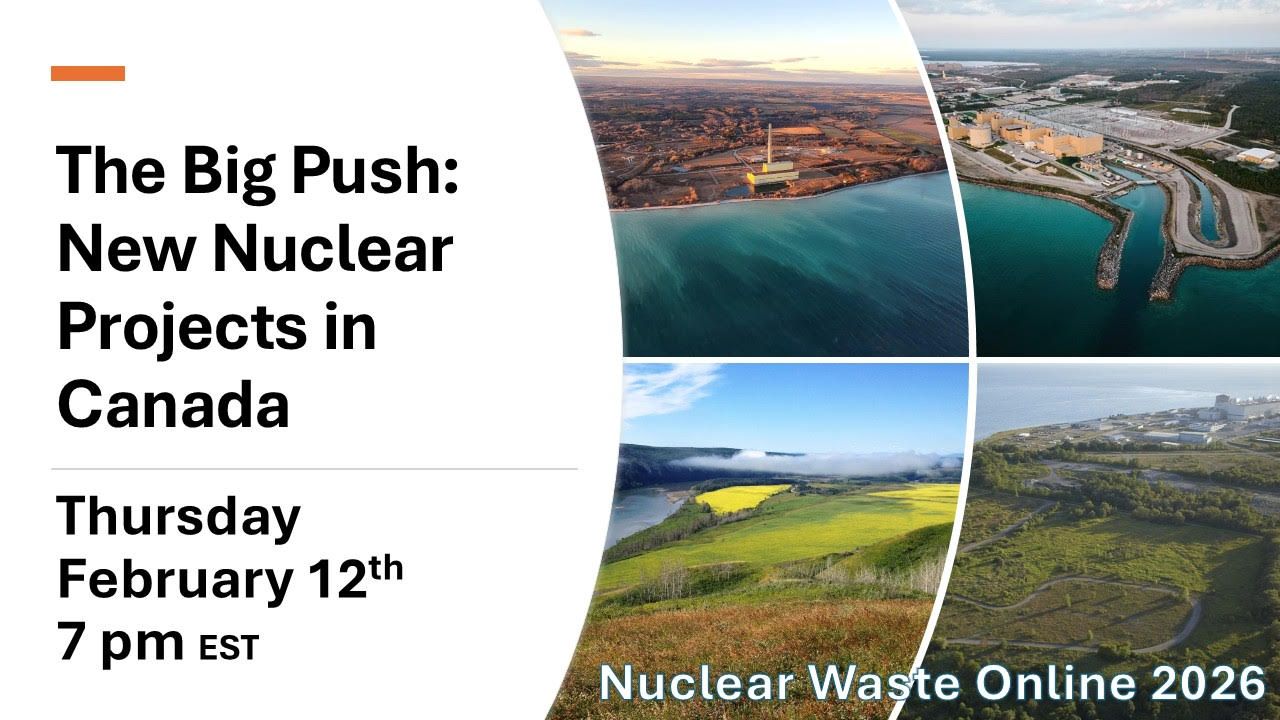
Thursday, February 12, 7 pm Eastern | 2nd of 4 sessions in the 2026 Nuclear Waste Online webinar series
Join a webinar on the push for new nuclear generation in Canada. Go to Northwatch.org to register or use the registration link https://us02web.zoom.us/webinar/register/WN_ZfWOf1GITqSRIZX8CB-A9w
-
Archives
- February 2026 (127)
- January 2026 (308)
- December 2025 (358)
- November 2025 (359)
- October 2025 (376)
- September 2025 (258)
- August 2025 (319)
- July 2025 (230)
- June 2025 (348)
- May 2025 (261)
- April 2025 (305)
- March 2025 (319)
-
Categories
- 1
- 1 NUCLEAR ISSUES
- business and costs
- climate change
- culture and arts
- ENERGY
- environment
- health
- history
- indigenous issues
- Legal
- marketing of nuclear
- media
- opposition to nuclear
- PERSONAL STORIES
- politics
- politics international
- Religion and ethics
- safety
- secrets,lies and civil liberties
- spinbuster
- technology
- Uranium
- wastes
- weapons and war
- Women
- 2 WORLD
- ACTION
- AFRICA
- Atrocities
- AUSTRALIA
- Christina's notes
- Christina's themes
- culture and arts
- Events
- Fuk 2022
- Fuk 2023
- Fukushima 2017
- Fukushima 2018
- fukushima 2019
- Fukushima 2020
- Fukushima 2021
- general
- global warming
- Humour (God we need it)
- Nuclear
- RARE EARTHS
- Reference
- resources – print
- Resources -audiovicual
- Weekly Newsletter
- World
- World Nuclear
- YouTube
-
RSS
Entries RSS
Comments RSS
 nuclear-news