Amazing portable solar power unit
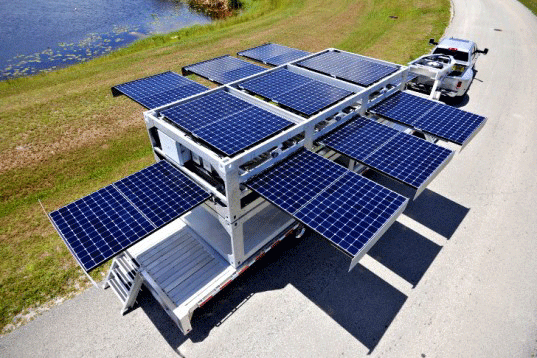
Amazing Pop-Up Solar Power Station Delivers Energy Anywhere it’s Needed, Inhabitat, by Beverley Mitchell, 06/24/14 Ecosphere Technologies’ latest product combines several of our very favorite things in one easy-to-transport package: shipping containers, off-the-grid solar power, and clean drinking water generation. With their new Ecos PowerCube, the company can deliver a shipping-container-sized, self-sustaining solar power station by air, sea, rail or road to anywhere in the world it is needed.
Renewabl eenergy investments by Warren Buffett set to increase to around $30 billion
 Warren Buffett could double renewable energy investment to $30bn http://blueandgreentomorrow.com/2014/06/11/warren-buffett-could-double-renewable-energy-investment-to-30bn/ Wednesday, June 11th, 2014 By Richard Heasman
Warren Buffett has said his Berkshire Hathaway holding company could invest a further $15 billion (£8.9 billion) in solar and wind projects in the US.
At a Las Vegas conference this week, the world’s third wealthiest man was reminded by his deputy Greg Abel of the company’s current $15 billion investment in the sectors.
Buffett swiftly declared that the same figure should be committed again, describing the overall potential of sustainable energy as an expanding market.
Bloomberg said Buffett responded to Abel’s prompt with, “There’s another $15 billion ready to go, as far as I’m concerned.” Buffett has remained one of the world’s leading investors in renewable energies,bankrolling major solar and wind power developments with multi-billion dollar investments.
Buffett’s Nebraska-based firm Berkshire Hathaway is now the fifth-largest in the world by market value. It has huge investments in regulated, capital-intensive businesses such as infrastructure and energy.
Buffett has described the renewables market as high in potential, with the predictability of reinvestment and large growth.
In 2011, he bought a massive California-based solar farm project from First Solar. Other investments include the acquisition of an Iowa energy holding company in 2011.
His unit now operates power grids in the UK, natural gas pipelines that run across the entirety of the US and wind farms in Iowa, Wyoming, California and Arizona.
Buffett’s pledge to boost renewables investment comes after Barack Obama declared tighter emission targets for coal power companies – with an overall aim of cutting emissions by 30% by 2030. The Environmental Protection Agency (EPA) declared this would bring net climate and health benefits of up to $82 billion (£48 billion).
The inevitable renewable energy revolution will transform society
 No wonder Wall Street is cheering. Hailing the ‘Age of Renewables’, Citi thinks solar will soon be the cheapest electricity in many markets, even without government incentives.
Electricity’s inevitable renewables revolution, Eco Business, 5 June 14 Due to different factors and advancing technologies, the ‘Age of Renewables’ has come and it will transform not only industries but also society.
Renewable electricity development is going to accelerate over the next few years because of trends in water, population and technology. A successful turnout in the 2015 climate talks in Paris can also be a game-changer in the demand for renewable electricity.
This position was made clear by the Intergovernmental Panel on Climate Change (IPCC) in April and more starkly in May by the International Energy Agency (IEA), which called for an “active transformation” through “radical action”.
To tackle climate change, most of the 4.2 terawatts of coal, gas and oil power plants – about 80 per cent of world’s electricity generating capacity – must be replaced with generators using clean energy well before 2050.
Revolutionary forces However, if climate talks should fail, as many expect given the current sorry state of affairs, there are several intensifying and complementary factors that could drive the rapid growth of renewable electricity in the years to come.
With renewable energy storage, conventional utilities face a difficult future
Electricity’s inevitable renewables revolution, Eco Business, 5 June 14 “…..Disruption in store Storage multiplies the value of renewable electricity thereby increasing demand, which in turn will create a positive feedback for more storage. Disruption of incumbent business models and energy markets is likely to increase as innovation drives down storage costs. Widespread storage, such as batteries, will transform renewable electricity in two ways. One, allow consumers to use renewable electricity power when they need it most, not just when the sun shines or the wind blows. Two, provide consumers and entrepreneurs with the capability to make and trade electricity without conventional utilities. Storage highlights the profound physical differences between renewable energy and conventional energy. To simplify, conventional energy, be it ore, oil or gas, is a concentrated finite stock flowing at a rate set by how much we spend on digging and drilling. Renewable energy, like solar radiation and wind, streams freely and diffuses at variable rates ultimately set by the sun. Those characteristics mean swapping out gas-turbine generators for solar modules or wind turbines watt-for-watt would result in lower electricity output. Thus, to replace 4.2 terawatts of carbon power plants, and meet rising electricity demand, will take several times as much capacity in terms of generators using solar, wind, and other renewable energy sources. However, capital costs, which as noted are falling, for renewables are offset by zero fuel costs over the operating lifetime and zero emissions which avoid social costs of harm to health, climate and ecosystems. Such costs are harming households and firms alike, triggering shifts in perceptions which favour the characteristics of renewable electricity and distributed generation. Already, the increasing competitiveness and preference for renewable energy has hit conventional utilities, contributing to losses of €500 billion in Europe in recent years. David Crane, chief executive of America’s top power producer NRG, warns conventional utilities face irrelevance. Their future looks difficult. They must switch to renewable energy and simultaneously compete against the expanding army of millions of people turning their homes and firms into power producers. Civic groups and cooperatives are acting locally to bankroll renewable power or take over grids in communities across Europe and the US.http://www.eco-business.com/opinion/electricitys-inevitable-renewable-revolution/
Warren Buffett backs revolutionary development in renewable energy
Buffett’s $28 billion winning bet on clean energy, SMH, June 5, 2014 Warren Buffett’s $US26 billion (A$28 billion) bet on western US power plants, transmission lines and wind farms is poised to pay off.
The energy unit of Buffett’s Berkshire Hathaway, with the help of California’s grid operator, is moving to unite the holdings under a single market capable of dispatching power across seven states every five minutes. The system, designed to handle sudden swings in supply and demand, would revolutionise the markets from Oregon to Nevada, where 38 transmission operators manually balance their territories on an hourly basis.
The move would be a game-changer for the renewables that Berkshire Hathaway Energy has accumulated over the past decade, including two of the world’s largest solar farms, and for other clean-power producers, according to those who trade in the region’s markets. Berkshire’s plants stand to run for longer periods of time, and its NV Energy and PacifiCorp utilities will save as much as $US63.9 million annually by 2017, Energy and Environmental Economics reports show.
“It would be huge if all 38 balancing authorities joined,” Sean Breiner, a market design analyst for energy trader Viasyn, said by telephone June 2. “Instead of having these balkanised regions, you’d have resources from Idaho to Wyoming all flowing into one kind of large spot market.”
Green power……
California has a goal of securing 33 per cent of power from clean energy by 2020. By next year, the California Independent System Operator Corp. expects renewables to meet almost a quarter of demand. In the Northwest, renewables are nearly 7 per cent of total supply, excluding hydropower.
The market, scheduled to start Oct. 1 pending approval from the Federal Energy Regulatory Commission, would use hourly bids from generators to match the cheapest resources with supply, demand and transmission changes every five minutes. It would initially include the territories of the California ISO and PacifiCorp — spanning 42,200 miles of transmission lines in six states from California to Wyoming, extend to NV Energy’s Nevada network a year later and could accommodate all operators in the region…….
Berkshire Hathaway Energy’s spending in the western states included $US10.7 billion to acquire PacifiCorp and NV Energy, $US8.7 billion in renewable investments, a $US6 billion Northwest transmission project and at least $US568 million on the Lake Side natural gas-fired power plant being completed this year in Utah, according to company filings.
Power generators and transmission operators in other parts of the US already participate in real-time markets run by grid operators from the Northeast to Texas. California runs a five-minute market within its own territory. Should all the authorities in the western US join the new system, it would become the nation’s largest geographically.
Analyses prepared by San Francisco-based Energy and Environmental Economics show the real-time market would save the California ISO area as much as $US74.3 million, PacifiCorp $US54.4 million and NV $US9.5 million in the year 2017……….. http://www.smh.com.au/environment/climate-change/buffetts-28-billion-winning-bet-on-clean-energy-20140605-zry0t.html#ixzz33v2NcWMC
One Man’s AMAZING Plan To Replace Non-Renewable Energy
A Small Victory For Japanese Nuclear Residents & One Man’s AMAZING Plan To Replace Non-Renewable Energy Collective Evolution, June 4, 2014 by Jeff Roberts  http://www.collective-evolution.com/2014/06/04/a-small-victory-for-japanese-nuclear-residents-one-mans-amazing-plan-to-replace-non-renewable-energy/ “…….. VIDEO: One man’s AMAZING plan to replace non-renewable energy The big oil, gas, coal and nuclear companies claim that we need those energy sources in order to power America. Good news: it’s a myth. Mark Diesendorf – Associate Professor and Deputy Director, Institute of Environmental Studies, UNSW at the University of New South Wales – notes: The deniers and scoffers repeatedly utter the simplistic myth that renewable energy is intermittent and therefore cannot generate base-load (that is, 24-hour) power. Detailed computer simulations, backed up with actual experience with wind power overseas, show that the scoffers are wrong. Several countries, including Australia with its huge renewable energy resources, could make the necessary transition to an electricity generation system comprising 100 per cent renewable energy over a few decades. Diesendorf gave an update earlier this month: Continue reading
India on the road to a renewable energy revolution?
India’s energy future: Australian coal or renewable revolution? The Conversation, Craig Froome Global Change Institute – Clean Energy Program Manager at University of Queensland “…….…Renewable revolution?
India’s renewable energy ambitions are driven both by the need to reduce carbon emissions and by falling renewableenergy prices (relative to increasing coal prices).
Currently India has four renewable energy schemes. They are:
- Renewable Mix Target (Electricity)
- Renewable Capacity Target
- Renewable Portfolio Standard (PAT Scheme)
- Jawaharlal Nehru National Solar Mission
The Renewable Mix Target sets a target of 15% of India’s total electricity generation by 2020. This target ignores large-scale hydroelectricity, but with renewable energy generation currently at 12% India is in a good starting position.
The Renewable Capacity Target is a target for installed capacity. Set in 2012, it aims for 41.3 gigawatts of installed renewable capacity by 2017, increasing to 72.4 gigawatts by 2022. As of March 31 India has 29.5 gigawatts installed capacity. The capacity target also sets ambitions for individual technologies 4 to 20 gigawatts of solar capacity, and 20.2 gigawatts to 27.3 gigawatts of wind energy by 2017 and 2022. Solar and wind currently stand at 2.2 and 20.2 gigawatts respectively.
The portfolio standard is a cap-and-trade scheme, due to end in 2015. Current estimates suggest the scheme has had the desired effect, and rules for continuing the scheme are being considered.
Finally, the solar mission is a solar-specific program to increase grid-based generation to 20 gigawatts by 2020, funded by a national feed-in tariff. More than 80 solar manufacturers are now establishing in India in anticipation for the roll out……..http://theconversation.com/indias-energy-future-australian-coal-or-renewable-revolution-26569
Nuclear publicists like Rod Adams wasting time trying to discredit Energiewende
 Renewable Energy Growth Greater Than Nuclear Decline in Germany Clean Technica, JamesWimberley 3 June 14,
Foreigners lecturing Germans that they should keep their nuclear reactors running are wasting their time. The well-heeled nuclear lobby in Germany has completely failed to sell its product to a firmly anti-nuclear public, and has given up, so why should a few foreign bloggers make a difference?
FWIW, I agree with the argument – ten years of avoided coal power is not to be sniffed at. But the Energiewende is a package: phase out nukes and gas first, then coal. and replace them with renewables.
The real purpose of publicists like Adams is to convince Americans that the Energiewende is a hoax so that they will support their own domestic nuke-building. This objective is less hopeless, but not by much. Wall Street and the Administration have lost interest. Republicans in Congress will defend existing nuclear subsidies, but don’t have any appetite for upping them to the Hinkleyish scale needed for a significant revival of the American nuclear industry. Move on, there’s nothing to see here.http://cleantechnica.com/2014/06/03/renewable-energy-growth-germany-nuclear-decline/
Renewable energy employing 6.5 million people world wide
 IRENA: 6.5 M People Employed in Renewable Energy Worldwide http://dailyfusion.net/2014/05/6-5-m-employed-in-renewable-energy-28962/ May 30, 2014 In 2013, approximately 6.5 million people were already employed in the renewable energy industry worldwide, a new study by the International Renewable Energy Agency (IRENA) reveals.

SEE ALSO: IRENA: Global Renewable Energy Share Can Double by 2030
“With 6.5 million people directly or indirectly employed in renewable energy, the sector is proving that it is no longer a niche, it has become a significant employer worldwide,” said IRENA Director-General Adnan Z. Amin. “The insights into shifts along segments of the value-chain revealed in the report are crucial to developing policy that strengthens job growth in this important sector of the economy.”
Renewable energy employment was shaped by regional shifts, industry realignments, growing competition and advances in technologies and manufacturing processes in 2013. The largest employers by country are China, Brazil, the United States, India, Germany, Spain and Bangladesh, while the largest employers by sector are solar photovoltaic, biofuels, wind, modern biomass and biogas.
Among other updates, the 6.5 million figure published in the annual review reflects growth in Chinese numbers, which can be attributed to a significant increase in annual installation and manufacturing activity and differences in the way employment figures are estimated. IRENA estimates a five-fold increase of solar PV installations in China from 2011 to 2013. Surging demand for solar PV in China and Japan has increased employment in the installation sector and eased some PV module over-supply concerns,” said Rabia Ferroukhi, heading the Knowledge, Policy and Finance division at IRENA and lead author of the report. “Consequently some Chinese manufacturers are now adding capacity.”
In the wind industry, China and Canada provided positive impulses while the outlook for the United States remains somewhat mixed because of political uncertainty. The offshore wind industry is still concentrated in Europe, particularly the United Kingdom and Germany.
The biofuels value chain provides the second largest number of renewable energy jobs after solar PV. The United States remains the largest biofuels producer, while Brazil remains the largest employer.
Nuclear and coal get twice the subsidies that wind and solar power get
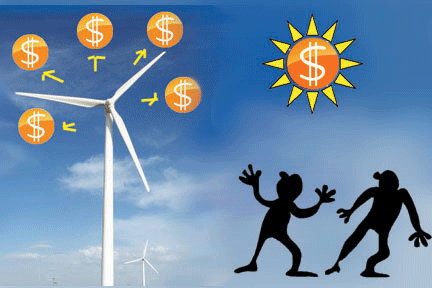 Wind Subsidies & Solar Subsidies ~50% Nuclear & CCS Subsidies (Charts) Clean Technica 30 May 14, After a week which saw the use of renewable energy support schemes in Australia described as “plain crazy”, it seems like a good time to take another look at the study published last month by Agora Energiewend that shows European subsidies for solar and wind essentially come at half the price of those for nuclear or CCS.
The analysis – based on a comparison of European subsidies for low-carbon energy systems – found that new wind and solar PV could generate energy for an overall cost of up to 50 per cent less than new nuclear or coal or gas with (as yet unavailable) carbon capture and storage technology.
“Today’s feed-in tariffs for wind and PV in Germany are up to 50 per cent lower than those offered for new nuclear in the UK according to the Hinkley Point C agreement,” the report says, noting that for CCS, with the technology still in demonstration phase, estimates suggest it would cost about as much as new nuclear power or more.
“Even today and under conservative assumptions, a generation mix consisting of PV, onshore wind and gas is approximately 20 percent less expensive than a mix consisting of new nuclear power (based on the Hinkley Point C agreement) and gas,” the report says.
Overall, it says, “onshore wind at sites with a good resource potential and utility-scale PV represent the low-carbon technologies with the lowest cost,” while power from nuclear, as well as gas and coal plants with CCS represent the low-carbon technologies with the highest cost.
But we’ll let the charts do the talking…http://cleantechnica.com/2014/05/30/wind-subsidies-solar-subsidies/
Award for Tokelau as it pioneers large solar power arrays
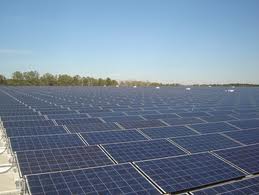 Tokelau Wins EECA Renewable Energy Award http://www.energymatters.com.au/index.php?main_page=news_article&article_id=4326 29 May 14, The Pacific territory of Tokelau has been named the 2014 EECA Renewable Energy Award winner for its solar efforts.
The Energy Efficiency and Conservation Authority (EECA) is a New Zealand government agency that supports energy efficiency, energy conservation and the use of renewable energy in New Zealand and its Territories.
Like many island nations, Tokelau has in the past relied heavily on expensive and polluting diesel generators for electricity supply.
Thanks to the Tokelau Renewable Energy Project, three large solar panel arrays arrays are now operating on Tokelau’s three atolls, some powered by SMA inverters. The project was completed last year.
These solar farms are now providing 90% of Tokelau’s electricity needs and place it among the world’s top nations for renewably-sourced electricity. Harvesting the sun’s energy is expected to save Tokelau roughly NZD $900,000 (~ AUD $824,500) per year in diesel costs.
The Tokelau Renewable Energy Project (TREP) was a joint undertaking between the Government of Tokelau and the New Zealand Ministry of Foreign Affairs and Trade.
“Island communities such as Tokelau, with few energy alternatives, are ideal sites for solar-generated electricity,” EECA Chief Executive Mike Underhill.
“This project showed immense vision and drive from the leaders and communities of Tokelau. They are showing other Pacific nations the way – as well as highlighting to the world the need for more renewable energy and less carbon-intensive fossil fuels.”
Solar power represents so much more to Tokelau than just a stable, clean electricity supply. It’s a flagship for the battle against climate change and a signal to the world.
At their highest point, the islands rise around 2 metres above sea level. Tokelau is a nation in the front-line of the effects of climate change – and it is already experiencing the effects of rising seas. It is believed Tokelau could be the first nation to disappear under the waves unless dramatic action is taken to rein in carbon emissions.
The path to 100%renewable energy – from World Future Council
World Future Council going global with 100% renewable energy http://www.theecologist.org/magazine/features/2408352/world_future_council_going_global_with_100_renewable_energy.html Anne Reis 23rd May 2014 A new global campaign that advocates 100% renewable energy aims to change the political mindset and make renewable energy ‘the new normal’. The innovative World Future Council, in partnership with Japan’s Institute for Sustainable Energy Policies (ISEP) and eight other organisations from civil society, industry, policy and academia, have formed the first global campaign that advocates 100% renewable energy.
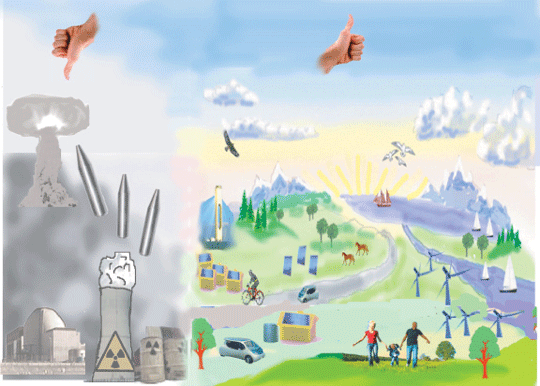
Anna Leidreiter, policy officer at the World Future Council in Hamburg, serves as the coordinator for the ‘Global 100% RE’ campaign. She explains, “The goal is to initiate a dialogue about 100% renewable energy and inform people about what’s happening all over the world, proving that 100% RE is viable.” Indeed it is, and it is already working: globally, with many countries now moving towards 100% RE. Denmark, Scotland, Iceland as well as countries particularly affected by climate change like the Maldives and Tuvalu are well on the way. “All these examples show that making the transition to 100% RE is a political – not technical – decision,” says Leidreiter. “The necessary technologies and knowledge are there.”
Renewable energy initatives across Europe lead the way
The 100% RE initiative is focused on changing this political mindset, so that renewable energy becomes “the new normal”. By drawing on existing examples of good practice from around the world, it aims to prove that renewable energy is achievable, affordable and a practical solution to climate change. Continue reading
A revolutionary solar collector that could power the whole planet
IBM Solar Collector Magnifies Sun By 2000X – These Could Provide Power To The Entire Planet http://banoosh.com/blog/2014/02/27/ibm-solar-collector-magnifies-sun-2000x-provide-power-entire-planet/ A team at IBM recently developed what they call a High Concentration Photo Voltaic Thermal (HCPVT) system that is capable of concentrating the power of 2,000 suns, they are even claiming to be able to concentrate energy safely up to 5,000X, that’s huge.

The process of trapping the sunlight produces water that can be used to produce filtered drinkable water, or used for other things like air conditioning etc. Scientists envision that the HCPVT system could provide sustainable energy and fresh water to communities all around the world. Continue reading
Wind energy a winner in the right wing State of Texas
How Green Energy Won Out Over Fossil Fuels in a Red State In Texas, wind power is set to come online faster than natural gas over the course of the next decade.by Clare Foran National Journal, 22 May 14 Wind is going head to head with natural gas at the heart of the fracking boom—and wind is winning.
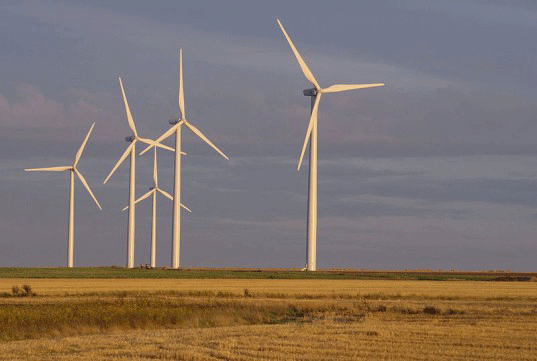
Fracking—a drilling technique that involves breaking open shale rock formations to extract oil and natural gas—has taken Texas by storm. The Lone Star State is dotted with drill sites and leads the nation in natural-gas production. But wide open spaces and strong gusts make it an ideal place to turn turbines. And Texas also takes the top spot for states with the most wind power.
Green energy has steadily gained traction in the deep-red state. In 2003, wind made up less than 1 percent of the power supply, according to state grid operator the Electric Reliability Council of Texas. By 2013, that share had risen to roughly 10 percent.
Solar power in every Indian home by 2019 – that’s the goal of new Prime Minister Modi
 Modi to Use Solar to Bring Power to Every Home by 2019 http://www.bloomberg.com/news/2014-05-19/modi-to-use-solar-to-bring-power-to-every-home-by-2019.html By Rakteem Katakey and Debjit Chakraborty May 18, 2014 India’s new government led b yNarendra Modi plans to harness solar power to enable every home to run at least one light bulb by 2019, a party official said.
“We look upon solar as having the potential to completely transform the way we look at the energy space,” said Narendra Taneja, convener of the energy division at Modi’s Bharatiya Janata Party, which swept to power on May 16 in the biggest electoral win in three decades. About 400 million people in India lack access to electricity, more than the combined population of the U.S. and Canada. The outgoing government led by Prime Minister Manmohan Singh missed a 2012 target to provide electricity to all households.
The five-year goal will require the cooperation of state-level administrations with which the central government shares control over the power industry, Taneja said. If successful, solar panels could allow every home to have enough power to run two bulbs, a solar cooker and a television, he said.
Expanding clean-power generation will be the administration’s top energy-related priority, especially solar because it has the potential to create jobs and supply millions of scattered households not connected to the grid, he said.
Modi, as chief minister of Gujarat state, pioneered India’s first incentives for large-scale solar power in 2009. The party will take lessons from Gujarat’s program as it designs policies on a national level that will include both larger, grid-connected photovoltaic projects and smaller, decentralized applications for solar, Taneja said.
To contact the reporters on this story: Rakteem Katakey in New Delhi atrkatakey@bloomberg.net; Debjit Chakraborty in New Delhi at dchakrabor10@bloomberg.net
1 This Month
Chernobyl: The Lost Tapes – A good documentary on Chernobyl on SBS available On Demand for the next 3 weeks– https://www.sbs.com.au/ondemand/tv-program/chernobyl-the-lost-tapes/2352741955560

of the week–London Campaign for Nuclear Disarmament

Tell the Ukrainian Government to Drop Prosecution of Peace Activist Yurii Sheliazhenko
To see nuclear-related stories in greater depth and intensity – go to https://nuclearinformation.wordpress.com
-
Archives
- April 2026 (152)
- March 2026 (251)
- February 2026 (268)
- January 2026 (308)
- December 2025 (358)
- November 2025 (359)
- October 2025 (376)
- September 2025 (257)
- August 2025 (319)
- July 2025 (230)
- June 2025 (348)
- May 2025 (261)
-
Categories
- 1
- 1 NUCLEAR ISSUES
- business and costs
- climate change
- culture and arts
- ENERGY
- environment
- health
- history
- indigenous issues
- Legal
- marketing of nuclear
- media
- opposition to nuclear
- PERSONAL STORIES
- politics
- politics international
- Religion and ethics
- safety
- secrets,lies and civil liberties
- spinbuster
- technology
- Uranium
- wastes
- weapons and war
- Women
- 2 WORLD
- ACTION
- AFRICA
- Atrocities
- AUSTRALIA
- Christina's notes
- Christina's themes
- culture and arts
- Events
- Fuk 2022
- Fuk 2023
- Fukushima 2017
- Fukushima 2018
- fukushima 2019
- Fukushima 2020
- Fukushima 2021
- general
- global warming
- Humour (God we need it)
- Nuclear
- RARE EARTHS
- Reference
- resources – print
- Resources -audiovicual
- Weekly Newsletter
- World
- World Nuclear
- YouTube
-
RSS
Entries RSS
Comments RSS
 nuclear-news