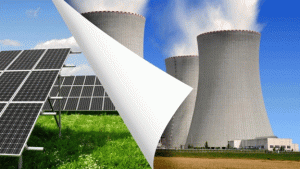
 Are solar and wind really killing coal, nuclear and grid reliability? The Conversation, Joshua D. Rhodes, Postdoctoral Researcher of Energy, University of Texas at Austin, Michael E. Webber, Professor of Mechanical Engineering and Deputy Director of the Energy Institute, University of Texas at Austin, Thomas Deetjen, Graduate Research Assistant, University of Texas at Austin, Todd Davidson, Research Associate, Energy Institute, University of Texas at Austin May 12, 2017
 U.S. Secretary of Energy Rick Perry in April
requested a study to assess the effect of renewable energy policies on nuclear and coal-fired power plants.
Some energy analysts responded with confusion, as the subject has been extensively studied by grid operators and the Department of Energy’s own national labs. Others were more critical, saying the intent of the review is to favor the use of nuclear and coal over renewable sources.
So, are wind and solar killing coal and nuclear? Yes, but not by themselves and not for the reasons most people think. Are wind and solar killing grid reliability? No, not where the grid’s technology and regulations have been modernized. In those places, overall grid operation has improved, not worsened………
Wind and solar are making older generators less viable because their low, stable prices and emissions-free operation are desirable. And they aren’t hurting grid reliability the way critics had assumed because other innovations have happened simultaneously…….
How do renewables affect the bid stack? Renewable sources such as wind, solar and hydro have no fuel costs – sunlight, wind and flowing water are free. That means their marginal operational cost is near zero; the cost is essentially the same to operate one megawatt of wind as compared to the cost of operating 10 megawatts of wind since generators don’t need to buy fuel. That means as more wind and solar farms are installed, more capacity is inserted at the cheapest end of the bid stack.
This insertion pushes out other generators such as nuclear, natural gas and coal, causing some of them to no longer be dispatched into the grid – that is, they don’t supply power into the grid (or get paid). So as more renewables are installed, power markets dispatch fewer conventional options. And, because the marginal cost of these new sources is almost free, they substantially lower the cost for electricity. This is great news for consumers (all of us) as our bills decrease, but bad news for competitors (such as coal plant owners) who operate their plants less often and are paid less when the plants do operate.
What does all this mean? Natural gas and renewables are affecting coal in two ways. Natural gas is a direct competitor with coal because both can be dispatched – turned on – when a grid operator needs more power. That is helpful for grid reliability. But, as the cost of natural gas has fallen, coal has become less competitive because it is cheaper to operate a natural gas power plant.
The effect of renewables is slightly different: Wind and solar power are not dispatchable, so they cannot be turned on at a moment’s notice. But, when they do turn on, during windy evenings or sunny days in Texas, they operate at very low marginal cost and thus operate very competitively.
Research at UT Austin shows that while installing significant amounts of solar power would increase annual grid management costs by $10 million in ERCOT, it would reduce annual wholesale electricity costs by $900 million. The result of all this is that renewables compete with conventional sources of power, but they do not displace nearly as much coal as cheap natural gas. In fact, cheap gas displaces, on average, more than twice as much coal than renewables have in ERCOT.
What about nuclear?
Nuclear’s problems are largely self-inflicted. In short: The price to build nuclear is high, so we don’t build many nuclear plants these days. Since we don’t build, we don’t have the manufacturing capability. Since we don’t have the manufacturing capability, the price to build nuclear is high. Since the price to build nuclear is high, we don’t build nuclear these days…so on and so forth.
Today, cheap gas, having already beaten up on coal, is a threat to new nuclear power plants and less efficient, older plants. New natural gas combined cycle power plants can be built for about one-sixth the cost of a new nuclear plant, is almost twice as efficient and you can build them in smaller increments, making them easier to finance.
Market innovation and IT can fix reliability
Because wind energy comes and goes with the weather, it makes grid operators nervous. But wind forecasting has improved dramatically, giving more confidence to those who need to keep the lights on.
And, interestingly enough, the requirements for reserve capacity (backup power for when wind power dips) to manage the grid smoothly went down, not up, over the past few years in Texas, despite rapid growth in wind during Governor Perry’s tenure. That is, the costs for managing variability in the grid decreased……….
there is still more to do – information technology coupled with integrated hardware can help. Consider this: There are 7.7 million smart meters in Texas, most of them residential. We’ve estimated that installing 7 million controllable thermostats for just the households in Texas would cost $2 billion. Residential air conditioning is responsible for about 50 percent of peak demand in Texas in the summer. That means about 30 gigawatts of peak demand in Texas is just from residential air conditioners.
By dynamically managing our air conditioning loads – that is, adjusting thermostats to lower overall demand without impacting people’s comfort – we could reduce peak demand by 10 to 15 GW. That means we might not need $10 billion to $15 billion worth of power plants. Spending $2 billion to avoid $15 billion is a good deal for consumers. In fact, you could give the thermostat away for free and pay each household $700 for their trouble and it would still be cheaper than any power plant we can build.
In the end, Secretary Perry has posed good questions. Thankfully, because of lessons learned while he was governor of Texas, we already have answers: despite concerns to the contrary, incorporating wind and solar into the grid along with fast-ramping natural gas, smart market designs and integrated load control systems will lead to a cleaner, cheaper, more reliable grid.https://theconversation.com/are-solar-and-wind-really-killing-coal-nuclear-and-grid-reliability-76741
May 13, 2017
Posted by Christina Macpherson |
renewable, USA |
Leave a comment
 New Energy Update, May 10, 2017 French President-elect set to boost sluggish solar growth Emmanuel Macron’s victory in France’s presidential election on May 7 is set to usher in a new wave of renewable energy development, according to his campaign pledges.
Macron pledged to double solar and wind capacity and close all of France’s coal-fired power stations by the end of his five-year term in 2022. He has also pledged to retain laws introduced in 2015 which aim to cut the share of nuclear power from 75% to 50% by 2025. This could equate to the closure of 25 GW of nuclear power capacity and shutdown dates will depend on growth in solar and wind capacity.
French solar capacity currently stands at 7 GW while wind capacity is around 12 GW. Solar and wind development has been hampered by regulatory and administrative hurdles and Macron plans to simplify the authorization process.
The closure of 25 GW of nuclear power capacity would require around 75 GW of new renewable energy capacity, Jefferies analysts Ahmed Farman and Oliver Salvesen said in a research note April 24.
“That looks quite challenging given that in the last 10 years only 18 GW of wind and solar was installed in France,” the analysts said in their note.
Market analysts have highlighted the challenge of shutting down an estimated 25 GW of nuclear power capacity over such a short timeframe while maintaining grid stability. While Macron supports the 2025 nuclear phase-out law, he has not set out a firm position on the phase-out date.
“The lack of a firm position on this issue may be because Mr Macron is well aware that the 2025 target is highly ambitious,” Farman and Salvesen said in their research note.
The 50% nuclear target may instead be reached between 2030 and 2033, a Macron adviser told Bloomberg in a report published April 26. The 50% objective could be reached sooner if ASN, the French nuclear safety authority, imposes tough conditions to extend reactor lifespans from 40 to 50 years, the adviser told Bloomberg.
Some 34 of EDF’s 58 reactors will soon reach 40 years of operations and the ASN will publish its safety report on the proposed lifespan extensions in around 2018.
Macron has said he would decide on the future of these reactors following the ASN’s report. http://analysis.newenergyupdate.com/pv-insider/google-brings-solar-rooftop-mapping-europe-french-president-elect-plans-renewables-boom?utm_campaign=NEP+PV+10MAY17+Newsletter&utm_medium=email&utm_source=Eloqua&elqTrackId=0da3b745bbf445b4a26a08b119c0eb1a&elq=3285a40f49eb42f0a3f4e6cb9d0a3898&elqaid=27829&elqat=1&elqCampaignId=13168
May 12, 2017
Posted by Christina Macpherson |
France, renewable |
Leave a comment
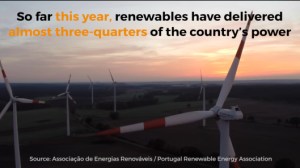 Power of renewables is sweeping the world towards a new revolution, Business Live, 08 MAY 2017 – 05:57 MICHAEL POWER, I am not going to write about nuclear power. By the end of this article, you will know why. The global economy is on the cusp of its Fourth Industrial Revolution. And like the previous three, this one will be driven by — quite literally — a concentrated burst of energy. In the early 19th century, the original Industrial Revolution was based on harnessing steam energy; in the late 19th century, the second followed with the employment of electrical energy; in the late 20th century, the third was built on the exploitation of computing energy. And, as will become all too apparent in the coming decade, the fourth will be rooted in renewable energy.
Such supercharged progress is born from mixing the most basic laws in the universe, thermodynamics, with economics. When humanity harnesses a higher form of energy, we are capable of doing much greater amounts of work with it. And much greater wealth results. There is nothing more to it. Nor less.
We are leaving the age when, to generate power, we exploited minerals that we found underneath the earth’s surface: coal, oil, uranium. Henceforth, we will increasingly access assets above the earth’s surface: the sun and the wind, with water and steam in various forms playing supporting roles. And not only is the harnessing of these energy sources essentially renewable, the side-effects in terms of pollution will be next to negligible. The production of these new energies will be extraordinarily safe. And the Fourth Industrial Revolution will be a game-changer because once renewable power capacity is installed, the marginal cost of energy production from it will be close to zero.
How soon will this happen? It is already happening. Trusted Sources estimate that, in 2016, more than 60% of all new energy installations worldwide were in the renewable space. By 2020, they predict that share will be 100%. Thus, within three years, the share of energy generation worldwide attributable to traditional sources will be declining.
Wind power is already having a huge affect in colder countries in the northern hemisphere: Scotland, Denmark and Germany have days when renewables, led by wind, provide all their energy needs. Solar power is starting to be used much more in regions between the 45° north and south latitudes, which embraces virtually all inhabited regions in the southern hemisphere. Our Cape Agulhas is 35° south.
While the whole world will participate in this revolution to varying degrees, industrially it will be driven by China………
Perhaps the most radical breakthrough has been made by using molten salt to absorb energy in the day and release it at night: Spain’s 150MW Andasol solar power station uses this method, doubling the power plant’s operational hours. It has been very successfully employed in Chile’s Atacama Desert, now dubbed the Saudi Arabia of Solar Power. The Karoo is SA’s equivalent of the Atacama.
One of the most extraordinary advantages of solar is that it can easily and cost effectively be installed on a micro scale, making it particularly applicable for emerging markets. A panel can work for just one household and not need to be connected to a grid. This has spawned a supply revolution in regions where grid coverage is patchy.
Companies connecting panels to mobile payment systems have flourished: Kenya’s M-Kopa is but one example. And the results of this have spread into many corners of society: one estimate has it that, because homework can now be done at night, exam results for children living in solar-connected houses have improved 40%. As the immutable laws of thermodynamics dictate, energy is translated into work! New sources of energy that become readily accessible to the poor are what make these industrial advances so revolutionary.
As with all previous industrial revolutions, the breakthrough in harnessing a new energy source spawns myriad secondary developments that are dependent on it. ……
Invariably there are vested interests connected to old energy that will seek to slow this coming revolution. But plans to install old energy capacity in a world fast migrating to renewables is economic lunacy. So, the reason I am not writing about nuclear power should be abundantly clear: it is so, so yesterday. https://www.businesslive.co.za/bd/opinion/2017-05-08-power-of-renewables-is-sweeping-the-world-towards-a-new-revolution/
May 10, 2017
Posted by Christina Macpherson |
2 WORLD, renewable |
Leave a comment
 So much news is coming out, particularly about the speedy development of renewable energy, that I cannot keep up. Here are brief notes:
Climate Change
There are diseases hidden in ice, and they are waking up.
Long-dormant bacteria and viruses, trapped in ice and permafrost for centuries, are reviving as Earth’s climate warms.
http://www.environmentalhealthnews.org/t/-995200128361634098
Increased scrutiny of climate-change models should be welcomed.
The apparent slowdown in global warming has provided a spur for better understanding of the underlying processes.
http://www.environmentalhealthnews.org/t/-995200128361634093
Modest climate change bill draws sponsors from both sides of the aisle.
A small but increasingly vocal group of Republicans is embracing the reality of global warming and taking small steps to press the issue in Congress.
http://www.dailyclimate.org/t/-995200128361634108
Health and climate change
The World Health Organisation’s director-general describes climate change as ‘the fifth horseman’ of the apocalypse, as doctors are encouraged to speak out more about illness and death caused by extreme weather.
https://www.thesaturdaypaper.com.au/2017/05/06/health-and-climate-change/14939928004580
Is Climate Changing Cloud Heights? Too Soon to Say
A new analysis of 15 years of NASA satellite cloud measurements finds that clouds worldwide show no definitive trend during this period toward decreasing or increasing in height. The new study updates an earlier analysis of the first 10 years of the same data that suggested cloud heights might be getting lower.
http://www.enn.com/climate/article/51190
Medical scientists report on the impact climate change is having on health.
John Abraham The Guardian
As a climate scientist, I spend time and energy studying how fast the Earth is warming and what is causing the warming.
http://www.dailyclimate.org/t/-995200128361633609
Scientists take on greenhouse gas challenge.
Ingenuity in laboratories worldwide is harnessing microbes, water and hot air to produce different types of renewable energy from greenhouse gas.
http://www.environmentalhealthnews.org/t/-995200128361632292
Following Recent Surge, Wind Now Generates 5.5 Percent of U.S. Electricity
The U.S. wind energy industry experienced its fastest first-quarter growth since 2009, installing 2,000 new megawatts of capacity — enough to power about 500,000 homes — on its way to producing 5.5 percent of the country’s electricity.
http://www.enn.com/energy/article/51187
May 6, 2017
Posted by Christina Macpherson |
2 WORLD, climate change, renewable |
Leave a comment
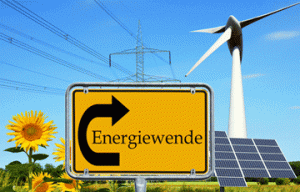 Germany breaks renewables record with coal and nuclear power responsible for only 15% of country’s total energy http://www.independent.co.uk/news/world/europe/germany-renewable-energy-record-coal-nuclear-power-energiewende-low-carbon-goals-a7719006.html
Electricity prices fell to negative figures for several hours on Sunday, as renewable sources fed so much power into the grid that supply exceeded demand Charlotte England @charlottengland, 5 May 17, Germany has broken a new record for renewable energy, with low-carbon sources nearly obliterating coal and nuclear power last weekend.
Investment in sustainable energy has been so successful that for several hours on Sunday electricity prices fell into negative figures, as renewable sources fed so much power into the grid that supply exceeded demand.
Coal use fell to an all-time low, with public broadcaster Deutsche Welle reporting that on 30 April coal-fired power stations were only operational between three and four in the afternoon and produced less than eight gigawatts of energy, well below their maximum output of about 50 gigawatts.
“Most of Germany’s coal-fired power stations were not even operating on Sunday,” Patrick Graichen of Agora Energiewende told Australian news site RenewEconomy.
“Nuclear power sources, which are planned to be completely phased out by 2022, were also severely reduced.”
Mr Graichen added that days like Sunday would be “completely normal” by 2030 thanks to the government’s continued investment in the Energiewende initiative.
Germany announced in May 2011 that it plans to shut down all its nuclear power plants by 2022, in addition to nearly eliminating fossil fuel power..
The country’s ambitious energy transition aims for at least 80 per cent of all power to come from renewables by 2050, with intermediate targets of 35 to 40 percent share by 2025 and 55 to 60 percent by 2035.
The EU as a whole is also striving to meet stringent sustainable energy targets, albeit more modest ones than Germany.
While the bloc is on course to meet 2020 goals of 20 per cent of energy from renewable sources, the UK is lagging behind.
MPs on the Energy and Climate Change Committee warned the Government last year that, on its current course, the UK will fail to achieve its 2020 renewable energy targets — to provide for 15 per cent of its energy needs from renewable sources
May 6, 2017
Posted by Christina Macpherson |
Germany, renewable |
Leave a comment
 Graph of the day: Germany’s record 85% renewables over weekend [good graphs] REneweconomy By Giles Parkinson on 4 May 2017 Germany achieves a record level of 85 per cent renewable energy generation on April 30 – part of the May 1 long weekend – with wind and solar providing significant lifts in output and along with biomass and hydro almost completely sidelining hard coal plants.
Patrick Graichen of Agora Energiewende Initiative, which provided these graphs, says a combination of breezy and sunny weather in the north and warm weather in the south saw Germany’s May 1 holiday weekend powered almost exclusively by renewable resources.
“Most of Germany’s coal-fired power stations were not even operating on Sunday April 30th, with renewable sources accounting for 85 per cent of electricity across the country,” he said. “Nuclear power sources, which are planned to be completely phased out by 2022, were also severely reduced.
Graichen says days like April 30 would be “completely normal” by 2030, as the federal government’s Energiewende (energy transition) initiative continues to add value to the wealth of resources invested in it……..http://reneweconomy.com.au/graph-of-the-day-germanys-record-85-renewables-over-weekend-60743/
May 5, 2017
Posted by Christina Macpherson |
Germany, renewable |
Leave a comment
 U.S. Wind Energy Installations Surge: A New Turbine Rises Every 2.4 Hours, Inside Climate News,
The wind power industry just chalked up its strongest first quarter in eight years. Tax credits play an important role. Phil McKenna, 4 May 17 Every two and a half hours, workers installed a new wind turbine in the United States during the first quarter of 2017, marking the strongest start for the wind industry in eight years, according to a new report by the American Wind Energy Association (AWEA) released on May 2.
“We switched on more megawatts in the first quarter than in the first three quarters of last year combined,” Tom Kiernan, CEO of AWEA, said in a statement.
Nationwide, wind provided
5.6 percent of all electricity produced in 2016, an amount of electricity generation that has
more than doubled since 2010. Much of the demand for new wind energy generation in recent years has come from Fortune 500 companies including Home Depot, GM, Walmart and Microsoft that are buying wind energy in large part for its low, stable cost.
The significant increase this past quarter, when 908 new utility-scale turbines came online, is largely a result of the first wave of projects under the renewable energy tax credits that were extended by Congress in 2015, as well as some overflow from the prior round of tax credits. The tax credits’ gradual phase-out over a period of five years incentivized developers to begin construction in 2016, and those projects are now beginning to come online.
A recent
AWEA-funded report projects continued steady growth for the wind energy industry through 2020. Energy analysts, however, say that growth could slow after 2020 as the federal Production Tax Credit (PTC) expires……..
A key driver in the early 2020s will be renewable portfolio standards in states like New York and California, which have both mandated that local utilities get 50 percent of their electricity from renewable sources by 2030.
By the mid-2020s, the cost of unsubsidized onshore wind will be low enough to compete with both existing and new fossil-fueled generation in many regions of the U.S., Morgan said.
The report shows that Texas continues as the overall national leader for wind power capacity, with 21,000 MW of total installed capacity, three times more than Iowa, the second leading state for wind power installations. Over 99 percent of wind farms are built in rural communities; together, the installations pay over $245 million per year in lease agreements with local landowners, according to AWEA.
May 5, 2017
Posted by Christina Macpherson |
renewable, USA |
Leave a comment
 Two thirds of Canada’s electricity now comes from renewable energy, Financial Post Jesse Snyder | May 3, 2017 CALGARY — Canada substantially boosted its renewable electricity capacity over the past decade, and has now emerged as the second largest producer of hydroelectricty in the world, a new report said Wednesday.
A report by the National Energy Board said that Canada generated 66 per cent of its electricity from renewable sources in 2015. Hydroelectric power accounted for roughly 60 per cent of electricity supply, generating around 79,000 megawatts in 2015………
As large-scale hydropower projects face some resistance, wind and solar are set to step grown rapidly in recent years as their costs continue to fall.
Wind capacity in Canada increased 20-fold between 2005 and 2015, according to the NEB, and accounted for 7.7 per cent of total electricity capacity in 2015. Solar accounted for 1.5 per cent.
As Canada’s dependence on renewable sources like solar and wind grows — albeit gradually — governments are now grappling with how to build the high-voltage transmission lines that would be needed to offset intermittency……
Substituting intermittent power supplies with more stable ones is vastly more costly in Canada than in higher density countries like Denmark, which generates more than 50 per cent of its electricity from wind power.
In January, researchers at the University of Ottawa’s Institute of the Environment released a report that analyzed the long-term cost savings of building high-voltage connecting lines between several hydro rich and hydro poor regions—for example between Alberta and British Columbia.
“We found that you can achieve emission reductions at a lower cost if you build those transmission lines, and that’s including the cost of construction,” said Brett Dolter, one of the report’s authors.
Canada produced roughly 10 per cent of hydro capacity worldwide in 2015, second only to China at 29 per cent, the NEB data shows. Brazil and the U.S. produced nine per cent and 8 per cent, respectively.
Canada’s proportion of electricity generated by renewables is the sixth-highest in the world behind Denmark, Norway, Brazil, Austria and New Zealand. Only 12 countries generate more than half of their electricity from renewable supplies.
jsnyder@postmedia.com http://business.financialpost.com/news/two-thirds-of-canadas-electricity-now-comes-from-renewable-energy
May 5, 2017
Posted by Christina Macpherson |
Canada, renewable |
Leave a comment
Sorry. I can’t keep up with all the renewable energy news. Can only give headlines. I recommend Renewable Energy Buzz
World’s hottest market: Air conditioners for India and hundreds of new electric plants to power them.
The country is likewise poised to avoid the costs of such an explosion—including billions of tons of carbon pollution—by deploying units that are super efficient, with climate-friendly refrigerants and powered by renewable energy.
http://www.dailyclimate.org/t/-995200128361643930
Global pension funds warm to India’s solar power ambitions.
Some of the world’s biggest pension funds, seeking long-term returns on green investments, are scouting for deals in India’s solar power sector, where Prime Minister Narendra Modi is targeting $100 billion in investment in the next five years.
http://www.dailyclimate.org/t/-995200128361646659
India to make every single car electric by 2030 in bid to tackle pollution that kills millions.
Every car sold in India will be powered by electricity by the year 2030, according to plans unveiled by the country’s energy minister.
http://www.dailyclimate.org/t/-995200128361643930
May 3, 2017
Posted by Christina Macpherson |
India, renewable |
Leave a comment
Solar Plant to Launch at Chernobyl Nuclear Site VOA, https://learningenglish.voanews.com/a/solar-plant-chernobyl-nuclear-site/3828303.html Oksana Ligostova and Ruslan Deynychencko reported this story for VOA. Jonathan Evans adapted the report for Learning English. 27 Apr 17 Hai Do was the editor.Thirty years after the world’s worst nuclear disaster, Chernobyl is about to become a solar farm.
Officials in Ukraine plan to build a solar energy plant at the Chernobyl nuclear site. The announcement comes during the week of the 31st anniversary of the Chernobyl nuclear accident.
The Chernobyl accident occurred on April 26, 1986. The incident would become the world’s worst nuclear accident. 32 people died and dozens of others suffered painful radiation burns.
Until recently, the government of Ukraine has largely ignored the area.
Ostap Semerak is Ukraine’s minister of ecology. He spoke with VOA about the planned solar project.
“Today, almost a year after we have started the work, I can announce the first private investment project working in the Chernobyl zone to build a small solar energy plant.”
Semerak says more than 50 national and international companies have expressed interest in building the solar plant. He adds that when completed, the project will produce about half the power produced by the Chernobyl nuclear plant.
May 1, 2017
Posted by Christina Macpherson |
Belarus, renewable |
Leave a comment
Lifeline for Nuclear Plants Is Threatening Wind and Solar Power, Bloomberg by Joe Ryan April 25, 2017,
The push to save U.S. nuclear plants for the sake of fighting climate change is threatening support for the bread and butter of clean power: wind and solar. New York and Illinois have already approved as much as $10 billion in subsidies to keep struggling reactors open for the next decade as part of a plan to limit fossil fuel consumption. Lawmakers in Ohio, Connecticut and New Jersey are debating whether to do the same…….
Many environmentalists remain leery of supporting nuclear power, citing terrorism risks, the problem of dealing with spent nuclear fuel, and more. Instead of propping up struggling reactors, states should promote energy efficiency and encourage development of wind, solar and power storage, said John Coequyt, the Sierra Club’s director of climate campaigns.
Nuclear’s economic woes comes as wind and solar are starting to show they’re cheap enough to compete with traditional generators, after years of help from subsidies. …..
There are key differences between wind and solar subsidies and those for nuclear, according to clean-energy developers. Renewable energy credits have spurred an emerging industry, whereas nuclear subsidies are to preserve aging plants. And while wind and solar developers compete against each other for subsidies, those for nuclear benefit a single technology.
Market Rules
“The renewables industry has been playing by competitive market rules that have helped to produce good prices,” Amy Francetic, an Invenergy senior vice president, said in an interview. “This is picking and winners and losers in a way that’s troubling.”
Propping up nuclear plans won’t be cheap. If every reactor across the northeast and mid-Atlantic wins subsidies at the same level as those New York, ratepayers would need to pay an additional $3.9 billion annually, according to Bloomberg Intelligence. The subsides are being challengedin federal court by power generators including Dynegy Inc. and NRG Energy.
“This has taken a lot of wind from the green economy’s sails,” Abraham Silverman, an attorney for NRG, said in an interview. “We see an enormous lost opportunity to invest in truly clean infrastructure.”…..https://www.bloomberg.com/news/articles/2017-04-24/lifeline-for-nuclear-in-u-s-states-seen-threatening-wind-solar
May 1, 2017
Posted by Christina Macpherson |
business and costs, politics, renewable, USA |
Leave a comment
 FPL to build more solar plants, one new gas plant, Palm Beach Post Susan Salisbury April 3, 2017 More solar power plants are on the way, and an older power plant in Dania Beach will be replaced with a newnatural gas-fired facility, Florida Power & Light officials said Monday.
The company also said it has reached a preliminary agreement with JEA to close down the St. Johns River Power Park, a coal-fired power plant in Jacksonville that is jointly joined by the two companies. That plant, which is no longer economical to operate, will not be replaced.
In addition to the approximately 600 megawatts of solar power Juno Beach-based FPL is building at eight sites around the state, the company said it wants to add another 1,500 megawatts beginning in 2019 through 2023. It already operates more than 335 megawatts of solar generating capacity.
Although the sites for the 1,500 megawatts of new solar have not been determined yet, FPL said that an undeveloped parcel it owns in western Miami-Dade County is a possible location for a solar facility.
FPL president and CEO Eric Silagy said, “We’re currently building some of the lowest-cost solar ever seen in America, and our investments in more efficient natural gas technology are delivering enormous savings and environmental benefits for our customers and our state.”
The addition of nearly 2,100 megawatts of new solar will be enough to power more than 420,000 homes. Lower costs are possible because of existing transmission and substation infrastructure and the purchase of solar panels in large quantities…….
FPL projects that solar power will outpace coal and oil combined as a percentage of its energy mix by 2020. …..http://protectingyourpocket.blog.palmbeachpost.com/2017/04/03/fpl-to-build-more-solar-plants-two-m
April 26, 2017
Posted by Christina Macpherson |
renewable, USA |
Leave a comment
 Solar juggernaut marches on as costs continue to fall http://reneweconomy.com.au/solar-juggernaut-marches-costs-continue-fall-47153/ [good graphs] By Sophie Vorrath on 24 April 2017 The global solar market looks set to continue on its trajectory of extraordinary growth, driven by further reductions in the costs of the technology, and a possible post-Trump “gold rush” that is brewing in the US.
The onward march of the solar juggernaut has been predicted by global investment group Deutsche Bank, whose latest report bumped up its 2017 estimate for total demand to 82GW, from a previous forecast of 74GW.
This has certainly been the pattern of recent decades, with dramatic growth rates of PV consistently beating – and sometimes smashing – analyst predictions. And while Deutsche Bank and other analysts continue to flag a slow-down in the market’s near future, it is not expected to happen this year, mainly due to stronger growth forecast for China.
“We are raising our 2017 global demand estimate from 74GW to 82GW, mainly due to expectations of stronger growth in China (from 17GW to 25GW),” the Deutsche Bank report says.
A similar adjustment was made earlier this month by US-based GTM Research, which replaced a projected -7 per cent global PV market contraction with a forecast of 9.4 per cent growth in its latest quarterly report, the Global Solar Demand Monitor.
GTM Research now projects that the annual global solar market’s size will reach 85 GW in 2017, slightly higher than Deutsche’s forecast – and more than double the installed capacity in 2014.
As Deutsche notes in its quarterly report, published on Friday, a good deal of this market momentum is being fuelled by falling PV technology costs, with some developers asking for less than 30c/W for solar modules in India in 2H17 and mid 20c/W in 2018.
Deutsche says this puts solar “at grid parity”, and while such low prices are not yet being offered by tier 1 Chinese suppliers, it believes a near 20 per cent reduction in poly-silicon prices will act as a catalyst for further price cuts for modules.
“Poly prices (down 17 per cent in the past seven weeks) have been declining faster than module prices as the supply chain in China has been focused on working down excess inventory,” the report says.
“We expect poly prices to approach $10-12/kg and module prices to decline to low 30c/W in 2H timeframe.”
Even in Australia, which gets no special mention in Deutsche Bank’s report, the cost of building large scale solar farms is falling to a fraction of the cost of new coal or gas plants. Indeed, according to the former head of Victoria’s Hazelwood brown coal generator, Tony Cancannon – who now heads up Reach Energy – the cost of large scale solar and storage is already competitive with gas-fired generation, and within a few years will be well below $100/MWh.
All the same, Deutsche still expects global solar demand to be “flattish” in 2018, but notes this could be countered by a final “gold rush” in the US – also driven by falling costs, from $60c/W to low $30c/W between Q3’16 and Q4’17.
“Our analysis suggests that project returns in the US could likely exceed the returns solar developers achieved in other markets during prior cycle peaks and these returns are unlikely to improve as incentives gradually decline or net metering phases out.
“As such, we expect the final “gold rush” in the US market to drive strong growth in US demand from 2018,” it says.
And as the table below illustrates [on original] , this view is supported by the strong pipeline of North American utility-scale solar projects, with roughly 8GW under development in Texas alone, and 31GW in the entire US.
But Deutsche also warns of possible speed-humps looming for global solar, such as a slow-down of growth in markets like India.
“Although declining solar module and system costs are driving significant improvement in downstream project economics in India, the pace of new solar project auctions has slowed down significantly,” the Deutsche report says.
According to the Bank’s data, project allocations in India have declined by 67 per cent to 2.9GW in FY17, while the SECI (Solar Energy Corporation of India) has also recently reduced a rooftop solar
tender from 1GW to 0.5GW.
The report puts the slow-down to difficulty securing PPAs in India, limited interest from developers, and tax increases.
“Beyond 2017, we expect overall growth in China to slow down and expect other emerging markets as well as the US to be the primary growth drivers,” the report says. “Our current estimates call for flattish demand in 2018.”
April 26, 2017
Posted by Christina Macpherson |
2 WORLD, business and costs, renewable |
Leave a comment
Meet the First Nation Above the Arctic Circle That Just Went Solar https://www.desmog.ca/2017/03/28/meet-first-nation-above-arctic-circle-just-went-solar By Matt Jacques • Tuesday, March 28, 2017 Across Canada’s north, diesel has long been the primary mode of providing year-round electricity to remote communities — but with the advent of small-scale renewables, that’s about to change.
Northern communities were already making strides toward a renewable energy future, but with $400 million committed in this year’s federal budget to establish an 11-year Arctic Energy Fund, energy security in the north has moved firmly into the spotlight.
“This level of support shows positive commitment from the Canadian government on ending fossil fuel dependency in Indigenous communities and transitioning these communities to clean energy systems,” said Dave Lovekin, a senior advisor at the Pembina Institute.
Burning diesel not only pollutes the atmosphere, but getting it into remote communities is often inefficient in and of itself: it’s delivered by truck, barge or, sometimes when the weather doesn’t cooperate, by plane.
There are more than 170 remote indigenous communities in Canada still relying almost completely upon diesel for their electricity needs.
But, for some, at least, that’s beginning to change. Take the community of Old Crow (Vuntut Gwitchin First Nation), above the Arctic circle in the Yukon.
Despite its northern latitude, and near total darkness between December and February, a 2014 Government of Yukon pilot study demonstrated that solar represents a major untapped renewable resource for the community. Now Old Crow has a number of small-scale solar panel installations, including an 11.8 kilowatt array at the Arctic Research Centre — but its sights are set higher. Plans for a 330 kilowatt solar plant are well underway. A 2016 feasibility study estimated that this large-scale installation could offset 17 per cent of the community’s total diesel use, or up to 98,000 litres of fuel each year.
“Anything that affects our community, we want to have control over. That’s our goal with this project is to have ownership over the facility,” said William Josie, director of Natural Resources for the Vuntut Gwitchin First Nation. “We burn a lot of fuel up here per capita and we’re trying to reduce that.”
Josie said his community is excited to build further solar capacity.
“This has been in the works for a long time, and it’s just the right thing to do,” he said. “It’s the first solar project of this size in the Yukon with community ownership.”
The Vuntut Gwitchin First Nation has a self-governing final agreement in place with the Government of Canada, the Government of the Yukon and the Council of Yukon First Nations. So too does the Kluane (Burwash Landing/Destruction Bay) First Nation in the southwestern Yukon, which is taking another approach to delivering a similar level of renewable energy capacity.
A major $2.4 million wind power generation project is set to be installed in 2018. Three refurbished 95 kilowatt turbines will deliver just under 300 kilowatts of total power and are estimated to offset 21 per cent of the community’s total diesel use.
“One of the big things for the community is to be self-reliant and self-sufficient. Diesel is neither of those two,” explains Colin Asseltine, general manager of the Kluane Community Development Corporation. “We’re looking at what we can possibly do to reduce our carbon footprint and move off-grid.”
The wind project will expand on the earlier successes in the community. Since 1998, Burwash Landing has used biomass for district heating, and began selling solar power back into the grid not long after installing a 48 kilowatt array in 2003. Along the way, they have been collecting the data required to inform the next steps and increase the impact of the community’s investment in renewable energy.
April 19, 2017
Posted by Christina Macpherson |
ARCTIC, decentralised |
Leave a comment
http://www.ecowatch.com/pakistan-schools-go-solar-2360991261.html, Lorraine Chow, 17 Apr 17, About 20,000 schools in the province of Punjab in Pakistan will convert to solar power, according to government officials.
Punjab chief minister Muhammad Shahbaz Sharif reviewed the progress of the “Khadim-e-Punjab Ujala Programme” to install solar rooftop systems on the area’s schools at a recent meeting.
The project will kick off in Southern Punjab schools and expand in phases across the province, according to a local report.
The Asian Development Bank and France’s AFD Bank are backing the program, Cleantechnica reported. This is the first program of its kind in the country.
In Pakistan, nearly half of all residents are not connected to the national grid. Residents who are connected to the grid regularly experience rolling blackouts and power outages. And the problem is only expected to get worse in the coming years.
Renewable resources can help mitigate this growing energy crisis. Pakistan happens to be rich in solar, as the Express Tribune described:
“With eight to nine hours of sunshine per day, the climatic conditions in Pakistan are ideal for solar power generation. According to studies, Pakistan has 2.9 million megawatts of solar energy potential besides photovoltaic opportunities.
“According to figures provided by FAKT, Pakistan spends about $12 billion annually on the import of crude oil. Of this, 70 percent oil is used in generating power, which currently costs us Rs18 per unit. Shifting to solar energy can help reduce electricity costs down to Rs 6-8 per unit.”
Solar energy has made great strides in Pakistan in recent years. In February 2016, its parliament became the first national assembly in the world to be powered entirely by solar energy. The legislative body, known as the Majlis-e-Shoora, is in the capital city of Islamabad.
One of the world’s largest solar farms is currently under construction in Punjab. Developers of the 1,000-megawatt Quaid-i-Azam Solar Park in Bahawalpur have already added hundreds of megawatts of energy to the national grid.
April 19, 2017
Posted by Christina Macpherson |
decentralised, Pakistan |
Leave a comment







 nuclear-news