Scotland’s wind power output over 100%
 WIND output in Scotland has broken through the 100% threshold for the first
time with 109% of total electricity demand being met from renewables, according to new data. Figures from Weather Energy, part of a wider European project, show electricity generated by wind in November was enough to power nearly 6 million homes – a new record for Scotland.
In another milestone, wind production outstripped total electricity demand on 20 out of 30 days. Gina Hanrahan, head of policy at environmental group WWF Scotland, welcomed the contribution made by wind: “Wind power breaking through the magic 100% threshold is truly momentous. For months output has flirted around the 97% mark, so it’s fantastic to reach this milestone. “It’s also worth noting that 20 out of 30 days wind production outstripped demand.
https://www.thenational.scot/news/17286749.scottish-wind-power-output-breaks-100-output-milestone/
Hungary plans for 100% renewable energy, phasing out coal
Open Access Government 28th Nov 2018 , Following yet another hike in the European Union’s emissions trading
system (ETS) in its fight against climate change, Hungary has announced
that it aims to phase out its use of coal and be fully reliant on renewable
energy sources by 2030.
https://www.openaccessgovernment.org/hungary-plans-to-ditch-coal-by-2030-and-become-fully-reliant-on-renewable-energy/55057/
Solar and wind fuels emit no carbon, but “low carbon” nuclear fuel- it’s a lie! theme for November 18
Solar and wind energy both flow directly to the generating system.

Not only are these fuels carbon-free, but, unlike nuclear, they leave no wastes
Only one step in that uranium-nuclear chain is low emission – though all nuclear lobbyists claim that this step is “no emission” – the reactor’s operation. BUT – Carbon-14 is produced in coolant at boiling water reactors (BWRs) and pressurized water reactors (PWRs). It is typically released to the atmosphere in the form of carbon dioxide at BWRs, and methane at PWRs.
UK could be running solely on zero carbon renewable in summer months 2050.
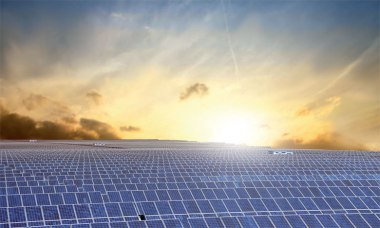 Business Green 2nd Nov 2018 The UK power market will be able to withstand huge volumes of new renewable
generation coming on line according to new research, which suggests the
country could be running solely on zero carbon power during the summer
months by 2050.
explores what happens to the UK power market as it transitions to a high
level of renewable power. Aurora modelled a 2050 scenario where power
demand has risen by two-thirds from today, thanks to the rise of EVs, and
the grid now boasts 130GW of nuclear, wind and solar generation capacity.
effectively lead to zero-carbon summers for the UK electricity grid under
this scenario, according to Aurora. But such large volumes of renewable
power would also “fundamentally alter” the workings of the power market,
with price crashes in the summer months as green power generation soars.
https://www.businessgreen.com/bg/news/3065602/aurora-er-uk-could-enjoy-zero-carbon-summer-power-by-2050
€45 billion renewables investment opportunity in France, with its new energy policy
“Clean Energy D.C. Act” – would lead Washington DC to 100% renewable energy by 2032

Green Matters 24th Oct 2018, Lawmakers in Washington D.C. are proposing one of the nation’s most
aggressive plans to cut carbon emissions. The “Clean Energy D.C. Act”
would roll out the strongest renewable electricity standard in the United
States, making the nation’s capital a world leader on climate change and
put them on an accelerated timeline to 100 percent renewable energy by
2032.
“This bill provides the bold action needed to match the urgency of
the climate crisis. It builds on the Clean Energy D.C. plan and the
District’s 12-year legacy of clean energy and green building policy
achievement, again blazing a path for other cities to follow,” said Cliff
Majersik, Executive Director of the Institute for Market Transformation in
a statement. https://www.greenmatters.com/renewables/2018/10/24/19LG2w/dc-climate-bill-2030
Egypt’s renewable energy project – going for the green economy

Image processed by CodeCarvings Piczard ### FREE Community Edition ### on 2017-10-20 17:00:50Z | http://piczard.com | http://codecarvings.com
largest solar power plant in the world early this year, RT reported on Friday. Reporting the remarks of Egyptian official Hassan Abaza, RT said that the superpower plant was built in the city of Aswan, southern Egypt.
economy” is a mechanism to achieve sustainable development. https://www.middleeastmonitor.com/20181027-egypt-builds-largest-solar-power-plant-in-the-world/
Washington DC pushes 100% renewable energy bill
 https://reneweconomy.com.au/washington-dc-pushes-100-renewable-energy-bill-48151/
Cheap flexibility from storage, demand-side response and distributed renewable energy generation poses a “huge threat” to the nuclear industry
Tom Grimwood Speaking at a conference held by Aurora Energy Research in London yesterday (11 October), Davey said the falling costs of such technologies raise “serious questions” about the government’s pursuit of new nuclear plants.“There’s no doubt storage and flexibility pose a huge threat to nuclear industry,” he told the audience. “Nukes are expensive; take a hell of a long time to build. In ten years, where are we going to be with storage and flexibility?
“I think it’s going to be cheap as chips and have variations we don’t even know about today, because so much is evolving. The energy revolution is going apace.”
“That has to ask serious questions of the nuclear strategy which the government is pursuing”.
Davey hailed the government and Ofgem’s smart systems and flexibility plan as the “best thing” he’d seen in terms of policy since leaving office in 2015.
However, he added: “I don’t see much movement. And I’m not saying it’s because it’s easy… But we really need to be moving forward on that to give people better markets and contracts that are more investible… I think we could do a lot better.”
He continued: “If you had better policy you might be able to answer this question of do we keep a big centralised system, investing in lots of big centralised assets, or do we have more of a hybrid system.
“And we’ve gone to a hybrid system a little bit without thinking it all through but for good reasons. Solar took off much quicker than people thought, for example, and the capacity brought on peakers which weren’t really in the picture.
“We’ve now got that hybrid system and my worry is no one’s really thinking that through strategically.”
Davey also raised concerns over the influence of large generators on policy and regulatory decisions: “My worry is that the lobbying power of the big centralised generators… is a bit bigger than those of us who think a lot of the future is in the decentralised sector.
“If I have political message to people, it’s to really think that through because I think we’ve seen in some of the network code debates and elsewhere a politics which is very much in favour of centralised generators.”
Speaking to Utility Week in early 2017, the chief executive of UK Power Reserve, Tim Emrich, accused the Connection and Use of System panel of being unduly influenced by incumbents after the industry body recommended drastic cuts to the triad avoidance payments available to small-scale distributed generators.
The changes were approved by Ofgem later in the year. https://utilityweek.co.uk/cheap-chips-flexibility-poses-huge-threat-nuclear/
France’s push for solar rooftops
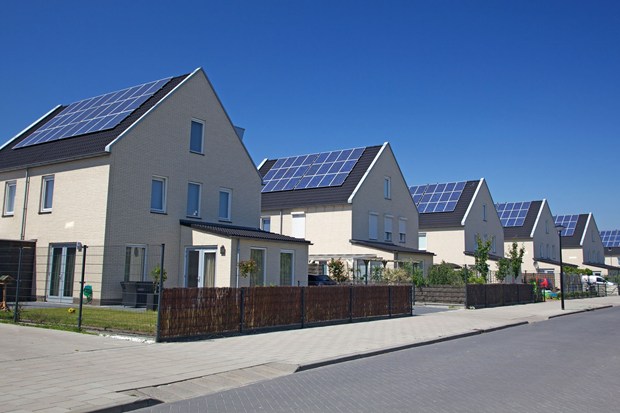 Reuters 27th Sept 2018, French Ecology Minister Francois de Rugy has approved 392 rooftop solar
power projects with a total capacity of 230 megawatts (MW) under a plan
launched in 2016 to develop 1,450 MW of solar capacity within three years.
France wants to develop more wind, solar and other low-carbon energy
sources to cut its dependence on nuclear energy power, which currently
counts for over 75 percent of its needs.
https://uk.reuters.com/article/uk-france-solarpower/france-approves-230-mw-of-rooftop-solar-projects-idUKKCN1M71KO?rpc=401&
UK Labour government would aim to to treble the UK’s current solar capacity
Solar Power Portal 26th Sept 2018 A Labour government would look to treble the UK’s current solar capacity
and create more than 400,000 green jobs by 2030. Those were the key facts
from this week’s Labour Party conference which comprised speeches from
some of the opposition party’s central figures. Yesterday the party’s
shadow business, energy and industrial energy secretary Rebecca Long-Bailey
said that Labour had been working with an “expert team” of energy
professionals, engineers and academics to assess how the country could meet
such a target. A near trebling of the UK’s solar capacity would equate to
around 39GW of operational solar in the UK, enough, according to
Long-Bailey, to power seven million homes. Leonie Greene, director of
advocacy at the Solar Trade Association, stressed that expanding wind and
solar capacity should be an economically-driven decision that crosses party
political lines. “The government estimates that around £180 billion
needs to be invested in the electricity sector alone to 2030, so enabling
the lowest cost technologies which do not need public subsidy and which do
not contribute to climate change – namely solar and onshore wind – would be
very good news for consumers.”
https://www.solarpowerportal.co.uk/news/corbyns_labour_government_would_treble_uk_solar_capacity_create_400000_gree
Leading businesses join London’s Climate Action Week, pledging 100% renewable enegy
Business Green 14th Sept 2018 Companies have pledged to power their London-premises with 100 per cent
renewable energy,as Sadiq Khan announces first London Climate Action Week
Eleven leading businesses, including Tesco, Sky, and Siemens, have
partnered with London Mayor Sadiq Khan in support of plans to make the
capital a zero carbon city by 2050. The companies announced yesterday they
will work with the Mayor’s Office to cut levels of pollution and emissions
beyond current government targets, while also committing to power their
London premises with 100 per cent renewable energy by 2020 and supporting
the transition towards zero-emission vehicles.
https://www.businessgreen.com/bg/news/3062752/zero-carbon-capital-businesses-team-up-with-london-mayor-in-decarbonisation-drive
Never mind Trump’s energy policies; California is going for 100% renewable energy
BBC 10th Sept 2018 , California has passed a law committing to exclusively carbon-free
electricity sources by 2045, setting it against US President Donald Trump’s
energy policy. “There is no understating the importance of this measure,”
Governor Jerry Brown said, and vowed to honour the 2015 Paris climate deal.
Last year Mr Trump said he would pull the US out of the deal and negotiate
a new “fair” deal for US businesses. California is the second US state
after Hawaii to commit to carbon-free energy. Were it to be an independent
country, California would have the fifth largest economy in the world, trailing
only Germany, Japan, China and the US. At a signing ceremony in
the state capital Sacramento, Mr Brown vowed to meet the terms of the Paris
agreement and to “continue down that path to transition our economy to zero
carbon emissions”. Under the terms of the legislation, all utility c
ompanies must get 60% of their energy from renewable sources by 2030. By
2045, all Californian electricity must come from carbon-free or renewable
energy.
https://www.bbc.co.uk/news/world-us-canada-45476865
Time 10th Sept 2018 Gov. Jerry Brown signed a bill Monday that puts California – the
world’s fifth largest economy if it was an independent country – on an
ambitious path: using 100% clean electricity by 2045.
,http://time.com/5391881/brown-signs-bill-100-percent-clean-energy-california/
Power balance is changing, with the flexibility of renewable energy systems
By 2040 Bloomberg New Energy Finance predicts that more than half of global energy capacity will come from renewables and flexible sources, such as battery storage and demand side response
 NuClear News Sept 18 Tom Greatrex of the Nuclear Industry Association (1) says we should ignore the National Infrastructure Commission’s (NIC’s) recommendation that we only order one more nuclear station on top of Hinkley Point C before 2025 (2), because cutting carbon without the help of nuclear is a “risky business”. He says the Government understands the inherent value of a baseload low carbon source of generation.
The NIC says: “It is now possible to conceive of a low-cost electricity system that is principally powered by renewable energy sources.” It says at least 50% and up to 65% of electricity in 2030 should come from renewables. (3)
Australia is having similar debates where the fossil fuel lobby argues that because “coal” is “baseload”, it must therefore be “reliable”, but wind and solar are intermittent, so they cannot be relied upon to keep the lights on. It’s political rhetoric that belies the reality of the electricity system. Australia’s grid has challenges, but they are not necessarily ones that can be solved just by having more “baseload”. What is really needed – as the Australian Energy Market Operator, chief scientist Alan Finkel, and any number of other independent experts point out – is dispatchable and reliable generation, one that the grid operator can count on, at times of peak demand and heat stress. And the answer does not lie in traditional “baseload” generation – the more than 100 trips of big fossil fuel plants since December, often at times of soaring heat, underline that point.
The energy debate is usually dominated by simple political rhetoric – based around emissions or no emissions, cheap prices or expensive ones, baseload versus intermittency. That just skims over the surface. Behind the scenes, as the clean energy transition continues, debates are raging about good engineering practices and the design of markets. One of Australia’s leading electrical engineers, Kate Summers says large diverse renewable resources are far more stable in output than singular sources. She uses a series of graphs to illustrate that at moments when stability can be won or lost it has been wind and solar that have held firm, and acted as what one might consider to be “baseload”. And it has been coal and gas that has proved “intermittent” at the very minutes that stability is needed. (4)
It’s the Flexibility Stupid
A new report from Chatham House says evidence is growing that highly flexible electricity systems could deliver lower whole-system costs, especially given the dramatic projected falls in solar and wind power costs by 2030.
While the renewables rollout is a key part of global climate policy, the challenge is that the costs associated with managing the system start to escalate once renewables exceed a 30% share of generated electricity. Unless properly planned for, the growth in electric vehicle use and electric heating could further amplify these ‘system integration costs’. They include the cost of holding fossil fuel power plants in reserve for periods of low renewable supply, grid upgrades and the dumping of power from renewables when system constraints are reached. Governments can ensure electricity is affordable by promoting ‘flexibility’. Grid operators and power companies should pursue a diverse range of flexible, decentralized, modular technologies.
New technologies that enhance system flexibility, including smart electric vehicle (EV) charging, battery storage, digitalization with intelligent control and demand-side management, are unleashing a new phase of transformations in the power sector, for which existing companies are ill prepared. Companies providing these solutions may come to dominate the power sector in the coming decades. The accelerating deployment of this array of ‘flexibility enablers’ means the spectre of cost escalation – resulting from the expense of managing intermittent wind and solar power at huge volumes – may never materialize.
Smart, staggered EV charging could enable significant advances in system flexibility. By 2030, smart EV charging in the UK could be equivalent to 18% of the country’s current generating capacity. Rapid cost reductions in battery manufacturing, driven by increased deployment of EVs, are enabling affordable static, grid-level storage, in turn enhancing power system flexibility.
Digitalization of the electricity sector will lead to significant advances in system efficiency and flexibility. Residential demand will become flexible and networks functionally ‘smarter’. Machine-learning algorithms could be a game-changer, helping to manage the increasing complexity of electricity systems and identify new system-level efficiencies.
Enhanced system flexibility and a growing role for these technologies will provide new entry points for highly disruptive market actors, many of them not traditionally associated with the power sector. These actors include powerful technology companies and automotive manufacturers such as Google, Tesla and BMW. More widespread electrification of transport, and eventually of heating, will change the political and regulatory landscape of the electricity sector.
The transformations which have happened so far, with the rapid introduction of renewable technologies and falling demand due to greater energy efficiency, have undermined the business models of traditional power utilities. Now they face the prospect that renewables will achieve ever higher penetrations within the electricity market, aided by greater system flexibility. This will continue to erode the role of large power stations in ‘system balancing’ – balancing supply and demand – and will put further pressure on existing business models.
Evidence is growing that highly flexible electricity systems could deliver lower whole-system costs, especially given the dramatic projected falls in solar and wind power costs by 2030. But new regulatory approaches are needed to encourage market actors to deliver flexibility. Regulatory frameworks need to prioritize and incentivize investment in these areas, and encourage alternative business models. And in this future, our reliance on large fossil fuel power plants would fade, along with the utility business models that have long been based on a centralized power system.
New business models are emerging to aggregate and manage behind-the-meter investments. One example: storage-as-a-service. The innovative US utility, Green Mountain Power (GMP), in Vermont offers customers a Tesla Powerwall 2.0 battery for $15 a month so long as the customer allows GMP to manage when and how the battery is charged and discharged. Alternatively, customers can buy one for $1,500 – which is roughly a fifth of the actual cost of the battery. In either case, substantial subsidies, approved by the Vermont’s Public Utilities Commission, are offered. The regulator has been convinced that the scheme will more than pay for itself in the sense that all customers, not just those participating, will benefit from the program. The distributed storage paid off handsomely during a heat wave in early July 2018. The company was able to discharge stored energy out of about 500 Tesla Powerwall batteries installed in the homes of some 400 customers and feed it into the grid when it was sorely needed. It saved roughly half a million dollars by avoiding the need to buy expensive power from suppliers at the time of peak demand. GMP, which serves roughly a quarter-million customers in VT uses the batteries in customers’ premises as a virtual power plant (VPP). Customers like the batteries because they typically replace an emergency generator when power fails – which is not uncommon during storms in rural areas. (6)
UK Power Networks
The UK’s largest electricity distributor has proposed adopting a “flexibility first” approach to the delivery of extra grid capacity, in a move that could bring renewable energy onto the network at a lower cost. UK Power Networks has revealed plans to “supercharge” local markets for flexibility services, which rely on customers changing their energy consumption or generation to balance network demand, possibly by creating them itself.
The company claims that if flexibility services were made available to the 8.2 million buildings it serves, new markets for distributed renewable generation would open across London, the South East and the East of England. It speculates that such increased competition would result in a higher proportion of renewable power being bought onto the network, but at a lower cost. The Flexibility Roadmap proposes a radical rethink to the way we do business, moving away from automatically building new assets and instead giving the distributed energy resources market the opportunity to offer their services. If the market can provide the capacity we need at a more cost-effective rate than building new infrastructure, that’s exactly what we should do.
Specifically, UK Power Networks believes that the actions outlined in the roadmap will lower costs for consumers by delaying or avoiding expensive grid reinforcements, increase the resilience of the network and provide new sources of revenue for flexibility providers. To ascertain how it should best meet demand for flexibility, the company has launched a consultation on its Flexibility Roadmap. The consultation will run from August to 8 October. If accepted the proposals will come into effect from 2019.
Earlier this summer, UK Power Networks unveiled its plan to create the nation’s first “virtual” solar power station by the end of the year, using PV panels on the rooftops of its London customers’ homes. (7)
Demand-Side Response
By 2040 Bloomberg New Energy Finance predicts that more than half of global energy capacity will come from renewables and flexible sources, such as battery storage and demand side response. At 7% of global capacity, flexible sources such as batteries and demand side response – where homes and businesses automatically cut energy usage a peak times – will account for the same level of global energy capacity as oil-fired power plants today. And more than half of this energy storage capacity will come from small-scale batteries installed by households and businesses alongside rooftop solar panels. This trend away from larger power plants and towards smaller, decentralised energy systems is happening already in both developed and developing nations.
Energy, like every other sector, is going digital. From smart home products such as Hive that allow home owners to control their energy use from their smartphone, through to companies like REstore employing artificial intelligence to calculate just how much energy capacity a factory can offer as a virtual power plant. Centrica’s CEO Iain Conn says he expects demand side response to become one of the fastest growing elements of the energy market over the next few years. Europe’s largest demand side response aggregator, REstore, was acquired by Centrica in 2017.
In the same way as demand side response aggregators are emerging as a new type of energy company for the decentralised era, a new breed of companies is providing a route to market services for small generators. Centrica acquired one of Europe’s leading route to market companies, the Denmark-based Neas Energy, in 2016. Neas is able to take all of the Big Data coming from smart meters and Internet of Things (IoT) connected devices to build an accurate real-time picture of energy demand, as well as demand trends. Neas also uses software that combines this data with smart algorithms that judge weather patterns, so that it knows how much any given wind turbine or solar panel is likely to generate, and when. This helps balance the grid by matching supply and demand more accurately. And for the smaller energy producer, it helps them sell their energy at the most accurate market price. The growth in services supplied by companies like Neas is being driven by the rapid improvement and increasing availability of smart digital technology to both energy companies and their customers.
Greater insight through digital technology is just the start of the shift of power away from energy companies and towards the customer. Centrica is currently piloting a project in the south west of England that will allow local residents and businesses to buy and sell energy between themselves without the intervention of their energy supplier. The £19 million Local Energy Market in Cornwall is enabling 200 homes and businesses to do this using a digital record known as Blockchain. It is used to create a secure electronic ledger of transactions between participants. Iain Conn says he believes such local networks will become the norm in a new decentralised energy market.
Home owners using Blockchain to become their own micro-energy companies may seem like something for the distant future, but Microsoft’s Michael Wignall says that digital technology is accelerating at such a pace that these kinds of radical changes will be delivered over a short period of time. The Fourth Industrial Revolution we are currently experiencing will make energy systems of the future completely unrecognisable from what they are today. (8)
“Energy storage is all the rage”, says Dave Elliott, Emeritus Professor of Technology Policy at the Open University. But while the field is full of innovation at present, pumped hydro storage continues to dominate. And while storage offers one way to respond to the variability of some renewables, there are other options, including smart grid demand management (to time-shift demand peaks) and super-grid imports and exports (to balance local supply and demand variations across wide areas). (9) “There is nothing that storage can do that something else can’t do,” according to Professor Mark O’Malley of Canada’s McGill University and University College Dublin. (10)
Batteries, capacitors, and flywheels, along with smart-grid demand adjustments, may all be fine for brief periods, dealing with short-term variations in renewable inputs, but are not much use for longer-term lulls in renewable availability. Pumped hydro projects may be able to deliver power for perhaps a day or so, depending on their scale, but for longer term storage that’s when big hydrogen gas or compressed air underground storage facilities may come into their ownlinked to back-up generators. The stores can be charged using green energy already produced, when there was surplus, locally or on a wider basis, with super-grid links for transfers. http://www.no2nuclearpower.org.uk/wp/wp-content/uploads/2018/09/NuClearNewsNo110.pdf
Solar power industry gives opportunity for retraining coal workers for good alternative employment
 An alternative to propping up coal power plants: Retrain workers for solar, The Conversation,Joshua M. Pearce, Professor of Materials Science and Engineering, and Electrical and Computer Engineering, Michigan Technological University, August 23, 2018The Trump administration announced new pollution rules for coal-fired power plants designed to keep existing coal power plants operating more and save American coal mining jobs.
Profitability for U.S. coal power plants has plummeted, and one major coal company after another has filed for bankruptcy, including the world’s largest private-sector coal company, Peabody Energy.
The main reason coal is in decline is less expensive natural gas and renewable energy like solar. Coal employment has dropped so low there are fewer than 53,000 coal miners in total in the U.S. (for comparison, the failing retailer J.C. Penny has about twice as many workers).
The EPA estimates the new rules will cause about 1,400 more premature deaths a year from coal-related air pollution by 2030. The Trump administration could avoid the premature American deaths from coal pollution – which amount to about 52,000 per year in total – and still help the coal miners themselves by retraining them for a more profitable industry, such as the solar industry.
A study I co-authored analyzed the question of retraining current coal workers for employment in the solar industry. We found that this transition is feasible in most cases and would even result in better pay for nearly all of the current coal workers.
How to make the jump?
What is left of the coal mining industry represents a unique demographic compared to the rest of America. It is white (96.4 percent); male (96.2 percent); aging, with an average age of 43.8 years old; and relatively uneducated, with 76.7 percent having earned only a high school degree or equivalent. Many are highly skilled, however, with the largest sector of jobs being equipment operators at 27 percent. Many of these skills can be transferred directly into the solar industry.
In the study, we evaluated the skill sets of current coal workers and tabulated salaries. For each type of coal position, we determined the closest equivalent solar position and tried to match current coal salaries. We then quantified the time and investment required to retrain each worker.
Our results show there is a wide variety of employment opportunities in solar – the industry overall already employs more than five times more people than in coal mining, at over 250,000 by one industry group estimate. We also found the annual pay is generally better at all levels of education, even with the lowest-skilled jobs. For example, janitors in the coal industry could increase their salaries by 7 percent by becoming low-skilled mechanical assemblers in the solar industry.
Overall, we found that after retraining, technical workers (the vast majority) would make more money in the solar industry than they do in coal. Also note this study was about careers and was done before an uptick in the practice of hiring temporary coal workers. The only downside on salaries we found are that managers and particularly executives would make less in solar than coal. This represents only about 3.2 percent of coal workers that are professional administrators.
Retraining needs
How would coal workers make this transition? There are over 40 types of solar jobs which the DOE has mapped out. They range from entry-level jobs, such as installers, to more advanced positions in engineering and technical design. Most coal workers could not simply walk into a solar job; they would need some retraining. But certain positions require less training…………https://theconversation.com/an-alternative-to-propping-up-coal-power-plants-retrain-workers-for-solar-101961
1 This Month

of the week – Shut Down Drone Warfare!


Tell the Ukrainian Government to Drop Prosecution of Peace Activist Yurii Sheliazhenko

Petition to revoke the licensing of the Near Surface Nuclear Disposal Facility (NSDF) at Chalk River. https://www.ourcommons.ca/petitions/en/Petition/Details?Petition=e-7247
To see nuclear-related stories in greater depth and intensity – go to https://nuclearinformation.wordpress.com
-
Archives
- April 2026 (34)
- March 2026 (251)
- February 2026 (268)
- January 2026 (308)
- December 2025 (358)
- November 2025 (359)
- October 2025 (376)
- September 2025 (257)
- August 2025 (319)
- July 2025 (230)
- June 2025 (348)
- May 2025 (261)
-
Categories
- 1
- 1 NUCLEAR ISSUES
- business and costs
- climate change
- culture and arts
- ENERGY
- environment
- health
- history
- indigenous issues
- Legal
- marketing of nuclear
- media
- opposition to nuclear
- PERSONAL STORIES
- politics
- politics international
- Religion and ethics
- safety
- secrets,lies and civil liberties
- spinbuster
- technology
- Uranium
- wastes
- weapons and war
- Women
- 2 WORLD
- ACTION
- AFRICA
- Atrocities
- AUSTRALIA
- Christina's notes
- Christina's themes
- culture and arts
- Events
- Fuk 2022
- Fuk 2023
- Fukushima 2017
- Fukushima 2018
- fukushima 2019
- Fukushima 2020
- Fukushima 2021
- general
- global warming
- Humour (God we need it)
- Nuclear
- RARE EARTHS
- Reference
- resources – print
- Resources -audiovicual
- Weekly Newsletter
- World
- World Nuclear
- YouTube
-
RSS
Entries RSS
Comments RSS
 nuclear-news